This site uses cookies as defined in our Cookie Policy, by continuing to use this site you agree to their use.
Continue

| Arrive | Depart | ||||||
| 2nd02 | MayMay | 202727 | Apra (Agana), Guam, embark on the Silver Cloud | 20:00 | |||
Guam is blessed with spectacular natural beauty and a rich cultural history. Apra Harbor is a deep-water port located on the western side of the island near the Mariana Islands and the Mariana Trench, which is the deepest part of the earth’s oceans, and the deepest location of the earth itself. The port serves both as a U.S. naval station and Guam’s main commercial port. The harbour, formed by the Orote Peninsula to the south and Cabras Island in the north, is considered to be one of the best natural ports in the Pacific. Guam’s unique culture, traditions and heritage have remained intact despite European imperialism, wars and changing foreign governments. Archaeological evidence suggests that the indigenous Chamorros of Indo-Malayan descent migrated from the Southeast Asian islands and settled throughout the Marianas archipelago. Being expert seamen and skilled craftsmen, they flourished and built unique houses and canoes suited to the region. As a matriarchal society and through the prestige of the women, much of the Chamorro culture and traditions were able to survive. Since the 16th century, a wave of foreigners have arrived on Guam’s shores, including Ferdinand Magellan in 1521 who remained on the island for three days to restock his small convoy. Americans, Asians, Europeans, Micronesians and other visitors have since left their imprint on the island’s pastimes and tastes. Guam is blessed with spectacular natural beauty and a rich cultural history. Apra Harbor is a deep-water port located on the western side of the island. The island is part of the Mariana Islands and near the Mariana Trench which is the deepest part of the earth’s oceans and the deepest location of the earth itself. The port serves both as a U.S. naval station and Guam’s main commercial port. The harbour formed by the Orote Peninsula to the south and Cabras Island in the north is considered to be one of the best natural ports in the Pacific. Guam’s unique culture traditions and heritage have remained intact despite European imperialism wars and changing foreign governments. Archaeological evidence suggests that the indigenous Chamorros of Indo-Malayan descent migrated from the Southeast Asian islands and settled throughout the Marianas archipelago. Being expert seamen and skilled craftsmen they flourished and built unique houses and canoes suited to the region. As a matriarchal society and through the prestige of the women much of the Chamorro culture and traditions were able to survive. Since the 16th century a wave of foreigners have arrived on Guam’s shores including Ferdinand Magellan in 1521 who remained on the island for three days to restock his small convoy. Americans Asians Europeans Micronesians and other visitors have since left their imprint on the island’s pastimes and tastes. | |||||||
| 3rd03 | MayMay | 202727 | Saipan, Northern Mariana Islands | 07:00 | 13:30 | ||
The Northern Mariana Islands are a chain of 15 tropical islands in the western Pacific Ocean, about 120 miles (193 km) north of Guam. At 12 miles in length and 5 miles wide (19 x 8 km), Saipan is the largest of the 15 islands, and site of the CNMI capital. Settlement of Saipan and its neighbouring islands occurred circa 2000 BC by the Chamorro people who arrived via similar routes as their cousins in Guam. Ferdinand Magellan first sighted the Mariana Islands in March 1521 and claimed “Las Islas de las Velas Latinas” for Spain. In 1668, the islands’ name changed to the present one in honour of Mariana of Austria, the widow of Spain’s king, Philip IV. Germany bought the islands from Spain in 1899, but was forced out by the Japanese during World War I. American forces entered the Marianas on June 15, 1944 and were met with fierce resistance by the Japanese. In the following months, the Americans managed to gain control and started to build bases and airfields for Pacific launching pads. The Marianas became part of the Pacific Islands Trust Territory granted to the United States by the United Nations in 1947. After 20 years of American presence, the people opted out of the U.S. Trust and voted for the Commonwealth of the Northern Marianas, finally gaining their self-government in January 1978. In 1986, President Ronald Reagan proclaimed the Northern Marianas a United States Commonwealth and its residents U.S. citizens. Today, Saipan boasts a well-developed tourist industry, which is concentrated around Garapan, the capital. In addition to beaches and colourful marine life, American World War II relics, overgrown Japanese bunkers, and mangrove swamps can be seen around the island. Garapan, located on the western side of the island, is home to major hotels and the American Memorial Park, which honours American soldiers who died during the Battle of Saipan. The Northern Mariana Islands are a chain of 15 tropical islands in the western Pacific Ocean about 120 miles (193 km) north of Guam. At 12 miles in length and 5 miles wide (19 x 8 km) Saipan is the largest of the 15 islands and site of the CNMI capital. Settlement of Saipan and its neighbouring islands occurred circa 2000 BC by the Chamorro people who arrived via similar routes as their cousins in Guam. Ferdinand Magellan first sighted the Mariana Islands in March 1521 and claimed “Las Islas de las Velas Latinas” for Spain. In 1668 the islands’ name changed to the present one in honour of Mariana of Austria the widow of Spain’s king Philip IV. In 1986 President Ronald Reagan proclaimed the Northern Marianas a United States Commonwealth and its residents U.S. citizens. Today Saipan boasts a well-developed tourist industry which is concentrated around Garapan the capital. In addition to beaches and colourful marine life American World War II relics overgrown Japanese bunkers and mangrove swamps can be seen around the island. Garapan located on the western side of the island is home to major hotels and the American Memorial Park which honours American soldiers who died during the Battle of Saipan. | |||||||
| 4th04 | MayMay | 202727 | Pagan Island, Northern Mariana Islands | 07:00 | 18:00 | ||
Among the 15 islands of the Northern Marianas, Pagan Island consists of two stratovolcanoes joined by a strip of land that is less than 600 meters (2,000 feet) across at its narrowest point. The island was completely evacuated in 1981 when a large eruption forced the small Micronesian community to relocate to Saipan. Pagan, the northern volcano, is still active, and one of the more recent lava-flows has come close to the small former settlement on the west coast. To reach this lava flow one has to follow an old runway used by the Japanese during the 1940s, where the remains of several bunkers, pill boxes and planes can still be seen. A hike up the ridge will reveal a scenic view of two lakes further north. The Marianas fruit bat, the Micronesian Megapode, and the impressive coconut crab used to thrive on Pagan. Unfortunately, the island is rumored to be a military training ground and may be declared off-limits in the near future. Among the 15 islands of the Northern Marianas, Pagan Island is one of Micronesia’s finest. Biologically diverse, volcanically active (the last major eruption was in 1981) and geologically one of the Marianas most interesting, Pagan Island promises stunning sites and scenery in equimeasure. Pagan is in fact two islands, joined by an isthmus. Archaeological finds put human habitation on the islands several centuries pre-AD, and it is believed that the island was settled in 1,500 BC by Micronesian people, who practiced agriculture and cultivated plants. Official discovery dates it to the 17th century by Jesuits, however, it is possible that European deserters from the first Magellan expedition set foot on the island a century earlier. Nearby Guam island has geological proof dating back to 30-million years. Current population is just seven. Numerous volcanic eruptions have left Pagan swathed in sloping sheets of lava and almost bereft of ecological richness. There is some light broadleaf forest (endemic to Micronesia), scrub grasslands and swamps. The Marianas are given ecoregional status on the basis of its endemic bird fauna. Seven species are native the archipelago, including the critically endangered Mariana crow and Rota bridled white-eye and the endangered Micronesian megapode. | |||||||
| 5th05 | MayMay | 202727 | At Sea | ||||
| 6th06 | MayMay | 202727 | At Sea | ||||
| 7th07 | MayMay | 202727 | At Sea | 13:00 | 14:00 | ||
| 8th08 | MayMay | 202727 | Shimizu, Japan | 11:00 | 23:00 | ||
The salt and pepper cone of Japan's most famous natural landmark won’t fail to take your breath away, as it soars into the sky in a vision of spectacular symmetry. Make sure your camera is fully prepared before you dock in Shimizu’s port, where unparalleled views of the extraordinary Mount Fuji’s dramatic peak await. Take your time to soak up one of Japan's most iconic views, before dipping your toes into the rest of what this destination of tranquil temples has to offer. While there’s a bustling fish market, and a charming amusement park waiting close to the port, most new arrivals immediately set off in pursuit of the best views of Mount Fuji, or to see the stunning panorama on offer from the heights of the Kunozan Toshogu Shrine. Take the cable car up to the top, to experience the tranquillity around the forested shrine, and to enjoy its stunning architecture of deep scarlets and gleaming golds. You can also enjoy heart-stopping views out over the Bay of Suruga, and the tea plantations below. Feel your heart thumping at your first sight of Japan’s most heavenly vision - Mount Fuji’s cone emerging through the haze. With its summit dipped in pure white snow the iconic volcano’s cone is one of the most famous natural landmarks in the world - and a picturesque backdrop for Shimizu. Come ashore to this serene vision of beauty – and whether you head straight for the siren-call of the volcano’s slopes or the sanctuary of gorgeous heritage-rich shrines and tranquil tea plantations - spine-tingling views of Japan’s most tallest mountain are never far away. A perfectly symmetrical spectacle visible for miles around Mount Fuji is an adored national symbol of Japan. Travel closer to its slopes to soak in some of the country’s finest panoramas. Or take in the views with a dash of local culture at the Fujisan Hongu Sengen Shrine – an elegant shrine that stands in thrall to the salt and pepper volcano close by. The Shiraito Waterfall World Heritage Site flows just beneath the volcano – visit to see the gloriously wide curtain of water gushing through the thick vegetation. Visit Kunozan Toshogu Shrine for another perspective or to soak up the tranquil site before swinging above on a scenic ropeway. Located on the adjacent Mount Kuno – privileged views of the mountain and Suruga Bay will unroll before you. Nihondaira Plateau is another option where you can soak in panoramic views of the bay and Mount Fuji dominating behind. | |||||||
| 9th09 | MayMay | 202727 | Ōshima Island, Japan | 06:30 | 18:00 | ||
| 10th10 | MayMay | 202727 | Toba, Japan | 07:00 | 18:00 | ||
| 11th11 | MayMay | 202727 | At Sea | ||||
| 12th12 | MayMay | 202727 | Yakushima, Japan | 07:00 | 18:30 | ||
Yakushima is a round-shaped subtropical island off the southern coast of Kyushu island and part of Kagoshima prefecture. One fifth of this island is designated a Natural World Heritage Site in 1993, and it is covered by an extensive cedar forest that contains some of Japan’s oldest living trees. The symbol of Yakushima is called Yaku-Sugi, meaning Japanese cedar, which is only used for cedar trees over 1,000 years old. The oldest Yaku-Sugi is considered to be more than 7,000 years old. As a subtropical island with mountains that are nearly 2,000 meters high, Yakushima attracts a lot of rainfall around the year with a local saying that it rains 35 days a month! No matter how the weather is, the walking in the Cedar tree forest is what you cannot miss on this island. You can see many rare plants due to the abundance of water and the changes in temperature at different altitudes. The range of flora is very wide, from coral reef to alpine plants. Yakushima is a round-shaped subtropical island off the southern coast of Kyushu island and part of Kagoshima prefecture. One fifth of this island is designated a Natural World Heritage Site in 1993, and it is covered by an extensive cedar forest that contains some of Japan’s oldest living trees. The symbol of Yakushima is called Yakusugi, a Japanese cedar. Yakusugi is a specific term only used for cedar trees over 1,000 years old. The oldest Yaku-Sugi is considered to be more than 7,000 years old. As a subtropical island with mountains that are nearly 2,000 meters high, Yakushima attracts a lot of rainfall around the year with a local saying that it rains 35 days a month! No matter how the weather is, the walking in the Cedar tree forest is what you cannot miss on this island. You can see many rare plants due to the abundance of water and the changes in temperature at different altitudes. The range of flora is very wide, from coral reef to alpine plants. | |||||||
| 13th13 | MayMay | 202727 | Uwajima, Japan | 12:30 | 19:30 | ||
| 14th14 | MayMay | 202727 | Itsukushima, Japan | 06:30 | 17:30 | ||
The small island of Miyajima (“The Shrine Island”) is known for the Floating Torii Gate, which is one of “The Three Most Beautiful Views” of Japan. Built in the water, the Torii Gate leads to the Itsukushima Shrine and at high tide it seems to float. The Torii Gate is one of the most photographed sites in all of Japan. There are many more shrines and paths on Miyajima that are inviting to walk. Mount Misen has a cable car leading partly up to the top with nice views and wild monkeys and deer roaming the trails. Itsukushima Island, colloquially known as Miyajima (translation “Shrine Island”) is home of perhaps the most iconic view in all Japan. This is of course the Floating Torii Gate, a red gate built in the Seto Inland Sea which appears to “float” during high tide. Symbolic for a pilgrims passing from one life to another the gate is by far one of the most photographed sites in the country. UNESCO named it a site of Outstanding Universal Value in 2001, while the Japanese Government consider it one of their National Treasures. The island’s attractions are not limited to just the gate however. The shrine, from which the island takes its informal name, consists of various buildings that are too built over the water and are connected by walkways. The present shrine dates from the early 12th century, although the island has been a place of worship since at least 600 AD. The great artistic and technical beauty of the Torii-Gate summarises Miyajima as a whole. The romantic concept of Japanese beauty is everywhere – in the play of contrast and colour against the mountains and the sea, the balance of nature and mankind and the harmony of Kihaku, loosely translated as the energy of the soul. After a visit to the shrine, be sure to enjoy the inviting paths to see the other parts of the island that lead circumnavigate the town and lead up Mount Misen. If you are not feeling too energetic, note that Mount Misen has a cable car leading partly up to the top with nice views and deer roaming the trails. | |||||||
| 15th15 | MayMay | 202727 | Kochi, Japan | 12:00 | 18:30 | ||
| Small and friendly, this castle town dates back from the early 17th century, and has just one of the 12 Japanese castles to have survived the feudal age. Regrettably, a WWII bombing in 1945 destroyed half the city, although thankfully not the original castle, which serves as a shining example of the Edo Period. A buzzing food market next to the castle provides sustenance – both local and international cuisine and those who are feeling adventurous must try the sugar tomato and rice omelette, either separately or why not together. For those in search of a quintessentially Japanese experience, Kochi is blessed with a superb landscape and an enjoyable local pastime is bathing in the hot springs (onsens) that surround the city. They come in many different shapes, sizes and colours (the colour of the water indicates the dominant minerals present: red for iron, milky for sulphur, blue for bicarbonate and so on). Some are considered rare and each type is said to have a different therapeutic effect. However, some etiquette is expected and first-time visitors should perhaps be aware of the formalities surrounding this bathing ritual. Home as well to some stunning beaches, visitors are advised against swimming in the sea because of strong undercurrents, instead being encourages to enjoy the many beachside attractions of the area, such as the Sakamoto Ryoma Memorial Museum, the lovely walking paths or the sumptuous local speciality katsuo no tataki, served on one of the many surrounding restaurants. Although perhaps not the most picturesque of downtowns, downtown Kochi holds a legendary tale, which centers on the Harimayabashi, (the small red bridge on the west side of the main street). Legend has it that a young priest from Godaisan fell in love with and a girl from Kochi. Because the priest's temple forbade relationships, the couple hid their romance by meeting in secret and exchanging clandestine gifts. One day, the priest was seen buying a hair comb at Harimayabashi, and the couple's secret romance was discovered. | |||||||
| 16th16 | MayMay | 202727 | Kobe, Japan, disembark the Silver Cloud | ||||
Located on the calm waters of the Inland Sea, Kobe has served as an important port town for hundreds of years. It was one of the first harbours to accept foreign traders in 1868 when Japan was just emerging from its centuries of isolation. What followed was a surge of Western trade and exports. Today, Kobe is quite multicultural, with expatriates from 98 different nations in residence, providing a cultural diversity most easily visible in restaurants serving every kind of cuisine, including the now world famous Kobe beef. The Great Hanshin Earthquake of 1995 set back Kobe’s development, but not for long. Kobe emerged more vibrant than before - with additional attractions, hotels and urban redevelopment, and only a few remnants of the extensive damage. It is a cosmopolitan place with lively shopping arcades, interesting museums, great restaurants, and a port that is still at the heart of things. Kobe is well known for its nightlife, in an intimate quarter of neon lights, cosy bars and sophisticated nightclubs. It also serves as the gateway to the ancient Japanese capitals of Kyoto and Nara. The Japanese city of Kobe needs no introduction. The name is synonymous with its home grown superstar. We are not talking of its stunning shrines, cherry trees laden with blossom during sakura or effervescent city, buzzing with life 24/7. We are of course talking of a much more grass roots hero – its eponymous beef. The delicacy might have put the city on the map, but there is far more to Kobe than its meat. Naturally, Kobe wears its cuisine as a badge of honour. Its port history has given it a gastronomy that is quite different from its neighbours. Seafood and sushi is naturally some of the freshest and most diverse you can find, but Kobe’s multi-cultural nature (the city is home to 98 different nationalities) means that it has one of the most diverse gastronomic cultures in Japan. Bread and bakeries are also an (unexpected) delicacy. Additionally, Sake is taken very seriously – Kobe even has its own museum dedicated to the national spirit. Historically, Kobe has always been a key city for Japan. Renamed in 1889, it was known as Owada no Tomari during the Nara Period (710-784 C.E.). Kobe’s location on the calm Inland Sea between Osaka and Kyoto has proven to be pivotal in Japanese history; it is mentioned in famous literary works such as The Tale of Genji (from approximately late 9th century) and the Taiheiki (14th century). The city and region are home to many attractions including the Himeji Castle (widely considered to be Japan's most beautiful feudal castle), a short ride away. | |||||||
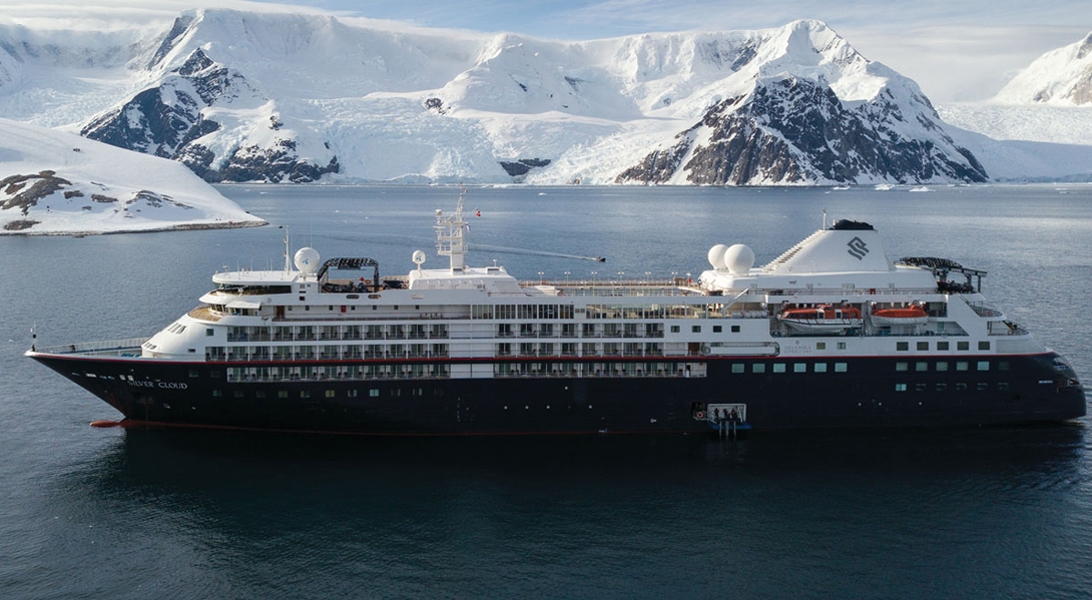
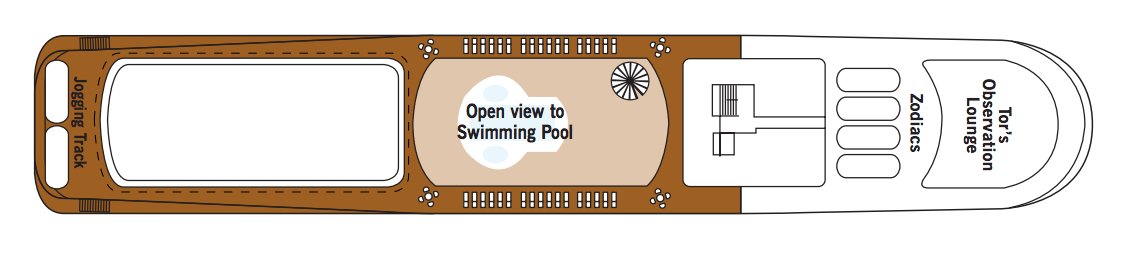

The images shown are for illustration purposes only and may not be an exact representation of what you find on the ship.
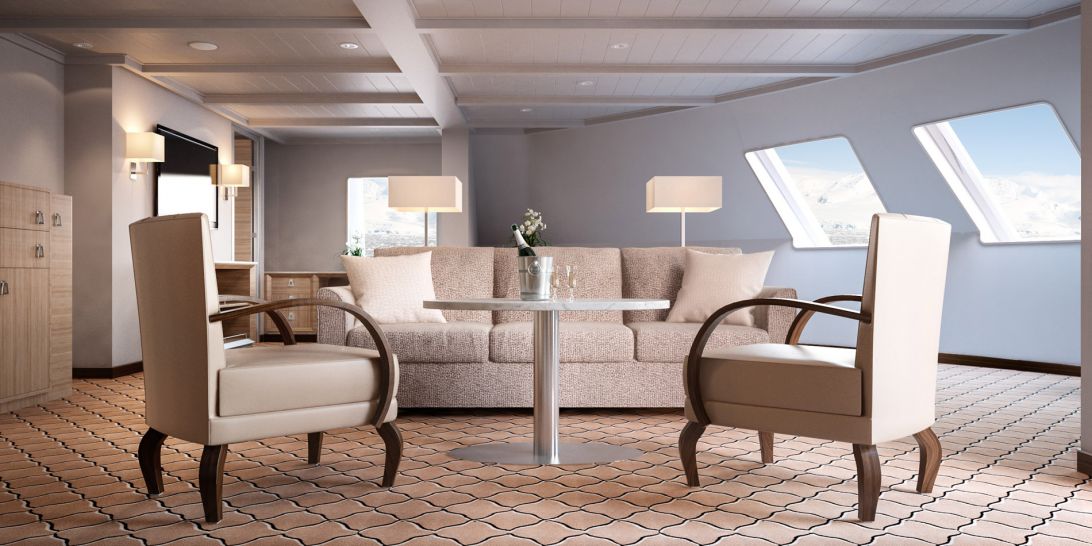
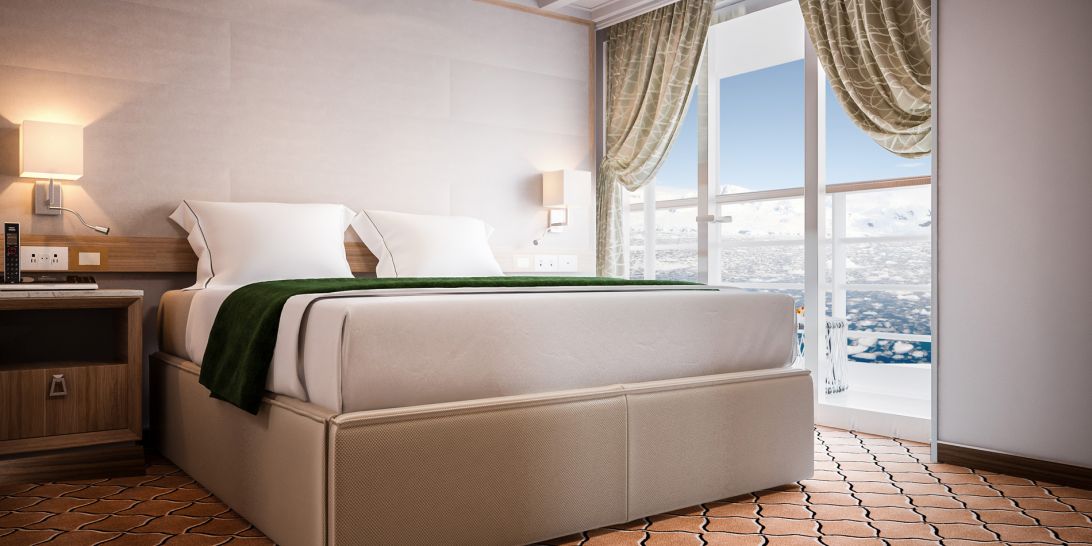
| Grade Code | From | To | |
| G1 | Grand Suite (1 Bedroom) | £21,800 | £21,800 |
| G2 | Grand Suite (2 Bedrooms) | £33,850 | £33,850 |
Expertly designed and exquisitely appointed. The ideal space for sharing stories with fellow explorers and new friends. With enough space to roam both inside and outside, this suite is perfect for relaxing and recounting the highlights of your day. Available in a one-bedroom configuration or as two bedrooms by adjoining with a Veranda Suite.
One bedroom: 95 sq m including veranda (14 sq m)
Images are intended as a general reference. Features, materials, finishes and layout may be different than shown.
Please note that the third guest will sleep on a comfortable sofa bed in the reception area of the suite.
Two bedrooms: 122 sq m including veranda (18.5 sq m)
Images are intended as a general reference. Features, materials, finishes and layout may be different than shown.
Please note that the 3rd guest will sleep on a comfortable sofa bed in the reception area of the suite.
Essentials
Characteristics
Veranda
Furniture
Media & Communication
Onboard Services
Butler service
Amenities
| Grade Code | From | To | |
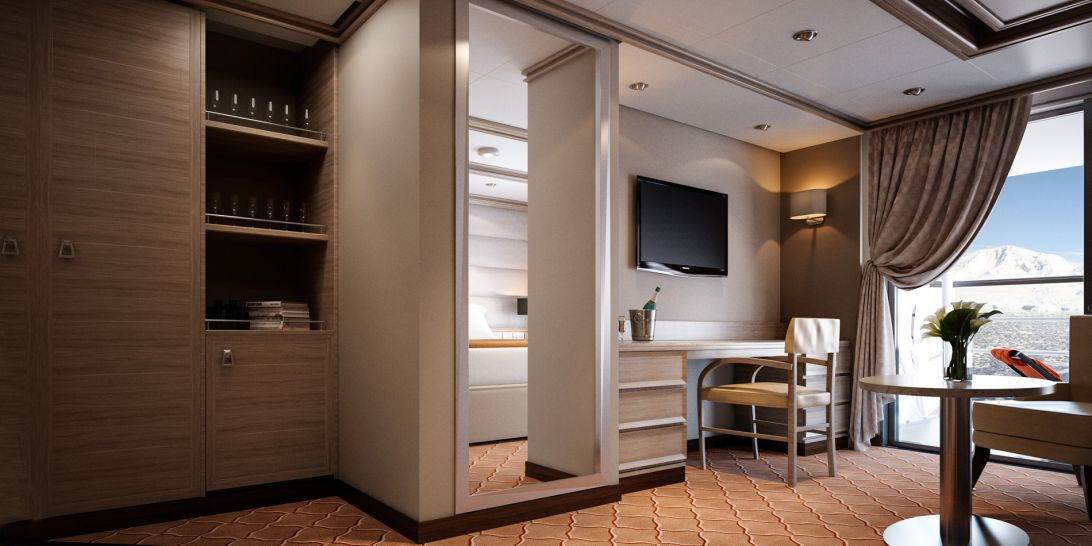
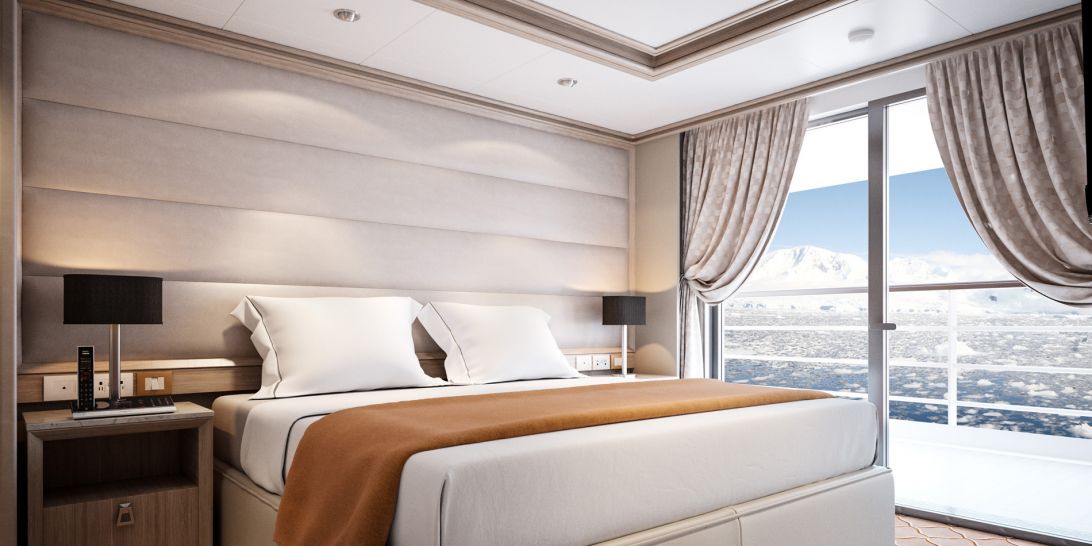
| ME | Medallion Suite | £16,550 | £16,550 |
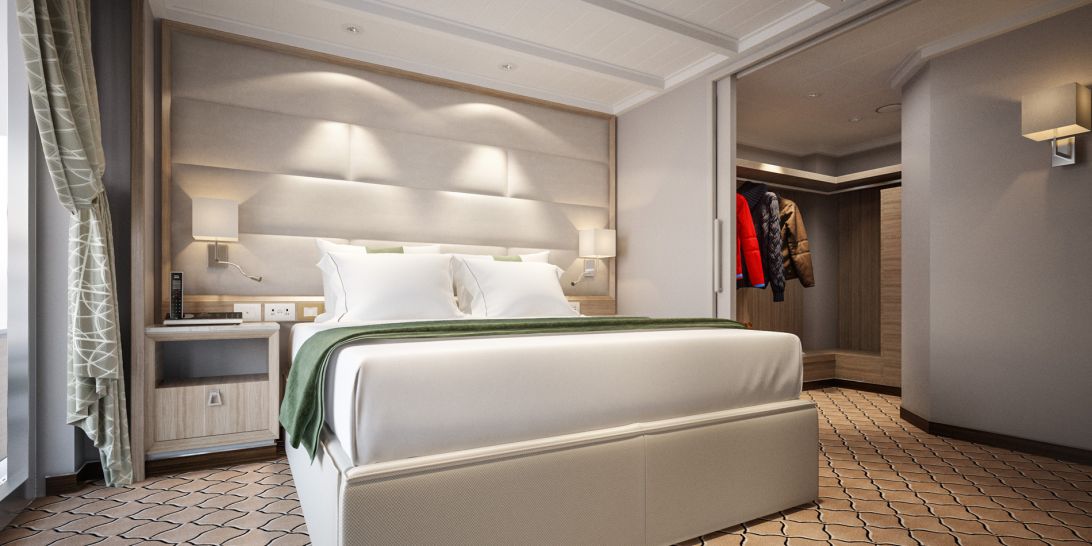
With a room configuration that favors watching the sun rise from the comfort of your bed and losing yourself in the mesmerizing seascapes, this suite is the perfect answer to adventure cruising. A large walk-in wardrobe and an expansive living room make the Medallion Suite your home away from home on the high seas. Medallion Suites accommodate three guests.
One bedroom: 48 sq m including veranda (7.6 sq m )
Images are intended as a general reference. Features, materials, finishes and layout may be different than shown.
Please note that the 3rd guest will sleep on a comfortable sofa bed in the reception area of the suite.
Essentials
Characteristics
Furniture
Media & Communication
Onboard Services
Amenities
| Grade Code | From | To | |
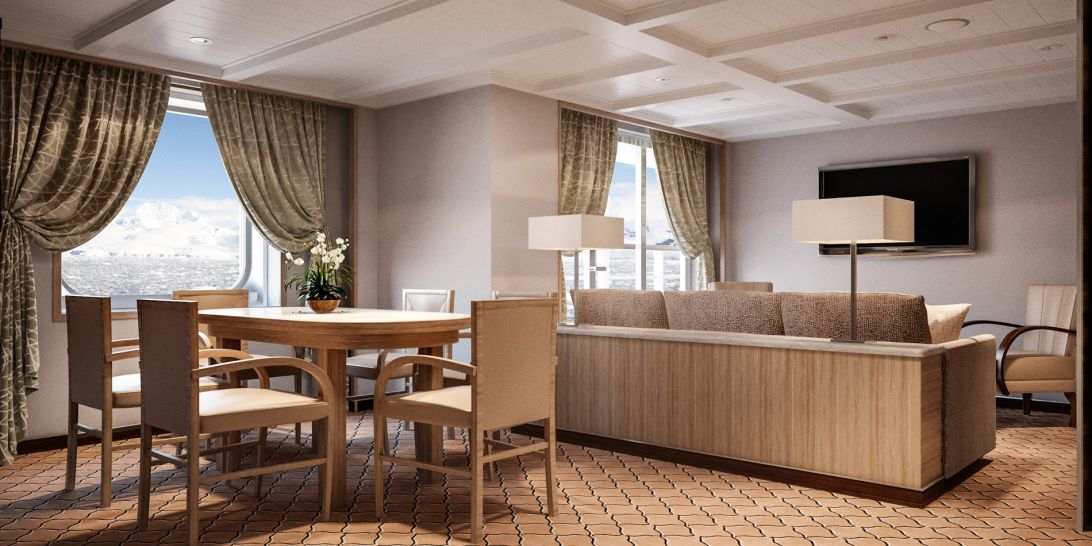
| O1 | Owner's Suite (1 Bedroom) | £24,100 | £24,100 |
| O2 | Owner's Suite (2 Bedrooms) | £34,750 | £34,750 |
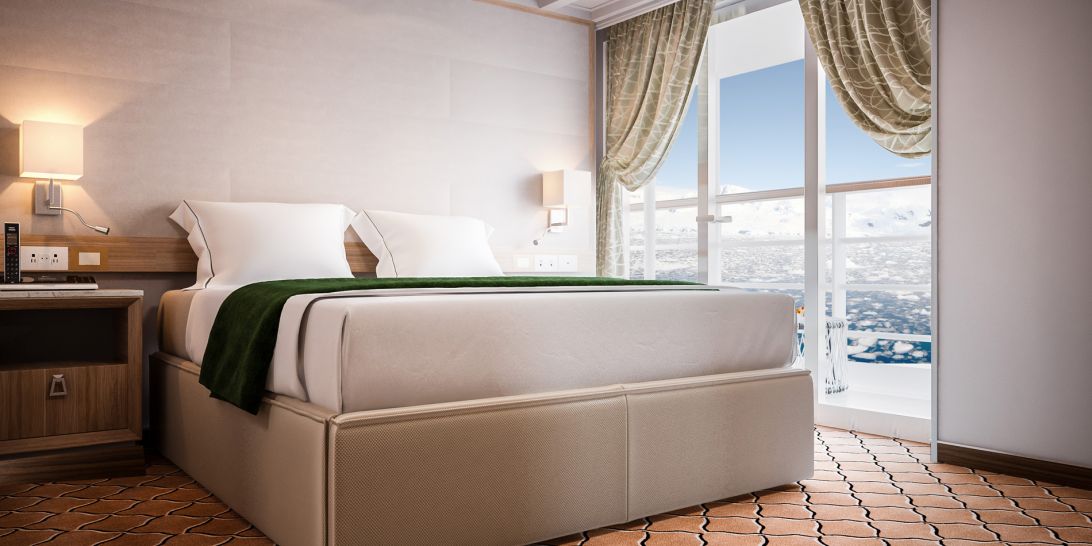
This stylish apartment offers the superlative in levels of space, comfort, and service on board. A perfect mix of expedition experience with luxury lifestyle. Available in a one-bedroom configuration or as two bedrooms by adjoining with a Vista Suite.
One bedroom: 55 sq m including veranda (8 sq m)
Two bedrooms: 77 sq m including veranda (8 sq m)
Images are intended as a general reference. Features, materials, finishes and layout may be different than shown.
Please note that the 3rd guest will sleep on a comfortable sofa bed in the reception area of the suite.
Essentials
Characteristics
Furniture
Media & Communication
Onboard Services
Amenities
| Grade Code | From | To | |
| R1 | Royal Suite (1 Bedroom) | £19,450 | £19,450 |
| R2 | Royal Suite (2 Bedrooms) | £31,500 | £31,500 |
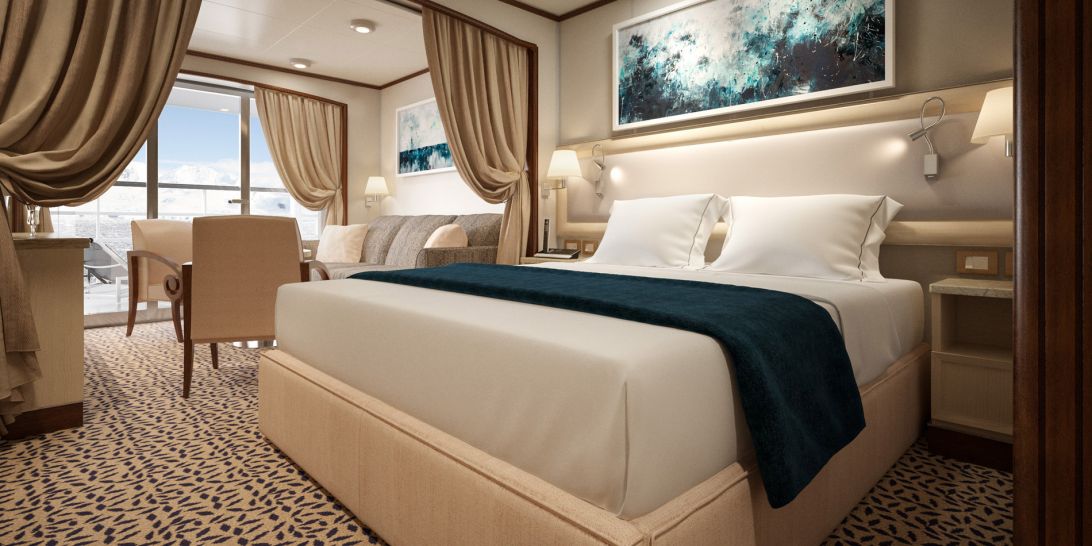
Stately. Commanding and majestic. Perfect for relaxing after a days’ exploring and looking through your photos. With lectures streamed live to your room, this is the pinnacle of good living at sea. Available in a one-bedroom configuration or as two bedrooms by adjoining with a Veranda Suite.
One bedroom: 69 sq m including veranda (12 sq m)
Two bedrooms: 96 sq m including veranda (16.5 sq m)
Images are intended as a general reference. Features, materials, finishes and layout may be different than shown.
Please note that the third guest will sleep on a comfortable sofa bed in the reception area of the suite.
Essentials
Characteristics
Furniture
Media & Communication
Onboard Services
Amenities
| Grade Code | From | To | |
| VR | Veranda Suite | £11,400 | £11,400 |
| DV | Midship Veranda Suite | £12,700 | £12,700 |
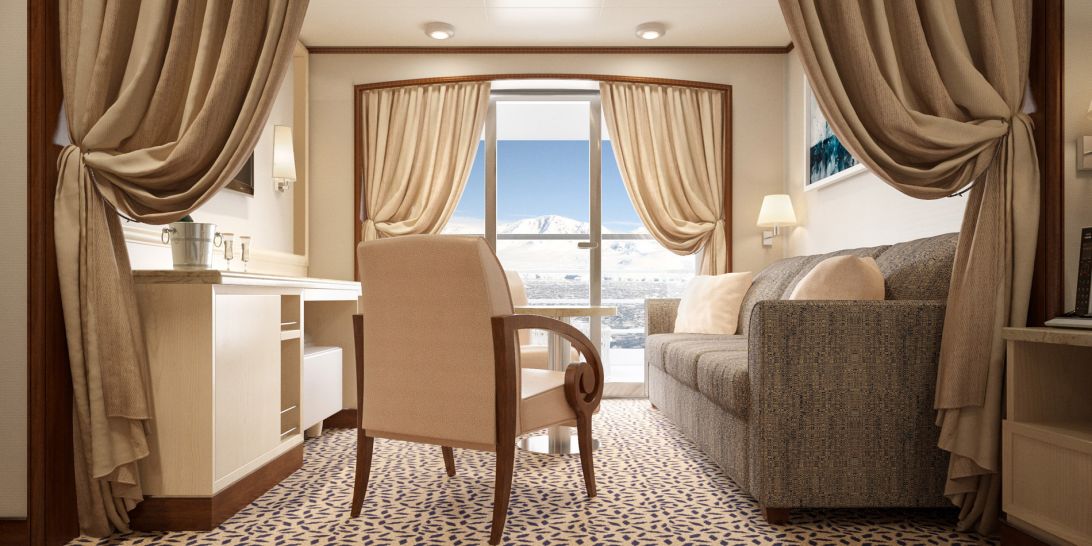
A Silversea signature, with a preferred central location, the Veranda Suite is spacious and welcoming. Floor-to-ceiling glass doors open onto a furnished private teak veranda from where you can contemplate anything from the midnight sun to an Antarctic sunrise. The Deluxe Veranda Suite offers a preferred central location with identical accommodation to a Veranda Suite.
One bedroom: 27 sq m including veranda (4.5 sq m)
Two bedrooms: 27 sq m including veranda (4.5 sq m)
Images are intended as a general reference. Features, materials, finishes and layout may be different than shown.
Essentials
Characteristics
Furniture
Media & Communication
Onboard Services
Amenities
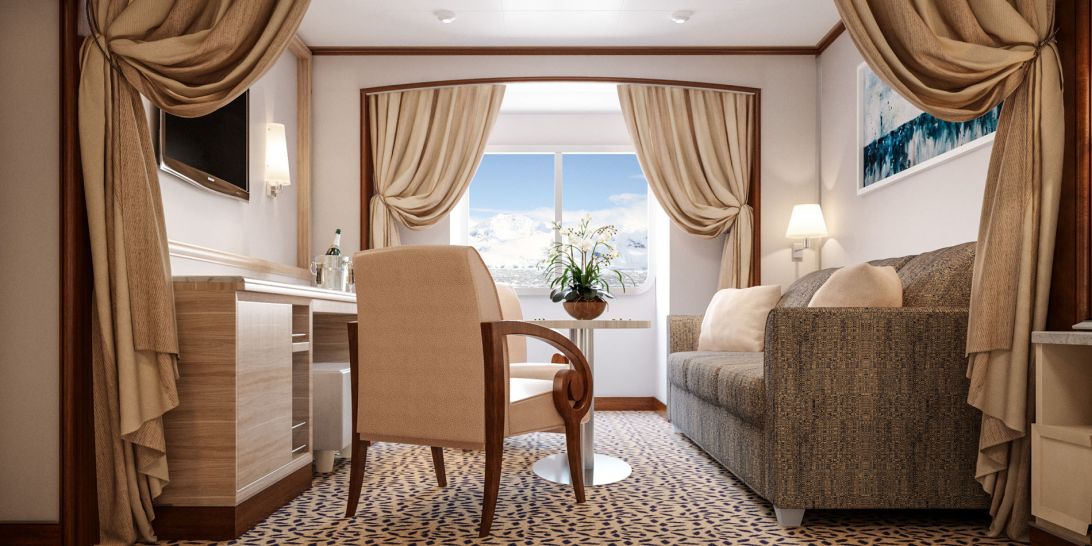
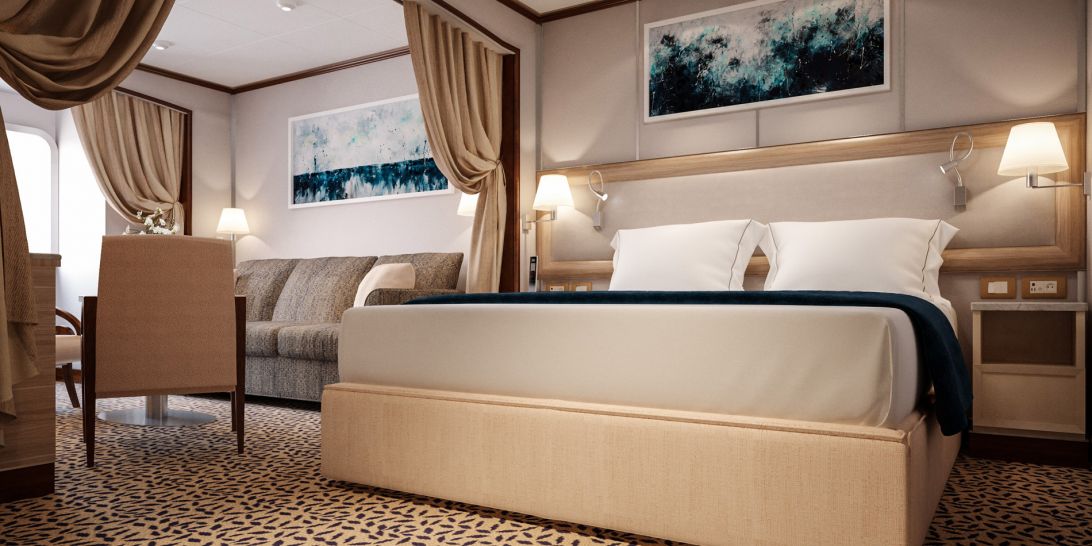
| Grade Code | From | To | |
| VI | Vista Suite | £9,850 | £9,850 |
Your home away from home while you embrace the intrepid explorer within. The suite’s seating area has plenty of room to relax while you go over your notes, ready for the next adventure. Large picture windows frame panoramic ocean views, ideal for appraising the local wildlife.
One bedroom: 22 sq m
Wheelchair accessible suites: 449 and 451
Images are intended as a general reference. Features, materials, finishes and layout may be different than shown.
Essentials
Characteristics
Furniture
Media & Communication
Onboard Services
Amenities
The images shown are for illustration purposes only and may not be an exact representation of what you find on the ship.
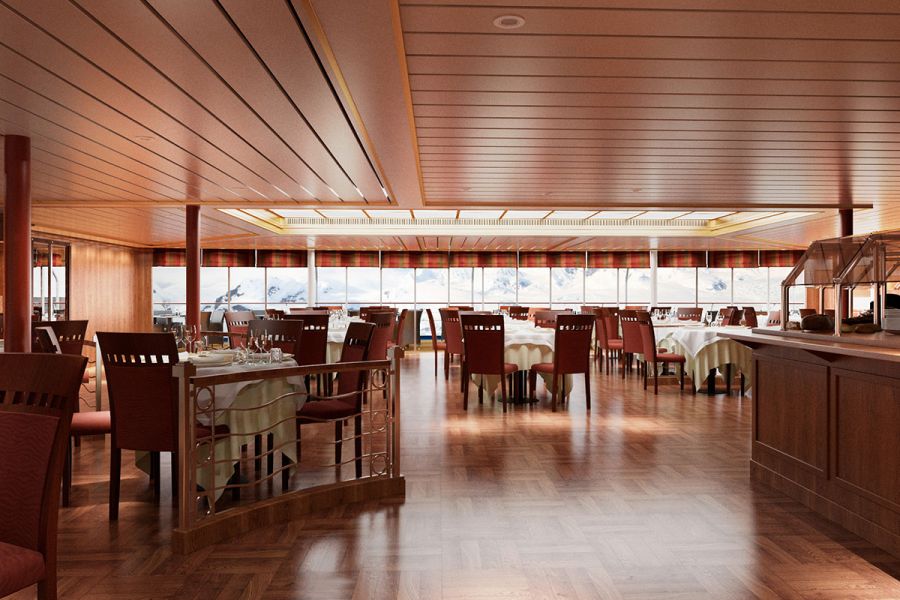
La Terrazza is a celebration of the way Italians eat today, an ode to the delicious evolution of the world’s most beloved cuisine. Evolving one of Silversea’s signature restaurants, La Terrazza serves fresh twists on great classics, and also explores the new heroes of Italian cuisine. The notion of comfort traditionally associated with Italian cuisine is present in every dish, every bite, yet always with a subtle element of surprise. La Terrazza is open for casual, buffet-style breakfast and lunch with indoor or alfresco dining on the outdoor terrace. During the evening, the venue transforms into an à la carte Italian restaurant. Seating is limited for dinner and reservations are recommended.
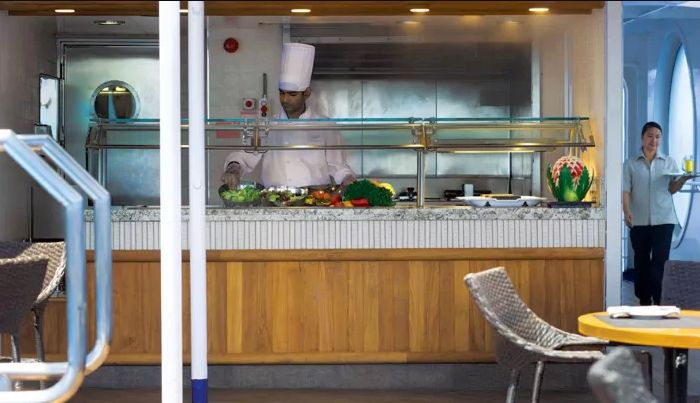
Silversea’s much-loved casual dining restaurant serves a delectable range of burgers and salads by day and turns into our famous Hot Rocks table BBQ concept by night. The Grill is quite simply the best place to eat between sea and sky. If you like flavorsome meals cooked to perfection, a casual, laid-back atmosphere, and OMG views, then The Grill is the answer to your prayers.
Dress code: Casual
Casual wear consists of pants, blouses, or casual dresses for women; open-neck shirts and slacks for men are appropriate.
Images are intended as a general reference. Features, materials, finishes and layout may be different than shown.
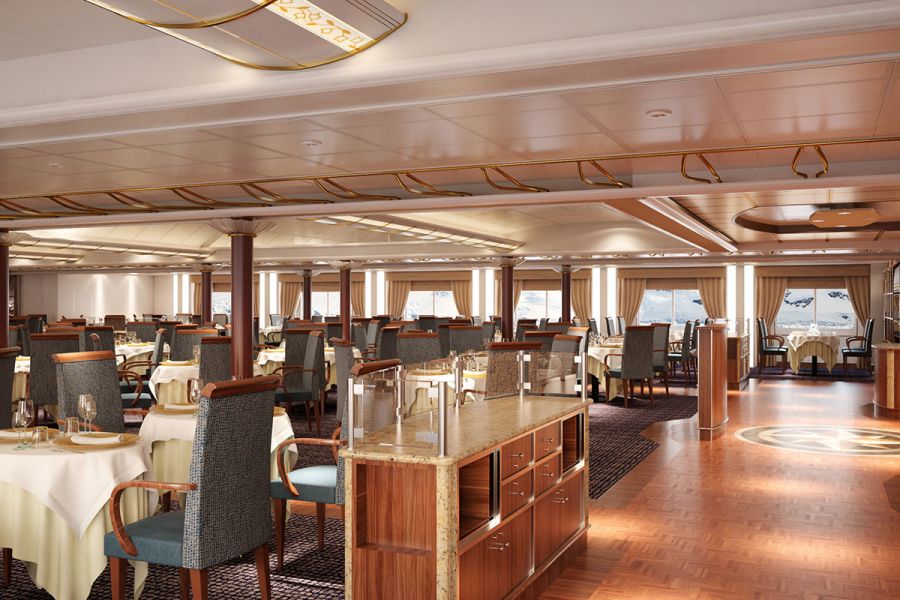
Sparkling with tales of adventure, bonhomie, and like-minded friends, The Restaurant offers contemporary, international cuisine created by our most talented chefs. Menus feature regional specialties unique to the destinations guests visit on their cruise, so don’t be surprised to see a roasted Chilean Sea Bass while cruising the Chilean fjords.
The images shown are for illustration purposes only and may not be an exact representation of what you find on the ship.
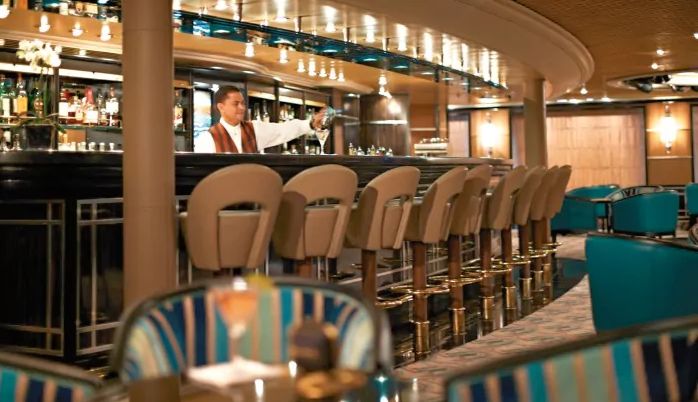
With complimentary cocktails and engaging conversation, live music, and a dance floor, Dolce Vita on board Silver Cloud welcomes guests to mix and mingle. When living such unique experiences as these, there is never a dull moment!
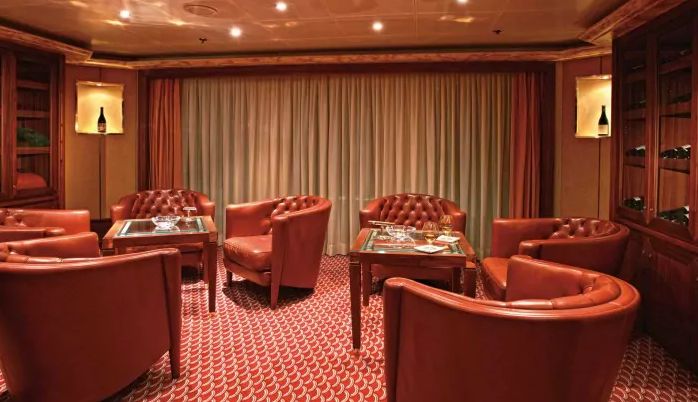
The Connoisseur’s Corner offers exceptional cognacs along with a premium selection of cigars for purchase.
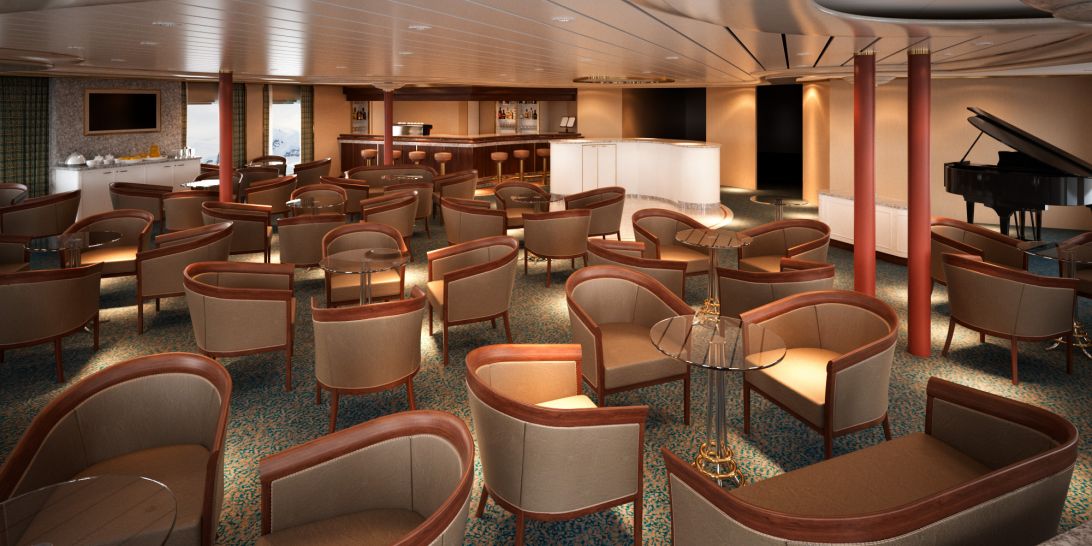
The Panorama Lounge is specially designed to provide an uninterrupted view of the day’s destination from the comfort of the luxury cruise ship’s interior. This is an ideal place to unwind on your cruise, enjoy afternoon tea, listen to the pianist, and watch the setting sun. The drinks are complimentary, and the music is live and inviting. Enjoy dancing to a range of musical styles for every taste, from the classics to the latest club mixes.
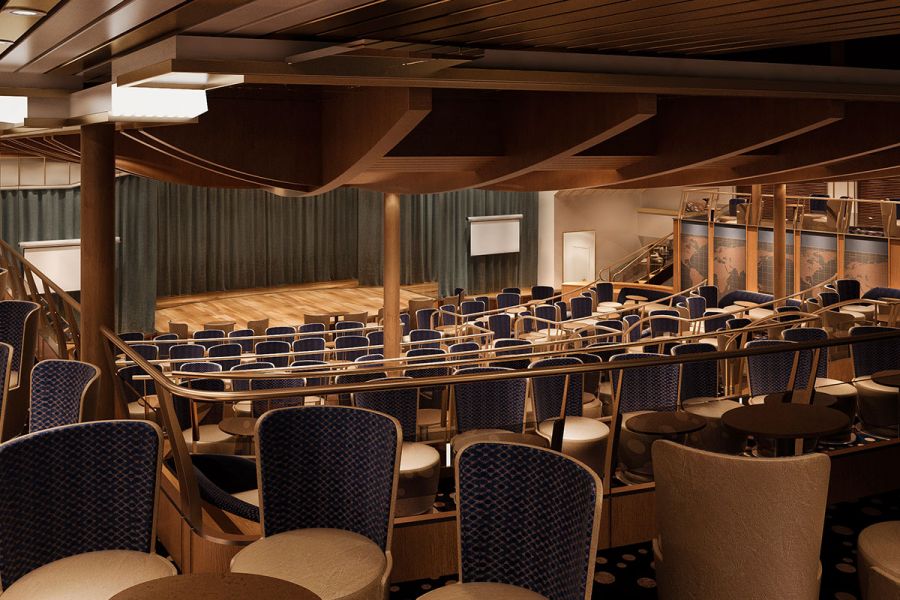
Perfect for presentations, lectures, and video screenings, this is where our team of dedicated experts share their knowledge on their specialized subject, not to mention their infectious passion and energy. The multitiered Explorer Lounge and banquette-style seating ensure that you enjoy every minute of the talk, with lectures streamed live to your suite if desired. This is one of the very few lecture theaters at sea to combine such comfort with such technology.
The images shown are for illustration purposes only and may not be an exact representation of what you find on the ship.
The images shown are for illustration purposes only and may not be an exact representation of what you find on the ship.


Our Fusion packages are all ABTA & ATOL protected ensuring that your booking is safe with us
| 14 nights aboard the Silver Cloud | |||
| Butler Service in Every Suite | |||
| Gratuities Always Included | |||
| Beverages In-Suite and Throughout the Ship | |||
| Gourmet Dining | |||
| In Suite Dining & 24-Hour Room Service | |||
| Intimate small size ships | |||
| Free Wifi Throughout the Ship | |||
| Free Zodiac, Land and Sea Tours & Activities & Complimentary Expedition gear | |||
| Port Taxes and Fees | |||
 | ABTA and ATOL Protection* | ||
Date 2nd May 2027 |
Nts 14 |
Suite £9,850pp |
Date 2nd May 2027 |
Nts 14 |
Suite £9,850pp |
| Suite staterooms from | £9,850pp | ||
| DV | Midship Veranda Suite | £12,700pp | |
| G1 | Grand Suite (1 Bedroom) | £21,800pp | |
| G2 | Grand Suite (2 Bedrooms) |  | |
| ME | Medallion Suite | £16,550pp | |
| O1 | Owner's Suite (1 Bedroom) | | |
| O2 | Owner's Suite (2 Bedrooms) | | |
| R1 | Royal Suite (1 Bedroom) | | |
| R2 | Royal Suite (2 Bedrooms) | | |
| SL | Silver Suite | £18,400pp | |
| VI | Vista Suite | £9,850pp | |
| VR | Veranda Suite | £11,400pp | |
Fusion Holidays when selling travel arrangements is a trading name of Co-op Travel Services Limited, registration 08903986. Fusion Cruises is an Accredited Body Member of Co-op Travel Services Limited ATOL 12904.
Book with Confidence. We are a Member of ABTA which means you have the benefit of ABTA’s assistance and Code of Conduct.
Some of the flights and flight-inclusive holidays on this website are financially protected by the ATOL scheme but ATOL protection does not apply to all holiday and travel services offered on this website. This website will provide you with information on the protection that applies in the case of each holiday and travel service offered before you make your booking. If you do not receive an ATOL Certificate then the booking will not be ATOL protected. If you do receive an ATOL Certificate but all parts of your trip are not listed on it, those parts will not be ATOL protected. Please see our booking conditions for information, or for more information about financial protection and the ATOL Certificate go to: www.caa.co.uk