This site uses cookies as defined in our Cookie Policy, by continuing to use this site you agree to their use.
Continue

| Arrive | Depart | ||||||
| 16th16 | MayMay | 202727 | Kobe, Japan, embark on the Silver Cloud | 19:00 | |||
Located on the calm waters of the Inland Sea, Kobe has served as an important port town for hundreds of years. It was one of the first harbours to accept foreign traders in 1868 when Japan was just emerging from its centuries of isolation. What followed was a surge of Western trade and exports. Today, Kobe is quite multicultural, with expatriates from 98 different nations in residence, providing a cultural diversity most easily visible in restaurants serving every kind of cuisine, including the now world famous Kobe beef. The Great Hanshin Earthquake of 1995 set back Kobe’s development, but not for long. Kobe emerged more vibrant than before - with additional attractions, hotels and urban redevelopment, and only a few remnants of the extensive damage. It is a cosmopolitan place with lively shopping arcades, interesting museums, great restaurants, and a port that is still at the heart of things. Kobe is well known for its nightlife, in an intimate quarter of neon lights, cosy bars and sophisticated nightclubs. It also serves as the gateway to the ancient Japanese capitals of Kyoto and Nara. The Japanese city of Kobe needs no introduction. The name is synonymous with its home grown superstar. We are not talking of its stunning shrines, cherry trees laden with blossom during sakura or effervescent city, buzzing with life 24/7. We are of course talking of a much more grass roots hero – its eponymous beef. The delicacy might have put the city on the map, but there is far more to Kobe than its meat. Naturally, Kobe wears its cuisine as a badge of honour. Its port history has given it a gastronomy that is quite different from its neighbours. Seafood and sushi is naturally some of the freshest and most diverse you can find, but Kobe’s multi-cultural nature (the city is home to 98 different nationalities) means that it has one of the most diverse gastronomic cultures in Japan. Bread and bakeries are also an (unexpected) delicacy. Additionally, Sake is taken very seriously – Kobe even has its own museum dedicated to the national spirit. Historically, Kobe has always been a key city for Japan. Renamed in 1889, it was known as Owada no Tomari during the Nara Period (710-784 C.E.). Kobe’s location on the calm Inland Sea between Osaka and Kyoto has proven to be pivotal in Japanese history; it is mentioned in famous literary works such as The Tale of Genji (from approximately late 9th century) and the Taiheiki (14th century). The city and region are home to many attractions including the Himeji Castle (widely considered to be Japan's most beautiful feudal castle), a short ride away. | |||||||
| 17th17 | MayMay | 202727 | Kochi, Japan | 07:30 | 13:00 | ||
| Small and friendly, this castle town dates back from the early 17th century, and has just one of the 12 Japanese castles to have survived the feudal age. Regrettably, a WWII bombing in 1945 destroyed half the city, although thankfully not the original castle, which serves as a shining example of the Edo Period. A buzzing food market next to the castle provides sustenance – both local and international cuisine and those who are feeling adventurous must try the sugar tomato and rice omelette, either separately or why not together. For those in search of a quintessentially Japanese experience, Kochi is blessed with a superb landscape and an enjoyable local pastime is bathing in the hot springs (onsens) that surround the city. They come in many different shapes, sizes and colours (the colour of the water indicates the dominant minerals present: red for iron, milky for sulphur, blue for bicarbonate and so on). Some are considered rare and each type is said to have a different therapeutic effect. However, some etiquette is expected and first-time visitors should perhaps be aware of the formalities surrounding this bathing ritual. Home as well to some stunning beaches, visitors are advised against swimming in the sea because of strong undercurrents, instead being encourages to enjoy the many beachside attractions of the area, such as the Sakamoto Ryoma Memorial Museum, the lovely walking paths or the sumptuous local speciality katsuo no tataki, served on one of the many surrounding restaurants. Although perhaps not the most picturesque of downtowns, downtown Kochi holds a legendary tale, which centers on the Harimayabashi, (the small red bridge on the west side of the main street). Legend has it that a young priest from Godaisan fell in love with and a girl from Kochi. Because the priest's temple forbade relationships, the couple hid their romance by meeting in secret and exchanging clandestine gifts. One day, the priest was seen buying a hair comb at Harimayabashi, and the couple's secret romance was discovered. | |||||||
| 18th18 | MayMay | 202727 | Yakushima, Japan | 07:30 | 17:00 | ||
Yakushima is a round-shaped subtropical island off the southern coast of Kyushu island and part of Kagoshima prefecture. One fifth of this island is designated a Natural World Heritage Site in 1993, and it is covered by an extensive cedar forest that contains some of Japan’s oldest living trees. The symbol of Yakushima is called Yaku-Sugi, meaning Japanese cedar, which is only used for cedar trees over 1,000 years old. The oldest Yaku-Sugi is considered to be more than 7,000 years old. As a subtropical island with mountains that are nearly 2,000 meters high, Yakushima attracts a lot of rainfall around the year with a local saying that it rains 35 days a month! No matter how the weather is, the walking in the Cedar tree forest is what you cannot miss on this island. You can see many rare plants due to the abundance of water and the changes in temperature at different altitudes. The range of flora is very wide, from coral reef to alpine plants. Yakushima is a round-shaped subtropical island off the southern coast of Kyushu island and part of Kagoshima prefecture. One fifth of this island is designated a Natural World Heritage Site in 1993, and it is covered by an extensive cedar forest that contains some of Japan’s oldest living trees. The symbol of Yakushima is called Yakusugi, a Japanese cedar. Yakusugi is a specific term only used for cedar trees over 1,000 years old. The oldest Yaku-Sugi is considered to be more than 7,000 years old. As a subtropical island with mountains that are nearly 2,000 meters high, Yakushima attracts a lot of rainfall around the year with a local saying that it rains 35 days a month! No matter how the weather is, the walking in the Cedar tree forest is what you cannot miss on this island. You can see many rare plants due to the abundance of water and the changes in temperature at different altitudes. The range of flora is very wide, from coral reef to alpine plants. | |||||||
| 19th19 | MayMay | 202727 | Kagoshima, Japan | 07:00 | 18:00 | ||
Kagoshima city is the capital of Kagoshima prefecture and also Kyushu’s southernmost major city. This city is often compared to its Italian sister city Naples, due to its’s similarities such as mild climate and active volcano, Sakurajima. Sakurajima is one of the most renowned active volcanos not only in Japan but also in the whole entire world. This smoking Sakurajima is centred in Kinko Bay and is one of the main symbols of this prefecture. We cannot talk about Sakurajima without the history of continuous eruption. Sakurajima used to be an isolated island; however, the land has banded together with Osumi peninsula from the eruption in 1914. You may have a chance to see the smoke coming from the top of Sakurajima depending on the weather condition. Not only does the scenery of Sakurajima represent the beauty of Kagoshima City but Senganen garden is also symbolic to elegance in the Kagoshima region. This Japanese garden was constructed by a feudal lord, Mitsuhisa Shimazu, as a guest house of the Kagoshima castle which attracts many visitors for its splendid view. One of Japan's most southerly major cities, Kagoshima is dominated by the imposing Sakurajima volcano's cone – a legendary active volcano that broods, churns and puffs out ash nearby. A pretty old-time ferry chugs across the still waters to the gently sloping foothills of the volcano's cone, and it's easy to imagine where the comparisons with its sister city Naples materialised, as you sail the glorious sweeping Kinko Bay, below beaming sunshine, towards the immense volcanic spectacle. This is certainly no historic relic, and the volcano remains revered and feared, with the most dramatic recent eruption taking place in 1914, and spewing out a new bridge of land into the sea. Make the most of the geothermal activity in the area by indulging in a stress-simmering black sand bath. Incredibly relaxing, you'll be submerged in the warm sand, as you feel your muscles relaxing in the heat, and rejuvenating blood pumping around your body. Enjoy a privileged view of the iconic volcano's loom from the terraced garden of Senganen Garden. Built in 1658, this elegant, traditional garden has belonged to the Shimadzu family for 350 years. Wander the gardens - which bloom with Japan's renowned cherry tree blossoms and feature tiny bridges looping over ponds and rock pools - before sitting back and sipping a wholesome green matcha latte. Elsewhere, museums offer Feudal Era and Satsuma Province history, as well as insights into the Kamikaze squadrons of World War II. Lake Ikeda is also close by, so be sure to keep an eye out for the legendary Issie monster. | |||||||
| 20th20 | MayMay | 202727 | Busan, South Korea | ||||
White-sand city beaches and hot-spring resorts may not be everyone's first image of Korea, but these are what Koreans flock to Busan for all year. And there are plenty of opportunities for rest, relaxation, retail therapy, and even a touch of glamour every October with the Busan International Film Festival. Busan's beaches are the big summertime draw but there is plenty to be seen year round. Quintessential experiences include taking some rest and relaxation at a local spa and exploring the Beomeosa temple complex. "A tapestry of kaleidoscopic colours, intense seafood flavours, and urban beach bliss, Busan rolls across a glorious natural setting on the Korean Peninsula's south-east. One of the largest and busiest ports in the world, 3.5 million people call South Korea's second city home, and the amiable locals help to lend the city its quirky, offbeat outlook. A spacious, playful and cosmopolitan place, Busan is a lively, liveable city, cradled by lush mountains and endless ocean scenery. Haedong Yonggung Temple nestles on a dramatic cliffside, just above the crumbling rocks and crashing waves of the East Sea. Dating back to 1376, the temple's multi-storey pagoda is adorned with lions - each representing a different emotion. Elsewhere, lanterns glitter in the night sky around Mount Geumjeongsan, freshly released from the beautiful Beomeosa Temple, which was established in AD 678. The hillside shantytown of Gamcheon Culture Village has completed an improbable transformation, blossoming from a sea of makeshift homes for Korean war refugees, into a colourful explosion of creativity and curiosity. Local artists have been let loose to create interactive installations, and the entire area is now an expansive canvas for expression. Lose yourself among vibrant alleyways of flamingo-pink, lemon-yellow and baby-blue painted facades in this unique area. Sample bibimbap, fiery-hot beef and rice, from street food vendors, before relaxing on one of South Korea's best beaches - Haeundae's banana bend of sand. Metallic skyscrapers offer an unusual backdrop to this pristine expanse of golden powder and are mirrored by elaborate sandcastles and sculptures during the annual sand festival - when spontaneous water fights and firework displays also take place. Gwangalli beach is another urban option, laying out spectacular views of the reaching Gwangan Bridge - the country's second largest bridge. At night, 16,000 bulbs bathe this engineering marvel in colour." | |||||||
| 21st21 | MayMay | 202727 | Busan, South Korea | 19:00 | |||
White-sand city beaches and hot-spring resorts may not be everyone's first image of Korea, but these are what Koreans flock to Busan for all year. And there are plenty of opportunities for rest, relaxation, retail therapy, and even a touch of glamour every October with the Busan International Film Festival. Busan's beaches are the big summertime draw but there is plenty to be seen year round. Quintessential experiences include taking some rest and relaxation at a local spa and exploring the Beomeosa temple complex. "A tapestry of kaleidoscopic colours, intense seafood flavours, and urban beach bliss, Busan rolls across a glorious natural setting on the Korean Peninsula's south-east. One of the largest and busiest ports in the world, 3.5 million people call South Korea's second city home, and the amiable locals help to lend the city its quirky, offbeat outlook. A spacious, playful and cosmopolitan place, Busan is a lively, liveable city, cradled by lush mountains and endless ocean scenery. Haedong Yonggung Temple nestles on a dramatic cliffside, just above the crumbling rocks and crashing waves of the East Sea. Dating back to 1376, the temple's multi-storey pagoda is adorned with lions - each representing a different emotion. Elsewhere, lanterns glitter in the night sky around Mount Geumjeongsan, freshly released from the beautiful Beomeosa Temple, which was established in AD 678. The hillside shantytown of Gamcheon Culture Village has completed an improbable transformation, blossoming from a sea of makeshift homes for Korean war refugees, into a colourful explosion of creativity and curiosity. Local artists have been let loose to create interactive installations, and the entire area is now an expansive canvas for expression. Lose yourself among vibrant alleyways of flamingo-pink, lemon-yellow and baby-blue painted facades in this unique area. Sample bibimbap, fiery-hot beef and rice, from street food vendors, before relaxing on one of South Korea's best beaches - Haeundae's banana bend of sand. Metallic skyscrapers offer an unusual backdrop to this pristine expanse of golden powder and are mirrored by elaborate sandcastles and sculptures during the annual sand festival - when spontaneous water fights and firework displays also take place. Gwangalli beach is another urban option, laying out spectacular views of the reaching Gwangan Bridge - the country's second largest bridge. At night, 16,000 bulbs bathe this engineering marvel in colour." | |||||||
| 22nd22 | MayMay | 202727 | Sakaiminato, Japan | 13:00 | 22:00 | ||
Sakaiminato is a small city almost totally surrounded by water: the Sea of Japan to the east, the Sakai Channel to the north and Lake Nakaumi to the west. Across the lake the towns of Matsue and Yasugi offer interesting experiences. Matsue is known as the “Town of Water” next to scenic Lake Shinji and Lake Nakaumi. It has one of the very few wooden castles that still remain in Japan. Touring the castle and boat rides on the Horikawa River and the castle’s moat are popular. Yasugi has the Adachi Museum of Art, a private museum that houses one of the finest collections of contemporary Japanese paintings, but also has a 165,000 square metres garden –with plants and rocks collected by the museum’s founder. Six different gardens show different scenarios depending on the season. These gardens have been selected as “Japan’s best garden” for several years. Sakaiminato is a small city almost totally surrounded by water: the Sea of Japan to the east the Sakai Channel to the north and Lake Nakaumi to the west. Across the lake the towns of Matsue and Yasugi offer interesting experiences. Matsue is known as the “Town of Water” next to scenic Lake Shinji and Lake Nakaumi. It has one of the very few wooden castles that still remain in Japan. Touring the castle and boat rides on the Horikawa River and the castle’s moat are popular. Yasugi has the Adachi Museum of Art a private museum that houses one of the finest collections of contemporary Japanese paintings but also has a 165 000 square metres garden –with plants and rocks collected by the museum’s founder. Six different gardens show different scenarios depending on the season. These gardens have been selected as “Japan’s best garden” for several years. | |||||||
| 23rd23 | MayMay | 202727 | Oki Islands, Japan | 06:30 | 17:00 | ||
| The Oki Islands is an archipelago in the Sea of Japan, and is made up of four populated islands and more than 180 uninhabited islands situated in the Sea of Japan. 30,000 years ago, people were already living here, and during the Stone Age the volcanic rock obsidian was excavated and traded around Japan. A landscape that provides glimpses of how the Sea of Japan formed, and an ecosystem that is full of mysteries, the Oki Islands are invaluable, even from a global perspective. People are only living in four islands such as Nishimoshima, Nakanoshima, Chiburijima and Dogo Island. You will enjoy the dynamic landscape created by a former volcano both on land and your cruise ship. You will also find the art made by nature such as oddly-shaped rocks and many more! The Oki Islands Geopark was authorized as a member of the Global Geoparks Network in 2013. | |||||||
| 24th24 | MayMay | 202727 | Kanazawa, Japan | 07:00 | 19:30 | ||
The capital of the Ishikawa Prefecture, Kanazawa once rivalled Kyoto and Edo (Tokyo) as a town rich in cultural achievements. Kanazawa escaped destruction during World War II and accordingly has been able to preserve many of the old districts in good shape. The city is famous because of Kenrokuen. Located next to Kanazawa Castle, Kenrokuen is classified as “One of the Three Gardens of Japan”. The garden has an artificial pond, and hills and houses are dotted within the 11.4 hectares. It has Japan’s oldest fountain using natural water pressure and a tea-house dating back to 1774. Close by is the Higashi Chaya Gai Geisha District, designated a National Cultural Asset and the biggest of the Geisha districts of Kanazawa. Some of the houses not only retain the original structure, but still are used as Geisha houses. Some of the streets have traditional shops creating a nostalgic atmosphere. Kanazawa is also known for its lacquer ware, Kutani-style pottery, gold-leaf workmanship and delicately painted silk kimonos. The capital of the Ishikawa Prefecture, Kanazawa once rivalled Kyoto and Edo (Tokyo) as a town rich in cultural achievements. Kanazawa escaped destruction during World War II and accordingly has been able to preserve many of the old districts in good shape. The city is famous because of Kenrokuen. Located next to Kanazawa Castle, Kenrokuen is classified as “One of the Three Gardens of Japan”. The garden has an artificial pond, and hills and houses are dotted within the 11.4 hectares. It has Japan’s oldest fountain using natural water pressure and a tea-house dating back to 1774. Close by is the Higashi Chaya Gai Geisha District, designated a National Cultural Asset and the biggest of the Geisha districts of Kanazawa. Some of the houses not only retain the original structure, but still are used as Geisha houses. Some of the streets have traditional shops creating a nostalgic atmosphere. Kanazawa is also known for its lacquer ware, Kutani-style pottery, gold-leaf workmanship and delicately painted silk kimonos. | |||||||
| 25th25 | MayMay | 202727 | Sado, Japan | 07:30 | 13:30 | ||
Sado is Japan’s sixth-largest island and depends mainly on fishing and agriculture. The island’s Tori Forest Park had been selected for the successful reintroduction of Crested Ibises into Japan –a bird that was down to what was believed to be a total world population of 12 birds in 1981. At that time the last five wild ibises found in Japan were taken into captivity on Sado and both Japan and China cooperated in a breeding programme for these birds. Fortunately the work has paid off and released Crested Ibises successfully nested in the wild again in 2012. Another attraction is the Sado Gold Mine. The adventurous can descend into the deep tunnels to see the conditions under which gold was extracted for almost 400 years. Sado is Japan’s sixth-largest island and depends mainly on fishing and agriculture. The island’s Tori Forest Park had been selected for the successful reintroduction of Crested Ibises into Japan –a bird that was down to what was believed to be a total world population of 12 birds in 1981. At that time the last five wild ibises found in Japan were taken into captivity on Sado and both Japan and China cooperated in a breeding programme for these birds. Fortunately the work has paid off and released Crested Ibises successfully nested in the wild again in 2012. Another attraction is the Sado Gold Mine. The adventurous can descend into the deep tunnels to see the conditions under which gold was extracted for almost 400 years. | |||||||
| 26th26 | MayMay | 202727 | Hakodate, Japan | 14:00 | 20:00 | ||
Facing out on two bays, Hakodate is a 19th-century port town, with clapboard buildings on sloping streets, a dockside tourist zone, streetcars, and fresh fish on every menu. In the downtown historic quarter, a mountain rises 1,100 feet above the city on the southern point of the narrow peninsula. Russians, Americans, Chinese, and Europeans have all left their mark; this was one of the first three Japanese ports the Meiji government opened up to international trade in 1859. The main sights around the foot of Mt. Hakodate can be done in a day, but the city is best appreciated with an overnight stay for the illumination in the historic area, the night views from either the mountain or the fort tower, and the fish market at dawn. City transport is easy to navigate and English information is readily available. Evening departure trains from Tokyo arrive here at dawn—perfect for fish-market breakfasts. Gaze down over Hakodate, from the heights of its namesake peak - Mount Hakodate - to see the city stretching out spectacularly, with back-to-back twin bays splitting the ocean. Hakodate port was one of the first to open Japan up to the world, and to international trade in 1859 - a fact reflected in the architecture, with its influences from the West and beyond. The port area is a redbrick wash of warehouses turned shopping malls, all observed by the onion domes of the city's Russian Orthodox church. Elsewhere, the star-shaped Goryokaku fortress glows with natural colours and a beautiful haze of cherry blossom during the season. Goryokaku Tower, which rises up beside it, offers a sweeping bird's eye view of the green fortress and mountain backdrop. Buses trundle up the 335-metre incline to the top of Mount Hakodate, but the best way to reach the views is to jump on the ropeway, which swings high above downtown's buildings, over a carpet of pine trees. Head up to the mountain's heights as sunset approaches. With darkness sweeping in, and the lights flickering to life, the panorama is one of Japan's most spectacular. Soak it all in, and look out to the horizon, dotted with the shimmering lights of ships hauling in harvests of the city's renowned squid. The plankton-rich waters attract a delicious variety of feasting sea life to Hakodate's coast, which is then plated up in the city's numerous, skilled restaurants. For an eye-opening, whirring morning, see the freshest produce being doled out at Hakodate Morning Market – amid a cacophony of noise and activity. | |||||||
| 27th27 | MayMay | 202727 | Okushiri, Japan | 07:30 | 14:00 | ||
Okushiri is a district consisting of Okushiri Island, administered as part of Hiyama Subprefecture, Hokkaido, Japan. As of 2004, the district has an estimated population of 3,708 and a density of 25.93 persons per km². The total area is 142.98 km² | |||||||
| 28th28 | MayMay | 202727 | Otaru, Japan, disembark the Silver Cloud | ||||
Otaru is a small harbor city west of Sapporo. Famous for its many hills and a nearby ski resort, the town has been an important trade and herring fishing center. A wide canal that led from the port to the old town’s warehouses has been maintained for touristic purposes and the old stone or brick-built warehouses have been beautifully converted to restaurants and boutiques Otaru is a small harbor city west of Sapporo. Famous for its many hills and a nearby ski resort the town has been an important trade and herring fishing center. A wide canal that led from the port to the old town’s warehouses has been maintained for touristic purposes and the old stone or brick-built warehouses have been beautifully converted to restaurants and boutiques. | |||||||
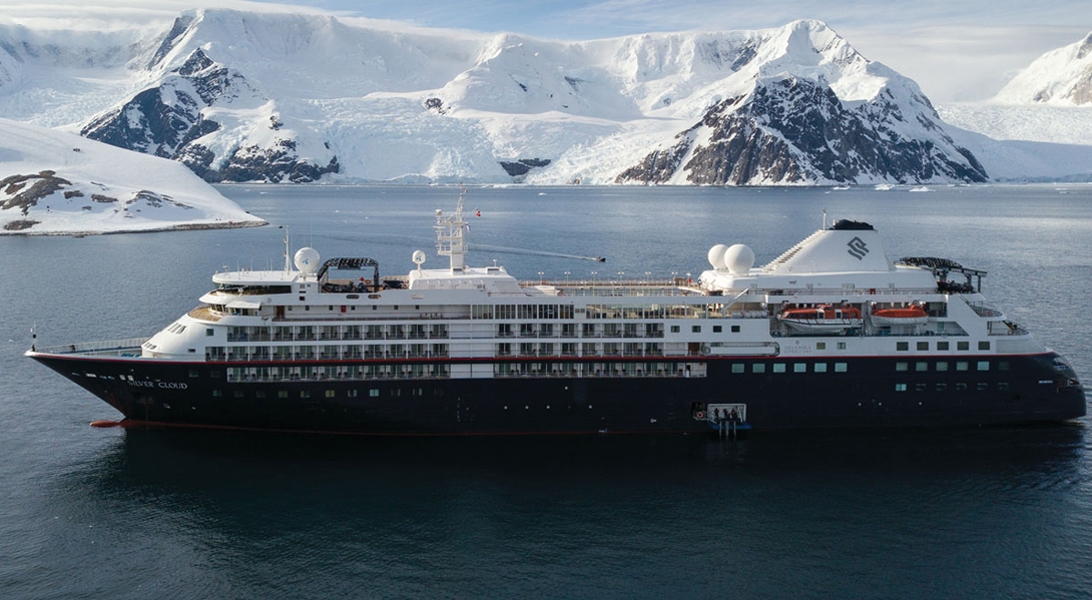
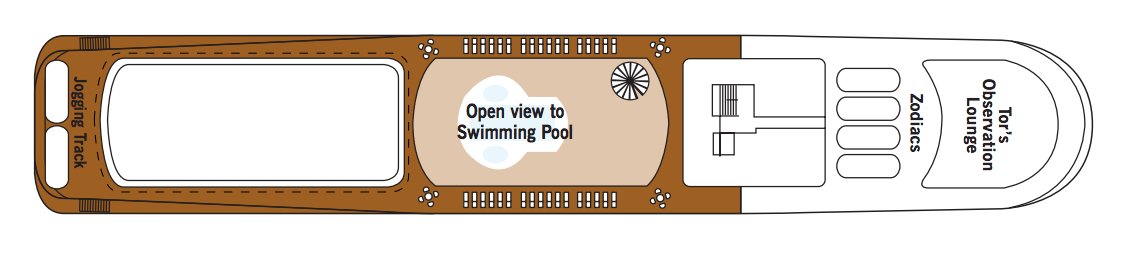

The images shown are for illustration purposes only and may not be an exact representation of what you find on the ship.
| Grade Code | From | To | |
| G1 | Grand Suite (1 Bedroom) | £19,900 | £19,900 |
| G2 | Grand Suite (2 Bedrooms) | £31,800 | £31,800 |
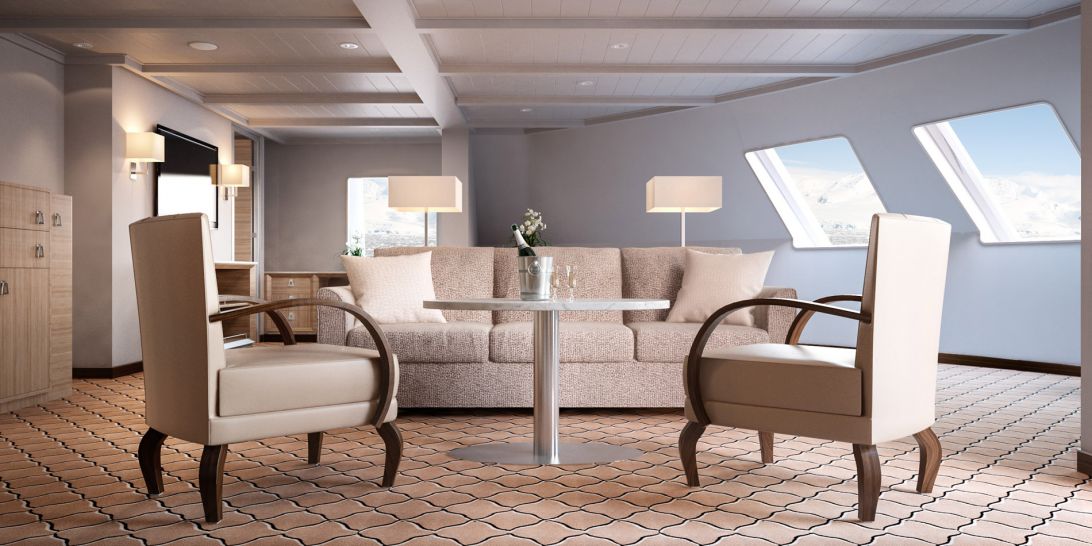
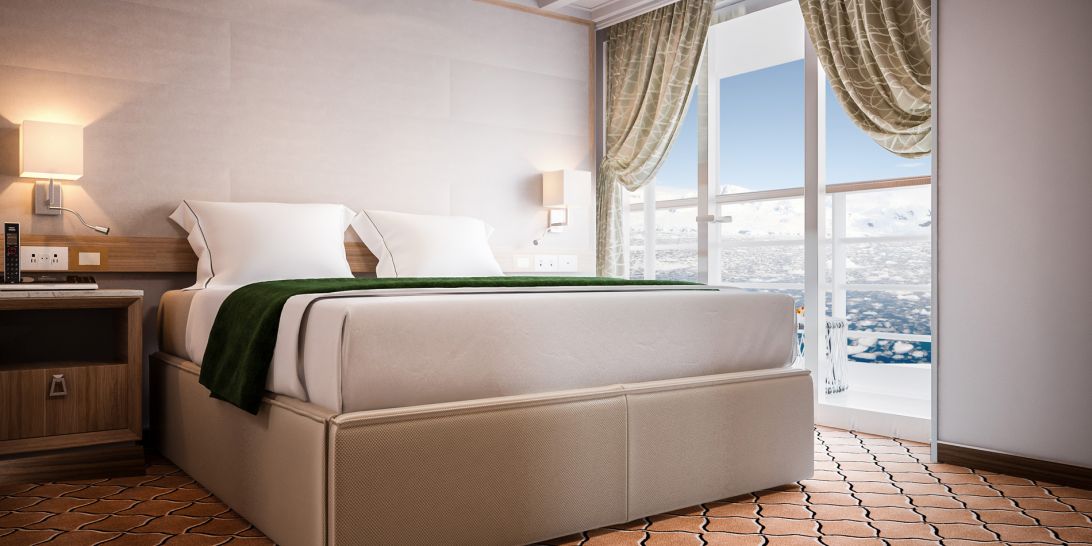
Expertly designed and exquisitely appointed. The ideal space for sharing stories with fellow explorers and new friends. With enough space to roam both inside and outside, this suite is perfect for relaxing and recounting the highlights of your day. Available in a one-bedroom configuration or as two bedrooms by adjoining with a Veranda Suite.
One bedroom: 95 sq m including veranda (14 sq m)
Images are intended as a general reference. Features, materials, finishes and layout may be different than shown.
Please note that the third guest will sleep on a comfortable sofa bed in the reception area of the suite.
Two bedrooms: 122 sq m including veranda (18.5 sq m)
Images are intended as a general reference. Features, materials, finishes and layout may be different than shown.
Please note that the 3rd guest will sleep on a comfortable sofa bed in the reception area of the suite.
Essentials
Characteristics
Veranda
Furniture
Media & Communication
Onboard Services
Butler service
Amenities
| Grade Code | From | To | |
| ME | Medallion Suite | £17,800 | £17,800 |
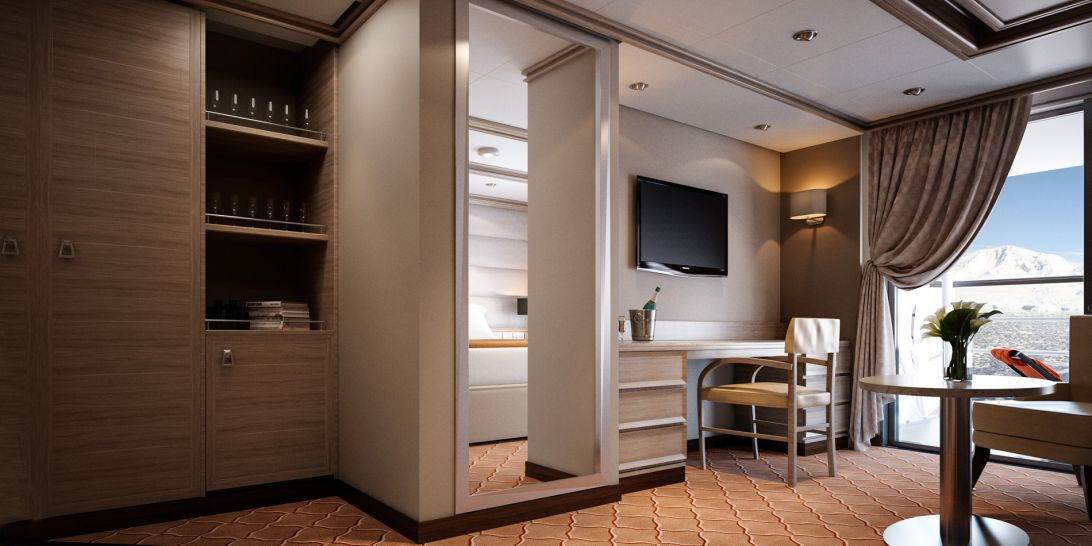
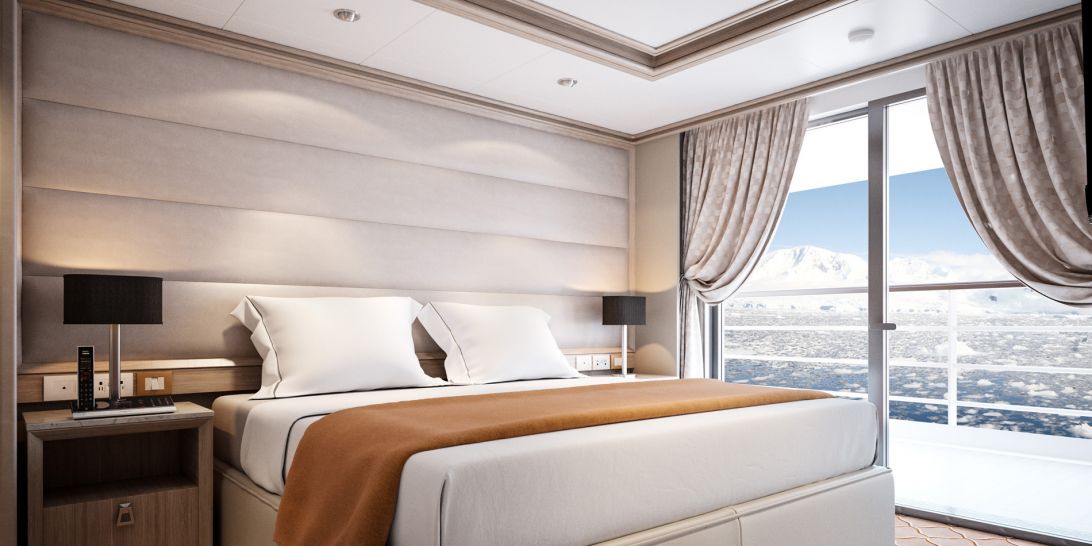
With a room configuration that favors watching the sun rise from the comfort of your bed and losing yourself in the mesmerizing seascapes, this suite is the perfect answer to adventure cruising. A large walk-in wardrobe and an expansive living room make the Medallion Suite your home away from home on the high seas. Medallion Suites accommodate three guests.
One bedroom: 48 sq m including veranda (7.6 sq m )
Images are intended as a general reference. Features, materials, finishes and layout may be different than shown.
Please note that the 3rd guest will sleep on a comfortable sofa bed in the reception area of the suite.
Essentials
Characteristics
Furniture
Media & Communication
Onboard Services
Amenities
| Grade Code | From | To | |
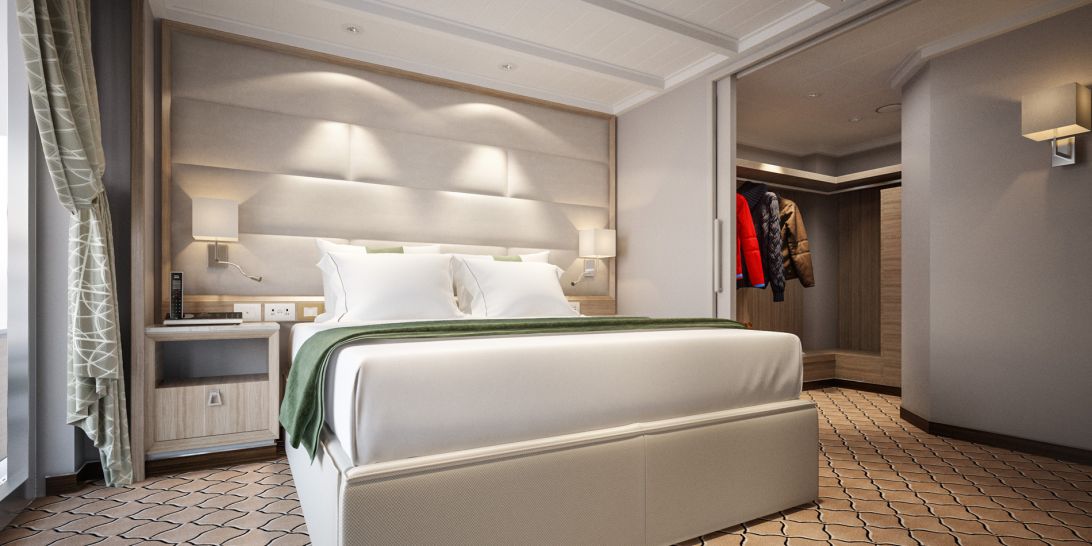
| O1 | Owner's Suite (1 Bedroom) | £25,050 | £25,050 |
| O2 | Owner's Suite (2 Bedrooms) | £35,250 | £35,250 |
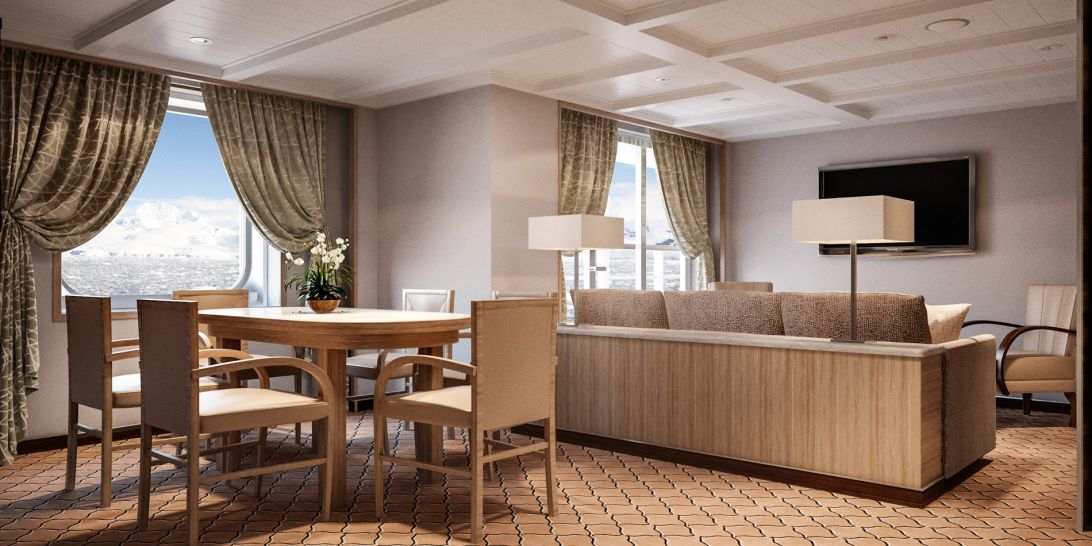
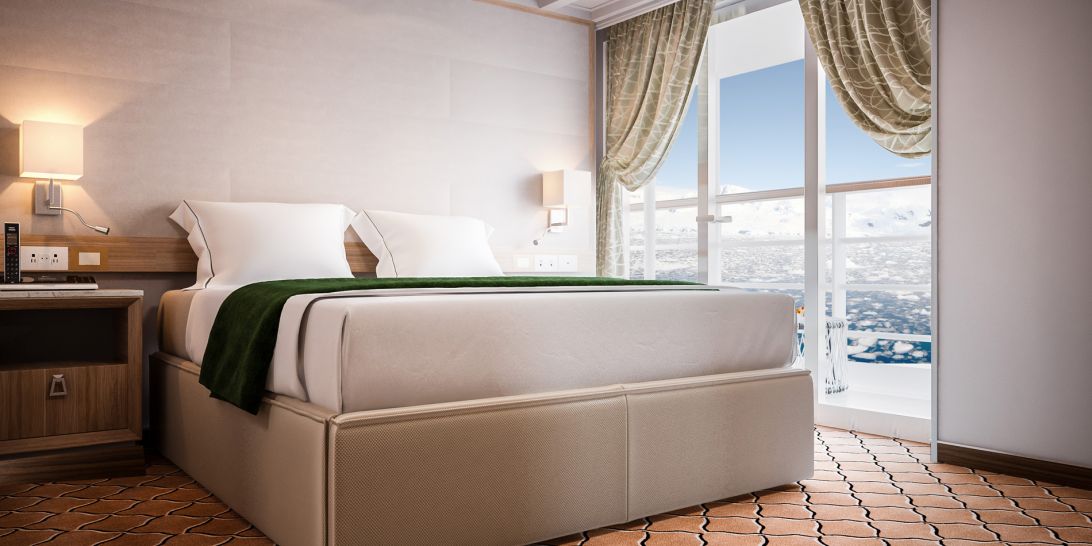
This stylish apartment offers the superlative in levels of space, comfort, and service on board. A perfect mix of expedition experience with luxury lifestyle. Available in a one-bedroom configuration or as two bedrooms by adjoining with a Vista Suite.
One bedroom: 55 sq m including veranda (8 sq m)
Two bedrooms: 77 sq m including veranda (8 sq m)
Images are intended as a general reference. Features, materials, finishes and layout may be different than shown.
Please note that the 3rd guest will sleep on a comfortable sofa bed in the reception area of the suite.
Essentials
Characteristics
Furniture
Media & Communication
Onboard Services
Amenities
| Grade Code | From | To | |
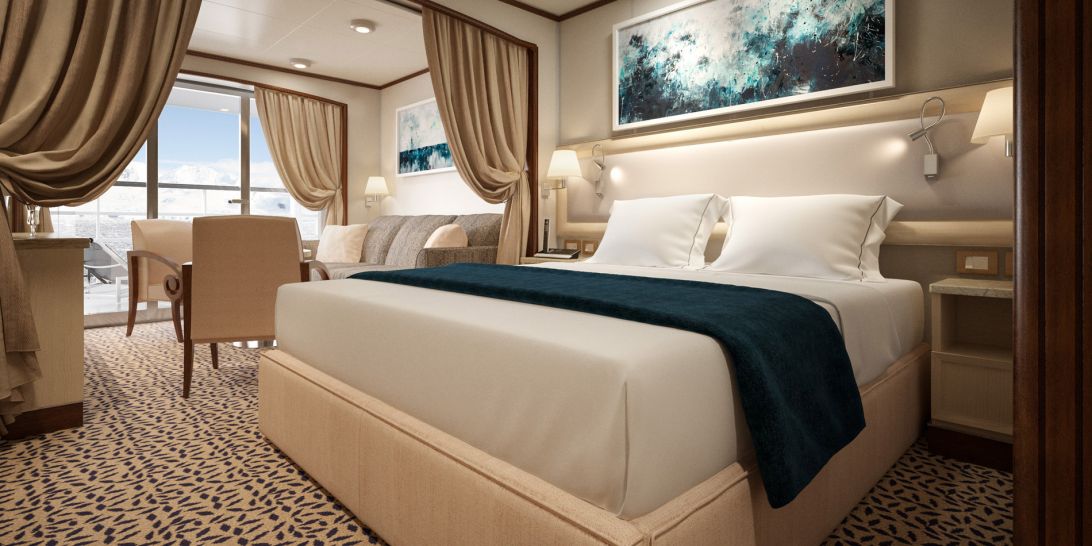
| R1 | Royal Suite (1 Bedroom) | £19,250 | £19,250 |
| R2 | Royal Suite (2 Bedrooms) | £31,150 | £31,150 |
Stately. Commanding and majestic. Perfect for relaxing after a days’ exploring and looking through your photos. With lectures streamed live to your room, this is the pinnacle of good living at sea. Available in a one-bedroom configuration or as two bedrooms by adjoining with a Veranda Suite.
One bedroom: 69 sq m including veranda (12 sq m)
Two bedrooms: 96 sq m including veranda (16.5 sq m)
Images are intended as a general reference. Features, materials, finishes and layout may be different than shown.
Please note that the third guest will sleep on a comfortable sofa bed in the reception area of the suite.
Essentials
Characteristics
Furniture
Media & Communication
Onboard Services
Amenities
| Grade Code | From | To | |
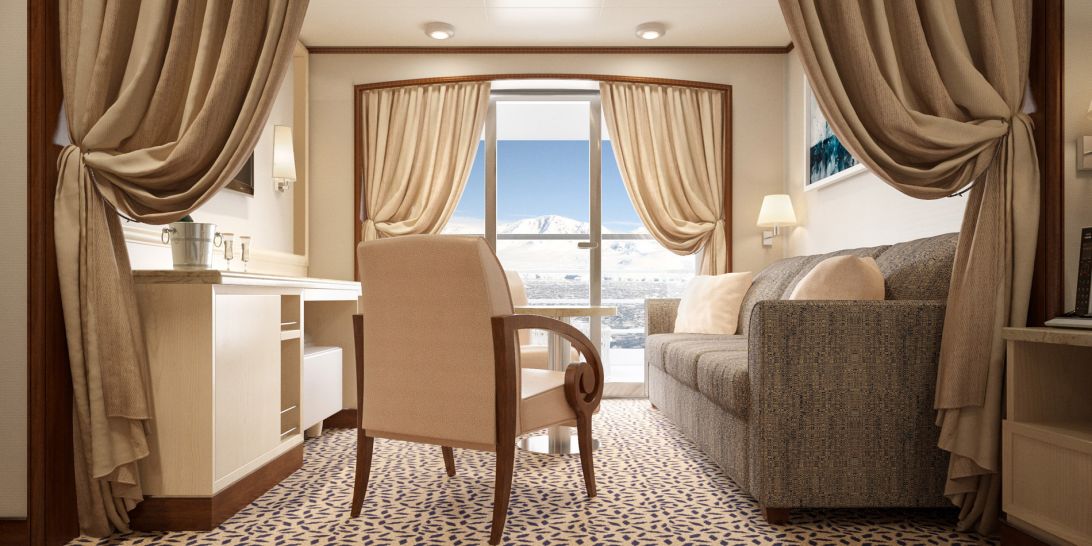
| VR | Veranda Suite | £12,200 | £12,200 |
| DV | Midship Veranda Suite | £14,500 | £14,500 |
A Silversea signature, with a preferred central location, the Veranda Suite is spacious and welcoming. Floor-to-ceiling glass doors open onto a furnished private teak veranda from where you can contemplate anything from the midnight sun to an Antarctic sunrise. The Deluxe Veranda Suite offers a preferred central location with identical accommodation to a Veranda Suite.
One bedroom: 27 sq m including veranda (4.5 sq m)
Two bedrooms: 27 sq m including veranda (4.5 sq m)
Images are intended as a general reference. Features, materials, finishes and layout may be different than shown.
Essentials
Characteristics
Furniture
Media & Communication
Onboard Services
Amenities
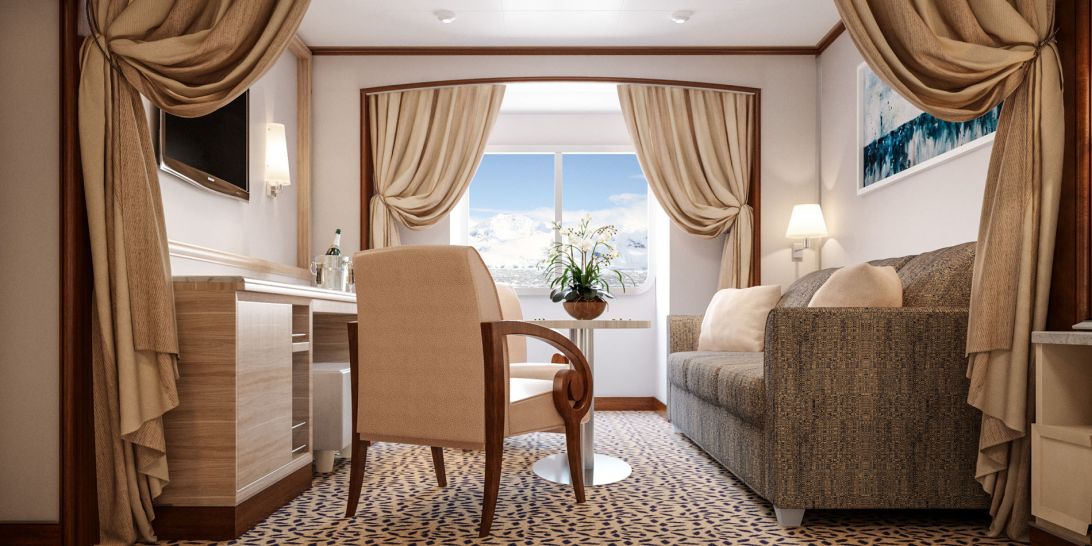
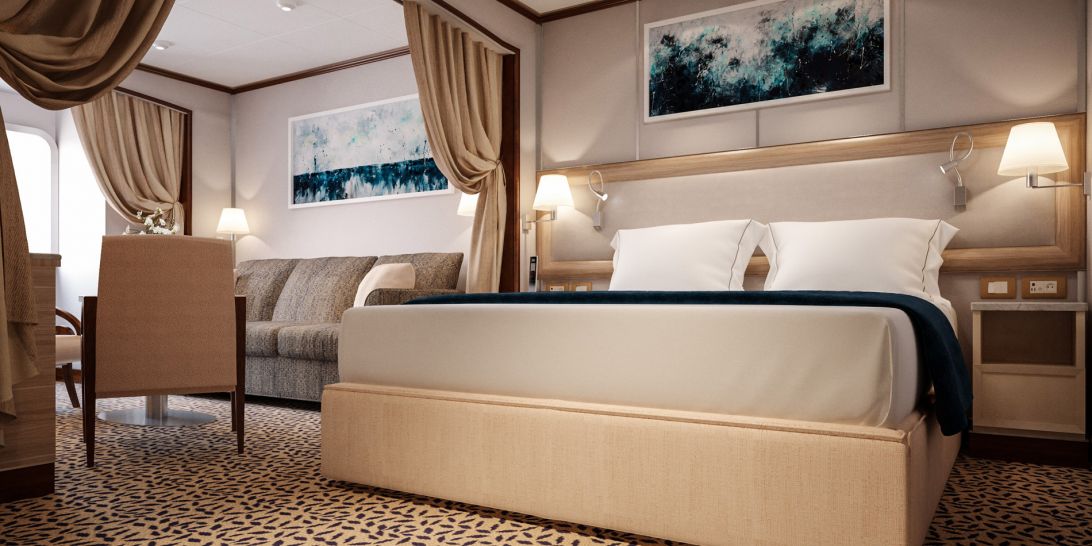
| Grade Code | From | To | |
| VI | Vista Suite | £10,350 | £10,350 |
Your home away from home while you embrace the intrepid explorer within. The suite’s seating area has plenty of room to relax while you go over your notes, ready for the next adventure. Large picture windows frame panoramic ocean views, ideal for appraising the local wildlife.
One bedroom: 22 sq m
Wheelchair accessible suites: 449 and 451
Images are intended as a general reference. Features, materials, finishes and layout may be different than shown.
Essentials
Characteristics
Furniture
Media & Communication
Onboard Services
Amenities
The images shown are for illustration purposes only and may not be an exact representation of what you find on the ship.
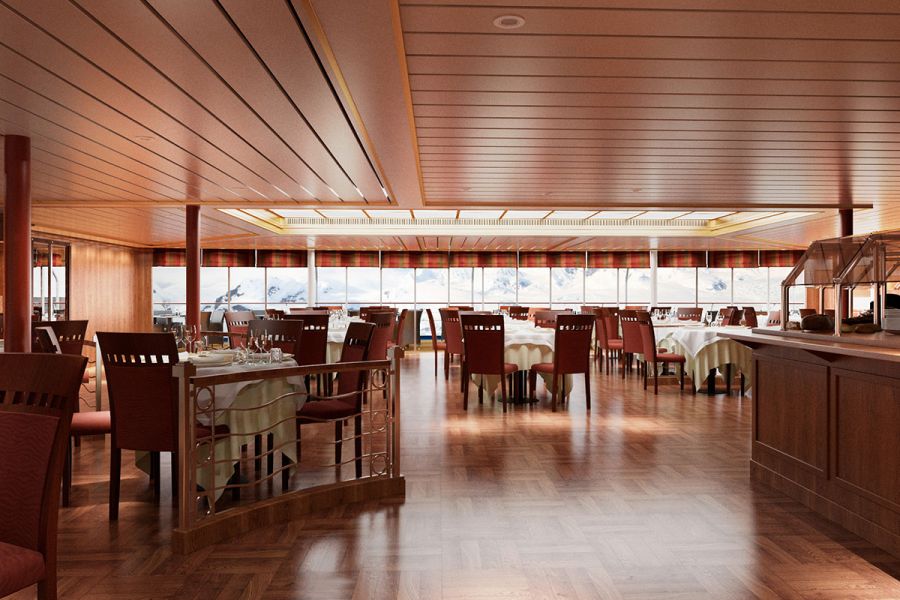
La Terrazza is a celebration of the way Italians eat today, an ode to the delicious evolution of the world’s most beloved cuisine. Evolving one of Silversea’s signature restaurants, La Terrazza serves fresh twists on great classics, and also explores the new heroes of Italian cuisine. The notion of comfort traditionally associated with Italian cuisine is present in every dish, every bite, yet always with a subtle element of surprise. La Terrazza is open for casual, buffet-style breakfast and lunch with indoor or alfresco dining on the outdoor terrace. During the evening, the venue transforms into an à la carte Italian restaurant. Seating is limited for dinner and reservations are recommended.
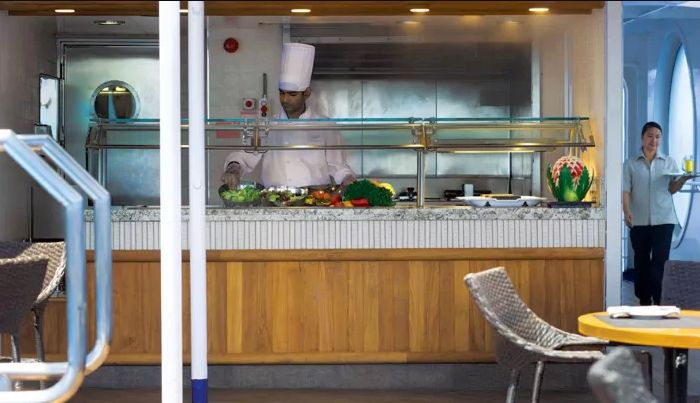
Silversea’s much-loved casual dining restaurant serves a delectable range of burgers and salads by day and turns into our famous Hot Rocks table BBQ concept by night. The Grill is quite simply the best place to eat between sea and sky. If you like flavorsome meals cooked to perfection, a casual, laid-back atmosphere, and OMG views, then The Grill is the answer to your prayers.
Dress code: Casual
Casual wear consists of pants, blouses, or casual dresses for women; open-neck shirts and slacks for men are appropriate.
Images are intended as a general reference. Features, materials, finishes and layout may be different than shown.
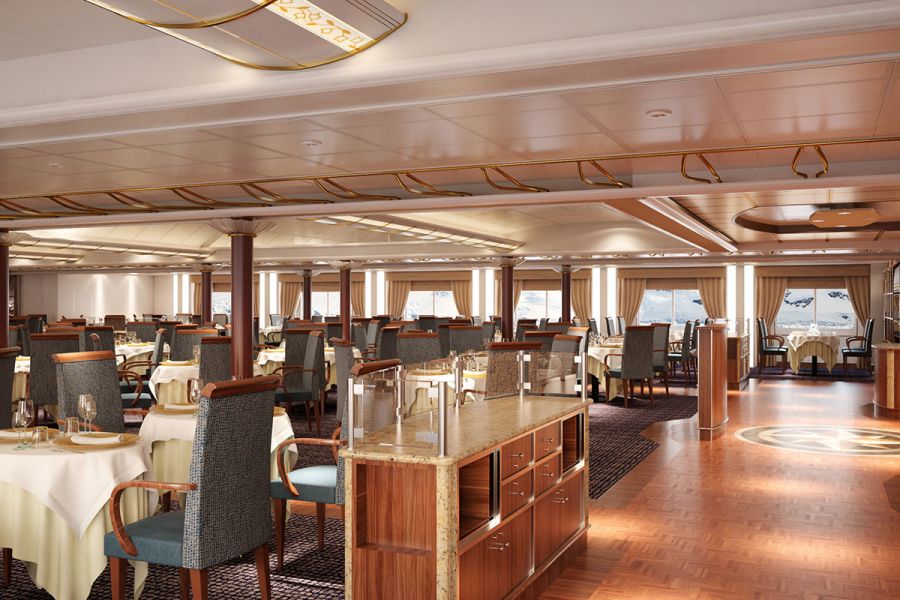
Sparkling with tales of adventure, bonhomie, and like-minded friends, The Restaurant offers contemporary, international cuisine created by our most talented chefs. Menus feature regional specialties unique to the destinations guests visit on their cruise, so don’t be surprised to see a roasted Chilean Sea Bass while cruising the Chilean fjords.
The images shown are for illustration purposes only and may not be an exact representation of what you find on the ship.
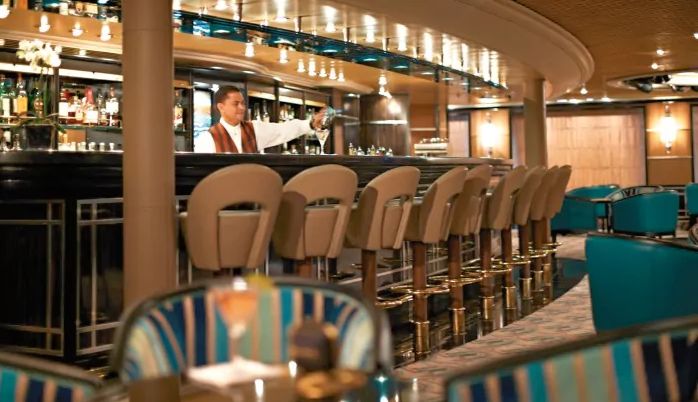
With complimentary cocktails and engaging conversation, live music, and a dance floor, Dolce Vita on board Silver Cloud welcomes guests to mix and mingle. When living such unique experiences as these, there is never a dull moment!
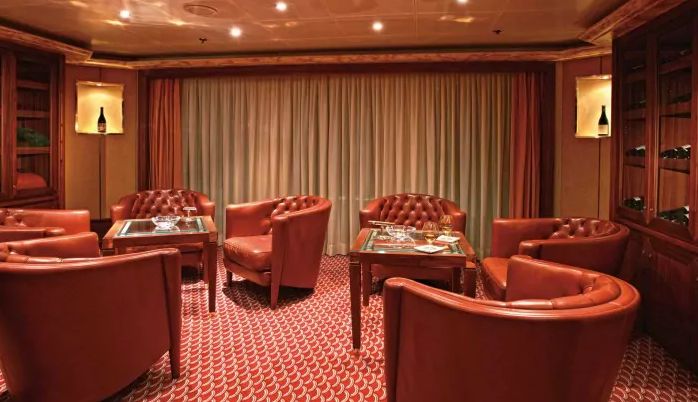
The Connoisseur’s Corner offers exceptional cognacs along with a premium selection of cigars for purchase.
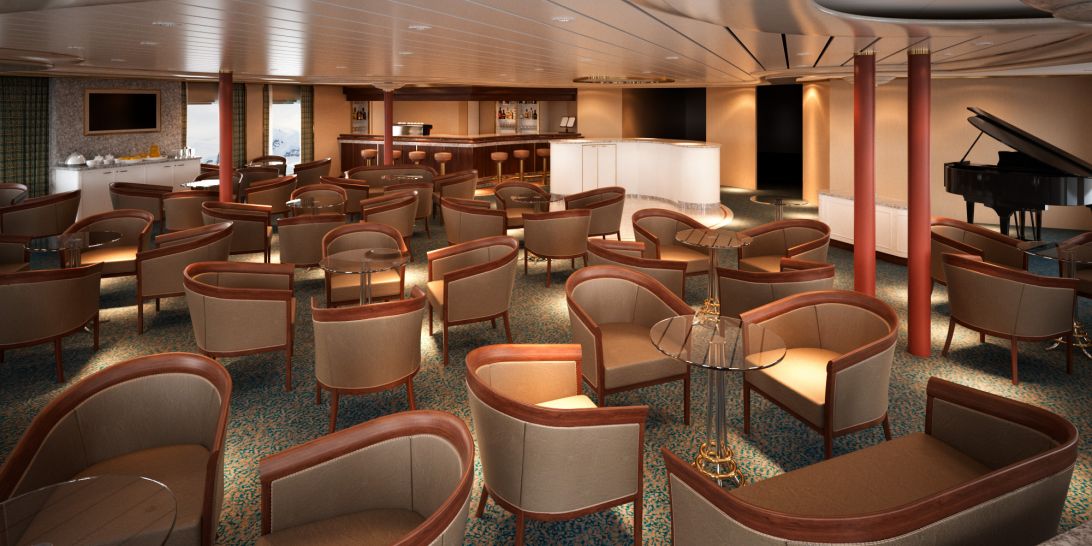
The Panorama Lounge is specially designed to provide an uninterrupted view of the day’s destination from the comfort of the luxury cruise ship’s interior. This is an ideal place to unwind on your cruise, enjoy afternoon tea, listen to the pianist, and watch the setting sun. The drinks are complimentary, and the music is live and inviting. Enjoy dancing to a range of musical styles for every taste, from the classics to the latest club mixes.
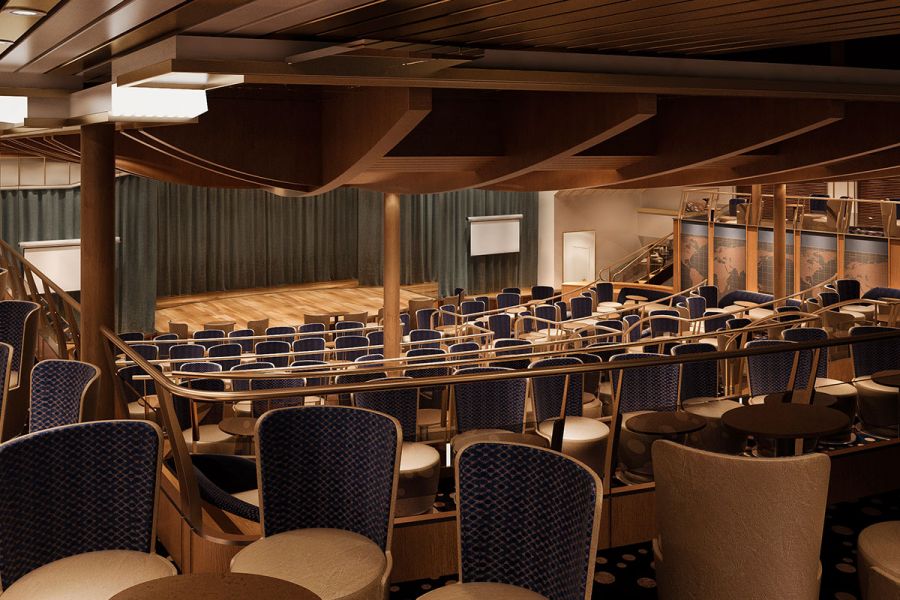
Perfect for presentations, lectures, and video screenings, this is where our team of dedicated experts share their knowledge on their specialized subject, not to mention their infectious passion and energy. The multitiered Explorer Lounge and banquette-style seating ensure that you enjoy every minute of the talk, with lectures streamed live to your suite if desired. This is one of the very few lecture theaters at sea to combine such comfort with such technology.
The images shown are for illustration purposes only and may not be an exact representation of what you find on the ship.
The images shown are for illustration purposes only and may not be an exact representation of what you find on the ship.


Our Fusion packages are all ABTA & ATOL protected ensuring that your booking is safe with us
| 12 nights aboard the Silver Cloud | |||
| Butler Service in Every Suite | |||
| Gratuities Always Included | |||
| Beverages In-Suite and Throughout the Ship | |||
| Gourmet Dining | |||
| In Suite Dining & 24-Hour Room Service | |||
| Intimate small size ships | |||
| Free Wifi Throughout the Ship | |||
| Free Zodiac, Land and Sea Tours & Activities & Complimentary Expedition gear | |||
| Port Taxes and Fees | |||
 | ABTA and ATOL Protection* | ||
Date 16th May 2027 |
Nts 12 |
Suite £10,350pp |
Date 16th May 2027 |
Nts 12 |
Suite £10,350pp |
| Suite staterooms from | £10,350pp | ||
| DV | Midship Veranda Suite | £14,500pp | |
| G1 | Grand Suite (1 Bedroom) | £19,900pp | |
| G2 | Grand Suite (2 Bedrooms) |  | |
| ME | Medallion Suite | £17,800pp | |
| O1 | Owner's Suite (1 Bedroom) | £25,050pp | |
| O2 | Owner's Suite (2 Bedrooms) | | |
| R1 | Royal Suite (1 Bedroom) | £19,250pp | |
| R2 | Royal Suite (2 Bedrooms) | | |
| SL | Silver Suite | £18,950pp | |
| VI | Vista Suite | £10,350pp | |
| VR | Veranda Suite | £12,200pp | |
Fusion Holidays when selling travel arrangements is a trading name of Co-op Travel Services Limited, registration 08903986. Fusion Cruises is an Accredited Body Member of Co-op Travel Services Limited ATOL 12904.
Book with Confidence. We are a Member of ABTA which means you have the benefit of ABTA’s assistance and Code of Conduct.
Some of the flights and flight-inclusive holidays on this website are financially protected by the ATOL scheme but ATOL protection does not apply to all holiday and travel services offered on this website. This website will provide you with information on the protection that applies in the case of each holiday and travel service offered before you make your booking. If you do not receive an ATOL Certificate then the booking will not be ATOL protected. If you do receive an ATOL Certificate but all parts of your trip are not listed on it, those parts will not be ATOL protected. Please see our booking conditions for information, or for more information about financial protection and the ATOL Certificate go to: www.caa.co.uk