This site uses cookies as defined in our Cookie Policy, by continuing to use this site you agree to their use.
Continue

| Arrive | Depart | ||||||
| 23rd23 | JunJun | 202727 | Manila, Philippines, embark on the Silver Cloud | 18:00 | |||
MANILA, the capital city of the Philippines, was founded in, 1571 by Spanish conquistador Miguel López de Legazpi. It is one of the oldest cities in the country and was the seat of power for most of the colonial rules of the Philippines. It is situated on the eastern shore of Manila Bay and contains a multitude of landmarks, some of which date back to the 16th century. It is home to the baroque 16th-century San Agustin Church as well as Fort Santiago, a storied citadel and military prison. In the 19th century Manila became one of the most modern cities in Asia. Before the Spanish–American War, Manila saw the rise of the Philippine Revolution. Under the American rule following the Spanish-American War, the United States changed the official language from Spanish to English. Towards the end of World War II, during the Battle of Manila, most of the city was flattened by intensive aerial bombardment. Today, tourism is a vital industry in Manila. Major shopping malls and bazaars thrive around Manila. Known as the Pearl of the Orient, Manila is the Philippine's sprawling capital city and a chaotic scramble of intoxicating urban energy. A megacity of culture and creativity, there's a lot to discover amid these chockablock streets. The delicious food wins many fans, but it’s the friendly Filipinos - always eager to help - who ensure that Manila takes a special place in the hearts of many visitors. The Baywalk is one of the city's best places for catching a legendarily intense sunset - or wandering among joggers and leisurely strollers. The city's Intramuros area is its cobbled historic core - and was the centre of power when the Spanish ruled these lands. Decorated with colonial architecture and citadels, the district is known for its rumbling horsedrawn carriages and storied history. Head to Fort Santiago, which aims canons out across the water from its chunky stone walls. The UNESCO World Heritage Site stands against the odds, despite World War II bombardments, fires and earthquakes - a true testament to Manila's incredible resilience. As one of the most densely populated places in the world, Manilla can be manically busy at times, but you can always escape to Rizal Park. With Chinese and Japanese gardens and plenty of room for open-air events, it's a beautiful oasis within the city. It's also an incredibly important national symbol, as the location where the hero of independence, Jose Rizal, was executed. A large statue now memorialises him here, and the park was renamed in his honour. | |||||||
| 24th24 | JunJun | 202727 | Apo Reef, Philippines | 07:30 | 17:00 | ||
| An underwater paradise teeming with biodiversity, Apo Reef Natural Park is a tentative UNESCO World Heritage site made up of a reef and three islands. Apo Island is the largest island and harbours mangroves and beach vegetation on its 22 hectares. Apo Reef, the important and main geographical features of the park, lies to the east of Apo Island. Snorkelers will enjoy the crystal blue waters and be looking for some of the 400 varieties of soft and hard corals registered, cushion stars, damsel fishes, butterfly fishes, angel fishes, parrot fishes, cardinal fishes, trigger fishes, and wrasses. Relax on the beach on Apo Island, which features a shallow lagoon surrounded by a verdant mangrove forest. Close to 50 species of birds have been recorded for the park and there are records of the rare Nicobar Pigeon for Apo Island. | |||||||
| 25th25 | JunJun | 202727 | San Fernando, Luzon, Philippines | 06:30 | 18:30 | ||
| Our stay in San Fernando will present a unique opportunity to immerse ourselves in the traditional ways of Sibuyan Island. | |||||||
| 26th26 | JunJun | 202727 | Donsol, Philippines | 07:30 | 17:00 | ||
| Donsol and Ticao Islands flourished in the 1500s as shipping dockyards. They were known not only for the abundance of hardwoods, but also for the excellent shipbuilding skills of the locals. With the dawn of larger steel vessels and with modernization, these two towns have been left behind. Donsol became a quiet fishing town while the people of Ticao Island shifted their focus to raising cattle for the Spanish owned haciendas. Things drastically changed for Donsol in the late 1990’s when a traveller stumbled upon the island and noticed the large numbers of whale sharks in the waters surrounding the island. Amazingly, the Donsolanos considered these large sharks to be pests because of their habit of bumping into fishing boats. Today, the fate of the whale sharks relies on eco-tourism. Donsol is one of the few places in the world that can offer an almost assured whale shark sightings during the season, between November and June, when they visit the area to feed on the rich nutrients coming out of the mouth of the Donsol river. | |||||||
| 27th27 | JunJun | 202727 | Kalanggaman Island, Philippines | 13:15 | 18:30 | ||
| The Philippines is an archipelago of over 7600 islands and tiny Kalanggamman Island, set between Cebu and Leyte is widely considered to be the most beautiful of all, a slice of paradise on earth. The approach to the island offers a first glimpse of abundant picturesque palm trees sprouting from whiter than white sand, seemingly floating in the middle of the clearest blue sea. The island was named “langgam”, a local word meaning bird and is indeed a rare bird. Just 750 metres long, you can walk round the bird shaped island in little under an hour. At low tide a stroll along the long sandbar of powdery sand and tiny seashells is the perfect place for a sublime photo opportunity. The blue and green crystal waters are enticing and swimming, snorkeling and diving opportunities are not to be missed. Once under the water, a colourful new world opens up, coral gardens teeming with shoals of exotic fish, sea turtles swimming lazily past, A peaceful and relaxing vibe predominates the island as visitors relish the outstanding beauty of this simple and secluded spot. The northern part of the island is quieter still, the only sounds being the sea breeze rustling the palm leaves and crashing waves. A barbeque of grilled fish on the beach, as the evening brings spectacular sunsets in buttery colou | |||||||
| 28th28 | JunJun | 202727 | Bohol, Philippines | 08:00 | 18:00 | ||
| Bohol is an island province consisting of Bohol Island and 75 minor surrounding islands. Its capital is Tagbilaran City. With a land area of 1,589.7 sq mi and a coastline 162 mi, Bohol is the tenth largest island of the Philippines. In the 1600’s, the Jesuits introduced Christianity to the region. They built huge churches, which were declared heritage sites in the early 2000’s. Unfortunately most of these churches were heavily damaged by the 7.2 magnitude earthquake of 2013. Today, some of these churches are being restored. The province is a popular tourist destination for its beaches, historical sites, natural beauty & geological features, such as the Chocolate Hills that consist of over 1600 hills of limestone formation. The island of Panglao, located just southwest of Tagbilaran City, is famous for its diving and routinely listed as one of the top ten diving locations in the world. The Philippine Tarsier, considered the second-smallest primate in the world, is indigenous to the island. | |||||||
| 29th29 | JunJun | 202727 | At Sea | ||||
| 30th30 | JunJun | 202727 | Sandakan, Sabah, Malaysia | 07:00 | 22:00 | ||
Borneo's forbidding interior made it less attractive to early traders and explorers than neighboring areas, so what is now the state of Sabah remained unexploited by the British until the late 19th century, although traders long visited for exotic items such as bird's nests (for the celebrated Chinese soup). In 1963, Sabah joined Sarawak, Malaya, and Singapore (which later seceded) in forming the Federation of Malaysia. Known as the "Land Below the Wind" because it's south of the typhoon belt, Sabah occupies Borneo's northern tip. It shares its southwestern border with Sarawak and the rest of its southern border with the Indonesian province of East Kalimantan. Today vast tracts of forest have been replaced by oil-palm plantations, and a sizable portion of remaining forest land is protected in national parks or conservation areas.On the shore of a deep bay, Sandakan was the capital of British North Borneo and one of the most important towns in Southeast Asia from the 1880s through the 1930s. But Japanese occupation during World War II and allied bombing virtually destroyed the town, and the capital was transferred to Jesselton (now Kota Kinabalu) in 1946. Sandakan enjoyed a revival in the 1970s as the center of the region's logging industry. Logging has since declined, but Sandakan is still worth visiting for its rich history and proximity to some of Borneo's most accessible wildlife attractions. Sandakan's downtown, much of it built on landfill, is squeezed between a steep promontory and Sandakan Bay. In recent years, this city of 450,000 (counting its extensive suburbs) has begun redeveloping its downtown waterfront into a shopping and nightlife hub. Its working harbor area for passengers and cargo is 6 km (4 miles) west of downtown. Meet the extraordinary wildlife of Sabah a place where orange orangutans move through the rainforest and elusive sun bears hide out in the safety of dense canopy. Join the extraordinary animals in rehabilitation centres where they are lovingly cared for before often being released back into the jungle's interior. You'll also have the chance to encounter one of nature’s more unusual creatures the bizarre proboscis monkey named after the bulbous swinging noses they sport. Sandakan stretches along a scenic bay looking out over the Sulu Sea. A former trading hub ships voyaged here seeking riches from the thick jungle especially sought after bird nests. Nowadays the city has found its niche as a major palm-oil and cacao exporter. Bridges creaking planks and wooden walkways form an elaborate floating maze over the waves at Sim-Sim Water Village. Visit this fishing hotspot to sample some of the succulent local fare tasting freshly prepared meals like butter prawns seafood broths and fried squid snacks. Having served as the British capital of North Borneo there’s always time for an afternoon tea to keep you refreshed during your explorations. World War II history hangs heavy around the city’s neck and Sandakan was heavily shelled during the hostilities when it was occupied by the Japanese. Visit the Memorial Park to learn of the horrifying Sandakan Death Marches which killed thousands of Allied prisoners of war. | |||||||
| 1st01 | JulJul | 202727 | At Sea | 06:30 | 18:30 | ||
| 2nd02 | JulJul | 202727 | Boheydulang Island, Malaysia | 06:30 | 13:00 | ||
| 3rd03 | JulJul | 202727 | At Sea | ||||
| 4th04 | JulJul | 202727 | Pare Pare, Indonesia | 06:30 | 09:30 | ||
Neolithic sites recently discovered in West Sulawesi bear witness to man's presence on the island for millennia. Buddhist artifacts dating from the 4th & 5th centuries were discovered in South Sulawesi. This region was with its protected bays an ideal spot on the trade routes to drop anchor. In fact, the Bugis are reputed for their gift of boat building. The first Western visitors were Portuguese and, as many of their ships were wrecked off the coast of Minahassa, they gave the name "Celibes' (formidable) to the island. The Portuguese were followed by the Spanish who came preaching Christianity from their base in the Philippines. When the Dutch arrived, they chased all foreigners from the island and established trade monopolies. Despite the foreign influences, some tribes preserved their ancient pagan ceremonies and today fascinate the ever-growing number of visitors to the island. These are in particular the Toalans and the Torajans. Pare Pare is South Sulawesi's second city with a population of 100,000 although it feels more like a market town. It is used by cargo ships to unload goods destined for the local population. The town runs up the coast in a long narrow strip and is only 2 or 3 streets wide. The center is marked by a statue of a man standing on a map of Indonesia "Monument Rkayat Rejuan". In the mountainous northern region of South Sulawesi live the 320,000 Toraja people at an altitude of 1200 meters. These mountain people remained isolated from the outside world until the 20th century, and many of their traditions still remain. The Toraja world consisted of three classes of people: To Parengnge (nobles), the Makaka (commoners) and the Kaunan (slaves). Their life cycle is based around complementary elements of life and death, East and West, sunrise and sunset, morning and afternoon, left and right, etc. The Rituals of the East (rambu tuka) are the life giving elements - smoke ascending; rice, exorcism, birth, first haircut. The Rituals of the West (rambu solo) are death rituals. The Toraja life centers around the death rituals, which often involve two ceremonies, the second taking place several months to years later. They can be prohibitively expensive for families and involve elaborate wrapping and lamentation rites, funeral rituals involving the slaughter of many bulls. The first Western visitors were Portuguese but many of their ships were wrecked off the coast of Minahassa. They gave the name "Celibes' to the island. The Portuguese were followed by the Spanish who came preaching Christianity from their base in the Philippines. When the Dutch arrived, they chased all foreigners from the island and established trade monopolies. Despite the foreign influences, some tribes preserved their ancient pagan ceremonies and today fascinate the ever-growing number of visitors to the island. These are in particular the Toalans and the Torajans. Pare Pare is South Sulawesi's second city with a population of 100,000. It is used by cargo ships to unload goods destined for the local population. The town runs up the coast in a long narrow strip and is only 2 or 3 streets wide. The center is marked by a statue of a man standing on a map of Indonesia "Monument Rkayat Rejuan". In the mountainous northern region of South Sulawesi live the 320,000 Toraja people at an altitude of 1200 meters. These mountain people remained isolated from the outside world until the 20th century, and many of their traditions still remain. The Toraja world consisted of three classes of people: To Parengnge (nobles), the Makaka (commoners) and the Kaunan (slaves). Their life cycle is based around complementary elements of life and death, East and West, sunrise and sunset, morning and afternoon, left and right, etc. The Rituals of the East (rambu tuka) are the life giving elements - smoke ascending; rice, exorcism, birth, first haircut. The Rituals of the West (rambu solo) are death rituals. The Toraja life centers around the death rituals, which often involve two ceremonies, the second taking place several months to years later. They can be prohibitively expensive for families and involve elaborate wrapping and lamentation rites, funeral rituals involving the slaughter of many bulls. | |||||||
| 5th05 | JulJul | 202727 | Palopo, Indonesia | 15:00 | 17:00 | ||
Palopo is a town of roughly 150,000 inhabitants. Founded at the northeastern end of the Gulf of Boni in the early 17th century, the town has always been a link for the Toraja people in the highlands of Sulawesi. A pleasant temperature and little rain during most of the year are only changed by the west monsoon from December to March when heavy rain and high humidity arrives. Near Palopo are clear rivers and small waterfalls. Surrounding Palopo and leading into the highlands are small plantations of mango, durian and rambutan. Because open and flat spaces are limited, on many occasions the locals use the roads to dry coffee beans in the bright sunshine. Palopo is a municipality in the South Sulawesi Province of Indonesia with a population of approximately 150 000. The city has an ancient history dating back to its founding in the early 1600s. The port has always had a trade link to the highlands of Sulawesi known as Tana Toraja and a physical link through a twisting mountain pass making it a perfect gateway to Toraja. The land of Toraja is an ancient and mysterious place where residents adorn their homes with the horns of water buffalo killed in funeral ceremonies and ornate carvings painted in bold reds and black. In many ways the Tana Toraja customs of honoring the dead dictate their ways of life. Human remains rest in stone chambers in the hillsides and burial caves high in the cliffs. Elaborate funeral ceremonies which can take months or even years to prepare can go on for days and can draw hundreds of people in a festival-like atmosphere. | |||||||
| 6th06 | JulJul | 202727 | Sabalana Island, Indonesia | 14:15 | 19:00 | ||
| 7th07 | JulJul | 202727 | Pulau Satonda, Indonesia | 06:30 | 12:00 | ||
| 8th08 | JulJul | 202727 | Benoa, Bali, Indonesia | 07:00 | 17:00 | ||
Bali really is as alluring as everyone says. This island, slightly bigger than Delaware, has it all: beaches, volcanoes, terraced rice fields, forests, renowned resorts, surfing, golf, and world-class dive sites. But what sets Bali apart from other nearby tropical destinations is Balinese tradition, and villagers dedicated to celebrating it. The hundreds of temples, dances, rituals, and crafts linked to their ancient Hindu faith aren't a show for tourists, but a living, breathing culture in which visitors are warmly received by the Balinese, who cherish their own identities. Bali. A.k.a. Island of the Gods, Land of a thousand temples or the World’s last paradise. As superlative as these monikers may sound, they do not do justice to the actual reality of the island. Bali is as good as everyone says – verdant mountains with terraced rice fields in one direction, black sand beaches in another and captivating people that will leave even the most seasoned traveller humbled. If you’re looking for a Garden of Eden that really does have it everything, Bali ticks all the boxes. The rich and diverse culture of the island is what sets Bali apart from Indonesia’s (many) other tropical paradises. The country’s estimated 10,000 Buddhist-Hindu temples, with their daily offerings of lotus flowers and fruit are testament to the gentleness of the islander’s belief. Then there is the vibrant arts and crafts scene, notably in Ubud in the centre of the island, but prolific everywhere. Ideal souvenirs to bring back range from gorgeous silver jewellery to intricate wood carvings. Additionally, do try to see a traditional dance if possible, particularly if accompanied to local gamelan music. No one could mention Bali without mentioning the food. Dishes range from elaborate meals to street food bites, but all are without exception ambrosia. Do not miss out on tasting a succulent chicken satay, betutu (apparently the King’s favourite meal) and sambal matah. But whatever you decide to discover, you can be assured of a taste sensation that will remain with you long after you have returned home. | |||||||
| 9th09 | JulJul | 202727 | Komba Island, Indonesia | 07:30 | 12:00 | ||
On the approach to Pulau Komodo, a tiny island just 36 km (22 miles) long and 16 km (9 miles) across at its widest point, it's hard to imagine that this is the home of the fearsome dragons described by late-19th-century explorers. The island, in the Indonesian region of Nusa Tenggara, lies between the islands of Sumbawa and Flores at the heart of the Komodo National Park, designated a UNESCO World Heritage Site and one of the New7Wonders of Nature. At first look, steep hillsides of parched, golden grasses slide down into topaz bays covered in glass-clear waters, and white-sand beaches hem quiet shorelines. But then you remember that this innocent-looking island is inhabited by 13-foot-long, 220-pound ora, as Komodo dragons are known locally. Don't be frightened: Although stories of people disappearing run rampant, a trip here is quite safe—as long as you stay with a park guide.While Komodo dragons are the main attraction, several other large species also reside here. Dark-brown deer and small buffalo nibble the grasses of the high plains, macaques peer through the trees, and wild pigs crash through the underbrush. More than 150 types of birds also inhabit the island, including cockatoos, imperial pigeons, sea eagles, and mound-building megapodes. Offshore in the marine reserve, you might spot dolphins, dugong (a relative of the manatee), sea turtles, manta rays, and even whales, as well as more than 1,000 species of fish.Lodging on Pulau Komodo was nonexistent until 2012, when a modest, eco-friendly resort and diving club opened, providing a rare opportunity for scuba divers and snorkelers to explore this pristine habitat's extensive coral reefs and extraordinary marine life. Travelers can also find comfortable lodging and a convenient base from which to explore the many natural wonders of the Komodo National Park in Labuan Bajo, on the island of Flores (East Nusa Tenggara). Komodo, the volcanic island of giant lizards, lies 320 miles (515 kilometres) east of Bali. Komodo is 25 miles (40 kilometres) long and 12 miles (19 kilometres) wide; its parched hills ascend to a height of 2,410 feet (734 metres). Komodo is home to a community of some 2000 people who make their living primarily from fishing. The island is the centrepiece of the Komodo National Park, where you will find the most tangible legacy left behind from the Jurassic Era. Komodo Island was little-known and the Komodo dragons were only a myth until the giant lizards were scientifically described in 1912 . Extinct almost everywhere else, the island attracts thousands of visitors from all over the world who come to see the Komodo dragons in their natural habitat. Komodo National Park has been declared a UNESCO World Heritage Site and Biosphere Reserve. The Komodo dragon’s great bulk and weight are its most unique characteristics; even hatchlings average 20 inches (51 centimetres) in length. The adult male can reach 10 feet (3 metres) and weigh up to 330 pounds (150 kilos). Females attain only two-thirds of this size, and lay up to 30 eggs at a time. With their saw-like teeth, these fierce creatures are able to rip apart a deer, goat or wild pig. The animals have an uncanny sense of smell, and are considered among the world's most intelligent reptiles. They are quite agile over short distances, and can move swiftly to capture their prey. The Indonesian Directorate of Nature Conservation (PPA) administers Komodo National Park. Park Rangers must escort all visitors; independent exploration of the park is not permitted. | |||||||
| 10th10 | JulJul | 202727 | Lamalera, Lambata Island, Indonesia | 13:15 | 18:00 | ||
| 11th11 | JulJul | 202727 | Kalabahi, Indonesia | 06:30 | 18:30 | ||
| Kalabahi is the capital and main seaport of Alor Island the largest landmass in the Alor archipelago. Roughly 60 000 inhabitants call Kalabahi home and enjoy a wide variety of goods and services available here. Kalabahi has grown as a town in part because it is situated on some of the only level ground on the volcanic and rugged island of Alor. Inland from Kalabahi is the small traditional village of Takpala. The attractive rustic homes of the village are open and airy and the Abui people living here harvest dry roast and grind their coffee by hand. The traditional dances and welcome ceremonies express a close-knit society cultivated in this tranquil setting. | |||||||
| 12th12 | JulJul | 202727 | Kupang, Indonesia | 06:30 | 17:00 | ||
| 13th13 | JulJul | 202727 | At Sea | ||||
| 14th14 | JulJul | 202727 | Darwin, Northern Territory, Australia, disembark the Silver Cloud | ||||
Darwin is Australia's most colorful, and exotic, capital city. Surrounded on three sides by the turquoise waters of the Timor Sea, the streets are lined with tropical flowers and trees. Warm and dry in winter, hot and steamy in summer, it's a relaxed and casual place, as well as a beguiling blend of tropical frontier outpost and Outback hardiness. Thanks to its close proximity to Southeast Asia and its multicultural population it also seems more like Asia than the rest of Australia. Darwin is a city that has always had to fight for its survival. The seductiveness of contemporary Darwin lifestyles belies a history of failed attempts that date from 1824 when Europeans attempted to establish an enclave in this harsh, unyielding climate. The original 1869 settlement, called Palmerston, was built on a parcel of mangrove wetlands and scrub forest that had changed little in 15 million years. It was not until 1911, after it had already weathered the disastrous cyclones of 1878, 1882, and 1897, that the town was named after the scientist who had visited Australia's shores aboard the Beagle in 1839. During World War II it was bombed more than 60 times, as the harbor full of warships was a prime target for the Japanese war planes. Then, on the night of Christmas Eve 1974, the city was almost completely destroyed by Cyclone Tracy, Australia’s greatest natural disaster. It's a tribute to those who stayed and to those who have come to live here after Tracy that the rebuilt city now thrives as an administrative and commercial center for northern Australia. Old Darwin has been replaced by something of an edifice complex—such buildings as Parliament House and the Supreme Court all seem very grand for such a small city, especially one that prides itself on its casual, outdoor-centric lifestyle. Today Darwin is the best place from which to explore Australia's Top End, with its wonders of Kakadu and the Kimberley region. Australia's capital of the north is a uniquely tropical city and a historically isolated outpost of this vast diverse country. Reaching up towards the equator a full 2 000 miles from Sydney and Melbourne the city was named in honour of Charles Darwin by the British settlers who established a frontier outpost here. With a unique history beautiful islands nearby and a palette of sizzling Pacific flavours colourful Darwin is an enchanting and exotic Australian destination. Crocodiles patrol the jungled waterways and tropical rainforests around Australia's gateway to the Top End. Explore via airboat to look down on the veiny waterways of the mist-laced Kakadu National Park. The sounds of chattering birdlife and the gentle splash of fountains and waterfalls will fill your ears in George Brown Darwin Botanic Gardens. Soak it all in before kicking back and relaxing with a picnic and a crackling barbecue. The sunshine and famous tropical pink sunsets mean many visitors naturally gravitate to the city's soft sands to relax at spots like pretty Mindil Beach as evening approaches. The adjoining market is filled with souvenirs and crafts stands and is the perfect great place to enjoy some fiery Asian flavours. Stroll the stalls grab some food and crack open an ice-frosted beer as the sunset show begins. It may be remote but Darwin found itself on the front line during the Pacific War as the Japanese air force unloaded their bombs onto the city in 1942. | |||||||
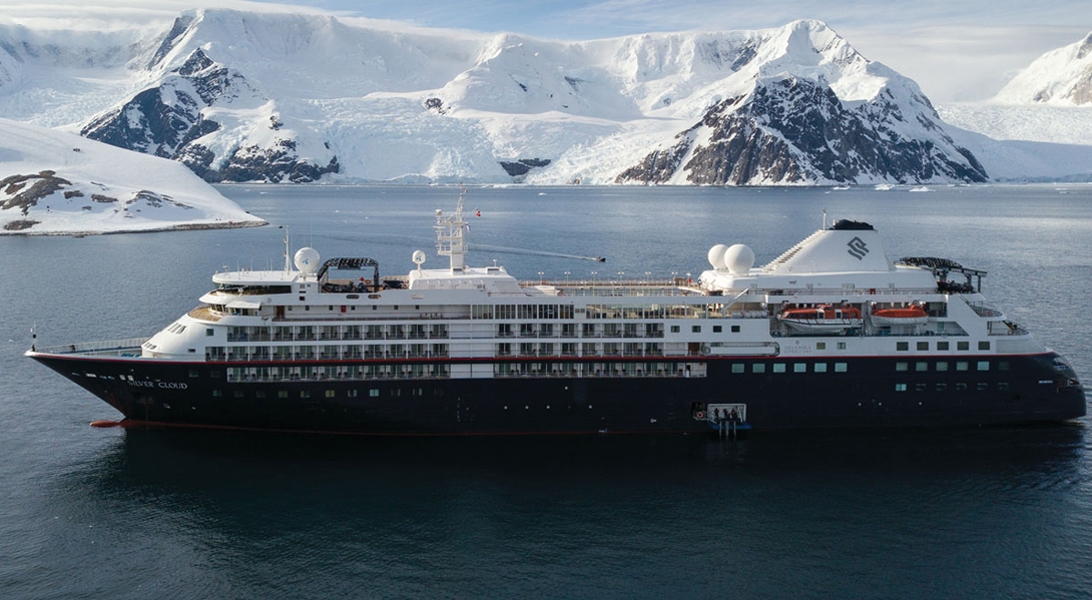
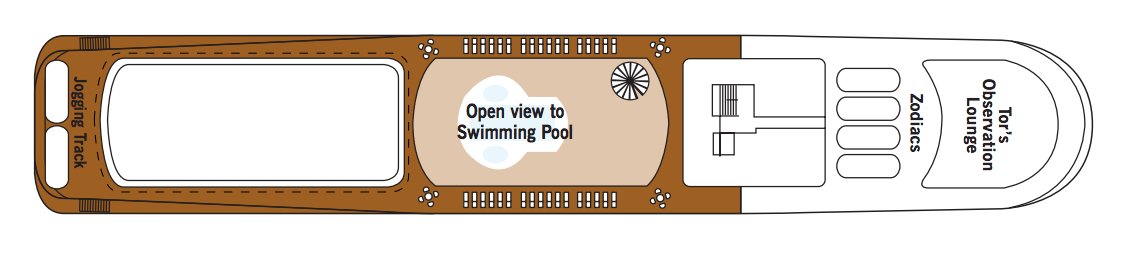

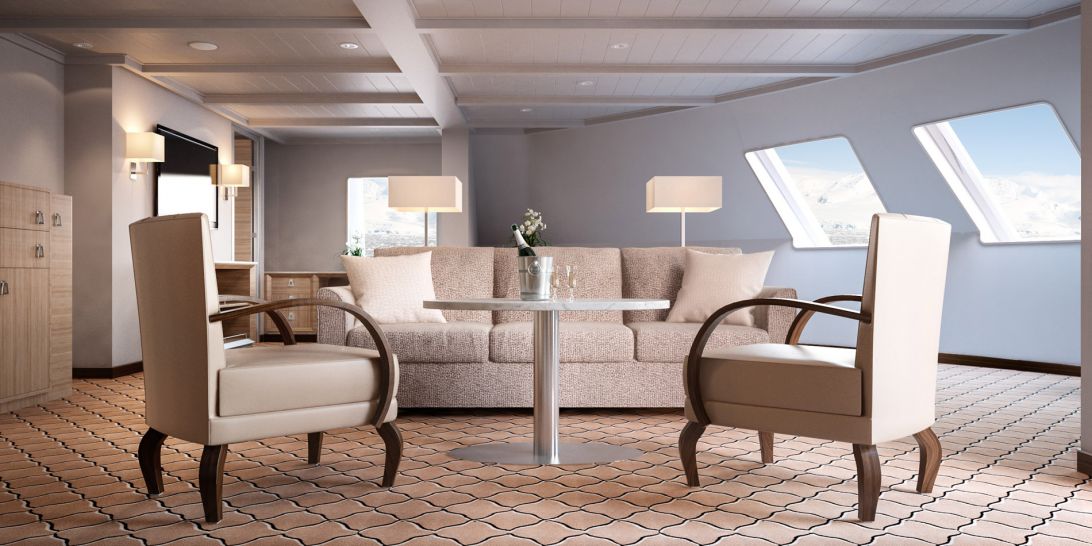
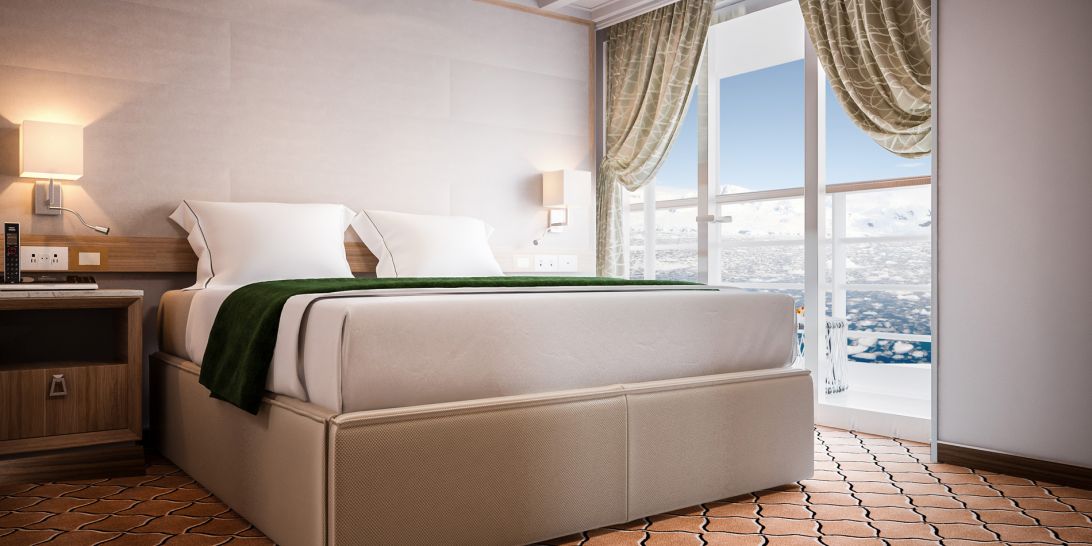
The images shown are for illustration purposes only and may not be an exact representation of what you find on the ship.
| Grade Code | From | To | |
| DV | Midship Veranda Suite | £20,100 | £20,100 |
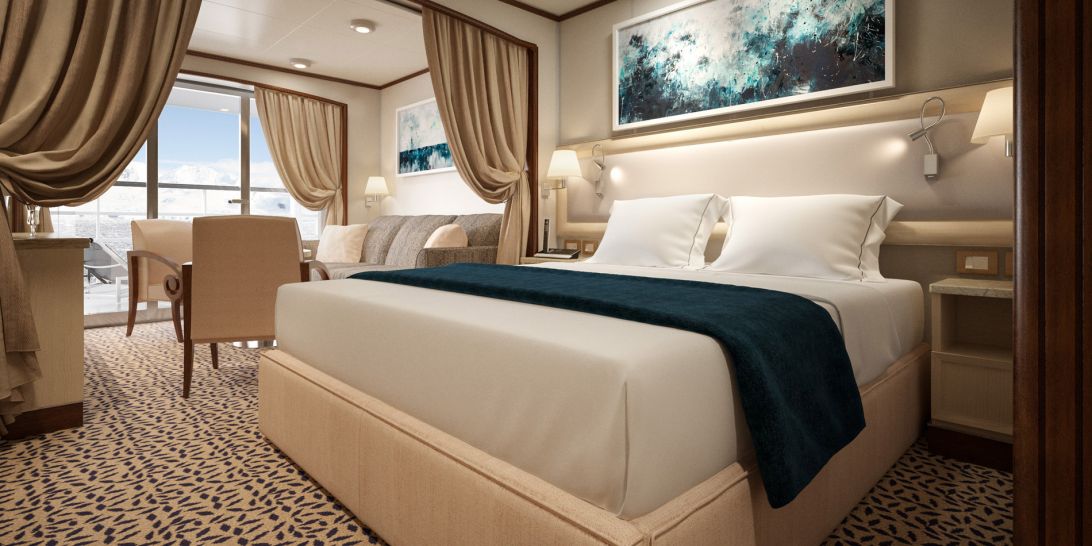
A Silversea signature, with a preferred central location, the Veranda Suite is spacious and welcoming. Floor-to-ceiling glass doors open onto a furnished private teak veranda from where you can contemplate anything from the midnight sun to an Antarctic sunrise. The Deluxe Veranda Suite offers a preferred central location with identical accommodation to a Veranda Suite.
One bedroom: 27 sq m (4.5 sq m)
Two bedrooms: 27 sq m (4.5 sq m)
Images are intended as a general reference. Features, materials, finishes and layout may be different than shown.
Essentials
Characteristics
Furniture
Media & Communication
Amenities
| Grade Code | From | To | |
| G1 | Grand Suite (1 Bedroom) | £37,700 | £37,700 |
| G2 | Grand Suite (2 Bedrooms) | £54,250 | £54,250 |
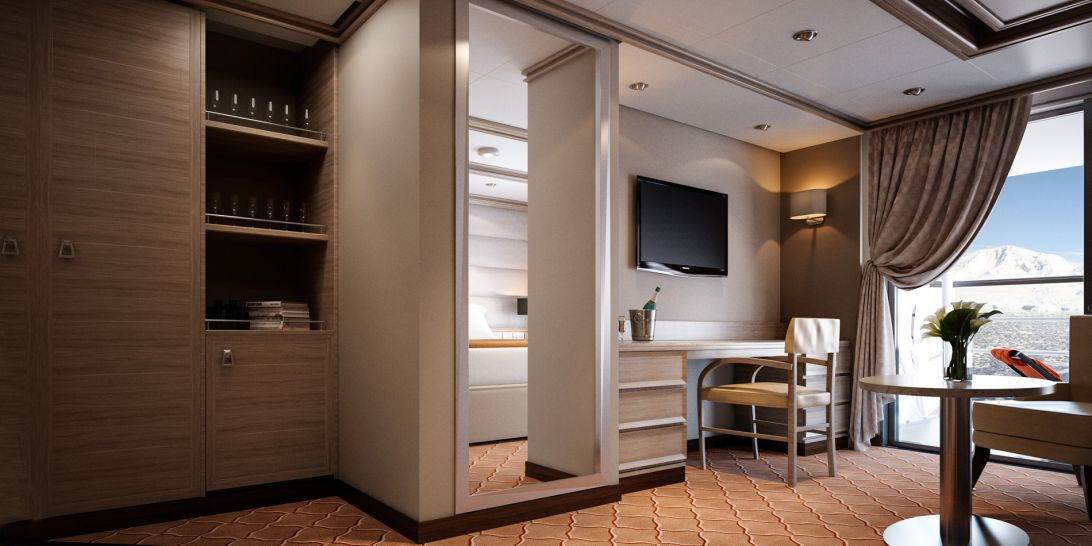
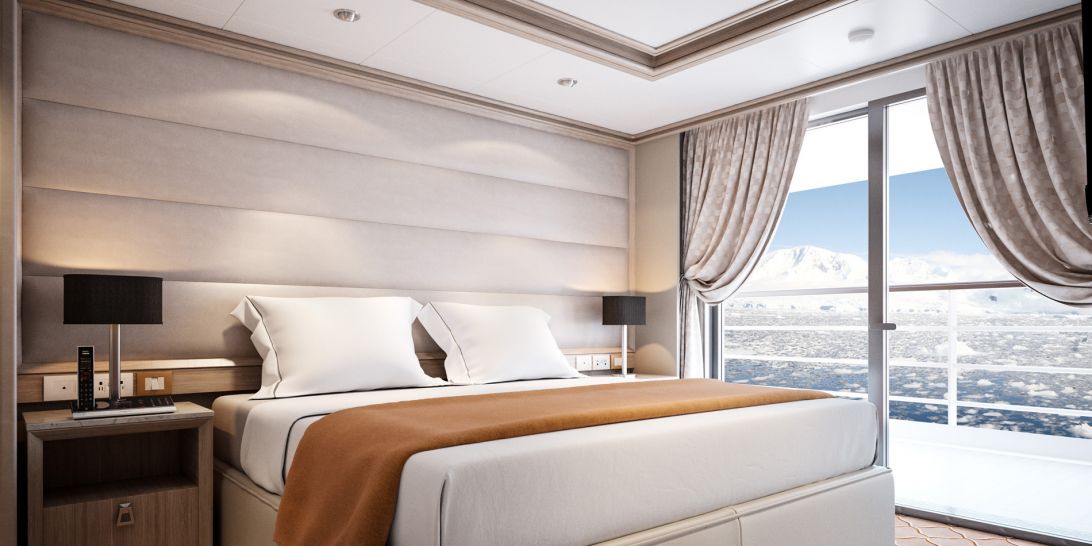
Expertly designed and exquisitely appointed. The ideal space for sharing stories with fellow explorers and new friends. With enough space to roam both inside and outside, this suite is perfect for relaxing and recounting the highlights of your day. Available in a one-bedroom configuration or as two bedrooms by adjoining with a Veranda Suite.
One bedroom: 95 sq m (14 sq m)
Images are intended as a general reference. Features, materials, finishes and layout may be different than shown.
Please note that the third guest will sleep on a comfortable sofa bed in the reception area of the suite.
Two bedrooms: 122 sq m (18.5 sq m)
Images are intended as a general reference. Features, materials, finishes and layout may be different than shown.
Please note that the 3rd guest will sleep on a comfortable sofa bed in the reception area of the suite.
Essentials
Characteristics
Furniture
Media & Communication
Onboard Services
Amenities
| Grade Code | From | To | |
| ME | Medallion Suite | £29,900 | £29,900 |
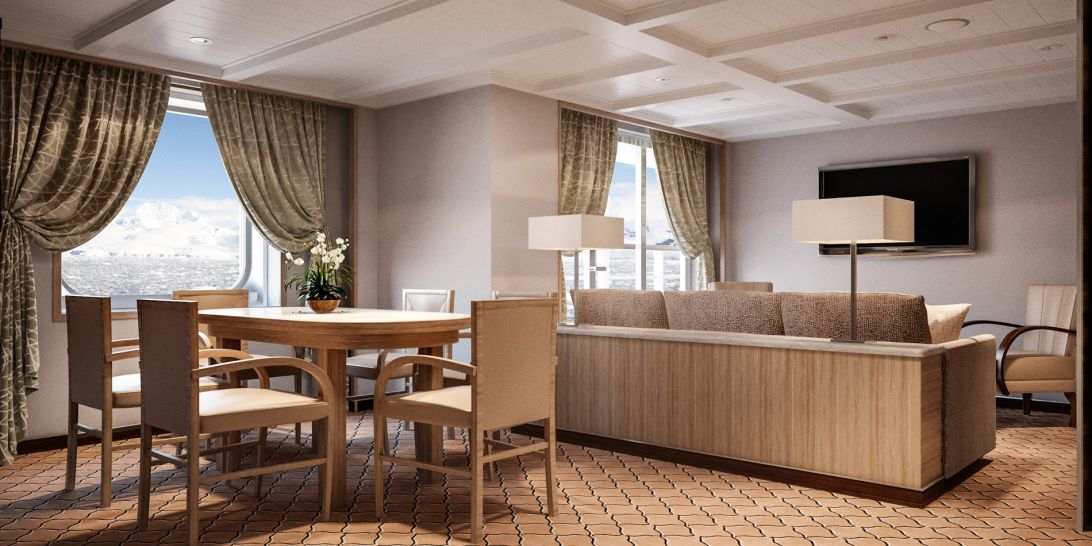
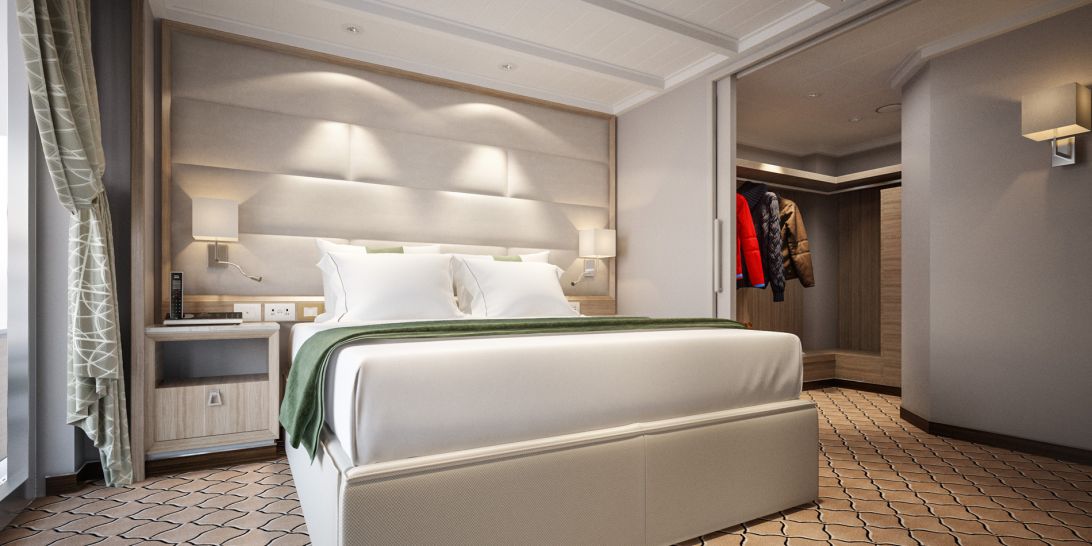
With a room configuration that favors watching the sun rise from the comfort of your bed and losing yourself in the mesmerizing seascapes, this suite is the perfect answer to adventure cruising. A large walk-in wardrobe and an expansive living room make the Medallion Suite your home away from home on the high seas. Medallion Suites accommodate three guests.
One bedroom: 48 sq m (7.6 sq m )
Images are intended as a general reference. Features, materials, finishes and layout may be different than shown.
Please note that the 3rd guest will sleep on a comfortable sofa bed in the reception area of the suite.
Essentials
Characteristics
Furniture
Media & Communication
Onboard Services
Amenities
| Grade Code | From | To | |
| O1 | Owner's Suite (1 Bedroom) | £41,550 | £41,550 |
| O2 | Owner's Suite (2 Bedrooms) | £56,050 | £56,050 |
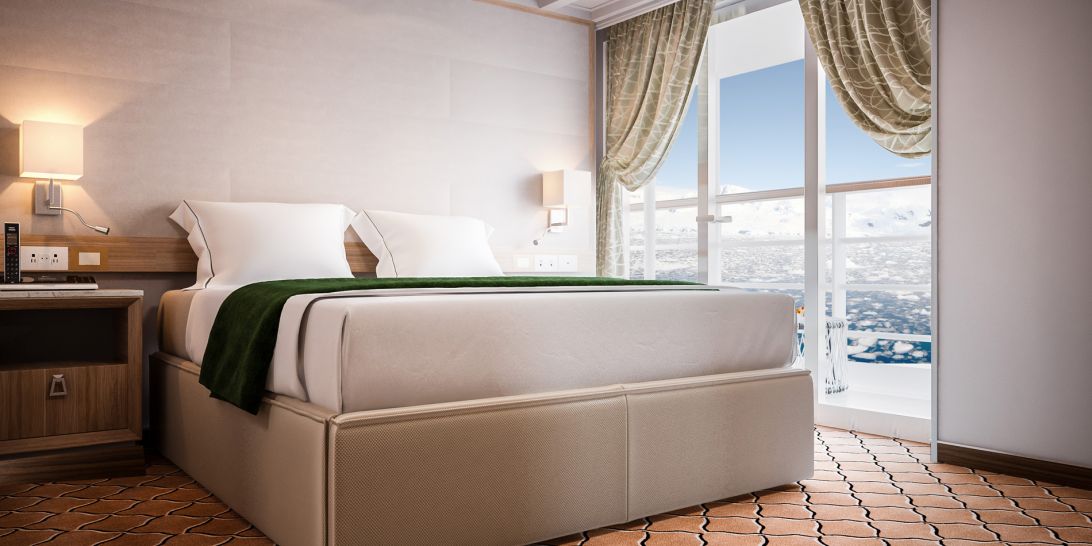
This stylish apartment offers the superlative in levels of space, comfort, and service on board. A perfect mix of expedition experience with luxury lifestyle. Available in a one-bedroom configuration or as two bedrooms by adjoining with a Vista Suite.
One bedroom: up to 55 sq m (8 sq m)
Two bedrooms: 77 sq m (8 sq m)
Images are intended as a general reference. Features, materials, finishes and layout may be different than shown.
Please note that the 3rd guest will sleep on a comfortable sofa bed in the reception area of the suite.
Essentials
Characteristics
Furniture
Media & Communication
Onboard Services
Amenities
| Grade Code | From | To | |
| R1 | Royal Suite (1 Bedroom) | £33,850 | £33,850 |
| R2 | Royal Suite (2 Bedrooms) | £50,400 | £50,400 |
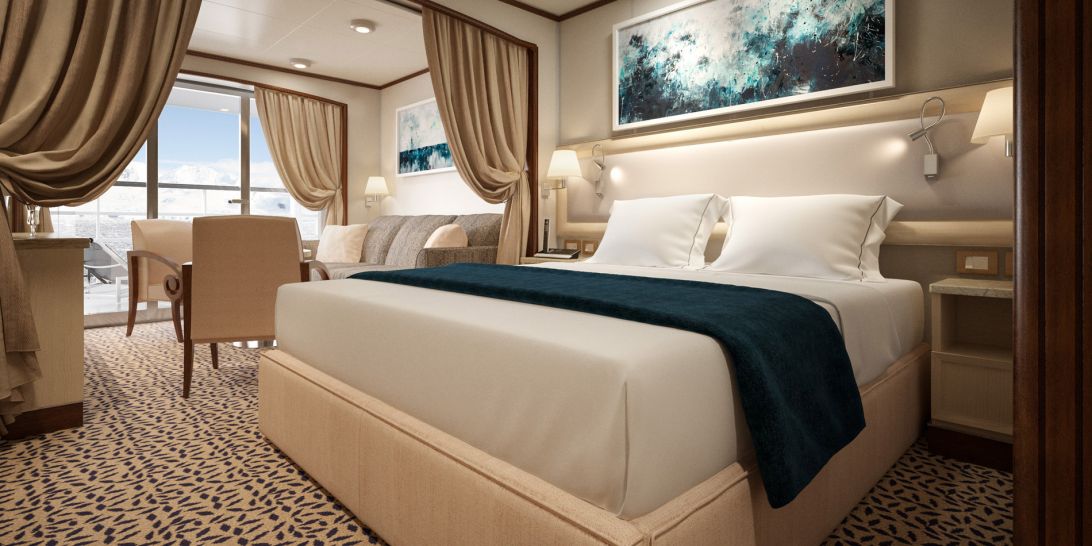
Stately. Commanding and majestic. Perfect for relaxing after a days’ exploring and looking through your photos. With lectures streamed live to your room, this is the pinnacle of good living at sea. Available in a one-bedroom configuration or as two bedrooms by adjoining with a Veranda Suite.
One bedroom: 69 sq m (12 sq m)
Two bedrooms: 96 sq m (16.5 sq m)
Images are intended as a general reference. Features, materials, finishes and layout may be different than shown.
Please note that the third guest will sleep on a comfortable sofa bed in the reception area of the suite.
Essentials
Characteristics
Furniture
Media & Communication
Onboard Services
Amenities
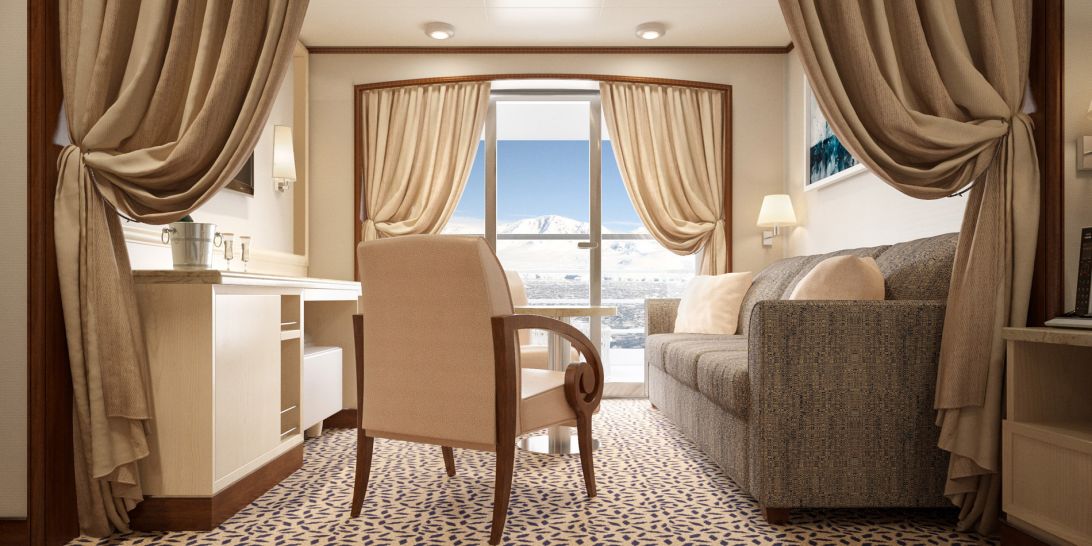
| Grade Code | From | To | |
| VR | Veranda Suite | £18,400 | £18,400 |
A Silversea signature, the Veranda Suite is spacious and welcoming. Floor-to-ceiling glass doors open onto a furnished private teak veranda from where you can contemplate anything from the midnight sun to an Antarctic sunrise. Some Veranda Suites accommodate three guests (suites 505 to 510 and 605 to 610).
One bedroom: 27 sq m (4.5 sq m)
Images are intended as a general reference. Features, materials, finishes and layout may be different than shown.
Please note that the 3rd guest will sleep on a comfortable sofa bed in the reception area of the suite.
Essentials
Characteristics
Furniture
Media & Communication
Onboard Services
Amenities
| Grade Code | From | To | |
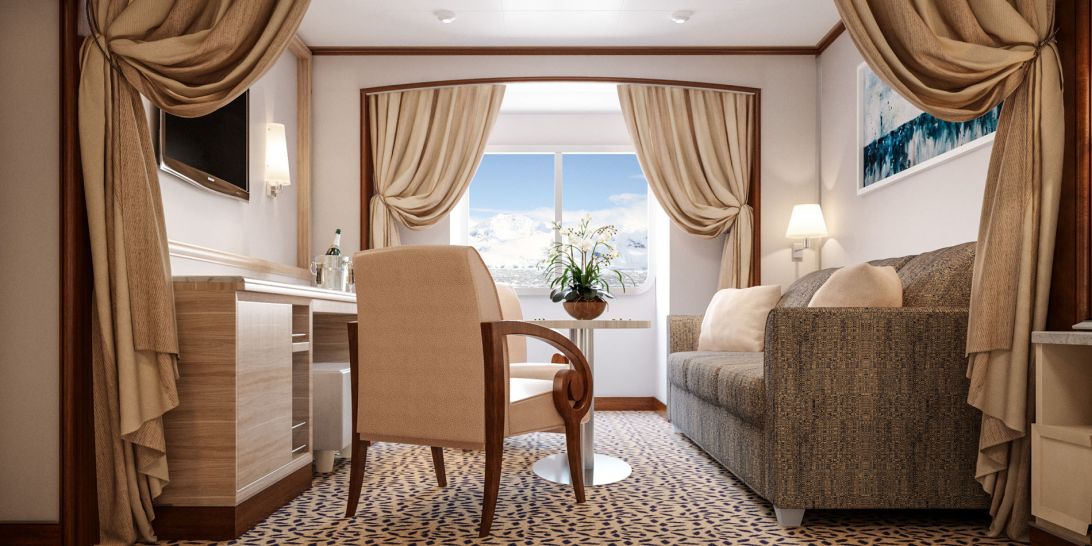
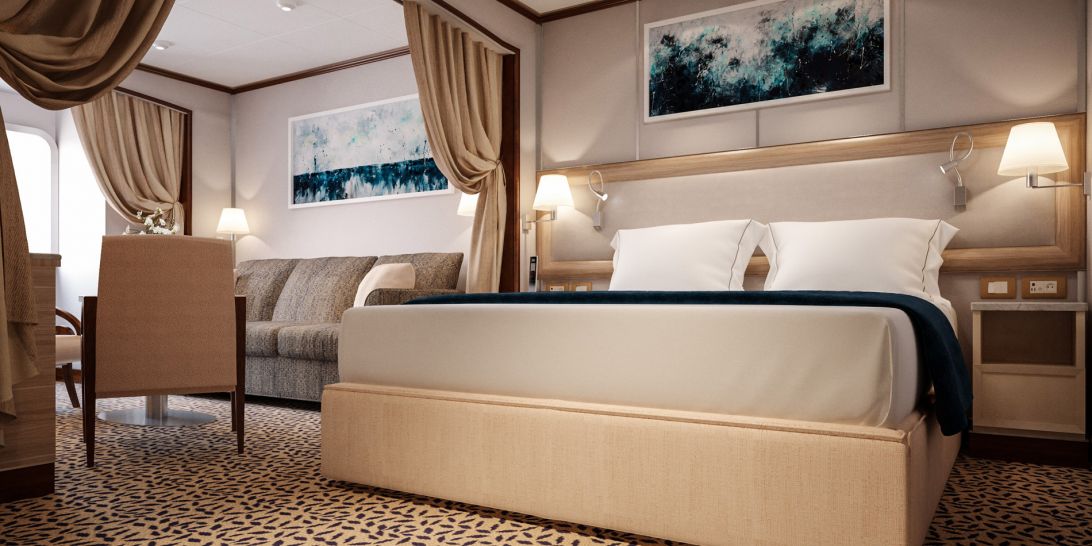
| VI | Vista Suite | £16,100 | £16,100 |
Your home away from home while you embrace the intrepid explorer within. The suite’s seating area has plenty of room to relax while you go over your notes, ready for the next adventure. Large picture windows frame panoramic ocean views, ideal for appraising the local wildlife.
One bedroom: 22 sq m
Wheelchair accessible suites: 449 and 451
Images are intended as a general reference. Features, materials, finishes and layout may be different than shown.
Essentials
Characteristics
Furniture
Media & Communication
Onboard Services
Amenities
The images shown are for illustration purposes only and may not be an exact representation of what you find on the ship.
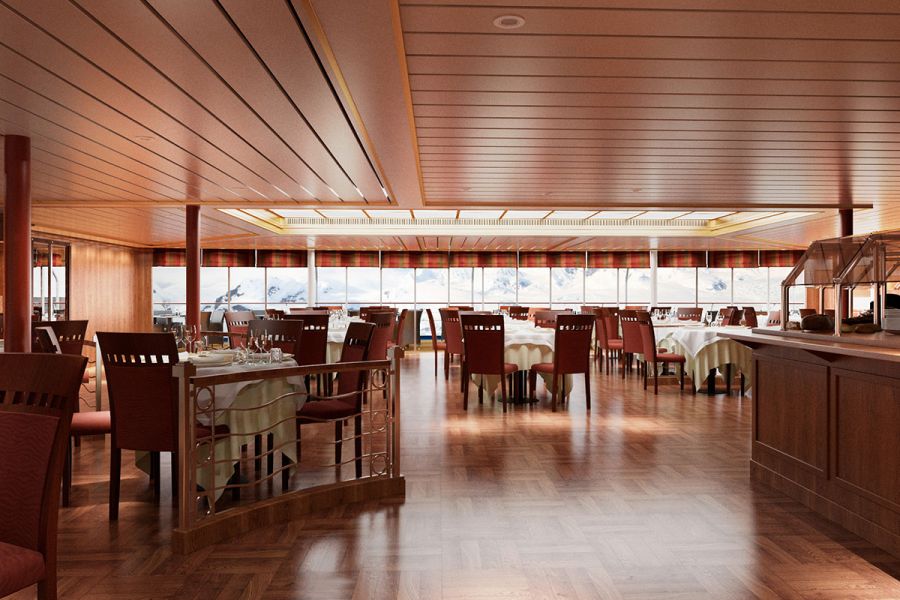
La Terrazza elevates casual dining by day and delivers an authentic Italian experience by night. During the breakfast and lunch buffets, our master chefs prepare global favorites at live stations. As evening falls, handmade pastas and classic seafood dishes are the centerpiece — every impeccable bite paired with fine wines from around the world.
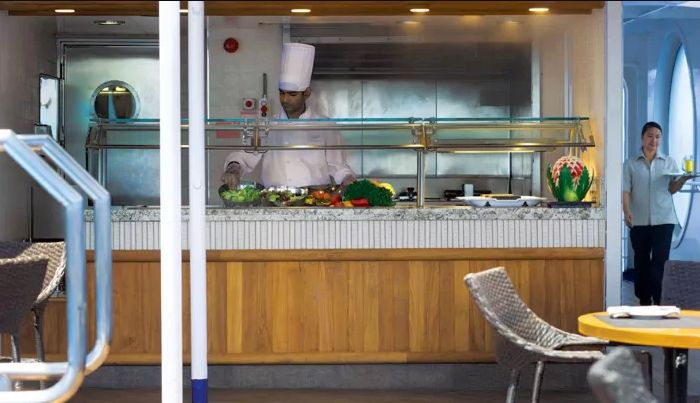
A poolside al fresco favorite, The Grill is casual by day and captivating by night. Dig in to crisp salads and grilled classics during lunch, then return after sunset for masterfully seasoned and seared cuts paired with balmy sea breezes.
Dress code: Casual
Casual wear consists of pants, blouses, or casual dresses for women; open-neck shirts and slacks for men are appropriate.
Images are intended as a general reference. Features, materials, finishes and layout may be different than shown.
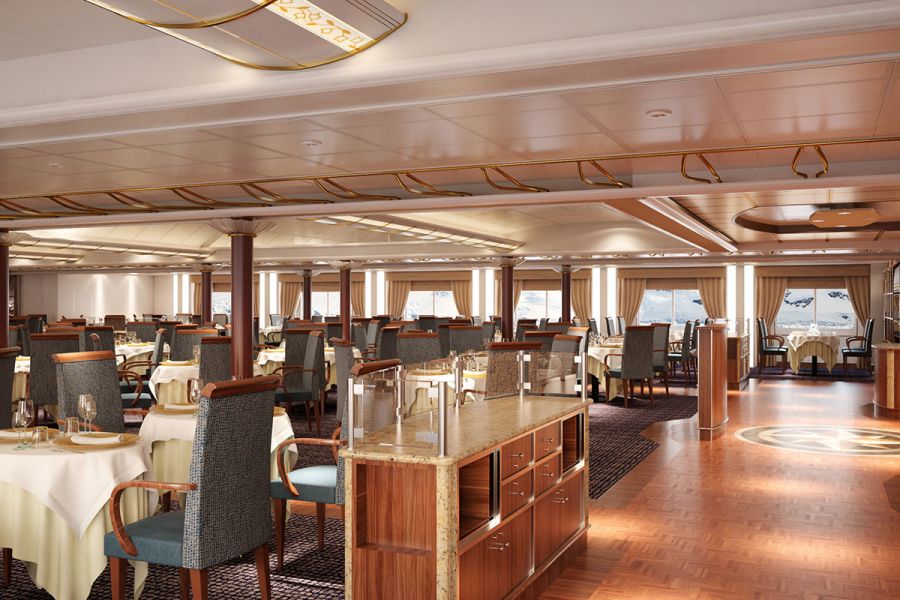
The Restaurant transforms dining into an extraordinary journey of taste. Indulge in international delicacies, refined classics, and destination-driven creations that reflect the flavors of the region you’re exploring. From breakfast favorites to imaginative evening courses, every meal draws inspiration from your voyage.
The images shown are for illustration purposes only and may not be an exact representation of what you find on the ship.
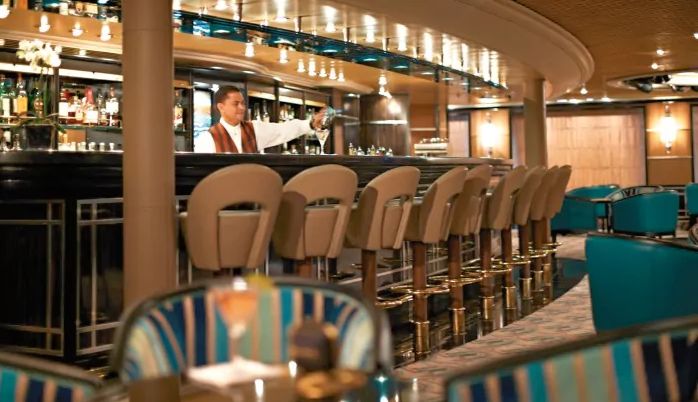
Surrender to a world of Italian elegance where the art of aperitivo takes pride of place. Ideal for connecting over spritzes, negronis, and light bites, here each evening feels like a celebration. As laughter lingers, crystal glasses clink, and live piano notes ripple through the air, Dolce Vita compels you to savor the sweetness of life on board.
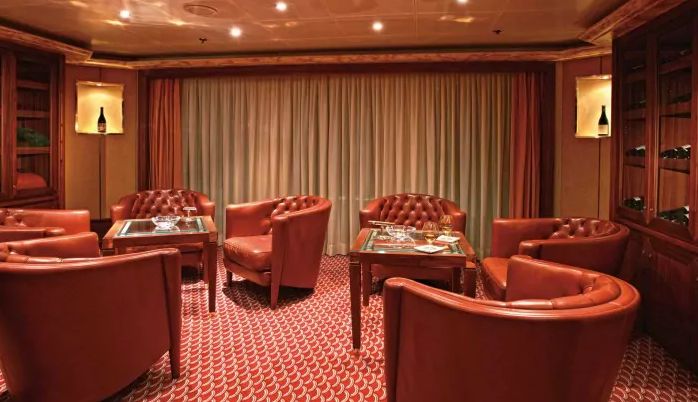
As evening stretches into night, Connoisseur’s Corner offers a stylish refuge for those who appreciate the time-honored rituals of smoke and spirit. Sink into tufted leather chairs with a hand-rolled cigar and a glass of one of our finest cognacs or whiskeys. Indoors or under the stars, every moment is marked by pure indulgence.
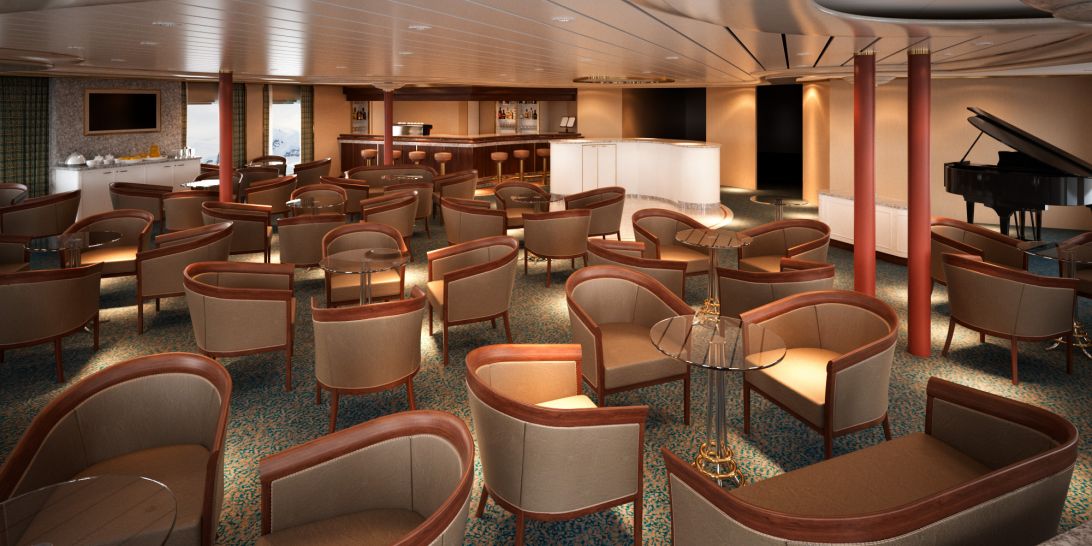
True to its name, Panorama Lounge surrounds you with sweeping views from every angle. Sunlight pours through wraparound windows by day, framing horizons that shift like watercolors. Evenings hum with piano chords and DJ beats that carry you late into the night. And all of it pairs wonderfully with cocktails handcrafted to match your mood.
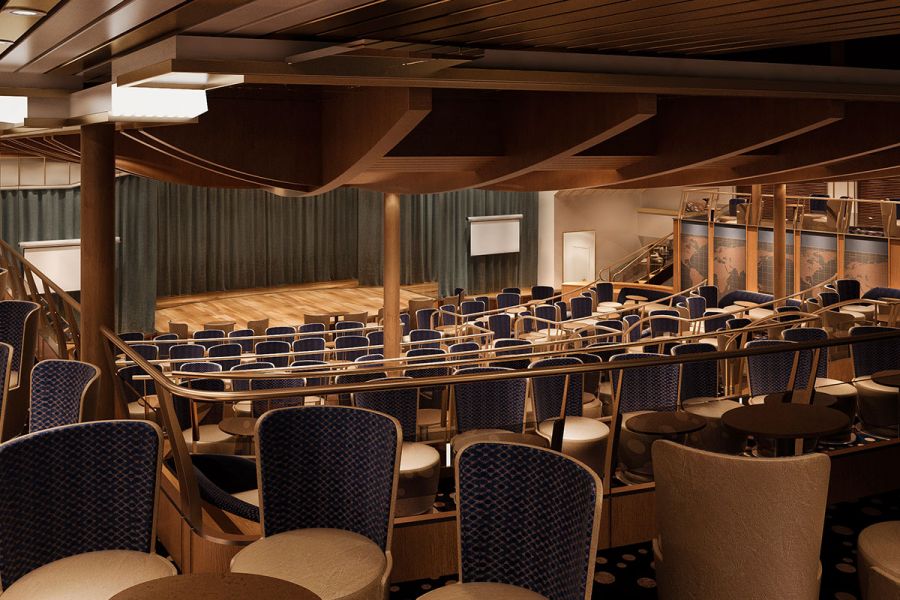
Unique to our Expedition ships, the Explorer Lounge is a versatile venue that adapts to the rhythm of your journey. Comfortable seating and refined refreshments create an atmosphere where learning and leisure meld seamlessly. From lectures and presentations to live entertainment and special events, this is a space where discovery thrives.
The images shown are for illustration purposes only and may not be an exact representation of what you find on the ship.
The images shown are for illustration purposes only and may not be an exact representation of what you find on the ship.


Our Fusion packages are all ABTA & ATOL protected ensuring that your booking is safe with us
| 21 nights aboard the Silver Cloud | |||
| Butler Service in Every Suite | |||
| Gratuities Always Included | |||
| Beverages In-Suite and Throughout the Ship | |||
| Gourmet Dining | |||
| In Suite Dining & 24-Hour Room Service | |||
| Intimate small size ships | |||
| Free Wifi Throughout the Ship | |||
| Free Zodiac, Land and Sea Tours & Activities & Complimentary Expedition gear | |||
| Port Taxes and Fees | |||
 | ABTA and ATOL Protection* | ||
Date 23rd Jun 2027 |
Nts 21 |
Suite £31,000pp |
Date 23rd Jun 2027 |
Nts 21 |
Suite £31,000pp |
| Suite staterooms from | £31,000pp | ||
| DV | Midship Veranda Suite |  | |
| G1 | Grand Suite (1 Bedroom) | | |
| G2 | Grand Suite (2 Bedrooms) | | |
| ME | Medallion Suite | | |
| O1 | Owner's Suite (1 Bedroom) | | |
| O2 | Owner's Suite (2 Bedrooms) | | |
| R1 | Royal Suite (1 Bedroom) | | |
| R2 | Royal Suite (2 Bedrooms) | | |
| SL | Silver Suite | £31,000pp | |
| VI | Vista Suite | | |
| VR | Veranda Suite | | |
Fusion Holidays when selling travel arrangements is a trading name of Co-op Travel Services Limited, registration 08903986. Fusion Cruises is an Accredited Body Member of Co-op Travel Services Limited ATOL 12904.
Book with Confidence. We are a Member of ABTA which means you have the benefit of ABTA’s assistance and Code of Conduct.
Some of the flights and flight-inclusive holidays on this website are financially protected by the ATOL scheme but ATOL protection does not apply to all holiday and travel services offered on this website. This website will provide you with information on the protection that applies in the case of each holiday and travel service offered before you make your booking. If you do not receive an ATOL Certificate then the booking will not be ATOL protected. If you do receive an ATOL Certificate but all parts of your trip are not listed on it, those parts will not be ATOL protected. Please see our booking conditions for information, or for more information about financial protection and the ATOL Certificate go to: www.caa.co.uk