This site uses cookies as defined in our Cookie Policy, by continuing to use this site you agree to their use.
Continue

| Arrive | Depart | ||||||
| 27th27 | FebFeb | 202727 | Puerto Williams, Chile, embark on the Silver Cloud | 18:00 | |||
| Puerto Williams is a Chilean city located on Navarino Island on the southern shores of the Beagle Channel. It claims to be the “southernmost city in the world”, however owing to its small size – 2500 residents approximately – the much larger Argentinean city of Ushuaia, which sits on the northern side of the same channel, also claims that title. The surrounding scenery is magnificent. The wild windswept mountains rise above the tree line and are regularly dusted with snow. The city itself has the dramatic backdrop called “Dientes de Navarino” (literally “teeth of Navarino”), which rival the famous Torres del Paine further to the north. The area was originally used by the Yaghan people, hunter-gatherers who despite enduring the harsh regional climate, could not weather the arrival of Europeans. The current city was established as a naval base in 1953 and honours the British-Chilean naval commander John Williams Wilson of the 16th century. Initially it served to protect territorial possessions and fishing rights of the area, as well as offering logistical support to Antarctic bases. More recently it has become a departure point for scientific and tourism trips to the Antarctic region. In contrast to the bustle and traffic of a very commercial Ushuaia, Puerto Williams offers a quieter, more relaxed experience. It charms the visitor with a small village feel, complete with rustic buildings and the homely smell of drifting wood smoke. A haven of peace at the end of the world. | |||||||
| 28th28 | FebFeb | 202727 | Ushuaia, Argentina | 08:00 | 13:00 | ||
At 55 degrees latitude south, Ushuaia (pronounced oo-swy-ah) is closer to the South Pole than to Argentina's northern border with Bolivia. It is the capital and tourism base for Tierra del Fuego, the island at the southernmost tip of Argentina.Although its stark physical beauty is striking, Tierra del Fuego's historical allure is based more on its mythical past than on rugged reality. The island was inhabited for 6,000 years by Yámana, Haush, Selk'nam, and Alakaluf Indians. But in 1902 Argentina, eager to populate Patagonia to bolster its territorial claims, moved to initiate an Ushuaian penal colony, establishing the permanent settlement of its most southern territories and, by implication, everything in between.When the prison closed in 1947, Ushuaia had a population of about 3,000, made up mainly of former inmates and prison staff. Today the Indians of Darwin's "missing link" theory are long gone—wiped out by diseases brought by settlers and by indifference to their plight—and the 60,000 residents of Ushuaia are hitching their star to tourism.The city rightly (if perhaps too loudly) promotes itself as the southernmost city in the world (Puerto Williams, a few miles south on the Chilean side of the Beagle Channel, is a small town). You can make your way to the tourism office to get your clichéd, but oh-so-necessary, "Southernmost City in the World" passport stamp. Ushuaia feels like a frontier boomtown, at heart still a rugged, weather-beaten fishing village, but exhibiting the frayed edges of a city that quadrupled in size in the '70s and '80s and just keeps growing. Unpaved portions of Ruta 3, the last stretch of the Pan-American Highway, which connects Alaska to Tierra del Fuego, are finally being paved. The summer months (December through March) draw more than 120,000 visitors, and dozens of cruise ships. The city is trying to extend those visits with events like March's Marathon at the End of the World and by increasing the gamut of winter activities buoyed by the excellent snow conditions.A terrific trail winds through the town up to the Martial Glacier, where a ski lift can help cut down a steep kilometer of your journey. The chaotic and contradictory urban landscape includes a handful of luxury hotels amid the concrete of public housing projects. Scores of "sled houses" (wooden shacks) sit precariously on upright piers, ready for speedy displacement to a different site. But there are also many small, picturesque homes with tiny, carefully tended gardens. Many of the newer homes are built in a Swiss-chalet style, reinforcing the idea that this is a town into which tourism has breathed new life. At the same time, the weather-worn pastel colors that dominate the town's landscape remind you that Ushuaia was once just a tiny fishing village, snuggled at the end of the Earth.As you stand on the banks of the Canal Beagle (Beagle Channel) near Ushuaia, the spirit of the farthest corner of the world takes hold. What stands out is the light: at sundown the landscape is cast in a subdued, sensual tone; everything feels closer, softer, and more human in dimension despite the vastness of the setting. The snowcapped mountains reflect the setting sun back onto a stream rolling into the channel, as nearby peaks echo their image—on a windless day—in the still waters.Above the city rise the last mountains of the Andean Cordillera, and just south and west of Ushuaia they finally vanish into the often-stormy sea. Snow whitens the peaks well into summer. Nature is the principal attraction here, with trekking, fishing, horseback riding, wildlife spotting, and sailing among the most rewarding activities, especially in the Parque Nacional Tierra del Fuego (Tierra del Fuego National Park). A southerly frontier - on the cusp of wild nature and extraordinary adventures - the excitement in Ushuaia is palpable. Prepare for memorable exploits amid the extremes of this southerly location - as you adventure into the colossal scenery of the fractured Tierra del Fuego and beyond. Known as the 'End of the World' Ushuaia looks out across the Beagle Channel, and is surrounded by the Martial Mountains to the north. Despite its remote location, Ushuaia is a surprisingly busy and lively resort, with lots to keep its visitors entertained. For many people, Ushuaia is their last glimpse of anything resembling a city, before they jump off the map into the wilderness, to answer the call of immense national parks or Antarctic expeditions. One of the most dramatic landscapes on the planet - Argentina's land of fire, National Park Tierra del Fuego, is a place of titanic natural forces and limitless beauty. Snow-covered mountains poke the sky, while glaciers spill down between peaks, and gaping fjords open up. With incredible wildlife - from penguins to whales - the park offers some of South America's most amazing hiking opportunities and panoramas. When it comes to food in Ushuaia, locals cook up fierce flavours using the freshest ingredients. King crab is one of the most popular dishes, while sea bass - hauled freshly from the waters - and mounds of meaty mussels - known as cholgas - are also on the menu here. | |||||||
| 1st01 | MarMar | 202727 | Punta Arenas, Chile | 11:00 | 19:00 | ||
Impenetrable forests, impassable mountains, and endless fields of ice define Chilean Patagonia, and meant that the region went largely unexplored until the beginning of the 20th century. Located in the southernmost part of the country, this area is still sparsely inhabited, though you will find a few populated places—like the colorful provincial city of Punta Arenas, which looks like it's about to be swept into the Strait of Magellan. Some unique wildlife, particularly colonies of elephant seals and penguins, call this breathtaking topography home. To the north is Parque Nacional Torres del Paine, the country's most magnificent natural wonder, and whose snow-covered peaks seem to rise vertically from the plains below. The vistas, such as the fantastic Avenue of the Glaciers, are breathtaking; along this stretch of the Beagle Channel, you can pass six tremendous glaciers all within a stone's throw of each other.Cruise SightsPunta Arenas. Founded a little more than 150 years ago, Punta Arenas (Sandy Point) was Chile's first permanent settlement in Patagonia. Plaza Muñoz Gamero, the central square, is surrounded by evidence of that early prosperity: buildings whose then-opulent brick exteriors recall a time when this was one of Chile's wealthiest cities. The newer houses here have colorful tin roofs, best appreciated when seen from a high vantage point such as the Mirador Cerro la Cruz. Although the city as a whole may not be particularly attractive, look for details: the pink-and-white house on a corner, the bay window full of potted plants, parking attendants wearing the regional blue and yellow colors, and schoolchildren in identical naval pea coats that remind you that the city's fate is tied to the sea.The Museo Naval y Marítimo extols Chile's high-seas prowess, particularly concerning Antarctica. Its exhibits are worth a visit for anyone with an interest in ships and sailing, merchant and military alike. Part of the second floor is designed like the interior of a ship, including a map and radio room. Pedro Montt 989. Admission charged.Housed in what was once the mansion of the powerful Braun-Menéndez family, the Museo Regional de Magallanes is an intriguing glimpse into the daily life of a wealthy provincial family at the beginning of the 20th century. Lavish Carrara marble hearths, English bath fixtures, and cordovan leather walls are among the original accoutrements. The museum also has an excellent group of displays depicting Punta Arenas's past, from the first European contact to the town's decline after the opening of the Panama Canal. The museum is half a block north of the main square. Magallanes 949. Admission charged.The resplendent 1895 Palacio Sara Braun is a national landmark and an architectural showpiece of southern Patagonia. Designed by a French architect, the house was built from materials and by craftsmen imported from Europe during the four years of construction. The city's central plaza and surrounding buildings soon followed, ushering in the region's golden era. Noteworthy are the lavish bedrooms, magnificent parquet floors, marble fireplaces, and hand-painted ceilings. Don't miss the portraits of Braun and her husband José Nogueira in the music room. Afterwards, head to the cellar for a drink or snack in the warm public tavern (a good portion of the mansion is leased to a hotel). Plaza Muñoz Gamero 716. Admission charged.Commonly referred to simply as "El Salesiano," the Museo Salesiano de Maggiorino Borgatello is operated by Italian missionaries whose order arrived in Punta Arenas in the 19th century. The Salesians, most of whom spoke no Spanish, proved to be daring explorers. Traveling throughout the region, they collected the artifacts made by indigenous tribes that are currently on display. Av. Bulnes 398. Admission charged.Isla Magdalena. Punta Arenas is the launching point for a boat trip to the Isla Magdalena to see the more than 100,000 Magellanic penguins at the Monumento Natural Los Pingúinos. A single trail, marked off by rope, is accessible to humans. The boat trip to the island, in the middle of the Estrecho de Magallanes, takes about two hours. Make sure to bring along warm clothing, even in summer; the island can be chilly, particularly if a breeze is blowing across the water.Parque Nacional Torres del Paine. Some 12 million years ago, lava flows pushed up through the thick sedimentary crust that covered the southwestern coast of South America, cooling to form a granite mass. Glaciers then swept through the region, grinding away all but the ash-gray spires that rise over the landscape of one of the world's most beautiful natural phenomena, now the Parque Nacional Torres del Paine (established in 1959). Snow formations dazzle along every turn of road, and the sunset views are spectacular.Among the 2,420-square-km (934-square-mi) park's most beautiful attractions are its lakes of turquoise, aquamarine, and emerald green waters. Another draw is its unusual wildlife. Creatures like the guanaco (a woollier version of the llama) and the ñandú (resembling a small ostrich) abound. They are used to visitors and don't seem to be bothered by the proximity of automobile traffic and the snapping of cameras. Predators, like the gray fox, make less frequent appearances. You may also spot the dramatic aerobatics of a falcon and the graceful soaring of the endangered condor. The beautiful puma is especially elusive, but sightings have become more common. Admission charged.Pingúinera de Seno Otway. The road to this penguin sanctuary begins 30 km (18 mi) north of Punta Arenas. Magellanic penguins, which live up to 20 years in the wild, return to their birthplace here every year to mate with the same partner. For about 2,000 penguin couples—no single penguins make the trip—home is this desolate and windswept land off the Otway Sound. In late September, the penguins begin to arrive from the southern coast of Brazil and the Falkland Islands. They mate and lay their eggs in early October, and brood their eggs in November. Offspring hatch between mid-November and early December. If you're lucky, you may catch sight of one of the downy gray chicks that stick their heads out of the burrows when their parents return to feed them. Otherwise you might see scores of the ungainly adult penguins waddling to the ocean from their nesting burrows. They swim for food every eight hours and dive up to 100 feet deep. The penguins depart from the sound in late March. Note that the sanctuary is a 1-km (1/2-mi) walk from the parking lot. It gets chilly, so bring a windbreaker. Admission charged.Reserva Nacional Laguna Parillar. This 47,000-acre reserve lies west of Puerto Hambre, a tranquil fishing village, and is centered around a shimmering lake in a valley flanked by hills. It's a great place for a picnic, and there are a number of well-marked paths that offer sweeping vistas over the Estrecho de Magallanes. About 2 km (1 mi) west of Puerto Hambre is a small white monolith that marks the geographical center of Chile, the midway point between Chile's northern port Arica and the South Pole.Cruise ShoppingWool may no longer be king of the economy, but vast flocks of sheep still yield a high-quality product that is woven into the clothing here. Leather products are also common, but the prices are not necessarily low. About 3 km (2 mi) north of Punta Arenas is the Zona Franca (Av. Bulnes). This duty-free zone is where people from all around the region come for low-priced electronics and other consumer items. Welcome to Chile's City at the End of The World – a wind-whipped, fractured land of islands, glacial fjords and mountains, which drop away towards Antarctica. A hardy city, where the temperature hovers in single figures throughout much of the year, Punta Arenas nevertheless offers a warm welcome and refuge, ahead of - and following - epic adventures and expeditions south across the Drake Passage. Captain Scott stopped here in 1904 – testing the postal service sending 400 letters of his successful return - and the city welcomed the rescued Ernest Shackleton and his Endurance crew to these shores in 1916. Punta Arenas is a remote place, but with custom-free status, and more than 120,000 people calling it home it's also surprisingly cosmopolitan. The commercial centre of Magallanes Punta Arenas is fueled by Chilean oil and gas - and establishing itself as a global centre for Antarctic research, with teams from various countries basing themselves here. The town is built around the Plaza de Armas, its central square - be sure to kiss the toe of the Monumento del Indio Patagon statue, said to guarantee you good luck on your return. Look down across this colourful city, stretching out to meet the waters of the Straits of Magellan, from the viewpoint at Cerro De La Cruz. Natural wonders abound in the region, whether it’s Alberto de Agostini National Park’s glacial sculptures, or Torres del Paine National Park’s soaring mountains, rushing waterfalls and picturesque lakes. Offshore, in the Strait of Magellan, you can find the birdlife sanctuary of Magdalena Island - an uninhabited island, where hundreds of thousands of penguins march and crowds of cormorants and gulls call out. | |||||||
| 2nd02 | MarMar | 202727 | Aguila Glacier, Chile | 07:30 | 12:30 | ||
| 3rd03 | MarMar | 202727 | Chilean Fjords, Chile | ||||
Strewn through the coast of Chile, these beautiful fjords are world renowned for being one of the most awe-inspiring places on earth. Snow-capped volcanoes nestle majestically alongside rolling valleys of ice and frosty glaciers. Rugged beauty, breathtaking scenery not to mention diverse and profuse wildlife abounds – expect to watch whales from the deck, see playful Magellan Penguins and perhaps even spot the rare Andean Condor. Affectionately named “The End of the World” by the Spaniards who discovered the region in eighteenth century in a quest to Christianise South America, these extraordinary waterways not only encompass a medley of jagged mountains and iceberg strewn bays, but feature a kaleidoscopic spectrum of unexpected colour that offers photographic opportunities like no other destination. Strewn through the coast of Chile, these beautiful fjords are world renowned for being one of the most awe-inspiring places on earth. Snow-capped volcanoes nestle majestically alongside rolling valleys of ice and frosty glaciers. Rugged beauty, breathtaking scenery not to mention diverse and profuse wildlife abounds – expect to watch whales from the deck, see playful Magellan Penguins and perhaps even spot the rare Andean Condor. Affectionately named “The End of the World” by the Spaniards who discovered the region in eighteenth century in a quest to Christianise South America, these extraordinary waterways not only encompass a medley of jagged mountains and iceberg strewn bays, but feature a kaleidoscopic spectrum of unexpected colour that offers photographic opportunities like no other destination. | |||||||
| 4th04 | MarMar | 202727 | At Sea | 06:30 | 12:00 | ||
| Within Bernardo O’Higgins National Park the Pio XI Glacier (also known as Brüggen Glacier after the German geologist Johannes Brüggen) is found at the terminus of the 23 nautical miles long Eyre Fjord, one of the fjords coming from the northeast and the Southern Patagonian Ice Field. The fjord and its shores were formerly used by the nomadic Kaweskar to hunt, while the glacier was one of their sacred sites. Pio XI Glacier is the largest western outflow of the Southern Patagonian Ice Field and is South America’s longest glacier and the largest in the Southern Hemisphere outside of Antarctica. One of the few advancing glaciers, its front has a width of 4.5 kilometers, a height of approximately 80 meters and shows several central moraines, indicating that Greve Glacier and Occidental Glacier to the north once joined the glacial tongue. Approaching the glacier by ship and by Zodiac safe distances will be maintained, as the glacier shows extensive mudflats on its southeastern side leading to Exmouth Fjord and calvings can always occur. The rocky shore shows signs of Nothofagus trees and the temperate Magellanic rain forest where the extremely rare and endangered South Andean deer, locally known as the huemul, has been sighted. Chilean and Peale’s dolphins and the endangered southern river otters have been recorded, and South American sea lions can be seen. Among the birds expected are Imperial Shags, South American Terns, Brown-hooded Gulls, Kelp Gulls, Kelp Geese, and Fuegian Steamer Ducks. | |||||||
| 5th05 | MarMar | 202727 | Caleta Tortel, Chile | 07:00 | 18:00 | ||
Tortel is a commune located in Southern Patagonia, a spectacular wilderness region of rugged mountains, glaciers, rivers and forests of infinite beauty. The uneven geography of Tortel shapes a unique landscape, characterized by an archipelagic area with numerous islands and channels. Tortel is known as the “footbridge city” for the unique beauty of its wooden walkways that connect the piers and houses of this quaint place through bridges and stairs, built from cypress wood, that run for four and a half miles around the cove and that respect the rich vegetation that grows under them. Even though it is the sixth largest commune in Chile, it has the lowest population of all with roughly 531 people. The history of the town dates back to 1520 when it was inhabited by nomadic Kawesqar, now extinct. Its definitive foundation was in 1955, after numerous attempts to populate the area. In 2001, it was declared by the Chilean government as a Picturesque Zone of National Heritage. Tortel is a commune located in Southern Patagonia a spectacular wilderness region of rugged mountains glaciers rivers and forests of infinite beauty. The uneven geography of Tortel shapes a unique landscape characterized by an archipelagic area with numerous islands and channels. Tortel is known as the “footbridge city” for the unique beauty of its wooden walkways that connect the piers and houses of this quaint place through bridges and stairs built from cypress wood that run for four and a half miles around the cove and that respect the rich vegetation that grows under them. Even though it is the sixth largest commune in Chile it has the lowest population of all with roughly 531 people. The history of the town dates back to 1520 when it was inhabited by nomadic Kawesqar now extinct. Its definitive foundation was in 1955 after numerous attempts to populate the area. In 2001 it was declared by the Chilean government as a Picturesque Zone of National Heritage. | |||||||
| 6th06 | MarMar | 202727 | Chilean Fjords, Chile | ||||
Strewn through the coast of Chile, these beautiful fjords are world renowned for being one of the most awe-inspiring places on earth. Snow-capped volcanoes nestle majestically alongside rolling valleys of ice and frosty glaciers. Rugged beauty, breathtaking scenery not to mention diverse and profuse wildlife abounds – expect to watch whales from the deck, see playful Magellan Penguins and perhaps even spot the rare Andean Condor. Affectionately named “The End of the World” by the Spaniards who discovered the region in eighteenth century in a quest to Christianise South America, these extraordinary waterways not only encompass a medley of jagged mountains and iceberg strewn bays, but feature a kaleidoscopic spectrum of unexpected colour that offers photographic opportunities like no other destination. Strewn through the coast of Chile, these beautiful fjords are world renowned for being one of the most awe-inspiring places on earth. Snow-capped volcanoes nestle majestically alongside rolling valleys of ice and frosty glaciers. Rugged beauty, breathtaking scenery not to mention diverse and profuse wildlife abounds – expect to watch whales from the deck, see playful Magellan Penguins and perhaps even spot the rare Andean Condor. Affectionately named “The End of the World” by the Spaniards who discovered the region in eighteenth century in a quest to Christianise South America, these extraordinary waterways not only encompass a medley of jagged mountains and iceberg strewn bays, but feature a kaleidoscopic spectrum of unexpected colour that offers photographic opportunities like no other destination. | |||||||
| 7th07 | MarMar | 202727 | Puerto Cisnes, Chile | 06:00 | 13:00 | ||
| 8th08 | MarMar | 202727 | Puerto Montt, Chile | 07:00 | 13:00 | ||
For most of its history, windy Puerto Montt was the end of the line for just about everyone traveling in the Lake District. Now the Carretera Austral carries on southward, but for all intents and purposes Puerto Montt remains the region's last significant outpost, a provincial city that is the hub of local fishing, textile, and tourist activity.Today the city center is full of malls, condos, and office towers—it's the fastest-growing city in Chile—but away from downtown, Puerto Montt consists mainly of low clapboard houses perched above its bay, the Seno de Reloncaví. If it's a sunny day, head east to Playa Pelluco or one of the city's other beaches. If you're more interested in exploring the countryside, drive along the shore for a good view of the surrounding hills. For most of its history, windy Puerto Montt was the end of the line for just about everyone traveling in the Lake District. Now the Carretera Austral carries on southward, but for all intents and purposes Puerto Montt remains the region's last significant outpost, a provincial city that is the hub of local fishing, textile, and tourist activity.Today the city center is full of malls, condos, and office towers—it's the fastest-growing city in Chile—but away from downtown, Puerto Montt consists mainly of low clapboard houses perched above its bay, the Seno de Reloncaví. If it's a sunny day, head east to Playa Pelluco or one of the city's other beaches. If you're more interested in exploring the countryside, drive along the shore for a good view of the surrounding hills. | |||||||
| 9th09 | MarMar | 202727 | At Sea | ||||
| 10th10 | MarMar | 202727 | Valparaiso, Chile, disembark the Silver Cloud | ||||
Valparaíso's dramatic topography—45 cerros, or hills, overlooking the ocean—requires the use of winding pathways and wooden ascensores (funiculars) to get up many of the grades. The slopes are covered by candy-color houses—there are almost no apartments in the city—most of which have exteriors of corrugated metal peeled from shipping containers decades ago. Valparaíso has served as Santiago's port for centuries. Before the Panama Canal opened, Valparaíso was the busiest port in South America. Harsh realities—changing trade routes, industrial decline—have diminished its importance, but it remains Chile's principal port. Most shops, banks, restaurants, bars, and other businesses cluster along the handful of streets called El Plan (the flat area) that are closest to the shoreline. Porteños (which means "the residents of the port") live in the surrounding hills in an undulating array of colorful abodes. At the top of any of the dozens of stairways, the paseos (promenades) have spectacular views; many are named after prominent Yugoslavian, Basque, and German immigrants. Neighborhoods are named for the hills they cover. With the jumble of power lines overhead and the hundreds of buses that slow down—but never completely stop—to pick up agile riders, it's hard to forget you're in a city. Still, walking is the best way to experience Valparaíso. Be careful where you step, though—locals aren't very conscientious about curbing their dogs. Since time immemorial Valparaiso has inspired writers, poets, musicians and artists alike. If the city is still a little rough around the edges, this only adds to its bohemian ambience; the architecture, style, street art, nightlife, and live music scenes of Valparaiso are some of the best in the world. Add colourful clifftop homes to the mix and you'll soon see why Valpariaso is many people's favourite Chilean city. The city was founded in 1536 by Spanish conquistador Juan de Saavedra, who named the city after his birthplace. Many of the colonial buildings he implemented are still standing today, despite the rain, wind, fire and several earthquakes (one of which almost levelled the city in 1906). Quirky architecture also abounds; poetry lovers and amateur architects will no doubt want to make the 45 km trip south to Chilean poet laureate (and Nobel Prize winner) Pablo Neruda’s ship-shaped house and museum for a taste of the extraordinary. The city and region are also extremely well known for their love of good food and wine. The vineyards of the nearby Casablanca Valley - first planted in the early 1980s - have earned worldwide recognition in a relatively short space of time. However, Chile’s viticulture history does date back much farther than that. De Saavedra brought grape vines on his voyage to South America in order to make his own wine and this led to a new grape brandy being created, Pisco. Today give any Chilean a Pisco and wherever they are in the world, they will be home. | |||||||
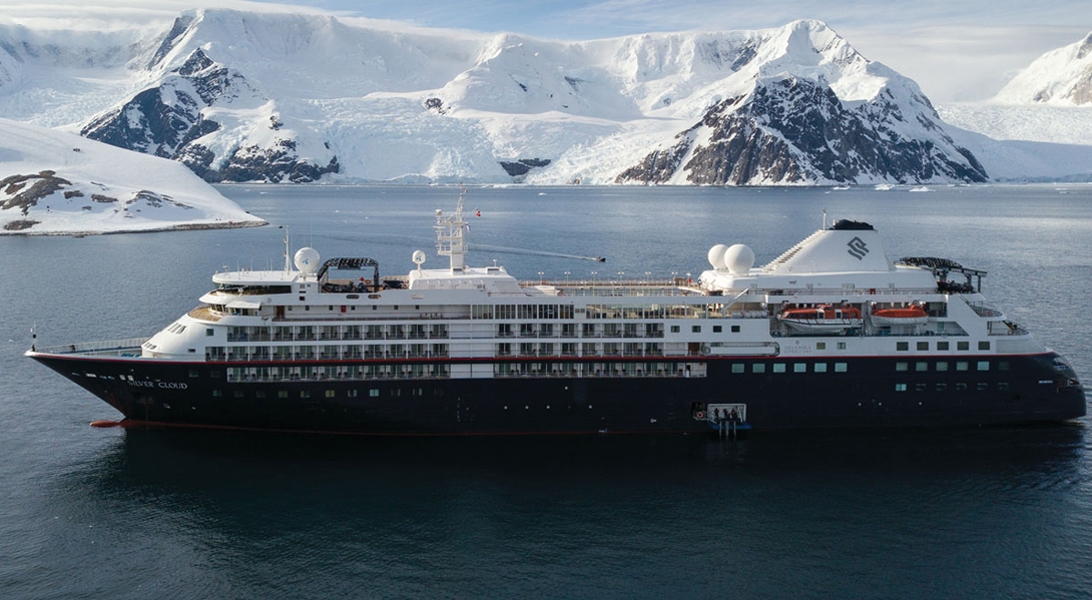
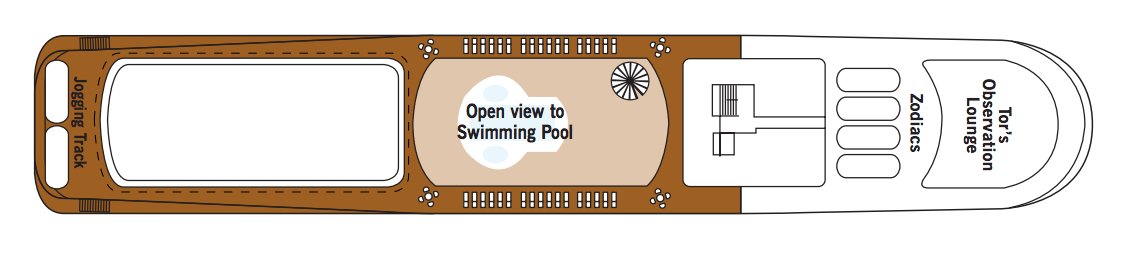

The images shown are for illustration purposes only and may not be an exact representation of what you find on the ship.
| Grade Code | From | To | |
| DV | Midship Veranda Suite | £9,200 | £10,500 |
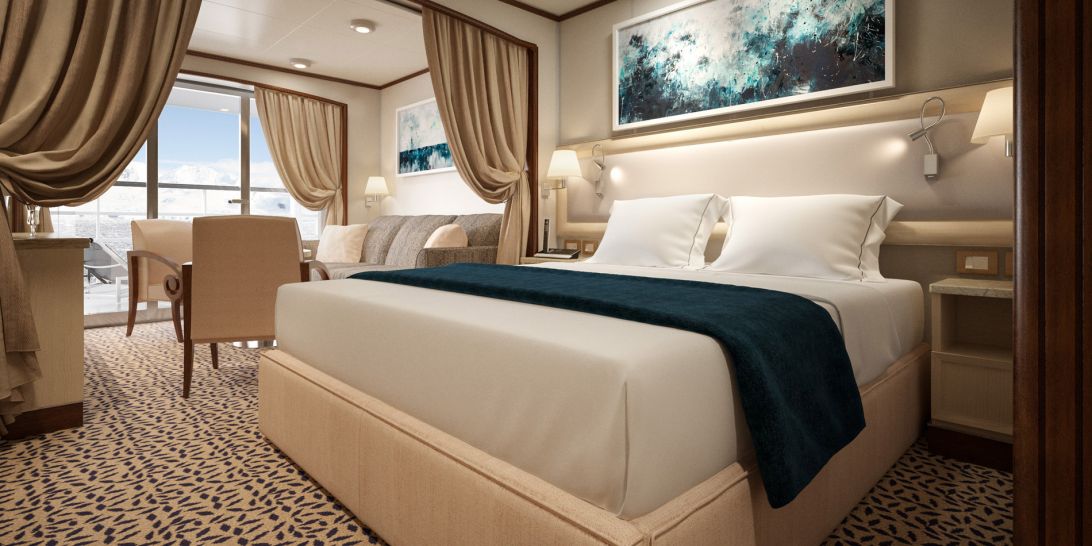
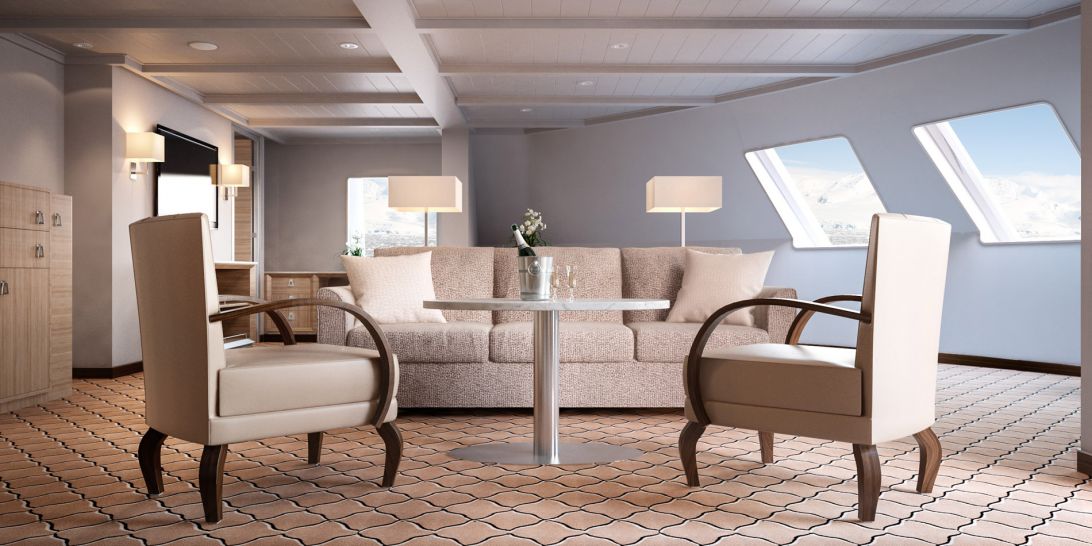
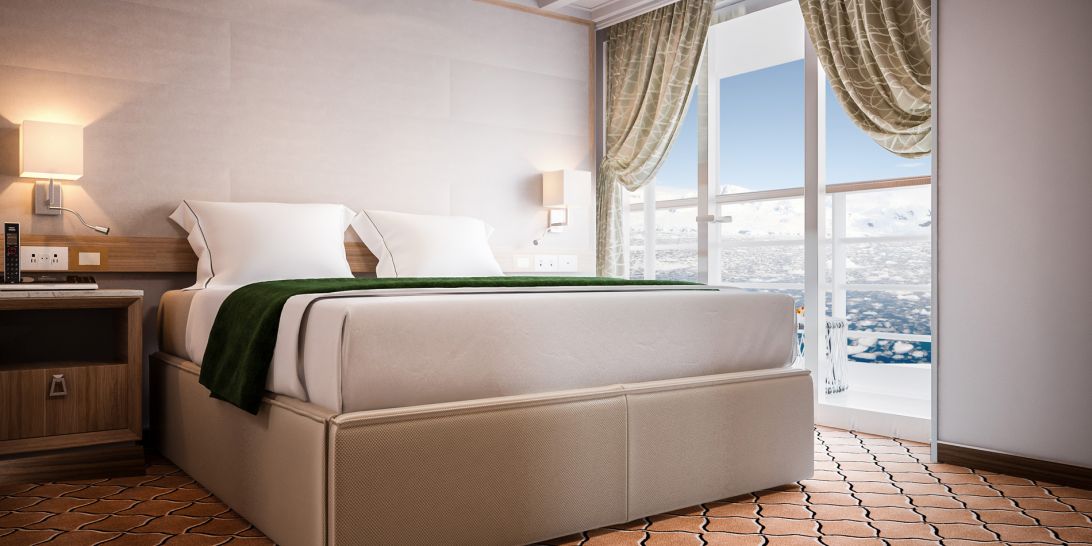
A Silversea signature, with a preferred central location, the Veranda Suite is spacious and welcoming. Floor-to-ceiling glass doors open onto a furnished private teak veranda from where you can contemplate anything from the midnight sun to an Antarctic sunrise. The Deluxe Veranda Suite offers a preferred central location with identical accommodation to a Veranda Suite.
One bedroom: 27 sq m (4.5 sq m)
Two bedrooms: 27 sq m (4.5 sq m)
Images are intended as a general reference. Features, materials, finishes and layout may be different than shown.
Essentials
Characteristics
Furniture
Media & Communication
Amenities
| Grade Code | From | To | |
| G1 | Grand Suite (1 Bedroom) | £18,950 | £18,950 |
| G2 | Grand Suite (2 Bedrooms) | £28,450 | £28,450 |
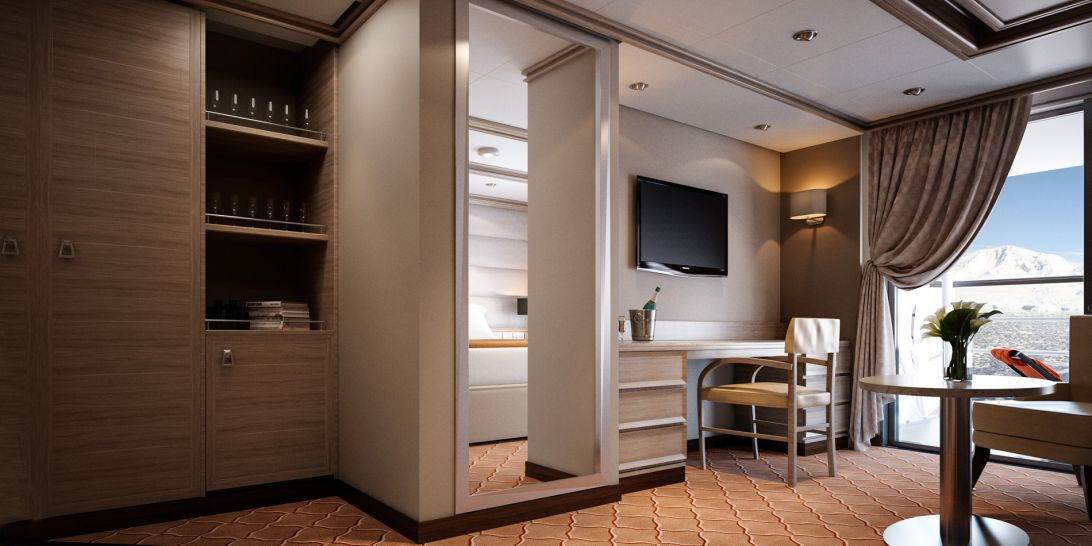
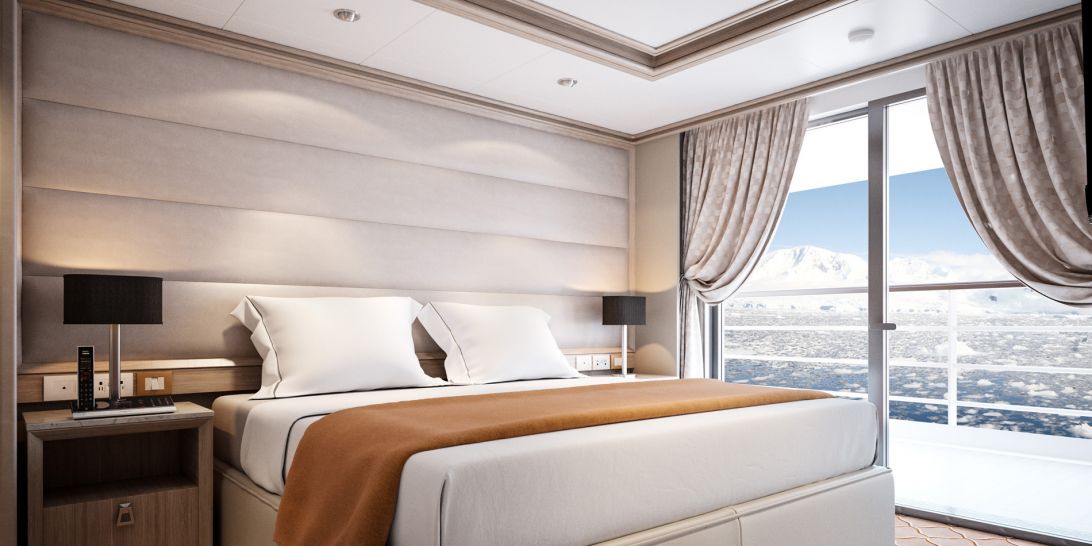
Expertly designed and exquisitely appointed. The ideal space for sharing stories with fellow explorers and new friends. With enough space to roam both inside and outside, this suite is perfect for relaxing and recounting the highlights of your day. Available in a one-bedroom configuration or as two bedrooms by adjoining with a Veranda Suite.
One bedroom: 95 sq m (14 sq m)
Images are intended as a general reference. Features, materials, finishes and layout may be different than shown.
Please note that the third guest will sleep on a comfortable sofa bed in the reception area of the suite.
Two bedrooms: 122 sq m (18.5 sq m)
Images are intended as a general reference. Features, materials, finishes and layout may be different than shown.
Please note that the 3rd guest will sleep on a comfortable sofa bed in the reception area of the suite.
Essentials
Characteristics
Furniture
Media & Communication
Onboard Services
Amenities
| Grade Code | From | To | |
| ME | Medallion Suite | £16,300 | £16,300 |
With a room configuration that favors watching the sun rise from the comfort of your bed and losing yourself in the mesmerizing seascapes, this suite is the perfect answer to adventure cruising. A large walk-in wardrobe and an expansive living room make the Medallion Suite your home away from home on the high seas. Medallion Suites accommodate three guests.
One bedroom: 48 sq m (7.6 sq m )
Images are intended as a general reference. Features, materials, finishes and layout may be different than shown.
Please note that the 3rd guest will sleep on a comfortable sofa bed in the reception area of the suite.
Essentials
Characteristics
Furniture
Media & Communication
Onboard Services
Amenities
| Grade Code | From | To | |
| O1 | Owner's Suite (1 Bedroom) | £19,700 | £19,700 |
| O2 | Owner's Suite (2 Bedrooms) | £27,700 | £27,700 |
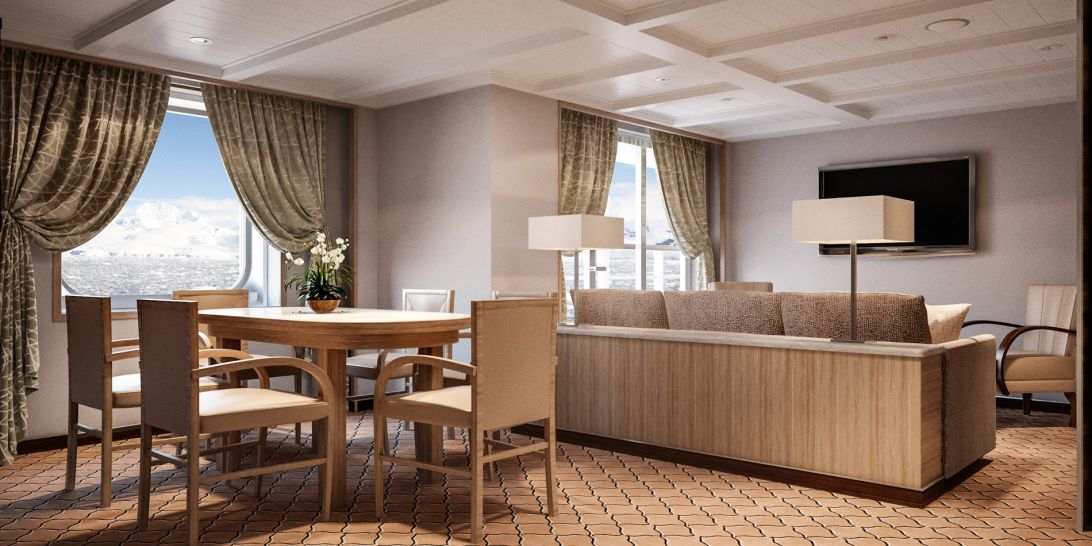
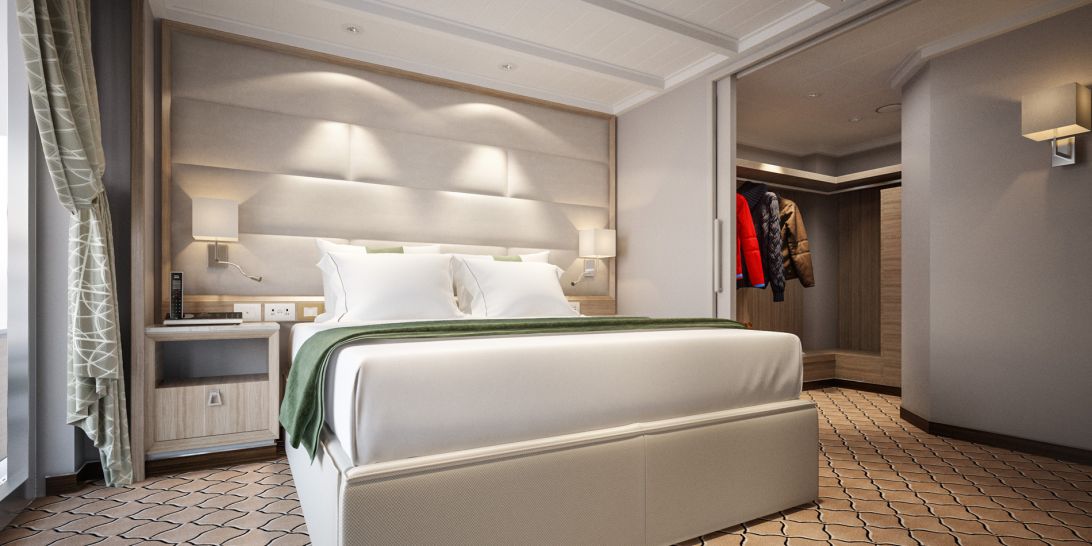
This stylish apartment offers the superlative in levels of space, comfort, and service on board. A perfect mix of expedition experience with luxury lifestyle. Available in a one-bedroom configuration or as two bedrooms by adjoining with a Vista Suite.
One bedroom: up to 55 sq m (8 sq m)
Two bedrooms: 77 sq m (8 sq m)
Images are intended as a general reference. Features, materials, finishes and layout may be different than shown.
Please note that the 3rd guest will sleep on a comfortable sofa bed in the reception area of the suite.
Essentials
Characteristics
Furniture
Media & Communication
Onboard Services
Amenities
| Grade Code | From | To | |
| R1 | Royal Suite (1 Bedroom) | £18,150 | £18,150 |
| R2 | Royal Suite (2 Bedrooms) | £27,700 | £27,700 |
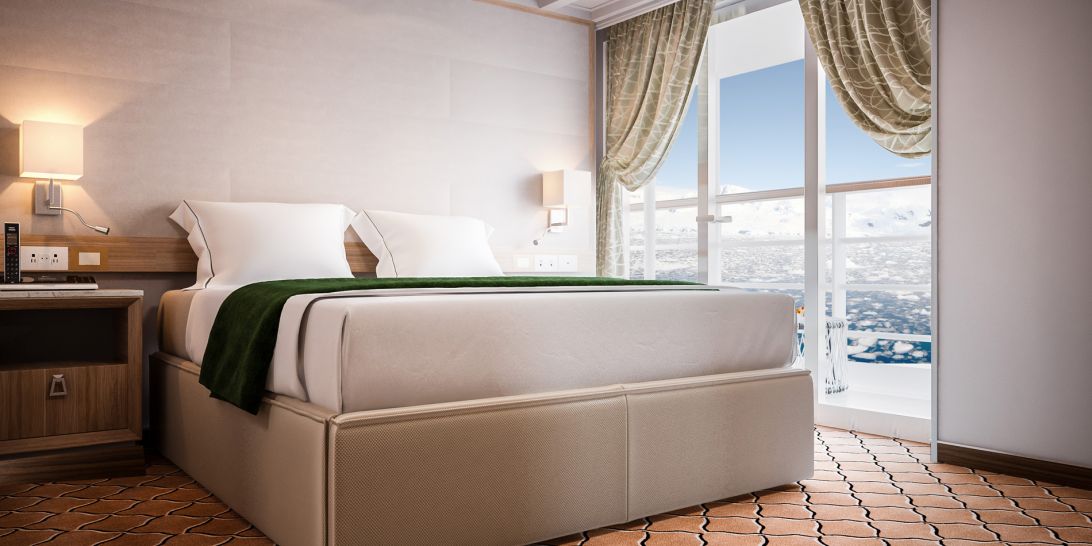
Stately. Commanding and majestic. Perfect for relaxing after a days’ exploring and looking through your photos. With lectures streamed live to your room, this is the pinnacle of good living at sea. Available in a one-bedroom configuration or as two bedrooms by adjoining with a Veranda Suite.
One bedroom: 69 sq m (12 sq m)
Two bedrooms: 96 sq m (16.5 sq m)
Images are intended as a general reference. Features, materials, finishes and layout may be different than shown.
Please note that the third guest will sleep on a comfortable sofa bed in the reception area of the suite.
Essentials
Characteristics
Furniture
Media & Communication
Onboard Services
Amenities
| Grade Code | From | To | |
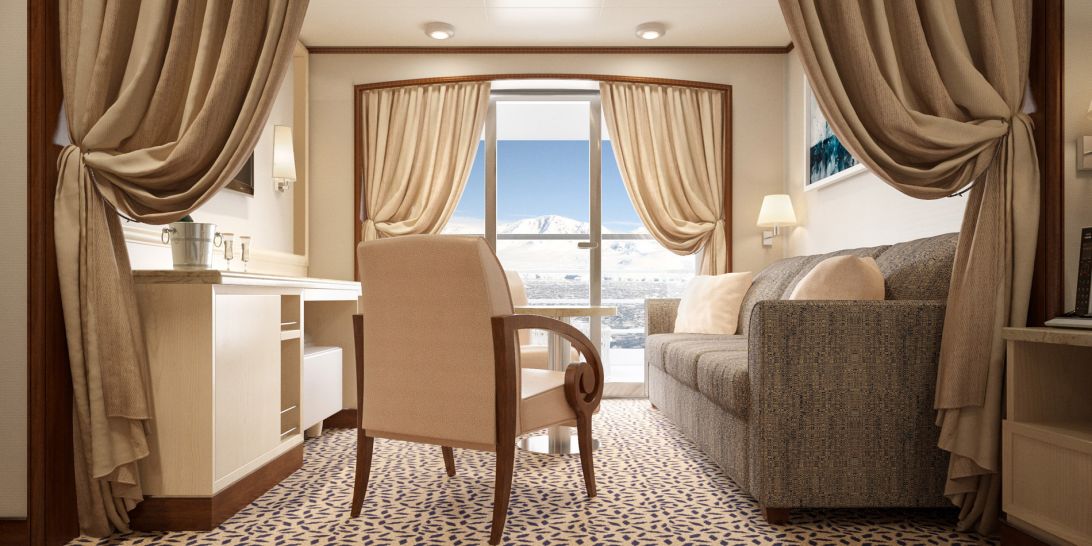
| VR | Veranda Suite | £6,500 | £9,600 |
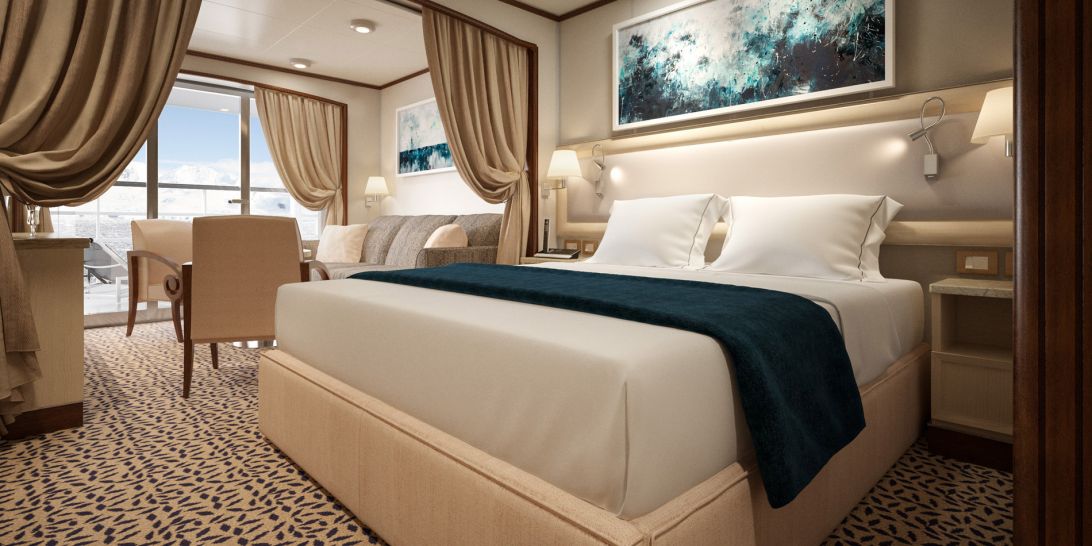
A Silversea signature, the Veranda Suite is spacious and welcoming. Floor-to-ceiling glass doors open onto a furnished private teak veranda from where you can contemplate anything from the midnight sun to an Antarctic sunrise. Some Veranda Suites accommodate three guests (suites 505 to 510 and 605 to 610).
One bedroom: 27 sq m (4.5 sq m)
Images are intended as a general reference. Features, materials, finishes and layout may be different than shown.
Please note that the 3rd guest will sleep on a comfortable sofa bed in the reception area of the suite.
Essentials
Characteristics
Furniture
Media & Communication
Onboard Services
Amenities
| Grade Code | From | To | |
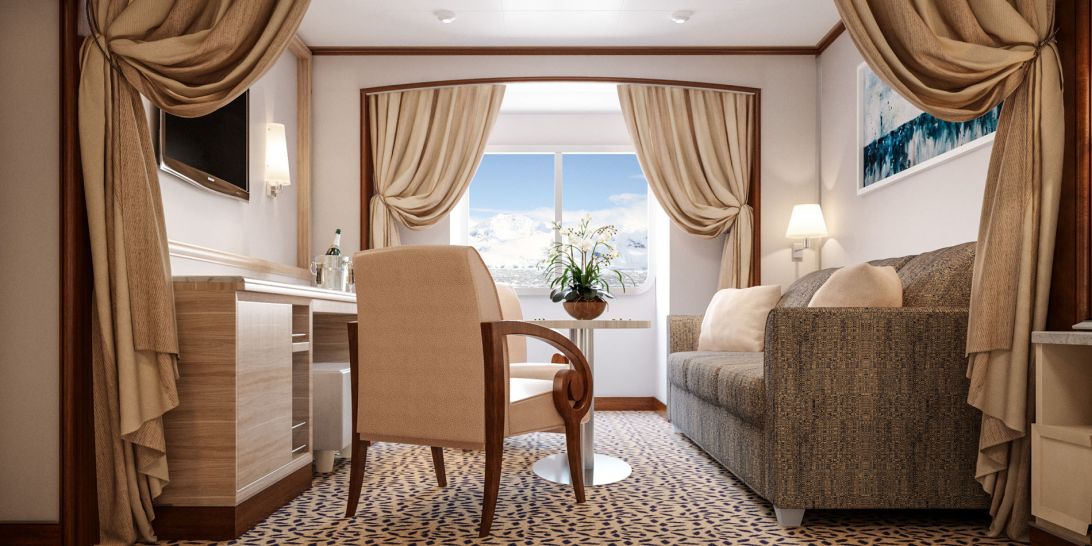
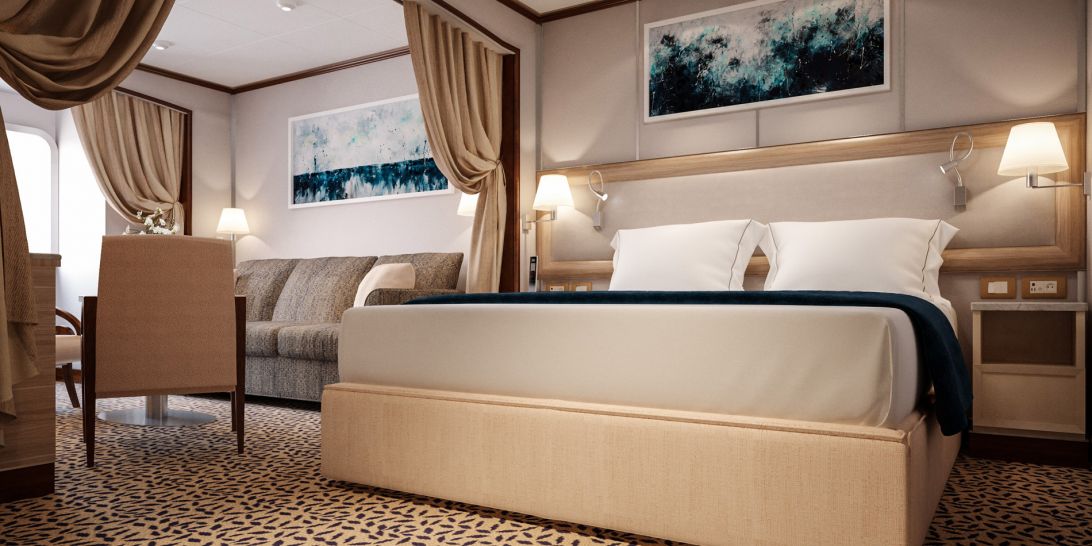
| VI | Vista Suite | £6,100 | £7,850 |
Your home away from home while you embrace the intrepid explorer within. The suite’s seating area has plenty of room to relax while you go over your notes, ready for the next adventure. Large picture windows frame panoramic ocean views, ideal for appraising the local wildlife.
One bedroom: 22 sq m
Wheelchair accessible suites: 449 and 451
Images are intended as a general reference. Features, materials, finishes and layout may be different than shown.
Essentials
Characteristics
Furniture
Media & Communication
Onboard Services
Amenities
The images shown are for illustration purposes only and may not be an exact representation of what you find on the ship.
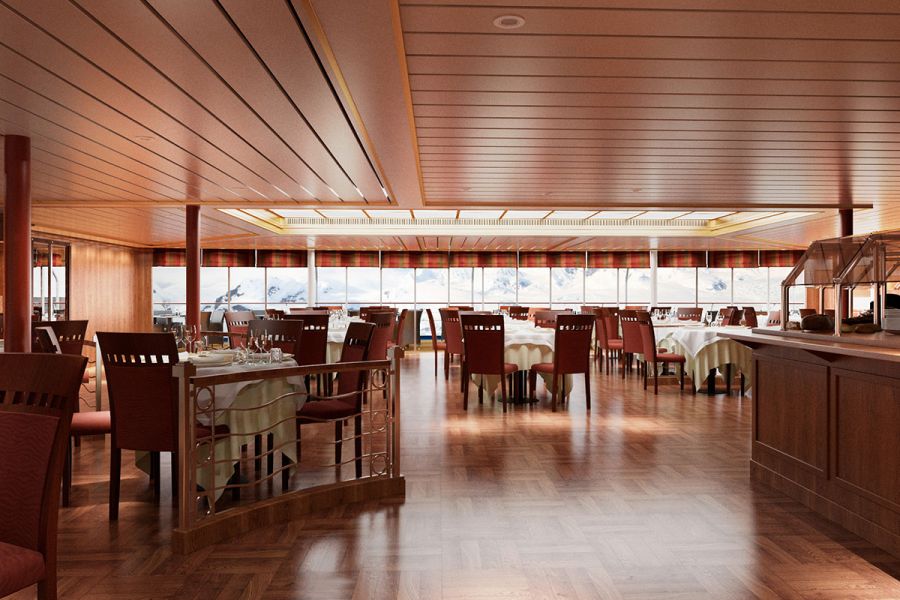
La Terrazza elevates casual dining by day and delivers an authentic Italian experience by night. During the breakfast and lunch buffets, our master chefs prepare global favorites at live stations. As evening falls, handmade pastas and classic seafood dishes are the centerpiece — every impeccable bite paired with fine wines from around the world.
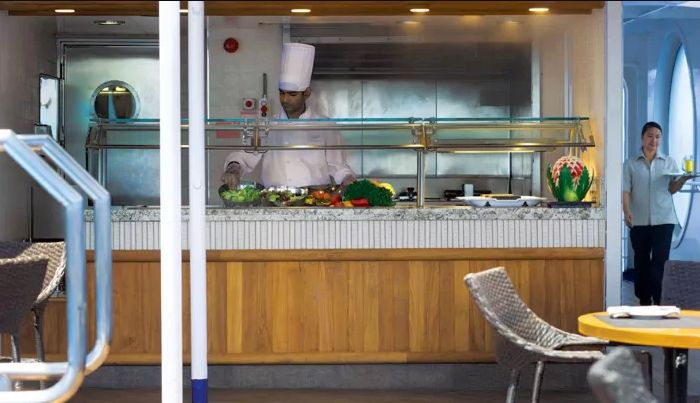
A poolside al fresco favorite, The Grill is casual by day and captivating by night. Dig in to crisp salads and grilled classics during lunch, then return after sunset for masterfully seasoned and seared cuts paired with balmy sea breezes.
Dress code: Casual
Casual wear consists of pants, blouses, or casual dresses for women; open-neck shirts and slacks for men are appropriate.
Images are intended as a general reference. Features, materials, finishes and layout may be different than shown.
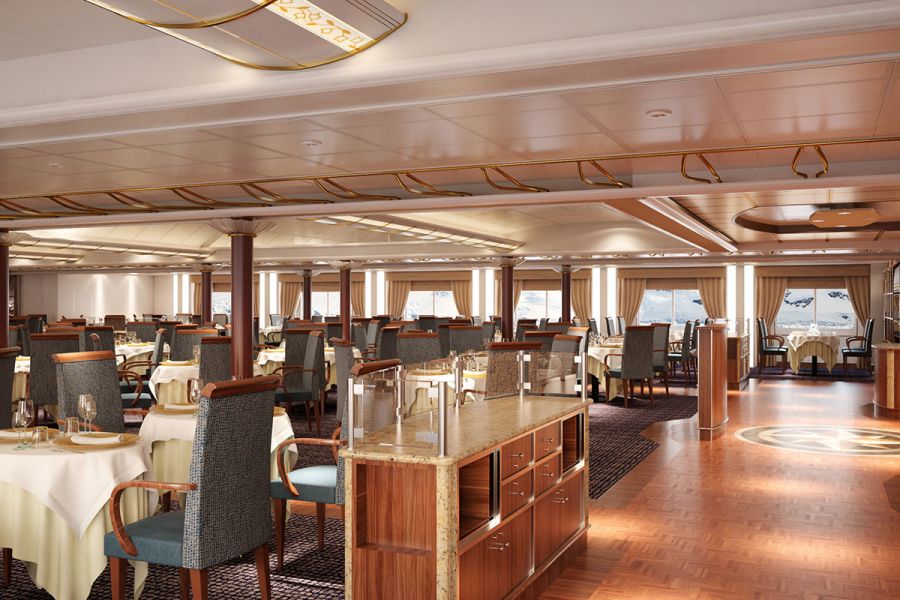
The Restaurant transforms dining into an extraordinary journey of taste. Indulge in international delicacies, refined classics, and destination-driven creations that reflect the flavors of the region you’re exploring. From breakfast favorites to imaginative evening courses, every meal draws inspiration from your voyage.
The images shown are for illustration purposes only and may not be an exact representation of what you find on the ship.
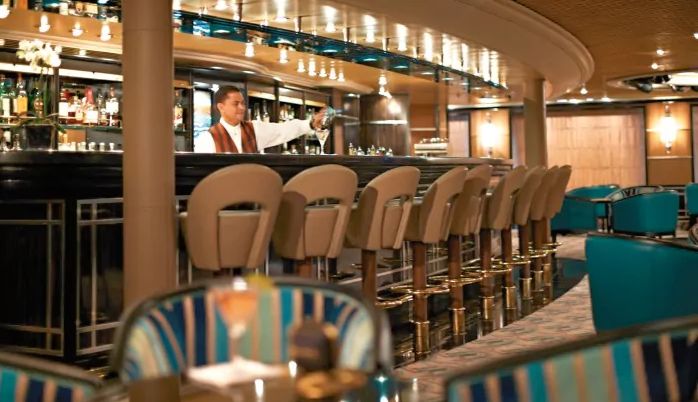
Surrender to a world of Italian elegance where the art of aperitivo takes pride of place. Ideal for connecting over spritzes, negronis, and light bites, here each evening feels like a celebration. As laughter lingers, crystal glasses clink, and live piano notes ripple through the air, Dolce Vita compels you to savor the sweetness of life on board.
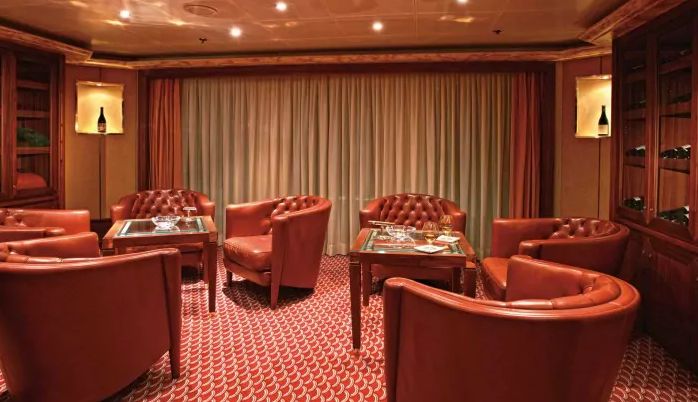
As evening stretches into night, Connoisseur’s Corner offers a stylish refuge for those who appreciate the time-honored rituals of smoke and spirit. Sink into tufted leather chairs with a hand-rolled cigar and a glass of one of our finest cognacs or whiskeys. Indoors or under the stars, every moment is marked by pure indulgence.
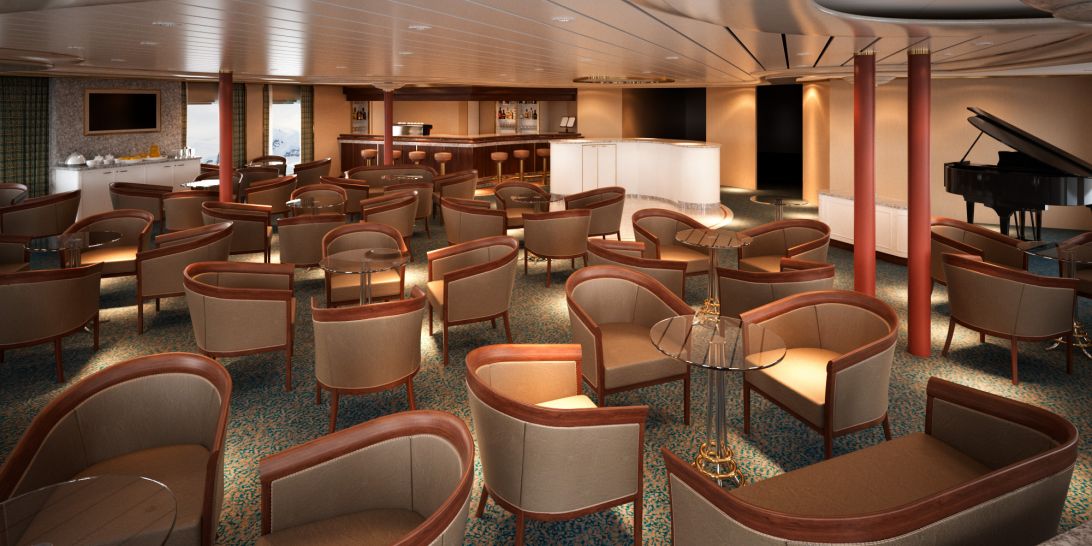
True to its name, Panorama Lounge surrounds you with sweeping views from every angle. Sunlight pours through wraparound windows by day, framing horizons that shift like watercolors. Evenings hum with piano chords and DJ beats that carry you late into the night. And all of it pairs wonderfully with cocktails handcrafted to match your mood.
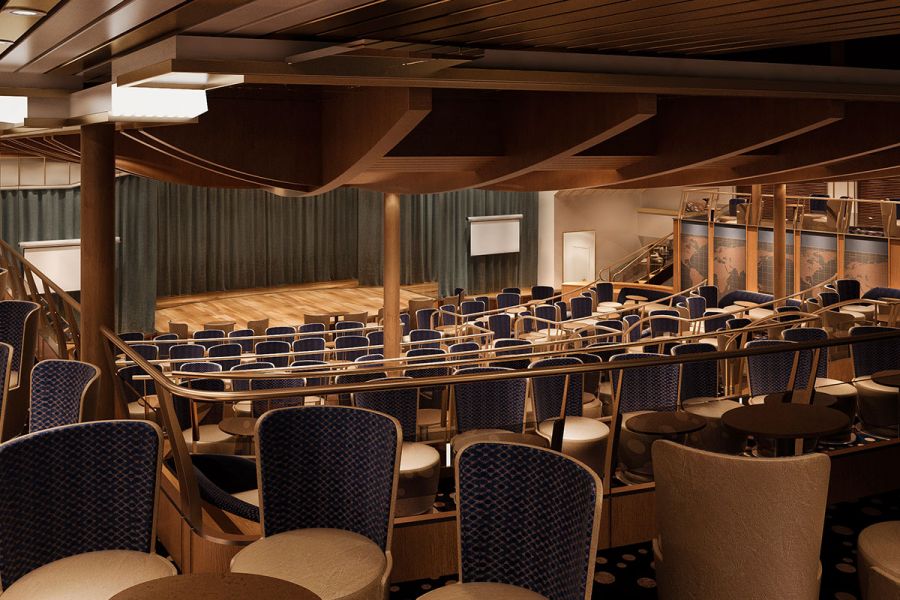
Unique to our Expedition ships, the Explorer Lounge is a versatile venue that adapts to the rhythm of your journey. Comfortable seating and refined refreshments create an atmosphere where learning and leisure meld seamlessly. From lectures and presentations to live entertainment and special events, this is a space where discovery thrives.
The images shown are for illustration purposes only and may not be an exact representation of what you find on the ship.
The images shown are for illustration purposes only and may not be an exact representation of what you find on the ship.


Our Fusion packages are all ABTA & ATOL protected ensuring that your booking is safe with us
| 11 nights aboard the Silver Cloud | |||
| Butler Service in Every Suite | |||
| Gratuities Always Included | |||
| Beverages In-Suite and Throughout the Ship | |||
| Gourmet Dining | |||
| In Suite Dining & 24-Hour Room Service | |||
| Intimate small size ships | |||
| Free Wifi Throughout the Ship | |||
| Free Zodiac, Land and Sea Tours & Activities & Complimentary Expedition gear | |||
| Port Taxes and Fees | |||
 | ABTA and ATOL Protection* | ||
Date 27th Feb 2027 |
Nts 11 |
Suite £6,100pp |
Date 27th Feb 2027 |
Nts 11 |
Suite £6,100pp |
| Suite staterooms from | £6,100pp | ||
| DV | Midship Veranda Suite | £9,200pp | |
| G1 | Grand Suite (1 Bedroom) | £18,950pp | |
| G2 | Grand Suite (2 Bedrooms) |  | |
| ME | Medallion Suite | £16,300pp | |
| O1 | Owner's Suite (1 Bedroom) | £19,700pp | |
| O2 | Owner's Suite (2 Bedrooms) | | |
| R1 | Royal Suite (1 Bedroom) | £18,150pp | |
| R2 | Royal Suite (2 Bedrooms) | | |
| SL | Silver Suite | £17,400pp | |
| VI | Vista Suite | £6,100pp | |
| VR | Veranda Suite | | |
Fusion Holidays when selling travel arrangements is a trading name of Co-op Travel Services Limited, registration 08903986. Fusion Cruises is an Accredited Body Member of Co-op Travel Services Limited ATOL 12904.
Book with Confidence. We are a Member of ABTA which means you have the benefit of ABTA’s assistance and Code of Conduct.
Some of the flights and flight-inclusive holidays on this website are financially protected by the ATOL scheme but ATOL protection does not apply to all holiday and travel services offered on this website. This website will provide you with information on the protection that applies in the case of each holiday and travel service offered before you make your booking. If you do not receive an ATOL Certificate then the booking will not be ATOL protected. If you do receive an ATOL Certificate but all parts of your trip are not listed on it, those parts will not be ATOL protected. Please see our booking conditions for information, or for more information about financial protection and the ATOL Certificate go to: www.caa.co.uk