This site uses cookies as defined in our Cookie Policy, by continuing to use this site you agree to their use.
Continue

| Arrive | Depart | ||||||
| 27th27 | NovNov | 202727 | Lisbon, Portugal, embark on the Silver Dawn | 19:00 | |||
Set on seven hills on the banks of the River Tagus, Lisbon has been the capital of Portugal since the 13th century. It is a city famous for its majestic architecture, old wooden trams, Moorish features and more than twenty centuries of history. Following disastrous earthquakes in the 18th century, Lisbon was rebuilt by the Marques de Pombal who created an elegant city with wide boulevards and a great riverfront and square, Praça do Comércio. Today there are distinct modern and ancient sections, combining great shopping with culture and sightseeing in the Old Town, built on the city's terraced hillsides. The distance between the ship and your tour vehicle may vary. This distance is not included in the excursion grades. A glorious mosaic of beauty, freedom and authenticity, Portugal’s capital is a stirring artwork of a city. Known for the seven hills it spreads across, and its stirring fado music, Lisbon is a pastel-coloured blend of houses and beautiful tile artworks - and this creative city strikes a perfect harmony between natural and manmade beauty. Stroll along Alfama's steep, cobbled streets as you explore one of the city’s oldest neighbourhoods - where each house and door could be its own photograph. Look for the decorative tiles, with the distinctive blues and whites of Azulejo ceramics, and visit the dedicated museum to learn more. Afterwards, wind up to São Jorge Castle, where views out across Lisbon’s red rooftops unravel. Just one of many majestic viewpoints, you can also seek out Miradouro da Graça for perhaps Lisbon's finest panorama, with the copper-coloured suspension bridge stretching over sparkling water beyond the sea of buildings. The elegant Tower of Belém rises in the Tagus estuary and is a historic defender of these shores. The grand, carved cloisters of Jerónimos Monastery spread out close by, and there's another UNESCO recognised location close by at Sintra, where a colourful town is set amid thick gardens and towering mountains - capped by the royal Pena Palace. Later, relax and take a quick break to drink Ginjinha, a cherry liqueur made from chocolate cups instead of coffee. Lisboetas have a sweet tooth, and the famous Pastel de Nata's crumbling pastry and caramelised-custard topping is the essential accompaniment to any coffee stop. | |||||||
| 28th28 | NovNov | 202727 | At Sea | ||||
| 29th29 | NovNov | 202727 | Funchal, Madeira, Portugal | 08:00 | 17:00 | ||
Formed by a volcanic eruption, Madeira lies in the Gulf Stream, about 500 miles due west of Casablanca. Discovered by Portuguese explorer João Gonçalves Zarco in 1419, this beautiful island became part of Portugal’s vast empire and was named for the dense forest which cloaked it - 'Madeira' means 'wood' in Portuguese. Sugar plantations first brought wealth here, and when King Charles II of England granted an exclusive franchise to sell wine to England and its colonies, many British emigrants were drawn to the capital, Funchal. Today’s travellers come to Madeira for the varied and luxuriant scenery, from mountain slopes covered with vines to picturesque villages and a profusion of wild flowers. The natural beauty of the island has earned it many pseudonyms such as ‘The Floating Garden of the Atlantic’, 'The Island of Eternal Springtime' and ‘God’s Botanical Gardens’ and our selection of excursions aim to show you why. Bedecked with dramatic cliffs, fertile mountains and sun-gorged beaches, Madeira is a lush, colourful island of plants, paradise and Portuguese-flavoured pleasures. Bathing in year-round sunshine, Funchal - the lowkey capital of Madeira - is perfect for slowing the pace, and toasting the thrilling scenery with a bottle of the island's famous wine. Narrow, cobblestone streets line the old town, where whitewash buildings, iron-wrought balconies, and tiled patterns carry echoes of Lisbon. Rua de Santa Maria is the city's oldest street, and the doors have been vividly painted by local artists. Sit for a drink, to sample your choice of Madeira's renowned wines - Boal is the ideal option for those with a sweeter tooth. You'll also find Corpo Santo Chapel here, one of the few remaining buildings to have survived from the 15th century. Blossoming parks and gardens splash colour around, and the sweet smell of pollen lingers in Parque de Santa Catarina. Look out over Funchal harbour between the fountains and blooming flower beds, as ducks and swans enjoy leisurely days on the lake. Madeira Botanical Garden waits in the hills over the city, along with Palhero Garden – a sophisticated and elegantly landscaped English garden, 500 meters above sea level. For an even more dramatic view of this gorgeous setting, head up to Cap Girao – a rusty-red cliff with a cable car strung up to its sheer drop. The cliff falls away vertically to the vivid blue waters below. Or head down to the sea, to enjoy Funchal's gorgeous pebble beaches rustling, framed by colossal, craggy cliffs. | |||||||
| 30th30 | NovNov | 202727 | Santa Cruz de La Palma, Spain | 11:00 | 21:00 | ||
Also known as ‘La Isla Bonita’ (the beautiful island), La Palma is typified by lush forests of pine, laurel and fern which contrast with the rugged splendour of the gigantic Taburiente crater. The island is dotted with attractive villages, which are a delight to discover, and the capital Santa Cruz also makes for an interesting day of exploration. Perched on the edge of the volcanic crater of La Caldereta, Santa Cruz comfortably blends modern architecture with old colonial buildings. Perhaps visit the fascinating Natural History Museum, stroll around the historic quarters and the Plaza de Espana or travel a few miles outside the city to the exquisite Church of Our Lady. If you enjoy shopping, you can find reasonably priced silver jewellery, leather goods and beautifully embroidered clothes, tablecloths and napkins, a speciality of the Canary Islands. Volcanoes dominate the island of La Palma. The island sits over a hot spot in the Earth’s crust. Beginning on the seabed 4,000 metres below sea level, the volcanoes grew to emerge above the waves and through the clouds to form a mountainous island. The highest point is 2,423 metres (7,950 feet) above sea level. The peak flanks La Caldera de Taburiente, a giant collapsed volcanic crater with a canyon exiting it. The ridge extending south of the Caldera erupted as recently as 1971, when Teneguía volcano sent slow lava flows to the sea. Roads reach lookouts where further exploration on foot begins. The Spanish port town of Santa Cruz de la Palma began in 1493 and supported the sea route from Europe to the New World. In the 16th century Santa Cruz was the third most important port in Europe, after Antwerp and Seville. But it attracted trouble. The pirate Françoise Le Clerc or ‘Peg Leg’, ransacked the town in 1553, leading to the construction of the forts Castillo de Santa Catalina and Castillo de la Virgen. History buffs should walk the cobbled town streets amongst colourful colonial buildings. Several vegetation zones are traversed if you travel up the mountains. Dry coastal scrub gives way to a woodland with large Canary Palms, a plant now grown worldwide. Higher slopes catch moisture from clouds, creating the lush laurel zone of semi-tropical forest. Next is a Canary Pine forest and finally an alpine zone of shrubs. The highlight here is the tall pink flowering spikes of the La Palma Bugloss. | |||||||
| 1st01 | DecDec | 202727 | Santa Cruz de Tenerife, Spain | 08:00 | 19:00 | ||
The largest of the Canary Islands, Tenerife is a beautiful and scenic island which enjoys year-round sunshine and is dominated by Mount Teide. The mountain range runs through the centre of the island, with fertile valleys on the northern side. In the central part of the range is the gigantic natural crater of the Cañadas del Teide, about 14 miles in diameter. Santa Cruz, the island’s pretty capital, was originally a small fishing village but has now grown into a modern city, and also contains 16th-century civic buildings and ornate private mansions. Near the pier is the Santa Cruz Palmetum, a Botanical Garden covering an area of 29 acres, specialising in palms. Although this busy port city is smaller, quieter and less attractive than Las Palmas in Gran Canaria, Santa Cruz has its own share of elegant monuments. Until 1837, the island's capital was La Laguna, not Santa Cruz, so there are only a few of the buildings in the city center that are any older than that. At the busy Plaza de España, there are several pedestrian streets leading north and to the area west of the port, where you'll find the city's stunning auditorium and maritime park. A real highlight of the city are its ramblas, long tree-lined boulevards that fall steeply from the north end of the city to the sea. | |||||||
| 2nd02 | DecDec | 202727 | At Sea | ||||
| 3rd03 | DecDec | 202727 | At Sea | ||||
| 4th04 | DecDec | 202727 | Mindelo, São Vicente Island, Cape Verde | 08:00 | 17:00 | ||
Your next stop will be Cape Verde’s cultural capital, Mindelo. Get along with the locals listening to the real morna in the bars of the old town and sipping the local drink, a sugarcane spirit. This island is also known by its British and Portuguese colonial architecture and pastel-coloured houses, the municipal market and the facades of the old Governor’s Palace. Located 300 miles (483 km) off the coast of West Africa, the Cape Verde archipelago comprises ten islands and five islets, most of them of volcanic origin. They are divided into the windward and leeward groups and cover an area slightly larger than Rhode Island. Colonised by the Portuguese in the 15th century, they first settled on the island of Santiago to the south of São Vicente and established the town of Cidade Velha. It was from here that the main slave trade developed between the Cape Verde Islands, Europe and America. While Praia on the island of Santiago is the archipelago’s largest and capital city, Mindelo, with its brightly coloured colonial buildings, is considered the island’s prettiest town. It boasts an excellent deep-water harbour, Porto Grande, which is in close proximity to Mindelo. The official language is Portuguese, while the national language is Crioulo, a Creole dialect of archaic Portuguese mixed with many African elements and adapted English words. | |||||||
| 5th05 | DecDec | 202727 | At Sea | ||||
| 6th06 | DecDec | 202727 | At Sea | ||||
| 7th07 | DecDec | 202727 | At Sea | ||||
| 8th08 | DecDec | 202727 | At Sea | ||||
| 9th09 | DecDec | 202727 | At Sea | ||||
| 10th10 | DecDec | 202727 | Gustavia, Saint Barthélemy | 08:00 | 17:00 | ||
You can easily explore all of Gustavia during a two-hour stroll. Some shops close from noon to 3 or 4, so plan lunch accordingly, but stores stay open past 7 in the evening. Parking in Gustavia is a challenge, especially during vacation times. A good spot to park is rue de la République, alongside the catamarans, yachts, and sailboats. Cherry red roofs, yacht-sprinkled bays and a sophisticated French flavour all add to the gorgeous Caribbean allure of Gustavia. The island's capital rolls around a horseshoe-shaped harbour, where gleaming yachts hover and fancy boutiques, bars and restaurants fizz with life and clinking cutlery. Head up to red and white Gustavia Lighthouse to look down over the revered waters, which attract many a celebrity guest and diving enthusiast to these shores. Christopher Columbus was the first European to discover this volcanic island in 1493, giving it the name St Barthelemy in honour of his younger brother. The island has a unique history as a Swedish colony, following a deal with the French King Louis XVI to exchange the island with Sweden for better trading rights. It was returned to French control in 1878 and is now a French Overseas Collectivity. Learn more of the Swedish legacy at Fort Karl - which sits on a 29-metre-high hill above Shell Beach. The fort now lies in ruins, but you'll meet wandering iguanas, and the views down of sweeping sea and emerald coastline are some of the island's finest. Down below, a delightful spread of tiny pebbles and shell fragments are scattered like confetti and lapped by crystal-clear water. A little exploration uncovers countless other glorious beaches and natural wonders. Colombier Beach is a little out of the way but cradles silky-smooth sands and typically turquoise waters. If you have chance, find somewhere to settle and sip fruity rum cocktails as the sunset flares across the waves. | |||||||
| 11th11 | DecDec | 202727 | San Juan (Puerto Rico), Puerto Rico, disembark the Silver Dawn | ||||
If you associate Puerto Rico's capital with the colonial streets of Old San Juan, then you know only part of the picture. San Juan is a major metropolis, radiating out from the bay on the Atlantic Ocean that was discovered by Juan Ponce de León. More than a third of the island's nearly 4 million citizens proudly call themselves sanjuaneros. The city may be rooted in the past, but it has its eye on the future. Locals go about their business surrounded by colonial architecture and towering modern structures.By 1508 the explorer Juan Ponce de León had established a colony in an area now known as Caparra, southeast of present-day San Juan. He later moved the settlement north to a more hospitable peninsular location. In 1521, after he became the first colonial governor, Ponce de León switched the name of the island—which was then called San Juan Bautista in honor of St. John the Baptist—with that of the settlement of Puerto Rico ("rich port").Defended by the imposing Castillo San Felipe del Morro (El Morro) and Castillo San Cristóbal, Puerto Rico's administrative and population center remained firmly in Spain's hands until 1898, when it came under U.S. control after the Spanish-American War. Centuries of Spanish rule left an indelible imprint on the city, particularly in the walled area now known as Old San Juan. The area is filled with cobblestone streets and brightly painted, colonial-era structures, and its fortifications have been designated a UNESCO World Heritage Site.Old San Juan is a monument to the past, but most of the rest of the city is planted firmly in the 21st century and draws migrants island-wide and from farther afield to jobs in its businesses and industries. The city captivates residents and visitors alike with its vibrant lifestyle as well as its balmy beaches, pulsing nightclubs, globe-spanning restaurants, and world-class museums. Once you set foot in this city, you may never want to leave. | |||||||
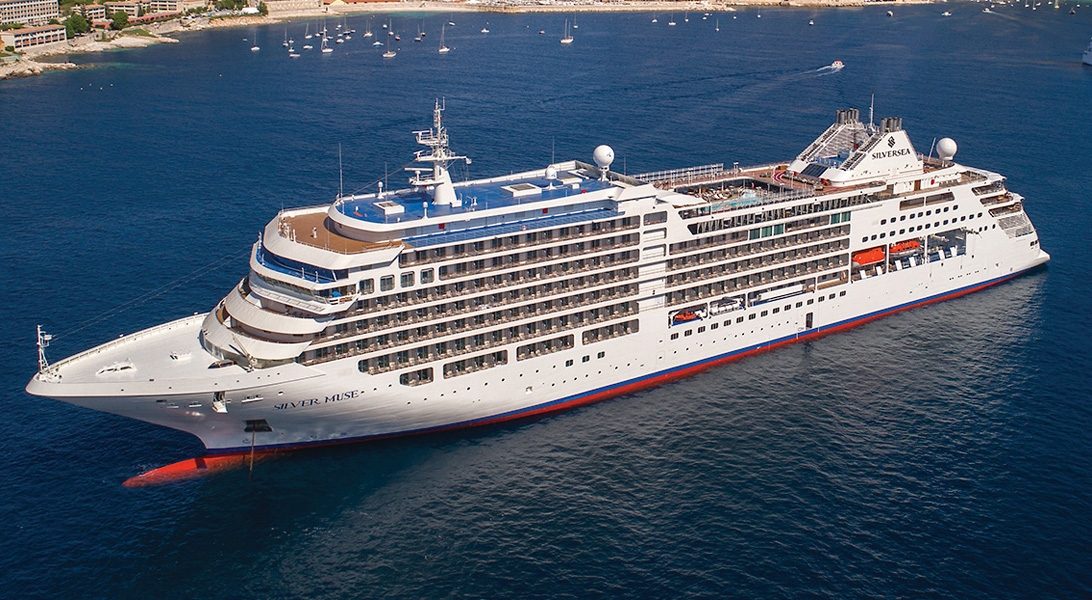
The images shown are for illustration purposes only and may not be an exact representation of what you find on the ship.
The images shown are for illustration purposes only and may not be an exact representation of what you find on the ship.
The images shown are for illustration purposes only and may not be an exact representation of what you find on the ship.
The images shown are for illustration purposes only and may not be an exact representation of what you find on the ship.
The images shown are for illustration purposes only and may not be an exact representation of what you find on the ship.


Our Fusion packages are all ABTA & ATOL protected ensuring that your booking is safe with us
| 14 nights aboard the Silver Dawn | |||
| Butler Service in Every Suite | |||
| Gratuities Always Included | |||
| Beverages In-Suite and Throughout the Ship | |||
| Gourmet Dining | |||
| In Suite Dining & 24-Hour Room Service | |||
| Intimate small size ships | |||
| Free Wifi Throughout the Ship | |||
| Free Zodiac, Land and Sea Tours & Activities & Complimentary Expedition gear | |||
| Port Taxes and Fees | |||
 | ABTA and ATOL Protection* | ||
Date 27th Nov 2027 |
Nts 14 |
Suite £3,750pp |
Date 27th Nov 2027 |
Nts 14 |
Suite £3,750pp |
| Suite staterooms from | £3,750pp | ||
| CV | Classic Veranda Suite | £4,100pp | |
| DX | Deluxe Veranda Suite | £4,500pp | |
| G1 | Grand Suite (1 Bedroom) | £9,200pp | |
| G2 | Grand Suite (2 Bedrooms) |  | |
| O1 | Owner's Suite (1 Bedroom) | £9,650pp | |
| O2 | Owner's Suite (2 Bedrooms) | | |
| PA | Panorama Suite | £3,750pp | |
| R1 | Royal Suite (1 Bedroom) | | |
| R2 | Royal Suite (2 Bedrooms) | | |
| S2 | Silver Suite (2 Bedrooms) | | |
| SL | Silver Suite | £6,700pp | |
| VI | Vista Suite | | |
| SV | Superior Veranda Suite | £4,300pp | |
Fusion Holidays when selling travel arrangements is a trading name of Co-op Travel Services Limited, registration 08903986. Fusion Cruises is an Accredited Body Member of Co-op Travel Services Limited ATOL 12904.
Book with Confidence. We are a Member of ABTA which means you have the benefit of ABTA’s assistance and Code of Conduct.
Some of the flights and flight-inclusive holidays on this website are financially protected by the ATOL scheme but ATOL protection does not apply to all holiday and travel services offered on this website. This website will provide you with information on the protection that applies in the case of each holiday and travel service offered before you make your booking. If you do not receive an ATOL Certificate then the booking will not be ATOL protected. If you do receive an ATOL Certificate but all parts of your trip are not listed on it, those parts will not be ATOL protected. Please see our booking conditions for information, or for more information about financial protection and the ATOL Certificate go to: www.caa.co.uk