This site uses cookies as defined in our Cookie Policy, by continuing to use this site you agree to their use.
Continue

| Arrive | Depart | ||||||
| 1st01 | MayMay | 202727 | Lisbon, Portugal, embark on the Silver Endeavour | 18:00 | |||
Set on seven hills on the banks of the River Tagus, Lisbon has been the capital of Portugal since the 13th century. It is a city famous for its majestic architecture, old wooden trams, Moorish features and more than twenty centuries of history. Following disastrous earthquakes in the 18th century, Lisbon was rebuilt by the Marques de Pombal who created an elegant city with wide boulevards and a great riverfront and square, Praça do Comércio. Today there are distinct modern and ancient sections, combining great shopping with culture and sightseeing in the Old Town, built on the city's terraced hillsides. The distance between the ship and your tour vehicle may vary. This distance is not included in the excursion grades. A glorious mosaic of beauty, freedom and authenticity, Portugal’s capital is a stirring artwork of a city. Known for the seven hills it spreads across, and its stirring fado music, Lisbon is a pastel-coloured blend of houses and beautiful tile artworks - and this creative city strikes a perfect harmony between natural and manmade beauty. Stroll along Alfama's steep, cobbled streets as you explore one of the city’s oldest neighbourhoods - where each house and door could be its own photograph. Look for the decorative tiles, with the distinctive blues and whites of Azulejo ceramics, and visit the dedicated museum to learn more. Afterwards, wind up to São Jorge Castle, where views out across Lisbon’s red rooftops unravel. Just one of many majestic viewpoints, you can also seek out Miradouro da Graça for perhaps Lisbon's finest panorama, with the copper-coloured suspension bridge stretching over sparkling water beyond the sea of buildings. The elegant Tower of Belém rises in the Tagus estuary and is a historic defender of these shores. The grand, carved cloisters of Jerónimos Monastery spread out close by, and there's another UNESCO recognised location close by at Sintra, where a colourful town is set amid thick gardens and towering mountains - capped by the royal Pena Palace. Later, relax and take a quick break to drink Ginjinha, a cherry liqueur made from chocolate cups instead of coffee. Lisboetas have a sweet tooth, and the famous Pastel de Nata's crumbling pastry and caramelised-custard topping is the essential accompaniment to any coffee stop. | |||||||
| 2nd02 | MayMay | 202727 | At Sea | ||||
| 3rd03 | MayMay | 202727 | At Sea | ||||
| 4th04 | MayMay | 202727 | Tresco, England | 07:30 | 12:30 | ||
For many visitors Tresco is the most attractive of the Isles of Scilly. This is especially due to its Abbey Garden, which is home to thousands of exotic plant species from around 80 different countries. Plant collector Augustus Smith began the gardens in the 1830s on the site of an old Benedictine Abbey by channelling the weather up and over a network of walled enclosures built around the Priory ruins. He had three terraces carved from the rocky south slope and maximised Tresco’s mild Gulf Stream climate. Even in mid-winter there still are hundreds of plants flowering here. Another surprising attraction at the Abbey Garden is the collection of figureheads from ships that wrecked among the Isles of Scilly. For many visitors Tresco is the most attractive of the Isles of Scilly. This is especially due to its Abbey Garden which is home to thousands of exotic plant species from around 80 different countries. Plant collector Augustus Smith began the gardens in the 1830s on the site of an old Benedictine Abbey by channelling the weather up and over a network of walled enclosures built around the Priory ruins. He had three terraces carved from the rocky south slope and maximised Tresco’s mild Gulf Stream climate. Even in mid-winter there still are hundreds of plants flowering here. Another surprising attraction at the Abbey Garden is the collection of figureheads from ships that wrecked among the Isles of Scilly. | |||||||
| 4th04 | MayMay | 202727 | Saint Mary's, Isles of Scilly, England | 14:30 | 18:00 | ||
St Mary’s is the Isle of Scilly’s largest island with a population of 1800 residents and an area of 6.58 square Kilometres; this is the gateway to the rest of the magnificent islands. Hugh town -a beautiful Old town with its own beach, nature reserve and church is the main attractions of St Mary’s, with tiny streets brimming with shops to pick up the perfect souvenir. St Mary’s is a hidden gem, with long stretches of white sandy beaches and a breath-taking untouched landscape. The coastline holds many archaeological sites along with miles of splendid walks along the coastal and country paths. Scattered 30 miles offshore from England’s most south-westerly point – Land’s End – the Isles of Scilly are home to rich wildlife and green land sloping to powdery white beaches. The Isles of Scilly’s biggest island harbours around 1 600 people – roughly three-quarters of the total population - and is one of five occupied islands. Isolated and serene life here hums along at its own pace in this archipelago's bubble which enjoys the UK’s mildest climate and some of its most spectacular beaches. Hugh Town is the centre of St Mary’s and you’ll be warmly welcomed by the incredibly tight-knit local community. A peaceful place watch out when the waters are suddenly parted by the competition of gig racing – the island’s sporting pride and joy - which sees teams competing in colourful rowboats. Elsewhere catch sight of Atlantic seals and seabirds like puffins and fulmars along nine miles of coastline. You can also spot the ghostly shipwrecks strewn around the island’s waters and the 140 islands and skerries that have made treacherous sailing historically. There's a dense collection of historical sites that belies the islands’ small size – from a former prime minster’s grave to star-shaped fortresses. Tresco Abbey Garden is one of the UK’s most vibrant gardens with diverse plants bathing in the warmer climate and over 300 species on display. Taste the rewards of the mild weather with a glass of wine from England’s most south-westerly vineyard. | |||||||
| 5th05 | MayMay | 202727 | Pembrokeshire Coast National Park, Wales | 07:00 | 13:30 | ||
| 6th06 | MayMay | 202727 | Belfast, Northern Ireland | 07:00 | 18:00 | ||
Before English and Scottish settlers arrived in the 1600s, Belfast was a tiny village called Béal Feirste ("sandbank ford") belonging to Ulster's ancient O'Neill clan. With the advent of the Plantation period (when settlers arrived in the 1600s), Sir Arthur Chichester, from Devon in southwestern England, received the city from the English Crown, and his son was made Earl of Donegall. Huguenots fleeing persecution from France settled near here, bringing their valuable linen-work skills. In the 18th century, Belfast underwent a phenomenal expansion—its population doubled every 10 years, despite an ever-present sectarian divide. Although the Anglican gentry despised the Presbyterian artisans—who, in turn, distrusted the native Catholics—Belfast's growth continued at a dizzying speed. The city was a great Victorian success story, an industrial boomtown whose prosperity was built on trade, especially linen and shipbuilding. Famously (or infamously), the Titanic was built here, giving Belfast, for a time, the nickname "Titanic Town." Having laid the foundation stone of the city's university in 1845, Queen Victoria returned to Belfast in 1849 (she is recalled in the names of buildings, streets, bars, monuments, and other places around the city), and in the same year, the university opened under the name Queen's College. Nearly 40 years later, in 1888, Victoria granted Belfast its city charter. Today its population is nearly 300,000, tourist numbers have increased, and this dramatically transformed city is enjoying an unparalleled renaissance.This is all a welcome change from the period when news about Belfast meant reports about "the Troubles." Since the 1994 ceasefire, Northern Ireland's capital city has benefited from major hotel investment, gentrified quaysides (or strands), a sophisticated new performing arts center, and major initiatives to boost tourism. Although the 1996 bombing of offices at Canary Wharf in London disrupted the 1994 peace agreement, the ceasefire was officially reestablished on July 20, 1997, and this embattled city began its quest for a newfound identity.Since 2008, the city has restored all its major public buildings such as museums, churches, theaters, City Hall, Ulster Hall—and even the glorious Crown Bar—spending millions of pounds on its built heritage. A gaol that at the height of the Troubles held some of the most notorious murderers involved in paramilitary violence is now a major visitor attraction.Belfast's city center is made up of three roughly contiguous areas that are easy to navigate on foot. From the south end to the north, it's about an hour's leisurely walk. Reborn as a cool modern city Belfast has successfully left its troubles behind emerging as a hotbed of culture and architecture where the comfort of a cosy pub is never far away. A walk across the Lagan Weir Footbridge brings you to Belfast’s fascinating Titanic District – an area of the city devoted to its rich ship-building heritage. The state-of-the-art Titanic Museum brings the story of the doomed vessel to life and is the largest museum dedicated to the infamously ‘unsinkable’ ship. There’s just enough time to give the 10-metre long Salmon of Knowledge sculpture a quick peck for luck before continuing to explore. A stark barbed wire and graffitied sheet metal barrier marks an abrupt scar through the city’s residential areas. The Peace Line was constructed during the height of the Troubles when Belfast was plagued by sectarian divisions between Protestants and Catholics. Nowadays you can jump in a black taxi tour to see the colourful murals and living history of the walls which stand as a stark reminder of the fragility of peace. After exploring the city’s historic divisions a reminder of Belfast’s uniting creativity can be found at the Metropolitan Arts Centre – a seven-storey tall building which invites light to gloriously cascade inside. The Cathedral Quarter is a cobbled blend of flower-adorned pubs restaurants and theatres and venues where music spills out onto the streets at night and many a pint is cheerily shared. | |||||||
| 7th07 | MayMay | 202727 | Isle of Iona, Scotland | 07:30 | 13:30 | ||
With a population of 120 residents, Iona is Located off the Southwest of Mull. The island is 3 miles long and 1.5 miles wide but draws in thousands of visitors each year due to its natural beauty and historical interest. Saint Columba and his fellow monks landed here in 563. This beautiful stretch of coastline brings out the true beauty of Iona facing onto the Gulf Stream that gives the island its mild climate. Located to the south of the road lies Sìthean Mòr (Large fairy hill) and alternatively known as the Hill of Angels, this is said to have been the setting for many rituals and traditions dating far back in history. This wonderful highlight, Iona Abbey was founded by Saint Columba in 563 and is said to have survived many Viking attacks. Although little remains of the monastic buildings of this period, the magnificent Abbey is the main attraction. If tiny islands that resonate with peace and tranquillity are your idea of travel heaven, then welcome to Iona. Almost 200 miles east of Edinburgh, set in Scotland’s Inner Hebrides, this magical island has a spiritual reputation that precedes it. And luckily, more than lives up to. The island is miniscule. Just three miles long and only one and a half miles wide, this is not a place that hums with urban attractions. 120 people call Iona home (this number rises significantly if the gull, tern and Kittiwake population is added), although residential numbers do go up (to a whopping 175) in summer. The beautiful coastline is lapped by the gulf stream and gives the island a warm climate with sandy beaches that look more Mediterranean than Scottish! Add to that a green field landscape that is just beautiful, and you’ll find that Iona is a place that stays with you long after you leave. Iona’s main attraction is of course its abbey. Built in 563 by Saint Columbia and his monks, the abbey is the reason why Iona is called the cradle of Christianity. Not only is the abbey (today an ecumenical church) one of the best – if not the best – example of ecclesiastical architecture dating from the Middle Ages, but it also serves as an important site of spiritual pilgrimage. St. Martin’s Cross, a 9th century Celtic cross that stands outside the abbey, is considered as the finest example of Celtic crosses in the British Isles. Rèilig Odhrain, or the cemetery, allegedly contains the remains of many Scottish kings. | |||||||
| 7th07 | MayMay | 202727 | Isle of Lunga, Scotland | 15:45 | 19:00 | ||
The stunning Isle of Lunga is the largest island in the Treshnish archipelago. With volcanic origin the isle was populated until the 19th Century, and remains of black houses can be seen around this magnificent coastal jewel. Abundant plant life and exotic birdlife are now the main inhabitants of the area. Fortunate visitors view the magnificent array of birds, especially the great puffins that breed on the islands plateau. One can sit within just a few feet away without disturbing the avian ambassador’s peace. The 81 hectare island is home to many rare and endangered plants such as, primroses and orchids. Views over the landscape and across the ocean can be seen from the 300 foot high cliffs. The stunning Isle of Lunga is the largest island in the Treshnish archipelago. With volcanic origin the isle was populated until the 19th Century and remains of black houses can be seen around this magnificent coastal jewel. Abundant plant life and exotic birdlife are now the main inhabitants of the area. Fortunate visitors view the magnificent array of birds especially the great puffins that breed on the islands plateau. One can sit within just a few feet away without disturbing the avian ambassador’s peace. The 81 hectare island is home to many rare and endangered plants such as primroses and orchids. Views over the landscape and across the ocean can be seen from the 300 foot high cliffs. | |||||||
| 8th08 | MayMay | 202727 | St. Kilda Archipelago, Scotland | 06:30 | 12:30 | ||
St Kilda is a remarkable uninhabited archipelago some 40 nautical miles beyond the Outer Hebrides. The stunning cliffs and sea stacks are home to the most important seabird breeding colony in northwest Europe. St Kilda is one of the few places in the world to have received dual World Heritage status from UNESCO in recognition of its Natural Heritage and cultural significance. Village Bay on the island of Hirta once supported a population of over 200, but the last islanders left in the 1930s. Recent restoration work on the village by the National Trust for Scotland offers a marvellous link with the past. One of the caretakers acts as shopkeeper and postmaster for any visitors who might like to send a postcard home from St. Kilda. Gloriously remote, St. Kilda is an archipelago 50 miles off the Isle of Harris. Although the four islands are uninhabited by humans, thousands of seas birds call these craggy cliffs home, clinging to the sheer faces as if by magic. Not only is St. Kilda home to the UK’s largest colony of Atlantic Puffin (almost 1 million), but also the world largest colony Gannets nests on Boreray island and its sea stacks. The islands also home decedents of the world’s original Soay sheep as well as having a breed of eponymously named mice. The extremely rare St. Kilda wren unsurprisingly hails from St. Kilda, so birders should visit with notebook, binoculars and camera to hand. While endemic animal species is rife on the island, St. Kilda has not been peopled since 1930 after the last inhabitants voted that human life was unsustainable. However, permanent habitation had been possible in the Medieval Ages, and a vast National Trust for Scotland project to restore the dwellings is currently being undertaken. The islands even enjoyed a status as being an ideal holiday destination in the 19th century. Today, the only humans living on the islands are passionate history, science and conservation scholars. One of the caretakers even acts as shopkeeper and postmaster for any visitors who might like to send a postcard home from St. Kilda. It should be noted that St. Kilda is the UKs only (and just one of 39 in the world) dual World Heritage status from UNESCO in recognition of its Natural Heritage and cultural significance. | |||||||
| 9th09 | MayMay | 202727 | Shiant Isles, Scotland | 06:30 | 12:00 | ||
| Cliffs of tall hexagonal columns create a sensational landscape at the Shiant Islands, especially when viewed from the sea. The cliffs of six-sided rock columns look like the cross-section of an enormous honeycomb. The rock formations were formed when molten volcanic magma cooled very slowly underground. Millions of years of erosion has exposed the six-sided columns to the sea, and to us. The tallest of these formations is 120 metres (390 feet) high. During spring and summer, flights of seabirds near the Shiant Islands catch the eye. Many long-winged seabirds wheel and soar gracefully. Others are more shaped for underwater swimming and fly in direct lines, beating stubby wings to resemble flying potatoes. Some birds nest in burrows while others, like Black-legged Kittiwakes, nest on cliffs. Rather than build nests, guillemots lay eggs on bare rock ledges. The pointed shape of the eggs ensures they roll in a tight circle, not off the ledge to the sea below. The Shiant Islands are part of the Outer Hebrides and located between the Isles of Lewis and Skye. Historically, they have supported families of sheep grazers who could tolerate a lonely island outpost. The Shiants were known as the last place in Britain where the Black Rat occurred in substantial numbers. Originally introduced to Britain from Asia in Roman times these rodents caused problems, eating eggs and chicks of seabirds. A successful eradication program eliminated the rats in 2016, giving the seabird colonies well-earned peace. | |||||||
| 9th09 | MayMay | 202727 | Loch Ewe, Scotland | 14:45 | 20:00 | ||
| Loch Ewe is the only north facing Loch in Scotland, with an interesting history and a fine scenic landscape this area has a true natural beauty. During WW2 the loch was a convoy collecting point with a strong naval presence; it was therefore protected by light and heavy aircraft guns, a boom net and mine defence system helped to shield this precious settlement. Loch Ewe is a natural deep water sea loch that links to the Atlantic Ocean with a relatively small mouth giving the loch a vast amount of protection from the weather. Nearby Inver ewe gardens thrive on the warm currents of the North Atlantic Drift to create an oasis of colour and fertility where exotic plants from many countries flourish on latitude more northerly than Moscow, giving an almost continual display of colour throughout the year. | |||||||
| 10th10 | MayMay | 202727 | Fort William, Scotland | 08:30 | 18:00 | ||
| Flanked by the UK’s tallest mountain on one side and Loch Linnae on the other Fort William – or “Bill” to the locals – is what you imagine when it comes to Scottish Highland towns. Verdant moors stretch as far as the eye can see pastel painted houses front the water and it is not unusual to see pipers in kilts on street corners.The High Street has plenty to keep you occupied with its good range of shops cafes and restaurants - a lunch of locally caught seafood or the iconic haggis neeps and tatties is a must. Because of its privileged location sitting in the shadow of the mighty Ben Nevis (standing a proud 1 345 metres high) outdoor enthusiasts are especially well catered for. Unsurprisingly so as Fort William is considered the UK’s outdoor capital.Certainly those who want to climb up a rock or hurtle down white water rapids will find their nirvana but if gentle fishing a quiet county walk or curling up in cosy pubs warmed by an open fire are more your glass of whiskey then you’re catered for. The West Highland Museum in the centre of the town is excellent while St Andrew's Church towards the north end of the main street has a very attractive interior. Also well worth a look is St Mary's Catholic Church on Belford Road and no visit should be considered complete without a look at the Old Fort almost invisible to passing traffic. Add a wildlife cruise amid stunning scenery and the steam train that took Harry to Hogwarts and you can easily spend a day in this lovely port. | |||||||
| 11th11 | MayMay | 202727 | Tobermory, Isle of Mull, Scotland | 07:30 | 12:00 | ||
You'll always receive a welcome to remember, as the colourful cafes, houses and shops that line Tobermory's picturesque harbour salute your arrival. Located on the craggy Scottish Inner Hebrides, Tobermory serves as the capital of the Isle of Mull. There's a high chance you'll recognise the town’s colourfully-daubed buildings, as their charming exteriors have featured in countless TV shows - most notably in the children’s favourite, Balamory. There's always a new story to discover here – not least the legend that suggests there's a sunken Spanish galleon, brimming with lost gold, sitting just below the waves that roll around the harbour. Learn a little more of the area’s history at the Mull Museum, or head out to enjoy some of the fabulous wildlife watching opportunities on offer on a boat tour. You can spot majestic birds like white tail and golden eagles circling in the skies, or turn your attention to the waves, where friendly dolphins and Minke whales are regular visitors. Treat yourself to a sample of one of the island's finest exports before leaving, as you drop in at the Tobermory Distillery for some whiskey tasting. Established in 1798, it’s one of Scotland's oldest distilleries. You'll always receive a welcome to remember, as the colourful cafes, houses and shops that line Tobermory's picturesque harbour salute your arrival. Located on the craggy Scottish Inner Hebrides, Tobermory serves as the capital of the Isle of Mull. There's a high chance you'll recognise the town’s colourfully-daubed buildings, as their charming exteriors have featured in countless TV shows - most notably in the children’s favourite, Balamory. | |||||||
| 11th11 | MayMay | 202727 | Duart Bay, Scotland | 14:30 | 18:30 | ||
| An ancient stone castle on a remote rugged landscape evokes all sorts of fantasies, especially when approached from the sea. You can imagine mythical, romantic or historic tales as you approach or explore the Duart Castle on the Isle of Mull. The true stories may be just as good. The Isle of Mull is the second largest of the islands of the Inner Hebrides, after the Isle of Skye. The island has a mountainous core and several radiating promontories covered in moorland. On one headland jutting into the Sound of Mull sits Duart Castle. It was originally built in the 13th century and soon became the ancestral home of the Clan Maclean. Control and ownership of the castle has changed hands over the centuries as broader conflicts for the Isle of Mull and Scotland played out. It was a ruin when the Maclean clan regained control by purchasing and restoring the castle in 1911. It is clan home for all the descendants of the family of Maclean spread throughout the world. There are stories of wrecks and treasure in the waters near Duart. The most evocative must be the wreck of a Spanish galleon in Tobermony Bay. This ship was part of the Spanish Amarda defeated by the English fleet and Atlantic storms, and the crew were taken to Duart Castle. The galleon is rumoured to have a treasure of gold bullion still waiting to be found. Zodiac travel may reveal other treasures. Hull is known for its European Otters and the majestic White-tailed Sea Eagle which has successfully re-colonised Hull after a long absence. | |||||||
| 12th12 | MayMay | 202727 | Douglas, Isle of Man | 09:00 | 18:30 | ||
The Isle of Man, situated in the Irish Sea off the west coast of England, is a mountainous, cliff-fringed island and one of Britain’s most beautiful spots. Measuring just 30 miles by 13 miles, the Isle of Man remains semi-autonomous. With its own postage stamps, laws, currency, and the Court of Tynwald (the world’s oldest democratic parliament), the Isle of Man is rich with history and lore.Inhabited from Neolithic times, the island became a refuge for Irish missionaries after the 5th Century. Norsemen took the island during the 9th Century and sold it to Scotland in 1266. However, since the 14th Century, it has been held by England. Manx, the indigenous Celtic language, is still spoken by a small minority. The Isle of Man has no income tax, which has encouraged many Britains to regard the island as a refuge. Otherwise, it is populated by Gaelic farmers, fishermen, and the famous tailless manx cats. The varied landscape features austere moorlands and wooded glens, interspersed by fine castles, narrow-gauge railways, and scores of standing stones with Celtic crosses. The hilly terrain rises to a height of 2,036 feet at Mount Snaefell, which dominates the center of the island. The Isle of Man, off England’s west coast (and Ireland’s east) needs no introduction. Its Celtic history is legendary, its political past labyrinthine and its national symbol – a three legged figure with neither body nor head – an enigma that has been foxing historians for centuries. Do not confuse the Isle of Man with the United Kingdom. It does have “crown dependency” similar to Jersey, but the 32-mile-long island is entirely self-governed. It changed hands between England and Scotland many times during the middle ages but fell under British rule in 1399. However, when the feudal lordship was revested in 1765, the island never became part of the United Kingdom. And has remained independent ever since. | |||||||
| 13th13 | MayMay | 202727 | Dublin, Ireland, disembark the Silver Endeavour | ||||
Dublin is making a comeback. The decade-long "Celtic Tiger" boom era was quickly followed by the Great Recession, but The Recovery has finally taken a precarious hold. For visitors, this newer and wiser Dublin has become one of western Europe's most popular and delightful urban destinations. Whether or not you're out to enjoy the old or new Dublin, you'll find it a colossally entertaining city, all the more astonishing considering its intimate size.It is ironic and telling that James Joyce chose Dublin as the setting for his famous Ulysses, Dubliners, and A Portrait of the Artist as a Young Man because it was a "center of paralysis" where nothing much ever changed. Which only proves that even the greats get it wrong sometimes. Indeed, if Joyce were to return to his once-genteel hometown today—disappointed with the city's provincial outlook, he left it in 1902 at the age of 20—and take a quasi-Homeric odyssey through the city (as he so famously does in Ulysses), would he even recognize Dublin as his "Dear Dirty Dumpling, foostherfather of fingalls and dotthergills"?For instance, what would he make of Temple Bar—the city's erstwhile down-at-the-heels neighborhood, now crammed with cafés and trendy hotels and suffused with a nonstop, international-party atmosphere? Or the simple sophistication of the open-air restaurants of the tiny Italian Quarter (named Quartier Bloom after his own creation), complete with sultry tango lessons? Or of the hot–cool Irishness, where every aspect of Celtic culture results in sold-out theaters, from Once, the cult indie movie and Broadway hit, to Riverdance, the old Irish mass-jig recast as a Las Vegas extravaganza? Plus, the resurrected Joyce might be stirred by the songs of Hozier, fired up by the sultry acting of Michael Fassbender, and moved by the award-winning novels of Colum McCann. As for Ireland's capital, it's packed with elegant shops and hotels, theaters, galleries, coffeehouses, and a stunning variety of new, creative little restaurants can be found on almost every street in Dublin, transforming the provincial city that suffocated Joyce into a place almost as cosmopolitan as the Paris to which he fled. And the locals are a hell of a lot more fun! Now that the economy has finally turned a corner, Dublin citizens can cast a cool eye over the last 20 crazy years. Some argue that the boomtown transformation of their heretofore-tranquil city has permanently affected its spirit and character. These skeptics (skepticism long being a favorite pastime in the capital city) await the outcome of "Dublin: The Sequel," and their greatest fear is the possibility that the tattered old lady on the Liffey has become a little less unique, a little more like everywhere else.Oh ye of little faith: the rare ole gem that is Dublin is far from buried. The fundamentals—the Georgian elegance of Merrion Square, the Norman drama of Christ Church Cathedral, the foamy pint at an atmospheric pub—are still on hand to gratify. Most of all, there are the locals themselves: the nod and grin when you catch their eye on the street, the eagerness to hear half your life story before they tell you all of theirs, and their paradoxically dark but warm sense of humor. It's expected that 2016 will be an extra-special year in the capital, as centenary celebrations of the fateful 1916 Easter Rising will dominate much of the cultural calendar. Atmospheric cobbled streets with buskers scraping fiddles and characterful pubs inviting passersby inside is Dublin in a snapshot. Horse-drawn carriages plod along cobbled centuries-old streets blending with an easy-going cosmopolitan outlook. Known for its fun-filled gathering of pubs any excuse works to enjoy a celebratory toast and chat among good company. Home to perhaps the world's most famous beer - slurp perfect pourings of thick dark Guinness - cranked out for the city's thirsty punters. Learn more of the humble pint's journey at the Guinness Storehouse. Dublin has come along way since the Vikings established a trading port here back in the 9th Century. In the time since the city became the British Empire's defacto second city and the Georgian imprint still adds oodles of historic character. Learn of 1916's Easter Uprising when the Irish rebelled and established their independence here as you visit the infamous haunting Kilmainham Gaol. The uprising's leaders were tried and executed in these dark confines. Dublin's St. Patrick's Cathedral has immense history below its steep spire which dates back to 1191. There's rich literary heritage to leaf through too and the city's streets were rendered vividly in James Joyce's classic Ullyses. The Museum of Literature celebrates the full scope of Dublin's lyrical talents. Trinity College also has a prestigious roll-call of alumni - visit to see the Book of Kells a beautifully illustrated bible of the medieval era. | |||||||
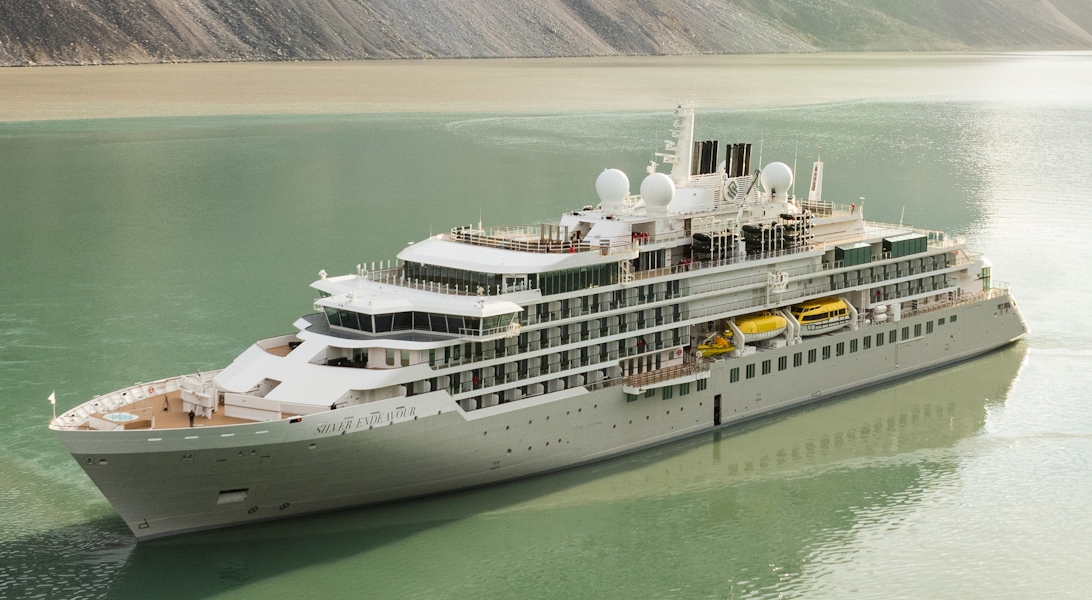
The images shown are for illustration purposes only and may not be an exact representation of what you find on the ship.
The images shown are for illustration purposes only and may not be an exact representation of what you find on the ship.
The images shown are for illustration purposes only and may not be an exact representation of what you find on the ship.
The images shown are for illustration purposes only and may not be an exact representation of what you find on the ship.
The images shown are for illustration purposes only and may not be an exact representation of what you find on the ship.


Our Fusion packages are all ABTA & ATOL protected ensuring that your booking is safe with us
| 12 nights aboard the Silver Endeavour | |||
| Butler Service in Every Suite | |||
| Gratuities Always Included | |||
| Beverages In-Suite and Throughout the Ship | |||
| Gourmet Dining | |||
| In Suite Dining & 24-Hour Room Service | |||
| Intimate small size ships | |||
| Free Wifi Throughout the Ship | |||
| Free Zodiac, Land and Sea Tours & Activities & Complimentary Expedition gear | |||
| Port Taxes and Fees | |||
 | ABTA and ATOL Protection* | ||
Date 1st May 2027 |
Nts 12 |
Suite £8,800pp |
Date 1st May 2027 |
Nts 12 |
Suite £8,800pp |
| Suite staterooms from | £8,800pp | ||
| CV | Classic Veranda Suite | £8,800pp | |
| DX | Deluxe Veranda Suite | £10,200pp | |
| PV | Premium Veranda Suite | £10,850pp | |
| SV | Superior Veranda Suite | £9,500pp | |
| SL | Silver Suite | £15,650pp | |
| SS | Signature Suite | £16,650pp | |
| G1 | Grand Suite (1 Bedroom) | £17,450pp | |
| MS | Master Suite | £17,000pp | |
| O1 | Owner's Suite (1 Bedroom) | £17,750pp | |
Fusion Holidays when selling travel arrangements is a trading name of Co-op Travel Services Limited, registration 08903986. Fusion Cruises is an Accredited Body Member of Co-op Travel Services Limited ATOL 12904.
Book with Confidence. We are a Member of ABTA which means you have the benefit of ABTA’s assistance and Code of Conduct.
Some of the flights and flight-inclusive holidays on this website are financially protected by the ATOL scheme but ATOL protection does not apply to all holiday and travel services offered on this website. This website will provide you with information on the protection that applies in the case of each holiday and travel service offered before you make your booking. If you do not receive an ATOL Certificate then the booking will not be ATOL protected. If you do receive an ATOL Certificate but all parts of your trip are not listed on it, those parts will not be ATOL protected. Please see our booking conditions for information, or for more information about financial protection and the ATOL Certificate go to: www.caa.co.uk