This site uses cookies as defined in our Cookie Policy, by continuing to use this site you agree to their use.
Continue

| Arrive | Depart | ||||||
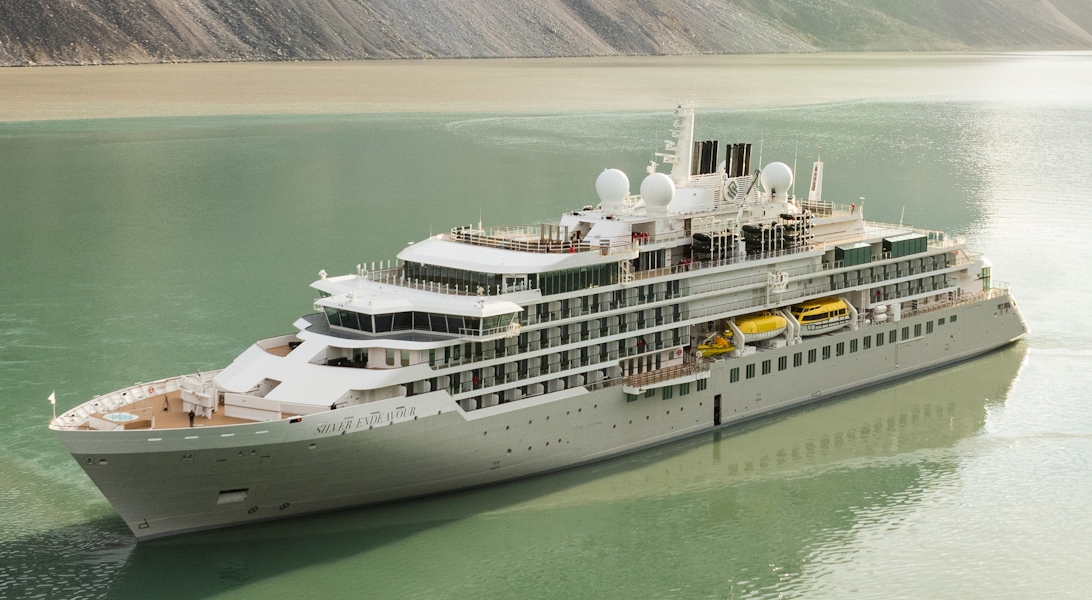
| 3rd03 | JunJun | 202828 | Helsinki, Finland, embark on the Silver Endeavour | 19:00 | |||
A city of the sea, Helsinki was built along a series of oddly shaped peninsulas and islands jutting into the Baltic coast along the Gulf of Finland. Streets and avenues curve around bays, bridges reach to nearby islands, and ferries ply among offshore islands.Having grown dramatically since World War II, Helsinki now absorbs more than one-tenth of the Finnish population. The metro area covers 764 square km (474 square miles) and 315 islands. Most sights, hotels, and restaurants cluster on one peninsula, forming a compact central hub. The greater Helsinki metropolitan area, which includes Espoo and Vantaa, has a total population of more than a million people.Helsinki is a relatively young city compared with other European capitals. In the 16th century, King Gustav Vasa of Sweden decided to woo trade from the Estonian city of Tallinn and thus challenge the Hanseatic League's monopoly on Baltic trade. Accordingly, he commanded the people of four Finnish towns to pack up their belongings and relocate to the rapids on the River Vantaa. The new town, founded on June 12, 1550, was named Helsinki.For three centuries, Helsinki (Helsingfors in Swedish) had its ups and downs as a trading town. Turku, to the west, remained Finland's capital and intellectual center. However, Helsinki's fortunes improved when Finland fell under Russian rule as an autonomous grand duchy. Czar Alexander I wanted Finland's political center closer to Russia and, in 1812, selected Helsinki as the new capital. Shortly afterward, Turku suffered a disastrous fire, forcing the university to move to Helsinki. The town's future was secure.Just before the czar's proclamation, a fire destroyed many of Helsinki's traditional wooden structures, precipitating the construction of new buildings suitable for a nation's capital. The German-born architect Carl Ludvig Engel was commissioned to rebuild the city, and as a result, Helsinki has some of the purest neoclassical architecture in the world. Add to this foundation the influence of Stockholm and St. Petersburg with the local inspiration of 20th-century Finnish design, and the result is a European capital city that is as architecturally eye-catching as it is distinct from other Scandinavian capitals. You are bound to discover endless engaging details—a grimacing gargoyle; a foursome of males supporting a balcony's weight on their shoulders; a building painted in striking colors with contrasting flowers in the windows. The city's 400 or so parks make it particularly inviting in summer.Today, Helsinki is still a meeting point of eastern and western Europe, which is reflected in its cosmopolitan image, the influx of Russians and Estonians, and generally multilingual population. Outdoor summer bars ("terrassit" as the locals call them) and cafés in the city center are perfect for people watching on a summer afternoon. A thriving flawlessly-designed seaside city Helsinki is famously livable and inspiring. A regional powerhouse of outstanding design and creativity Helsinki lies across a confetti scattering of 300 islands and skerries in the Gulf of Finland. Known for the light granite hue of its buildings - which lend the city a bright whitewashed appearance - traditional buildings mingle seamlessly with bold new structures showcasing Finland's celebrated design outlook. Helsinki Cathedral is the crowning glory - rising high over the city's waterfront with its pearly white domes gleaming. A city that reveres knowledge and creativity above all else artworks and statues litter the streets and parks honouring creative minds of the past. Open parks offer space to lie back and soak up summer's sun while sculptures like the abstract organs of the Sibelius Monument celebrate national heroes like composer Jean Sibelius - whose music gave Finland national identity in the quest for independence. Feel the stunning acoustics of the incredible Rock Church deep in your gut as you witness a performance in this collaboration between man and nature. Helsinki's easy-going forward-thinking way of life was hard fought for and the spectacular Suomenlinna fortress rears out of the waves as a reminder of the historical struggles that have played out in this stretch of sea. Sail out to the quaint little beaches and waterfront pathways that now lend a calm peaceful ambience to this UNESCO World Heritage Site. | |||||||
| 4th04 | JunJun | 202828 | Ulko-Tammio Island, Finland | 07:30 | 14:00 | ||
| 5th05 | JunJun | 202828 | Oro Fortress Island, Finland | 06:30 | 13:30 | ||
| 6th06 | JunJun | 202828 | Rauma (Raumo), Finland | 07:30 | 18:00 | ||
| This pretty seaside town has more than an element of chocolate box to it. Narrow cobbled streets flanked by painted wooden cottages and overflowing flower boxes may seem a little twee to the urbanite, but once you let yourself be charmed by its olde-world fairy-tale magic, you will soon fall in love. Rauma also has the happy label of being the largest unified wooden town in the Nordic countries, and has a UNESCO World Heritage badge of honour to prove it. It is also close to 580 years old, making it almost 500 years older than its host country, Finland and the third oldest town in Finland. And yet, over five centuries of history is not the jewel in Rauma’s crown, rather the lace-making festival that happens every summer. People flock from far and wide to take on the resident lace-making champion in a series of “lace-battles” that involve speed, precision and of course bobbins. Historical sources reveal that bobbin lace-making in Rauma goes back all the way to the 1740s. Initially, Lace Week was a set of exhibitions during which skilled bobbin lace-makers could display their works, but it has since developed into a wide-ranging communal event, with music, dance and traditional cooking. | |||||||
| 7th07 | JunJun | 202828 | Örnsköldsvik, Sweden | 09:30 | 18:00 | ||
| Örnsköldsvik, with a population of approximately 29,000, is located on the east coast of Västernorrland County on the Bay of Bothnia. Situated on a bay enclosed by skerries, the town is named after Per Abraham Örnsköld, governor of Västernorrland from 1762 to 1769, who did a great deal to promote the development of the region. The town's economy depends principally on the paper industry and its deep port. The area benefits from a natural harbour that remains ice-free for 11 months of the year. The figure of an eagle carved in local granite by Bruno Liljefors has become the emblem of the town and can be found in the Torgpark (city park). The western side the town is bound by wooded crags and inland are a range of hills offering excellent fishing in summer and skiing in the winter. Örnsköldsvik is a young town in an old district with many cultural traditions. The centre of the city has been developed into a lively place for people to meet offering a varied mix of shops, restaurants, and activities. Pier Information The ship is scheduled to dock at Stadskajen inner harbor. The center of town is about a 3-4 minute walk. Metered taxis are available at the pier. Shopping Örnsköldsvik has a bustling commercial centre. Here, you find small, pleasant shops side by side with large department stores and well-stocked shops offering specialist goods for sale. A speciality of this region is Surströmming (fermented herring). To save on the cost of Swedes’ all-important winter supply of salt herring, the amount of salt was reduced, causing the herring to ferment instead. Cuisine With the locals’ penchant for good food, many restaurants and several cafés, pubs and bars cater to a wide variety of tastes. Swedish fare tends to be hearty, practical and sustaining. Other Sites Paradisbadet This is one of the best waterparks in northern Europe, fully enclosed with a tropical climate and water at 100ºF (38 C). The park is dotted with green plants, Jacuzzis, rapids, and plunge pools. The 328 foot (100 metre) long water slide is the longest in Sweden. The Hans Hedberg Museum Famous potter Hans Hedberg has a museum all of his own in one of the glass-roofed areas at Arken. A few examples of Hedberg´s world-famous ceramics are on display here. Private arrangements for independent sightseeing may be requested through the Tour Office on board. | |||||||
| 8th08 | JunJun | 202828 | Oulu, Finland | ||||
| 9th09 | JunJun | 202828 | Oulu, Finland | 00:30 | |||
| 9th09 | JunJun | 202828 | Kalajoki, Finland | 10:30 | 17:00 | ||
| 10th10 | JunJun | 202828 | At Sea | ||||
| 11th11 | JunJun | 202828 | Saaremaa sadam, Estonia | 08:00 | 17:00 | ||
| Saaremaa is the largest island in Estonia, and it retains much of the traditions in architecture, costumes and even the local dialect. The only town is Kuressaare, where the 14th century bishop’s castle is among the best preserved medieval buildings in the Baltic. The beautiful and well preserved old town is also well worth exploring. It’s said that Saaremaa is famous for windmills, black rye bread, and strong beer. Once every farm had its own mill, and although many have fallen into disuse, some are now being restored. The flour from the mills was once used for the many types of local bread, which is still made and enjoyed, as is the bottled beer from Saaremaa’s brewery notably the strong Tehumardi and the Christmas beer that warms up winter evenings. | |||||||
| 12th12 | JunJun | 202828 | Riga, Latvia | 08:00 | 17:30 | ||
Rīga has an upscale, big-city feel unmatched in the region. The capital (almost as large as Tallinn and Vilnius combined) is the business center of the area while original, high-quality restaurants and hotels have earned Rīga some bragging rights among its Western European counterparts. The city also doesn't lack for beauty—Rīga's Old Town (now a UNESCO World Heritage site) is one of Europe’s most striking examples of the art nouveau architectural style. Long avenues of complex and sometimes whimsical Jugendstil facades hint at Rīga's grand past. Many were designed by Mikhail Eisenstein, the father of Soviet director Sergei. This style dominates the city center. In many ways, the wonder of Rīga resides less in its individual attractions and more in the fabric of the town itself. In the medieval Old Town, an ornate gable or architrave catches the eye at every turn. The somber and the flamboyant are both represented in this quarter's 1,000 years of architectural history. Don't hesitate to just follow where your desire leads—the Old Town is compact and bounded by canals, so it's difficult to get totally lost. When the Old Town eventually became too crowded, the city burst out into the newer inner suburbs. The rich could afford to leave and build themselves fine fashionable mansions in the style of the day; consequently, city planners created a whole new Rīga. Across the narrow canal, you'll find the Esplanāde, a vast expanse of parkland with formal gardens and period mansions where the well-heeled stroll and play. Surrounding this is the art nouveau district. Encompassing avenues of splendid family homes (now spruced up in the postcommunist era), the collection has been praised by UNESCO as Europe's finest in the art nouveau style. The best examples are at Alberta 2, 2a, 4, 6, 8, and 13; Elizabetes 10b; and Strēlnieku 4a. If the weather permits, eschew public transport and stroll between the two districts, taking in the varied skylines and multifaceted facades, and perhaps stopping at a café or two as you go. The city has churches in five Christian denominations and more than 50 museums, many of which cater to eclectic or specialist tastes. Centred around a charming UNESCO World Heritage Site listed Old Town Latvia’s capital is a quirky and artistic place - with an extensive collection of gleaming art-deco architecture. With a quirky underbelly and beautifully preserved fairytale architecture it’s no wonder Riga is affectionately known as the Baltic Berlin. Ascend the tower of St. Peter's Church for a view down over the gingerbread-architecture below. The House of Blackheads is one of the city’s standouts a historic trade guild’s meeting place it adds grace and grandeur to the spacious town square. The much-photographed Three Brothers lean together with their pastel-shaded facades and idiosyncratic personalities. Look out across the River Daugava for an example of modern Riga - the steel and glass of the National Library building. The Freedom Monument stands a full 42 meters tall and is a proud statue marking Lativa’s incredibly hard-won independence. Cavernous hangers – that once housed bomber zeppelins from the First World War – now host one of Europe’s biggest and best food markets. Soak up the smells and sights of Riga Central Market where you can taste pickles smoked herring and piragis – local rolls stuffed with bacon. Take time out in brightly painted cafes and flower-laced courtyards which serve up refreshments and dizzyingly strong self-brewed craft beers. Or head to the greenery of Bastejkalna Park to stroll the banks of the canal and over ornate bridges. | |||||||
| 13th13 | JunJun | 202828 | Visby, Sweden | 13:00 | 19:30 | ||
Gotland is Sweden's main holiday island, a place of ancient history, a relaxed summer-party vibe, wide sandy beaches, and wild cliff formations called raukar (the remnants of reefs formed more than 400 million years ago). Measuring 125 km (78 miles) long and 52 km (32 miles) at its widest point, Gotland is where Swedish sheep farming has its home. In its charming glades, 35 varieties of wild orchids thrive, attracting botanists from all over the world. Sweden's holiday island of choice Visby is a pretty medieval city that has been delightfully frozen in time. A dramatically walled Hanseatic trading centre Visby faces out across a 60-mile gulf towards the Swedish mainland. An island of sparse scenic landscapes Gotland is dotted with quiet fishing villages roaming sheep and unusual limestone natural structures. With beautiful beaches as well as spell-binding history crowds from across Scandanavia and beyond set sail for these escapist shores every summer. Set on the Baltic Sea's largest island the steep medieval walls of Visby are at once a gorgeously picturesque and incredibly imposing welcome to this UNESCO World Heritage Site. The oldest section the red-roof capped Gunpowder Tower is one of Sweden's oldest surviving constructions. Inside the walls the elegant Cathedral of St. Mary's rises with its pair of pepper-pot towers. Visby has an irresistible tangle of medieval streets with photo-opportunities waiting around every narrow bend. The scattering of ruined churches adds another layer of eerie beauty while a splash of colour is provided by blooming botanical gardens thriving within the island's mild climate. A place of rich history visit museums to learn the island's whole story - from its formation to the ancient inhabitants who have occupied its shores. For the best view head to Hogklint - a coastal cliff area on the south of Visby. Or explore the island via beautiful coastal bike trails. | |||||||
| 14th14 | JunJun | 202828 | Klaipeda, Lithuania | 12:00 | 21:00 | ||
| When thinking of countries of legends, tumult and fabulous architecture, Lithuania does not immediately spring to mind. And yet, it should – particularly Klaipeda, Lithuania’s third largest city (and only seaport). As one of the few eastern ports to not freeze during the cold Baltic Sea winters, Klaipeda has always been a coveted spot. Once known as Memel, the city has had a chequered past. Founded in 1252 by the Teutonic Order, Memel was the capital of Prussia during the Napoleonic wars. It was a German state until 1919, when the signing of the Treaty of Versailles commandeered it for Lithuania. It then surrendered to German hands before and during WWII, but was liberated along with the rest of the country in 1945. As you walk around the pretty town centre, you would be forgiven for thinking that you were not even in Lithuania. The Germanic influence is most apparent in the well-ordered centre, with its fachwerk, (half-timbered) style buildings and cobbled streets. Much of the original architecture was destroyed during WWII, but head for the Art Yard and you’ll not only find examples of what is left from Memel’s past, but also a buzzing hub of street art, coffee shops and independent boutiques. Much of the city’s tourism is focused around neighbouring Spit National Park. This UNESCO World Heritage site of 5,000-year-old peninsula of woods and beach separates the Baltic Sea from the Curonian Lagoon and is a prime example of outstanding universal value to the region. | |||||||
| 15th15 | JunJun | 202828 | Gdansk, Poland | 08:30 | 20:00 | ||
| Gdansk, one of Poland’s oldest and most beautiful cities, sits on the edge of the Baltic Sea. Looking around today, it’s difficult to imagine that during World War II, much of the city was reduced to rubble. Painstakingly reconstructed with great skill, the Hanseatic architecture and historical treasures rose like a phoenix from the ruins. Head to the city centre and walk in the footsteps of Polish royalty down the Royal Route, which leads to many of Gdansk’s best-preserved treasures. Passing through majestic stone gates is the wonderful Amber Museum. Learn all you need to know about amber or Baltic gold as it’s known. It’s been collected and worked for over 6000 years in Gdansk, a major contributor to the city’s wealth. Through the Golden Gate lies Dluga street, peek behind the exquisite facades and visit some of the beautifully restored town houses. Stroll on past landmark buildings like the soaring Town Hall, ending up on the very photogenic Mariacka street. Along the waterfront is the striking, modern architecture of the World War II Museum, a poignant space, in the very city where the first shots of the war were fired. The excellent exhibitions leave few unmoved and has rapidly become one of Gdansk’s top attractions. More recent history is explained wonderfully at the European Solidarity Centre down by the shipyards. The trade union “Solidarity” was formed in the 1980’s and Poland’s’ struggle to topple Communism began. Gdansk has certainly earnt its place in the history books of Europe. | |||||||
| 16th16 | JunJun | 202828 | Gudhjem, Bornholm, Denmark | 09:00 | 18:30 | ||
| 17th17 | JunJun | 202828 | Copenhagen, Denmark, disembark the Silver Endeavour | ||||
By the 11th century, Copenhagen was already an important trading and fishing centre and today you will find an attractive city which, although the largest in Scandinavia, has managed to retain its low-level skyline. Discover some of the famous attractions including Gefion Fountain and Amalienborg Palace, perhaps cruise the city’s waterways, visit Rosenborg Castle or explore the medieval fishing village of Dragoer. Once the home of Hans Christian Andersen, Copenhagen features many reminders of its fairytale heritage and lives up to the reputation immortalised in the famous song ‘Wonderful Copenhagen’. Effortlessly cool and down to earth, Copenhagen is a contemporary, clean and classy highlight of Scandinavia. A city built to be liveable, Copenhagen has refused to compromise, resulting in a forward-thinking metropolis that’s green and clean. Swim in the waters of Havnebadet Islands during summer, or shelter from winter’s bite by snuggling in beside a roaring open fire during winter. You can even hop on a train to Sweden, traversing the famous span of a Nordic Noir star - the Öresund Bridge. It takes just a touch over half an hour to step off the train in Malmö. There’s only one way to truly explore Copenhagen and that’s on two wheels. Easy bike hire schemes will get you moving across this flat city, designed with bikes at the forefront of the mind. Choose a model with electronic assistance to take the strain out of any journey, giving you the freedom to whizz around and explore the modern angular architecture of the centre, and the pastoral colours of Nyhavn waterfront. Head out to the Little Mermaid statue, inspired by Hans Christian Andersen’s fairy tale - the strikingly-restrained statue is the perfect landmark for Copenhagen; unshowy, self-assured and utterly irresistible. The Danish concept of hygge is very much alive here, and you’ll feel that warm cosy feeling as you visit cafes illuminated by the warm glow of hanging filament bulbs, and stuffed to the brim with thick, dusty books. Home to mega-brewer Carlsberg, Copenhagen is also a city for hop enthusiasts, and there is a thriving craft brewing scene to sample. Danish Smørrebrød sandwiches are a must try, or for something a little more substantial, settle in for a culinary voyage and try a taster menu – the city’s restaurants are littered with Michelin stars. | |||||||
The images shown are for illustration purposes only and may not be an exact representation of what you find on the ship.
The images shown are for illustration purposes only and may not be an exact representation of what you find on the ship.
The images shown are for illustration purposes only and may not be an exact representation of what you find on the ship.
The images shown are for illustration purposes only and may not be an exact representation of what you find on the ship.
The images shown are for illustration purposes only and may not be an exact representation of what you find on the ship.


Our Fusion packages are all ABTA & ATOL protected ensuring that your booking is safe with us
| 14 nights aboard the Silver Endeavour | |||
| Butler Service in Every Suite | |||
| Gratuities Always Included | |||
| Beverages In-Suite and Throughout the Ship | |||
| Gourmet Dining | |||
| In Suite Dining & 24-Hour Room Service | |||
| Intimate small size ships | |||
| Free Wifi Throughout the Ship | |||
| Free Zodiac, Land and Sea Tours & Activities & Complimentary Expedition gear | |||
| Port Taxes and Fees | |||
 | ABTA and ATOL Protection* | ||
Date 3rd Jun 2028 |
Nts 14 |
Suite £14,100pp |
Date 3rd Jun 2028 |
Nts 14 |
Suite £14,100pp |
| Suite staterooms from | £14,100pp | ||
| CV | Classic Veranda Suite | £14,100pp | |
| DX | Deluxe Veranda Suite | £15,150pp | |
| PV | Premium Veranda Suite | £15,400pp | |
| SV | Superior Veranda Suite | £14,700pp | |
| SL | Silver Suite | £23,000pp | |
| SS | Signature Suite | £29,100pp | |
| G1 | Grand Suite (1 Bedroom) | £40,350pp | |
| MS | Master Suite | £38,350pp | |
| O1 | Owner's Suite (1 Bedroom) | £41,900pp | |
Fusion Holidays when selling travel arrangements is a trading name of Co-op Travel Services Limited, registration 08903986. Fusion Cruises is an Accredited Body Member of Co-op Travel Services Limited ATOL 12904.
Book with Confidence. We are a Member of ABTA which means you have the benefit of ABTA’s assistance and Code of Conduct.
Some of the flights and flight-inclusive holidays on this website are financially protected by the ATOL scheme but ATOL protection does not apply to all holiday and travel services offered on this website. This website will provide you with information on the protection that applies in the case of each holiday and travel service offered before you make your booking. If you do not receive an ATOL Certificate then the booking will not be ATOL protected. If you do receive an ATOL Certificate but all parts of your trip are not listed on it, those parts will not be ATOL protected. Please see our booking conditions for information, or for more information about financial protection and the ATOL Certificate go to: www.caa.co.uk