This site uses cookies as defined in our Cookie Policy, by continuing to use this site you agree to their use.
Continue

| Arrive | Depart | ||||||
| 6th06 | MarMar | 202828 | Puerto Williams, Chile, embark on the Silver Endeavour | 21:00 | |||
| Puerto Williams is a Chilean city located on Navarino Island on the southern shores of the Beagle Channel. It claims to be the “southernmost city in the world”, however owing to its small size – 2500 residents approximately – the much larger Argentinean city of Ushuaia, which sits on the northern side of the same channel, also claims that title. The surrounding scenery is magnificent. The wild windswept mountains rise above the tree line and are regularly dusted with snow. The city itself has the dramatic backdrop called “Dientes de Navarino” (literally “teeth of Navarino”), which rival the famous Torres del Paine further to the north. The area was originally used by the Yaghan people, hunter-gatherers who despite enduring the harsh regional climate, could not weather the arrival of Europeans. The current city was established as a naval base in 1953 and honours the British-Chilean naval commander John Williams Wilson of the 16th century. Initially it served to protect territorial possessions and fishing rights of the area, as well as offering logistical support to Antarctic bases. More recently it has become a departure point for scientific and tourism trips to the Antarctic region. In contrast to the bustle and traffic of a very commercial Ushuaia, Puerto Williams offers a quieter, more relaxed experience. It charms the visitor with a small village feel, complete with rustic buildings and the homely smell of drifting wood smoke. A haven of peace at the end of the world. | |||||||
| 7th07 | MarMar | 202828 | At Sea | ||||
| 8th08 | MarMar | 202828 | At Sea | ||||
| 9th09 | MarMar | 202828 | At Sea | ||||
| 10th10 | MarMar | 202828 | South Georgia Island, South Georgia and the South Sandwich Islands | ||||
South Georgia is a breathtaking destination of towering snow-covered mountains, mighty glaciers, and low-lying grasslands that attract an astounding concentration of wildlife. It is possible to find Southern fur seals, Southern elephant seals and a variety of albatross species including Black-browed, Light-mantled Sooty, Grey-headed and the spectacular Wandering Albatross, plus thousands of King and Macaroni Penguins. South Georgia is also linked to the early Antarctic explorers. Captain James Cook first stepped ashore in 1775, but perhaps more famous is Ernest Shackleton’s arrival in 1916 following the sinking of his ship Endurance. Shackleton’s grave and the whaling museum at Grytviken are highlights, as would be a visit to one of the King Penguin colonies at Salisbury Plain or Gold Harbour. Charcoal-black mountains ladled with snow giant glaciers and thriving wildlife combine to make South Georgia one of the great natural islands. Adventure to these far flung lands - where the animals are in charge and humans come a distant second. Here you'll witness a cacophony of calling birds, natural set pieces like elephant seals clashing and thrashing and crowds of colourful king penguins stretching out as far as the eye can see. An overseas territory of the UK, these isolated subantarctic islands once formed a remote whaling centre - and you can still visit the former whaling stations. Nowadays the giants of the sea are free to cruise the icy waters uninhibited. Written into explorer history due to its links with Ernest Shackleton’s tale of Antarctic exploration, shipwreck and survival, the Endurance’s crew were saved when he reached the salvation of these shores in 1916 - before returning to collect the remaining sailors from Elephant Island. A museum commemorates the legendary mission and you can see the memorial to Shackleton that stands over his final resting place on this fabled island. South Georgia’s colonies of King Penguins - with vivid bursts of yellow and orange around their necks - stand squabble, and curiously investigate, enjoying the isolated respite of this island. They’re joined by smaller penguin species like Macaroni penguins and other glorious birdlife like the majestic wandering albatrosses which you can see gliding on gusts of wind over the choppy waves. | |||||||
| 11th11 | MarMar | 202828 | South Georgia Island, South Georgia and the South Sandwich Islands | ||||
South Georgia is a breathtaking destination of towering snow-covered mountains, mighty glaciers, and low-lying grasslands that attract an astounding concentration of wildlife. It is possible to find Southern fur seals, Southern elephant seals and a variety of albatross species including Black-browed, Light-mantled Sooty, Grey-headed and the spectacular Wandering Albatross, plus thousands of King and Macaroni Penguins. South Georgia is also linked to the early Antarctic explorers. Captain James Cook first stepped ashore in 1775, but perhaps more famous is Ernest Shackleton’s arrival in 1916 following the sinking of his ship Endurance. Shackleton’s grave and the whaling museum at Grytviken are highlights, as would be a visit to one of the King Penguin colonies at Salisbury Plain or Gold Harbour. Charcoal-black mountains ladled with snow giant glaciers and thriving wildlife combine to make South Georgia one of the great natural islands. Adventure to these far flung lands - where the animals are in charge and humans come a distant second. Here you'll witness a cacophony of calling birds, natural set pieces like elephant seals clashing and thrashing and crowds of colourful king penguins stretching out as far as the eye can see. An overseas territory of the UK, these isolated subantarctic islands once formed a remote whaling centre - and you can still visit the former whaling stations. Nowadays the giants of the sea are free to cruise the icy waters uninhibited. Written into explorer history due to its links with Ernest Shackleton’s tale of Antarctic exploration, shipwreck and survival, the Endurance’s crew were saved when he reached the salvation of these shores in 1916 - before returning to collect the remaining sailors from Elephant Island. A museum commemorates the legendary mission and you can see the memorial to Shackleton that stands over his final resting place on this fabled island. South Georgia’s colonies of King Penguins - with vivid bursts of yellow and orange around their necks - stand squabble, and curiously investigate, enjoying the isolated respite of this island. They’re joined by smaller penguin species like Macaroni penguins and other glorious birdlife like the majestic wandering albatrosses which you can see gliding on gusts of wind over the choppy waves. | |||||||
| 12th12 | MarMar | 202828 | South Georgia Island, South Georgia and the South Sandwich Islands | 19:00 | |||
South Georgia is a breathtaking destination of towering snow-covered mountains, mighty glaciers, and low-lying grasslands that attract an astounding concentration of wildlife. It is possible to find Southern fur seals, Southern elephant seals and a variety of albatross species including Black-browed, Light-mantled Sooty, Grey-headed and the spectacular Wandering Albatross, plus thousands of King and Macaroni Penguins. South Georgia is also linked to the early Antarctic explorers. Captain James Cook first stepped ashore in 1775, but perhaps more famous is Ernest Shackleton’s arrival in 1916 following the sinking of his ship Endurance. Shackleton’s grave and the whaling museum at Grytviken are highlights, as would be a visit to one of the King Penguin colonies at Salisbury Plain or Gold Harbour. Charcoal-black mountains ladled with snow giant glaciers and thriving wildlife combine to make South Georgia one of the great natural islands. Adventure to these far flung lands - where the animals are in charge and humans come a distant second. Here you'll witness a cacophony of calling birds, natural set pieces like elephant seals clashing and thrashing and crowds of colourful king penguins stretching out as far as the eye can see. An overseas territory of the UK, these isolated subantarctic islands once formed a remote whaling centre - and you can still visit the former whaling stations. Nowadays the giants of the sea are free to cruise the icy waters uninhibited. Written into explorer history due to its links with Ernest Shackleton’s tale of Antarctic exploration, shipwreck and survival, the Endurance’s crew were saved when he reached the salvation of these shores in 1916 - before returning to collect the remaining sailors from Elephant Island. A museum commemorates the legendary mission and you can see the memorial to Shackleton that stands over his final resting place on this fabled island. South Georgia’s colonies of King Penguins - with vivid bursts of yellow and orange around their necks - stand squabble, and curiously investigate, enjoying the isolated respite of this island. They’re joined by smaller penguin species like Macaroni penguins and other glorious birdlife like the majestic wandering albatrosses which you can see gliding on gusts of wind over the choppy waves. | |||||||
| 13th13 | MarMar | 202828 | At Sea | ||||
| 14th14 | MarMar | 202828 | At Sea | ||||
| 15th15 | MarMar | 202828 | At Sea | ||||
| 16th16 | MarMar | 202828 | At Sea | ||||
| 17th17 | MarMar | 202828 | Gough Island, Saint Helena, Ascension and Tristan da Cunha | 05:30 | 14:00 | ||
Gough Island in the South Atlantic Ocean was originally known as Gonçalo Álvares (named after the captain of Vasco da Gama’s flagship). The volcanic island is uninhabited except for the handful of personnel stationed here to operate a South African weather station, making it one of the most remote places with a constant human presence. Gough Island and Inaccessible Island comprise the UNESCO World Heritage Site of Gough and Inaccessible Islands as they are protected wildlife reserves and an “Important Bird Area”. Gough Island is home to Tristan Albatrosses, Atlantic Petrels, Gough Moorhens, Gough Buntings, and Northern Rockhopper Penguins; just some of the many birds using this mid-Atlantic island as their nesting ground. Gough is a dependency of Tristan da Cunha and part of the British Overseas Territory of Saint Helena, Ascension and Tristan da Cunha. | |||||||
| 18th18 | MarMar | 202828 | Tristan da Cunha, Saint Helena, Ascension and Tristan da Cunha | 06:30 | 18:00 | ||
For the adventurous and fit Jacobs Ladder could be of interest: the ladder actually is an inclined plane with 699 steps (and 600ft). For connoisseurs a visit to the St Helena Distillery is a must: names like White Lion Rum, Midnight Mist coffee liqueur and Juniper flavoured gin entice to see how they are made –and perhaps taste them. | |||||||
| 19th19 | MarMar | 202828 | Nightingale Islands, Saint Helena, Ascension and Tristan da Cunha | 05:30 | 12:30 | ||
Nightingale Island is an active volcano and one of three islands in the extremes of the South Atlantic Ocean known as the Nightingale Islands falling within the Tristan da Cunha group. The three islands are administered by the United Kingdom and are visited for scientific research purposes and little else. This means the magnificent wildlife with an estimated one million seabirds, in addition to unusual flora, is all unspoiled by people. Nightingale Island is also a protected wildlife reserve and World Heritage Site. Nightingale has two peaks on its north end and the rest of the island is ringed by cliffs and sea caves, and is fringed with kelp beds. The sea caves have been said to hide pirate treasure with a fortune in Spanish doubloons and pieces-of-eight hidden here for safekeeping. However, no recovery of this booty has ever been documented. | |||||||
| 20th20 | MarMar | 202828 | At Sea | ||||
| 21st21 | MarMar | 202828 | At Sea | ||||
| 22nd22 | MarMar | 202828 | At Sea | ||||
| 23rd23 | MarMar | 202828 | Saint Helena, Saint Helena, Ascension and Tristan da Cunha | ||||
St Helena is a tiny, remote island lying in the South Atlantic, and thanks to its isolation it has a rare and unspoilt beauty. The nearest land is Ascension Island, situated some 700 miles north-west of St Helena, and the nearest mainland, West Africa, is over 1,000 miles away. The island was discovered by Juan de Nova Castella on May 21, 1502 and subsequently became a stop-off point for Portuguese vessels to replenish their supplies and break long voyages. In 1676 the famous astonomer Edmund Haley arrived in St Helena to produce his 'Catalogue of the Stars in the Southern Hemisphere'. However, the island is perhaps best known as the final exile of Napoleon Bonaparte. Following his defeat at Waterloo in 1815, Napoleon was exiled to Longwood House where he remained until his death six years later in 1821. Although primarily known as the island where Napoleon was exiled after his defeat at Waterloo, the fascination with St. Helena goes back many more centuries. Its main attraction may very well be its remoteness, which enabled the Portuguese to keep their discovery of the island in 1502 a secret for the next 80 years. It was this isolated location that the British thought perfect to keep the defeated Napoleon. St. Helena, a "green gem set in a ring of bronze", as a poet once called it, is surrounded by a magnificent coastline, with 1,000-foot-high cliffs dropping down to rocks pounded by the Atlantic surf. The countryside offers astonishing contrasts, ranging from wind-eroded desert with multicolored ridges and valleys to flax and tree covered hillsides, soft pastures and vegetation-filled valleys. Jamestown is the island's tiny capital and only town, boasting a number of 18th- and 19th-century buildings. Other attractions include Jacob's Ladder, 699 steps leading from the valley floor to the top of Ladder Hill. Exploring Jamestown is like a delightful treasure hunt. The garden of Plantation House, the governor's residence, is a favorite with visitors because of the giant tortoises that live on the grounds (one of which is reputedly 200 years old). Equally popular is Longwood House, where Napoleon spent the final six years of his life in exile. Because of the island's remoteness, even in today's jet age the only way to get there is by sea. Visiting St. Helena is rather like going back in time. Despite electricity, paved roads and cars, the island has retained a way of life reminiscent of bygone days. The 5,500 islanders are British and proud of it. Tuna and wahoo fishing add much to the island's economy and serves as a recreational sport to the resident. Soccer is the most popular game followed by cricket and tennis. The golf course at Longwood is pleasant, but not championship material. The island is visited approximately six times a year by a shipping service en route from England to South Africa. On these calls and the occasional call of a cruise vessel, the old wharf and tiny Jamestown come to life and both residents and visitors thoroughly enjoy this exciting event. | |||||||
| 24th24 | MarMar | 202828 | Saint Helena, Saint Helena, Ascension and Tristan da Cunha | 19:00 | |||
St Helena is a tiny, remote island lying in the South Atlantic, and thanks to its isolation it has a rare and unspoilt beauty. The nearest land is Ascension Island, situated some 700 miles north-west of St Helena, and the nearest mainland, West Africa, is over 1,000 miles away. The island was discovered by Juan de Nova Castella on May 21, 1502 and subsequently became a stop-off point for Portuguese vessels to replenish their supplies and break long voyages. In 1676 the famous astonomer Edmund Haley arrived in St Helena to produce his 'Catalogue of the Stars in the Southern Hemisphere'. However, the island is perhaps best known as the final exile of Napoleon Bonaparte. Following his defeat at Waterloo in 1815, Napoleon was exiled to Longwood House where he remained until his death six years later in 1821. Although primarily known as the island where Napoleon was exiled after his defeat at Waterloo, the fascination with St. Helena goes back many more centuries. Its main attraction may very well be its remoteness, which enabled the Portuguese to keep their discovery of the island in 1502 a secret for the next 80 years. It was this isolated location that the British thought perfect to keep the defeated Napoleon. St. Helena, a "green gem set in a ring of bronze", as a poet once called it, is surrounded by a magnificent coastline, with 1,000-foot-high cliffs dropping down to rocks pounded by the Atlantic surf. The countryside offers astonishing contrasts, ranging from wind-eroded desert with multicolored ridges and valleys to flax and tree covered hillsides, soft pastures and vegetation-filled valleys. Jamestown is the island's tiny capital and only town, boasting a number of 18th- and 19th-century buildings. Other attractions include Jacob's Ladder, 699 steps leading from the valley floor to the top of Ladder Hill. Exploring Jamestown is like a delightful treasure hunt. The garden of Plantation House, the governor's residence, is a favorite with visitors because of the giant tortoises that live on the grounds (one of which is reputedly 200 years old). Equally popular is Longwood House, where Napoleon spent the final six years of his life in exile. Because of the island's remoteness, even in today's jet age the only way to get there is by sea. Visiting St. Helena is rather like going back in time. Despite electricity, paved roads and cars, the island has retained a way of life reminiscent of bygone days. The 5,500 islanders are British and proud of it. Tuna and wahoo fishing add much to the island's economy and serves as a recreational sport to the resident. Soccer is the most popular game followed by cricket and tennis. The golf course at Longwood is pleasant, but not championship material. The island is visited approximately six times a year by a shipping service en route from England to South Africa. On these calls and the occasional call of a cruise vessel, the old wharf and tiny Jamestown come to life and both residents and visitors thoroughly enjoy this exciting event. | |||||||
| 25th25 | MarMar | 202828 | At Sea | ||||
| 26th26 | MarMar | 202828 | At Sea | ||||
| 27th27 | MarMar | 202828 | Ascension Island, Saint Helena, Ascension and Tristan da Cunha | 06:00 | 19:00 | ||
| This speck of an island in the middle of the South Atlantic Ocean was discovered by the Portuguese on Ascension Day in 1501. It measures a mere 7.5 miles by 6 miles, and its closest neighbor is the island of St. Helena, some 760 miles southeast, of which Ascension has been a dependency since 1922. The island is of volcanic origin; its climate is moderated by southeastern trade winds. The annual mean temperature is 85°F at sea level and 75°F on Green Mountain, which is at 2,870 feet the highest point on the island. The island was taken over by the British in 1815, at the same time that they took a greater interest in St. Helena for the purpose of sending Napoleon into exile. Until 1922, Ascension was under the direct supervision of the British Admiralty who maintained a small naval station here. In 1922, the island became a dependency of St. Helena and was placed under the control of the British colonial office. During World War II, the United States built an airfield here to guard the South Atlantic sea lanes. Today, the island serves mainly as a military base. It became of prime importance during the Falklands conflict between Britain and Argentina. From here, long distance jet aircraft brought supplies from the U.K. to the troops in the Falkland Islands. Ascension has no permanent indigenous population, but is used in varying capacities by the Royal Air Force, the British Broadcasting Corporation, Cable & Wireless, the U.S. Air Force and NASA. Two military planes land here every week en route to and from the Falklands, and NASA does some of its moon testing here. The main settlement is Georgetown, home to some 200 residents who enjoy a very laid back lifestyle. A short walk from the pier takes you to the center of the tiny village, with a Post Office, two clubs and one main store. The shores of the island are known as a habitat for turtles, and the surrounding waters abound in fish. The island is surrounded by crystal-clear water and some beautiful beaches. But currents, sharks and strong undertow often make swimming hazardous.The visit of a cruise vessel provides an exciting occasion for the island's population. For our guests a visit to this remote locale will easily be a once-in-a-lifetime opportunity. You will be eagerly welcomed and happily shown every nook and cranny of the island. The infrastructure may be limited, but the charm of Ascension and the enthusiasm of its residents more than make up for it. Pier Information The ship is scheduled to anchor off the small settlement of Georgetown. Guests will be taken ashore via the ship’s tenders. Georgetown is about 600 feet from the pier. There are no taxis available on the island except for vehicles owned by residents. Shopping You may want to check out the two shops in Georgetown and perhaps get an Ascension Island T-shirt or a souvenir to take home from this remote island. The local currency is the pound sterling, but U.S. dollars are accepted. Cuisine The Two Boat Club, which also has a bar, accepts visitors for lunch. Other Sites Wander around Georgetown and meet the residents, or find one that can be hired with his car to show you the island. | |||||||
| 28th28 | MarMar | 202828 | At Sea | ||||
| 29th29 | MarMar | 202828 | At Sea | ||||
| 30th30 | MarMar | 202828 | At Sea | ||||
| 31st31 | MarMar | 202828 | Tema, Ghana, disembark the Silver Endeavour | ||||
From a modest fishing port to the biggest in Ghana, Tema’s industrial activity has all but tarnished the charming, postcard scenery of the region. The neighbouring white-sanded beaches remain immaculate, still serving as a testimony of the rich variety of fishing birds that can be found in the area.In the way Mother Nature intended it, gannets, boobies and kingfishers amongst other species fish in and around the cerulean waters of the coast. A light breeze tickles the inflamed, iron-filled soil of the mainland on which the railway linking Tema to Accra lures hundreds of visitors each day. On board one of the carriages to Accra, distinctively noticeable by their painted coats of red, yellow and green that echo Ghana’s national flag, a peek out of the window will offer scenic views of the harbour and coast, as well as the large fields that separate Tema from the capital by 15 miles/25 kilometres of open space.Accra’s ambiance contrasts with the peaceful setting of Tema, but nevertheless has its own charm to be enjoyed. Through rich, contemporary monuments which recall Ghana’s 1957 independence, the Kwame Nkrumah Memorial Park is an architectural jewel which also narrates the life and exploits of the eponymous president who fought for his country’s freedom. A more casual but perhaps interesting approach to the City’s culture and history is the visit to an artisanal studio, where primary materials such as wood and metal are transformed into stunning carvings of all sorts, illustrating a traditional African belief of a new life beyond death. And for a relaxing yet enriching experience, the hospitable restaurants are always eager to share their Banku, a local dish made out of corn and served with fish or stew.Craft markets are also worth a detour and are great for cherry-picking souvenirs. Demonstrating other fine Ghanaian traditions such as leather crafting and weaving, a popular favourite is the country’s hand-made Black Soap, which is renowned for its soothing virtues. From a modest fishing port to the biggest in Ghana Tema’s industrial activity has all but tarnished the charming postcard scenery of the region. The neighbouring white-sanded beaches remain immaculate still serving as a testimony of the rich variety of birds that can be found in the area.In the way Mother Nature intended it gannets boobies and kingfishers amongst other species fish in and around the cerulean waters of the coast. A light breeze tickles the inflamed iron-filled soil of the mainland on which the railway linking Tema to Accra lures hundreds of visitors each day. On board one of the carriages to Accra distinctively noticeable by their painted coats of red yellow and green that echo Ghana’s national flag a peek out of the window will offer scenic views of the harbour and coast as well as the fields that separate Tema from the capital. | |||||||
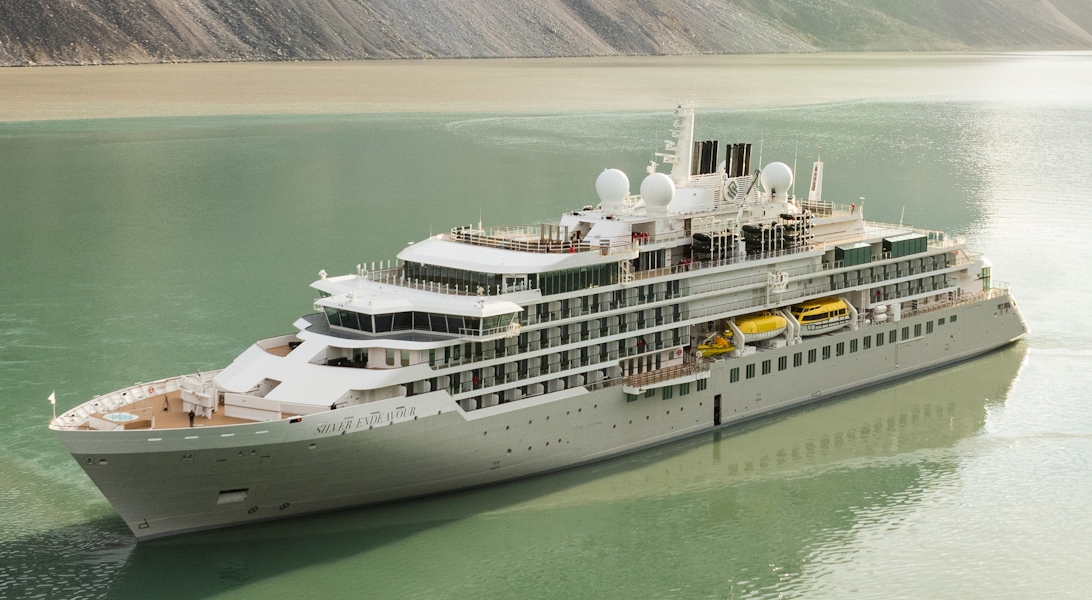
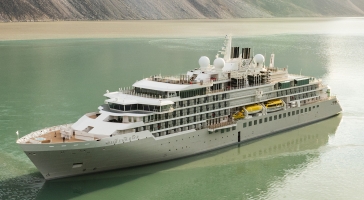
The images shown are for illustration purposes only and may not be an exact representation of what you find on the ship.
The images shown are for illustration purposes only and may not be an exact representation of what you find on the ship.
The images shown are for illustration purposes only and may not be an exact representation of what you find on the ship.
The images shown are for illustration purposes only and may not be an exact representation of what you find on the ship.
The images shown are for illustration purposes only and may not be an exact representation of what you find on the ship.

Our Fusion packages are all ABTA & ATOL protected ensuring that your booking is safe with us
| 25 nights aboard the Silver Endeavour | |||
| Butler Service in Every Suite | |||
| Gratuities Always Included | |||
| Beverages In-Suite and Throughout the Ship | |||
| Gourmet Dining | |||
| In Suite Dining & 24-Hour Room Service | |||
| Intimate small size ships | |||
| Free Wifi Throughout the Ship | |||
| Free Zodiac, Land and Sea Tours & Activities & Complimentary Expedition gear | |||
| Port Taxes and Fees | |||
 | ABTA and ATOL Protection* | ||
Date 6th Mar 2028 |
Nts 25 |
Suite £19,900pp |
Date 6th Mar 2028 |
Nts 25 |
Suite £19,900pp |
| Suite staterooms from | £19,900pp | ||
| CV | Classic Veranda Suite |  | |
| DX | Deluxe Veranda Suite | £20,900pp | |
| PV | Premium Veranda Suite | £21,250pp | |
| SV | Superior Veranda Suite | £19,900pp | |
| SL | Silver Suite | £25,250pp | |
| SS | Signature Suite | £33,350pp | |
| G1 | Grand Suite (1 Bedroom) | | |
| MS | Master Suite | £34,800pp | |
| O1 | Owner's Suite (1 Bedroom) | £38,350pp | |
Fusion Holidays when selling travel arrangements is a trading name of Co-op Travel Services Limited, registration 08903986. Fusion Cruises is an Accredited Body Member of Co-op Travel Services Limited ATOL 12904.
Book with Confidence. We are a Member of ABTA which means you have the benefit of ABTA’s assistance and Code of Conduct.
Some of the flights and flight-inclusive holidays on this website are financially protected by the ATOL scheme but ATOL protection does not apply to all holiday and travel services offered on this website. This website will provide you with information on the protection that applies in the case of each holiday and travel service offered before you make your booking. If you do not receive an ATOL Certificate then the booking will not be ATOL protected. If you do receive an ATOL Certificate but all parts of your trip are not listed on it, those parts will not be ATOL protected. Please see our booking conditions for information, or for more information about financial protection and the ATOL Certificate go to: www.caa.co.uk