This site uses cookies as defined in our Cookie Policy, by continuing to use this site you agree to their use.
Continue

| Arrive | Depart | ||||||
| 17th17 | AprApr | 202727 | Dakar, Senegal, embark on the Silver Endeavour | 18:00 | |||
Dakar, set at the tip of the Cape Vert peninsula, is West Africa’s westernmost point and the capital of French-speaking Senegal. Although it was not founded until 1857, it is West Africa’s oldest European city and one of the most westernised. The opening of the Dakar-St Louis railway in 1885 put the town on the map; it subsequently became a French naval base and in 1904, the capital of Afrique Occidentale Française. It bears the legacy of Africa’s French colonial past, especially so in the downtown Plateau area, where the architecture is redolent of southern France. Every inch a modern city, Dakar is a frenetic buzz of activity, which can be startling. Perhaps sample the popular mint tea and try your hand at bartering in the colourful craft markets for traditional embroidery, woodcarvings, metalwork and costume jewellery. Capital of Senegal and a major gateway to Western Africa the former colonial trading post of Dakar stamps the Cap-Vert peninsular with glorious surf-fringed beaches. Enjoy the thrum of markets - where colourful textiles are exchanged - and wander streets where jazz sambar and mbalax spill from every ajar door. Offering tropical island-style beaches in an incongruous urban setting Dakar is a wild and urgent experience for the senses. Scuba divers can explore worlds below the surface in Dakar's diving areas or you can head to sandy beaches like Plage des Mamelles' cove which provide endless options for cooling off. Looking for a little more activity loosen up and play on golf courses that unroll along the sun-kissed Senegalese coastline or visit startling natural sites like the vivid pink water of the salty pink Lake Retba. Cultural relevance abounds in Dakar - those wanting to delve a little deeper into the dark history of Senegal should visit the House of Slaves on the UNESCO World Heritage Site listed Goree Island or duck into the Theodore Monod Museum to pour over an incredible collection of masks artefacts and treasures. Sandaga Market is a full-on experience of choreographed chaos sound and flavours. Tear into fish fresh off the boat and don't be afraid to get your hands a little greasy while handling Dibi - the national street food - soft mutton simmered with onions and zesty orange spice. | |||||||
| 18th18 | AprApr | 202727 | At Sea | ||||
| 19th19 | AprApr | 202727 | Sao Filipe, Fogo Island, Cape Verde | 07:00 | 18:00 | ||
The volcanic island of Fogo is probably the highest landmark of the archipelago. Ideal for hiking, Pico de Fogo has an immense caldera surrounding the active crater and traces of recent and old lava flows all around. Again, along the coast there’s plenty of options too: from the charming Mosteiros to the stylish colonial houses of the historic town of São Filipe, there’s a choice for everyone. Fogo and neighboring Ilha Brava are the southernmost islands of Cape Verde and at the western end of the Sotavento group. Unlike some of the other islands in the archipelago which were named after saints, Fogo’s name goes back to the volcanic activity of its dominant feature Pico do Fogo, at 2,829 meters the highest elevation of Cape Verde and also its largest volcano. The third Cape Verde island to be settled by Portuguese –there is no indication of human activity before the Portuguese voyages of exploration - the discovery of Fogo is celebrated with horse races and the “Festas do São Filipe” on May 1. Sao Filipe is Fogo’s largest city with 20,000 inhabitants and the fourth-largest of Cape Verde. Sao Filipe lies on the western flank of a giant volcano which in his 9 kilometer wide caldera has the Pico do Fogo, an active stratovolcano which last erupted in 2014-15 and still today emits sulphur vapor through its fumaroles. | |||||||
| 20th20 | AprApr | 202727 | Porto Novo, Santo Antão Island, Cape Verde | 07:00 | 18:00 | ||
Porto Novo, the second largest city on Santo Antão, is located in the dry southeast of the island. A dusty wind blows constantly here. You can explore the main street with its former mansions, a little church, markets that have local fish, grogue and fresh goat cheese for sale, shops and-of course-the harbour. At the back of the town is the 2,000m-high Topo de Coroa, which is a fairly easy climb and has magnificent 360-degree views. Around the town, family-owned farms grow fruit and vegetables which are sold at regular markets in the town. There are some old churches from the Portuguese era, as well as a couple of elegant squares with pleasant bars and cafés, from which to watch the world go by. Porto Novo is found on Sao Antonio, the northwesternmost of the Cape Verde Islands, and is the island’s largest town with approximately 17,400 inhabitants. Located on Sao Antonio’s southeastern and arid side, Porto Novo began as a fishing village and only in 2005 it was recognized as a city. Since the island has no airport and Porto Novo faces the town of Mindelo on the island of Sao Vicente, this harbor is the main link to the other islands in Cape Verde and the outside world. A monument above the port shows a woman waving goodbye to those emigrating from the Cape Verde Islands. Roads leading out of Porto Novo have to either go along the impressive northeast coast or cross the island’s mountains through a rugged and even more spectacular landscape. The third highest peak of the Cape Verde islands at 1,979 meters is the Tope de Coroa to the west of Porto Novo. | |||||||
| 21st21 | AprApr | 202727 | At Sea | ||||
| 22nd22 | AprApr | 202727 | At Sea | ||||
| 23rd23 | AprApr | 202727 | Santa Cruz de La Palma, Spain | 07:30 | 15:00 | ||
Also known as ‘La Isla Bonita’ (the beautiful island), La Palma is typified by lush forests of pine, laurel and fern which contrast with the rugged splendour of the gigantic Taburiente crater. The island is dotted with attractive villages, which are a delight to discover, and the capital Santa Cruz also makes for an interesting day of exploration. Perched on the edge of the volcanic crater of La Caldereta, Santa Cruz comfortably blends modern architecture with old colonial buildings. Perhaps visit the fascinating Natural History Museum, stroll around the historic quarters and the Plaza de Espana or travel a few miles outside the city to the exquisite Church of Our Lady. If you enjoy shopping, you can find reasonably priced silver jewellery, leather goods and beautifully embroidered clothes, tablecloths and napkins, a speciality of the Canary Islands. Volcanoes dominate the island of La Palma. The island sits over a hot spot in the Earth’s crust. Beginning on the seabed 4,000 metres below sea level, the volcanoes grew to emerge above the waves and through the clouds to form a mountainous island. The highest point is 2,423 metres (7,950 feet) above sea level. The peak flanks La Caldera de Taburiente, a giant collapsed volcanic crater with a canyon exiting it. The ridge extending south of the Caldera erupted as recently as 1971, when Teneguía volcano sent slow lava flows to the sea. Roads reach lookouts where further exploration on foot begins. The Spanish port town of Santa Cruz de la Palma began in 1493 and supported the sea route from Europe to the New World. In the 16th century Santa Cruz was the third most important port in Europe, after Antwerp and Seville. But it attracted trouble. The pirate Françoise Le Clerc or ‘Peg Leg’, ransacked the town in 1553, leading to the construction of the forts Castillo de Santa Catalina and Castillo de la Virgen. History buffs should walk the cobbled town streets amongst colourful colonial buildings. Several vegetation zones are traversed if you travel up the mountains. Dry coastal scrub gives way to a woodland with large Canary Palms, a plant now grown worldwide. Higher slopes catch moisture from clouds, creating the lush laurel zone of semi-tropical forest. Next is a Canary Pine forest and finally an alpine zone of shrubs. The highlight here is the tall pink flowering spikes of the La Palma Bugloss. | |||||||
| 24th24 | AprApr | 202727 | San Sebastian de la Gomera, Spain | 07:30 | 15:00 | ||
| Wander between San Sebastian's faded pastel hues which spill across the coastline and bathe in this seaside city's warm sunshine as waves splash onto sunny beaches. A sleepy capital city travellers have been resting relaxing and rejuvenating here for centuries – including Christopher Columbus whose presence remains in museums dedicated to his visit. Silbo an extraordinary whistling language used to communicate over great distances adds even more cultural fascination to this luscious island’s mountain scenery crafts and traditions. Head to beaches like Playa de San Sebastian to revel in the black volcanic sand that the Canaries are known for and Playa de la Cueva where you can look across to Tenerife’s soaring cone. Or explore this island's own natural wonders at the verdant terraced landscapes of La Gomera’s UNESCO World Heritage Site Garajonay National Park. Trek through the trails of Laurisilva forests laurel plants and heather trees. La Laguna Grande is another elegant location of colourful natural beauty where island legends of witchcraft swirl. Discover ceramic traditions - handed down through generations - at El Cercado where glazed jugs used to store chestnuts are moulded by hand. Squeeze more local charms into your bulging suitcase along San Sebastian’s pretty Calle Real street - where everything from palm honey to woven baskets and local snacks are up for grabs. Or settle into city squares where life plays out in palm tree shade and café gatherings. | |||||||
| 25th25 | AprApr | 202727 | Funchal, Madeira, Portugal | 11:00 | 22:00 | ||
Formed by a volcanic eruption, Madeira lies in the Gulf Stream, about 500 miles due west of Casablanca. Discovered by Portuguese explorer João Gonçalves Zarco in 1419, this beautiful island became part of Portugal’s vast empire and was named for the dense forest which cloaked it - 'Madeira' means 'wood' in Portuguese. Sugar plantations first brought wealth here, and when King Charles II of England granted an exclusive franchise to sell wine to England and its colonies, many British emigrants were drawn to the capital, Funchal. Today’s travellers come to Madeira for the varied and luxuriant scenery, from mountain slopes covered with vines to picturesque villages and a profusion of wild flowers. The natural beauty of the island has earned it many pseudonyms such as ‘The Floating Garden of the Atlantic’, 'The Island of Eternal Springtime' and ‘God’s Botanical Gardens’ and our selection of excursions aim to show you why. Bedecked with dramatic cliffs, fertile mountains and sun-gorged beaches, Madeira is a lush, colourful island of plants, paradise and Portuguese-flavoured pleasures. Bathing in year-round sunshine, Funchal - the lowkey capital of Madeira - is perfect for slowing the pace, and toasting the thrilling scenery with a bottle of the island's famous wine. Narrow, cobblestone streets line the old town, where whitewash buildings, iron-wrought balconies, and tiled patterns carry echoes of Lisbon. Rua de Santa Maria is the city's oldest street, and the doors have been vividly painted by local artists. Sit for a drink, to sample your choice of Madeira's renowned wines - Boal is the ideal option for those with a sweeter tooth. You'll also find Corpo Santo Chapel here, one of the few remaining buildings to have survived from the 15th century. Blossoming parks and gardens splash colour around, and the sweet smell of pollen lingers in Parque de Santa Catarina. Look out over Funchal harbour between the fountains and blooming flower beds, as ducks and swans enjoy leisurely days on the lake. Madeira Botanical Garden waits in the hills over the city, along with Palhero Garden – a sophisticated and elegantly landscaped English garden, 500 meters above sea level. For an even more dramatic view of this gorgeous setting, head up to Cap Girao – a rusty-red cliff with a cable car strung up to its sheer drop. The cliff falls away vertically to the vivid blue waters below. Or head down to the sea, to enjoy Funchal's gorgeous pebble beaches rustling, framed by colossal, craggy cliffs. | |||||||
| 26th26 | AprApr | 202727 | Porto Santo Island, Portugal | 07:00 | 22:00 | ||
| 27th27 | AprApr | 202727 | At Sea | ||||
| 28th28 | AprApr | 202727 | Agadir, Morocco | 07:00 | 18:00 | ||
Shaped by the Atlas Mountains on one side, Agadir is framed on the other by a magnificent crescent-shaped beach. While little is known of the city’s origins, the Portuguese created a fortress here at the end of the 15th century, naming it Santa Cruz de Ghir. Freed from Portugal’s occupation by the Saadians in 1540, Agadir grew into a colourful and prosperous port and became newsworthy in 1911 when a German gunboat, the Panther, sailed into the bay as a protest against the division of North Africa between the Spanish and French. Morocco gained independence from the French in 1956, an event which was closely followed in Agadir by the tragic earthquake of 1960. The city, which has been rebuilt to represent the ‘new nation’, is blessed by fine sandy beaches overlooked by luxurious hotels and a great selection of cafés and restaurants. Please note that vendors in the souks can be very persistent and eager to make a sale. Boasting an impressive 300 days of sun per year, there is a reason why Agadir is Morocco’s premier holiday resort. Nicknamed the “Miami of Morocco”, the resort has sea and sand in abundance, along with a dreamy 10 km beach – perfect for travellers who want sheltered swimming or enjoy water-based fun in the sun. By contrast to the rest of the country, Agadir is thoroughly modern. An earthquake destroyed the city in 1960, killing 15,000 in 13 seconds and leaving another 35,000 homeless. In its place, and under the direction of Le Corbusier, a new city with a new direction was built. Instead of souks and medinas, think modern architecture, wide, tree-lined avenues, open squares and pedestrian precincts. Low rise hotels, boutiques and apartment blocks line the splendid waterfont. While all the original landmarks were destroyed (many not once, but twice, in the 1960 earthquake but also in the 1755 Lisbon earthquake), Agadir strove to rebuild as much as it could. Thus the fabled 1540 Oufla Fort, originally built in the mid-16th century by Saadian Sultan Mohammed ech Cheikh was painstakingly recreated with as much authenticity as possible. The ancient kasbah sits at an amazing vantage point (Oufla being the Amazigh word ‘above’). The inscription “God, King, Country” over the entrance in both Dutch and Arabic is one of the few original elements and dates back to the middle of the 18th century, when the kasbah was initially restored. The Kasbah offer by far the best views of the city. | |||||||
| 29th29 | AprApr | 202727 | Safi, Morocco | 07:00 | 22:00 | ||
Safi’s natural harbor lies on the Atlantic in western Morocco and was once used by the Roman and the Phoenicians. By the 11th century gold, slaves and ivory were the hot commodities being traded between Marrakesh and Guinea. Evolving through the ages to cater to the popular trade of the day, the major industry here today is fishing connected to the country's sardine industry, but there is also an economy based on exported phosphates, textiles and ceramics. The city was overseen by the Portuguese Empire in the 1500s, and a fortress built to safeguard the city by these Portuguese influences still stands today. Safi sits near the foothills of the snow-capped Atlas Mountains where Bedouins once camped. Lying in a natural harbour to the west of Morocco, Safi (formerly Asafi) carries the weight of legend. As one of the oldest cities in Morocco, it is thought to have been founded by Hanno the Navigator in the 5th or 6th century BC. The etymology of the city’s name allegedly comes from a sailor who got lost and sighed as he passed Safi’s coastline (Safi meaning “oh my regret”). However, there could be another, more literal translation. In Berber, the word Asafi means to spill or flood, undoubtedly referring to the rich sea that makes Safi one of the biggest and safest seaports in the country. The city has been - and still is - a major player in Morocco’s trading industry. Its port has seen everything from gold in the 11th century to today’s principal export, sardines. Portuguese rule in the 1500s saw the Castelo do Mar be built, an imposing fortress that still presides over the city today. Under Portuguese rule, other Europeans came and by the mid-16th century, Safi was Morocco’s principal trading hub. This would all cease however under Sultan Mohammed ben Abdallah in the mid-18th century, who would order that all foreign trade must take place in his newly built city of Mogador (Essaouira). Famous for its pottery of all shapes and sizes, Safi is one destination where you will want to support the local economy. The potter’s quarter, just out of the city walls, boasts the country’s oldest kilns and is a mecca for all those who love both ceramics and tradition. | |||||||
| 30th30 | AprApr | 202727 | At Sea | ||||
| 1st01 | MayMay | 202727 | Lisbon, Portugal, disembark the Silver Endeavour | ||||
Set on seven hills on the banks of the River Tagus, Lisbon has been the capital of Portugal since the 13th century. It is a city famous for its majestic architecture, old wooden trams, Moorish features and more than twenty centuries of history. Following disastrous earthquakes in the 18th century, Lisbon was rebuilt by the Marques de Pombal who created an elegant city with wide boulevards and a great riverfront and square, Praça do Comércio. Today there are distinct modern and ancient sections, combining great shopping with culture and sightseeing in the Old Town, built on the city's terraced hillsides. The distance between the ship and your tour vehicle may vary. This distance is not included in the excursion grades. A glorious mosaic of beauty, freedom and authenticity, Portugal’s capital is a stirring artwork of a city. Known for the seven hills it spreads across, and its stirring fado music, Lisbon is a pastel-coloured blend of houses and beautiful tile artworks - and this creative city strikes a perfect harmony between natural and manmade beauty. Stroll along Alfama's steep, cobbled streets as you explore one of the city’s oldest neighbourhoods - where each house and door could be its own photograph. Look for the decorative tiles, with the distinctive blues and whites of Azulejo ceramics, and visit the dedicated museum to learn more. Afterwards, wind up to São Jorge Castle, where views out across Lisbon’s red rooftops unravel. Just one of many majestic viewpoints, you can also seek out Miradouro da Graça for perhaps Lisbon's finest panorama, with the copper-coloured suspension bridge stretching over sparkling water beyond the sea of buildings. The elegant Tower of Belém rises in the Tagus estuary and is a historic defender of these shores. The grand, carved cloisters of Jerónimos Monastery spread out close by, and there's another UNESCO recognised location close by at Sintra, where a colourful town is set amid thick gardens and towering mountains - capped by the royal Pena Palace. Later, relax and take a quick break to drink Ginjinha, a cherry liqueur made from chocolate cups instead of coffee. Lisboetas have a sweet tooth, and the famous Pastel de Nata's crumbling pastry and caramelised-custard topping is the essential accompaniment to any coffee stop. | |||||||
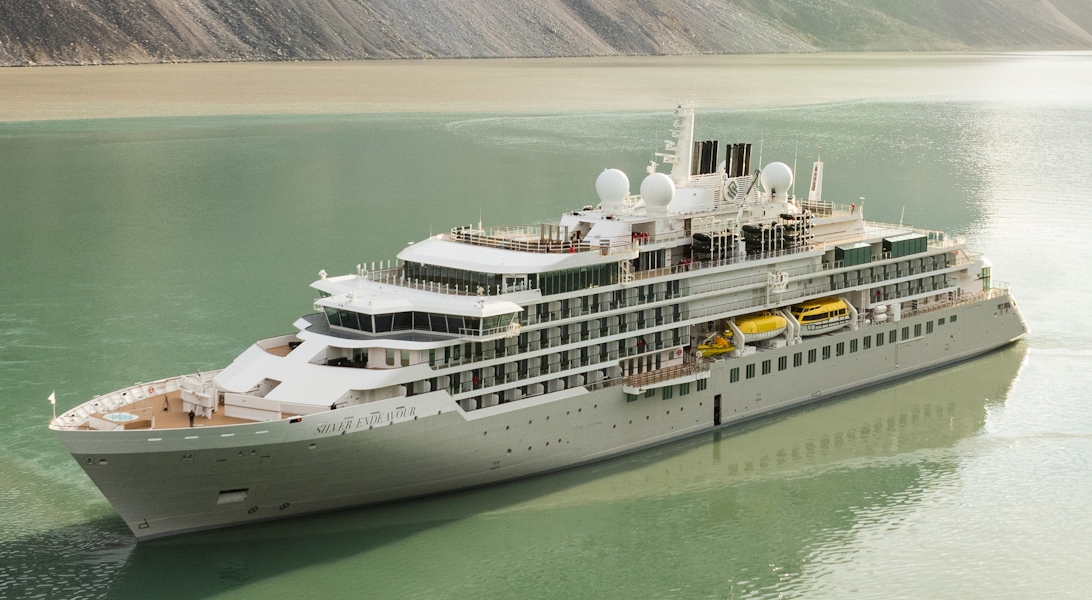
The images shown are for illustration purposes only and may not be an exact representation of what you find on the ship.
The images shown are for illustration purposes only and may not be an exact representation of what you find on the ship.
The images shown are for illustration purposes only and may not be an exact representation of what you find on the ship.
The images shown are for illustration purposes only and may not be an exact representation of what you find on the ship.
The images shown are for illustration purposes only and may not be an exact representation of what you find on the ship.

Our Fusion packages are all ABTA & ATOL protected ensuring that your booking is safe with us
| 14 nights aboard the Silver Endeavour | |||
| Butler Service in Every Suite | |||
| Gratuities Always Included | |||
| Beverages In-Suite and Throughout the Ship | |||
| Gourmet Dining | |||
| In Suite Dining & 24-Hour Room Service | |||
| Intimate small size ships | |||
| Free Wifi Throughout the Ship | |||
| Free Zodiac, Land and Sea Tours & Activities & Complimentary Expedition gear | |||
| Port Taxes and Fees | |||
 | ABTA and ATOL Protection* | ||
Date 17th Apr 2027 |
Nts 14 |
Suite £11,100pp |
Date 17th Apr 2027 |
Nts 14 |
Suite £11,100pp |
| Suite staterooms from | £11,100pp | ||
| CV | Classic Veranda Suite |  | |
| DX | Deluxe Veranda Suite | £11,850pp | |
| PV | Premium Veranda Suite | £13,100pp | |
| SV | Superior Veranda Suite | £11,100pp | |
| SL | Silver Suite | £19,900pp | |
| SS | Signature Suite | £24,900pp | |
| G1 | Grand Suite (1 Bedroom) | £26,400pp | |
| MS | Master Suite | £25,450pp | |
| O1 | Owner's Suite (1 Bedroom) | £27,150pp | |
Fusion Holidays when selling travel arrangements is a trading name of Co-op Travel Services Limited, registration 08903986. Fusion Cruises is an Accredited Body Member of Co-op Travel Services Limited ATOL 12904.
Book with Confidence. We are a Member of ABTA which means you have the benefit of ABTA’s assistance and Code of Conduct.
Some of the flights and flight-inclusive holidays on this website are financially protected by the ATOL scheme but ATOL protection does not apply to all holiday and travel services offered on this website. This website will provide you with information on the protection that applies in the case of each holiday and travel service offered before you make your booking. If you do not receive an ATOL Certificate then the booking will not be ATOL protected. If you do receive an ATOL Certificate but all parts of your trip are not listed on it, those parts will not be ATOL protected. Please see our booking conditions for information, or for more information about financial protection and the ATOL Certificate go to: www.caa.co.uk