This site uses cookies as defined in our Cookie Policy, by continuing to use this site you agree to their use.
Continue

| Arrive | Depart | ||||||
| 23rd23 | AugAug | 202727 | Reykjavík, Iceland, embark on the Silver Endeavour | 18:00 | |||
Sprawling Reykjavík, the nation's nerve center and government seat, is home to half the island's population. On a bay overlooked by proud Mt. Esja (pronounced eh-shyuh), with its ever-changing hues, Reykjavík presents a colorful sight, its concrete houses painted in light colors and topped by vibrant red, blue, and green roofs. In contrast to the almost treeless countryside, Reykjavík has many tall, native birches, rowans, and willows, as well as imported aspen, pines, and spruces.Reykjavík's name comes from the Icelandic words for smoke, reykur, and bay, vík. In AD 874, Norseman Ingólfur Arnarson saw Iceland rising out of the misty sea and came ashore at a bay eerily shrouded with plumes of steam from nearby hot springs. Today most of the houses in Reykjavík are heated by near-boiling water from the hot springs. Natural heating avoids air pollution; there's no smoke around. You may notice, however, that the hot water brings a slight sulfur smell to the bathroom.Prices are easily on a par with other major European cities. A practical option is to purchase a Reykjavík City Card at the Tourist Information Center or at the Reykjavík Youth Hostel. This card permits unlimited bus usage and admission to any of the city's seven pools, the Family Park and Zoo, and city museums. The cards are valid for one (ISK 3,300), two (ISK 4,400), or three days (ISK 4,900), and they pay for themselves after three or four uses a day. Even lacking the City Card, paying admission (ISK 500, or ISK 250 for seniors and people with disabilities) to one of the city art museums (Hafnarhús, Kjarvalsstaðir, or Ásmundarsafn) gets you free same-day admission to the other two. The capital of Iceland’s land of ice, fire and natural wonder, Reykjavik is a city like no other - blossoming among some of the world’s most vibrant and violent scenery. Home to two-thirds of Iceland’s population, Reykjavik is the island’s only real city, and a welcoming and walkable place - full of bicycles gliding along boulevards or battling the wind when it rears up. Fresh licks of paint brighten the streets, and an artistic and creative atmosphere embraces studios and galleries - as well as the kitchens where an exciting culinary scene is burgeoning. Plot your adventures in the city's hip bars and cosy cafes, or waste no time in venturing out to Iceland’s outdoor adventures. Reykjavik’s buildings stand together - below the whip of winter’s winds - together with the magnificent Hallgrímskirkja church, with its bell tower rising resolutely over the city. Iceland’s largest church's design echoes the lava flows that have shaped this remote land and boasts a clean and elegant interior. The Harpa Concert Hall’s sheer glass facade helps it to assimilate into the landscape, mirroring back the city and harbour. Its LED lights shimmer in honour of Iceland’s greatest illuminated performance – the northern lights. Walk in the crusts between continents, feel the spray from bursts of geysers and witness the enduring power of Iceland’s massive waterfalls. Whether you want to sizzle away in the earth-heated geothermal pools, or hike to your heart’s content, you can do it all from Reykjavik - the colourful capital of this astonishing outdoor country. | |||||||
| 24th24 | AugAug | 202727 | At Sea | ||||
| 25th25 | AugAug | 202727 | Prince Christian Sound, Greenland | 14:00 | 19:00 | ||
The transit through the Sound is one of this voyage’s highlights. Connecting the Labrador Sea with the Irminger Seat, Prince Christian Sound or “Prins Christian Sund” in Danish is named after Prince (later King) Christian VII (1749-1808). 100 km (60 miles ), long and at times just 500 m (1500 ft) wide, this majestic and spectacular fiord throws you back into a Viking era – flanked by soaring snow-topped mountains, rock-strewn cliffs and rolling hills, it is as if time has stood still and one easily forgets that this is the 21st century. As you marvel at the sheer size of the mountains that surround you, with the Arctic waters lapping deceptively at the hull, revel in the silence enveloping you. Icebergs float serenely by, carrying with them the ages of time. Be sure to wear warm clothing as this is one spectacle that you do not want to miss. The transit through the Sound is one of this voyage’s highlights. Connecting the Labrador Sea with the Irminger Seat, Prince Christian Sound or “Prins Christian Sund” in Danish is named after Prince (later King) Christian VII (1749-1808). 100 km (60 miles ), long and at times just 500 m (1500 ft) wide, this majestic and spectacular fiord throws you back into a Viking era – flanked by soaring snow-topped mountains, rock-strewn cliffs and rolling hills, it is as if time has stood still and one easily forgets that this is the 21st century. As you marvel at the sheer size of the mountains that surround you, with the Arctic waters lapping deceptively at the hull, revel in the silence enveloping you. Icebergs float serenely by, carrying with them the ages of time. Be sure to wear warm clothing as this is one spectacle that you do not want to miss. | |||||||
| 26th26 | AugAug | 202727 | Qaqortoq (Julianehaab), Greenland | 07:00 | 13:30 | ||
The largest town in southern Greenland, Qaqortoq has been inhabited since prehistoric times. Upon arrival in this charming southern Greenland enclave, it's easy to see why. Qaqortoq rises quite steeply over the fjord system around the city, offering breath-taking panoramic vistas of the surrounding mountains, deep, blue sea, Lake Tasersuag, icebergs in the bay, and pastoral backcountry. Although the earliest signs of ancient civilization in Qaqortoq date back 4,300 years, Qaqortoq is known to have been inhabited by Norse and Inuit settlers in the 10th and 12th centuries, and the present-day town was founded in 1774. In the years since, Qaqortoq has evolved into a seaport and trading hub for fish and shrimp processing, tanning, fur production, and ship maintenance and repair. The largest town in southern Greenland Qaqortoq has been inhabited since prehistoric times. Upon arrival in this charming southern Greenland enclave it's easy to see why. Qaqortoq rises quite steeply over the fjord system around the city offering breath-taking panoramic vistas of the surrounding mountains deep blue sea Lake Tasersuag icebergs in the bay and pastoral backcountry. Although the earliest signs of ancient civilization in Qaqortoq date back 4 300 years Qaqortoq is known to have been inhabited by Norse and Inuit settlers in the 10th and 12th centuries and the present-day town was founded in 1774. In the years since Qaqortoq has evolved into a seaport and trading hub for fish and shrimp processing tanning fur production and ship maintenance and repair. | |||||||
| 26th26 | AugAug | 202727 | Hvalsey, Greenland | 15:30 | 19:30 | ||
Northeast of Qaqortoq and at the end of a fjord, Hvalsey is one of the best examples of South Greenland’s many scattered ruins from the Norse period. Today the area is used for sheep-grazing, but until the 15th century the settlement at Hvalsey, and specifically Hvalsey’s church, played an important part. Christianity had spread its influence throughout Europe and eventually had reached remote Greenland, where it established itself in the country in 1000 AD. Hvalsey Church was built in the 14th century and is the best preserved of the churches in Greenland from that period. Apart from the church walls, historical ruins from the time of the Norse are just a few meters away. 18 kilometers northeast of Qaqortoq, Hvalsey is part of Qaqortukulooq, one of the five sites of the UNESCO World Heritage Arctic farming complex Kujataa. Between Eriksfjord to the north and Einarsfjord to the south, the Hvalseyfjord branches off from Einarsfjord. Although Hvalsey is better known for the well-preserved ruins of one of the sixteen churches in the Norse’s Eastern Settlement, the church was in a farmstead known as Thjodhild’s Stead. This farmstead at the northeastern end of the fjord included a large building with living quarters, a hall and livestock pens, as well as other livestock pens, a storage building and a warehouse –the ruins of which can still be seen. The Norse farming laid the foundation for the Inuit farming in later centuries, leading to the UNESCO World Heritage status in 2017. In the 14th century account “Descriptions of Greenland” the abundant fish, a reindeer farm on Reindeer Island and Hvalsey’s name “Whale Island” clearly indicate that the Norse had ample food sources at that time. The church was built in the Anglo-Norwegian style of the 13th century, but is known to have been built over an older graveyard. The farmstead is mentioned in the Icelandic “Book of Settlements” as property of the Kings of Norway, and the last documented event of the Norse in Greenland is a wedding which took place in the church in September 1408. After almost 600 years of abandonment, conservation work had to be done to prevent the seaward wall from collapsing. | |||||||
| 27th27 | AugAug | 202727 | Tasermiut Fjord, Klostertal, Greenland | 07:00 | 17:30 | ||
| 28th28 | AugAug | 202727 | Aappilattoq, Greenland | 07:00 | 12:30 | ||
Aappilattoq is a small settlement near the western end of Prins Christian Sund in southwestern Greenland. In the local Greenlandic language the name means, "sea anemone". This small village of 130 inhabitants, hidden behind a prominent rock, offers a good insight into the life of Greenlandic Inuit. A stroll through the village will reveal a small school and a church, along with the likely possibility of seeing a polar bear skin drying in the wind behind a local dwelling. People have lived off the land in the area around Aappilattoq since the 19th century. The tradition continues today as most people here hunt and fish to make a living. Aapilattoq is a small settlement near the western end of Prins Christian Sund in southwestern Greenland. In the local Greenlandic language the name means "sea anemone". This small village of 130 inhabitants hidden behind a prominent rock offers a good insight into the life of Greenlandic Inuit. A stroll through the village will reveal a small school and a church along with the likely possibility of seeing a polar bear skin drying in the wind behind a local dwelling. People have lived off the land in the area around Aapilattoq since the 19th century. The tradition continues today as most people here hunt and fish to make a living. | |||||||
| 29th29 | AugAug | 202727 | Skjoldungen, Greenland | 12:30 | 17:00 | ||
Located on Greenland’s relatively rarely visited rugged east coast, Skoldungen Fjord has enchanting scenery with towering mountains tipped with snow, ice-scraped valley sides and sculptured icebergs in shades of white and blue. At the top of the fjord one can easily see the retreating state of the Thrym Glacier. The U-shaped fjord offers spectacular scenery and as an extra perk, it is not uncommon to see whales in the fjord. Located on Greenland’s relatively rarely visited rugged east coast Skoldungen Fjord has enchanting scenery with towering mountains tipped with snow ice-scraped valley sides and sculptured icebergs in shades of white and blue. At the top of the fjord one can easily see the retreating state of the Thrym Glacier. The U-shaped fjord offers spectacular scenery and as an extra perk it is not uncommon to see whales in the fjord. | |||||||
| 30th30 | AugAug | 202727 | Tasiilaq, Greenland | 08:30 | 17:30 | ||
Discover the east coast of Greenland, where the alpine mountains merge closely with the sea, and the fjords are adorned with high snow-capped peaks and drifting icebergs. Follow in the wake of Captain Jean-Baptiste Charcot’s famous ship, the Pourquoi Pas?, which set off with its crew to discover Ammassalik. The name of this island is a reference to the capelin, a small silver coloured fish, whose presence announces to inhabitants the return of spring. This small island offers a spectacular and wild setting where the Inuit people chose to live. Set off to meet the inhabitants of this remote region, with deep-rooted traditions, and discover the Inuit culture. TASIILAQ: THE LARGEST TOWN IN EAST GREENLAND With just over 2,000 inhabitants, Tasiilaq is quite simply the most populous and largest town on the east coast of Greenland. Located on the island of Angmagssalik, it nestles in the heart of a protected bay at the foot of high mountains. Tasiilaq is the jewel in Northern Greenland’s crown. This picture-perfect haven is thought to be one of the most beautiful towns in the country and it’s easy to see why. Ice prevents boats from accessing the town in winter, but for three precious months in summer this remote paradise opens up and comes alive with a vivid cacophony of colour and nature. Deep green hued flower dotted meadows stretch across pristine valleys, icebergs float in the bluest Sermilik Fjord and snowcapped mountain peaks reach towards seemingly endless skies. Home to the nearby Mittivakkat Glacier, this is the edge of the world at its finest. Locals spend their time dog sledding, exploring ice caves and hiking up the glacier. Soak up the natural splendour of this region where Inuit traditions are still respected. It’s a must for nature lovers seeking the crispest, freshest mountain air. As an added perk it is not uncommon to spot whales frolicking in the fjord nearby. The town, known as Ammassalik until 1997, celebrated its 100th anniversary in 1994. It was founded in 1894 by the Dane Gustav Holm, who established a trading post there. He also brought a missionary to Ammassali, who settled there with his wife. Mrs Rüttel was the first European woman the Ammassalimiut met. | |||||||
| 31st31 | AugAug | 202727 | At Sea | ||||
| 1st01 | SepSep | 202727 | Ittoqqortoormiit (ex Scoresbysund), Greenland | ||||
Scoresbysund is the ultimate fjord system; likely the longest, largest and deepest of any in the world. The massive fjord is tucked into the eastern coast of Greenland and on the icy western edges of the Greenland Sea. Scoresbysund’s scale deserves several days to explore, especially while plying the waters between castle-sized icebergs as they gently drift under the persuasion of the Arctic waters in the mighty fjord. Scattered in the remote bays and smaller fjords are places to discover old Inuit settlements, slowly growing over with Arctic willow and dwarf birch. The lower slopes of many mountains are draped in the herbs and grasses favoured by muskox, Arctic fox, lemmings, Ptarmigan, Barnacle Geese, and Snowy Owls. Tundra walks give impressive views of landscape, flora and fauna. Not to be neglected, the waters of Scoresbysund warrant a vigilant eye for sightings of whales, seals, narwhals, beluga whales and walrus. Scoresbysund is the ultimate fjord system likely the longest largest and deepest of any in the world. The massive fjord is tucked into the eastern coast of Greenland and on the icy western edges of the Greenland Sea. Scoresbysund’s scale deserves several days to explore especially while plying the waters between castle-sized icebergs as they gently drift under the persuasion of the Arctic waters in the mighty fjord. Scattered in the remote bays and smaller fjords are places to discover old Inuit settlements slowly growing over with Arctic willow and dwarf birch. The lower slopes of many mountains are draped in the herbs and grasses favoured by muskox Arctic fox lemmings Ptarmigan Barnacle Geese and Snowy Owls. Tundra walks give impressive views of landscape flora and fauna. Not to be neglected the waters of Scoresbysund warrant a vigilant eye for sightings of whales seals narwhals beluga whales and walrus. | |||||||
| 2nd02 | SepSep | 202727 | Ittoqqortoormiit (ex Scoresbysund), Greenland | ||||
Scoresbysund is the ultimate fjord system; likely the longest, largest and deepest of any in the world. The massive fjord is tucked into the eastern coast of Greenland and on the icy western edges of the Greenland Sea. Scoresbysund’s scale deserves several days to explore, especially while plying the waters between castle-sized icebergs as they gently drift under the persuasion of the Arctic waters in the mighty fjord. Scattered in the remote bays and smaller fjords are places to discover old Inuit settlements, slowly growing over with Arctic willow and dwarf birch. The lower slopes of many mountains are draped in the herbs and grasses favoured by muskox, Arctic fox, lemmings, Ptarmigan, Barnacle Geese, and Snowy Owls. Tundra walks give impressive views of landscape, flora and fauna. Not to be neglected, the waters of Scoresbysund warrant a vigilant eye for sightings of whales, seals, narwhals, beluga whales and walrus. Scoresbysund is the ultimate fjord system likely the longest largest and deepest of any in the world. The massive fjord is tucked into the eastern coast of Greenland and on the icy western edges of the Greenland Sea. Scoresbysund’s scale deserves several days to explore especially while plying the waters between castle-sized icebergs as they gently drift under the persuasion of the Arctic waters in the mighty fjord. Scattered in the remote bays and smaller fjords are places to discover old Inuit settlements slowly growing over with Arctic willow and dwarf birch. The lower slopes of many mountains are draped in the herbs and grasses favoured by muskox Arctic fox lemmings Ptarmigan Barnacle Geese and Snowy Owls. Tundra walks give impressive views of landscape flora and fauna. Not to be neglected the waters of Scoresbysund warrant a vigilant eye for sightings of whales seals narwhals beluga whales and walrus. | |||||||
| 3rd03 | SepSep | 202727 | Ittoqqortoormiit (ex Scoresbysund), Greenland | ||||
Scoresbysund is the ultimate fjord system; likely the longest, largest and deepest of any in the world. The massive fjord is tucked into the eastern coast of Greenland and on the icy western edges of the Greenland Sea. Scoresbysund’s scale deserves several days to explore, especially while plying the waters between castle-sized icebergs as they gently drift under the persuasion of the Arctic waters in the mighty fjord. Scattered in the remote bays and smaller fjords are places to discover old Inuit settlements, slowly growing over with Arctic willow and dwarf birch. The lower slopes of many mountains are draped in the herbs and grasses favoured by muskox, Arctic fox, lemmings, Ptarmigan, Barnacle Geese, and Snowy Owls. Tundra walks give impressive views of landscape, flora and fauna. Not to be neglected, the waters of Scoresbysund warrant a vigilant eye for sightings of whales, seals, narwhals, beluga whales and walrus. Scoresbysund is the ultimate fjord system likely the longest largest and deepest of any in the world. The massive fjord is tucked into the eastern coast of Greenland and on the icy western edges of the Greenland Sea. Scoresbysund’s scale deserves several days to explore especially while plying the waters between castle-sized icebergs as they gently drift under the persuasion of the Arctic waters in the mighty fjord. Scattered in the remote bays and smaller fjords are places to discover old Inuit settlements slowly growing over with Arctic willow and dwarf birch. The lower slopes of many mountains are draped in the herbs and grasses favoured by muskox Arctic fox lemmings Ptarmigan Barnacle Geese and Snowy Owls. Tundra walks give impressive views of landscape flora and fauna. Not to be neglected the waters of Scoresbysund warrant a vigilant eye for sightings of whales seals narwhals beluga whales and walrus. | |||||||
| 4th04 | SepSep | 202727 | Ittoqqortoormiit (ex Scoresbysund), Greenland | 18:00 | |||
Scoresbysund is the ultimate fjord system; likely the longest, largest and deepest of any in the world. The massive fjord is tucked into the eastern coast of Greenland and on the icy western edges of the Greenland Sea. Scoresbysund’s scale deserves several days to explore, especially while plying the waters between castle-sized icebergs as they gently drift under the persuasion of the Arctic waters in the mighty fjord. Scattered in the remote bays and smaller fjords are places to discover old Inuit settlements, slowly growing over with Arctic willow and dwarf birch. The lower slopes of many mountains are draped in the herbs and grasses favoured by muskox, Arctic fox, lemmings, Ptarmigan, Barnacle Geese, and Snowy Owls. Tundra walks give impressive views of landscape, flora and fauna. Not to be neglected, the waters of Scoresbysund warrant a vigilant eye for sightings of whales, seals, narwhals, beluga whales and walrus. In the 1920s the sparsely settled coast of East Greenland had too many families living in Ammassalik (today’s Tasiilaq) for the hunting grounds available and in 1925 Scoresbysund was chosen to start a new settlement with some 70 Inuit from Ammassalik and four families from West Greenland. Less than 10 kilometers from the entrance to the Scoresbysund system, Ittoqqortoormiit (“Big House Dwellers”) lies on the southern tip of Liverpool Land, a low and rounded area compared to the steeper mountains further south or into the fjord system. Some 460 inhabitants call Ittoqqortoormiit, one of Greenland’s most isolated settlements, their home. Not counting the military and civilian researchers at Daneborg, Northeast Greenland, their closest neighbors actually live in Iceland. Although Greenland’s hottest hot springs are located some 8 kilometers south of Ittoqqortoormiit, the village is frozen in some nine months of the year and access to other parts of the country can only be done via the Nerlerit Inaat Airport at Constable Point some 38 km to the north with flights to Iceland and West Greenland. The former village’s shop serves as a small museum and features historic photographs and costumes and shows what a typical hunter’s home from the 1960s looked like. Today hunting narwhals, seals, polar bears and muskoxen is still an important part of the life, but tourism is gaining importance. | |||||||
| 5th05 | SepSep | 202727 | Isafjørdur, Iceland | 14:00 | 18:30 | ||
Two colossal terraces of sheer rock stand either side of this extraordinarily located town - which rides a jutting spit onto an immensity of black fjord water. Surprisingly, considering the remoteness of its location and its compact size, Isafjordur is a modern and lively place to visit, offering a great choice of cafes and delicious restaurants – which are well stocked to impress visitors. The town is a perfectly located base for adventures amongst Iceland's fantastic wilderness - with skiing, hiking and water-sports popular pursuits among visitors. Dwarfed by the gargantuan terraces of sloping mountains around it Isafjordur hangs on to a spit that rolls out into the scenic fjord waters of the Skutulsfjörður. The setting is colossal and otherworldly with plunging mountains and gouged fjords jutting inland but there's a lively feel in town with an abundance of cafes and restaurants dotted between pretty half-timber houses. Built on the waters of a deep natural harbour sea-faring and fishing is written into the DNA here. Delve into these central traditions at the Maritime Museum before getting a taste for Icelandic specialities like the divisive delicacy of fermented shark meat. Rich troll-inspired folklore and feisty festivals add even more colour and intrigue throughout the year – from mud football mayhem to cross country skiing exhibitions. A place to get active and involved hook fish from the frozen depths while ice fishing strap on skis in powder-coated mountains or crack golf balls along rolling courses while soaking in the gorgeous scenery. The wedding-veil falls of Tungudalur Valey Waterfall are close by splashing down the blackened rocks. Further afield Hornstrandir Nature Reserve's emerald marshes and wildflower sprinkled cliffs make for a refreshing shock of colour amid Iceland's moody brooding monochrome palette. Excellent birdlife is waiting offshore on Vigur Island where puffins and arctic terns chatter and traditional farming traditions are kept alive. | |||||||
| 6th06 | SepSep | 202727 | Dynjandi Waterfalls, Iceland | 07:00 | 12:30 | ||
Iceland is well-known for its spectacular waterfalls. The iconic Dynjandi waterfall, located in the Westfjords region, is regarded as one of Iceland’s most impressive and majestic waterfalls. At the top, the cascading water is roughly 100 feet wide and tumbles down about 330 feet into the fjord. Its name Dynjandi means, “the thundering one” and its vast size, enormous sound, and sheer force is overwhelming. It has also been nicknamed, ‘The Bridal Veil’ because of the way the water sprays and spreads over the rocks. Iceland is well-known for its spectacular waterfalls. The iconic Dynjandi waterfall, located in the Westfjords region, is regarded as one of Iceland’s most impressive and majestic waterfalls. At the top, the cascading water is roughly 100 feet wide and tumbles down about 330 feet into the fjord. Its name Dynjandi means, “the thundering one” and its vast size, enormous sound, and sheer force is overwhelming. It has also been nicknamed, ‘The Bridal Veil’ because of the way the water sprays and spreads over the rocks. | |||||||
| 7th07 | SepSep | 202727 | Reykjavík, Iceland, disembark the Silver Endeavour | ||||
Sprawling Reykjavík, the nation's nerve center and government seat, is home to half the island's population. On a bay overlooked by proud Mt. Esja (pronounced eh-shyuh), with its ever-changing hues, Reykjavík presents a colorful sight, its concrete houses painted in light colors and topped by vibrant red, blue, and green roofs. In contrast to the almost treeless countryside, Reykjavík has many tall, native birches, rowans, and willows, as well as imported aspen, pines, and spruces.Reykjavík's name comes from the Icelandic words for smoke, reykur, and bay, vík. In AD 874, Norseman Ingólfur Arnarson saw Iceland rising out of the misty sea and came ashore at a bay eerily shrouded with plumes of steam from nearby hot springs. Today most of the houses in Reykjavík are heated by near-boiling water from the hot springs. Natural heating avoids air pollution; there's no smoke around. You may notice, however, that the hot water brings a slight sulfur smell to the bathroom.Prices are easily on a par with other major European cities. A practical option is to purchase a Reykjavík City Card at the Tourist Information Center or at the Reykjavík Youth Hostel. This card permits unlimited bus usage and admission to any of the city's seven pools, the Family Park and Zoo, and city museums. The cards are valid for one (ISK 3,300), two (ISK 4,400), or three days (ISK 4,900), and they pay for themselves after three or four uses a day. Even lacking the City Card, paying admission (ISK 500, or ISK 250 for seniors and people with disabilities) to one of the city art museums (Hafnarhús, Kjarvalsstaðir, or Ásmundarsafn) gets you free same-day admission to the other two. The capital of Iceland’s land of ice, fire and natural wonder, Reykjavik is a city like no other - blossoming among some of the world’s most vibrant and violent scenery. Home to two-thirds of Iceland’s population, Reykjavik is the island’s only real city, and a welcoming and walkable place - full of bicycles gliding along boulevards or battling the wind when it rears up. Fresh licks of paint brighten the streets, and an artistic and creative atmosphere embraces studios and galleries - as well as the kitchens where an exciting culinary scene is burgeoning. Plot your adventures in the city's hip bars and cosy cafes, or waste no time in venturing out to Iceland’s outdoor adventures. Reykjavik’s buildings stand together - below the whip of winter’s winds - together with the magnificent Hallgrímskirkja church, with its bell tower rising resolutely over the city. Iceland’s largest church's design echoes the lava flows that have shaped this remote land and boasts a clean and elegant interior. The Harpa Concert Hall’s sheer glass facade helps it to assimilate into the landscape, mirroring back the city and harbour. Its LED lights shimmer in honour of Iceland’s greatest illuminated performance – the northern lights. Walk in the crusts between continents, feel the spray from bursts of geysers and witness the enduring power of Iceland’s massive waterfalls. Whether you want to sizzle away in the earth-heated geothermal pools, or hike to your heart’s content, you can do it all from Reykjavik - the colourful capital of this astonishing outdoor country. | |||||||
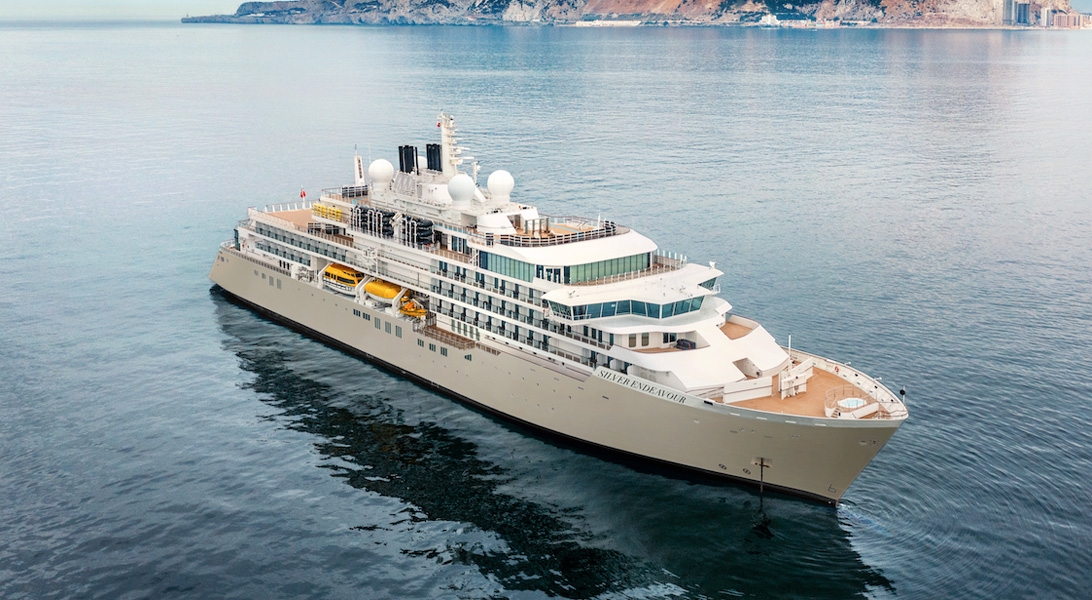
The images shown are for illustration purposes only and may not be an exact representation of what you find on the ship.
The images shown are for illustration purposes only and may not be an exact representation of what you find on the ship.
The images shown are for illustration purposes only and may not be an exact representation of what you find on the ship.
The images shown are for illustration purposes only and may not be an exact representation of what you find on the ship.
The images shown are for illustration purposes only and may not be an exact representation of what you find on the ship.


Our Fusion packages are all ABTA & ATOL protected ensuring that your booking is safe with us
| 15 nights aboard the Silver Endeavour | |||
| Butler Service in Every Suite | |||
| Gratuities Always Included | |||
| Beverages In-Suite and Throughout the Ship | |||
| Gourmet Dining | |||
| In Suite Dining & 24-Hour Room Service | |||
| Intimate small size ships | |||
| Free Wifi Throughout the Ship | |||
| Free Zodiac, Land and Sea Tours & Activities & Complimentary Expedition gear | |||
| Port Taxes and Fees | |||
 | ABTA and ATOL Protection* | ||
Date 23rd Aug 2027 |
Nts 15 |
Please Call for Availability |
Date 23rd Aug 2027 |
Nts 15 |
Please Call for Availability |
Fusion Holidays when selling travel arrangements is a trading name of Co-op Travel Services Limited, registration 08903986. Fusion Cruises is an Accredited Body Member of Co-op Travel Services Limited ATOL 12904.
Book with Confidence. We are a Member of ABTA which means you have the benefit of ABTA’s assistance and Code of Conduct.
Some of the flights and flight-inclusive holidays on this website are financially protected by the ATOL scheme but ATOL protection does not apply to all holiday and travel services offered on this website. This website will provide you with information on the protection that applies in the case of each holiday and travel service offered before you make your booking. If you do not receive an ATOL Certificate then the booking will not be ATOL protected. If you do receive an ATOL Certificate but all parts of your trip are not listed on it, those parts will not be ATOL protected. Please see our booking conditions for information, or for more information about financial protection and the ATOL Certificate go to: www.caa.co.uk