This site uses cookies as defined in our Cookie Policy, by continuing to use this site you agree to their use.
Continue

| Arrive | Depart | ||||||
| 26th26 | AprApr | 202828 | Lisbon, Portugal, embark on the Silver Endeavour | 18:00 | |||
Set on seven hills on the banks of the River Tagus, Lisbon has been the capital of Portugal since the 13th century. It is a city famous for its majestic architecture, old wooden trams, Moorish features and more than twenty centuries of history. Following disastrous earthquakes in the 18th century, Lisbon was rebuilt by the Marques de Pombal who created an elegant city with wide boulevards and a great riverfront and square, Praça do Comércio. Today there are distinct modern and ancient sections, combining great shopping with culture and sightseeing in the Old Town, built on the city's terraced hillsides. The distance between the ship and your tour vehicle may vary. This distance is not included in the excursion grades. A glorious mosaic of beauty, freedom and authenticity, Portugal’s capital is a stirring artwork of a city. Known for the seven hills it spreads across, and its stirring fado music, Lisbon is a pastel-coloured blend of houses and beautiful tile artworks - and this creative city strikes a perfect harmony between natural and manmade beauty. Stroll along Alfama's steep, cobbled streets as you explore one of the city’s oldest neighbourhoods - where each house and door could be its own photograph. Look for the decorative tiles, with the distinctive blues and whites of Azulejo ceramics, and visit the dedicated museum to learn more. Afterwards, wind up to São Jorge Castle, where views out across Lisbon’s red rooftops unravel. Just one of many majestic viewpoints, you can also seek out Miradouro da Graça for perhaps Lisbon's finest panorama, with the copper-coloured suspension bridge stretching over sparkling water beyond the sea of buildings. The elegant Tower of Belém rises in the Tagus estuary and is a historic defender of these shores. The grand, carved cloisters of Jerónimos Monastery spread out close by, and there's another UNESCO recognised location close by at Sintra, where a colourful town is set amid thick gardens and towering mountains - capped by the royal Pena Palace. Later, relax and take a quick break to drink Ginjinha, a cherry liqueur made from chocolate cups instead of coffee. Lisboetas have a sweet tooth, and the famous Pastel de Nata's crumbling pastry and caramelised-custard topping is the essential accompaniment to any coffee stop. | |||||||
| 27th27 | AprApr | 202828 | At Sea | ||||
| 28th28 | AprApr | 202828 | At Sea | ||||
| 29th29 | AprApr | 202828 | Tresco, England | 06:30 | 12:00 | ||
For many visitors Tresco is the most attractive of the Isles of Scilly. This is especially due to its Abbey Garden, which is home to thousands of exotic plant species from around 80 different countries. Plant collector Augustus Smith began the gardens in the 1830s on the site of an old Benedictine Abbey by channelling the weather up and over a network of walled enclosures built around the Priory ruins. He had three terraces carved from the rocky south slope and maximised Tresco’s mild Gulf Stream climate. Even in mid-winter there still are hundreds of plants flowering here. Another surprising attraction at the Abbey Garden is the collection of figureheads from ships that wrecked among the Isles of Scilly. For many visitors Tresco is the most attractive of the Isles of Scilly. This is especially due to its Abbey Garden which is home to thousands of exotic plant species from around 80 different countries. Plant collector Augustus Smith began the gardens in the 1830s on the site of an old Benedictine Abbey by channelling the weather up and over a network of walled enclosures built around the Priory ruins. He had three terraces carved from the rocky south slope and maximised Tresco’s mild Gulf Stream climate. Even in mid-winter there still are hundreds of plants flowering here. Another surprising attraction at the Abbey Garden is the collection of figureheads from ships that wrecked among the Isles of Scilly. | |||||||
| 29th29 | AprApr | 202828 | Saint Mary's, Isles of Scilly, England | 13:30 | 18:30 | ||
St Mary’s is the Isle of Scilly’s largest island with a population of 1800 residents and an area of 6.58 square Kilometres; this is the gateway to the rest of the magnificent islands. Hugh town -a beautiful Old town with its own beach, nature reserve and church is the main attractions of St Mary’s, with tiny streets brimming with shops to pick up the perfect souvenir. St Mary’s is a hidden gem, with long stretches of white sandy beaches and a breath-taking untouched landscape. The coastline holds many archaeological sites along with miles of splendid walks along the coastal and country paths. Scattered 30 miles offshore from England’s most south-westerly point – Land’s End – the Isles of Scilly are home to rich wildlife and green land sloping to powdery white beaches. The Isles of Scilly’s biggest island harbours around 1 600 people – roughly three-quarters of the total population - and is one of five occupied islands. Isolated and serene life here hums along at its own pace in this archipelago's bubble which enjoys the UK’s mildest climate and some of its most spectacular beaches. Hugh Town is the centre of St Mary’s and you’ll be warmly welcomed by the incredibly tight-knit local community. A peaceful place watch out when the waters are suddenly parted by the competition of gig racing – the island’s sporting pride and joy - which sees teams competing in colourful rowboats. Elsewhere catch sight of Atlantic seals and seabirds like puffins and fulmars along nine miles of coastline. You can also spot the ghostly shipwrecks strewn around the island’s waters and the 140 islands and skerries that have made treacherous sailing historically. There's a dense collection of historical sites that belies the islands’ small size – from a former prime minster’s grave to star-shaped fortresses. Tresco Abbey Garden is one of the UK’s most vibrant gardens with diverse plants bathing in the warmer climate and over 300 species on display. Taste the rewards of the mild weather with a glass of wine from England’s most south-westerly vineyard. | |||||||
| 30th30 | AprApr | 202828 | Port Saint Mary, Isle of Man | 13:45 | 19:00 | ||
| The Isle of Man sits in the middle, but a world apart, from the UK. It is in the Irish sea almost equidistant from Scotland, England and Northern Ireland. But it is not part of any of them. It is a self-governing British crown dependency. The island’s cultural heritage is Gaelic with influences from the Norse and surrounding lands. This background has produced an island with its own traditions. Everything associated with the Isle of Man is Manx. The people are Manx and the language is Manx. Port St Mary is a quiet former trading and fishing port at the southern end of the Isle which provides access to the rural countryside and nearby towns. One route leads past historic thatched cottages in the crofters hamlet of Gregneash, and on to The Sound. Walking routes cross the narrow Mull Peninsula through scenery and history to Port Erin, a quaint old coastal settlement and shoreline set amongst a rugged coastline. In tune with the yesteryear feel of the island, a steam train still operates on the island, taking visitors to destinations like the Castle Rushen, built in 1200 and once the home of a Norse king. Manx people are proud of their Manx cats, famous for having no or little tail, the result of a genetic mutation passed down the generations. Manx Loaghtan sheep are another animal that evolved on the Isle. These sheep have two (sometimes three) pairs of remarkable horns.And the island is not just an isle of men – the name ‘Isle of Man’ evolved from ‘Manannán’, the Celtic god of the sea. | |||||||
| 1st01 | MayMay | 202828 | Isle of Iona, Scotland | 07:30 | 13:00 | ||
With a population of 120 residents, Iona is Located off the Southwest of Mull. The island is 3 miles long and 1.5 miles wide but draws in thousands of visitors each year due to its natural beauty and historical interest. Saint Columba and his fellow monks landed here in 563. This beautiful stretch of coastline brings out the true beauty of Iona facing onto the Gulf Stream that gives the island its mild climate. Located to the south of the road lies Sìthean Mòr (Large fairy hill) and alternatively known as the Hill of Angels, this is said to have been the setting for many rituals and traditions dating far back in history. This wonderful highlight, Iona Abbey was founded by Saint Columba in 563 and is said to have survived many Viking attacks. Although little remains of the monastic buildings of this period, the magnificent Abbey is the main attraction. If tiny islands that resonate with peace and tranquillity are your idea of travel heaven, then welcome to Iona. Almost 200 miles east of Edinburgh, set in Scotland’s Inner Hebrides, this magical island has a spiritual reputation that precedes it. And luckily, more than lives up to. The island is miniscule. Just three miles long and only one and a half miles wide, this is not a place that hums with urban attractions. 120 people call Iona home (this number rises significantly if the gull, tern and Kittiwake population is added), although residential numbers do go up (to a whopping 175) in summer. The beautiful coastline is lapped by the gulf stream and gives the island a warm climate with sandy beaches that look more Mediterranean than Scottish! Add to that a green field landscape that is just beautiful, and you’ll find that Iona is a place that stays with you long after you leave. Iona’s main attraction is of course its abbey. Built in 563 by Saint Columbia and his monks, the abbey is the reason why Iona is called the cradle of Christianity. Not only is the abbey (today an ecumenical church) one of the best – if not the best – example of ecclesiastical architecture dating from the Middle Ages, but it also serves as an important site of spiritual pilgrimage. St. Martin’s Cross, a 9th century Celtic cross that stands outside the abbey, is considered as the finest example of Celtic crosses in the British Isles. Rèilig Odhrain, or the cemetery, allegedly contains the remains of many Scottish kings. | |||||||
| 1st01 | MayMay | 202828 | Isle of Lunga, Scotland | 15:15 | 20:00 | ||
The stunning Isle of Lunga is the largest island in the Treshnish archipelago. With volcanic origin the isle was populated until the 19th Century, and remains of black houses can be seen around this magnificent coastal jewel. Abundant plant life and exotic birdlife are now the main inhabitants of the area. Fortunate visitors view the magnificent array of birds, especially the great puffins that breed on the islands plateau. One can sit within just a few feet away without disturbing the avian ambassador’s peace. The 81 hectare island is home to many rare and endangered plants such as, primroses and orchids. Views over the landscape and across the ocean can be seen from the 300 foot high cliffs. The stunning Isle of Lunga is the largest island in the Treshnish archipelago. With volcanic origin the isle was populated until the 19th Century and remains of black houses can be seen around this magnificent coastal jewel. Abundant plant life and exotic birdlife are now the main inhabitants of the area. Fortunate visitors view the magnificent array of birds especially the great puffins that breed on the islands plateau. One can sit within just a few feet away without disturbing the avian ambassador’s peace. The 81 hectare island is home to many rare and endangered plants such as primroses and orchids. Views over the landscape and across the ocean can be seen from the 300 foot high cliffs. | |||||||
| 2nd02 | MayMay | 202828 | At Sea | 15:00 | 16:00 | ||
| As an isolated island of the remote St Kilda Group, Boreray island is one of the most far flung and weather impacted islands of the North East Atlantic. Imagine trying to live here during stormy weather. Landing requires jumping or swimming ashore; and yet the island has been lived on or visited from Neolithic times. Collecting seabirds and their eggs, and storing them for winter, may have been even more important than raising sheep. Boreray Sheep are the rarest breed of sheep in Britain. They evolved from short-tailed sheep brought from the Scottish mainland but have been isolated long enough to have evolved into a distinctive small and horned breed. Only found on Boreray Island, they remained as a wild flock when the last people left the St Kilda Islands in 1930. The Souy are a separate and different breed of sheep found on the other St Kilda Islands. Look out for the Boreray Sheep grazing on the slopes of hilly Boreray Island. Seabirds thrive on Boreray and its two attendant rocks stacks, raising new chicks each summer. Northern Gannets glide overhead as they attempt difficult landings at nest sites. Seeing gannets plunge from a great height into the sea is an exciting way to understand the effort required to feed themselves and chicks. Northern Fulmers nest on the volcanic rock cliffs and Atlantic Puffins fly in and out of burrow-strewn slopes. Boreray is part of the St Kilda World Heritage Site, a rare example of a site recognised for both its outstanding natural and cultural values. | |||||||
| 2nd02 | MayMay | 202828 | St. Kilda Archipelago, Scotland | 06:30 | 13:30 | ||
St Kilda is a remarkable uninhabited archipelago some 40 nautical miles beyond the Outer Hebrides. The stunning cliffs and sea stacks are home to the most important seabird breeding colony in northwest Europe. St Kilda is one of the few places in the world to have received dual World Heritage status from UNESCO in recognition of its Natural Heritage and cultural significance. Village Bay on the island of Hirta once supported a population of over 200, but the last islanders left in the 1930s. Recent restoration work on the village by the National Trust for Scotland offers a marvellous link with the past. One of the caretakers acts as shopkeeper and postmaster for any visitors who might like to send a postcard home from St. Kilda. Gloriously remote, St. Kilda is an archipelago 50 miles off the Isle of Harris. Although the four islands are uninhabited by humans, thousands of seas birds call these craggy cliffs home, clinging to the sheer faces as if by magic. Not only is St. Kilda home to the UK’s largest colony of Atlantic Puffin (almost 1 million), but also the world largest colony Gannets nests on Boreray island and its sea stacks. The islands also home decedents of the world’s original Soay sheep as well as having a breed of eponymously named mice. The extremely rare St. Kilda wren unsurprisingly hails from St. Kilda, so birders should visit with notebook, binoculars and camera to hand. While endemic animal species is rife on the island, St. Kilda has not been peopled since 1930 after the last inhabitants voted that human life was unsustainable. However, permanent habitation had been possible in the Medieval Ages, and a vast National Trust for Scotland project to restore the dwellings is currently being undertaken. The islands even enjoyed a status as being an ideal holiday destination in the 19th century. Today, the only humans living on the islands are passionate history, science and conservation scholars. One of the caretakers even acts as shopkeeper and postmaster for any visitors who might like to send a postcard home from St. Kilda. It should be noted that St. Kilda is the UKs only (and just one of 39 in the world) dual World Heritage status from UNESCO in recognition of its Natural Heritage and cultural significance. | |||||||
| 3rd03 | MayMay | 202828 | Shiant Isles, Scotland | 06:30 | 11:00 | ||
| Cliffs of tall hexagonal columns create a sensational landscape at the Shiant Islands, especially when viewed from the sea. The cliffs of six-sided rock columns look like the cross-section of an enormous honeycomb. The rock formations were formed when molten volcanic magma cooled very slowly underground. Millions of years of erosion has exposed the six-sided columns to the sea, and to us. The tallest of these formations is 120 metres (390 feet) high. During spring and summer, flights of seabirds near the Shiant Islands catch the eye. Many long-winged seabirds wheel and soar gracefully. Others are more shaped for underwater swimming and fly in direct lines, beating stubby wings to resemble flying potatoes. Some birds nest in burrows while others, like Black-legged Kittiwakes, nest on cliffs. Rather than build nests, guillemots lay eggs on bare rock ledges. The pointed shape of the eggs ensures they roll in a tight circle, not off the ledge to the sea below. The Shiant Islands are part of the Outer Hebrides and located between the Isles of Lewis and Skye. Historically, they have supported families of sheep grazers who could tolerate a lonely island outpost. The Shiants were known as the last place in Britain where the Black Rat occurred in substantial numbers. Originally introduced to Britain from Asia in Roman times these rodents caused problems, eating eggs and chicks of seabirds. A successful eradication program eliminated the rats in 2016, giving the seabird colonies well-earned peace. | |||||||
| 3rd03 | MayMay | 202828 | Loch Ewe, Scotland | 14:15 | 19:00 | ||
| Loch Ewe is the only north facing Loch in Scotland, with an interesting history and a fine scenic landscape this area has a true natural beauty. During WW2 the loch was a convoy collecting point with a strong naval presence; it was therefore protected by light and heavy aircraft guns, a boom net and mine defence system helped to shield this precious settlement. Loch Ewe is a natural deep water sea loch that links to the Atlantic Ocean with a relatively small mouth giving the loch a vast amount of protection from the weather. Nearby Inver ewe gardens thrive on the warm currents of the North Atlantic Drift to create an oasis of colour and fertility where exotic plants from many countries flourish on latitude more northerly than Moscow, giving an almost continual display of colour throughout the year. | |||||||
| 4th04 | MayMay | 202828 | Kirkwall, Orkney Islands, Scotland | 08:00 | 19:00 | ||
In bustling Kirkwall, the main town on Orkney, there's plenty to see in the narrow, winding streets extending from the harbor. The cathedral and some museums are highlights. Scattered just off the northern tip of Scotland Kirkwall is the capital of the Orkney Islands - a scenic archipelago of fascinating dual heritage. The Viking influence is deep while a prehistoric past and World War history adds to the endless stories that these dramatic islands have to tell. Sparse and beautiful let the sweeping seascapes of frothing waves and dance of the northern lights enchant you as you explore. Windswept beaches are inhabited by whooping swans while grassy cliffs hide puffins amid their wavy embrace. Sea caves and crumbling castles - and the dramatic meeting of the North Sea and the Atlantic Ocean add to the romantic beauty of these lands which may be physically close to the UK but feel an entire world away. The sandstone St. Magnus Cathedral is the centrepiece of Orkney's main town - a place of winding lanes and atmospheric walks - and Britain's northernmost cathedral is a masterpiece that took 300 years to complete. Started in 1137 the beautiful cathedral is adorned with mesmerising stain-glass windows and has been evocatively named as the Light of the North. Look down over the ruined Bishop’s and Earl’s Palaces nearby from the tip of the cathedral's tower. Or test out the islands' history-rich distilleries which produce smokey single malts - said to be the best in the world. You can also venture out to Europe's best-preserved Stone Age Village at the extraordinary World Heritage Site of Skara Brae which offers an unparalleled vision into prehistoric life. | |||||||
| 5th05 | MayMay | 202828 | Lerwick, Shetland Islands, Scotland | 07:00 | 13:30 | ||
Founded by Dutch fishermen in the 17th century, Lerwick today is a busy town and administrative center. Handsome stone buildings—known as lodberries—line the harbor; they provided loading bays for goods, some of them illegal. The town's twisting flagstone lanes and harbor once heaved with activity, and Lerwick is still an active port today. This is also where most visitors to Shetland dock, spilling out of cruise ships, allowing passengers to walk around the town. Adrift between the Scottish and Norwegian coasts the craggy Shetland Islands form the most northerly point of the British Isles. Sprawling across 100 islands connected by sandy bridges and crisscrossing ferries explore the highlights of this scenic archipelago outpost. Look out over dramatic coastline from atmospheric Iron Age towers. Sweeping windswept beaches and wisps of sand connect islands and rugged cliffs - stand back as the sounds of the waves smashing against the shore and calling gulls fills the air. The islands are also home to some of the most adorable four-legged creatures you’ll ever meet the diminutive and wavy-fringed Shetland Ponies who roam the hills and reach a maximum size of 42 inches. Don't be fooled though they are amongst the strongest and toughest of all breeds. Their existence here points to Viking history as local horses bred with ponies brought ashore by Norse settlers creating the lovable crossbreed that is an icon of these islands today. The towering Broch of Mousa is perhaps Europe’s best-preserved Iron Age building - and one of the Shetland's finest brochs - a series of round stone towers believed to have been constructed around 100 BC. Seals and birdlife ensure that the isolated islands are always well-populated with life - and you can embark on hikes to discover their coastal homes. Lerwick is the islands’ capital and there's a charming welcome on offer as you arrive before the waterfront of stone buildings which cascade down to the shore. | |||||||
| 5th05 | MayMay | 202828 | Isle of Noss, Scotland | 15:30 | 20:00 | ||
Exploring the sandstone cliff faces of the Isle of Noss will reveal ledges loaded with gannets, puffins, guillemots, shags, kittiwakes, Razorbills, fulmars and Great Skuas. The island was recognized as a National Nature Reserve in 1955, and has one of Europe’s largest and most diverse seabird colonies. Sheep have grazed the inland hillsides of Noss since the late 1800s and early 1900s when around twenty people lived on the island to manage the sheep farm. Along with the sheep, shaggy Shetland ponies graze the windblown slopes of Noss. Exploring the sandstone cliff faces of the Isle of Noss will reveal ledges loaded with gannets puffins guillemots shags kittiwakes Razorbills fulmars and Great Skuas. The island was recognized as a National Nature Reserve in 1955 and has one of Europe’s largest and most diverse seabird colonies. Sheep have grazed the inland hillsides of Noss since the late 1800s and early 1900s when around twenty people lived on the island to manage the sheep farm. Along with the sheep shaggy Shetland ponies graze the windblown slopes of Noss. | |||||||
| 6th06 | MayMay | 202828 | North Haven, Fair Isle, Scotland | 08:00 | 13:30 | ||
| Lying mid-way between Shetland and the Orkney islands, Fair Isle is a tiny jewel in the sea. Famous for birds, knitwear and historic shipwrecks, the island offers a warm and friendly welcome to visitors. With a population of only around 70 people this island is truly a beautiful setting and is one of Britain’s most successful communities. View the cloudy light turquoise water as it drifts out to sea beneath the breath-taking Sheep Rock, rising over 100 metres, which is almost an isle of its own. Fair Isles oceanic climate brings stormy but fairly mild winters, in summer, you can expect rapid changes in the weather, sparkling sunshine can be followed by a thick blanket of mist and fog, and this makes the isle a truly inspiring area. Over the centuries the island has changed hands many times and was named the island of peace by Norse settlers. The isle has been a useful landmark for shipping but in storms and fog it is highly dangerous creating over 100 known shipwrecks such as the Spanish armada flag ship “El Gran Grifon”. | |||||||
| 7th07 | MayMay | 202828 | Berwick-upon-Tweed, England | 07:00 | 14:00 | ||
| 7th07 | MayMay | 202828 | Farne Islands, England | 16:00 | 19:30 | ||
| 8th08 | MayMay | 202828 | Leith, Scotland, disembark the Silver Endeavour | ||||
| Rise to the heights of the craggy outcrop of Arthur's Seat, the greatest of the seven mountains surrounding Edinburgh, to survey one of the world's most magical cities from a truly privileged outlook. Few cities can genuinely claim to have it all, but Edinburgh may be one, with its immense artistry, gorgeous architecture and deep contribution to high culture. A cultural, creative and curious place it may be, but the locals are anything but superior, and many a friendly chat and ribbing takes place in the nooks of its flower-draped pubs. Open parks, and the majestic Royal Botanic Gardens - open since 1670 - offer more colour among the wash of pretty Georgian and brick buildings. With such architectural and artistic wealth, it's no surprise that Edinburgh continues to be a city of literature, where the written word is revered above all else. The looming memorial dedicated to Sir Walter Scott symbolises this and is one of the world's largest monuments dedicated to a writer. The Writers' Museum is dedicated to the craft of other Scottish wordsmiths, such as Sir Robert Burns and Robert Louis Stevenson. The old town is a quaint and enchanting place, and Edinburgh's storied literary heritage continues to grow, with J.K. Rowling formulating Harry Potter's magical world in the cute cafes here. Wander the bustling, gas-lamp-lit cobbled streets, and sink into a fairy-tale world of your own, before ascending to Edinburgh Castle – which rises majestically above the city on its volcanic plug perch. | |||||||
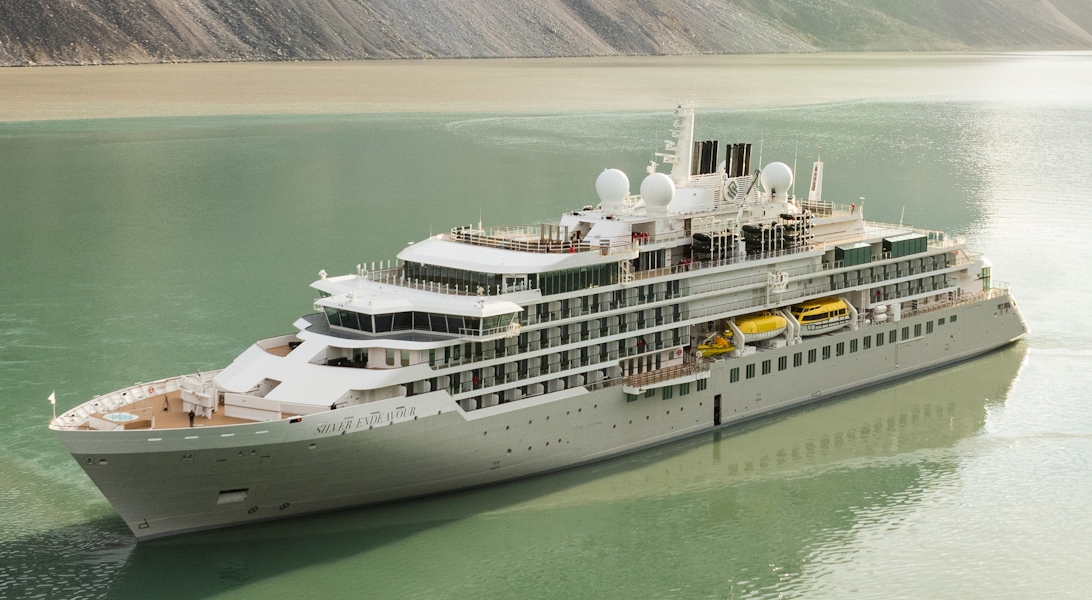
The images shown are for illustration purposes only and may not be an exact representation of what you find on the ship.
The images shown are for illustration purposes only and may not be an exact representation of what you find on the ship.
The images shown are for illustration purposes only and may not be an exact representation of what you find on the ship.
The images shown are for illustration purposes only and may not be an exact representation of what you find on the ship.
The images shown are for illustration purposes only and may not be an exact representation of what you find on the ship.

Our Fusion packages are all ABTA & ATOL protected ensuring that your booking is safe with us
| 12 nights aboard the Silver Endeavour | |||
| Butler Service in Every Suite | |||
| Gratuities Always Included | |||
| Beverages In-Suite and Throughout the Ship | |||
| Gourmet Dining | |||
| In Suite Dining & 24-Hour Room Service | |||
| Intimate small size ships | |||
| Free Wifi Throughout the Ship | |||
| Free Zodiac, Land and Sea Tours & Activities & Complimentary Expedition gear | |||
| Port Taxes and Fees | |||
 | ABTA and ATOL Protection* | ||
Date 26th Apr 2028 |
Nts 12 |
Suite £9,950pp |
Date 26th Apr 2028 |
Nts 12 |
Suite £9,950pp |
| Suite staterooms from | £9,950pp | ||
| CV | Classic Veranda Suite | £9,950pp | |
| DX | Deluxe Veranda Suite | £11,500pp | |
| PV | Premium Veranda Suite | £11,800pp | |
| SV | Superior Veranda Suite | £10,700pp | |
| SL | Silver Suite | £14,100pp | |
| SS | Signature Suite | £17,750pp | |
| G1 | Grand Suite (1 Bedroom) |  | |
| MS | Master Suite | £19,850pp | |
| O1 | Owner's Suite (1 Bedroom) | £23,450pp | |
Fusion Holidays when selling travel arrangements is a trading name of Co-op Travel Services Limited, registration 08903986. Fusion Cruises is an Accredited Body Member of Co-op Travel Services Limited ATOL 12904.
Book with Confidence. We are a Member of ABTA which means you have the benefit of ABTA’s assistance and Code of Conduct.
Some of the flights and flight-inclusive holidays on this website are financially protected by the ATOL scheme but ATOL protection does not apply to all holiday and travel services offered on this website. This website will provide you with information on the protection that applies in the case of each holiday and travel service offered before you make your booking. If you do not receive an ATOL Certificate then the booking will not be ATOL protected. If you do receive an ATOL Certificate but all parts of your trip are not listed on it, those parts will not be ATOL protected. Please see our booking conditions for information, or for more information about financial protection and the ATOL Certificate go to: www.caa.co.uk