This site uses cookies as defined in our Cookie Policy, by continuing to use this site you agree to their use.
Continue

| Arrive | Depart | ||||||
| 30th30 | AugAug | 202828 | Reykjavík, Iceland, embark on the Silver Endeavour | 18:00 | |||
Sprawling Reykjavík, the nation's nerve center and government seat, is home to half the island's population. On a bay overlooked by proud Mt. Esja (pronounced eh-shyuh), with its ever-changing hues, Reykjavík presents a colorful sight, its concrete houses painted in light colors and topped by vibrant red, blue, and green roofs. In contrast to the almost treeless countryside, Reykjavík has many tall, native birches, rowans, and willows, as well as imported aspen, pines, and spruces.Reykjavík's name comes from the Icelandic words for smoke, reykur, and bay, vík. In AD 874, Norseman Ingólfur Arnarson saw Iceland rising out of the misty sea and came ashore at a bay eerily shrouded with plumes of steam from nearby hot springs. Today most of the houses in Reykjavík are heated by near-boiling water from the hot springs. Natural heating avoids air pollution; there's no smoke around. You may notice, however, that the hot water brings a slight sulfur smell to the bathroom.Prices are easily on a par with other major European cities. A practical option is to purchase a Reykjavík City Card at the Tourist Information Center or at the Reykjavík Youth Hostel. This card permits unlimited bus usage and admission to any of the city's seven pools, the Family Park and Zoo, and city museums. The cards are valid for one (ISK 3,300), two (ISK 4,400), or three days (ISK 4,900), and they pay for themselves after three or four uses a day. Even lacking the City Card, paying admission (ISK 500, or ISK 250 for seniors and people with disabilities) to one of the city art museums (Hafnarhús, Kjarvalsstaðir, or Ásmundarsafn) gets you free same-day admission to the other two. The capital of Iceland’s land of ice, fire and natural wonder, Reykjavik is a city like no other - blossoming among some of the world’s most vibrant and violent scenery. Home to two-thirds of Iceland’s population, Reykjavik is the island’s only real city, and a welcoming and walkable place - full of bicycles gliding along boulevards or battling the wind when it rears up. Fresh licks of paint brighten the streets, and an artistic and creative atmosphere embraces studios and galleries - as well as the kitchens where an exciting culinary scene is burgeoning. Plot your adventures in the city's hip bars and cosy cafes, or waste no time in venturing out to Iceland’s outdoor adventures. Reykjavik’s buildings stand together - below the whip of winter’s winds - together with the magnificent Hallgrímskirkja church, with its bell tower rising resolutely over the city. Iceland’s largest church's design echoes the lava flows that have shaped this remote land and boasts a clean and elegant interior. The Harpa Concert Hall’s sheer glass facade helps it to assimilate into the landscape, mirroring back the city and harbour. Its LED lights shimmer in honour of Iceland’s greatest illuminated performance – the northern lights. Walk in the crusts between continents, feel the spray from bursts of geysers and witness the enduring power of Iceland’s massive waterfalls. Whether you want to sizzle away in the earth-heated geothermal pools, or hike to your heart’s content, you can do it all from Reykjavik - the colourful capital of this astonishing outdoor country. | |||||||
| 31st31 | AugAug | 202828 | At Sea | ||||
| 1st01 | SepSep | 202828 | Prince Christian Sound, Greenland | 15:30 | 19:30 | ||
The transit through the Sound is one of this voyage’s highlights. Connecting the Labrador Sea with the Irminger Seat, Prince Christian Sound or “Prins Christian Sund” in Danish is named after Prince (later King) Christian VII (1749-1808). 100 km (60 miles ), long and at times just 500 m (1500 ft) wide, this majestic and spectacular fiord throws you back into a Viking era – flanked by soaring snow-topped mountains, rock-strewn cliffs and rolling hills, it is as if time has stood still and one easily forgets that this is the 21st century. As you marvel at the sheer size of the mountains that surround you, with the Arctic waters lapping deceptively at the hull, revel in the silence enveloping you. Icebergs float serenely by, carrying with them the ages of time. Be sure to wear warm clothing as this is one spectacle that you do not want to miss. The transit through the Sound is one of this voyage’s highlights. Connecting the Labrador Sea with the Irminger Seat, Prince Christian Sound or “Prins Christian Sund” in Danish is named after Prince (later King) Christian VII (1749-1808). 100 km (60 miles ), long and at times just 500 m (1500 ft) wide, this majestic and spectacular fiord throws you back into a Viking era – flanked by soaring snow-topped mountains, rock-strewn cliffs and rolling hills, it is as if time has stood still and one easily forgets that this is the 21st century. As you marvel at the sheer size of the mountains that surround you, with the Arctic waters lapping deceptively at the hull, revel in the silence enveloping you. Icebergs float serenely by, carrying with them the ages of time. Be sure to wear warm clothing as this is one spectacle that you do not want to miss. | |||||||
| 2nd02 | SepSep | 202828 | At Sea | ||||
| 3rd03 | SepSep | 202828 | Torngat Mountains National Park, Newfoundland and Labrador, Canada | ||||
The Torngat Mountains National Park is situated on the eastern side of Labrador’s northernmost point and features mountains sometimes described as the “Eastern Rocky Mountains”. The park covers an area of 9,700 km2 (over 6,000 mi2) and is dotted with remnants of several cirque glaciers. Saglek Fjord has an outstanding array of geological features and the steep cliffs provide some of the best exposures to the earth’s geologic history. The name of the national park goes back to Torngarsoak, who was believed to control the life of sea animals and took the form of a huge polar bear. Polar bears hunt seals on the ice here in the winter months, and herds of Torngat Mountain and George River caribou migrate to and from their calving grounds in the warmer months. Inuit use the area to hunt, fish and travel throughout the year and many still have a strong spiritual connection to this “Place of Spirits”. Lying in the heart of the Amazon, hundreds of miles upriver from the Atlantic, Manaus is a busy port city surrounded by the richest rainforest habitat on Earth. Placed strategically at the confluence of two rivers, the town was founded as a fortress by the Portuguese Navy, but quickly became a trade hub for the surrounding area. By the late 19th Century, Manaus was the centre of Brazil's booming rubber industry, and grew rapidly into one of the largest cities in Brazil. During this period, many of Manaus' grandest buildings were constructed by the city's 'Rubber Barons', including the Public Market, and the Amazon Theatre, a vast decadent opera house. Today, Manaus is a cultural melting pot, with a diverse population. A complex system of free trade rules has turned Manaus into one of the wealthiest cities in the Brazil, with heavy industry developing alongside traditional livelihoods such as river fishing, and gathering the bounty of fruit, nuts and medicinal plants which the rainforest bestows. However, it is the surroundings which give Manaus its unique character. The famous Meeting of Waters, where tannin-rich water from the Rio Negro combines with milky water from the Rio Solimões to form the Amazon, can be seen just outside town, and the jungle beckons visitors to explore and discover. Excluding Manaus, the state of Amazonas is extremely sparsely populated, and in the largest rainforest on Earth, it is easy to forget the hustle and bustle of the city and simply enjoy the wonders of nature. | |||||||
| 4th04 | SepSep | 202828 | Torngat Mountains National Park, Newfoundland and Labrador, Canada | ||||
The Torngat Mountains National Park is situated on the eastern side of Labrador’s northernmost point and features mountains sometimes described as the “Eastern Rocky Mountains”. The park covers an area of 9,700 km2 (over 6,000 mi2) and is dotted with remnants of several cirque glaciers. Saglek Fjord has an outstanding array of geological features and the steep cliffs provide some of the best exposures to the earth’s geologic history. The name of the national park goes back to Torngarsoak, who was believed to control the life of sea animals and took the form of a huge polar bear. Polar bears hunt seals on the ice here in the winter months, and herds of Torngat Mountain and George River caribou migrate to and from their calving grounds in the warmer months. Inuit use the area to hunt, fish and travel throughout the year and many still have a strong spiritual connection to this “Place of Spirits”. Lying in the heart of the Amazon, hundreds of miles upriver from the Atlantic, Manaus is a busy port city surrounded by the richest rainforest habitat on Earth. Placed strategically at the confluence of two rivers, the town was founded as a fortress by the Portuguese Navy, but quickly became a trade hub for the surrounding area. By the late 19th Century, Manaus was the centre of Brazil's booming rubber industry, and grew rapidly into one of the largest cities in Brazil. During this period, many of Manaus' grandest buildings were constructed by the city's 'Rubber Barons', including the Public Market, and the Amazon Theatre, a vast decadent opera house. Today, Manaus is a cultural melting pot, with a diverse population. A complex system of free trade rules has turned Manaus into one of the wealthiest cities in the Brazil, with heavy industry developing alongside traditional livelihoods such as river fishing, and gathering the bounty of fruit, nuts and medicinal plants which the rainforest bestows. However, it is the surroundings which give Manaus its unique character. The famous Meeting of Waters, where tannin-rich water from the Rio Negro combines with milky water from the Rio Solimões to form the Amazon, can be seen just outside town, and the jungle beckons visitors to explore and discover. Excluding Manaus, the state of Amazonas is extremely sparsely populated, and in the largest rainforest on Earth, it is easy to forget the hustle and bustle of the city and simply enjoy the wonders of nature. | |||||||
| 5th05 | SepSep | 202828 | Torngat Mountains National Park, Newfoundland and Labrador, Canada | 19:30 | |||
The Torngat Mountains National Park is situated on the eastern side of Labrador’s northernmost point and features mountains sometimes described as the “Eastern Rocky Mountains”. The park covers an area of 9,700 km2 (over 6,000 mi2) and is dotted with remnants of several cirque glaciers. Saglek Fjord has an outstanding array of geological features and the steep cliffs provide some of the best exposures to the earth’s geologic history. The name of the national park goes back to Torngarsoak, who was believed to control the life of sea animals and took the form of a huge polar bear. Polar bears hunt seals on the ice here in the winter months, and herds of Torngat Mountain and George River caribou migrate to and from their calving grounds in the warmer months. Inuit use the area to hunt, fish and travel throughout the year and many still have a strong spiritual connection to this “Place of Spirits”. Lying in the heart of the Amazon, hundreds of miles upriver from the Atlantic, Manaus is a busy port city surrounded by the richest rainforest habitat on Earth. Placed strategically at the confluence of two rivers, the town was founded as a fortress by the Portuguese Navy, but quickly became a trade hub for the surrounding area. By the late 19th Century, Manaus was the centre of Brazil's booming rubber industry, and grew rapidly into one of the largest cities in Brazil. During this period, many of Manaus' grandest buildings were constructed by the city's 'Rubber Barons', including the Public Market, and the Amazon Theatre, a vast decadent opera house. Today, Manaus is a cultural melting pot, with a diverse population. A complex system of free trade rules has turned Manaus into one of the wealthiest cities in the Brazil, with heavy industry developing alongside traditional livelihoods such as river fishing, and gathering the bounty of fruit, nuts and medicinal plants which the rainforest bestows. However, it is the surroundings which give Manaus its unique character. The famous Meeting of Waters, where tannin-rich water from the Rio Negro combines with milky water from the Rio Solimões to form the Amazon, can be seen just outside town, and the jungle beckons visitors to explore and discover. Excluding Manaus, the state of Amazonas is extremely sparsely populated, and in the largest rainforest on Earth, it is easy to forget the hustle and bustle of the city and simply enjoy the wonders of nature. | |||||||
| 6th06 | SepSep | 202828 | Hebron, Newfoundland and Labrador, Canada | 06:30 | 18:00 | ||
| 7th07 | SepSep | 202828 | At Sea | ||||
| 8th08 | SepSep | 202828 | Indian Harbour, Newfoundland and Labrador, Canada | 06:30 | 19:00 | ||
| 9th09 | SepSep | 202828 | Red Bay, Newfoundland and Labrador, Canada | 12:30 | 17:30 | ||
| Red Bay gets its name from the red granite cliffs of Labrador’s south coast. Red Bay is a fishing village and home to an important Basque whaling station dating back to the mid-16th to early 18th century. Considered home of the first large-scale whale oil production in the world, Red Bay was declared a UNESCO World Heritage Site in 2013. It is also an important underwater archaeological site with the discovery of three Basque whaling galleons, four small chalupas (sloops) used in the capture of whales, and a small boat once used to harpoon whales. | |||||||
| 10th10 | SepSep | 202828 | Harrington Harbour, Quebec, Canada | 09:30 | 17:30 | ||
| 11th11 | SepSep | 202828 | Anticosti, Canada | 08:30 | 17:30 | ||
| 12th12 | SepSep | 202828 | Anticosti, Canada | 17:30 | |||
| 13th13 | SepSep | 202828 | Havre-Saint-Pierre, Québec, Canada | 07:00 | 14:00 | ||
Havre St. Pierre is a tiny seaside port on the north shore of the Saint Lawrence River in Quebec. It was settled in 1857 by Acadians from the Magdalen Island, and still today locals speak a dialect more similar to Acadian French than to Quebec French. It was originally called Saint-Pierre-de-la-Pointe-aux-Esquimaux until 1927, when it was officially shortened to Havre St Pierre. Until recently the local economy relied mainly on fishing and lumbering, today it is mainly a titanium ore-transhipment port. Nearby is one of the world’s most amazing natural phenomena – the Mingan Archipelago. They are the largest group of erosional monoliths in Canada, and were declared a Nation Park in 1984. These limestone monoliths have formed over thousands of years by wave action, strong winds and seasonal freezing and thawing. The result is a unique set of large limestone sculptures. The otherworldly limestone structures of the Mingan Archipelago await at Havre St. Pierre Quebec's most northerly call. Perched on the northern shore of the mighty St Lawrence River's gaping jaws - and looking out across the vast stretch of water to the distant Anticosti Island - where white-tailed deer stalk dense forests - Havre St. Pierre is a feast of staggering scenery and diverse wildlife. The Mingan Archipelago's monolith treasures have been carefully painstakingly sculpted by Mother Nature's hand - using ocean wind and ice erosion to create towering rock outcrops which stand improbably counterweighted and precariously balanced over the waters. Sail between the scattered array of islands and formations and keep your eyes peeled - you may be joined by pods of friendly minke whales as you weave between skerries and rocky isles. Look out for eagles soaring overhead too and the colourful puffins which nest on the sheer cliffs. Back at Havre St. Pierre stroll isolated river beaches and wander the wooden boardwalk to soak in panoramas of the world's largest estuary - which lures the world's mightiest animal the blue whale to feast in its krill-rich depths. A walk out to the quaint lighthouse which crowns the shore is a pleasant way to spend an afternoon or you can take some time to learn a little more about the culture and traditions of the region's Inuit people. | |||||||
| 14th14 | SepSep | 202828 | Baie Comeau, Québec, Canada | 13:00 | 18:00 | ||
| Located in the Côte-Nord region of the province of Quebec, Canada, the city of Baie-Comeau is nestled on the shores of the Saint Lawrence River near the mouth of the Manicouagan River, and is the seat of Manicouagan Regional County Municipality. The city is comprised of two urban centres, Baie-Comeau proper and Hauterive. The landscape of the Baie-Comeau region has been shaped by glacial retreats and other natural phenomena. Important geological features include the Manicouagan and St. Lawrence rivers in the Manicouagan-Uapishka World Biosphere Reserve, and the immense Manicouagan crater, which was formed by a meteorite. The oldest part of Baie-Comeau is the Old Post, or Vieux-Poste, an area near the mouth of the Amédée River. In 1889, the Saint-Eugène-de-Manicouagan Mission was founded by Eudists, and the first sawmill in the Côte-Nord region was built in 1898. In 1916, Route 138 was extended to Saint-Eugène-de-Manicouagan and in 1929, its post office opened with the English name of Comeau Bay. Eastern Baie-Comeau was founded in 1936 with the construction of a paper mill. The region's burgeoning timber, pulp and paper industries prompted remarkable growth, and the town of Baie-Comeau was incorporated the following year. In 1950, the village of Saint-Eugène-de-Manicouagan was incorporated as the Municipality of Hauterive. In 1982, Hauterive was merged into Baie-Comeau. As a result of its deep-water seaport and access to forestry, energy and mining in northeast Canada, Baie-Comeau combines sustainable industrial development with a thriving natural ecosystem. In fact, few others cities around the world possess a major industrial complex at the heart of a global reserve like the World Reserve Biosphere of Manicouagan-Uapishka. The Baie-Comeau region also boasts engineering masterpieces in the realm of hydroelectricity, including the Jean-Lesage Generating Station, Manic 2Central Dam, Manic 5 Generating Station and Daniel Johnson Dam. The development of the Baie-Comeau region was bolstered by the industrialization of modern Québec by means of its natural resources. The presence of the Saint Lawrence River, forestry, the creation of saw and paper mills, and the emergence of a world-class aluminum smelter all led to the expansion of the territory. Baie-Comeau and its environs are ideally-suited for a variety of popular inland and coastal excursions. Its proximity to the confluence of the Manicouagan and St. Lawrence rivers in the Manicouagan-Uapishka World Biosphere Reserve offers easy access to a vast natural paradise replete with exceptional geological phenomena, incredibly rich wildlife and forest habitats. Explore the exquisite coast and crystal-clear waters teeming with marine mammals and undersea treasures whilst boating, kayaking, scuba diving, fishing, and hunting. In the summer, an abundance of activities include golf, cycling and hiking trails, beaches, parks, flight-seeing, and more. Winter is no less exciting; the region's abundant snowfall is ideal for downhill skiing at the Centre de ski du Mont-Tibasse, and cross-country skiing and ski-skating at Sentier Norfond and Les Sentiers de la Rivière Amédée. Due to its compact size, Baie-Comeau can be easily explored in just a single day. | |||||||
| 15th15 | SepSep | 202828 | At Sea | 12:30 | 16:30 | ||
| As Mother Nature combines all her efforts into producing a spectacle that could only exist in nature, enjoy the palate of autumnal colours against a late summer sky. Quiet and unspoilt, the Saguenay River (some might say fjord) was formed during the last Ice Age, and is the most southerly such terrain in the northern hemisphere. As the river gushes out into the massive St. Lawrence, its slightly warmer water mixes with the saltier, more frigid water of the mother river, creating massive volumes of krill, the basic food for whales. Hence whale sighting is reported to be excellent, so be on the lookout with your cameras, binoculars and notebooks at the ready. Forested hillsides, blazing with autumnal foliage, pastoral scenes with cattle and sheep grazing in grassy meadows below towering mountains and steep cliffs with sheer rock faces all contribute to the gorgeous scenery of a region of unsurpassed natural beauty. | |||||||
| 16th16 | SepSep | 202828 | Quebec City, Québec, Canada | 09:30 | 17:00 | ||
Québec City's alluring setting atop Cape Diamond (Cap Diamant) evokes a past of high adventure, military history, and exploration. This French-speaking capital city is the only walled city north of Mexico. Visitors come for the delicious and inventive cuisine, the remarkable historical continuity, and to share in the seasonal exuberance of the largest Francophone population outside France.The historic heart of this community is the Old City (Vieux-Québec), comprising the part of Upper Town (Haute-Ville) surrounded by walls and Lower Town (Basse-Ville), which spreads out at the base of the hill from Place Royale. Many sets of staircases and the popular funicular link the top of the hill with the bottom. Cobblestone streets, horse-drawn carriages, and elaborate cathedrals here are charming in all seasons. The Old City earned recognition as an official UNESCO World Heritage site in 1985, thanks largely to city planners who managed to update and preserve the 400-year-old buildings and attractions without destroying what made them worth preserving. The most familiar icon of the city, Fairmont Château Frontenac, is set on the highest point in Upper Town, where it holds court over the entire city.Sitting proudly above the confluence of the St. Lawrence and St. Charles rivers, the city's famous military fortification, La Citadelle, built in the early 19th century, remains the largest of its kind in North America. In summer, visitors should try to catch the Changing of the Guard, held every morning at 10 am; you can get much closer to the guards here than at Buckingham Palace in London.Enchanting as it is, the Old City is just a small part of the true Québec City experience. Think outside the walls and explore St-Roch, a downtown hot spot, which has artsy galleries, foodie haunts, and a bustling square. Cruise the Grande-Allée and avenue Cartier to find a livelier part of town dotted with nightclubs and fun eateries. Or while away the hours in St-Jean-Baptiste, a neighborhood with trendy shops and hipster hangouts. Established by the French settler Samuel de Champlain before the British landed on these shores Quebec City - initially known as New France - is one of North America's oldest cities. Towering over the banks of the Saint-Lawrence River Quebec City relishes in details and eccentricities and has reams of rich history and beautiful architecture - like the famous Château Frontenac. This chandelier-clad castle watches over the city and is said to be the world’s most photographed hotel. The wooden boardwalk of the canon-lined Dufferin Terrace offers stunning views of the city from its elevated standpoint. The French storybook feel has been delightfully protected and preserved in Quebec City's storied old quarter and a funicular links the upper and lower towns of this historic core. The 400-year-old fortified city is unique to North America and a celebrated UNESCO World Heritage Site. Mind your step as you wander through uneven cobbled streets to Place Royale - the charming spot where the city was founded - and between the bistros boulevards and boutiques of the dainty Quartier Petit Champlain area. There’s a wide variety of delicious international food to try and of course – greasy helpings of poutine. Taste local cheeses at the Marché du Vieux-Port indoor market where you’ll sink your teeth into buttery cakes pastries and encounter Canada’s fabled tree sap maple syrup - revered like wine in these parts. | |||||||
| 17th17 | SepSep | 202828 | Montréal, Québec, Canada, disembark the Silver Endeavour | ||||
Canada's most diverse metropolis, Montréal, is an island city that favors style and elegance over order or even prosperity, a city where past and present intrude on each other daily. In some ways it resembles Vienna—well past its peak of power and glory, perhaps, yet still vibrant and grand.But don't get the wrong idea. Montréal has always had a bit of an edge. During Prohibition, thirsty Americans headed north to the city on the St. Lawrence for booze, music, and a good time, and people still come for the same things. Summer festivals celebrate everything from comedy and French music and culture to beer and fireworks, and, of course, jazz. And on those rare weeks when there isn't a planned event, the party continues. Clubs and sidewalk cafés are abuzz from late afternoon to the early hours of the morning. And Montréal is a city that knows how to mix it up even when it's 20 below zero. Rue St-Denis is almost as lively on a Saturday night in January as it is in July, and the festival Montréal en Lumière, or Montréal Highlights, enlivens the dreary days of February with concerts, balls, and fine food.Montréal takes its name from Parc du Mont-Royal, a stubby plug of tree-covered igneous rock that rises 764 feet above the surrounding cityscape. Although its height is unimpressive, "the Mountain" forms one of Canada's finest urban parks, and views from the Chalet du Mont-Royal atop the hill provide an excellent orientation to the city's layout and major landmarks.Old Montréal is home to museums, the municipal government, and the magnificent Basilique Notre-Dame-de-Montréal within its network of narrow, cobblestone streets. Although Montréal's centre-ville, or Downtown, bustles like many other major cities on the surface, it's active below street level as well, in the so-called Underground City–-the underground levels of shopping malls and food courts connected by pedestrian tunnels and the city's subway system, or métro. Residential Plateau Mont-Royal and trendy neighborhoods are abuzz with restaurants, nightclubs, art galleries, and cafés. The greener areas of town are composed of the Parc du Mont-Royal and the Jardin Botanique. A festival and foodie heaven Montreal is a fascinating French flavoured destination of old-time European splendour and glittering urban charm. An elegant place of history pavement cafes and cobbled streets - Montreal wears its French heritage with a healthy dash of on-the-pulse Canadian cool. Set on the banks of the mighty St. Lawrence River you can head to beaches and elegant parks that open out onto the pretty waterfront. Mount Royal is a jewel of the city and on warm days locals spill out onto its sloping grasses to soak up the sun. Rise to the top to look down over the reaching skyscrapers of downtown. The city's massive botanical gardens are alive with the sounds of flowing water and surreal floral sculptures. The vivid colours of the impressive Notre-Dame Basilica's interior add more vibrancy while a diverse set of museums and galleries offer plenty of space for both traditional and contemporary art. The sounds of ivories tinkling and basslines wandering are ever-present in downtown – whether it’s street performers earning a living or jazz musicians riffing in dusty bars. The city’s musical swing ramps up a notch during the famous Montreal Jazz Festival which brings international talent to the city en-masse. It’s impossible to visit Montreal without sampling its ultimate comfort food poutine. French fries smothered in gravy cheese curd and your choice of topping. It’s as Québécois as ice hockey and bagels. | |||||||
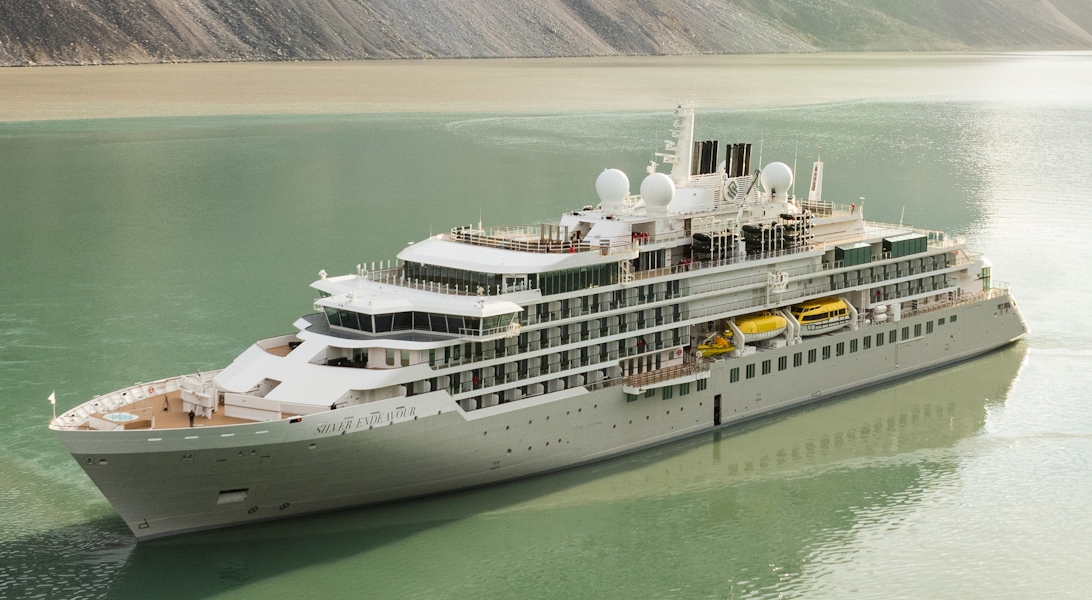
The images shown are for illustration purposes only and may not be an exact representation of what you find on the ship.
The images shown are for illustration purposes only and may not be an exact representation of what you find on the ship.
The images shown are for illustration purposes only and may not be an exact representation of what you find on the ship.
The images shown are for illustration purposes only and may not be an exact representation of what you find on the ship.
The images shown are for illustration purposes only and may not be an exact representation of what you find on the ship.


Our Fusion packages are all ABTA & ATOL protected ensuring that your booking is safe with us
| 18 nights aboard the Silver Endeavour | |||
| Butler Service in Every Suite | |||
| Gratuities Always Included | |||
| Beverages In-Suite and Throughout the Ship | |||
| Gourmet Dining | |||
| In Suite Dining & 24-Hour Room Service | |||
| Intimate small size ships | |||
| Free Wifi Throughout the Ship | |||
| Free Zodiac, Land and Sea Tours & Activities & Complimentary Expedition gear | |||
| Port Taxes and Fees | |||
 | ABTA and ATOL Protection* | ||
Date 30th Aug 2028 |
Nts 18 |
Suite £17,250pp |
Date 30th Aug 2028 |
Nts 18 |
Suite £17,250pp |
| Suite staterooms from | £17,250pp | ||
| CV | Classic Veranda Suite | £17,250pp | |
| DX | Deluxe Veranda Suite | £18,650pp | |
| PV | Premium Veranda Suite | £19,000pp | |
| SV | Superior Veranda Suite | £17,950pp | |
| SL | Silver Suite | £25,900pp | |
| SS | Signature Suite | £30,250pp | |
| G1 | Grand Suite (1 Bedroom) | £37,150pp | |
| MS | Master Suite | £34,550pp | |
| O1 | Owner's Suite (1 Bedroom) | £39,750pp | |
Fusion Holidays when selling travel arrangements is a trading name of Co-op Travel Services Limited, registration 08903986. Fusion Cruises is an Accredited Body Member of Co-op Travel Services Limited ATOL 12904.
Book with Confidence. We are a Member of ABTA which means you have the benefit of ABTA’s assistance and Code of Conduct.
Some of the flights and flight-inclusive holidays on this website are financially protected by the ATOL scheme but ATOL protection does not apply to all holiday and travel services offered on this website. This website will provide you with information on the protection that applies in the case of each holiday and travel service offered before you make your booking. If you do not receive an ATOL Certificate then the booking will not be ATOL protected. If you do receive an ATOL Certificate but all parts of your trip are not listed on it, those parts will not be ATOL protected. Please see our booking conditions for information, or for more information about financial protection and the ATOL Certificate go to: www.caa.co.uk