This site uses cookies as defined in our Cookie Policy, by continuing to use this site you agree to their use.
Continue

| Arrive | Depart | ||||||
| 23rd23 | OctOct | 202828 | Benoa, Bali, Indonesia, embark on the Silver Moon | 18:00 | |||
Bali really is as alluring as everyone says. This island, slightly bigger than Delaware, has it all: beaches, volcanoes, terraced rice fields, forests, renowned resorts, surfing, golf, and world-class dive sites. But what sets Bali apart from other nearby tropical destinations is Balinese tradition, and villagers dedicated to celebrating it. The hundreds of temples, dances, rituals, and crafts linked to their ancient Hindu faith aren't a show for tourists, but a living, breathing culture in which visitors are warmly received by the Balinese, who cherish their own identities. Bali. A.k.a. Island of the Gods, Land of a thousand temples or the World’s last paradise. As superlative as these monikers may sound, they do not do justice to the actual reality of the island. Bali is as good as everyone says – verdant mountains with terraced rice fields in one direction, black sand beaches in another and captivating people that will leave even the most seasoned traveller humbled. If you’re looking for a Garden of Eden that really does have it everything, Bali ticks all the boxes. The rich and diverse culture of the island is what sets Bali apart from Indonesia’s (many) other tropical paradises. The country’s estimated 10,000 Buddhist-Hindu temples, with their daily offerings of lotus flowers and fruit are testament to the gentleness of the islander’s belief. Then there is the vibrant arts and crafts scene, notably in Ubud in the centre of the island, but prolific everywhere. Ideal souvenirs to bring back range from gorgeous silver jewellery to intricate wood carvings. Additionally, do try to see a traditional dance if possible, particularly if accompanied to local gamelan music. No one could mention Bali without mentioning the food. Dishes range from elaborate meals to street food bites, but all are without exception ambrosia. Do not miss out on tasting a succulent chicken satay, betutu (apparently the King’s favourite meal) and sambal matah. But whatever you decide to discover, you can be assured of a taste sensation that will remain with you long after you have returned home. | |||||||
| 24th24 | OctOct | 202828 | Lembar, Lombok, Indonesia | 07:00 | 19:00 | ||
| An island of startling contradictions and contrasts Lombok exudes an aura of the staid and the rural a genteel way of life in a quiet backwater. Located to the east and across a deep strait from its illustrious neighbor Bali the island of Lombok offers unique culture beautiful landscapes and a far less frenetic pressured atmosphere than Bali. However savvy travelers agree that Lombok’s calm existence may soon come to an end as it is fast becoming the new "in place" after Bali. The island was once ruled by a series of Sasak princes who spent their time fending off successive invasions from Sumbawanese and Makassarese attackers. In 1740 the Balinese established a stronghold here and imposed their culture on the Sasaks. Later Lombok came under Dutch rule until the country achieved independence. The western part of the almost circular island is well irrigated by mountain streams and artesian springs. Here Balinese and Sasaks have sculpted handsome rice terraces Hindu temples vie for attention with glistening white mosques rising from picturesque rural villages. More dramatic is the southern coast with beautiful sandy bays set between rocky outcrops. Most of Lombok’s attractions are concentrated in the western district of the island within a nine-mile radius of the capital Mataram. Members of Lombok's polyglot population - Sasak Balinese Chinese and Arab - continue their laid-back traditional ways. | |||||||
| 25th25 | OctOct | 202828 | At Sea | ||||
| 26th26 | OctOct | 202828 | Komba Island, Indonesia | 08:00 | 18:00 | ||
On the approach to Pulau Komodo, a tiny island just 36 km (22 miles) long and 16 km (9 miles) across at its widest point, it's hard to imagine that this is the home of the fearsome dragons described by late-19th-century explorers. The island, in the Indonesian region of Nusa Tenggara, lies between the islands of Sumbawa and Flores at the heart of the Komodo National Park, designated a UNESCO World Heritage Site and one of the New7Wonders of Nature. At first look, steep hillsides of parched, golden grasses slide down into topaz bays covered in glass-clear waters, and white-sand beaches hem quiet shorelines. But then you remember that this innocent-looking island is inhabited by 13-foot-long, 220-pound ora, as Komodo dragons are known locally. Don't be frightened: Although stories of people disappearing run rampant, a trip here is quite safe—as long as you stay with a park guide.While Komodo dragons are the main attraction, several other large species also reside here. Dark-brown deer and small buffalo nibble the grasses of the high plains, macaques peer through the trees, and wild pigs crash through the underbrush. More than 150 types of birds also inhabit the island, including cockatoos, imperial pigeons, sea eagles, and mound-building megapodes. Offshore in the marine reserve, you might spot dolphins, dugong (a relative of the manatee), sea turtles, manta rays, and even whales, as well as more than 1,000 species of fish.Lodging on Pulau Komodo was nonexistent until 2012, when a modest, eco-friendly resort and diving club opened, providing a rare opportunity for scuba divers and snorkelers to explore this pristine habitat's extensive coral reefs and extraordinary marine life. Travelers can also find comfortable lodging and a convenient base from which to explore the many natural wonders of the Komodo National Park in Labuan Bajo, on the island of Flores (East Nusa Tenggara). Komodo, the volcanic island of giant lizards, lies 320 miles (515 kilometres) east of Bali. Komodo is 25 miles (40 kilometres) long and 12 miles (19 kilometres) wide; its parched hills ascend to a height of 2,410 feet (734 metres). Komodo is home to a community of some 2000 people who make their living primarily from fishing. The island is the centrepiece of the Komodo National Park, where you will find the most tangible legacy left behind from the Jurassic Era. Komodo Island was little-known and the Komodo dragons were only a myth until the giant lizards were scientifically described in 1912 . Extinct almost everywhere else, the island attracts thousands of visitors from all over the world who come to see the Komodo dragons in their natural habitat. Komodo National Park has been declared a UNESCO World Heritage Site and Biosphere Reserve. The Komodo dragon’s great bulk and weight are its most unique characteristics; even hatchlings average 20 inches (51 centimetres) in length. The adult male can reach 10 feet (3 metres) and weigh up to 330 pounds (150 kilos). Females attain only two-thirds of this size, and lay up to 30 eggs at a time. With their saw-like teeth, these fierce creatures are able to rip apart a deer, goat or wild pig. The animals have an uncanny sense of smell, and are considered among the world's most intelligent reptiles. They are quite agile over short distances, and can move swiftly to capture their prey. The Indonesian Directorate of Nature Conservation (PPA) administers Komodo National Park. Park Rangers must escort all visitors; independent exploration of the park is not permitted. | |||||||
| 27th27 | OctOct | 202828 | At Sea | ||||
| 28th28 | OctOct | 202828 | At Sea | ||||
| 29th29 | OctOct | 202828 | Darwin, Northern Territory, Australia | 08:00 | 18:00 | ||
Darwin is Australia's most colorful, and exotic, capital city. Surrounded on three sides by the turquoise waters of the Timor Sea, the streets are lined with tropical flowers and trees. Warm and dry in winter, hot and steamy in summer, it's a relaxed and casual place, as well as a beguiling blend of tropical frontier outpost and Outback hardiness. Thanks to its close proximity to Southeast Asia and its multicultural population it also seems more like Asia than the rest of Australia. Darwin is a city that has always had to fight for its survival. The seductiveness of contemporary Darwin lifestyles belies a history of failed attempts that date from 1824 when Europeans attempted to establish an enclave in this harsh, unyielding climate. The original 1869 settlement, called Palmerston, was built on a parcel of mangrove wetlands and scrub forest that had changed little in 15 million years. It was not until 1911, after it had already weathered the disastrous cyclones of 1878, 1882, and 1897, that the town was named after the scientist who had visited Australia's shores aboard the Beagle in 1839. During World War II it was bombed more than 60 times, as the harbor full of warships was a prime target for the Japanese war planes. Then, on the night of Christmas Eve 1974, the city was almost completely destroyed by Cyclone Tracy, Australia’s greatest natural disaster. It's a tribute to those who stayed and to those who have come to live here after Tracy that the rebuilt city now thrives as an administrative and commercial center for northern Australia. Old Darwin has been replaced by something of an edifice complex—such buildings as Parliament House and the Supreme Court all seem very grand for such a small city, especially one that prides itself on its casual, outdoor-centric lifestyle. Today Darwin is the best place from which to explore Australia's Top End, with its wonders of Kakadu and the Kimberley region. Australia's capital of the north is a uniquely tropical city and a historically isolated outpost of this vast diverse country. Reaching up towards the equator a full 2 000 miles from Sydney and Melbourne the city was named in honour of Charles Darwin by the British settlers who established a frontier outpost here. With a unique history beautiful islands nearby and a palette of sizzling Pacific flavours colourful Darwin is an enchanting and exotic Australian destination. Crocodiles patrol the jungled waterways and tropical rainforests around Australia's gateway to the Top End. Explore via airboat to look down on the veiny waterways of the mist-laced Kakadu National Park. The sounds of chattering birdlife and the gentle splash of fountains and waterfalls will fill your ears in George Brown Darwin Botanic Gardens. Soak it all in before kicking back and relaxing with a picnic and a crackling barbecue. The sunshine and famous tropical pink sunsets mean many visitors naturally gravitate to the city's soft sands to relax at spots like pretty Mindil Beach as evening approaches. The adjoining market is filled with souvenirs and crafts stands and is the perfect great place to enjoy some fiery Asian flavours. Stroll the stalls grab some food and crack open an ice-frosted beer as the sunset show begins. It may be remote but Darwin found itself on the front line during the Pacific War as the Japanese air force unloaded their bombs onto the city in 1942. | |||||||
| 30th30 | OctOct | 202828 | At Sea | ||||
| 31st31 | OctOct | 202828 | At Sea | ||||
| 1st01 | NovNov | 202828 | Broome, Western Australia, Australia | 07:00 | 17:00 | ||
Broome, a coastal town in Western Australia, is famous for its stunning beaches, rich history, and vibrant culture. Located on the Indian Ocean, it boasts Cable Beach, known for its white sand, turquoise waters, and iconic camel rides at sunset. Once a pearling hub, Broome retains its multicultural heritage, reflected in its cuisine and architecture. The town is also the gateway to the Kimberley region, offering breathtaking landscapes and unique natural attractions like the Staircase to the Moon. With warm weather year-round and a laid-back atmosphere, Broome is a perfect destination for adventure, relaxation, and cultural experiences. Gateway to the oldest and most elusive of all Australia’s nine regions, Broome is where your Kimberley adventure begins. The ancient landscape has long held travellers spellbound: The Kimberley is three time larger than England but has a population of just 35,000, is over 65,000 years old and is home to 2,000 km of coastline. Almost impenetrable, incredibly remote, the red baked earth, prolific wildlife, majestic canyons and swimming holes are the stuff of Australian wilderness dreams. English explorer William Dampier was the first explorer to set foot in Broome in 1668. However, the land had long been used as a trading route between east and west Kimberley for Aboriginal families. These semi-nomadic tribes respected strict unwritten rules regarding ownership of the land. The Yawuru people remain the Native Title holders for the township of Broome to this day. Broome itself has over 84 Aboriginal communities affiliated to it, 78 of which are considered remote. The city grew from its nascent pearling industry of the late 19th century. Pearl diving was dangerous in the waters surrounding Broome and for many years divers were limited to Aboriginal slaves, skin divers who faced cyclones, sharks, crocodiles, ear and chest infections in order to bring up as many pearl shells as possible for their masters. Natural pearls were rare and extremely valuable, and when found, were placed in a locked box. At the peak of its industry, around 1914, Broome was responsible for 80% of the world’s pearl trade. | |||||||
| 2nd02 | NovNov | 202828 | At Sea | ||||
| 3rd03 | NovNov | 202828 | At Sea | ||||
| 4th04 | NovNov | 202828 | Perth, Western Australia, Australia | 09:00 | 18:00 | ||
| Surrounded by beaches sun-drenched Geraldton in Western Australia is a thriving city facing the Indian Ocean. Located on the Coral Coast the city has a friendly country town feel but is infused local history and cultural heritage. Like many coastal towns the dining and café culture is superb and the choice of which restaurant to choose is a happy dilemma for most travellers!Celebrated for its annual display of spectacular wildflowers Geraldton’s flora attracts visitors from all regions with guides taking tourists on as much as 300 mile/500 kilometre round trips in order to make sure that they receive the best possible experience. A haven for visitors especially during the cooler months the views differ year-in year-out and vary greatly depending on the rainfall. Whole fields become blanketed in colour and rare plants such as the wreath-flower burst into splendorous bloom. The well-informed guides keep a track of what is flowering where and visitors only have to ask to be pointed in the right direction. With over 300 species of native plants it is only expected that insects and birds are attracted to the area. Over 120 types of bird have been classified as well as 22 types of reptile and seven types of frog. Happily the iconic kangaroo also makes the plains their home so visitors can expect a real Aussie welcome if they happen upon one! | |||||||
| 5th05 | NovNov | 202828 | Fremantle, Western Australia, Australia | ||||
The port city of Fremantle is a jewel in Western Australia's crown, largely because of its colonial architectural heritage and hippy vibe. Freo (as the locals call it) is a city of largely friendly, interesting, and sometimes eccentric residents supportive of busking, street art, and alfresco dining. Like all great port cities, Freo is cosmopolitan, with mariners from all parts of the world strolling the streets—including thousands of U.S. Navy personnel on rest and recreation throughout the year. It's also a good jumping-off point for a day trip to Rottnest Island, where lovely beaches, rocky coves, and unique wallaby-like inhabitants called quokkas set the scene.Modern Fremantle is a far cry from the barren, sandy plain that greeted the first wave of English settlers back in 1829 at the newly constituted Swan River Colony. Most were city dwellers, and after five months at sea in sailing ships they landed on salt-marsh flats that sorely tested their fortitude. Living in tents with packing cases for chairs, they found no edible crops, and the nearest freshwater was a distant 51 km (32 miles)—and a tortuous trip up the waters of the Swan. As a result they soon moved the settlement upriver to the vicinity of present-day Perth.Fremantle remained the principal port, and many attractive limestone buildings were built to service the port traders. Australia's 1987 defense of the America's Cup—held in waters off Fremantle—triggered a major restoration of the colonial streetscapes. In the leafy suburbs nearly every other house is a restored 19th-century gem. Coming in at number seven on Lonely Planet’s list of best places to live, Fremantle has finally begun to shake off the shadow of neighbouring big brother Perth. With just 20 kilometres separating the two cities, Perth, with its happy hippie vibe has long been the big pull for visitors to the region. But Fremantle’s colourful past and bright future gives Perth as good as it gets. The coastal city has undergone a complete revamp since the America’s Cup thrust Fremantle into the spotlight in 1987. Over AUS$1.3 billion has been poured into revamping the city, and the fruits of the city’s labour are ripe for picking. Investment in the arts has brought Fremantle to the fore of thriving urban culture, while generous grants for small businesses has led to groovy live-music rooms, hipster bars, boutique hotels, left-field bookshops, craft-beer breweries, Indian Ocean seafood shacks amid the buskers and beaches. If that doesn’t not sound like your glass of beer, we guarantee a stroll along the wooden riverside walkway will change your mind. The city also enjoys another, rather different status. Fremantle was one of Australia’s penal cities, vestiges of which can still be found in Fremantle Prison. Almost 10,000 convicts were condemned to life imprisonment here between 1850 and 1868, but the prison remained in use until 1991. Today, the memorable sandstone building is a UNESCO World Heritage Site and at just 15 minutes from port is well worth a visit. Just don’t forget your get out of jail free card. | |||||||
| 6th06 | NovNov | 202828 | Fremantle, Western Australia, Australia, disembark the Silver Moon | ||||
The port city of Fremantle is a jewel in Western Australia's crown, largely because of its colonial architectural heritage and hippy vibe. Freo (as the locals call it) is a city of largely friendly, interesting, and sometimes eccentric residents supportive of busking, street art, and alfresco dining. Like all great port cities, Freo is cosmopolitan, with mariners from all parts of the world strolling the streets—including thousands of U.S. Navy personnel on rest and recreation throughout the year. It's also a good jumping-off point for a day trip to Rottnest Island, where lovely beaches, rocky coves, and unique wallaby-like inhabitants called quokkas set the scene.Modern Fremantle is a far cry from the barren, sandy plain that greeted the first wave of English settlers back in 1829 at the newly constituted Swan River Colony. Most were city dwellers, and after five months at sea in sailing ships they landed on salt-marsh flats that sorely tested their fortitude. Living in tents with packing cases for chairs, they found no edible crops, and the nearest freshwater was a distant 51 km (32 miles)—and a tortuous trip up the waters of the Swan. As a result they soon moved the settlement upriver to the vicinity of present-day Perth.Fremantle remained the principal port, and many attractive limestone buildings were built to service the port traders. Australia's 1987 defense of the America's Cup—held in waters off Fremantle—triggered a major restoration of the colonial streetscapes. In the leafy suburbs nearly every other house is a restored 19th-century gem. Coming in at number seven on Lonely Planet’s list of best places to live, Fremantle has finally begun to shake off the shadow of neighbouring big brother Perth. With just 20 kilometres separating the two cities, Perth, with its happy hippie vibe has long been the big pull for visitors to the region. But Fremantle’s colourful past and bright future gives Perth as good as it gets. The coastal city has undergone a complete revamp since the America’s Cup thrust Fremantle into the spotlight in 1987. Over AUS$1.3 billion has been poured into revamping the city, and the fruits of the city’s labour are ripe for picking. Investment in the arts has brought Fremantle to the fore of thriving urban culture, while generous grants for small businesses has led to groovy live-music rooms, hipster bars, boutique hotels, left-field bookshops, craft-beer breweries, Indian Ocean seafood shacks amid the buskers and beaches. If that doesn’t not sound like your glass of beer, we guarantee a stroll along the wooden riverside walkway will change your mind. The city also enjoys another, rather different status. Fremantle was one of Australia’s penal cities, vestiges of which can still be found in Fremantle Prison. Almost 10,000 convicts were condemned to life imprisonment here between 1850 and 1868, but the prison remained in use until 1991. Today, the memorable sandstone building is a UNESCO World Heritage Site and at just 15 minutes from port is well worth a visit. Just don’t forget your get out of jail free card. | |||||||
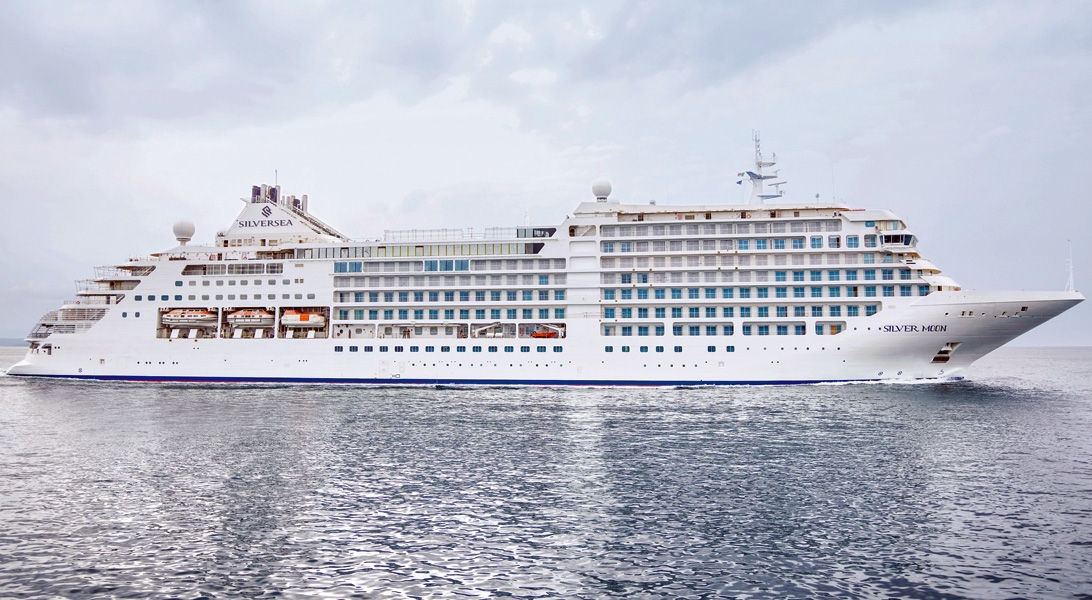
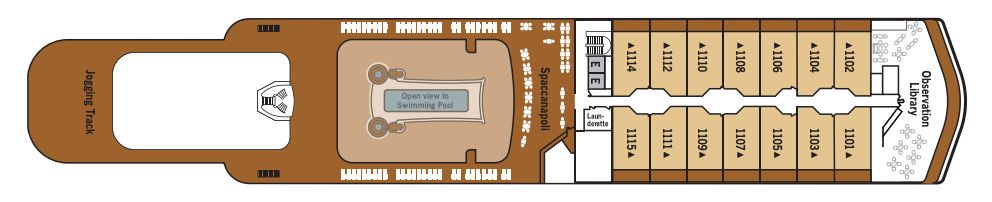

The images shown are for illustration purposes only and may not be an exact representation of what you find on the ship.
The images shown are for illustration purposes only and may not be an exact representation of what you find on the ship.
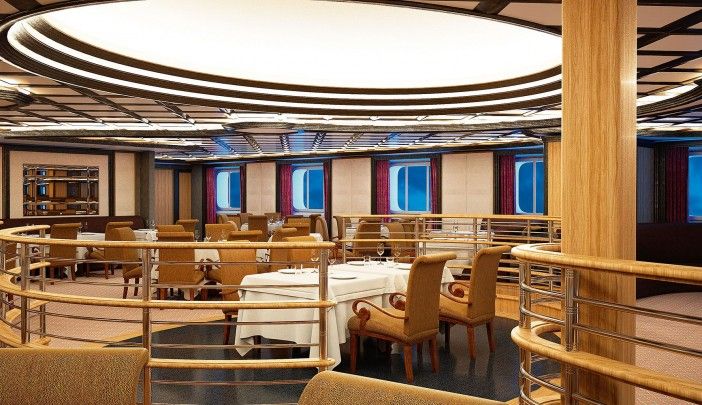
Refined global fare and grilled classics take center stage at Atlantide. Drop in for an indulgent à la carte breakfast, a leisurely lunch, or an elegant dinner among family and new friends, served in a timeless and sophisticated setting.
Images are intended as a general reference. Features, materials, finishes and layout may be different than shown. Opening hours and menu are for reference only.
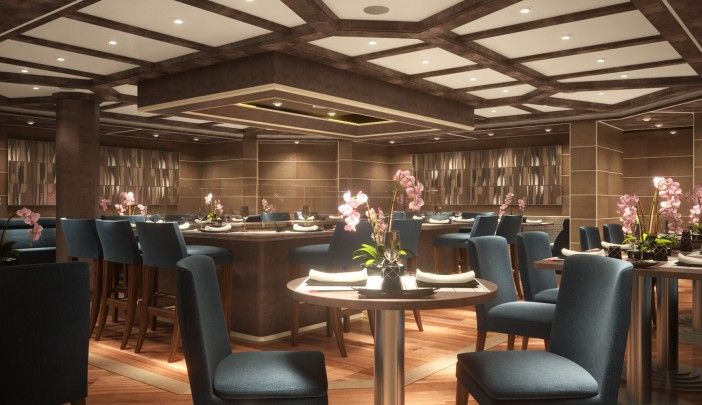
Meals at Kaiseki are rooted in the Japanese philosophy of balance and precision. By day, refreshing sushi, sashimi, and izakaya-style dishes guide the menu. During dinner, specialties like miso black cod and wagyu teriyaki nod to Japan’s enduring culinary legacy, while fine sake, whiskies, and teas enhance every course.
Lunch - Open seating
Opening Hours: 12:00 PM – 2:30 PM
Dinner - Reservations required*
Opening Hours: 7:00 PM – 9:30 PM
Learn more about the Epicurean Experience, which includes dining in three specialty restaurants with preferential rates.
Images are intended as a general reference. Features, materials, finishes and layout may be different than shown. Opening hours and menu are for reference only.
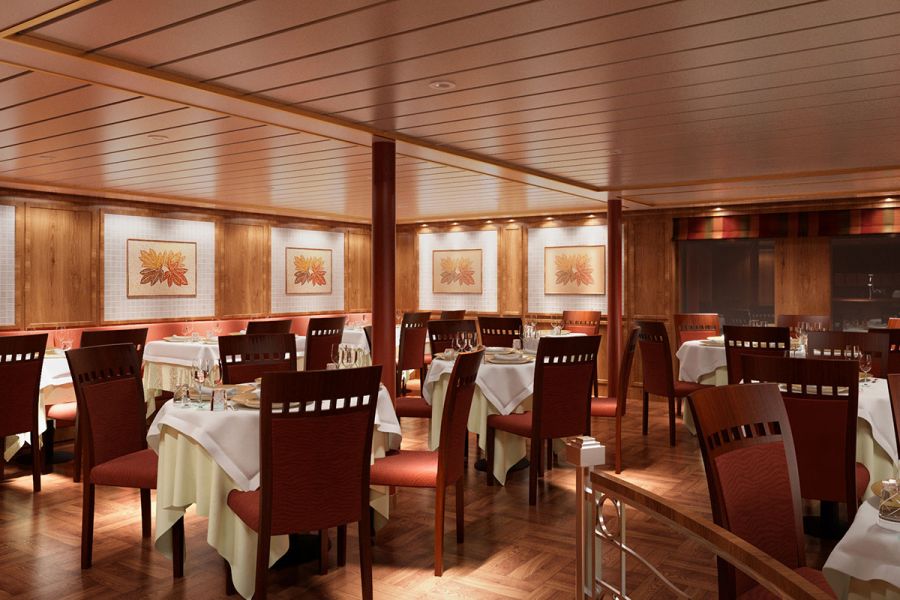
La Terrazza elevates casual dining by day and delivers an authentic Italian experience by night. During the breakfast and lunch buffets, our master chefs prepare global favorites at live stations. As evening falls, handmade pastas and classic seafood dishes are the centerpiece — every impeccable bite paired with fine wines from around the world.
Location: Deck 7
Capacity: 242 guests
Images are intended as a general reference. Features, materials, finishes and layout may be different than shown. Opening hours and menu are for reference only.
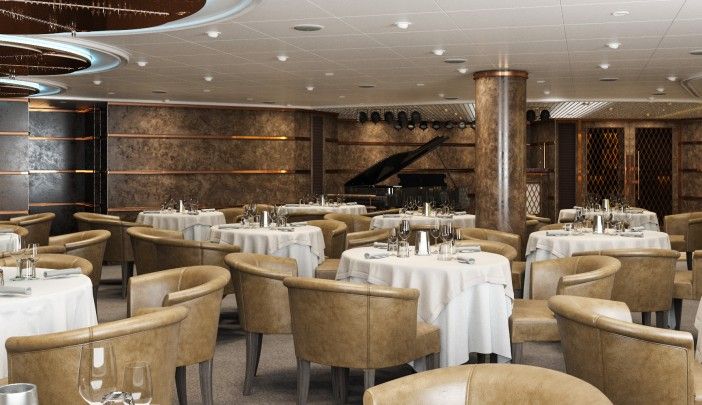
As the stars come out, Silver Note comes alive with the rhythm of jazz and the artistry of small-plate fine dining. This intimate supper-club experience pairs soulful live performances with inventive, international cuisine in a chic, lounge-style setting — one of the most exclusive dining concepts at sea.
Dinner - Reservations required
Opening Hours: 8:00 PM – 10:00 PM
Learn more about the Epicurean Experience, which includes dining in three specialty restaurants with preferential rates.
Images are intended as a general reference. Features, materials, finishes and layout may be different than shown. Opening hours and menu are for reference only.
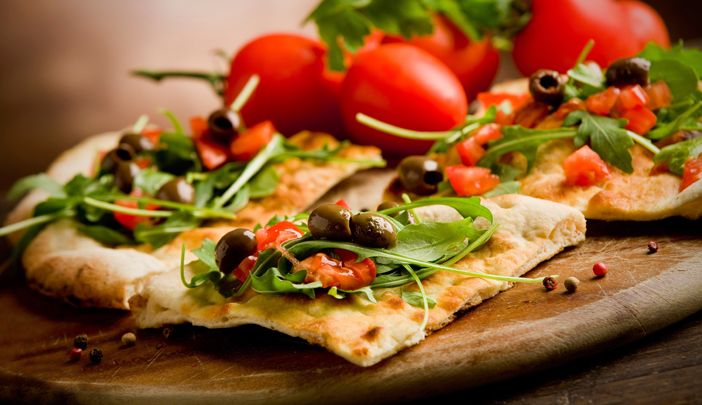
Spaccanapoli honors southern Italy’s culinary heritage with handcrafted pies tossed, topped, and baked to perfection. This signature pizzeria captures true Neapolitan flavor — from golden, blistered crusts to the irresistible aromas that drift from the custom-built oven.
Lunch - Open seating
Opening Hours: 12:00 PM – 2:30 PM
Dinner - Open seating
Opening Hours: 6:00 PM – 9:00 PM
Location: Deck 11
Capacity: 72
Images are intended as a general reference. Features, materials, finishes and layout may be different than shown.
Opening hours and menu are for reference only.
The images shown are for illustration purposes only and may not be an exact representation of what you find on the ship.
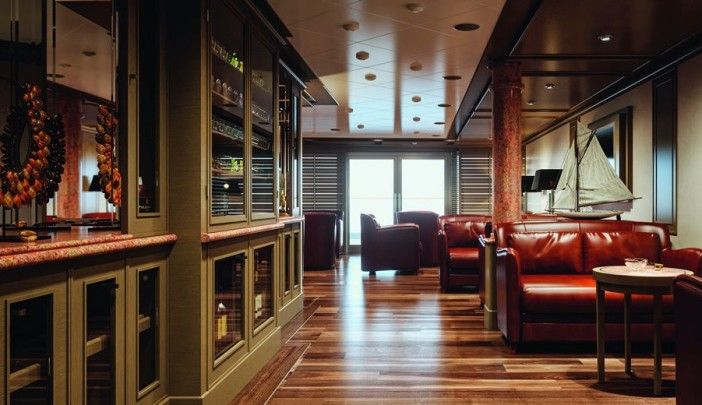
As evening stretches into night, Connoisseur’s Corner offers a stylish refuge for those who appreciate the time-honored rituals of smoke and spirit. Sink into tufted leather chairs with a hand-rolled cigar and a glass of one of our finest cognacs or whiskeys. Indoors or under the stars, every moment is marked by pure indulgence.
Images are intended as a general reference. Features, materials, finishes, and layout may be different than shown.
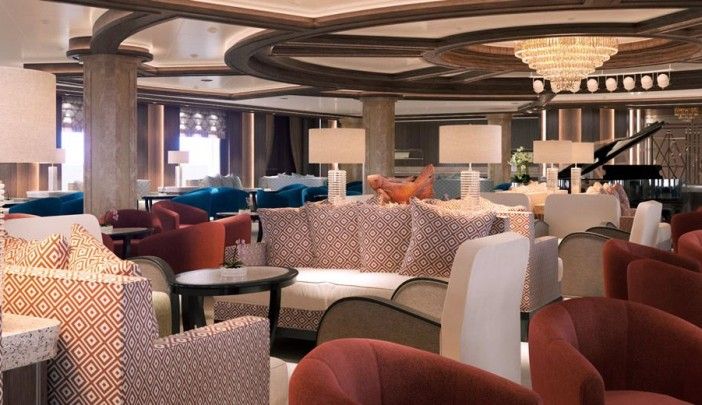
Surrender to a world of Italian elegance where the art of aperitivo takes pride of place. Ideal for connecting over spritzes, negronis, and light bites, here each evening feels like a celebration. As laughter lingers, crystal glasses clink, and live piano notes ripple through the air, Dolce Vita compels you to savor the sweetness of life on board.
Images are intended as a general reference. Features, materials, finishes, and layout may be different than shown.
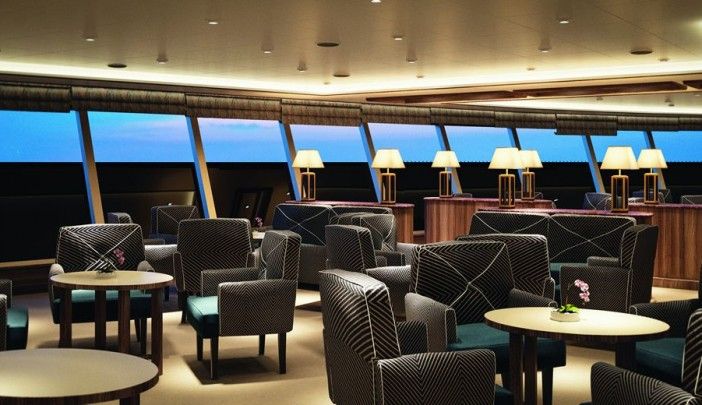
Wrapped in glass and bathed in light, the Observation Lounge offers a serene escape high above the sea. Borrow a book from the in-house library, pour yourself a coffee or tea from the self-service bar, and curl into an armchair to watch the world drift by. This is a sanctuary for reflection, relaxation, and stories — both written and still in the making.
Images are intended as a general reference. Features, materials, finishes and layout may be different than shown.
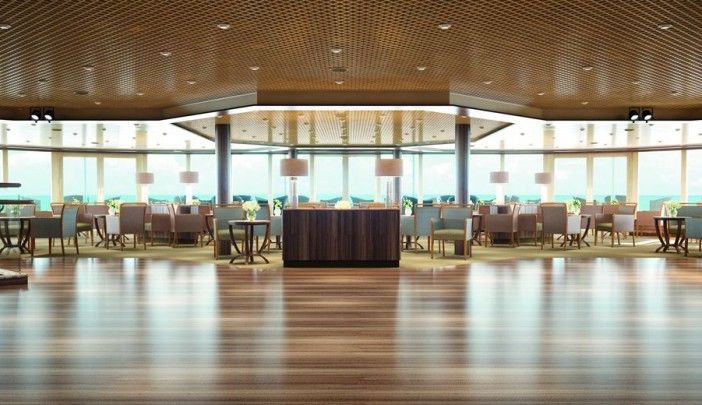
True to its name, Panorama Lounge surrounds you with sweeping views from every angle. Sunlight pours through wraparound windows by day, framing horizons that shift like watercolors. Evenings hum with piano chords and DJ beats that carry you late into the night. And all of it pairs wonderfully with cocktails handcrafted to match your mood.
The images shown are for illustration purposes only and may not be an exact representation of what you find on the ship.
The images shown are for illustration purposes only and may not be an exact representation of what you find on the ship.

Our Fusion packages are all ABTA & ATOL protected ensuring that your booking is safe with us
| 14 nights aboard the Silver Moon | |||
| Butler Service in Every Suite | |||
| Gratuities Always Included | |||
| Beverages In-Suite and Throughout the Ship | |||
| Gourmet Dining | |||
| In Suite Dining & 24-Hour Room Service | |||
| Intimate small size ships | |||
| Free Wifi Throughout the Ship | |||
| Free Zodiac, Land and Sea Tours & Activities & Complimentary Expedition gear | |||
| Port Taxes and Fees | |||
 | ABTA and ATOL Protection* | ||
Date 23rd Oct 2028 |
Nts 14 |
Suite £5,600pp |
Date 23rd Oct 2028 |
Nts 14 |
Suite £5,600pp |
| Suite staterooms from | £5,600pp | ||
| CV | Classic Veranda Suite | £6,200pp | |
| DX | Deluxe Veranda Suite | £6,750pp | |
| G1 | Grand Suite (1 Bedroom) |  | |
| G2 | Grand Suite (2 Bedrooms) | £25,400pp | |
| O1 | Owner's Suite (1 Bedroom) | | |
| O2 | Owner's Suite (2 Bedrooms) | £26,750pp | |
| PA | Panorama Suite | | |
| R1 | Royal Suite (1 Bedroom) | | |
| R2 | Royal Suite (2 Bedrooms) | £23,700pp | |
| S2 | Silver Suite (2 Bedrooms) | £16,700pp | |
| SL | Silver Suite | £10,600pp | |
| SV | Superior Veranda Suite | £6,500pp | |
| VI | Vista Suite | £5,600pp | |
Fusion Holidays when selling travel arrangements is a trading name of Co-op Travel Services Limited, registration 08903986. Fusion Cruises is an Accredited Body Member of Co-op Travel Services Limited ATOL 12904.
Book with Confidence. We are a Member of ABTA which means you have the benefit of ABTA’s assistance and Code of Conduct.
Some of the flights and flight-inclusive holidays on this website are financially protected by the ATOL scheme but ATOL protection does not apply to all holiday and travel services offered on this website. This website will provide you with information on the protection that applies in the case of each holiday and travel service offered before you make your booking. If you do not receive an ATOL Certificate then the booking will not be ATOL protected. If you do receive an ATOL Certificate but all parts of your trip are not listed on it, those parts will not be ATOL protected. Please see our booking conditions for information, or for more information about financial protection and the ATOL Certificate go to: www.caa.co.uk