This site uses cookies as defined in our Cookie Policy, by continuing to use this site you agree to their use.
Continue

| Arrive | Depart | ||||||
| 2nd02 | AprApr | 202828 | Tokyo, Japan, embark on the Silver Muse | 19:00 | |||
Lights, sushi, manga! Sprawling, frenetic, and endlessly fascinating, Japan’s capital is a city of contrasts. Shrines and gardens are pockets of calm between famously crowded streets and soaring office buildings. Mom-and-pop noodle houses share street space with Western-style chain restaurants and exquisite fine dining. Shopping yields lovely folk arts as well as the newest electronics. And nightlife kicks off with karaoke or sake and continues with techno clubs and more. Whether you seek the traditional or the cutting edge, Tokyo will provide it. Dense and delightful, there’s nowhere else like Japan’s kinetic capital - a city where ancient traditions blend seamlessly with a relentless pursuit for the future’s sharpest edge. See the city from above, as elevators rocket you up to towering viewing platforms, from which you can survey a vast urban ocean, interspersed with sky-scraping needles. Look out as far as the distant loom of Mount Fuji’s cone on clear days. Futuristic – second-accurate - transport seamlessly links Tokyo’s 14 districts, while the glow of flashing advertisement boards, clanks of arcade machines, and waves of humanity flowing along its streets, adds to the sense of mesmerising, dizzying and glorious sensory overload. One of Tokyo’s most iconic sights, don’t miss the flood of people scrambling to cross Shibuya’s famous intersection. Join the choreographed dance, as crowds of briefcase-carrying commuters are given the green light to cross at the same time – bathed in the light of massive neon advertisements. The culture is immensely rich and deep, with 7th-century, lantern-decorated temples, stunning palaces and tranquil scarlet shrines waiting below cloaks of incense and nestling between soaring skyscrapers. Restaurants serve up precisely prepared sushi, and wafer-thin seafood slivers, offering a unique taste of the country’s refined cuisine. Settle into traditional teahouses, to witness intricate ceremonies, or join the locals as they fill out karaoke bars to sing the night away. In the spring, cherry blossom paints a delicate pink sheen over the city’s innumerable parks and gardens. | |||||||
| 3rd03 | AprApr | 202828 | Shimizu, Japan | 08:00 | 15:00 | ||
The salt and pepper cone of Japan's most famous natural landmark won’t fail to take your breath away, as it soars into the sky in a vision of spectacular symmetry. Make sure your camera is fully prepared before you dock in Shimizu’s port, where unparalleled views of the extraordinary Mount Fuji’s dramatic peak await. Take your time to soak up one of Japan's most iconic views, before dipping your toes into the rest of what this destination of tranquil temples has to offer. While there’s a bustling fish market, and a charming amusement park waiting close to the port, most new arrivals immediately set off in pursuit of the best views of Mount Fuji, or to see the stunning panorama on offer from the heights of the Kunozan Toshogu Shrine. Take the cable car up to the top, to experience the tranquillity around the forested shrine, and to enjoy its stunning architecture of deep scarlets and gleaming golds. You can also enjoy heart-stopping views out over the Bay of Suruga, and the tea plantations below. Feel your heart thumping at your first sight of Japan’s most heavenly vision - Mount Fuji’s cone emerging through the haze. With its summit dipped in pure white snow the iconic volcano’s cone is one of the most famous natural landmarks in the world - and a picturesque backdrop for Shimizu. Come ashore to this serene vision of beauty – and whether you head straight for the siren-call of the volcano’s slopes or the sanctuary of gorgeous heritage-rich shrines and tranquil tea plantations - spine-tingling views of Japan’s most tallest mountain are never far away. A perfectly symmetrical spectacle visible for miles around Mount Fuji is an adored national symbol of Japan. Travel closer to its slopes to soak in some of the country’s finest panoramas. Or take in the views with a dash of local culture at the Fujisan Hongu Sengen Shrine – an elegant shrine that stands in thrall to the salt and pepper volcano close by. The Shiraito Waterfall World Heritage Site flows just beneath the volcano – visit to see the gloriously wide curtain of water gushing through the thick vegetation. Visit Kunozan Toshogu Shrine for another perspective or to soak up the tranquil site before swinging above on a scenic ropeway. Located on the adjacent Mount Kuno – privileged views of the mountain and Suruga Bay will unroll before you. Nihondaira Plateau is another option where you can soak in panoramic views of the bay and Mount Fuji dominating behind. | |||||||
| 4th04 | AprApr | 202828 | Kobe, Japan | ||||
Located on the calm waters of the Inland Sea, Kobe has served as an important port town for hundreds of years. It was one of the first harbours to accept foreign traders in 1868 when Japan was just emerging from its centuries of isolation. What followed was a surge of Western trade and exports. Today, Kobe is quite multicultural, with expatriates from 98 different nations in residence, providing a cultural diversity most easily visible in restaurants serving every kind of cuisine, including the now world famous Kobe beef. The Great Hanshin Earthquake of 1995 set back Kobe’s development, but not for long. Kobe emerged more vibrant than before - with additional attractions, hotels and urban redevelopment, and only a few remnants of the extensive damage. It is a cosmopolitan place with lively shopping arcades, interesting museums, great restaurants, and a port that is still at the heart of things. Kobe is well known for its nightlife, in an intimate quarter of neon lights, cosy bars and sophisticated nightclubs. It also serves as the gateway to the ancient Japanese capitals of Kyoto and Nara. The Japanese city of Kobe needs no introduction. The name is synonymous with its home grown superstar. We are not talking of its stunning shrines, cherry trees laden with blossom during sakura or effervescent city, buzzing with life 24/7. We are of course talking of a much more grass roots hero – its eponymous beef. The delicacy might have put the city on the map, but there is far more to Kobe than its meat. Naturally, Kobe wears its cuisine as a badge of honour. Its port history has given it a gastronomy that is quite different from its neighbours. Seafood and sushi is naturally some of the freshest and most diverse you can find, but Kobe’s multi-cultural nature (the city is home to 98 different nationalities) means that it has one of the most diverse gastronomic cultures in Japan. Bread and bakeries are also an (unexpected) delicacy. Additionally, Sake is taken very seriously – Kobe even has its own museum dedicated to the national spirit. Historically, Kobe has always been a key city for Japan. Renamed in 1889, it was known as Owada no Tomari during the Nara Period (710-784 C.E.). Kobe’s location on the calm Inland Sea between Osaka and Kyoto has proven to be pivotal in Japanese history; it is mentioned in famous literary works such as The Tale of Genji (from approximately late 9th century) and the Taiheiki (14th century). The city and region are home to many attractions including the Himeji Castle (widely considered to be Japan's most beautiful feudal castle), a short ride away. | |||||||
| 5th05 | AprApr | 202828 | Kobe, Japan | 18:00 | |||
Located on the calm waters of the Inland Sea, Kobe has served as an important port town for hundreds of years. It was one of the first harbours to accept foreign traders in 1868 when Japan was just emerging from its centuries of isolation. What followed was a surge of Western trade and exports. Today, Kobe is quite multicultural, with expatriates from 98 different nations in residence, providing a cultural diversity most easily visible in restaurants serving every kind of cuisine, including the now world famous Kobe beef. The Great Hanshin Earthquake of 1995 set back Kobe’s development, but not for long. Kobe emerged more vibrant than before - with additional attractions, hotels and urban redevelopment, and only a few remnants of the extensive damage. It is a cosmopolitan place with lively shopping arcades, interesting museums, great restaurants, and a port that is still at the heart of things. Kobe is well known for its nightlife, in an intimate quarter of neon lights, cosy bars and sophisticated nightclubs. It also serves as the gateway to the ancient Japanese capitals of Kyoto and Nara. The Japanese city of Kobe needs no introduction. The name is synonymous with its home grown superstar. We are not talking of its stunning shrines, cherry trees laden with blossom during sakura or effervescent city, buzzing with life 24/7. We are of course talking of a much more grass roots hero – its eponymous beef. The delicacy might have put the city on the map, but there is far more to Kobe than its meat. Naturally, Kobe wears its cuisine as a badge of honour. Its port history has given it a gastronomy that is quite different from its neighbours. Seafood and sushi is naturally some of the freshest and most diverse you can find, but Kobe’s multi-cultural nature (the city is home to 98 different nationalities) means that it has one of the most diverse gastronomic cultures in Japan. Bread and bakeries are also an (unexpected) delicacy. Additionally, Sake is taken very seriously – Kobe even has its own museum dedicated to the national spirit. Historically, Kobe has always been a key city for Japan. Renamed in 1889, it was known as Owada no Tomari during the Nara Period (710-784 C.E.). Kobe’s location on the calm Inland Sea between Osaka and Kyoto has proven to be pivotal in Japanese history; it is mentioned in famous literary works such as The Tale of Genji (from approximately late 9th century) and the Taiheiki (14th century). The city and region are home to many attractions including the Himeji Castle (widely considered to be Japan's most beautiful feudal castle), a short ride away. | |||||||
| 6th06 | AprApr | 202828 | Kochi, Japan | 08:00 | 18:00 | ||
| Small and friendly, this castle town dates back from the early 17th century, and has just one of the 12 Japanese castles to have survived the feudal age. Regrettably, a WWII bombing in 1945 destroyed half the city, although thankfully not the original castle, which serves as a shining example of the Edo Period. A buzzing food market next to the castle provides sustenance – both local and international cuisine and those who are feeling adventurous must try the sugar tomato and rice omelette, either separately or why not together. For those in search of a quintessentially Japanese experience, Kochi is blessed with a superb landscape and an enjoyable local pastime is bathing in the hot springs (onsens) that surround the city. They come in many different shapes, sizes and colours (the colour of the water indicates the dominant minerals present: red for iron, milky for sulphur, blue for bicarbonate and so on). Some are considered rare and each type is said to have a different therapeutic effect. However, some etiquette is expected and first-time visitors should perhaps be aware of the formalities surrounding this bathing ritual. Home as well to some stunning beaches, visitors are advised against swimming in the sea because of strong undercurrents, instead being encourages to enjoy the many beachside attractions of the area, such as the Sakamoto Ryoma Memorial Museum, the lovely walking paths or the sumptuous local speciality katsuo no tataki, served on one of the many surrounding restaurants. Although perhaps not the most picturesque of downtowns, downtown Kochi holds a legendary tale, which centers on the Harimayabashi, (the small red bridge on the west side of the main street). Legend has it that a young priest from Godaisan fell in love with and a girl from Kochi. Because the priest's temple forbade relationships, the couple hid their romance by meeting in secret and exchanging clandestine gifts. One day, the priest was seen buying a hair comb at Harimayabashi, and the couple's secret romance was discovered. | |||||||
| 7th07 | AprApr | 202828 | At Sea | ||||
| 8th08 | AprApr | 202828 | Nagasaki, Japan | 08:00 | 18:00 | ||
Nagasaki city has developed into one of the most important port cities in Japan. During Japan’s period of isolation in the 17th century, Nagasaki played a prominent role in foreign trade relation and only a very few ports were open to restricted numbers of foreign traders. Even though Holland was a major country who conducted trading during this period, Dutch people were only allowed to stay in Dejima Island and were not allowed to have contact with the Japanese people. Today, you will still find the strong influence of Dutch and Chinese culture in the city which is very different from all other cities in Japan. In the more recent history, Nagasaki became the second city after Hiroshima to be destroyed by an atomic bomb towards the end of World War II. From the visit to Atomic bomb museum and peace memorial park, people could understand how chaotic the situation was and the agony that the people in the days have experienced from the damage inflicted by the atomic bomb. It continues to appeal to the world with their wish for world peace. Utterly devastated in just a few seconds, Nagasaki was the target of the second US atomic bomb, as World War II moved towards its horrifying conclusion. More than 50,000 were killed, and the stories here are harrowing and poignant. The fact that Nagasaki still stands at all, and has embarked on a new mission to promote global peace with a message of hope, is a testament to the people of this extraordinary place, however. The scars the city wears will never heal, but the colour, culture and creativity of Nagasaki may surprise you. Of course, the events of August 9th 1945 are unavoidable, and the Atomic Bomb Museum pulls no punches in its rendering of the story. Hear from survivors, known as ‘Hibakushas’, who speak at the centre, sharing tales of sadness, hope and resilience. The Memorial Hall is a glass structure of meditation and messages of peace left by visitors from every corner of the world. Nagasaki Peace Park honours the victims, while the Hypocenter Park marks the explosion's epicentre. Suwa Shrine stands just 800 metres away, and you can see the iconic, one-legged torii which was photographed, miraculously still standing amid the sea of devastation. Look out for the temple's scarred trees, which somehow survived the blast too. Look out over the city, nestled in the undulations of the valley – as you reach the top of Mount Inasa - which actually served to protect and shelter Nagasaki from even more destruction. Up here, you can't help but consider the city's journey - as it spreads out before you. A ropeway or a bus will help you reach this spectacular vantage point, to observe the harbour glittering and glistening peacefully. | |||||||
| 9th09 | AprApr | 202828 | Busan, South Korea | 07:00 | 17:00 | ||
White-sand city beaches and hot-spring resorts may not be everyone's first image of Korea, but these are what Koreans flock to Busan for all year. And there are plenty of opportunities for rest, relaxation, retail therapy, and even a touch of glamour every October with the Busan International Film Festival. Busan's beaches are the big summertime draw but there is plenty to be seen year round. Quintessential experiences include taking some rest and relaxation at a local spa and exploring the Beomeosa temple complex. "A tapestry of kaleidoscopic colours, intense seafood flavours, and urban beach bliss, Busan rolls across a glorious natural setting on the Korean Peninsula's south-east. One of the largest and busiest ports in the world, 3.5 million people call South Korea's second city home, and the amiable locals help to lend the city its quirky, offbeat outlook. A spacious, playful and cosmopolitan place, Busan is a lively, liveable city, cradled by lush mountains and endless ocean scenery. Haedong Yonggung Temple nestles on a dramatic cliffside, just above the crumbling rocks and crashing waves of the East Sea. Dating back to 1376, the temple's multi-storey pagoda is adorned with lions - each representing a different emotion. Elsewhere, lanterns glitter in the night sky around Mount Geumjeongsan, freshly released from the beautiful Beomeosa Temple, which was established in AD 678. The hillside shantytown of Gamcheon Culture Village has completed an improbable transformation, blossoming from a sea of makeshift homes for Korean war refugees, into a colourful explosion of creativity and curiosity. Local artists have been let loose to create interactive installations, and the entire area is now an expansive canvas for expression. Lose yourself among vibrant alleyways of flamingo-pink, lemon-yellow and baby-blue painted facades in this unique area. Sample bibimbap, fiery-hot beef and rice, from street food vendors, before relaxing on one of South Korea's best beaches - Haeundae's banana bend of sand. Metallic skyscrapers offer an unusual backdrop to this pristine expanse of golden powder and are mirrored by elaborate sandcastles and sculptures during the annual sand festival - when spontaneous water fights and firework displays also take place. Gwangalli beach is another urban option, laying out spectacular views of the reaching Gwangan Bridge - the country's second largest bridge. At night, 16,000 bulbs bathe this engineering marvel in colour." | |||||||
| 10th10 | AprApr | 202828 | Sakaiminato, Japan | 08:00 | 18:00 | ||
Sakaiminato is a small city almost totally surrounded by water: the Sea of Japan to the east, the Sakai Channel to the north and Lake Nakaumi to the west. Across the lake the towns of Matsue and Yasugi offer interesting experiences. Matsue is known as the “Town of Water” next to scenic Lake Shinji and Lake Nakaumi. It has one of the very few wooden castles that still remain in Japan. Touring the castle and boat rides on the Horikawa River and the castle’s moat are popular. Yasugi has the Adachi Museum of Art, a private museum that houses one of the finest collections of contemporary Japanese paintings, but also has a 165,000 square metres garden –with plants and rocks collected by the museum’s founder. Six different gardens show different scenarios depending on the season. These gardens have been selected as “Japan’s best garden” for several years. Sakaiminato is a small city almost totally surrounded by water: the Sea of Japan to the east the Sakai Channel to the north and Lake Nakaumi to the west. Across the lake the towns of Matsue and Yasugi offer interesting experiences. Matsue is known as the “Town of Water” next to scenic Lake Shinji and Lake Nakaumi. It has one of the very few wooden castles that still remain in Japan. Touring the castle and boat rides on the Horikawa River and the castle’s moat are popular. Yasugi has the Adachi Museum of Art a private museum that houses one of the finest collections of contemporary Japanese paintings but also has a 165 000 square metres garden –with plants and rocks collected by the museum’s founder. Six different gardens show different scenarios depending on the season. These gardens have been selected as “Japan’s best garden” for several years. | |||||||
| 11th11 | AprApr | 202828 | Kanazawa, Japan | 08:00 | 23:00 | ||
The capital of the Ishikawa Prefecture, Kanazawa once rivalled Kyoto and Edo (Tokyo) as a town rich in cultural achievements. Kanazawa escaped destruction during World War II and accordingly has been able to preserve many of the old districts in good shape. The city is famous because of Kenrokuen. Located next to Kanazawa Castle, Kenrokuen is classified as “One of the Three Gardens of Japan”. The garden has an artificial pond, and hills and houses are dotted within the 11.4 hectares. It has Japan’s oldest fountain using natural water pressure and a tea-house dating back to 1774. Close by is the Higashi Chaya Gai Geisha District, designated a National Cultural Asset and the biggest of the Geisha districts of Kanazawa. Some of the houses not only retain the original structure, but still are used as Geisha houses. Some of the streets have traditional shops creating a nostalgic atmosphere. Kanazawa is also known for its lacquer ware, Kutani-style pottery, gold-leaf workmanship and delicately painted silk kimonos. The capital of the Ishikawa Prefecture, Kanazawa once rivalled Kyoto and Edo (Tokyo) as a town rich in cultural achievements. Kanazawa escaped destruction during World War II and accordingly has been able to preserve many of the old districts in good shape. The city is famous because of Kenrokuen. Located next to Kanazawa Castle, Kenrokuen is classified as “One of the Three Gardens of Japan”. The garden has an artificial pond, and hills and houses are dotted within the 11.4 hectares. It has Japan’s oldest fountain using natural water pressure and a tea-house dating back to 1774. Close by is the Higashi Chaya Gai Geisha District, designated a National Cultural Asset and the biggest of the Geisha districts of Kanazawa. Some of the houses not only retain the original structure, but still are used as Geisha houses. Some of the streets have traditional shops creating a nostalgic atmosphere. Kanazawa is also known for its lacquer ware, Kutani-style pottery, gold-leaf workmanship and delicately painted silk kimonos. | |||||||
| 12th12 | AprApr | 202828 | At Sea | ||||
| 13th13 | AprApr | 202828 | Aomori, Japan | 08:00 | 17:00 | ||
Aomori's main event is its Nebuta Matsuri Festival,held August 2 to 7. People come to see illuminated floats of gigantic samurai figures paraded through the streets at night. Aomori's festival is one of Japan's largest, and is said to celebrate the euphoria of post-battle victory, and is thus encouraged to be noisier and livelier than you may have been exposed to in other Japanese festivals. Dancers, called heneto, run alongside the floats, dancing crazily, and you're encouraged to join in. Throughout the year you can enjoy delicious seafood from Aomori Bay, including Oma no Maguro (tuna of Oma), as well as delicious fruits and vegetables (particularly garlic). And come every summer, the town cuts loose to throw the decidedly wild Nebuta Matsuri festival, a frenzied, utterly unaccountable period when normal gets thrown to the wind. From fiery festivals to spectacular mountain scenery soaring temples to castles surrounded by cherry blossom blooms Aomori is one of Japan’s most enchanting destinations. While there are gorgeous pink tinted parks tiered castles and towering Buddha statues to explore the Aomori Prefecture’s capital is perhaps best known for the summer festival of fire that lights it up each year. Lavish illuminated floats fill the streets during Nebuta Matsuri festival as dancing locals wave flickering lanterns through the night sky - and drummers pound out pulsating rhythms. Nebuta Matsuri has a euphoric and energetic atmosphere which makes it stand out as an unmissable experience compared with some of Japan’s more restrained festivals. At other times of the year places like the stunning Hirosaki Castle bloom with rose-pink cherry blossom as spring’s sunshine clears away winter’s plentiful snowfall. Extraordinary prehistoric Jomon period history is waiting to be unearthed at the living archaeological site Sannai-Maruyama Ruins. Or the untouched wilderness of UNESCO World Heritage Site Shirakami Sanchi is within reach. This sprawling mass of beech trees covers a third of the Shirakami mountain range and the dense forestry once blanketed the majority of northern Japan’s land. Visit to scratch the surface of this untamed landscape’s beauty and see sprawling waterfalls cascading down mountainsides in a beautiful off-bounds landscape where black bears roam freely. | |||||||
| 14th14 | AprApr | 202828 | Miyako, Iwate, Japan | 08:00 | 17:00 | ||
| Set on the eastern coast in Japan’s Iwate prefecture, Miyako promises stunning scenery and Jorman history in equimeasure. The coastal city of around 50,000 inhabitants is around 600 km from Tokyo, but boasts one of the finest beaches in Japan, as well as a treasure trove of succulently fresh seafood restaurants. While travellers to Miyako might arrive expecting the usual amalgam of cultural attractions and high tech wizardry, they will leave with memories of one of the greatest garden cities they have ever experienced. During the Edo period (1603-1868) the town was considered as Japan’s main seaport. Today this is no longer the case, perhaps due to Miyako’s precarious placement and underwater seismic activity; four tsunamis have engulfed the city since 1700, with waves reaching almost 40 metres in some cases. Thus, local attractions tend to be of the natural kind, as historical buildings have been all but wiped out. Luckily, Mother Nature really does come into her own in Miyako. The city is bordered by the Sanriku Fukkō National Park, one of the National Parks of Japan. Sanriku Fukkō stretches for 180 km along the coast and homes a wonderful variety of flora and fauna, including groves of Japanese red pine, rhododendrons and Rosa rugosa. Numerous bird species, including the black-tailed gull and shearwater call the park home. What’s more, bird lovers will undoubted love that the nearby Hidejima Island and Sanganjima Island are the only breeding grounds in Japan for the band-rumped storm-petrel. | |||||||
| 15th15 | AprApr | 202828 | At Sea | ||||
| 16th16 | AprApr | 202828 | Tokyo, Japan, disembark the Silver Muse | ||||
Lights, sushi, manga! Sprawling, frenetic, and endlessly fascinating, Japan’s capital is a city of contrasts. Shrines and gardens are pockets of calm between famously crowded streets and soaring office buildings. Mom-and-pop noodle houses share street space with Western-style chain restaurants and exquisite fine dining. Shopping yields lovely folk arts as well as the newest electronics. And nightlife kicks off with karaoke or sake and continues with techno clubs and more. Whether you seek the traditional or the cutting edge, Tokyo will provide it. Dense and delightful, there’s nowhere else like Japan’s kinetic capital - a city where ancient traditions blend seamlessly with a relentless pursuit for the future’s sharpest edge. See the city from above, as elevators rocket you up to towering viewing platforms, from which you can survey a vast urban ocean, interspersed with sky-scraping needles. Look out as far as the distant loom of Mount Fuji’s cone on clear days. Futuristic – second-accurate - transport seamlessly links Tokyo’s 14 districts, while the glow of flashing advertisement boards, clanks of arcade machines, and waves of humanity flowing along its streets, adds to the sense of mesmerising, dizzying and glorious sensory overload. One of Tokyo’s most iconic sights, don’t miss the flood of people scrambling to cross Shibuya’s famous intersection. Join the choreographed dance, as crowds of briefcase-carrying commuters are given the green light to cross at the same time – bathed in the light of massive neon advertisements. The culture is immensely rich and deep, with 7th-century, lantern-decorated temples, stunning palaces and tranquil scarlet shrines waiting below cloaks of incense and nestling between soaring skyscrapers. Restaurants serve up precisely prepared sushi, and wafer-thin seafood slivers, offering a unique taste of the country’s refined cuisine. Settle into traditional teahouses, to witness intricate ceremonies, or join the locals as they fill out karaoke bars to sing the night away. In the spring, cherry blossom paints a delicate pink sheen over the city’s innumerable parks and gardens. | |||||||
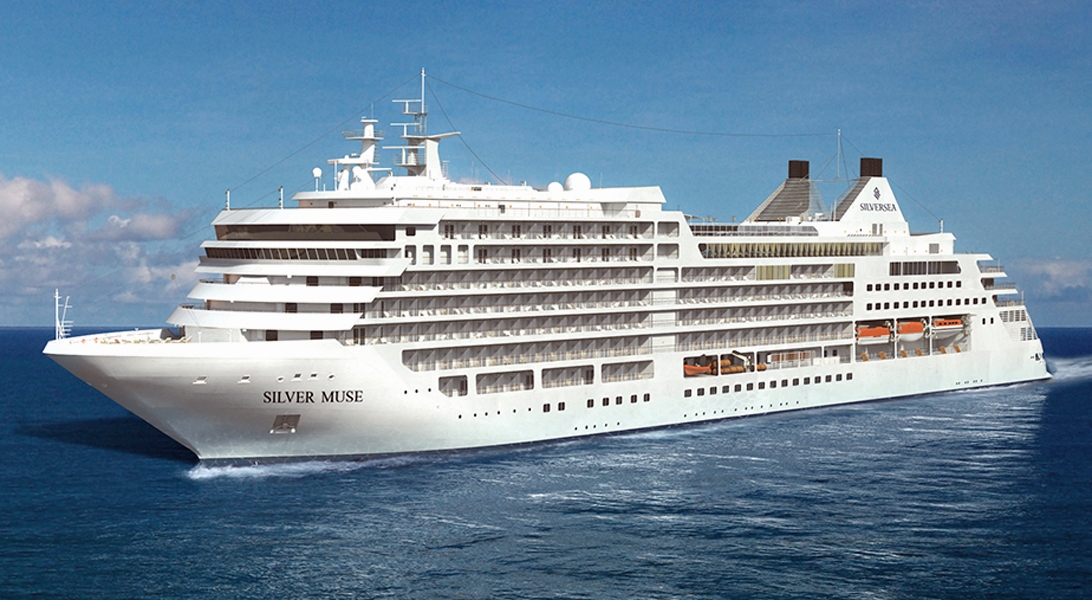


The images shown are for illustration purposes only and may not be an exact representation of what you find on the ship.
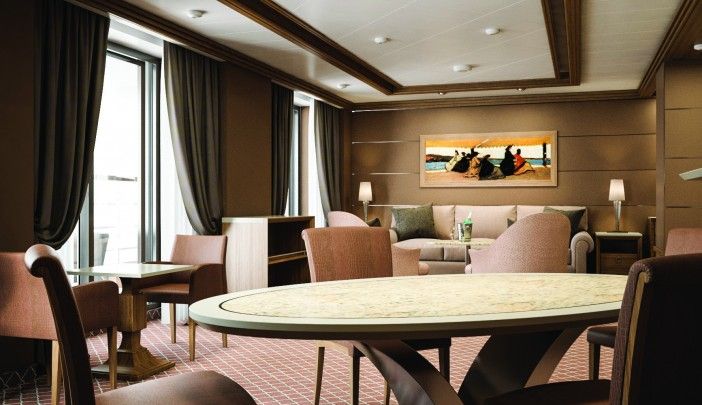
| Grade Code | From | To | |
| G1 | Grand Suite (1 Bedroom) | £25,350 | £26,050 |
| G2 | Grand Suite (2 Bedrooms) | £34,150 | £35,500 |
Indulge in the epitome of ultra-luxury cruising. The Grand Suite is for those who want to experience sailing in style. The sophistication of the Silversea philosophy coupled with ample interior and exterior space makes this the perfect choice for serious travelers. With the biggest verandas on board, enjoy entertaining new friends or simply share intimate meals while contemplating spectacular sunsets. Savor the sense of well-being offered by the luxurious furnishings and modern amenities. Offering an unprecedented level of relaxation, the Grand Suite is the perfect romantic getaway.
One bedroom: up to 146 sq m (44–53 sq m)
Two bedrooms: up to 146 sq m (50-59 sq m)
Essentials
Characteristics
Furniture
Media & Communication
Unlimited Premium Wi-Fi
Butler service
Amenities
Espresso machine
Images are intended as a general reference. Features, materials, finishes and layout may be different than shown.
Please note that the 3rd guest will sleep on a comfortable sofa bed in the reception area of the suite.
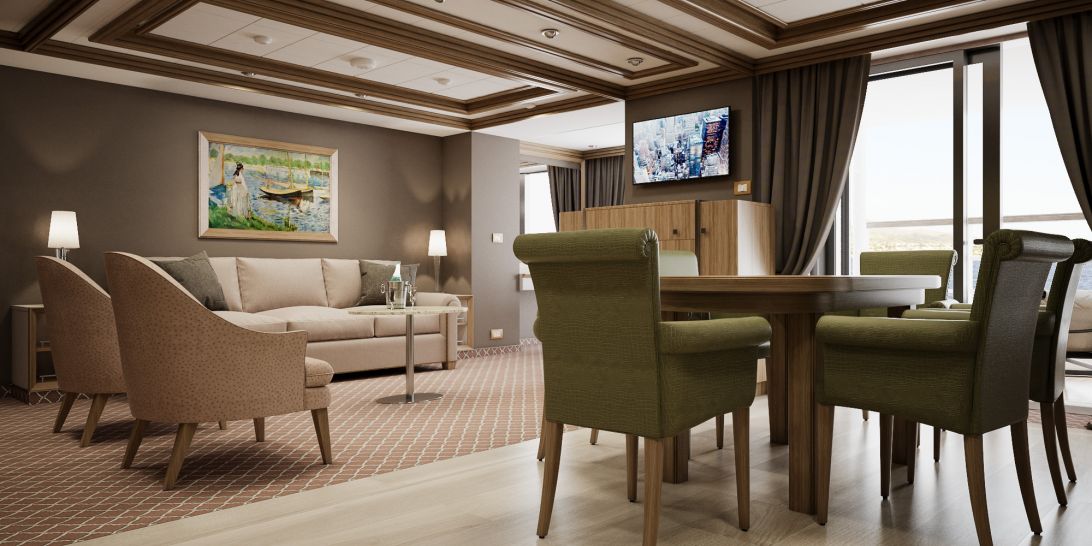
| Grade Code | From | To | |
| O1 | Owner's Suite (1 Bedroom) | £28,050 | £28,750 |
| O2 | Owner's Suite (2 Bedrooms) | £35,850 | £37,150 |
Picture yourself enjoying a delicious breakfast on your private veranda. Imagine watching the sun set, a flute of chilled champagne in hand, setting sail for your next destination. Prestigious, classic, and sophisticated, this stylish apartment suite offers the ultimate in fine accommodation on board. Set aside for those who seek a superlative level of space, comfort, and service, the Owner’s Suite has it all. The adjoining bedroom, with its en suite bathroom, offers its own spectacular ocean views.
One bedroom: up 98 sq m (12 sq m)
Two bedrooms: 119–129 sq m including veranda* (12 sq m)
Essentials
Characteristics
Furniture
Media & Communication
Onboard Services
Amenities
*The difference in size is largely due to a larger entry corridor and does not affect the living or sleeping area.
Images are intended as a general reference. Features, materials, finishes and layout may be different than shown.
Please note that the third guest will sleep on a comfortable sofa bed in the reception area of the suite.
| Grade Code | From | To | |
| R1 | Royal Suite (1 Bedroom) | £22,950 | £23,750 |
| R2 | Royal Suite (2 Bedrooms) | £31,750 | £33,200 |
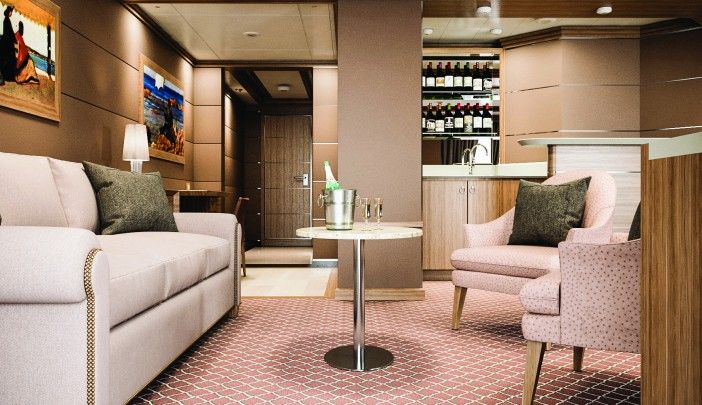
Designed with the values of the culture of living in mind, the Royal Suite offers a vast, elegant space. Precise lines, authentic Italian craftsmanship, and fine materials make up just some of the details of this stunning suite. Commanding and majestic, the Royal Suite boasts a lavish living area perfect for entertaining, plush interior furnishings, and sweeping seascapes from the private terrace. The comfort of the spacious apartment makes this the ideal space for those wanting to feel the true comfort and luxury of the Silversea philosophy.
One bedroom: 105 sq m including veranda (12 sq m)
Two bedroom: 142 sq m including veranda (18 sq m)
Essentials
Characteristics
Furniture
Media & Communication
Onboard Services
Amenities
Images are intended as a general reference. Features, materials, finishes and layout may be different than shown. Front bedroom windows partially obstructed by deck equipment.
Please note that the third guest will sleep on a comfortable sofa bed in the reception area of the suite.
| Grade Code | From | To | |
| SL | Silver Suite | £18,900 | £19,600 |
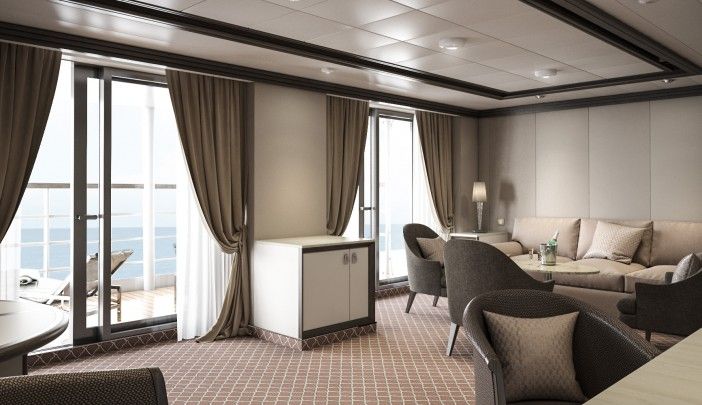
Step onto your terrace and bask in the calm feeling of the ocean breeze. Dissolve into the comfort of your king-size bed. Prepare for the evening in the beautiful marble bathroom. The upper deck location gives the most spectacular of ocean views while the spacious living area allows for comfortable relaxing, where cozy nights in become veritable experiences in themselves. This suite is also available in a two-bedroom configuration for an additional charge, making it an ideal option for families. Connecting suites are indicated on the deck plan with an arrow pointing to the two adjacent suites.
One bedroom: 73 sq m including veranda (12 sq m)
Essentials
Characteristics
Furniture
Media & Communication
Onboard Services
Amenities
Images are intended as a general reference. Features, materials, finishes and layout may be different than shown.
Please note that the 3rd guest will sleep on a comfortable sofa bed in the reception area of the suite.
The images shown are for illustration purposes only and may not be an exact representation of what you find on the ship.
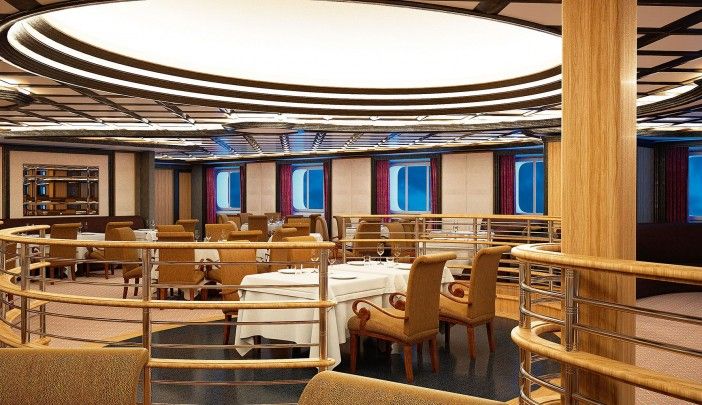
Refined global fare and grilled classics take center stage at Atlantide. Drop in for an indulgent à la carte breakfast, a leisurely lunch, or an elegant dinner among family and new friends, served in a timeless and sophisticated setting.
Images are intended as a general reference. Features, materials, finishes and layout may be different than shown.
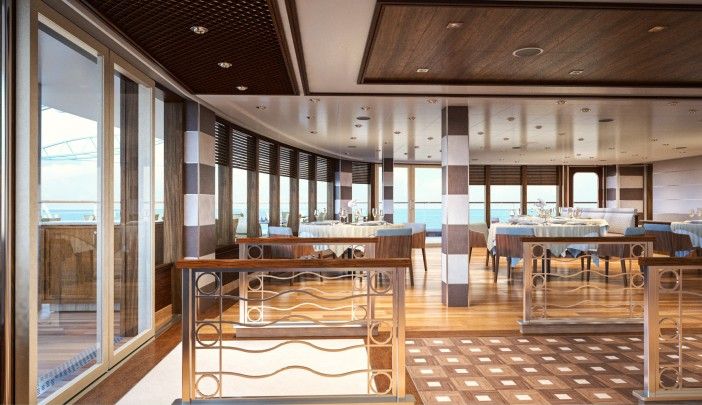
La Terrazza elevates casual dining by day and delivers an authentic Italian experience by night. During the breakfast and lunch buffets, our master chefs prepare global favorites at live stations. As evening falls, handmade pastas and classic seafood dishes are the centerpiece — every impeccable bite paired with fine wines from around the world.
Images are intended as a general reference. Features, materials, finishes and layout may be different than shown.
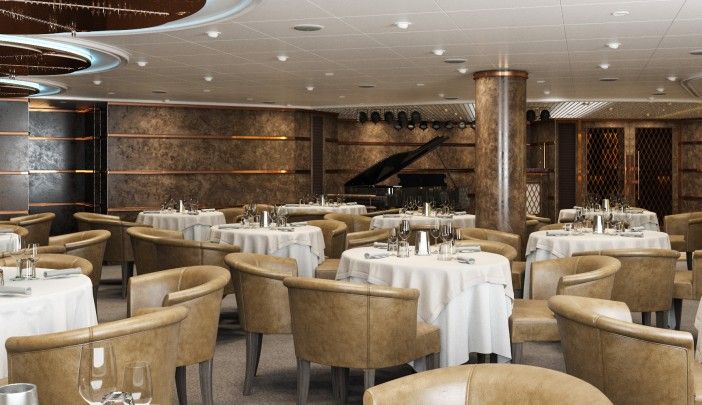
As the stars come out, Silver Note comes alive with the rhythm of jazz and the artistry of small-plate fine dining. This intimate supper-club experience pairs soulful live performances with inventive, international cuisine in a chic, lounge-style setting — one of the most exclusive dining concepts at sea.
Learn more about the Epicurean Experience, which includes dining in three specialty restaurants with preferential rates.
Images are intended as a general reference. Features, materials, finishes and layout may be different than shown.
The images shown are for illustration purposes only and may not be an exact representation of what you find on the ship.
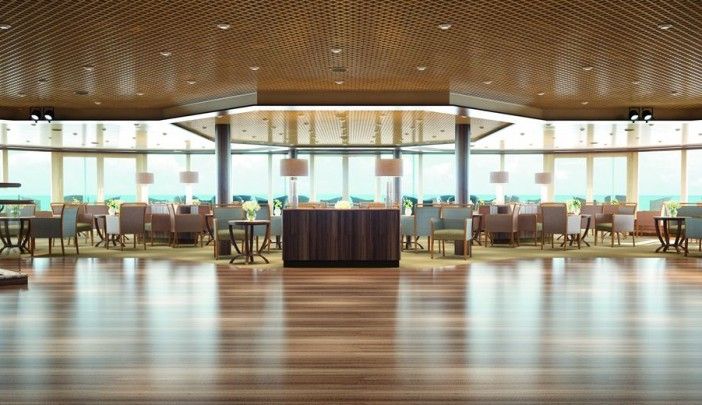
True to its name, Panorama Lounge surrounds you with sweeping views from every angle. Sunlight pours through wraparound windows by day, framing horizons that shift like watercolors. Evenings hum with piano chords and DJ beats that carry you late into the night. And all of it pairs wonderfully with cocktails handcrafted to match your mood.
Images are intended as a general reference. Features, materials, finishes and layout may be different than shown.
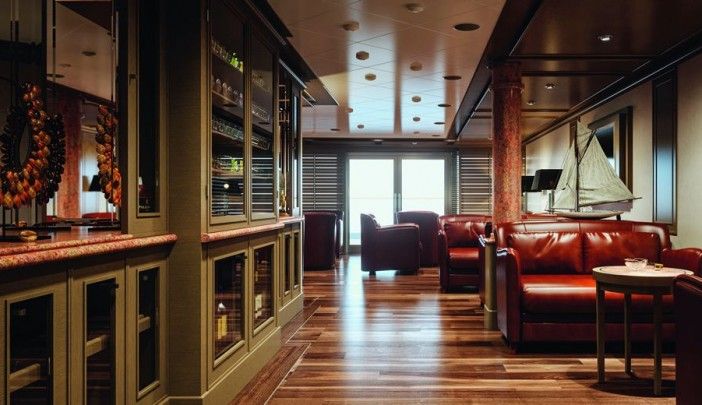
As evening stretches into night, Connoisseur’s Corner offers a stylish refuge for those who appreciate the time-honored rituals of smoke and spirit. Sink into tufted leather chairs with a hand-rolled cigar and a glass of one of our finest cognacs or whiskeys. Indoors or under the stars, every moment is marked by pure indulgence.
Images are intended as a general reference. Features, materials, finishes and layout may be different than shown.
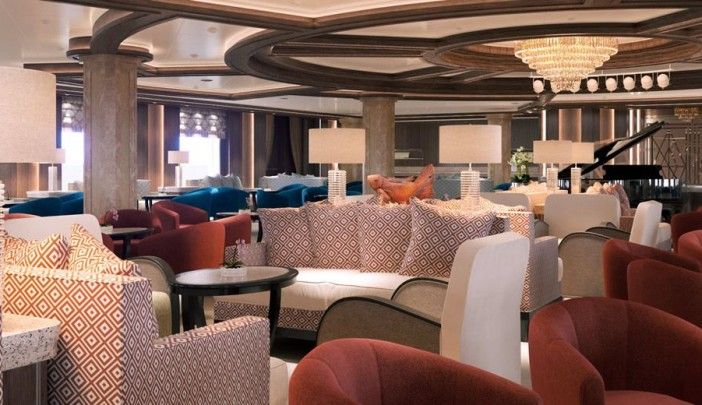
Surrender to a world of Italian elegance where the art of aperitivo takes pride of place. Ideal for connecting over spritzes, negronis, and light bites, here each evening feels like a celebration. As laughter lingers, crystal glasses clink, and live piano notes ripple through the air, Dolce Vita compels you to savor the sweetness of life on board.
Images are intended as a general reference. Features, materials, finishes and layout may be different than shown.
The images shown are for illustration purposes only and may not be an exact representation of what you find on the ship.
The images shown are for illustration purposes only and may not be an exact representation of what you find on the ship.


Our Fusion packages are all ABTA & ATOL protected ensuring that your booking is safe with us
| 14 nights aboard the Silver Muse | |||
| Butler Service in Every Suite | |||
| Gratuities Always Included | |||
| Beverages In-Suite and Throughout the Ship | |||
| Gourmet Dining | |||
| In Suite Dining & 24-Hour Room Service | |||
| Intimate small size ships | |||
| Free Wifi Throughout the Ship | |||
| Free Zodiac, Land and Sea Tours & Activities & Complimentary Expedition gear | |||
| Port Taxes and Fees | |||
 | ABTA and ATOL Protection* | ||
Date 2nd Apr 2028 |
Nts 14 |
Suite £7,500pp |
Date 2nd Apr 2028 |
Nts 14 |
Suite £7,500pp |
| Suite staterooms from | £7,500pp | ||
| CV | Classic Veranda Suite | £8,350pp | |
| DX | Deluxe Veranda Suite | £9,100pp | |
| ME | Medallion Suite | £12,950pp | |
| G1 | Grand Suite (1 Bedroom) | £25,350pp | |
| G2 | Grand Suite (2 Bedrooms) |  | |
| O1 | Owner's Suite (1 Bedroom) | £28,050pp | |
| O2 | Owner's Suite (2 Bedrooms) | | |
| PA | Panorama Suite | £7,650pp | |
| R1 | Royal Suite (1 Bedroom) | £22,950pp | |
| R2 | Royal Suite (2 Bedrooms) | | |
| SL | Silver Suite | £18,900pp | |
| SV | Superior Veranda Suite | £8,750pp | |
| VI | Vista Suite | £7,500pp | |
Fusion Holidays when selling travel arrangements is a trading name of Co-op Travel Services Limited, registration 08903986. Fusion Cruises is an Accredited Body Member of Co-op Travel Services Limited ATOL 12904.
Book with Confidence. We are a Member of ABTA which means you have the benefit of ABTA’s assistance and Code of Conduct.
Some of the flights and flight-inclusive holidays on this website are financially protected by the ATOL scheme but ATOL protection does not apply to all holiday and travel services offered on this website. This website will provide you with information on the protection that applies in the case of each holiday and travel service offered before you make your booking. If you do not receive an ATOL Certificate then the booking will not be ATOL protected. If you do receive an ATOL Certificate but all parts of your trip are not listed on it, those parts will not be ATOL protected. Please see our booking conditions for information, or for more information about financial protection and the ATOL Certificate go to: www.caa.co.uk