This site uses cookies as defined in our Cookie Policy, by continuing to use this site you agree to their use.
Continue

| Arrive | Depart | ||||||
| 4th04 | JanJan | 202929 | Hong Kong, Hong Kong, embark on the Silver Muse | 17:00 | |||
The Hong Kong Island skyline, with its ever-growing number of skyscrapers, speaks to ambition and money. Paris, London, even New York were centuries in the making, while Hong Kong's towers, bright lights, and glitzy shopping emporia weren't yet part of the urban scene when many of the young investment bankers who fuel one of the world's leading financial centers were born. Commerce is concentrated in the glittering high-rises of Central, tucked between Victoria Harbor and forested peaks on Hong Kong Island's north shore. While it's easy to think all the bright lights are the sum of today's Hong Kong, you need only walk or board a tram for the short jaunt west into Western to discover a side of Hong Kong that is more traditionally Chinese but no less high-energy. You'll discover the real Hong Kong to the east of Central, too, in Wan Chai, Causeway Bay, and beyond. Amid the residential towers are restaurants, shopping malls, bars, convention centers, a nice smattering of museums, and—depending on fate and the horse you wager on—one of Hong Kong's luckiest or unluckiest spots, the Happy Valley Racecourse. Kowloon sprawls across a generous swath of the Chinese mainland across Victoria Harbour from Central. Tsim Sha Tsui, at the tip of Kowloon peninsula, is packed with glitzy shops, first-rate museums, and eye-popping views of the skyline across the water. Just to the north are the teeming market streets of Mong Kok and in the dense residential neighborhoods beyond, two of Hong Kong's most enchanting spiritual sights, Wong Tai Sin Temple and Chi Lin Nunnery. As you navigate this huge metropolis (easy to do on the excellent transportation network), keep in mind that streets are usually numbered odd on one side, even on the other. There's no baseline for street numbers and no block-based numbering system, but street signs indicate building numbers for any given block. A spectacular, serrated skyline of soaring towers and neon lights, Hong Kong is a vibrant, immersive metropolis and cultural hub. Dramatic harbour-front light shows transform the waterfront’s gleaming buildings into a colourful canvas – best seen from the Star Ferry, when the Symphony of Lights blares into life each evening. A city where future and tradition collides - perhaps best illustrated by the skyscrapers that feature gaping holes, designed to allow spirit dragons to soar from the hills to the waterfront unimpeded. Wander flowing shopping streets, wade through sprawling markets and soak up the neon glory of this one-of-a-kind city - which continues to reach for the sky. Hong Kong's dense jumble of activity is one of its main appeals, but once you've felt the thrill of rising to towering observation decks, to see the soaring city from above, it's surprisingly easy to find peace among Hong Kong's intense urban wonders. Victoria Peak is the highest point and it offers staggering views down over the city and harbour. The Peak Tram funicular can ferry you to the top, to the vantage point which was historically adored by the rich for the cooler air found here, away from the busy bustle of the city streets. Many elaborate temples add a tranquil element to Hong Kong’s whirr, and Tin Hau temple has a surprisingly urban location, considering its dedication to the Goddess of the Sea. It did once occupy the shorefront, but the city's growth saw land reclaimed from the sea around it, leaving the temple marooned inland. Having been leased to the British for 99 years, milky tea is a revered tradition here - enjoy your cup with a serving of local dim sum.While it's easy to think all the bright lights are the sum of today's Hong Kong, you need only walk or board a tram for the short jaunt west into Western to discover a side of Hong Kong that is more traditionally Chinese but no less high-energy. You'll discover the real Hong Kong to the east of Central, too, in Wan Chai, Causeway Bay, and beyond. Amid the residential towers are restaurants, shopping malls, bars, convention centers, a nice smattering of museums, and—depending on fate and the horse you wager on—one of Hong Kong's luckiest or unluckiest spots, the Happy Valley Racecourse. Kowloon sprawls across a generous swath of the Chinese mainland across Victoria Harbour from Central. Tsim Sha Tsui, at the tip of Kowloon peninsula, is packed with glitzy shops, first-rate museums, and eye-popping views of the skyline across the water. Just to the north are the teeming market streets of Mong Kok and in the dense residential neighborhoods beyond, two of Hong Kong's most enchanting spiritual sights, Wong Tai Sin Temple and Chi Lin Nunnery. As you navigate this huge metropolis (easy to do on the excellent transportation network), keep in mind that streets are usually numbered odd on one side, even on the other. There's no baseline for street numbers and no block-based numbering system, but street signs indicate building numbers for any given block. | |||||||
| 5th05 | JanJan | 202929 | At Sea | ||||
| 6th06 | JanJan | 202929 | Vigan, Philippines | 08:00 | 17:00 | ||
| Vigan, the capital of the Province of Ilocos Sur, is located on the west coast of Luzon Island. It has the most intact examples of a planned Spanish colonial town in Asia, which was established in the 16th century. Vigan’s location at the river delta of the Abra River along the north-western coastline of the main island of Luzon, made this an important trading post before the colonial era. The city’s architecture reflects the melding of cultural elements from within the Philippines and China region with those of Europe and Mexico. This combination has created a unique culture and townscape unique within East and South-East Asia. The City is unique for having preserved much of its Hispanic colonial character and historic urban lay out. | |||||||
| 7th07 | JanJan | 202929 | Manila, Philippines | ||||
MANILA, the capital city of the Philippines, was founded in, 1571 by Spanish conquistador Miguel López de Legazpi. It is one of the oldest cities in the country and was the seat of power for most of the colonial rules of the Philippines. It is situated on the eastern shore of Manila Bay and contains a multitude of landmarks, some of which date back to the 16th century. It is home to the baroque 16th-century San Agustin Church as well as Fort Santiago, a storied citadel and military prison. In the 19th century Manila became one of the most modern cities in Asia. Before the Spanish–American War, Manila saw the rise of the Philippine Revolution. Under the American rule following the Spanish-American War, the United States changed the official language from Spanish to English. Towards the end of World War II, during the Battle of Manila, most of the city was flattened by intensive aerial bombardment. Today, tourism is a vital industry in Manila. Major shopping malls and bazaars thrive around Manila. Known as the Pearl of the Orient, Manila is the Philippine's sprawling capital city and a chaotic scramble of intoxicating urban energy. A megacity of culture and creativity, there's a lot to discover amid these chockablock streets. The delicious food wins many fans, but it’s the friendly Filipinos - always eager to help - who ensure that Manila takes a special place in the hearts of many visitors. The Baywalk is one of the city's best places for catching a legendarily intense sunset - or wandering among joggers and leisurely strollers. The city's Intramuros area is its cobbled historic core - and was the centre of power when the Spanish ruled these lands. Decorated with colonial architecture and citadels, the district is known for its rumbling horsedrawn carriages and storied history. Head to Fort Santiago, which aims canons out across the water from its chunky stone walls. The UNESCO World Heritage Site stands against the odds, despite World War II bombardments, fires and earthquakes - a true testament to Manila's incredible resilience. As one of the most densely populated places in the world, Manilla can be manically busy at times, but you can always escape to Rizal Park. With Chinese and Japanese gardens and plenty of room for open-air events, it's a beautiful oasis within the city. It's also an incredibly important national symbol, as the location where the hero of independence, Jose Rizal, was executed. A large statue now memorialises him here, and the park was renamed in his honour. | |||||||
| 8th08 | JanJan | 202929 | Manila, Philippines | 17:00 | |||
MANILA, the capital city of the Philippines, was founded in, 1571 by Spanish conquistador Miguel López de Legazpi. It is one of the oldest cities in the country and was the seat of power for most of the colonial rules of the Philippines. It is situated on the eastern shore of Manila Bay and contains a multitude of landmarks, some of which date back to the 16th century. It is home to the baroque 16th-century San Agustin Church as well as Fort Santiago, a storied citadel and military prison. In the 19th century Manila became one of the most modern cities in Asia. Before the Spanish–American War, Manila saw the rise of the Philippine Revolution. Under the American rule following the Spanish-American War, the United States changed the official language from Spanish to English. Towards the end of World War II, during the Battle of Manila, most of the city was flattened by intensive aerial bombardment. Today, tourism is a vital industry in Manila. Major shopping malls and bazaars thrive around Manila. Known as the Pearl of the Orient, Manila is the Philippine's sprawling capital city and a chaotic scramble of intoxicating urban energy. A megacity of culture and creativity, there's a lot to discover amid these chockablock streets. The delicious food wins many fans, but it’s the friendly Filipinos - always eager to help - who ensure that Manila takes a special place in the hearts of many visitors. The Baywalk is one of the city's best places for catching a legendarily intense sunset - or wandering among joggers and leisurely strollers. The city's Intramuros area is its cobbled historic core - and was the centre of power when the Spanish ruled these lands. Decorated with colonial architecture and citadels, the district is known for its rumbling horsedrawn carriages and storied history. Head to Fort Santiago, which aims canons out across the water from its chunky stone walls. The UNESCO World Heritage Site stands against the odds, despite World War II bombardments, fires and earthquakes - a true testament to Manila's incredible resilience. As one of the most densely populated places in the world, Manilla can be manically busy at times, but you can always escape to Rizal Park. With Chinese and Japanese gardens and plenty of room for open-air events, it's a beautiful oasis within the city. It's also an incredibly important national symbol, as the location where the hero of independence, Jose Rizal, was executed. A large statue now memorialises him here, and the park was renamed in his honour. | |||||||
| 9th09 | JanJan | 202929 | Coron Island, Philippines | 09:00 | 18:00 | ||
Spoken of with awed reverence in scuba-diving circles, Coron's dramatic rock protrusions, which jut from emerald seas and glorious sweeps of sand, make it a destination that you can't help but dive into. The perfect base for an adventure holiday, Coron's exquisite setting means you'll face taxing choices on a daily basis - to spend the day relaxing on the soft sand, or to pound through the jungle on horseback? Whether you choose relaxation or all-out-action, you're sure to fall head over heels for Coron's beauty. Dramatic rock protrusions rear from turquoise sea - while endless sweeps of golden sand, and underwater worlds of colourful life – make Coron a place that you can’t help but dive into. A snorkeler and scuba diver’s paradise, ghostly shipwrecks lie below the glorious waters here, swirling with life and stories. With complex coral reefs, towering cliffs, and turquoise waters blotched with emerald greens, Coron is a vibrant and revitalising escape of spectacular islands and pristine beaches. With limestone cliffs jutting into the air, Kayangan Lake is already beautiful enough from the surface - but it’s a whole other world in the depths of the freshwater lake. Dive in to see the underlying world in all of its colourful glory, or sail across the surface and observe the beauty through the glass-like water. Elsewhere, Lake Barracuda is a unique diving experience, where you can swim among a swirl of intertwining fresh and saltwater and feel the sudden shifts in temperature as you move. Experienced divers should head out to the dozens of ghostly Japanese wrecks that have lain still on these sea-beds ever since they were sunken by a US air assault, as the Pacific War raged. All of that swimming, diving and beachside relaxation is hard work - so visit Maquinit Hot Springs to dissolve any stresses in the thermally heated waters, which will poach any sore muscles back to health. A Buko Shake’s blend of coconut, milk and ice is always refreshing – especially when sipped on your choice of Coron’s isolated beach paradises. | |||||||
| 10th10 | JanJan | 202929 | Puerto Princesa, Palawan, Philippines | 08:00 | 18:00 | ||
The Spanish arrived at this beautiful corner of the world in March of 1872, founding the city, that would eventually become the Capital of Palawan. In 2011, the area received a huge boost, when New7 announced its list of the 7 Wonders of Nature – counting 500 million votes in the process. Puerto Princesa’s stunning underground river - complete with a cavernous, sunken lagoon - beat off wonderful sites like the Great Barrier Reef, to claim a spot on the final, prestigious list. Set sail across the glowing green water, on a journey into the gaping mouth of the limestone caves at Puerto Princesa. Known for being one of the least densely populated, cleanest and most environmentally friendly cities in the Philippines, there’s a raft of natural wonders to explore - from diving hotspots to towering limestone cliffs, and the entrancing underworld of the underground river. Founded by the Spanish in 1872 Puerto Princesa is one of the Philippines’s largest centres - but the Green City is also one of the country's most spacious and lush. Whether it’s the innovative environmental credentials or the dense vegetation clinging to scenic limestone cliffs nearby Puerto Princesa welcomes you to a rich green and astonishingly beautiful corner of the world. The underground river of glowing emerald water slices into the limestone rock and runs through inky darkness for five miles amid dark stalactites and elaborate natural rock sculptures. A subterranean wonder sail into the cave in a canoe to witness this UNESCO World Heritage Site firsthand and explore a gaping interior where bats flutter overhead. The scenery is just as impressive above the earth with tropical beaches and rainforest-cloaked waterfalls nearby. Travel between attractive bays and islands alive with diverse flora as well as monkeys and monitor lizards wandering freely. Island hop the stunning sandy isles that pepper the turquoise water of Honda Bay to investigate characterful idylls that beg to be snorkelled surrounded by seawater stocked with starfish. Puerto Princesa itself is dotted with cultural and historical sites - including the harrowing World War II history of Plaza Cuartel. Head for the Baywalk to try some local foods and to soak up the palm-lined waterfront atmosphere. | |||||||
| 11th11 | JanJan | 202929 | At Sea | ||||
| 12th12 | JanJan | 202929 | Sandakan, Sabah, Malaysia | ||||
Borneo's forbidding interior made it less attractive to early traders and explorers than neighboring areas, so what is now the state of Sabah remained unexploited by the British until the late 19th century, although traders long visited for exotic items such as bird's nests (for the celebrated Chinese soup). In 1963, Sabah joined Sarawak, Malaya, and Singapore (which later seceded) in forming the Federation of Malaysia. Known as the "Land Below the Wind" because it's south of the typhoon belt, Sabah occupies Borneo's northern tip. It shares its southwestern border with Sarawak and the rest of its southern border with the Indonesian province of East Kalimantan. Today vast tracts of forest have been replaced by oil-palm plantations, and a sizable portion of remaining forest land is protected in national parks or conservation areas.On the shore of a deep bay, Sandakan was the capital of British North Borneo and one of the most important towns in Southeast Asia from the 1880s through the 1930s. But Japanese occupation during World War II and allied bombing virtually destroyed the town, and the capital was transferred to Jesselton (now Kota Kinabalu) in 1946. Sandakan enjoyed a revival in the 1970s as the center of the region's logging industry. Logging has since declined, but Sandakan is still worth visiting for its rich history and proximity to some of Borneo's most accessible wildlife attractions. Sandakan's downtown, much of it built on landfill, is squeezed between a steep promontory and Sandakan Bay. In recent years, this city of 450,000 (counting its extensive suburbs) has begun redeveloping its downtown waterfront into a shopping and nightlife hub. Its working harbor area for passengers and cargo is 6 km (4 miles) west of downtown. Meet the extraordinary wildlife of Sabah a place where orange orangutans move through the rainforest and elusive sun bears hide out in the safety of dense canopy. Join the extraordinary animals in rehabilitation centres where they are lovingly cared for before often being released back into the jungle's interior. You'll also have the chance to encounter one of nature’s more unusual creatures the bizarre proboscis monkey named after the bulbous swinging noses they sport. Sandakan stretches along a scenic bay looking out over the Sulu Sea. A former trading hub ships voyaged here seeking riches from the thick jungle especially sought after bird nests. Nowadays the city has found its niche as a major palm-oil and cacao exporter. Bridges creaking planks and wooden walkways form an elaborate floating maze over the waves at Sim-Sim Water Village. Visit this fishing hotspot to sample some of the succulent local fare tasting freshly prepared meals like butter prawns seafood broths and fried squid snacks. Having served as the British capital of North Borneo there’s always time for an afternoon tea to keep you refreshed during your explorations. World War II history hangs heavy around the city’s neck and Sandakan was heavily shelled during the hostilities when it was occupied by the Japanese. Visit the Memorial Park to learn of the horrifying Sandakan Death Marches which killed thousands of Allied prisoners of war. | |||||||
| 13th13 | JanJan | 202929 | Sandakan, Sabah, Malaysia | 00:15 | |||
Borneo's forbidding interior made it less attractive to early traders and explorers than neighboring areas, so what is now the state of Sabah remained unexploited by the British until the late 19th century, although traders long visited for exotic items such as bird's nests (for the celebrated Chinese soup). In 1963, Sabah joined Sarawak, Malaya, and Singapore (which later seceded) in forming the Federation of Malaysia. Known as the "Land Below the Wind" because it's south of the typhoon belt, Sabah occupies Borneo's northern tip. It shares its southwestern border with Sarawak and the rest of its southern border with the Indonesian province of East Kalimantan. Today vast tracts of forest have been replaced by oil-palm plantations, and a sizable portion of remaining forest land is protected in national parks or conservation areas.On the shore of a deep bay, Sandakan was the capital of British North Borneo and one of the most important towns in Southeast Asia from the 1880s through the 1930s. But Japanese occupation during World War II and allied bombing virtually destroyed the town, and the capital was transferred to Jesselton (now Kota Kinabalu) in 1946. Sandakan enjoyed a revival in the 1970s as the center of the region's logging industry. Logging has since declined, but Sandakan is still worth visiting for its rich history and proximity to some of Borneo's most accessible wildlife attractions. Sandakan's downtown, much of it built on landfill, is squeezed between a steep promontory and Sandakan Bay. In recent years, this city of 450,000 (counting its extensive suburbs) has begun redeveloping its downtown waterfront into a shopping and nightlife hub. Its working harbor area for passengers and cargo is 6 km (4 miles) west of downtown. Meet the extraordinary wildlife of Sabah a place where orange orangutans move through the rainforest and elusive sun bears hide out in the safety of dense canopy. Join the extraordinary animals in rehabilitation centres where they are lovingly cared for before often being released back into the jungle's interior. You'll also have the chance to encounter one of nature’s more unusual creatures the bizarre proboscis monkey named after the bulbous swinging noses they sport. Sandakan stretches along a scenic bay looking out over the Sulu Sea. A former trading hub ships voyaged here seeking riches from the thick jungle especially sought after bird nests. Nowadays the city has found its niche as a major palm-oil and cacao exporter. Bridges creaking planks and wooden walkways form an elaborate floating maze over the waves at Sim-Sim Water Village. Visit this fishing hotspot to sample some of the succulent local fare tasting freshly prepared meals like butter prawns seafood broths and fried squid snacks. Having served as the British capital of North Borneo there’s always time for an afternoon tea to keep you refreshed during your explorations. World War II history hangs heavy around the city’s neck and Sandakan was heavily shelled during the hostilities when it was occupied by the Japanese. Visit the Memorial Park to learn of the horrifying Sandakan Death Marches which killed thousands of Allied prisoners of war. | |||||||
| 14th14 | JanJan | 202929 | At Sea | ||||
| 15th15 | JanJan | 202929 | Makassar, Indonesia | 08:00 | 18:00 | ||
| Once the gateway to Indonesia, Makassar is teeming with vestiges of its Dutch colonial past. The port, also known by its one-time name Ujung Pandang, was part of the Dutch East India Company from 1699 the early 1800s, and then as a part of the Netherlands Indies (or Dutch East Indies) until its liberation after WWII. Street signs follow the traditional European alphabet, so any visitor not versed in the city’s official language of Makassarese needn’t worry about getting lost! Fort Rotterdam on the western coast of the city is perhaps Makassar’s most iconic landmark. It was from here that trades between Holland and Indonesia was struck and the fort has played a large role in Makassar’s development. Originally named Benteng or Fort Jumpandang, the fort was built in 1545, but has been expanded many times over its long history. Because of the fort’s enormity, it became Indonesia’s centre for stockpiling spices prior to their dispatch to Europe. The building is unmissable – one stroll down the (very pleasant) boulevard will take you right to its gates. If you feel the call of the wild while in Makassar, fear not, as the Bantimurung Bulusaraung National Park is just 50 kilometres away. The limestone hills, steep karts walls and tropical heat have made the park an ideal breeding ground for butterflies. The park is also home to an immense 15 x 20 metre waterfall that is said to “lift the spirits of all who see it”. Next to the waterfall is Goa Mimpi or The Dream Cave, which has millennia old cave art. | |||||||
| 16th16 | JanJan | 202929 | At Sea | ||||
| 17th17 | JanJan | 202929 | Komba Island, Indonesia | 07:00 | 16:00 | ||
On the approach to Pulau Komodo, a tiny island just 36 km (22 miles) long and 16 km (9 miles) across at its widest point, it's hard to imagine that this is the home of the fearsome dragons described by late-19th-century explorers. The island, in the Indonesian region of Nusa Tenggara, lies between the islands of Sumbawa and Flores at the heart of the Komodo National Park, designated a UNESCO World Heritage Site and one of the New7Wonders of Nature. At first look, steep hillsides of parched, golden grasses slide down into topaz bays covered in glass-clear waters, and white-sand beaches hem quiet shorelines. But then you remember that this innocent-looking island is inhabited by 13-foot-long, 220-pound ora, as Komodo dragons are known locally. Don't be frightened: Although stories of people disappearing run rampant, a trip here is quite safe—as long as you stay with a park guide.While Komodo dragons are the main attraction, several other large species also reside here. Dark-brown deer and small buffalo nibble the grasses of the high plains, macaques peer through the trees, and wild pigs crash through the underbrush. More than 150 types of birds also inhabit the island, including cockatoos, imperial pigeons, sea eagles, and mound-building megapodes. Offshore in the marine reserve, you might spot dolphins, dugong (a relative of the manatee), sea turtles, manta rays, and even whales, as well as more than 1,000 species of fish.Lodging on Pulau Komodo was nonexistent until 2012, when a modest, eco-friendly resort and diving club opened, providing a rare opportunity for scuba divers and snorkelers to explore this pristine habitat's extensive coral reefs and extraordinary marine life. Travelers can also find comfortable lodging and a convenient base from which to explore the many natural wonders of the Komodo National Park in Labuan Bajo, on the island of Flores (East Nusa Tenggara). Komodo, the volcanic island of giant lizards, lies 320 miles (515 kilometres) east of Bali. Komodo is 25 miles (40 kilometres) long and 12 miles (19 kilometres) wide; its parched hills ascend to a height of 2,410 feet (734 metres). Komodo is home to a community of some 2000 people who make their living primarily from fishing. The island is the centrepiece of the Komodo National Park, where you will find the most tangible legacy left behind from the Jurassic Era. Komodo Island was little-known and the Komodo dragons were only a myth until the giant lizards were scientifically described in 1912 . Extinct almost everywhere else, the island attracts thousands of visitors from all over the world who come to see the Komodo dragons in their natural habitat. Komodo National Park has been declared a UNESCO World Heritage Site and Biosphere Reserve. The Komodo dragon’s great bulk and weight are its most unique characteristics; even hatchlings average 20 inches (51 centimetres) in length. The adult male can reach 10 feet (3 metres) and weigh up to 330 pounds (150 kilos). Females attain only two-thirds of this size, and lay up to 30 eggs at a time. With their saw-like teeth, these fierce creatures are able to rip apart a deer, goat or wild pig. The animals have an uncanny sense of smell, and are considered among the world's most intelligent reptiles. They are quite agile over short distances, and can move swiftly to capture their prey. The Indonesian Directorate of Nature Conservation (PPA) administers Komodo National Park. Park Rangers must escort all visitors; independent exploration of the park is not permitted. | |||||||
| 18th18 | JanJan | 202929 | Lembar, Lombok, Indonesia | 10:30 | 22:00 | ||
| An island of startling contradictions and contrasts Lombok exudes an aura of the staid and the rural a genteel way of life in a quiet backwater. Located to the east and across a deep strait from its illustrious neighbor Bali the island of Lombok offers unique culture beautiful landscapes and a far less frenetic pressured atmosphere than Bali. However savvy travelers agree that Lombok’s calm existence may soon come to an end as it is fast becoming the new "in place" after Bali. The island was once ruled by a series of Sasak princes who spent their time fending off successive invasions from Sumbawanese and Makassarese attackers. In 1740 the Balinese established a stronghold here and imposed their culture on the Sasaks. Later Lombok came under Dutch rule until the country achieved independence. The western part of the almost circular island is well irrigated by mountain streams and artesian springs. Here Balinese and Sasaks have sculpted handsome rice terraces Hindu temples vie for attention with glistening white mosques rising from picturesque rural villages. More dramatic is the southern coast with beautiful sandy bays set between rocky outcrops. Most of Lombok’s attractions are concentrated in the western district of the island within a nine-mile radius of the capital Mataram. Members of Lombok's polyglot population - Sasak Balinese Chinese and Arab - continue their laid-back traditional ways. | |||||||
| 19th19 | JanJan | 202929 | Benoa, Bali, Indonesia, disembark the Silver Muse | ||||
Bali really is as alluring as everyone says. This island, slightly bigger than Delaware, has it all: beaches, volcanoes, terraced rice fields, forests, renowned resorts, surfing, golf, and world-class dive sites. But what sets Bali apart from other nearby tropical destinations is Balinese tradition, and villagers dedicated to celebrating it. The hundreds of temples, dances, rituals, and crafts linked to their ancient Hindu faith aren't a show for tourists, but a living, breathing culture in which visitors are warmly received by the Balinese, who cherish their own identities. Bali. A.k.a. Island of the Gods, Land of a thousand temples or the World’s last paradise. As superlative as these monikers may sound, they do not do justice to the actual reality of the island. Bali is as good as everyone says – verdant mountains with terraced rice fields in one direction, black sand beaches in another and captivating people that will leave even the most seasoned traveller humbled. If you’re looking for a Garden of Eden that really does have it everything, Bali ticks all the boxes. The rich and diverse culture of the island is what sets Bali apart from Indonesia’s (many) other tropical paradises. The country’s estimated 10,000 Buddhist-Hindu temples, with their daily offerings of lotus flowers and fruit are testament to the gentleness of the islander’s belief. Then there is the vibrant arts and crafts scene, notably in Ubud in the centre of the island, but prolific everywhere. Ideal souvenirs to bring back range from gorgeous silver jewellery to intricate wood carvings. Additionally, do try to see a traditional dance if possible, particularly if accompanied to local gamelan music. No one could mention Bali without mentioning the food. Dishes range from elaborate meals to street food bites, but all are without exception ambrosia. Do not miss out on tasting a succulent chicken satay, betutu (apparently the King’s favourite meal) and sambal matah. But whatever you decide to discover, you can be assured of a taste sensation that will remain with you long after you have returned home. | |||||||
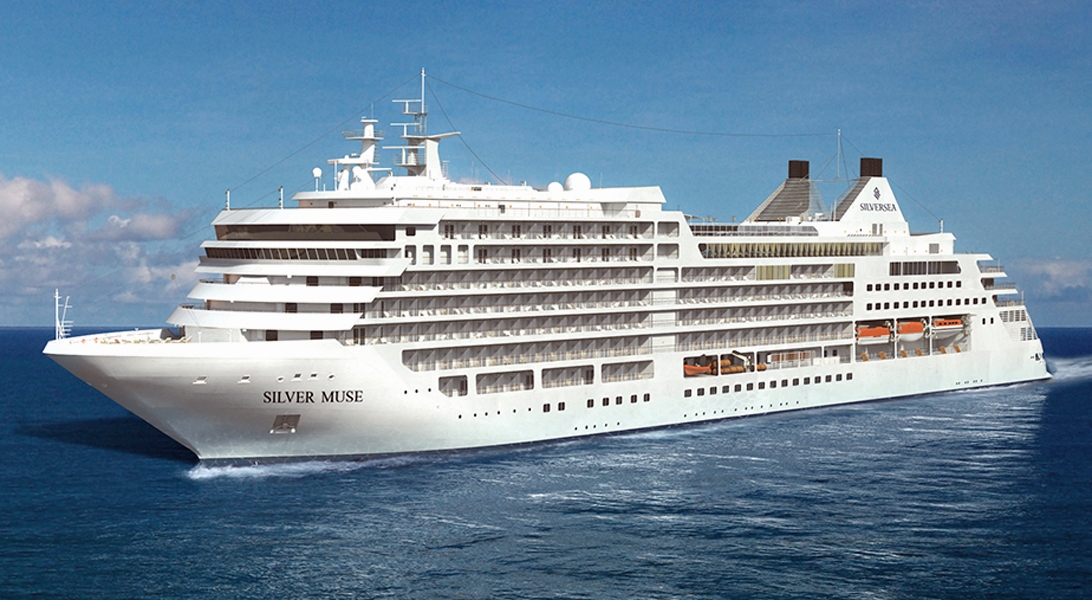


The images shown are for illustration purposes only and may not be an exact representation of what you find on the ship.
| Grade Code | From | To | |
| G1 | Grand Suite (1 Bedroom) | £22,200 | £22,650 |
| G2 | Grand Suite (2 Bedrooms) | £30,100 | £31,000 |
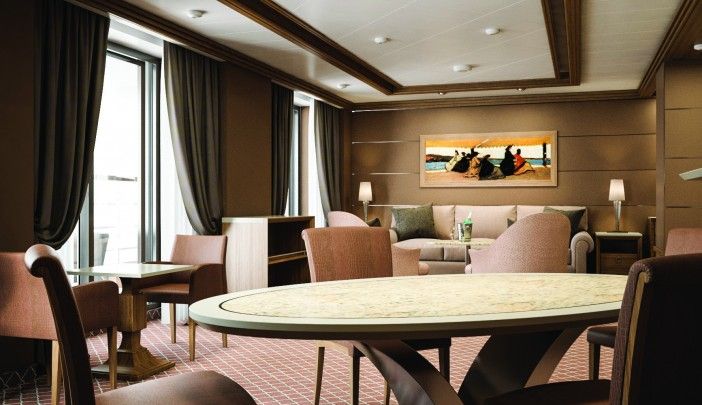
Indulge in the epitome of ultra-luxury cruising. The Grand Suite is for those who want to experience sailing in style. The sophistication of the Silversea philosophy coupled with ample interior and exterior space makes this the perfect choice for serious travelers. With the biggest verandas on board, enjoy entertaining new friends or simply share intimate meals while contemplating spectacular sunsets. Savor the sense of well-being offered by the luxurious furnishings and modern amenities. Offering an unprecedented level of relaxation, the Grand Suite is the perfect romantic getaway.
One bedroom: up to 146 sq m (44–53 sq m)
Two bedrooms: up to 146 sq m (50-59 sq m)
Essentials
Characteristics
Furniture
Media & Communication
Unlimited Premium Wi-Fi
Butler service
Amenities
Espresso machine
Images are intended as a general reference. Features, materials, finishes and layout may be different than shown.
Please note that the 3rd guest will sleep on a comfortable sofa bed in the reception area of the suite.
| Grade Code | From | To | |
| O1 | Owner's Suite (1 Bedroom) | £24,600 | £25,050 |
| O2 | Owner's Suite (2 Bedrooms) | £31,700 | £32,600 |
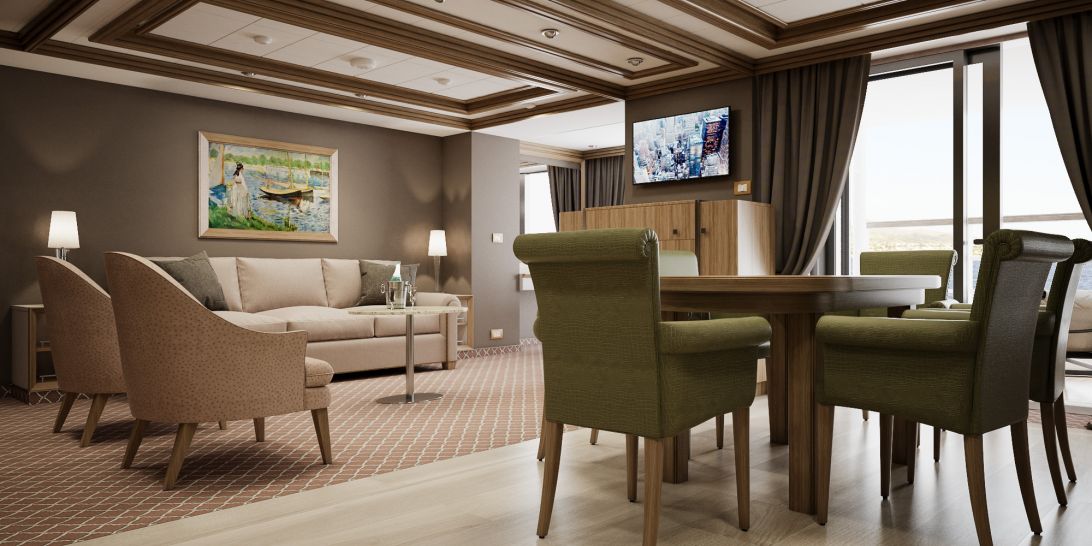
Picture yourself enjoying a delicious breakfast on your private veranda. Imagine watching the sun set, a flute of chilled champagne in hand, setting sail for your next destination. Prestigious, classic, and sophisticated, this stylish apartment suite offers the ultimate in fine accommodation on board. Set aside for those who seek a superlative level of space, comfort, and service, the Owner’s Suite has it all. The adjoining bedroom, with its en suite bathroom, offers its own spectacular ocean views.
One bedroom: up 98 sq m (12 sq m)
Two bedrooms: 119–129 sq m including veranda* (12 sq m)
Essentials
Characteristics
Furniture
Media & Communication
Onboard Services
Amenities
*The difference in size is largely due to a larger entry corridor and does not affect the living or sleeping area.
Images are intended as a general reference. Features, materials, finishes and layout may be different than shown.
Please note that the third guest will sleep on a comfortable sofa bed in the reception area of the suite.
| Grade Code | From | To | |
| R1 | Royal Suite (1 Bedroom) | £20,200 | £20,650 |
| R2 | Royal Suite (2 Bedrooms) | £28,100 | £29,000 |
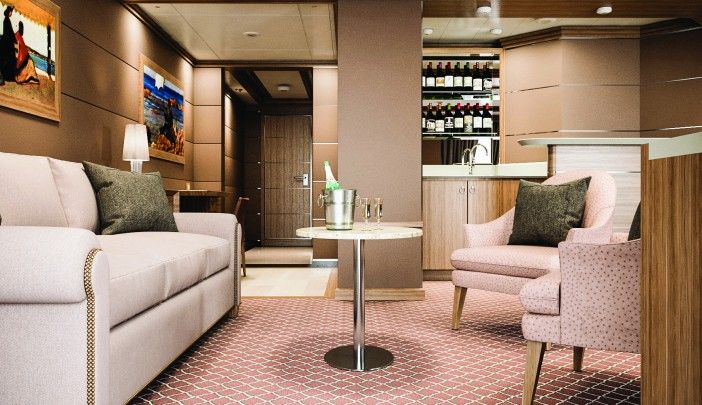
Designed with the values of the culture of living in mind, the Royal Suite offers a vast, elegant space. Precise lines, authentic Italian craftsmanship, and fine materials make up just some of the details of this stunning suite. Commanding and majestic, the Royal Suite boasts a lavish living area perfect for entertaining, plush interior furnishings, and sweeping seascapes from the private terrace. The comfort of the spacious apartment makes this the ideal space for those wanting to feel the true comfort and luxury of the Silversea philosophy.
One bedroom: 105 sq m including veranda (12 sq m)
Two bedroom: 142 sq m including veranda (18 sq m)
Essentials
Characteristics
Furniture
Media & Communication
Onboard Services
Amenities
Images are intended as a general reference. Features, materials, finishes and layout may be different than shown. Front bedroom windows partially obstructed by deck equipment.
Please note that the third guest will sleep on a comfortable sofa bed in the reception area of the suite.
| Grade Code | From | To | |
| SL | Silver Suite | £16,950 | £17,450 |
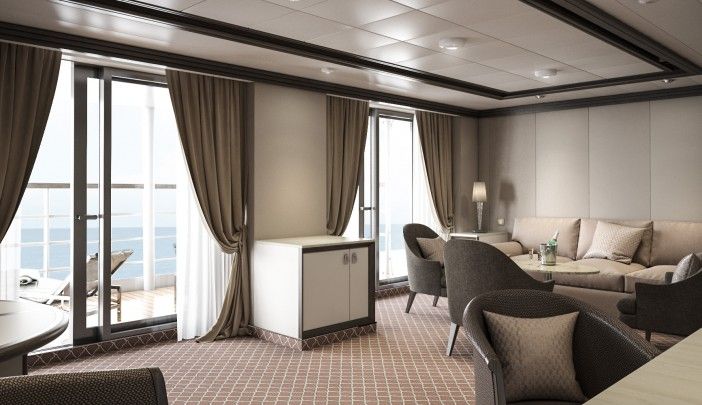
Step onto your terrace and bask in the calm feeling of the ocean breeze. Dissolve into the comfort of your king-size bed. Prepare for the evening in the beautiful marble bathroom. The upper deck location gives the most spectacular of ocean views while the spacious living area allows for comfortable relaxing, where cozy nights in become veritable experiences in themselves. This suite is also available in a two-bedroom configuration for an additional charge, making it an ideal option for families. Connecting suites are indicated on the deck plan with an arrow pointing to the two adjacent suites.
One bedroom: 73 sq m including veranda (12 sq m)
Essentials
Characteristics
Furniture
Media & Communication
Onboard Services
Amenities
Images are intended as a general reference. Features, materials, finishes and layout may be different than shown.
Please note that the 3rd guest will sleep on a comfortable sofa bed in the reception area of the suite.
The images shown are for illustration purposes only and may not be an exact representation of what you find on the ship.
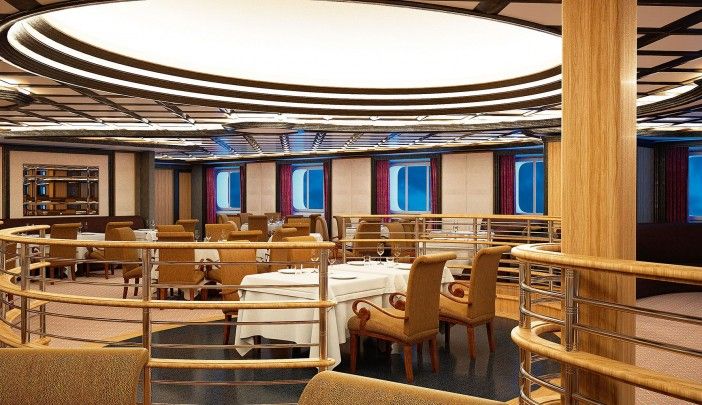
Refined global fare and grilled classics take center stage at Atlantide. Drop in for an indulgent à la carte breakfast, a leisurely lunch, or an elegant dinner among family and new friends, served in a timeless and sophisticated setting.
Images are intended as a general reference. Features, materials, finishes and layout may be different than shown.
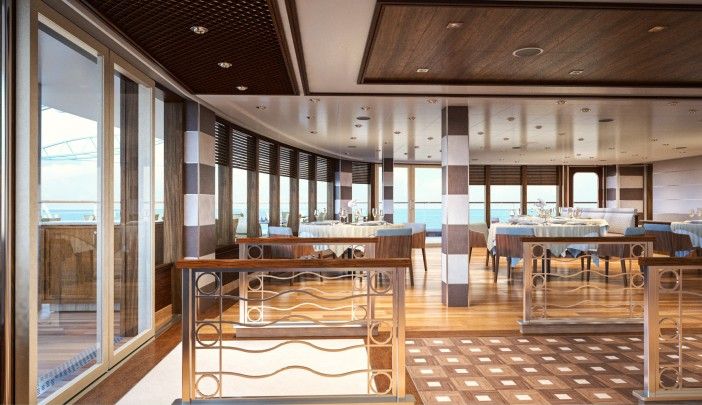
La Terrazza elevates casual dining by day and delivers an authentic Italian experience by night. During the breakfast and lunch buffets, our master chefs prepare global favorites at live stations. As evening falls, handmade pastas and classic seafood dishes are the centerpiece — every impeccable bite paired with fine wines from around the world.
Images are intended as a general reference. Features, materials, finishes and layout may be different than shown.
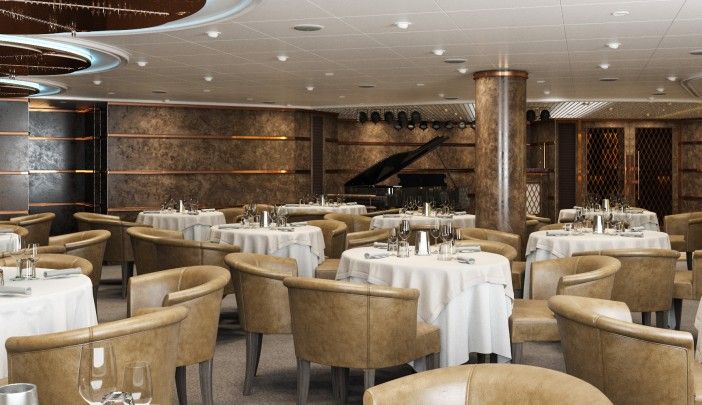
As the stars come out, Silver Note comes alive with the rhythm of jazz and the artistry of small-plate fine dining. This intimate supper-club experience pairs soulful live performances with inventive, international cuisine in a chic, lounge-style setting — one of the most exclusive dining concepts at sea.
Learn more about the Epicurean Experience, which includes dining in three specialty restaurants with preferential rates.
Images are intended as a general reference. Features, materials, finishes and layout may be different than shown.
The images shown are for illustration purposes only and may not be an exact representation of what you find on the ship.
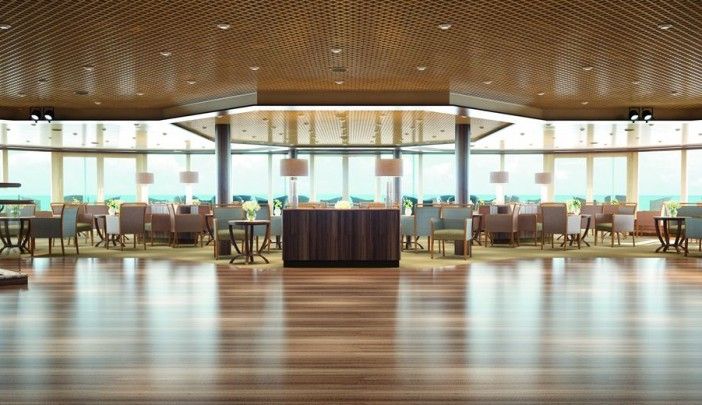
True to its name, Panorama Lounge surrounds you with sweeping views from every angle. Sunlight pours through wraparound windows by day, framing horizons that shift like watercolors. Evenings hum with piano chords and DJ beats that carry you late into the night. And all of it pairs wonderfully with cocktails handcrafted to match your mood.
Images are intended as a general reference. Features, materials, finishes and layout may be different than shown.
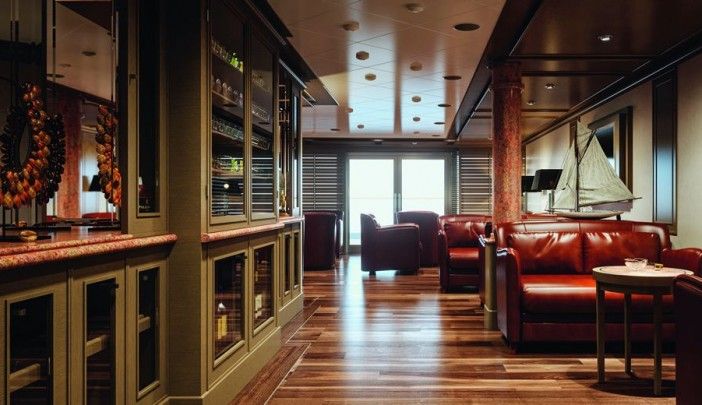
As evening stretches into night, Connoisseur’s Corner offers a stylish refuge for those who appreciate the time-honored rituals of smoke and spirit. Sink into tufted leather chairs with a hand-rolled cigar and a glass of one of our finest cognacs or whiskeys. Indoors or under the stars, every moment is marked by pure indulgence.
Images are intended as a general reference. Features, materials, finishes and layout may be different than shown.
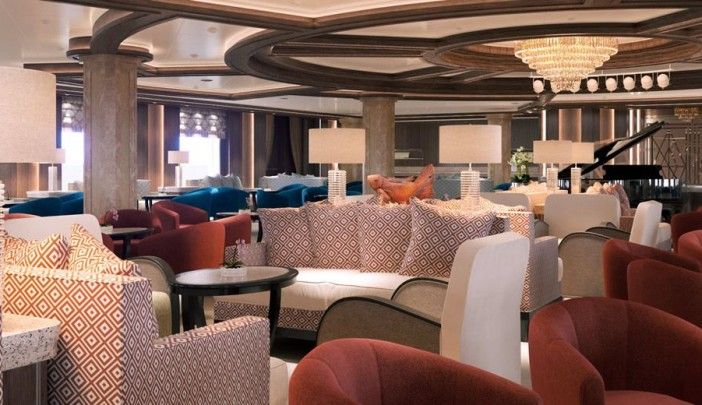
Surrender to a world of Italian elegance where the art of aperitivo takes pride of place. Ideal for connecting over spritzes, negronis, and light bites, here each evening feels like a celebration. As laughter lingers, crystal glasses clink, and live piano notes ripple through the air, Dolce Vita compels you to savor the sweetness of life on board.
Images are intended as a general reference. Features, materials, finishes and layout may be different than shown.
The images shown are for illustration purposes only and may not be an exact representation of what you find on the ship.
The images shown are for illustration purposes only and may not be an exact representation of what you find on the ship.


Our Fusion packages are all ABTA & ATOL protected ensuring that your booking is safe with us
| 15 nights aboard the Silver Muse | |||
| Butler Service in Every Suite | |||
| Gratuities Always Included | |||
| Beverages In-Suite and Throughout the Ship | |||
| Gourmet Dining | |||
| In Suite Dining & 24-Hour Room Service | |||
| Intimate small size ships | |||
| Free Wifi Throughout the Ship | |||
| Free Zodiac, Land and Sea Tours & Activities & Complimentary Expedition gear | |||
| Port Taxes and Fees | |||
 | ABTA and ATOL Protection* | ||
Date 4th Jan 2029 |
Nts 15 |
Suite £6,650pp |
Date 4th Jan 2029 |
Nts 15 |
Suite £6,650pp |
| Suite staterooms from | £6,650pp | ||
| CV | Classic Veranda Suite | £7,400pp | |
| DX | Deluxe Veranda Suite | £8,050pp | |
| ME | Medallion Suite | £10,600pp | |
| G1 | Grand Suite (1 Bedroom) | £22,200pp | |
| G2 | Grand Suite (2 Bedrooms) |  | |
| O1 | Owner's Suite (1 Bedroom) | £24,600pp | |
| O2 | Owner's Suite (2 Bedrooms) | | |
| PA | Panorama Suite | £6,900pp | |
| R1 | Royal Suite (1 Bedroom) | £20,200pp | |
| R2 | Royal Suite (2 Bedrooms) | | |
| SL | Silver Suite | £16,950pp | |
| SV | Superior Veranda Suite | £7,750pp | |
| VI | Vista Suite | £6,650pp | |
Fusion Holidays when selling travel arrangements is a trading name of Co-op Travel Services Limited, registration 08903986. Fusion Cruises is an Accredited Body Member of Co-op Travel Services Limited ATOL 12904.
Book with Confidence. We are a Member of ABTA which means you have the benefit of ABTA’s assistance and Code of Conduct.
Some of the flights and flight-inclusive holidays on this website are financially protected by the ATOL scheme but ATOL protection does not apply to all holiday and travel services offered on this website. This website will provide you with information on the protection that applies in the case of each holiday and travel service offered before you make your booking. If you do not receive an ATOL Certificate then the booking will not be ATOL protected. If you do receive an ATOL Certificate but all parts of your trip are not listed on it, those parts will not be ATOL protected. Please see our booking conditions for information, or for more information about financial protection and the ATOL Certificate go to: www.caa.co.uk