This site uses cookies as defined in our Cookie Policy, by continuing to use this site you agree to their use.
Continue

| Arrive | Depart | ||||||
| 10th10 | NovNov | 202626 | Cape Town, South Africa, embark on the Silver Muse | 19:00 | |||
Sometimes referred to as the Mother City, Cape Town is the most famous port in South Africa and is influenced by many different cultures, including Dutch, British and Malay. The port was founded in 1652 by Dutch explorer Jan Van Riebeeck, and evidence of Dutch colonial rule remains throughout the region. The port is located on one of the world's most important trade routes, and is mainly a container port and handler of fresh fruit. Fishing is another vital industry, with large Asian fishing fleets using Cape Town as a logistical repair base for much of the year. The region is famous for its natural beauty, with the imposing Table Mountain and Lions Head, as well as the many nature reserves and botanical gardens such as Kirstenbosch which boasts an extensive range of indigenous plant life, including proteas and ferns. Cape Town's weather is mercurial, and can change from beautiful sunshine to dramatic thunderstorms within a short period. A local adage is that in Cape Town you can experience four seasons in one day. Sprawling across endless, staggeringly blue coastline, and watched over by the iconic plane of Table Mountain, Cape Town is without doubt one of the world’s most beautiful cities. A blend of spectacular mountain scenery, multiculturalism and relaxed ocean charm awaits in the Mother City, where you can venture out to rolling vineyards, dine in laid back sea suburbs, or spend days exploring cool urban culture. Cape Town’s natural splendour fully reveals itself as the cable car rears sharply to the top of Table Mountain. From the summit, 3,500 feet above sea level, you can let the scale of the panoramic vistas of the city rolling down towards the ocean wash over you. Another heavenly perspective waits at the top of Lion's Head’s tapering peak. A sharp hike and an early start is required, but the views of the morning sun painting Table Mountain honey-gold are some of Cape Town’s finest. Cape Town’s glorious sunshine and inviting blue rollers can be a little deceiving - these oceans are anything but warm at times, with nothing between the peninsula’s end and Antarctica’s icy chill. This cool water has upsides though, bringing a colony of adorably cute African penguins to Boulders Beach. Boarded walkways offer the perfect vantage point to see the cute creatures dipping into the sea and lounging in the sun. Nearby, journey to the end of Africa at the Cape of Good Hope, where you can stand at the bottom of this mighty continent, watching out over the merging waves of the Atlantic and Indian Oceans. Cape Town’s beauty is counterpointed by the ominous island form, which sits four miles offshore from the bustling restaurants and lazy seals of the lively V&A Waterfront. A living history lesson, you can sail in the ships that transported prisoners out to Robben Island, before a former prisoner tells of the traumas of life on this offshore prison. Your guide will show you the cramped cells, and render Mandela’s long walk to freedom in heartbreaking, visceral clarity. | |||||||
| 11th11 | NovNov | 202626 | At Sea | ||||
| 12th12 | NovNov | 202626 | Gqeberha (ex Port Elizabeth), South Africa | 07:00 | 19:00 | ||
Originally the home of the San and Khoisan people and later the Xhosa tribe, the area now known as Gqeberha (previously Port Elizabeth) became a landing place for passing European ships after Portuguese navigator Bartolomew Diaz arrived in Algoa Bay in 1488. As part of the Cape Colony, the British occupied the area during the Napoleonic Wars and it was they who built Fort Frederick here in 1799. Twenty-one years later 4,000 settlers arrived, becoming the first permanent British residents of South Africa and Gqeberha. Sir Rufane Donkin, Acting Governor of the Cape Colony, founded Port Elizabeth, naming the settlement after his late wife. The town underwent rapid growth after 1873 following the construction of the railway to Kimberley, and is now one of the country’s major seaports. Like most South African cities, miles of beautiful coastline surround Gqeberha. Algoa Bay combines warm water and fair breezes, making it a mecca for swimmers and water sports enthusiasts. Those interested in history can follow the Donkin Heritage Trail, past a succession of Victorian and Edwardian town houses, trim gardens and neo-Gothic churches. Just outside the town are a number of game reserves, including the famous Addo Elephant National Park. Port Elizabeth, or PE is an uncut gem of a destination. Loved by wealthy South African families as a holiday destination, it is a city has of faces. One: a natural haven with unspoiled beaches, rolling sand dunes and the warm Indian Ocean lapping at your feet and two: a post-industrial migrant city with a rich heritage. PE is also called Nelson Mandela Bay, and there is much here that celebrates him – starting with Route 67, a collection of 67 artworks honouring the 67 years that Mandela dedicated to achieving South Africa’s freedom. Known as “the friendly city”, Port Elizabeth is enjoying an urban regeneration, spurred on by the youth of the region that want to put it (back) on the map. Think vibrant creative projects spilling out wherever you go; a pedestrianised central zone, galleries selling local artworks, restaurants serving South African fusion food, award-winning buildings that house museums, restored Victorian terraces. Unsurprisingly, the boardwalk is buzzing. PE’s proximity to the excellent nature parks at Addo and Lalibela make it an ideal destination for game lovers. Both of these parks are a little way from PE (70 and 90 kilometres east respectively) but both offer a chance to revel in South Africa’s no holds barred natural beauty. This is the real reason why people come to South Africa – for a chance to see the fabled Big Five. Addo even boasts the Big Seven (lion, elephant, rhino, buffalo and leopard, as well as the great white shark and Southern right whale). | |||||||
| 13th13 | NovNov | 202626 | East London, South Africa | 08:00 | 23:00 | ||
South Africa’s only river port city is situated on the south-east Indian Ocean coast between the Buffalo and Nahoon Rivers. Its location is widely regarded as one of the most attractive on the Eastern Cape coast and it is ideally placed for exploring the coast towards Port Elizabeth and the surrounding Transkei region. The city you see today was born when the British-built Fort Glamorgan was constructed here in 1847 and it was British governor Sir Harry Smith who named the town London after the Empire’s capital as an open declaration about its promising position as a port. The town later became East London due to its location on the east of the Buffalo River, and in more recent times is sometimes referred to as Buffalo City. East London is renowned for its superb golden beaches such as Eastern, Orient and Nahoon, both popular with surfers, and a variety of places to dine and drink have sprung up along the bustling beachfront. While the city is predominantly modern you can see a number of historic buildings and monuments such as City Hall, whose clock tower commemorates the Diamond Jubilee of Queen Victoria. A very British name tells us who established the city of East London. The British built this port on the Buffalo River in 1847 to service their military forts and troops in disputes over land with the Xhosa people. European settlement expanded and East London grew. Settlers usually walk in the footsteps of others who lived on the land before them. Here, many people muat have resided over the years as the oldest footprints in the world, at 200,000 years, were found nearby. Most of the eight million Xhosa people live in Eastern Cape Province. They are a proud tribe with a rich and ongoing culture which they celebrate with vibrant clothing, music and dance. Beaded jewellery is important for many reasons—decoration for dancers, special ceremonies and indicating the social status of women. Today they live in an Africa with modern opportunities and challenges, and ongoing links to their past. The city has several natural attractions for residents and visitors alike. Sandy beaches are popular with residents, who also enjoy water activities on the sheltered and picturesque Buffalo River. Like many areas of South Africa, game parks are popular for local wildlife lovers. Speaking of nature, near to East London is where the first living (well freshly dead in an angler’s catch) coelacanth known to science was found in 1938. This lobe-finned fish had been only known from 66-million-year-old fossils. It is more closely related to four-legged land animals than typical ray-finned fish. This place has history. | |||||||
| 14th14 | NovNov | 202626 | At Sea | ||||
| 15th15 | NovNov | 202626 | Durban, South Africa | 05:00 | 15:30 | ||
Durban, a glistening jewel on the south-east coast of Africa, is the third largest city in South Africa and the major city of KwaZulu-Natal. It has been a centre of sea trade since before colonisation and now has a flourishing artistic centre, which perfectly complements the vibrant markets and rich cultures of the city. Durban’s port is a natural half-moon harbour lined with white sand and azure water, punctuated by the port’s many piers which reach into the water like the leaves of a fan. The beaches of Durban’s famous Golden Mile stretch along the harbour and are popular all year round, as travellers and locals alike enjoy Durban’s warm, humid summers and mild, dry winters. What is it about South Africa’s third most popular city that draws people so much? Is it the vibrant waterfront, complete with street performers and sand artists? Is it the melting pot of ethnicity, with all cultures from Zulu to Indian finding a home here? Is it the laid back life style that has locals calling it simply “Durbs”? Is it the sweeping landscape? The clement climate? One visit to Durban will quickly make you see the reason people love it so is a combination of all of the above. Durban has always been a beach city but it was the massive investment for the 2010 World Cup that really put it on the map. A huge revamp of the promenade has brought with it some fantastic eateries which serve up all kinds of “chow” from traditional bunny chow to bobotie, (a sweet spiced mince dish with egg topping). Expect Asian influences wherever you go, too. Durban has the largest Indian population outside of India. Although there is little evidence, it is known that the city of eThekwini – Durban in Zulu – was inhabited by hunter-gatherers as early as 100,00 BC. It was first sighted by Vasco de Gamma in 1497, but it was not until 1824 that the British settlers raised the Union Jack. This was after King Shaka gifted “25-mile strip of coast a hundred miles in depth” to Henry Francis Fynn after Fynn helped him recover form a stab wound. It remained part of the British Commonwealth until 1960, when it became part of the Republic of South Africa. The city’s Euro-African heritage remains to this day. | |||||||
| 16th16 | NovNov | 202626 | At Sea | ||||
| 17th17 | NovNov | 202626 | At Sea | ||||
| 18th18 | NovNov | 202626 | At Sea | ||||
| 19th19 | NovNov | 202626 | Pointe des Galets, Réunion | 08:00 | 18:00 | ||
| Pointe des Galets, located on the western coast of Réunion Island, is a charming coastal destination that blends natural beauty with local culture. Known for its scenic beaches lined with unique volcanic pebbles, the area offers stunning ocean views and relaxing seaside walks. Visitors can enjoy water-based activities such as swimming, snorkeling, and fishing, while the surrounding landscapes are perfect for photography and nature exploration. The nearby port and bustling market provide a taste of local life, offering fresh seafood, tropical fruits, and handcrafted souvenirs. With its mix of tranquility and vibrant culture, Pointe des Galets is ideal for travelers seeking a serene escape while experiencing the authentic charm of Réunion Island’s coastal communities. Its sunsets over the Indian Ocean are especially unforgettable. Located about 480 miles (773 km) east of Madagascar and 102 miles (164 km) southwest of Mauritius, Réunion is the largest of the Mascarene Islands. The archipelago, consisting of Rodrigues, Mauritius and Réunion, was named The Mascarentes following its discovery in 1512 by the Portuguese navigator, Pedro de Mascarenhas. The French made the decision to settle Réunion in 1642, but no one actually lived here until four years later when the French governor of Fort Dauphin in Madagascar exiled a dozen mutineers to the island. In 1649, the king of France officially took possession of Réunion and renamed the island Colbert Bourbon. After the French Revolution, the island took back its original name. Since 1946, Réunion has been administered by France as an Overseas Department, with St. Denis as its capital. Facilities here are comparable to any major town in metropolitan France. St. Denis straddles the mouth of the St. Denis River and sweeps upward into the flanks of la Montagne where modern apartment complexes and luxurious houses have replaced the shanty town of the post-war era. Pointe des Galets is the principal port of Réunion, 30-minute by car from the small capital, St. Denis. The island is best known for the rugged beauty of its interior. Major attractions include the fascinating and still active volcano, Piton de la Fournaise, and three extinct craters known as cirques. Their forested slopes are dotted with isolated villages. Two thirds of the western part of Réunion are covered by mountain ranges, with the 9,200-foot-high Piton des Neiges the highest point on the island. The major source of income is from agriculture, mainly sugarcane, vanilla and the production of geranium oil used as a fixative in perfumes. Although the island has its share of beaches, most travellers arriving from France and South Africa come here for the stunning vistas of the interior. A taste of Créole-flavored French culture transported to the tropical setting of Réunion is also part of the attraction. | |||||||
| 20th20 | NovNov | 202626 | Port Louis, Mauritius | ||||
Mauritius’ largest city, Port Louis is a vibrant and exciting place whose culture is a mix of African, Chinese and Indian influences. There are activities and sights to keep you busy and explore the different aspects of the city. Located just off the east coast of Madagascar, Mauritius is fast making a name for itself as the tropical paradise of the Indian Ocean. A volcanic island approximately 10 million years old, Mauritius is thought to be the peak of an enormous sunken volcanic chain stretching from the Seychelles to Réunion. In fact, volcanic lakes and inactive craters can be found scattered throughout the island. Mauritius also boasts a unique marine environment. Surrounded by one of the largest unbroken coral reefs on the planet, conservationists are now campaigning to protect its white coral sand beaches and fragile ecosystem. Though it can be found on the maps of early Arab mariners, Mauritius remained uninhabited until the end of the 16th century. Portuguese became the first European visitors in 1510, however, they did not lay claim to the island. In 1598 Dutch colonists settled on the island, naming it after Prince Maurice of Nassau. The Dutch colonial period saw the development of thriving sugar cane plantations as well as the decimation of the ebony forests and the extinction of the dodo bird and other indigenous wildlife. Eventually abandoning their settlement in 1710, Mauritius lay unclaimed until the arrival of the French five years later. French continued the cultivation of sugar as well as indigo, cloves, nutmeg and other spices, retaining possession of the island until 1810 when it was ceded to Britain at the end of the Napoleonic Wars. Mauritius is now a vibrant cultural mix with impressive mountains, boundless sugar cane plantations and some of the most exquisite beaches and aquamarine lagoons. | |||||||
| 21st21 | NovNov | 202626 | Port Louis, Mauritius | 18:00 | |||
Mauritius’ largest city, Port Louis is a vibrant and exciting place whose culture is a mix of African, Chinese and Indian influences. There are activities and sights to keep you busy and explore the different aspects of the city. Located just off the east coast of Madagascar, Mauritius is fast making a name for itself as the tropical paradise of the Indian Ocean. A volcanic island approximately 10 million years old, Mauritius is thought to be the peak of an enormous sunken volcanic chain stretching from the Seychelles to Réunion. In fact, volcanic lakes and inactive craters can be found scattered throughout the island. Mauritius also boasts a unique marine environment. Surrounded by one of the largest unbroken coral reefs on the planet, conservationists are now campaigning to protect its white coral sand beaches and fragile ecosystem. Though it can be found on the maps of early Arab mariners, Mauritius remained uninhabited until the end of the 16th century. Portuguese became the first European visitors in 1510, however, they did not lay claim to the island. In 1598 Dutch colonists settled on the island, naming it after Prince Maurice of Nassau. The Dutch colonial period saw the development of thriving sugar cane plantations as well as the decimation of the ebony forests and the extinction of the dodo bird and other indigenous wildlife. Eventually abandoning their settlement in 1710, Mauritius lay unclaimed until the arrival of the French five years later. French continued the cultivation of sugar as well as indigo, cloves, nutmeg and other spices, retaining possession of the island until 1810 when it was ceded to Britain at the end of the Napoleonic Wars. Mauritius is now a vibrant cultural mix with impressive mountains, boundless sugar cane plantations and some of the most exquisite beaches and aquamarine lagoons. | |||||||
| 22nd22 | NovNov | 202626 | At Sea | ||||
| 23rd23 | NovNov | 202626 | At Sea | ||||
| 24th24 | NovNov | 202626 | Mahé, Seychelles | 08:00 | 17:00 | ||
Like jade-coloured jewels in the Indian Ocean, the more than 100 Seychelles Islands are often regarded as the Garden of Eden. Lying just four degrees south of the equator, the Seychelles are some 1,000 miles (1,610 km) from the nearest mainland Africa. Little more than 200 years ago, all 115 islands were uninhabited. Then in 1742 a French ship dispatched from Mauritius sailed into one of the small bays. Captain Lazare Picault was the first to explore these unnamed islands. He encountered breathtaking vistas of rugged mountains, lagoons, coral atolls, splendid beaches and secluded coves. After Picault sailed away, the islands remained untouched for the next 14 years. Then France took possession of the seven islands in the Mahé group. During an expedition Captain Morphey named them the Sechelles, in honour of Vicomte Moreau de Sechelles. This name was later anglicised to Seychelles. The first settlers arrived at St. Anne’s Island in 1770; 15 years later the population of Mahé consisted of seven Europeans and 123 slaves. Today there are about 80,000 Seychellois, the majority of whom live on Mahé; the rest are scattered in small communities throughout the archipelago. The people are a fusion of three continents - Africa, Asia and Europe. This has created a unique culture and the use of three languages - Creole, French and English. Mahé is the largest island in the archipelago and the location of the capital, Victoria. Ringed by steep, magnificent mountains, few capitals can claim a more beautiful backdrop. The town features a mixture of modern and indigenous architecture; it is the centre of business and commerce thanks to the extensive port facilities. Noteworthy sites in Victoria are the museum, cathedral, government house, clock tower, botanical gardens and an open-air market. The major attractions are found outside of town where the island’s quiet, lazy atmosphere delights visitors. With 68 pristine, white sand beaches, Mahé boasts more beaches and tourist facilities than any of the other Seychelles Islands. Beautiful and remote Mahé with its green-clad mountains and palm-fringed beaches is indeed an island of abundance; pleasant surprises are around every bend in the trail. Come ashore and discover for yourself this marvellous island paradise. Few places on Earth can claim to have been as blessed by nature as Mahe. Set in the remote Seychelles archipelago over 1,500 kilometres east of Mombasa, Mahe is largest of the 115 islands and is home to so many stunning attractions you won’t know where to begin. For many the Seychelles are the destination of a lifetime. Cerulean seas, miles and miles of beach, lush, tropical jungle and surreal, natural beauty as far as the eye can see. Not only does Mahe boast 68 pristine beaches, it is dominated by the towering peaks of the Morne Seychellois National Park. This splendid National Park takes up over 20% of the island and is home to a vast amount of endemic flora and fauna, including the ultra-rare Seychelles Scops-owl. Unsurprisingly, the crystal clear waters are a diver’s heaven, promising a colourful cornucopia of underwater life, regardless of how experienced you are. Despite the island being visited in 1609 by the British, Mahe did not feature on any maps until 1742, when Frenchman Lazare Picault explored the as yet unnamed islands. However, it took a further 14 years for the French to lay claim to the islands, with the arrival of naval ship Le Cerf, captained by Corneille Morphey who christened the archipelago after Vicomte Moreau de Sechelles. He did this by setting down a Stone of Possession, which is on display in the National Museum. The first settlers arrived in 1770 and 15 years later the population had swelled to 130 – 7 Europeans and 123 slaves. Today, there are 80,000 Seychellois. | |||||||
| 25th25 | NovNov | 202626 | At Sea | ||||
| 26th26 | NovNov | 202626 | At Sea | ||||
| 27th27 | NovNov | 202626 | At Sea | ||||
| 28th28 | NovNov | 202626 | Cochin, India | ||||
Kochi, formerly and still commonly known as Cochin, is one of the west coast's largest and oldest ports. The streets behind the docks of the historic Fort Cochin and Mattancherry districts are lined with old merchant houses, godowns (warehouses), and open courtyards heaped with betel nuts, ginger, peppercorns, and tea. Throughout the second millennium this ancient city exported spices, coffee, and coir (the fiber made from coconut husks), and imported culture and religion from Europe, China, and the Middle East. Today Kochi has a synagogue, several mosques, Portuguese Catholic churches, Hindu temples, and the United Church of South India (an amalgamation of several Protestant denominations). The city is spread out over mainland, peninsula, and islands. Ernakulam, on the mainland 2 km (3 miles) from the harbor, is the commercial center and the one-time capital of the former state of Cochin. Willingdon Island, which was created by dredging the harbor, holds several luxury hotels as well as a navy base. The beautiful Bolghatty Island, north of Ernakulam, is a favorite picnic spot for locals. On it there's a government-run hotel in a colonial structure that was once used by the Dutch governor and later by the British Resident. Another local favorite is Cherai beach on Vypin Island, which is a 10-minute ferry ride from Fort Cochin. The Fort Cochin district, Kochi's historic center, is at the northern tip of the Mattancherry peninsula. Houses here often recall Tudor manors; some have been converted to hotels, others remain in the hands of the venerable tea and trading companies. South of Fort Cochin, in the Mattancherry district, is where you'll find the city's dwindling Jewish community. Their small neighborhood, called Jew Town, which is now dotted with cafés and shops selling curios and antiques, is centered on the synagogue. A hodgepodge of cultures collide on the banks of the estuary where Cochin carves out her home. Chinese fishing nets the size of skyscrapers, boxy Dutch architecture and pretty Portuguese palaces point to the blend of influence here, while the Raj era remnants, soaring spires of old-world mosques, and near-abandoned synagogues all add to the dense, varied tapestry of inspirations and imprints. Founded by a prince in the 15th century, Cochin immediately became a favoured anchorage for sailors and traders from every far-flung corner - even taking nearby Kerala’s crown as the world's first global port city. Now, fragrant spice markets cut the hot air with cardamom and clove, while antique stores groan beneath the weight of singing copper. Hit the backstreets of Fort Kochi for a deep and dreamy Ayurvedic massage, marvel at the Krishna murals that adorn the bedchamber walls of the Mattancherry Palace, or admire India’s one of the oldest European-built Christian churches - as you duck into the cool hues of St Francis. A day can easily meander past on a backwater cruise, spreading south from Cochin, and gliding down a lacy network of creeks, lagoons, lakes and rivers. Surrounded by swaying palms and rice paddies – you’ll experience rural India in her best dress. When daylight dwindles, taste the soft spicy kick of dal roti, followed by Firni – almonds, apricots, and sweet milk crushed with pastel green pistachios for a silky light finish. | |||||||
| 29th29 | NovNov | 202626 | Cochin, India | 18:00 | |||
Kochi, formerly and still commonly known as Cochin, is one of the west coast's largest and oldest ports. The streets behind the docks of the historic Fort Cochin and Mattancherry districts are lined with old merchant houses, godowns (warehouses), and open courtyards heaped with betel nuts, ginger, peppercorns, and tea. Throughout the second millennium this ancient city exported spices, coffee, and coir (the fiber made from coconut husks), and imported culture and religion from Europe, China, and the Middle East. Today Kochi has a synagogue, several mosques, Portuguese Catholic churches, Hindu temples, and the United Church of South India (an amalgamation of several Protestant denominations). The city is spread out over mainland, peninsula, and islands. Ernakulam, on the mainland 2 km (3 miles) from the harbor, is the commercial center and the one-time capital of the former state of Cochin. Willingdon Island, which was created by dredging the harbor, holds several luxury hotels as well as a navy base. The beautiful Bolghatty Island, north of Ernakulam, is a favorite picnic spot for locals. On it there's a government-run hotel in a colonial structure that was once used by the Dutch governor and later by the British Resident. Another local favorite is Cherai beach on Vypin Island, which is a 10-minute ferry ride from Fort Cochin. The Fort Cochin district, Kochi's historic center, is at the northern tip of the Mattancherry peninsula. Houses here often recall Tudor manors; some have been converted to hotels, others remain in the hands of the venerable tea and trading companies. South of Fort Cochin, in the Mattancherry district, is where you'll find the city's dwindling Jewish community. Their small neighborhood, called Jew Town, which is now dotted with cafés and shops selling curios and antiques, is centered on the synagogue. A hodgepodge of cultures collide on the banks of the estuary where Cochin carves out her home. Chinese fishing nets the size of skyscrapers, boxy Dutch architecture and pretty Portuguese palaces point to the blend of influence here, while the Raj era remnants, soaring spires of old-world mosques, and near-abandoned synagogues all add to the dense, varied tapestry of inspirations and imprints. Founded by a prince in the 15th century, Cochin immediately became a favoured anchorage for sailors and traders from every far-flung corner - even taking nearby Kerala’s crown as the world's first global port city. Now, fragrant spice markets cut the hot air with cardamom and clove, while antique stores groan beneath the weight of singing copper. Hit the backstreets of Fort Kochi for a deep and dreamy Ayurvedic massage, marvel at the Krishna murals that adorn the bedchamber walls of the Mattancherry Palace, or admire India’s one of the oldest European-built Christian churches - as you duck into the cool hues of St Francis. A day can easily meander past on a backwater cruise, spreading south from Cochin, and gliding down a lacy network of creeks, lagoons, lakes and rivers. Surrounded by swaying palms and rice paddies – you’ll experience rural India in her best dress. When daylight dwindles, taste the soft spicy kick of dal roti, followed by Firni – almonds, apricots, and sweet milk crushed with pastel green pistachios for a silky light finish. | |||||||
| 30th30 | NovNov | 202626 | Mangalore, India | 08:30 | 19:00 | ||
New Mangalore Port, established in 1974, is the major port of Karnataka. It has the distinction of the ninth biggest port of India. Its construction got completed in 12 years using the latest technology to provide the best port facilities. The port has been established in such a way that it can bear all kinds of climatic hazards. Mangalore is named after the goddess Mangaladevi. Mangalore is a panorama of palm-fringed beaches, lush green fields and enchanting forests. It is sheltered by the soaring western ghats on the east and the mighty Arabian sea roaring along its western shores. With an important port, this coastal town is a major commercial centre that still retains its old world charm-old tile-roofed buildings amidst coconut groves, fishing boats silhouetted against the darkening skyline, fishermen hauling in rich catch of fish, sea food served in spicy coconut curries. Pepper ginger coffee and cashew nuts flow through the important Indian port of New Mangalore - a red-roofed town of many flavours. Taste freshly caught fish smothered in taste-bud tantalising spice pastes and visit stunning temples and spectacular pine-tree lined beaches - with plenty of space to relax and recharge. The whacks and whoops of make-shift cricket games echo from grassy clearings while rickshaws flit through the streets and incredible smells of cuisine drift out from kitchens. India can be a thrillingly chaotic and stimulating place but the Kadri Manjunath Temple is a tranquil oasis of serenity and one of the country's most beautiful temples dedicated to Lord Shiva. Trees and shrines intertwine while the towers are embedded with golden deities. A little outside of the city Kateel Shri Durgaparameshwari Temple is another beautiful site nestled within the flow of the Nandin River. There is an unusually high congregation of Catholic worshipers in New Mangalore and St. Aloysius Chapel is their colourful place of worship. Richly decorated inside vibrant frescoes from the brush of Antonio Moscheni are lavished across the interior rivalling some of Italy’s finest. Lazy waves roll ashore at New Mangalore’s tranquil beaches where you can settle back and relax. Cool off with a dip in the waters or bob on the surface in a leisurely boat. Enjoy wide panoramas of the sunset bouncing off waves where long-legged wading birds tread carefully. | |||||||
| 1st01 | DecDec | 202626 | At Sea | ||||
| 2nd02 | DecDec | 202626 | Mumbai (ex Bombay), India, disembark the Silver Muse | ||||
Mumbai, India's financial capital, is a city of contrasts and colors, where towering skyscrapers stand alongside bustling bazaars. From the iconic Gateway of India to the vibrant street food scene of Chowpatty Beach, it's a melting pot of cultures and cuisines. The heartbeat of Bollywood echoes through its bustling streets, while historic landmarks like the Elephanta Caves whisper tales of bygone eras. With its bustling local trains and bustling markets, Mumbai is a city that never sleeps, where dreams are pursued against the backdrop of the Arabian Sea's shimmering waters. A spicy destination of colour and chaos, the city formally known as Bombay is a deafening collision of contrasts and culture. Known as the City of Dreams, Mumbai is at once an economic centre, fashion hub and home for Bollywood’s world of glamour. This is the real India, and Mumbai is a city of unparalleled extremes and contradictions. Brutal poverty is rife in sprawling slums, while unimaginable wealth glares in the exuberances of the world’s most expensive private residence. A place of dazzling, overwhelming cultural experience – littered with UNESCO World Heritage sites - your only option is to dive in headfirst and immerse yourself in India’s extraordinary and enriching embrace. The Gateway of India was completed in 1924 and formed the symbolic entrance to British India. The last of the British troops passed through the landmark in 1948, as Mumbai entered the new era of independence. See remnants of the colonial past in the architecture and art deco buildings of the Colaba district – like the incredible High Victorian Gothic styled Chhatrapati Shivaji railway terminus building. Visit another World Heritage Site at the remarkable carved 7th-century Elephanta caves, which wait a short ferry ride from Mumbai Harbour. Dharavi is a unique experience and Asia’s largest slum is one of the most densely populated places in the world. It received global attention as the setting for the film Slumdog Millionaire. Take a tour for a remarkable insight into the conditions and community within the slums, which house a majority of the city’s population. Meet the people - kind and welcoming – as you buy products like handmade pottery and textiles, and experience an amazing city within a city. Elsewhere in Mumbai, visit the house where Gandhi lived - now transformed into a museum honouring his life and work. | |||||||
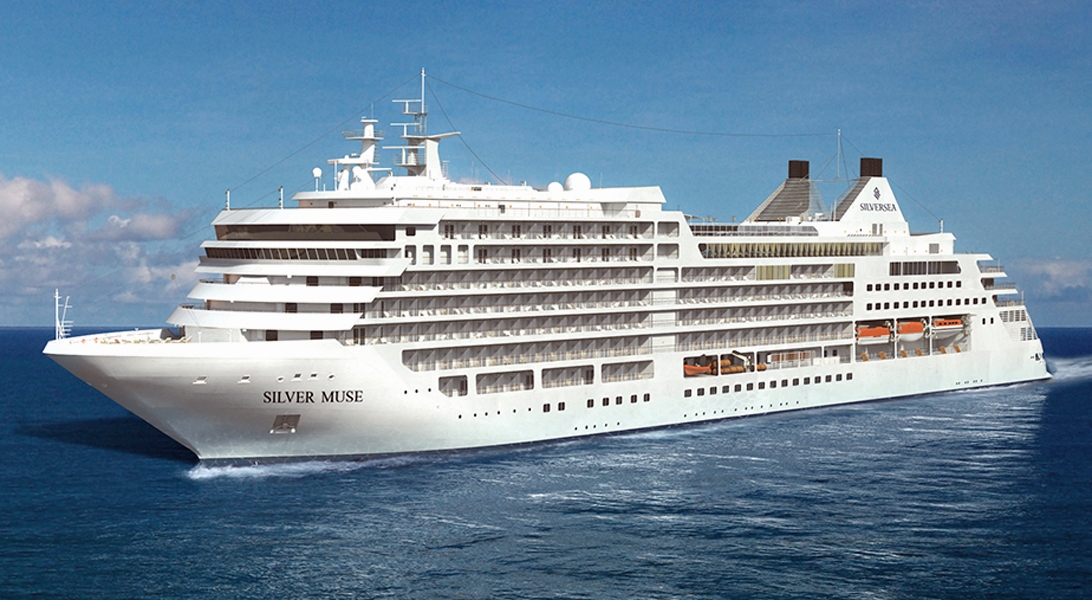


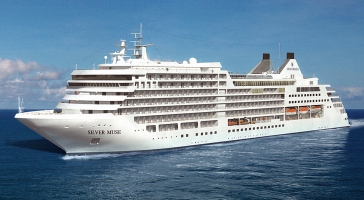
The images shown are for illustration purposes only and may not be an exact representation of what you find on the ship.
| Grade Code | From | To | |
| G1 | Grand Suite (1 Bedroom) | £32,450 | £33,100 |
| G2 | Grand Suite (2 Bedrooms) | £44,650 | £45,850 |
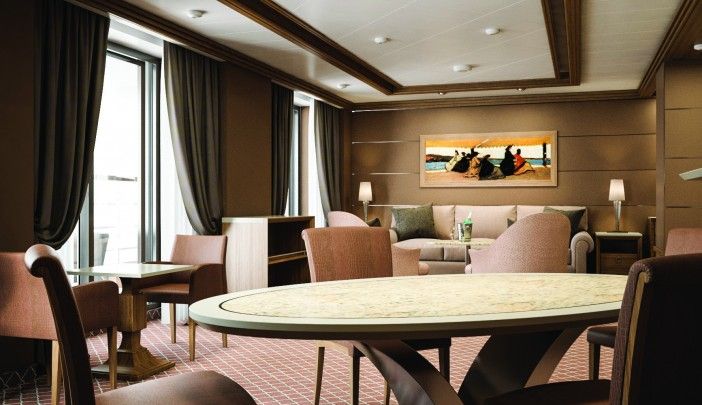
Expertly designed and exquisitely appointed. The ideal space both for entertaining friends and enjoying quiet time alone.
Indulge in the epitome of ultra-luxury cruising. The Grand Suite is for those who want to experience sailing in style. The sophistication of the Silversea philosophy coupled with ample interior and exterior space makes this the perfect choice for serious travelers. With the biggest verandas on board, enjoy entertaining new friends or simply share intimate meals while contemplating spectacular sunsets. Savor the sense of well-being offered by the luxurious furnishings and modern amenities. Offering an unprecedented level of relaxation, the Grand Suite is the perfect romantic getaway.
One bedroom: 137–146 sq m including veranda (44–53 sq m)
Two bedrooms: 174–183 sq m including veranda (50–59 sq m)
Images are intended as a general reference. Features, materials, finishes and layout may be different than shown.
Please note that the 3rd guest will sleep on a comfortable sofa bed in the reception area of the suite.
Essentials
Characteristics
Furniture
Media & Communication
Onboard Services
Amenities
| Grade Code | From | To | |
| O1 | Owner's Suite (1 Bedroom) | £36,000 | £36,600 |
| O2 | Owner's Suite (2 Bedrooms) | £46,000 | £47,150 |
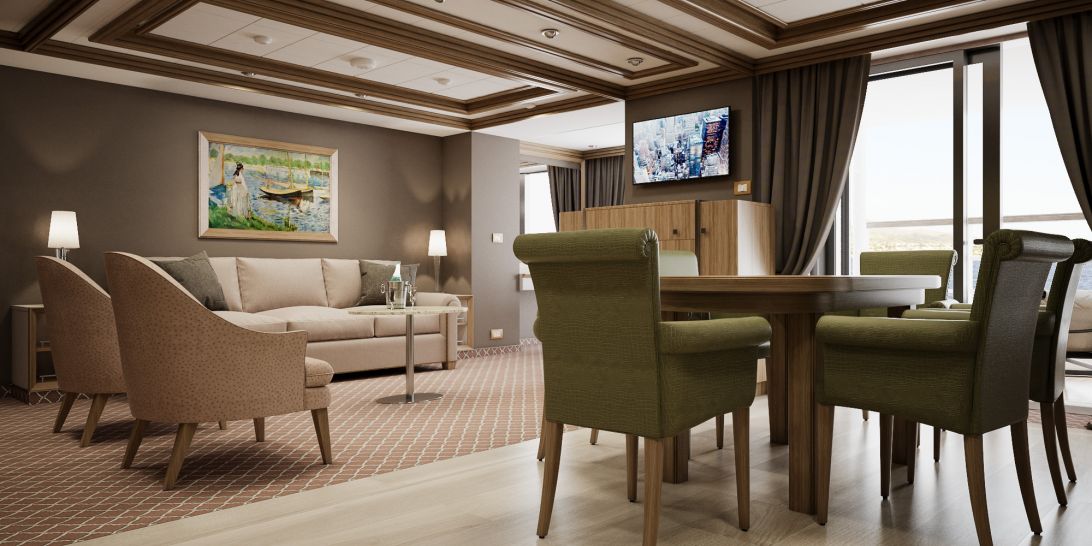
The name says it all. A stylish apartment. Prestigious and classic, as is the Silver Whisper itself. For those who seek the superlative level of space, comfort and service on board.
Picture yourself enjoying a delicious breakfast on your private veranda. Imagine watching the sun set, a flute of chilled champagne in hand, setting sail for your next destination. Prestigious, classic, and sophisticated, this stylish apartment suite offers the ultimate in fine accommodation on board. Set aside for those who seek a superlative level of space, comfort, and service, the Owner’s Suite has it all. The adjoining bedroom, with its en suite bathroom, offers its own spectacular ocean views.
One bedroom: 88–98 sq m including veranda (12 sq m)
Two bedrooms: 119–129 sq m including veranda* (12 sq m)
*The difference in size is largely due to a larger entry corridor and does not affect the living or sleeping area.
Images are intended as a general reference. Features, materials, finishes and layout may be different than shown.
Please note that the third guest will sleep on a comfortable sofa bed in the reception area of the suite.
Essentials
Characteristics
Furniture
Media & Communication
Onboard Services
Amenities
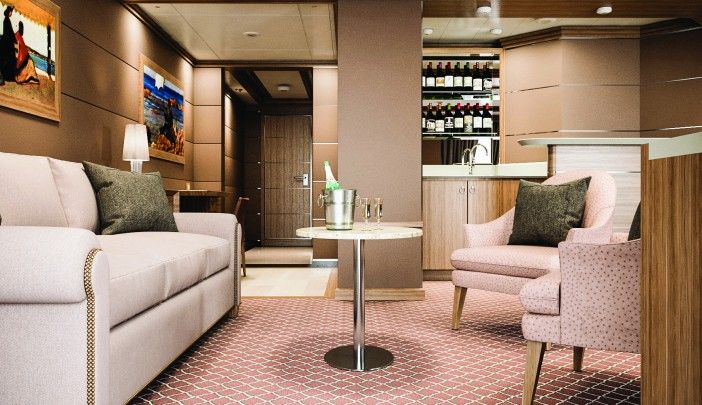
| Grade Code | From | To | |
| R1 | Royal Suite (1 Bedroom) | £29,550 | £30,150 |
| R2 | Royal Suite (2 Bedrooms) | £41,750 | £42,900 |
Stately. Commanding and majestic. Perfect for entertaining. Enough living space to roam.The pinnacle of good living.
Designed with the values of the culture of living in mind, the Royal Suite offers a vast, elegant space. Precise lines, authentic Italian craftsmanship, and fine materials make up just some of the details of this stunning suite. Commanding and majestic, the Royal Suite boasts a lavish living area perfect for entertaining, plush interior furnishings, and sweeping seascapes from the private terrace. The comfort of the spacious apartment makes this the ideal space for those wanting to feel the true comfort and luxury of the Silversea philosophy.
One bedroom: 105 sq m including veranda (12 sq m)
Two bedroom: 142 sq m including veranda (18 sq m)
Images are intended as a general reference. Features, materials, finishes and layout may be different than shown. Front bedroom windows partially obstructed by deck equipment.
Please note that the third guest will sleep on a comfortable sofa bed in the reception area of the suite.
Essentials
Characteristics
Furniture
Media & Communication
Onboard Services
Amenities
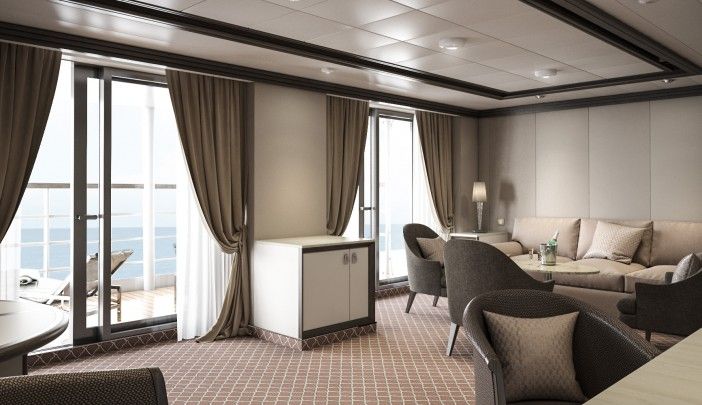
| Grade Code | From | To | |
| SL | Silver Suite | £26,000 | £26,600 |
Stylish and sophisticated. Larger verandas. Perfection in design for comfortable living.
Step onto your terrace and bask in the calm feeling of the ocean breeze. Dissolve into the comfort of your king-size bed. Prepare for the evening in the beautiful marble bathroom. The upper deck location gives the most spectacular of ocean views while the spacious living area allows for comfortable relaxing, where cozy nights in become veritable experiences in themselves. The two-bedroom configuration of this suite makes this the ideal option for families.
One bedroom: 73 sq m including veranda (12 sq m)
Images are intended as a general reference. Features, materials, finishes and layout may be different than shown.
Please note that the 3rd guest will sleep on a comfortable sofa bed in the reception area of the suite.
Two bedrooms: 104 sq m including veranda (12 sq m)
Wheelchair accessible suite: 931
Essentials
Characteristics
Furniture
Media & Communication
Onboard Services
Amenities
The images shown are for illustration purposes only and may not be an exact representation of what you find on the ship.
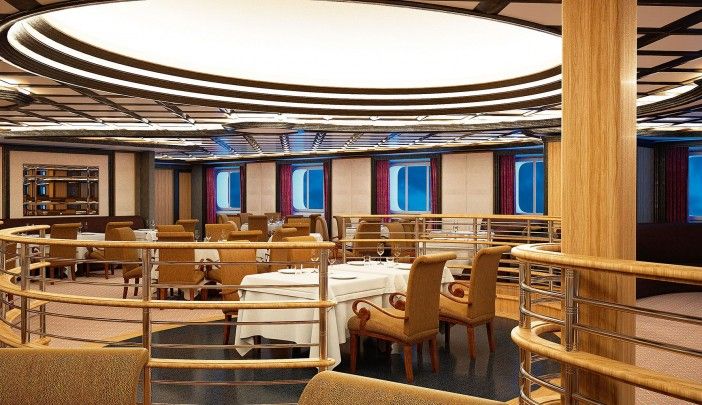
Pivotal to Silver Muse dining experience, this elegant bar and grill incorporates the best that the sea has to offer.
Instantly recalling images of the sea in all her watery majesty, the Atlantides are the seven nymph daughters of Atlas. Creative muses known for their wisdom and beauty, the sisters were granted immortality in the form of stars and can be seen today in the constellation of Taurus. Pivotal to the Silver Muse dining experience, this elegant bar and grill incorporates the best that the sea has to offer. Created to temper your taste buds, designer dishes such as royal crab, lobster, and verbena-infused red snapper in a sea salt crust are showcased alongside the best steaks offshore.
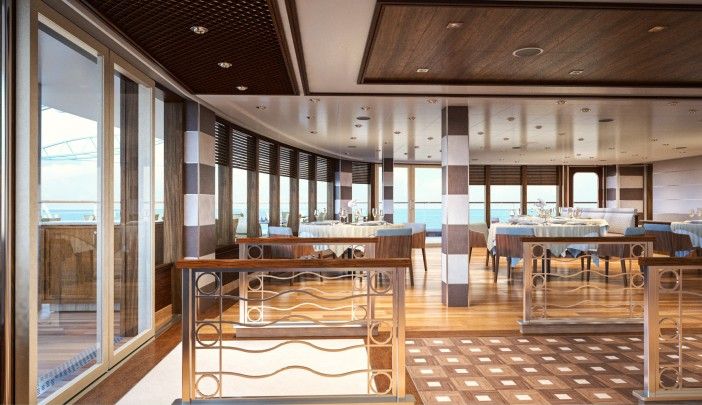
Authentic Italian recipes and the freshest, sustainable ingredients come together in this restaurant at sea.
La Terrazza is a celebration of the way Italians eat today, an ode to the delicious evolution of the world’s most beloved cuisine. Evolving one of Silversea’s signature restaurants, La Terrazza serves fresh twists on great classics, and also explores the new heroes of Italian cuisine. The notion of comfort traditionally associated with Italian cuisine is present in every dish, every bite, yet always with a subtle element of surprise. La Terrazza is open for casual, buffet-style breakfast and lunch with indoor or alfresco dining on the outdoor terrace. During the evening, the venue transforms into an à la carte Italian restaurant. Seating is limited for dinner and reservations are recommended.
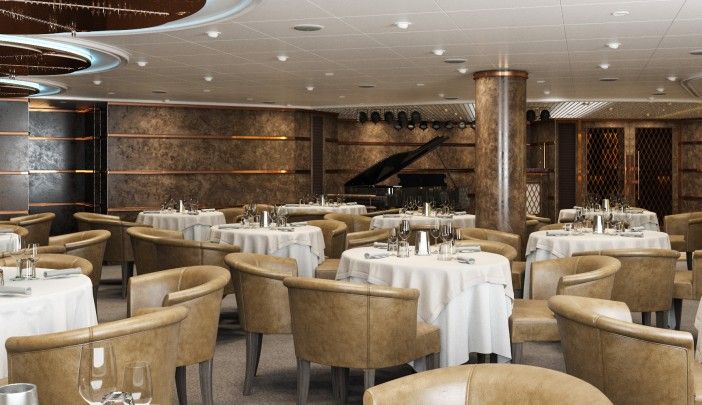
Small-plate, tapas-style dishes of mouthwatering international cuisine perfectly complement the rich, exciting entertainment as the smooth sounds of jazz and blues fill the air.
A sumptuous, intimate setting with a lively ambience is the perfect place to dine, dance, and dream the night away … Small-plate, tapas-style dishes of mouthwatering international cuisine perfectly compliment the rich, exciting entertainment as the smooth sounds of jazz and blues fill the air. A refined late evening menu perfectly showcases the panache and style of Silver Muse’s plentiful dining options, so expect multi-sensory fireworks as you swing and sway effortlessly across the dance floor as Silver Muse gracefully takes you to your next destination.
The images shown are for illustration purposes only and may not be an exact representation of what you find on the ship.
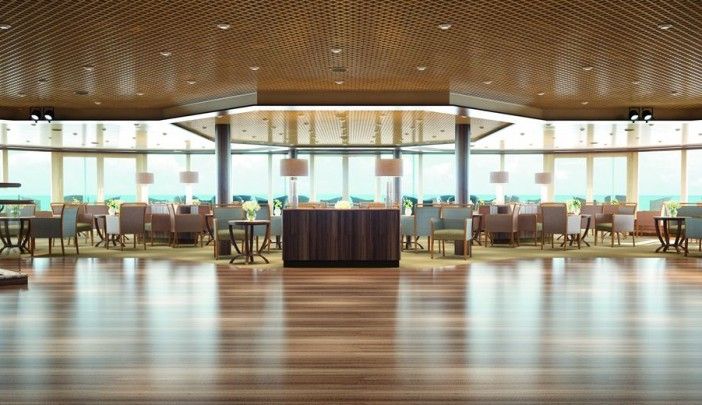
A peaceful retreat that is the perfect place to take a break, a social place to meet and greet old friends, or an evening venue to partake in a cocktail as you sit back and watch the world go by.
From early morning to late at night, the Panorama Lounge offers everything you could wish for. A peaceful retreat that is the perfect place to take a break, a social place to meet and greet old friends, or an evening venue to partake in a cocktail as you sit back and watch the world go by. Sink into the plush seats, and come evening, enjoy listening to the gentle sounds of a pianist or the invigorating beats of our in-house DJ.
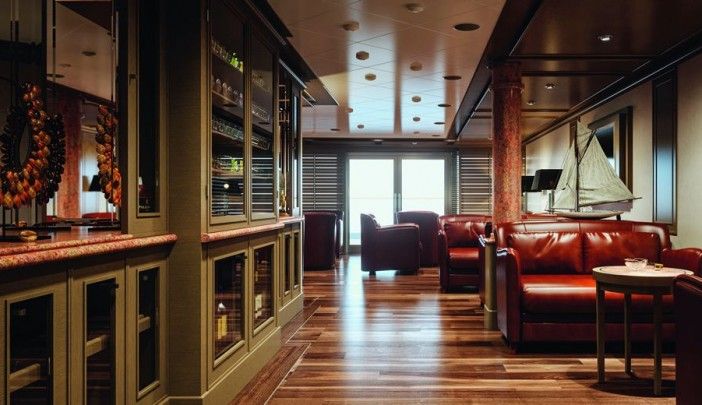
Rich and luxurious, yet airy and spacious, this indoor/outdoor venue is where you sip the finest cognac or whisky from a prestigious range and revel in the tranquil murmur of after-dinner conversation.
Discreet. Tasteful. Polished. If you appreciate the finer things in life, then the sophisticated touches of the Connoisseur’s Corner will not disappoint. Rich and luxurious, yet airy and spacious, this indoor/outdoor venue is where you sip the finest cognac or whiskey from a prestigious range and revel in the tranquil murmur of after-dinner conversation. A premium choice of cigars is also available, making this a perfect evening haven of serenity.
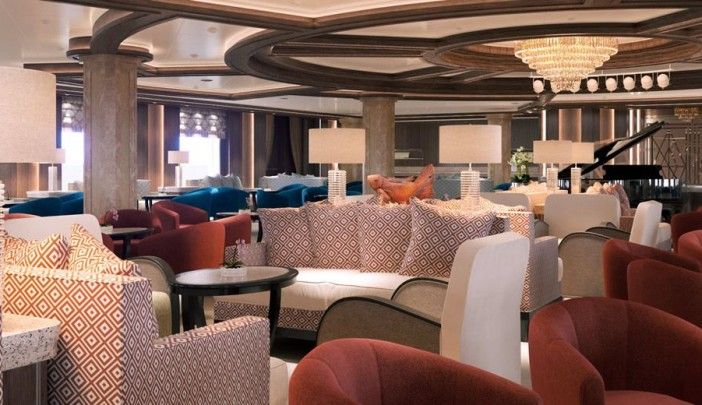
Dolce Vita is the gathering place for our savvy travellers of the world, a place where guests mingle and exchange stories and where new faces become lifelong friends.
What could be a more fitting name for the very heart of Silver Muse? Central to the soul and inspiration behind Silversea’s Italian heritage, Dolce Vita is the gathering place for our savvy travellers of the world, a place where guests mingle and exchange stories and where new faces become lifelong friends. Let us spoil you with an incredible array of flawless cocktails, wines, and spirits, as you relax, enjoy the evening sounds of a live pianist, and enjoy “the sweet life” aboard.
The images shown are for illustration purposes only and may not be an exact representation of what you find on the ship.
The images shown are for illustration purposes only and may not be an exact representation of what you find on the ship.

Our Fusion packages are all ABTA & ATOL protected ensuring that your booking is safe with us
| 22 nights aboard the Silver Muse | |||
| Butler Service in Every Suite | |||
| Gratuities Always Included | |||
| Beverages In-Suite and Throughout the Ship | |||
| Gourmet Dining | |||
| In Suite Dining & 24-Hour Room Service | |||
| Intimate small size ships | |||
| Free Wifi Throughout the Ship | |||
| Free Zodiac, Land and Sea Tours & Activities & Complimentary Expedition gear | |||
| Port Taxes and Fees | |||
 | ABTA and ATOL Protection* | ||
Date 10th Nov 2026 |
Nts 22 |
Suite £6,900pp |
Date 10th Nov 2026 |
Nts 22 |
Suite £6,900pp |
| Suite staterooms from | £6,900pp | ||
| CV | Classic Veranda Suite | £8,200pp | |
| DX | Deluxe Veranda Suite | £9,300pp | |
| ME | Medallion Suite | £19,250pp | |
| G1 | Grand Suite (1 Bedroom) | £32,450pp | |
| G2 | Grand Suite (2 Bedrooms) |  | |
| O1 | Owner's Suite (1 Bedroom) | £36,000pp | |
| O2 | Owner's Suite (2 Bedrooms) | | |
| PA | Panorama Suite | £7,100pp | |
| R1 | Royal Suite (1 Bedroom) | £29,550pp | |
| R2 | Royal Suite (2 Bedrooms) | | |
| SL | Silver Suite | £26,000pp | |
| SV | Superior Veranda Suite | £8,700pp | |
| VI | Vista Suite | £6,900pp | |
Fusion Holidays when selling travel arrangements is a trading name of Co-op Travel Services Limited, registration 08903986. Fusion Cruises is an Accredited Body Member of Co-op Travel Services Limited ATOL 12904.
Book with Confidence. We are a Member of ABTA which means you have the benefit of ABTA’s assistance and Code of Conduct.
Some of the flights and flight-inclusive holidays on this website are financially protected by the ATOL scheme but ATOL protection does not apply to all holiday and travel services offered on this website. This website will provide you with information on the protection that applies in the case of each holiday and travel service offered before you make your booking. If you do not receive an ATOL Certificate then the booking will not be ATOL protected. If you do receive an ATOL Certificate but all parts of your trip are not listed on it, those parts will not be ATOL protected. Please see our booking conditions for information, or for more information about financial protection and the ATOL Certificate go to: www.caa.co.uk