This site uses cookies as defined in our Cookie Policy, by continuing to use this site you agree to their use.
Continue

| Arrive | Depart | ||||||
| 27th27 | JanJan | 202828 | Callao, Peru, embark on the Silver Ray | ||||
When people discuss great South American cities, Lima is often overlooked. But Peru's capital can hold its own against its neighbors. It has an oceanfront setting, colonial-era splendor, sophisticated dining, and nonstop nightlife.It's true that the city—clogged with traffic and choked with fumes—doesn't make a good first impression, especially since the airport is in an industrial neighborhood. But wander around the regal edifices surrounding the Plaza de Armas, among the gnarled olive trees of San Isidro's Parque El Olivar, or along the winding lanes in the coastal community of Barranco, and you'll find yourself charmed.In 1535 Francisco Pizarro found the perfect place for the capital of Spain's colonial empire. On a natural port, the so-called Ciudad de los Reyes (City of Kings) allowed Spain to ship home all the gold the conquistador plundered from the Inca. Lima served as the capital of Spain's South American empire for 300 years, and it's safe to say that no other colonial city enjoyed such power and prestige during this period.When Peru declared its independence from Spain in 1821, the declaration was read in the square that Pizarro had so carefully designed. Many of the colonial-era buildings around the Plaza de Armas are standing today. Walk a few blocks in any direction for churches and elegant houses that reveal just how wealthy this city once was. But the poor state of most buildings attests to the fact that the country's wealthy families have moved to neighborhoods to the south over the past century.The walls that surrounded the city were demolished in 1870, making way for unprecedented growth. A former hacienda became the graceful residential neighborhood of San Isidro. In the early 1920s the construction of tree-lined Avenida Arequipa heralded the development of neighborhoods such as bustling Miraflores and bohemian Barranco.Almost a third of the country's population of 29 million lives in the metropolitan area, many of them in relatively poor conos: newer neighborhoods on the outskirts of the city. Most residents of those neighborhoods moved there from mountain villages during the political violence and poverty that marked the 1980s and ’90s, when crime increased dramatically. During the past decade the country has enjoyed peace and steady economic growth, which have been accompanied by many improvements and refurbishment in the city. Residents who used to steer clear of the historic center now stroll along its streets. And many travelers who once would have avoided the city altogether now plan to spend a day here and end up staying two or three. Splashing colour and culture into the arid Peruvian landscape, Lima is a city bedecked with grand colonial splendour. Founded in 1535, this sprawling capital enjoys a breezy oceanfront location and forms one of the world's largest desert cities. A place of sharp contrasts, almost 10 million people are packed into the city, occupying vastly different living conditions. Visit for an unfiltered experience of this richly layered place of ancient history, colonial relics and dazzling flavours. Rising from the misty blanket of the garua - a persistent fog that cloaks Lima during winter - you'll find one of South America's most culturally vibrant cities. The former capital of the Spanish colonists - head to Plaza de Armas to immerse yourself in the heart of the old city. The Basilica Cathedral of Lima watches over Plaza Mayor - listen out for the stomps of boots outside, as the pomp and ceremony of the Changing of the Guards draws crowds to the Government Palace. The history of this area runs much deeper, however, and pre-Colombian cities and temples emerge from the dusty earth nearby. Grand museums showcase unearthed treasures from the extraordinary civilisations who built vast mud adobe cities across Peru's coastline, and incredible settlements in the country's valleys and mountains. The Barranco district is Lima's artsy area, and you can walk from modern art galleries to see the local muse, the Bridge of Sighs. This wooden bridge is an artist's favourite, and one of the city's most romantic spots. Afterwards, sample some of Lima's cuisine, and the zingy flavours of spicy, lime-marinated fish ceviche. So revered in these parts, ceviche even has its own national day on June 28th. Sipping a Pisco Sour is the perfect way to round off your visit to this engrossing, multi-layered city. | |||||||
| 28th28 | JanJan | 202828 | Callao, Peru | 15:30 | |||
When people discuss great South American cities, Lima is often overlooked. But Peru's capital can hold its own against its neighbors. It has an oceanfront setting, colonial-era splendor, sophisticated dining, and nonstop nightlife.It's true that the city—clogged with traffic and choked with fumes—doesn't make a good first impression, especially since the airport is in an industrial neighborhood. But wander around the regal edifices surrounding the Plaza de Armas, among the gnarled olive trees of San Isidro's Parque El Olivar, or along the winding lanes in the coastal community of Barranco, and you'll find yourself charmed.In 1535 Francisco Pizarro found the perfect place for the capital of Spain's colonial empire. On a natural port, the so-called Ciudad de los Reyes (City of Kings) allowed Spain to ship home all the gold the conquistador plundered from the Inca. Lima served as the capital of Spain's South American empire for 300 years, and it's safe to say that no other colonial city enjoyed such power and prestige during this period.When Peru declared its independence from Spain in 1821, the declaration was read in the square that Pizarro had so carefully designed. Many of the colonial-era buildings around the Plaza de Armas are standing today. Walk a few blocks in any direction for churches and elegant houses that reveal just how wealthy this city once was. But the poor state of most buildings attests to the fact that the country's wealthy families have moved to neighborhoods to the south over the past century.The walls that surrounded the city were demolished in 1870, making way for unprecedented growth. A former hacienda became the graceful residential neighborhood of San Isidro. In the early 1920s the construction of tree-lined Avenida Arequipa heralded the development of neighborhoods such as bustling Miraflores and bohemian Barranco.Almost a third of the country's population of 29 million lives in the metropolitan area, many of them in relatively poor conos: newer neighborhoods on the outskirts of the city. Most residents of those neighborhoods moved there from mountain villages during the political violence and poverty that marked the 1980s and ’90s, when crime increased dramatically. During the past decade the country has enjoyed peace and steady economic growth, which have been accompanied by many improvements and refurbishment in the city. Residents who used to steer clear of the historic center now stroll along its streets. And many travelers who once would have avoided the city altogether now plan to spend a day here and end up staying two or three. Splashing colour and culture into the arid Peruvian landscape, Lima is a city bedecked with grand colonial splendour. Founded in 1535, this sprawling capital enjoys a breezy oceanfront location and forms one of the world's largest desert cities. A place of sharp contrasts, almost 10 million people are packed into the city, occupying vastly different living conditions. Visit for an unfiltered experience of this richly layered place of ancient history, colonial relics and dazzling flavours. Rising from the misty blanket of the garua - a persistent fog that cloaks Lima during winter - you'll find one of South America's most culturally vibrant cities. The former capital of the Spanish colonists - head to Plaza de Armas to immerse yourself in the heart of the old city. The Basilica Cathedral of Lima watches over Plaza Mayor - listen out for the stomps of boots outside, as the pomp and ceremony of the Changing of the Guards draws crowds to the Government Palace. The history of this area runs much deeper, however, and pre-Colombian cities and temples emerge from the dusty earth nearby. Grand museums showcase unearthed treasures from the extraordinary civilisations who built vast mud adobe cities across Peru's coastline, and incredible settlements in the country's valleys and mountains. The Barranco district is Lima's artsy area, and you can walk from modern art galleries to see the local muse, the Bridge of Sighs. This wooden bridge is an artist's favourite, and one of the city's most romantic spots. Afterwards, sample some of Lima's cuisine, and the zingy flavours of spicy, lime-marinated fish ceviche. So revered in these parts, ceviche even has its own national day on June 28th. Sipping a Pisco Sour is the perfect way to round off your visit to this engrossing, multi-layered city. | |||||||
| 29th29 | JanJan | 202828 | At Sea | ||||
| 30th30 | JanJan | 202828 | Arica, Chile | 08:00 | 19:00 | ||
Arica boasts that it is "the land of the eternal spring," but its temperate climate and beaches are not the only reason to visit this small city. Relax for an hour or two on the Plaza 21 de Mayo. Walk to the pier and watch the pelicans and sea lions trail the fishing boats as the afternoon's catch comes in. Walk to the top of the Morro and imagine battles of days gone by, or wonder at the magnitude of modern shipping as Chilean goods leave the port below by container ship.Arica is gaining notice for its great surfing conditions, and in 2009 hosted the Rusty Arica Pro Surf Challenge, a qualifying event to the world series of surf. Arica is Chile’s northernmost city and the capital of the Region of Arica and Parinacota. Its 240,000 inhabitants make up almost 98% of the region’s population. With an average temperature of 18 degrees Celsius Arica is known as the “city of eternal spring”. Although it is within the Atacama Desert, one of the driest places in the world, and several years can pass before it rains in the city, a fertile river valley dissects it. Fruit and vegetables are produced there and Arica is famous for its olives. Arica’s port had been important for the Spanish Empire since 1545 when silver was brought down to the coast from Potosi (Bolivia) –this attracted English and Dutch pirates which looted Arica on several occasions. Today the port serves as a free port for goods from landlocked Bolivia. Arica belonged to Peru until 1880, when Chilean troops took the “El Morro” hill above the port during the War of the Pacific. It is possible to walk up to the giant flagpole and small military museum on the hill, from where there are excellent views across the city, port and valley. Attractions in or near Arica include the Museum of Azapa dedicated to the Chinchorro culture with the oldest mummies in the world going back 7,ooo years, several beaches and three buildings said to have been designed by Eiffel. | |||||||
| 31st31 | JanJan | 202828 | At Sea | ||||
| 1st01 | FebFeb | 202828 | At Sea | ||||
| 2nd02 | FebFeb | 202828 | Coquimbo, Chile | 07:00 | 17:00 | ||
The name Coquimbo is derived from a native Diaguita word meaning 'place of calm waters'. In fact, Charles Darwin had noted that the town was 'remarkable for nothing but its extreme quietness'. Since then, Coquimbo has developed into a bustling port and the region's major commercial and industrial centre from which minerals, fish products and fruits are exported. Used during the colonial period as a port for La Serena, Coquimbo attracted attention from English pirates, including Sir Francis Drake, who visited in 1578. Visitors enjoy strolling around the town, admiring some of the elaborate woodwork handcrafted on buildings by early British and American settlers. These wooden buildings are among Chile's most interesting historical structures. Out of town, the area offers some fine beaches in a desert-like setting. Coquimbo serves as a gateway to the popular resort town of La Serena and trips farther into the Elqui Valley, known as the production centre for Chile's national drink, pisco sour. The valley is also home to several international observatories that take advantage of the region's exceptional atmospheric conditions. The name Coquimbo is derived from a native Diaguita word meaning 'place of calm waters'. In fact, Charles Darwin had noted that the town was 'remarkable for nothing but its extreme quietness'. Since then, Coquimbo has developed into a bustling port and the region's major commercial and industrial centre from which minerals, fish products and fruits are exported. Used during the colonial period as a port for La Serena, Coquimbo attracted attention from English pirates, including Sir Francis Drake, who visited in 1578. Visitors enjoy strolling around the town, admiring some of the elaborate woodwork handcrafted on buildings by early British and American settlers. These wooden buildings are among Chile's most interesting historical structures. Out of town, the area offers some fine beaches in a desert-like setting. Coquimbo serves as a gateway to the popular resort town of La Serena and trips farther into the Elqui Valley, known as the production centre for Chile's national drink, pisco sour. The valley is also home to several international observatories that take advantage of the region's exceptional atmospheric conditions. | |||||||
| 3rd03 | FebFeb | 202828 | Valparaiso, Chile | ||||
Valparaíso's dramatic topography—45 cerros, or hills, overlooking the ocean—requires the use of winding pathways and wooden ascensores (funiculars) to get up many of the grades. The slopes are covered by candy-color houses—there are almost no apartments in the city—most of which have exteriors of corrugated metal peeled from shipping containers decades ago. Valparaíso has served as Santiago's port for centuries. Before the Panama Canal opened, Valparaíso was the busiest port in South America. Harsh realities—changing trade routes, industrial decline—have diminished its importance, but it remains Chile's principal port. Most shops, banks, restaurants, bars, and other businesses cluster along the handful of streets called El Plan (the flat area) that are closest to the shoreline. Porteños (which means "the residents of the port") live in the surrounding hills in an undulating array of colorful abodes. At the top of any of the dozens of stairways, the paseos (promenades) have spectacular views; many are named after prominent Yugoslavian, Basque, and German immigrants. Neighborhoods are named for the hills they cover. With the jumble of power lines overhead and the hundreds of buses that slow down—but never completely stop—to pick up agile riders, it's hard to forget you're in a city. Still, walking is the best way to experience Valparaíso. Be careful where you step, though—locals aren't very conscientious about curbing their dogs. Since time immemorial Valparaiso has inspired writers, poets, musicians and artists alike. If the city is still a little rough around the edges, this only adds to its bohemian ambience; the architecture, style, street art, nightlife, and live music scenes of Valparaiso are some of the best in the world. Add colourful clifftop homes to the mix and you'll soon see why Valpariaso is many people's favourite Chilean city. The city was founded in 1536 by Spanish conquistador Juan de Saavedra, who named the city after his birthplace. Many of the colonial buildings he implemented are still standing today, despite the rain, wind, fire and several earthquakes (one of which almost levelled the city in 1906). Quirky architecture also abounds; poetry lovers and amateur architects will no doubt want to make the 45 km trip south to Chilean poet laureate (and Nobel Prize winner) Pablo Neruda’s ship-shaped house and museum for a taste of the extraordinary. The city and region are also extremely well known for their love of good food and wine. The vineyards of the nearby Casablanca Valley - first planted in the early 1980s - have earned worldwide recognition in a relatively short space of time. However, Chile’s viticulture history does date back much farther than that. De Saavedra brought grape vines on his voyage to South America in order to make his own wine and this led to a new grape brandy being created, Pisco. Today give any Chilean a Pisco and wherever they are in the world, they will be home. | |||||||
| 4th04 | FebFeb | 202828 | Valparaiso, Chile | 14:00 | |||
Valparaíso's dramatic topography—45 cerros, or hills, overlooking the ocean—requires the use of winding pathways and wooden ascensores (funiculars) to get up many of the grades. The slopes are covered by candy-color houses—there are almost no apartments in the city—most of which have exteriors of corrugated metal peeled from shipping containers decades ago. Valparaíso has served as Santiago's port for centuries. Before the Panama Canal opened, Valparaíso was the busiest port in South America. Harsh realities—changing trade routes, industrial decline—have diminished its importance, but it remains Chile's principal port. Most shops, banks, restaurants, bars, and other businesses cluster along the handful of streets called El Plan (the flat area) that are closest to the shoreline. Porteños (which means "the residents of the port") live in the surrounding hills in an undulating array of colorful abodes. At the top of any of the dozens of stairways, the paseos (promenades) have spectacular views; many are named after prominent Yugoslavian, Basque, and German immigrants. Neighborhoods are named for the hills they cover. With the jumble of power lines overhead and the hundreds of buses that slow down—but never completely stop—to pick up agile riders, it's hard to forget you're in a city. Still, walking is the best way to experience Valparaíso. Be careful where you step, though—locals aren't very conscientious about curbing their dogs. Since time immemorial Valparaiso has inspired writers, poets, musicians and artists alike. If the city is still a little rough around the edges, this only adds to its bohemian ambience; the architecture, style, street art, nightlife, and live music scenes of Valparaiso are some of the best in the world. Add colourful clifftop homes to the mix and you'll soon see why Valpariaso is many people's favourite Chilean city. The city was founded in 1536 by Spanish conquistador Juan de Saavedra, who named the city after his birthplace. Many of the colonial buildings he implemented are still standing today, despite the rain, wind, fire and several earthquakes (one of which almost levelled the city in 1906). Quirky architecture also abounds; poetry lovers and amateur architects will no doubt want to make the 45 km trip south to Chilean poet laureate (and Nobel Prize winner) Pablo Neruda’s ship-shaped house and museum for a taste of the extraordinary. The city and region are also extremely well known for their love of good food and wine. The vineyards of the nearby Casablanca Valley - first planted in the early 1980s - have earned worldwide recognition in a relatively short space of time. However, Chile’s viticulture history does date back much farther than that. De Saavedra brought grape vines on his voyage to South America in order to make his own wine and this led to a new grape brandy being created, Pisco. Today give any Chilean a Pisco and wherever they are in the world, they will be home. | |||||||
| 5th05 | FebFeb | 202828 | At Sea | ||||
| 6th06 | FebFeb | 202828 | Puerto Montt, Chile | 08:00 | 18:00 | ||
For most of its history, windy Puerto Montt was the end of the line for just about everyone traveling in the Lake District. Now the Carretera Austral carries on southward, but for all intents and purposes Puerto Montt remains the region's last significant outpost, a provincial city that is the hub of local fishing, textile, and tourist activity.Today the city center is full of malls, condos, and office towers—it's the fastest-growing city in Chile—but away from downtown, Puerto Montt consists mainly of low clapboard houses perched above its bay, the Seno de Reloncaví. If it's a sunny day, head east to Playa Pelluco or one of the city's other beaches. If you're more interested in exploring the countryside, drive along the shore for a good view of the surrounding hills. For most of its history, windy Puerto Montt was the end of the line for just about everyone traveling in the Lake District. Now the Carretera Austral carries on southward, but for all intents and purposes Puerto Montt remains the region's last significant outpost, a provincial city that is the hub of local fishing, textile, and tourist activity.Today the city center is full of malls, condos, and office towers—it's the fastest-growing city in Chile—but away from downtown, Puerto Montt consists mainly of low clapboard houses perched above its bay, the Seno de Reloncaví. If it's a sunny day, head east to Playa Pelluco or one of the city's other beaches. If you're more interested in exploring the countryside, drive along the shore for a good view of the surrounding hills. | |||||||
| 7th07 | FebFeb | 202828 | At Sea | ||||
| 8th08 | FebFeb | 202828 | Chilean Fjords, Chile | ||||
Strewn through the coast of Chile, these beautiful fjords are world renowned for being one of the most awe-inspiring places on earth. Snow-capped volcanoes nestle majestically alongside rolling valleys of ice and frosty glaciers. Rugged beauty, breathtaking scenery not to mention diverse and profuse wildlife abounds – expect to watch whales from the deck, see playful Magellan Penguins and perhaps even spot the rare Andean Condor. Affectionately named “The End of the World” by the Spaniards who discovered the region in eighteenth century in a quest to Christianise South America, these extraordinary waterways not only encompass a medley of jagged mountains and iceberg strewn bays, but feature a kaleidoscopic spectrum of unexpected colour that offers photographic opportunities like no other destination. Strewn through the coast of Chile, these beautiful fjords are world renowned for being one of the most awe-inspiring places on earth. Snow-capped volcanoes nestle majestically alongside rolling valleys of ice and frosty glaciers. Rugged beauty, breathtaking scenery not to mention diverse and profuse wildlife abounds – expect to watch whales from the deck, see playful Magellan Penguins and perhaps even spot the rare Andean Condor. Affectionately named “The End of the World” by the Spaniards who discovered the region in eighteenth century in a quest to Christianise South America, these extraordinary waterways not only encompass a medley of jagged mountains and iceberg strewn bays, but feature a kaleidoscopic spectrum of unexpected colour that offers photographic opportunities like no other destination. | |||||||
| 9th09 | FebFeb | 202828 | Punta Arenas, Chile | 08:30 | 21:30 | ||
Impenetrable forests, impassable mountains, and endless fields of ice define Chilean Patagonia, and meant that the region went largely unexplored until the beginning of the 20th century. Located in the southernmost part of the country, this area is still sparsely inhabited, though you will find a few populated places—like the colorful provincial city of Punta Arenas, which looks like it's about to be swept into the Strait of Magellan. Some unique wildlife, particularly colonies of elephant seals and penguins, call this breathtaking topography home. To the north is Parque Nacional Torres del Paine, the country's most magnificent natural wonder, and whose snow-covered peaks seem to rise vertically from the plains below. The vistas, such as the fantastic Avenue of the Glaciers, are breathtaking; along this stretch of the Beagle Channel, you can pass six tremendous glaciers all within a stone's throw of each other.Cruise SightsPunta Arenas. Founded a little more than 150 years ago, Punta Arenas (Sandy Point) was Chile's first permanent settlement in Patagonia. Plaza Muñoz Gamero, the central square, is surrounded by evidence of that early prosperity: buildings whose then-opulent brick exteriors recall a time when this was one of Chile's wealthiest cities. The newer houses here have colorful tin roofs, best appreciated when seen from a high vantage point such as the Mirador Cerro la Cruz. Although the city as a whole may not be particularly attractive, look for details: the pink-and-white house on a corner, the bay window full of potted plants, parking attendants wearing the regional blue and yellow colors, and schoolchildren in identical naval pea coats that remind you that the city's fate is tied to the sea.The Museo Naval y Marítimo extols Chile's high-seas prowess, particularly concerning Antarctica. Its exhibits are worth a visit for anyone with an interest in ships and sailing, merchant and military alike. Part of the second floor is designed like the interior of a ship, including a map and radio room. Pedro Montt 989. Admission charged.Housed in what was once the mansion of the powerful Braun-Menéndez family, the Museo Regional de Magallanes is an intriguing glimpse into the daily life of a wealthy provincial family at the beginning of the 20th century. Lavish Carrara marble hearths, English bath fixtures, and cordovan leather walls are among the original accoutrements. The museum also has an excellent group of displays depicting Punta Arenas's past, from the first European contact to the town's decline after the opening of the Panama Canal. The museum is half a block north of the main square. Magallanes 949. Admission charged.The resplendent 1895 Palacio Sara Braun is a national landmark and an architectural showpiece of southern Patagonia. Designed by a French architect, the house was built from materials and by craftsmen imported from Europe during the four years of construction. The city's central plaza and surrounding buildings soon followed, ushering in the region's golden era. Noteworthy are the lavish bedrooms, magnificent parquet floors, marble fireplaces, and hand-painted ceilings. Don't miss the portraits of Braun and her husband José Nogueira in the music room. Afterwards, head to the cellar for a drink or snack in the warm public tavern (a good portion of the mansion is leased to a hotel). Plaza Muñoz Gamero 716. Admission charged.Commonly referred to simply as "El Salesiano," the Museo Salesiano de Maggiorino Borgatello is operated by Italian missionaries whose order arrived in Punta Arenas in the 19th century. The Salesians, most of whom spoke no Spanish, proved to be daring explorers. Traveling throughout the region, they collected the artifacts made by indigenous tribes that are currently on display. Av. Bulnes 398. Admission charged.Isla Magdalena. Punta Arenas is the launching point for a boat trip to the Isla Magdalena to see the more than 100,000 Magellanic penguins at the Monumento Natural Los Pingúinos. A single trail, marked off by rope, is accessible to humans. The boat trip to the island, in the middle of the Estrecho de Magallanes, takes about two hours. Make sure to bring along warm clothing, even in summer; the island can be chilly, particularly if a breeze is blowing across the water.Parque Nacional Torres del Paine. Some 12 million years ago, lava flows pushed up through the thick sedimentary crust that covered the southwestern coast of South America, cooling to form a granite mass. Glaciers then swept through the region, grinding away all but the ash-gray spires that rise over the landscape of one of the world's most beautiful natural phenomena, now the Parque Nacional Torres del Paine (established in 1959). Snow formations dazzle along every turn of road, and the sunset views are spectacular.Among the 2,420-square-km (934-square-mi) park's most beautiful attractions are its lakes of turquoise, aquamarine, and emerald green waters. Another draw is its unusual wildlife. Creatures like the guanaco (a woollier version of the llama) and the ñandú (resembling a small ostrich) abound. They are used to visitors and don't seem to be bothered by the proximity of automobile traffic and the snapping of cameras. Predators, like the gray fox, make less frequent appearances. You may also spot the dramatic aerobatics of a falcon and the graceful soaring of the endangered condor. The beautiful puma is especially elusive, but sightings have become more common. Admission charged.Pingúinera de Seno Otway. The road to this penguin sanctuary begins 30 km (18 mi) north of Punta Arenas. Magellanic penguins, which live up to 20 years in the wild, return to their birthplace here every year to mate with the same partner. For about 2,000 penguin couples—no single penguins make the trip—home is this desolate and windswept land off the Otway Sound. In late September, the penguins begin to arrive from the southern coast of Brazil and the Falkland Islands. They mate and lay their eggs in early October, and brood their eggs in November. Offspring hatch between mid-November and early December. If you're lucky, you may catch sight of one of the downy gray chicks that stick their heads out of the burrows when their parents return to feed them. Otherwise you might see scores of the ungainly adult penguins waddling to the ocean from their nesting burrows. They swim for food every eight hours and dive up to 100 feet deep. The penguins depart from the sound in late March. Note that the sanctuary is a 1-km (1/2-mi) walk from the parking lot. It gets chilly, so bring a windbreaker. Admission charged.Reserva Nacional Laguna Parillar. This 47,000-acre reserve lies west of Puerto Hambre, a tranquil fishing village, and is centered around a shimmering lake in a valley flanked by hills. It's a great place for a picnic, and there are a number of well-marked paths that offer sweeping vistas over the Estrecho de Magallanes. About 2 km (1 mi) west of Puerto Hambre is a small white monolith that marks the geographical center of Chile, the midway point between Chile's northern port Arica and the South Pole.Cruise ShoppingWool may no longer be king of the economy, but vast flocks of sheep still yield a high-quality product that is woven into the clothing here. Leather products are also common, but the prices are not necessarily low. About 3 km (2 mi) north of Punta Arenas is the Zona Franca (Av. Bulnes). This duty-free zone is where people from all around the region come for low-priced electronics and other consumer items. Welcome to Chile's City at the End of The World – a wind-whipped, fractured land of islands, glacial fjords and mountains, which drop away towards Antarctica. A hardy city, where the temperature hovers in single figures throughout much of the year, Punta Arenas nevertheless offers a warm welcome and refuge, ahead of - and following - epic adventures and expeditions south across the Drake Passage. Captain Scott stopped here in 1904 – testing the postal service sending 400 letters of his successful return - and the city welcomed the rescued Ernest Shackleton and his Endurance crew to these shores in 1916. Punta Arenas is a remote place, but with custom-free status, and more than 120,000 people calling it home it's also surprisingly cosmopolitan. The commercial centre of Magallanes Punta Arenas is fueled by Chilean oil and gas - and establishing itself as a global centre for Antarctic research, with teams from various countries basing themselves here. The town is built around the Plaza de Armas, its central square - be sure to kiss the toe of the Monumento del Indio Patagon statue, said to guarantee you good luck on your return. Look down across this colourful city, stretching out to meet the waters of the Straits of Magellan, from the viewpoint at Cerro De La Cruz. Natural wonders abound in the region, whether it’s Alberto de Agostini National Park’s glacial sculptures, or Torres del Paine National Park’s soaring mountains, rushing waterfalls and picturesque lakes. Offshore, in the Strait of Magellan, you can find the birdlife sanctuary of Magdalena Island - an uninhabited island, where hundreds of thousands of penguins march and crowds of cormorants and gulls call out. | |||||||
| 10th10 | FebFeb | 202828 | At Sea | 12:00 | 16:00 | ||
| Looming like a colossal river frozen in the icy hold of time – the first time you set eyes on the Garibaldi Glacier will live with you forever, sending shivers down your spine that are absolutely nothing to do with the fjord weather’s chill. A stunning, unimaginably vast wedge of slowly creeping blue-white ice the glacier is a fitting climax to the voyage through the cinematic majesty of the Garibaldi Fjord. Sail amid tumbling waterfalls, tightly-packed forestry and soaring mountains as you explore the glacier-sculpted Parque Nacional Alberto de Agostini – the newest member of Chile’s exclusive club of extraordinary remote National Parks. Spread across the fractured lands of South America’s southern tip: this is the dramatic region where the peaks of the Andes mountain range plunge down into the depths of the icy ocean, generating some of Chile’s most spectacular scenery. You may witness occasional chunks of the ancient ice calving and plunging spectacularly into the waters below as the glacier continues its gradual retreat. The fresh chunks of ice add to the floating confetti of tiny frozen islands all around you –ranging in hues from creamy whites to electric blues. It may appear like a frigid unforgiving environment at first glance but the fjord is alive with unique fauna and flora and recognised by UNESCO as a Biosphere Reserve. Full of diverse ecosystems you can spot penguins, sea lions and Peruvian condors all adding to the rich tapestry of life here. | |||||||
| 10th10 | FebFeb | 202828 | Ushuaia, Argentina | ||||
At 55 degrees latitude south, Ushuaia (pronounced oo-swy-ah) is closer to the South Pole than to Argentina's northern border with Bolivia. It is the capital and tourism base for Tierra del Fuego, the island at the southernmost tip of Argentina.Although its stark physical beauty is striking, Tierra del Fuego's historical allure is based more on its mythical past than on rugged reality. The island was inhabited for 6,000 years by Yámana, Haush, Selk'nam, and Alakaluf Indians. But in 1902 Argentina, eager to populate Patagonia to bolster its territorial claims, moved to initiate an Ushuaian penal colony, establishing the permanent settlement of its most southern territories and, by implication, everything in between.When the prison closed in 1947, Ushuaia had a population of about 3,000, made up mainly of former inmates and prison staff. Today the Indians of Darwin's "missing link" theory are long gone—wiped out by diseases brought by settlers and by indifference to their plight—and the 60,000 residents of Ushuaia are hitching their star to tourism.The city rightly (if perhaps too loudly) promotes itself as the southernmost city in the world (Puerto Williams, a few miles south on the Chilean side of the Beagle Channel, is a small town). You can make your way to the tourism office to get your clichéd, but oh-so-necessary, "Southernmost City in the World" passport stamp. Ushuaia feels like a frontier boomtown, at heart still a rugged, weather-beaten fishing village, but exhibiting the frayed edges of a city that quadrupled in size in the '70s and '80s and just keeps growing. Unpaved portions of Ruta 3, the last stretch of the Pan-American Highway, which connects Alaska to Tierra del Fuego, are finally being paved. The summer months (December through March) draw more than 120,000 visitors, and dozens of cruise ships. The city is trying to extend those visits with events like March's Marathon at the End of the World and by increasing the gamut of winter activities buoyed by the excellent snow conditions.A terrific trail winds through the town up to the Martial Glacier, where a ski lift can help cut down a steep kilometer of your journey. The chaotic and contradictory urban landscape includes a handful of luxury hotels amid the concrete of public housing projects. Scores of "sled houses" (wooden shacks) sit precariously on upright piers, ready for speedy displacement to a different site. But there are also many small, picturesque homes with tiny, carefully tended gardens. Many of the newer homes are built in a Swiss-chalet style, reinforcing the idea that this is a town into which tourism has breathed new life. At the same time, the weather-worn pastel colors that dominate the town's landscape remind you that Ushuaia was once just a tiny fishing village, snuggled at the end of the Earth.As you stand on the banks of the Canal Beagle (Beagle Channel) near Ushuaia, the spirit of the farthest corner of the world takes hold. What stands out is the light: at sundown the landscape is cast in a subdued, sensual tone; everything feels closer, softer, and more human in dimension despite the vastness of the setting. The snowcapped mountains reflect the setting sun back onto a stream rolling into the channel, as nearby peaks echo their image—on a windless day—in the still waters.Above the city rise the last mountains of the Andean Cordillera, and just south and west of Ushuaia they finally vanish into the often-stormy sea. Snow whitens the peaks well into summer. Nature is the principal attraction here, with trekking, fishing, horseback riding, wildlife spotting, and sailing among the most rewarding activities, especially in the Parque Nacional Tierra del Fuego (Tierra del Fuego National Park). A southerly frontier - on the cusp of wild nature and extraordinary adventures - the excitement in Ushuaia is palpable. Prepare for memorable exploits amid the extremes of this southerly location - as you adventure into the colossal scenery of the fractured Tierra del Fuego and beyond. Known as the 'End of the World' Ushuaia looks out across the Beagle Channel, and is surrounded by the Martial Mountains to the north. Despite its remote location, Ushuaia is a surprisingly busy and lively resort, with lots to keep its visitors entertained. For many people, Ushuaia is their last glimpse of anything resembling a city, before they jump off the map into the wilderness, to answer the call of immense national parks or Antarctic expeditions. One of the most dramatic landscapes on the planet - Argentina's land of fire, National Park Tierra del Fuego, is a place of titanic natural forces and limitless beauty. Snow-covered mountains poke the sky, while glaciers spill down between peaks, and gaping fjords open up. With incredible wildlife - from penguins to whales - the park offers some of South America's most amazing hiking opportunities and panoramas. When it comes to food in Ushuaia, locals cook up fierce flavours using the freshest ingredients. King crab is one of the most popular dishes, while sea bass - hauled freshly from the waters - and mounds of meaty mussels - known as cholgas - are also on the menu here. | |||||||
| 11th11 | FebFeb | 202828 | Ushuaia, Argentina | 18:00 | |||
At 55 degrees latitude south, Ushuaia (pronounced oo-swy-ah) is closer to the South Pole than to Argentina's northern border with Bolivia. It is the capital and tourism base for Tierra del Fuego, the island at the southernmost tip of Argentina.Although its stark physical beauty is striking, Tierra del Fuego's historical allure is based more on its mythical past than on rugged reality. The island was inhabited for 6,000 years by Yámana, Haush, Selk'nam, and Alakaluf Indians. But in 1902 Argentina, eager to populate Patagonia to bolster its territorial claims, moved to initiate an Ushuaian penal colony, establishing the permanent settlement of its most southern territories and, by implication, everything in between.When the prison closed in 1947, Ushuaia had a population of about 3,000, made up mainly of former inmates and prison staff. Today the Indians of Darwin's "missing link" theory are long gone—wiped out by diseases brought by settlers and by indifference to their plight—and the 60,000 residents of Ushuaia are hitching their star to tourism.The city rightly (if perhaps too loudly) promotes itself as the southernmost city in the world (Puerto Williams, a few miles south on the Chilean side of the Beagle Channel, is a small town). You can make your way to the tourism office to get your clichéd, but oh-so-necessary, "Southernmost City in the World" passport stamp. Ushuaia feels like a frontier boomtown, at heart still a rugged, weather-beaten fishing village, but exhibiting the frayed edges of a city that quadrupled in size in the '70s and '80s and just keeps growing. Unpaved portions of Ruta 3, the last stretch of the Pan-American Highway, which connects Alaska to Tierra del Fuego, are finally being paved. The summer months (December through March) draw more than 120,000 visitors, and dozens of cruise ships. The city is trying to extend those visits with events like March's Marathon at the End of the World and by increasing the gamut of winter activities buoyed by the excellent snow conditions.A terrific trail winds through the town up to the Martial Glacier, where a ski lift can help cut down a steep kilometer of your journey. The chaotic and contradictory urban landscape includes a handful of luxury hotels amid the concrete of public housing projects. Scores of "sled houses" (wooden shacks) sit precariously on upright piers, ready for speedy displacement to a different site. But there are also many small, picturesque homes with tiny, carefully tended gardens. Many of the newer homes are built in a Swiss-chalet style, reinforcing the idea that this is a town into which tourism has breathed new life. At the same time, the weather-worn pastel colors that dominate the town's landscape remind you that Ushuaia was once just a tiny fishing village, snuggled at the end of the Earth.As you stand on the banks of the Canal Beagle (Beagle Channel) near Ushuaia, the spirit of the farthest corner of the world takes hold. What stands out is the light: at sundown the landscape is cast in a subdued, sensual tone; everything feels closer, softer, and more human in dimension despite the vastness of the setting. The snowcapped mountains reflect the setting sun back onto a stream rolling into the channel, as nearby peaks echo their image—on a windless day—in the still waters.Above the city rise the last mountains of the Andean Cordillera, and just south and west of Ushuaia they finally vanish into the often-stormy sea. Snow whitens the peaks well into summer. Nature is the principal attraction here, with trekking, fishing, horseback riding, wildlife spotting, and sailing among the most rewarding activities, especially in the Parque Nacional Tierra del Fuego (Tierra del Fuego National Park). A southerly frontier - on the cusp of wild nature and extraordinary adventures - the excitement in Ushuaia is palpable. Prepare for memorable exploits amid the extremes of this southerly location - as you adventure into the colossal scenery of the fractured Tierra del Fuego and beyond. Known as the 'End of the World' Ushuaia looks out across the Beagle Channel, and is surrounded by the Martial Mountains to the north. Despite its remote location, Ushuaia is a surprisingly busy and lively resort, with lots to keep its visitors entertained. For many people, Ushuaia is their last glimpse of anything resembling a city, before they jump off the map into the wilderness, to answer the call of immense national parks or Antarctic expeditions. One of the most dramatic landscapes on the planet - Argentina's land of fire, National Park Tierra del Fuego, is a place of titanic natural forces and limitless beauty. Snow-covered mountains poke the sky, while glaciers spill down between peaks, and gaping fjords open up. With incredible wildlife - from penguins to whales - the park offers some of South America's most amazing hiking opportunities and panoramas. When it comes to food in Ushuaia, locals cook up fierce flavours using the freshest ingredients. King crab is one of the most popular dishes, while sea bass - hauled freshly from the waters - and mounds of meaty mussels - known as cholgas - are also on the menu here. | |||||||
| 12th12 | FebFeb | 202828 | At Sea | ||||
| 13th13 | FebFeb | 202828 | Port Stanley, Falkland Islands (Malvinas) | 07:00 | 16:00 | ||
Tiny Stanley, capital of the Falklands, seems in many ways like a British village fallen out of the sky. Many homes are painted in bright colours, adding visual appeal to this distant outpost. Not far offshore, the wreck of the Lady Elizabeth, is one of the many vessels remaining as a silent testimonial to the region's frequent harsh weather conditions.The islands, also known by their Spanish name of Islas Malvinas, are home to arguably more tuxedo-clad inhabitants of the penguin variety than human residents. Various species, such as Gentoo, Magellanic and the more elusive King penguins, either live here permanently or use the Falklands as a stopover on their migration route. Darwin found the islands' flora and fauna fascinating - no doubt you will, too. Despite it being a stalwart of Britishness, Stanley more resembles Patagonia than Portsmouth. But, despite the windswept, vast and achingly beautiful landscape of the Falkland Islands, don’t be too surprised to find the odd pub serving ales and even fish’n’chips. While landmarks such as Christ Church Cathedral, with its whalebone arch are 100% local, there is a also good smattering of imported garden gnomes and Union Jacks to remind you whose territory you are really on. The Falkland Islands’ ownership has long been a matter of controversy, ever since colonisation in the 18th century. At various points in their life they have been considered French, British, Spanish and Argentine. The Falklands War in 1982, despite only lasting for a short while, proved that the Brits clung to this remote outpost and the islands remain part of the British Commonwealth today. Margaret Thatcher, under whom the war was masterminded, remains something of a local hero as can be seen in the street signs (such as Thatcher Drive). For those who want to dig deeper into the past, the Historic Docklands Museum provides lots of information on the chequered historical and political background of the Falklands. However, the true heroes of Stanley are of course the thousands and thousands of penguins. Five species nest here during mating season (including the rare rockhopper penguin). There are virtually no barriers between you and the wildlife; allowing for a truly interactive, authentic and totally unforgettable experience. | |||||||
| 14th14 | FebFeb | 202828 | At Sea | ||||
| 15th15 | FebFeb | 202828 | At Sea | ||||
| 16th16 | FebFeb | 202828 | Buenos Aires, Argentina | ||||
Glamorous and gritty, Buenos Aires is two cities in one. What makes Argentina's capital so fascinating is its dual heritage—part European, part Latin American. Plaza de Mayo resembles a grand square in Madrid, and the ornate Teatro Colón would not be out of place in Vienna. But you’ll know you’re in South America by the leather shoes for sale on cobbled streets and impromptu parades of triumphant soccer fans. Limited-production wines, juicy steaks, and ice cream in countless flavors are among the old-world imports the city has perfected. Passionate, and alive with an infectious crackling energy, the Argentine capital is a breathlessly romantic city, which blends old-world colonial architecture with a down-to-earth Latin American clamour. Famed for steamy tango interplays, and expertly seared steak slabs, a visit to Buenos Aires is a fiery fiesta for the senses. Parque Tres de Febrero is a 400-hectare oasis where 18,000 rose bushes bloom, and skyscrapers give way to still lakes and pretty paths of rollerblading locals. Mighty palm trees - that look like exploding fireworks - stand tall in Plaza de Mayo, the heart of this sprawling cosmopolitan capital of 48 barrios. The square has served as the stage for many fundamental events in this country’s history, and the location where the seeds of independence were sewn continues to serve as the city’s gathering point - and is a place for solidarity, rebellion and revolution. The presidential Casa Rosada’s salmon-hued Palatial Palace borders the plaza, while nearby Museum Nacional de Bellas Artes houses the largest collection of public art in Latin America. Teatro Colón, the opulent 1908 opera house, is one of the world’s finest venues - musical performance here take on an ethereal quality, with the exceptional acoustics transferring every quiver of bow, and tremor of vocal cord, to the audience in spine-tingling clarity. The gargantuan, precipitous terraces of Bombonera Stadium form another of Buenos Aires’s incredible venues, and a wall of noise emanates from it when Boca Juniors take to the field. Juicy steak and punchy Malbec flow in the city’s parrillas – steakhouses - while glitzy bars and thumping nightclubs welcome revellers late into the night. It’s not just the meat that sizzles here either - tango dancers fill milongas - dance halls - to strut passionately until the early hours. Sip steaming mate, the country’s national drink, shop in covered markets, and explore Cementerio de la Recoleta - a city of grand graves and intricate memorials honouring presidents, politicians and notable Argentine heroes from history. | |||||||
| 17th17 | FebFeb | 202828 | Buenos Aires, Argentina, disembark the Silver Ray | ||||
Glamorous and gritty, Buenos Aires is two cities in one. What makes Argentina's capital so fascinating is its dual heritage—part European, part Latin American. Plaza de Mayo resembles a grand square in Madrid, and the ornate Teatro Colón would not be out of place in Vienna. But you’ll know you’re in South America by the leather shoes for sale on cobbled streets and impromptu parades of triumphant soccer fans. Limited-production wines, juicy steaks, and ice cream in countless flavors are among the old-world imports the city has perfected. Passionate, and alive with an infectious crackling energy, the Argentine capital is a breathlessly romantic city, which blends old-world colonial architecture with a down-to-earth Latin American clamour. Famed for steamy tango interplays, and expertly seared steak slabs, a visit to Buenos Aires is a fiery fiesta for the senses. Parque Tres de Febrero is a 400-hectare oasis where 18,000 rose bushes bloom, and skyscrapers give way to still lakes and pretty paths of rollerblading locals. Mighty palm trees - that look like exploding fireworks - stand tall in Plaza de Mayo, the heart of this sprawling cosmopolitan capital of 48 barrios. The square has served as the stage for many fundamental events in this country’s history, and the location where the seeds of independence were sewn continues to serve as the city’s gathering point - and is a place for solidarity, rebellion and revolution. The presidential Casa Rosada’s salmon-hued Palatial Palace borders the plaza, while nearby Museum Nacional de Bellas Artes houses the largest collection of public art in Latin America. Teatro Colón, the opulent 1908 opera house, is one of the world’s finest venues - musical performance here take on an ethereal quality, with the exceptional acoustics transferring every quiver of bow, and tremor of vocal cord, to the audience in spine-tingling clarity. The gargantuan, precipitous terraces of Bombonera Stadium form another of Buenos Aires’s incredible venues, and a wall of noise emanates from it when Boca Juniors take to the field. Juicy steak and punchy Malbec flow in the city’s parrillas – steakhouses - while glitzy bars and thumping nightclubs welcome revellers late into the night. It’s not just the meat that sizzles here either - tango dancers fill milongas - dance halls - to strut passionately until the early hours. Sip steaming mate, the country’s national drink, shop in covered markets, and explore Cementerio de la Recoleta - a city of grand graves and intricate memorials honouring presidents, politicians and notable Argentine heroes from history. | |||||||
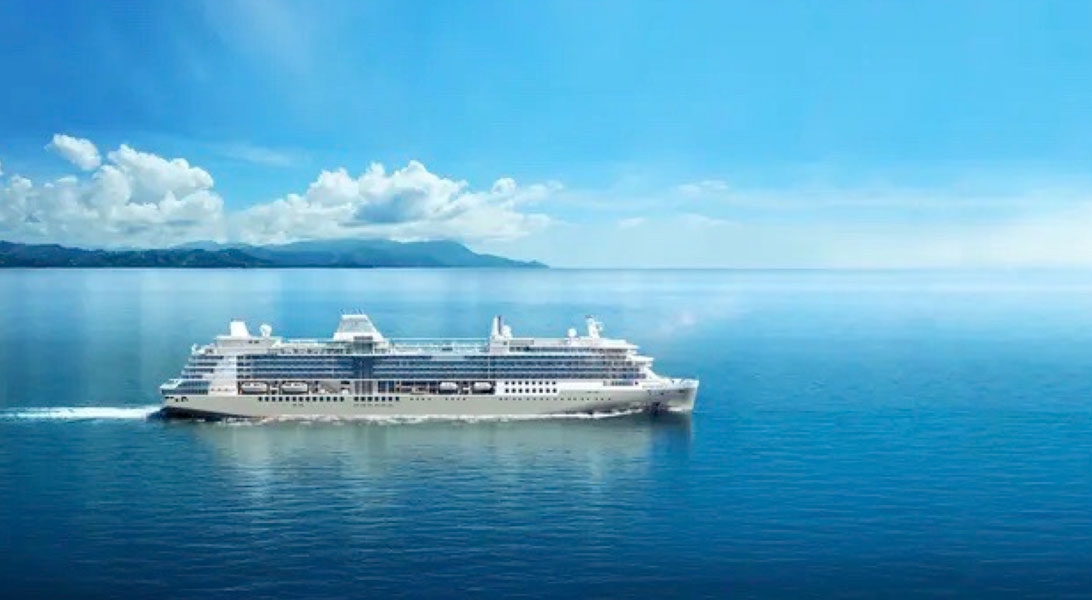


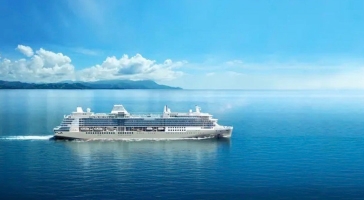
The images shown are for illustration purposes only and may not be an exact representation of what you find on the ship.
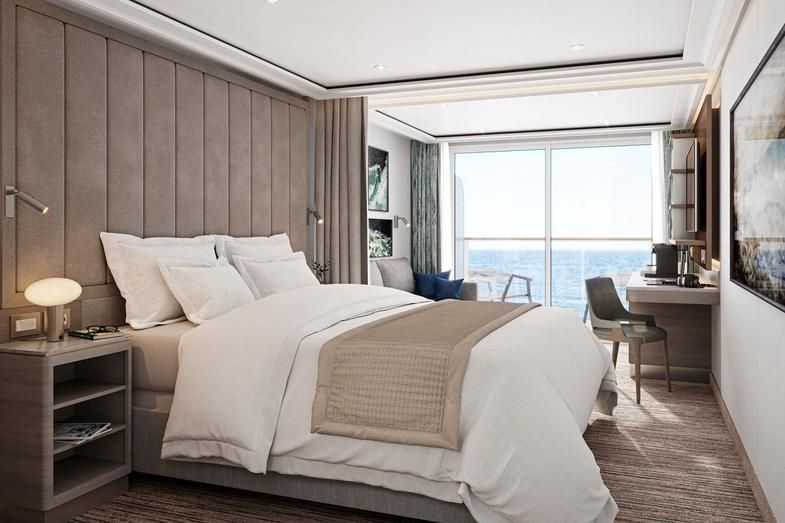
| Grade Code | From | To | |
| CV | Classic Veranda Suite | £12,750 | £13,200 |
Located at the bow and aft of the ship, the Classic Veranda Suite will offer travelers a taste of our famous onboard luxury. After a busy day of exploring, come home to the haven of the Classic Veranda Suite. With butler service, a queen-size bed (which can be separated on demand), and a beautiful marble bathroom, you won’t want to leave! However, the best part of our Classic Veranda Suite is by far the large (5 m2, or 54 sq ft) private teak veranda, which offers sweeping views of the destination. Pure bliss.
One bedroom: 33 sq m including veranda (5 sq m)
Essentials
Characteristics
Furniture
Media & Communication
Onboard Services
Amenities
Images are intended as a general reference. Features, materials, finishes and layout may be different than shown.
Please note the 3rd guest will sleep on a comfortable sofa bed in the reception area of suites that have 3rd berth capacity.
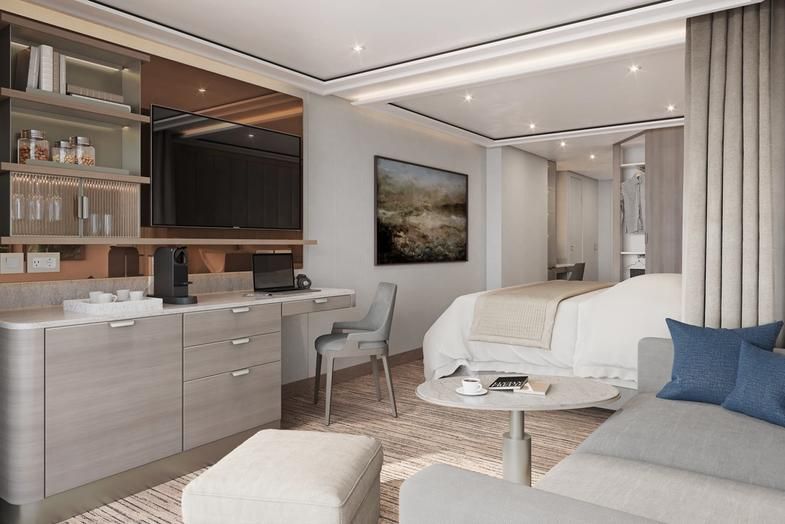
| Grade Code | From | To | |
| DX | Deluxe Veranda Suite | £13,800 | £14,250 |
Whether you are preparing for a dynamic day onshore, primping for a romantic dinner on board, or settling down for a quiet evening in-suite, you will be enveloped by the Deluxe Veranda Suite’s warm touches. Located in the ideal midship position, the Deluxe Veranda Suite offers a comfortable 33 m2, or 355 sq ft, of interior luxury. But perhaps this suite’s finest asset lies just outside, as floor-to-ceiling glass doors open onto a 5-m2 (54-sq-ft) furnished private teak veranda offering sweeping views of your destination.
One bedroom: 33 sq m including veranda (5 sq m)
Two bedrooms: 33 sq m including veranda (5 sq m)
Essentials
Characteristics
Furniture
Media & Communication
Onboard Services
Amenities
Images are intended as a general reference. Features, materials, finishes and layout may be different than shown.
Please note the 3rd guest will sleep on a comfortable sofa bed in the reception area of suites that have 3rd berth capacity.
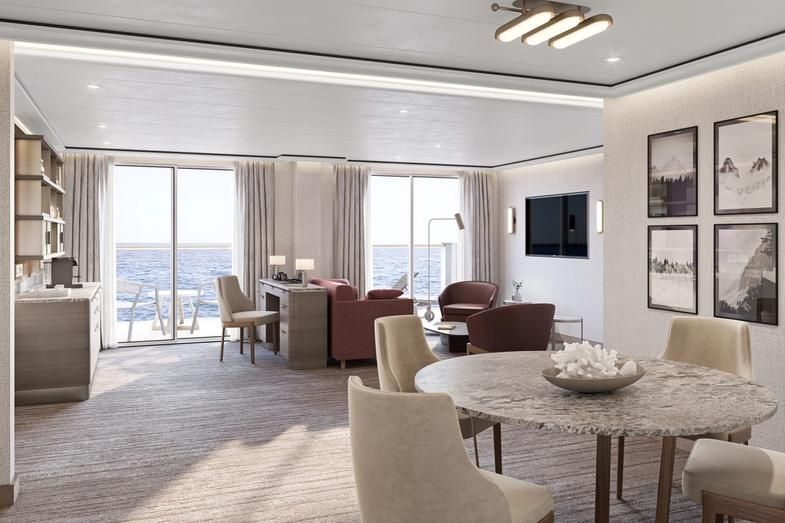
| Grade Code | From | To | |
| G1 | Grand Suite (1 Bedroom) | £41,250 | £41,700 |
If you have ever wanted to indulge in one of the epitomes of ultra-luxury cruising, then the Grand Suite is perhaps the answer. Situated at the front of the ship, the Grand Suite offers sophistication and style for serious travelers. Thanks to an innovative design, the Grand Suite is one of the most luxurious and spacious suites aboard Silver Ray, offering sweeping sea-to-sky views of your destination from all living areas. A luxurious bathroom with a double vanity, whirlpool bath, and walk-in shower, plus a complete guest restroom.
One bedroom: 85 sq m including veranda (13 sq m)
Two bedroom: 118 sq m including veranda (18 sq m)
Essentials
Characteristics
Furniture
Media & Communication
Onboard Services
Amenities
Images are intended as a general reference. Features, materials, finishes and layout may be different than shown.
Please note the 3rd guest will sleep on a comfortable sofa bed in the reception area of suites that have 3rd berth capacity.
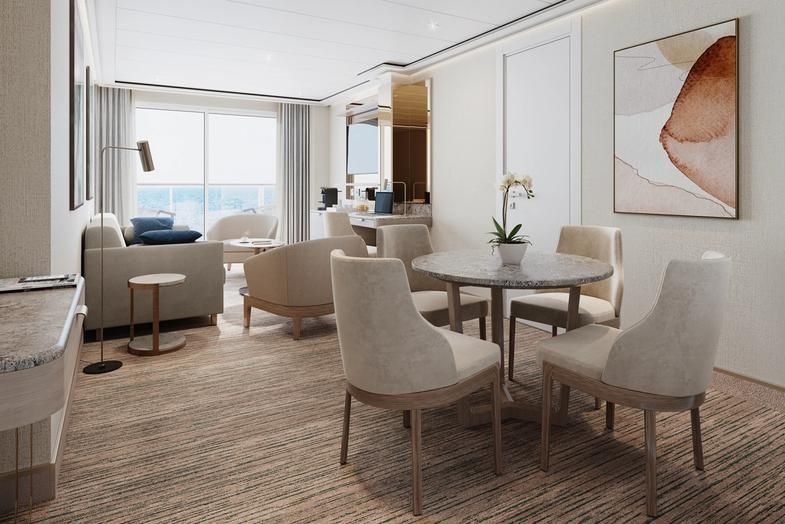
| Grade Code | From | To | |
| JG | Junior Grand Suite (1 Bedroom) | £25,500 | £25,900 |
| J2 | Junior Grand Suite (2 Bedrooms) | £37,900 | £38,700 |
Silver Ray’s Junior Grand Suite is a comfortably sized home away from home. Spaciously proportioned with 54–58 m2, or 581–624 sq ft, including 6 m2, or 64 sq ft, of balcony the Junior Grand builds on the success of the Grand Suite. It has inherited the best features of the Grand Suite by being positioned in the top bow position, offering spectacular views of the destination. The interior layout features a spacious living and dining area, as well as a secluded bedroom. The large bathroom features a double vanity, whirlpool bath, and walk-in shower.
One bedroom: 54–58 sq m including veranda (6 sq m)
Two bedrooms: 87–91 sq m including veranda (11 sq m)
Essentials
Characteristics
Furniture
Media & Communication
Onboard Services
Amenities
Images are intended as a general reference. Features, materials, finishes and layout may be different than shown.
Please note the 3rd guest will sleep on a comfortable sofa bed in the reception area of suites that have 3rd berth capacity.
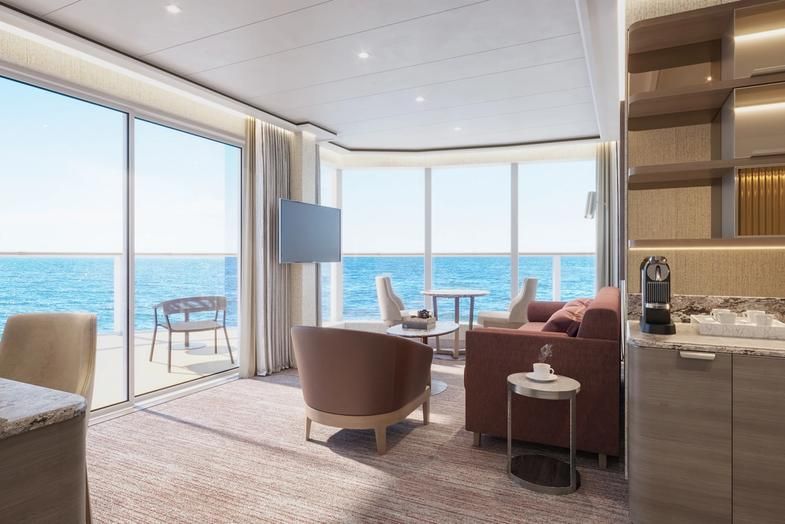
| Grade Code | From | To | |
| MS | Master Suite | £31,200 | £31,650 |
This new suite category is exclusive to Silver Ray. The Master Suite is stately, commanding, majestic, and perfect for relaxing after a day exploring onshore. Located in the premium aft corner position, the Master Suite has a total size of 67–77 m2 (721–826 sq ft) and includes 22–31 m2 (233–330 sq ft) of balcony. The incredible floor-to-ceiling glazing surrounding the living room and bedroom area will offer outstanding 270-degree views of your destination, regardless of where you are in the world.
One bedroom: 67–77 sq m including veranda (22–31 sq m)
Two bedrooms: 100–110 sq m including veranda (27–36 sq m)
Essentials
Characteristics
Furniture
Media & Communication
Onboard Services
Amenities
Images are intended as a general reference. Features, materials, finishes and layout may be different than shown.
Please note the 3rd guest will sleep on a comfortable sofa bed in the reception area of suites that have 3rd berth capacity.
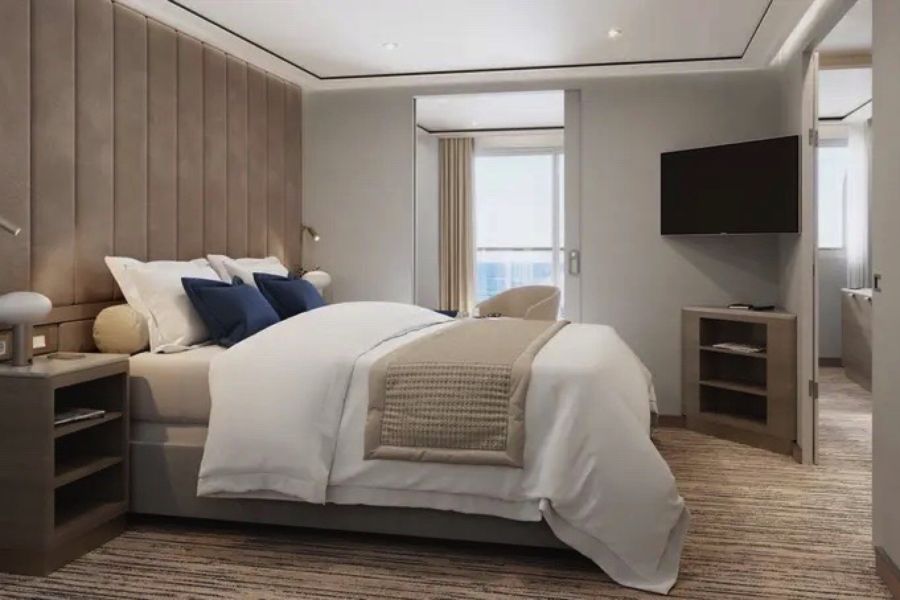
| Grade Code | From | To | |
| ME | Medallion Suite | £21,400 | £21,850 |
A mark of distinction, the Medallion Suite boasts a sumptuous and spacious living area, complete with rich textures and panoramic views from your large private veranda (8 m2, or 86 sq ft). Nestle under plush bed linens for one of the best night’s sleeps of your life, or rejuvenate after a busy day of exploring onshore in the cozy indoor seating area (49 m2, or 527 sq ft) The large bathroom with a double vanity, spacious bathtub, and shower is the perfect place to soak the day away. Relax with ease in the Medallion Suite, as the grandeurs of this stateroom surround you with distinguished luxury.
One bedroom: 49 sq m including veranda (8 sq m)
One bedroom: 527 sq ft/49 sq m including veranda
Essentials
Characteristics
Furniture
Media & Communication
Onboard Services
Amenities
Images are intended as a general reference. Features, materials, finishes and layout may be different than shown.
Please note the 3rd guest will sleep on a comfortable sofa bed in the reception area of suites that have 3rd berth capacity.
| Grade Code | From | To | |
| OT | Otium Suite | £49,900 | £50,300 |
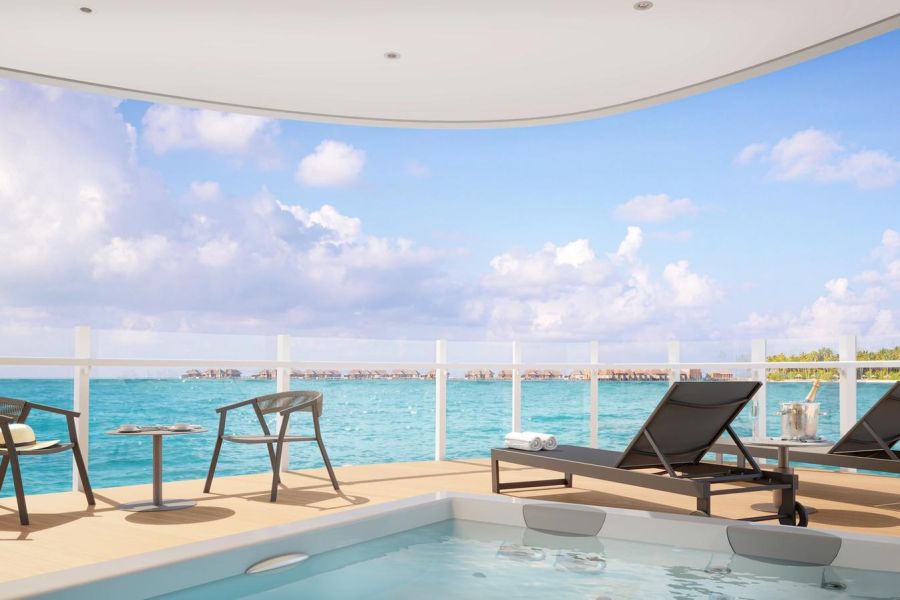
The Otium Suite is one of our newest and finest suites. Located in the premium aft corner position, the Otium Suite has a total size of 123 m2 (1,324 sq ft), including a 40 m2 (431 sq ft) balcony, which comes complete with a whirlpool. Features include a spacious living room area, a luxurious walk-in closet, a separate large bedroom, plus a bathroom with a whirlpool bath and walk-in shower. The crowning glory of the Otium Suite, however, is surely its unprecedented 270-degree view, giving you some of the best possible views of your destination.
The Otium Suite includes an Otium Spa Treatment Per Guest up to $399 (up to two guests per suite)
One bedroom: 123 sq m (40 sq m)
Essentials
Characteristics
Furniture
Media & Communication
Unlimited Premium Wi-Fi
Onboard Services
Amenities
Images are intended as a general reference. Features, materials, finishes and layout may be different than shown.
Please note the 3rd guest will sleep on a comfortable sofa bed in the reception area of suites that have 3rd berth capacity.
| Grade Code | From | To | |
| O1 | Owner's Suite (1 Bedroom) | £45,600 | £46,000 |
| O2 | Owner's Suite (2 Bedrooms) | £59,150 | £59,950 |
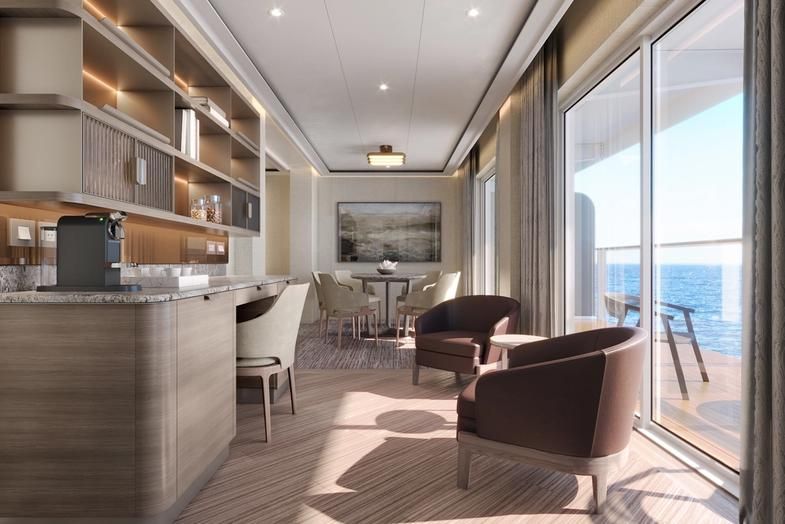
The aptly named Owner’s Suite is a Venetian Society favorite. So, why not travel in this stylish suite and get a taste of the ultimate luxury lifestyle. The suite’s total size is a huge 98 m2, or 1,055 sq ft, which includes 16 m2 (172 sq ft) of balcony, making for comfortable outdoor living. The favorite midship position gives incredible views from both the dining area and bedroom. A luxurious bathroom with a double vanity, plus a whirlpool bath and walk-in shower, bidet, lavatory, and guest restroom perfect the in-suite experience.
One bedroom: 98 sq m including veranda (16 sq m)
Two bedrooms: 131 sq m including veranda (21 sq m)
Essentials
Characteristics
Furniture
Media & Communication
Onboard Services
Amenities
Images are intended as a general reference. Features, materials, finishes and layout may be different than shown.
Please note the 3rd guest will sleep on a comfortable sofa bed in the reception area of suites that have 3rd berth capacity.
| Grade Code | From | To | |
| PM | Premium Medallion Suite | £22,650 | £23,100 |
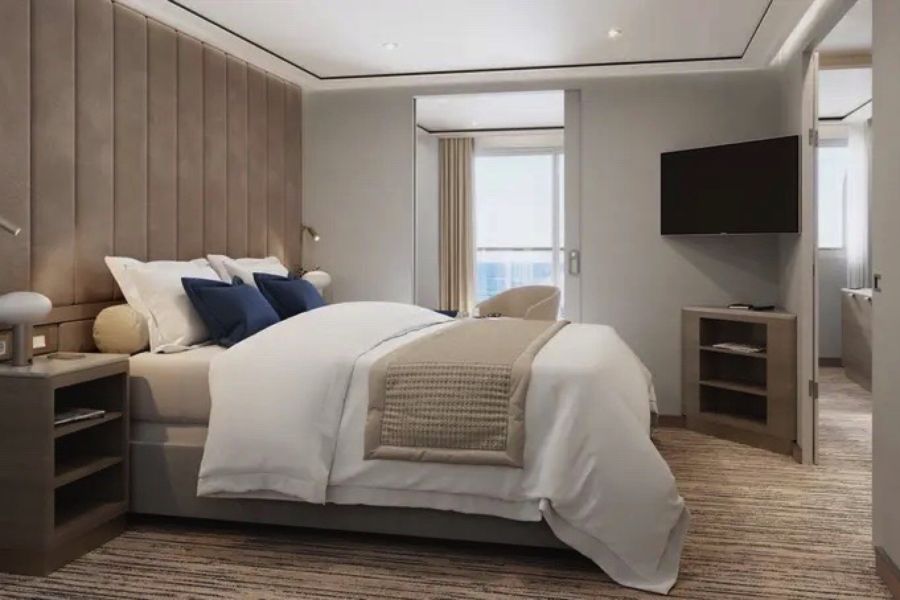
With features similar to our best-selling Medallion Suite, the Premium Medallion enjoys an optimal location at the aft. The Medallion Suite design builds on the phenomenal success of our iconic Veranda Suite while offering the comfort of a generous interior and balcony (49 m2/527 sq ft and 8 m2/86 sq ft, respectively). Additionally, the suite features a large bathroom with a double vanity, a spacious bathtub, and separate shower, as well as a secluded bedroom area with a queen-size bed.
One bedroom: 49 sq m including veranda (8 sq m)
Essentials
Characteristics
Furniture
Media & Communication
Onboard Services
Amenities
Images are intended as a general reference. Features, materials, finishes and layout may be different than shown.
Please note the 3rd guest will sleep on a comfortable sofa bed in the reception area of suites that have 3rd berth capacity.
| Grade Code | From | To | |
| PV | Premium Veranda Suite | £14,050 | £14,500 |
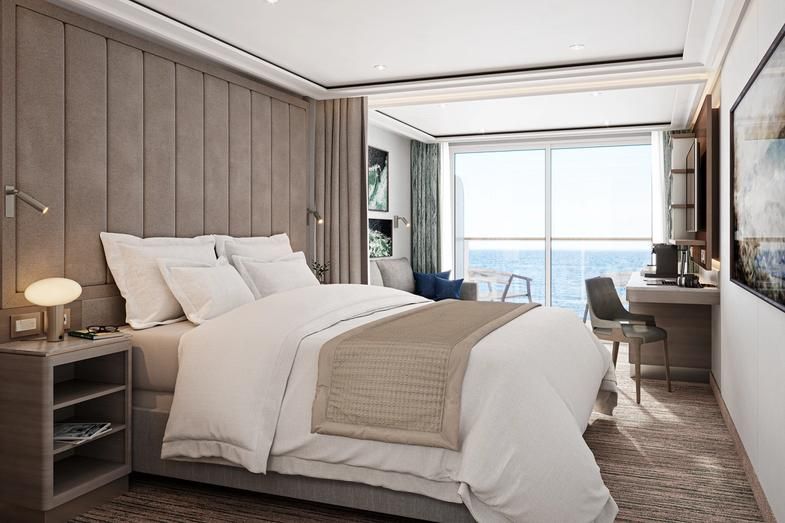
A Silversea signature, the Veranda Suite offers elegant decor, a stunning marbled bathroom with a luxurious double vanity and sumptuous walk-in shower or large bathtub. Located now in the top aft location, the Premium Veranda will offer a comfortable interior. Additionally, an ample seating area provides a generous expanse of interior comforts. Four suites (one on each deck) will offer spacious interiors adapted for guests with disabilities and will be located in the ideal midship position. A new iteration of our iconic and perfect suite configuration.
One bedroom: 33 sq m including veranda (5 sq m)
Wheelchair accessible suites: 6045, 7037, 8031, 9041
Essentials
Characteristics
Furniture
Media & Communication
Onboard Services
Amenities
Images are intended as a general reference. Features, materials, finishes and layout may be different than shown.
Please note the 3rd guest will sleep on a comfortable sofa bed in the reception area of suites that have 3rd berth capacity.
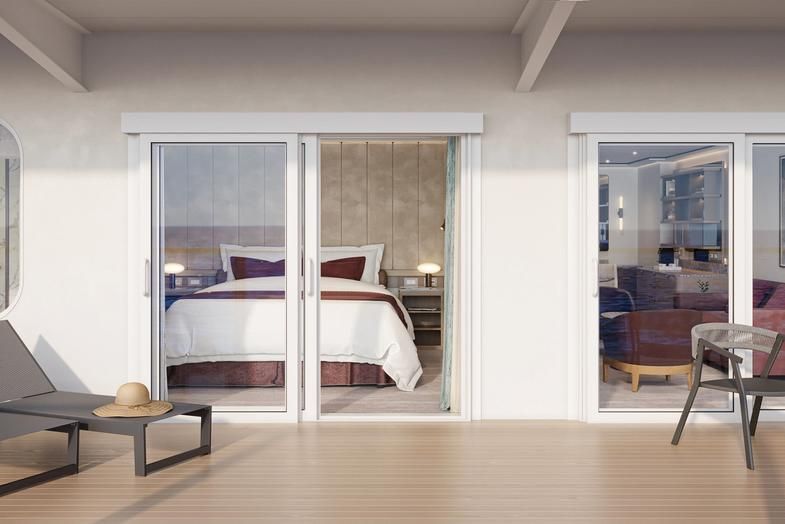
| Grade Code | From | To | |
| SS | Signature Suite | £29,800 | £30,250 |
Another exclusivity for Silver Ray. The Signature Suite is one of our most distinctive new suites, offering unparalleled destination immersion through unobstructed views from all interior areas. The Signature Suite is one of the most spacious suites on board totaling 65 m2, or 700 sq ft, including 16 m2, or 172 sq ft, of balcony for superlative outdoor living. The innovative layout will feature a large dining and living room area, as well as a secluded bedroom. The large bathroom features a double vanity, whirlpool bath, walk-in shower, and lavatory, and the suite includes a guest restroom.
One bedroom: 65 sq m including veranda (16 sq m)
Essentials
Deck(s): 6, 7, 8, 9
Section: Mid-Ship
Characteristics
Furniture
Media & Communication
Onboard Services
Amenities
Images are intended as a general reference. Features, materials, finishes and layout may be different than shown.
Please note the 3rd guest will sleep on a comfortable sofa bed in the reception area of suites that have 3rd berth capacity.
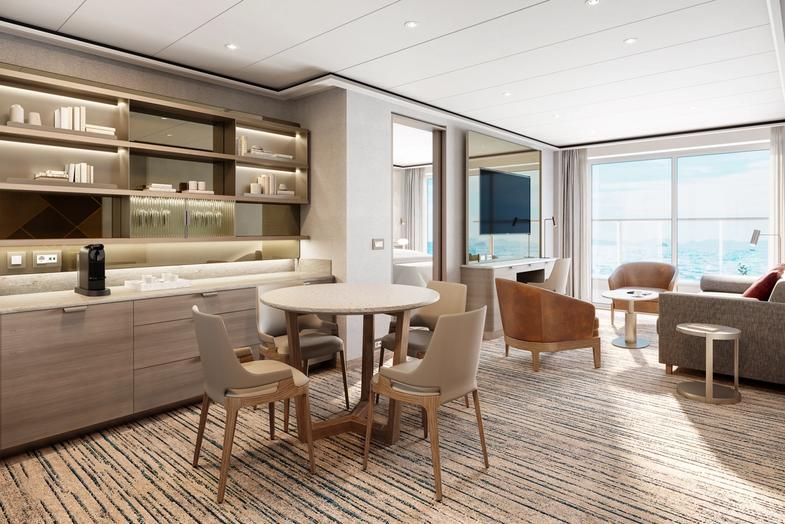
| Grade Code | From | To | |
| SL | Silver Suite | £28,350 | £28,750 |
The Silver Suite is a Silversea favorite. It’s one of the Venetian Society’s favorite choices, and we can see why! The Silver Suite aboard Silver Ray offers an innovative design layout that will unlock full ocean views from both the living room and bedroom while the spacious living area allows for comfortable relaxing. A generous dining area makes cozy nights dining in veritable experiences in themselves. The suite features a generous walk-in closet as well as a bathroom with whirlpool bath, a walk-in shower, double vanity, and separate lavatory.
One bedroom: 63 sq m including veranda (11 sq m)
Two bedroom: 96 sq m including veranda (16 sq m)
Wheelchair accessible suites: 6022, 7018
Essentials
Characteristics
Furniture
Media & Communication
Onboard Services
Amenities
Images are intended as a general reference. Features, materials, finishes and layout may be different than shown.
Please note the 3rd guest will sleep on a comfortable sofa bed in the reception area of suites that have 3rd berth capacity.
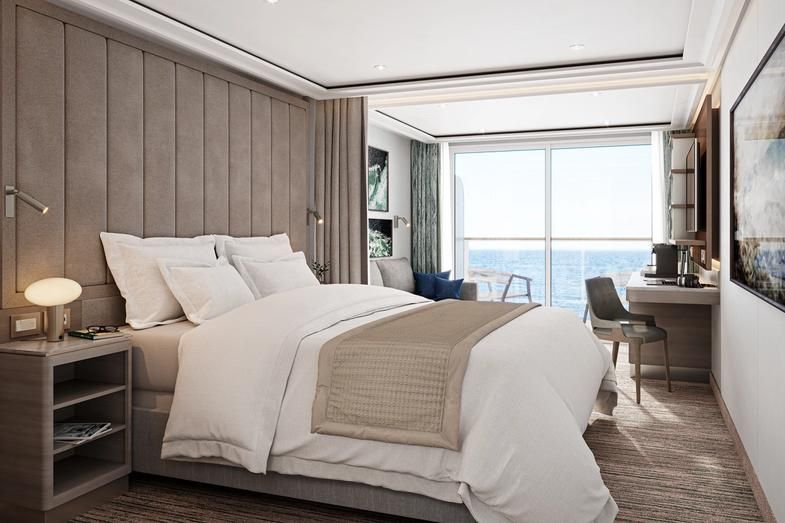
| Grade Code | From | To | |
| SV | Superior Veranda Suite | £13,200 | £13,600 |
Well situated at the front and back of the ship, the 28-m2 (301-sq-ft) interior of the Veranda Suite is only the beginning. The 5-m2 (54-sq-ft) teak balcony makes each spectacular sunset feel like it is yours alone. From beautiful bed linens to sumptuous furniture, our Superior Veranda Suites are luxurious inside and out! Whether enjoying some down time with the state-of-the-art entertainment system or taking in dinner in-suite, the Superior Veranda is the coziest home away from home on the high seas.
One bedroom: 33 sq m including veranda (5 sq m)
Essentials
Characteristics
Furniture
Media & Communication
Onboard Services
Amenities
Images are intended as a general reference. Features, materials, finishes and layout may be different than shown.
Please note the 3rd guest will sleep on a comfortable sofa bed in the reception area of suites that have 3rd berth capacity.
The images shown are for illustration purposes only and may not be an exact representation of what you find on the ship.
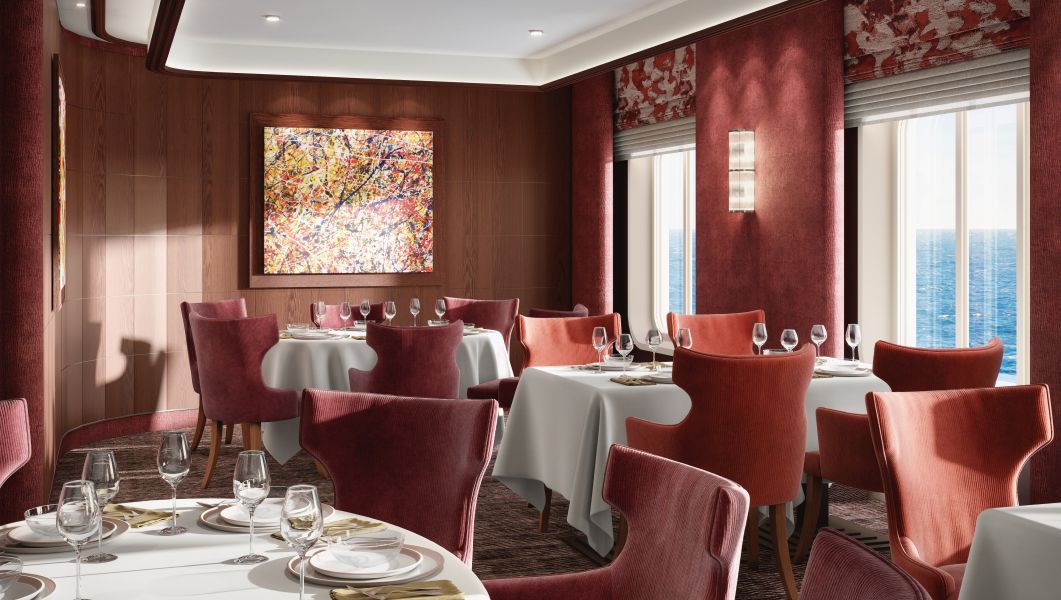
Refined global fare and grilled classics take center stage at Atlantide. Drop in for an indulgent à la carte breakfast, a leisurely lunch, or an elegant dinner among family and new friends, served in a timeless and sophisticated setting.
Images are intended as a general reference. Features, materials, finishes and layout may be different than shown.
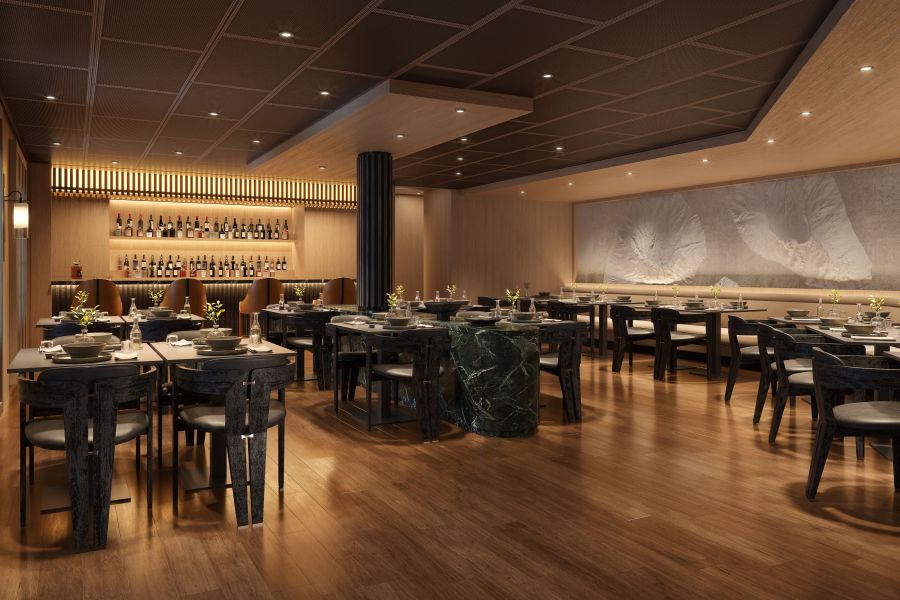
Meals at Kaiseki are rooted in the Japanese philosophy of balance and precision. By day, refreshing sushi, sashimi, and izakaya-style dishes guide the menu. During dinner, specialties like miso black cod and wagyu teriyaki nod to Japan’s enduring culinary legacy, while fine sake, whiskies, and teas enhance every course.
Lunch - Open seating
Opening Hours: 12:00 PM – 2:30 PM
Dinner - Reservations required*
Opening Hours: 7:00 PM – 9:30 PM
Per guest reservation fee of US$80 (incl. complimentary sake, Japanese whiskeys, or TWG tea and tea cocktails selection). Please visit My Silversea to make your reservations.
Learn more about the Epicurean Experience, which includes dining in three specialty restaurants with preferential rates.
Images are intended as a general reference. Features, materials, finishes and layout may be different than shown.
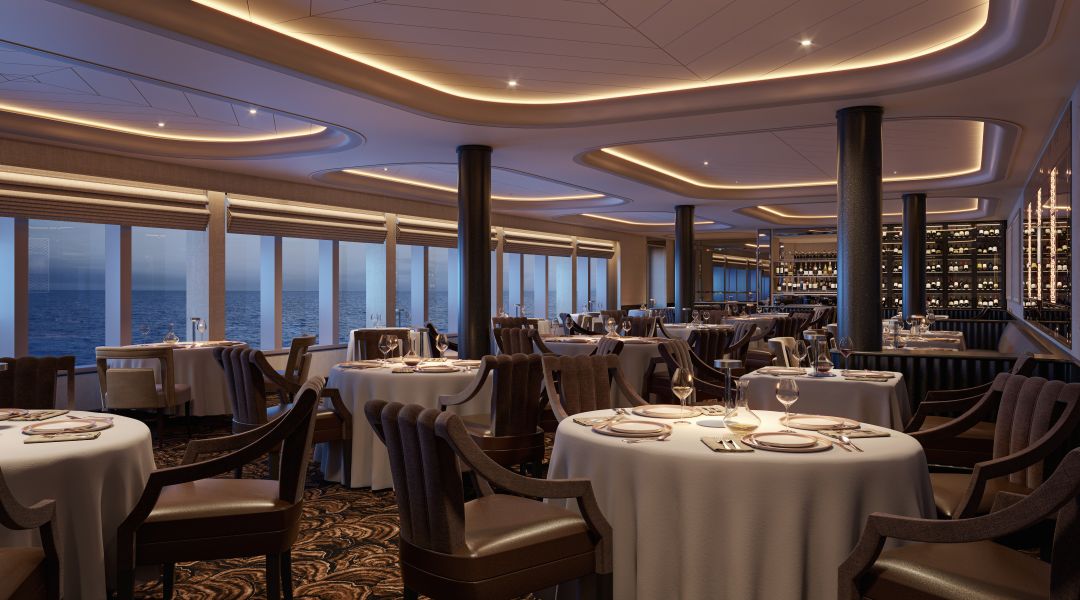
Experience the pinnacle of French gastronomy at La Dame, where sophistication meets tradition. Here, an exclusive tasting menu unfolds course by course — each plate a study in masterful technique, seasonal ingredients, and modern refinement. From classic Kir Royales to exquisite signatures such as Dover sole à la Grenobloise, this is haute cuisine at its finest.
Per guest reservation fee of US$100. Please visit My Silversea to make your reservations.
Learn more about the Epicurean Experience, which includes dining in three specialty restaurants with preferential rates.
Images are intended as a general reference. Features, materials, finishes and layout may be different than shown.
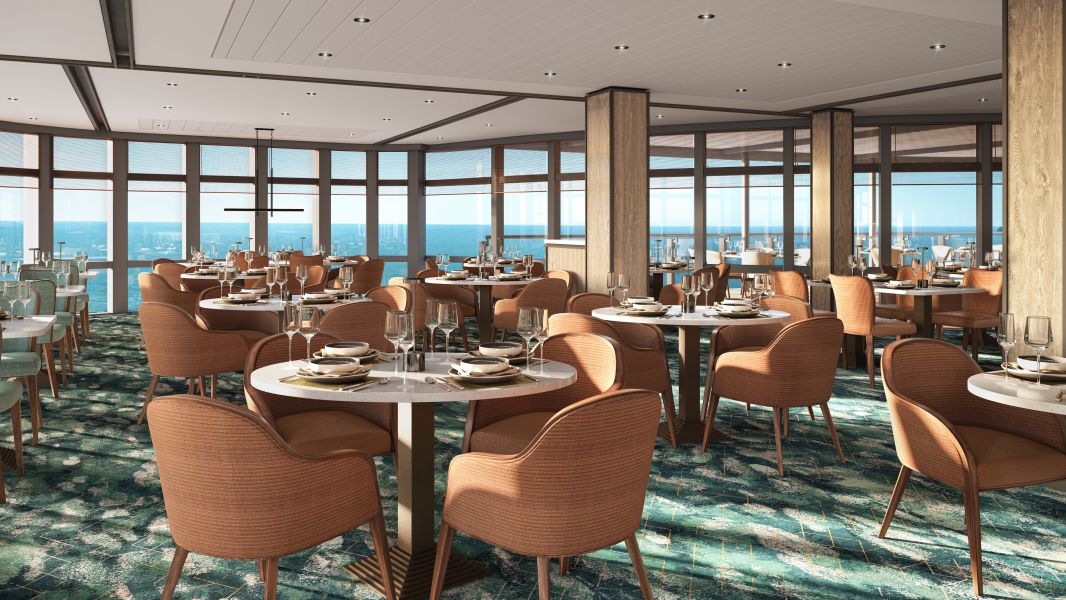
La Terrazza elevates casual dining by day and delivers an authentic Italian experience by night. During the breakfast and lunch buffets, our master chefs prepare global favorites at live stations. As evening falls, handmade pastas and classic seafood dishes are the centerpiece — every impeccable bite paired with fine wines from around the world.
Images are intended as a general reference. Features, materials, finishes and layout may be different than shown.
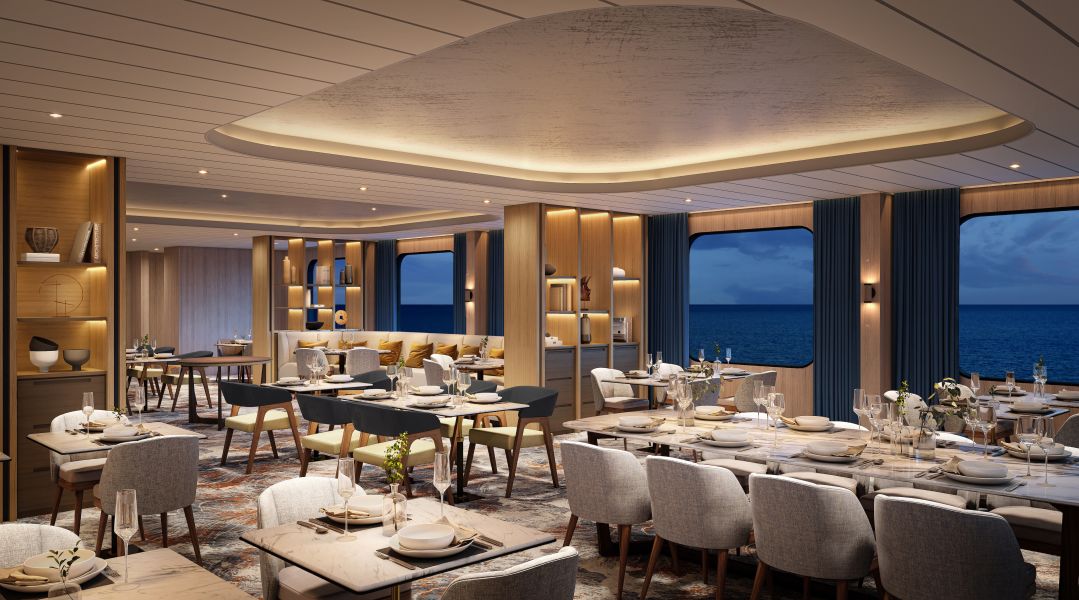
S.A.L.T. Kitchen transforms dining into discovery with menus that reflect the cuisines of the places you’ll visit. This complimentary venue is the only restaurant at sea with an ever-changing menu based on destination. Plus, a standing menu focuses on broader regional specialties, complemented by a menu featuring hyperlocal fare. Dishes are inspired by local flavors and prepared with responsibly sourced ingredients. Accompanied by a curated selection of over 160 regional wines, S.A.L.T. Kitchen delivers an immersive taste of place without ever leaving the ship.
Images are intended as a general reference. Features, materials, finishes, and layout may be different than shown.
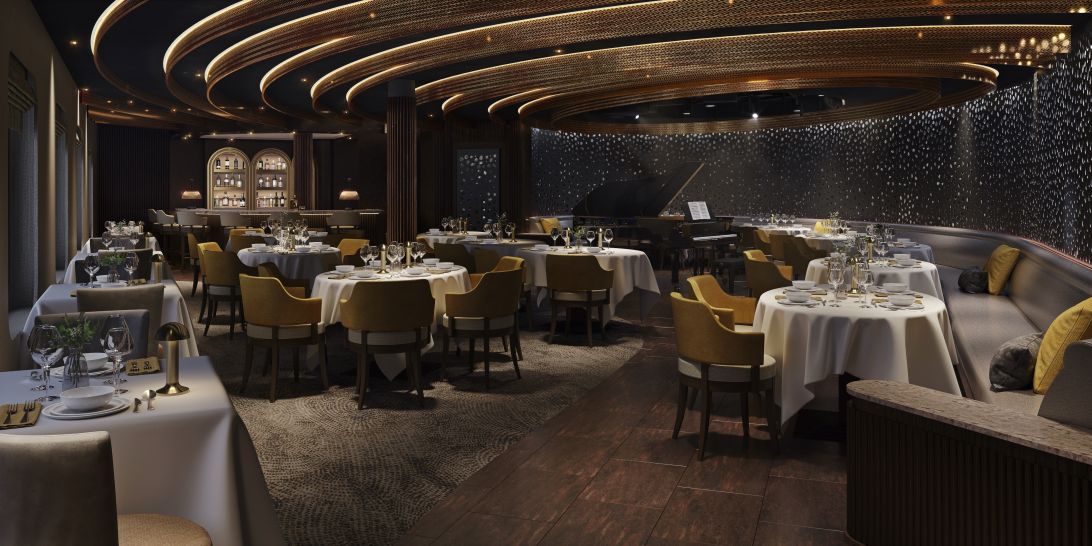
As the stars come out, Silver Note comes alive with the rhythm of jazz and the artistry of small-plate fine dining. This intimate supper-club experience pairs soulful live performances with inventive, international cuisine in a chic, lounge-style setting — one of the most exclusive dining concepts at sea.
Learn more about the Epicurean Experience, which includes dining in three specialty restaurants with preferential rates.
Images are intended as a general reference. Features, materials, finishes and layout may be different than shown.
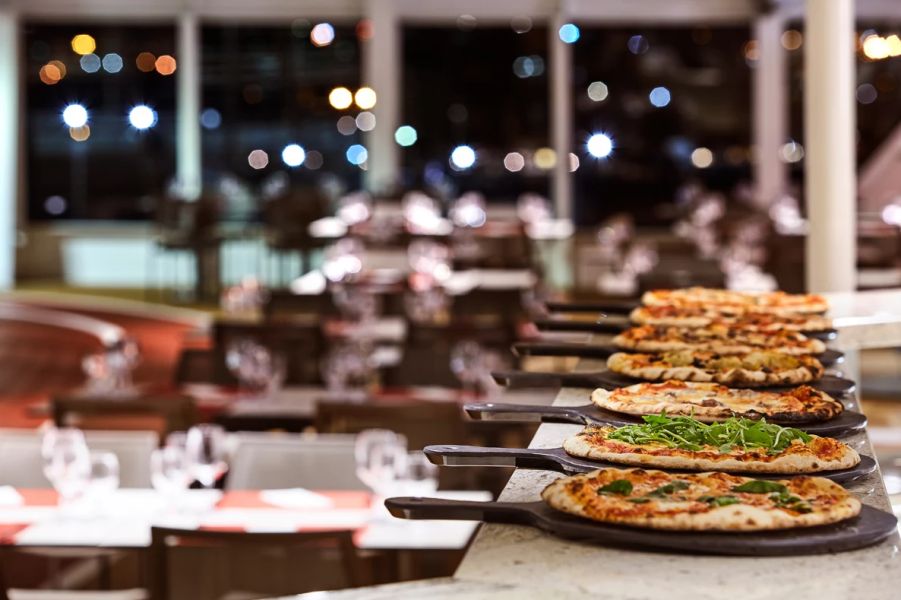
Spaccanapoli honors southern Italy’s culinary heritage with handcrafted pies tossed, topped, and baked to perfection. This signature pizzeria captures true Neapolitan flavor — from golden, blistered crusts to the irresistible aromas that drift from the custom-built oven.
Images are intended as a general reference. Features, materials, finishes and layout may be different than shown.
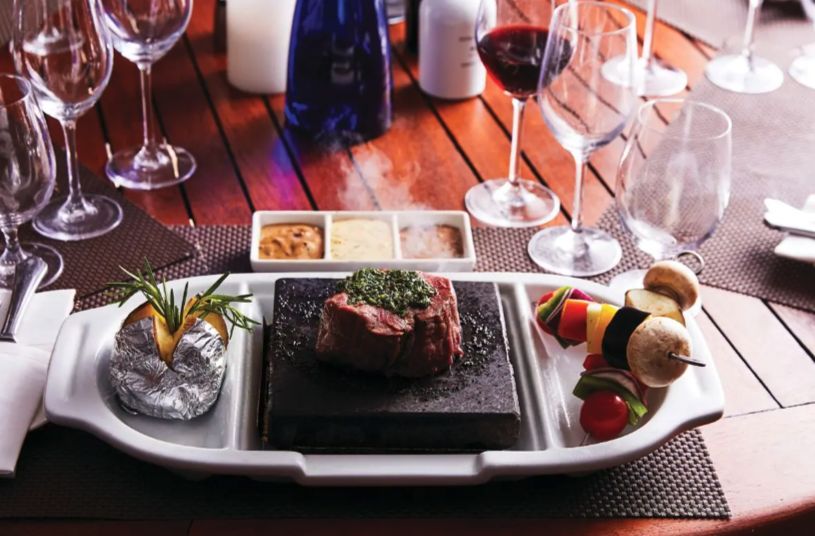
A poolside al fresco favorite, The Grill is casual by day and captivating by night. Dig in to crisp salads and grilled classics during lunch, then return after sunset for masterfully seasoned and seared cuts paired with balmy sea breezes.
Images are intended as a general reference. Features, materials, finishes and layout may be different than shown.
The images shown are for illustration purposes only and may not be an exact representation of what you find on the ship.
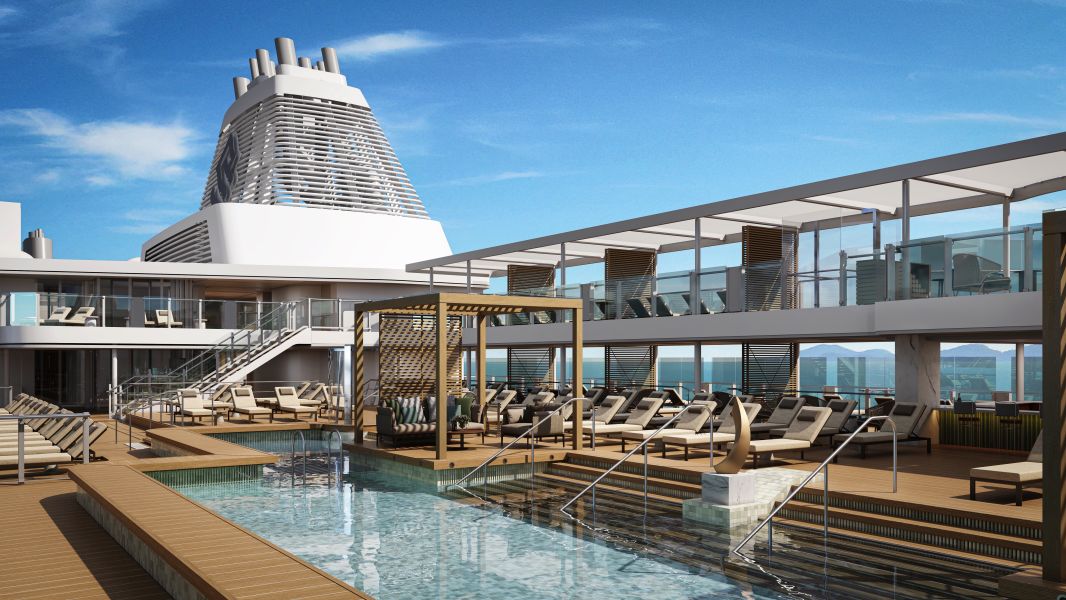
Enjoy a reimagined space where you can relax, refresh, and rejuvenate on decks 10 and 11. Ample sun beds for everyone, more space than ever before, and the largest pool in the fleet—which offers exceptional, unhampered, 270-degree views—are just the beginning. The upper-level sun deck is perfectly placed for those who want a quieter space to relax and still enjoy those incredible, expansive views that are the hallmark of Silver Ray. But it is The Cliff Whirlpool, an infinity-edge, glass-fronted whirlpool, that really makes The Pool Deck something special.
Images are intended as a general reference. Features, materials, finishes and layout may be different than shown.
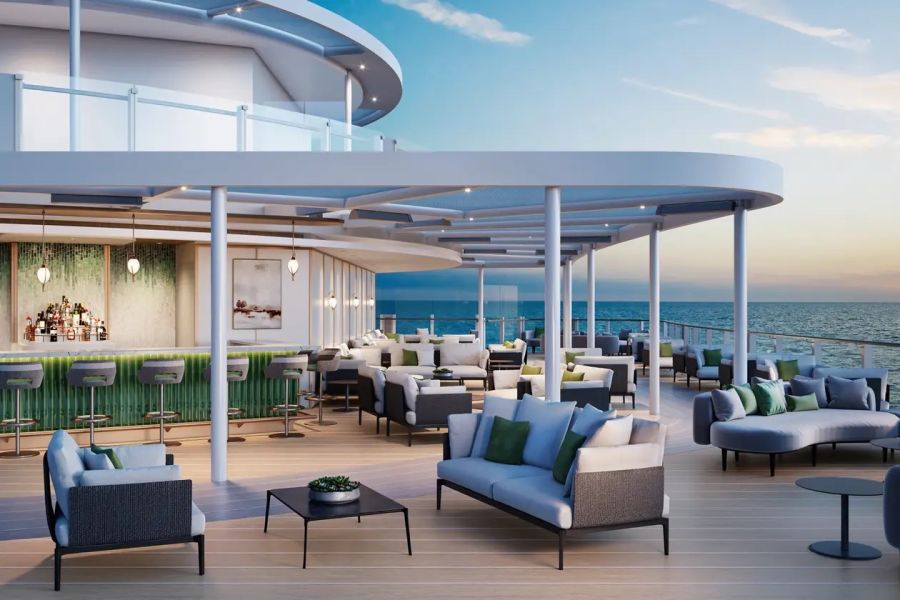
With an emphasis on the destination, panoramic views connect you with the world beyond at The Dusk Bar. This superb open-air sky bar provides plenty of space for guests to enjoy a pre- or post-dinner drink while taking in the jaw-dropping, 270-degree, panoramic views from the stern. The Dusk Bar’s delightful combination of idyllic atmosphere and lovely drinks is guaranteed to check your boxes time after time. Whether you’re enjoying a spritz in South America, a cocktail in the Caribbean, or a night cap in the Mediterranean, we think The Dusk Bar’s unobstructed views give you a new perspective on sunsets at sea.
Images are intended as a general reference. Features, materials, finishes and layout may be different than shown.
The images shown are for illustration purposes only and may not be an exact representation of what you find on the ship.
The images shown are for illustration purposes only and may not be an exact representation of what you find on the ship.


Our Fusion packages are all ABTA & ATOL protected ensuring that your booking is safe with us
| 21 nights aboard the Silver Ray | |||
| Butler Service in Every Suite | |||
| Gratuities Always Included | |||
| Beverages In-Suite and Throughout the Ship | |||
| Gourmet Dining | |||
| In Suite Dining & 24-Hour Room Service | |||
| Intimate small size ships | |||
| Free Wifi Throughout the Ship | |||
| Free Zodiac, Land and Sea Tours & Activities & Complimentary Expedition gear | |||
| Port Taxes and Fees | |||
 | ABTA and ATOL Protection* | ||
Date 27th Jan 2028 |
Nts 21 |
Please Call for Availability |
Date 27th Jan 2028 |
Nts 21 |
Please Call for Availability |
| Suite staterooms |  | ||
| CV | Classic Veranda Suite | | |
| DX | Deluxe Veranda Suite | | |
| SV | Superior Veranda Suite | | |
| PV | Premium Veranda Suite | | |
| G1 | Grand Suite (1 Bedroom) | | |
| JG | Junior Grand Suite (1 Bedroom) | | |
| J2 | Junior Grand Suite (2 Bedrooms) | | |
| ME | Medallion Suite | | |
| PM | Premium Medallion Suite | | |
| MS | Master Suite | | |
| SL | Silver Suite | | |
| SS | Signature Suite | | |
| OT | Otium Suite | | |
| O1 | Owner's Suite (1 Bedroom) | | |
| O2 | Owner's Suite (2 Bedrooms) | | |
Fusion Holidays when selling travel arrangements is a trading name of Co-op Travel Services Limited, registration 08903986. Fusion Cruises is an Accredited Body Member of Co-op Travel Services Limited ATOL 12904.
Book with Confidence. We are a Member of ABTA which means you have the benefit of ABTA’s assistance and Code of Conduct.
Some of the flights and flight-inclusive holidays on this website are financially protected by the ATOL scheme but ATOL protection does not apply to all holiday and travel services offered on this website. This website will provide you with information on the protection that applies in the case of each holiday and travel service offered before you make your booking. If you do not receive an ATOL Certificate then the booking will not be ATOL protected. If you do receive an ATOL Certificate but all parts of your trip are not listed on it, those parts will not be ATOL protected. Please see our booking conditions for information, or for more information about financial protection and the ATOL Certificate go to: www.caa.co.uk