This site uses cookies as defined in our Cookie Policy, by continuing to use this site you agree to their use.
Continue

| Arrive | Depart | ||||||
| 5th05 | MayMay | 202727 | Lisbon, Portugal, embark on the Silver Spirit | 18:00 | |||
Set on seven hills on the banks of the River Tagus, Lisbon has been the capital of Portugal since the 13th century. It is a city famous for its majestic architecture, old wooden trams, Moorish features and more than twenty centuries of history. Following disastrous earthquakes in the 18th century, Lisbon was rebuilt by the Marques de Pombal who created an elegant city with wide boulevards and a great riverfront and square, Praça do Comércio. Today there are distinct modern and ancient sections, combining great shopping with culture and sightseeing in the Old Town, built on the city's terraced hillsides. The distance between the ship and your tour vehicle may vary. This distance is not included in the excursion grades. A glorious mosaic of beauty, freedom and authenticity, Portugal’s capital is a stirring artwork of a city. Known for the seven hills it spreads across, and its stirring fado music, Lisbon is a pastel-coloured blend of houses and beautiful tile artworks - and this creative city strikes a perfect harmony between natural and manmade beauty. Stroll along Alfama's steep, cobbled streets as you explore one of the city’s oldest neighbourhoods - where each house and door could be its own photograph. Look for the decorative tiles, with the distinctive blues and whites of Azulejo ceramics, and visit the dedicated museum to learn more. Afterwards, wind up to São Jorge Castle, where views out across Lisbon’s red rooftops unravel. Just one of many majestic viewpoints, you can also seek out Miradouro da Graça for perhaps Lisbon's finest panorama, with the copper-coloured suspension bridge stretching over sparkling water beyond the sea of buildings. The elegant Tower of Belém rises in the Tagus estuary and is a historic defender of these shores. The grand, carved cloisters of Jerónimos Monastery spread out close by, and there's another UNESCO recognised location close by at Sintra, where a colourful town is set amid thick gardens and towering mountains - capped by the royal Pena Palace. Later, relax and take a quick break to drink Ginjinha, a cherry liqueur made from chocolate cups instead of coffee. Lisboetas have a sweet tooth, and the famous Pastel de Nata's crumbling pastry and caramelised-custard topping is the essential accompaniment to any coffee stop. | |||||||
| 6th06 | MayMay | 202727 | Porto, Portugal | 08:30 | 18:00 | ||
Lively, commercial Oporto is the second largest city in Portugal after Lisbon. Also called Porto for short, the word easily brings to mind the city's most famous product - port wine. Oporto's strategic location on the north bank of the Douro River has accounted for the town's importance since ancient times. The Romans built a fort here where their trading route crossed the Douro, and the Moors brought their own culture to the area. Oporto profited from provisioning crusaders en route to the Holy Land and enjoyed the riches from Portuguese maritime discoveries during the 15th and 16th centuries. Later, port wine trade with Britain compensated for the loss of the spice trade and the end of gold and gem shipments from Brazil. In the 19th century, the city went through a period of new prosperity with the rise of industries. In its wake followed the building of workers' quarters and opulent residences. Since the declaration of Oporto as a World Heritage Site by UNESCO, the city aims to build up a cultural reference that will provide it with a new image, based on deep historical roots. Among the attractions that make Oporto such an interesting place are its graceful bridges spanning the Douro River, a picturesque riverfront quarter and, most notable, its world-famous port wine lodges. Although Oporto is a bustling centre and home to many different businesses, the source of its greatest fame is the rich, sweet fortified red wine we know as port. Steep stacked banks of evocative buildings and cobbled streetsperch scenically over the River Duoro in this authentic atmospheric Portuguese city. Famed for its wine and bright azulejo tiles - which turn streets into art galleries - Oporto is a charming taste of the real Portugal. Wander the uneven paths of the country’s second-largest city which are soaked with history tradition and eye-catching details. Start in the gorgeous historic Ribeira neighbourhood at the River Douro and walk up through tiny alleys and narrow streets lined with restaurants and cafes. Enjoy views of the colourful city from the skeletal Ponte de Dom Luis I bridge. Its design might ring a bell - the structure was created by a student of Gustav Eiffel and has a similar aesthetic to his famous tower creation. Porto Cathedral sits on a rise of steps towering above the city and offering spectacular views down. The cloisters are a highlight - with beautiful mosaics of the renowned blue and white tiles gleaming. If you’re hungry the indulgent Francesinha sandwich will fill you up for days. A Portuguese take on French toast - it’s packed full of ham and slathered in cheese egg and sauce. Or settle in for a feast on some of Portugal’s ubiquitous salted cod Bacalhau. The climate nurtures the revered vineyards which surround the city helping to produce harvests of perfect grapes. Head out to landscapes coated in vineyards from the Douro Valley to try some of the finest local wines. | |||||||
| 7th07 | MayMay | 202727 | Vigo, Spain | 08:00 | 17:00 | ||
Dating from Roman times, the Galician city of Vigo has a fine natural harbour and is renowned as the biggest fishing port in the world. It is also full of history - it was in this fjord-like quay that the English and Dutch defeated the French and Spanish fleets in 1702. Today, the attractive marinas stand in contrast to the industrialised areas of the city, while further exploration will reveal the characteristic 17th-century architecture and attractive countryside beyond. The charming Old Town is a delight, with its labyrinth of winding narrow streets and shaded squares. Nearby is the Cathedral city of Tui, and further to the north is the pilgrimage centre of Santiago de Compostela, which can be reached by car in approximately 1¼ hours. Located in in Galicia, in the northwest of Spain on the Portuguese border, Vigo is perhaps the country’s most underrated destination. Considered by many as “just’ an industrial fishing port (meaning the seafood rarely travels further than a mile to your plate), Vigo seduces everyone with its cuisine, landscape and warm Spanish welcomes. Like many of Galicia’s coastal towns, life in Vigo has been dictated by the ocean. The city dates back to Roman times and Romanesque architecture such as the churches of Santa María de Castrelos, Santiago de Bembrive, San Salvador de Coruxo can be found all over the city. From the 16th-18th centuries it became alive with commercial trade and buccaneers looking for sunken treasure. The town still enjoys its status as having sunken treasure in its waters, and debates about who would own this if ever discovered periodically colour local conversations. The old town and fishermen’s quarter are worth exploring, although unfortunately with the port’s rapid expansion in the 20th century, many of the original fishermen’s houses were demolished. However, remnants of the city’s Medieval past are still visible and a trip along the Spanish-Portuguese border will reward you with the beautiful walled Medieval city of Tui and the Velansa Fortress. The 13th century fortress offers a splendid view of the fortified Cathedral of Tui on the opposite side of the River Miño. Mount Castro, a castle fortress actually in the city, commands a magnificent view of Vigo and the bay. | |||||||
| 8th08 | MayMay | 202727 | At Sea | ||||
| 9th09 | MayMay | 202727 | Santander, Spain | 08:00 | 18:00 | ||
| Northern Spain might not have the same allure as the Mediterranean end of the country, yet as every traveller knows, often the best places are those that are the least known. Enter Santander. With heritage hailing from the prehistoric, Roman and Middle ages, suffice to say that Santander’s roots stretch very far back. As one of Spain’s more important ports during the New World trading era, Santander enjoyed great wealth during the Middle Ages. King Alfonso 13th (1886-1941) made the city his summer residence, bringing about a further economic boom and laying the foundations for modern Santander: a popular summer resort that enjoys one of the most beautiful bay in Spain, a fantastic art and cultural hub (don’t miss the Centro Botin) and a great lust for la vida. Tragically, a two-day fire in 1941 destroyed much of the city, including almost all the medieval heritage. Thus, Santander is today a city of two faces. One: an elegant seaside resort with at least six urban beaches, fabulous restaurants and all the fun in the sun you can muster. The other: a city with 15,000-year-old prehistoric roots that are visible in the cave paintings at Altamira or Puente Viesgo. If travelling the 30-minutes to see the real things seems too far, make sure you head to the fabulous Prehistory and Archaeology Museum of Cantabria, for extensive displays that take you on an interactive journey through time. Alternatively, make like a local and head to El Sardinero beach for a boho beach vibe that rivals Barcelona. | |||||||
| 10th10 | MayMay | 202727 | Bordeaux, France | ||||
Bordeaux as a whole, rather than any particular points within it, is what you'll want to visit in order to understand why Victor Hugo described it as Versailles plus Antwerp, and why the painter Francisco de Goya, when exiled from his native Spain, chose it as his last home (he died here in 1828). The capital of southwest France and the region's largest city, Bordeaux remains synonymous with the wine trade: wine shippers have long maintained their headquarters along the banks of the Garonne, while buyers from around the world arrive for the huge biennial Vinexpo show (held in odd-number years).Bordeaux is, admittedly, a less exuberant city than many others in France, but lively and stylish elements are making a dent in its conservative veneer. The cleaned-up riverfront is said by some, after a bottle or two, to exude an elegance reminiscent of St. Petersburg, and that aura of 18th-century élan also permeates the historic downtown sector—“le vieux Bordeaux"—where fine shops invite exploration. To the south of the city center are old docklands undergoing renewal—one train station has now been transformed into a big multiplex movie theater—but the area is still a bit shady. To get a feel for the historic port of Bordeaux, take the 90-minute boat trip that leaves Quai Louis-XVIII every weekday afternoon, or the regular passenger ferry that plies the Garonne between Quai Richelieu and the Pont d'Aquitaine in summer. A nice time to stroll around the city center is the first Sunday of the month, when it's pedestrian-only and vehicles are banned. The name alone conjures images of sun-ripened grapes, splashes of refined flavour, and the joy of clinking glasses. Bordeaux is synonymous with quality and prestige, and the promise of endless opportunities to sample the city’s famous, full-bodied red wines makes a visit to this elegant French port city one to truly savour. Sprinkled with scenic, turret-adorned mansion castles, which stand above soil softened by the Atlantic and winding flow of the Garonne River, the vineyards of Bordeaux consistently produce revered wines, enjoyed right across the globe. Explore France’s largest wine region, walking through vineyards where dusty clumps of grapes hang, before descending into cellars to see the painstaking processes that make this region a global wine centre. The acclaimed, sensory experience of Cité du Vin wine museum lets you put your own nose to the test, learning more about the craft involved in producing world class vintages. Brush up on your wine knowledge, with our blog [insert You’ll Fall in Love with Wine in Bordeaux]. Bordeaux itself is an intoxicating blend of old and new – a fact perfectly illustrated by the Water Mirror. This living art installation has reinvigorated one of the city’s most important historical sites, and it feels as though you’re walking on water, as you step through the cooling mist of Place De La Bourse. The moisture generates a glorious mirrored composition of the 300-year-old elegant palatial architecture in front of you. Water also flows freely from the magnificent Monument aux Girondins statue, where horses rear up to extol the values of the Girondin revolutionaries. Marche des Quais – the city’s lively fish market – is the spot to try this wine capital’s freshest lemon-drizzled oysters and juicy prawns. | |||||||
| 11th11 | MayMay | 202727 | Bordeaux, France | ||||
Bordeaux as a whole, rather than any particular points within it, is what you'll want to visit in order to understand why Victor Hugo described it as Versailles plus Antwerp, and why the painter Francisco de Goya, when exiled from his native Spain, chose it as his last home (he died here in 1828). The capital of southwest France and the region's largest city, Bordeaux remains synonymous with the wine trade: wine shippers have long maintained their headquarters along the banks of the Garonne, while buyers from around the world arrive for the huge biennial Vinexpo show (held in odd-number years).Bordeaux is, admittedly, a less exuberant city than many others in France, but lively and stylish elements are making a dent in its conservative veneer. The cleaned-up riverfront is said by some, after a bottle or two, to exude an elegance reminiscent of St. Petersburg, and that aura of 18th-century élan also permeates the historic downtown sector—“le vieux Bordeaux"—where fine shops invite exploration. To the south of the city center are old docklands undergoing renewal—one train station has now been transformed into a big multiplex movie theater—but the area is still a bit shady. To get a feel for the historic port of Bordeaux, take the 90-minute boat trip that leaves Quai Louis-XVIII every weekday afternoon, or the regular passenger ferry that plies the Garonne between Quai Richelieu and the Pont d'Aquitaine in summer. A nice time to stroll around the city center is the first Sunday of the month, when it's pedestrian-only and vehicles are banned. The name alone conjures images of sun-ripened grapes, splashes of refined flavour, and the joy of clinking glasses. Bordeaux is synonymous with quality and prestige, and the promise of endless opportunities to sample the city’s famous, full-bodied red wines makes a visit to this elegant French port city one to truly savour. Sprinkled with scenic, turret-adorned mansion castles, which stand above soil softened by the Atlantic and winding flow of the Garonne River, the vineyards of Bordeaux consistently produce revered wines, enjoyed right across the globe. Explore France’s largest wine region, walking through vineyards where dusty clumps of grapes hang, before descending into cellars to see the painstaking processes that make this region a global wine centre. The acclaimed, sensory experience of Cité du Vin wine museum lets you put your own nose to the test, learning more about the craft involved in producing world class vintages. Brush up on your wine knowledge, with our blog [insert You’ll Fall in Love with Wine in Bordeaux]. Bordeaux itself is an intoxicating blend of old and new – a fact perfectly illustrated by the Water Mirror. This living art installation has reinvigorated one of the city’s most important historical sites, and it feels as though you’re walking on water, as you step through the cooling mist of Place De La Bourse. The moisture generates a glorious mirrored composition of the 300-year-old elegant palatial architecture in front of you. Water also flows freely from the magnificent Monument aux Girondins statue, where horses rear up to extol the values of the Girondin revolutionaries. Marche des Quais – the city’s lively fish market – is the spot to try this wine capital’s freshest lemon-drizzled oysters and juicy prawns. | |||||||
| 12th12 | MayMay | 202727 | Bordeaux, France | 12:45 | |||
Bordeaux as a whole, rather than any particular points within it, is what you'll want to visit in order to understand why Victor Hugo described it as Versailles plus Antwerp, and why the painter Francisco de Goya, when exiled from his native Spain, chose it as his last home (he died here in 1828). The capital of southwest France and the region's largest city, Bordeaux remains synonymous with the wine trade: wine shippers have long maintained their headquarters along the banks of the Garonne, while buyers from around the world arrive for the huge biennial Vinexpo show (held in odd-number years).Bordeaux is, admittedly, a less exuberant city than many others in France, but lively and stylish elements are making a dent in its conservative veneer. The cleaned-up riverfront is said by some, after a bottle or two, to exude an elegance reminiscent of St. Petersburg, and that aura of 18th-century élan also permeates the historic downtown sector—“le vieux Bordeaux"—where fine shops invite exploration. To the south of the city center are old docklands undergoing renewal—one train station has now been transformed into a big multiplex movie theater—but the area is still a bit shady. To get a feel for the historic port of Bordeaux, take the 90-minute boat trip that leaves Quai Louis-XVIII every weekday afternoon, or the regular passenger ferry that plies the Garonne between Quai Richelieu and the Pont d'Aquitaine in summer. A nice time to stroll around the city center is the first Sunday of the month, when it's pedestrian-only and vehicles are banned. The name alone conjures images of sun-ripened grapes, splashes of refined flavour, and the joy of clinking glasses. Bordeaux is synonymous with quality and prestige, and the promise of endless opportunities to sample the city’s famous, full-bodied red wines makes a visit to this elegant French port city one to truly savour. Sprinkled with scenic, turret-adorned mansion castles, which stand above soil softened by the Atlantic and winding flow of the Garonne River, the vineyards of Bordeaux consistently produce revered wines, enjoyed right across the globe. Explore France’s largest wine region, walking through vineyards where dusty clumps of grapes hang, before descending into cellars to see the painstaking processes that make this region a global wine centre. The acclaimed, sensory experience of Cité du Vin wine museum lets you put your own nose to the test, learning more about the craft involved in producing world class vintages. Brush up on your wine knowledge, with our blog [insert You’ll Fall in Love with Wine in Bordeaux]. Bordeaux itself is an intoxicating blend of old and new – a fact perfectly illustrated by the Water Mirror. This living art installation has reinvigorated one of the city’s most important historical sites, and it feels as though you’re walking on water, as you step through the cooling mist of Place De La Bourse. The moisture generates a glorious mirrored composition of the 300-year-old elegant palatial architecture in front of you. Water also flows freely from the magnificent Monument aux Girondins statue, where horses rear up to extol the values of the Girondin revolutionaries. Marche des Quais – the city’s lively fish market – is the spot to try this wine capital’s freshest lemon-drizzled oysters and juicy prawns. | |||||||
| 13th13 | MayMay | 202727 | At Sea | ||||
| 14th14 | MayMay | 202727 | Saint-Malo, France | 07:00 | 19:00 | ||
Thrust out into the sea and bound to the mainland only by tenuous man-made causeways, romantic St-Malo has built a reputation as a breeding ground for phenomenal sailors. Many were fishermen, but others—most notably Jacques Cartier, who claimed Canada for Francis I in 1534—were New World explorers. Still others were corsairs, "sea dogs" paid by the French crown to harass the Limeys across the Channel: legendary ones like Robert Surcouf and Duguay-Trouin helped make St-Malo rich through their pillaging, in the process earning it the nickname "the pirates' city." The St-Malo you see today isn’t quite the one they called home because a weeklong fire in 1944, kindled by retreating Nazis, wiped out nearly all of the old buildings. Restoration work was more painstaking than brilliant, but the narrow streets and granite houses of the Vieille Ville were satisfactorily recreated, enabling St-Malo to regain its role as a busy fishing port, seaside resort, and tourist destination. The ramparts that help define this city figuratively and literally are authentic, and the flames also spared houses along Rue de Pelicot in the Vieille Ville. Battalions of tourists invade this quaint part of town in summer, so arrive off-season if you want to avoid crowds. Ship sails flutter in the breeze at the natural port of Saint-Malo - a historic and resilient walled city which watches out over golden sands and island fortresses. Strung tenuously to the mainland Saint Malo was the historic home of a rowdy mix of skilled sailors and new world explorers - as well as the plunderers who earned the place its 'Pirate City' title. Explore streets that breathe with maritime tales and medieval charm - restored from the intense damage sustained during the Second World War. Cathédrale de St Malo rises above the tight paths offering views of the peppered islands and fortifications. Boatloads of fresh oysters and scallops are heaved ashore - savour them or grab savoury crepes galettes stuffed with cheese and ham. Wash Saint Malo's foods down with a Brittany cider which challenges wine as the indulgence of choice in these parts. A highly tidal region the pocket-sized islands of Petit Bé and Grand Bé join the mainland and you can explore at leisure as the tide recedes. The incredible island of Mont Saint Michel also looms in the estuary of the Couesnon River nearby hovering like a cinematic mirage above high tide’s waters. Elsewhere Cap Fréhel's lush green peninsula juts out from the emerald coast towards Jersey tempting with rich coastal hiking trails. | |||||||
| 15th15 | MayMay | 202727 | Honfleur, France | 08:00 | 17:00 | ||
Honfleur, the most picturesque of the Côte Fleurie's seaside towns, is a time-burnished place with a surplus of half-timber houses and cobbled streets that are lined with a stunning selection of stylish boutiques. Much of its Renaissance architecture remains intact—especially around the 17th-century Vieux Bassin harbor, where the water is fronted on one side by two-story stone houses with low, sloping roofs and on the other by tall slate-topped houses with wooden facades. Maritime expeditions (including some of the first voyages to Canada) departed from here; later, Impressionists were inspired to capture it on canvas. But the town as a whole has become increasingly crowded since the Pont de Normandie opened in 1995. Providing a direct link with Upper Normandy, the world's sixth-largest cable-stayed bridge is supported by two concrete pylons taller than the Eiffel Tower and designed to resist winds of 257 kph (160 mph). The crammed together, timber-framed houses of Honfleur's delightful waterfront simply beg to be painted, and the waterfront beauty has been immortalised on the canvases of artists like Monet, and Honfleur's celebrated son, Boudin. Located in scenic Normandy, where the Seine opens out into the Channel, this is one of France's - and the world's - most spectacular, historic harbours. Impossibly picturesque, the Vieux Bassin's Norman harbour townhouses are an artist’s dream, reflecting out onto the still water, between bright wooden fishing boats. It may be gorgeous, but it’s also a historically important port, and Samuel de Champlain's epic voyage - which resulted in the founding of Quebec - launched from these waters. Take a stroll back in time, as you wander cobbled streets where flowers spill down walls or sit to indulge in Calvados – brandy made from Normandy's famous apples. A museum dedicated to Eugene Boudin, the town's influential impressionist artist, displays visions of the harbour and region, as well as paintings of the town's stunning wooden church. Wander to Eglise St Catherine itself, to see the twisting structure, which is France's largest wooden chapel. Constructed from trees taken from nearby Touques Forest, it replaced the stone church that stood here previously, which was destroyed during the Hundred Years War. Out of Honfleur, The spectacular Pont de Normandie cable-stayed bridge loops up over the Seine's estuary, bringing excursions to Le Havre even closer. The pensive, sombre beaches of the D-Day landings stretch out across Normandy's coastline, while the Bayeux Tapestry unfurls within reach of Honfleur's picturesque scenery. | |||||||
| 16th16 | MayMay | 202727 | Zeebrugge, Belgium | 09:00 | 18:00 | ||
In 1895 work began to construct a new seaport and harbour next to the tiny village of Zeebrugge, situated on the North Sea coast. Today the fast-expanding port of Zeebrugge is one of the busiest in Europe and its marina is Belgium’s most important fishing port. Many attempts were made to destroy this important port during both World Wars. Zeebrugge is ideally located for discovering the historic city of Bruges, and delightful seaside resorts with long sandy beaches can be visited by using the trams that run the whole length of the Belgian coast. Please note that no food may be taken ashore in Belgium. We shall not be offering shuttle buses to Bruges, but you may visit the city on an optional excursion: those visiting Bruges should note that there may be quite a long walk from the coach to the town centre. The ultimate fairytale city Bruges is a snowglobe medieval town brought to life and lovingly preserved. The medieval majesty rises just inland from Zeebruge's busy port and sandy beaches and the two are linked by the short stretch of the Baudouin Canal. Arrive in Bruges to discover a dreamlike place where time has stood still. Explore the Unesco World Heritage Site centre to wander at leisure among some of the world's most atmospheric streets. Laced with pretty canals winding paths of cobbled stones and glorious squares surrounded by soaring church spires Bruges is an irresistible journey back through time. A city for the seasons see the towering cups of tulips glowing or snowy layers adding a cosy blanket during winter. The climb is not to be underestimated but there are few better places to start a visit to Bruges than the ascent up to the 83-metre lookout of the Belfry of Bruges which rockets up from the city's primary market square. Discover the city's pretty canals and admire the colour-splashed facades - tangled with ivy - that line up appealingly on their banks. With plenty of museums and galleries among the incredible architecture Bruges is a city that effortlessly lives up to its heavy hyping and there are countless cultural attractions to immerse yourself in. Indulge a sweet tooth at the chocolate museum - or sample the wares of countless artisan chocolate shops - to leave this Zeebrugge's port with the most satisfying of tastes lingering. | |||||||
| 17th17 | MayMay | 202727 | Amsterdam, Netherlands | 08:00 | 18:00 | ||
Amsterdam combines the unrivaled beauty of the 17th-century Golden Age city center with plenty of museums and art of the highest order, not to mention a remarkably laid-back atmosphere. It all comes together to make this one of the world's most appealing and offbeat metropolises in the world. Built on a latticework of concentric canals like an aquatic rainbow, Amsterdam is known as the City of Canals—but it's no Venice, content to live on moonlight serenades and former glory. Quite the contrary: on nearly every street here you'll find old and new side by side—quiet corners where time seems to be holding its breath next to streets like neon-lit Kalverstraat, and Red Light ladies strutting by the city's oldest church. Indeed, Amsterdam has as many lovely facets as a 40-carat diamond polished by one of the city's gem cutters. It's certainly a metropolis, but a rather small and very accessible one. Locals tend to refer to it as a big village, albeit one that happens to pack the cultural wallop of a major world destination. There are scores of concerts every day, numerous museums, summertime festivals, and, of course, a legendary year-round party scene. It's pretty much impossible to resist Amsterdam's charms. With 7,000 registered monuments, most of which began as the residences and warehouses of humble merchants, set on 160 man-made canals, and traversed by 1,500 or so bridges, Amsterdam has the largest historical inner city in Europe. Its famous circle of waterways, the grachtengordel, was a 17th-century urban expansion plan for the rich and is a lasting testament to the city’s Golden Age. This town is endearing because of its kinder, gentler nature—but a reputation for championing sex, drugs, and rock ’n’ roll does not alone account for Amsterdam's being one of the most popular destinations in Europe: consider that within a single square mile the city harbors some of the greatest achievements in Western art, from Rembrandt to Van Gogh. Not to mention that this is one of Europe's great walking cities, with so many of its treasures in the untouted details: tiny alleyways barely visible on the map, hidden garden courtyards, shop windows, floating houseboats, hidden hofjes(courtyards with almshouses), sudden vistas of church spires, and gabled roofs that look like so many unframed paintings. And don’t forget that the joy lies in details: elaborate gables and witty gable stones denoting the trade of a previous owner. Keep in mind that those XXX symbols you see all over town are not a mark of the city's triple-X reputation. They're part of Amsterdam's official coat of arms—three St. Andrew's crosses, believed to represent the three dangers that have traditionally plagued the city: flood, fire, and pestilence. The coat's motto ("Valiant, determined, compassionate") was introduced in 1947 by Queen Wilhelmina in remembrance of the 1941 February Strike in Amsterdam—the first time in Europe that non-Jewish people protested against the persecution of Jews by the Nazi regime. Open-minded and tolerant Amsterdam is a place for history buffs and hedonists alike and its diverse neighbourhoods have something for everyone - whether it’s the beachside relaxation of Bloemendaal nocturnal thuds of Buiksloterham or characterful charm of Jordaan. 160 serene canals serve as the arteries of this city imbuing it with its unique essence. Cruise along concentric waterways past cherry red and oak-wood cladded houseboats as you learn of its Golden Age history. Culture is also deep in Amsterdam’s DNA and the Van Gogh Museum – which pays tribute to the tortured genius of the Dutch post-impressionist artist - stands out among its leading museums and galleries.Compact and easily walkable Amsterdam remains consistently postcard-perfect as you watch bright bicycles trundling over ornate bridges and stumble across hidden tulip-decorated courtyards. ‘Gezellig’ is the local word for Amsterdam’s unhurried outlook on life. No translation can quite do the concept justice but you’ll recognise it instinctively as hours float by in a happy haze browsing De Negen Straatjes street’s independent shops or as you sip coffee with gooey stroopwafel. Broodje haring - a raw herring sandwich - is Amsterdam’s must-try delicacy but many visitors find tompouce a delicious pastry topped with vivid pink icing a little more to their taste. | |||||||
| 18th18 | MayMay | 202727 | Rotterdam, Netherlands | 08:30 | 18:00 | ||
Rotterdam is a city that's a long way removed from most people's stereotypical notion of the Netherlands. There are few, if any, canals to be found here nor are there any quaint windmills. There is, however, a thriving modern city which is one of the busiest ports in the entire world. Bustling Rotterdam symbolizes the heart, courage and industry of the Dutch people. The city, a tribute to modern Dutch architecture and engineering, was almost destroyed in 1940 but has regained its position as one of the world’s largest ports. From the 14th to the 17th centuries, Rotterdam’s progress was more or less uninterrupted, and Dutch trade as well as colonizing expeditions to the East used the port as a base. With railroads coming to Rotterdam in the 18th and 19th centuries, the port expanded even more and transit trade grew. After 1940, nearly the entire city was rebuilt and since then more wealth has flowed in, largely as a result of Rotterdam’s growing petrochemicals industry and the trade through its huge port. Today, Rotterdam has the distinction as one of the few really modern cities in the Netherlands and as the country’s major transportation hub. History can be found at ancient Delfshaven in Rotterdam’s western district. Once a port in its own right, it was from here that the Speedwell left in 1620, carrying the small group of English Separatists, known later as the Pilgrims, to the New World. By contrast, modern architecture is represented in the city center where an intriguing series of cube-shaped dwellings balance on a tall stem. For art lovers there is no lack of outstanding art collections to be found in a number of fine museums, and philosophers recall Rotterdam as the city of Erasmus. Popular sights around town center can be explored on foot, while The Hague, Delft, historic Gouda and Amsterdam are just short drives away. A harbor cruise ranks high on the list of must-dos for most visitors to Rotterdam. Pier Information The ship is scheduled to dock at the Cruise Terminal located at the Holland America Quay. The city center (main street Coolsingle, site of the City Hall and Post Office) are a 15-20 minute drive from the port. Taxis are generally available at the pier. Shopping Rotterdam is touted as one of most sophisticated cities in this part of the world, and its shops reflect the city’s cosmopolitan outlook. In addition to typical Dutch handicrafts, you will find here designer clothing, jewelry, furniture and art. The main shopping areas include Lijnbaan, Binnenwegplain, Witte de Wittsraat and Oldebarneveltplaats. The local currency is the euro. Cuisine As a bustling, cosmopolitan city, Rotterdam offers a wide range of dining possibilities, from inexpensive food at roadside eateries to haute cuisine at elegant restaurants. Dutch delicatessens abound and there are numerous establishments that serve Indonesian, Chinese, Indian, African and Italian food. A special treat could be a luncheon at the new Euromast Brasserie, 300 feet above the ground with a 360 degree view of the world’s largest port and Rotterdam’s intriguing skyline (reservations required). Other Sites Prince Henry Maritime Museum Located at the head of the quay, the museum features exhibits devoted to the history and activity of the great port. Moored adjacent to the museum is the 19th-century Royal Dutch Navy warship De Buffel . Museum Boijmans van Beuningen Housed in a stunning building, the museum’s greatest attraction is the collection of old masters. View such treasures as Pieter Brueghel the Elder’s Tower of Babel to Peter Paul Rubens’ Nereid and Triton . The modern art section has a broad range, from Warhol and beyond, covering the period from 1850 to the present. In the museum café, you can see a fantastic collection of chairs, each by a different designer. Euromast The 605-foot-tall Euromast is one of the city’s most notable tourist attractions. For many years it was the highest building in Rotterdam. From the vantage point of the Euromast observation tower one can enjoy a great panoramic vista of the harbor and the city. New York Hotel At the very tip of Holland America Quay stands the former Holland America Line building, now converted into the New York Hotel. Many of the rooms still retain furnishings as a reminder of a bygone era. Private arrangements for independent sightseeing may be requested through the Tour Office on board. | |||||||
| 19th19 | MayMay | 202727 | At Sea | ||||
| 20th20 | MayMay | 202727 | Skagen, Denmark | 08:00 | 16:00 | ||
| For many, Denmark’s charm might begin and end with Copenhagen. Certainly, the country’s capital is a smorgasbord of culture, canals, gastronomy and design, but one would be foolish to end your Danish discovery there. The country is widely reputed to be the happiest place on earth and Skagen (pronounced skane) is testament to that. Located on the very tip of the Jutland peninsula, where the North Sea meets the Baltic Sea, Skagen is a happy jumble of Scandinavian charm, fabulous arts scene and breathtaking nature, and has the Danish royal seal of approval to prove it! A long time favourite of fashionable Danish holidaymakers, Skagen boats one of the most beautiful coastlines in Europe. White sand beaches espouse vast forests and the whole is something really rather lovely. The sunsets are so spectacular it is not uncommon for whole families to make the trip to the beach and actually applaud as the sun finally dips below the horizon. The town is also home to the Rabjerg Mile, the largest migrating dune in Denmark, which covers 2mk2 and stretches up to 35 metres in height. Unsurprisingly for a place that is on the meeting point of two seas, fishing plays an important part in local economy. Marinated herring is of course a speciality but the nutrient rich surroundings mean that fish of all kind is flavoursome and plentiful. This is usually washed down with a craft beer, so why not make like a local and head for the port, stake a claim at a table and enjoy the very best little Skagen has to offer. | |||||||
| 21st21 | MayMay | 202727 | Copenhagen, Denmark, disembark the Silver Spirit | ||||
By the 11th century, Copenhagen was already an important trading and fishing centre and today you will find an attractive city which, although the largest in Scandinavia, has managed to retain its low-level skyline. Discover some of the famous attractions including Gefion Fountain and Amalienborg Palace, perhaps cruise the city’s waterways, visit Rosenborg Castle or explore the medieval fishing village of Dragoer. Once the home of Hans Christian Andersen, Copenhagen features many reminders of its fairytale heritage and lives up to the reputation immortalised in the famous song ‘Wonderful Copenhagen’. Effortlessly cool and down to earth, Copenhagen is a contemporary, clean and classy highlight of Scandinavia. A city built to be liveable, Copenhagen has refused to compromise, resulting in a forward-thinking metropolis that’s green and clean. Swim in the waters of Havnebadet Islands during summer, or shelter from winter’s bite by snuggling in beside a roaring open fire during winter. You can even hop on a train to Sweden, traversing the famous span of a Nordic Noir star - the Öresund Bridge. It takes just a touch over half an hour to step off the train in Malmö. There’s only one way to truly explore Copenhagen and that’s on two wheels. Easy bike hire schemes will get you moving across this flat city, designed with bikes at the forefront of the mind. Choose a model with electronic assistance to take the strain out of any journey, giving you the freedom to whizz around and explore the modern angular architecture of the centre, and the pastoral colours of Nyhavn waterfront. Head out to the Little Mermaid statue, inspired by Hans Christian Andersen’s fairy tale - the strikingly-restrained statue is the perfect landmark for Copenhagen; unshowy, self-assured and utterly irresistible. The Danish concept of hygge is very much alive here, and you’ll feel that warm cosy feeling as you visit cafes illuminated by the warm glow of hanging filament bulbs, and stuffed to the brim with thick, dusty books. Home to mega-brewer Carlsberg, Copenhagen is also a city for hop enthusiasts, and there is a thriving craft brewing scene to sample. Danish Smørrebrød sandwiches are a must try, or for something a little more substantial, settle in for a culinary voyage and try a taster menu – the city’s restaurants are littered with Michelin stars. | |||||||
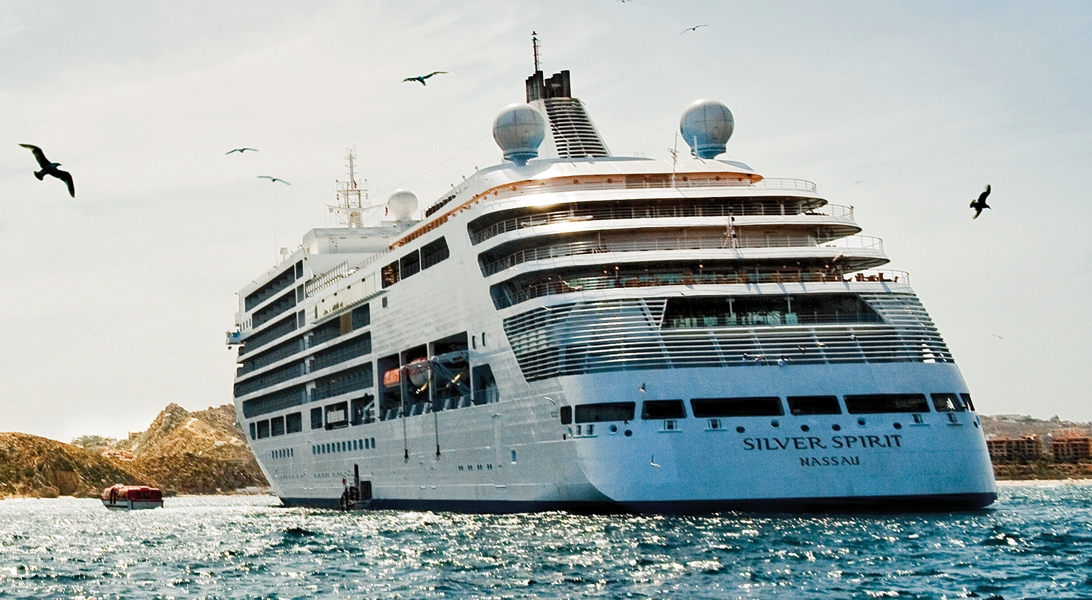
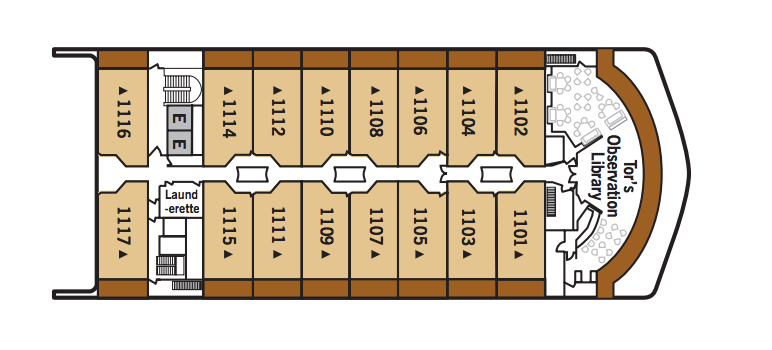

The images shown are for illustration purposes only and may not be an exact representation of what you find on the ship.
| Grade Code | From | To | |
| G1 | Grand Suite (1 Bedroom) | £20,300 | £22,150 |
| G2 | Grand Suite (2 Bedrooms) | £29,550 | £33,050 |
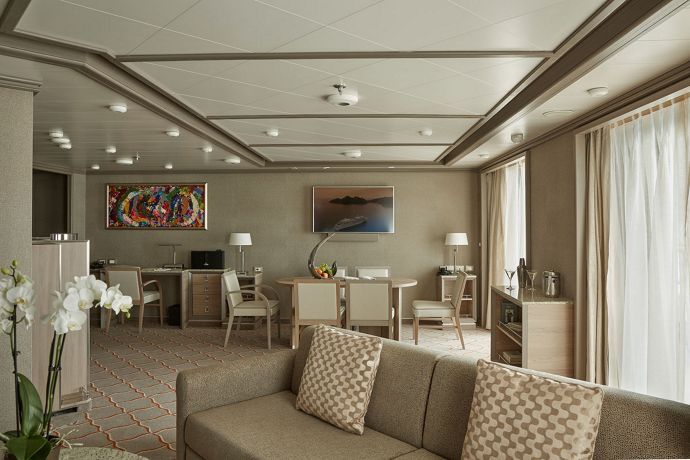
Expertly designed and exquisitely appointed. Ideal for entertaining friends while you cruise or enjoying a quiet dinner “at home.” Available as a one-bedroom configuration or as two bedrooms by adjoining with a Veranda Suite.
One bedroom: 132–142 sq m including veranda (52–62 sq m)
Two bedrooms: 175 sq m including veranda (55–65 sq m)
Please note that the third guest will sleep on a comfortable sofa bed in the reception area of the suite.
Essentials
Characteristics
Furniture
Media & Communication
Onboard Services
Amenities
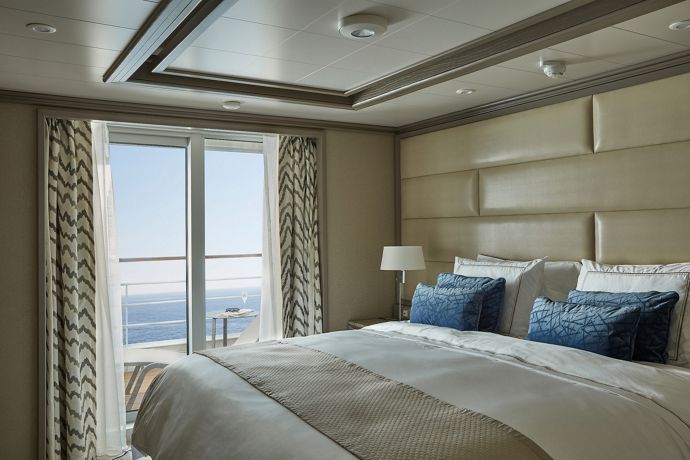
| Grade Code | From | To | |
| O1 | Owner's Suite (1 Bedroom) | £23,100 | £24,900 |
| O2 | Owner's Suite (2 Bedrooms) | £31,450 | £34,900 |
The name Owner’s Suite says it all. A stylish apartment. Prestigious and classic. For those who seek the superlative level of space, comfort, and service on board. Available as a one-bedroom configuration or as two bedrooms by adjoining with the Panorama Suite.
One bedroom: 120 sq m including veranda (12 sq m)
Two bedrooms: 114 sq m including veranda (12 sq m)
Please note that the 3rd guest will sleep on a comfortable sofa bed in the reception area of the suite.
Essentials
Characteristics
Furniture
Media & Communication
Onboard Services
Amenities
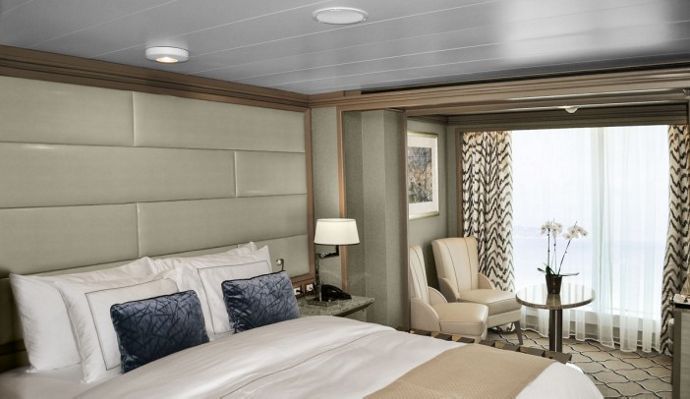
| Grade Code | From | To | |
| PA | Panorama Suite | £7,250 | £9,100 |
The Panorama Suite provides generous living space for voyagers. Located on deck 9, the Panorama offers all the comfort and attention to detail that you can expect aboard. A generous expanse of interior comforts—elegant decor, a stunning marble bathroom, and an ample seating area make this a cozy home away from home. The seating area of the Panorama Suite has plenty of room to relax while large picture windows frame panoramic ocean views.
One bedroom: 31 sq m
Essentials
Characteristics
Furniture
Media & Communication
Onboard Services
Amenities
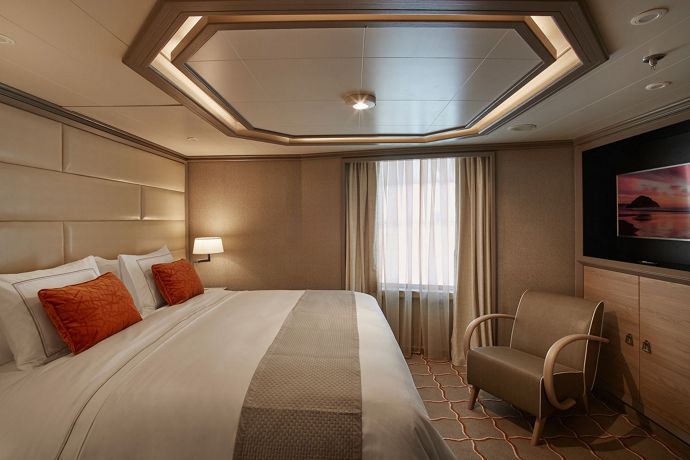
| Grade Code | From | To | |
| R1 | Royal Suite (1 Bedroom) | £18,750 | £20,600 |
| R2 | Royal Suite (2 Bedrooms) | £28,000 | £31,500 |
Stately describes the Royal Suite. Commanding and majestic. Perfect for entertaining. Enough living space to roam. The pinnacle of good living. Available as a one-bedroom configuration or as two bedrooms by adjoining with a Veranda Suite.
One bedroom: 92 sq m including veranda (12 sq ft)
Two bedrooms: 127 sq m including veranda (18 sq m)
Please note that the third guest will sleep on a comfortable sofa bed in the reception area of the suite.
Essentials
Characteristics
Furniture
Media & Communication
Onboard Services
Amenities
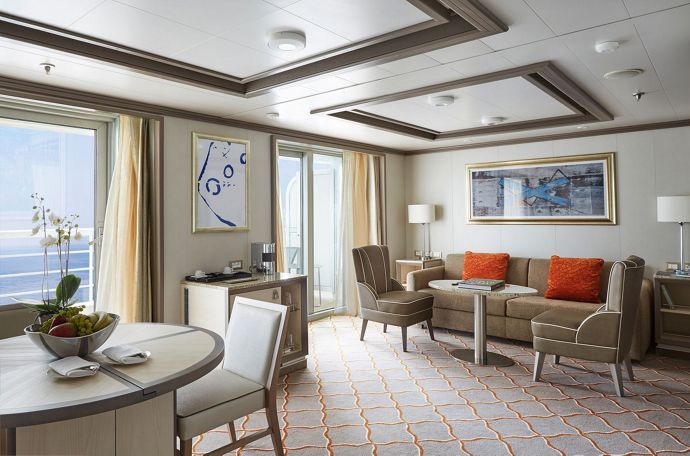
| Grade Code | From | To | |
| SL | Silver Suite | £15,700 | £17,550 |
| S2 | Silver Suite (2 Bedrooms) | £24,050 | £27,550 |
Step onto your terrace and bask in the calm feeling of the ocean breeze. Dissolve into the comfort of your king-size bed. Prepare for the evening in the beautiful marble bathroom. The upper deck location gives the most spectacular of ocean views while the spacious living area allows for comfortable relaxing, where cozy nights in become veritable experiences in themselves. The two-bedroom configuration of this suite makes this the ideal option for families.
One bedroom: 69 sq m including veranda (12 sq ft)
Please note that the 3rd guest will sleep on a comfortable sofa bed in the reception area of the suite.
Two bedrooms: 100 sq m including veranda (12 sq ft)
Essentials
Characteristics
Furniture
Media & Communication
Onboard Services
Amenities
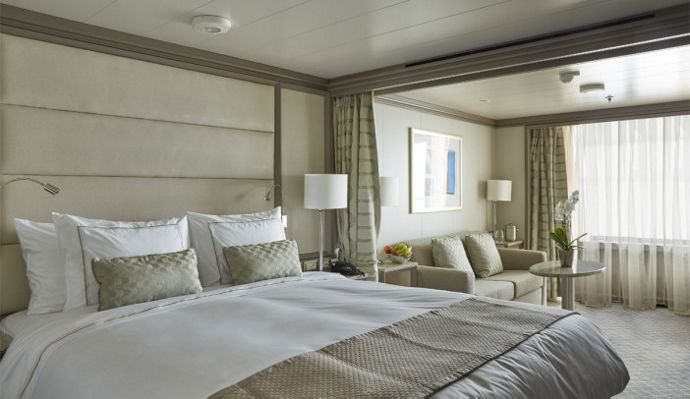
| Grade Code | From | To | |
| VI | Vista Suite | £6,900 | £8,750 |
A quiet sanctuary. The seating area of the Vista Suite has plenty of room to relax. Large picture windows frame panoramic ocean views. The perfect backdrop for breakfast in bed during the cruise. Some Vista Suites accommodate three guests.
One bedroom: 32 sq m
Please note that the 3rd guest will sleep on a comfortable sofa bed in the reception area of the suite.
Essentials
Characteristics
Furniture
Media & Communication
Onboard Services
Amenities
The images shown are for illustration purposes only and may not be an exact representation of what you find on the ship.
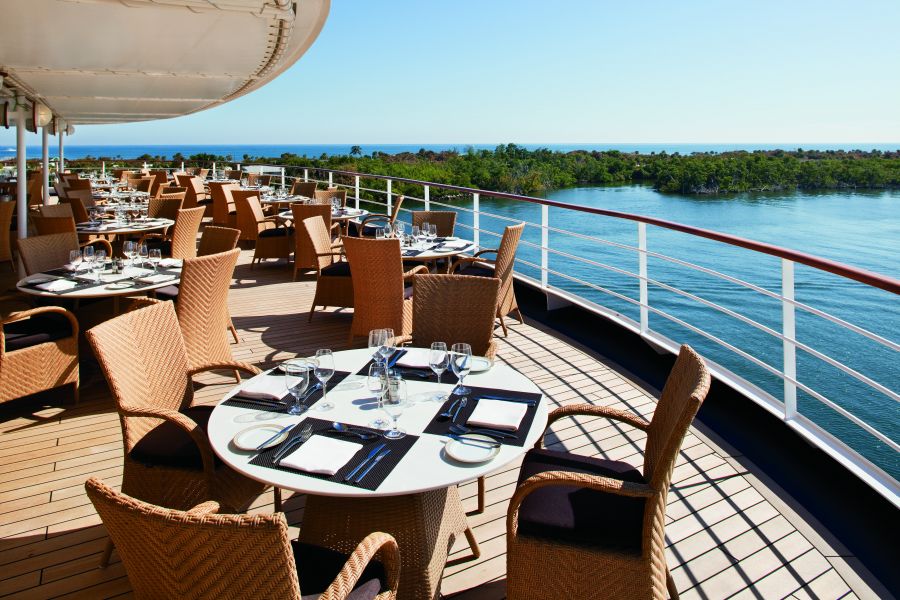
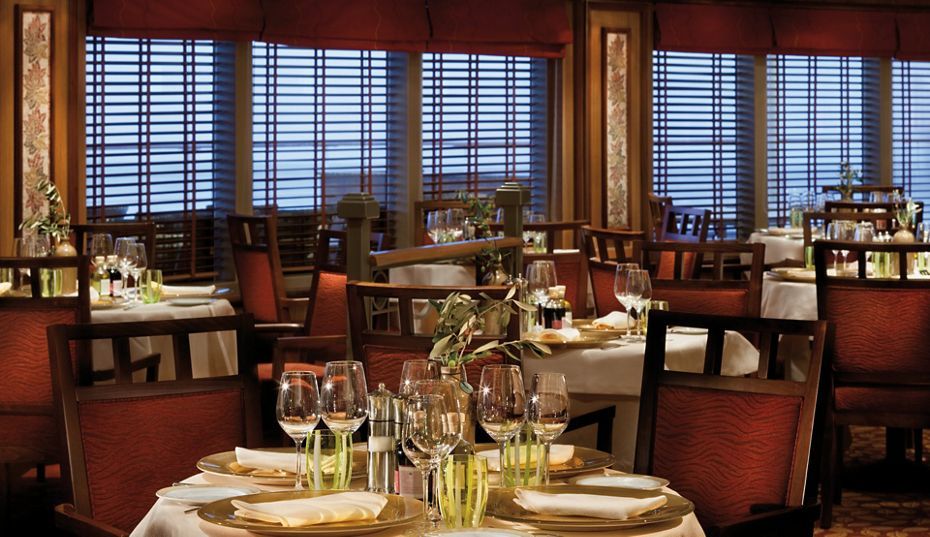
On board this luxury cruise ship, a divine selection of Italy’s best cuisine is served à la carte in La Terrazza. Authentic recipes and the freshest ingredients come together with flair and passion—a flavorful expression of Silversea’s distinctive Italian heritage. La Terrazza uses buffalo mozzarella from Naples, organic balsamic vinegar and olive oil from Umbria, and air-dried ham out of Parma. The Emilia-Romagna region also produces Silversea’s 24-month aged Parmigiano Reggiano, and the pasta is made daily right on board. La Terrazza is open for casual, buffet-style breakfast and lunch with indoor or alfresco dining on the outdoor terrace. During the evening, La Terrazza transforms into an à la carte traditional Italian restaurant.
Open seating for breakfast and lunch. Reservations recommended for dinner.
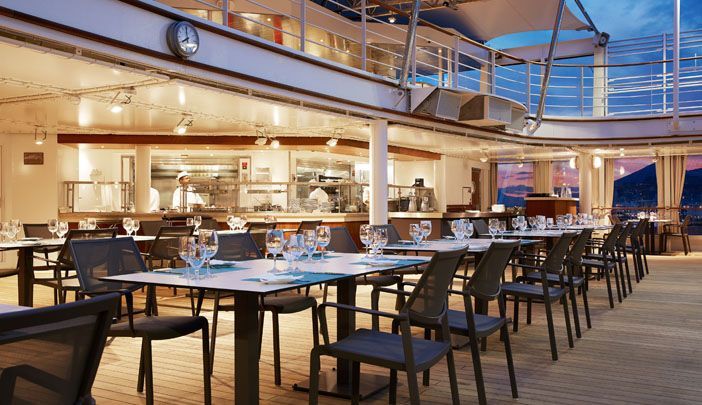
Silversea’s much-loved casual dining restaurant serves a delectable range of burgers and salads by day and turns into our famous Hot Rocks table BBQ concept by night. The Grill is quite simply the best place to eat between sea and sky. If you like flavorsome meals cooked to perfection, a casual, laid-back atmosphere, and OMG views, then The Grill is the answer to your prayers.
Open seating for lunch. Reservation recommended for dinner.
Images are intended as a general reference. Features, materials, finishes and layout may be different than shown.
The images shown are for illustration purposes only and may not be an exact representation of what you find on the ship.
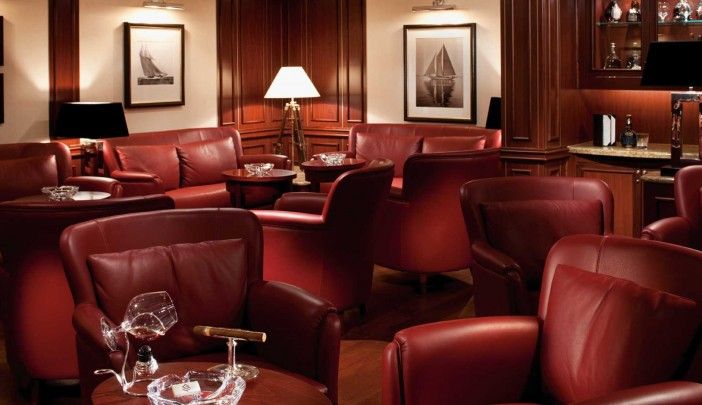
Discreet. Tasteful. Polished. If you appreciate the finer things in life, then the sophisticated touches of the Connoisseur’s Corner will not disappoint. Rich and luxurious, yet airy and spacious, this indoor/outdoor venue is where you sip the finest cognac or whiskey from a prestigious range and revel in the tranquil murmur of after-dinner conversation. A premium choice of cigars is also available, making this a perfect evening haven of serenity.
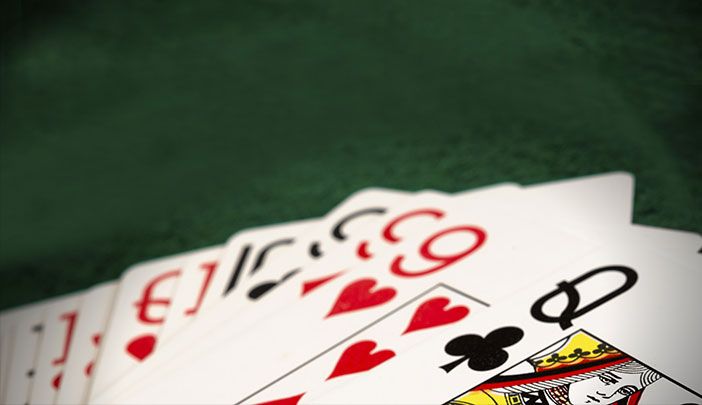
Whatever your conference or meeting requirements, Silversea is pleased to provide a tailor-made experience. Audiovisual equipment is available and complimentary on board this luxury cruise ship.
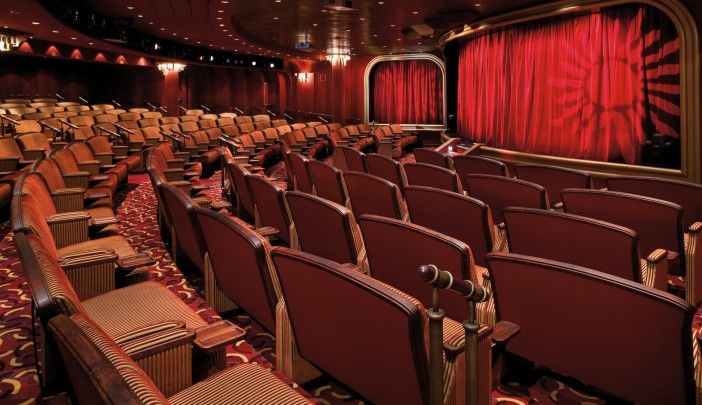
Applaud a broad spectrum of entertainment—from full-scale production shows and classical soloists to cultural entertainment and feature films. Throughout your voyage, this luxury cruise ship’s Venetian Lounge also presents port talks, enrichment lectures, and a variety of special events.
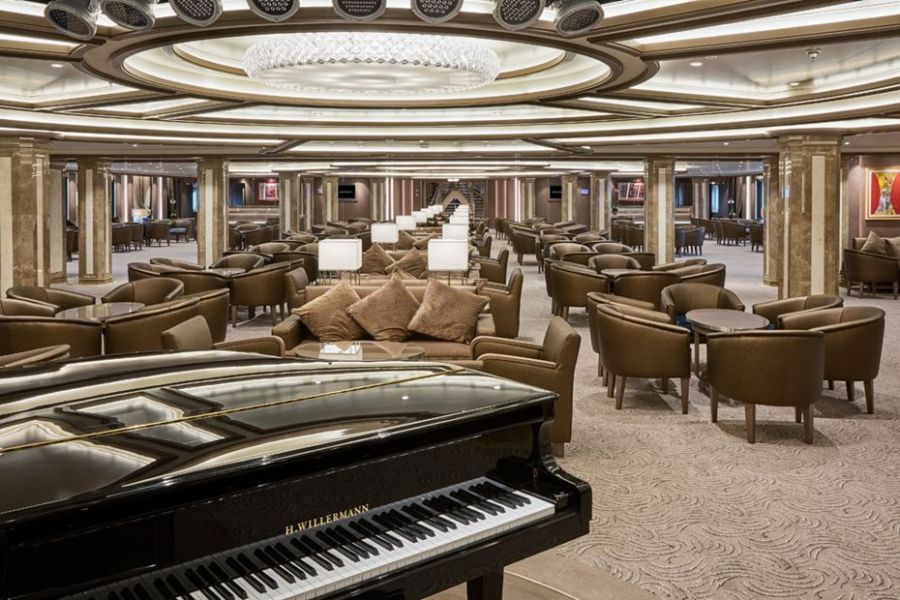
What could be a more fitting name for the very heart of Silver Spirit? Central to the soul and inspiration behind Silversea’s Italian heritage, Dolce Vita is the gathering place for our savvy travelers of the world, a place where guests mingle and exchange stories and where new faces become lifelong friends. Let us spoil you with an incredible array of flawless cocktails, wines, and spirits, as you relax, enjoy the evening sounds of a live pianist, and enjoy “the sweet life” aboard.
The images shown are for illustration purposes only and may not be an exact representation of what you find on the ship.
The images shown are for illustration purposes only and may not be an exact representation of what you find on the ship.


Our Fusion packages are all ABTA & ATOL protected ensuring that your booking is safe with us
| 16 nights aboard the Silver Spirit | |||
| Butler Service in Every Suite | |||
| Gratuities Always Included | |||
| Beverages In-Suite and Throughout the Ship | |||
| Gourmet Dining | |||
| In Suite Dining & 24-Hour Room Service | |||
| Intimate small size ships | |||
| Free Wifi Throughout the Ship | |||
| Free Zodiac, Land and Sea Tours & Activities & Complimentary Expedition gear | |||
| Port Taxes and Fees | |||
 | ABTA and ATOL Protection* | ||
Date 5th May 2027 |
Nts 16 |
Suite £7,700pp |
Date 5th May 2027 |
Nts 16 |
Suite £7,700pp |
| Suite staterooms from | £7,700pp | ||
| CV | Classic Veranda Suite | £7,700pp | |
| DX | Deluxe Veranda Suite | £8,750pp | |
| G1 | Grand Suite (1 Bedroom) | £20,300pp | |
| G2 | Grand Suite (2 Bedrooms) |  | |
| O1 | Owner's Suite (1 Bedroom) | | |
| O2 | Owner's Suite (2 Bedrooms) | | |
| ME | Medallion Suite | £10,300pp | |
| PA | Panorama Suite | | |
| R1 | Royal Suite (1 Bedroom) | | |
| R2 | Royal Suite (2 Bedrooms) | | |
| S2 | Silver Suite (2 Bedrooms) | | |
| SL | Silver Suite | £15,700pp | |
| SV | Superior Veranda Suite | £8,250pp | |
| VI | Vista Suite | | |
Fusion Holidays when selling travel arrangements is a trading name of Co-op Travel Services Limited, registration 08903986. Fusion Cruises is an Accredited Body Member of Co-op Travel Services Limited ATOL 12904.
Book with Confidence. We are a Member of ABTA which means you have the benefit of ABTA’s assistance and Code of Conduct.
Some of the flights and flight-inclusive holidays on this website are financially protected by the ATOL scheme but ATOL protection does not apply to all holiday and travel services offered on this website. This website will provide you with information on the protection that applies in the case of each holiday and travel service offered before you make your booking. If you do not receive an ATOL Certificate then the booking will not be ATOL protected. If you do receive an ATOL Certificate but all parts of your trip are not listed on it, those parts will not be ATOL protected. Please see our booking conditions for information, or for more information about financial protection and the ATOL Certificate go to: www.caa.co.uk