This site uses cookies as defined in our Cookie Policy, by continuing to use this site you agree to their use.
Continue

| Arrive | Depart | ||||||
| 13th13 | MarMar | 202929 | Benoa, Bali, Indonesia, embark on the Silver Whisper | 23:00 | |||
Bali really is as alluring as everyone says. This island, slightly bigger than Delaware, has it all: beaches, volcanoes, terraced rice fields, forests, renowned resorts, surfing, golf, and world-class dive sites. But what sets Bali apart from other nearby tropical destinations is Balinese tradition, and villagers dedicated to celebrating it. The hundreds of temples, dances, rituals, and crafts linked to their ancient Hindu faith aren't a show for tourists, but a living, breathing culture in which visitors are warmly received by the Balinese, who cherish their own identities. Bali. A.k.a. Island of the Gods, Land of a thousand temples or the World’s last paradise. As superlative as these monikers may sound, they do not do justice to the actual reality of the island. Bali is as good as everyone says – verdant mountains with terraced rice fields in one direction, black sand beaches in another and captivating people that will leave even the most seasoned traveller humbled. If you’re looking for a Garden of Eden that really does have it everything, Bali ticks all the boxes. The rich and diverse culture of the island is what sets Bali apart from Indonesia’s (many) other tropical paradises. The country’s estimated 10,000 Buddhist-Hindu temples, with their daily offerings of lotus flowers and fruit are testament to the gentleness of the islander’s belief. Then there is the vibrant arts and crafts scene, notably in Ubud in the centre of the island, but prolific everywhere. Ideal souvenirs to bring back range from gorgeous silver jewellery to intricate wood carvings. Additionally, do try to see a traditional dance if possible, particularly if accompanied to local gamelan music. No one could mention Bali without mentioning the food. Dishes range from elaborate meals to street food bites, but all are without exception ambrosia. Do not miss out on tasting a succulent chicken satay, betutu (apparently the King’s favourite meal) and sambal matah. But whatever you decide to discover, you can be assured of a taste sensation that will remain with you long after you have returned home. | |||||||
| 14th14 | MarMar | 202929 | At Sea | ||||
| 15th15 | MarMar | 202929 | Makassar, Indonesia | 07:00 | 19:00 | ||
| Once the gateway to Indonesia, Makassar is teeming with vestiges of its Dutch colonial past. The port, also known by its one-time name Ujung Pandang, was part of the Dutch East India Company from 1699 the early 1800s, and then as a part of the Netherlands Indies (or Dutch East Indies) until its liberation after WWII. Street signs follow the traditional European alphabet, so any visitor not versed in the city’s official language of Makassarese needn’t worry about getting lost! Fort Rotterdam on the western coast of the city is perhaps Makassar’s most iconic landmark. It was from here that trades between Holland and Indonesia was struck and the fort has played a large role in Makassar’s development. Originally named Benteng or Fort Jumpandang, the fort was built in 1545, but has been expanded many times over its long history. Because of the fort’s enormity, it became Indonesia’s centre for stockpiling spices prior to their dispatch to Europe. The building is unmissable – one stroll down the (very pleasant) boulevard will take you right to its gates. If you feel the call of the wild while in Makassar, fear not, as the Bantimurung Bulusaraung National Park is just 50 kilometres away. The limestone hills, steep karts walls and tropical heat have made the park an ideal breeding ground for butterflies. The park is also home to an immense 15 x 20 metre waterfall that is said to “lift the spirits of all who see it”. Next to the waterfall is Goa Mimpi or The Dream Cave, which has millennia old cave art. | |||||||
| 16th16 | MarMar | 202929 | At Sea | ||||
| 17th17 | MarMar | 202929 | At Sea | ||||
| 18th18 | MarMar | 202929 | Sandakan, Sabah, Malaysia | ||||
Borneo's forbidding interior made it less attractive to early traders and explorers than neighboring areas, so what is now the state of Sabah remained unexploited by the British until the late 19th century, although traders long visited for exotic items such as bird's nests (for the celebrated Chinese soup). In 1963, Sabah joined Sarawak, Malaya, and Singapore (which later seceded) in forming the Federation of Malaysia. Known as the "Land Below the Wind" because it's south of the typhoon belt, Sabah occupies Borneo's northern tip. It shares its southwestern border with Sarawak and the rest of its southern border with the Indonesian province of East Kalimantan. Today vast tracts of forest have been replaced by oil-palm plantations, and a sizable portion of remaining forest land is protected in national parks or conservation areas.On the shore of a deep bay, Sandakan was the capital of British North Borneo and one of the most important towns in Southeast Asia from the 1880s through the 1930s. But Japanese occupation during World War II and allied bombing virtually destroyed the town, and the capital was transferred to Jesselton (now Kota Kinabalu) in 1946. Sandakan enjoyed a revival in the 1970s as the center of the region's logging industry. Logging has since declined, but Sandakan is still worth visiting for its rich history and proximity to some of Borneo's most accessible wildlife attractions. Sandakan's downtown, much of it built on landfill, is squeezed between a steep promontory and Sandakan Bay. In recent years, this city of 450,000 (counting its extensive suburbs) has begun redeveloping its downtown waterfront into a shopping and nightlife hub. Its working harbor area for passengers and cargo is 6 km (4 miles) west of downtown. Meet the extraordinary wildlife of Sabah a place where orange orangutans move through the rainforest and elusive sun bears hide out in the safety of dense canopy. Join the extraordinary animals in rehabilitation centres where they are lovingly cared for before often being released back into the jungle's interior. You'll also have the chance to encounter one of nature’s more unusual creatures the bizarre proboscis monkey named after the bulbous swinging noses they sport. Sandakan stretches along a scenic bay looking out over the Sulu Sea. A former trading hub ships voyaged here seeking riches from the thick jungle especially sought after bird nests. Nowadays the city has found its niche as a major palm-oil and cacao exporter. Bridges creaking planks and wooden walkways form an elaborate floating maze over the waves at Sim-Sim Water Village. Visit this fishing hotspot to sample some of the succulent local fare tasting freshly prepared meals like butter prawns seafood broths and fried squid snacks. Having served as the British capital of North Borneo there’s always time for an afternoon tea to keep you refreshed during your explorations. World War II history hangs heavy around the city’s neck and Sandakan was heavily shelled during the hostilities when it was occupied by the Japanese. Visit the Memorial Park to learn of the horrifying Sandakan Death Marches which killed thousands of Allied prisoners of war. | |||||||
| 19th19 | MarMar | 202929 | Sandakan, Sabah, Malaysia | 00:15 | |||
Borneo's forbidding interior made it less attractive to early traders and explorers than neighboring areas, so what is now the state of Sabah remained unexploited by the British until the late 19th century, although traders long visited for exotic items such as bird's nests (for the celebrated Chinese soup). In 1963, Sabah joined Sarawak, Malaya, and Singapore (which later seceded) in forming the Federation of Malaysia. Known as the "Land Below the Wind" because it's south of the typhoon belt, Sabah occupies Borneo's northern tip. It shares its southwestern border with Sarawak and the rest of its southern border with the Indonesian province of East Kalimantan. Today vast tracts of forest have been replaced by oil-palm plantations, and a sizable portion of remaining forest land is protected in national parks or conservation areas.On the shore of a deep bay, Sandakan was the capital of British North Borneo and one of the most important towns in Southeast Asia from the 1880s through the 1930s. But Japanese occupation during World War II and allied bombing virtually destroyed the town, and the capital was transferred to Jesselton (now Kota Kinabalu) in 1946. Sandakan enjoyed a revival in the 1970s as the center of the region's logging industry. Logging has since declined, but Sandakan is still worth visiting for its rich history and proximity to some of Borneo's most accessible wildlife attractions. Sandakan's downtown, much of it built on landfill, is squeezed between a steep promontory and Sandakan Bay. In recent years, this city of 450,000 (counting its extensive suburbs) has begun redeveloping its downtown waterfront into a shopping and nightlife hub. Its working harbor area for passengers and cargo is 6 km (4 miles) west of downtown. Meet the extraordinary wildlife of Sabah a place where orange orangutans move through the rainforest and elusive sun bears hide out in the safety of dense canopy. Join the extraordinary animals in rehabilitation centres where they are lovingly cared for before often being released back into the jungle's interior. You'll also have the chance to encounter one of nature’s more unusual creatures the bizarre proboscis monkey named after the bulbous swinging noses they sport. Sandakan stretches along a scenic bay looking out over the Sulu Sea. A former trading hub ships voyaged here seeking riches from the thick jungle especially sought after bird nests. Nowadays the city has found its niche as a major palm-oil and cacao exporter. Bridges creaking planks and wooden walkways form an elaborate floating maze over the waves at Sim-Sim Water Village. Visit this fishing hotspot to sample some of the succulent local fare tasting freshly prepared meals like butter prawns seafood broths and fried squid snacks. Having served as the British capital of North Borneo there’s always time for an afternoon tea to keep you refreshed during your explorations. World War II history hangs heavy around the city’s neck and Sandakan was heavily shelled during the hostilities when it was occupied by the Japanese. Visit the Memorial Park to learn of the horrifying Sandakan Death Marches which killed thousands of Allied prisoners of war. | |||||||
| 20th20 | MarMar | 202929 | Muara, Brunei Darussalam | 07:00 | 16:00 | ||
The microscopic Sultanate of Brunei lays claim to one of the most dramatic rags-to-riches stories. Thanks to oil, the Sultan of Brunei is one of the richest men in the world, and the Sultanate is often dubbed a Shell-fare-state. Brunei's citizens do not pay income tax; they enjoy free education, medical care and old-age pensions. The government employs a third of the workforce, who are probably the best-paid bureaucrats in the world. Brunei Darussalam, as the country is officially called, is the rump of what was once a sprawling empire that occupied a land area of about twice the size of Luxembourg. On January 1, 1984, after nearly 100 years as a British Protectorate, Brunei became a fully independent sovereign nation. In August of 1967, Hassanal Bolkiah was crowned the 29th Sultan of Brunei. He succeeded his father, Sir Omar Ali Saifuddien III, who started to modernize the capital and is known as the architect of modern Brunei. Bandar Seri Begawan is the capital and the only town of any size in the country. It is a neat, modern city, split into three main areas. The "old" sector, built in the 1950s, is being redeveloped with new buildings around the Omar Ali Saifuddien Mosque; the Seri Complex, a commercial area dates from the 1970s, and Gadong boasts a recently shopping center and numerous restaurants: Bandar or, simply BSB, as the capital is commonly called, still features a sprawling maze of wooden houses built on stilts along the Brunei River. The only sea gateway to Brunei, Muara welcomes you to a tiny country of amazing animals, dense rainforests, and soaring religious monuments. Head for the immense mosques, famed beaches and dive sites, or visit villages teetering above the water on stilts - as you explore a city and country of immense cultural interest and religious heritage. Brunei’s mosques are richly diverse and incredibly ambitious artistic achievements. Jame'Asr Hassanil Bolkiah Mosque is the larger of the two national mosques, and a vast, spectacular accomplishment that fits 5,000 worshipers inside. Adorned with 29 golden domes, the craftmanship is dazzling – inside you’ll see intricately decorated tiles and mosaic patterns. Outside pretty gardens and fountains glow majestically among a sea of lights. The other highlight is Omar Ali Saifuddien Mosque, which is perhaps the most magnificent. Enter to see sparkling English chandeliers hanging from the roof, and beautiful Arabic carpets spreading across its floors. The porcelain-white facade and shining domes reflect strikingly on the man-made lagoon it towers above. The floating village of Kampong Ayer teeters on stilts over the Brunei Rivera. Enter a friendly and welcoming community, as you explore along wooden bridges and pathways. Elsewhere, embark on mangrove cruises and venture to dense, ancient rainforests that are home to wonderful wildlife like proboscis monkeys. For beaches, try gorgeous Meragang Beach to watch as the glowing sun dips into the sea’s waves each evening. | |||||||
| 21st21 | MarMar | 202929 | At Sea | ||||
| 22nd22 | MarMar | 202929 | Bohol, Philippines | 11:30 | 20:00 | ||
| Bohol is an island province consisting of Bohol Island and 75 minor surrounding islands. Its capital is Tagbilaran City. With a land area of 1,589.7 sq mi and a coastline 162 mi, Bohol is the tenth largest island of the Philippines. In the 1600’s, the Jesuits introduced Christianity to the region. They built huge churches, which were declared heritage sites in the early 2000’s. Unfortunately most of these churches were heavily damaged by the 7.2 magnitude earthquake of 2013. Today, some of these churches are being restored. The province is a popular tourist destination for its beaches, historical sites, natural beauty & geological features, such as the Chocolate Hills that consist of over 1600 hills of limestone formation. The island of Panglao, located just southwest of Tagbilaran City, is famous for its diving and routinely listed as one of the top ten diving locations in the world. The Philippine Tarsier, considered the second-smallest primate in the world, is indigenous to the island. | |||||||
| 23rd23 | MarMar | 202929 | Kalanggaman Island, Philippines | 08:00 | 23:00 | ||
| The Philippines is an archipelago of over 7600 islands and tiny Kalanggamman Island, set between Cebu and Leyte is widely considered to be the most beautiful of all, a slice of paradise on earth. The approach to the island offers a first glimpse of abundant picturesque palm trees sprouting from whiter than white sand, seemingly floating in the middle of the clearest blue sea. The island was named “langgam”, a local word meaning bird and is indeed a rare bird. Just 750 metres long, you can walk round the bird shaped island in little under an hour. At low tide a stroll along the long sandbar of powdery sand and tiny seashells is the perfect place for a sublime photo opportunity. The blue and green crystal waters are enticing and swimming, snorkeling and diving opportunities are not to be missed. Once under the water, a colourful new world opens up, coral gardens teeming with shoals of exotic fish, sea turtles swimming lazily past, A peaceful and relaxing vibe predominates the island as visitors relish the outstanding beauty of this simple and secluded spot. The northern part of the island is quieter still, the only sounds being the sea breeze rustling the palm leaves and crashing waves. A barbeque of grilled fish on the beach, as the evening brings spectacular sunsets in buttery colou | |||||||
| 24th24 | MarMar | 202929 | At Sea | ||||
| 25th25 | MarMar | 202929 | Manila, Philippines, disembark the Silver Whisper | ||||
MANILA, the capital city of the Philippines, was founded in, 1571 by Spanish conquistador Miguel López de Legazpi. It is one of the oldest cities in the country and was the seat of power for most of the colonial rules of the Philippines. It is situated on the eastern shore of Manila Bay and contains a multitude of landmarks, some of which date back to the 16th century. It is home to the baroque 16th-century San Agustin Church as well as Fort Santiago, a storied citadel and military prison. In the 19th century Manila became one of the most modern cities in Asia. Before the Spanish–American War, Manila saw the rise of the Philippine Revolution. Under the American rule following the Spanish-American War, the United States changed the official language from Spanish to English. Towards the end of World War II, during the Battle of Manila, most of the city was flattened by intensive aerial bombardment. Today, tourism is a vital industry in Manila. Major shopping malls and bazaars thrive around Manila. Known as the Pearl of the Orient, Manila is the Philippine's sprawling capital city and a chaotic scramble of intoxicating urban energy. A megacity of culture and creativity, there's a lot to discover amid these chockablock streets. The delicious food wins many fans, but it’s the friendly Filipinos - always eager to help - who ensure that Manila takes a special place in the hearts of many visitors. The Baywalk is one of the city's best places for catching a legendarily intense sunset - or wandering among joggers and leisurely strollers. The city's Intramuros area is its cobbled historic core - and was the centre of power when the Spanish ruled these lands. Decorated with colonial architecture and citadels, the district is known for its rumbling horsedrawn carriages and storied history. Head to Fort Santiago, which aims canons out across the water from its chunky stone walls. The UNESCO World Heritage Site stands against the odds, despite World War II bombardments, fires and earthquakes - a true testament to Manila's incredible resilience. As one of the most densely populated places in the world, Manilla can be manically busy at times, but you can always escape to Rizal Park. With Chinese and Japanese gardens and plenty of room for open-air events, it's a beautiful oasis within the city. It's also an incredibly important national symbol, as the location where the hero of independence, Jose Rizal, was executed. A large statue now memorialises him here, and the park was renamed in his honour. | |||||||
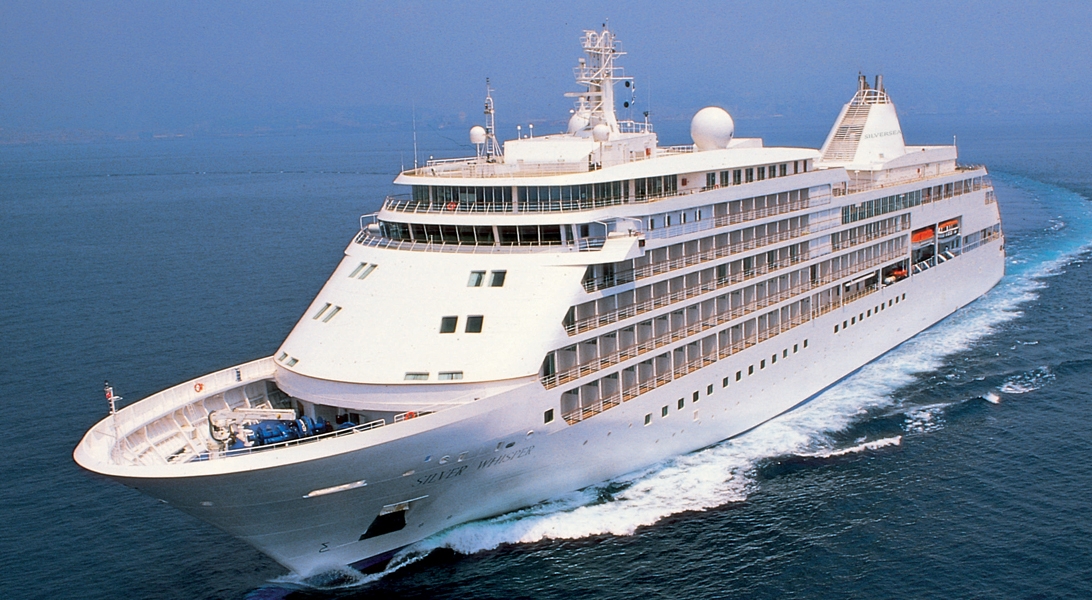
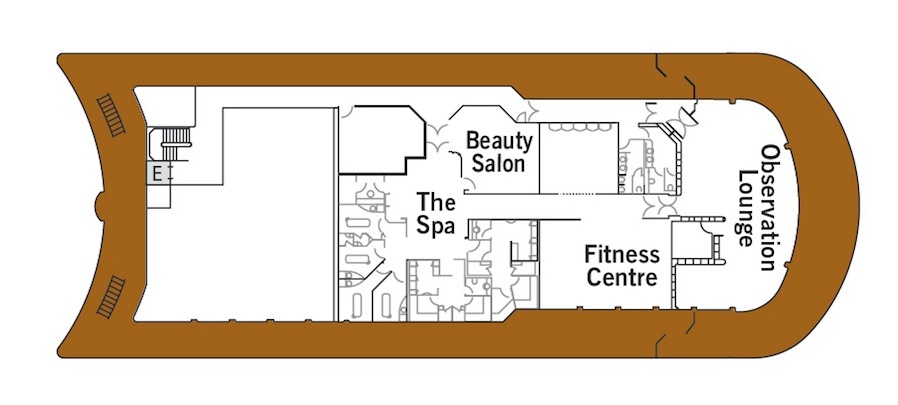

The images shown are for illustration purposes only and may not be an exact representation of what you find on the ship.
| Grade Code | From | To | |
| O1 | Owner's Suite (1 Bedroom) | £26,350 | £26,600 |
| O2 | Owner's Suite (2 Bedrooms) | £33,100 | £33,500 |
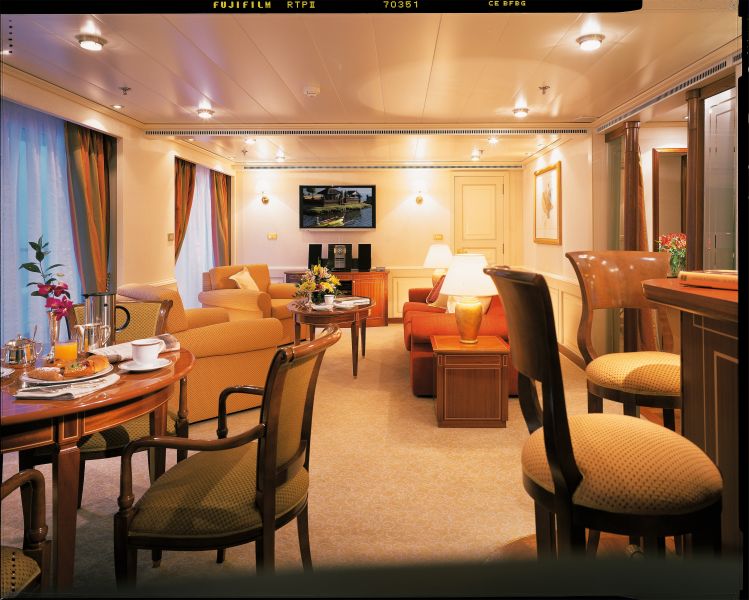
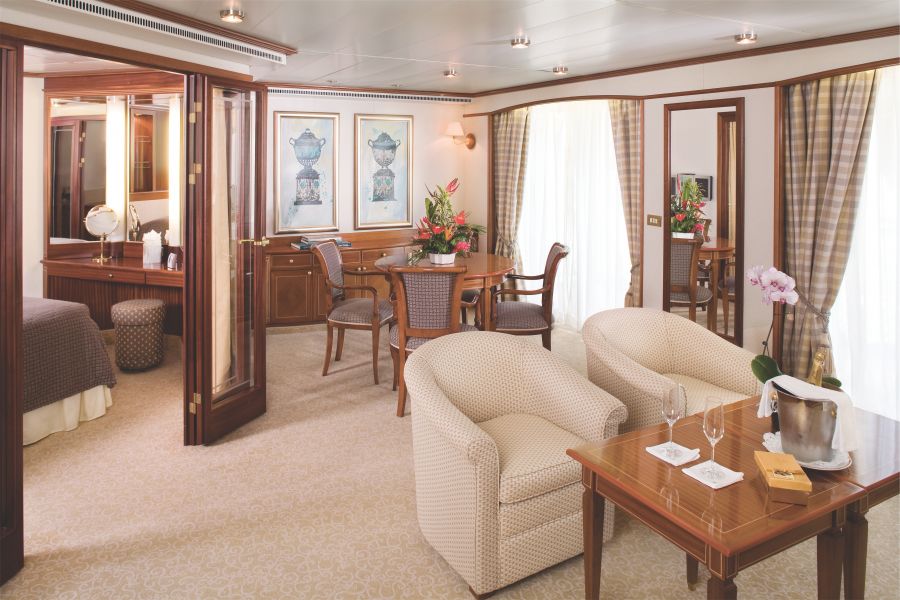
The name says it all. A stylish apartment. Prestigious and classic, as is the Silver Whisper itself. For those who seek the superlative level of space, comfort and service on board. Available as a one-bedroom configuration or as two-bedrooms (as illustrated) by adjoining with a Vista Suite.
One bedroom: 85 sq.m. including veranda
Two bedroom: 117 sq.m. including veranda
Please note that the 3rd guest will sleep on a comfortable sofa bed in the reception area of the suite.
Essentials
Characteristics
Furniture
Media & Communication
Onboard Services
Amenities
| Grade Code | From | To | |
| SL | Silver Suite | £18,900 | £19,150 |
Stylish and sophisticated. Separate dining and living rooms. Larger verandas. Situated midship. Perfection in design for comfortable living. Silver Suites accommodate three guests.
One bedroom: 61-65 sq.m. including veranda
Please note that the 3rd guest will sleep on a comfortable sofa bed in the reception area of the suite.
Essentials
Characteristics
Furniture
Media & Communication
Onboard Services
Amenities
The images shown are for illustration purposes only and may not be an exact representation of what you find on the ship.
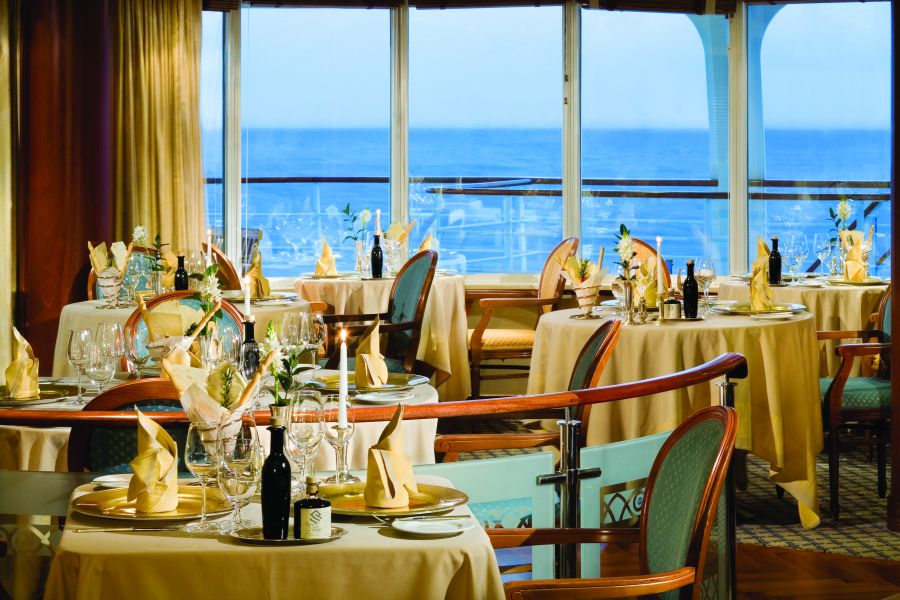
Authentic Italian recipes and the freshest, sustainable ingredients come together in this restaurant at sea.
On board this luxury cruise ship a divine selection of Italy’s best cuisine is served à la carte in La Terrazza. Authentic recipes and the freshest ingredients come together with flair and passion aboard this luxury cruise — a flavourful expression of Silversea’s distinctive Italian heritage. La Terrazza uses buffalo mozzarella from Naples, organic balsamic vinegar and olive oil from Umbria, and air-dried ham out of Parma. The Emilia-Romagna region also produces Silversea’s 24-month aged Parmigiano Reggiano, while the pasta is made daily right on board. La Terrazza is open for casual, buffet-style breakfast and lunch with indoor or al fresco dining on the outdoor terrace. During the evening, La Terrazza transforms into an à la carte traditional Italian restaurant.
Open-seating for breakfast and lunch.
Seating is limited for dinner and reservations are recommended.
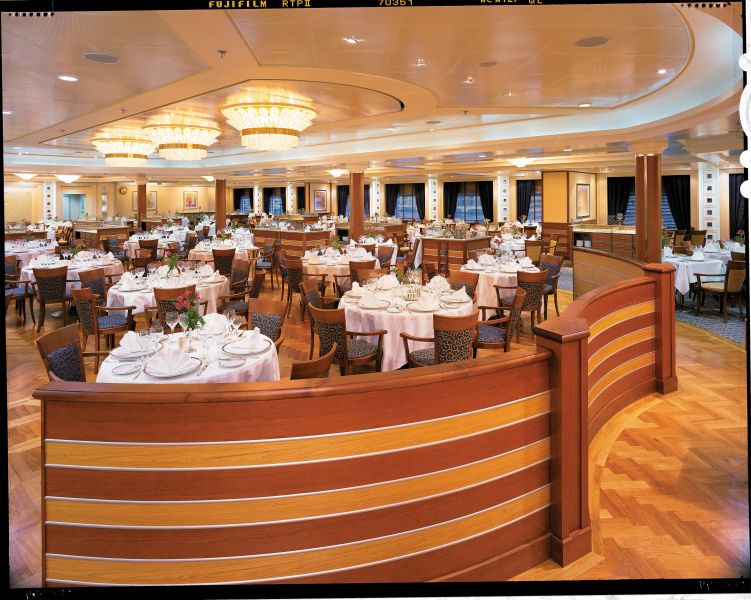
Enjoy Continental and regional specialities, as well as sweeping ocean views in our main dining room.
Sparkling with silver, crystal and candlelight, this luxury cruise ship’s main dining room serves contemporary, international cuisine with sophisticated elegance and impeccable service. Menus feature regional specialities unique to the voyage destination, for example, Roasted Chilean Sea Bass while cruising the Chilean fjords and Indian Chicken Korma en route to Mumbai. The Restaurant on board this luxury cruise ship offers open-seating dining, which means there are no assigned times, no assigned tables. You are free to dine when, where and with whom you please.
The images shown are for illustration purposes only and may not be an exact representation of what you find on the ship.
The images shown are for illustration purposes only and may not be an exact representation of what you find on the ship.
The images shown are for illustration purposes only and may not be an exact representation of what you find on the ship.

Our Fusion packages are all ABTA & ATOL protected ensuring that your booking is safe with us
| 12 nights aboard the Silver Whisper | |||
| Butler Service in Every Suite | |||
| Gratuities Always Included | |||
| Beverages In-Suite and Throughout the Ship | |||
| Gourmet Dining | |||
| In Suite Dining & 24-Hour Room Service | |||
| Intimate small size ships | |||
| Free Wifi Throughout the Ship | |||
| Free Zodiac, Land and Sea Tours & Activities & Complimentary Expedition gear | |||
| Port Taxes and Fees | |||
 | ABTA and ATOL Protection* | ||
Date 13th Mar 2029 |
Nts 12 |
Suite £7,500pp |
Date 13th Mar 2029 |
Nts 12 |
Suite £7,500pp |
| Suite staterooms from | £7,500pp | ||
| G1 | Grand Suite (1 Bedroom) |  | |
| G2 | Grand Suite (2 Bedrooms) | | |
| ME | Medallion Suite | | |
| O1 | Owner's Suite (1 Bedroom) | | |
| O2 | Owner's Suite (2 Bedrooms) | | |
| R1 | Royal Suite (1 Bedroom) | | |
| R2 | Royal Suite (2 Bedrooms) | | |
| SL | Silver Suite | | |
| VI | Vista Suite | £7,500pp | |
| CV | Classic Veranda Suite | | |
| SV | Superior Veranda Suite | £8,950pp | |
| DX | Deluxe Veranda Suite | £9,400pp | |
Fusion Holidays when selling travel arrangements is a trading name of Co-op Travel Services Limited, registration 08903986. Fusion Cruises is an Accredited Body Member of Co-op Travel Services Limited ATOL 12904.
Book with Confidence. We are a Member of ABTA which means you have the benefit of ABTA’s assistance and Code of Conduct.
Some of the flights and flight-inclusive holidays on this website are financially protected by the ATOL scheme but ATOL protection does not apply to all holiday and travel services offered on this website. This website will provide you with information on the protection that applies in the case of each holiday and travel service offered before you make your booking. If you do not receive an ATOL Certificate then the booking will not be ATOL protected. If you do receive an ATOL Certificate but all parts of your trip are not listed on it, those parts will not be ATOL protected. Please see our booking conditions for information, or for more information about financial protection and the ATOL Certificate go to: www.caa.co.uk