This site uses cookies as defined in our Cookie Policy, by continuing to use this site you agree to their use.
Continue

| Arrive | Depart | ||||||
| 19th19 | AugAug | 202828 | Osaka, Japan, embark on the Silver Whisper | 18:00 | |||
From Minami's neon-lighted Dotombori and historic Tenno-ji to the high-rise class and underground shopping labyrinths of Kita, Osaka is a city that pulses with its own unique rhythm. Though Osaka has no shortage of tourist sites, it is the city itself that is the greatest attraction. Home to some of Japan's best food, most unique fashions, and warmest locals, Osaka does not beg to be explored—it demands it. More than anywhere else in Japan, it rewards the impulsive turn down an interesting side street or the chat with a random stranger. People do not come here to see the city, they come to experience it.Excluded from the formal circles of power and aristocratic culture in 16th-century Edo (Tokyo), Osaka took advantage of its position as Japan's trading center, developing its own art forms such as Bunraku puppet theater and Rakugo comic storytelling. It was in Osaka that feudal Japan's famed Floating World—the dining, theater, and pleasure district—was at its strongest and most inventive. Wealthy merchants and common laborers alike squandered fortunes on culinary delights, turning Osaka into "Japan's Kitchen," a moniker the city still has today. Though the city suffered a blow when the Meiji government canceled all of the samurai class's outstanding debts to the merchants, it was quick to recover. At the turn of the 20th century, it had become Japan's largest and most prosperous city, a center of commerce and manufacturing.Today Osaka remains Japan's iconoclastic metropolis, refusing to fit Tokyo's norms and expectations. Unlike the hordes of Tokyo, Osakans are fiercely independent. As a contrast to the neon and concrete surroundings, the people of Osaka are known as Japan's friendliest and most outgoing. Ask someone on the street for directions in Tokyo and you are lucky to get so much as a glance. Ask someone in Osaka and you get a conversation.The main areas of the city, Kita (north) and Minami (south), are divided by two rivers: the Dojima-gawa and the Tosabori-gawa. Between Kita and Minami is Naka-no-shima, an island and the municipal center of Osaka. Kita (north of Chuo Dori) is Osaka's economic hub and contains Osaka's largest stations: JR Osaka and Hankyu Umeda. The area is crammed with shops, department stores, and restaurants. Nearby are a nightlife district, Kita-shinchi; Naka-no-shima and the Museum of Oriental Ceramics; Osaka-jo (Osaka Castle); and Osaka Koen (Osaka Park). Restaurants, bars, department stores, and boutiques attract Osaka's youth to Minami (south Chuo Dori); theatergoers head to the National Bunraku Theatre and electronics-lovers to Den Den Town. For a glimpse of old Osaka, visit Tenno-ji Temple and Shin Sekai. The main stations are Namba, Shin-sai-bashi, Namba Nankai, and Tenno-ji. There's easy access to the Municipal Museum of Fine Art and Sumiyoshi Taisha (Sumiyoshi Grand Shrine).The bay area, to the west of the city center, is home to the Osaka Aquarium and Universal Studios Japan. The Shinkansen stops at Shin-Osaka, three stops (about five minutes) north of Osaka Station on the Mido-suji subway line. To the north of Shin-Osaka is Senri Expo Park. Japan’s third-biggest city has thrown off its shackles and stepped out of the shadows to light up the sky with glaring neon signs and a larger than life outlook. Giant octopuses cling to buildings and bustling restaurants pack in the crowds in this great and garish place, which is Japan at its most friendly, extroverted and flavourful. So dive in headfirst to experience an all-out sensory assault of delicious food, shopping cathedrals and glittering temples. Dotombori Bridge bathes in the multicoloured, jewel-like lights of signage-plastered buildings, and the neon lights dance on the canal's waters below. Osaka is known as the nation's kitchen, and the Kuromon Ichiba Market has served as the city's spot to tuck in for almost 200 years. Full of street food stalls - try pufferfish, savoury Okonomiyaki pancakes, or ginger and onion flavoured octopus, among the endless feast of exotic flavours. Osaka Castle is another of the city’s landmarks, built in the 16th century by Toyotomi Hideyoshi. A modern museum now waits inside, where you can learn about the country's history, and why this castle is a symbol of Japanese unity. Be sure to take the elevator up to the observation deck for a panoramic view of Osaka's spread. A colourful park encloses the castle and blooms with an ocean of pale pink cherry blossom during the season - the elegant black tiers rising from the pink haze below is one of Osaka's most alluring visions. Kyoto’s peaceful cultural treasures and temples are also just a short jaunt away on Japan’s sleek trains, should you wish to explore further afield. | |||||||
| 20th20 | AugAug | 202828 | At Sea | ||||
| 21st21 | AugAug | 202828 | Kagoshima, Japan | 08:00 | 18:00 | ||
Kagoshima city is the capital of Kagoshima prefecture and also Kyushu’s southernmost major city. This city is often compared to its Italian sister city Naples, due to its’s similarities such as mild climate and active volcano, Sakurajima. Sakurajima is one of the most renowned active volcanos not only in Japan but also in the whole entire world. This smoking Sakurajima is centred in Kinko Bay and is one of the main symbols of this prefecture. We cannot talk about Sakurajima without the history of continuous eruption. Sakurajima used to be an isolated island; however, the land has banded together with Osumi peninsula from the eruption in 1914. You may have a chance to see the smoke coming from the top of Sakurajima depending on the weather condition. Not only does the scenery of Sakurajima represent the beauty of Kagoshima City but Senganen garden is also symbolic to elegance in the Kagoshima region. This Japanese garden was constructed by a feudal lord, Mitsuhisa Shimazu, as a guest house of the Kagoshima castle which attracts many visitors for its splendid view. One of Japan's most southerly major cities, Kagoshima is dominated by the imposing Sakurajima volcano's cone – a legendary active volcano that broods, churns and puffs out ash nearby. A pretty old-time ferry chugs across the still waters to the gently sloping foothills of the volcano's cone, and it's easy to imagine where the comparisons with its sister city Naples materialised, as you sail the glorious sweeping Kinko Bay, below beaming sunshine, towards the immense volcanic spectacle. This is certainly no historic relic, and the volcano remains revered and feared, with the most dramatic recent eruption taking place in 1914, and spewing out a new bridge of land into the sea. Make the most of the geothermal activity in the area by indulging in a stress-simmering black sand bath. Incredibly relaxing, you'll be submerged in the warm sand, as you feel your muscles relaxing in the heat, and rejuvenating blood pumping around your body. Enjoy a privileged view of the iconic volcano's loom from the terraced garden of Senganen Garden. Built in 1658, this elegant, traditional garden has belonged to the Shimadzu family for 350 years. Wander the gardens - which bloom with Japan's renowned cherry tree blossoms and feature tiny bridges looping over ponds and rock pools - before sitting back and sipping a wholesome green matcha latte. Elsewhere, museums offer Feudal Era and Satsuma Province history, as well as insights into the Kamikaze squadrons of World War II. Lake Ikeda is also close by, so be sure to keep an eye out for the legendary Issie monster. | |||||||
| 22nd22 | AugAug | 202828 | Nagasaki, Japan | 08:00 | 17:30 | ||
Nagasaki city has developed into one of the most important port cities in Japan. During Japan’s period of isolation in the 17th century, Nagasaki played a prominent role in foreign trade relation and only a very few ports were open to restricted numbers of foreign traders. Even though Holland was a major country who conducted trading during this period, Dutch people were only allowed to stay in Dejima Island and were not allowed to have contact with the Japanese people. Today, you will still find the strong influence of Dutch and Chinese culture in the city which is very different from all other cities in Japan. In the more recent history, Nagasaki became the second city after Hiroshima to be destroyed by an atomic bomb towards the end of World War II. From the visit to Atomic bomb museum and peace memorial park, people could understand how chaotic the situation was and the agony that the people in the days have experienced from the damage inflicted by the atomic bomb. It continues to appeal to the world with their wish for world peace. Utterly devastated in just a few seconds, Nagasaki was the target of the second US atomic bomb, as World War II moved towards its horrifying conclusion. More than 50,000 were killed, and the stories here are harrowing and poignant. The fact that Nagasaki still stands at all, and has embarked on a new mission to promote global peace with a message of hope, is a testament to the people of this extraordinary place, however. The scars the city wears will never heal, but the colour, culture and creativity of Nagasaki may surprise you. Of course, the events of August 9th 1945 are unavoidable, and the Atomic Bomb Museum pulls no punches in its rendering of the story. Hear from survivors, known as ‘Hibakushas’, who speak at the centre, sharing tales of sadness, hope and resilience. The Memorial Hall is a glass structure of meditation and messages of peace left by visitors from every corner of the world. Nagasaki Peace Park honours the victims, while the Hypocenter Park marks the explosion's epicentre. Suwa Shrine stands just 800 metres away, and you can see the iconic, one-legged torii which was photographed, miraculously still standing amid the sea of devastation. Look out for the temple's scarred trees, which somehow survived the blast too. Look out over the city, nestled in the undulations of the valley – as you reach the top of Mount Inasa - which actually served to protect and shelter Nagasaki from even more destruction. Up here, you can't help but consider the city's journey - as it spreads out before you. A ropeway or a bus will help you reach this spectacular vantage point, to observe the harbour glittering and glistening peacefully. | |||||||
| 23rd23 | AugAug | 202828 | Busan, South Korea | 08:00 | 17:00 | ||
White-sand city beaches and hot-spring resorts may not be everyone's first image of Korea, but these are what Koreans flock to Busan for all year. And there are plenty of opportunities for rest, relaxation, retail therapy, and even a touch of glamour every October with the Busan International Film Festival. Busan's beaches are the big summertime draw but there is plenty to be seen year round. Quintessential experiences include taking some rest and relaxation at a local spa and exploring the Beomeosa temple complex. "A tapestry of kaleidoscopic colours, intense seafood flavours, and urban beach bliss, Busan rolls across a glorious natural setting on the Korean Peninsula's south-east. One of the largest and busiest ports in the world, 3.5 million people call South Korea's second city home, and the amiable locals help to lend the city its quirky, offbeat outlook. A spacious, playful and cosmopolitan place, Busan is a lively, liveable city, cradled by lush mountains and endless ocean scenery. Haedong Yonggung Temple nestles on a dramatic cliffside, just above the crumbling rocks and crashing waves of the East Sea. Dating back to 1376, the temple's multi-storey pagoda is adorned with lions - each representing a different emotion. Elsewhere, lanterns glitter in the night sky around Mount Geumjeongsan, freshly released from the beautiful Beomeosa Temple, which was established in AD 678. The hillside shantytown of Gamcheon Culture Village has completed an improbable transformation, blossoming from a sea of makeshift homes for Korean war refugees, into a colourful explosion of creativity and curiosity. Local artists have been let loose to create interactive installations, and the entire area is now an expansive canvas for expression. Lose yourself among vibrant alleyways of flamingo-pink, lemon-yellow and baby-blue painted facades in this unique area. Sample bibimbap, fiery-hot beef and rice, from street food vendors, before relaxing on one of South Korea's best beaches - Haeundae's banana bend of sand. Metallic skyscrapers offer an unusual backdrop to this pristine expanse of golden powder and are mirrored by elaborate sandcastles and sculptures during the annual sand festival - when spontaneous water fights and firework displays also take place. Gwangalli beach is another urban option, laying out spectacular views of the reaching Gwangan Bridge - the country's second largest bridge. At night, 16,000 bulbs bathe this engineering marvel in colour." | |||||||
| 24th24 | AugAug | 202828 | Sakaiminato, Japan | 09:00 | 18:00 | ||
Sakaiminato is a small city almost totally surrounded by water: the Sea of Japan to the east, the Sakai Channel to the north and Lake Nakaumi to the west. Across the lake the towns of Matsue and Yasugi offer interesting experiences. Matsue is known as the “Town of Water” next to scenic Lake Shinji and Lake Nakaumi. It has one of the very few wooden castles that still remain in Japan. Touring the castle and boat rides on the Horikawa River and the castle’s moat are popular. Yasugi has the Adachi Museum of Art, a private museum that houses one of the finest collections of contemporary Japanese paintings, but also has a 165,000 square metres garden –with plants and rocks collected by the museum’s founder. Six different gardens show different scenarios depending on the season. These gardens have been selected as “Japan’s best garden” for several years. Sakaiminato is a small city almost totally surrounded by water: the Sea of Japan to the east the Sakai Channel to the north and Lake Nakaumi to the west. Across the lake the towns of Matsue and Yasugi offer interesting experiences. Matsue is known as the “Town of Water” next to scenic Lake Shinji and Lake Nakaumi. It has one of the very few wooden castles that still remain in Japan. Touring the castle and boat rides on the Horikawa River and the castle’s moat are popular. Yasugi has the Adachi Museum of Art a private museum that houses one of the finest collections of contemporary Japanese paintings but also has a 165 000 square metres garden –with plants and rocks collected by the museum’s founder. Six different gardens show different scenarios depending on the season. These gardens have been selected as “Japan’s best garden” for several years. | |||||||
| 25th25 | AugAug | 202828 | Kanazawa, Japan | 07:30 | 17:00 | ||
The capital of the Ishikawa Prefecture, Kanazawa once rivalled Kyoto and Edo (Tokyo) as a town rich in cultural achievements. Kanazawa escaped destruction during World War II and accordingly has been able to preserve many of the old districts in good shape. The city is famous because of Kenrokuen. Located next to Kanazawa Castle, Kenrokuen is classified as “One of the Three Gardens of Japan”. The garden has an artificial pond, and hills and houses are dotted within the 11.4 hectares. It has Japan’s oldest fountain using natural water pressure and a tea-house dating back to 1774. Close by is the Higashi Chaya Gai Geisha District, designated a National Cultural Asset and the biggest of the Geisha districts of Kanazawa. Some of the houses not only retain the original structure, but still are used as Geisha houses. Some of the streets have traditional shops creating a nostalgic atmosphere. Kanazawa is also known for its lacquer ware, Kutani-style pottery, gold-leaf workmanship and delicately painted silk kimonos. The capital of the Ishikawa Prefecture, Kanazawa once rivalled Kyoto and Edo (Tokyo) as a town rich in cultural achievements. Kanazawa escaped destruction during World War II and accordingly has been able to preserve many of the old districts in good shape. The city is famous because of Kenrokuen. Located next to Kanazawa Castle, Kenrokuen is classified as “One of the Three Gardens of Japan”. The garden has an artificial pond, and hills and houses are dotted within the 11.4 hectares. It has Japan’s oldest fountain using natural water pressure and a tea-house dating back to 1774. Close by is the Higashi Chaya Gai Geisha District, designated a National Cultural Asset and the biggest of the Geisha districts of Kanazawa. Some of the houses not only retain the original structure, but still are used as Geisha houses. Some of the streets have traditional shops creating a nostalgic atmosphere. Kanazawa is also known for its lacquer ware, Kutani-style pottery, gold-leaf workmanship and delicately painted silk kimonos. | |||||||
| 26th26 | AugAug | 202828 | Akita, Japan | 12:00 | 19:00 | ||
| Say the word Akita and you would be forgiven for thinking immediately of the lovable dog of the same name. But in fact, visitors to Akita will be treated not to a friendly furry face, rather to a beautiful city located on the northern tip of the island, around 500 km north of Tokyo. Lucky visitors will arrive in time for the superb sakura (cherry blossom), and surely there can be no sight more lovely than the elegant dip of the cherry trees alongside ancient Samurai residences. Akita is also home to a 2km tunnel of blossoming trees that run along the banks of the Hinokinai River, which is said to “bring a grown man to his knees and weep at its beauty”. If to you, Japan is synonymous with peace and serenity, then a trip to one of the onsens is a superb bucket list experience. Buses and taxis are easily available in the centre of town that will take you to Mizusawa, Oyu and Oyasukyo hot springs, some of the loveliest onsens in the country. Some of the superb sights in Akita are: Senshu Park, on the former site of Kubota Castle, the elegant red-brick folk Museum (housing works by block printer Katsuhira Tokushi (1907-1971) and metalwork by Sekiya Shiro (1907-1994) and the Old Kaneko Family Home. The Akita Museum of Art opened in 2012 and is home to the largest canvas painting in the world, Events of Atika, by Foujita (1886-1968). The painting measures a staggering 3.65 x 20.5 m (12 x 67 ft). The Museum also has many works by European masters such as Goya, Rubens, Rembrandt and Picasso. | |||||||
| 27th27 | AugAug | 202828 | Hakodate, Japan | 07:30 | 18:30 | ||
Facing out on two bays, Hakodate is a 19th-century port town, with clapboard buildings on sloping streets, a dockside tourist zone, streetcars, and fresh fish on every menu. In the downtown historic quarter, a mountain rises 1,100 feet above the city on the southern point of the narrow peninsula. Russians, Americans, Chinese, and Europeans have all left their mark; this was one of the first three Japanese ports the Meiji government opened up to international trade in 1859. The main sights around the foot of Mt. Hakodate can be done in a day, but the city is best appreciated with an overnight stay for the illumination in the historic area, the night views from either the mountain or the fort tower, and the fish market at dawn. City transport is easy to navigate and English information is readily available. Evening departure trains from Tokyo arrive here at dawn—perfect for fish-market breakfasts. Gaze down over Hakodate, from the heights of its namesake peak - Mount Hakodate - to see the city stretching out spectacularly, with back-to-back twin bays splitting the ocean. Hakodate port was one of the first to open Japan up to the world, and to international trade in 1859 - a fact reflected in the architecture, with its influences from the West and beyond. The port area is a redbrick wash of warehouses turned shopping malls, all observed by the onion domes of the city's Russian Orthodox church. Elsewhere, the star-shaped Goryokaku fortress glows with natural colours and a beautiful haze of cherry blossom during the season. Goryokaku Tower, which rises up beside it, offers a sweeping bird's eye view of the green fortress and mountain backdrop. Buses trundle up the 335-metre incline to the top of Mount Hakodate, but the best way to reach the views is to jump on the ropeway, which swings high above downtown's buildings, over a carpet of pine trees. Head up to the mountain's heights as sunset approaches. With darkness sweeping in, and the lights flickering to life, the panorama is one of Japan's most spectacular. Soak it all in, and look out to the horizon, dotted with the shimmering lights of ships hauling in harvests of the city's renowned squid. The plankton-rich waters attract a delicious variety of feasting sea life to Hakodate's coast, which is then plated up in the city's numerous, skilled restaurants. For an eye-opening, whirring morning, see the freshest produce being doled out at Hakodate Morning Market – amid a cacophony of noise and activity. | |||||||
| 28th28 | AugAug | 202828 | Miyako, Iwate, Japan | 08:00 | 18:00 | ||
| Set on the eastern coast in Japan’s Iwate prefecture, Miyako promises stunning scenery and Jorman history in equimeasure. The coastal city of around 50,000 inhabitants is around 600 km from Tokyo, but boasts one of the finest beaches in Japan, as well as a treasure trove of succulently fresh seafood restaurants. While travellers to Miyako might arrive expecting the usual amalgam of cultural attractions and high tech wizardry, they will leave with memories of one of the greatest garden cities they have ever experienced. During the Edo period (1603-1868) the town was considered as Japan’s main seaport. Today this is no longer the case, perhaps due to Miyako’s precarious placement and underwater seismic activity; four tsunamis have engulfed the city since 1700, with waves reaching almost 40 metres in some cases. Thus, local attractions tend to be of the natural kind, as historical buildings have been all but wiped out. Luckily, Mother Nature really does come into her own in Miyako. The city is bordered by the Sanriku Fukkō National Park, one of the National Parks of Japan. Sanriku Fukkō stretches for 180 km along the coast and homes a wonderful variety of flora and fauna, including groves of Japanese red pine, rhododendrons and Rosa rugosa. Numerous bird species, including the black-tailed gull and shearwater call the park home. What’s more, bird lovers will undoubted love that the nearby Hidejima Island and Sanganjima Island are the only breeding grounds in Japan for the band-rumped storm-petrel. | |||||||
| 29th29 | AugAug | 202828 | At Sea | ||||
| 30th30 | AugAug | 202828 | Tokyo, Japan, disembark the Silver Whisper | ||||
Lights, sushi, manga! Sprawling, frenetic, and endlessly fascinating, Japan’s capital is a city of contrasts. Shrines and gardens are pockets of calm between famously crowded streets and soaring office buildings. Mom-and-pop noodle houses share street space with Western-style chain restaurants and exquisite fine dining. Shopping yields lovely folk arts as well as the newest electronics. And nightlife kicks off with karaoke or sake and continues with techno clubs and more. Whether you seek the traditional or the cutting edge, Tokyo will provide it. Dense and delightful, there’s nowhere else like Japan’s kinetic capital - a city where ancient traditions blend seamlessly with a relentless pursuit for the future’s sharpest edge. See the city from above, as elevators rocket you up to towering viewing platforms, from which you can survey a vast urban ocean, interspersed with sky-scraping needles. Look out as far as the distant loom of Mount Fuji’s cone on clear days. Futuristic – second-accurate - transport seamlessly links Tokyo’s 14 districts, while the glow of flashing advertisement boards, clanks of arcade machines, and waves of humanity flowing along its streets, adds to the sense of mesmerising, dizzying and glorious sensory overload. One of Tokyo’s most iconic sights, don’t miss the flood of people scrambling to cross Shibuya’s famous intersection. Join the choreographed dance, as crowds of briefcase-carrying commuters are given the green light to cross at the same time – bathed in the light of massive neon advertisements. The culture is immensely rich and deep, with 7th-century, lantern-decorated temples, stunning palaces and tranquil scarlet shrines waiting below cloaks of incense and nestling between soaring skyscrapers. Restaurants serve up precisely prepared sushi, and wafer-thin seafood slivers, offering a unique taste of the country’s refined cuisine. Settle into traditional teahouses, to witness intricate ceremonies, or join the locals as they fill out karaoke bars to sing the night away. In the spring, cherry blossom paints a delicate pink sheen over the city’s innumerable parks and gardens. | |||||||
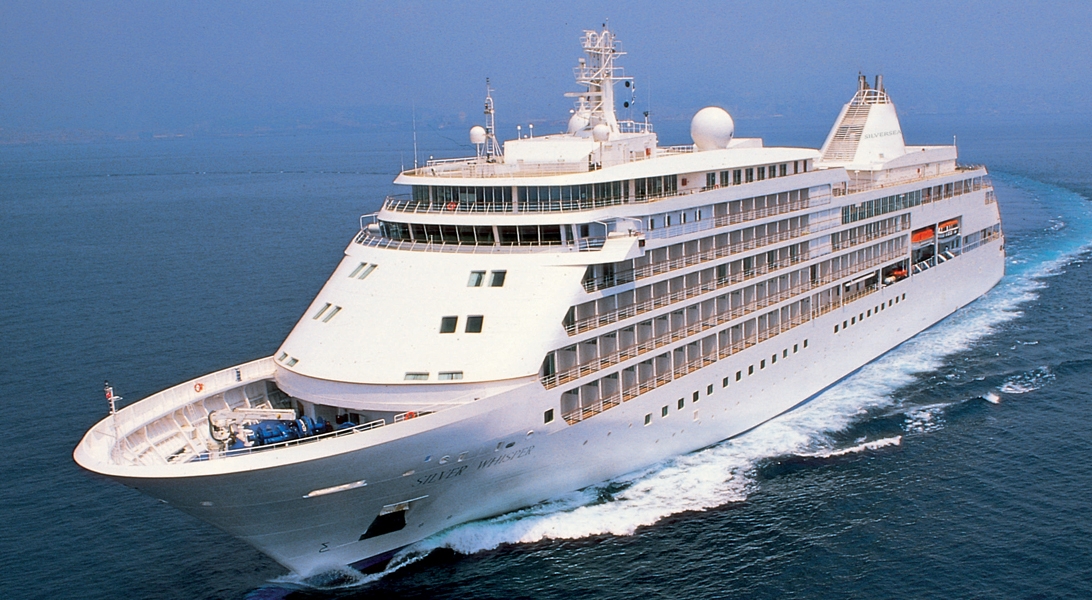
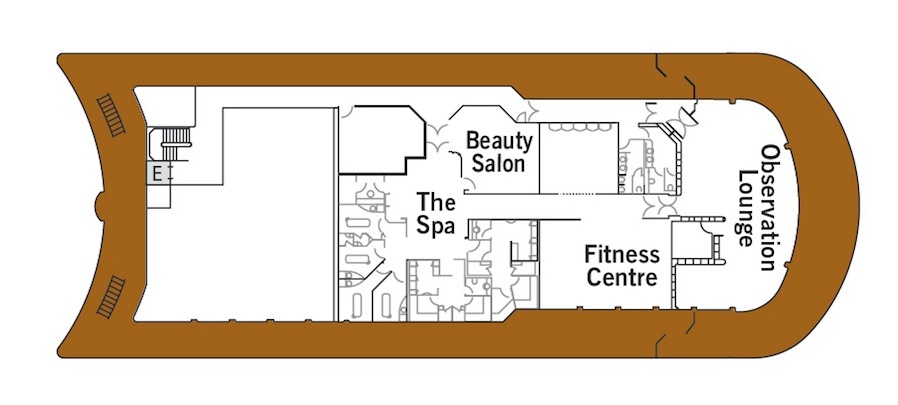

The images shown are for illustration purposes only and may not be an exact representation of what you find on the ship.
| Grade Code | From | To | |
| O1 | Owner's Suite (1 Bedroom) | £15,600 | £16,300 |
| O2 | Owner's Suite (2 Bedrooms) | £21,750 | £23,000 |
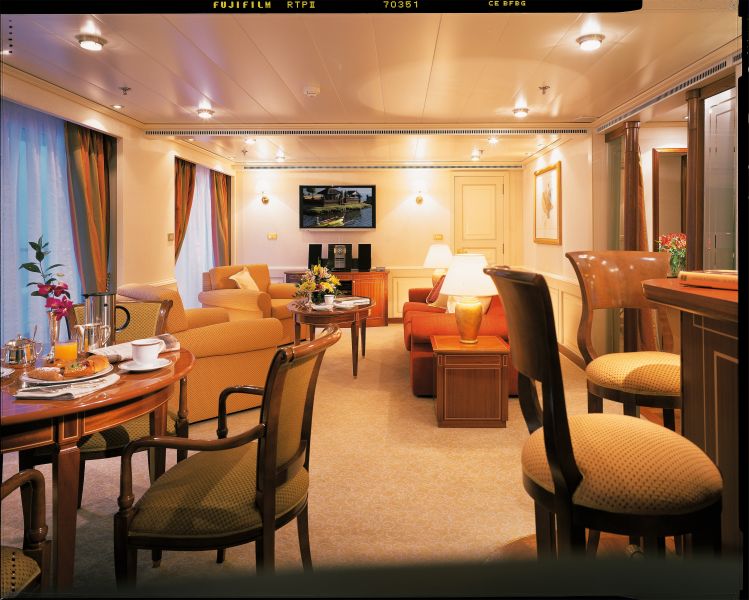
The name says it all. A stylish apartment. Prestigious and classic, as is the Silver Whisper itself. For those who seek the superlative level of space, comfort and service on board. Available as a one-bedroom configuration or as two-bedrooms (as illustrated) by adjoining with a Vista Suite.
One bedroom: 85 sq.m. including veranda
Two bedroom: 117 sq.m. including veranda
Please note that the 3rd guest will sleep on a comfortable sofa bed in the reception area of the suite.
Essentials
Characteristics
Furniture
Media & Communication
Onboard Services
Amenities
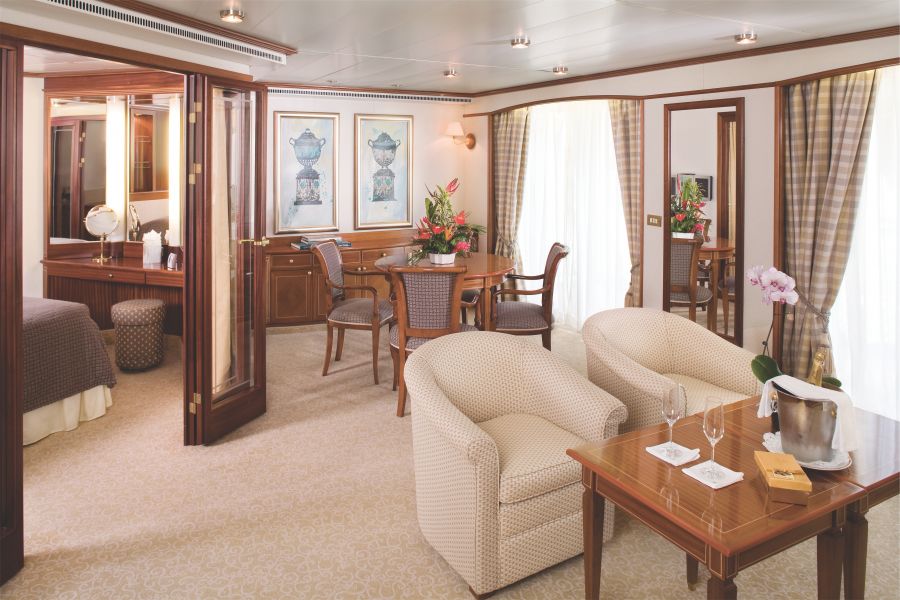
| Grade Code | From | To | |
| SL | Silver Suite | £10,100 | £10,700 |
Stylish and sophisticated. Separate dining and living rooms. Larger verandas. Situated midship. Perfection in design for comfortable living. Silver Suites accommodate three guests.
One bedroom: 61-65 sq.m. including veranda
Please note that the 3rd guest will sleep on a comfortable sofa bed in the reception area of the suite.
Essentials
Characteristics
Furniture
Media & Communication
Onboard Services
Amenities
The images shown are for illustration purposes only and may not be an exact representation of what you find on the ship.
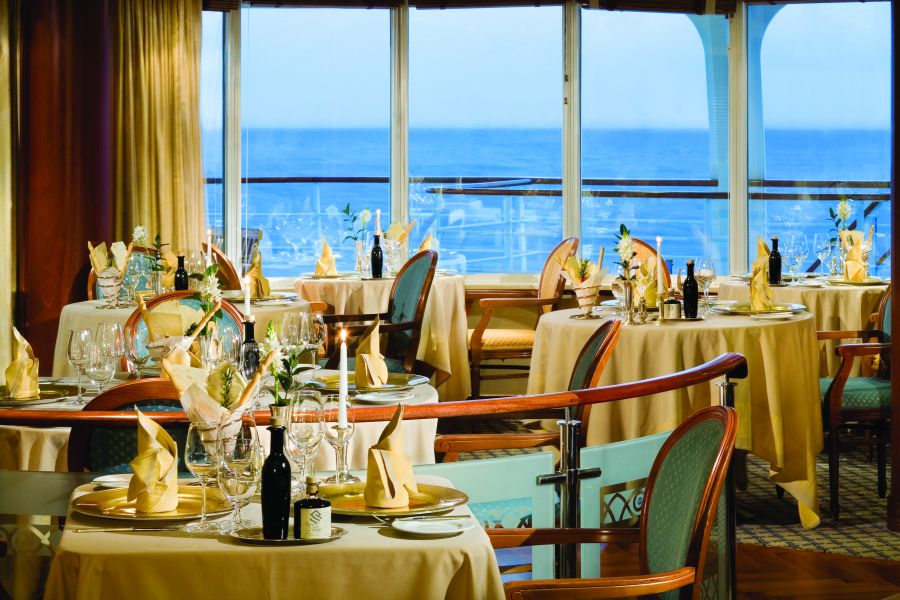
Authentic Italian recipes and the freshest, sustainable ingredients come together in this restaurant at sea.
On board this luxury cruise ship a divine selection of Italy’s best cuisine is served à la carte in La Terrazza. Authentic recipes and the freshest ingredients come together with flair and passion aboard this luxury cruise — a flavourful expression of Silversea’s distinctive Italian heritage. La Terrazza uses buffalo mozzarella from Naples, organic balsamic vinegar and olive oil from Umbria, and air-dried ham out of Parma. The Emilia-Romagna region also produces Silversea’s 24-month aged Parmigiano Reggiano, while the pasta is made daily right on board. La Terrazza is open for casual, buffet-style breakfast and lunch with indoor or al fresco dining on the outdoor terrace. During the evening, La Terrazza transforms into an à la carte traditional Italian restaurant.
Open-seating for breakfast and lunch.
Seating is limited for dinner and reservations are recommended.
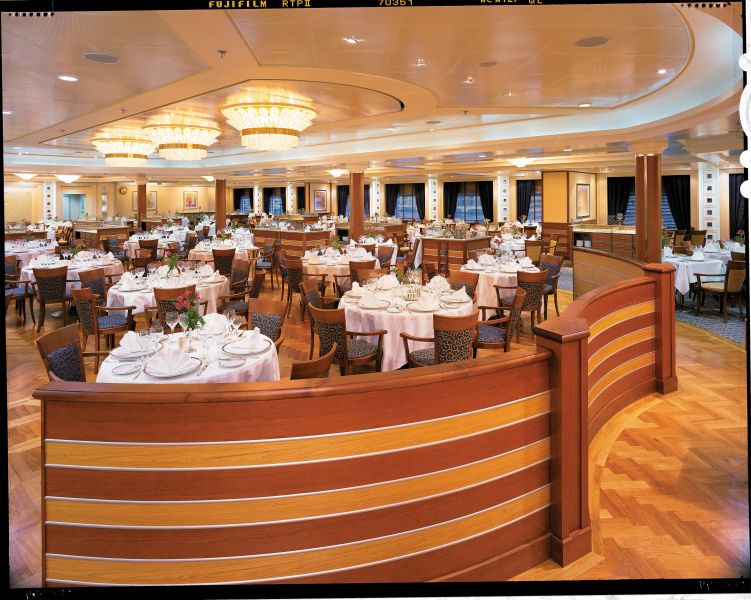
Enjoy Continental and regional specialities, as well as sweeping ocean views in our main dining room.
Sparkling with silver, crystal and candlelight, this luxury cruise ship’s main dining room serves contemporary, international cuisine with sophisticated elegance and impeccable service. Menus feature regional specialities unique to the voyage destination, for example, Roasted Chilean Sea Bass while cruising the Chilean fjords and Indian Chicken Korma en route to Mumbai. The Restaurant on board this luxury cruise ship offers open-seating dining, which means there are no assigned times, no assigned tables. You are free to dine when, where and with whom you please.
The images shown are for illustration purposes only and may not be an exact representation of what you find on the ship.
The images shown are for illustration purposes only and may not be an exact representation of what you find on the ship.
The images shown are for illustration purposes only and may not be an exact representation of what you find on the ship.


Our Fusion packages are all ABTA & ATOL protected ensuring that your booking is safe with us
| 11 nights aboard the Silver Whisper | |||
| Butler Service in Every Suite | |||
| Gratuities Always Included | |||
| Beverages In-Suite and Throughout the Ship | |||
| Gourmet Dining | |||
| In Suite Dining & 24-Hour Room Service | |||
| Intimate small size ships | |||
| Free Wifi Throughout the Ship | |||
| Free Zodiac, Land and Sea Tours & Activities & Complimentary Expedition gear | |||
| Port Taxes and Fees | |||
 | ABTA and ATOL Protection* | ||
Date 19th Aug 2028 |
Nts 11 |
Suite £4,850pp |
Date 19th Aug 2028 |
Nts 11 |
Suite £4,850pp |
| Suite staterooms from | £4,850pp | ||
| G1 | Grand Suite (1 Bedroom) | £13,400pp | |
| G2 | Grand Suite (2 Bedrooms) |  | |
| ME | Medallion Suite | £9,150pp | |
| O1 | Owner's Suite (1 Bedroom) | £15,600pp | |
| O2 | Owner's Suite (2 Bedrooms) | | |
| R1 | Royal Suite (1 Bedroom) | £12,700pp | |
| R2 | Royal Suite (2 Bedrooms) | | |
| SL | Silver Suite | £10,100pp | |
| VI | Vista Suite | £4,850pp | |
| CV | Classic Veranda Suite | £5,850pp | |
| SV | Superior Veranda Suite | £6,100pp | |
| DX | Deluxe Veranda Suite | £6,300pp | |
Fusion Holidays when selling travel arrangements is a trading name of Co-op Travel Services Limited, registration 08903986. Fusion Cruises is an Accredited Body Member of Co-op Travel Services Limited ATOL 12904.
Book with Confidence. We are a Member of ABTA which means you have the benefit of ABTA’s assistance and Code of Conduct.
Some of the flights and flight-inclusive holidays on this website are financially protected by the ATOL scheme but ATOL protection does not apply to all holiday and travel services offered on this website. This website will provide you with information on the protection that applies in the case of each holiday and travel service offered before you make your booking. If you do not receive an ATOL Certificate then the booking will not be ATOL protected. If you do receive an ATOL Certificate but all parts of your trip are not listed on it, those parts will not be ATOL protected. Please see our booking conditions for information, or for more information about financial protection and the ATOL Certificate go to: www.caa.co.uk