This site uses cookies as defined in our Cookie Policy, by continuing to use this site you agree to their use.
Continue

| Arrive | Depart | ||||||
| 23rd23 | JanJan | 202929 | Papeete, Tahiti, French Polynesia, embark on the Silver Whisper | ||||
Papeete will be your gateway to the tropical paradise of French Polynesia, where islands fringed with gorgeous beaches and turquoise ocean await to soothe the soul. This spirited city is the capital of French Polynesia, and serves as a superb base for onward exploration of Tahiti – an island of breathtaking landscapes and oceanic vistas. Wonderful lagoons of crisp, clear water beg to be snorkelled, stunning black beaches and blowholes pay tribute to the island's volcanic heritage, and lush green mountains beckon you inland on adventures, as you explore extraordinary Tahiti. Visit to relax inside picturesque stilted huts, which stand out over shimmering water, as you settle into the intoxicating rhythm of life, in this Polynesian paradise. Papeete is the center of the tropical paradise of French Polynesia where islands fringed with gorgeous beaches and turquoise ocean await to soothe the soul. This spirited city is the capital of French Polynesia and serves as a superb base for onward exploration of Tahiti – an island of breathtaking landscapes and oceanic vistas. A wonderful lagoon of crisp clear water begs to be snorkelled stunning black beaches and blowholes pay tribute to the island's volcanic heritage and lush green mountains beckon you inland on adventures as you explore extraordinary Tahiti. Visit to relax and settle into the intoxicating rhythm of life in this Polynesian paradise. | |||||||
| 24th24 | JanJan | 202929 | Papeete, Tahiti, French Polynesia | 05:00 | |||
Papeete will be your gateway to the tropical paradise of French Polynesia, where islands fringed with gorgeous beaches and turquoise ocean await to soothe the soul. This spirited city is the capital of French Polynesia, and serves as a superb base for onward exploration of Tahiti – an island of breathtaking landscapes and oceanic vistas. Wonderful lagoons of crisp, clear water beg to be snorkelled, stunning black beaches and blowholes pay tribute to the island's volcanic heritage, and lush green mountains beckon you inland on adventures, as you explore extraordinary Tahiti. Visit to relax inside picturesque stilted huts, which stand out over shimmering water, as you settle into the intoxicating rhythm of life, in this Polynesian paradise. Papeete is the center of the tropical paradise of French Polynesia where islands fringed with gorgeous beaches and turquoise ocean await to soothe the soul. This spirited city is the capital of French Polynesia and serves as a superb base for onward exploration of Tahiti – an island of breathtaking landscapes and oceanic vistas. A wonderful lagoon of crisp clear water begs to be snorkelled stunning black beaches and blowholes pay tribute to the island's volcanic heritage and lush green mountains beckon you inland on adventures as you explore extraordinary Tahiti. Visit to relax and settle into the intoxicating rhythm of life in this Polynesian paradise. | |||||||
| 24th24 | JanJan | 202929 | Moorea, French Polynesia | 08:15 | 18:00 | ||
Mo’orea is one of the Society Islands of the French Polynesia. Located in the South Pacific, it is considered a magical island thanks to its majestic volcanic mountains, set against warm lagoon waters and green meadows. It is an island that attracts visitors of all abilities wanting to explore both above and below the ocean waters. Moorea is a high mountainous island with two nearly symmetrical bays found on the north coast. The island’s triangular shape has been likened to a heart or a bat. Eight mountain peaks reaching a height of up to 1,207 meters give Moorea a very rugged silhouette. The reef surrounding the island encloses a narrow lagoon –a RAMSAR Wetland- and has barely any motu (reef islets). Sharks and rays are some of the lagoon’s attractions. The island is only one eighth the size of neighboring Tahiti and has a more relaxed life-style. A road leads around Moorea, passing small villages with their churches and the resorts and smaller hotels mainly found on the north coast. A detour into the interior will show large pineapple plantations, French Polynesia’s only agricultural school, ancient marae (stone platforms) and splendid views of the island from Belvedere above Cook’s Bay or the Magic Mountain above Papetoai, Opunohu Bay. Many of the 18,000 residents work in Tahiti, taking one of the ferries plying between Vaiare on the east coast and Papeete. This led to Papeete being one of France’s busiest ports in passenger volume. Foreign visitors either come into Temae airport, tucked in-between the Green Pearl golf course and Temae’s public beach, or by ship entering one of the two bays on the north coast. Both bays are connected to Captain Cook’s visit in 1777: he stayed in Opunohu Bay, but to honor him Pao Pao Bay has been named Cook’s Bay. | |||||||
| 25th25 | JanJan | 202929 | Bora-Bora, French Polynesia | ||||
Simply saying the name Bora Bora is usually enough to induce gasps of jealousy, as images of milky blue water, sparkling white beaches and casually leaning palm trees immediately spring to mind. The imagination doesn't lie, either, and if you visit, you’ll soon realise this island is every bit as gorgeous as you ever imagined. Thatched wooden huts stand out over shallow, sparkling seawater, with vivid fish swirling just below. Soak up the sun, scuba dive, or simply revel in the opulent luxury of one of the island's many magnificent resorts. If blissful inactivity doesn't appeal, then get active, and hike the greenery of the sharp Mount Pahia. If you have ever dreamt up your ideal island holiday, we suspect it goes something like this: Soapy blue seas? Check. Sparkling white beaches? Check. Thatched wooden huts, gently sloping palm trees and kaleidoscopic marine life? Check, check and check. And yet, even by ticking every box, first time viewing of Bora Bora still beggars belief. This tropical hideaway less than 12 m2 in the heart of the South Pacific has been toping travel wish lists for years. Long considered the realm of honeymooners – spectacularly romantic sunsets are a speciality – Bora Bora is not just for wandering with your love. If the prismatic shades of blue of the world’s most beautiful lagoon do not fill you up, then perhaps underwater scooters and aqua Safaris will charge your batteries. If exploring Bora Bora’s lush hinterland is more your glass of tequila sunrise, then trips around the island (often stopping off at the celebrity haunt Bloody Mary Restaurant & Bar) are a must. Bora Bora's peaceful ambience has not always been the case. The island was a US supply base, known as "Operation Bobcat" during WWII. During this time, Bora Bora was home to nine ships, 20,000 tons of equipment and nearly 7,000 men. Eight massive 7-inch naval cannons were installed around the island, all but one of which is still in place. Although little is known of the history of the island, it is known that Bora Bora was called Vava’u in ancient times. This supports belief that the island was colonised by Tongans prior to French annex in 1888. | |||||||
| 26th26 | JanJan | 202929 | Bora-Bora, French Polynesia | 16:00 | |||
Simply saying the name Bora Bora is usually enough to induce gasps of jealousy, as images of milky blue water, sparkling white beaches and casually leaning palm trees immediately spring to mind. The imagination doesn't lie, either, and if you visit, you’ll soon realise this island is every bit as gorgeous as you ever imagined. Thatched wooden huts stand out over shallow, sparkling seawater, with vivid fish swirling just below. Soak up the sun, scuba dive, or simply revel in the opulent luxury of one of the island's many magnificent resorts. If blissful inactivity doesn't appeal, then get active, and hike the greenery of the sharp Mount Pahia. If you have ever dreamt up your ideal island holiday, we suspect it goes something like this: Soapy blue seas? Check. Sparkling white beaches? Check. Thatched wooden huts, gently sloping palm trees and kaleidoscopic marine life? Check, check and check. And yet, even by ticking every box, first time viewing of Bora Bora still beggars belief. This tropical hideaway less than 12 m2 in the heart of the South Pacific has been toping travel wish lists for years. Long considered the realm of honeymooners – spectacularly romantic sunsets are a speciality – Bora Bora is not just for wandering with your love. If the prismatic shades of blue of the world’s most beautiful lagoon do not fill you up, then perhaps underwater scooters and aqua Safaris will charge your batteries. If exploring Bora Bora’s lush hinterland is more your glass of tequila sunrise, then trips around the island (often stopping off at the celebrity haunt Bloody Mary Restaurant & Bar) are a must. Bora Bora's peaceful ambience has not always been the case. The island was a US supply base, known as "Operation Bobcat" during WWII. During this time, Bora Bora was home to nine ships, 20,000 tons of equipment and nearly 7,000 men. Eight massive 7-inch naval cannons were installed around the island, all but one of which is still in place. Although little is known of the history of the island, it is known that Bora Bora was called Vava’u in ancient times. This supports belief that the island was colonised by Tongans prior to French annex in 1888. | |||||||
| 26th26 | JanJan | 202929 | Bora-Bora, French Polynesia | 23:00 | |||
Simply saying the name Bora Bora is usually enough to induce gasps of jealousy, as images of milky blue water, sparkling white beaches and casually leaning palm trees immediately spring to mind. The imagination doesn't lie, either, and if you visit, you’ll soon realise this island is every bit as gorgeous as you ever imagined. Thatched wooden huts stand out over shallow, sparkling seawater, with vivid fish swirling just below. Soak up the sun, scuba dive, or simply revel in the opulent luxury of one of the island's many magnificent resorts. If blissful inactivity doesn't appeal, then get active, and hike the greenery of the sharp Mount Pahia. | |||||||
| 27th27 | JanJan | 202929 | Raiatea, French Polynesia | 08:00 | 18:00 | ||
Known as the "Sacred Island," Raiatea is a fascinating haunt for archaeologists and historians as it's one of the islands in the Pacific where Polynesian culture can trace its roots. Visitors will find many of the older Polynesian structures still in place and are fascinating places to explore. In the 16th century, Raiatea developed a powerful cult dedicated to Oro the God of War and built a large meeting ground, the Taputaputea Marae, which is still intact. Human sacrifice was practiced until around the middle of the 18th century and visitors should look for the sacrificial stone. Several tour operators run visits to the marae (ancient temples) along with some degree of informed commentary—although in fairness Polynesian storytelling can embellish things a little. The Faaroa River is the only navigable waterway in French Polynesia and it can be traveled by powerboat or outrigger canoe. Running through the Faaroa Gorge it passes some spectacular scenery with steep-walled jungle foliage holding dozens of bird species and wild hibiscus. Trekking up Mount Temehani, a well-known landmark that's said to be Oro's birthplace, is relatively demanding. Keep a lookout for the rare, five-petal tiare apetahi. Said to be impossible to grow anywhere else, this white, indigenous flower can only be found above 1,300 feet (396 meters). Look, but don't touch. It's against the law to pick them. | |||||||
| 28th28 | JanJan | 202929 | At Sea | ||||
| 29th29 | JanJan | 202929 | At Sea | ||||
| 30th30 | JanJan | 202929 | At Sea | ||||
| 31st31 | JanJan | 202929 | Pago Pago, American Samoa | 08:00 | 19:00 | ||
American Samoa is a tropical paradise, located in the Pacific Ocean and home to some of the world's most unique flora and fauna. Pago Pago is the main harbour and village of Tutuila island. It is considered the capital of the territory and is the entry point for visitors exploring the picturesque volcanic islands. The high, volcanic islands of American Samoa sit along the Pacific Ring of Fire; their cone-shaped mountains rise with abrupt steepness. These islands are stunningly green, the windward hillsides carpeted thickly with coconut palms, breadfruit and mango, while the leeward side is punctuated by steep cliffs. Pago Pago (pronounced Pahngo Pahngo), on the island of Tutuila, boasts one of the world's most beautiful natural harbors that thrusts as a fjordlike arm deep into the land. The harbor was formed when the seaward wall of a volcano collapsed, allowing the sea to rush in. The bay and encircling mountain peaks present spectacular evidence of nature's force and astounding beauty. Introduced to the world in 1722 by a Dutchman, these islands were then visited by English missionaries in 1831; the islanders took to Christianity with enthusiasm. In 1900, in spite of the Germans who controlled Western Samoa, the United States took possession and the U.S. Navy ran American Samoa until 1951. Since then it has been administered by the U.S. Department of the Interior as an Incorporated Territory and thus is a unique part of the United States. Its 50,000 residents are U.S. citizens with equal rights, except for voting in national elections. Pago Pago, along with Fagatogo, is called the Bay Area. It is here where Somerset Maugham's story in his famous novel Rain was set. The story, which was made into a movie with Joan Crawford, was so popular that a hotel was named for the heroine, Sadie Thompson. Today, the former hotel houses a restaurant. The lookout over the harbor and out to sea is stunning, and you can hike up to Mount Alava on what is now National Park Trail. On a clear day, the Manu'a Group and Western Samoa are visible. Back in Pago Pago just below Solo Hill is Maugaoalii, the hill of chiefs, where Government House is located; you may walk around the beautiful grounds or visit the courthouse past the village green. There are a number of good things to do here in the combined town of Pago Pago-Fagatogo; as the island is compressed, it won't take long to accomplish them at a leisurely pace. Pier Information The ship is scheduled to dock at Pago Pago Harbor. The town center is within walking distance. Taxis are generally available at the pier. Shopping Shopping is not particularly exciting in American Samoa. There are small Korean, Samoan and American stores that carry items residents need on a daily basis. A limited selection of handicrafts and Samoan T-shirts are also available. The local currency is the U.S. dollar. Cuisine Stone hearth baked foods such as breadfruit, pork, chicken and bananas are available in most villages, while more international fare is available at restaurants in Pago Pago. Other Sites Fono Building Home of the territory's legislature, its architecture combines traditional "fale" construction with modern materials. Naval Guns Hill Located a short distance from the Rainmaker Hotel and requiring a short hike, two guns remain as relics from World War II. | |||||||
| 1st01 | FebFeb | 202929 | At Sea | ||||
| For two hours of every day (between 10 am and 12 pm GMT), the world has three different dates. Planet Earth is divided into 24-different time zones, meaning that when it is 11.30 pm in Samoa (GMT-11), it will be 6.30 am in New York City (GMT-4) and 12.30 am in Kiritimati (GMT +14)! So, for those who travel east, time moves faster over the time zones, and you suddenly find yourself one day older! Just to confuse matters even further, the IDL (International Date Line) is arbitrary, and countries can request to move it as they please! However, regardless of where you are on the planet, the time and date always changes at midnight. | |||||||
| 2nd02 | FebFeb | 202929 | Apia, Samoa | 07:00 | 16:00 | ||
Samoa is a group of ten islands located in the South Pacific. The tropical climate and volcanic landscape create a picturesque location for visitors to explore, together with the experience of Fa'a Samoa, the three thousand year old way of life on Samoa. As the first independent state of Polynesia, Samoa is considered the cradle of the nation, a place where the Earth and the heart seamlessly fuse together. Incidentally, were one to translate the word "Samoa" into the traditional Polynesia dialect, they would find that the words "Sa" and "Moa" mean exactly that: earth and centre. Apia, Samoa's only town, is found central north coast of Upolu, Samoa’s second largest island. Originally a tiny village of just over 300 inhabitants (c. 1800), the town’s population has grown to be just shy of 40,000. While a population of such size might mean forgetting traditional roots in favour of modern life, this has not been the case (too much) in Apria. The Samoan way of life is still very much the order of the day; traditional open-sided houses with thatched roofs on platforms of coral or concrete, also known as 'fales', can be seen everywhere and nearly all of the population (including the policemen) wear the typical local dress; skirts, or ‘lavalavas’ for men, and long, mumu-style dresses for women. The markets are bursting with culture and colour, selling everything from handicrafts to cuisine and local produce. If the idyllic setting of aquamarine pools of bluey green water, framed by low fringed palms and huge umbrella trees seems familiar, that’s because it probably is. The island, and notably the southern resort of Lefaga, was used in the 1953 Gary Cooper classic Return to Paradise Beach. It is also the last place on Earth to see each day’s sunset. | |||||||
| 3rd03 | FebFeb | 202929 | At Sea | ||||
| 4th04 | FebFeb | 202929 | Lautoka, Fiji | ||||
North of Nadi through sugarcane plantations and past the Sabeto Mountains is Lautoka, nicknamed the Sugar City for the local agriculture and its big processing mill. With a population of around 50,000, it's the only city besides Suva and, like the capital, has a pleasant waterfront. It's the sailing point for Blue Lagoon and Beachcomber Cruises but is otherwise unremarkable for tourists, itself having few hotels and fewer good restaurants. Locals recommend the city as a less-expensive place to shop for clothing, but note that it can take as long as 45 minutes to drive here. Legend has it that Lautoka acquired its name when two chiefs engaged in combat and one hit the other with a spear. He proclaimed "lau toka" (spear hit) and thus the future town was named. It doesn’t get much sweeter than arriving on the sun-soaked shores of the Sugar City. Fiji’s second-biggest settlement opens up a world of blissful beaches and turquoise seascapes while its dense jungle lures the adventurous deep into its embrace. Experience rich Fijian life and see dramatic displays like warrior dances and remarkable local practices like firewalks which kick up burning embers into the night's sky. Legend says the city took its name after two chiefs faced each other in a duel. A spear pierced one of the chiefs leading to the shout of 'lau-toka!' or 'spear hit!' Sugar is Lautoka’s main trade but its botanical gardens are a sweet insight into the tropical plant life that thrives here - from pearl white lilies to tall fragrant orchids. Explore temples charming cafes and mills - or barter for some of the juiciest mangoes you’ll ever taste at the city’s lively market. You'll only be able to resist the beaches for so long and it doesn’t get much more stunning than the Blue Lagoon - a heavenly blend of woven together turquoise shades. Remote wild and unspoiled these are some of the best tropical beaches in the world. There's more rejuvenating relaxation at the mineral-rich mud pools and spas fuelled by the volcanic activity below. Savala Island is a teardrop of sand offshore and another beautiful place to wander with the soft powder between your toes - along sandy spits that peter out into the water. Or swim and snorkel among its envied reefs thronging with fish life. | |||||||
| 5th05 | FebFeb | 202929 | Lautoka, Fiji | 17:00 | |||
North of Nadi through sugarcane plantations and past the Sabeto Mountains is Lautoka, nicknamed the Sugar City for the local agriculture and its big processing mill. With a population of around 50,000, it's the only city besides Suva and, like the capital, has a pleasant waterfront. It's the sailing point for Blue Lagoon and Beachcomber Cruises but is otherwise unremarkable for tourists, itself having few hotels and fewer good restaurants. Locals recommend the city as a less-expensive place to shop for clothing, but note that it can take as long as 45 minutes to drive here. Legend has it that Lautoka acquired its name when two chiefs engaged in combat and one hit the other with a spear. He proclaimed "lau toka" (spear hit) and thus the future town was named. It doesn’t get much sweeter than arriving on the sun-soaked shores of the Sugar City. Fiji’s second-biggest settlement opens up a world of blissful beaches and turquoise seascapes while its dense jungle lures the adventurous deep into its embrace. Experience rich Fijian life and see dramatic displays like warrior dances and remarkable local practices like firewalks which kick up burning embers into the night's sky. Legend says the city took its name after two chiefs faced each other in a duel. A spear pierced one of the chiefs leading to the shout of 'lau-toka!' or 'spear hit!' Sugar is Lautoka’s main trade but its botanical gardens are a sweet insight into the tropical plant life that thrives here - from pearl white lilies to tall fragrant orchids. Explore temples charming cafes and mills - or barter for some of the juiciest mangoes you’ll ever taste at the city’s lively market. You'll only be able to resist the beaches for so long and it doesn’t get much more stunning than the Blue Lagoon - a heavenly blend of woven together turquoise shades. Remote wild and unspoiled these are some of the best tropical beaches in the world. There's more rejuvenating relaxation at the mineral-rich mud pools and spas fuelled by the volcanic activity below. Savala Island is a teardrop of sand offshore and another beautiful place to wander with the soft powder between your toes - along sandy spits that peter out into the water. Or swim and snorkel among its envied reefs thronging with fish life. | |||||||
| 6th06 | FebFeb | 202929 | At Sea | ||||
| 7th07 | FebFeb | 202929 | Nouméa, New Caledonia | 09:00 | 18:00 | ||
With its elegant urban infrastructure in a stunning natural setting, Noumea is a truly unique island and part of the New Caledonia archipelago. Noumea started as a penal colony, but has since evolved to a lovely metropolis and today has almost two thirds of New Caledonia’s population. While much of the archipelago of New Caledonia has a large percentage of Kanak people – the indigenous inhabitants who live in tribal areas across the country – Noumea is predominantly European with a strong French influence. The city’s center and Place de Cocotiers, the main park, are located close to the harbor and several churches date back to the late 19th century. Other attractions include a world-class aquarium at Anse Vata, several long beaches to the south, and a noteworthy collection of Kanak and South Pacific objects at the Museum of New Caledonia. The architectural gem of the city is the Tjibaou Cultural Center, the structure of which resembles sails, or the roofs of Kanak houses hidden behind mangroves. Catch some shade in the city’s centre below Coconut Palm Square and absorb the vibrant fusion of French and Kanak cultures. Or take a leisurely open-air stroll along the waterfront where white boats bob and jostle on the lapping waters. Noumea is a perfect jumping-off point for serene island adventures too. Enjoy a voyage to the island paradise of Amedee Isl - a tiny green land with a narrow historic lighthouse rocketing up from its centre. Climb 247 steps for the stunning view of the blotchy blue waters all around. Or explore the waters to swim among turtles and orange clownfish. Set among the New Caledonian barrier reef there are incredible diving opportunities and glass-bottom boats offer you a dry window into the underwater world. Kick back on some of the softest sands imaginable and enjoy glorious sea views from the inviting shade of coconut palms. More island jaunts like Illot Maitre - which translates as the Master Isle – tempt where you’ll find idyllic strings of stilted bungalows laced across the crystal-clear shallow waters. Swim in the sparkling sea and sprawl across the white sand beaches that are waiting. Back in the city try soft coconut crab following a starter of New Caledonian prawns. Bougna is the traditional Melanesian meal of choice and a social experience where locals share a mix of vegetables and chicken in coconut milk slow-cooked for hours in a bed of banana leaves. | |||||||
| 8th08 | FebFeb | 202929 | At Sea | ||||
| 9th09 | FebFeb | 202929 | At Sea | ||||
| 10th10 | FebFeb | 202929 | Bay of Islands, New Zealand | 09:00 | 18:30 | ||
The Tasman Sea on the west and the Pacific Ocean on the east meet at thetop of North Island at Cape Reinga. No matter what route you take, you'll passfarms and forests, marvellous beaches, and great open spaces. The East Coast,up to the Bay of Islands, is Northland's most densely populated, often withrefugees from bigger cities—looking for a more relaxed life—clustered aroundbreathtaking beaches. The first decision on the drive north comes at the footof the Brynderwyn Hills. Turning left will take you up the West Coast throughareas once covered with forests and now used for either agricultural orhorticulture. Driving over "the Brynderwyns," as they are known,takes you to Whangarei, the only city in Northland. If you're in the mood for adiversion, you can slip to the beautiful coastline and take in Waipu Cove, anarea settled by Scots, and Laings Beach, where million-dollar homes sit next tosmall Kiwi beach houses.An hour's drive farther north is the Bay of Islands, known all over theworld for its beauty. There you will find lush forests, splendid beaches, andshimmering harbors. The Treaty of Waitangi was signed here in 1840 betweenMāoriand the British Crown, establishing the basis for the modern New Zealandstate. Every year on February 6, the extremely beautiful Waitangi Treaty Ground(the name means weeping waters) is the sight of a celebration of the treaty andprotests by Māori unhappy with it. Continuing north on the East Coast, theagricultural backbone of the region is even more evident and a series ofwinding loop roads off the main highway will take you to beaches that are bothbeautiful and isolated where you can swim, dive, picnic, or just laze. .The West Coast is even less populated, and the coastline is rugged andwindswept. In the Waipoua Forest, you will find some of New Zealand's oldestand largest kauri trees; the winding road will also take you past mangroveswamps. Crowning the region is the spiritually significant Cape Reinga, theheadland at the top of the vast stretch of 90 Mile Beach, where it's believedMāori souls depart after death. Today Māori make up roughly a quarter of thearea's population (compared with the national average of about 15%). The legendaryMāori navigator Kupe was said to have landed on the shores of Hokianga Harbour,where the first arrivals made their home. Many different wi (tribes) livedthroughout Northland, including Ngapuhi (the largest), Te Roroa, Ngati Wai,Ngati Kuri, Te Aupouri, Ngaitakoto, Ngati Kahu, and Te Rarawa. Many Māoriherecan trace their ancestry to the earliest inhabitants The Tasman Sea on the west and the Pacific Ocean on the east meet at the top of North Island at Cape Reinga. No matter what route you take you'll pass farms and forests marvellous beaches and great open spaces. The East Coast up to the Bay of Islands is Northland's most densely populated often with refugees from bigger cities—looking for a more relaxed life—clustered around breathtaking beaches. The first decision on the drive north comes at the foot of the Brynderwyn Hills. Turning left will take you up the West Coast through areas once covered with forests and now used for either agricultural or horticulture. Driving over "the Brynderwyns " as they are known takes you to Whangarei the only city in Northland. If you're in the mood for a diversion you can slip to the beautiful coastline and take in Waipu Cove an area settled by Scots and Laings Beach where million-dollar homes sit next to small Kiwi beach houses. An hour's drive farther north is the Bay of Islands known all over the world for its beauty. There you will find lush forests splendid beaches and shimmering harbors. The Treaty of Waitangi was signed here in 1840 between Māoriand the British Crown establishing the basis for the modern New Zealand state. Continuing north on the East Coast the agricultural backbone of the region is even more evident and a series of winding loop roads off the main highway will take you to beaches that are both beautiful and isolated where you can swim dive picnic or just laze. | |||||||
| 11th11 | FebFeb | 202929 | Auckland, New Zealand, disembark the Silver Whisper | ||||
Known as the ‘City of Sails’, its two harbours will tempt you with waterfront walks and the chance to breathe fresh sea air deep into your lungs while absorbing spectacular views of Auckland’s grand harbour bridge’s span. Take in the true scale of Auckland’s magnificent cityscape by ascending 192 metres to the Sky Tower and looking out over the city’s gleaming silver towers which reflect on the abundant waters below. Views over the bay and adjacent islands await and you can share elegant cocktails at this dizzying height above the mingling yachts of Viaduct Harbour. Immerse yourself in the rich history and culture of the area at Auckland Art Gallery Toi o Tāmaki. Set beside tranquil fountains and handsomely landscaped flowerbeds of Albert Park, the French-Renaissance building houses, New Zealand’s most extensive art collection and exhibits works from Māori and Pacific artists. New Zealand is world-renowned for its captivating natural scenery and day trips across the sparkling bays to nearby islands like Waiheke Tiritiri Matangi and Rangitoto are always tempting. Discover lava caves grape-laden vineyards and flourishing wildlife in the Hauraki Gulf’s islands. You’ll also find an exceptional 360-degree panorama over the city to the horizon beyond from the heights of ancient Mount Eden. The spectacular dormant volcano rises improbably from a city suburb and also lends its name to Eden Park – the unusual translucent stadium of New Zealand’s mighty All Blacks. | |||||||
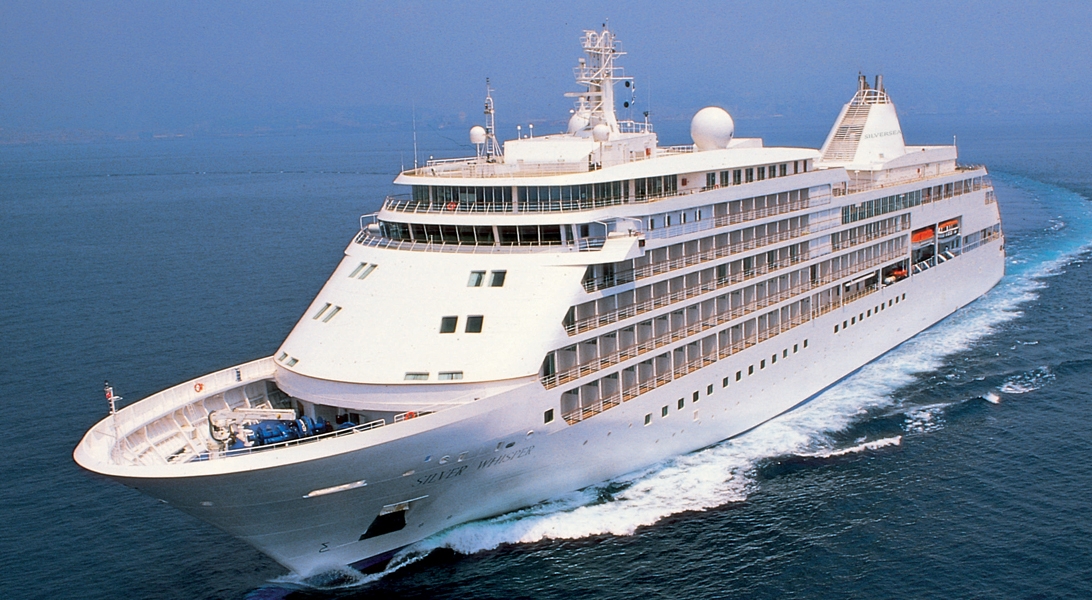
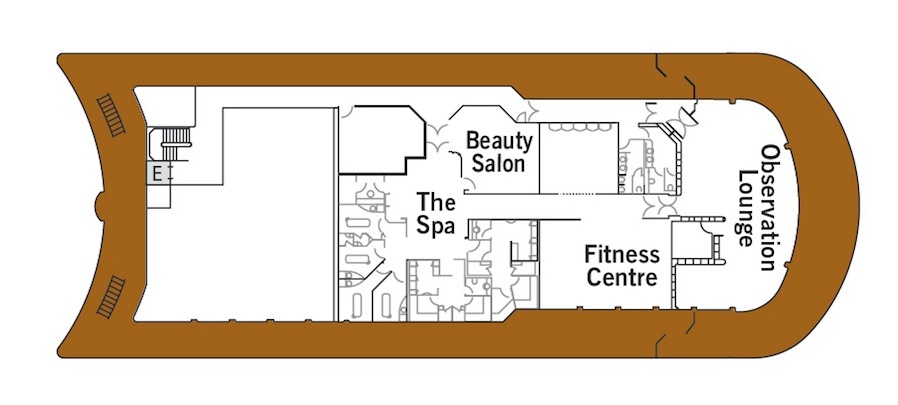

The images shown are for illustration purposes only and may not be an exact representation of what you find on the ship.
| Grade Code | From | To | |
| O1 | Owner's Suite (1 Bedroom) | £40,900 | £41,550 |
| O2 | Owner's Suite (2 Bedrooms) | £51,700 | £52,900 |
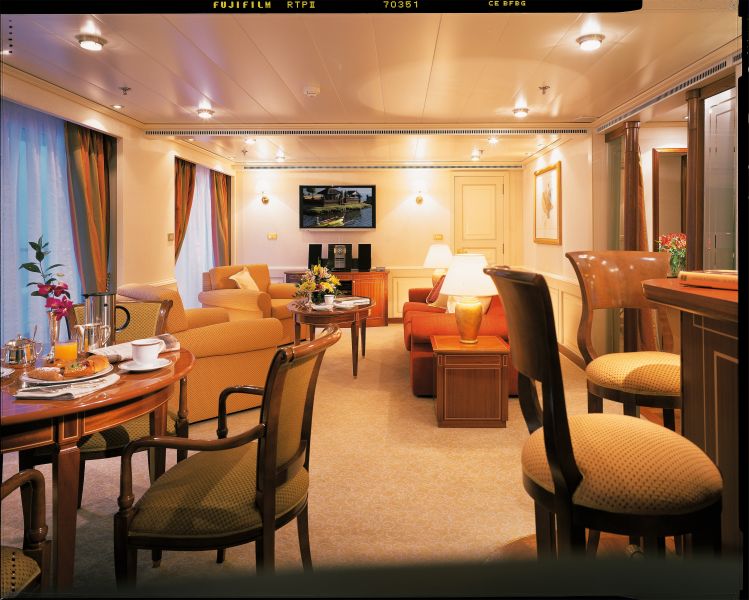
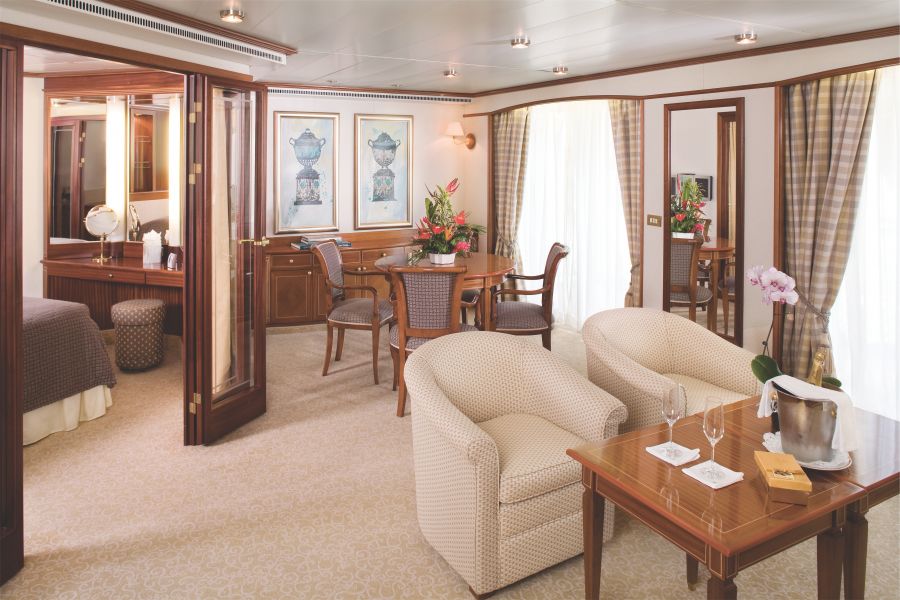
The name says it all. A stylish apartment. Prestigious and classic, as is the Silver Whisper itself. For those who seek the superlative level of space, comfort and service on board. Available as a one-bedroom configuration or as two-bedrooms (as illustrated) by adjoining with a Vista Suite.
One bedroom: 85 sq.m. including veranda
Two bedroom: 117 sq.m. including veranda
Please note that the 3rd guest will sleep on a comfortable sofa bed in the reception area of the suite.
Essentials
Characteristics
Furniture
Media & Communication
Onboard Services
Amenities
| Grade Code | From | To | |
| SL | Silver Suite | £29,000 | £29,600 |
Stylish and sophisticated. Separate dining and living rooms. Larger verandas. Situated midship. Perfection in design for comfortable living. Silver Suites accommodate three guests.
One bedroom: 61-65 sq.m. including veranda
Please note that the 3rd guest will sleep on a comfortable sofa bed in the reception area of the suite.
Essentials
Characteristics
Furniture
Media & Communication
Onboard Services
Amenities
The images shown are for illustration purposes only and may not be an exact representation of what you find on the ship.
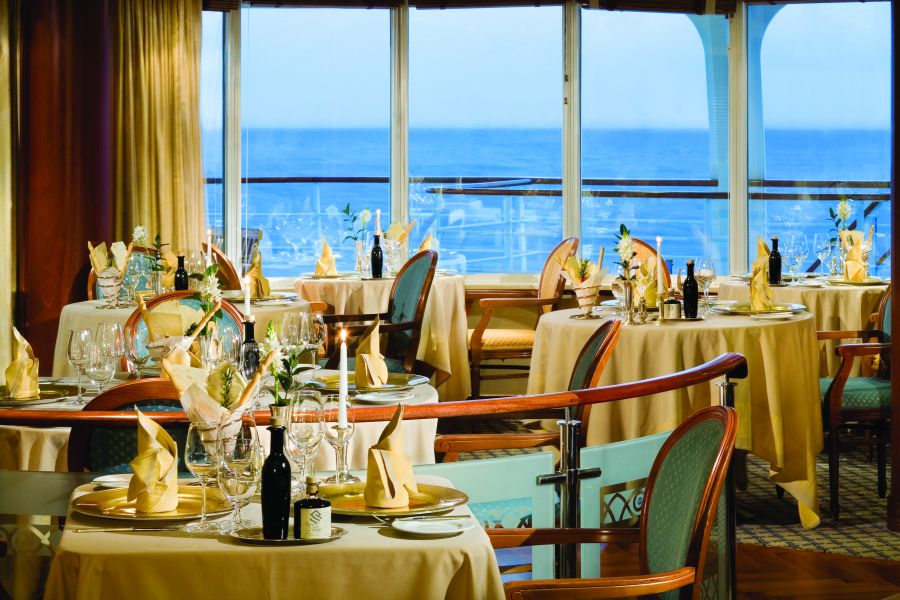
La Terrazza elevates casual dining by day and delivers an authentic Italian experience by night. During the breakfast and lunch buffets, our master chefs prepare global favorites at live stations. As evening falls, handmade pastas and classic seafood dishes are the centerpiece — every impeccable bite paired with fine wines from around the world.
Open-seating for breakfast and lunch.
Seating is limited for dinner and reservations are recommended.
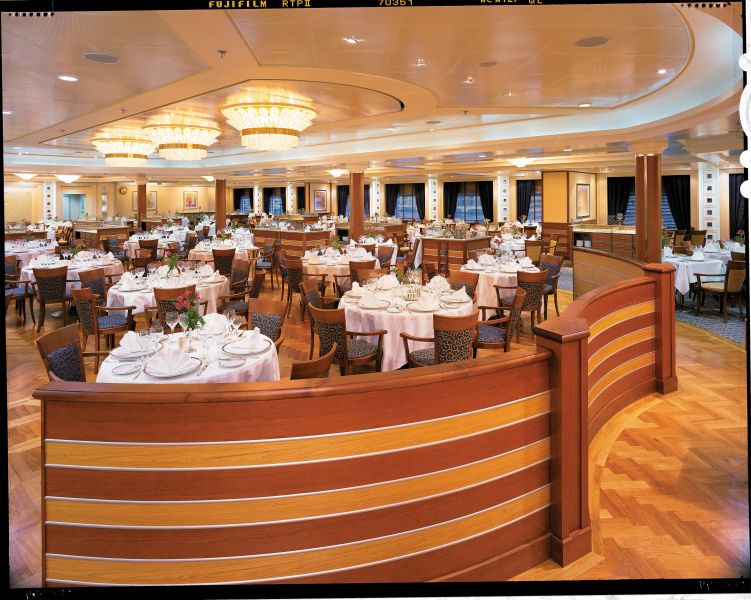
The Restaurant transforms dining into an extraordinary journey of taste. Indulge in international delicacies, refined classics, and destination-driven creations that reflect the flavors of the region you’re exploring. From breakfast favorites to imaginative evening courses, every meal draws inspiration from your voyage.
The images shown are for illustration purposes only and may not be an exact representation of what you find on the ship.
The images shown are for illustration purposes only and may not be an exact representation of what you find on the ship.
The images shown are for illustration purposes only and may not be an exact representation of what you find on the ship.

Our Fusion packages are all ABTA & ATOL protected ensuring that your booking is safe with us
| 18 nights aboard the Silver Whisper | |||
| Butler Service in Every Suite | |||
| Gratuities Always Included | |||
| Beverages In-Suite and Throughout the Ship | |||
| Gourmet Dining | |||
| In Suite Dining & 24-Hour Room Service | |||
| Intimate small size ships | |||
| Free Wifi Throughout the Ship | |||
| Free Zodiac, Land and Sea Tours & Activities & Complimentary Expedition gear | |||
| Port Taxes and Fees | |||
 | ABTA and ATOL Protection* | ||
Date 23rd Jan 2029 |
Nts 18 |
Suite £13,800pp |
Date 23rd Jan 2029 |
Nts 18 |
Suite £13,800pp |
| Suite staterooms from | £13,800pp | ||
| G1 | Grand Suite (1 Bedroom) |  | |
| G2 | Grand Suite (2 Bedrooms) | | |
| ME | Medallion Suite | | |
| O1 | Owner's Suite (1 Bedroom) | | |
| O2 | Owner's Suite (2 Bedrooms) | | |
| R1 | Royal Suite (1 Bedroom) | | |
| R2 | Royal Suite (2 Bedrooms) | | |
| SL | Silver Suite | | |
| VI | Vista Suite | | |
| CV | Classic Veranda Suite | £13,800pp | |
| SV | Superior Veranda Suite | £14,500pp | |
| DX | Deluxe Veranda Suite | | |
Fusion Holidays when selling travel arrangements is a trading name of Co-op Travel Services Limited, registration 08903986. Fusion Cruises is an Accredited Body Member of Co-op Travel Services Limited ATOL 12904.
Book with Confidence. We are a Member of ABTA which means you have the benefit of ABTA’s assistance and Code of Conduct.
Some of the flights and flight-inclusive holidays on this website are financially protected by the ATOL scheme but ATOL protection does not apply to all holiday and travel services offered on this website. This website will provide you with information on the protection that applies in the case of each holiday and travel service offered before you make your booking. If you do not receive an ATOL Certificate then the booking will not be ATOL protected. If you do receive an ATOL Certificate but all parts of your trip are not listed on it, those parts will not be ATOL protected. Please see our booking conditions for information, or for more information about financial protection and the ATOL Certificate go to: www.caa.co.uk