This site uses cookies as defined in our Cookie Policy, by continuing to use this site you agree to their use.
Continue

| Arrive | Depart | ||||||
| 20th20 | MayMay | 202727 | Leith, Scotland, embark on the Silver Wind | 23:00 | |||
| Rise to the heights of the craggy outcrop of Arthur's Seat, the greatest of the seven mountains surrounding Edinburgh, to survey one of the world's most magical cities from a truly privileged outlook. Few cities can genuinely claim to have it all, but Edinburgh may be one, with its immense artistry, gorgeous architecture and deep contribution to high culture. A cultural, creative and curious place it may be, but the locals are anything but superior, and many a friendly chat and ribbing takes place in the nooks of its flower-draped pubs. Open parks, and the majestic Royal Botanic Gardens - open since 1670 - offer more colour among the wash of pretty Georgian and brick buildings. With such architectural and artistic wealth, it's no surprise that Edinburgh continues to be a city of literature, where the written word is revered above all else. The looming memorial dedicated to Sir Walter Scott symbolises this and is one of the world's largest monuments dedicated to a writer. The Writers' Museum is dedicated to the craft of other Scottish wordsmiths, such as Sir Robert Burns and Robert Louis Stevenson. The old town is a quaint and enchanting place, and Edinburgh's storied literary heritage continues to grow, with J.K. Rowling formulating Harry Potter's magical world in the cute cafes here. Wander the bustling, gas-lamp-lit cobbled streets, and sink into a fairy-tale world of your own, before ascending to Edinburgh Castle – which rises majestically above the city on its volcanic plug perch. | |||||||
| 21st21 | MayMay | 202727 | Isle of May, Scotland | 13:00 | 18:30 | ||
| 22nd22 | MayMay | 202727 | Farne Islands, England | 07:00 | 12:30 | ||
| 22nd22 | MayMay | 202727 | Holy Island, England | 14:30 | 19:00 | ||
| 23rd23 | MayMay | 202727 | North Haven, Fair Isle, Scotland | 12:30 | 21:30 | ||
| Lying mid-way between Shetland and the Orkney islands, Fair Isle is a tiny jewel in the sea. Famous for birds, knitwear and historic shipwrecks, the island offers a warm and friendly welcome to visitors. With a population of only around 70 people this island is truly a beautiful setting and is one of Britain’s most successful communities. View the cloudy light turquoise water as it drifts out to sea beneath the breath-taking Sheep Rock, rising over 100 metres, which is almost an isle of its own. Fair Isles oceanic climate brings stormy but fairly mild winters, in summer, you can expect rapid changes in the weather, sparkling sunshine can be followed by a thick blanket of mist and fog, and this makes the isle a truly inspiring area. Over the centuries the island has changed hands many times and was named the island of peace by Norse settlers. The isle has been a useful landmark for shipping but in storms and fog it is highly dangerous creating over 100 known shipwrecks such as the Spanish armada flag ship “El Gran Grifon”. | |||||||
| 24th24 | MayMay | 202727 | Lerwick, Shetland Islands, Scotland | 08:00 | 18:30 | ||
Founded by Dutch fishermen in the 17th century, Lerwick today is a busy town and administrative center. Handsome stone buildings—known as lodberries—line the harbor; they provided loading bays for goods, some of them illegal. The town's twisting flagstone lanes and harbor once heaved with activity, and Lerwick is still an active port today. This is also where most visitors to Shetland dock, spilling out of cruise ships, allowing passengers to walk around the town. Adrift between the Scottish and Norwegian coasts the craggy Shetland Islands form the most northerly point of the British Isles. Sprawling across 100 islands connected by sandy bridges and crisscrossing ferries explore the highlights of this scenic archipelago outpost. Look out over dramatic coastline from atmospheric Iron Age towers. Sweeping windswept beaches and wisps of sand connect islands and rugged cliffs - stand back as the sounds of the waves smashing against the shore and calling gulls fills the air. The islands are also home to some of the most adorable four-legged creatures you’ll ever meet the diminutive and wavy-fringed Shetland Ponies who roam the hills and reach a maximum size of 42 inches. Don't be fooled though they are amongst the strongest and toughest of all breeds. Their existence here points to Viking history as local horses bred with ponies brought ashore by Norse settlers creating the lovable crossbreed that is an icon of these islands today. The towering Broch of Mousa is perhaps Europe’s best-preserved Iron Age building - and one of the Shetland's finest brochs - a series of round stone towers believed to have been constructed around 100 BC. Seals and birdlife ensure that the isolated islands are always well-populated with life - and you can embark on hikes to discover their coastal homes. Lerwick is the islands’ capital and there's a charming welcome on offer as you arrive before the waterfront of stone buildings which cascade down to the shore. | |||||||
| 25th25 | MayMay | 202727 | Thorshavn, Faroe Islands | 14:00 | 20:00 | ||
More than 600 miles (nearly 1,000 kilometres) from Denmark’s west coast lie the Faroes, a triangle of eighteen windswept islands, seventeen of which are inhabited. Only 48,500 people plus some 70,000 sheep roam these remote lands. Much of the islands’ heritage reflects a medieval past, beginning with the arrival of farmers from western Norway who settled here in the 9th century. Evidence of this Scandinavian heritage is preserved through centuries of isolation; ancient structures can still be seen in villages clustered around old churches. Sheer cliffs and waterfalls carve Streymoy, the largest of the islands, where Torshavn is one of the world’s smallest capitals with about 12,400 inhabitants, plus another 5,000 living in the suburbs of Argir and Hoyvik. Visitors find interesting museums, churches, monuments and all the amenities of a modern town and thriving harbour here. The world’s oldest, still active parliament was founded in the Viking age. Today, it houses the main offices of the local government. Many of the attractions are found outside of Torshavn in the rugged beauty of Streymoy. There are fields with grazing ponies and sheep, tiny hamlets where residents live in half-timbered houses topped by green grass roofs, and dramatic rock formations. Birds by the thousands populate the craggy seaside cliffs, which make an ideal stopover for migratory gannets, guillemots and puffins. The Faroes' climate is generally wet and windy. Because of the Gulf Stream, the temperature is a good deal more moderate than the latitude might imply; it also helps to keep Faroe harbours ice-free year-round. Titanic scenery mist-whipped mountains and staggering oceanic vistas await you here in the Faroe Islands - a far-flung archipelago of immense natural beauty. This remote and isolated gathering of 18 islands – adrift in the far North Atlantic Ocean – is a self-governing part of the Kingdom of Denmark and colourful Tórshavn bustles up against the seafront forming one of the tiniest capital cities in the world. Wander between pretty half-timbered houses and visit one of the world’s oldest parliament buildings during your time here. With Viking history swirling too Torshavn is a quaint charming and heritage-rich city. Surrounded by thrilling landscapes and cosy Scandi culture the Faroe Islands are an envy-inducing off-the-beaten-track destination. From Torshavn scatter to your choice of island destinations or spend time soaking in the storybook appeal and clarity of air in the scenic old town. Pop into local shops or head for restaurants - where you can taste local foods like salt-cured fish and hunks of lamb. See waterfalls plummeting directly into the ocean from vertical cliffs along with emerald-green carpeted fjords as you explore these extraordinary lost islands. Puffins and sea birds relish the island’s craggy sea cliffs and coastline – visit the island of Mykines to see the birds burrowing deep into the steep cliffs to nest. Fjords etch into the coastline and you can encounter peaceful lakes and massive valleys dug out by glaciers. Off-shore sea stacks totter up out of the swelling frothy waves. | |||||||
| 26th26 | MayMay | 202727 | Vestmanna, Faroe Islands | 06:30 | 13:00 | ||
The Vestmanna bird cliffs are near vertical, volcanic cliffs that rise steeply out of the ocean to a height of over 600 meters. They are impressively covered with innumerable bird nesting sites as well rare and hardy vegetation. Literally tens of thousands of seabirds can be seen soaring along the cliffs, sitting on nests as well as swimming across the water. Species include numerous kittiwakes, Common Guillemots, Black Guillemots and the endearing Atlantic Puffin. In addition, several waterfalls cascade down in graceful mists from hundreds of meters in the air and explorations reveal a series of sea caves ranging from modest in size to enormous. Surrounded by the mountains of Hægstafjall, Økslin, Loysingafjall, and Moskurfjall, Vestmanna sits quietly on the banks of Streymoy, on the North Atlantic Ocean. With 1,200 inhabitants, the colourful little village itself is lovely; a few shops and cafes selling locally made cakes and handicrafts, as well as the island’s native seafood soup dish. While those wishing to stretch their legs will enjoy the surrounding area for its stunning countryside, Vestmanna’s main attraction is beyond any doubt its bird cliffs. Youi don’t have to be a birder to appreciate these magnificent cliffs, although if you are the cliffs are the stuff of dreams. At almost 700-metres high (and six kilometres long), the cliffs rise steeply out of the water and are covered with tens of thousands of seabirds, zooming through the air, swooping into the water and nesting in the crevices. The near vertical cliffs are home to numerous species including kittiwakes, Common Guillemots, Black Guillemots and the oh so charismatic Atlantic Puffin. Visually, they are stunning: waterfalls thunder into the sea, cliff tops cut jagged lines into horizon and the whole landscape seems straight out of Jurassic Park. Dressed in a cloak of mist and emerald green moss, to say that the feeling is otherworldly is an understatement. To gage the true beauty of the region, one must take to the sea. The experience of sailing under the cacophonic cliffs, juxtaposed by the silence of calm caves is simply unforgettable. | |||||||
| 27th27 | MayMay | 202727 | Shiant Isles, Scotland | 13:30 | 18:30 | ||
| Cliffs of tall hexagonal columns create a sensational landscape at the Shiant Islands, especially when viewed from the sea. The cliffs of six-sided rock columns look like the cross-section of an enormous honeycomb. The rock formations were formed when molten volcanic magma cooled very slowly underground. Millions of years of erosion has exposed the six-sided columns to the sea, and to us. The tallest of these formations is 120 metres (390 feet) high. During spring and summer, flights of seabirds near the Shiant Islands catch the eye. Many long-winged seabirds wheel and soar gracefully. Others are more shaped for underwater swimming and fly in direct lines, beating stubby wings to resemble flying potatoes. Some birds nest in burrows while others, like Black-legged Kittiwakes, nest on cliffs. Rather than build nests, guillemots lay eggs on bare rock ledges. The pointed shape of the eggs ensures they roll in a tight circle, not off the ledge to the sea below. The Shiant Islands are part of the Outer Hebrides and located between the Isles of Lewis and Skye. Historically, they have supported families of sheep grazers who could tolerate a lonely island outpost. The Shiants were known as the last place in Britain where the Black Rat occurred in substantial numbers. Originally introduced to Britain from Asia in Roman times these rodents caused problems, eating eggs and chicks of seabirds. A successful eradication program eliminated the rats in 2016, giving the seabird colonies well-earned peace. | |||||||
| 28th28 | MayMay | 202727 | St. Kilda Archipelago, Scotland | 06:30 | 12:00 | ||
St Kilda is a remarkable uninhabited archipelago some 40 nautical miles beyond the Outer Hebrides. The stunning cliffs and sea stacks are home to the most important seabird breeding colony in northwest Europe. St Kilda is one of the few places in the world to have received dual World Heritage status from UNESCO in recognition of its Natural Heritage and cultural significance. Village Bay on the island of Hirta once supported a population of over 200, but the last islanders left in the 1930s. Recent restoration work on the village by the National Trust for Scotland offers a marvellous link with the past. One of the caretakers acts as shopkeeper and postmaster for any visitors who might like to send a postcard home from St. Kilda. Gloriously remote, St. Kilda is an archipelago 50 miles off the Isle of Harris. Although the four islands are uninhabited by humans, thousands of seas birds call these craggy cliffs home, clinging to the sheer faces as if by magic. Not only is St. Kilda home to the UK’s largest colony of Atlantic Puffin (almost 1 million), but also the world largest colony Gannets nests on Boreray island and its sea stacks. The islands also home decedents of the world’s original Soay sheep as well as having a breed of eponymously named mice. The extremely rare St. Kilda wren unsurprisingly hails from St. Kilda, so birders should visit with notebook, binoculars and camera to hand. While endemic animal species is rife on the island, St. Kilda has not been peopled since 1930 after the last inhabitants voted that human life was unsustainable. However, permanent habitation had been possible in the Medieval Ages, and a vast National Trust for Scotland project to restore the dwellings is currently being undertaken. The islands even enjoyed a status as being an ideal holiday destination in the 19th century. Today, the only humans living on the islands are passionate history, science and conservation scholars. One of the caretakers even acts as shopkeeper and postmaster for any visitors who might like to send a postcard home from St. Kilda. It should be noted that St. Kilda is the UKs only (and just one of 39 in the world) dual World Heritage status from UNESCO in recognition of its Natural Heritage and cultural significance. | |||||||
| 29th29 | MayMay | 202727 | Isle of Lunga, Scotland | 07:00 | 12:00 | ||
The stunning Isle of Lunga is the largest island in the Treshnish archipelago. With volcanic origin the isle was populated until the 19th Century, and remains of black houses can be seen around this magnificent coastal jewel. Abundant plant life and exotic birdlife are now the main inhabitants of the area. Fortunate visitors view the magnificent array of birds, especially the great puffins that breed on the islands plateau. One can sit within just a few feet away without disturbing the avian ambassador’s peace. The 81 hectare island is home to many rare and endangered plants such as, primroses and orchids. Views over the landscape and across the ocean can be seen from the 300 foot high cliffs. The stunning Isle of Lunga is the largest island in the Treshnish archipelago. With volcanic origin the isle was populated until the 19th Century and remains of black houses can be seen around this magnificent coastal jewel. Abundant plant life and exotic birdlife are now the main inhabitants of the area. Fortunate visitors view the magnificent array of birds especially the great puffins that breed on the islands plateau. One can sit within just a few feet away without disturbing the avian ambassador’s peace. The 81 hectare island is home to many rare and endangered plants such as primroses and orchids. Views over the landscape and across the ocean can be seen from the 300 foot high cliffs. | |||||||
| 29th29 | MayMay | 202727 | Isle of Iona, Scotland | 14:15 | 19:30 | ||
With a population of 120 residents, Iona is Located off the Southwest of Mull. The island is 3 miles long and 1.5 miles wide but draws in thousands of visitors each year due to its natural beauty and historical interest. Saint Columba and his fellow monks landed here in 563. This beautiful stretch of coastline brings out the true beauty of Iona facing onto the Gulf Stream that gives the island its mild climate. Located to the south of the road lies Sìthean Mòr (Large fairy hill) and alternatively known as the Hill of Angels, this is said to have been the setting for many rituals and traditions dating far back in history. This wonderful highlight, Iona Abbey was founded by Saint Columba in 563 and is said to have survived many Viking attacks. Although little remains of the monastic buildings of this period, the magnificent Abbey is the main attraction. If tiny islands that resonate with peace and tranquillity are your idea of travel heaven, then welcome to Iona. Almost 200 miles east of Edinburgh, set in Scotland’s Inner Hebrides, this magical island has a spiritual reputation that precedes it. And luckily, more than lives up to. The island is miniscule. Just three miles long and only one and a half miles wide, this is not a place that hums with urban attractions. 120 people call Iona home (this number rises significantly if the gull, tern and Kittiwake population is added), although residential numbers do go up (to a whopping 175) in summer. The beautiful coastline is lapped by the gulf stream and gives the island a warm climate with sandy beaches that look more Mediterranean than Scottish! Add to that a green field landscape that is just beautiful, and you’ll find that Iona is a place that stays with you long after you leave. Iona’s main attraction is of course its abbey. Built in 563 by Saint Columbia and his monks, the abbey is the reason why Iona is called the cradle of Christianity. Not only is the abbey (today an ecumenical church) one of the best – if not the best – example of ecclesiastical architecture dating from the Middle Ages, but it also serves as an important site of spiritual pilgrimage. St. Martin’s Cross, a 9th century Celtic cross that stands outside the abbey, is considered as the finest example of Celtic crosses in the British Isles. Rèilig Odhrain, or the cemetery, allegedly contains the remains of many Scottish kings. | |||||||
| 30th30 | MayMay | 202727 | Belfast, Northern Ireland | 07:30 | 18:00 | ||
Before English and Scottish settlers arrived in the 1600s, Belfast was a tiny village called Béal Feirste ("sandbank ford") belonging to Ulster's ancient O'Neill clan. With the advent of the Plantation period (when settlers arrived in the 1600s), Sir Arthur Chichester, from Devon in southwestern England, received the city from the English Crown, and his son was made Earl of Donegall. Huguenots fleeing persecution from France settled near here, bringing their valuable linen-work skills. In the 18th century, Belfast underwent a phenomenal expansion—its population doubled every 10 years, despite an ever-present sectarian divide. Although the Anglican gentry despised the Presbyterian artisans—who, in turn, distrusted the native Catholics—Belfast's growth continued at a dizzying speed. The city was a great Victorian success story, an industrial boomtown whose prosperity was built on trade, especially linen and shipbuilding. Famously (or infamously), the Titanic was built here, giving Belfast, for a time, the nickname "Titanic Town." Having laid the foundation stone of the city's university in 1845, Queen Victoria returned to Belfast in 1849 (she is recalled in the names of buildings, streets, bars, monuments, and other places around the city), and in the same year, the university opened under the name Queen's College. Nearly 40 years later, in 1888, Victoria granted Belfast its city charter. Today its population is nearly 300,000, tourist numbers have increased, and this dramatically transformed city is enjoying an unparalleled renaissance.This is all a welcome change from the period when news about Belfast meant reports about "the Troubles." Since the 1994 ceasefire, Northern Ireland's capital city has benefited from major hotel investment, gentrified quaysides (or strands), a sophisticated new performing arts center, and major initiatives to boost tourism. Although the 1996 bombing of offices at Canary Wharf in London disrupted the 1994 peace agreement, the ceasefire was officially reestablished on July 20, 1997, and this embattled city began its quest for a newfound identity.Since 2008, the city has restored all its major public buildings such as museums, churches, theaters, City Hall, Ulster Hall—and even the glorious Crown Bar—spending millions of pounds on its built heritage. A gaol that at the height of the Troubles held some of the most notorious murderers involved in paramilitary violence is now a major visitor attraction.Belfast's city center is made up of three roughly contiguous areas that are easy to navigate on foot. From the south end to the north, it's about an hour's leisurely walk. Reborn as a cool modern city Belfast has successfully left its troubles behind emerging as a hotbed of culture and architecture where the comfort of a cosy pub is never far away. A walk across the Lagan Weir Footbridge brings you to Belfast’s fascinating Titanic District – an area of the city devoted to its rich ship-building heritage. The state-of-the-art Titanic Museum brings the story of the doomed vessel to life and is the largest museum dedicated to the infamously ‘unsinkable’ ship. There’s just enough time to give the 10-metre long Salmon of Knowledge sculpture a quick peck for luck before continuing to explore. A stark barbed wire and graffitied sheet metal barrier marks an abrupt scar through the city’s residential areas. The Peace Line was constructed during the height of the Troubles when Belfast was plagued by sectarian divisions between Protestants and Catholics. Nowadays you can jump in a black taxi tour to see the colourful murals and living history of the walls which stand as a stark reminder of the fragility of peace. After exploring the city’s historic divisions a reminder of Belfast’s uniting creativity can be found at the Metropolitan Arts Centre – a seven-storey tall building which invites light to gloriously cascade inside. The Cathedral Quarter is a cobbled blend of flower-adorned pubs restaurants and theatres and venues where music spills out onto the streets at night and many a pint is cheerily shared. | |||||||
| 31st31 | MayMay | 202727 | Dublin, Ireland, disembark the Silver Wind | ||||
Dublin is making a comeback. The decade-long "Celtic Tiger" boom era was quickly followed by the Great Recession, but The Recovery has finally taken a precarious hold. For visitors, this newer and wiser Dublin has become one of western Europe's most popular and delightful urban destinations. Whether or not you're out to enjoy the old or new Dublin, you'll find it a colossally entertaining city, all the more astonishing considering its intimate size.It is ironic and telling that James Joyce chose Dublin as the setting for his famous Ulysses, Dubliners, and A Portrait of the Artist as a Young Man because it was a "center of paralysis" where nothing much ever changed. Which only proves that even the greats get it wrong sometimes. Indeed, if Joyce were to return to his once-genteel hometown today—disappointed with the city's provincial outlook, he left it in 1902 at the age of 20—and take a quasi-Homeric odyssey through the city (as he so famously does in Ulysses), would he even recognize Dublin as his "Dear Dirty Dumpling, foostherfather of fingalls and dotthergills"?For instance, what would he make of Temple Bar—the city's erstwhile down-at-the-heels neighborhood, now crammed with cafés and trendy hotels and suffused with a nonstop, international-party atmosphere? Or the simple sophistication of the open-air restaurants of the tiny Italian Quarter (named Quartier Bloom after his own creation), complete with sultry tango lessons? Or of the hot–cool Irishness, where every aspect of Celtic culture results in sold-out theaters, from Once, the cult indie movie and Broadway hit, to Riverdance, the old Irish mass-jig recast as a Las Vegas extravaganza? Plus, the resurrected Joyce might be stirred by the songs of Hozier, fired up by the sultry acting of Michael Fassbender, and moved by the award-winning novels of Colum McCann. As for Ireland's capital, it's packed with elegant shops and hotels, theaters, galleries, coffeehouses, and a stunning variety of new, creative little restaurants can be found on almost every street in Dublin, transforming the provincial city that suffocated Joyce into a place almost as cosmopolitan as the Paris to which he fled. And the locals are a hell of a lot more fun! Now that the economy has finally turned a corner, Dublin citizens can cast a cool eye over the last 20 crazy years. Some argue that the boomtown transformation of their heretofore-tranquil city has permanently affected its spirit and character. These skeptics (skepticism long being a favorite pastime in the capital city) await the outcome of "Dublin: The Sequel," and their greatest fear is the possibility that the tattered old lady on the Liffey has become a little less unique, a little more like everywhere else.Oh ye of little faith: the rare ole gem that is Dublin is far from buried. The fundamentals—the Georgian elegance of Merrion Square, the Norman drama of Christ Church Cathedral, the foamy pint at an atmospheric pub—are still on hand to gratify. Most of all, there are the locals themselves: the nod and grin when you catch their eye on the street, the eagerness to hear half your life story before they tell you all of theirs, and their paradoxically dark but warm sense of humor. It's expected that 2016 will be an extra-special year in the capital, as centenary celebrations of the fateful 1916 Easter Rising will dominate much of the cultural calendar. Atmospheric cobbled streets with buskers scraping fiddles and characterful pubs inviting passersby inside is Dublin in a snapshot. Horse-drawn carriages plod along cobbled centuries-old streets blending with an easy-going cosmopolitan outlook. Known for its fun-filled gathering of pubs any excuse works to enjoy a celebratory toast and chat among good company. Home to perhaps the world's most famous beer - slurp perfect pourings of thick dark Guinness - cranked out for the city's thirsty punters. Learn more of the humble pint's journey at the Guinness Storehouse. Dublin has come along way since the Vikings established a trading port here back in the 9th Century. In the time since the city became the British Empire's defacto second city and the Georgian imprint still adds oodles of historic character. Learn of 1916's Easter Uprising when the Irish rebelled and established their independence here as you visit the infamous haunting Kilmainham Gaol. The uprising's leaders were tried and executed in these dark confines. Dublin's St. Patrick's Cathedral has immense history below its steep spire which dates back to 1191. There's rich literary heritage to leaf through too and the city's streets were rendered vividly in James Joyce's classic Ullyses. The Museum of Literature celebrates the full scope of Dublin's lyrical talents. Trinity College also has a prestigious roll-call of alumni - visit to see the Book of Kells a beautifully illustrated bible of the medieval era. | |||||||
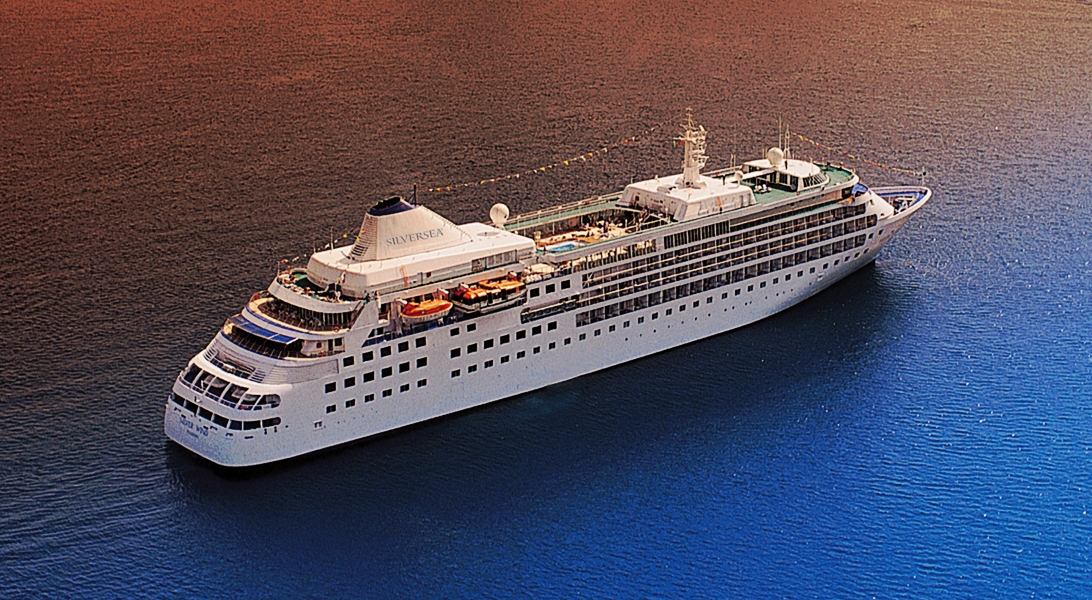
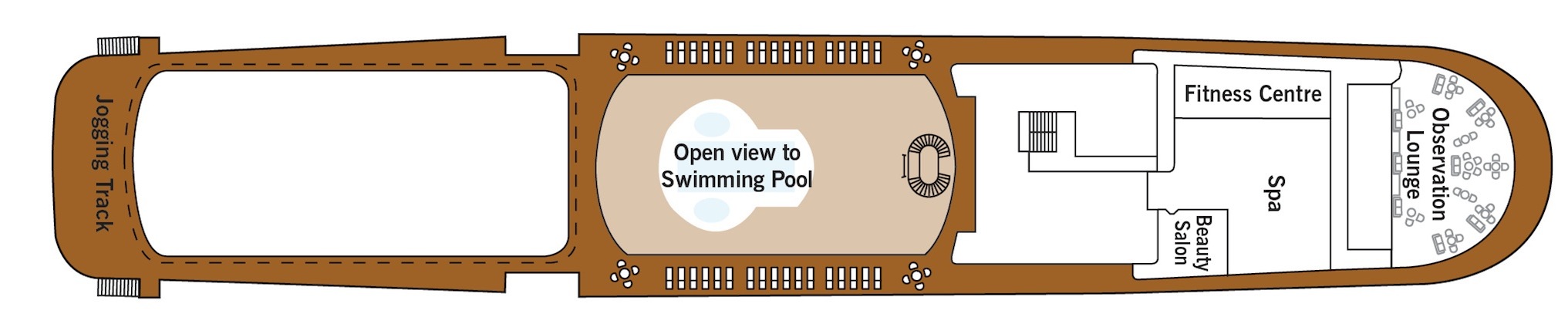

The images shown are for illustration purposes only and may not be an exact representation of what you find on the ship.
| Grade Code | From | To | |
| G1 | Grand Suite (1 Bedroom) | £19,000 | £19,000 |
| G2 | Grand Suite (2 Bedrooms) | £28,300 | £28,300 |
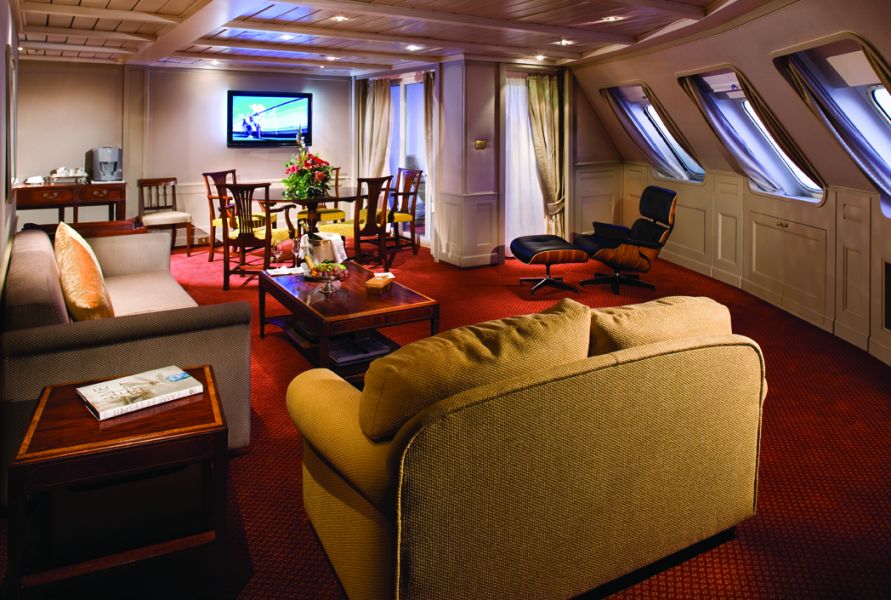
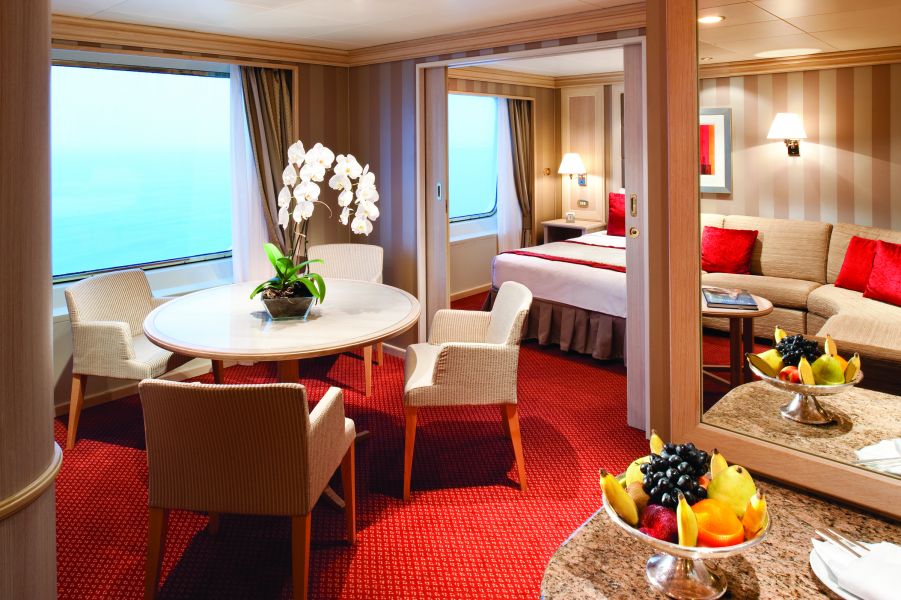
Expertly designed and exquisitely appointed. The Grand Suite on the Silver Wind is ideal for entertaining friends or enjoying a quiet dinner “at home.” Available as a one-bedroom configuration or as two bedrooms by adjoining with a Veranda Suite.
One bedroom: 95 sq m (14 sq. m.)
Two bedrooms: 122 sq m (18.5 sq. m.)
Images and suite plans are intended as a general reference. Features, materials, finishes and layout maybe different than shown.
Please note that the 3rd guest will sleep on a comfortable sofa bed in the reception area of the suite.
Essentials
Characteristics
Furniture
Media & Communication
Onboard Services
Amenities
| Grade Code | From | To | |
| ME | Medallion Suite | £11,800 | £11,800 |
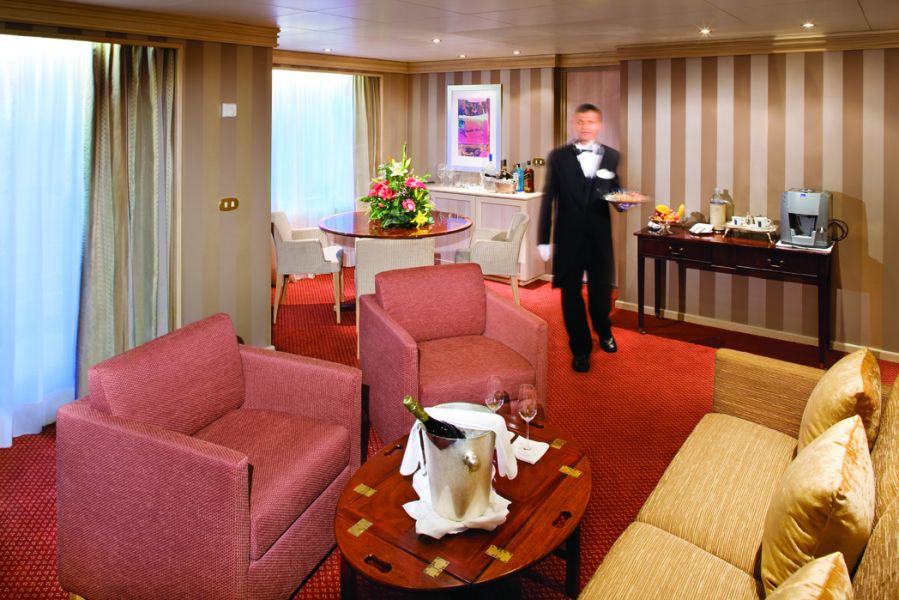
A mark of distinction. Sumptuous. Spacious. Rich textures and panoramic views surround you with distinguished luxury. The perfect summary of The Medallion Suite offered by the world’s best cruise line.
One bedroom: 41 sq m (12 sq. m.)
Suite 741: 667 sq. ft/62 sq. m. with French balcony, separate dining area and full-size bath.
Suites 801–804 only: with Veranda
Images and suite plans are intended as a general reference. Features, materials, finishes and layout maybe different than shown.
Please note that the 3rd guest will sleep on a comfortable sofa bed in the reception area of the suite.
Essentials
Characteristics
Furniture
Media & Communication
Onboard Services
Amenities
| Grade Code | From | To | |
| O1 | Owner's Suite (1 Bedroom) | £19,700 | £19,700 |
| O2 | Owner's Suite (2 Bedrooms) | £28,150 | £28,150 |
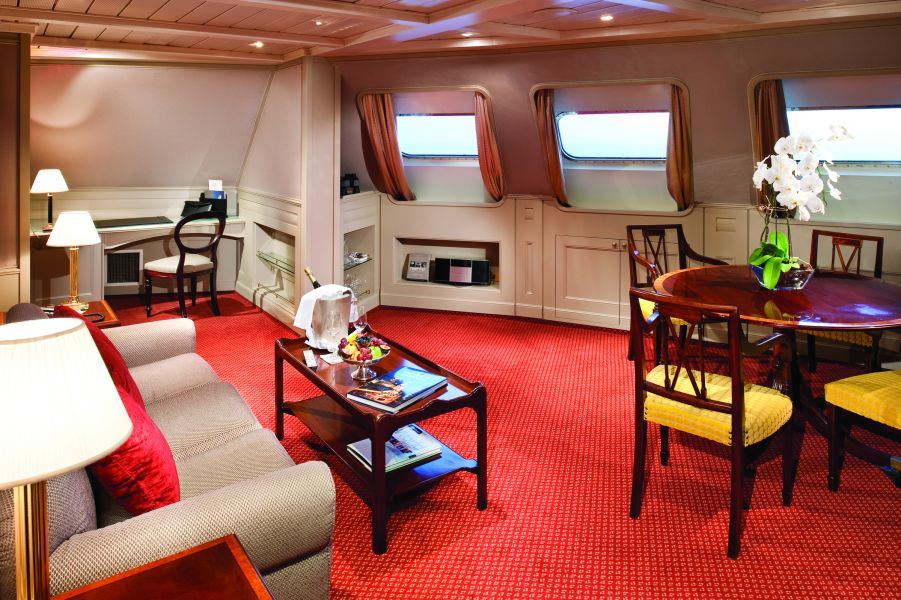
The name says it all. A stylish apartment. Prestigious and classic. For those who seek spaciousness, comfort and service on board. The Owner’s Suite is available as a one-bedroom configuration or as two bedrooms (as illustrated) by adjoining with a Vista Suite so you can enjoy your luxury cruise in style.
One bedroom: 55 sq m (8 sq. m.)
Two bedrooms: 77 sq m (8 sq. m.)
Images and suite plans are intended as a general reference. Features, materials, finishes and layout may be different than shown.
Please note that the 3rd guest will sleep on a comfortable sofa bed in the reception area of the suite.
Essentials
Characteristics
Furniture
Media & Communication
Onboard Services
Amenities
| Grade Code | From | To | |
| R1 | Royal Suite (1 Bedroom) | £17,100 | £17,100 |
| R2 | Royal Suite (2 Bedrooms) | £26,400 | £26,400 |
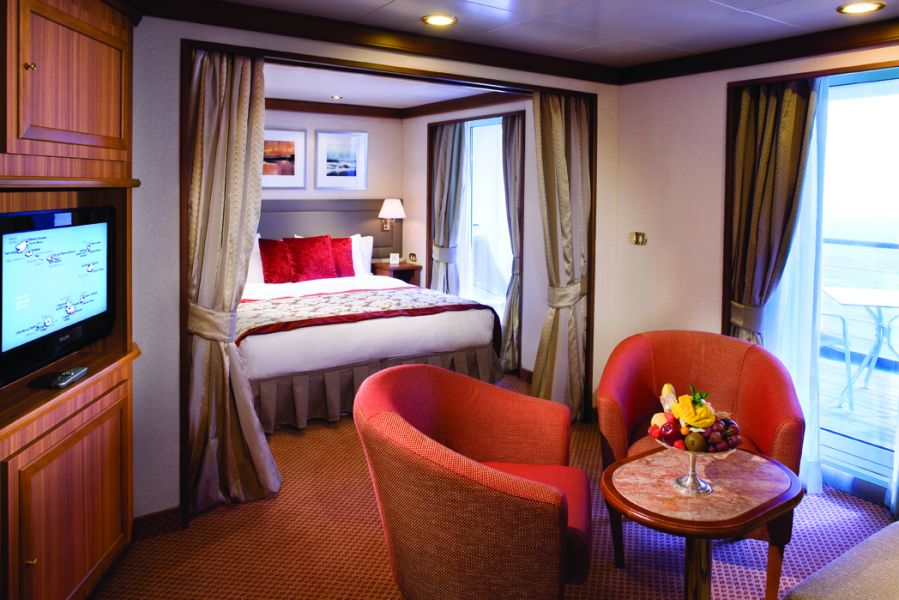
Stately. Commanding and majestic. Perfect for entertaining. The Royal suite lives up to its name. Enough living space to roam. The pinnacle of good living. Available as a one-bedroom configuration or as two bedrooms by adjoining with a Veranda Suite.
One bedroom: 69 sq m (12 sq. m.)
Two bedrooms: 96 sq. m. (16.5 sq. m.)
Images and suite plans are intended as a general reference. Features, materials, finishes and layout maybe different than shown.
Please note that the 3rd guest will sleep on a comfortable sofa bed in the reception area of the suite.
Essentials
Characteristics
Furniture
Media & Communication
Onboard Services
Amenities
| Grade Code | From | To | |
| SL | Silver Suite | £15,800 | £15,800 |
For those wanting more space, Silver Suites are ideal. Stylish and sophisticated. Separate dining and living rooms. Larger verandas. Situated midship on the Silver Wind. Perfection in design for comfortable living. Silver Suites accommodate three guests.
One bedroom: 48 sq m (8 sq. m.)
Images and suite plans are intended as a general reference. Features, materials, finishes and layout maybe different than shown.
Please note that the 3rd guest will sleep on a comfortable sofa bed in the reception area of the suite.
Essentials
Characteristics
Furniture
Media & Communication
Onboard Services
Amenities
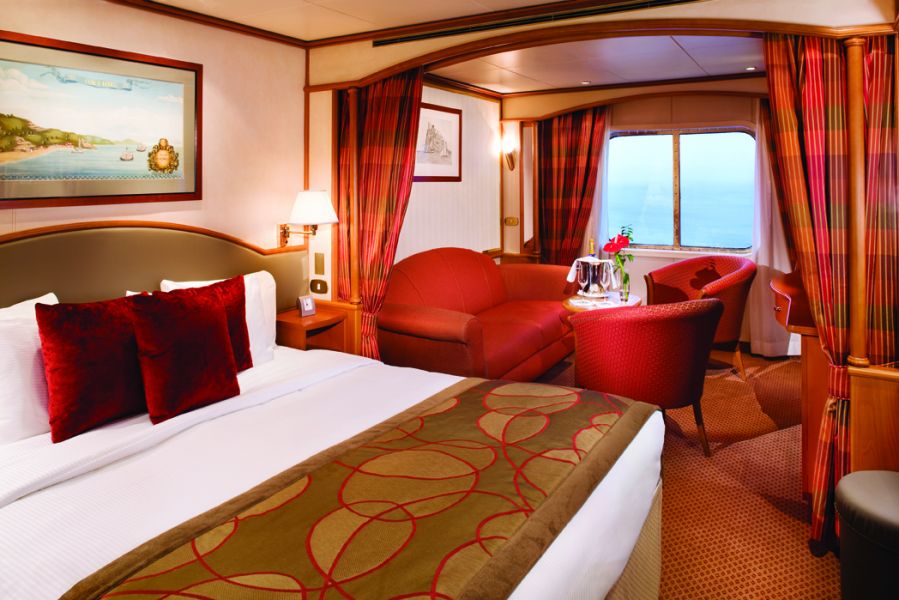
| Grade Code | From | To | |
| VI | Vista Suite | £8,400 | £8,400 |
A quiet sanctuary to escape to on your cruise. The seating area has plenty of room to relax. Large picture windows frame panoramic ocean views. The perfect backdrop for breakfast in bed.
One bedroom: 22 sq. m.
Suite 738: 325 sq. ft./30 sq. m.
Wheelchair accessible suites: 445 and 447
Images and suite plans are intended as a general reference. Features, materials, finishes and layout maybe different than shown.
Please note that the 3rd guest will sleep on a comfortable sofa bed in the reception area of the suite.
Essentials
Characteristics
Furniture
Media & Communication
Onboard Services
Amenities
The images shown are for illustration purposes only and may not be an exact representation of what you find on the ship.
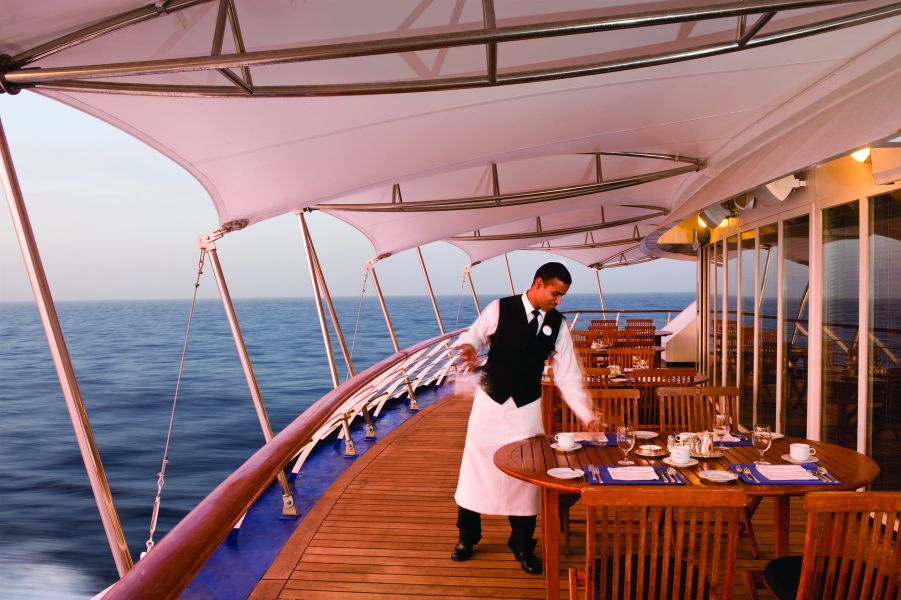
La Terrazza elevates casual dining by day and delivers an authentic Italian experience by night. During the breakfast and lunch buffets, our master chefs prepare global favorites at live stations. As evening falls, handmade pastas and classic seafood dishes are the centerpiece — every impeccable bite paired with fine wines from around the world.
Open-seating for breakfast and lunch.
Reservations recommended for dinner.
Images and suite plans are intended as a general reference. Features, materials, finishes and layout may be different than shown.
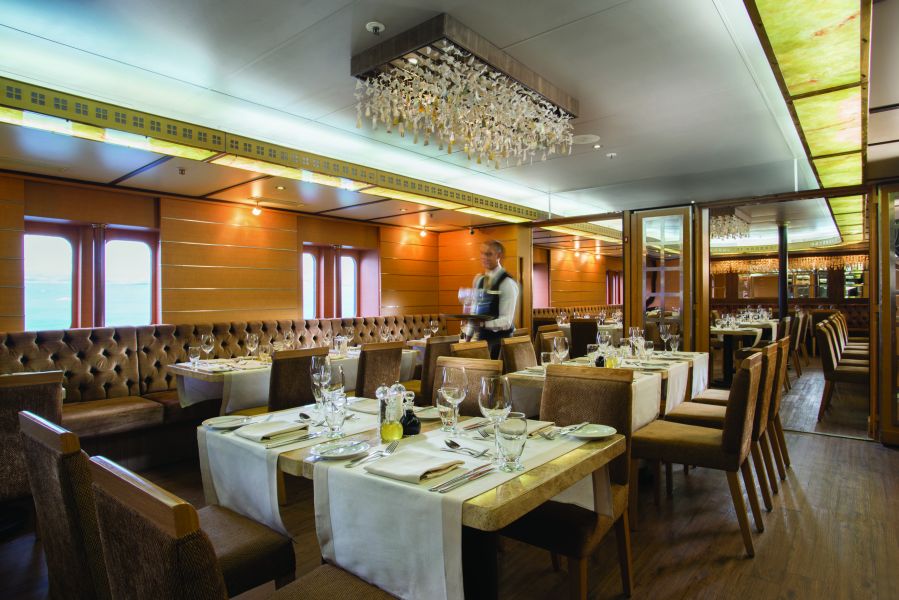
The Restaurant transforms dining into an extraordinary journey of taste. Indulge in international delicacies, refined classics, and destination-driven creations that reflect the flavors of the region you’re exploring. From breakfast favorites to imaginative evening courses, every meal draws inspiration from your voyage.
Images and suite plans are intended as a general reference. Features, materials, finishes and layout may be different than shown.
The images shown are for illustration purposes only and may not be an exact representation of what you find on the ship.
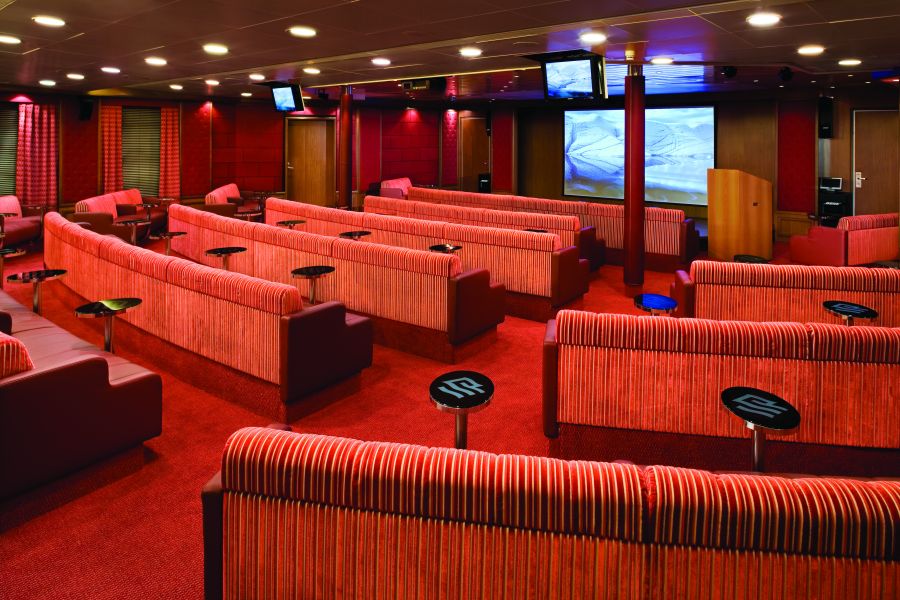
At The Show Lounge, theatrical immersion takes center stage. From captivating performances and screenings to cultural programs, this elegant venue was designed to dazzle. Tiered seating ensures impeccable views while attentive beverage service makes indulging effortless. Raise a glass as the curtain rises on an unforgettable night of entertainment.
Images and suite plans are intended as a general reference. Features, materials, finishes and layout may be different than shown.
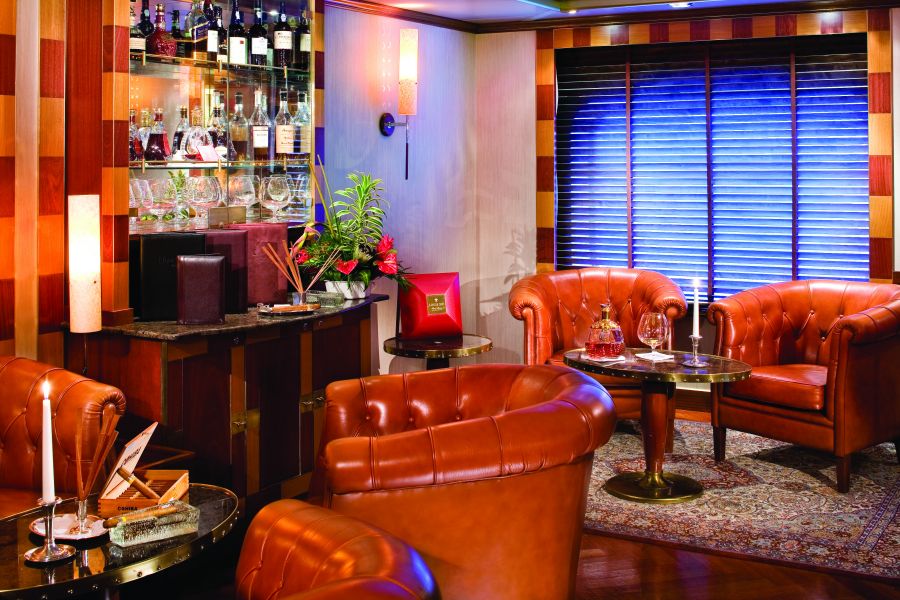
As evening stretches into night, Connoisseur’s Corner offers a stylish refuge for those who appreciate the time-honored rituals of smoke and spirit. Sink into tufted leather chairs with a hand-rolled cigar and a glass of one of our finest cognacs or whiskeys. Indoors or under the stars, every moment is marked by pure indulgence.
Images and suite plans are intended as a general reference. Features, materials, finishes and layout maybe different than shown.
The images shown are for illustration purposes only and may not be an exact representation of what you find on the ship.
The images shown are for illustration purposes only and may not be an exact representation of what you find on the ship.

Our Fusion packages are all ABTA & ATOL protected ensuring that your booking is safe with us
| 11 nights aboard the Silver Wind | |||
| Butler Service in Every Suite | |||
| Gratuities Always Included | |||
| Beverages In-Suite and Throughout the Ship | |||
| Gourmet Dining | |||
| In Suite Dining & 24-Hour Room Service | |||
| Intimate small size ships | |||
| Free Wifi Throughout the Ship | |||
| Free Zodiac, Land and Sea Tours & Activities & Complimentary Expedition gear | |||
| Port Taxes and Fees | |||
 | ABTA and ATOL Protection* | ||
Date 20th May 2027 |
Nts 11 |
Suite £9,350pp |
Date 20th May 2027 |
Nts 11 |
Suite £9,350pp |
| Suite staterooms from | £9,350pp | ||
| CV | Classic Veranda Suite | £9,350pp | |
| DX | Deluxe Veranda Suite |  | |
| G1 | Grand Suite (1 Bedroom) | £19,000pp | |
| G2 | Grand Suite (2 Bedrooms) | | |
| ME | Medallion Suite | | |
| O1 | Owner's Suite (1 Bedroom) | £19,700pp | |
| O2 | Owner's Suite (2 Bedrooms) | | |
| R1 | Royal Suite (1 Bedroom) | £17,100pp | |
| R2 | Royal Suite (2 Bedrooms) | | |
| SL | Silver Suite | | |
| VI | Vista Suite | | |
Fusion Holidays when selling travel arrangements is a trading name of Co-op Travel Services Limited, registration 08903986. Fusion Cruises is an Accredited Body Member of Co-op Travel Services Limited ATOL 12904.
Book with Confidence. We are a Member of ABTA which means you have the benefit of ABTA’s assistance and Code of Conduct.
Some of the flights and flight-inclusive holidays on this website are financially protected by the ATOL scheme but ATOL protection does not apply to all holiday and travel services offered on this website. This website will provide you with information on the protection that applies in the case of each holiday and travel service offered before you make your booking. If you do not receive an ATOL Certificate then the booking will not be ATOL protected. If you do receive an ATOL Certificate but all parts of your trip are not listed on it, those parts will not be ATOL protected. Please see our booking conditions for information, or for more information about financial protection and the ATOL Certificate go to: www.caa.co.uk