This site uses cookies as defined in our Cookie Policy, by continuing to use this site you agree to their use.
Continue

| Arrive | Depart | ||||||
| 28th28 | FebFeb | 202727 | Madrid, Spain, embark on the Star Explorer | ||||
| Upon your arrival at Madrid-Barajas International Airport, you'll pick up your reserved car and drive to your 5-star hotel. Check in and you'll have the entire afternoon and evening to spend at your leisure with world-class shopping and dining just steps away on the iconic Gran Via (the "Spanish Broadway"). (includes transfers from the airport to your hotel and overnight in Madrid hotel) | |||||||
| 1st01 | MarMar | 202727 | Madrid, Spain | ||||
| After breakfast at the hotel, you'll kick off your day with a visit to the world-famous Santiago Bernabéu stadium—host to Real Madrid CF since 1947. Fans of the football (aka American soccer) will go wild over the panoramic view of the inside of the renovated stadium, with admission to the Real Madrid CF Museum, where you'll learn about the history of the club and its members, take pictures next to famous trophies and watch the club's most iconic moments. Next, you'll enjoy lunch at a local restaurant. The tour continues to the Royal Palace, an awe-inspiring architectural wonder and the largest functioning palace in Europe. You'll learn about the site's rich history, capture pictures at Armoury Square, get a chance to walk the iconic marble Grand Staircase, and explore majestic rooms and spaces displaying sculptures, paintings, tapestries and jewels offering insight into the 18-century Spanish Monarchy. In the evening, you'll head to renowned tablao Corral de la Morería (Madrid's "Cathedral of Flamenco) to see a fiery flamenco show performed by some of Spain's top dancers and musicians, while enjoying a three-course gourmet meal created by a Michelin Star chef. (Includes breakfast, lunch, dinner and flamenco show, entrance to Bernabéu Stadium and Real Madrid CF Museum, overnight in Madrid hotel) | |||||||
| 2nd02 | MarMar | 202727 | Madrid, Spain | ||||
| After breakfast at the hotel, you'll head right to the Prado Museum to take in the world's richest and most comprehensive collection of Spanish works from Spanish masters Valázquez, El Greco, Goya and El Bosco. Your early access allows you to skip the line and enter the museum one hour before they open. The museum also houses a vast collection of classical European paintings and sculptures, including the largest collections of Italian art outside of Italy. Next, you'll head to the famous "El Retiro Park," a UNESCO World Heritage Site offering a vast green oasis in the heart of the city. Stroll through a variety of gardens with interesting monuments, view a nearly 400-year-old Mexican conifer, sit by the lake or rent a rowing boat, and explore the exhibitions halls, including the Glass Palace, a glass pavilion built in 1887, regarded as one of Spain's finest examples of cast-iron architecture. After enjoying the park, you'll have free time to explore and find lunch on your own. In the evening, you'll be immersed in a unique culinary experience at a boutique cooking school. You'll learn the art of preparing tapas, then enjoy them along with a chef-prepared entree and two desserts for a 5-course tasting menu served with a bottomless wine pairing of five different Spanish wines. (Includes breakfast, dinner, early entrance to Prado Museum, cooking class, overnight in Madrid hotel) | |||||||
| 3rd03 | MarMar | 202727 | Barcelona, Spain | ||||
The infinite variety of street life, the nooks and crannies of the medieval Barri Gòtic, the ceramic tile and stained glass of Art Nouveau facades, the art and music, the throb of street life, the food (ah, the food!)—one way or another, Barcelona will find a way to get your full attention. The capital of Catalonia is a banquet for the senses, with its beguiling mix of ancient and modern architecture, tempting cafés and markets, and sun-drenched Mediterranean beaches. A stroll along La Rambla and through waterfront Barceloneta, as well as a tour of Gaudí's majestic Sagrada Famíliaand his other unique creations, are part of a visit to Spain's second-largest city. Modern art museums and chic shops call for attention, too. Barcelona's vibe stays lively well into the night, when you can linger over regional wine and cuisine at buzzing tapas bars. You'll have breakfast at your hotel in Madrid before taking off for an incredible day in Segovia, a medieval city located in Castile and Leó, designated a UNESCO World Heritage Site. You'll look back in time as you admire the incredible Roman Aqueduct winding its way around the edge of town. You'll visit Plaza Mayor, a town square framed by the beautiful pinnacles of the apse of the Cathedral, built in Castilian Late Gothic style, then head inside to meet your guide and tour the Cathedral, learning about its historical significance and architectural highlights that have earned it the name Lady of the Cathedrals. Next, you'll enjoy a classic Segovian lunch at a delightful restaurant, followed by a stop at the renowned Alcázar of Segovia, a medieval castle built in the 12th century that has served as home for 22 kings and inspired the design of castles in shows and movies, including Cinderella's castle. You'll travel back to Madrid, where you'll catch the high-speed train to Barcelona, traveling in Comfort Class, with your luggage waiting for you at your hotel Barcelona hotel. Upon arrival, you'll be driven to your 5-star hotel, where you'll enjoy a Catalan dinner and can share stories about the day. | |||||||
| 4th04 | MarMar | 202727 | Barcelona, Spain | 23:59 | |||
The infinite variety of street life, the nooks and crannies of the medieval Barri Gòtic, the ceramic tile and stained glass of Art Nouveau facades, the art and music, the throb of street life, the food (ah, the food!)—one way or another, Barcelona will find a way to get your full attention. The capital of Catalonia is a banquet for the senses, with its beguiling mix of ancient and modern architecture, tempting cafés and markets, and sun-drenched Mediterranean beaches. A stroll along La Rambla and through waterfront Barceloneta, as well as a tour of Gaudí's majestic Sagrada Famíliaand his other unique creations, are part of a visit to Spain's second-largest city. Modern art museums and chic shops call for attention, too. Barcelona's vibe stays lively well into the night, when you can linger over regional wine and cuisine at buzzing tapas bars. The old meets the new in this sunny Catalan metropolis, where narrow alleyways contrast with grand boulevards, trendy cuisine meets homemade tapas, and everywhere you're greeted by the warm, welcoming smiles of the fashionable locals. Don't miss UNESCO sites like the mind-boggling architecture of Antoni Gaudí or La Sagrada Familia Cathedral, with its eight decorative spires soaring hundreds of feet into the sky. | |||||||
| 4th04 | MarMar | 202727 | Barcelona, Spain | ||||
The infinite variety of street life, the nooks and crannies of the medieval Barri Gòtic, the ceramic tile and stained glass of Art Nouveau facades, the art and music, the throb of street life, the food (ah, the food!)—one way or another, Barcelona will find a way to get your full attention. The capital of Catalonia is a banquet for the senses, with its beguiling mix of ancient and modern architecture, tempting cafés and markets, and sun-drenched Mediterranean beaches. A stroll along La Rambla and through waterfront Barceloneta, as well as a tour of Gaudí's majestic Sagrada Famíliaand his other unique creations, are part of a visit to Spain's second-largest city. Modern art museums and chic shops call for attention, too. Barcelona's vibe stays lively well into the night, when you can linger over regional wine and cuisine at buzzing tapas bars. After breakfast at your hotel, you'll be driven towards the Penedés Region in Catalonia, where almost all cava and wine is produced due to the region's favorable climate for growing grapes—mild temperatures, intense sunshine and moderate rainfall. This also makes it great region to visit. This tour will bring you to one of the most renowned Spanish wine cellars: Codorniu. You'll learn the traditional process of how a bottle of cava is created and the history of the cellars dating back 450 years, where you will enjoy your tasting flight. By the time you head to a delicious three-course lunch, you'll have discovered the secrets of Cavas Codorniu. Later, you'll travel to Barcelona and take a panoramic tour of the city before embarking on the ship. (Includes, breakfast, lunch, travel to Barcelona) | |||||||
| 5th05 | MarMar | 202727 | Barcelona, Spain | 16:00 | |||
The infinite variety of street life, the nooks and crannies of the medieval Barri Gòtic, the ceramic tile and stained glass of Art Nouveau facades, the art and music, the throb of street life, the food (ah, the food!)—one way or another, Barcelona will find a way to get your full attention. The capital of Catalonia is a banquet for the senses, with its beguiling mix of ancient and modern architecture, tempting cafés and markets, and sun-drenched Mediterranean beaches. A stroll along La Rambla and through waterfront Barceloneta, as well as a tour of Gaudí's majestic Sagrada Famíliaand his other unique creations, are part of a visit to Spain's second-largest city. Modern art museums and chic shops call for attention, too. Barcelona's vibe stays lively well into the night, when you can linger over regional wine and cuisine at buzzing tapas bars. The old meets the new in this sunny Catalan metropolis, where narrow alleyways contrast with grand boulevards, trendy cuisine meets homemade tapas, and everywhere you're greeted by the warm, welcoming smiles of the fashionable locals. Don't miss UNESCO sites like the mind-boggling architecture of Antoni Gaudí or La Sagrada Familia Cathedral, with its eight decorative spires soaring hundreds of feet into the sky. | |||||||
| 6th06 | MarMar | 202727 | Nice, France | 16:00 | 23:59 | ||
United with France only since 1860, Nice has its own history and atmosphere, which dates back 230,000 years. It was on Colline du Château (now château-less) and at the Plage des Ponchettes, in front of the Old Town, that the Greeks established a market-port in 350 BC and named it Nikaia, which would become Marseilles' chief coastal rival. The Romans established themselves a little later on the hills of Cimiez (Cemenelum), already previously occupied by Ligurians and Celts, and quickly overshadowed the waterfront port. After falling to the Saracen invasions, Nice regained power as an independent state, becoming an important port in the early Middle Ages.So cocksure did it become that in 1388, Nice, along with the hill towns behind, effectively seceded from the county of Provence, under Louis d'Anjou, and allied itself with Savoie. Thus began its liaison with the House of Savoy, and through it with Piedmont and Sardinia, it was the Comté de Nice (Nice County). This relationship lasted some 500 years, tinting the culture, architecture, and dialect in rich Italian hues.By the 19th century Nice was flourishing commercially, locked in rivalry with the neighboring shipping port of Genoa. Another source of income: the dawning of tourism, as first the English, then the Russian nobility, discovered its extraordinary climate and superb waterfront position. A parade of fine stone mansions and hotels closed into a nearly solid wall of masonry, separated from the smooth-round rocks of the beach by what was originally named Camin deis Anglés (the English Way), which of course is now the famous Promenade des Anglais. This magnificent crescent, which is seeking UNESCO recognition, is one of the noblest in France. Many of Nice's most delightful attractions—the Cours Saleya market, the Old Town streets, the Hotel Negresco, and the Palais Masséna—are on or close to this 10-km (6-mile) waterfront, making it the first stop for most visitors, while the redevelopment of Nice's port, around the other side of the Colline du Château, makes it easier for amblers who want to take in the Genoese architecture or peruse the antiques at the Puces de Nice, now part of the Promenade des 100 Antiquaires, along Quai Papacino. Nice also has the distinction of the "Family Plus" label, with free strollers, play areas, and restaurants with child-friendly activities. With its flower-lined streets, flourishing markets, and interesting museums (the Musée Chagall and Musée Matisse are highlights), Nice is a charming introduction to the spirit of the Riviera. Pull up a chaise bleu on the wide sunny Promenade des Anglais and watch the world sail by. Or stop for bouillabaisse, a specialty of the area, in a local restaurant. | |||||||
| 7th07 | MarMar | 202727 | Nice, France | 22:00 | |||
United with France only since 1860, Nice has its own history and atmosphere, which dates back 230,000 years. It was on Colline du Château (now château-less) and at the Plage des Ponchettes, in front of the Old Town, that the Greeks established a market-port in 350 BC and named it Nikaia, which would become Marseilles' chief coastal rival. The Romans established themselves a little later on the hills of Cimiez (Cemenelum), already previously occupied by Ligurians and Celts, and quickly overshadowed the waterfront port. After falling to the Saracen invasions, Nice regained power as an independent state, becoming an important port in the early Middle Ages.So cocksure did it become that in 1388, Nice, along with the hill towns behind, effectively seceded from the county of Provence, under Louis d'Anjou, and allied itself with Savoie. Thus began its liaison with the House of Savoy, and through it with Piedmont and Sardinia, it was the Comté de Nice (Nice County). This relationship lasted some 500 years, tinting the culture, architecture, and dialect in rich Italian hues.By the 19th century Nice was flourishing commercially, locked in rivalry with the neighboring shipping port of Genoa. Another source of income: the dawning of tourism, as first the English, then the Russian nobility, discovered its extraordinary climate and superb waterfront position. A parade of fine stone mansions and hotels closed into a nearly solid wall of masonry, separated from the smooth-round rocks of the beach by what was originally named Camin deis Anglés (the English Way), which of course is now the famous Promenade des Anglais. This magnificent crescent, which is seeking UNESCO recognition, is one of the noblest in France. Many of Nice's most delightful attractions—the Cours Saleya market, the Old Town streets, the Hotel Negresco, and the Palais Masséna—are on or close to this 10-km (6-mile) waterfront, making it the first stop for most visitors, while the redevelopment of Nice's port, around the other side of the Colline du Château, makes it easier for amblers who want to take in the Genoese architecture or peruse the antiques at the Puces de Nice, now part of the Promenade des 100 Antiquaires, along Quai Papacino. Nice also has the distinction of the "Family Plus" label, with free strollers, play areas, and restaurants with child-friendly activities. With its flower-lined streets, flourishing markets, and interesting museums (the Musée Chagall and Musée Matisse are highlights), Nice is a charming introduction to the spirit of the Riviera. Pull up a chaise bleu on the wide sunny Promenade des Anglais and watch the world sail by. Or stop for bouillabaisse, a specialty of the area, in a local restaurant. | |||||||
| 8th08 | MarMar | 202727 | Genoa, Italy | 08:00 | 22:00 | ||
Genoa is a port city in the Northwest of Italy. Home to the Genoa Aquarium, famous for having the largest exposition of biodiversity in Europe, the city is also a great place to visit for anyone interested in architecture. Nestled along Italy's northwest coast, Genoa is brimming with rich maritime history, vibrant culture, and architectural elegance. It is famous for its many examples of medieval, Renaissance, Baroque, and Gothic architecture as well as its multiple luxurious palaces. From its stunning medieval old town to its vibrant contemporary art scene, Genoa offers a captivating blend of the past and the present, inviting travelers to immerse themselves in its enchanting atmosphere and explore its diverse cultural offerings. As the birthplace of pesto, Genoa has an active food scene and is home to many food markets worth exploring. | |||||||
| 9th09 | MarMar | 202727 | Livorno, Italy | 08:00 | 23:59 | ||
Livorno is a gritty city with a long and interesting history. In the early Middle Ages it alternately belonged to Pisa and Genoa. In 1421 Florence, seeking access to the sea, bought it. Cosimo I (1519–74) started construction of the harbor in 1571, putting Livorno on the map. After Ferdinando I de' Medici (1549–1609) proclaimed Livorno a free city, it became a haven for people suffering from religious persecution; Roman Catholics from England and Jews and Moors from Spain and Portugal, among others, settled here. The Quattro Mori (Four Moors), also known as the Monument to Ferdinando I, commemorates this. (The statue of Ferdinando I dates from 1595, the bronze Moors by Pietro Tacca from the 1620s.)In the following centuries, and particularly in the 18th, Livorno boomed as a port. In the 19th century the town drew a host of famous Britons passing through on their grand tours. Its prominence continued up to World War II, when it was heavily bombed. Much of the town's architecture, therefore, postdates the war, and it's somewhat difficult to imagine what it might have looked like before. Livorno has recovered from the war, however, as it's become a huge point of departure for container ships, as well as the only spot in Tuscany for cruise ships to dock for the day.Most of Livorno's artistic treasures date from the 17th century and aren't all that interesting unless you dote on obscure baroque artists. Livorno's most famous native artist, Amedeo Modigliani (1884–1920), was of much more recent vintage. Sadly, there's no notable work by him in his hometown.There may not be much in the way of art, but it's still worth strolling around the city. The Mercato Nuovo, which has been around since 1894, sells all sorts of fruits, vegetables, grains, meat, and fish. Outdoor markets nearby are also chock-full of local color. The presence of Camp Darby, an American military base just outside town, accounts for the availability of many American products.If you have time, Livorno is worth a stop for lunch or dinner at the very least. Known for its amazing seafood, modern harbor, Renaissance-era architecture and lovely Tuscany countryside, Livorno is the gateway to both Florence and Pisa, not to mention the numerous wineries full of delicious wines to tempt your palate. Stroll the waterside promenade or take a canal ride in the Venezia Nuova quarter. | |||||||
| 10th10 | MarMar | 202727 | Livorno, Italy | 18:00 | |||
Livorno is a gritty city with a long and interesting history. In the early Middle Ages it alternately belonged to Pisa and Genoa. In 1421 Florence, seeking access to the sea, bought it. Cosimo I (1519–74) started construction of the harbor in 1571, putting Livorno on the map. After Ferdinando I de' Medici (1549–1609) proclaimed Livorno a free city, it became a haven for people suffering from religious persecution; Roman Catholics from England and Jews and Moors from Spain and Portugal, among others, settled here. The Quattro Mori (Four Moors), also known as the Monument to Ferdinando I, commemorates this. (The statue of Ferdinando I dates from 1595, the bronze Moors by Pietro Tacca from the 1620s.)In the following centuries, and particularly in the 18th, Livorno boomed as a port. In the 19th century the town drew a host of famous Britons passing through on their grand tours. Its prominence continued up to World War II, when it was heavily bombed. Much of the town's architecture, therefore, postdates the war, and it's somewhat difficult to imagine what it might have looked like before. Livorno has recovered from the war, however, as it's become a huge point of departure for container ships, as well as the only spot in Tuscany for cruise ships to dock for the day.Most of Livorno's artistic treasures date from the 17th century and aren't all that interesting unless you dote on obscure baroque artists. Livorno's most famous native artist, Amedeo Modigliani (1884–1920), was of much more recent vintage. Sadly, there's no notable work by him in his hometown.There may not be much in the way of art, but it's still worth strolling around the city. The Mercato Nuovo, which has been around since 1894, sells all sorts of fruits, vegetables, grains, meat, and fish. Outdoor markets nearby are also chock-full of local color. The presence of Camp Darby, an American military base just outside town, accounts for the availability of many American products.If you have time, Livorno is worth a stop for lunch or dinner at the very least. Known for its amazing seafood, modern harbor, Renaissance-era architecture and lovely Tuscany countryside, Livorno is the gateway to both Florence and Pisa, not to mention the numerous wineries full of delicious wines to tempt your palate. Stroll the waterside promenade or take a canal ride in the Venezia Nuova quarter. | |||||||
| 11th11 | MarMar | 202727 | Rome, Italy, disembark the Star Explorer | 08:00 | |||
Rome, Italy, the Eternal City, is a stunning blend of ancient history and vibrant modern life. Iconic landmarks like the Colosseum, Vatican City, and the Pantheon showcase its glorious past. Cobblestone streets lead to charming piazzas, bustling markets, and world-renowned museums. Rome's culinary scene delights with traditional Italian cuisine and lively cafes. The city's rich culture, impressive architecture, and warm, welcoming atmosphere make it an unforgettable destination for travellers. In this enchanting city the past and present intersect in perfect harmony. Casually intermingled among ancient ruins and majestic cathedrals are the trappings of a modern metropolis: Skyscrapers,cafes, boutiques selling designer footwear. But of course what you seek first in the heart of Rome is its breathtaking history. A good place to begin is the Vatican, with its Sistine Chapel and St. Peter's Basilica. Works by Bernini, Michelangelo, Caravaggio, and Raphael are just a few of those on display, any one of which is worth hours of contemplation. Then the ancient ruins—Colosseum, Forum, Circus Maximus. And of course the Trevi Fountain for the obligatory coins promising your return to the Eternal City. | |||||||

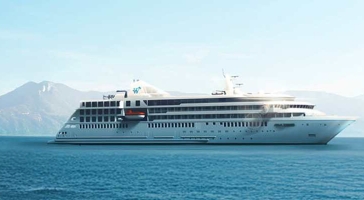
The images shown are for illustration purposes only and may not be an exact representation of what you find on the ship.
The images shown are for illustration purposes only and may not be an exact representation of what you find on the ship.
The images shown are for illustration purposes only and may not be an exact representation of what you find on the ship.
The images shown are for illustration purposes only and may not be an exact representation of what you find on the ship.
The images shown are for illustration purposes only and may not be an exact representation of what you find on the ship.


Our Fusion packages are all ABTA & ATOL protected ensuring that your booking is safe with us
| 7 nights aboard the Star Explorer | |||
| Port Taxes and Fees | |||
 | ABTA and ATOL Protection* | ||
Date 28th Feb 2027 |
Nts 7 |
Suite £8,170pp |
Date 28th Feb 2027 |
Nts 7 |
Suite £8,170pp |
| Suite staterooms from | £8,170pp | ||
| DS | Deluxe Suite | £8,170pp | |
| CS | Classic Suite | £9,466pp | |
| OW | Owner's Suite | £11,073pp | |
| Suite | |
| (All prices are £GBP per person) | |
| Mon 11th Jan 202711 Jan 27 | 7,729 |
Fusion Cruises when selling travel arrangements is a trading name of Co-op Travel Services Ltd. Fusion Cruises is an Accredited Body Member of Co-operative Travel Consortium. (ABTA:P6652, ATOL:12904).
Book with Confidence. We are a Member of ABTA which means you have the benefit of ABTA’s assistance and Code of Conduct.
Some of the flights and flight-inclusive holidays on this website are financially protected by the ATOL scheme but ATOL protection does not apply to all holiday and travel services offered on this website. This website will provide you with information on the protection that applies in the case of each holiday and travel service offered before you make your booking. If you do not receive an ATOL Certificate then the booking will not be ATOL protected. If you do receive an ATOL Certificate but all parts of your trip are not listed on it, those parts will not be ATOL protected. Please see our booking conditions for information, or for more information about financial protection and the ATOL Certificate go to: www.caa.co.uk