This site uses cookies as defined in our Cookie Policy, by continuing to use this site you agree to their use.
Continue

| Arrive | Depart | ||||||
| 15th15 | JulJul | 202626 | Stockholm, Sweden, embark on the Star Legend | 16:00 | |||
Stockholm is a city in the flush of its second youth. Since the mid-1990s, Sweden's capital has emerged from its cold, Nordic shadow to take the stage as a truly international city. What started with entry into the European Union in 1995 gained pace with the extraordinary IT boom of the late 1990s, strengthened with the Skype-led IT second wave of 2003, and solidified with the hedge-fund invasion that is still happening today as Stockholm gains even more global confidence. And despite more recent economic turmoil, Stockholm's 1 million or so inhabitants have, almost as one, realized that their city is one to rival Paris, London, New York, or any other great metropolis.With this realization comes change. Stockholm has become a city of design, fashion, innovation, technology, and world-class food, pairing homegrown talent with an international outlook. The streets are flowing with a young and confident population keen to drink in everything the city has to offer. The glittering feeling of optimism, success, and living in the here and now is rampant in Stockholm.Stockholm also has plenty of history. Positioned where the waters of Lake Mälaren rush into the Baltic, it’s been an important trading site and a wealthy international city for centuries. Built on 14 islands joined by bridges crossing open bays and narrow channels, Stockholm boasts the story of its history in its glorious medieval old town, grand palaces, ancient churches, sturdy edifices, public parks, and 19th-century museums—its history is soaked into the very fabric of its airy boulevards, built as a public display of trading glory. Experience your own private Stockholm as you explore the interlacing canals and 14 tiny islands that surround this magical city. Renowned for its progressive nature, Stockholm offers avant-garde design, and trendy fashions. Visit the UNESCO sites of Frottningholm and Skogskykogarden, and the Södermalm neighborhood to discover charming old homes and picturesque main streets lined with unique shops, art galleries, and entertaining nightclubs. | |||||||
| 16th16 | JulJul | 202626 | Tallinn, Estonia | 12:30 | 23:00 | ||
Estonia's history is sprinkled liberally with long stretches of foreign domination, beginning in 1219 with the Danes, followed without interruption by the Germans, Swedes, and Russians. Only after World War I, with Russia in revolutionary wreckage, was Estonia able to declare its independence. Shortly before World War II, in 1940, that independence was usurped by the Soviets, who—save for a brief three-year occupation by Hitler's Nazis—proceeded to suppress all forms of national Estonian pride for the next 50 years. Estonia finally regained independence in 1991. In the early 1990s, Estonia's own Riigikogu (Parliament), not some other nation's puppet ruler, handed down from the Upper City reforms that forced Estonia to blaze its post-Soviet trail to the European Union. Estonia has been a member of the EU since 2004, and in 2011, the country and its growing economy joined the Eurozone. Tallinn was also named the European City of Culture in 2011, cementing its growing reputation as a cultural hot spot. The spires of 14th century churches soar above fashion-forward cafés, restaurants, and shops within the stone walls of Tallinn. Medieval Old Town is the well-preserved - and thriving - center of town, where you'll find impressive guild houses, St. Olav's Church, and other architectural treasures. Beyond Old Town lies Peter the Great's Baroque masterpiece, Kadriorg Palace - and sunny Pirita beach. | |||||||
| 17th17 | JulJul | 202626 | Helsinki, Finland | 08:00 | 23:59 | ||
A city of the sea, Helsinki was built along a series of oddly shaped peninsulas and islands jutting into the Baltic coast along the Gulf of Finland. Streets and avenues curve around bays, bridges reach to nearby islands, and ferries ply among offshore islands.Having grown dramatically since World War II, Helsinki now absorbs more than one-tenth of the Finnish population. The metro area covers 764 square km (474 square miles) and 315 islands. Most sights, hotels, and restaurants cluster on one peninsula, forming a compact central hub. The greater Helsinki metropolitan area, which includes Espoo and Vantaa, has a total population of more than a million people.Helsinki is a relatively young city compared with other European capitals. In the 16th century, King Gustav Vasa of Sweden decided to woo trade from the Estonian city of Tallinn and thus challenge the Hanseatic League's monopoly on Baltic trade. Accordingly, he commanded the people of four Finnish towns to pack up their belongings and relocate to the rapids on the River Vantaa. The new town, founded on June 12, 1550, was named Helsinki.For three centuries, Helsinki (Helsingfors in Swedish) had its ups and downs as a trading town. Turku, to the west, remained Finland's capital and intellectual center. However, Helsinki's fortunes improved when Finland fell under Russian rule as an autonomous grand duchy. Czar Alexander I wanted Finland's political center closer to Russia and, in 1812, selected Helsinki as the new capital. Shortly afterward, Turku suffered a disastrous fire, forcing the university to move to Helsinki. The town's future was secure.Just before the czar's proclamation, a fire destroyed many of Helsinki's traditional wooden structures, precipitating the construction of new buildings suitable for a nation's capital. The German-born architect Carl Ludvig Engel was commissioned to rebuild the city, and as a result, Helsinki has some of the purest neoclassical architecture in the world. Add to this foundation the influence of Stockholm and St. Petersburg with the local inspiration of 20th-century Finnish design, and the result is a European capital city that is as architecturally eye-catching as it is distinct from other Scandinavian capitals. You are bound to discover endless engaging details—a grimacing gargoyle; a foursome of males supporting a balcony's weight on their shoulders; a building painted in striking colors with contrasting flowers in the windows. The city's 400 or so parks make it particularly inviting in summer.Today, Helsinki is still a meeting point of eastern and western Europe, which is reflected in its cosmopolitan image, the influx of Russians and Estonians, and generally multilingual population. Outdoor summer bars ("terrassit" as the locals call them) and cafés in the city center are perfect for people watching on a summer afternoon. Art Nouveau buildings, museums, timeless restaurants, and charming cafés are sprinkled throughout the harbor dominating this maritime city. Discover reminders of the early czars' influence at the Russian Orthodox Cathedral and the fortress on Suomenlinna Island, a UNESCO World Heritage Site. Shop along Market Square and in Aleksanterinkatu. And don't miss a chance to enjoy a cocktail at the breathtaking Hotel Kämp. | |||||||
| 18th18 | JulJul | 202626 | Helsinki, Finland | 12:30 | |||
A city of the sea, Helsinki was built along a series of oddly shaped peninsulas and islands jutting into the Baltic coast along the Gulf of Finland. Streets and avenues curve around bays, bridges reach to nearby islands, and ferries ply among offshore islands.Having grown dramatically since World War II, Helsinki now absorbs more than one-tenth of the Finnish population. The metro area covers 764 square km (474 square miles) and 315 islands. Most sights, hotels, and restaurants cluster on one peninsula, forming a compact central hub. The greater Helsinki metropolitan area, which includes Espoo and Vantaa, has a total population of more than a million people.Helsinki is a relatively young city compared with other European capitals. In the 16th century, King Gustav Vasa of Sweden decided to woo trade from the Estonian city of Tallinn and thus challenge the Hanseatic League's monopoly on Baltic trade. Accordingly, he commanded the people of four Finnish towns to pack up their belongings and relocate to the rapids on the River Vantaa. The new town, founded on June 12, 1550, was named Helsinki.For three centuries, Helsinki (Helsingfors in Swedish) had its ups and downs as a trading town. Turku, to the west, remained Finland's capital and intellectual center. However, Helsinki's fortunes improved when Finland fell under Russian rule as an autonomous grand duchy. Czar Alexander I wanted Finland's political center closer to Russia and, in 1812, selected Helsinki as the new capital. Shortly afterward, Turku suffered a disastrous fire, forcing the university to move to Helsinki. The town's future was secure.Just before the czar's proclamation, a fire destroyed many of Helsinki's traditional wooden structures, precipitating the construction of new buildings suitable for a nation's capital. The German-born architect Carl Ludvig Engel was commissioned to rebuild the city, and as a result, Helsinki has some of the purest neoclassical architecture in the world. Add to this foundation the influence of Stockholm and St. Petersburg with the local inspiration of 20th-century Finnish design, and the result is a European capital city that is as architecturally eye-catching as it is distinct from other Scandinavian capitals. You are bound to discover endless engaging details—a grimacing gargoyle; a foursome of males supporting a balcony's weight on their shoulders; a building painted in striking colors with contrasting flowers in the windows. The city's 400 or so parks make it particularly inviting in summer.Today, Helsinki is still a meeting point of eastern and western Europe, which is reflected in its cosmopolitan image, the influx of Russians and Estonians, and generally multilingual population. Outdoor summer bars ("terrassit" as the locals call them) and cafés in the city center are perfect for people watching on a summer afternoon. Art Nouveau buildings, museums, timeless restaurants, and charming cafés are sprinkled throughout the harbor dominating this maritime city. Discover reminders of the early czars' influence at the Russian Orthodox Cathedral and the fortress on Suomenlinna Island, a UNESCO World Heritage Site. Shop along Market Square and in Aleksanterinkatu. And don't miss a chance to enjoy a cocktail at the breathtaking Hotel Kämp. | |||||||
| 19th19 | JulJul | 202626 | Ventspils, Latvia | 08:00 | 15:00 | ||
| VENTSPILS, Latvia | |||||||
| 20th20 | JulJul | 202626 | Gdansk, Poland | 08:00 | 18:00 | ||
| Gdansk's Old Town was lovingly reconstructed after World War II. Take your time admiring massive red-brick churches and searching for the perfect memento in amber shops. This is also the home of the Solidarity movement, the beautiful Lake District, and Malbork Castle, Europe's largest gothic fortress. | |||||||
| 21st21 | JulJul | 202626 | Bornholm Island, Denmark | 08:30 | 17:00 | ||
| This beautiful island is Denmark in miniature, complete with fertile fields, forests, craggy cliffs, and bleach-blond beaches. Admire the massive medieval fortifications of Hammershus, bricks still red after all these years, and sample some smoked herring, smoked locally for generations. | |||||||
| 22nd22 | JulJul | 202626 | Copenhagen, Denmark | 07:00 | 17:00 | ||
By the 11th century, Copenhagen was already an important trading and fishing centre and today you will find an attractive city which, although the largest in Scandinavia, has managed to retain its low-level skyline. Discover some of the famous attractions including Gefion Fountain and Amalienborg Palace, perhaps cruise the city’s waterways, visit Rosenborg Castle or explore the medieval fishing village of Dragoer. Once the home of Hans Christian Andersen, Copenhagen features many reminders of its fairytale heritage and lives up to the reputation immortalised in the famous song ‘Wonderful Copenhagen’. This historic city of palaces, canals, and copper spires casts a sense of enchantment upon all who walk its cobbled streets. Little wonder that Copenhagen's favorite son, Hans Christian Andersen, was inspired to write some of the world's most beloved fairy tales here. Stroll the 17th century Nyhavn waterfront where Andersen once lived, complete with colorful row houses and historic tall ships. Enjoy world-class shopping on Strøget, the world's longest pedestrian street. Or find your amusement at world-famous Tivoli Gardens where tree-lined pathways lead to theaters, open air stages, restaurants, cafes, and over 80 attractions. | |||||||
| 23rd23 | JulJul | 202626 | At Sea | ||||
| 24th24 | JulJul | 202626 | Haugesund, Norway | 08:00 | 17:00 | ||
| Haugesund offers the best of Norway with a fjord, waterfall, impressive coastline, city culture, unique Viking history and idyllic islands, all in one place. Situated between Stavanger and Bergen, between the sea and the mountains, this port lies in a scenic area of lush landscape, towering mountains and the energetic sea and is the starting point for exploring the Folgefonna glacier. | |||||||
| 25th25 | JulJul | 202626 | Ålesund, Norway | 13:00 | 22:00 | ||
The coastal town of Ålesund is the commercial capital of the Møre og Romsdal district. But more important, it is noted for its characteristic Jugendstil (Art Nouveau) buildings, which some claim make Ålesund one of the most beautiful towns in Norway. This Art Nouveau style emerged when the town was completely rebuilt after a devastating fire in 1904 destroyed nearly 800 buildings and left 10,000 residents homeless. It is said that the fire started by a tipped oil lamp. Rebuilding was carried out with the help of many young, foreign architects who added their own flourishes to the architectural blend of German Jugendstil and Viking roots. Today, narrow streets are crammed with buildings topped with turrets, spires and gables that bear decorations of dragonheads and curlicues. As one of the few remaining Art Nouveau towns in the world, in 1998 Ålesund was awarded the coveted Houens National Memorial Prize for the preservation of its unique architecture. At the entrance to spectacular Geirangerfjord, Alesund has been voted the most beautiful town in Norway, and not only because of its location. The town burned to the ground in 1904 and was rebuilt in Art Nouveau style, with a few added elements from Nordic mythology - a longboat here, an image of Thor there. | |||||||
| 26th26 | JulJul | 202626 | At Sea | ||||
| 27th27 | JulJul | 202626 | Trondheim, Norway | 09:00 | 22:00 | ||
One of Scandinavia's oldest cities, Trondheim was the first capital of Norway, from AD 997 to 1380. Founded in 997 by Viking king Olav Tryggvason, it was first named Nidaros (still the name of the cathedral), a composite word referring to the city's location at the mouth of the Nidelva River. Today, it's Central Norway's largest (and Norway's third largest) city, with a population of 150,000. The wide streets of the historic city center remain lined with brightly painted wood houses and striking warehouses. But it's no historic relic: it's also the home to NTNU (Norwegian University of Science and Technology) and is Norway's technological capital. TRONDHEIM, Norway | |||||||
| 28th28 | JulJul | 202626 | Frøya, Norway | 07:00 | 13:00 | ||
| Frøya, Norway, is a picturesque island located in the Trøndelag region, known for its stunning coastal landscapes and vibrant fishing communities. The island offers a serene escape with its rugged cliffs, sandy beaches, and crystal-clear waters, making it a haven for nature lovers and outdoor enthusiasts. Visitors can explore charming villages, enjoy fresh seafood, and experience traditional Norwegian culture. Frøya is also a gateway to the beautiful Frøya archipelago, perfect for boating, fishing, and wildlife watching. | |||||||
| 29th29 | JulJul | 202626 | Olden, Norway | 10:00 | 16:00 | ||
See the aqua blue ice of the Jostedal Glacier cascading down the stunning Oldedalen Valley, as you navigate the spindly fjords of Norway. Feel your breath catching in your throat, as you sail into this world of wonder, and the dramatic fjord scenery and interlocking valleys inspire you. The village of Olden opens up some of Norway's most majestic natural wonders, from the glacier - which is mainland Europe's largest - to the sloshing waterfalls that run off it, and the bowing forests that sway all around it. A visit to picturesque Olden is all thrilling panoramas and hikes through wildflower sprinkled trails. The Briksdalsbreen arm of ice, reaches out from the main glacier, and sits around an hour's stroll from the village of Olden itself - regular busses can also take you there. Snaking through steep-sided valleys, you can enjoy a walk close to the foot of the ice, and feel the spray of the waterfalls that plummet nearby, as you breathe in some of the freshest air you’ve ever tasted. The crisp glacial meltwater is so clean and pure that it’s bottled up to be sold across Norway. The pleasant small village of Olden is located at the inner end of the 66-mile long Nordfjord, the sixth longest fjord in Norway. Long known for tourism and industry, it is now also famous for contemporary design. With fewer than 500 inhabitants Olden is an ideal destination for people who enjoy spending time in the great outdoors, and is the gateway to Jostedal, the largest glacier on the European mainland. If you can, find a bottle of Olden Mineral Water, as close as you will get to a glacier on tap. | |||||||
| 30th30 | JulJul | 202626 | Bergen, Norway | 09:00 | 22:00 | ||
Surrounded by mountains and sparkling fjords, the waterside city of Bergen has a spectacular setting. There has been a settlement here since medieval times and the colourful waterfront buildings of the Hanseatic wharf, known as Bryggen, are testament to its fascinating history of trade. As Norway’s best known medieval settlement, the Bryggen is listed by UNESCO as a World Heritage Site. Our comprehensive selection of excursions allows you to discover the many sides of Bergen, such as the fish market and narrow cobbled streets, as well as stunning views of the city from the summit of Mt Fløyen. Alternatively, those who have visited the city previously may like to experience one of the tours that travel further afield. Just 300 yards from the main piers, you will find the Fortress Museum (Fesningsmuseum), which has an interesting collection of objects related to World War II. Colorful Bryggen, Bergen's Hanseatic quay and a UNESCO World Heritage Site, is so delightful you may find it difficult to explore further. But do. Watch the Huldras (forest nymphs) dance at Kjosfossen Waterfall, wander the narrow smau between the old buildings climbing the hillside. | |||||||
| 31st31 | JulJul | 202626 | At Sea | ||||
| 1st01 | AugAug | 202626 | Leith, Scotland | 05:00 | 16:00 | ||
| From the Firth of Forth, a UNESCO site, to the Royal Mile, Edinburgh is steeped in history. Edinburgh Castle. The Royal Botanic Gardens. The UNESCO site of Old Town. The wonders of Edinburgh are never ending. From one of Europe's best-preserved castles to the world's longest herbaceous border, a riot of color and culture pervades. In this city as old as Scotland itself, you'll find the perfect blend of historic tradition and natural beauty | |||||||
| 2nd02 | AugAug | 202626 | At Sea | ||||
| 3rd03 | AugAug | 202626 | Invergordon, Scotland | 08:00 | 21:00 | ||
The port of Invergordon is your gateway to the Great Glen, an area of Scotland that includes Loch Ness and the city of Inverness. Inverness, the capital of the Highlands, has the flavor of a Lowland town, its winds blowing in a sea-salt air from the Moray Firth. The Great Glen is also home to one of the world's most famous monster myths: in 1933, during a quiet news week, the editor of a local paper decided to run a story about a strange sighting of something splashing about in Loch Ness. But there's more to look for here besides Nessie, including inland lochs, craggy and steep-sided mountains, rugged promontories, deep inlets, brilliant purple and emerald moorland, and forests filled with astonishingly varied wildlife, including mountain hares, red deer, golden eagles, and ospreys. Here is your entry to Scotland's spectacular Highlands. In Inverness, listen for the song of the Highlands in the sparkling gurgle of the River Ness as it winds through the town's center. Look for a glimpse of the elusive Nessie in Loch Ness. And wait for whispers of Shakespeare's Macbeth in the fairytale setting of Cawdor Castle. | |||||||
| 4th04 | AugAug | 202626 | Kirkwall, Orkney Islands, Scotland | 09:00 | 17:00 | ||
In bustling Kirkwall, the main town on Orkney, there's plenty to see in the narrow, winding streets extending from the harbor. The cathedral and some museums are highlights. Everything about Orkney is olde, from the 5,000-year-old village of Skara Brae (the "Scottish Pompeii") to the peat-distilled whisky at Highland Park to the UNESCO site of the Ring of Brodgar, dating back to 2700 B.C. Even the local brogue hints at times past, accented by the area's Viking legacy. | |||||||
| 5th05 | AugAug | 202626 | Portree, Isle of Skye, Scotland | 09:00 | 16:00 | ||
The Isle of Skye ranks near the top of most visitors' priority lists: the romance of Prince Charles Edward Stuart, known as Bonnie Prince Charlie, combined with the misty Cuillin Hills and their proximity to the mainland all contribute to its popularity. Today Skye remains mysterious and mountainous, an island of sunsets that linger brilliantly until late at night and of beautiful, soft mists. Much photographed are the really old crofts, one or two of which are still inhabited, with their thick stone walls and thatch roofs. Orientation on Skye is easy: follow the only roads around the loops on the northern part of the island and enjoy the road running the length of the Sleat Peninsula in southern Skye, taking the loop roads that exit to the north and south as you please. There are some stretches of single-lane road, but none poses a problem. Watch for sea eagles as we approach Skye's picturesque capital. The rare bird with an 8-foot wingspan was re-introduced here in 1975 and several pairs nest at Portree Bay. The pastel buildings along the waterfront and Cuillin Ridges beyond promise a day of Hebrides-style adventure. Visit stately Dunvegan Castle, or shop for naturally dyed yarns in Skye colors. | |||||||
| 6th06 | AugAug | 202626 | Oban, Scotland | 08:00 | 17:00 | ||
Oban, "little bay" in Gaelic, today has a resident population of 8,500 and is the unofficial capital of the West Highlands - the "Gateway to the Isles." The panoramic views of the mountains, lochs and islands which have captivated artists, authors, composers, and poets for centuries are as striking now as they were when Dunollie Castle, a ruined keep which has stood sentinel over the narrow entrance to the sheltered bay for around six hundred years, was the northern outpost of the Dalriadic Scots. It is no surprise to find Oban in the 21st-century remains a magnet for travellers from all over the world. The town's present day popularity owes much to the Victorians, and as early as 1812, when the Comet steamship linked Oban with Glasgow, the town played host to intrepid travellers touring Staffa - the inspiration for Mendelssohn's Hebridean Overture - and Iona - home of Scottish Christianity since St Columba stepped ashore in AD563. Indeed once Oban had the royal seal of approval from Queen Victoria, who called it "one of the finest spots we have seen," the town's destiny as an endearingly enchanting holiday destination was as firmly set as the lava columns of Fingal's Cave in Oban is justifiably known as the “gateway to the Isles.” The town's south pier is the embarkation point for car ferries to Mull, Coll, Tiree, Barra, South Uist, Colonsay, Lismore and Islay. From these islands you can travel further a field to Iona, Staffa and to many of the smaller less well known isles. Oban has developed into Scotland's most popular West-Coast holiday town. Just outside the town stands Dunollie Castle, on a site that overlooks the bay and has been fortified since the Bronze Age. The charm of its Victorian harbor offers an excellent seafood scene, and is also a major gateway to the Hebrides. | |||||||
| 7th07 | AugAug | 202626 | Portrush, Northern Ireland | 08:00 | 17:00 | ||
Portrush is adjacent to the stunning North Antrim coastline. Here lies the medieval Dunluce Castle ruins. Perched picturesquely at the edge of a rocky outcropping high above the sea, the castle is dramatically surrounded by terrifyingly steep drops, which the early Christians and Vikings would have considered a very important security feature. The castle and surrounding areas have been frequently used for the filming of “Game of Thrones”. Another attraction reached from Portrush is the Giant’s Causeway -40,000 hexagonal basalt columns that descend in a kind of pathway to the sea. Formed over 50 million years ago, visitors have marvelled at its majesty and mystery for centuries, and UNESCO has recognised this site with World Heritage status. Enjoy this beautiful Northern Ireland resort town, graced by sandy beaches and wonderful tide pools. You may also want to visit Belfast from here, with its superb gardens and architecture. Or arrange a side trip to the famous Giant's Causeway, a UNESCO site. A visit to Mussenden Temple at Downhill Demesne will heighten your appreciation for the builder's art. | |||||||
| 8th08 | AugAug | 202626 | Douglas, Isle of Man | 09:00 | 17:00 | ||
The Isle of Man, situated in the Irish Sea off the west coast of England, is a mountainous, cliff-fringed island and one of Britain’s most beautiful spots. Measuring just 30 miles by 13 miles, the Isle of Man remains semi-autonomous. With its own postage stamps, laws, currency, and the Court of Tynwald (the world’s oldest democratic parliament), the Isle of Man is rich with history and lore.Inhabited from Neolithic times, the island became a refuge for Irish missionaries after the 5th Century. Norsemen took the island during the 9th Century and sold it to Scotland in 1266. However, since the 14th Century, it has been held by England. Manx, the indigenous Celtic language, is still spoken by a small minority. The Isle of Man has no income tax, which has encouraged many Britains to regard the island as a refuge. Otherwise, it is populated by Gaelic farmers, fishermen, and the famous tailless manx cats. The varied landscape features austere moorlands and wooded glens, interspersed by fine castles, narrow-gauge railways, and scores of standing stones with Celtic crosses. The hilly terrain rises to a height of 2,036 feet at Mount Snaefell, which dominates the center of the island. From the Manx Grand Prix to the 14th century castle at Peel. From Rushen Abbey to the island's own breed of cats and sheep. The Isle of Man stands on its own. Here you can enjoy one of our most exciting optional excursions - experience the motorcycle course that draws fans from all over the world on our own specially designed 3-seater Trike. And enjoy beautiful scenery of this UNESCO Biosphere Reserve while you ride. | |||||||
| 9th09 | AugAug | 202626 | Dun Laoghaire, Ireland | 07:00 | 18:00 | ||
| Dublin is a city of delights and surprises. Stroll across the Ha'Penny Bridge to Trinity College for a glimpse of the Book of Kells. Step inside the 11th century Dublin Castle. Stop by the Guinness Storehouse or Old Jameson Distillery for a taste of Irish history. And embrace the beauty of Dublin Bay, a UNESCO Biosphere Reserve. | |||||||
| 10th10 | AugAug | 202626 | Belfast, Northern Ireland | 08:00 | 21:30 | ||
Before English and Scottish settlers arrived in the 1600s, Belfast was a tiny village called Béal Feirste ("sandbank ford") belonging to Ulster's ancient O'Neill clan. With the advent of the Plantation period (when settlers arrived in the 1600s), Sir Arthur Chichester, from Devon in southwestern England, received the city from the English Crown, and his son was made Earl of Donegall. Huguenots fleeing persecution from France settled near here, bringing their valuable linen-work skills. In the 18th century, Belfast underwent a phenomenal expansion—its population doubled every 10 years, despite an ever-present sectarian divide. Although the Anglican gentry despised the Presbyterian artisans—who, in turn, distrusted the native Catholics—Belfast's growth continued at a dizzying speed. The city was a great Victorian success story, an industrial boomtown whose prosperity was built on trade, especially linen and shipbuilding. Famously (or infamously), the Titanic was built here, giving Belfast, for a time, the nickname "Titanic Town." Having laid the foundation stone of the city's university in 1845, Queen Victoria returned to Belfast in 1849 (she is recalled in the names of buildings, streets, bars, monuments, and other places around the city), and in the same year, the university opened under the name Queen's College. Nearly 40 years later, in 1888, Victoria granted Belfast its city charter. Today its population is nearly 300,000, tourist numbers have increased, and this dramatically transformed city is enjoying an unparalleled renaissance.This is all a welcome change from the period when news about Belfast meant reports about "the Troubles." Since the 1994 ceasefire, Northern Ireland's capital city has benefited from major hotel investment, gentrified quaysides (or strands), a sophisticated new performing arts center, and major initiatives to boost tourism. Although the 1996 bombing of offices at Canary Wharf in London disrupted the 1994 peace agreement, the ceasefire was officially reestablished on July 20, 1997, and this embattled city began its quest for a newfound identity.Since 2008, the city has restored all its major public buildings such as museums, churches, theaters, City Hall, Ulster Hall—and even the glorious Crown Bar—spending millions of pounds on its built heritage. A gaol that at the height of the Troubles held some of the most notorious murderers involved in paramilitary violence is now a major visitor attraction.Belfast's city center is made up of three roughly contiguous areas that are easy to navigate on foot. From the south end to the north, it's about an hour's leisurely walk. Probably best known as the birthplace of the Titanic, Belfast was a hub for not only shipbuilding but also tobacco processing, rope-making and Irish linen in the early 20th century. Today the old shipyards are giving way to luxury apartments in what is known as the Titanic Quarter, home to the Titanic Belfast Centre, a beautiful star-shaped building covering the Titanic's construction. Other must-sees include the Ulster Folk Museum and the Belfast Cathedral, as well as numerous award-winning restaurants and bars. | |||||||
| 11th11 | AugAug | 202626 | Londonderry, Northern Ireland | 07:30 | 17:00 | ||
Nestled behind lofty city walls, Londonderry is a destination of culture, which boasts an increasingly envied reputation. This Northern Irish city is still riding on the momentum of a fantastic 2013, when it was named as UK City of Culture, and singled out as one of Lonely Planet's top 5 destinations to visit. The wonderfully preserved city walls are perhaps Londonderry's most treasured charm, and they encircle 1,450 years of history, and are over 400 years old. The walls came to the fore of the city's history during the Siege of Derry, back in 1688 - when King James's forces attacked, causing mass starvation and suffering over 105 days of stalemate. It takes approximately an hour to wander the entire circuit of the walls, and see their seven gates, and you’ll absorb a feast of information along the way. View the mighty cannons that boomed during the siege, or stop into one of the plentiful cafes, should you need a little refreshment before continuing your journey. St. Columb’s Cathedral, which dates back to 1633, towers over the walled city, and is one of the city's most significant historic sites. Its dreamy spire contains a set of bells that have peeled out melodies here since 1638, making them Ireland's oldest. Located on the River Foyle, Londonderry is known for its intact 17th century Derry's Walls with 7 gates that surrounds St. Columb's Cathedral with artifacts dating from 1688. The landmark Peace Bridge spans the river and the Tower Museum has local history exhibits. | |||||||
| 12th12 | AugAug | 202626 | Killybegs, Ireland | 08:00 | 15:00 | ||
Killybegs The days start early in Killybegs, as this quiet fishing town rumbles to life, and ships with red and blue paint peeling from their hulls quietly depart, ready for a morning's hard work at sea. Located in a scenic part of County Donegal, Killybegs is Ireland's fishing capital, and the salty breeze and pretty streets serve as a revitalising medicine for visitors. The town is also your gateway to some of the country's most majestic coastal scenery, which is dotted with flashing white lighthouses, keeping watch over invigorating seascapes. Killybegs enjoys a privileged position on the coast of north west of Ireland, close to the spectacular Slieve League - a titanic mountain, which explodes upwards from frothing ocean. Walk as close as you dare to the coastline’s sheer drops, or admire the folding cliffs from the best vantage point, down on the water. Friendly Killybegs is the largest fishing port in County Donegal located at the head of a scenic harbor with mountains as a backdrop. It is famous for its tapestries and carpets and sites to see here include Killybegs International Carpet Making, Cyndi Graham Handweaving, Glencolmcille Folk Village and expansive white-sand Fintragh Blue Flag Beach.Visit the nearby Slieve League Cliffs, which rise almost 2,000 feet from the Atlantic and are the highest cliffs in Europe. | |||||||
| 13th13 | AugAug | 202626 | Galway, Ireland | 07:00 | 17:00 | ||
Galway is a city in the West of Ireland in the province of Connacht. It lies on the River Corrib between Lough Corrib and Galway Bay and is surrounded by County Galway. It is the fourth most populous urban area in the Republic of Ireland and the sixth most populous city in the island of Ireland. It is both a picturesque and lively city with a wonderful avant-garde culture and a fascinating mixture of locally owned speciality shops, often featuring locally made crafts. Indeed local handcrafts are a feature of the entire region including hand knits, pottery, glass, jewellery and woodwork. The city’s hub is 18th-century Eyre Square, a popular meeting spot surrounded by shops, and traditional pubs that often offer live Irish folk music. Nearby, stone-clad cafes, boutiques and art galleries line the winding lanes of the Latin Quarter, which retains portions of the medieval city walls. The city bears the nickname "The City of the Tribes" because "fourteen tribes" of merchant families led the city in its Hiberno-Norman period. The merchants would have seen themselves as Irish gentry and loyal to the King. They later adopted the term as a badge of honour and pride in defiance of the town's Cromwellian occupier. Galway's popularity is its food scene that boasts the very best local ingredients and innovative techniques even with traditional favorites like fish and chips. It has one of the liveliest pub scenes including Galway craft beer. Check out the weekend market set in the shadow of St. Nicholas' Medieval Church.Galway is also gateway to the stunning Cliffs of Moher, rising over 700 feet from the sea with views of the Aran Islands. These are one of Ireland's most famous tourist attractions. | |||||||
| 14th14 | AugAug | 202626 | Dingle, Ireland | 08:00 | 18:00 | ||
| Located on Ireland's stunning west coast, Dingle enchants with its breathtaking landscapes, rolling hills, and quiet sea shores. The town's colorful buildings frame bustling streets brimming with traditional pubs and artisanal shops. Surrounded by the wild beauty of the Dingle Peninsula, visitors can explore ancient ruins, golden beaches, and dramatic cliffs. | |||||||
| 15th15 | AugAug | 202626 | Ringaskiddy, Ireland | 08:00 | 22:00 | ||
| Located on an island in the middle of the River Lee, Cork is a compact, friendly, laidback city with unique museums, like the Butter Museum, eclectic pubs and aroma-filled coffee houses all easily accessible by walking. The recognizable icon of Cork, St. Anne's Church and Shandon Steeple offers visitors the unique opportunity to ring the church bells. | |||||||
| 16th16 | AugAug | 202626 | Waterford, Ireland | 08:00 | 17:00 | ||
The largest town in the Southeast and Ireland's oldest city, Waterford was founded by the Vikings in the 9th century and was taken over by Strongbow, the Norman invader, with much bloodshed in 1170. The city resisted Cromwell's 1649 attacks, but fell the following year. It did not prosper again until 1783, when George and William Penrose set out to create "plain and cut flint glass, useful and ornamental," and thereby set in motion a glass-manufacturing industry long without equal. The famed glassworks closed after the 2008 financial crisis, but Waterford Crystal has triumphantly risen again from the flames in a smaller, leaner version, opened in 2010 and now relocated to the Mall. Explore Ireland's oldest city from the Viking Triangle, surrounded by 10th century fortifications, to the sparkling House of Waterford Crystal, home to the largest collection of the landmark cut crystal in the world. Take time to raise a glass at T&H Doolans' Pub, where visitors have been heartily welcomed for more than 300 years. | |||||||
| 17th17 | AugAug | 202626 | At Sea | ||||
| 18th18 | AugAug | 202626 | Rouen, France | 21:00 | 23:59 | ||
| This port city on the Seine River and gateway to Paris is full of beautiful architecture and is an art-lover's delight. Museums are plentiful here including the Historial Jeanne d'Arc and the Musee des Beaux-Arts with the second-largest collection of Impressionist works in France. Stroll the many local markets full of fresh produce and flowers and dine at one of the incredible restaurants featuring fresh ingredients from this region. | |||||||
| 19th19 | AugAug | 202626 | Rouen, France | 23:59 | |||
| This port city on the Seine River and gateway to Paris is full of beautiful architecture and is an art-lover's delight. Museums are plentiful here including the Historial Jeanne d'Arc and the Musee des Beaux-Arts with the second-largest collection of Impressionist works in France. Stroll the many local markets full of fresh produce and flowers and dine at one of the incredible restaurants featuring fresh ingredients from this region. | |||||||
| 20th20 | AugAug | 202626 | Rouen, France | 20:45 | |||
| This port city on the Seine River and gateway to Paris is full of beautiful architecture and is an art-lover's delight. Museums are plentiful here including the Historial Jeanne d'Arc and the Musee des Beaux-Arts with the second-largest collection of Impressionist works in France. Stroll the many local markets full of fresh produce and flowers and dine at one of the incredible restaurants featuring fresh ingredients from this region. | |||||||
| 21st21 | AugAug | 202626 | Honfleur, France | 03:30 | 18:00 | ||
Honfleur, the most picturesque of the Côte Fleurie's seaside towns, is a time-burnished place with a surplus of half-timber houses and cobbled streets that are lined with a stunning selection of stylish boutiques. Much of its Renaissance architecture remains intact—especially around the 17th-century Vieux Bassin harbor, where the water is fronted on one side by two-story stone houses with low, sloping roofs and on the other by tall slate-topped houses with wooden facades. Maritime expeditions (including some of the first voyages to Canada) departed from here; later, Impressionists were inspired to capture it on canvas. But the town as a whole has become increasingly crowded since the Pont de Normandie opened in 1995. Providing a direct link with Upper Normandy, the world's sixth-largest cable-stayed bridge is supported by two concrete pylons taller than the Eiffel Tower and designed to resist winds of 257 kph (160 mph). Sitting on the estuary where the Seine River meets the English Channel, the charming character of this harbor town has been the subject of artists like Claude Monet and Eugene Boudin. The 15th century St. Catherine's church is an interesting vaulted timber structure built by shipbuilders. And a walk along the edge of the Honfleur Estuary will pass town gardens, beaches, and a view of the Normandy Bridge. You can also find the intriguing local cider along the Route du Cidre. | |||||||
| 22nd22 | AugAug | 202626 | Saint-Malo, France | 10:00 | 23:00 | ||
Thrust out into the sea and bound to the mainland only by tenuous man-made causeways, romantic St-Malo has built a reputation as a breeding ground for phenomenal sailors. Many were fishermen, but others—most notably Jacques Cartier, who claimed Canada for Francis I in 1534—were New World explorers. Still others were corsairs, "sea dogs" paid by the French crown to harass the Limeys across the Channel: legendary ones like Robert Surcouf and Duguay-Trouin helped make St-Malo rich through their pillaging, in the process earning it the nickname "the pirates' city." The St-Malo you see today isn’t quite the one they called home because a weeklong fire in 1944, kindled by retreating Nazis, wiped out nearly all of the old buildings. Restoration work was more painstaking than brilliant, but the narrow streets and granite houses of the Vieille Ville were satisfactorily recreated, enabling St-Malo to regain its role as a busy fishing port, seaside resort, and tourist destination. The ramparts that help define this city figuratively and literally are authentic, and the flames also spared houses along Rue de Pelicot in the Vieille Ville. Battalions of tourists invade this quaint part of town in summer, so arrive off-season if you want to avoid crowds. Once notorious as the home of pirates, St.-Malo today is better known for the UNESCO site monastery and town of Mont St. Michel and the famous oysters of nearby Cancale. Walk the city's ramparts, or pass the time at a seaside boulangerie sampling a fresh and buttery croissant. | |||||||
| 23rd23 | AugAug | 202626 | Guernsey, Guernsey | 07:00 | 13:00 | ||
| TBA | |||||||
| 24th24 | AugAug | 202626 | Lorient, France | 13:00 | 22:00 | ||
| A unique feature in this seaport steeped in maritime history is that only one cruise ship a day can come here so a visit to this town is exclusive. Visit the Church of Our Lady of Victory, a UNESCO site with a bell tower made of concrete. Also find the Tour de la Decouverte and climb the 216 steps to a panoramic view of the port and sea. | |||||||
| 25th25 | AugAug | 202626 | Bordeaux, France | 19:15 | 23:59 | ||
Bordeaux as a whole, rather than any particular points within it, is what you'll want to visit in order to understand why Victor Hugo described it as Versailles plus Antwerp, and why the painter Francisco de Goya, when exiled from his native Spain, chose it as his last home (he died here in 1828). The capital of southwest France and the region's largest city, Bordeaux remains synonymous with the wine trade: wine shippers have long maintained their headquarters along the banks of the Garonne, while buyers from around the world arrive for the huge biennial Vinexpo show (held in odd-number years).Bordeaux is, admittedly, a less exuberant city than many others in France, but lively and stylish elements are making a dent in its conservative veneer. The cleaned-up riverfront is said by some, after a bottle or two, to exude an elegance reminiscent of St. Petersburg, and that aura of 18th-century élan also permeates the historic downtown sector—“le vieux Bordeaux"—where fine shops invite exploration. To the south of the city center are old docklands undergoing renewal—one train station has now been transformed into a big multiplex movie theater—but the area is still a bit shady. To get a feel for the historic port of Bordeaux, take the 90-minute boat trip that leaves Quai Louis-XVIII every weekday afternoon, or the regular passenger ferry that plies the Garonne between Quai Richelieu and the Pont d'Aquitaine in summer. A nice time to stroll around the city center is the first Sunday of the month, when it's pedestrian-only and vehicles are banned. Bordeaux has long been known as La Belle au Bois Dormant, Sleeping Beauty. And while the beauty part is undeniable, the sleeping part could be argued. Sure, the region is filled with treasures from long ago, including more than 350 historic monuments and buildings in the city alone. But the capital of Aquitaine is also home to a vibrant culture and, as oenophiles well know, is the gateway to some of France's most famous vineyards. In this UNESCO World Heritage city, 13th century cathedrals and 18th century palaces are commonplace. Venture beyond the city's borders to the chateaux of the Médoc region or to Saint-Émilion, a breathtaking medieval village set among the vineyards that is also a UNESCO World Heritage Site. | |||||||
| 26th26 | AugAug | 202626 | Bordeaux, France | 23:59 | |||
Bordeaux as a whole, rather than any particular points within it, is what you'll want to visit in order to understand why Victor Hugo described it as Versailles plus Antwerp, and why the painter Francisco de Goya, when exiled from his native Spain, chose it as his last home (he died here in 1828). The capital of southwest France and the region's largest city, Bordeaux remains synonymous with the wine trade: wine shippers have long maintained their headquarters along the banks of the Garonne, while buyers from around the world arrive for the huge biennial Vinexpo show (held in odd-number years).Bordeaux is, admittedly, a less exuberant city than many others in France, but lively and stylish elements are making a dent in its conservative veneer. The cleaned-up riverfront is said by some, after a bottle or two, to exude an elegance reminiscent of St. Petersburg, and that aura of 18th-century élan also permeates the historic downtown sector—“le vieux Bordeaux"—where fine shops invite exploration. To the south of the city center are old docklands undergoing renewal—one train station has now been transformed into a big multiplex movie theater—but the area is still a bit shady. To get a feel for the historic port of Bordeaux, take the 90-minute boat trip that leaves Quai Louis-XVIII every weekday afternoon, or the regular passenger ferry that plies the Garonne between Quai Richelieu and the Pont d'Aquitaine in summer. A nice time to stroll around the city center is the first Sunday of the month, when it's pedestrian-only and vehicles are banned. Bordeaux has long been known as La Belle au Bois Dormant, Sleeping Beauty. And while the beauty part is undeniable, the sleeping part could be argued. Sure, the region is filled with treasures from long ago, including more than 350 historic monuments and buildings in the city alone. But the capital of Aquitaine is also home to a vibrant culture and, as oenophiles well know, is the gateway to some of France's most famous vineyards. In this UNESCO World Heritage city, 13th century cathedrals and 18th century palaces are commonplace. Venture beyond the city's borders to the chateaux of the Médoc region or to Saint-Émilion, a breathtaking medieval village set among the vineyards that is also a UNESCO World Heritage Site. | |||||||
| 27th27 | AugAug | 202626 | Bordeaux, France | ||||
Bordeaux as a whole, rather than any particular points within it, is what you'll want to visit in order to understand why Victor Hugo described it as Versailles plus Antwerp, and why the painter Francisco de Goya, when exiled from his native Spain, chose it as his last home (he died here in 1828). The capital of southwest France and the region's largest city, Bordeaux remains synonymous with the wine trade: wine shippers have long maintained their headquarters along the banks of the Garonne, while buyers from around the world arrive for the huge biennial Vinexpo show (held in odd-number years).Bordeaux is, admittedly, a less exuberant city than many others in France, but lively and stylish elements are making a dent in its conservative veneer. The cleaned-up riverfront is said by some, after a bottle or two, to exude an elegance reminiscent of St. Petersburg, and that aura of 18th-century élan also permeates the historic downtown sector—“le vieux Bordeaux"—where fine shops invite exploration. To the south of the city center are old docklands undergoing renewal—one train station has now been transformed into a big multiplex movie theater—but the area is still a bit shady. To get a feel for the historic port of Bordeaux, take the 90-minute boat trip that leaves Quai Louis-XVIII every weekday afternoon, or the regular passenger ferry that plies the Garonne between Quai Richelieu and the Pont d'Aquitaine in summer. A nice time to stroll around the city center is the first Sunday of the month, when it's pedestrian-only and vehicles are banned. Bordeaux has long been known as La Belle au Bois Dormant, Sleeping Beauty. And while the beauty part is undeniable, the sleeping part could be argued. Sure, the region is filled with treasures from long ago, including more than 350 historic monuments and buildings in the city alone. But the capital of Aquitaine is also home to a vibrant culture and, as oenophiles well know, is the gateway to some of France's most famous vineyards. In this UNESCO World Heritage city, 13th century cathedrals and 18th century palaces are commonplace. Venture beyond the city's borders to the chateaux of the Médoc region or to Saint-Émilion, a breathtaking medieval village set among the vineyards that is also a UNESCO World Heritage Site. | |||||||
| 28th28 | AugAug | 202626 | Bordeaux, France | 08:00 | |||
Bordeaux as a whole, rather than any particular points within it, is what you'll want to visit in order to understand why Victor Hugo described it as Versailles plus Antwerp, and why the painter Francisco de Goya, when exiled from his native Spain, chose it as his last home (he died here in 1828). The capital of southwest France and the region's largest city, Bordeaux remains synonymous with the wine trade: wine shippers have long maintained their headquarters along the banks of the Garonne, while buyers from around the world arrive for the huge biennial Vinexpo show (held in odd-number years).Bordeaux is, admittedly, a less exuberant city than many others in France, but lively and stylish elements are making a dent in its conservative veneer. The cleaned-up riverfront is said by some, after a bottle or two, to exude an elegance reminiscent of St. Petersburg, and that aura of 18th-century élan also permeates the historic downtown sector—“le vieux Bordeaux"—where fine shops invite exploration. To the south of the city center are old docklands undergoing renewal—one train station has now been transformed into a big multiplex movie theater—but the area is still a bit shady. To get a feel for the historic port of Bordeaux, take the 90-minute boat trip that leaves Quai Louis-XVIII every weekday afternoon, or the regular passenger ferry that plies the Garonne between Quai Richelieu and the Pont d'Aquitaine in summer. A nice time to stroll around the city center is the first Sunday of the month, when it's pedestrian-only and vehicles are banned. Bordeaux has long been known as La Belle au Bois Dormant, Sleeping Beauty. And while the beauty part is undeniable, the sleeping part could be argued. Sure, the region is filled with treasures from long ago, including more than 350 historic monuments and buildings in the city alone. But the capital of Aquitaine is also home to a vibrant culture and, as oenophiles well know, is the gateway to some of France's most famous vineyards. In this UNESCO World Heritage city, 13th century cathedrals and 18th century palaces are commonplace. Venture beyond the city's borders to the chateaux of the Médoc region or to Saint-Émilion, a breathtaking medieval village set among the vineyards that is also a UNESCO World Heritage Site. | |||||||
| 29th29 | AugAug | 202626 | Bilbao, Spain | 08:00 | 23:59 | ||
Time in Bilbao (Bilbo, in Euskera) may be recorded as BG or AG (Before Guggenheim or After Guggenheim). Never has a single monument of art and architecture so radically changed a city. Frank Gehry's stunning museum, Norman Foster's sleek subway system, the Santiago Calatrava glass footbridge and airport, the leafy César Pelli Abandoibarra park and commercial complex next to the Guggenheim, and the Philippe Starck AlhóndigaBilbao cultural center have contributed to an unprecedented cultural revolution in what was once the industry capital of the Basque Country.Greater Bilbao contains almost 1 million inhabitants, nearly half the total population of the Basque Country. Founded in 1300 by Vizcayan noble Diego López de Haro, Bilbao became an industrial center in the mid-19th century, largely because of the abundance of minerals in the surrounding hills. An affluent industrial class grew up here, as did the working class in suburbs that line the Margen Izquierda (Left Bank) of the Nervión estuary.Bilbao's new attractions get more press, but the city's old treasures still quietly line the banks of the rust-color Nervión River. The Casco Viejo (Old Quarter)—also known as Siete Calles (Seven Streets)—is a charming jumble of shops, bars, and restaurants on the river's Right Bank, near the Puente del Arenal bridge. This elegant proto-Bilbao nucleus was carefully restored after devastating floods in 1983. Throughout the Casco Viejo are ancient mansions emblazoned with family coats of arms, wooden doors, and fine ironwork balconies. The most interesting square is the 64-arch Plaza Nueva, where an outdoor market is pitched every Sunday morning.Walking the banks of the Nervión is a satisfying jaunt. After all, this was how—while out on a morning jog—Guggenheim director Thomas Krens first discovered the perfect spot for his project, nearly opposite the right bank's Deusto University. From the Palacio de Euskalduna upstream to the colossal Mercado de la Ribera, parks and green zones line the river. César Pelli's Abandoibarra project fills in the half mile between the Guggenheim and the Euskalduna bridge with a series of parks, the Deusto University library, the Meliá Bilbao Hotel, and a major shopping center.On the left bank, the wide, late-19th-century boulevards of the Ensanche neighborhood, such as Gran Vía (the main shopping artery) and Alameda de Mazarredo, are the city's more formal face. Bilbao's cultural institutions include, along with the Guggenheim, a major museum of fine arts (the Museo de Bellas Artes) and an opera society (Asociación Bilbaína de Amigos de la Ópera, or ABAO) with 7,000 members from Spain and southern France. In addition, epicureans have long ranked Bilbao's culinary offerings among the best in Spain. Don't miss a chance to ride the trolley line, the Euskotram, for a trip along the river from Atxuri Station to Basurto's San Mamés soccer stadium, reverently dubbed "la Catedral del Fútbol" (the Cathedral of Football). The industrial port of Bilbao is surrounded by lovely green mountains, fertile landscapes with lush forests, steep coasts and the Bay of Biscay. Famed for the curvy, titanium-covered Frank Gehry-designed Guggenheim Museum, other sites of Bilbao include the Euskalduna Conference and Music Centre, Norman Foster's Underground, towers designed by architects Arata Isozaki and Cesar Pelli, and an airport designed by Calatrava. | |||||||
| 30th30 | AugAug | 202626 | Bilbao, Spain | 18:00 | |||
Time in Bilbao (Bilbo, in Euskera) may be recorded as BG or AG (Before Guggenheim or After Guggenheim). Never has a single monument of art and architecture so radically changed a city. Frank Gehry's stunning museum, Norman Foster's sleek subway system, the Santiago Calatrava glass footbridge and airport, the leafy César Pelli Abandoibarra park and commercial complex next to the Guggenheim, and the Philippe Starck AlhóndigaBilbao cultural center have contributed to an unprecedented cultural revolution in what was once the industry capital of the Basque Country.Greater Bilbao contains almost 1 million inhabitants, nearly half the total population of the Basque Country. Founded in 1300 by Vizcayan noble Diego López de Haro, Bilbao became an industrial center in the mid-19th century, largely because of the abundance of minerals in the surrounding hills. An affluent industrial class grew up here, as did the working class in suburbs that line the Margen Izquierda (Left Bank) of the Nervión estuary.Bilbao's new attractions get more press, but the city's old treasures still quietly line the banks of the rust-color Nervión River. The Casco Viejo (Old Quarter)—also known as Siete Calles (Seven Streets)—is a charming jumble of shops, bars, and restaurants on the river's Right Bank, near the Puente del Arenal bridge. This elegant proto-Bilbao nucleus was carefully restored after devastating floods in 1983. Throughout the Casco Viejo are ancient mansions emblazoned with family coats of arms, wooden doors, and fine ironwork balconies. The most interesting square is the 64-arch Plaza Nueva, where an outdoor market is pitched every Sunday morning.Walking the banks of the Nervión is a satisfying jaunt. After all, this was how—while out on a morning jog—Guggenheim director Thomas Krens first discovered the perfect spot for his project, nearly opposite the right bank's Deusto University. From the Palacio de Euskalduna upstream to the colossal Mercado de la Ribera, parks and green zones line the river. César Pelli's Abandoibarra project fills in the half mile between the Guggenheim and the Euskalduna bridge with a series of parks, the Deusto University library, the Meliá Bilbao Hotel, and a major shopping center.On the left bank, the wide, late-19th-century boulevards of the Ensanche neighborhood, such as Gran Vía (the main shopping artery) and Alameda de Mazarredo, are the city's more formal face. Bilbao's cultural institutions include, along with the Guggenheim, a major museum of fine arts (the Museo de Bellas Artes) and an opera society (Asociación Bilbaína de Amigos de la Ópera, or ABAO) with 7,000 members from Spain and southern France. In addition, epicureans have long ranked Bilbao's culinary offerings among the best in Spain. Don't miss a chance to ride the trolley line, the Euskotram, for a trip along the river from Atxuri Station to Basurto's San Mamés soccer stadium, reverently dubbed "la Catedral del Fútbol" (the Cathedral of Football). The industrial port of Bilbao is surrounded by lovely green mountains, fertile landscapes with lush forests, steep coasts and the Bay of Biscay. Famed for the curvy, titanium-covered Frank Gehry-designed Guggenheim Museum, other sites of Bilbao include the Euskalduna Conference and Music Centre, Norman Foster's Underground, towers designed by architects Arata Isozaki and Cesar Pelli, and an airport designed by Calatrava. | |||||||
| 31st31 | AugAug | 202626 | Gijón, Spain | 07:00 | 13:00 | ||
The Campo Valdés baths, dating back to the 1st century AD, and other reminders of Gijón's time as an ancient Roman port remain visible downtown. Gijón was almost destroyed in a 14th-century struggle over the Castilian throne, but by the 19th century it was a thriving port and industrial city. The modern-day city is part fishing port, part summer resort, and part university town, packed with cafés, restaurants, and sidrerías. Gijon started out as a quiet fishing village some 3,000 years ago and there are many remnants of its passage through time. Explore the colorful houses and shops of Cimadevilla, the old quarter. There are ancient Roman baths at Termas Romanas. Rent a bike and ride the 13 miles of bike lanes past the many outstanding outdoor sculptures. Before you leave, try a glass of the local apple cider, or sidra. | |||||||
| 1st01 | SepSep | 202626 | Vigo, Spain | 13:30 | 22:00 | ||
Dating from Roman times, the Galician city of Vigo has a fine natural harbour and is renowned as the biggest fishing port in the world. It is also full of history - it was in this fjord-like quay that the English and Dutch defeated the French and Spanish fleets in 1702. Today, the attractive marinas stand in contrast to the industrialised areas of the city, while further exploration will reveal the characteristic 17th-century architecture and attractive countryside beyond. The charming Old Town is a delight, with its labyrinth of winding narrow streets and shaded squares. Nearby is the Cathedral city of Tui, and further to the north is the pilgrimage centre of Santiago de Compostela, which can be reached by car in approximately 1¼ hours. See the twisting streets, old mansions, and beautiful plazas of the old district, parts of which have survived since medieval times. Dine on fresh seafood found all over Vigo but especially in the famous El Berbes Quarter. Or head further afield to Santiago de Compostela, where a magnificent cathedral has greeted pilgrims since the 9th century. | |||||||
| 2nd02 | SepSep | 202626 | Leixões, Portugal | 08:00 | 15:00 | ||
Ever since the Romans constructed a fort here and began using it as a trading post, Oporto has been a prosperous commercial centre. In the 15th and 16th centuries the city benefited from the wealth generated by Portugal’s maritime discoveries, and later, the establishment of a lucrative wine trade with Britain compensated for the loss of the spice trade. Today, Portugal’s second-largest city is a thriving, cosmopolitan place and is famous for its production of the fortified, sweet 'port' wine. Its historic centre is a UNESCO World Heritage Site and the city was also awarded the status of European Capital of Culture in 2001. A large sandbar prevents ships from sailing into Oporto itself, so for over a century they have used nearby Leixões instead, a man-made seaport constructed nine miles from the city. Leixões is one of Portugal's major sea ports and is also home to one of the country's oldest football clubs, winners of the Taça de Portugal cup in 1961. Built into the granite cliffs at the mouth of the Rio Douro, the hilly city of Porto presents a heady juxtaposition of eras and styles. Here, medieval alleyways, orderly neighborhood squares, and ornate Baroque churches readily intermingle. Porto's historic heart is a UNESCO site of winding lanes, zigzagging staircases and tiled churches. The highlight, though, is a taste of port wine at its best - a happy accident dating from the 17th century when brandy was discovered to preserve wine for transit. After your choice of palate-pleasing shore excursions, return for an onboard fado folk music performance. | |||||||
| 3rd03 | SepSep | 202626 | Lisbon, Portugal | 08:00 | 23:59 | ||
Set on seven hills on the banks of the River Tagus, Lisbon has been the capital of Portugal since the 13th century. It is a city famous for its majestic architecture, old wooden trams, Moorish features and more than twenty centuries of history. Following disastrous earthquakes in the 18th century, Lisbon was rebuilt by the Marques de Pombal who created an elegant city with wide boulevards and a great riverfront and square, Praça do Comércio. Today there are distinct modern and ancient sections, combining great shopping with culture and sightseeing in the Old Town, built on the city's terraced hillsides. The distance between the ship and your tour vehicle may vary. This distance is not included in the excursion grades. The rhythm of Lisbon invites you to join its captivating dance. This splendid capital city on the banks of the Rio Teja offers a warm welcome and an unparalleled blend of architectural styles. Elegant outdoor cafés line the cobbled sidewalks. Turn-of-the-century funiculars climb the scenic hills. Find the UNESCO sites of the Tower of Belem and the Monastery of the Hieronymites. And, everywhere, the city engages you with its easy style and remarkable charm. | |||||||
| 4th04 | SepSep | 202626 | Lisbon, Portugal | 09:00 | |||
Set on seven hills on the banks of the River Tagus, Lisbon has been the capital of Portugal since the 13th century. It is a city famous for its majestic architecture, old wooden trams, Moorish features and more than twenty centuries of history. Following disastrous earthquakes in the 18th century, Lisbon was rebuilt by the Marques de Pombal who created an elegant city with wide boulevards and a great riverfront and square, Praça do Comércio. Today there are distinct modern and ancient sections, combining great shopping with culture and sightseeing in the Old Town, built on the city's terraced hillsides. The distance between the ship and your tour vehicle may vary. This distance is not included in the excursion grades. The rhythm of Lisbon invites you to join its captivating dance. This splendid capital city on the banks of the Rio Teja offers a warm welcome and an unparalleled blend of architectural styles. Elegant outdoor cafés line the cobbled sidewalks. Turn-of-the-century funiculars climb the scenic hills. Find the UNESCO sites of the Tower of Belem and the Monastery of the Hieronymites. And, everywhere, the city engages you with its easy style and remarkable charm. | |||||||
| 5th05 | SepSep | 202626 | Seville, Spain | 15:00 | 23:59 | ||
Whether you pronounce it Seville or Sevilla, this gorgeous Spanish town is most certainly the stuff of dreams. Over 2,200 years old, Seville has a mutli-layered personality; home to Flamenco, high temperatures and three UNESCO-World Heritage Sites, there is a noble ancestry to the southern Spanish town. Not forgetting that it is the birthplace of painter Diego Velazquez, the resting place of Christopher Columbus, the inspiration for Bizet’s Carmen and a location for Game of Thrones filming, Seville is truly more than just a sum of its parts. This city is a full on experience, a beguiling labyrinth of centuries old streets, tiny tapas restaurants serving possibly the best dishes you’ll taste south of Madrid and a paradise of Mudejar architecture and tranquil palm trees and fountain-filled gardens. Today we cruise up the Guadalquivir River into the heart of Seville. (Most large cruise ships dock in Cádiz more than an hour away.) The Renaissance struck early here, during the Dark Ages that cloaked the rest of Europe. The Old Town alone contains three UNESCO World Heritage Sites, including the incomparable Alcázar Palace, just waiting for your own oohs and ahhs to echo through the Moorish arches and Italian courtyards. Or head out to the Donana National Park, declared a UNESCO Biosphere Reserve. | |||||||
| 6th06 | SepSep | 202626 | Seville, Spain | 15:00 | |||
Whether you pronounce it Seville or Sevilla, this gorgeous Spanish town is most certainly the stuff of dreams. Over 2,200 years old, Seville has a mutli-layered personality; home to Flamenco, high temperatures and three UNESCO-World Heritage Sites, there is a noble ancestry to the southern Spanish town. Not forgetting that it is the birthplace of painter Diego Velazquez, the resting place of Christopher Columbus, the inspiration for Bizet’s Carmen and a location for Game of Thrones filming, Seville is truly more than just a sum of its parts. This city is a full on experience, a beguiling labyrinth of centuries old streets, tiny tapas restaurants serving possibly the best dishes you’ll taste south of Madrid and a paradise of Mudejar architecture and tranquil palm trees and fountain-filled gardens. Today we cruise up the Guadalquivir River into the heart of Seville. (Most large cruise ships dock in Cádiz more than an hour away.) The Renaissance struck early here, during the Dark Ages that cloaked the rest of Europe. The Old Town alone contains three UNESCO World Heritage Sites, including the incomparable Alcázar Palace, just waiting for your own oohs and ahhs to echo through the Moorish arches and Italian courtyards. Or head out to the Donana National Park, declared a UNESCO Biosphere Reserve. | |||||||
| 7th07 | SepSep | 202626 | Tangier, Morocco | 07:00 | 21:00 | ||
Tangier can trace its origins back to the Phoenicians and ancient Greeks. It was named after Tinge, the mother of Hercules’ son, and its beginnings are embedded in mythology. It was subsequently a Roman province, and after Vandal and Byzantine influences, was occupied by the Arabs with Spain, Portugal, France and England also playing a part in the city’s history. With such a diverse past it is perhaps not surprising that Tangier is such an individual city. Overlooking the Straits of Gibraltar, the city lies on a bay between two promontories. With its old Kasbah, panoramic views, elegant buildings, squares and places of interest, there is much to discover in both the new and old parts of the city. Fascinating Tangier is a traveler's delight with beautiful vistas, lovely unspoiled beaches, intriguing history and friendly people. Separated from Spain by only 20 miles across the Strait of Gibraltar, Tangier is considered by many to be the gateway to Africa. With its cosmopolitan mix of African and European influences, there are many interesting sites in Tangier. The two UNESCO sites of the Medina (the old-walled city) a bustling place, and the Kasbah which offers beautiful views and fine Moroccan art, and the Place de France in the heart of the new city is an entertaining place to sip mint tea and enjoy the view. | |||||||
| 8th08 | SepSep | 202626 | Málaga, Spain | 07:00 | 19:00 | ||
As you sail into Malaga you will notice what an idyllic setting the city enjoys on the famous Costa del Sol. To the east of this provincial capital, the coast along the region of La Axarqua is scattered with villages, farmland and sleepy fishing hamlets - the epitome of traditional rural Spain. To the west stretches a continuous city where the razzmatazz and bustle creates a colourful contrast that is easily recognisable as the Costa del Sol. Surrounding the region, the Penibéetica Mountains provide an attractive backdrop overlooking the lower terraced slopes which yield olives and almonds. This spectacular mountain chain shelters the province from cold northerly winds, giving it a reputation as a therapeutic and exotic place in which to escape from cold northern climes. Malaga is also the gateway to many of Andalusia's enchanting historic villages, towns and cities. Here, on the shores of Costa del Sol, the Andalusian spirit thrives. Be sure to include an optional visit to see the brilliant and comprehensive collection of Picasso's work at Museo Picasso Málaga, a tribute to this artistic genius in the city of his birth. Or you may choose to opt for a visit to the beautiful village of Mijas, where picturesque Andalusian country life creates some of the world's best wines. | |||||||
| 9th09 | SepSep | 202626 | Cartagena, Spain | 12:00 | 18:00 | ||
A Mediterranean city and naval station located in the Region of Murcia, southeastern Spain, Cartagena’s sheltered bay has attracted sailors for centuries. The Carthaginians founded the city in 223BC and named it Cartago Nova; it later became a prosperous Roman colony, and a Byzantine trading centre. The city has been the main Spanish Mediterranean naval base since the reign of King Philip II, and is still surrounded by walls built during this period. Cartagena’s importance grew with the arrival of the Spanish Bourbons in the 18th century, when the Navidad Fortress was constructed to protect the harbour. In recent years, traces of the city’s fascinating past have been brought to light: a well-preserved Roman Theatre was discovered in 1988, and this has now been restored and opened to the public. During your free time, you may like to take a mini-cruise around Cartagena's historic harbour: these operate several times a day, take approximately 40 minutes and do not need to be booked in advance. Full details will be available at the port. The walled town of Cartagena is a popular seaport with a large naval shipyard. The seashore offers a wide range of activities from windsurfing to good snorkeling to sailing. From Cartagena you can easily explore the ancient city of Murcia, the coastal resorts of Mazarrón, Cala Cortina, and Cabo de Palos or a little further north, the world famous resort of Mar Menor. | |||||||
| 10th10 | SepSep | 202626 | Valencia, Spain | 09:00 | 17:00 | ||
Valencia, Spain's third-largest municipality, is a proud city with a thriving nightlife and restaurant scene, quality museums, and spectacular contemporary architecture, juxtaposed with a thoroughly charming historic quarter, making it a popular destination year in year out. During the Civil War, it was the last seat of the Republican Loyalist government (1935–36), holding out against Franco’s National forces until the country fell to 40 years of dictatorship. Today it represents the essence of contemporary Spain—daring design and architecture along with experimental cuisine—but remains deeply conservative and proud of its traditions. Though it faces the Mediterranean, Valencia's history and geography have been defined most significantly by the River Turia and the fertile huerta that surrounds it.The city has been fiercely contested ever since it was founded by the Greeks. El Cid captured Valencia from the Moors in 1094 and won his strangest victory here in 1099: he died in the battle, but his corpse was strapped into his saddle and so frightened the besieging Moors that it caused their complete defeat. In 1102 his widow, Jimena, was forced to return the city to Moorish rule; Jaume I finally drove them out in 1238. Modern Valencia was best known for its frequent disastrous floods until the River Turia was diverted to the south in the late 1950s. Since then the city has been on a steady course of urban beautification. The lovely bridges that once spanned the Turia look equally graceful spanning a wandering municipal park, and the spectacularly futuristic Ciutat de les Arts i les Ciències (City of Arts and Sciences), most of it designed by Valencia-born architect Santiago Calatrava, has at last created an exciting architectural link between this river town and the Mediterranean. If you're in Valencia, an excursion to Albufera Nature Park is a worthwhile day trip. This captivating city is best when savored slowly. Although Valencia's religious architecture is remarkable, and the Lonja, one of Europe's most elegant buildings is a UNESCO World Heritage Site, take time for an optional experience — paella. You'll learn the local secrets of this gastronomic masterpiece as you cook it, eat it, and toast it with the region's perfectly matched local wines. Want insider advice on where to find the tastiest restaurants, most unique local markets, authentic culinary shops, and hidden watering holes? Check out Valencia's Local Dining Tip Curated by Saveur on our blog. | |||||||
| 11th11 | SepSep | 202626 | Barcelona, Spain | 07:00 | 17:00 | ||
The infinite variety of street life, the nooks and crannies of the medieval Barri Gòtic, the ceramic tile and stained glass of Art Nouveau facades, the art and music, the throb of street life, the food (ah, the food!)—one way or another, Barcelona will find a way to get your full attention. The capital of Catalonia is a banquet for the senses, with its beguiling mix of ancient and modern architecture, tempting cafés and markets, and sun-drenched Mediterranean beaches. A stroll along La Rambla and through waterfront Barceloneta, as well as a tour of Gaudí's majestic Sagrada Famíliaand his other unique creations, are part of a visit to Spain's second-largest city. Modern art museums and chic shops call for attention, too. Barcelona's vibe stays lively well into the night, when you can linger over regional wine and cuisine at buzzing tapas bars. The old meets the new in this sunny Catalan metropolis, where narrow alleyways contrast with grand boulevards, trendy cuisine meets homemade tapas, and everywhere you're greeted by the warm, welcoming smiles of the fashionable locals. Don't miss UNESCO sites like the mind-boggling architecture of Antoni Gaudí or La Sagrada Familia Cathedral, with its eight decorative spires soaring hundreds of feet into the sky. | |||||||
| 12th12 | SepSep | 202626 | Palamós, Spain | 07:00 | 17:00 | ||
One of the best ways to arrive in Catalonia is by sea, especially via the Costa Brava. This coastline, also known as the Rugged or Wild Coast, stretches from Blanes to the French border. Its name aptly refers to the steep cliff of ancient twisted rocks, which runs its entire length and is bounded inland by the Catalan mountain ranges. The intensity of the coast’s colour, the ruggedness of the rocks and the scent of the plants all combine to add to its attraction. The history of this region is long and varied. Traces can be found of the advanced culture of the Iberians, Greeks, Romans, Visigoths and Arabs. With Wilfred I and the independence of Catalan countries, the Catalan dynasty was born. Later, in 1479, Catalonia became a part of unified Spain following the marriage of Isabel, Queen of Castile, and Fernando, King of Aragon. The port of Palamos, some 36 miles northeast of Barcelona, has been in existence for nearly 700 years thanks to its location on one of the deepest natural bays in the western Mediterranean. The town itself is the southernmost of a series of resorts popular with sun worshippers. For the most part, Palamos has managed to retain some of the charm of a fishing village. The port also serves as a gateway to such inland locations as Girona, the capital of the province. Art lovers may want to visit Figueras, famous for its bizarre Teatre-Museu Dali, the foremost of a series of sites associated with the eccentric surrealist artist, Salvador Dali. If you choose to stay in Palamos, you can enjoy the pleasant atmosphere of the town or spend some time at a nearby beach. The town has a long seagoing tradition and busy harbour. The fish auction, prompted by the arrival of the fishing boats, is a spectacle worth seeing. The Fishing Museum illustrates the history and the life of the families who live off the sea. Palamos is famous for the locally caught prawns found in the beautiful bay it sits beside, also known for the excellent swimming, surfing, snorkeling and windsurfing there. Here is the place to try fresh local Catalan cuisine. Two great highlights near Palamos are the Dali Museum, located in his home town of Figueres, and the UNESCO city of Girona, with its medieval architecture, walled Old Quarter and the Roman remains of Forca Vella Fortress. | |||||||
| 13th13 | SepSep | 202626 | Sanary-sur-Mer, France | 08:00 | 18:00 | ||
| France's sunniest city, located on the French Riviera, was originally a small fishing village and still is adorned by a large collection of traditional wooden fishing boats. This is the home of a group of local artisan fisherman who sell their catch daily on the pier and where Jacques Cousteau had a residence, the Villa Baobab. | |||||||
| 14th14 | SepSep | 202626 | Monte-Carlo, Monaco | 08:00 | 23:59 | ||
On one of the best stretches of the Mediterranean, this classic luxury destination is one of the most sought-after addresses in the world. With all the high-rise towers you have to look hard to find the Belle Époque grace of yesteryear. But if you head to the town's great 1864 landmark Hôtel de Paris—still a veritable crossroads of the buffed and befurred Euro-gentry—or enjoy a grand bouffe at its famous Louis XV restaurant, or attend the opera, or visit the ballrooms of the casino, you may still be able to conjure up Monaco's elegant past. Prince Albert II, a political science graduate from Amherst College, traces his ancestry to Otto Canella, who was born in 1070. The Grimaldi dynasty began with Otto's great-great-great-grandson, Francesco Grimaldi, also known as Frank the Rogue. Expelled from Genoa, Frank and his cronies disguised themselves as monks and in 1297 seized the fortified medieval town known today as Le Rocher (the Rock). Except for a short break under Napoléon, the Grimaldis have been here ever since, which makes them the oldest reigning family in Europe. In the 1850s a Grimaldi named Charles III made a decision that turned the Rock into a giant blue chip. Needing revenue but not wanting to impose additional taxes on his subjects, he contracted with a company to open a gambling facility. The first spin of the roulette wheel was on December 14, 1856. There was no easy way to reach Monaco then—no carriage roads or railroads—so no one came. Between March 15 and March 20, 1857, one person entered the casino—and won two francs. In 1868, however, the railroad reached Monaco, and it was filled with Englishmen who came to escape the London fog. The effects were immediate. Profits were so great that Charles eventually abolished all direct taxes. Almost overnight, a threadbare principality became an elegant watering hole for European society. Dukes (and their mistresses) and duchesses (and their gigolos) danced and dined their way through a world of spinning roulette wheels and bubbling champagne—preening themselves for nights at the opera, where such artists as Vaslav Nijinsky, Sarah Bernhardt, and Enrico Caruso came to perform. Along with the tax system, its sensational position on a broad, steep peninsula that bulges into the Mediterranean—its harbor sparkling with luxury cruisers, its posh mansions angling awnings toward the nearly perpetual sun—continues to draw the rich and famous. One of the latest French celebrities to declare himself "Monégasque," thus giving up his French passport, is superchef Alain Ducasse, who said that he made the choice out of affection for Monaco rather than tax reasons. Pleasure boats vie with luxury cruisers in their brash beauty and Titanic scale, and teams of handsome young men—themselves dyed blond and tanned to match—scour and polish every gleaming surface. As you might expect, all this glitz doesn't come cheap. Eating is expensive, and even the most modest hotels cost more here than in nearby Nice or Menton. As for taxis, they don't even have meters so you are completely at the driver's mercy (with prices skyrocketing during events such as the Grand Prix). For the frugal, Monaco is the ultimate day-trip, although parking is as coveted as a room with a view. At the very least you can afford a coffee at Starbucks. The harbor district, known as La Condamine, connects the new quarter, officially known as Monte Carlo with Monaco-Ville (or Le Rocher), a medieval town on the Rock, topped by the palace, the cathedral, and the Oceanography Museum. Have no fear that you'll need to climb countless steps to get to Monaco-Ville, as there are plenty of elevators and escalators climbing the steep cliffs. But shuttling between the lovely casino grounds of Monte Carlo and Old Monaco, separated by a vast port, is a daunting proposition for ordinary mortals without wings, so hop on the No. 1 bus from Saint Roman, or No. 2 from the Jardin Exotique - Both stop at Place du Casino and come up to Monaco Ville. Glide into port in one of Europe's most exclusive harbors. Mingle with other privileged yachtsmen or step ashore and start walking. The glittering Grand Casino, legendary for its exotic setting on screen and off, is a must see, as is the royal family's palace and the tomb of Philadelphia-born Princess Grace in the Cathedral. | |||||||
| 15th15 | SepSep | 202626 | Cannes, France | 07:00 | 18:00 | ||
Cannes is pampered with the luxurious year-round climate that has made it one of the most popular resorts in Europe. Cannes was an important sentinel site for the monks who established themselves on Île St-Honorat in the Middle Ages. Its bay served as nothing more than a fishing port until in 1834 an English aristocrat, Lord Brougham, fell in love with the site during an emergency stopover with a sick daughter. He had a home built here and returned every winter for a sun cure—a ritual quickly picked up by his peers. Between the popularity of Le Train Blue transporting wealthy passengers from Calais, and the introduction in 1936 of France's first paid holidays, Cannes became the destination, a tasteful and expensive breeding ground for the upper-upscale.Cannes has been further glamorized by the ongoing success of its annual film festival, as famous as Hollywood's Academy Awards. About the closest many of us will get to feeling like a film star is a stroll here along La Croisette, the iconic promenade that gracefully curves the wave-washed sand coastline, peppered with chic restaurants and prestigious private beaches. This is precisely the sort of place for which the French invented the verb flâner (to dawdle, saunter): strewn with palm trees and poseurs, its fancy boutiques and status-symbol grand hotels—including the Carlton, the legendary backdrop to Grace Kelly in To Catch a Thief —all vying for the custom of the Louis Vuitton set. This legend is, to many, the heart and soul of the Côte d'Azur. Spend a day wandering among the rich and famous in the chic epicenter of the French Riviera — a world of exclusive boutiques, palm-fringed boulevards, sun-drenched beaches, and elegant sidewalk cafés. Be sure to visit the Avenue of the Stars, where you can place your hands in the prints of international celebrities. An optional escorted walking tour guides you through the best of this extraordinary and stylish city. | |||||||
| 16th16 | SepSep | 202626 | Portofino, Italy | 09:00 | 21:00 | ||
One of the most photographed villages along the coast, with a decidedly romantic and affluent aura, Portofino has long been a popular destination for the rich and famous. Once an ancient Roman colony and taken by the Republic of Genoa in 1229, it’s also been ruled by the French, English, Spanish, and Austrians, as well as by marauding bands of 16th-century pirates. Elite British tourists first flocked to the lush harbor in the mid-1800s. Some of Europe's wealthiest drop anchor in Portofino in summer, but they stay out of sight by day, appearing in the evening after buses and boats have carried off the day-trippers.There's not actually much to do in Portofino other than stroll around the wee harbor, see the castle, walk to Punta del Capo, browse at the pricey boutiques, and sip a coffee while people-watching. However, weaving through picture-perfect cliffside gardens and gazing at yachts framed by the sapphire Ligurian Sea and the cliffs of Santa Margherita can make for quite a relaxing afternoon. There are also several tame, photo-friendly hikes into the hills to nearby villages.Unless you're traveling on a deluxe budget, you may want to stay in Camogli or Santa Margherita Ligure rather than at one of Portofino's few very expensive hotels. Restaurants and cafés are good but also pricey (don't expect to have a beer here for much under €10). With its golden ochre and terracotta buildings, designer shops, and chic cafés, Portofino represents the height of Italian artistry and sophistication. Sip a cappuccino along the fabled marina or enjoy a day of shopping in one of the town's tempting little boutiques. As you look out over the harbor from the famous Hotel Splendido, it's hard not to admire the sleek, streamlined beauty of your Windstar ship. | |||||||
| 17th17 | SepSep | 202626 | Portoferraio, Italy | 08:00 | 22:00 | ||
Elba is the Tuscan archipelago's largest island, but it resembles nearby verdant Corsica more than it does its rocky Italian sisters, thanks to a network of underground springs that keep it lush and green. It's this combination of semitropical vegetation and dramatic mountain scenery—unusual in the Mediterranean—that has made Elba so prized for so long, and the island's uniqueness continues to draw boatloads of visitors throughout the warm months. A car is very useful for getting around the island, but public buses stop at most towns several times a day; the tourist office has timetables. Pine-scented forests and miles of sandy beach await your arrival on the tranquil island of Elba. Enjoy a glass of local Moscato with the fresh catch of the day before pondering your next move. Perhaps you'll visit the nearby countryside with its small fishing villages and dramatic mountain passes. Or see the calming beauty of Tuscan Archipelago National Park, a UNESCO Biosphere Reserve. Or maybe you'll decide to walk to the nearest beach and dip your toes into the warm Mediterranean. | |||||||
| 18th18 | SepSep | 202626 | Porto Ercole, Italy | 08:00 | 22:00 | ||
| One of Italy's best secrets and the gateway to Tuscany is charming Porto Ercole with its spectacular sunsets and lovely beaches with amazing snorkeling and diving spots. It is highly encouraged that you find Pizza Grano for an unforgettable slice of pizza and take a stroll on the seaside promenade full of restaurants, artisan shops and fresh seafood. | |||||||
| 19th19 | SepSep | 202626 | Rome, Italy | 07:00 | 16:00 | ||
Rome, Italy, the Eternal City, is a stunning blend of ancient history and vibrant modern life. Iconic landmarks like the Colosseum, Vatican City, and the Pantheon showcase its glorious past. Cobblestone streets lead to charming piazzas, bustling markets, and world-renowned museums. Rome's culinary scene delights with traditional Italian cuisine and lively cafes. The city's rich culture, impressive architecture, and warm, welcoming atmosphere make it an unforgettable destination for travellers. In this enchanting city the past and present intersect in perfect harmony. Casually intermingled among ancient ruins and majestic cathedrals are the trappings of a modern metropolis: Skyscrapers,cafes, boutiques selling designer footwear. But of course what you seek first in the heart of Rome is its breathtaking history. A good place to begin is the Vatican, with its Sistine Chapel and St. Peter's Basilica. Works by Bernini, Michelangelo, Caravaggio, and Raphael are just a few of those on display, any one of which is worth hours of contemplation. Then the ancient ruins—Colosseum, Forum, Circus Maximus. And of course the Trevi Fountain for the obligatory coins promising your return to the Eternal City. | |||||||
| 20th20 | SepSep | 202626 | Sorrento, Italy | 08:00 | 17:00 | ||
Sorrento may have become a jumping-off point for visitors to Pompeii, Capri, and Amalfi, but you can find countless reasons to love it for itself. The Sorrentine people are fair-minded and hardworking, bubbling with life and warmth. The tuff cliff on which the town rests is spread over the bay, absorbing sunlight, while orange and lemon trees waft their perfume in spring. Winding along a cliff above a small beach and two harbors, the town is split in two by a narrow ravine formed by a former mountain stream. To the east, dozens of hotels line busy Via Correale along the cliff—many have "grand" included in their names, and some indeed still are. To the west, however, is the historic sector, which still enchants. It's a relatively flat area, with winding, stone-paved lanes bordered by balconied buildings, some joined by medieval stone arches. The central piazza is named after the poet Torquato Tasso, born here in 1544. This part of town is a delightful place to walk through. Craftspeople are often at work in their stalls and shops and are happy to let you watch; in fact, that's the point. Music spots and bars cluster in the side streets near Piazza Tasso. UNESCO World Heritage Sites abound in Sorrento. Optional tours will take you to the archaeological areas of Pompeii and Torre Annunziata, or the 4th century B.C. city of Herculaneum. Perhaps your choice will be a boat ride to Positano, the legendary home of the Sirens. Perched on a terrace on the spectacular Amalfi Coast, Sorrento offers exceptional views of the Bay of Naples and Mount Vesuvius. | |||||||
| 21st21 | SepSep | 202626 | Messina, Italy | 09:00 | 17:00 | ||
Home to the Museo Regionale of Messina, known for featuring two of Caravaggio's paintings, the city is also famous for having been the capital of the ancient kingdom of Sicily. The cobblestone streets of Messina, Sicily, are the perfect launching point for an optional visit to nearby Taormina. Stroll along flower-filled streets in search of a delightful lunch or an artist's palette of colorful gelati. The ancient Greek Theater is an ideal place to sit back and admire shimmering waters below and Mount Etna, languidly smoking in the distance. | |||||||
| 22nd22 | SepSep | 202626 | At Sea | ||||
| 23rd23 | SepSep | 202626 | Gythio, Greece | 08:00 | 22:00 | ||
| Cheerful pastel houses are littered among intriguing whitewashed lanes and staircases. Playful sculptures welcome you to the harbor's cheerful shops, coffee houses, and waterfront cafés. This is a perfect place to enjoy a cup of rich coffee or a glass of ouzo while you watch the world go by. Or go exploring on an optional tour of Mystras, a UNESCO World Heritage Site. | |||||||
| 24th24 | SepSep | 202626 | Monemvasía, Greece | 08:00 | 17:00 | ||
Monemvasia boasts a varied and colorful history that can be traced to the 8th-century when Greeks fleeing the Slav invasion of Lakonia found refuge here. In its heyday it controlled sea travel between the Levant and European shores. The wall-encircled Lower Town extends along the slopes of a 985-foot-high crag that projects into the sea on the east side of the Peloponnese. For centuries an impressive stronghold, population dwindled as the inhabitants moved to the mainland. But with the beginning of a restoration program aimed to preserve Monemvasia's heritage, the Lower Town experienced a new lease on life, and people have begun to return. The Upper Town is situated on top of the Rock of Monemvasia. It is reached via a zigzagging, paved lane. An almost impregnable bastion in earlier days, it has been uninhabited for centuries, but still manages to preserve its magnificent appearance. Visitors today can explore the remains of the ancient citadel-castle and visit the church of Hagia Sofia. From the summit there is also a fantastic view of the surrounding area. This Gibraltar-like town tied to the mainland by a single thread of causeway holds treasures that are old even by Mediterranean standards, with town walls and several churches dating to the 12th century. Climb to the upper town for an up-close look at the castle and Agia Sophia, a Byzantine church. Wander the lanes of the lower town lined with Venetian mansions, many of which have been lovingly restored. Savor the sun on a smooth pebble beach. | |||||||
| 25th25 | SepSep | 202626 | Athens, Greece | 07:00 | 17:00 | ||
| With 3,000 years of history, you can't turn around in Athens without encountering the past. The Acropolis, a UNESCO site, the Plaka, and the Acropolis Museum are must-sees. But leave time if you can to climb Pnyx Hill for photos of the Parthenon at sunset, to buy your own set of Greek komboloi (worry beads), and to explore the metro stations that serve as mini-museums for the relics that are constantly being unearthed. | |||||||
| 26th26 | SepSep | 202626 | Kusadasi, Turkey | 10:00 | 23:59 | ||
Whilst the busy resort town of Kusadasi offers much in the way of shopping and dining – not to mention a flourishing beach life scene, the real jewel here is Ephesus and the stunning ruined city that really take centre stage. With only 20% of the classical ruins having been excavated, this archaeological wonder has already gained the status as Europe’s most complete classical metropolis. And a metropolis it really is; built in the 10th century BC this UNESCO World Heritage site is nothing short of spectacular. Although regrettably very little remains of the Temple of Artemis (one of the seven wonders of the ancient world), the superb Library of Celsus’ façade is practically intact and it is one of life’s great joys to attend an evening performance in the illuminated ruins once all the tourists have left. The history of the city is fascinating and multi-layered and it is well worth reading up on this beforehand if a visit is planned. Another point of interest for historians would be the house of the Virgin Mary, located on the romantically named Mount Nightingale and just nine kilometres away from Ephesus proper. Legend has it that Mary (along with St. John) spent her final years here, secluded from the rest of the population, spreading Christianity. An edifying experience, even for non-believers. For the less historical minded amongst you, Kusadasi offers plenty in the way of activities. After a stroll through the town, jump in a taxi to Ladies’ Beach (men are allowed), sample a Turkish kebap on one of the many beachfront restaurants and enjoy the clement weather. If you do want to venture further afield, then the crystal clear beaches of Guzelcamli (or the Millipark), the cave of Zeus and the white scalloped natural pools at Pamukkale, known as Cleopatra’s pools, are definitely worth a visit. Few places offer such a rich combination of history and scenic beauty. In Ephesus, one of the greatest outdoor museums in the world, you'll explore legendary sites steeped in history. Also visit the houses of Bulbul Mountain, where the roof of one forms the terrace of the next. This evening we present our Destination Discovery Event -- dinner in the moonlight and a concert near the Celsus Library or on Harbour Street in ancient Ephesus. | |||||||
| 27th27 | SepSep | 202626 | At Sea | ||||
| 28th28 | SepSep | 202626 | Kavala, Greece | 08:00 | 21:30 | ||
| Kavala, a vibrant port city in northern Greece, is known for its rich history and stunning coastal scenery. The city's landscape is dominated by the imposing Kavala Castle, offering panoramic views of the Aegean Sea. The historic old town, with its narrow streets and traditional houses, reflects Kavala's Ottoman and Byzantine heritage. Kavala is also known for its local cuisine - make sure you try traditional dishes, like kovourmas (cured meat), soutzoukakia (spiced meatballs), and local cheeses. | |||||||
| 29th29 | SepSep | 202626 | Thessaloníki, Greece | 12:00 | 23:59 | ||
| Thessaloniki, Greece's second-largest city, is a vibrant cultural and historical hub. The city boasts numerous landmarks, including the iconic White Tower, the Rotunda, and the Arch of Galerius. The Byzantine Walls, a remnant of the city's ancient fortifications, offer panoramic views and lead to the impressive Trigonian Tower, a key defensive structure. Nearby, the archaeological site of Vergina, home to the royal tombs of Macedonian kings, adds to the city's historical allure. Thessaloniki also has a lively waterfront lined with cafes, bars, and restaurants, offering stunning views of the Thermaic Gulf. | |||||||
| 30th30 | SepSep | 202626 | Thessaloníki, Greece | 18:00 | |||
| Thessaloniki, Greece's second-largest city, is a vibrant cultural and historical hub. The city boasts numerous landmarks, including the iconic White Tower, the Rotunda, and the Arch of Galerius. The Byzantine Walls, a remnant of the city's ancient fortifications, offer panoramic views and lead to the impressive Trigonian Tower, a key defensive structure. Nearby, the archaeological site of Vergina, home to the royal tombs of Macedonian kings, adds to the city's historical allure. Thessaloniki also has a lively waterfront lined with cafes, bars, and restaurants, offering stunning views of the Thermaic Gulf. | |||||||
| 1st01 | OctOct | 202626 | Vólos, Greece | 09:00 | 21:00 | ||
| Volos is known for its picturesque waterfront and vibrant cultural scene. Nestled at the foot of Mount Pelion and serving as the gateway to the Pelion Peninsula, Volos offers stunning views and easy access to beautiful beaches, lush forests, and charming mountain villages. The city's promenade is lined with lively cafes, restaurants, and bars, perfect for enjoying local cuisine and fresh seafood. Volos is only a few hours' drive from the breathtaking Meteora Monasteries, a UNESCO World Heritage site. These ancient monasteries, perched atop towering rock formations, blend spiritual history with awe-inspiring natural beauty. | |||||||
| 2nd02 | OctOct | 202626 | Skopelos, Greece | 08:00 | 16:00 | ||
| Skopelos is an island known for its lush green landscapes, blue waters, and charming whitewashed villages. The setting for the film, Mamma Mia!, Skopelos exudes a serene and laid-back beauty that captivates visitors. The island's coastline is dotted with idyllic beaches, including the famous Kastani Beach, with its golden sands and clear waters. The main town, Skopelos Town, charms with its narrow cobblestone streets, traditional tavernas, and quaint shops. History echoes through ancient churches and monasteries scattered across the island. | |||||||
| 3rd03 | OctOct | 202626 | Athens, Greece, disembark the Star Legend | 07:00 | |||
| With 3,000 years of history, you can't turn around in Athens without encountering the past. The Acropolis, a UNESCO site, the Plaka, and the Acropolis Museum are must-sees. But leave time if you can to climb Pnyx Hill for photos of the Parthenon at sunset, to buy your own set of Greek komboloi (worry beads), and to explore the metro stations that serve as mini-museums for the relics that are constantly being unearthed. | |||||||
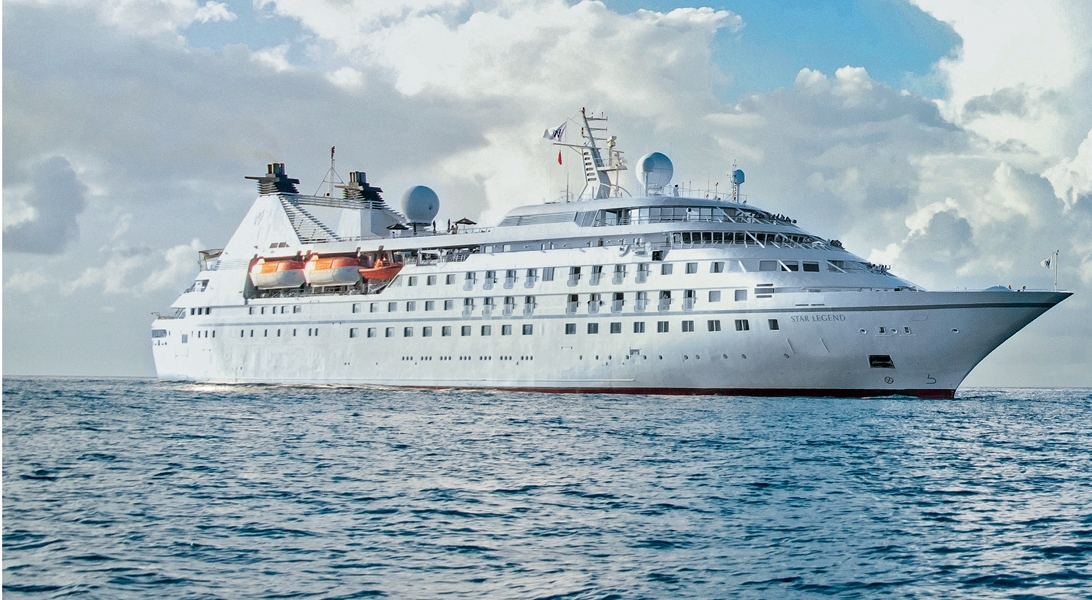


The images shown are for illustration purposes only and may not be an exact representation of what you find on the ship.
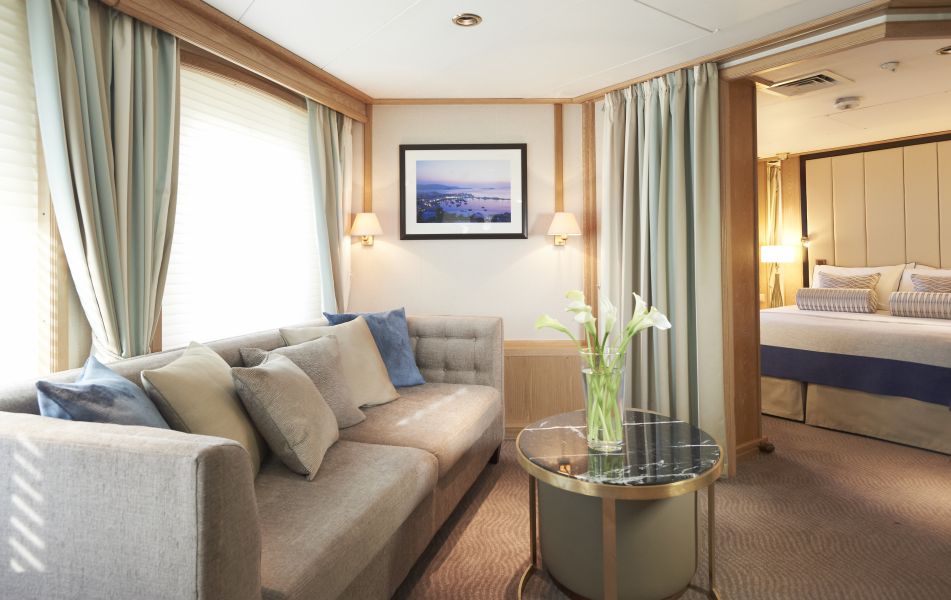
Relax in 400 to 530 spacious square feet. Your living area offers beautiful views from the forward-facing window and French doors onto your private veranda. Two spacious closets give you plenty of room to unpack.
Newly Redesigned Restrooms
We reimagined our restrooms to provide you a private oasis within your own room.
Amenities
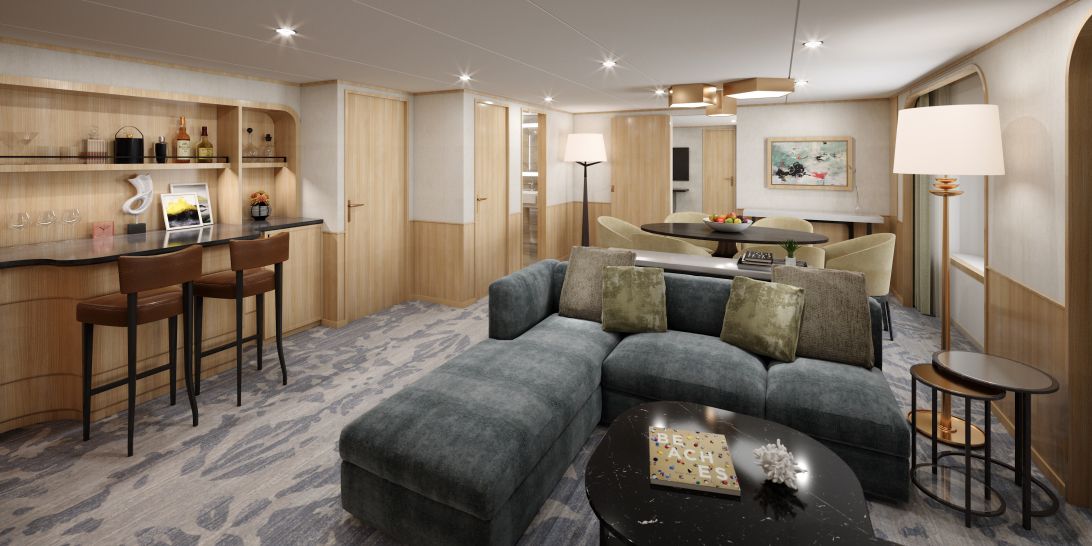
A stunning brand new owner's suites with 820 square feet of space featuring two bedrooms and two bathrooms, a verandah, and plenty of space in the sitting area for entertaining. This is the most sought after suite on the entire ship and once you stay here, you'll never stay anywhere else.
Newly Redesigned Restrooms
We reimagined our restrooms to provide you a private oasis within your own room.
Amenities
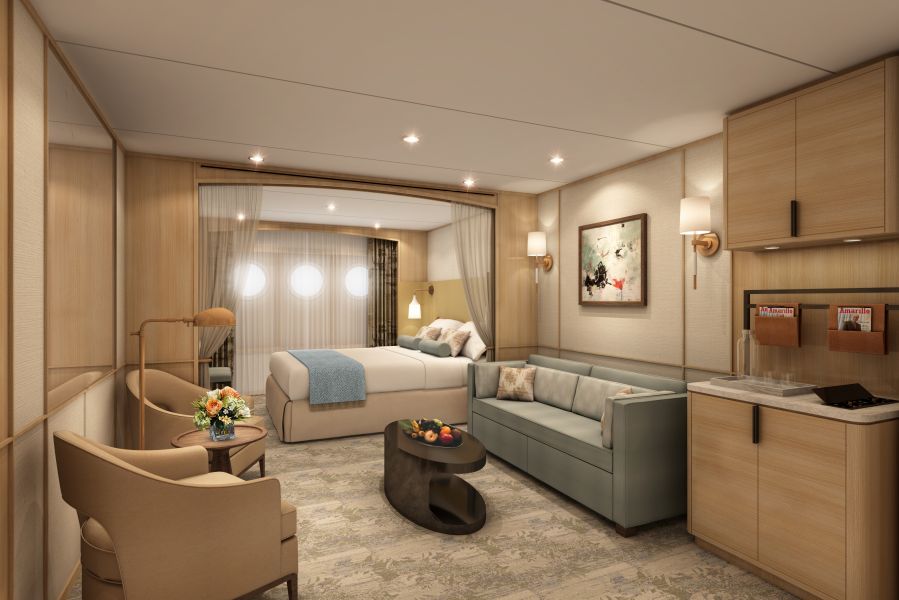
Newly Redesigned Restrooms
We reimagined our restrooms to provide you a private oasis within your own room.
Amenities
The images shown are for illustration purposes only and may not be an exact representation of what you find on the ship.
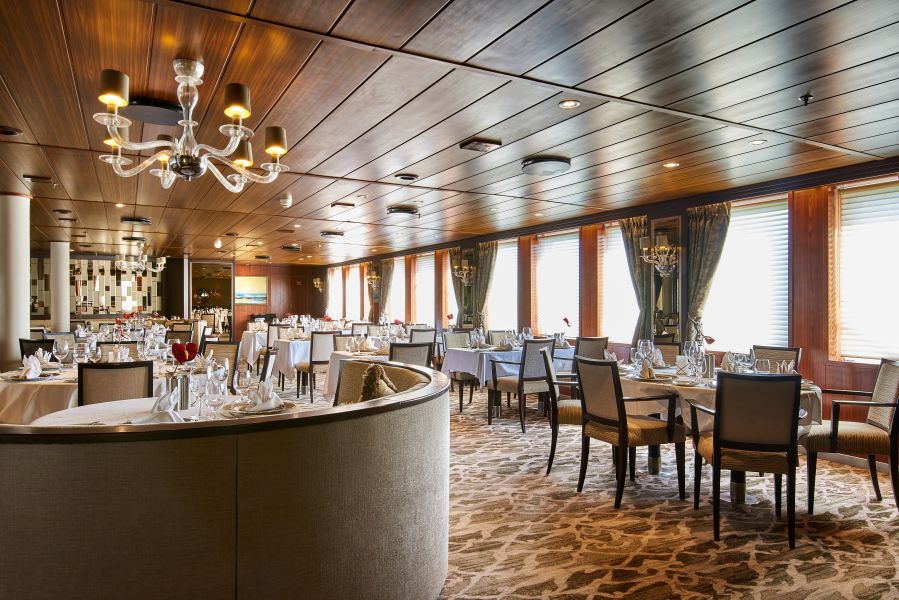
Here, the dining room manager seats you, but where is your decision. There are no pre-assigned tables or first or second seatings. When you dine and with whom are entirely up to you. Seating usually begins at 6:30 p.m. and will be printed in the ship's daily program. Each delightful dish is prepared exactly to your liking – an exquisite dinner served course-by-course with a fine selection of vintage wines.
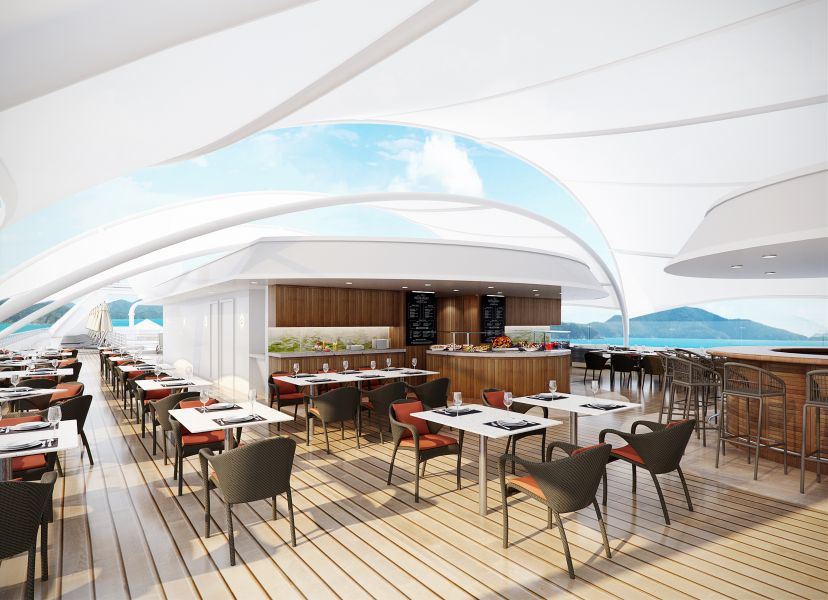
You’ll find all your traditional grilled and barbecued favourites (and discover new dishes from around the world) in our new casual outdoor restaurant brought to you in partnership with global grilling authority, Steven Raichlen.
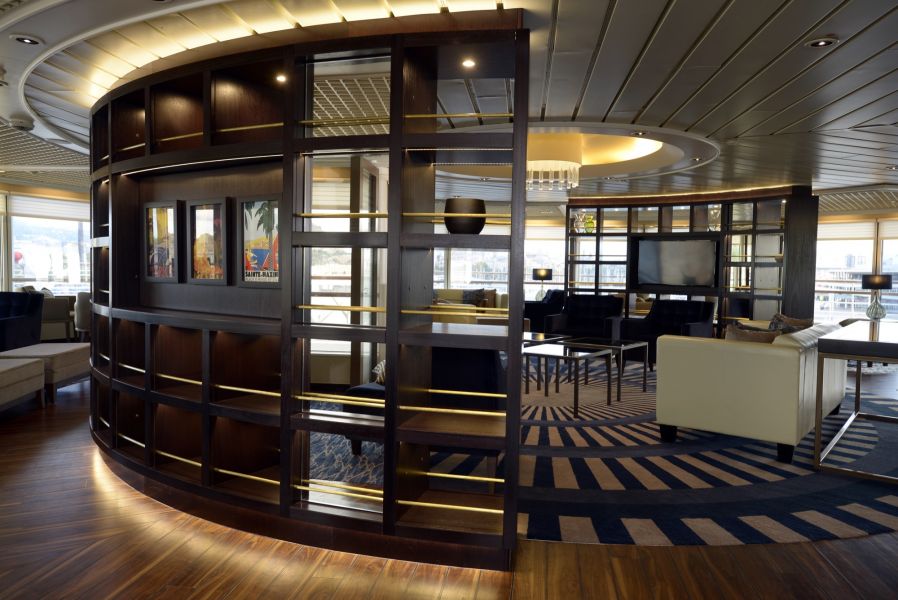
Certainly a Windstar favourite, The Yacht Club is the perfect place if you want to enjoy some casual dining. Serving gourmet sandwiches, snacks and beverages, all the food is prepared to your liking and is presented in impeccable Windstar style.
The images shown are for illustration purposes only and may not be an exact representation of what you find on the ship.
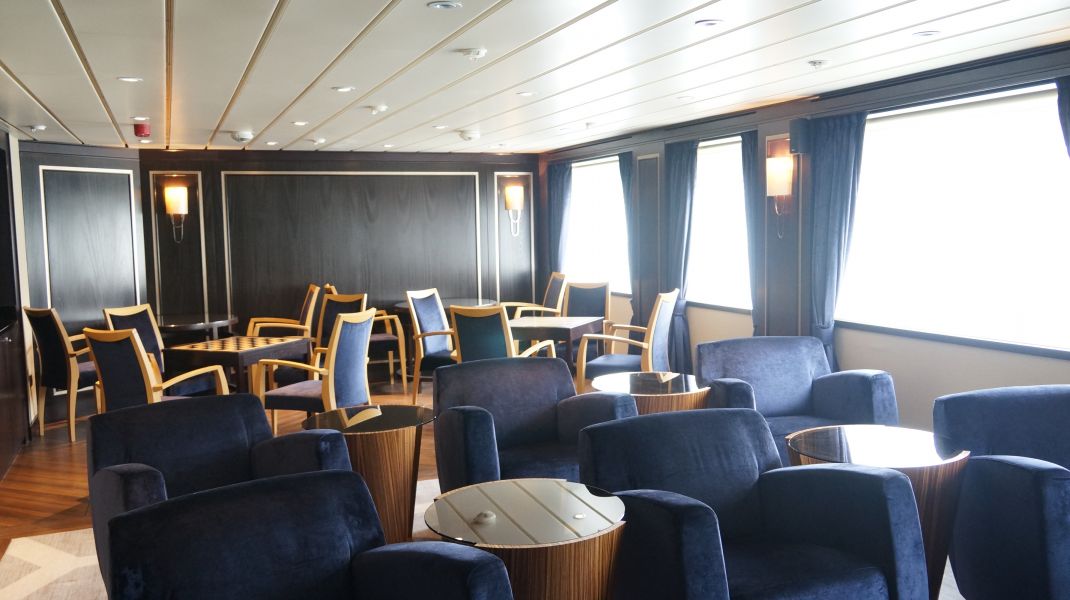
The ship’s card room is now the new Star Screening Room, where guests can view current movies.
The images shown are for illustration purposes only and may not be an exact representation of what you find on the ship.
The images shown are for illustration purposes only and may not be an exact representation of what you find on the ship.


Our Fusion packages are all ABTA & ATOL protected ensuring that your booking is safe with us
| 80 nights aboard the Star Legend | |||
| Port Taxes and Fees | |||
 | ABTA and ATOL Protection* | ||
Date 15th Jul 2026 |
Nts 80 |
Please Call for Availability |
Date 15th Jul 2026 |
Nts 80 |
Please Call for Availability |
Fusion Holidays when selling travel arrangements is a trading name of Co-op Travel Services Limited, registration 08903986. Fusion Cruises is an Accredited Body Member of Co-op Travel Services Limited ATOL 12904.
Book with Confidence. We are a Member of ABTA which means you have the benefit of ABTA’s assistance and Code of Conduct.
Some of the flights and flight-inclusive holidays on this website are financially protected by the ATOL scheme but ATOL protection does not apply to all holiday and travel services offered on this website. This website will provide you with information on the protection that applies in the case of each holiday and travel service offered before you make your booking. If you do not receive an ATOL Certificate then the booking will not be ATOL protected. If you do receive an ATOL Certificate but all parts of your trip are not listed on it, those parts will not be ATOL protected. Please see our booking conditions for information, or for more information about financial protection and the ATOL Certificate go to: www.caa.co.uk