This site uses cookies as defined in our Cookie Policy, by continuing to use this site you agree to their use.
Continue

| Arrive | Depart | ||||||
| 15th15 | OctOct | 202828 | Venice, Italy, embark on the Wind Spirit | 08:00 | 17:00 | ||
Venice is a city unlike any other. No matter how often you've seen it in photos and films, the real thing is more dreamlike than you could imagine. With canals where streets should be, water shimmers everywhere. The fabulous palaces and churches reflect centuries of history in what was a wealthy trading center between Europe and the Orient. Getting lost in the narrow alleyways is a quintessential part of exploring Venice, but at some point you'll almost surely end up in Piazza San Marco, where tourists and locals congregate for a coffee or an aperitif. No other sea approach in the Adriatic raises goose bumps like Venice, a small ship exclusive where the entire city and its lagoon are a UNESCO World Heritage Site. On your luxurious home-away-from home, you arrive already equipped with a sense of what it's like to live in the city that's neither land nor water. Add your own sigh to the Bridge of Sighs, sip a spritz al bitter as you plot your agenda, and let the water taxis do your navigating unless you don't mind getting lost. Not such a bad prospect, with serendipitous discoveries around every corner. | |||||||
| 16th16 | OctOct | 202828 | Rovinj, Croatia | 10:00 | 15:00 | ||
One of the true jewels of the Mediterranean, Rovinj is a jaw-droppingly beautiful town, which juts out into sparkling Mediterranean. Dominated by the pencil-like bell tower of the Venetian Saint Euphemia Cathedral, pine tree forests flow to the borders of the quaint Old Town - which evokes the romantic, tangled backstreets of the Venice. Rovinj - or Rovino in Italian - is a city of split personalities, with two official languages - having been owned by the Kingdom of Italy between 1919 and 1947. The lovely fishing port of Rovinj on the west coast of the Istrian peninsula bordered on three sides by the Adriatic Sea. You can tour the maze of cobblestone streets that lead to the hilltop St. Euphemia Cathedral with its towering steeple dominating the skyline. Old Town Rovinj is a delightful tangle of medieval streets and twisting stairways. Seek out the Bronze Age ruins of Monkodonja, the hidden beaches or the breathtaking natural beauty of the 6-mile-long Lim Fjord. | |||||||
| 17th17 | OctOct | 202828 | Split, Croatia | 09:00 | 17:00 | ||
Split's ancient core is so spectacular and unusual that a visit is more than worth your time. The heart of the city lies within the walls of Roman emperor Diocletian's retirement palace, which was built in the 3rd century AD. Diocletian, born in the nearby Roman settlement of Salona in AD 245, achieved a brilliant career as a soldier and became emperor at the age of 40. In 295 he ordered this vast palace to be built in his native Dalmatia, and when it was completed he stepped down from the throne and retired to his beloved homeland. Upon his death, he was laid to rest in an octagonal mausoleum, around which Split's magnificent cathedral was built.In 615, when Salona was sacked by barbarian tribes, those fortunate enough to escape found refuge within the stout palace walls and divided up the vast imperial apartments into more modest living quarters. Thus, the palace developed into an urban center, and by the 11th century the settlement had expanded beyond the ancient walls.Under the rule of Venice (1420–1797), Split—as a gateway to the Balkan interior—became one of the Adriatic's main trading ports, and the city's splendid Renaissance palaces bear witness to the affluence of those times. When the Habsburgs took control during the 19th century, an overland connection to Central Europe was established by the construction of the Split–Zagreb–Vienna railway line.After World War II, the Tito years saw a period of rapid urban expansion: industrialization accelerated and the suburbs extended to accommodate high-rise apartment blocks. Today the historic center of Split is included on UNESCO's list of World Heritage Sites. Split welcomes you with open arms, Mediterranean style, and a bustling harbor lined with busy cafés. Beyond, looms stately Diocletian's Palace a UNESCO World Heritage Site in the center of town. Within the palace walls, a majestic cathedral soars, surrounded by polished marble streets lined with every type of tempting shop. If you're longing for a quiet respite, head for the western end of town for an easy stroll through a verdant mountain park. Or take an optional tour to Trogir, another UNESCO site. | |||||||
| 18th18 | OctOct | 202828 | Dubrovnik, Croatia | 08:00 | 22:00 | ||
Nothing can prepare you for your first sight of Dubrovnik. Lying 216 km (135 miles) southeast of Split and commanding a jaw-dropping coastal location, it is one of the world's most beautiful fortified cities. Its massive stone ramparts and fortress towers curve around a tiny harbor, enclosing graduated ridges of sun-bleached orange-tiled roofs, copper domes, and elegant bell towers. Your imagination will run wild picturing what it looked like seven centuries ago when the walls were built, without any suburbs or highways around it, just this magnificent stone city rising out of the sea.In the 7th century AD, residents of the Roman city Epidaurum (now Cavtat) fled the Avars and Slavs of the north and founded a new settlement on a small rocky island, which they named Laus, and later Ragusa. On the mainland hillside opposite the island, the Slav settlement called Dubrovnik grew up. In the 12th century the narrow channel separating the two settlements was filled in (now the main street through the Old Town, called Stradun), and Ragusa and Dubrovnik became one. The city was surrounded by defensive walls during the 13th century, and these were reinforced with towers and bastions in the late 15th century.From 1358 to 1808 the city thrived as a powerful and remarkably sophisticated independent republic, reaching its golden age during the 16th century. In 1667 many of its splendid Gothic and Renaissance buildings were destroyed by an earthquake. The defensive walls survived the disaster, and the city was rebuilt in baroque style.Dubrovnik lost its independence to Napoléon in 1808, and in 1815 passed to Austria-Hungary. During the 20th century, as part of Yugoslavia, the city became a popular tourist destination, and in 1979 it was listed as a UNESCO World Heritage Site. During the war for independence, it came under heavy siege. Thanks to careful restoration, few traces of damage remain; however, there are maps inside the Pile and Ploče Gates illustrating the points around the city where damage was done. It’s only when you experience Dubrovnik yourself that you can understand what a treasure the world nearly lost While larger ships must pass by, we anchor right beyond the famous walled city so you can admire its beauty with every glance. Tender ashore and step right into Old Town, a UNESCO site where no cars are allowed, just eons of history. Capture the exhilarating views on your camera - and in your memory. End your day at the Buza Café (if you can find it) watching bold divers leap off the cliffs into the crystalline sea. | |||||||
| 19th19 | OctOct | 202828 | Kotor, Montenegro | 09:00 | 15:00 | ||
Backed by imposing mountains, tiny Kotor lies hidden from the open sea, tucked into the deepest channel of the Bokor Kotorska (Kotor Bay), which is Europe's most southerly fjord. To many, this town is more charming than its sister UNESCO World Heritage Site, Dubrovnik, retaining more authenticity, but with fewer tourists and spared the war damage and subsequent rebuilding which has given Dubrovnik something of a Disney feel.Kotor's medieval Stari Grad (Old Town) is enclosed within well-preserved defensive walls built between the 9th and 18th centuries and is presided over by a proud hilltop fortress. Within the walls, a labyrinth of winding cobbled streets leads through a series of splendid paved piazzas, rimmed by centuries-old stone buildings. The squares are now haunted by strains from buskers but although many now house trendy cafés and chic boutiques, directions are still given medieval-style by reference to the town’s landmark churches.In the Middle Ages, as Serbia's chief port, Kotor was an important economic and cultural center with its own highly regarded schools of stonemasonry and iconography. From 1391 to 1420 it was an independent city-republic and later, it spent periods under Venetian, Austrian, and French rule, though it was undoubtedly the Venetians who left the strongest impression on the city's architecture. Since the breakup of Yugoslavia, some 70% of the stone buildings in the romantic Old Town have been snapped up by foreigners, mostly Brits and Russians. Porto Montenegro, a new marina designed to accommodate some of the world’s largest super yachts, opened in nearby Tivat in 2011, and along the bay are other charming seaside villages, all with better views of the bay than the vista from Kotor itself where the waterside is congested with cruise ships and yachts. Try sleepy Muo or the settlement of Prčanj in one direction around the bay, or Perast and the Roman mosaics of Risan in the other direction. This is one of Montenegro's most beautiful bays, and the approach offers one breathtaking fjord-like view after another. Just when you've reached your fill of blues and greens, the bright red rooftops of the medieval Old Town come into view. The entire area has been proclaimed a UNESCO World Heritage Site. The charming streets of Old Town remain car free, filled with 12th century Baroque palaces and Romanesque churches. For a fresh perspective, climb to the fortress on the hill for a breathtaking vista. | |||||||
| 20th20 | OctOct | 202828 | Otranto, Italy | 08:00 | 22:00 | ||
Located right in the heel of the Italian boot, Otranto’s scenic landscape often plays the protagonist in displaying the beauty of Puglia, Italy’s easternmost region. Facing the Adriatic sea, the seducing weather and pristine waters have made it a popular destination where on a clear day, wanderers can see the coast of Albania. Like much of Italy, the city boasts a rich and mixed history. Once a Greek and Roman port, it was later occupied by the Byzantines, the Normans and the Spanish before the Ottoman invaded in during their Jihad to conquer Europe. Remains of forts are still visible and are a living testimonial of the town’s rich history along with Otranto’s cathedral, which still encloses today the relics of martyrs who refused to convert to Islam. This small ship exclusive port has a mix of beautiful beaches and gorgeous landmarks. The town's main attraction is the Otranto Cathedral, famous for its intricate 12th-century mosaic floor, rose windows, and the Chapel of the Martyrs. The nearby beaches, like Baia dei Turchi, are renowned for their crystal-clear waters, perfect for an afternoon swim. | |||||||
| 21st21 | OctOct | 202828 | At Sea | ||||
| 22nd22 | OctOct | 202828 | Messina, Italy | 10:00 | 14:00 | ||
Home to the Museo Regionale of Messina, known for featuring two of Caravaggio's paintings, the city is also famous for having been the capital of the ancient kingdom of Sicily. The cobblestone streets of Messina, Sicily, are the perfect launching point for an optional visit to nearby Taormina. Stroll along flower-filled streets in search of a delightful lunch or an artist's palette of colorful gelati. The ancient Greek Theater is an ideal place to sit back and admire shimmering waters below and Mount Etna, languidly smoking in the distance. | |||||||
| 23rd23 | OctOct | 202828 | Sorrento, Italy | 10:00 | 23:59 | ||
Sorrento may have become a jumping-off point for visitors to Pompeii, Capri, and Amalfi, but you can find countless reasons to love it for itself. The Sorrentine people are fair-minded and hardworking, bubbling with life and warmth. The tuff cliff on which the town rests is spread over the bay, absorbing sunlight, while orange and lemon trees waft their perfume in spring. Winding along a cliff above a small beach and two harbors, the town is split in two by a narrow ravine formed by a former mountain stream. To the east, dozens of hotels line busy Via Correale along the cliff—many have "grand" included in their names, and some indeed still are. To the west, however, is the historic sector, which still enchants. It's a relatively flat area, with winding, stone-paved lanes bordered by balconied buildings, some joined by medieval stone arches. The central piazza is named after the poet Torquato Tasso, born here in 1544. This part of town is a delightful place to walk through. Craftspeople are often at work in their stalls and shops and are happy to let you watch; in fact, that's the point. Music spots and bars cluster in the side streets near Piazza Tasso. UNESCO World Heritage Sites abound in Sorrento. Optional tours will take you to the archaeological areas of Pompeii and Torre Annunziata, or the 4th century B.C. city of Herculaneum. Perhaps your choice will be a boat ride to Positano, the legendary home of the Sirens. Perched on a terrace on the spectacular Amalfi Coast, Sorrento offers exceptional views of the Bay of Naples and Mount Vesuvius. | |||||||
| 24th24 | OctOct | 202828 | Sorrento, Italy | 13:00 | |||
Sorrento may have become a jumping-off point for visitors to Pompeii, Capri, and Amalfi, but you can find countless reasons to love it for itself. The Sorrentine people are fair-minded and hardworking, bubbling with life and warmth. The tuff cliff on which the town rests is spread over the bay, absorbing sunlight, while orange and lemon trees waft their perfume in spring. Winding along a cliff above a small beach and two harbors, the town is split in two by a narrow ravine formed by a former mountain stream. To the east, dozens of hotels line busy Via Correale along the cliff—many have "grand" included in their names, and some indeed still are. To the west, however, is the historic sector, which still enchants. It's a relatively flat area, with winding, stone-paved lanes bordered by balconied buildings, some joined by medieval stone arches. The central piazza is named after the poet Torquato Tasso, born here in 1544. This part of town is a delightful place to walk through. Craftspeople are often at work in their stalls and shops and are happy to let you watch; in fact, that's the point. Music spots and bars cluster in the side streets near Piazza Tasso. UNESCO World Heritage Sites abound in Sorrento. Optional tours will take you to the archaeological areas of Pompeii and Torre Annunziata, or the 4th century B.C. city of Herculaneum. Perhaps your choice will be a boat ride to Positano, the legendary home of the Sirens. Perched on a terrace on the spectacular Amalfi Coast, Sorrento offers exceptional views of the Bay of Naples and Mount Vesuvius. | |||||||
| 25th25 | OctOct | 202828 | Civitavecchia, Italy | 08:00 | 17:00 | ||
Italy's vibrant capital lives in the present, but no other city on earth evokes its past so powerfully. For over 2,500 years, emperors, popes, artists, and common citizens have left their mark here. Archaeological remains from ancient Rome, art-stuffed churches, and the treasures of Vatican City vie for your attention, but Rome is also a wonderful place to practice the Italian-perfected il dolce far niente, the sweet art of idleness. Your most memorable experiences may include sitting at a caffè in the Campo de' Fiori or strolling in a beguiling piazza. In this enchanting city the past and present intersect in perfect harmony. Casually intermingled among ancient ruins and majestic cathedrals are the trappings of a modern metropolis: Skyscrapers,cafes, boutiques selling designer footwear. But of course what you seek first in the heart of Rome is its breathtaking history. A good place to begin is the Vatican, with its Sistine Chapel and St. Peter's Basilica. Works by Bernini, Michelangelo, Caravaggio, and Raphael are just a few of those on display, any one of which is worth hours of contemplation. Then the ancient ruins-Colosseum, Forum, Circus Maximus. And of course the Trevi Fountain for the obligatory coins promising your return to the Eternal City. | |||||||
| 26th26 | OctOct | 202828 | Portoferraio, Italy | 08:00 | 22:00 | ||
Elba is the Tuscan archipelago's largest island, but it resembles nearby verdant Corsica more than it does its rocky Italian sisters, thanks to a network of underground springs that keep it lush and green. It's this combination of semitropical vegetation and dramatic mountain scenery—unusual in the Mediterranean—that has made Elba so prized for so long, and the island's uniqueness continues to draw boatloads of visitors throughout the warm months. A car is very useful for getting around the island, but public buses stop at most towns several times a day; the tourist office has timetables. Pine-scented forests and miles of sandy beach await your arrival on the tranquil island of Elba. Enjoy a glass of local Moscato with the fresh catch of the day before pondering your next move. Perhaps you'll visit the nearby countryside with its small fishing villages and dramatic mountain passes. Or see the calming beauty of Tuscan Archipelago National Park, a UNESCO Biosphere Reserve. Or maybe you'll decide to walk to the nearest beach and dip your toes into the warm Mediterranean. | |||||||
| 27th27 | OctOct | 202828 | Bastia, France | 08:00 | 17:00 | ||
Corsica's northern capital, Bastia, is the centre of commerce and industry and a thriving freight and passenger port. Commerce, more than tourism, is its main focus, providing employment for many Corsicans. Bastia's industrial sprawl, however, is offset by its aged charm. The presence of an overwhelming Italian atmosphere adds to the city's attraction. Two distinct areas comprise the city: Terra Vecchia, the old quarter, consisting of haphazard streets, flamboyant Baroque churches and lofty tenements, with their crumbling golden-grey walls set against a backdrop of fire-darkened hills; and the more orderly Terra Nova, the historic district favoured by prominent doctors, lawyers and architects. The city dates from Roman times, when a base was set up at Biguglia to the south. Under the Genoese, Bastia was the island's capital for four centuries and of major importance for the export of wine to the Italian mainland. They built a fortress (bastiglia), which gave the town its name. The Genoese also were responsible for laying the foundation for the area's prosperity by planting vines, olives, chestnut trees and other experimental crops. This resulted in an energetic and enterprising region, still a characteristic of today's northern Corsica. Although Napoleon had appointed Ajaccio the capital of the island in 1811- initiating a rivalry that still exists - Bastia established a stronger trading position with mainland France. As a result, the Nouveau Port was created in 1862 to cope with the increasing traffic with France and Italy. Bastia's economic prominence and a German division based here during World War II accounted for severe bombing attacks. Many buildings were destroyed, including much of the old governor's palace. Of the two largest towns on the island, Ajaccio and Bastia, the latter boasts a more genuine Corsican character. Visitors can experience an authentic feel of island life by wandering through the maze of narrow streets of Bastia's old quarter and by exploring its fortifications. Don't miss the vast Place Saint-Nicolas just north of the old quarter; it is the focal point of the city. Open to the sea and lined with shady trees and sidewalk cafes, it is a perfect place for people watching and for taking in the local ambiance. Pier Information The ship is scheduled to dock at the port of Bastia. The city's focal point, Place Saint-Nicolas, is a distance of 650 feet (200 metres) to walk. Taxis are generally available at the pier but it is highly recommended to book in advance if you want to be sure to get one. It is recommended to establish the fare before leaving the port. Shopping The main shopping streets, Boulevard Paoli and Rue Cesar Campinchi, are less than one half miles (500 metres) from the port terminal. Handicrafts and the area's specialties such as honey, wine and liqueurs may be of interest. Most shops are open from 9:00 a.m. to 12:00 p.m. and 2:30 p.m. to 7:00 p.m. Shops are closed for the day on Sundays and some shops may also close Monday mornings (some souvenirs shops may open Sundays during the high season of July-August). The local currency is the euro. Cuisine A variety of restaurants offer a good choice of eating possibilities. Some of the best restaurants are found around the Vieux Port and on the Quai des Martyrs. French cuisine and seafood feature prominently on menus as well as such Corsican specialties as wild boar, charcuterie and aziminu, a local version of bouillabaisse. Evidence of Bastia's strong Italian influence is apparent in the numerous pizza and pasta places in the Nouveau Port area. For outdoor dining and people watching, cafes around lively Place Saint-Nicolas are a perfect place. Other Sites Oratoire de Saint-Roch Located in the Terra Vecchia quarter, the chapel is a Genoese Baroque extravaganza built in 1604. The walls are covered with finely carved wooden panelling and the organ is magnificent with its decoration of gilt and wooden sculpture. Oratoire de L'Immaculee Conception Although its exterior is rather austere, the flamboyant interior of this 17th-century church with gilt and marble ceiling, frescoes and crystal chandeliers creates an ambiance of an opera house. Vieux Port Site of the original Porto Prado, the area around the Vieux Port is the most appealing part of town. Its soaring houses seem to bend inwards towards the water. Once busy with Genoese traders, the building of the ferry terminal and commercial docks have reduced much of the action at Vieux Port. Terra Nova As the administrative core of old Bastia, Terra Nova displays a distinct air of affluence. Its most impressive building is the 14th-century Governor's Palace. During the Genoese heyday the governor and the bishop lived here, entertaining foreign dignitaries and hosting massive parties. Private arrangements for independent sightseeing may be requested through the Tour Office on board, subject to the availability of English-speaking guides. As the principal port of Corsica, Bastia has vibrant historical neighborhoods with narrow streets and alleys between ancient shuttered buildings of the 18th century. One of the main squares is the Place du Marche, home of a morning market and the impressive 16th century Saint-Jean-Baptiste church. On the other side of the harbor sits the substantial citadel, the beautiful gardens of Jardin Romieu and the once very-elegant houses of the Terra Nova district. | |||||||
| 28th28 | OctOct | 202828 | Calvi, Corsica, France | 08:00 | 23:59 | ||
Calvi, Corsica's slice of the Riviera, has been described by author Dorothy Carrington as "an oasis of pleasure on an otherwise austere island." Calvi prospered by supplying products to Genoa; its citizens remained loyal supporters of Genoa long after the rest of the island declared independence. Calvi also claims to be the birthplace of Christopher Columbus. During the 18th century the town endured assaults from Corsican nationalists, including celebrated patriot Pasquale Paoli. Today Calvi sees a summertime invasion of tourists, drawn to the 6-km (4-mile) stretch of sandy white beach, impressive citadel overlooking the Old Town, lively restaurants, and buzzing nightlife. The popular tourist spot of Calvi with its crescent-shaped bay and gorgeous beaches, is distinguished by a large medieval citadel that overlooks the marina. Built between the 13th to the 16th centuries, it is basically an entire small town enclosed by fortified walls but offering panoramic views of the harbor and the Corsican coast. Another must-see is the "Big Pink Church," Orthodox-style L'Eglise Santa Maria and make time to take a walk along the Quai Landry esplanade, lined with interesting restaurants. | |||||||
| 29th29 | OctOct | 202828 | At Sea | ||||
| 30th30 | OctOct | 202828 | Mahón, Menorca, Spain | 08:00 | 17:00 | ||
The capital of Menorca since 1721, Mahon has a impressive natural deep water harbour, which is one of the largest in the world. This, coupled with its strategic location, has made it a stronghold for many nations throughout history. Mahon has an abundance of historical buildings, the oldest being the Arch of Saint Roc which is all that remains of the wall that once encircled the whole town. The island was occupied by the British during the 18th century and Lord Nelson is thought to have stayed there. Indeed, San Antoni Mansion, located on the north side of the harbour, houses a collection of Nelson memorabilia. The legacy of colonial rule can be seen in the muted Georgian style of some of the buildings, but Mahon still boasts attractive examples of neo-Classical, Baroque and Romanesque architecture. With narrow streets to explore, pleasant shaded squares and welcoming pavement cafés, there is something for everyone to enjoy. Please be aware that most shops in town close for a siesta between 1330 and 1730. What an entrance you will make as you cruise into one of the deepest natural harbors in the world. Picturesque Mahon is home to lovely white-sand beaches and delightful architecture, a gin distillery, and a dairy plant where delicious white cheese is made. | |||||||
| 31st31 | OctOct | 202828 | Palma de Mallorca, Spain | 07:00 | 16:00 | ||
If you look north of the cathedral (La Seu, or the seat of the bishopric, to Mallorcans) on a map of the city of Palma, you can see around the Plaça Santa Eulàlia a jumble of tiny streets that made up the earliest settlement. Farther out, a ring of wide boulevards traces the fortifications built by the Moors to defend the larger city that emerged by the 12th century. The zigzags mark the bastions that jutted out at regular intervals. By the end of the 19th century, most of the walls had been demolished; the only place where you can still see the massive defenses is at Ses Voltes, along the seafront west of the cathedral.A torrent (streambed) used to run through the middle of the old city, dry for most of the year but often a raging flood in the rainy season. In the 17th century it was diverted to the east, along the moat that ran outside the city walls. Two of Palma's main arteries, La Rambla and the Passeig d'es Born, now follow the stream's natural course. The traditional evening paseo (promenade) takes place on the Born.If you come to Palma by car, park in the garage beneath the Parc de la Mar (the ramp is just off the highway from the airport, as you reach the cathedral) and stroll along the park. Beside it run the huge bastions guarding the Almudaina Palace; the cathedral, golden and massive, rises beyond. Where you exit the garage, there's a ceramic mural by the late Catalan artist and Mallorca resident Joan Miró, facing the cathedral across the pool that runs the length of the park.If you begin early enough, a walk along the ramparts at Ses Voltes from the mirador beside the cathedral is spectacular. The first rays of the sun turn the upper pinnacles of La Seu bright gold and then begin to work their way down the sandstone walls. From the Parc de la Mar, follow Avinguda Antoni Maura past the steps to the palace. Just below the Plaça de la Reina, where the Passeig d'es Born begins, turn left on Carrer de la Boteria into the Plaça de la Llotja (if the Llotja itself is open, don't miss a chance to visit—it's the Mediterranean's finest Gothic-style civic building). From there stroll through the Plaça Drassana to the Museu d'Es Baluard, at the end of Carrer Sant Pere. Retrace your steps to Avinguda Antoni Maura. Walk up the Passeig d'es Born to Plaça Joan Carles I, then right on Avenida de La Unió. Mallorca is steep, green, and fringed with enticing coves and more than 200 lush beaches. But all that natural beauty is just the beginning. Stroll along the tree-shaded Paseo de Born in search of tapas. Shop for a Siurell; a traditional red, green, and white clay whistle dating back to the time of the Moors. Watch the street performers on the piazza around the church, or cross the island to beautiful Sóller. Not to be missed is the cultural landscape of the Serra de Tramuntana, a UNESCO World Heritage Site. | |||||||
| 1st01 | NovNov | 202828 | Barcelona, Spain, disembark the Wind Spirit | 07:00 | |||
The infinite variety of street life, the nooks and crannies of the medieval Barri Gòtic, the ceramic tile and stained glass of Art Nouveau facades, the art and music, the throb of street life, the food (ah, the food!)—one way or another, Barcelona will find a way to get your full attention. The capital of Catalonia is a banquet for the senses, with its beguiling mix of ancient and modern architecture, tempting cafés and markets, and sun-drenched Mediterranean beaches. A stroll along La Rambla and through waterfront Barceloneta, as well as a tour of Gaudí's majestic Sagrada Famíliaand his other unique creations, are part of a visit to Spain's second-largest city. Modern art museums and chic shops call for attention, too. Barcelona's vibe stays lively well into the night, when you can linger over regional wine and cuisine at buzzing tapas bars. The old meets the new in this sunny Catalan metropolis, where narrow alleyways contrast with grand boulevards, trendy cuisine meets homemade tapas, and everywhere you're greeted by the warm, welcoming smiles of the fashionable locals. Don't miss UNESCO sites like the mind-boggling architecture of Antoni Gaudí or La Sagrada Familia Cathedral, with its eight decorative spires soaring hundreds of feet into the sky. | |||||||
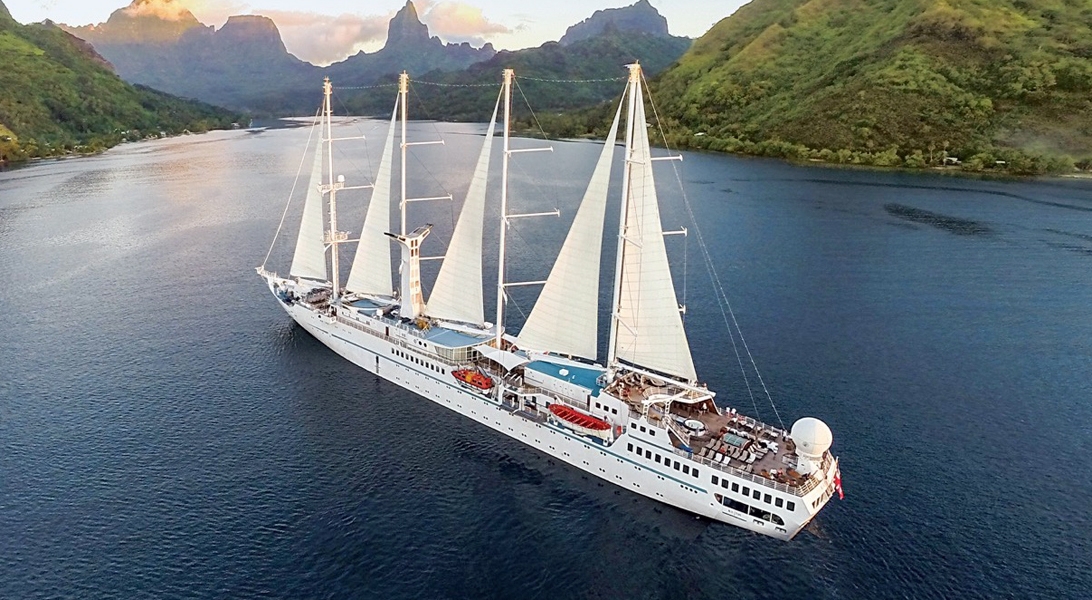


The images shown are for illustration purposes only and may not be an exact representation of what you find on the ship.
| Grade Code | From | To | |
| B | Category B | £5,080 | £6,860 |
| BX | Category BX Deluxe | £5,647 | £7,625 |
| A | Category A | £6,201 | £8,373 |
| AX | Category AX Deluxe | £6,680 | £9,019 |
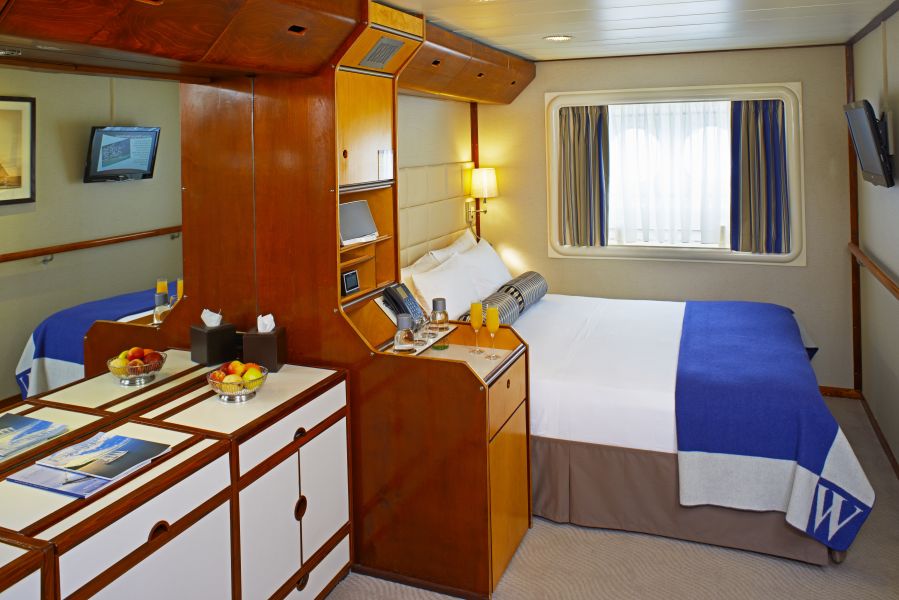
Every inch of your stateroom is designed for comfort. Luxurious Egyptian cotton linens wrap you in pleasant sleepiness as you stretch out in your queen bed (can be separated into twins if you prefer). Your spacious bath features granite counter tops, ample storage, and a roomy shower with massage shower head. L’Occitane® bath products invite you to indulge, while comfy waffle-weave robe and slippers entice you to relax. You’ll find fresh fruit and flowers always waiting for you after a day of sun or sightseeing. And, of course, everything else you need and expect — flat-screen television and DVD, private safe. And always at your fingertips, anything you wish from room service.
Amenities
The images shown are for illustration purposes only and may not be an exact representation of what you find on the ship.
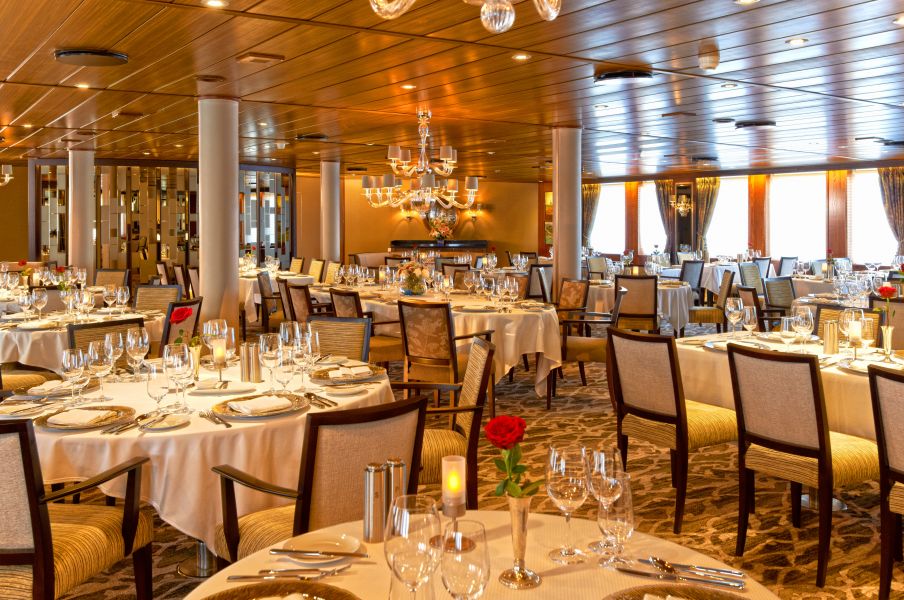
Here, the dining room manager seats you, but where is your decision. There are no pre-assigned tables or first or second seatings. When you dine and with whom are entirely up to you. Seating usually begins at 6:30 p.m. and will be printed in the ship's daily program. Each delightful dish is prepared exactly to your liking – an exquisite dinner served course-by-course with a fine selection of vintage wines.
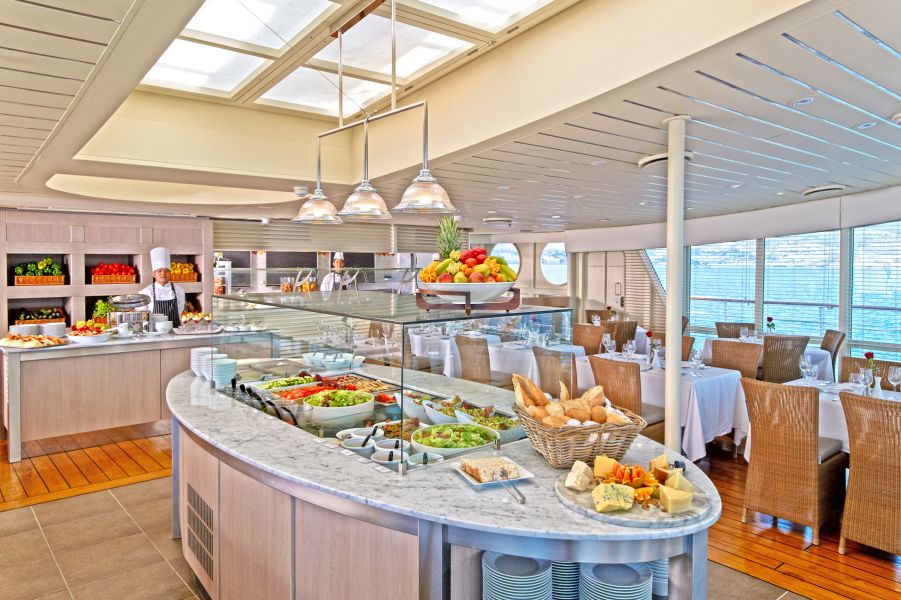
It's breakfast alfresco, full service or buffet-style, anytime till 9:30 a.m. No need to hurry. Again, the choices are many in Veranda. Choose the sumptuous, seemingly endless buffet. Or, order from the lunch menu between noon and 2:30 p.m.
The images shown are for illustration purposes only and may not be an exact representation of what you find on the ship.
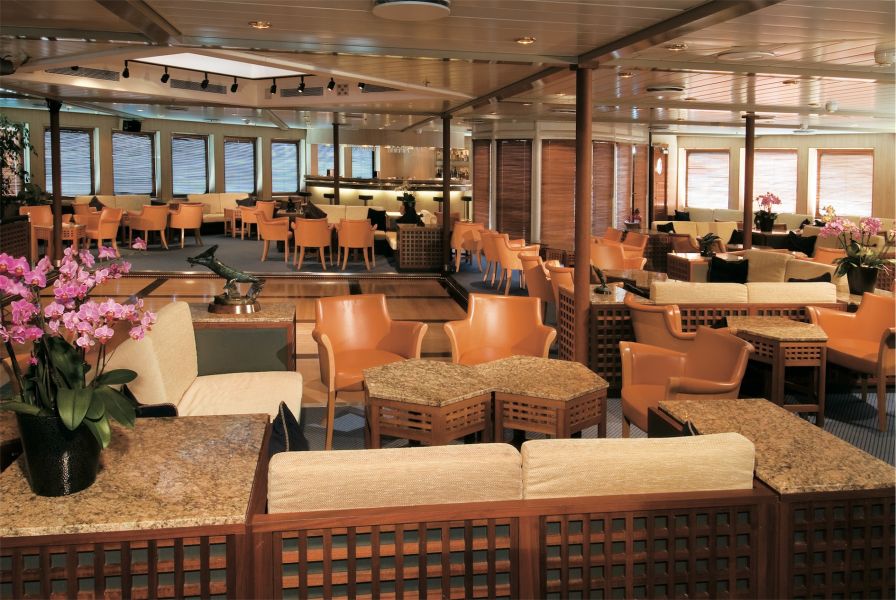
Onboard entertainment facilities include: Sun Deck, Library, Casino, and The Lounge.
The images shown are for illustration purposes only and may not be an exact representation of what you find on the ship.
The images shown are for illustration purposes only and may not be an exact representation of what you find on the ship.

Our Fusion packages are all ABTA & ATOL protected ensuring that your booking is safe with us
| 17 nights aboard the Wind Spirit | |||
| Port Taxes and Fees | |||
 | ABTA and ATOL Protection* | ||
Date 15th Oct 2028 |
Nts 17 |
Oceanview £5,080pp |
Suite £11,150pp |
Date 15th Oct 2028 |
Nts 17 |
Oceanview £5,080pp |
Suite £11,150pp |
| Oceanview staterooms from | £5,080pp | ||
| AX | Category AX Deluxe | £6,680pp | |
| B | Category B | £5,080pp | |
| BX | Category BX Deluxe | £5,647pp | |
| A | Category A | £6,201pp | |
| Suite staterooms from | £11,150pp | ||
| OW | Owner's Suite | £11,150pp | |
Fusion Holidays when selling travel arrangements is a trading name of Co-op Travel Services Limited, registration 08903986. Fusion Cruises is an Accredited Body Member of Co-op Travel Services Limited ATOL 12904.
Book with Confidence. We are a Member of ABTA which means you have the benefit of ABTA’s assistance and Code of Conduct.
Some of the flights and flight-inclusive holidays on this website are financially protected by the ATOL scheme but ATOL protection does not apply to all holiday and travel services offered on this website. This website will provide you with information on the protection that applies in the case of each holiday and travel service offered before you make your booking. If you do not receive an ATOL Certificate then the booking will not be ATOL protected. If you do receive an ATOL Certificate but all parts of your trip are not listed on it, those parts will not be ATOL protected. Please see our booking conditions for information, or for more information about financial protection and the ATOL Certificate go to: www.caa.co.uk