This site uses cookies as defined in our Cookie Policy, by continuing to use this site you agree to their use.
Continue

| Arrive | Depart | ||||||
| 27th27 | FebFeb | 202828 | Santa Cruz de Tenerife, Spain, embark on the Wind Spirit | 11:00 | 18:00 | ||
The largest of the Canary Islands, Tenerife is a beautiful and scenic island which enjoys year-round sunshine and is dominated by Mount Teide. The mountain range runs through the centre of the island, with fertile valleys on the northern side. In the central part of the range is the gigantic natural crater of the Cañadas del Teide, about 14 miles in diameter. Santa Cruz, the island’s pretty capital, was originally a small fishing village but has now grown into a modern city, and also contains 16th-century civic buildings and ornate private mansions. Near the pier is the Santa Cruz Palmetum, a Botanical Garden covering an area of 29 acres, specialising in palms. Here in this privileged setting you'll discover two UNESCO World Heritage Site beaches of tantalizing beauty; San Cristóbal de La Laguna; and the island's symbol, Teide National Park. Wide avenues, exotic landscapes, and striking examples of modernist architecture complete one of the world's most popular destinations. | |||||||
| 28th28 | FebFeb | 202828 | Lanzarote, Spain | 13:00 | 17:00 | ||
| Nature is the star on this small volcanic island. Enjoy the afternoon on the beach or follow the island's famous wine trail, tasting as you go. This, the most northerly of the Canary Islands, welcomes you with laid-back hospitality and genuine warmth. This region of petrified lava makes up the National Park of Timanfaya and its Mountains of Fire, where visions of a lifeless, prehistoric earth, with enormous craters of an incandescent red color, can be seen on a bus or even a camel tour. This unique atmosphere has made it a UNESCO Biosphere Reserve and one of the most impressive natural parks in all of Spain. | |||||||
| 29th29 | FebFeb | 202828 | At Sea | ||||
| 1st01 | MarMar | 202828 | Funchal, Madeira, Portugal | 13:00 | 23:59 | ||
Formed by a volcanic eruption, Madeira lies in the Gulf Stream, about 500 miles due west of Casablanca. Discovered by Portuguese explorer João Gonçalves Zarco in 1419, this beautiful island became part of Portugal’s vast empire and was named for the dense forest which cloaked it - 'Madeira' means 'wood' in Portuguese. Sugar plantations first brought wealth here, and when King Charles II of England granted an exclusive franchise to sell wine to England and its colonies, many British emigrants were drawn to the capital, Funchal. Today’s travellers come to Madeira for the varied and luxuriant scenery, from mountain slopes covered with vines to picturesque villages and a profusion of wild flowers. The natural beauty of the island has earned it many pseudonyms such as ‘The Floating Garden of the Atlantic’, 'The Island of Eternal Springtime' and ‘God’s Botanical Gardens’ and our selection of excursions aim to show you why. Considered one of Portugal's main tourist attractions and home of world-famous footballer Cristiano Ronaldo, Funchal is known for its style and beauty. Visit Cabo Girao, the highest sea cliff in Europe or take a trip to the Pica da Torre for an incredible view of Camara de Lobos, a delightful fishing village. With a long history of Madeira winemaking, there'll be time here for a little wine tasting, a meal at one of the many 5-star restaurants, sightseeing to 15th century Cathedral of Our Lady of the Assumption, shopping the bargains to be found here, or experiencing the vibrant night life. | |||||||
| 2nd02 | MarMar | 202828 | Funchal, Madeira, Portugal | 22:00 | |||
Formed by a volcanic eruption, Madeira lies in the Gulf Stream, about 500 miles due west of Casablanca. Discovered by Portuguese explorer João Gonçalves Zarco in 1419, this beautiful island became part of Portugal’s vast empire and was named for the dense forest which cloaked it - 'Madeira' means 'wood' in Portuguese. Sugar plantations first brought wealth here, and when King Charles II of England granted an exclusive franchise to sell wine to England and its colonies, many British emigrants were drawn to the capital, Funchal. Today’s travellers come to Madeira for the varied and luxuriant scenery, from mountain slopes covered with vines to picturesque villages and a profusion of wild flowers. The natural beauty of the island has earned it many pseudonyms such as ‘The Floating Garden of the Atlantic’, 'The Island of Eternal Springtime' and ‘God’s Botanical Gardens’ and our selection of excursions aim to show you why. Considered one of Portugal's main tourist attractions and home of world-famous footballer Cristiano Ronaldo, Funchal is known for its style and beauty. Visit Cabo Girao, the highest sea cliff in Europe or take a trip to the Pica da Torre for an incredible view of Camara de Lobos, a delightful fishing village. With a long history of Madeira winemaking, there'll be time here for a little wine tasting, a meal at one of the many 5-star restaurants, sightseeing to 15th century Cathedral of Our Lady of the Assumption, shopping the bargains to be found here, or experiencing the vibrant night life. | |||||||
| 3rd03 | MarMar | 202828 | Porto Santo Island, Portugal | 08:00 | 17:00 | ||
| PORTO SANTO, MADEIRA | |||||||
| 4th04 | MarMar | 202828 | At Sea | ||||
| 5th05 | MarMar | 202828 | Santa Cruz de La Palma, Spain | 08:00 | 22:00 | ||
Also known as ‘La Isla Bonita’ (the beautiful island), La Palma is typified by lush forests of pine, laurel and fern which contrast with the rugged splendour of the gigantic Taburiente crater. The island is dotted with attractive villages, which are a delight to discover, and the capital Santa Cruz also makes for an interesting day of exploration. Perched on the edge of the volcanic crater of La Caldereta, Santa Cruz comfortably blends modern architecture with old colonial buildings. Perhaps visit the fascinating Natural History Museum, stroll around the historic quarters and the Plaza de Espana or travel a few miles outside the city to the exquisite Church of Our Lady. If you enjoy shopping, you can find reasonably priced silver jewellery, leather goods and beautifully embroidered clothes, tablecloths and napkins, a speciality of the Canary Islands. Santa Cruz de Palma has a distinct Caribbean feel with its colorful houses and relaxed, casual feel. Walk along the cobblestone streets of this charming port that once was a connecting port on the route to the Americas. Learn about the town's history at the Island Museum of La Palma located in a 16th century monastery and the Naval Museum housed in a full-sized reproduction of the Santa Maria. And see some of the 15 large telescopes along the ridge of Caldera del Taburieint National Park. | |||||||
| 6th06 | MarMar | 202828 | El Hierro Island, Spain | 07:00 | 22:00 | ||
| El Hierro is a small ship exclusive port and the smallest and westernmost Canary Island, is a hidden gem known for its rugged landscapes, volcanic terrain, and rich biodiversity. With stunning natural rock pools, prehistoric laurel forests, and dramatic coastlines, it offers a tranquil escape for nature lovers, hikers, and those seeking a unique adventure. The island's unique ecosystems, including a marine reserve, attract divers from around the world. El Hierro also boasts charming villages, picturesque hiking trails, and peaceful surroundings, making it a perfect destination for those looking to disconnect and enjoy untouched natural beauty. It is a UNESCO Biosphere Reserve, preserving its diverse habitats. | |||||||
| 7th07 | MarMar | 202828 | San Sebastian, Spain | 07:00 | 14:30 | ||
| Though you won't find canaries here you will find people who can whistle like them. Whistled speech helped shepherds communicate across the steep ravines and in the lush cloud forest of Garajonay National Park, a UNESCO World Heritage Site. Columbus paused here on all three voyages so you're in good company as you explore historic San Sebastián, but with all the natural beauty around, you'll find your gaze drawn inexorably up the terraced hillsides and across to views of Mount Teide. | |||||||
| 8th08 | MarMar | 202828 | Santa Cruz de Tenerife, Spain | 08:00 | 18:00 | ||
The largest of the Canary Islands, Tenerife is a beautiful and scenic island which enjoys year-round sunshine and is dominated by Mount Teide. The mountain range runs through the centre of the island, with fertile valleys on the northern side. In the central part of the range is the gigantic natural crater of the Cañadas del Teide, about 14 miles in diameter. Santa Cruz, the island’s pretty capital, was originally a small fishing village but has now grown into a modern city, and also contains 16th-century civic buildings and ornate private mansions. Near the pier is the Santa Cruz Palmetum, a Botanical Garden covering an area of 29 acres, specialising in palms. Here in this privileged setting you'll discover two UNESCO World Heritage Site beaches of tantalizing beauty; San Cristóbal de La Laguna; and the island's symbol, Teide National Park. Wide avenues, exotic landscapes, and striking examples of modernist architecture complete one of the world's most popular destinations. | |||||||
| 9th09 | MarMar | 202828 | Las Palmas de Gran Canaria, Spain | 08:00 | 18:00 | ||
Perhaps the prettiest of the Canary Islands, Gran Canaria is an almost circular isle with the peak of Pozo de Las Nieves, its highest point, at the centre. With a wealth of natural beauty and all the exciting attractions of city life in the capital, the island offers the best of both worlds. You will no doubt wish to see the sights of the capital’s old quarter, which dates back to the 15th century and encompassses the Vegueta and Triana districts, and wherever you go you can enjoy the glorious subtropical climate, perfect for growing exotic palms and fruits. Magnificent scenery surrounds you in the capital of Gran Canaria. Two lovely bays and their beautiful beaches frame the city. The Vegueta District, the older quarter of the town, is a UNESCO World Heritage Site. Explore its historical and cultural treasures, dating back to the city's founding in 1478. | |||||||
| 10th10 | MarMar | 202828 | At Sea | ||||
| 11th11 | MarMar | 202828 | Agadir, Morocco | 06:00 | 18:00 | ||
Shaped by the Atlas Mountains on one side, Agadir is framed on the other by a magnificent crescent-shaped beach. While little is known of the city’s origins, the Portuguese created a fortress here at the end of the 15th century, naming it Santa Cruz de Ghir. Freed from Portugal’s occupation by the Saadians in 1540, Agadir grew into a colourful and prosperous port and became newsworthy in 1911 when a German gunboat, the Panther, sailed into the bay as a protest against the division of North Africa between the Spanish and French. Morocco gained independence from the French in 1956, an event which was closely followed in Agadir by the tragic earthquake of 1960. The city, which has been rebuilt to represent the ‘new nation’, is blessed by fine sandy beaches overlooked by luxurious hotels and a great selection of cafés and restaurants. Please note that vendors in the souks can be very persistent and eager to make a sale. Edged by the mighty Sahara, lush parks, and beautiful, sandy beaches, Agadir brings you the best of all worlds. Shop for exotic jewelry and rugs in Souk Elhad and test your haggling talents. Or try your luck on a surfboard. Slow down and enjoy the view from the site of the old Kasbah, where a panorama of bay, port, and town stretch before you. | |||||||
| 12th12 | MarMar | 202828 | At Sea | ||||
| 13th13 | MarMar | 202828 | Casablanca, Morocco | 06:00 | 23:59 | ||
The original settlement formed on the site of Casablanca by the Berbers became the kingdom of Anfa, and during the 15th century harboured pirates who raided the Portuguese coast. In retaliation for the attacks, the Portuguese destroyed Anfa and founded the town they called Casa Branca (white house). They remained here until an earthquake in 1755 and the town was subsequently rebuilt by Mohammed ben Abdallah, whose legacy of mosques and houses can still be seen in the old Medina. Casablanca acquired its present-day name when the Spanish obtained special port privileges in 1781. The French landed here in 1907, later establishing a protectorate and modelling the town on the port of Marseilles. Today Casablanca is Morocco’s largest city, its most significant port and the centre of commerce and industry. The city is a vibrant fusion of European, African and Arabian influences and its French colonial architecture and art deco buildings seamlessly blend in with the busy, colourful markets. Please note that vendors in the souks can be very persistent and eager to make a sale. The siren call of Morocco is irresistible. Amid the whitewashed alleyways and stunning ocean views, make time for an optional excursion to the medina of Marrakech, a UNESCO World Heritage Site. Explore the souks and medinas in the footsteps of Sir Winston Churchill and Yves St. Laurent, who both called this extraordinary blend of east and west their home. | |||||||
| 14th14 | MarMar | 202828 | Casablanca, Morocco | 13:00 | |||
The original settlement formed on the site of Casablanca by the Berbers became the kingdom of Anfa, and during the 15th century harboured pirates who raided the Portuguese coast. In retaliation for the attacks, the Portuguese destroyed Anfa and founded the town they called Casa Branca (white house). They remained here until an earthquake in 1755 and the town was subsequently rebuilt by Mohammed ben Abdallah, whose legacy of mosques and houses can still be seen in the old Medina. Casablanca acquired its present-day name when the Spanish obtained special port privileges in 1781. The French landed here in 1907, later establishing a protectorate and modelling the town on the port of Marseilles. Today Casablanca is Morocco’s largest city, its most significant port and the centre of commerce and industry. The city is a vibrant fusion of European, African and Arabian influences and its French colonial architecture and art deco buildings seamlessly blend in with the busy, colourful markets. Please note that vendors in the souks can be very persistent and eager to make a sale. The siren call of Morocco is irresistible. Amid the whitewashed alleyways and stunning ocean views, make time for an optional excursion to the medina of Marrakech, a UNESCO World Heritage Site. Explore the souks and medinas in the footsteps of Sir Winston Churchill and Yves St. Laurent, who both called this extraordinary blend of east and west their home. | |||||||
| 15th15 | MarMar | 202828 | Tangier, Morocco | 07:00 | 21:00 | ||
Tangier can trace its origins back to the Phoenicians and ancient Greeks. It was named after Tinge, the mother of Hercules’ son, and its beginnings are embedded in mythology. It was subsequently a Roman province, and after Vandal and Byzantine influences, was occupied by the Arabs with Spain, Portugal, France and England also playing a part in the city’s history. With such a diverse past it is perhaps not surprising that Tangier is such an individual city. Overlooking the Straits of Gibraltar, the city lies on a bay between two promontories. With its old Kasbah, panoramic views, elegant buildings, squares and places of interest, there is much to discover in both the new and old parts of the city. Fascinating Tangier is a traveler's delight with beautiful vistas, lovely unspoiled beaches, intriguing history and friendly people. Separated from Spain by only 20 miles across the Strait of Gibraltar, Tangier is considered by many to be the gateway to Africa. With its cosmopolitan mix of African and European influences, there are many interesting sites in Tangier. The two UNESCO sites of the Medina (the old-walled city) a bustling place, and the Kasbah which offers beautiful views and fine Moroccan art, and the Place de France in the heart of the new city is an entertaining place to sip mint tea and enjoy the view. | |||||||
| 16th16 | MarMar | 202828 | Cádiz, Spain | 13:00 | 18:00 | ||
Believed to be the oldest town on the Iberian Peninsula, the Andalusian port of Cádiz enjoys a stunning location at the edge of a six-mile promontory. The town itself, with 3,000 years of history, is characterised by pretty white houses with balconies often adorned with colourful flowers. As you wander around be sure to take a stroll through the sizeable Plaza de Espãna, with its large monument dedicated to the first Spanish constitution, which was signed here in 1812. Cádiz has two pleasant seafront promenades which boast fine views of the Atlantic Ocean, and has a lovely park, the Parque Genoves, located close to the sea with an open-air theatre and attractive palm garden. Also notable is the neo-Classical cathedral, capped by a golden dome. Cádiz is the most southern province of the Iberian Peninsula. It is extremely rich in natural beauty and some of the most important Natural Parks of Spain and Europe are found here including Sierra de Grazalema and los Alcornocales. Both are rich in flora and fauna, including species under threat of extinction. Many birds find their resting and feeding place here just after or before making the jump from or to Africa. | |||||||
| 17th17 | MarMar | 202828 | Málaga, Spain | 13:00 | 23:59 | ||
As you sail into Malaga you will notice what an idyllic setting the city enjoys on the famous Costa del Sol. To the east of this provincial capital, the coast along the region of La Axarqua is scattered with villages, farmland and sleepy fishing hamlets - the epitome of traditional rural Spain. To the west stretches a continuous city where the razzmatazz and bustle creates a colourful contrast that is easily recognisable as the Costa del Sol. Surrounding the region, the Penibéetica Mountains provide an attractive backdrop overlooking the lower terraced slopes which yield olives and almonds. This spectacular mountain chain shelters the province from cold northerly winds, giving it a reputation as a therapeutic and exotic place in which to escape from cold northern climes. Malaga is also the gateway to many of Andalusia's enchanting historic villages, towns and cities. Here, on the shores of Costa del Sol, the Andalusian spirit thrives. Be sure to include an optional visit to see the brilliant and comprehensive collection of Picasso's work at Museo Picasso Málaga, a tribute to this artistic genius in the city of his birth. Or you may choose to opt for a visit to the beautiful village of Mijas, where picturesque Andalusian country life creates some of the world's best wines. | |||||||
| 18th18 | MarMar | 202828 | At Sea | ||||
| 19th19 | MarMar | 202828 | Málaga, Spain | 22:00 | |||
As you sail into Malaga you will notice what an idyllic setting the city enjoys on the famous Costa del Sol. To the east of this provincial capital, the coast along the region of La Axarqua is scattered with villages, farmland and sleepy fishing hamlets - the epitome of traditional rural Spain. To the west stretches a continuous city where the razzmatazz and bustle creates a colourful contrast that is easily recognisable as the Costa del Sol. Surrounding the region, the Penibéetica Mountains provide an attractive backdrop overlooking the lower terraced slopes which yield olives and almonds. This spectacular mountain chain shelters the province from cold northerly winds, giving it a reputation as a therapeutic and exotic place in which to escape from cold northern climes. Malaga is also the gateway to many of Andalusia's enchanting historic villages, towns and cities. Here, on the shores of Costa del Sol, the Andalusian spirit thrives. Be sure to include an optional visit to see the brilliant and comprehensive collection of Picasso's work at Museo Picasso Málaga, a tribute to this artistic genius in the city of his birth. Or you may choose to opt for a visit to the beautiful village of Mijas, where picturesque Andalusian country life creates some of the world's best wines. | |||||||
| 20th20 | MarMar | 202828 | Tangier, Morocco | 07:00 | 18:00 | ||
Tangier can trace its origins back to the Phoenicians and ancient Greeks. It was named after Tinge, the mother of Hercules’ son, and its beginnings are embedded in mythology. It was subsequently a Roman province, and after Vandal and Byzantine influences, was occupied by the Arabs with Spain, Portugal, France and England also playing a part in the city’s history. With such a diverse past it is perhaps not surprising that Tangier is such an individual city. Overlooking the Straits of Gibraltar, the city lies on a bay between two promontories. With its old Kasbah, panoramic views, elegant buildings, squares and places of interest, there is much to discover in both the new and old parts of the city. Fascinating Tangier is a traveler's delight with beautiful vistas, lovely unspoiled beaches, intriguing history and friendly people. Separated from Spain by only 20 miles across the Strait of Gibraltar, Tangier is considered by many to be the gateway to Africa. With its cosmopolitan mix of African and European influences, there are many interesting sites in Tangier. The two UNESCO sites of the Medina (the old-walled city) a bustling place, and the Kasbah which offers beautiful views and fine Moroccan art, and the Place de France in the heart of the new city is an entertaining place to sip mint tea and enjoy the view. | |||||||
| 21st21 | MarMar | 202828 | At Sea | ||||
| 22nd22 | MarMar | 202828 | Cartagena, Spain | 10:00 | 14:00 | ||
A Mediterranean city and naval station located in the Region of Murcia, southeastern Spain, Cartagena’s sheltered bay has attracted sailors for centuries. The Carthaginians founded the city in 223BC and named it Cartago Nova; it later became a prosperous Roman colony, and a Byzantine trading centre. The city has been the main Spanish Mediterranean naval base since the reign of King Philip II, and is still surrounded by walls built during this period. Cartagena’s importance grew with the arrival of the Spanish Bourbons in the 18th century, when the Navidad Fortress was constructed to protect the harbour. In recent years, traces of the city’s fascinating past have been brought to light: a well-preserved Roman Theatre was discovered in 1988, and this has now been restored and opened to the public. During your free time, you may like to take a mini-cruise around Cartagena's historic harbour: these operate several times a day, take approximately 40 minutes and do not need to be booked in advance. Full details will be available at the port. The walled town of Cartagena is a popular seaport with a large naval shipyard. The seashore offers a wide range of activities from windsurfing to good snorkeling to sailing. From Cartagena you can easily explore the ancient city of Murcia, the coastal resorts of Mazarrón, Cala Cortina, and Cabo de Palos or a little further north, the world famous resort of Mar Menor. | |||||||
| 23rd23 | MarMar | 202828 | Valencia, Spain | 10:00 | 17:00 | ||
Valencia, Spain's third-largest municipality, is a proud city with a thriving nightlife and restaurant scene, quality museums, and spectacular contemporary architecture, juxtaposed with a thoroughly charming historic quarter, making it a popular destination year in year out. During the Civil War, it was the last seat of the Republican Loyalist government (1935–36), holding out against Franco’s National forces until the country fell to 40 years of dictatorship. Today it represents the essence of contemporary Spain—daring design and architecture along with experimental cuisine—but remains deeply conservative and proud of its traditions. Though it faces the Mediterranean, Valencia's history and geography have been defined most significantly by the River Turia and the fertile huerta that surrounds it.The city has been fiercely contested ever since it was founded by the Greeks. El Cid captured Valencia from the Moors in 1094 and won his strangest victory here in 1099: he died in the battle, but his corpse was strapped into his saddle and so frightened the besieging Moors that it caused their complete defeat. In 1102 his widow, Jimena, was forced to return the city to Moorish rule; Jaume I finally drove them out in 1238. Modern Valencia was best known for its frequent disastrous floods until the River Turia was diverted to the south in the late 1950s. Since then the city has been on a steady course of urban beautification. The lovely bridges that once spanned the Turia look equally graceful spanning a wandering municipal park, and the spectacularly futuristic Ciutat de les Arts i les Ciències (City of Arts and Sciences), most of it designed by Valencia-born architect Santiago Calatrava, has at last created an exciting architectural link between this river town and the Mediterranean. If you're in Valencia, an excursion to Albufera Nature Park is a worthwhile day trip. This captivating city is best when savored slowly. Although Valencia's religious architecture is remarkable, and the Lonja, one of Europe's most elegant buildings is a UNESCO World Heritage Site, take time for an optional experience - paella. You'll learn the local secrets of this gastronomic masterpiece as you cook it, eat it, and toast it with the region's perfectly matched local wines.Want insider advice on where to find the tastiest restaurants, most unique local markets, authentic culinary shops, and hidden watering holes? Check out Valencia's Local Dining Tip Curated by Saveur on our blog. | |||||||
| 24th24 | MarMar | 202828 | Palma de Mallorca, Spain | 09:00 | 17:00 | ||
If you look north of the cathedral (La Seu, or the seat of the bishopric, to Mallorcans) on a map of the city of Palma, you can see around the Plaça Santa Eulàlia a jumble of tiny streets that made up the earliest settlement. Farther out, a ring of wide boulevards traces the fortifications built by the Moors to defend the larger city that emerged by the 12th century. The zigzags mark the bastions that jutted out at regular intervals. By the end of the 19th century, most of the walls had been demolished; the only place where you can still see the massive defenses is at Ses Voltes, along the seafront west of the cathedral.A torrent (streambed) used to run through the middle of the old city, dry for most of the year but often a raging flood in the rainy season. In the 17th century it was diverted to the east, along the moat that ran outside the city walls. Two of Palma's main arteries, La Rambla and the Passeig d'es Born, now follow the stream's natural course. The traditional evening paseo (promenade) takes place on the Born.If you come to Palma by car, park in the garage beneath the Parc de la Mar (the ramp is just off the highway from the airport, as you reach the cathedral) and stroll along the park. Beside it run the huge bastions guarding the Almudaina Palace; the cathedral, golden and massive, rises beyond. Where you exit the garage, there's a ceramic mural by the late Catalan artist and Mallorca resident Joan Miró, facing the cathedral across the pool that runs the length of the park.If you begin early enough, a walk along the ramparts at Ses Voltes from the mirador beside the cathedral is spectacular. The first rays of the sun turn the upper pinnacles of La Seu bright gold and then begin to work their way down the sandstone walls. From the Parc de la Mar, follow Avinguda Antoni Maura past the steps to the palace. Just below the Plaça de la Reina, where the Passeig d'es Born begins, turn left on Carrer de la Boteria into the Plaça de la Llotja (if the Llotja itself is open, don't miss a chance to visit—it's the Mediterranean's finest Gothic-style civic building). From there stroll through the Plaça Drassana to the Museu d'Es Baluard, at the end of Carrer Sant Pere. Retrace your steps to Avinguda Antoni Maura. Walk up the Passeig d'es Born to Plaça Joan Carles I, then right on Avenida de La Unió. Mallorca is steep, green, and fringed with enticing coves and more than 200 lush beaches. But all that natural beauty is just the beginning. Stroll along the tree-shaded Paseo de Born in search of tapas. Shop for a Siurell; a traditional red, green, and white clay whistle dating back to the time of the Moors. Watch the street performers on the piazza around the church, or cross the island to beautiful Sóller. Not to be missed is the cultural landscape of the Serra de Tramuntana, a UNESCO World Heritage Site. | |||||||
| 25th25 | MarMar | 202828 | Tarragona, Spain | 07:00 | 21:00 | ||
| The beautiful, sunny port city of Tarragona has lovely beaches, a spectacular cathedral, and Spain's second most important Roman ruins of Tarraco, designated a UNESCO World Heritage Site. There are many other ruins around Tarragona as well including an amphitheater by the sea. Also known as the city of human towers, Tarragona originated this deep-rooted tradition that has been recognized by UNESCO on their Intangible Cultural Heritage List. The city lives and breathes this tower building spirit which requires the commitment and bravery of many people. | |||||||
| 26th26 | MarMar | 202828 | Barcelona, Spain | 07:00 | 17:00 | ||
The infinite variety of street life, the nooks and crannies of the medieval Barri Gòtic, the ceramic tile and stained glass of Art Nouveau facades, the art and music, the throb of street life, the food (ah, the food!)—one way or another, Barcelona will find a way to get your full attention. The capital of Catalonia is a banquet for the senses, with its beguiling mix of ancient and modern architecture, tempting cafés and markets, and sun-drenched Mediterranean beaches. A stroll along La Rambla and through waterfront Barceloneta, as well as a tour of Gaudí's majestic Sagrada Famíliaand his other unique creations, are part of a visit to Spain's second-largest city. Modern art museums and chic shops call for attention, too. Barcelona's vibe stays lively well into the night, when you can linger over regional wine and cuisine at buzzing tapas bars. The old meets the new in this sunny Catalan metropolis, where narrow alleyways contrast with grand boulevards, trendy cuisine meets homemade tapas, and everywhere you're greeted by the warm, welcoming smiles of the fashionable locals. Don't miss UNESCO sites like the mind-boggling architecture of Antoni Gaudí or La Sagrada Familia Cathedral, with its eight decorative spires soaring hundreds of feet into the sky. | |||||||
| 27th27 | MarMar | 202828 | At Sea | ||||
| 28th28 | MarMar | 202828 | Nice, France | 09:00 | 21:00 | ||
United with France only since 1860, Nice has its own history and atmosphere, which dates back 230,000 years. It was on Colline du Château (now château-less) and at the Plage des Ponchettes, in front of the Old Town, that the Greeks established a market-port in 350 BC and named it Nikaia, which would become Marseilles' chief coastal rival. The Romans established themselves a little later on the hills of Cimiez (Cemenelum), already previously occupied by Ligurians and Celts, and quickly overshadowed the waterfront port. After falling to the Saracen invasions, Nice regained power as an independent state, becoming an important port in the early Middle Ages.So cocksure did it become that in 1388, Nice, along with the hill towns behind, effectively seceded from the county of Provence, under Louis d'Anjou, and allied itself with Savoie. Thus began its liaison with the House of Savoy, and through it with Piedmont and Sardinia, it was the Comté de Nice (Nice County). This relationship lasted some 500 years, tinting the culture, architecture, and dialect in rich Italian hues.By the 19th century Nice was flourishing commercially, locked in rivalry with the neighboring shipping port of Genoa. Another source of income: the dawning of tourism, as first the English, then the Russian nobility, discovered its extraordinary climate and superb waterfront position. A parade of fine stone mansions and hotels closed into a nearly solid wall of masonry, separated from the smooth-round rocks of the beach by what was originally named Camin deis Anglés (the English Way), which of course is now the famous Promenade des Anglais. This magnificent crescent, which is seeking UNESCO recognition, is one of the noblest in France. Many of Nice's most delightful attractions—the Cours Saleya market, the Old Town streets, the Hotel Negresco, and the Palais Masséna—are on or close to this 10-km (6-mile) waterfront, making it the first stop for most visitors, while the redevelopment of Nice's port, around the other side of the Colline du Château, makes it easier for amblers who want to take in the Genoese architecture or peruse the antiques at the Puces de Nice, now part of the Promenade des 100 Antiquaires, along Quai Papacino. Nice also has the distinction of the "Family Plus" label, with free strollers, play areas, and restaurants with child-friendly activities. With its flower-lined streets, flourishing markets, and interesting museums (the Musée Chagall and Musée Matisse are highlights), Nice is a charming introduction to the spirit of the Riviera. Pull up a chaise bleu on the wide sunny Promenade des Anglais and watch the world sail by. Or stop for bouillabaisse, a specialty of the area, in a local restaurant. | |||||||
| 29th29 | MarMar | 202828 | Genoa, Italy | 08:00 | 18:00 | ||
Genoa is a port city in the Northwest of Italy. Home to the Genoa Aquarium, famous for having the largest exposition of biodiversity in Europe, the city is also a great place to visit for anyone interested in architecture. Nestled along Italy's northwest coast, Genoa is brimming with rich maritime history, vibrant culture, and architectural elegance. It is famous for its many examples of medieval, Renaissance, Baroque, and Gothic architecture as well as its multiple luxurious palaces. From its stunning medieval old town to its vibrant contemporary art scene, Genoa offers a captivating blend of the past and the present, inviting travelers to immerse themselves in its enchanting atmosphere and explore its diverse cultural offerings. As the birthplace of pesto, Genoa has an active food scene and is home to many food markets worth exploring. | |||||||
| 30th30 | MarMar | 202828 | Livorno, Italy | 08:00 | 23:59 | ||
Livorno is a gritty city with a long and interesting history. In the early Middle Ages it alternately belonged to Pisa and Genoa. In 1421 Florence, seeking access to the sea, bought it. Cosimo I (1519–74) started construction of the harbor in 1571, putting Livorno on the map. After Ferdinando I de' Medici (1549–1609) proclaimed Livorno a free city, it became a haven for people suffering from religious persecution; Roman Catholics from England and Jews and Moors from Spain and Portugal, among others, settled here. The Quattro Mori (Four Moors), also known as the Monument to Ferdinando I, commemorates this. (The statue of Ferdinando I dates from 1595, the bronze Moors by Pietro Tacca from the 1620s.)In the following centuries, and particularly in the 18th, Livorno boomed as a port. In the 19th century the town drew a host of famous Britons passing through on their grand tours. Its prominence continued up to World War II, when it was heavily bombed. Much of the town's architecture, therefore, postdates the war, and it's somewhat difficult to imagine what it might have looked like before. Livorno has recovered from the war, however, as it's become a huge point of departure for container ships, as well as the only spot in Tuscany for cruise ships to dock for the day.Most of Livorno's artistic treasures date from the 17th century and aren't all that interesting unless you dote on obscure baroque artists. Livorno's most famous native artist, Amedeo Modigliani (1884–1920), was of much more recent vintage. Sadly, there's no notable work by him in his hometown.There may not be much in the way of art, but it's still worth strolling around the city. The Mercato Nuovo, which has been around since 1894, sells all sorts of fruits, vegetables, grains, meat, and fish. Outdoor markets nearby are also chock-full of local color. The presence of Camp Darby, an American military base just outside town, accounts for the availability of many American products.If you have time, Livorno is worth a stop for lunch or dinner at the very least. Known for its amazing seafood, modern harbor, Renaissance-era architecture and lovely Tuscany countryside, Livorno is the gateway to both Florence and Pisa, not to mention the numerous wineries full of delicious wines to tempt your palate. Stroll the waterside promenade or take a canal ride in the Venezia Nuova quarter. | |||||||
| 31st31 | MarMar | 202828 | Livorno, Italy | 14:00 | |||
Livorno is a gritty city with a long and interesting history. In the early Middle Ages it alternately belonged to Pisa and Genoa. In 1421 Florence, seeking access to the sea, bought it. Cosimo I (1519–74) started construction of the harbor in 1571, putting Livorno on the map. After Ferdinando I de' Medici (1549–1609) proclaimed Livorno a free city, it became a haven for people suffering from religious persecution; Roman Catholics from England and Jews and Moors from Spain and Portugal, among others, settled here. The Quattro Mori (Four Moors), also known as the Monument to Ferdinando I, commemorates this. (The statue of Ferdinando I dates from 1595, the bronze Moors by Pietro Tacca from the 1620s.)In the following centuries, and particularly in the 18th, Livorno boomed as a port. In the 19th century the town drew a host of famous Britons passing through on their grand tours. Its prominence continued up to World War II, when it was heavily bombed. Much of the town's architecture, therefore, postdates the war, and it's somewhat difficult to imagine what it might have looked like before. Livorno has recovered from the war, however, as it's become a huge point of departure for container ships, as well as the only spot in Tuscany for cruise ships to dock for the day.Most of Livorno's artistic treasures date from the 17th century and aren't all that interesting unless you dote on obscure baroque artists. Livorno's most famous native artist, Amedeo Modigliani (1884–1920), was of much more recent vintage. Sadly, there's no notable work by him in his hometown.There may not be much in the way of art, but it's still worth strolling around the city. The Mercato Nuovo, which has been around since 1894, sells all sorts of fruits, vegetables, grains, meat, and fish. Outdoor markets nearby are also chock-full of local color. The presence of Camp Darby, an American military base just outside town, accounts for the availability of many American products.If you have time, Livorno is worth a stop for lunch or dinner at the very least. Known for its amazing seafood, modern harbor, Renaissance-era architecture and lovely Tuscany countryside, Livorno is the gateway to both Florence and Pisa, not to mention the numerous wineries full of delicious wines to tempt your palate. Stroll the waterside promenade or take a canal ride in the Venezia Nuova quarter. | |||||||
| 1st01 | AprApr | 202828 | Civitavecchia, Italy | 13:00 | 16:00 | ||
Italy's vibrant capital lives in the present, but no other city on earth evokes its past so powerfully. For over 2,500 years, emperors, popes, artists, and common citizens have left their mark here. Archaeological remains from ancient Rome, art-stuffed churches, and the treasures of Vatican City vie for your attention, but Rome is also a wonderful place to practice the Italian-perfected il dolce far niente, the sweet art of idleness. Your most memorable experiences may include sitting at a caffè in the Campo de' Fiori or strolling in a beguiling piazza. In this enchanting city the past and present intersect in perfect harmony. Casually intermingled among ancient ruins and majestic cathedrals are the trappings of a modern metropolis: Skyscrapers,cafes, boutiques selling designer footwear. But of course what you seek first in the heart of Rome is its breathtaking history. A good place to begin is the Vatican, with its Sistine Chapel and St. Peter's Basilica. Works by Bernini, Michelangelo, Caravaggio, and Raphael are just a few of those on display, any one of which is worth hours of contemplation. Then the ancient ruins-Colosseum, Forum, Circus Maximus. And of course the Trevi Fountain for the obligatory coins promising your return to the Eternal City. | |||||||
| 2nd02 | AprApr | 202828 | Naples, Italy | 13:00 | 23:59 | ||
Naples, in the Campania region, is Italy's third largest city. Its claim to fame is the spectacular location along one of the world's most splendid bays, backed by the perfect cone of Mount Vesuvius. In addition to its beautiful setting, Naples' surprises with other outstanding attractions such as the Royal Palace, San Carlos Opera House, the impressive National Archaeological Museum and the Castel Nuovo, dating from the 13th-century. The city's central area is best explored on foot. Chaotic traffic conditions make driving around the city a very frustrating experience. Naples provides a convenient starting point for trips to such favored destinations as Pompeii, Herculaneum and Mount Vesuvius. The Isle of Capri can be reached via a 45-minute hydrofoil service. The region of Campania was home to Greeks settlers some 300 years before Rome was founded. Pompeii, too, was a Greek town before being conquered by the Romans during the 5th century BC. It was under the Romans that Pompeii flourished and grew prosperous. When Mount Vesuvius erupted in 79 AD, the population of 20,000 was wiped out, but dozens of buildings were preserved under layers of cinder more than 20 feet deep. The most important finds from Pompeii are displayed in Naples' National Archaeological Museum. A visit here will no doubt enhance a visit to ancient Pompeii. Less than two hours from Rome, the port city of Naples was founded by the Greeks, is a UNESCO World Heritage Site and is unlike any other city in Italy. It is a busy, bustling place where mini-operettas take place on street corners, Vespas scoot across the pedestrian piazzas, the small narrow streets are hanging thick with laundry and graffiti is everywhere. But Naples is full of archaeological treasures that are among the most impressive in the world, including breathtaking frescoes and sculptures. Its beautiful palaces, castles and churches make Rome look provincial. And the food in Naples is among the best you'll find in Italy, serving decadent pizza, pasta, coffee, and seafood dishes you'll never forget. | |||||||
| 3rd03 | AprApr | 202828 | Naples, Italy | 15:00 | |||
Naples, in the Campania region, is Italy's third largest city. Its claim to fame is the spectacular location along one of the world's most splendid bays, backed by the perfect cone of Mount Vesuvius. In addition to its beautiful setting, Naples' surprises with other outstanding attractions such as the Royal Palace, San Carlos Opera House, the impressive National Archaeological Museum and the Castel Nuovo, dating from the 13th-century. The city's central area is best explored on foot. Chaotic traffic conditions make driving around the city a very frustrating experience. Naples provides a convenient starting point for trips to such favored destinations as Pompeii, Herculaneum and Mount Vesuvius. The Isle of Capri can be reached via a 45-minute hydrofoil service. The region of Campania was home to Greeks settlers some 300 years before Rome was founded. Pompeii, too, was a Greek town before being conquered by the Romans during the 5th century BC. It was under the Romans that Pompeii flourished and grew prosperous. When Mount Vesuvius erupted in 79 AD, the population of 20,000 was wiped out, but dozens of buildings were preserved under layers of cinder more than 20 feet deep. The most important finds from Pompeii are displayed in Naples' National Archaeological Museum. A visit here will no doubt enhance a visit to ancient Pompeii. Less than two hours from Rome, the port city of Naples was founded by the Greeks, is a UNESCO World Heritage Site and is unlike any other city in Italy. It is a busy, bustling place where mini-operettas take place on street corners, Vespas scoot across the pedestrian piazzas, the small narrow streets are hanging thick with laundry and graffiti is everywhere. But Naples is full of archaeological treasures that are among the most impressive in the world, including breathtaking frescoes and sculptures. Its beautiful palaces, castles and churches make Rome look provincial. And the food in Naples is among the best you'll find in Italy, serving decadent pizza, pasta, coffee, and seafood dishes you'll never forget. | |||||||
| 4th04 | AprApr | 202828 | Messina, Italy | 08:00 | 22:00 | ||
Home to the Museo Regionale of Messina, known for featuring two of Caravaggio's paintings, the city is also famous for having been the capital of the ancient kingdom of Sicily. The cobblestone streets of Messina, Sicily, are the perfect launching point for an optional visit to nearby Taormina. Stroll along flower-filled streets in search of a delightful lunch or an artist's palette of colorful gelati. The ancient Greek Theater is an ideal place to sit back and admire shimmering waters below and Mount Etna, languidly smoking in the distance. | |||||||
| 5th05 | AprApr | 202828 | Reggio di Calabria, Italy | 13:00 | 18:00 | ||
| Reggio Calabria is a small ship exclusive port located at the tip of Italy's "boot". Known for its stunning seaside promenade, Lungomare Falcomata, it offers beautiful views of Sicily across the Strait of Messina. Key attractions include the National Archaeological Museum, home to the famous Riace Bronzes, and the Aragonese Castle. Additionally, Reggio Calabria is renowned for its rich culinary scene and features specialties such as 'nduja'. This unique soft, spreadable, and spicy sausage is made with a blend of local chili peppers. Traditionally, nduja is served on crispy bread and fresh pasta. | |||||||
| 6th06 | AprApr | 202828 | At Sea | ||||
| 7th07 | AprApr | 202828 | Dubrovnik, Croatia | 13:00 | 23:59 | ||
Nothing can prepare you for your first sight of Dubrovnik. Lying 216 km (135 miles) southeast of Split and commanding a jaw-dropping coastal location, it is one of the world's most beautiful fortified cities. Its massive stone ramparts and fortress towers curve around a tiny harbor, enclosing graduated ridges of sun-bleached orange-tiled roofs, copper domes, and elegant bell towers. Your imagination will run wild picturing what it looked like seven centuries ago when the walls were built, without any suburbs or highways around it, just this magnificent stone city rising out of the sea.In the 7th century AD, residents of the Roman city Epidaurum (now Cavtat) fled the Avars and Slavs of the north and founded a new settlement on a small rocky island, which they named Laus, and later Ragusa. On the mainland hillside opposite the island, the Slav settlement called Dubrovnik grew up. In the 12th century the narrow channel separating the two settlements was filled in (now the main street through the Old Town, called Stradun), and Ragusa and Dubrovnik became one. The city was surrounded by defensive walls during the 13th century, and these were reinforced with towers and bastions in the late 15th century.From 1358 to 1808 the city thrived as a powerful and remarkably sophisticated independent republic, reaching its golden age during the 16th century. In 1667 many of its splendid Gothic and Renaissance buildings were destroyed by an earthquake. The defensive walls survived the disaster, and the city was rebuilt in baroque style.Dubrovnik lost its independence to Napoléon in 1808, and in 1815 passed to Austria-Hungary. During the 20th century, as part of Yugoslavia, the city became a popular tourist destination, and in 1979 it was listed as a UNESCO World Heritage Site. During the war for independence, it came under heavy siege. Thanks to careful restoration, few traces of damage remain; however, there are maps inside the Pile and Ploče Gates illustrating the points around the city where damage was done. It’s only when you experience Dubrovnik yourself that you can understand what a treasure the world nearly lost While larger ships must pass by, we anchor right beyond the famous walled city so you can admire its beauty with every glance. Tender ashore and step right into Old Town, a UNESCO site where no cars are allowed, just eons of history. Capture the exhilarating views on your camera - and in your memory. End your day at the Buza Café (if you can find it) watching bold divers leap off the cliffs into the crystalline sea. | |||||||
| 8th08 | AprApr | 202828 | Dubrovnik, Croatia | 16:00 | |||
Nothing can prepare you for your first sight of Dubrovnik. Lying 216 km (135 miles) southeast of Split and commanding a jaw-dropping coastal location, it is one of the world's most beautiful fortified cities. Its massive stone ramparts and fortress towers curve around a tiny harbor, enclosing graduated ridges of sun-bleached orange-tiled roofs, copper domes, and elegant bell towers. Your imagination will run wild picturing what it looked like seven centuries ago when the walls were built, without any suburbs or highways around it, just this magnificent stone city rising out of the sea.In the 7th century AD, residents of the Roman city Epidaurum (now Cavtat) fled the Avars and Slavs of the north and founded a new settlement on a small rocky island, which they named Laus, and later Ragusa. On the mainland hillside opposite the island, the Slav settlement called Dubrovnik grew up. In the 12th century the narrow channel separating the two settlements was filled in (now the main street through the Old Town, called Stradun), and Ragusa and Dubrovnik became one. The city was surrounded by defensive walls during the 13th century, and these were reinforced with towers and bastions in the late 15th century.From 1358 to 1808 the city thrived as a powerful and remarkably sophisticated independent republic, reaching its golden age during the 16th century. In 1667 many of its splendid Gothic and Renaissance buildings were destroyed by an earthquake. The defensive walls survived the disaster, and the city was rebuilt in baroque style.Dubrovnik lost its independence to Napoléon in 1808, and in 1815 passed to Austria-Hungary. During the 20th century, as part of Yugoslavia, the city became a popular tourist destination, and in 1979 it was listed as a UNESCO World Heritage Site. During the war for independence, it came under heavy siege. Thanks to careful restoration, few traces of damage remain; however, there are maps inside the Pile and Ploče Gates illustrating the points around the city where damage was done. It’s only when you experience Dubrovnik yourself that you can understand what a treasure the world nearly lost While larger ships must pass by, we anchor right beyond the famous walled city so you can admire its beauty with every glance. Tender ashore and step right into Old Town, a UNESCO site where no cars are allowed, just eons of history. Capture the exhilarating views on your camera - and in your memory. End your day at the Buza Café (if you can find it) watching bold divers leap off the cliffs into the crystalline sea. | |||||||
| 9th09 | AprApr | 202828 | Zadar, Croatia | 18:00 | 23:59 | ||
Dalmatia's capital for more than 1,000 years, Zadar is all too often passed over by travelers on their way to Split or Dubrovnik. What they miss out on is a city of more than 73,000 that is remarkably lovely and lively despite—and, in some measure, because of—its tumultuous history. The Old Town, separated from the rest of the city on a peninsula some 4 km (2½ miles) long and just 1,640 feet wide, is bustling and beautiful: the marble pedestrian streets are replete with Roman ruins, medieval churches, palaces, museums, archives, and libraries. Parts of the new town are comparatively dreary, a testament to what a world war followed by decades of communism, not to mention a civil war, can do to the architecture of a city that is 3,000 years old. A settlement had already existed on the site of the present-day city for some 2,000 years when Rome finally conquered Zadar in the 1st century BC; the foundations of the forum can be seen today. Before the Romans came the Liburnians had made it a key center for trade with the Greeks and Romans for 800 years. In the 3rd century BC the Romans began to seriously pester the Liburnians, but required two centuries to bring the area under their control. During the Byzantine era, Zadar became the capital of Dalmatia, and this period saw the construction of its most famous church, the 9th-century St. Donat's Basilica. It remained the region's foremost city through the ensuing centuries. The city then experienced successive onslaughts and occupations—both long and short—by the Osogoths, the Croatian-Hungarian kings, the Venetians, the Turks, the Habsburgs, the French, the Habsburgs again, and finally the Italians before becoming part of Yugoslavia and, in 1991, the independent republic of Croatia. Zadar was for centuries an Italian-speaking city, and Italian is still spoken widely, especially by older people. Indeed, it was ceded to Italy in 1921 under the Treaty of Rapallo (and reverted to its Italian name of Zara). Its occupation by the Germans from 1943 led to intense bombing by the Allies during World War II, which left most of the city in ruins. Zadar became part of Tito's Yugoslavia in 1947, prompting many Italian residents to leave. Zadar's most recent ravages occurred during a three-month siege by Serb forces and months more of bombardment during the Croatian-Serbian war between 1991 and 1995. But you'd be hard-pressed to find outward signs of this today in what is a city to behold. There are helpful interpretive signs in English all around the Old Town, so you certainly won't feel lost when trying to make sense of the wide variety of architectural sites you might otherwise pass by with only a cursory look. Something here will capture your heart. A Roman amphitheater, 9th century churches, and museums packed with Byzantine-era artworks crowd the peninsula that tidily contains the Old Town. It's a tempting way to spend the day for sure. While away the day listening to Zadar's giant Sea Organ, a haunting musical improv performed by the surging Adriatic or share a bench with a sun-drunk cat as you bite into a truffle. | |||||||
| 10th10 | AprApr | 202828 | Zadar, Croatia | 16:00 | |||
Dalmatia's capital for more than 1,000 years, Zadar is all too often passed over by travelers on their way to Split or Dubrovnik. What they miss out on is a city of more than 73,000 that is remarkably lovely and lively despite—and, in some measure, because of—its tumultuous history. The Old Town, separated from the rest of the city on a peninsula some 4 km (2½ miles) long and just 1,640 feet wide, is bustling and beautiful: the marble pedestrian streets are replete with Roman ruins, medieval churches, palaces, museums, archives, and libraries. Parts of the new town are comparatively dreary, a testament to what a world war followed by decades of communism, not to mention a civil war, can do to the architecture of a city that is 3,000 years old. A settlement had already existed on the site of the present-day city for some 2,000 years when Rome finally conquered Zadar in the 1st century BC; the foundations of the forum can be seen today. Before the Romans came the Liburnians had made it a key center for trade with the Greeks and Romans for 800 years. In the 3rd century BC the Romans began to seriously pester the Liburnians, but required two centuries to bring the area under their control. During the Byzantine era, Zadar became the capital of Dalmatia, and this period saw the construction of its most famous church, the 9th-century St. Donat's Basilica. It remained the region's foremost city through the ensuing centuries. The city then experienced successive onslaughts and occupations—both long and short—by the Osogoths, the Croatian-Hungarian kings, the Venetians, the Turks, the Habsburgs, the French, the Habsburgs again, and finally the Italians before becoming part of Yugoslavia and, in 1991, the independent republic of Croatia. Zadar was for centuries an Italian-speaking city, and Italian is still spoken widely, especially by older people. Indeed, it was ceded to Italy in 1921 under the Treaty of Rapallo (and reverted to its Italian name of Zara). Its occupation by the Germans from 1943 led to intense bombing by the Allies during World War II, which left most of the city in ruins. Zadar became part of Tito's Yugoslavia in 1947, prompting many Italian residents to leave. Zadar's most recent ravages occurred during a three-month siege by Serb forces and months more of bombardment during the Croatian-Serbian war between 1991 and 1995. But you'd be hard-pressed to find outward signs of this today in what is a city to behold. There are helpful interpretive signs in English all around the Old Town, so you certainly won't feel lost when trying to make sense of the wide variety of architectural sites you might otherwise pass by with only a cursory look. Something here will capture your heart. A Roman amphitheater, 9th century churches, and museums packed with Byzantine-era artworks crowd the peninsula that tidily contains the Old Town. It's a tempting way to spend the day for sure. While away the day listening to Zadar's giant Sea Organ, a haunting musical improv performed by the surging Adriatic or share a bench with a sun-drunk cat as you bite into a truffle. | |||||||
| 11th11 | AprApr | 202828 | Venice, Italy | 23:45 | 23:59 | ||
Venice is a city unlike any other. No matter how often you've seen it in photos and films, the real thing is more dreamlike than you could imagine. With canals where streets should be, water shimmers everywhere. The fabulous palaces and churches reflect centuries of history in what was a wealthy trading center between Europe and the Orient. Getting lost in the narrow alleyways is a quintessential part of exploring Venice, but at some point you'll almost surely end up in Piazza San Marco, where tourists and locals congregate for a coffee or an aperitif. No other sea approach in the Adriatic raises goose bumps like Venice, a small ship exclusive where the entire city and its lagoon are a UNESCO World Heritage Site. On your luxurious home-away-from home, you arrive already equipped with a sense of what it's like to live in the city that's neither land nor water. Add your own sigh to the Bridge of Sighs, sip a spritz al bitter as you plot your agenda, and let the water taxis do your navigating unless you don't mind getting lost. Not such a bad prospect, with serendipitous discoveries around every corner. | |||||||
| 12th12 | AprApr | 202828 | Venice, Italy | 17:00 | |||
Venice is a city unlike any other. No matter how often you've seen it in photos and films, the real thing is more dreamlike than you could imagine. With canals where streets should be, water shimmers everywhere. The fabulous palaces and churches reflect centuries of history in what was a wealthy trading center between Europe and the Orient. Getting lost in the narrow alleyways is a quintessential part of exploring Venice, but at some point you'll almost surely end up in Piazza San Marco, where tourists and locals congregate for a coffee or an aperitif. No other sea approach in the Adriatic raises goose bumps like Venice, a small ship exclusive where the entire city and its lagoon are a UNESCO World Heritage Site. On your luxurious home-away-from home, you arrive already equipped with a sense of what it's like to live in the city that's neither land nor water. Add your own sigh to the Bridge of Sighs, sip a spritz al bitter as you plot your agenda, and let the water taxis do your navigating unless you don't mind getting lost. Not such a bad prospect, with serendipitous discoveries around every corner. | |||||||
| 13th13 | AprApr | 202828 | Trieste, Italy | 08:00 | 18:00 | ||
Up until the end of World War I, Trieste was the only port of the vast Austro-Hungarian Empire and therefore a major industrial and financial center. In the early years of the 20th century, Trieste and its surroundings also became famous by their association with some of the most important names of Italian literature, such as Italo Svevo, and English and German letters. James Joyce drew inspiration from the city's multiethnic population, and Rainer Maria Rilke was inspired by the seacoast west of the city. Although it has lost its importance as a port and a center of finance, it has never fully lost its roll as an intellectual center. The streets hold a mix of monumental, neoclassical, and art-nouveau architecture built by the Austrians during Trieste's days of glory, granting an air of melancholy stateliness to a city that lives as much in the past as the present. Trieste, Italy, is a fascinating crossroads where Italian, Slavic, and Austrian influences meet. Overlooking the Adriatic, it charms with grand Habsburg architecture, the bustling Piazza Unità d’Italia, and the historic Caffè San Marco. Stroll the elegant waterfront, visit Miramare Castle’s cliffside gardens, and savor the city’s famous coffee culture and fresh seafood. | |||||||
| 14th14 | AprApr | 202828 | Ravenna, Italy | 08:00 | 16:00 | ||
A small, quiet, well-heeled city, Ravenna has brick palaces, cobblestone streets, magnificent monuments, and spectacular Byzantine mosaics. The high point in its civic history occurred in the 5th century, when Pope Honorious moved his court here from Rome. Gothic kings Odoacer and Theodoric ruled the city until it was conquered by the Byzantines in AD 540. Ravenna later fell under the sway of Venice, and then, inevitably, the Papal States.Because Ravenna spent much of its past looking east, its greatest art treasures show that Byzantine influence. Churches and tombs with the most unassuming exteriors contain within them walls covered with sumptuous mosaics. These beautifully preserved Byzantine mosaics put great emphasis on nature, which you can see in the delicate rendering of sky, earth, and animals. Outside Ravenna, the town of Classe hides even more mosaic gems. Ravenna is connected to the Adriatic Sea by the Candiano Canal. It is known for its colorful mosaics adorning many of its building. There are many well-preserved late Roman and Byzantine structures with eight buildings comprising the Early Christian Monuments of Ravenna, a UNESCO World Heritage Site. | |||||||
| 15th15 | AprApr | 202828 | Opatija, Croatia | 10:00 | 15:00 | ||
Stroll along Opatija’s seaside promenade, and soak up the splendour, as you enjoy fresh sea air, the sight of waving yacht masts, and the presence of grand ocean-facing buildings. Historically a fashionable destination for European aristocracy, the city is just as in-demand today - with palatial structures watching out over an inviting blue sea, and a border of lush green mountains stretching around the city. Vibrant gardens, glorious weather and endless seafront combine to ensure that Croatia’s original tourist destination remains one of the country’s finest. In the heart of the Riviera, with the longest tradition of tourism in Croatia, dating back to 1844, Opatija is an elegant seaside resort town of classic beauty. Known as the "Old Dame," Opatija presents 7.5 miles of illuminated coastal promenade, known as Lungomare, manicured beaches, fountains, magnificent villas and hotels, charming old buildings and modern comforts. Along the Lungomare Walk are many impressive villas of Belle Epoque architecture, monuments and statues honoring local heroes, as well as the stunning beauty of strolling by the sea. | |||||||
| 16th16 | AprApr | 202828 | Sibenik, Croatia | 09:00 | 16:00 | ||
Šibenik's main monument, its Gothic-Renaissance cathedral, built of pale-gray Dalmatian stone and designated a UNESCO World Heritage Site, stands on a raised piazza close to the seafront promenade. From here a network of narrow, cobbled streets leads through the medieval quarter of tightly packed, terra-cotta–roof houses, and up to the ruins of a 16th-century hilltop fortress. The city has never been a real tourist destination. Before the Croatian war for independence, it was a relatively prosperous industrial center, but when the factories closed, Šibenik sank into an economic depression. However, the cathedral more than warrants a look, and it makes a decent base for visiting the waterfalls of Krka National Park. One of Croatia's oldest coastal cities and a small ship exclusive, Šibenik offers a perfect blend of medieval history and seaside beauty. Stroll through stone streets to discover St. James Cathedral, quaint cafes, and views of the Dalmatian coastline. | |||||||
| 17th17 | AprApr | 202828 | Dubrovnik, Croatia | 09:00 | 23:00 | ||
Nothing can prepare you for your first sight of Dubrovnik. Lying 216 km (135 miles) southeast of Split and commanding a jaw-dropping coastal location, it is one of the world's most beautiful fortified cities. Its massive stone ramparts and fortress towers curve around a tiny harbor, enclosing graduated ridges of sun-bleached orange-tiled roofs, copper domes, and elegant bell towers. Your imagination will run wild picturing what it looked like seven centuries ago when the walls were built, without any suburbs or highways around it, just this magnificent stone city rising out of the sea.In the 7th century AD, residents of the Roman city Epidaurum (now Cavtat) fled the Avars and Slavs of the north and founded a new settlement on a small rocky island, which they named Laus, and later Ragusa. On the mainland hillside opposite the island, the Slav settlement called Dubrovnik grew up. In the 12th century the narrow channel separating the two settlements was filled in (now the main street through the Old Town, called Stradun), and Ragusa and Dubrovnik became one. The city was surrounded by defensive walls during the 13th century, and these were reinforced with towers and bastions in the late 15th century.From 1358 to 1808 the city thrived as a powerful and remarkably sophisticated independent republic, reaching its golden age during the 16th century. In 1667 many of its splendid Gothic and Renaissance buildings were destroyed by an earthquake. The defensive walls survived the disaster, and the city was rebuilt in baroque style.Dubrovnik lost its independence to Napoléon in 1808, and in 1815 passed to Austria-Hungary. During the 20th century, as part of Yugoslavia, the city became a popular tourist destination, and in 1979 it was listed as a UNESCO World Heritage Site. During the war for independence, it came under heavy siege. Thanks to careful restoration, few traces of damage remain; however, there are maps inside the Pile and Ploče Gates illustrating the points around the city where damage was done. It’s only when you experience Dubrovnik yourself that you can understand what a treasure the world nearly lost While larger ships must pass by, we anchor right beyond the famous walled city so you can admire its beauty with every glance. Tender ashore and step right into Old Town, a UNESCO site where no cars are allowed, just eons of history. Capture the exhilarating views on your camera - and in your memory. End your day at the Buza Café (if you can find it) watching bold divers leap off the cliffs into the crystalline sea. | |||||||
| 18th18 | AprApr | 202828 | At Sea | ||||
| 19th19 | AprApr | 202828 | Piran, Slovenia | 08:00 | 22:00 | ||
| Situated on a tiny piece of land jutting into the sea and considered to be the most beautiful of Slovenia's coastal towns, Piran is full of medieval architecture, narrow streets, and compact houses. A walk to the beautiful oval-shaped main square will greet you with a statue of Giuseppe Tartini, composer and virtuoso violinist, and the most famous man of Piran. Around the square are attractions like Venetian House, and a delightful Gothic-Venetian structure, The Sergei Masera Maritime Museum and the Church of St. George with its gorgeous view over the city and the harbor from the bell tower. Take a tour to the nearby Skocjan Caves National Park, a UNESCO site. | |||||||
| 20th20 | AprApr | 202828 | Venice, Italy, disembark the Wind Spirit | 08:00 | |||
Venice is a city unlike any other. No matter how often you've seen it in photos and films, the real thing is more dreamlike than you could imagine. With canals where streets should be, water shimmers everywhere. The fabulous palaces and churches reflect centuries of history in what was a wealthy trading center between Europe and the Orient. Getting lost in the narrow alleyways is a quintessential part of exploring Venice, but at some point you'll almost surely end up in Piazza San Marco, where tourists and locals congregate for a coffee or an aperitif. No other sea approach in the Adriatic raises goose bumps like Venice, a small ship exclusive where the entire city and its lagoon are a UNESCO World Heritage Site. On your luxurious home-away-from home, you arrive already equipped with a sense of what it's like to live in the city that's neither land nor water. Add your own sigh to the Bridge of Sighs, sip a spritz al bitter as you plot your agenda, and let the water taxis do your navigating unless you don't mind getting lost. Not such a bad prospect, with serendipitous discoveries around every corner. | |||||||
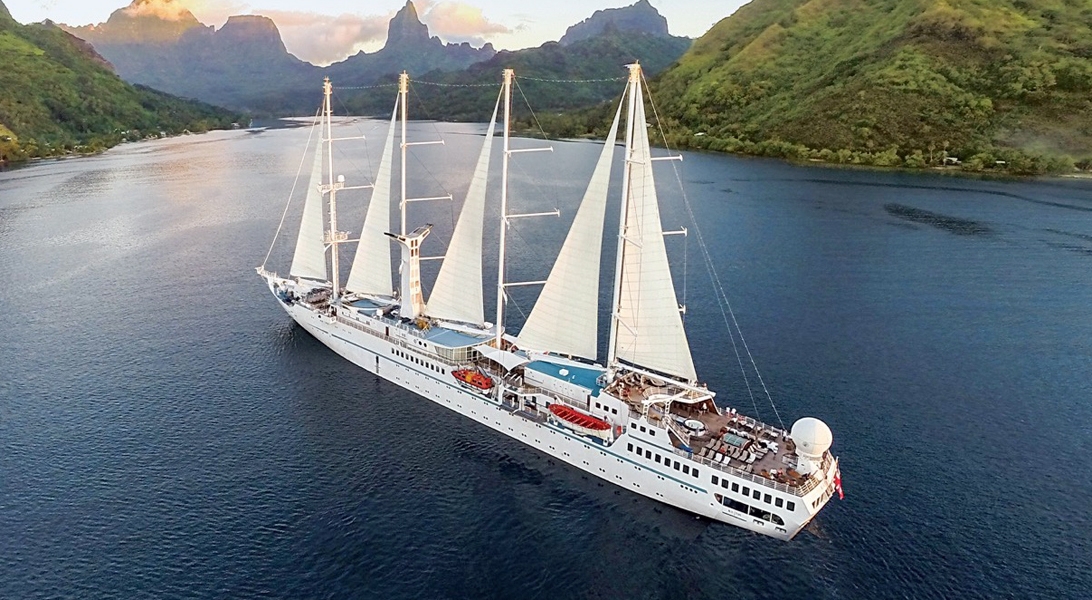


The images shown are for illustration purposes only and may not be an exact representation of what you find on the ship.
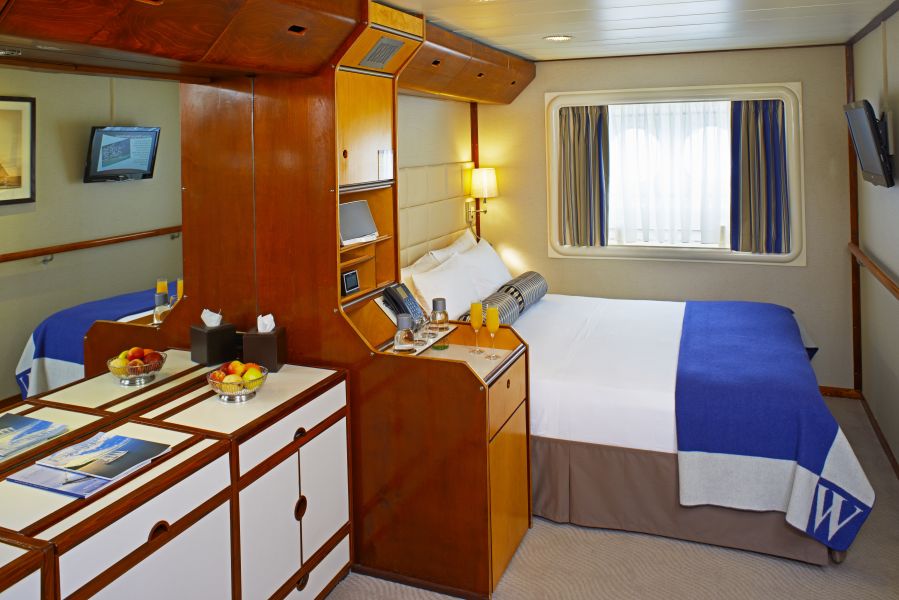
| Grade Code | From | To | |
| B | Category B | £14,675 | £19,812 |
| BX | Category BX Deluxe | £16,049 | £21,667 |
| A | Category A | £17,423 | £23,522 |
| AX | Category AX Deluxe | £18,404 | £24,847 |
Every inch of your stateroom is designed for comfort. Luxurious Egyptian cotton linens wrap you in pleasant sleepiness as you stretch out in your queen bed (can be separated into twins if you prefer). Your spacious bath features granite counter tops, ample storage, and a roomy shower with massage shower head. L’Occitane® bath products invite you to indulge, while comfy waffle-weave robe and slippers entice you to relax. You’ll find fresh fruit and flowers always waiting for you after a day of sun or sightseeing. And, of course, everything else you need and expect — flat-screen television and DVD, private safe. And always at your fingertips, anything you wish from room service.
Amenities
The images shown are for illustration purposes only and may not be an exact representation of what you find on the ship.
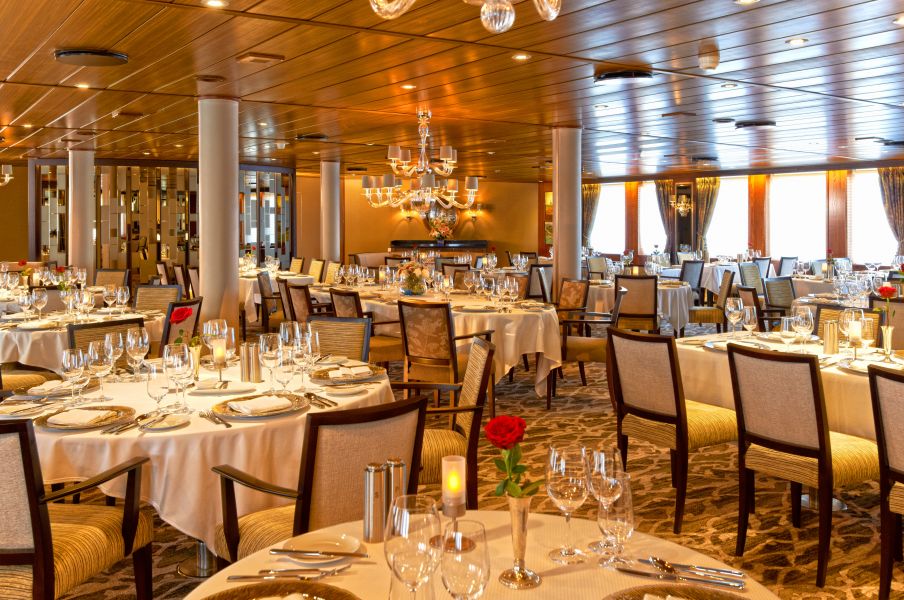
Here, the dining room manager seats you, but where is your decision. There are no pre-assigned tables or first or second seatings. When you dine and with whom are entirely up to you. Seating usually begins at 6:30 p.m. and will be printed in the ship's daily program. Each delightful dish is prepared exactly to your liking – an exquisite dinner served course-by-course with a fine selection of vintage wines.
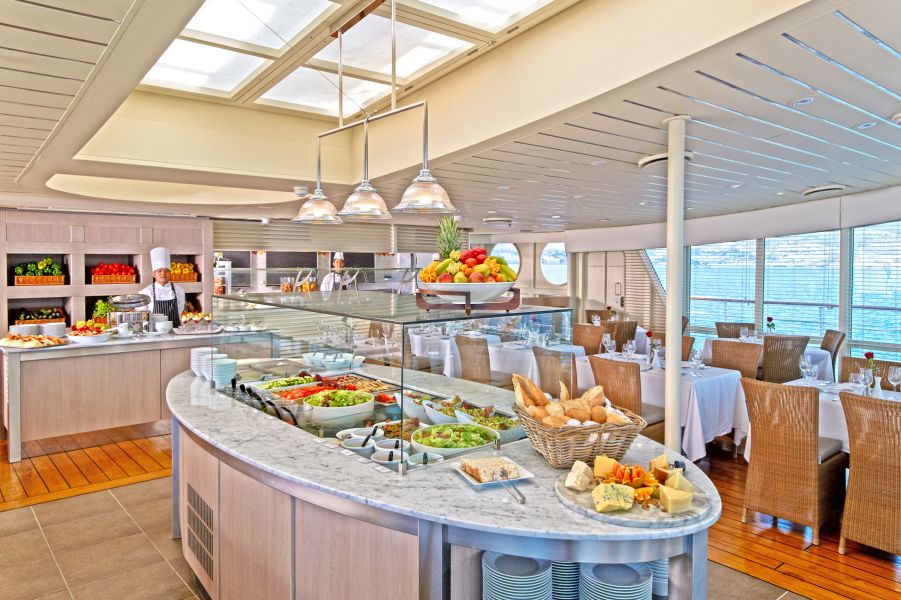
It's breakfast alfresco, full service or buffet-style, anytime till 9:30 a.m. No need to hurry. Again, the choices are many in Veranda. Choose the sumptuous, seemingly endless buffet. Or, order from the lunch menu between noon and 2:30 p.m.
The images shown are for illustration purposes only and may not be an exact representation of what you find on the ship.
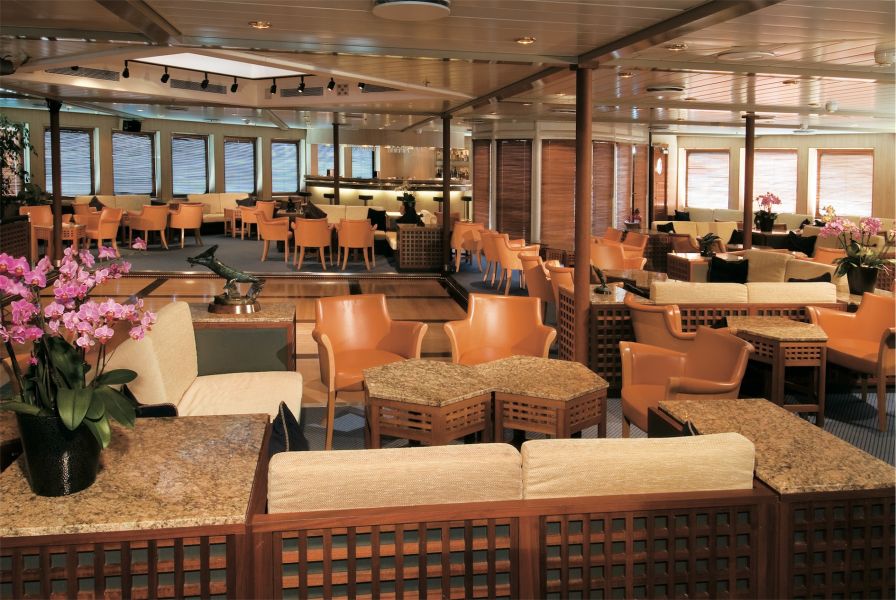
Onboard entertainment facilities include: Sun Deck, Library, Casino, and The Lounge.
The images shown are for illustration purposes only and may not be an exact representation of what you find on the ship.
The images shown are for illustration purposes only and may not be an exact representation of what you find on the ship.


Our Fusion packages are all ABTA & ATOL protected ensuring that your booking is safe with us
| 53 nights aboard the Wind Spirit | |||
| Port Taxes and Fees | |||
 | ABTA and ATOL Protection* | ||
Date 27th Feb 2028 |
Nts 53 |
Oceanview £14,675pp |
Suite £29,004pp |
Date 27th Feb 2028 |
Nts 53 |
Oceanview £14,675pp |
Suite £29,004pp |
| Oceanview staterooms from | £14,675pp | ||
| AX | Category AX Deluxe | £18,404pp | |
| B | Category B | £14,675pp | |
| BX | Category BX Deluxe | £16,049pp | |
| A | Category A | £17,423pp | |
| Suite staterooms from | £29,004pp | ||
| OW | Owner's Suite | £29,004pp | |
Fusion Holidays when selling travel arrangements is a trading name of Co-op Travel Services Limited, registration 08903986. Fusion Cruises is an Accredited Body Member of Co-op Travel Services Limited ATOL 12904.
Book with Confidence. We are a Member of ABTA which means you have the benefit of ABTA’s assistance and Code of Conduct.
Some of the flights and flight-inclusive holidays on this website are financially protected by the ATOL scheme but ATOL protection does not apply to all holiday and travel services offered on this website. This website will provide you with information on the protection that applies in the case of each holiday and travel service offered before you make your booking. If you do not receive an ATOL Certificate then the booking will not be ATOL protected. If you do receive an ATOL Certificate but all parts of your trip are not listed on it, those parts will not be ATOL protected. Please see our booking conditions for information, or for more information about financial protection and the ATOL Certificate go to: www.caa.co.uk