This site uses cookies as defined in our Cookie Policy, by continuing to use this site you agree to their use.
Continue

| Arrive | Depart | ||||||
| 6th06 | JunJun | 202828 | Barcelona, Spain, embark on the Azamara Journey | 18:00 | |||
The infinite variety of street life, the nooks and crannies of the medieval Barri Gòtic, the ceramic tile and stained glass of Art Nouveau facades, the art and music, the throb of street life, the food (ah, the food!)—one way or another, Barcelona will find a way to get your full attention. The capital of Catalonia is a banquet for the senses, with its beguiling mix of ancient and modern architecture, tempting cafés and markets, and sun-drenched Mediterranean beaches. A stroll along La Rambla and through waterfront Barceloneta, as well as a tour of Gaudí's majestic Sagrada Famíliaand his other unique creations, are part of a visit to Spain's second-largest city. Modern art museums and chic shops call for attention, too. Barcelona's vibe stays lively well into the night, when you can linger over regional wine and cuisine at buzzing tapas bars. Dynamic Barcelona is all about architecture, from the magnificent medieval buildings of the Gothic Quarter to the Modernist movement typified by the work of Antoni Gaudi including the amazing Sagrada Familia. | |||||||
| 7th07 | JunJun | 202828 | Valencia, Spain | 07:30 | 22:00 | ||
Valencia, Spain's third-largest municipality, is a proud city with a thriving nightlife and restaurant scene, quality museums, and spectacular contemporary architecture, juxtaposed with a thoroughly charming historic quarter, making it a popular destination year in year out. During the Civil War, it was the last seat of the Republican Loyalist government (1935–36), holding out against Franco’s National forces until the country fell to 40 years of dictatorship. Today it represents the essence of contemporary Spain—daring design and architecture along with experimental cuisine—but remains deeply conservative and proud of its traditions. Though it faces the Mediterranean, Valencia's history and geography have been defined most significantly by the River Turia and the fertile huerta that surrounds it.The city has been fiercely contested ever since it was founded by the Greeks. El Cid captured Valencia from the Moors in 1094 and won his strangest victory here in 1099: he died in the battle, but his corpse was strapped into his saddle and so frightened the besieging Moors that it caused their complete defeat. In 1102 his widow, Jimena, was forced to return the city to Moorish rule; Jaume I finally drove them out in 1238. Modern Valencia was best known for its frequent disastrous floods until the River Turia was diverted to the south in the late 1950s. Since then the city has been on a steady course of urban beautification. The lovely bridges that once spanned the Turia look equally graceful spanning a wandering municipal park, and the spectacularly futuristic Ciutat de les Arts i les Ciències (City of Arts and Sciences), most of it designed by Valencia-born architect Santiago Calatrava, has at last created an exciting architectural link between this river town and the Mediterranean. If you're in Valencia, an excursion to Albufera Nature Park is a worthwhile day trip. Old world charm meets modern architectural genius in Valencia, where the abundant Gothic riches of a 15th century golden age contrast with the innovative and avant-garde buildings of the new millennium. | |||||||
| 8th08 | JunJun | 202828 | Cartagena, Spain | 11:00 | 18:00 | ||
A Mediterranean city and naval station located in the Region of Murcia, southeastern Spain, Cartagena’s sheltered bay has attracted sailors for centuries. The Carthaginians founded the city in 223BC and named it Cartago Nova; it later became a prosperous Roman colony, and a Byzantine trading centre. The city has been the main Spanish Mediterranean naval base since the reign of King Philip II, and is still surrounded by walls built during this period. Cartagena’s importance grew with the arrival of the Spanish Bourbons in the 18th century, when the Navidad Fortress was constructed to protect the harbour. In recent years, traces of the city’s fascinating past have been brought to light: a well-preserved Roman Theatre was discovered in 1988, and this has now been restored and opened to the public. During your free time, you may like to take a mini-cruise around Cartagena's historic harbour: these operate several times a day, take approximately 40 minutes and do not need to be booked in advance. Full details will be available at the port. Strategically located along historic sailing routes, Cartagena has been colonized by a who’s who of Mediterranean superpowers over the millennia, resulting in a rich and multi-layered heritage and history. | |||||||
| 9th09 | JunJun | 202828 | Málaga, Spain | 08:30 | 22:00 | ||
As you sail into Malaga you will notice what an idyllic setting the city enjoys on the famous Costa del Sol. To the east of this provincial capital, the coast along the region of La Axarqua is scattered with villages, farmland and sleepy fishing hamlets - the epitome of traditional rural Spain. To the west stretches a continuous city where the razzmatazz and bustle creates a colourful contrast that is easily recognisable as the Costa del Sol. Surrounding the region, the Penibéetica Mountains provide an attractive backdrop overlooking the lower terraced slopes which yield olives and almonds. This spectacular mountain chain shelters the province from cold northerly winds, giving it a reputation as a therapeutic and exotic place in which to escape from cold northern climes. Malaga is also the gateway to many of Andalusia's enchanting historic villages, towns and cities. Málaga is the lively capital of the Costa del Sol, which is famed for its beaches and mild climate, and the birthplace of Picasso, as well as the gateway to Andalusia, with its Moorish architectural heritage. | |||||||
| 10th10 | JunJun | 202828 | Gibraltar, Gibraltar | 08:00 | 20:00 | ||
Tagged on to the end of Iberia, the intriguing British outpost of Gibraltar is dominated by a sandy peninsula and the stunning 1,400-feet-high limestone Rock. Although small, Gibraltar has always been seen as having great strategic importance on account of its advantageous position where the Atlantic meets the Mediterranean, just 12 miles from the coast of Africa. Ever popular with British holidaymakers, Gibraltar is very much a home from home, boasting excellent duty-free shopping in many familiar British high street shops. Please note: Gibraltar’s small size and narrow winding roads mean that excursions are operated by 22-seater mini-buses, accompanied by a driver/guide. Local health and safety regulations prohibit the carriage of walking aids and collapsible wheelchairs on these vehicles. If you do wish to bring a mobility aid, we can arrange the Rock Tour by taxi, which has extra space. If this suits your requirements, please advise the Tours and Travel office when you join the ship, as numbers are limited. Overlooking the mouth of the Mediterranean Sea from 1,400’ high and in a strategic position to control all naval traffic between the Mediterranean and the Atlantic, the Rock of Gibraltar is a sight to behold. | |||||||
| 11th11 | JunJun | 202828 | Seville, Spain | 13:30 | |||
Whether you pronounce it Seville or Sevilla, this gorgeous Spanish town is most certainly the stuff of dreams. Over 2,200 years old, Seville has a mutli-layered personality; home to Flamenco, high temperatures and three UNESCO-World Heritage Sites, there is a noble ancestry to the southern Spanish town. Not forgetting that it is the birthplace of painter Diego Velazquez, the resting place of Christopher Columbus, the inspiration for Bizet’s Carmen and a location for Game of Thrones filming, Seville is truly more than just a sum of its parts. This city is a full on experience, a beguiling labyrinth of centuries old streets, tiny tapas restaurants serving possibly the best dishes you’ll taste south of Madrid and a paradise of Mudejar architecture and tranquil palm trees and fountain-filled gardens. Home to the great cathedral and The Alcazar, Seville is credited with inventing tapas, and the passionate nature of Sevillanos is evident in their devotion to food as well as bullfighting, flamenco and fiesta. | |||||||
| 12th12 | JunJun | 202828 | Seville, Spain | ||||
Whether you pronounce it Seville or Sevilla, this gorgeous Spanish town is most certainly the stuff of dreams. Over 2,200 years old, Seville has a mutli-layered personality; home to Flamenco, high temperatures and three UNESCO-World Heritage Sites, there is a noble ancestry to the southern Spanish town. Not forgetting that it is the birthplace of painter Diego Velazquez, the resting place of Christopher Columbus, the inspiration for Bizet’s Carmen and a location for Game of Thrones filming, Seville is truly more than just a sum of its parts. This city is a full on experience, a beguiling labyrinth of centuries old streets, tiny tapas restaurants serving possibly the best dishes you’ll taste south of Madrid and a paradise of Mudejar architecture and tranquil palm trees and fountain-filled gardens. Home to the great cathedral and The Alcazar, Seville is credited with inventing tapas, and the passionate nature of Sevillanos is evident in their devotion to food as well as bullfighting, flamenco and fiesta. | |||||||
| 13th13 | JunJun | 202828 | Seville, Spain | 16:00 | |||
Whether you pronounce it Seville or Sevilla, this gorgeous Spanish town is most certainly the stuff of dreams. Over 2,200 years old, Seville has a mutli-layered personality; home to Flamenco, high temperatures and three UNESCO-World Heritage Sites, there is a noble ancestry to the southern Spanish town. Not forgetting that it is the birthplace of painter Diego Velazquez, the resting place of Christopher Columbus, the inspiration for Bizet’s Carmen and a location for Game of Thrones filming, Seville is truly more than just a sum of its parts. This city is a full on experience, a beguiling labyrinth of centuries old streets, tiny tapas restaurants serving possibly the best dishes you’ll taste south of Madrid and a paradise of Mudejar architecture and tranquil palm trees and fountain-filled gardens. Home to the great cathedral and The Alcazar, Seville is credited with inventing tapas, and the passionate nature of Sevillanos is evident in their devotion to food as well as bullfighting, flamenco and fiesta. | |||||||
| 14th14 | JunJun | 202828 | Portimão, Portugal | 08:00 | 16:00 | ||
Portimão is a major fishing port, and significant investment has been poured into transforming it into an attractive cruise port as well. The city itself is spacious and has several good shopping streets—though sadly many of the more traditional retailers have closed in the wake of the global economic crisis. There is also a lovely riverside area that just begs to be strolled (lots of the coastal cruises depart from here). Don’t leave without stopping for an alfresco lunch at the Doca da Sardinha ("sardine dock") between the old bridge and the railway bridge. You can sit at one of many inexpensive establishments, eating charcoal-grilled sardines (a local specialty) accompanied by chewy fresh bread, simple salads, and local wine. The breathtaking scenery of Portugal’s southernmost region has long made the Algarve region a magnet for those seeking winter sun. | |||||||
| 15th15 | JunJun | 202828 | Lisbon, Portugal | 06:00 | 17:00 | ||
Set on seven hills on the banks of the River Tagus, Lisbon has been the capital of Portugal since the 13th century. It is a city famous for its majestic architecture, old wooden trams, Moorish features and more than twenty centuries of history. Following disastrous earthquakes in the 18th century, Lisbon was rebuilt by the Marques de Pombal who created an elegant city with wide boulevards and a great riverfront and square, Praça do Comércio. Today there are distinct modern and ancient sections, combining great shopping with culture and sightseeing in the Old Town, built on the city's terraced hillsides. The distance between the ship and your tour vehicle may vary. This distance is not included in the excursion grades. Lisbon is one of the oldest cities in the world and its magnificent harbor made it a logical trading port as far back as the Phoenicians; today it’s renowned for an active culture of festivals, art and fashion. | |||||||
| 16th16 | JunJun | 202828 | Leixões, Portugal | 09:00 | 20:00 | ||
Ever since the Romans constructed a fort here and began using it as a trading post, Oporto has been a prosperous commercial centre. In the 15th and 16th centuries the city benefited from the wealth generated by Portugal’s maritime discoveries, and later, the establishment of a lucrative wine trade with Britain compensated for the loss of the spice trade. Today, Portugal’s second-largest city is a thriving, cosmopolitan place and is famous for its production of the fortified, sweet 'port' wine. Its historic centre is a UNESCO World Heritage Site and the city was also awarded the status of European Capital of Culture in 2001. A large sandbar prevents ships from sailing into Oporto itself, so for over a century they have used nearby Leixões instead, a man-made seaport constructed nine miles from the city. Leixões is one of Portugal's major sea ports and is also home to one of the country's oldest football clubs, winners of the Taça de Portugal cup in 1961. At the mouth of the Rio Douro lies the city of Porto, known mostly for its port wine, but with origins dating back to the 5th century, there is plenty to see such as the Ribeira neighborhood along the river. | |||||||
| 17th17 | JunJun | 202828 | At Sea | ||||
| 18th18 | JunJun | 202828 | Bilbao, Spain | 08:00 | 22:00 | ||
Time in Bilbao (Bilbo, in Euskera) may be recorded as BG or AG (Before Guggenheim or After Guggenheim). Never has a single monument of art and architecture so radically changed a city. Frank Gehry's stunning museum, Norman Foster's sleek subway system, the Santiago Calatrava glass footbridge and airport, the leafy César Pelli Abandoibarra park and commercial complex next to the Guggenheim, and the Philippe Starck AlhóndigaBilbao cultural center have contributed to an unprecedented cultural revolution in what was once the industry capital of the Basque Country.Greater Bilbao contains almost 1 million inhabitants, nearly half the total population of the Basque Country. Founded in 1300 by Vizcayan noble Diego López de Haro, Bilbao became an industrial center in the mid-19th century, largely because of the abundance of minerals in the surrounding hills. An affluent industrial class grew up here, as did the working class in suburbs that line the Margen Izquierda (Left Bank) of the Nervión estuary.Bilbao's new attractions get more press, but the city's old treasures still quietly line the banks of the rust-color Nervión River. The Casco Viejo (Old Quarter)—also known as Siete Calles (Seven Streets)—is a charming jumble of shops, bars, and restaurants on the river's Right Bank, near the Puente del Arenal bridge. This elegant proto-Bilbao nucleus was carefully restored after devastating floods in 1983. Throughout the Casco Viejo are ancient mansions emblazoned with family coats of arms, wooden doors, and fine ironwork balconies. The most interesting square is the 64-arch Plaza Nueva, where an outdoor market is pitched every Sunday morning.Walking the banks of the Nervión is a satisfying jaunt. After all, this was how—while out on a morning jog—Guggenheim director Thomas Krens first discovered the perfect spot for his project, nearly opposite the right bank's Deusto University. From the Palacio de Euskalduna upstream to the colossal Mercado de la Ribera, parks and green zones line the river. César Pelli's Abandoibarra project fills in the half mile between the Guggenheim and the Euskalduna bridge with a series of parks, the Deusto University library, the Meliá Bilbao Hotel, and a major shopping center.On the left bank, the wide, late-19th-century boulevards of the Ensanche neighborhood, such as Gran Vía (the main shopping artery) and Alameda de Mazarredo, are the city's more formal face. Bilbao's cultural institutions include, along with the Guggenheim, a major museum of fine arts (the Museo de Bellas Artes) and an opera society (Asociación Bilbaína de Amigos de la Ópera, or ABAO) with 7,000 members from Spain and southern France. In addition, epicureans have long ranked Bilbao's culinary offerings among the best in Spain. Don't miss a chance to ride the trolley line, the Euskotram, for a trip along the river from Atxuri Station to Basurto's San Mamés soccer stadium, reverently dubbed "la Catedral del Fútbol" (the Cathedral of Football). If Bilbao wasn't quite a household name, it was transformed with the opening of Frank Gehry's Guggenheim Museum in 1997; now it’s a tourist mecca and showcases the Basque love of food, wine and laughter. | |||||||
| 19th19 | JunJun | 202828 | Pasajes, Spain | 06:45 | 15:00 | ||
You are now entering Basque country – which truly feels like different country in the Iberian Peninsula. Pasajes’ stone walls, densely packed between the sea and mountains, offers a moment of quiet for a delicious pintxo (canape) and the freshest seafood. | |||||||
| 20th20 | JunJun | 202828 | Bordeaux, France | 07:00 | |||
Bordeaux as a whole, rather than any particular points within it, is what you'll want to visit in order to understand why Victor Hugo described it as Versailles plus Antwerp, and why the painter Francisco de Goya, when exiled from his native Spain, chose it as his last home (he died here in 1828). The capital of southwest France and the region's largest city, Bordeaux remains synonymous with the wine trade: wine shippers have long maintained their headquarters along the banks of the Garonne, while buyers from around the world arrive for the huge biennial Vinexpo show (held in odd-number years).Bordeaux is, admittedly, a less exuberant city than many others in France, but lively and stylish elements are making a dent in its conservative veneer. The cleaned-up riverfront is said by some, after a bottle or two, to exude an elegance reminiscent of St. Petersburg, and that aura of 18th-century élan also permeates the historic downtown sector—“le vieux Bordeaux"—where fine shops invite exploration. To the south of the city center are old docklands undergoing renewal—one train station has now been transformed into a big multiplex movie theater—but the area is still a bit shady. To get a feel for the historic port of Bordeaux, take the 90-minute boat trip that leaves Quai Louis-XVIII every weekday afternoon, or the regular passenger ferry that plies the Garonne between Quai Richelieu and the Pont d'Aquitaine in summer. A nice time to stroll around the city center is the first Sunday of the month, when it's pedestrian-only and vehicles are banned. Since the 14th century, Bordeaux’s fortunes have been tied to viticulture, resulting in a city of classical and neoclassical style, with monumental buildings and fine mansions financed by the almighty grape. | |||||||
| 21st21 | JunJun | 202828 | Bordeaux, France | 19:00 | |||
Bordeaux as a whole, rather than any particular points within it, is what you'll want to visit in order to understand why Victor Hugo described it as Versailles plus Antwerp, and why the painter Francisco de Goya, when exiled from his native Spain, chose it as his last home (he died here in 1828). The capital of southwest France and the region's largest city, Bordeaux remains synonymous with the wine trade: wine shippers have long maintained their headquarters along the banks of the Garonne, while buyers from around the world arrive for the huge biennial Vinexpo show (held in odd-number years).Bordeaux is, admittedly, a less exuberant city than many others in France, but lively and stylish elements are making a dent in its conservative veneer. The cleaned-up riverfront is said by some, after a bottle or two, to exude an elegance reminiscent of St. Petersburg, and that aura of 18th-century élan also permeates the historic downtown sector—“le vieux Bordeaux"—where fine shops invite exploration. To the south of the city center are old docklands undergoing renewal—one train station has now been transformed into a big multiplex movie theater—but the area is still a bit shady. To get a feel for the historic port of Bordeaux, take the 90-minute boat trip that leaves Quai Louis-XVIII every weekday afternoon, or the regular passenger ferry that plies the Garonne between Quai Richelieu and the Pont d'Aquitaine in summer. A nice time to stroll around the city center is the first Sunday of the month, when it's pedestrian-only and vehicles are banned. Since the 14th century, Bordeaux’s fortunes have been tied to viticulture, resulting in a city of classical and neoclassical style, with monumental buildings and fine mansions financed by the almighty grape. | |||||||
| 22nd22 | JunJun | 202828 | At Sea | ||||
| 23rd23 | JunJun | 202828 | Saint-Malo, France | 08:00 | 20:00 | ||
Thrust out into the sea and bound to the mainland only by tenuous man-made causeways, romantic St-Malo has built a reputation as a breeding ground for phenomenal sailors. Many were fishermen, but others—most notably Jacques Cartier, who claimed Canada for Francis I in 1534—were New World explorers. Still others were corsairs, "sea dogs" paid by the French crown to harass the Limeys across the Channel: legendary ones like Robert Surcouf and Duguay-Trouin helped make St-Malo rich through their pillaging, in the process earning it the nickname "the pirates' city." The St-Malo you see today isn’t quite the one they called home because a weeklong fire in 1944, kindled by retreating Nazis, wiped out nearly all of the old buildings. Restoration work was more painstaking than brilliant, but the narrow streets and granite houses of the Vieille Ville were satisfactorily recreated, enabling St-Malo to regain its role as a busy fishing port, seaside resort, and tourist destination. The ramparts that help define this city figuratively and literally are authentic, and the flames also spared houses along Rue de Pelicot in the Vieille Ville. Battalions of tourists invade this quaint part of town in summer, so arrive off-season if you want to avoid crowds. The walled city of St. Malo is a quaint maze of fine old buildings, museums and cafés serving Breton specialties of crepes and cider, where you can stroll along the ramparts and walk the cobblestone streets. | |||||||
| 24th24 | JunJun | 202828 | Le Havre, France | 08:00 | 18:00 | ||
Le Havre, founded by King Francis I of France in 1517, is located inUpper Normandy on the north bank of the mouth of the River Seine, which isconsidered the most frequented waterway in the world. Its port is ranked thesecond largest in France. The city was originally built on marshland andmudflats that were drained in the 1500’s. During WWII most of Le Havre wasdestroyed by Allied bombing raids. Post war rebuilding of the city followed thedevelopment plans of the well-known Belgian architect Auguste Perre. Thereconstruction was so unique that the entire city was listed as a UNESCO WorldHeritage Site in 2005. | |||||||
| 25th25 | JunJun | 202828 | Dover, England | 07:00 | 17:00 | ||
Known as the gateway of England, Dover welcomes millions of visitors from all over the globe each year in its role as the ferry capital of the world and the second busiest cruise port in the UK. The White Cliffs Country has a rich heritage. Within the walls of the town’s iconic castle, over 2,000 years of history waits to be explored, whilst the town’s museum is home to the Dover Bronze Age Boat, the world’s oldest known seagoing vessel. The town’s cliffs that are a welcome sight for today's cross-channel travellers also served as the control centre for the Dunkirk evacuation in 1940. The stunning white chalk cliffs of Dover that face France and its secret tunnels from WWII—plus the charms of nearby Canterbury and its stunning cathedral (the oldest in England)—make for fascinating visit. Steeped in tradition, but is also a modern and vibrant city | |||||||
| 26th26 | JunJun | 202828 | Amsterdam, Netherlands | 08:00 | 20:00 | ||
Amsterdam combines the unrivaled beauty of the 17th-century Golden Age city center with plenty of museums and art of the highest order, not to mention a remarkably laid-back atmosphere. It all comes together to make this one of the world's most appealing and offbeat metropolises in the world. Built on a latticework of concentric canals like an aquatic rainbow, Amsterdam is known as the City of Canals—but it's no Venice, content to live on moonlight serenades and former glory. Quite the contrary: on nearly every street here you'll find old and new side by side—quiet corners where time seems to be holding its breath next to streets like neon-lit Kalverstraat, and Red Light ladies strutting by the city's oldest church. Indeed, Amsterdam has as many lovely facets as a 40-carat diamond polished by one of the city's gem cutters. It's certainly a metropolis, but a rather small and very accessible one. Locals tend to refer to it as a big village, albeit one that happens to pack the cultural wallop of a major world destination. There are scores of concerts every day, numerous museums, summertime festivals, and, of course, a legendary year-round party scene. It's pretty much impossible to resist Amsterdam's charms. With 7,000 registered monuments, most of which began as the residences and warehouses of humble merchants, set on 160 man-made canals, and traversed by 1,500 or so bridges, Amsterdam has the largest historical inner city in Europe. Its famous circle of waterways, the grachtengordel, was a 17th-century urban expansion plan for the rich and is a lasting testament to the city’s Golden Age. This town is endearing because of its kinder, gentler nature—but a reputation for championing sex, drugs, and rock ’n’ roll does not alone account for Amsterdam's being one of the most popular destinations in Europe: consider that within a single square mile the city harbors some of the greatest achievements in Western art, from Rembrandt to Van Gogh. Not to mention that this is one of Europe's great walking cities, with so many of its treasures in the untouted details: tiny alleyways barely visible on the map, hidden garden courtyards, shop windows, floating houseboats, hidden hofjes(courtyards with almshouses), sudden vistas of church spires, and gabled roofs that look like so many unframed paintings. And don’t forget that the joy lies in details: elaborate gables and witty gable stones denoting the trade of a previous owner. Keep in mind that those XXX symbols you see all over town are not a mark of the city's triple-X reputation. They're part of Amsterdam's official coat of arms—three St. Andrew's crosses, believed to represent the three dangers that have traditionally plagued the city: flood, fire, and pestilence. The coat's motto ("Valiant, determined, compassionate") was introduced in 1947 by Queen Wilhelmina in remembrance of the 1941 February Strike in Amsterdam—the first time in Europe that non-Jewish people protested against the persecution of Jews by the Nazi regime. Amsterdam has a personality all its own, with tulips, wooden shoes, canals and famous inhabitants from the past (Rembrandt, Van Gogh and Anne Frank), not to mention a long time reputation for tolerance. | |||||||
| 27th27 | JunJun | 202828 | At Sea | ||||
| 28th28 | JunJun | 202828 | Rosendal, Norway | 08:00 | 17:00 | ||
This quaint harbor village sits at the gateway to the vast Hardangerfjord, Norway’s second longest fjord. Rosendal is surrounded by glaciers, rolling green hills, and towering snow-capped mountains. Home to historical treasures from the Middle Ages, Norway’s only perfectly preserved 17th Century room, and a 300-year old rose garden, Rosendal is equal parts breathtaking scenery and a journey back through the centuries. | |||||||
| 29th29 | JunJun | 202828 | Olden, Norway | 09:00 | 20:00 | ||
See the aqua blue ice of the Jostedal Glacier cascading down the stunning Oldedalen Valley, as you navigate the spindly fjords of Norway. Feel your breath catching in your throat, as you sail into this world of wonder, and the dramatic fjord scenery and interlocking valleys inspire you. The village of Olden opens up some of Norway's most majestic natural wonders, from the glacier - which is mainland Europe's largest - to the sloshing waterfalls that run off it, and the bowing forests that sway all around it. A visit to picturesque Olden is all thrilling panoramas and hikes through wildflower sprinkled trails. The Briksdalsbreen arm of ice, reaches out from the main glacier, and sits around an hour's stroll from the village of Olden itself - regular busses can also take you there. Snaking through steep-sided valleys, you can enjoy a walk close to the foot of the ice, and feel the spray of the waterfalls that plummet nearby, as you breathe in some of the freshest air you’ve ever tasted. The crisp glacial meltwater is so clean and pure that it’s bottled up to be sold across Norway. The village of Olden sits peacefully at the edge of the colossal Jostedal Glacier, Europe's largest ice floe, covering 188 square miles…and that’s just one of the incredible glaciers you can explore here. | |||||||
| 30th30 | JunJun | 202828 | Ålesund, Norway | 08:00 | 22:00 | ||
The coastal town of Ålesund is the commercial capital of the Møre og Romsdal district. But more important, it is noted for its characteristic Jugendstil (Art Nouveau) buildings, which some claim make Ålesund one of the most beautiful towns in Norway. This Art Nouveau style emerged when the town was completely rebuilt after a devastating fire in 1904 destroyed nearly 800 buildings and left 10,000 residents homeless. It is said that the fire started by a tipped oil lamp. Rebuilding was carried out with the help of many young, foreign architects who added their own flourishes to the architectural blend of German Jugendstil and Viking roots. Today, narrow streets are crammed with buildings topped with turrets, spires and gables that bear decorations of dragonheads and curlicues. As one of the few remaining Art Nouveau towns in the world, in 1998 Ålesund was awarded the coveted Houens National Memorial Prize for the preservation of its unique architecture. Just a stone’s throw away from the spectacle of Geirangerfjord, Alesund is renowned for its architecture, where turrets, spires and other whimsical Art Nouveau touches give the town its distinctive character. | |||||||
| 1st01 | JulJul | 202828 | At Sea | ||||
| 2nd02 | JulJul | 202828 | Svolvær, Norway | 07:00 | 17:00 | ||
Located 124 miles north of the Arctic Circle, the Lofoten archipelago is among the most dramatic in Norway, its spectacular glacial rock formations always visible, looming large behind beaches and green fields. | |||||||
| 2nd02 | JulJul | 202828 | Trollfjord, Norway | 18:30 | 19:00 | ||
Big adventure, small voyage. Discover the mythic lands of the Vikings on a journey through Arctic fjords and untouched natural splendor. | |||||||
| 3rd03 | JulJul | 202828 | Tromsø, Norway | 09:00 | 22:00 | ||
With its centre located on the island of Tromsø, the municipality of Tromsø is more than five times the size of Norway’s capital, Oslo, and is the world’s northernmost university city. Lying 200 miles inside the Arctic Circle, it is known as the 'Gateway to the Arctic' because it was used as a starting point for hunters looking for Arctic foxes, polar bears and seals. In the 19th century it was a base for explorers on Arctic expeditions – a history that is remembered in the city’s Polar Museum, which you can visit on an excursion. Also commemorated in the area is the history of Norway’s indigenous people, the Sami. Visitors can learn about the traditions, heritage and modern preservation of the Sami culture at the Tromsø Museum. Nowadays, Tromsø is a charming mix of old and new, with wooden buildings sitting alongside contemporary architecture such as the impressive glacier-like Arctic Cathedral, which features one of the largest stained glass windows in Europe. Looking down on the city is Mount Storsteinen, and a cable car runs to the top, giving wonderful views over the surrounding countryside of forested peaks and reindeer pastures. Far north of the Arctic Circle, Tromsø is surrounded by a dramatic landscape of snow-capped peaks, scattered islands and majestic fjords, a scene best observed by taking the cable car up Storsteinen Mountain. | |||||||
| 4th04 | JulJul | 202828 | Honningsvåg, Norway | 14:00 | 20:00 | ||
Searching in 1553 for a northeast passage to India, British navigator Richard Chancellor came upon a crag 307 yards above the Barents Sea. He named the jut of rock North Cape, or Nordkapp. Today Europe's northernmost point is a rite-of-passage journey for nearly all Scandinavians and many others. Most cruise passengers visit Nordkapp from Honningsvåg, a fishing village on Magerøya Island. The journey from Honningsvåg to Nordkapp covers about 35 km (22 miles) across a landscape characterized by rocky tundra and grazing reindeer, which are rounded up each spring by Sami herdsmen in boats. The herdsmen herd the reindeer across a mile-wide channel from their winter home on the mainland. Honningvåg's northerly location makes for long, dark winter nights and perpetually sun-filled summer days. The village serves as the gateway to Arctic exploration and the beautiful Nordkapp Plateau, a destination that calls to all visitors of this region. Most of those who journey to Nordkapp (North Cape), the northernmost tip of Europe, are in it for a taste of this unique, otherworldly, rugged yet delicate landscape. You'll see an incredible treeless tundra, with crumbling mountains and sparse dwarf plants. The subarctic environment is very vulnerable, so don't disturb the plants. Walk only on marked trails and don't remove stones, leave car marks, or make campfires. Because the roads are closed in winter, the only access is from the tiny fishing village of Skarsvåg via Sno-Cat, a thump-and-bump ride that's as unforgettable as the desolate view. Honningsvag, population 4,000, is the last village before the North Cape, which rises over 1,000 feet above the sea and provides a lookout over a limitless panorama stretching silently to the North Pole. | |||||||
| 5th05 | JulJul | 202828 | Alta, Norway | 09:00 | 17:00 | ||
People have been attracted to the community of Alta for thousands of years, and prehistoric rock carvings discovered in 1973 can be seen at the Alta Museum. Situated at the head of the Altafjord, it is a lush, green and hospitable shelter in the otherwise cold and windswept Finnmark landscape. Halfway between the grim, barren mountain plateau and the wet, stormy coast, Alta offers tree-clad valleys, pleasant temperatures and no more rain than the Sahara. However at 70 degrees North it is quite a different story in winter, when heavy snowfalls and sub-zero temperatures are the order of the day, and clear dark night skies become the arena for dazzling displays of the elusive Aurora Borealis, also referred to as 'the temperamental lady' by Laplanders. The world’s first Northern Lights Observatory, which played an important role in the development of geophysical and meteorological research during the first half of the 20th century, is located just 12 miles from Alta. Perched atop Haldde Mountain, it towers almost 3,000 feet above Kafjord, where the battleship Tirpitz was based during the Second World War. Tucked deep in the majestic Altafjord, this city above the Arctic Circle shines in the light of the midnight sun. The local Sami people are warm and welcoming, and outdoor adventure abounds. | |||||||
| 6th06 | JulJul | 202828 | Harstad, Norway | 08:00 | 22:00 | ||
Located on Norway’s largest coastal island of Hinnøya, balmy, subpolar oceanic temperatures and the breathtaking Scandinavian Mountains invite you to explore this gem just north of the Arctic Circle. | |||||||
| 7th07 | JulJul | 202828 | Bodø, Norway | 08:30 | 17:00 | ||
The capital of Nordland is a peaceful city, but beneath the surface lies a fascinating and colourful military past. During the Cold War it was an important NATO base, stationing fighter jets to intercept Soviet naval vessels and aircraft. The situation culminated when Premier Kruschev threatened to destroy Bodø with nuclear weapons after a CIA U-2 spy plane bound for the city was shot down over the Soviet Union. You can learn more about the city's Cold War history at the Norwegian Aviation Museum, which is uniquely designed to resemble a biplane and houses an intact U-2 plane, a Spitfire, a rare Hønningstad C-5 polar seaplane and many other interesting exhibits. As well as its military heritage, Bodø boasts the world's strongest maelstrom at Saltstraumen, which attracts a host of visitors every year. Live it up in the land of the midnight sun. Bodø offers a breathtaking escape to a world of natural wonder just north of the Arctic Circle. | |||||||
| 8th08 | JulJul | 202828 | Trondheim, Norway | 13:30 | 22:00 | ||
One of Scandinavia's oldest cities, Trondheim was the first capital of Norway, from AD 997 to 1380. Founded in 997 by Viking king Olav Tryggvason, it was first named Nidaros (still the name of the cathedral), a composite word referring to the city's location at the mouth of the Nidelva River. Today, it's Central Norway's largest (and Norway's third largest) city, with a population of 150,000. The wide streets of the historic city center remain lined with brightly painted wood houses and striking warehouses. But it's no historic relic: it's also the home to NTNU (Norwegian University of Science and Technology) and is Norway's technological capital. From gothic cathedrals to rock music museums, explore one of Norway’s most historic and entertaining cities. | |||||||
| 9th09 | JulJul | 202828 | Kristiansand, Norway | 08:00 | 20:00 | ||
Nicknamed "Sommerbyen" ("Summer City"), Norway's fifth-largest city has 78,000 inhabitants. Norwegians come here for its sun-soaked beaches and beautiful harbor. Kristiansand has also become known internationally for the outdoor Quart Festival, which hosts local and international rock bands every July. According to legend, in 1641 King Christian IV marked the four corners of Kristiansand with his walking stick, and within that framework the grid of wide streets was laid down. The center of town, called the Kvadraturen, still retains the grid, even after numerous fires. In the northeast corner is Posebyen, one of northern Europe's largest collections of low, connected wooden house settlements, and there's a market here every Saturday in summer. Kristiansand's Fisketorvet (fish market) is near the south corner of the town's grid, right on the sea. Settled around 400 AD and formally founded by King Christian IV in 1641, Kristiansand is now a major port, and offers plenty of beaches, salmon fishing, sailing and, of course, the freshest of seafood. | |||||||
| 10th10 | JulJul | 202828 | At Sea | ||||
| 11th11 | JulJul | 202828 | Arendal, Norway | 08:00 | 22:00 | ||
You’ll weave between glowing lighthouses and picturesque islands, as you approach the quaint Norwegian town of Arendal. Set on the southern coast, and spanning seven islands, Arendal is a place to slow the pace, and unwind surrounded by Norway’s easy-going beauty. Ferries – and boat hiring opportunities - make exploring easy, or you can get out on foot or two wheels to throw yourself into the thick of the area’s outstanding natural beauty. Arendal's twin lighthouses are the first thing you'll see, as your ship leaves the open ocean, and heads to Arendal itself. The perfect focal point for any photo, Store Torungen is still in working order - witness it flashing its warnings to passing ships, as they navigate the tricky islands and skerries that are scattered across the waters. Cafes and shell-fish sellers welcome you to the city centre as you step off the ship, and you’re immediately well placed to slow the pace, and wander beside glistening water. Or, why not stretch your legs by escaping to the countryside and cycling along wooden pathways that skirt glistening lakes? Dating back to the 1500s, the seaside town of Arendal is stunningly situated on Norway’s southern coast. With its archipelago of islands, historic buildings, and cultural sites, it’s a charming port renowned for outdoor adventures and spectacular views. | |||||||
| 12th12 | JulJul | 202828 | Skagen, Denmark | 08:00 | 17:00 | ||
Skagen is one of Denmark’s main fishing ports, a cute little get-away destination with lovely beaches that drew the attention of artists in the late 19th century due to its wild landscape and quality of light. | |||||||
| 13th13 | JulJul | 202828 | Copenhagen, Denmark | 07:00 | 17:00 | ||
By the 11th century, Copenhagen was already an important trading and fishing centre and today you will find an attractive city which, although the largest in Scandinavia, has managed to retain its low-level skyline. Discover some of the famous attractions including Gefion Fountain and Amalienborg Palace, perhaps cruise the city’s waterways, visit Rosenborg Castle or explore the medieval fishing village of Dragoer. Once the home of Hans Christian Andersen, Copenhagen features many reminders of its fairytale heritage and lives up to the reputation immortalised in the famous song ‘Wonderful Copenhagen’. Copenhagen is known as a city of spires: The skyline of its medieval core is punctuated by the steeples of churches and towers of palaces, though a modern building boom has overtaken other parts of the city. | |||||||
| 14th14 | JulJul | 202828 | Warnemünde, Germany | 07:30 | 21:00 | ||
Warnemünde, officially a suburb of Rostock, is a quaint seaside resort town with the best hotels and restaurants in the area, as well as 20 km (12 miles) of beautiful white-sand beach. It's been a popular summer getaway for families in eastern Germany for years.There is little to do in Warnemünde except relax, and the town excels brilliantly at that. However, Warnemünde is a major cruise-ship terminal. Whenever there is more than one ship at dock, the town explodes with a county fair–like atmosphere, and shops and restaurants stay open until the ships leave at midnight. The city celebrates the dreifache Anlauf, when three ships dock simultaneously, with fireworks. Warnemunde is a seaside resort neighboring the red brick 800-year-old Hanseatic city of Rostock, and from here it’s possible to spend a day in Berlin, home to historic monuments and a revitalized city center. | |||||||
| 15th15 | JulJul | 202828 | Rønne, Denmark | 08:00 | 17:00 | ||
Boasting numerous picturesque fishing villages and medieval churches, the island of Bornholm and its capital city of Ronne appears to have gotten somewhat lost in the Baltic Sea between Sweden and Poland. | |||||||
| 16th16 | JulJul | 202828 | Gdansk, Poland | 08:00 | 22:00 | ||
Gdańsk is a 1,000-year-old port city on the Baltic coast of Poland, which, together with the city of Gdynia and the town of Sopot, makes up the metropolitan area Trójmiasto otherwise known as “the Tricity”. | |||||||
| 17th17 | JulJul | 202828 | Klaipeda, Lithuania | 08:30 | 14:30 | ||
Walk the cobblestoned Old Town in Klaipėda and you’ll see its German heritage in the half-timbered architecture, beginning at Theatre Square where Hitler once spoke. | |||||||
| 18th18 | JulJul | 202828 | Riga, Latvia | 08:00 | 22:00 | ||
Rīga has an upscale, big-city feel unmatched in the region. The capital (almost as large as Tallinn and Vilnius combined) is the business center of the area while original, high-quality restaurants and hotels have earned Rīga some bragging rights among its Western European counterparts. The city also doesn't lack for beauty—Rīga's Old Town (now a UNESCO World Heritage site) is one of Europe’s most striking examples of the art nouveau architectural style. Long avenues of complex and sometimes whimsical Jugendstil facades hint at Rīga's grand past. Many were designed by Mikhail Eisenstein, the father of Soviet director Sergei. This style dominates the city center. In many ways, the wonder of Rīga resides less in its individual attractions and more in the fabric of the town itself. In the medieval Old Town, an ornate gable or architrave catches the eye at every turn. The somber and the flamboyant are both represented in this quarter's 1,000 years of architectural history. Don't hesitate to just follow where your desire leads—the Old Town is compact and bounded by canals, so it's difficult to get totally lost. When the Old Town eventually became too crowded, the city burst out into the newer inner suburbs. The rich could afford to leave and build themselves fine fashionable mansions in the style of the day; consequently, city planners created a whole new Rīga. Across the narrow canal, you'll find the Esplanāde, a vast expanse of parkland with formal gardens and period mansions where the well-heeled stroll and play. Surrounding this is the art nouveau district. Encompassing avenues of splendid family homes (now spruced up in the postcommunist era), the collection has been praised by UNESCO as Europe's finest in the art nouveau style. The best examples are at Alberta 2, 2a, 4, 6, 8, and 13; Elizabetes 10b; and Strēlnieku 4a. If the weather permits, eschew public transport and stroll between the two districts, taking in the varied skylines and multifaceted facades, and perhaps stopping at a café or two as you go. The city has churches in five Christian denominations and more than 50 museums, many of which cater to eclectic or specialist tastes. Riga’s Old Town is a UNESCO World Heritage site, its winding, wobbly lanes are beautiful to wander through. | |||||||
| 19th19 | JulJul | 202828 | At Sea | ||||
| 20th20 | JulJul | 202828 | Tallinn, Estonia | 08:00 | 22:00 | ||
Estonia's history is sprinkled liberally with long stretches of foreign domination, beginning in 1219 with the Danes, followed without interruption by the Germans, Swedes, and Russians. Only after World War I, with Russia in revolutionary wreckage, was Estonia able to declare its independence. Shortly before World War II, in 1940, that independence was usurped by the Soviets, who—save for a brief three-year occupation by Hitler's Nazis—proceeded to suppress all forms of national Estonian pride for the next 50 years. Estonia finally regained independence in 1991. In the early 1990s, Estonia's own Riigikogu (Parliament), not some other nation's puppet ruler, handed down from the Upper City reforms that forced Estonia to blaze its post-Soviet trail to the European Union. Estonia has been a member of the EU since 2004, and in 2011, the country and its growing economy joined the Eurozone. Tallinn was also named the European City of Culture in 2011, cementing its growing reputation as a cultural hot spot. While in Tallinn, visit St. Olav’s Church, once the tallest building in the world (at least until 1625); then pull up a chair at one of the cafés in the charming town square, heart of the city for 800 years. | |||||||
| 21st21 | JulJul | 202828 | Helsinki, Finland | 08:00 | 18:00 | ||
A city of the sea, Helsinki was built along a series of oddly shaped peninsulas and islands jutting into the Baltic coast along the Gulf of Finland. Streets and avenues curve around bays, bridges reach to nearby islands, and ferries ply among offshore islands.Having grown dramatically since World War II, Helsinki now absorbs more than one-tenth of the Finnish population. The metro area covers 764 square km (474 square miles) and 315 islands. Most sights, hotels, and restaurants cluster on one peninsula, forming a compact central hub. The greater Helsinki metropolitan area, which includes Espoo and Vantaa, has a total population of more than a million people.Helsinki is a relatively young city compared with other European capitals. In the 16th century, King Gustav Vasa of Sweden decided to woo trade from the Estonian city of Tallinn and thus challenge the Hanseatic League's monopoly on Baltic trade. Accordingly, he commanded the people of four Finnish towns to pack up their belongings and relocate to the rapids on the River Vantaa. The new town, founded on June 12, 1550, was named Helsinki.For three centuries, Helsinki (Helsingfors in Swedish) had its ups and downs as a trading town. Turku, to the west, remained Finland's capital and intellectual center. However, Helsinki's fortunes improved when Finland fell under Russian rule as an autonomous grand duchy. Czar Alexander I wanted Finland's political center closer to Russia and, in 1812, selected Helsinki as the new capital. Shortly afterward, Turku suffered a disastrous fire, forcing the university to move to Helsinki. The town's future was secure.Just before the czar's proclamation, a fire destroyed many of Helsinki's traditional wooden structures, precipitating the construction of new buildings suitable for a nation's capital. The German-born architect Carl Ludvig Engel was commissioned to rebuild the city, and as a result, Helsinki has some of the purest neoclassical architecture in the world. Add to this foundation the influence of Stockholm and St. Petersburg with the local inspiration of 20th-century Finnish design, and the result is a European capital city that is as architecturally eye-catching as it is distinct from other Scandinavian capitals. You are bound to discover endless engaging details—a grimacing gargoyle; a foursome of males supporting a balcony's weight on their shoulders; a building painted in striking colors with contrasting flowers in the windows. The city's 400 or so parks make it particularly inviting in summer.Today, Helsinki is still a meeting point of eastern and western Europe, which is reflected in its cosmopolitan image, the influx of Russians and Estonians, and generally multilingual population. Outdoor summer bars ("terrassit" as the locals call them) and cafés in the city center are perfect for people watching on a summer afternoon. Helsinki is a blend of traditional and modern architecture and design, interwoven with the beauty of nature and a few quirky, purely Finnish touches—such as a church built inside a giant chunk of granite. | |||||||
| 22nd22 | JulJul | 202828 | Stockholm, Sweden | 13:00 | |||
Stockholm is a city in the flush of its second youth. Since the mid-1990s, Sweden's capital has emerged from its cold, Nordic shadow to take the stage as a truly international city. What started with entry into the European Union in 1995 gained pace with the extraordinary IT boom of the late 1990s, strengthened with the Skype-led IT second wave of 2003, and solidified with the hedge-fund invasion that is still happening today as Stockholm gains even more global confidence. And despite more recent economic turmoil, Stockholm's 1 million or so inhabitants have, almost as one, realized that their city is one to rival Paris, London, New York, or any other great metropolis.With this realization comes change. Stockholm has become a city of design, fashion, innovation, technology, and world-class food, pairing homegrown talent with an international outlook. The streets are flowing with a young and confident population keen to drink in everything the city has to offer. The glittering feeling of optimism, success, and living in the here and now is rampant in Stockholm.Stockholm also has plenty of history. Positioned where the waters of Lake Mälaren rush into the Baltic, it’s been an important trading site and a wealthy international city for centuries. Built on 14 islands joined by bridges crossing open bays and narrow channels, Stockholm boasts the story of its history in its glorious medieval old town, grand palaces, ancient churches, sturdy edifices, public parks, and 19th-century museums—its history is soaked into the very fabric of its airy boulevards, built as a public display of trading glory. Lively, cosmopolitan Stockholm sports an appealing mix of modern Scandinavian architecture and trendy restaurants with fairytale palaces watched over by a Board of Beauty, responsible for preserving the city. | |||||||
| 23rd23 | JulJul | 202828 | Stockholm, Sweden, disembark the Azamara Journey | ||||
Stockholm is a city in the flush of its second youth. Since the mid-1990s, Sweden's capital has emerged from its cold, Nordic shadow to take the stage as a truly international city. What started with entry into the European Union in 1995 gained pace with the extraordinary IT boom of the late 1990s, strengthened with the Skype-led IT second wave of 2003, and solidified with the hedge-fund invasion that is still happening today as Stockholm gains even more global confidence. And despite more recent economic turmoil, Stockholm's 1 million or so inhabitants have, almost as one, realized that their city is one to rival Paris, London, New York, or any other great metropolis.With this realization comes change. Stockholm has become a city of design, fashion, innovation, technology, and world-class food, pairing homegrown talent with an international outlook. The streets are flowing with a young and confident population keen to drink in everything the city has to offer. The glittering feeling of optimism, success, and living in the here and now is rampant in Stockholm.Stockholm also has plenty of history. Positioned where the waters of Lake Mälaren rush into the Baltic, it’s been an important trading site and a wealthy international city for centuries. Built on 14 islands joined by bridges crossing open bays and narrow channels, Stockholm boasts the story of its history in its glorious medieval old town, grand palaces, ancient churches, sturdy edifices, public parks, and 19th-century museums—its history is soaked into the very fabric of its airy boulevards, built as a public display of trading glory. Lively, cosmopolitan Stockholm sports an appealing mix of modern Scandinavian architecture and trendy restaurants with fairytale palaces watched over by a Board of Beauty, responsible for preserving the city. | |||||||
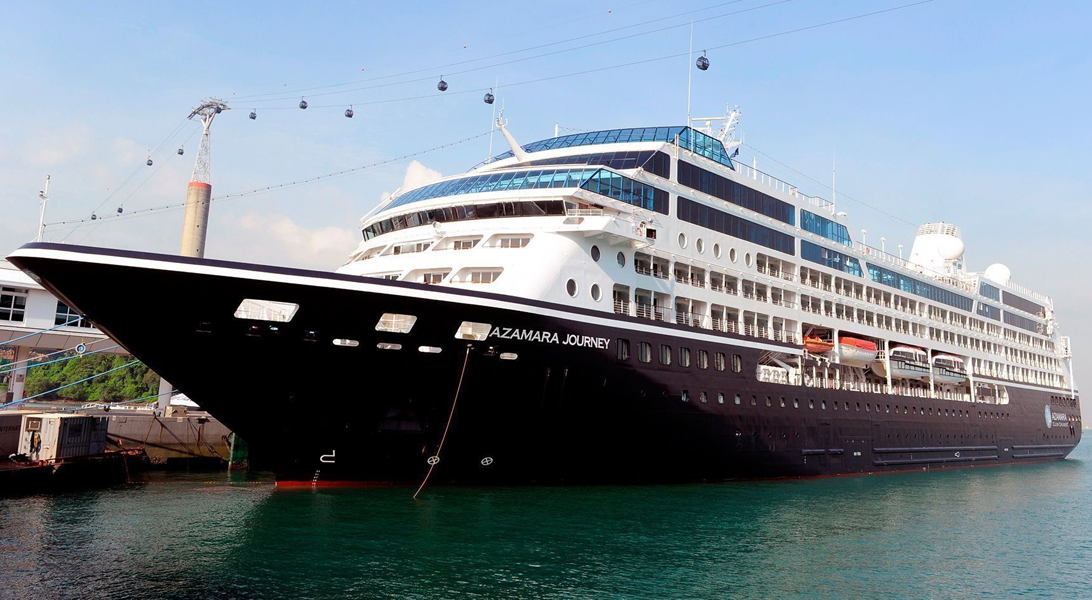


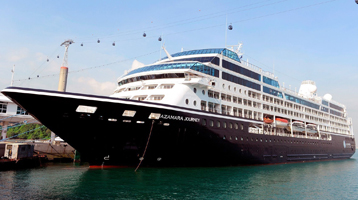
The images shown are for illustration purposes only and may not be an exact representation of what you find on the ship.
The images shown are for illustration purposes only and may not be an exact representation of what you find on the ship.
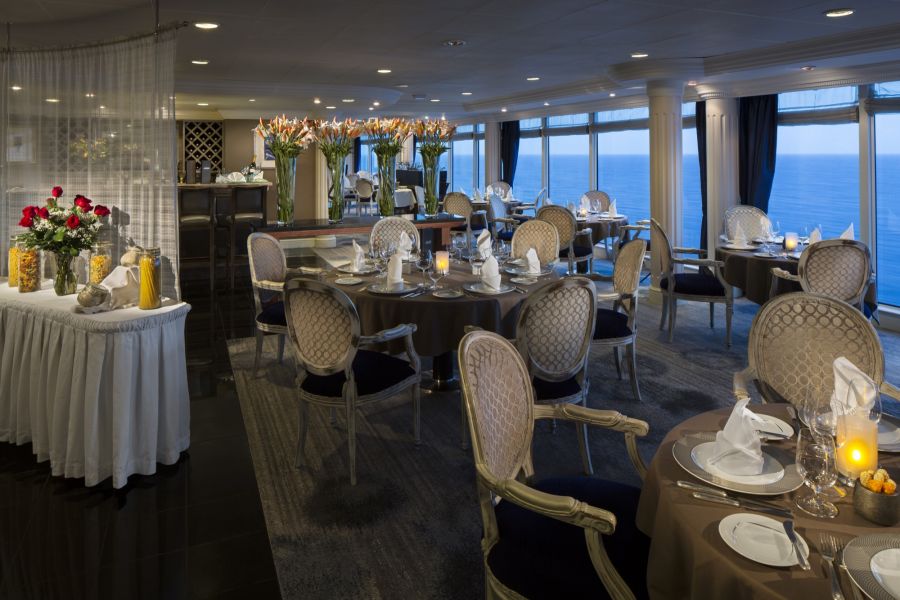
At Aqualina, you’ll find some of Italy’s most authentic dishes. Pastas made from scratch, traditional recipes, and scrumptious vegetarian dishes that make sure there’s something for everyone. Plus our famous desserts: Sorrento lemon liqueur mousse, hazelnut chocolate soufflé and more.
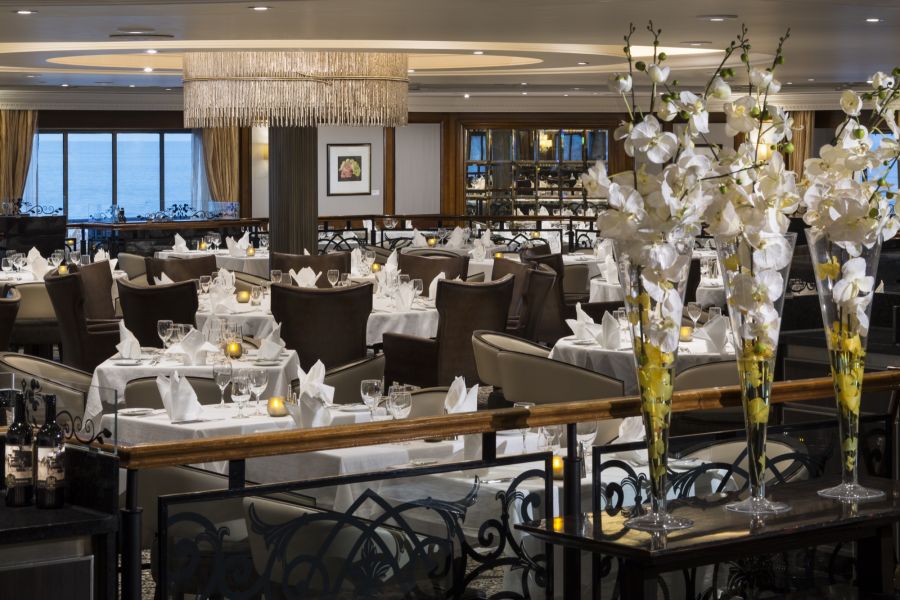
Discover the world through dishes and flavors from the places we visit. Of course, you’ll also enjoy a wide variety of nightly selections such as filet mignon with black truffle sauce. Choose being seated at a table for two or as part of a larger group of fellow guests.
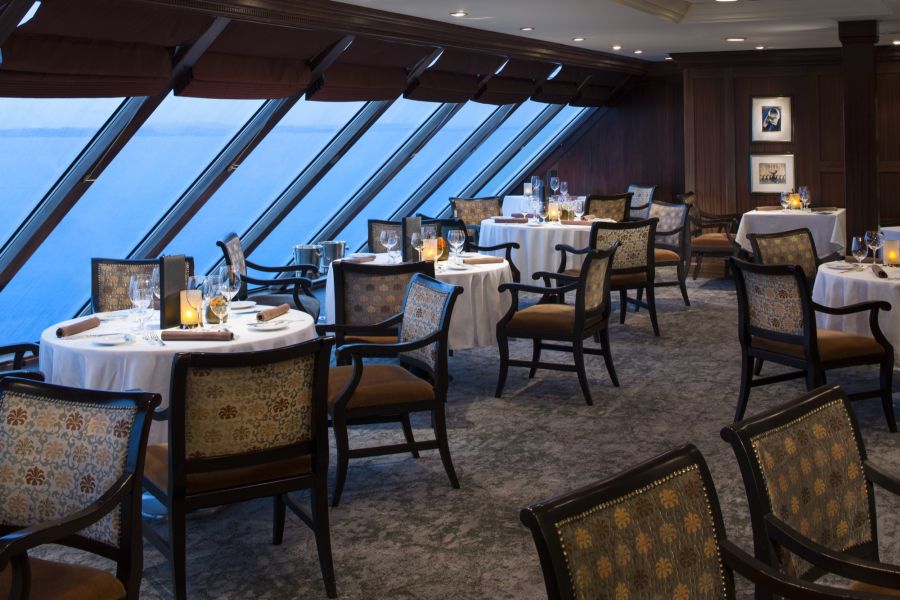
Your choice of steak, cooked to perfection. Herb-coated rack of lamb, duck confit and Chilean sea bass—all paired with savory sides. At Prime C, you’re in for more than delectable dining. Expect a great evening with stunning views and lush décor.
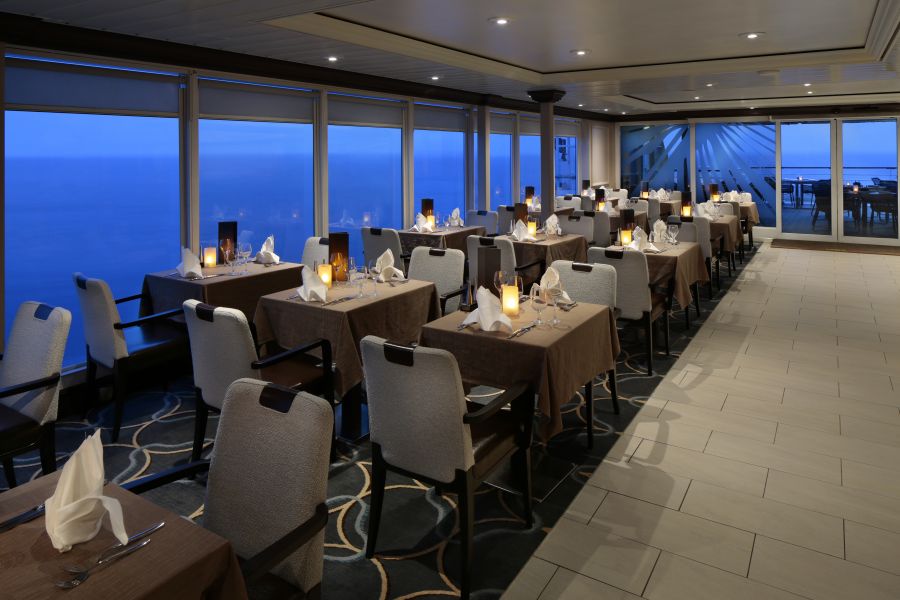
Our daily themed dinner often takes its inspiration from the region we’re visiting—Indian, Mexican, Spanish, Italian. We also create an extra live station made from local ingredients purchased in port: Greek salad made with local feta (Greece), pasta prepared with local mushrooms (Italy), fresh Mussels served with garlic bread (Netherlands).
The images shown are for illustration purposes only and may not be an exact representation of what you find on the ship.
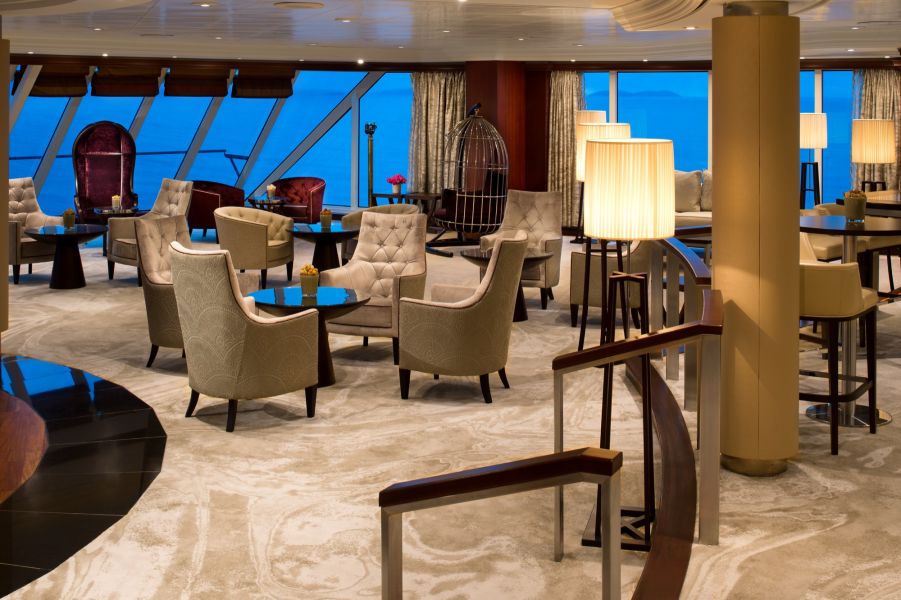
The idea of the Living Room is just that. To “live in” and to enjoy time with friends and fellow guests! Much of the room is furnished as a living room, with clusters of large comfortable chairs and sofas....
The images shown are for illustration purposes only and may not be an exact representation of what you find on the ship.
The images shown are for illustration purposes only and may not be an exact representation of what you find on the ship.


Our Fusion packages are all ABTA & ATOL protected ensuring that your booking is safe with us
| 47 nights aboard the Azamara Journey | |||
| AzAmazing Evenings event on voyages over 7 nights | |||
| Pre-Paid Gratuities | |||
| Select standard spirits, international beers & wines | |||
| Free bottled water, soft drinks, specialty coffees & teas | |||
| Concierge services for personal guidance & reservations | |||
| Free self-service laundry | |||
| Shuttle service to & from port where available | |||
| English Butler Service for suite Guests | |||
| Port Taxes and Fees | |||
 | ABTA and ATOL Protection* | ||
Date 6th Jun 2028 |
Nts 47 |
Interior £13,759pp |
Oceanview £14,549pp |
Balcony £17,559pp |
Suite £23,969pp |
Date 6th Jun 2028 |
Nts 47 |
Interior £13,759pp |
Oceanview £14,549pp |
Balcony £17,559pp |
Suite £23,969pp |
| Interior staterooms from | £13,759pp | ||
| 9 | Club Interior Stateroom (Deck 8, Mid/Fwd) | £14,469pp | |
| 10 | Club Interior Stateroom (Deck 7, Mid) | £13,989pp | |
| 11 | Club Interior Stateroom (Deck 6,7, Fwd) | £13,759pp | |
| Oceanview staterooms from | £14,549pp | ||
| 4 | Club Oceanview Stateroom (Deck 6, Fwd) | £15,469pp | |
| 5 | Club Oceanview Stateroom (Deck 4, Mid) | £15,149pp | |
| 6 | Club Oceanview Stateroom (Deck 4, Fwd) | £14,849pp | |
| 8 | Club Oceanview Stateroom (Deck 6, Obstructed) | £14,549pp | |
| Balcony staterooms from | £17,559pp | ||
| V1 | Club Veranda Stateroom (Deck 4) | £18,579pp | |
| V2 | Club Veranda Stateroom (Deck 7) | £18,069pp | |
| V3 | Club Veranda Stateroom (Deck 6) | £17,559pp | |
| P1 | Club Veranda Plus Stateroom (Decks 6,7,8, Aft/Fwd) | £21,449pp | |
| P2 | Club Veranda Plus Stateroom (Deck 8, Mid) | £20,899pp | |
| P3 | Club Veranda Plus Stateroom (Deck 8, Fwd) | £20,349pp | |
| Suite staterooms from | £23,969pp | ||
| N1 | Club Continent Suite (Deck 8, Mid) | £24,689pp | |
| N2 | Club Continent Suite (Deck 8, Aft) | £23,969pp | |
| SP | Club Spa Suite | £32,839pp | |
| CO | Club Ocean Suite | £36,479pp | |
Fusion Holidays when selling travel arrangements is a trading name of Co-op Travel Services Limited, registration 08903986. Fusion Cruises is an Accredited Body Member of Co-op Travel Services Limited ATOL 12904.
Book with Confidence. We are a Member of ABTA which means you have the benefit of ABTA’s assistance and Code of Conduct.
Some of the flights and flight-inclusive holidays on this website are financially protected by the ATOL scheme but ATOL protection does not apply to all holiday and travel services offered on this website. This website will provide you with information on the protection that applies in the case of each holiday and travel service offered before you make your booking. If you do not receive an ATOL Certificate then the booking will not be ATOL protected. If you do receive an ATOL Certificate but all parts of your trip are not listed on it, those parts will not be ATOL protected. Please see our booking conditions for information, or for more information about financial protection and the ATOL Certificate go to: www.caa.co.uk