This site uses cookies as defined in our Cookie Policy, by continuing to use this site you agree to their use.
Continue

| Arrive | Depart | ||||||
| 11th11 | OctOct | 202828 | Venice, Italy, embark on the Azamara Journey | 18:00 | |||
Venice is a city unlike any other. No matter how often you've seen it in photos and films, the real thing is more dreamlike than you could imagine. With canals where streets should be, water shimmers everywhere. The fabulous palaces and churches reflect centuries of history in what was a wealthy trading center between Europe and the Orient. Getting lost in the narrow alleyways is a quintessential part of exploring Venice, but at some point you'll almost surely end up in Piazza San Marco, where tourists and locals congregate for a coffee or an aperitif. An independent city-state and major power during the Middle Ages and Renaissance, Venice consists of more than 100 small islands connected by arched bridges and is one of the world’s most beautiful cities. | |||||||
| 12th12 | OctOct | 202828 | Koper, Slovenia | 08:00 | 22:00 | ||
Today a port town surrounded by industrial suburbs, Koper nevertheless warrants a visit. The Republic of Venice made Koper the regional capital during the 15th and 16th centuries, and the magnificent architecture of the Old Town bears witness to the spirit of those times.The most important buildings are clustered around Titov trg, the central town square. Here stands the Cathedral, which can be visited daily from 7 to noon and 3 to 7, with its fine Venetian Gothic facade and bell tower dating back to 1664. Across the square the splendid Praetor's Palace, formerly the seat of the Venetian Grand Council, combines Gothic and Renaissance styles. From the west side of Titov trg, the narrow, cobbled Kidriceva ulica brings you down to the seafront. Koper is the gateway to an array of intercontinental adventures. Only 30 minutes away from Koper, Trek through the UNESCO World Heritage site of the Skocjan Caves, which features the largest underground canyon in the world. Or stay local and enjoy the charms of Koper itself, with historic sites like the 12th century St. Mary’s of the Assumption Cathedral, the Praetorian Palace. | |||||||
| 13th13 | OctOct | 202828 | Rovinj, Croatia | 08:00 | 18:00 | ||
One of the true jewels of the Mediterranean, Rovinj is a jaw-droppingly beautiful town, which juts out into sparkling Mediterranean. Dominated by the pencil-like bell tower of the Venetian Saint Euphemia Cathedral, pine tree forests flow to the borders of the quaint Old Town - which evokes the romantic, tangled backstreets of the Venice. Rovinj - or Rovino in Italian - is a city of split personalities, with two official languages - having been owned by the Kingdom of Italy between 1919 and 1947. Discover the Croatian coastal city of Rovinj. Walk Gasia Street to the Church of St. Euphemia, the pinnacle of Old Town. Explore nature in Zlatini Rt park forest and Lim Bay. | |||||||
| 14th14 | OctOct | 202828 | Split, Croatia | 08:00 | 20:00 | ||
Split's ancient core is so spectacular and unusual that a visit is more than worth your time. The heart of the city lies within the walls of Roman emperor Diocletian's retirement palace, which was built in the 3rd century AD. Diocletian, born in the nearby Roman settlement of Salona in AD 245, achieved a brilliant career as a soldier and became emperor at the age of 40. In 295 he ordered this vast palace to be built in his native Dalmatia, and when it was completed he stepped down from the throne and retired to his beloved homeland. Upon his death, he was laid to rest in an octagonal mausoleum, around which Split's magnificent cathedral was built.In 615, when Salona was sacked by barbarian tribes, those fortunate enough to escape found refuge within the stout palace walls and divided up the vast imperial apartments into more modest living quarters. Thus, the palace developed into an urban center, and by the 11th century the settlement had expanded beyond the ancient walls.Under the rule of Venice (1420–1797), Split—as a gateway to the Balkan interior—became one of the Adriatic's main trading ports, and the city's splendid Renaissance palaces bear witness to the affluence of those times. When the Habsburgs took control during the 19th century, an overland connection to Central Europe was established by the construction of the Split–Zagreb–Vienna railway line.After World War II, the Tito years saw a period of rapid urban expansion: industrialization accelerated and the suburbs extended to accommodate high-rise apartment blocks. Today the historic center of Split is included on UNESCO's list of World Heritage Sites. Its Adriatic seaside lined with palm trees, Split is the largest city in Dalmatia, and custodian of the riches of culture and history found within and around the walls of the Roman emperor Diocletian’s palace. | |||||||
| 15th15 | OctOct | 202828 | Kotor, Montenegro | 09:30 | 17:00 | ||
Backed by imposing mountains, tiny Kotor lies hidden from the open sea, tucked into the deepest channel of the Bokor Kotorska (Kotor Bay), which is Europe's most southerly fjord. To many, this town is more charming than its sister UNESCO World Heritage Site, Dubrovnik, retaining more authenticity, but with fewer tourists and spared the war damage and subsequent rebuilding which has given Dubrovnik something of a Disney feel.Kotor's medieval Stari Grad (Old Town) is enclosed within well-preserved defensive walls built between the 9th and 18th centuries and is presided over by a proud hilltop fortress. Within the walls, a labyrinth of winding cobbled streets leads through a series of splendid paved piazzas, rimmed by centuries-old stone buildings. The squares are now haunted by strains from buskers but although many now house trendy cafés and chic boutiques, directions are still given medieval-style by reference to the town’s landmark churches.In the Middle Ages, as Serbia's chief port, Kotor was an important economic and cultural center with its own highly regarded schools of stonemasonry and iconography. From 1391 to 1420 it was an independent city-republic and later, it spent periods under Venetian, Austrian, and French rule, though it was undoubtedly the Venetians who left the strongest impression on the city's architecture. Since the breakup of Yugoslavia, some 70% of the stone buildings in the romantic Old Town have been snapped up by foreigners, mostly Brits and Russians. Porto Montenegro, a new marina designed to accommodate some of the world’s largest super yachts, opened in nearby Tivat in 2011, and along the bay are other charming seaside villages, all with better views of the bay than the vista from Kotor itself where the waterside is congested with cruise ships and yachts. Try sleepy Muo or the settlement of Prčanj in one direction around the bay, or Perast and the Roman mosaics of Risan in the other direction. One of Europe’s best-preserved cities of medieval or Renaissance vintage, Kotor’s walls were constructed right into the slopes of the mountain behind it, making it an amazing sight on approach from the sea. | |||||||
| 16th16 | OctOct | 202828 | Corfu, Greece | 09:00 | 22:00 | ||
Corfu town today is a vivid tapestry of cultures—a sophisticated weave, where charm, history, and natural beauty blend. Located about midway along the island's east coast, this spectacularly lively capital is the cultural heart of Corfu and has a remarkable historic center that UNESCO designated as a World Heritage Site in 2007. All ships and planes dock or land near Corfu town, which occupies a small peninsula jutting into the Ionian Sea.Whether arriving by ferry from mainland Greece or Italy, from another island, or directly by plane, catch your breath by first relaxing with a coffee or a gelato in Corfu town's shaded Liston Arcade, then stroll the narrow lanes of its pedestrians-only quarter. For an overview of the immediate area, and a quick tour of Mon Repos palace, hop on the little tourist train that runs from May to September. Corfu town has a different feel at night, so book a table at one of its famed tavernas to savor the island's unique cuisine.The best way to get around Corfu town is on foot. The town is small enough so that you can easily walk to every sight. There are local buses, but they do not thread their way into the streets (many now car-free) of the historic center. If you are arriving by ferry or plane, it's best to take a taxi to your hotel. Expect to pay about €10 from the airport or ferry terminal to a hotel in Corfu town. If there are no taxis waiting, you can call for one. With its millions of olive trees, scent of lemon blossoms and sapphire bay, Corfu is one of the most beautiful islands in the Mediterranean and is said to cast a spell upon those who land upon its shores. | |||||||
| 17th17 | OctOct | 202828 | Argostoli, Greece | 08:00 | 22:00 | ||
Ground literally to ashes in World War II and wracked by a massive earthquake a decade later, the capital of Kefalonia once more shows pride in its native spirit and natural beauty. The vast harbor on Argostoli’s east side makes an especially attractive port for cruise ships full of visitors who never seem to tire of strolling the cobbled seaside promenade, sipping ouzos in cafés, and stocking up on the succulent Mediterranean fruits in the outdoor markets. The capital and “heart” of the Greek Island of Kefalonia, Argostoli is a modern town with a traditional soul, with the famous Drogati Cave and underground Melissani Lake routinely topping must-see lists. | |||||||
| 18th18 | OctOct | 202828 | Delphi, Greece | 08:00 | 18:00 | ||
| 19th19 | OctOct | 202828 | Katakolon, Greece | 08:00 | 16:00 | ||
Katakolon could not seem less of a cruise port if it tried. A tiny enclave clinging to the western Peloponnese coast, it's a sleepy place except when ships dock. But it's a popular cruise destination because of its proximity to Olympia. Ancient Olympia was one of the most important cities in classical Greece. The Sanctuary of Zeus was the city's raison d'être, and attracted pilgrims from around the eastern Mediterranean, and later the city played host to Olympic Games, the original athletic games that were the inspiration for today's modern sporting pan-planetary meet. At the foot of the tree-covered Kronion hill, in a valley near two rivers, Katakolon is today one of the most popular ancient sites in Greece. If you don't want to make the trip to Olympia, then Katakolon is an ideal place for a leisurely Greek lunch while you watch the fishermen mend their nets, but there's just not much else to do there. The quaint seaside town of Katakolon has many charms, but let’s be honest: You’re going to want to head to Olympia. Located just a 40-minute drive away, this UNESCO World Heritage Site is the site of the original Olympic Games, dates back to 776 BC, and has excellent companion museums like the Archaeological Museum of Olympia and the Museum of the History of the Ancient Olympic Games. | |||||||
| 20th20 | OctOct | 202828 | Khania, Greece | 08:00 | 17:00 | ||
The second-largest city in Crete and capital of the Homonym Prefecture, Chania is located in Minoan Kidonia at the end of the Homonym Gulf between the Akrotiri and Onicha peninsulas. Chania City is divided into two parts; the Old Town, which is comprised of several connected districts built around the old Venetian Harbour, and New Town, a larger, more modern city whose centre is situated next to, and south of, the Old Town. The Old Town is home to Venetian buildings and Turkish elements that combine to create a unique architectural style, and is considered to be the most beautiful urban district on Crete. It was once surrounded by old Venetian fortifications that separated it from the New Town; however, only the eastern and western parts remain today. Due to its compact size, Skiathos can be easily explored in just a single day. | |||||||
| 21st21 | OctOct | 202828 | Athens, Greece | 05:00 | 18:00 | ||
| 22nd22 | OctOct | 202828 | Monemvasía, Greece | 08:00 | 18:00 | ||
Monemvasia boasts a varied and colorful history that can be traced to the 8th-century when Greeks fleeing the Slav invasion of Lakonia found refuge here. In its heyday it controlled sea travel between the Levant and European shores. The wall-encircled Lower Town extends along the slopes of a 985-foot-high crag that projects into the sea on the east side of the Peloponnese. For centuries an impressive stronghold, population dwindled as the inhabitants moved to the mainland. But with the beginning of a restoration program aimed to preserve Monemvasia's heritage, the Lower Town experienced a new lease on life, and people have begun to return. The Upper Town is situated on top of the Rock of Monemvasia. It is reached via a zigzagging, paved lane. An almost impregnable bastion in earlier days, it has been uninhabited for centuries, but still manages to preserve its magnificent appearance. Visitors today can explore the remains of the ancient citadel-castle and visit the church of Hagia Sofia. From the summit there is also a fantastic view of the surrounding area. One look at Monemvasia as you pull in to port and it’s easy to understand why locals nicknamed it The Rock. Shrouded by precipitous cliffs along the brilliant teal waters of the Myrtoan Sea, Monemvasia is a castle town suspended in history. | |||||||
| 23rd23 | OctOct | 202828 | Ermoupoli, Syra, Greece | 08:00 | 17:00 | ||
Syros is an island in the Aegean Sea, 78 miles (125 kilometres) southeast of Athens, and the administrative, commercial, intellectual and cultural centre of the Cyclades. Syros is 32 square miles (82.8 square kilometres) in area. Its largest towns are Ermoupoli, the capital of the island and Cyclades, Ano Syros and Vari. Although Syros belongs to the Cyclades islands, its architecture is more medieval than Cycladic. The beaches of Syros are especially inviting, and surrounded by many tourist facilities and accommodations. Perfectly blending the traditional with the modern, Syros offers visitors an authentic snapshot of Greek life in the beautiful Cyclades. Come for the laid back pace, stay for the buzzing gastronomy scene. Opa! | |||||||
| 24th24 | OctOct | 202828 | Vólos, Greece | 08:00 | 20:00 | ||
Dating back to the Neolithic age and famed as the mythical “City of the Argonauts”, Volos is a modern city in the heart of Greece, and is a place of immense natural beauty and numerous archaeological sites. | |||||||
| 25th25 | OctOct | 202828 | Thessaloníki, Greece | 08:00 | 22:00 | ||
As Greece’s second-biggest city and the Byzantine Empire’s second-most important city, the word “second” is often used to describe this port, but we’re here to tell you: Thessaloniki is anything but second-rate! | |||||||
| 26th26 | OctOct | 202828 | At Sea | ||||
| 27th27 | OctOct | 202828 | Istanbul, Turkey | 08:00 | |||
The only city in the world that can lay claim to straddling two continents, Istanbul—once known as Constantinople, capital of the Byzantine and then the Ottoman Empire—has for centuries been a bustling metropolis with one foot in Europe and the other in Asia. Istanbul embraces this enviable position with both a certain chaos and inventiveness, ever evolving as one of the world’s most cosmopolitan crossroads. It’s often said that Istanbul is the meeting point of East and West, but visitors to this city built over the former capital of two great empires are likely to be just as impressed by the juxtaposition of old and new. Office towers creep up behind historic palaces, women in chic designer outfits pass others wearing long skirts and head coverings, peddlers’ pushcarts vie with battered old Fiats and shiny BMWs for dominance of the noisy, narrow streets, and the Grand Bazaar competes with modern shopping malls. At dawn, when the muezzin's call to prayer resounds from ancient minarets, there are inevitably a few hearty revelers still making their way home from nightclubs and bars. Most visitors to this sprawling city of more than 14 million will first set foot in the relatively compact Old City, where the legacy of the Byzantine and Ottoman empires can be seen in monumental works of architecture like the brilliant Aya Sofya and the beautifully proportioned mosques built by the great architect Sinan. Though it would be easy to spend days, if not weeks, exploring the wealth of attractions in the historical peninsula, visitors should make sure also to venture elsewhere in order to experience the vibrancy of contemporary Istanbul. With a lively nightlife propelled by its young population and an exciting arts scene that’s increasingly on the international radar—thanks in part to its stint as the European Capital of Culture in 2010—Istanbul is truly a city that never sleeps. It’s also a place where visitors will feel welcome: Istanbul may be on the Bosphorus, but at heart it’s a Mediterranean city, whose friendly inhabitants are effusively social and eager to share what they love most about it. Istanbul is exotic, warmly welcoming and unique – after all, where else can you tour Europe and Asia on the very same afternoon? – with must sees that include Hagia Sophia, Topkapi and the Grand Bazaar. | |||||||
| 28th28 | OctOct | 202828 | Istanbul, Turkey | 18:00 | |||
The only city in the world that can lay claim to straddling two continents, Istanbul—once known as Constantinople, capital of the Byzantine and then the Ottoman Empire—has for centuries been a bustling metropolis with one foot in Europe and the other in Asia. Istanbul embraces this enviable position with both a certain chaos and inventiveness, ever evolving as one of the world’s most cosmopolitan crossroads. It’s often said that Istanbul is the meeting point of East and West, but visitors to this city built over the former capital of two great empires are likely to be just as impressed by the juxtaposition of old and new. Office towers creep up behind historic palaces, women in chic designer outfits pass others wearing long skirts and head coverings, peddlers’ pushcarts vie with battered old Fiats and shiny BMWs for dominance of the noisy, narrow streets, and the Grand Bazaar competes with modern shopping malls. At dawn, when the muezzin's call to prayer resounds from ancient minarets, there are inevitably a few hearty revelers still making their way home from nightclubs and bars. Most visitors to this sprawling city of more than 14 million will first set foot in the relatively compact Old City, where the legacy of the Byzantine and Ottoman empires can be seen in monumental works of architecture like the brilliant Aya Sofya and the beautifully proportioned mosques built by the great architect Sinan. Though it would be easy to spend days, if not weeks, exploring the wealth of attractions in the historical peninsula, visitors should make sure also to venture elsewhere in order to experience the vibrancy of contemporary Istanbul. With a lively nightlife propelled by its young population and an exciting arts scene that’s increasingly on the international radar—thanks in part to its stint as the European Capital of Culture in 2010—Istanbul is truly a city that never sleeps. It’s also a place where visitors will feel welcome: Istanbul may be on the Bosphorus, but at heart it’s a Mediterranean city, whose friendly inhabitants are effusively social and eager to share what they love most about it. Istanbul is exotic, warmly welcoming and unique – after all, where else can you tour Europe and Asia on the very same afternoon? – with must sees that include Hagia Sophia, Topkapi and the Grand Bazaar. | |||||||
| 29th29 | OctOct | 202828 | Çanakkale, Turkey | 08:00 | 22:00 | ||
Once the stuff of mythology, archaeological excavations at Troy have brought life to Homer’s Iliad and the tale of the beautiful Helen, fought over by warriors like Hercules and won by means of the Trojan horse. | |||||||
| 30th30 | OctOct | 202828 | Chíos, Greece | 08:00 | 16:30 | ||
Situated in the northern Aegean Sea, Chios is home to a collection of stunning beaches, historic medieval villages, and a history that dates back to Neolithic times, making for a perfectly balanced vacation. | |||||||
| 31st31 | OctOct | 202828 | Rhodes, Greece | 08:00 | 20:00 | ||
Early travelers described Rhodes as a town of two parts: a castle or high town (Collachium) and a lower city. Today Rhodes town—sometimes referred to as Ródos town—is still a city of two parts: the Old Town, a UNESCO World Heritage site that incorporates the high town and lower city, and the modern metropolis, or New Town, spreading away from the walls that encircle the Old Town. The narrow streets of the Old Town are for the most part closed to cars and are lined with Orthodox and Catholic churches, Turkish houses (some of which follow the ancient orthogonal plan), and medieval public buildings with exterior staircases and facades elegantly constructed of well-cut limestone from Lindos. Careful reconstruction in recent years has enhanced the harmonious effect. Said to have more fine days than anywhere else in Europe, Rhodes’ diverse historical influences are evident in an old town remarkably intact—in particular the medieval presence of the Knights of St John. | |||||||
| 1st01 | NovNov | 202828 | Agios Nikólaos, Kríti, Greece | 08:00 | 20:00 | ||
Known for having “three faces to the sea”, this port on Crete’s east coast seamlessly blends the charm of a small fishing village with the glamor of a chic resort town. With a diverse range of dining, shopping, and nightlife options, you can find your own personal paradise in Agios Nikolaos. | |||||||
| 2nd02 | NovNov | 202828 | Santorini, Greece | 08:00 | 18:00 | ||
Undoubtedly the most extraordinary island in the Aegean, crescent-shape Santorini remains a mandatory stop on the Cycladic tourist route—even if it's necessary to enjoy the sensational sunsets from Ia, the fascinating excavations, and the dazzling white towns with a million other travelers. Called Kállisti (the "Loveliest") when first settled, the island has now reverted to its subsequent name of Thira, after the 9th-century-BC Dorian colonizer Thiras. The place is better known, however, these days as Santorini, a name derived from its patroness, St. Irene of Thessaloniki, the Byzantine empress who restored icons to Orthodoxy and died in 802. You can fly conveniently to Santorini, but to enjoy a true Santorini rite of passage, opt instead for the boat trip here, which provides a spectacular introduction. After the boat sails between Sikinos and Ios, your deck-side perch approaches two close islands with a passage between them. The bigger one on the left is Santorini, and the smaller on the right is Thirassia. Passing between them, you see the village of Ia adorning Santorini's northernmost cliff like a white geometric beehive. You are in the caldera (volcanic crater), one of the world's truly breathtaking sights: a demilune of cliffs rising 1,100 feet, with the white clusters of the towns of Fira and Ia perched along the top. The bay, once the high center of the island, is 1,300 feet in some places, so deep that when boats dock in Santorini's shabby little port of Athinios, they do not drop anchor. The encircling cliffs are the ancient rim of a still-active volcano, and you are sailing east across its flooded caldera. On your right are the Burnt isles, the White isle, and other volcanic remnants, all lined up as if some outsize display in a geology museum. Hephaestus's subterranean fires smolder still—the volcano erupted in 198 BC, about 735, and there was an earthquake in 1956. Indeed, Santorini and its four neighboring islets are the fragmentary remains of a larger landmass that exploded about 1600 BC: the volcano's core blew sky high, and the sea rushed into the abyss to create the great bay, which measures 10 km by 7 km (6 mi by 4½ mi) and is 1,292 feet deep. The other pieces of the rim, which broke off in later eruptions, are Thirassia, where a few hundred people live, and deserted little Aspronissi ("White isle"). In the center of the bay, black and uninhabited, two cones, the Burnt Isles of Palea Kameni and Nea Kameni, appeared between 1573 and 1925. There has been too much speculation about the identification of Santorini with the mythical Atlantis, mentioned in Egyptian papyri and by Plato (who says it's in the Atlantic), but myths are hard to pin down. This is not true of old arguments about whether tidal waves from Santorini's cataclysmic explosion destroyed Minoan civilization on Crete, 113 km (70 mi) away. The latest carbon-dating evidence, which points to a few years before 1600 BC for the eruption, clearly indicates that the Minoans outlasted the eruption by a couple of hundred years, but most probably in a weakened state. In fact, the island still endures hardships: since antiquity, Santorini has depended on rain collected in cisterns for drinking and irrigating—the well water is often brackish—and the serious shortage is alleviated by the importation of water. However, the volcanic soil also yields riches: small, intense tomatoes with tough skins used for tomato paste (good restaurants here serve them); the famous Santorini fava beans, which have a light, fresh taste; barley; wheat; and white-skin eggplants. Your daydream of a Greek island meets reality in Santorini—so beautiful with its whitewashed villages and blue roofs reflecting the sea, you can almost believe the myths claiming it as the birthplace of gods. | |||||||
| 3rd03 | NovNov | 202828 | Mykonos, Greece | 08:00 | 18:00 | ||
Although the fishing boats still go out in good weather, Mykonos largely makes its living from tourism these days. The summer crowds have turned one of the poorest islands in Greece into one of the richest. Old Mykonians complain that their young, who have inherited stores where their grandfathers once sold eggs or wine, get so much rent that they have lost ambition, and in summer sit around pool bars at night with their friends, and hang out in Athens in winter when island life is less scintillating. Put firmly on the map by Jackie O in the 1960s, Mykonos town—called Hora by the locals—remains the Saint-Tropez of the Greek islands. The scenery is memorable, with its whitewashed streets, Little Venice, the Kato Myli ridge of windmills, and Kastro, the town's medieval quarter. Its cubical two- or three-story houses and churches, with their red or blue doors and domes and wooden balconies, have been long celebrated as some of the best examples of classic Cycladic architecture. Luckily, the Greek Archaeological Service decided to preserve the town, even when the Mykonians would have preferred to rebuild, and so the Old Town has been impressively preserved. Pink oleander, scarlet hibiscus, and trailing green pepper trees form a contrast amid the dazzling whiteness, whose frequent renewal with whitewash is required by law. Any visitor who has the pleasure of getting lost in its narrow streets (made all the narrower by the many outdoor stone staircases, which maximize housing space in the crowded village) will appreciate how its confusing layout was designed to foil pirates—if it was designed at all. After Mykonos fell under Turkish rule in 1537, the Ottomans allowed the islanders to arm their vessels against pirates, which had a contradictory effect: many of them found that raiding other islands was more profitable than tilling arid land. At the height of Aegean piracy, Mykonos was the principal headquarters of the corsair fleets—the place where pirates met their fellows, found willing women, and filled out their crews. Eventually the illicit activity evolved into a legitimate and thriving trade network. Morning on Mykonos town's main quay is busy with deliveries, visitors for the Delos boats, lazy breakfasters, and street cleaners dealing with the previous night's mess. In late morning the cruise-boat people arrive, and the shops are all open. In early afternoon, shaded outdoor tavernas are full of diners eating salads (Mykonos's produce is mostly imported); music is absent or kept low. In mid- and late afternoon, the town feels sleepy, since so many people are at the beach, on excursions, or sleeping in their air-conditioned rooms; even some tourist shops close for siesta. By sunset, people have come back from the beach, having taken their showers and rested. At night, the atmosphere in Mykonos ramps up. The cruise-boat people are mostly gone, coughing three-wheelers make no deliveries in the narrow streets, and everyone is dressed sexy for summer and starting to shimmy with the scene. Many shops stay open past midnight, the restaurants fill up, and the bars and discos make ice cubes as fast as they can. Ready to dive in? Begin your tour of Mykonos town (Hora) by starting out at its heart: Mando Mavrogenous Square. With its many charms including iconic windmills, fabulous beaches and an irresistible traditional town of twisting streets and alleys, Mykonos is living proof that picture postcard destinations do exist. | |||||||
| 4th04 | NovNov | 202828 | Athens, Greece, disembark the Azamara Journey | 05:00 | |||
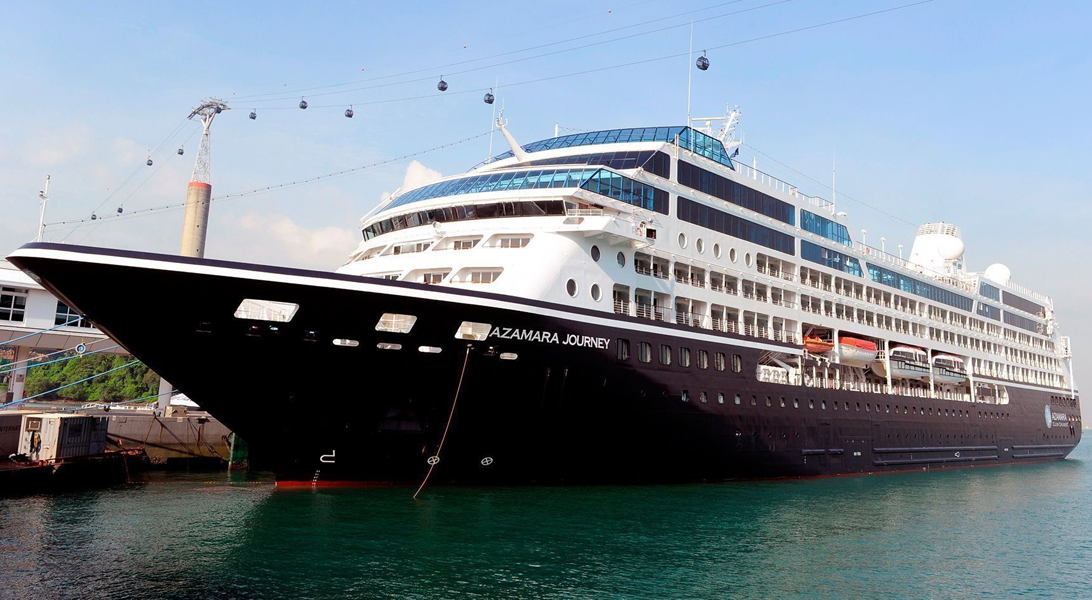


The images shown are for illustration purposes only and may not be an exact representation of what you find on the ship.
The images shown are for illustration purposes only and may not be an exact representation of what you find on the ship.
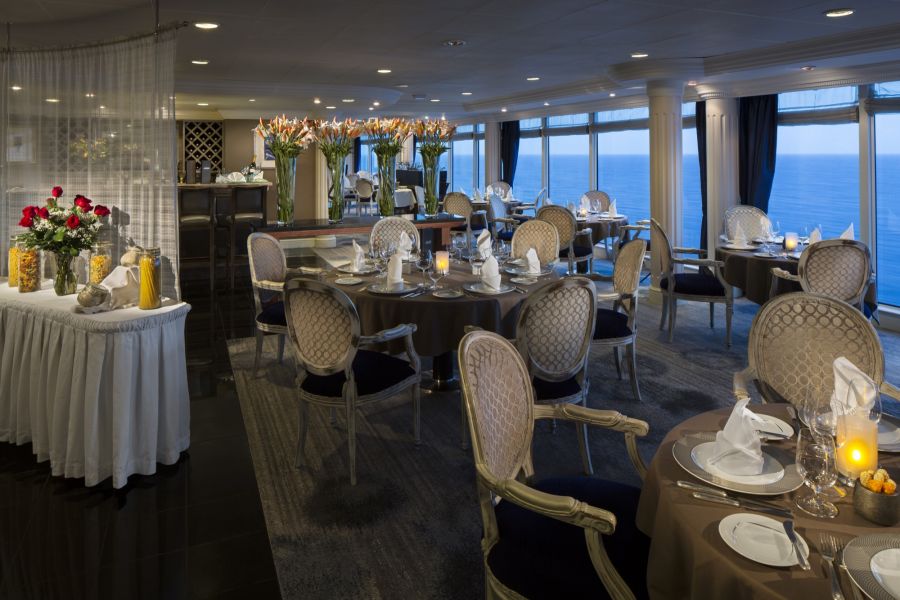
At Aqualina, you’ll find some of Italy’s most authentic dishes. Pastas made from scratch, traditional recipes, and scrumptious vegetarian dishes that make sure there’s something for everyone. Plus our famous desserts: Sorrento lemon liqueur mousse, hazelnut chocolate soufflé and more.
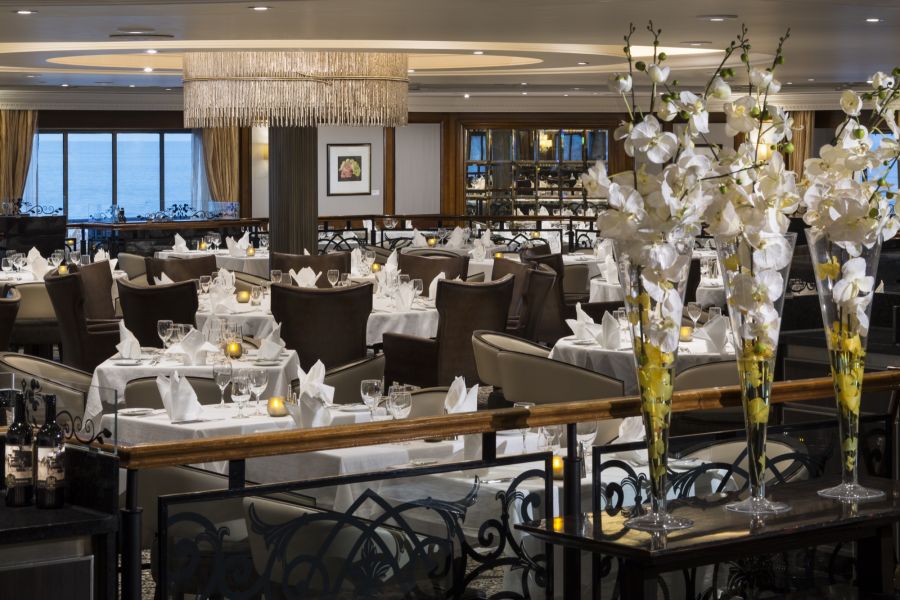
Discover the world through dishes and flavors from the places we visit. Of course, you’ll also enjoy a wide variety of nightly selections such as filet mignon with black truffle sauce. Choose being seated at a table for two or as part of a larger group of fellow guests.
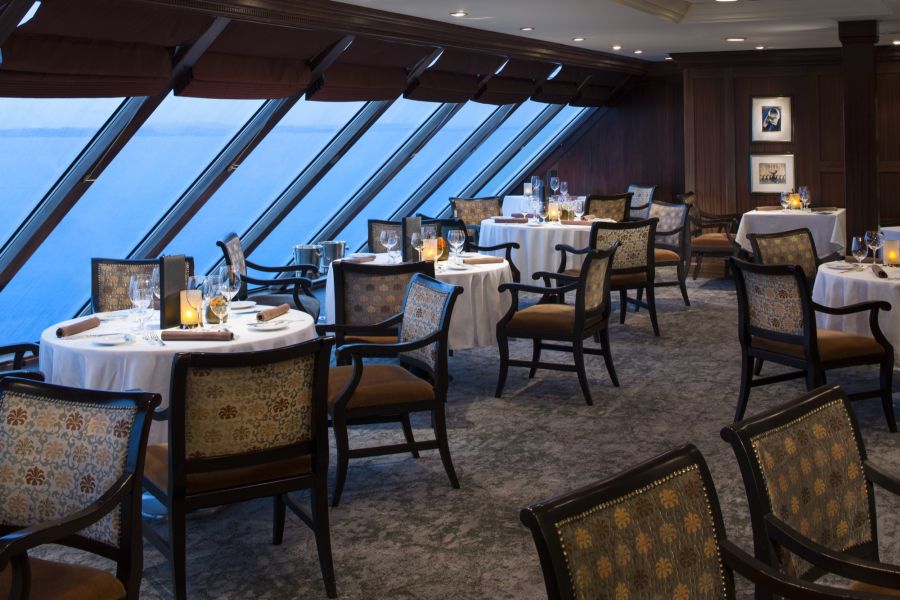
Your choice of steak, cooked to perfection. Herb-coated rack of lamb, duck confit and Chilean sea bass—all paired with savory sides. At Prime C, you’re in for more than delectable dining. Expect a great evening with stunning views and lush décor.
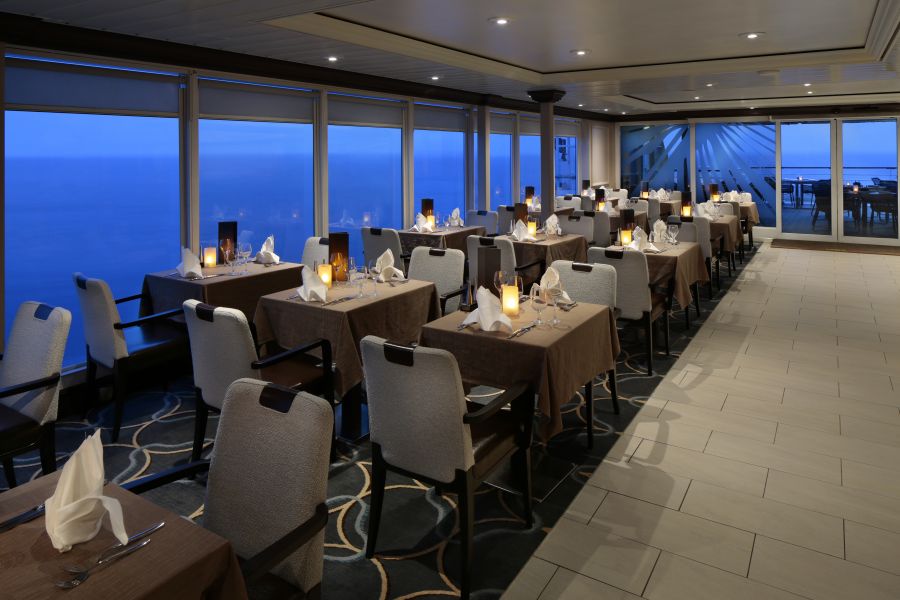
Our daily themed dinner often takes its inspiration from the region we’re visiting—Indian, Mexican, Spanish, Italian. We also create an extra live station made from local ingredients purchased in port: Greek salad made with local feta (Greece), pasta prepared with local mushrooms (Italy), fresh Mussels served with garlic bread (Netherlands).
The images shown are for illustration purposes only and may not be an exact representation of what you find on the ship.
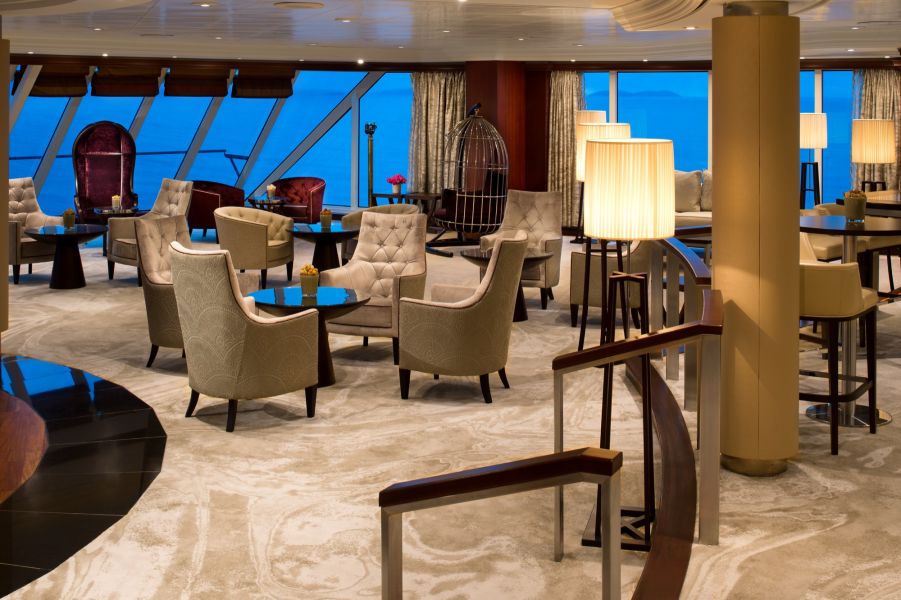
The idea of the Living Room is just that. To “live in” and to enjoy time with friends and fellow guests! Much of the room is furnished as a living room, with clusters of large comfortable chairs and sofas....
The images shown are for illustration purposes only and may not be an exact representation of what you find on the ship.
The images shown are for illustration purposes only and may not be an exact representation of what you find on the ship.


Our Fusion packages are all ABTA & ATOL protected ensuring that your booking is safe with us
| 24 nights aboard the Azamara Journey | |||
| AzAmazing Evenings event on voyages over 7 nights | |||
| Pre-Paid Gratuities | |||
| Select standard spirits, international beers & wines | |||
| Free bottled water, soft drinks, specialty coffees & teas | |||
| Concierge services for personal guidance & reservations | |||
| Free self-service laundry | |||
| Shuttle service to & from port where available | |||
| English Butler Service for suite Guests | |||
| Port Taxes and Fees | |||
 | ABTA and ATOL Protection* | ||
Date 11th Oct 2028 |
Nts 24 |
Interior £7,129pp |
Oceanview £7,709pp |
Balcony £9,479pp |
Suite £13,389pp |
Date 11th Oct 2028 |
Nts 24 |
Interior £7,129pp |
Oceanview £7,709pp |
Balcony £9,479pp |
Suite £13,389pp |
| Interior staterooms from | £7,129pp | ||
| 9 | Club Interior Stateroom (Deck 8, Mid/Fwd) | £7,739pp | |
| 10 | Club Interior Stateroom (Deck 7, Mid) | £7,529pp | |
| 11 | Club Interior Stateroom (Deck 6,7, Fwd) | £7,339pp | |
| 12 | Club Interior Stateroom (Deck 4, Mid) | £7,129pp | |
| Oceanview staterooms from | £7,709pp | ||
| 4 | Club Oceanview Stateroom (Deck 6, Fwd) | £8,379pp | |
| 5 | Club Oceanview Stateroom (Deck 4, Mid) | £8,149pp | |
| 6 | Club Oceanview Stateroom (Deck 4, Fwd) | £7,929pp | |
| 8 | Club Oceanview Stateroom (Deck 6, Obstructed) | £7,709pp | |
| Balcony staterooms from | £9,479pp | ||
| V1 | Club Veranda Stateroom (Deck 4) | £10,019pp | |
| V2 | Club Veranda Stateroom (Deck 7) | £9,739pp | |
| V3 | Club Veranda Stateroom (Deck 6) | £9,479pp | |
| P1 | Club Veranda Plus Stateroom (Decks 6,7,8, Aft/Fwd) | £11,899pp | |
| P2 | Club Veranda Plus Stateroom (Deck 8, Mid) | £11,569pp | |
| P3 | Club Veranda Plus Stateroom (Deck 8, Fwd) | £11,249pp | |
| Suite staterooms from | £13,389pp | ||
| N1 | Club Continent Suite (Deck 8, Mid) | £13,779pp | |
| N2 | Club Continent Suite (Deck 8, Aft) | £13,389pp | |
| SP | Club Spa Suite | £18,579pp | |
| CO | Club Ocean Suite | £20,739pp | |
| CW | Club World Owner's Suite | £23,159pp | |
Fusion Holidays when selling travel arrangements is a trading name of Co-op Travel Services Limited, registration 08903986. Fusion Cruises is an Accredited Body Member of Co-op Travel Services Limited ATOL 12904.
Book with Confidence. We are a Member of ABTA which means you have the benefit of ABTA’s assistance and Code of Conduct.
Some of the flights and flight-inclusive holidays on this website are financially protected by the ATOL scheme but ATOL protection does not apply to all holiday and travel services offered on this website. This website will provide you with information on the protection that applies in the case of each holiday and travel service offered before you make your booking. If you do not receive an ATOL Certificate then the booking will not be ATOL protected. If you do receive an ATOL Certificate but all parts of your trip are not listed on it, those parts will not be ATOL protected. Please see our booking conditions for information, or for more information about financial protection and the ATOL Certificate go to: www.caa.co.uk