This site uses cookies as defined in our Cookie Policy, by continuing to use this site you agree to their use.
Continue

| Arrive | Depart | ||||||
| 17th17 | JulJul | 202828 | Venice, Italy, embark on the Azamara Onward | 18:00 | |||
Venice is a city unlike any other. No matter how often you've seen it in photos and films, the real thing is more dreamlike than you could imagine. With canals where streets should be, water shimmers everywhere. The fabulous palaces and churches reflect centuries of history in what was a wealthy trading center between Europe and the Orient. Getting lost in the narrow alleyways is a quintessential part of exploring Venice, but at some point you'll almost surely end up in Piazza San Marco, where tourists and locals congregate for a coffee or an aperitif. An independent city-state and major power during the Middle Ages and Renaissance, Venice consists of more than 100 small islands connected by arched bridges and is one of the world’s most beautiful cities. | |||||||
| 18th18 | JulJul | 202828 | Opatija, Croatia | 08:00 | 18:00 | ||
Stroll along Opatija’s seaside promenade, and soak up the splendour, as you enjoy fresh sea air, the sight of waving yacht masts, and the presence of grand ocean-facing buildings. Historically a fashionable destination for European aristocracy, the city is just as in-demand today - with palatial structures watching out over an inviting blue sea, and a border of lush green mountains stretching around the city. Vibrant gardens, glorious weather and endless seafront combine to ensure that Croatia’s original tourist destination remains one of the country’s finest. In 1844 Opatija began its life as a resort; with stunning coastal views and a mild climate it quickly drew an aristocratic clientele and became the fashionable seaside retreat for the Austro-Hungarian Empire. | |||||||
| 19th19 | JulJul | 202828 | Zadar, Croatia | 08:00 | 22:00 | ||
Dalmatia's capital for more than 1,000 years, Zadar is all too often passed over by travelers on their way to Split or Dubrovnik. What they miss out on is a city of more than 73,000 that is remarkably lovely and lively despite—and, in some measure, because of—its tumultuous history. The Old Town, separated from the rest of the city on a peninsula some 4 km (2½ miles) long and just 1,640 feet wide, is bustling and beautiful: the marble pedestrian streets are replete with Roman ruins, medieval churches, palaces, museums, archives, and libraries. Parts of the new town are comparatively dreary, a testament to what a world war followed by decades of communism, not to mention a civil war, can do to the architecture of a city that is 3,000 years old. A settlement had already existed on the site of the present-day city for some 2,000 years when Rome finally conquered Zadar in the 1st century BC; the foundations of the forum can be seen today. Before the Romans came the Liburnians had made it a key center for trade with the Greeks and Romans for 800 years. In the 3rd century BC the Romans began to seriously pester the Liburnians, but required two centuries to bring the area under their control. During the Byzantine era, Zadar became the capital of Dalmatia, and this period saw the construction of its most famous church, the 9th-century St. Donat's Basilica. It remained the region's foremost city through the ensuing centuries. The city then experienced successive onslaughts and occupations—both long and short—by the Osogoths, the Croatian-Hungarian kings, the Venetians, the Turks, the Habsburgs, the French, the Habsburgs again, and finally the Italians before becoming part of Yugoslavia and, in 1991, the independent republic of Croatia. Zadar was for centuries an Italian-speaking city, and Italian is still spoken widely, especially by older people. Indeed, it was ceded to Italy in 1921 under the Treaty of Rapallo (and reverted to its Italian name of Zara). Its occupation by the Germans from 1943 led to intense bombing by the Allies during World War II, which left most of the city in ruins. Zadar became part of Tito's Yugoslavia in 1947, prompting many Italian residents to leave. Zadar's most recent ravages occurred during a three-month siege by Serb forces and months more of bombardment during the Croatian-Serbian war between 1991 and 1995. But you'd be hard-pressed to find outward signs of this today in what is a city to behold. There are helpful interpretive signs in English all around the Old Town, so you certainly won't feel lost when trying to make sense of the wide variety of architectural sites you might otherwise pass by with only a cursory look. Perched on Adriatic Sea in Croatia, Zadar is a truly captivating city, where history-drenched cobblestone streets meet contemporary life, and are then surrounded by blue sea, green olive groves and white stone. | |||||||
| 20th20 | JulJul | 202828 | Sibenik, Croatia | 08:00 | 20:00 | ||
Šibenik's main monument, its Gothic-Renaissance cathedral, built of pale-gray Dalmatian stone and designated a UNESCO World Heritage Site, stands on a raised piazza close to the seafront promenade. From here a network of narrow, cobbled streets leads through the medieval quarter of tightly packed, terra-cotta–roof houses, and up to the ruins of a 16th-century hilltop fortress. The city has never been a real tourist destination. Before the Croatian war for independence, it was a relatively prosperous industrial center, but when the factories closed, Šibenik sank into an economic depression. However, the cathedral more than warrants a look, and it makes a decent base for visiting the waterfalls of Krka National Park. One of the best ways to see Sibenik is to lose yourself (but not really!) in the side streets and alleys that lead to charming shops and squares. Since the countryside around Sibenik is a major wine-producing region, be sure to take a break at one of the city’s many restaurants and enjoy a local red babićpaired with some fresh Adriatic seafood. | |||||||
| 21st21 | JulJul | 202828 | Hvar Island, Croatia | 08:00 | 20:00 | ||
The Croatian island of Hvar bills itself as the "sunniest island in the Adriatic." Not only does it have the figures to back up this claim—an annual average of 2,724 hours of sunshine—but it also makes visitors a sporting proposition, offering them a money-back guarantee if there are seven consecutive days of snow (snow has been known to fall here; the last time being February 2012). With its fertile plains, fresh water springs, fields of lavender, fruit orchards, ancient olive trees and vineyards, it’s no wonder Hvar frequently appears on lists of the world’s most appealing islands. | |||||||
| 22nd22 | JulJul | 202828 | Dubrovnik, Croatia | 08:00 | 22:00 | ||
Nothing can prepare you for your first sight of Dubrovnik. Lying 216 km (135 miles) southeast of Split and commanding a jaw-dropping coastal location, it is one of the world's most beautiful fortified cities. Its massive stone ramparts and fortress towers curve around a tiny harbor, enclosing graduated ridges of sun-bleached orange-tiled roofs, copper domes, and elegant bell towers. Your imagination will run wild picturing what it looked like seven centuries ago when the walls were built, without any suburbs or highways around it, just this magnificent stone city rising out of the sea.In the 7th century AD, residents of the Roman city Epidaurum (now Cavtat) fled the Avars and Slavs of the north and founded a new settlement on a small rocky island, which they named Laus, and later Ragusa. On the mainland hillside opposite the island, the Slav settlement called Dubrovnik grew up. In the 12th century the narrow channel separating the two settlements was filled in (now the main street through the Old Town, called Stradun), and Ragusa and Dubrovnik became one. The city was surrounded by defensive walls during the 13th century, and these were reinforced with towers and bastions in the late 15th century.From 1358 to 1808 the city thrived as a powerful and remarkably sophisticated independent republic, reaching its golden age during the 16th century. In 1667 many of its splendid Gothic and Renaissance buildings were destroyed by an earthquake. The defensive walls survived the disaster, and the city was rebuilt in baroque style.Dubrovnik lost its independence to Napoléon in 1808, and in 1815 passed to Austria-Hungary. During the 20th century, as part of Yugoslavia, the city became a popular tourist destination, and in 1979 it was listed as a UNESCO World Heritage Site. During the war for independence, it came under heavy siege. Thanks to careful restoration, few traces of damage remain; however, there are maps inside the Pile and Ploče Gates illustrating the points around the city where damage was done. It’s only when you experience Dubrovnik yourself that you can understand what a treasure the world nearly lost To visit Dubrovnik is to step back in time to the Middle Ages, as the town is one massive museum of fountains, palaces and churches, with thick walls that date back to the 13th century and encircle the city. | |||||||
| 23rd23 | JulJul | 202828 | Kotor, Montenegro | 09:30 | 17:00 | ||
Backed by imposing mountains, tiny Kotor lies hidden from the open sea, tucked into the deepest channel of the Bokor Kotorska (Kotor Bay), which is Europe's most southerly fjord. To many, this town is more charming than its sister UNESCO World Heritage Site, Dubrovnik, retaining more authenticity, but with fewer tourists and spared the war damage and subsequent rebuilding which has given Dubrovnik something of a Disney feel.Kotor's medieval Stari Grad (Old Town) is enclosed within well-preserved defensive walls built between the 9th and 18th centuries and is presided over by a proud hilltop fortress. Within the walls, a labyrinth of winding cobbled streets leads through a series of splendid paved piazzas, rimmed by centuries-old stone buildings. The squares are now haunted by strains from buskers but although many now house trendy cafés and chic boutiques, directions are still given medieval-style by reference to the town’s landmark churches.In the Middle Ages, as Serbia's chief port, Kotor was an important economic and cultural center with its own highly regarded schools of stonemasonry and iconography. From 1391 to 1420 it was an independent city-republic and later, it spent periods under Venetian, Austrian, and French rule, though it was undoubtedly the Venetians who left the strongest impression on the city's architecture. Since the breakup of Yugoslavia, some 70% of the stone buildings in the romantic Old Town have been snapped up by foreigners, mostly Brits and Russians. Porto Montenegro, a new marina designed to accommodate some of the world’s largest super yachts, opened in nearby Tivat in 2011, and along the bay are other charming seaside villages, all with better views of the bay than the vista from Kotor itself where the waterside is congested with cruise ships and yachts. Try sleepy Muo or the settlement of Prčanj in one direction around the bay, or Perast and the Roman mosaics of Risan in the other direction. One of Europe’s best-preserved cities of medieval or Renaissance vintage, Kotor’s walls were constructed right into the slopes of the mountain behind it, making it an amazing sight on approach from the sea. | |||||||
| 24th24 | JulJul | 202828 | At Sea | ||||
| 25th25 | JulJul | 202828 | Khania, Greece | 08:00 | 17:00 | ||
The second-largest city in Crete and capital of the Homonym Prefecture, Chania is located in Minoan Kidonia at the end of the Homonym Gulf between the Akrotiri and Onicha peninsulas. Chania City is divided into two parts; the Old Town, which is comprised of several connected districts built around the old Venetian Harbour, and New Town, a larger, more modern city whose centre is situated next to, and south of, the Old Town. The Old Town is home to Venetian buildings and Turkish elements that combine to create a unique architectural style, and is considered to be the most beautiful urban district on Crete. It was once surrounded by old Venetian fortifications that separated it from the New Town; however, only the eastern and western parts remain today. Due to its compact size, Skiathos can be easily explored in just a single day. | |||||||
| 26th26 | JulJul | 202828 | Athens, Greece | 05:00 | 17:00 | ||
| 27th27 | JulJul | 202828 | Ermoupoli, Syra, Greece | 08:00 | 18:00 | ||
Syros is an island in the Aegean Sea, 78 miles (125 kilometres) southeast of Athens, and the administrative, commercial, intellectual and cultural centre of the Cyclades. Syros is 32 square miles (82.8 square kilometres) in area. Its largest towns are Ermoupoli, the capital of the island and Cyclades, Ano Syros and Vari. Although Syros belongs to the Cyclades islands, its architecture is more medieval than Cycladic. The beaches of Syros are especially inviting, and surrounded by many tourist facilities and accommodations. Perfectly blending the traditional with the modern, Syros offers visitors an authentic snapshot of Greek life in the beautiful Cyclades. Come for the laid back pace, stay for the buzzing gastronomy scene. Opa! | |||||||
| 28th28 | JulJul | 202828 | Bodrum, Turkey | 08:00 | 22:00 | ||
As the site of the ancient city of Halikarnassus (and one of the Seven Wonders of the Ancient World), Bodrum’s ties to the past are evident everywhere; but there are plenty of modern-day pleasures, too. | |||||||
| 29th29 | JulJul | 202828 | Rhodes, Greece | 08:00 | 20:00 | ||
Early travelers described Rhodes as a town of two parts: a castle or high town (Collachium) and a lower city. Today Rhodes town—sometimes referred to as Ródos town—is still a city of two parts: the Old Town, a UNESCO World Heritage site that incorporates the high town and lower city, and the modern metropolis, or New Town, spreading away from the walls that encircle the Old Town. The narrow streets of the Old Town are for the most part closed to cars and are lined with Orthodox and Catholic churches, Turkish houses (some of which follow the ancient orthogonal plan), and medieval public buildings with exterior staircases and facades elegantly constructed of well-cut limestone from Lindos. Careful reconstruction in recent years has enhanced the harmonious effect. Said to have more fine days than anywhere else in Europe, Rhodes’ diverse historical influences are evident in an old town remarkably intact—in particular the medieval presence of the Knights of St John. | |||||||
| 30th30 | JulJul | 202828 | Agios Nikólaos, Kríti, Greece | 09:00 | 20:00 | ||
Known for having “three faces to the sea”, this port on Crete’s east coast seamlessly blends the charm of a small fishing village with the glamor of a chic resort town. With a diverse range of dining, shopping, and nightlife options, you can find your own personal paradise in Agios Nikolaos. | |||||||
| 31st31 | JulJul | 202828 | Monemvasía, Greece | 09:00 | 20:00 | ||
Monemvasia boasts a varied and colorful history that can be traced to the 8th-century when Greeks fleeing the Slav invasion of Lakonia found refuge here. In its heyday it controlled sea travel between the Levant and European shores. The wall-encircled Lower Town extends along the slopes of a 985-foot-high crag that projects into the sea on the east side of the Peloponnese. For centuries an impressive stronghold, population dwindled as the inhabitants moved to the mainland. But with the beginning of a restoration program aimed to preserve Monemvasia's heritage, the Lower Town experienced a new lease on life, and people have begun to return. The Upper Town is situated on top of the Rock of Monemvasia. It is reached via a zigzagging, paved lane. An almost impregnable bastion in earlier days, it has been uninhabited for centuries, but still manages to preserve its magnificent appearance. Visitors today can explore the remains of the ancient citadel-castle and visit the church of Hagia Sofia. From the summit there is also a fantastic view of the surrounding area. One look at Monemvasia as you pull in to port and it’s easy to understand why locals nicknamed it The Rock. Shrouded by precipitous cliffs along the brilliant teal waters of the Myrtoan Sea, Monemvasia is a castle town suspended in history. | |||||||
| 1st01 | AugAug | 202828 | At Sea | ||||
| 2nd02 | AugAug | 202828 | Siracuse, Sicily, Italy | 08:00 | 22:00 | ||
Siracusa, known to English speakers as Syracuse, is a wonder to behold. One of the great ancient capitals of Western civilization, the city was founded in 734 BC by Greek colonists from Corinth and soon grew to rival, and even surpass, Athens in splendor and power. It became the largest, wealthiest city-state in the West and a bulwark of Greek civilization. Although Siracusa lived under tyranny, rulers such as Dionysius filled their courts with Greeks of the highest cultural stature—among them the playwrights Aeschylus and Euripides, and the philosopher Plato. The Athenians, who didn't welcome Siracusa's rise, set out to conquer Sicily, but the natives outsmarted them in what was one of the greatest military campaigns in ancient history (413 BC). The city continued to prosper until it was conquered two centuries later by the Romans.Present-day Siracusa still has some of the finest examples of Baroque art and architecture; dramatic Greek and Roman ruins; and a Duomo that's the stuff of legend—a microcosm of the city's entire history in one building. The modern city also has a wonderful, lively, Baroque old town worthy of extensive exploration, as well as pleasant piazzas, outdoor cafés and bars, and a wide assortment of excellent seafood. There are essentially two areas to explore in Siracusa: the Parco Archeologico (Archaeological Zone), on the mainland; and the island of Ortygia, the ancient city first inhabited by the Greeks, which juts out into the Ionian Sea and is connected to the mainland by two small bridges. Ortygia is becoming increasingly popular with tourists, and is starting to lose its old-fashioned charm in favor of modern boutiques.Siracusa's old nucleus of Ortygia, a compact area, is a pleasure to amble around without getting unduly tired. In contrast, mainland Siracusa is a grid of wider avenues. At the northern end of Corso Gelone, above Viale Paolo Orsi, the orderly grid gives way to the ancient quarter of Neapolis, where the sprawling Parco Archeologico is accessible from Viale Teracati (an extension of Corso Gelone). East of Viale Teracati, about a 10-minute walk from the Parco Archeologico, the district of Tyche holds the archaeological museum and the church and catacombs of San Giovanni, both off Viale Teocrito (drive or take a taxi or city bus from Ortygia). Coming from the train station, it's a 15-minute trudge to Ortygia along Via Francesco Crispi and Corso Umberto. If you're not up for that, take one of the free electric buses leaving every 10 minutes from the bus station around the corner. As one of the major powers of the Mediterranean world in 5th century BC, Siracusa is known for the archaeological and historical sights (like the tomb of Archimedes and Ear of Dionysus) that define its grand past. | |||||||
| 3rd03 | AugAug | 202828 | Taormina, Italy | 08:00 | 17:00 | ||
The medieval cliff-hanging town of Taormina is overrun with tourists, yet its natural beauty is still hard to dispute. The view of the sea and Mt. Etna from its jagged cactus-covered cliffs is as close to perfection as a panorama can get—especially on clear days, when the snowcapped volcano's white puffs of smoke rise against the blue sky. Writers have extolled Taormina's beauty almost since it was founded in the 6th century BC by Greeks from nearby Naxos; Goethe and D. H. Lawrence were among its well-known enthusiasts. The town's boutique-lined main streets get old pretty quickly, but the many hiking paths that wind through the beautiful hills surrounding Taormina promise a timeless alternative. A trip up to stunning Castelmola (whether on foot or by car) should also be on your itinerary. A lovely medieval town perched on high cliffs and situated next to the still active Mt. Etna, Taormina offers spectacular views over the bay and rugged coastline and lush crops of olives, citrus and grapes. | |||||||
| 4th04 | AugAug | 202828 | Salerno, Italy | 08:00 | 22:00 | ||
Salerno is an Italian city located on the Gulf of Salerno. Famous for being home to the first medical university, Salerno is a great destination for anyone looking for gorgeous sea views filled with sunshine and Italian food. Known for its rich history, beautiful coastal views, and significant landmarks, Salerno is a vibrant city with a blend of historical charm and modern amenities. | |||||||
| 5th05 | AugAug | 202828 | Sorrento, Italy | 08:00 | 18:00 | ||
Sorrento may have become a jumping-off point for visitors to Pompeii, Capri, and Amalfi, but you can find countless reasons to love it for itself. The Sorrentine people are fair-minded and hardworking, bubbling with life and warmth. The tuff cliff on which the town rests is spread over the bay, absorbing sunlight, while orange and lemon trees waft their perfume in spring. Winding along a cliff above a small beach and two harbors, the town is split in two by a narrow ravine formed by a former mountain stream. To the east, dozens of hotels line busy Via Correale along the cliff—many have "grand" included in their names, and some indeed still are. To the west, however, is the historic sector, which still enchants. It's a relatively flat area, with winding, stone-paved lanes bordered by balconied buildings, some joined by medieval stone arches. The central piazza is named after the poet Torquato Tasso, born here in 1544. This part of town is a delightful place to walk through. Craftspeople are often at work in their stalls and shops and are happy to let you watch; in fact, that's the point. Music spots and bars cluster in the side streets near Piazza Tasso. A warming sun and gentle sea breezes have been attracting visitors to Sorrento for two millennia, and its reputation as a playground of the ancient rich and famous have resulted in lavish villas and palaces. | |||||||
| 6th06 | AugAug | 202828 | Civitavecchia, Italy, disembark the Azamara Onward | 06:00 | |||
Italy's vibrant capital lives in the present, but no other city on earth evokes its past so powerfully. For over 2,500 years, emperors, popes, artists, and common citizens have left their mark here. Archaeological remains from ancient Rome, art-stuffed churches, and the treasures of Vatican City vie for your attention, but Rome is also a wonderful place to practice the Italian-perfected il dolce far niente, the sweet art of idleness. Your most memorable experiences may include sitting at a caffè in the Campo de' Fiori or strolling in a beguiling piazza. Whether it’s tossing a coin in a fabled fountain or being awestruck by the magnificence of St. Peter’s Basilica and Michelangelo’s masterpieces, Rome seems to live up to its sobriquet, the Eternal City. | |||||||
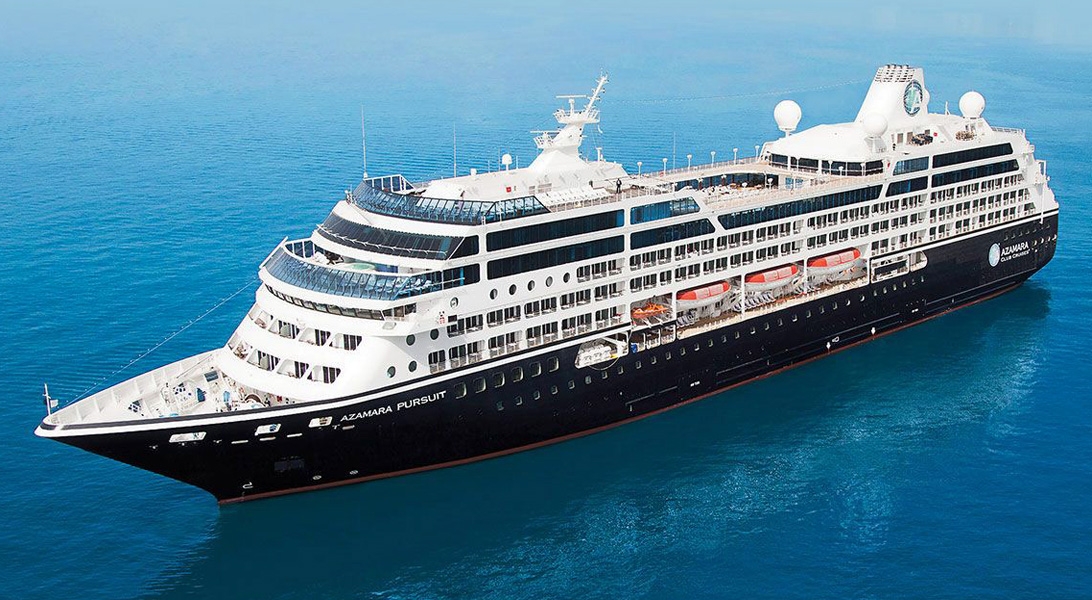
The images shown are for illustration purposes only and may not be an exact representation of what you find on the ship.
The images shown are for illustration purposes only and may not be an exact representation of what you find on the ship.
The images shown are for illustration purposes only and may not be an exact representation of what you find on the ship.
The images shown are for illustration purposes only and may not be an exact representation of what you find on the ship.
The images shown are for illustration purposes only and may not be an exact representation of what you find on the ship.

Our Fusion packages are all ABTA & ATOL protected ensuring that your booking is safe with us
| 20 nights aboard the Azamara Onward | |||
| AzAmazing Evenings event on voyages over 7 nights | |||
| Pre-Paid Gratuities | |||
| Select standard spirits, international beers & wines | |||
| Free bottled water, soft drinks, specialty coffees & teas | |||
| Concierge services for personal guidance & reservations | |||
| Free self-service laundry | |||
| Shuttle service to & from port where available | |||
| English Butler Service for suite Guests | |||
| Port Taxes and Fees | |||
 | ABTA and ATOL Protection* | ||
Date 17th Jul 2028 |
Nts 20 |
Interior £5,899pp |
Oceanview £6,379pp |
Balcony £7,859pp |
Suite £11,119pp |
Date 17th Jul 2028 |
Nts 20 |
Interior £5,899pp |
Oceanview £6,379pp |
Balcony £7,859pp |
Suite £11,119pp |
| Interior staterooms from | £5,899pp | ||
| 9 | Club Interior Stateroom (Deck 8, Mid/Fwd) | £6,419pp | |
| 10 | Club Interior Stateroom (Deck 7, Mid) | £6,249pp | |
| 11 | Club Interior Stateroom (Deck 6,7, Fwd) | £6,079pp | |
| 12 | Club Interior Stateroom (Deck 4, Mid) | £5,899pp | |
| Oceanview staterooms from | £6,379pp | ||
| 4 | Club Oceanview Stateroom (Deck 6, Fwd) | £6,929pp | |
| 5 | Club Oceanview Stateroom (Deck 4, Mid) | £6,739pp | |
| 6 | Club Oceanview Stateroom (Deck 4, Fwd) | £6,559pp | |
| 8 | Club Oceanview Stateroom (Deck 6, Obstructed) | £6,379pp | |
| Balcony staterooms from | £7,859pp | ||
| P1 | Club Veranda Plus Stateroom (Decks 6,7,8, Aft/Fwd) | £9,889pp | |
| P2 | Club Veranda Plus Stateroom (Deck 8, Mid) | £9,609pp | |
| P3 | Club Veranda Plus Stateroom (Deck 8, Fwd) | £9,339pp | |
| V1 | Club Veranda Stateroom (Deck 4) | £8,309pp | |
| V2 | Club Veranda Stateroom (Deck 7) | £8,079pp | |
| V3 | Club Veranda Stateroom (Deck 6) | £7,859pp | |
| Suite staterooms from | £11,119pp | ||
| CO | Club Ocean Suite | £17,239pp | |
| CW | Club World Owner's Suite | £19,259pp | |
| N1 | Club Continent Suite (Deck 8, Mid) | £11,429pp | |
| N2 | Club Continent Suite (Deck 8, Aft) | £11,119pp | |
| SP | Club Spa Suite | £15,449pp | |
Fusion Holidays when selling travel arrangements is a trading name of Co-op Travel Services Limited, registration 08903986. Fusion Cruises is an Accredited Body Member of Co-op Travel Services Limited ATOL 12904.
Book with Confidence. We are a Member of ABTA which means you have the benefit of ABTA’s assistance and Code of Conduct.
Some of the flights and flight-inclusive holidays on this website are financially protected by the ATOL scheme but ATOL protection does not apply to all holiday and travel services offered on this website. This website will provide you with information on the protection that applies in the case of each holiday and travel service offered before you make your booking. If you do not receive an ATOL Certificate then the booking will not be ATOL protected. If you do receive an ATOL Certificate but all parts of your trip are not listed on it, those parts will not be ATOL protected. Please see our booking conditions for information, or for more information about financial protection and the ATOL Certificate go to: www.caa.co.uk