| | | | | Arrive | Depart |
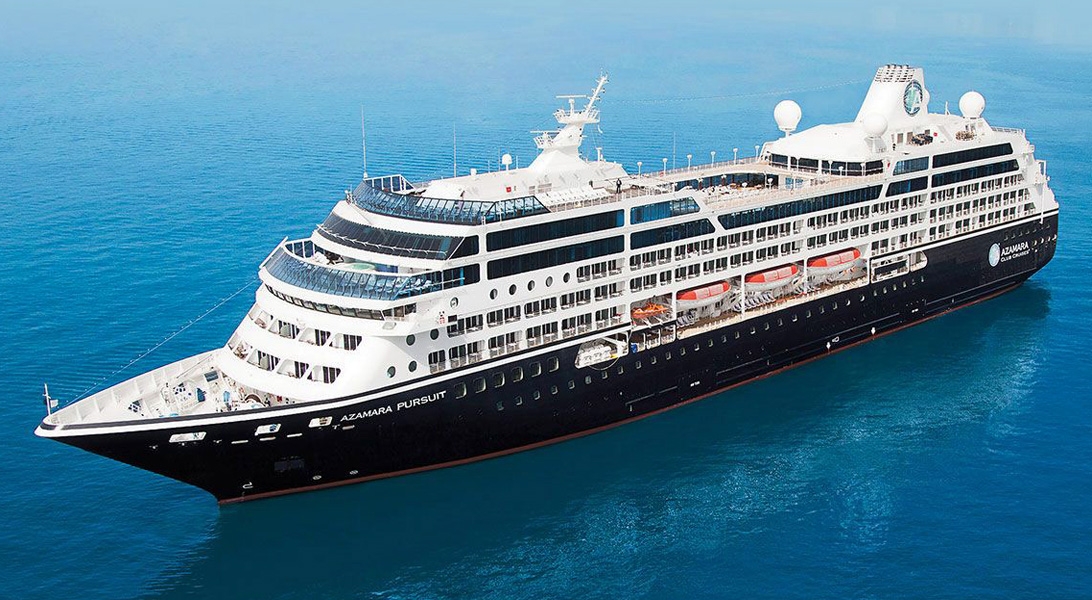
| 26th26 | JulJul | 202828 | Athens, Greece, embark on the Azamara Onward | | 17:00 |
| 27th27 | JulJul | 202828 | Ermoupoli, Syra, Greece | 08:00 | 18:00 |
Syros is an island in the Aegean Sea, 78 miles (125 kilometres) southeast of Athens, and the administrative, commercial, intellectual and cultural centre of the Cyclades. Syros is 32 square miles (82.8 square kilometres) in area. Its largest towns are Ermoupoli, the capital of the island and Cyclades, Ano Syros and Vari. Although Syros belongs to the Cyclades islands, its architecture is more medieval than Cycladic. The beaches of Syros are especially inviting, and surrounded by many tourist facilities and accommodations. Perfectly blending the traditional with the modern, Syros offers visitors an authentic snapshot of Greek life in the beautiful Cyclades. Come for the laid back pace, stay for the buzzing gastronomy scene. Opa! |
| 28th28 | JulJul | 202828 | Bodrum, Turkey | 08:00 | 22:00 |
As the site of the ancient city of Halikarnassus (and one of the Seven Wonders of the Ancient World), Bodrum’s ties to the past are evident everywhere; but there are plenty of modern-day pleasures, too. |
| 29th29 | JulJul | 202828 | Rhodes, Greece | 08:00 | 20:00 |
Early travelers described Rhodes as a town of two parts: a castle or high town (Collachium) and a lower city. Today Rhodes town—sometimes referred to as Ródos town—is still a city of two parts: the Old Town, a UNESCO World Heritage site that incorporates the high town and lower city, and the modern metropolis, or New Town, spreading away from the walls that encircle the Old Town. The narrow streets of the Old Town are for the most part closed to cars and are lined with Orthodox and Catholic churches, Turkish houses (some of which follow the ancient orthogonal plan), and medieval public buildings with exterior staircases and facades elegantly constructed of well-cut limestone from Lindos. Careful reconstruction in recent years has enhanced the harmonious effect. Said to have more fine days than anywhere else in Europe, Rhodes’ diverse historical influences are evident in an old town remarkably intact—in particular the medieval presence of the Knights of St John. |
| 30th30 | JulJul | 202828 | Agios Nikólaos, Kríti, Greece | 09:00 | 20:00 |
Known for having “three faces to the sea”, this port on Crete’s east coast seamlessly blends the charm of a small fishing village with the glamor of a chic resort town. With a diverse range of dining, shopping, and nightlife options, you can find your own personal paradise in Agios Nikolaos. |
| 31st31 | JulJul | 202828 | Monemvasía, Greece | 09:00 | 20:00 |
Monemvasia boasts a varied and colorful history that can be traced to the 8th-century when Greeks fleeing the Slav invasion of Lakonia found refuge here. In its heyday it controlled sea travel between the Levant and European shores. The wall-encircled Lower Town extends along the slopes of a 985-foot-high crag that projects into the sea on the east side of the Peloponnese. For centuries an impressive stronghold, population dwindled as the inhabitants moved to the mainland. But with the beginning of a restoration program aimed to preserve Monemvasia's heritage, the Lower Town experienced a new lease on life, and people have begun to return. The Upper Town is situated on top of the Rock of Monemvasia. It is reached via a zigzagging, paved lane. An almost impregnable bastion in earlier days, it has been uninhabited for centuries, but still manages to preserve its magnificent appearance. Visitors today can explore the remains of the ancient citadel-castle and visit the church of Hagia Sofia. From the summit there is also a fantastic view of the surrounding area. One look at Monemvasia as you pull in to port and it’s easy to understand why locals nicknamed it The Rock. Shrouded by precipitous cliffs along the brilliant teal waters of the Myrtoan Sea, Monemvasia is a castle town suspended in history. |
| 1st01 | AugAug | 202828 | At Sea | | |
| 2nd02 | AugAug | 202828 | Siracuse, Sicily, Italy | 08:00 | 22:00 |
Siracusa, known to English speakers as Syracuse, is a wonder to behold. One of the great ancient capitals of Western civilization, the city was founded in 734 BC by Greek colonists from Corinth and soon grew to rival, and even surpass, Athens in splendor and power. It became the largest, wealthiest city-state in the West and a bulwark of Greek civilization. Although Siracusa lived under tyranny, rulers such as Dionysius filled their courts with Greeks of the highest cultural stature—among them the playwrights Aeschylus and Euripides, and the philosopher Plato. The Athenians, who didn't welcome Siracusa's rise, set out to conquer Sicily, but the natives outsmarted them in what was one of the greatest military campaigns in ancient history (413 BC). The city continued to prosper until it was conquered two centuries later by the Romans.Present-day Siracusa still has some of the finest examples of Baroque art and architecture; dramatic Greek and Roman ruins; and a Duomo that's the stuff of legend—a microcosm of the city's entire history in one building. The modern city also has a wonderful, lively, Baroque old town worthy of extensive exploration, as well as pleasant piazzas, outdoor cafés and bars, and a wide assortment of excellent seafood. There are essentially two areas to explore in Siracusa: the Parco Archeologico (Archaeological Zone), on the mainland; and the island of Ortygia, the ancient city first inhabited by the Greeks, which juts out into the Ionian Sea and is connected to the mainland by two small bridges. Ortygia is becoming increasingly popular with tourists, and is starting to lose its old-fashioned charm in favor of modern boutiques.Siracusa's old nucleus of Ortygia, a compact area, is a pleasure to amble around without getting unduly tired. In contrast, mainland Siracusa is a grid of wider avenues. At the northern end of Corso Gelone, above Viale Paolo Orsi, the orderly grid gives way to the ancient quarter of Neapolis, where the sprawling Parco Archeologico is accessible from Viale Teracati (an extension of Corso Gelone). East of Viale Teracati, about a 10-minute walk from the Parco Archeologico, the district of Tyche holds the archaeological museum and the church and catacombs of San Giovanni, both off Viale Teocrito (drive or take a taxi or city bus from Ortygia). Coming from the train station, it's a 15-minute trudge to Ortygia along Via Francesco Crispi and Corso Umberto. If you're not up for that, take one of the free electric buses leaving every 10 minutes from the bus station around the corner. As one of the major powers of the Mediterranean world in 5th century BC, Siracusa is known for the archaeological and historical sights (like the tomb of Archimedes and Ear of Dionysus) that define its grand past. |
| 3rd03 | AugAug | 202828 | Taormina, Italy | 08:00 | 17:00 |
The medieval cliff-hanging town of Taormina is overrun with tourists, yet its natural beauty is still hard to dispute. The view of the sea and Mt. Etna from its jagged cactus-covered cliffs is as close to perfection as a panorama can get—especially on clear days, when the snowcapped volcano's white puffs of smoke rise against the blue sky. Writers have extolled Taormina's beauty almost since it was founded in the 6th century BC by Greeks from nearby Naxos; Goethe and D. H. Lawrence were among its well-known enthusiasts. The town's boutique-lined main streets get old pretty quickly, but the many hiking paths that wind through the beautiful hills surrounding Taormina promise a timeless alternative. A trip up to stunning Castelmola (whether on foot or by car) should also be on your itinerary. A lovely medieval town perched on high cliffs and situated next to the still active Mt. Etna, Taormina offers spectacular views over the bay and rugged coastline and lush crops of olives, citrus and grapes. |
| 4th04 | AugAug | 202828 | Salerno, Italy | 08:00 | 22:00 |
Salerno is an Italian city located on the Gulf of Salerno. Famous for being home to the first medical university, Salerno is a great destination for anyone looking for gorgeous sea views filled with sunshine and Italian food. Known for its rich history, beautiful coastal views, and significant landmarks, Salerno is a vibrant city with a blend of historical charm and modern amenities. |
| 5th05 | AugAug | 202828 | Sorrento, Italy | 08:00 | 18:00 |
Sorrento may have become a jumping-off point for visitors to Pompeii, Capri, and Amalfi, but you can find countless reasons to love it for itself. The Sorrentine people are fair-minded and hardworking, bubbling with life and warmth. The tuff cliff on which the town rests is spread over the bay, absorbing sunlight, while orange and lemon trees waft their perfume in spring. Winding along a cliff above a small beach and two harbors, the town is split in two by a narrow ravine formed by a former mountain stream. To the east, dozens of hotels line busy Via Correale along the cliff—many have "grand" included in their names, and some indeed still are. To the west, however, is the historic sector, which still enchants. It's a relatively flat area, with winding, stone-paved lanes bordered by balconied buildings, some joined by medieval stone arches. The central piazza is named after the poet Torquato Tasso, born here in 1544. This part of town is a delightful place to walk through. Craftspeople are often at work in their stalls and shops and are happy to let you watch; in fact, that's the point. Music spots and bars cluster in the side streets near Piazza Tasso. A warming sun and gentle sea breezes have been attracting visitors to Sorrento for two millennia, and its reputation as a playground of the ancient rich and famous have resulted in lavish villas and palaces. |
| 6th06 | AugAug | 202828 | Civitavecchia, Italy, disembark the Azamara Onward | 06:00 | |
Italy's vibrant capital lives in the present, but no other city on earth evokes its past so powerfully. For over 2,500 years, emperors, popes, artists, and common citizens have left their mark here. Archaeological remains from ancient Rome, art-stuffed churches, and the treasures of Vatican City vie for your attention, but Rome is also a wonderful place to practice the Italian-perfected il dolce far niente, the sweet art of idleness. Your most memorable experiences may include sitting at a caffè in the Campo de' Fiori or strolling in a beguiling piazza. Whether it’s tossing a coin in a fabled fountain or being awestruck by the magnificence of St. Peter’s Basilica and Michelangelo’s masterpieces, Rome seems to live up to its sobriquet, the Eternal City. |