This site uses cookies as defined in our Cookie Policy, by continuing to use this site you agree to their use.
Continue

| Arrive | Depart | ||||||
| 14th14 | JanJan | 202828 | Fuerte Amador, Panama, embark on the Azamara Quest | 17:00 | |||
Founded in 1519 by the Spanish conquistadors, Panama City is now one of the most cosmopolitan cities in Central America and home to incredible architectural and ethnic diversity, plus a unique blend of cuisines. | |||||||
| 15th15 | JanJan | 202828 | At Sea | ||||
| 16th16 | JanJan | 202828 | Manta, Ecuador | 08:00 | 13:30 | ||
A bustling port in Ecuador where some of the country’s most breathtaking beaches reside, powerful waves crash along the coastline, and tuna is king. | |||||||
| 17th17 | JanJan | 202828 | At Sea | ||||
| 18th18 | JanJan | 202828 | Callao, Peru | 13:00 | |||
When people discuss great South American cities, Lima is often overlooked. But Peru's capital can hold its own against its neighbors. It has an oceanfront setting, colonial-era splendor, sophisticated dining, and nonstop nightlife.It's true that the city—clogged with traffic and choked with fumes—doesn't make a good first impression, especially since the airport is in an industrial neighborhood. But wander around the regal edifices surrounding the Plaza de Armas, among the gnarled olive trees of San Isidro's Parque El Olivar, or along the winding lanes in the coastal community of Barranco, and you'll find yourself charmed.In 1535 Francisco Pizarro found the perfect place for the capital of Spain's colonial empire. On a natural port, the so-called Ciudad de los Reyes (City of Kings) allowed Spain to ship home all the gold the conquistador plundered from the Inca. Lima served as the capital of Spain's South American empire for 300 years, and it's safe to say that no other colonial city enjoyed such power and prestige during this period.When Peru declared its independence from Spain in 1821, the declaration was read in the square that Pizarro had so carefully designed. Many of the colonial-era buildings around the Plaza de Armas are standing today. Walk a few blocks in any direction for churches and elegant houses that reveal just how wealthy this city once was. But the poor state of most buildings attests to the fact that the country's wealthy families have moved to neighborhoods to the south over the past century.The walls that surrounded the city were demolished in 1870, making way for unprecedented growth. A former hacienda became the graceful residential neighborhood of San Isidro. In the early 1920s the construction of tree-lined Avenida Arequipa heralded the development of neighborhoods such as bustling Miraflores and bohemian Barranco.Almost a third of the country's population of 29 million lives in the metropolitan area, many of them in relatively poor conos: newer neighborhoods on the outskirts of the city. Most residents of those neighborhoods moved there from mountain villages during the political violence and poverty that marked the 1980s and ’90s, when crime increased dramatically. During the past decade the country has enjoyed peace and steady economic growth, which have been accompanied by many improvements and refurbishment in the city. Residents who used to steer clear of the historic center now stroll along its streets. And many travelers who once would have avoided the city altogether now plan to spend a day here and end up staying two or three. | |||||||
| 19th19 | JanJan | 202828 | Callao, Peru | 17:00 | |||
When people discuss great South American cities, Lima is often overlooked. But Peru's capital can hold its own against its neighbors. It has an oceanfront setting, colonial-era splendor, sophisticated dining, and nonstop nightlife.It's true that the city—clogged with traffic and choked with fumes—doesn't make a good first impression, especially since the airport is in an industrial neighborhood. But wander around the regal edifices surrounding the Plaza de Armas, among the gnarled olive trees of San Isidro's Parque El Olivar, or along the winding lanes in the coastal community of Barranco, and you'll find yourself charmed.In 1535 Francisco Pizarro found the perfect place for the capital of Spain's colonial empire. On a natural port, the so-called Ciudad de los Reyes (City of Kings) allowed Spain to ship home all the gold the conquistador plundered from the Inca. Lima served as the capital of Spain's South American empire for 300 years, and it's safe to say that no other colonial city enjoyed such power and prestige during this period.When Peru declared its independence from Spain in 1821, the declaration was read in the square that Pizarro had so carefully designed. Many of the colonial-era buildings around the Plaza de Armas are standing today. Walk a few blocks in any direction for churches and elegant houses that reveal just how wealthy this city once was. But the poor state of most buildings attests to the fact that the country's wealthy families have moved to neighborhoods to the south over the past century.The walls that surrounded the city were demolished in 1870, making way for unprecedented growth. A former hacienda became the graceful residential neighborhood of San Isidro. In the early 1920s the construction of tree-lined Avenida Arequipa heralded the development of neighborhoods such as bustling Miraflores and bohemian Barranco.Almost a third of the country's population of 29 million lives in the metropolitan area, many of them in relatively poor conos: newer neighborhoods on the outskirts of the city. Most residents of those neighborhoods moved there from mountain villages during the political violence and poverty that marked the 1980s and ’90s, when crime increased dramatically. During the past decade the country has enjoyed peace and steady economic growth, which have been accompanied by many improvements and refurbishment in the city. Residents who used to steer clear of the historic center now stroll along its streets. And many travelers who once would have avoided the city altogether now plan to spend a day here and end up staying two or three. | |||||||
| 20th20 | JanJan | 202828 | Pisco, Peru | 08:00 | 16:00 | ||
Lending its name to the clear brandy that is Peru's favorite tipple and a source of fierce national pride, the coastal town of Pisco and its surroundings hold a special place in the national psyche. It's the point where the Argentinean hero General San Martín landed with his troops to fight for Peru's freedom from Spanish rule. It's the city from which pisco was first exported, and it's also an important seaport that had its heyday during the 1920s, when guano (bird droppings used as fertilizer) from the nearby Islas Ballestas were worth nearly as much as gold.Modern-day Pisco shows little evidence of its celebrated past. Instead, what you'll find is a city struggling to get back on its feet after the disaster of August 2007, when a magnitude 8 earthquake shook the town for three minutes. Disregard for planning permission, illegal building extensions, and the use of adobe (mud brick) as the main building material had left a vast number of Pisco's buildings unable to withstand the quake, and hundreds of lives were lost as homes, churches, and hospitals collapsed during the tremor.Most travelers now base themselves in Paracas, just a few kilometers down the coast. For travelers wishing to assist in Pisco's recovery, there are numerous opportunities to volunteer. Organizations active in the area vary over time, but a good place to start looking for current opportunities is www.idealist.org. Even those without the time to volunteer should know that every nuevo sol spent in local businesses is contributing to rebuilding the region's economy. Famous for its national beverage of the same name, Pisco is a quaint colonial town on Peru’s southern coast. But you’ll find more than iconic cocktails here: Pisco has a high concentration of marine life and birds nearby and is central to mysterious archaeological interests. | |||||||
| 21st21 | JanJan | 202828 | At Sea | ||||
| 22nd22 | JanJan | 202828 | At Sea | ||||
| 23rd23 | JanJan | 202828 | Coquimbo, Chile | 09:30 | 16:30 | ||
The name Coquimbo is derived from a native Diaguita word meaning 'place of calm waters'. In fact, Charles Darwin had noted that the town was 'remarkable for nothing but its extreme quietness'. Since then, Coquimbo has developed into a bustling port and the region's major commercial and industrial centre from which minerals, fish products and fruits are exported. Used during the colonial period as a port for La Serena, Coquimbo attracted attention from English pirates, including Sir Francis Drake, who visited in 1578. Visitors enjoy strolling around the town, admiring some of the elaborate woodwork handcrafted on buildings by early British and American settlers. These wooden buildings are among Chile's most interesting historical structures. Out of town, the area offers some fine beaches in a desert-like setting. Coquimbo serves as a gateway to the popular resort town of La Serena and trips farther into the Elqui Valley, known as the production centre for Chile's national drink, pisco sour. The valley is also home to several international observatories that take advantage of the region's exceptional atmospheric conditions. On the edge of two distinct and diverse worlds, the seaside city of Coquimbo and nearby La Serena lie sandwiched between Chile’s fertile central valley and the arid Atacama Desert—and they’re everything you could wish for from a day in port. A short drive from port is the country’s second-oldest city, La Serena. This colonial city is a popular summer holiday destination for Chileans, and it’s easy to see why with a tour along Avienda del Mar. Not one, not two, but twelve golden beaches stretch along the city’s coast, perfect for sport fishing or simply soaking up the sun. | |||||||
| 24th24 | JanJan | 202828 | Valparaiso, Chile, disembark the Azamara Quest | 07:00 | |||
Valparaíso's dramatic topography—45 cerros, or hills, overlooking the ocean—requires the use of winding pathways and wooden ascensores (funiculars) to get up many of the grades. The slopes are covered by candy-color houses—there are almost no apartments in the city—most of which have exteriors of corrugated metal peeled from shipping containers decades ago. Valparaíso has served as Santiago's port for centuries. Before the Panama Canal opened, Valparaíso was the busiest port in South America. Harsh realities—changing trade routes, industrial decline—have diminished its importance, but it remains Chile's principal port. Most shops, banks, restaurants, bars, and other businesses cluster along the handful of streets called El Plan (the flat area) that are closest to the shoreline. Porteños (which means "the residents of the port") live in the surrounding hills in an undulating array of colorful abodes. At the top of any of the dozens of stairways, the paseos (promenades) have spectacular views; many are named after prominent Yugoslavian, Basque, and German immigrants. Neighborhoods are named for the hills they cover. With the jumble of power lines overhead and the hundreds of buses that slow down—but never completely stop—to pick up agile riders, it's hard to forget you're in a city. Still, walking is the best way to experience Valparaíso. Be careful where you step, though—locals aren't very conscientious about curbing their dogs. | |||||||
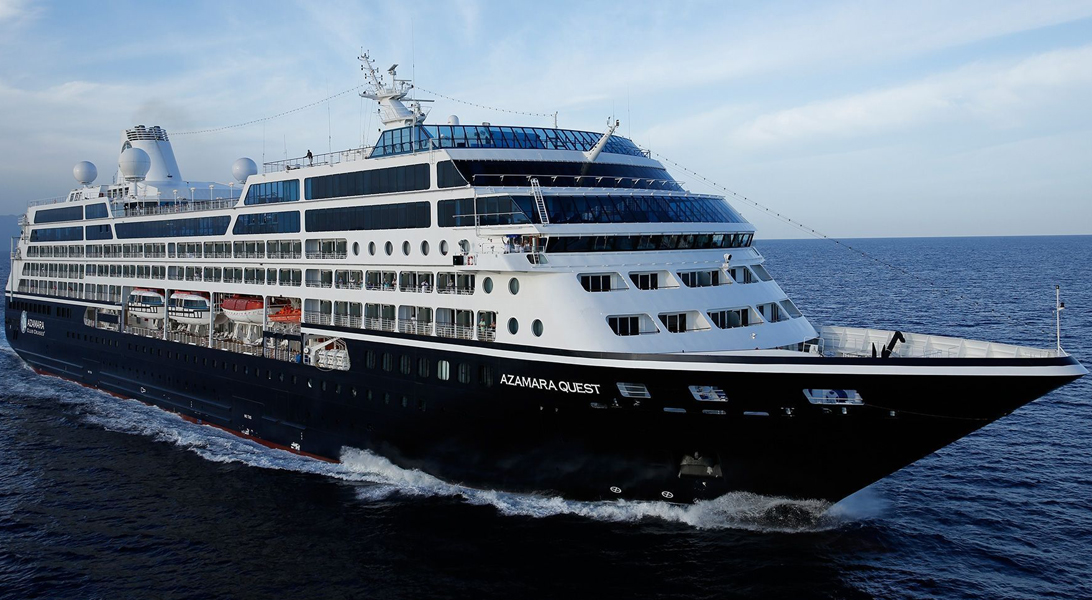


The images shown are for illustration purposes only and may not be an exact representation of what you find on the ship.
The images shown are for illustration purposes only and may not be an exact representation of what you find on the ship.
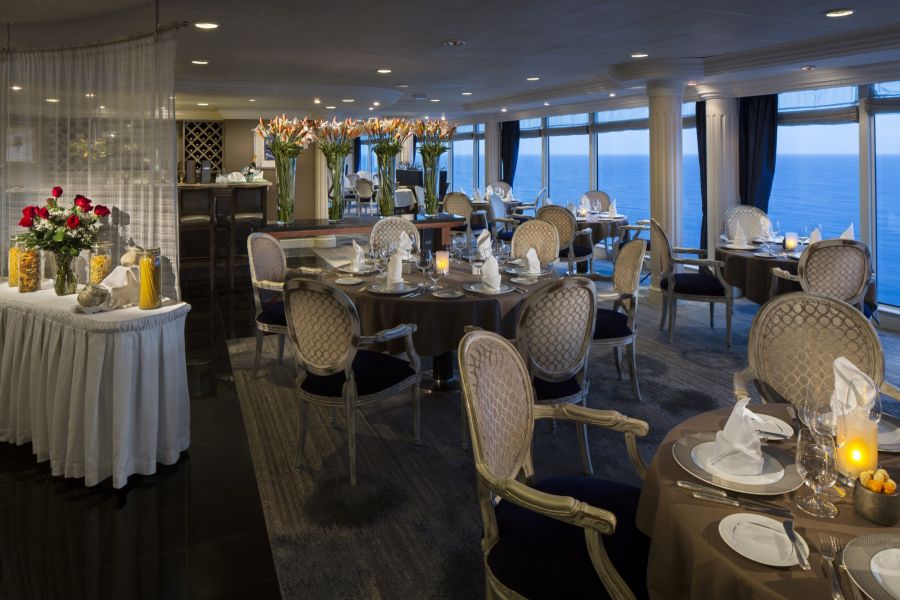
At Aqualina, you’ll find some of Italy’s most authentic dishes. Pastas made from scratch, traditional recipes, and scrumptious vegetarian dishes that make sure there’s something for everyone. Plus our famous desserts: Sorrento lemon liqueur mousse, hazelnut chocolate soufflé and more.
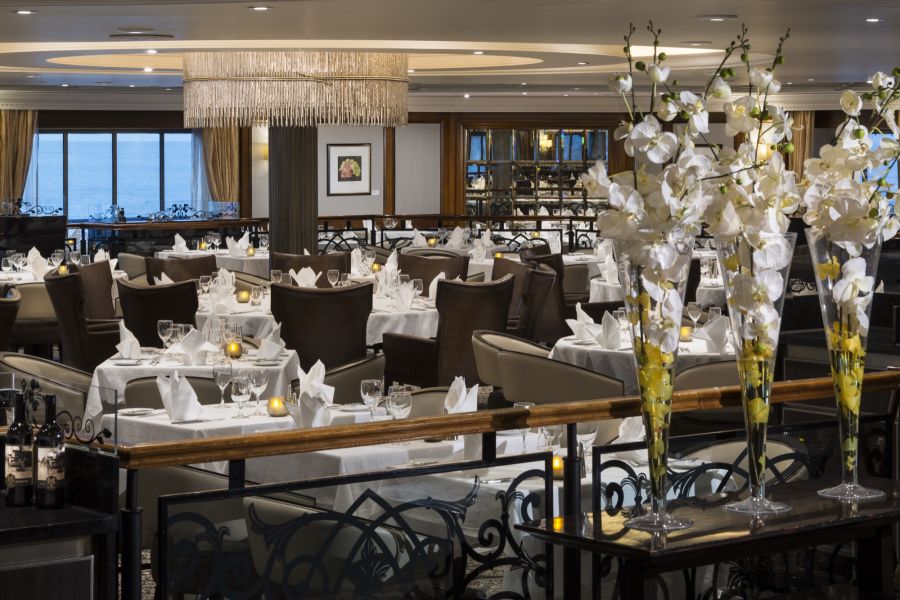
Discover the world through dishes and flavors from the places we visit. Of course, you’ll also enjoy a wide variety of nightly selections such as filet mignon with black truffle sauce. Choose being seated at a table for two or as part of a larger group of fellow guests.
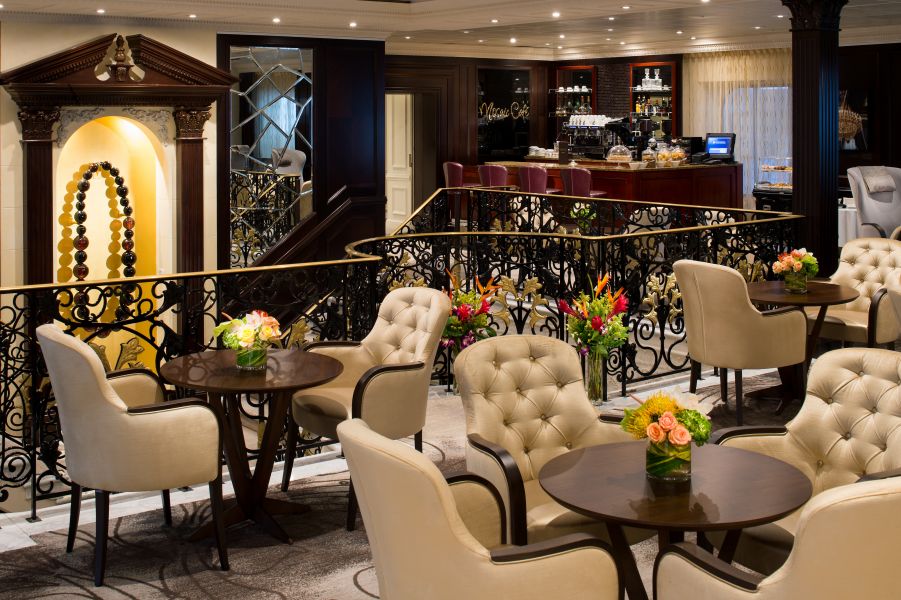
Stylish and cozy, Mosaic offers your favorite coffee drinks exactly as you like them. Relax in a comfortable seat and enjoy. It’s the perfect spot to start or end your day, and it just might become your favorite place on the ship.
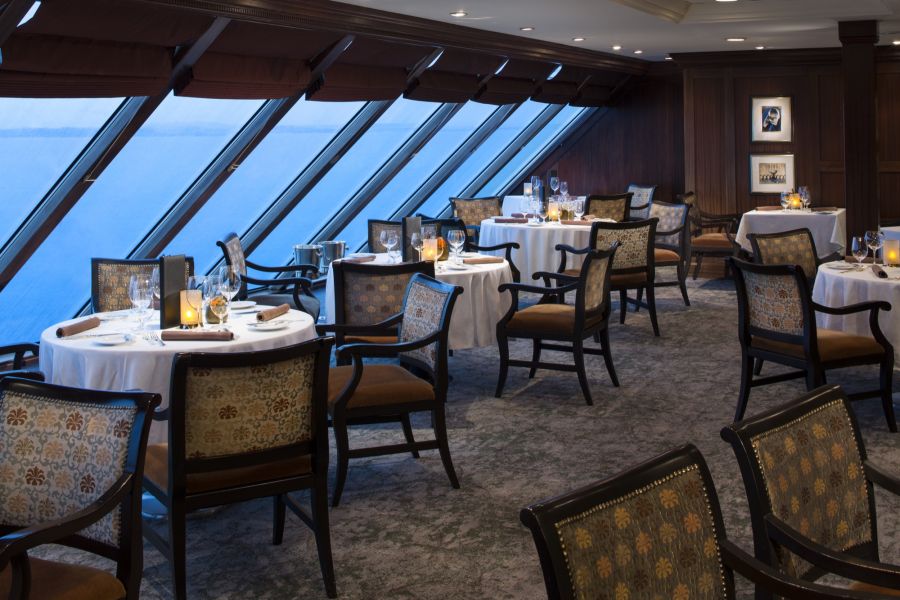
Your choice of steak, cooked to perfection. Herb-coated rack of lamb, duck confit and Chilean sea bass—all paired with savory sides. At Prime C, you’re in for more than delectable dining. Expect a great evening with stunning views and lush décor.
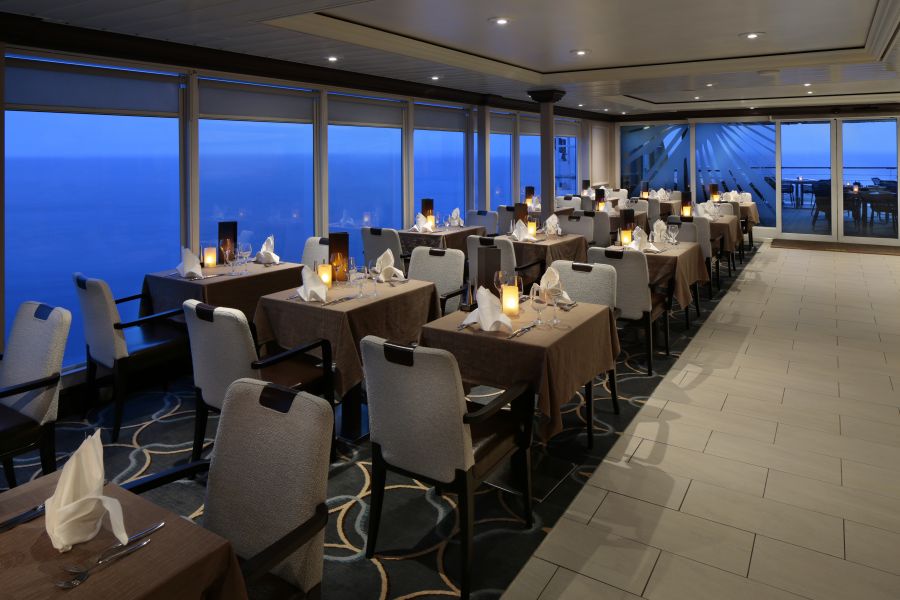
Our daily themed dinner often takes its inspiration from the region we’re visiting—Indian, Mexican, Spanish, Italian. We also create an extra live station made from local ingredients purchased in port: Greek salad made with local feta (Greece), pasta prepared with local mushrooms (Italy), fresh Mussels served with garlic bread (Netherlands).
The images shown are for illustration purposes only and may not be an exact representation of what you find on the ship.
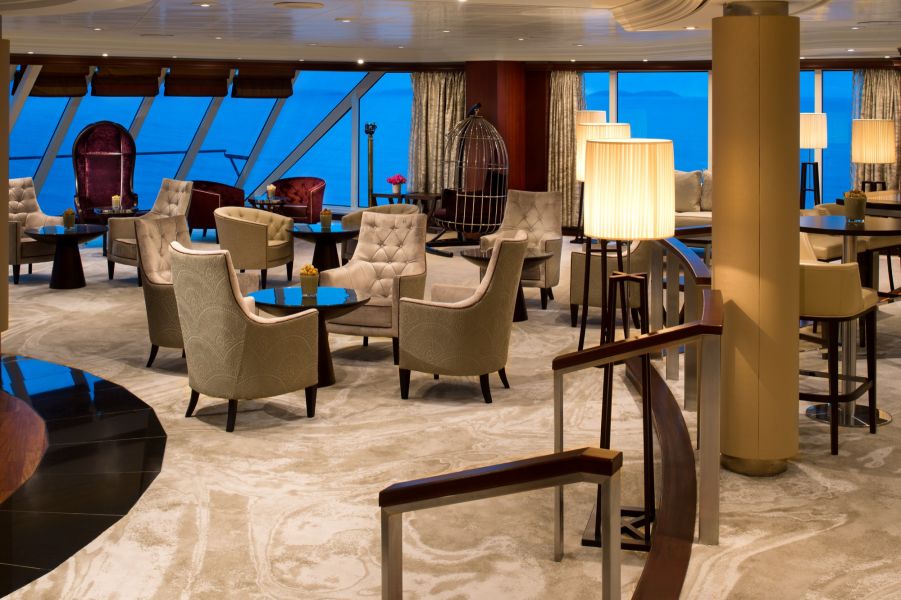
The idea of the Living Room is just that. To “live in” and to enjoy time with friends and fellow guests! Much of the room is furnished as a living room, with clusters of large comfortable chairs and sofas....
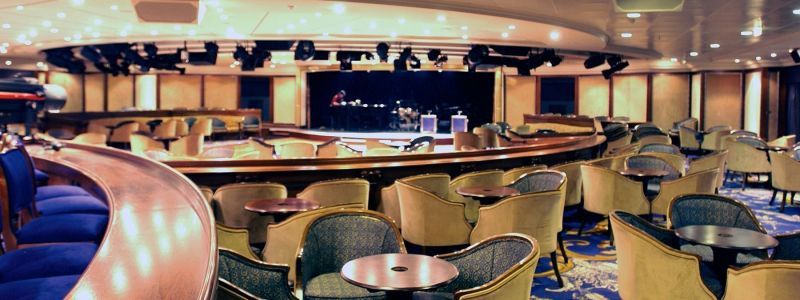
Enjoy live performances of professional full-stage musical revues, classical soloists, bands and other entertainment in a cabaret nightclub with a full bar and cozy tables.
The images shown are for illustration purposes only and may not be an exact representation of what you find on the ship.
The images shown are for illustration purposes only and may not be an exact representation of what you find on the ship.

Our Fusion packages are all ABTA & ATOL protected ensuring that your booking is safe with us
| 10 nights aboard the Azamara Quest | |||
| AzAmazing Evenings event on voyages over 7 nights | |||
| Pre-Paid Gratuities | |||
| Select standard spirits, international beers & wines | |||
| Free bottled water, soft drinks, specialty coffees & teas | |||
| Concierge services for personal guidance & reservations | |||
| Free self-service laundry | |||
| Shuttle service to & from port where available | |||
| English Butler Service for suite Guests | |||
| Port Taxes and Fees | |||
 | ABTA and ATOL Protection* | ||
Date 14th Jan 2028 |
Nts 10 |
Interior £2,769pp |
Oceanview £3,239pp |
Balcony £3,969pp |
Suite £5,859pp |
Date 14th Jan 2028 |
Nts 10 |
Interior £2,769pp |
Oceanview £3,239pp |
Balcony £3,969pp |
Suite £5,859pp |
| Interior staterooms from | £2,769pp | ||
| 9 | Club Interior Stateroom (Deck 8, Mid/Fwd) | £3,099pp | |
| 10 | Club Interior Stateroom (Deck 7, Mid) | £3,039pp | |
| 11 | Club Interior Stateroom (Deck 6,7, Fwd) | £2,989pp | |
| 12 | Club Interior Stateroom (Deck 4, Mid) | £2,899pp | |
| Z | Interior Guarantee | £2,769pp | |
| Oceanview staterooms from | £3,239pp | ||
| 4 | Club Oceanview Stateroom (Deck 6, Fwd) | £3,749pp | |
| 5 | Club Oceanview Stateroom (Deck 4, Mid) | £3,629pp | |
| 6 | Club Oceanview Stateroom (Deck 4, Fwd) | £3,519pp | |
| Y | Oceanview Guarantee | £3,239pp | |
| Balcony staterooms from | £3,969pp | ||
| V1 | Club Veranda Stateroom (Deck 4) | £4,399pp | |
| V2 | Club Veranda Stateroom (Deck 7) | £4,279pp | |
| V3 | Club Veranda Stateroom (Deck 6) | £4,159pp | |
| X | Veranda Guarantee | £3,969pp | |
| P1 | Club Veranda Plus Stateroom (Decks 6,7,8, Aft/Fwd) | £4,809pp | |
| P2 | Club Veranda Plus Stateroom (Deck 8, Mid) | £4,689pp | |
| P3 | Club Veranda Plus Stateroom (Deck 8, Fwd) | £4,569pp | |
| XP | Club Veranda Plus Guarantee | £4,359pp | |
| Suite staterooms from | £5,859pp | ||
| N1 | Club Continent Suite (Deck 8, Mid) | £6,339pp | |
| N2 | Club Continent Suite (Deck 8, Aft) | £6,159pp | |
| SP | Club Spa Suite | £8,469pp | |
| CO | Club Ocean Suite | £9,469pp | |
| CW | Club World Owner's Suite | £10,589pp | |
| W | Suite Guarantee | £5,859pp | |
| CS | Panorama Suite | £11,309pp | |
| E1 | Grandview Suite | £6,949pp | |
Fusion Holidays when selling travel arrangements is a trading name of Co-op Travel Services Limited, registration 08903986. Fusion Cruises is an Accredited Body Member of Co-op Travel Services Limited ATOL 12904.
Book with Confidence. We are a Member of ABTA which means you have the benefit of ABTA’s assistance and Code of Conduct.
Some of the flights and flight-inclusive holidays on this website are financially protected by the ATOL scheme but ATOL protection does not apply to all holiday and travel services offered on this website. This website will provide you with information on the protection that applies in the case of each holiday and travel service offered before you make your booking. If you do not receive an ATOL Certificate then the booking will not be ATOL protected. If you do receive an ATOL Certificate but all parts of your trip are not listed on it, those parts will not be ATOL protected. Please see our booking conditions for information, or for more information about financial protection and the ATOL Certificate go to: www.caa.co.uk