This site uses cookies as defined in our Cookie Policy, by continuing to use this site you agree to their use.
Continue

| Arrive | Depart | ||||||
| 16th16 | JanJan | 202828 | Barcelona, Spain, embark on the Nieuw Statendam | 16:00 | |||
The infinite variety of street life, the nooks and crannies of the medieval Barri Gòtic, the ceramic tile and stained glass of Art Nouveau facades, the art and music, the throb of street life, the food (ah, the food!)—one way or another, Barcelona will find a way to get your full attention. The capital of Catalonia is a banquet for the senses, with its beguiling mix of ancient and modern architecture, tempting cafés and markets, and sun-drenched Mediterranean beaches. A stroll along La Rambla and through waterfront Barceloneta, as well as a tour of Gaudí's majestic Sagrada Famíliaand his other unique creations, are part of a visit to Spain's second-largest city. Modern art museums and chic shops call for attention, too. Barcelona's vibe stays lively well into the night, when you can linger over regional wine and cuisine at buzzing tapas bars. | |||||||
| 17th17 | JanJan | 202828 | Valencia, Spain | 08:00 | 22:00 | ||
Valencia, Spain's third-largest municipality, is a proud city with a thriving nightlife and restaurant scene, quality museums, and spectacular contemporary architecture, juxtaposed with a thoroughly charming historic quarter, making it a popular destination year in year out. During the Civil War, it was the last seat of the Republican Loyalist government (1935–36), holding out against Franco’s National forces until the country fell to 40 years of dictatorship. Today it represents the essence of contemporary Spain—daring design and architecture along with experimental cuisine—but remains deeply conservative and proud of its traditions. Though it faces the Mediterranean, Valencia's history and geography have been defined most significantly by the River Turia and the fertile huerta that surrounds it.The city has been fiercely contested ever since it was founded by the Greeks. El Cid captured Valencia from the Moors in 1094 and won his strangest victory here in 1099: he died in the battle, but his corpse was strapped into his saddle and so frightened the besieging Moors that it caused their complete defeat. In 1102 his widow, Jimena, was forced to return the city to Moorish rule; Jaume I finally drove them out in 1238. Modern Valencia was best known for its frequent disastrous floods until the River Turia was diverted to the south in the late 1950s. Since then the city has been on a steady course of urban beautification. The lovely bridges that once spanned the Turia look equally graceful spanning a wandering municipal park, and the spectacularly futuristic Ciutat de les Arts i les Ciències (City of Arts and Sciences), most of it designed by Valencia-born architect Santiago Calatrava, has at last created an exciting architectural link between this river town and the Mediterranean. If you're in Valencia, an excursion to Albufera Nature Park is a worthwhile day trip. | |||||||
| 18th18 | JanJan | 202828 | At Sea | ||||
| 19th19 | JanJan | 202828 | Marseille, France | 07:00 | 16:00 | ||
Since being designated a European Capital of Culture for 2013, with an estimated €660 million of funding in the bargain, Marseille has been in the throes of an extraordinary transformation, with no fewer than five major new arts centers, a beautifully refurbished port, revitalized neighborhoods, and a slew of new shops and restaurants. Once the underdog, this time-burnished city is now welcoming an influx of weekend tourists who have colonized entire neighborhoods and transformed them into elegant pieds-à-terre (or should we say, mer). The second-largest city in France, Marseille is one of Europe's most vibrant destinations. Feisty and fond of broad gestures, it is also as complicated and as cosmopolitan now as it was when a band of Phoenician Greeks first sailed into the harbor that is today's Vieux Port in 600 BC. Legend has it that on that same day a local chieftain's daughter, Gyptis, needed to choose a husband, and her wandering eyes settled on the Greeks' handsome commander Protis. Her dowry brought land near the mouth of the Rhône, where the Greeks founded Massalia, the most important Continental shipping port in antiquity. The port flourished for some 500 years as a typical Greek city, enjoying the full flush of classical culture, its gods, its democratic political system, its sports and theater, and its naval prowess. Caesar changed all that, besieging the city in 49 BC and seizing most of its colonies. In 1214 Marseille was seized again, this time by Charles d'Anjou, and was later annexed to France by Henri IV in 1481, but it was not until Louis XIV took the throne that the biggest transformations of the port began; he pulled down the city walls in 1666 and expanded the port to the Rive Neuve (New Riverbank). The city was devastated by plague in 1720, losing more than half its population. By the time of the Revolution, Marseille was on the rebound once again, with industries of soap manufacturing and oil processing flourishing, encouraging a wave of immigration from Provence and Italy. With the opening of the Suez Canal in 1869, Marseille became the greatest boomtown in 19th-century Europe. With a large influx of immigrants from areas as exotic as Tangiers, the city quickly acquired the multicultural population it maintains to this day. | |||||||
| 20th20 | JanJan | 202828 | Livorno, Italy | 08:00 | 20:00 | ||
Livorno is a gritty city with a long and interesting history. In the early Middle Ages it alternately belonged to Pisa and Genoa. In 1421 Florence, seeking access to the sea, bought it. Cosimo I (1519–74) started construction of the harbor in 1571, putting Livorno on the map. After Ferdinando I de' Medici (1549–1609) proclaimed Livorno a free city, it became a haven for people suffering from religious persecution; Roman Catholics from England and Jews and Moors from Spain and Portugal, among others, settled here. The Quattro Mori (Four Moors), also known as the Monument to Ferdinando I, commemorates this. (The statue of Ferdinando I dates from 1595, the bronze Moors by Pietro Tacca from the 1620s.)In the following centuries, and particularly in the 18th, Livorno boomed as a port. In the 19th century the town drew a host of famous Britons passing through on their grand tours. Its prominence continued up to World War II, when it was heavily bombed. Much of the town's architecture, therefore, postdates the war, and it's somewhat difficult to imagine what it might have looked like before. Livorno has recovered from the war, however, as it's become a huge point of departure for container ships, as well as the only spot in Tuscany for cruise ships to dock for the day.Most of Livorno's artistic treasures date from the 17th century and aren't all that interesting unless you dote on obscure baroque artists. Livorno's most famous native artist, Amedeo Modigliani (1884–1920), was of much more recent vintage. Sadly, there's no notable work by him in his hometown.There may not be much in the way of art, but it's still worth strolling around the city. The Mercato Nuovo, which has been around since 1894, sells all sorts of fruits, vegetables, grains, meat, and fish. Outdoor markets nearby are also chock-full of local color. The presence of Camp Darby, an American military base just outside town, accounts for the availability of many American products.If you have time, Livorno is worth a stop for lunch or dinner at the very least. | |||||||
| 21st21 | JanJan | 202828 | Civitavecchia, Italy | 07:00 | 20:00 | ||
Italy's vibrant capital lives in the present, but no other city on earth evokes its past so powerfully. For over 2,500 years, emperors, popes, artists, and common citizens have left their mark here. Archaeological remains from ancient Rome, art-stuffed churches, and the treasures of Vatican City vie for your attention, but Rome is also a wonderful place to practice the Italian-perfected il dolce far niente, the sweet art of idleness. Your most memorable experiences may include sitting at a caffè in the Campo de' Fiori or strolling in a beguiling piazza. | |||||||
| 22nd22 | JanJan | 202828 | Naples, Italy | 08:00 | 19:00 | ||
Naples, in the Campania region, is Italy's third largest city. Its claim to fame is the spectacular location along one of the world's most splendid bays, backed by the perfect cone of Mount Vesuvius. In addition to its beautiful setting, Naples' surprises with other outstanding attractions such as the Royal Palace, San Carlos Opera House, the impressive National Archaeological Museum and the Castel Nuovo, dating from the 13th-century. The city's central area is best explored on foot. Chaotic traffic conditions make driving around the city a very frustrating experience. Naples provides a convenient starting point for trips to such favored destinations as Pompeii, Herculaneum and Mount Vesuvius. The Isle of Capri can be reached via a 45-minute hydrofoil service. The region of Campania was home to Greeks settlers some 300 years before Rome was founded. Pompeii, too, was a Greek town before being conquered by the Romans during the 5th century BC. It was under the Romans that Pompeii flourished and grew prosperous. When Mount Vesuvius erupted in 79 AD, the population of 20,000 was wiped out, but dozens of buildings were preserved under layers of cinder more than 20 feet deep. The most important finds from Pompeii are displayed in Naples' National Archaeological Museum. A visit here will no doubt enhance a visit to ancient Pompeii. | |||||||
| 23rd23 | JanJan | 202828 | At Sea | ||||
| 24th24 | JanJan | 202828 | Kotor, Montenegro | 08:00 | 17:00 | ||
Backed by imposing mountains, tiny Kotor lies hidden from the open sea, tucked into the deepest channel of the Bokor Kotorska (Kotor Bay), which is Europe's most southerly fjord. To many, this town is more charming than its sister UNESCO World Heritage Site, Dubrovnik, retaining more authenticity, but with fewer tourists and spared the war damage and subsequent rebuilding which has given Dubrovnik something of a Disney feel.Kotor's medieval Stari Grad (Old Town) is enclosed within well-preserved defensive walls built between the 9th and 18th centuries and is presided over by a proud hilltop fortress. Within the walls, a labyrinth of winding cobbled streets leads through a series of splendid paved piazzas, rimmed by centuries-old stone buildings. The squares are now haunted by strains from buskers but although many now house trendy cafés and chic boutiques, directions are still given medieval-style by reference to the town’s landmark churches.In the Middle Ages, as Serbia's chief port, Kotor was an important economic and cultural center with its own highly regarded schools of stonemasonry and iconography. From 1391 to 1420 it was an independent city-republic and later, it spent periods under Venetian, Austrian, and French rule, though it was undoubtedly the Venetians who left the strongest impression on the city's architecture. Since the breakup of Yugoslavia, some 70% of the stone buildings in the romantic Old Town have been snapped up by foreigners, mostly Brits and Russians. Porto Montenegro, a new marina designed to accommodate some of the world’s largest super yachts, opened in nearby Tivat in 2011, and along the bay are other charming seaside villages, all with better views of the bay than the vista from Kotor itself where the waterside is congested with cruise ships and yachts. Try sleepy Muo or the settlement of Prčanj in one direction around the bay, or Perast and the Roman mosaics of Risan in the other direction. | |||||||
| 25th25 | JanJan | 202828 | At Sea | ||||
| 26th26 | JanJan | 202828 | Piraeus, Greece | 08:00 | 17:00 | ||
It's no wonder that all roads lead to the fascinating and maddening metropolis of Athens. Lift your eyes 200 feet above the city to the Parthenon, its honey-color marble columns rising from a massive limestone base, and you behold architectural perfection that has not been surpassed in 2,500 years. But, today, this shrine of classical form dominates a 21st-century boomtown. To experience Athens—Athína in Greek—fully is to understand the essence of Greece: ancient monuments surviving in a sea of cement, startling beauty amid the squalor, tradition juxtaposed with modernity. Locals depend on humor and flexibility to deal with the chaos; you should do the same. The rewards are immense. Although Athens covers a huge area, the major landmarks of the ancient Greek, Roman, and Byzantine periods are close to the modern city center. You can easily walk from the Acropolis to many other key sites, taking time to browse in shops and relax in cafés and tavernas along the way. From many quarters of the city you can glimpse "the glory that was Greece" in the form of the Acropolis looming above the horizon, but only by actually climbing that rocky precipice can you feel the impact of the ancient settlement. The Acropolis and Filopappou, two craggy hills sitting side by side; the ancient Agora (marketplace); and Kerameikos, the first cemetery, form the core of ancient and Roman Athens. Along the Unification of Archaeological Sites promenade, you can follow stone-paved, tree-lined walkways from site to site, undisturbed by traffic. Cars have also been banned or reduced in other streets in the historical center. In the National Archaeological Museum, vast numbers of artifacts illustrate the many millennia of Greek civilization; smaller museums such as the Goulandris Museum of Cycladic Art Museum and the Byzantine and Christian Museum illuminate the history of particular regions or periods. Athens may seem like one huge city, but it is really a conglomeration of neighborhoods with distinctive characters. The Eastern influences that prevailed during the 400-year rule of the Ottoman Empire are still evident in Monastiraki, the bazaar area near the foot of the Acropolis. On the northern slope of the Acropolis, stroll through Plaka (if possible by moonlight), an area of tranquil streets lined with renovated mansions, to get the flavor of the 19th-century's gracious lifestyle. The narrow lanes of Anafiotika, a section of Plaka, thread past tiny churches and small, color-washed houses with wooden upper stories, recalling a Cycladic island village. In this maze of winding streets, vestiges of the older city are everywhere: crumbling stairways lined with festive tavernas; dank cellars filled with wine vats; occasionally a court or diminutive garden, enclosed within high walls and filled with magnolia trees and the flaming trumpet-shaped flowers of hibiscus bushes. Formerly run-down old quarters, such as Thission, Gazi and Psirri, popular nightlife areas filled with bars and mezedopoleia (similar to tapas bars), are now in the process of gentrification, although they still retain much of their original charm, as does the colorful produce and meat market on Athinas. The area around Syntagma Square, the tourist hub, and Omonia Square, the commercial heart of the city about 1 km (½ mi) northwest, is distinctly European, having been designed by the court architects of King Otho, a Bavarian, in the 19th century. The chic shops and bistros of ritzy Kolonaki nestle at the foot of Mt. Lycabettus, Athens's highest hill (909 feet). Each of Athens's outlying suburbs has a distinctive character: in the north is wealthy, tree-lined Kifissia, once a summer resort for aristocratic Athenians, and in the south and southeast lie Glyfada, Voula, and Vouliagmeni, with their sandy beaches, seaside bars, and lively summer nightlife. Just beyond the city's southern fringes is Piraeus, a bustling port city of waterside fish tavernas and Saronic Gulf views. | |||||||
| 27th27 | JanJan | 202828 | Mykonos, Greece | 07:00 | 18:00 | ||
Although the fishing boats still go out in good weather, Mykonos largely makes its living from tourism these days. The summer crowds have turned one of the poorest islands in Greece into one of the richest. Old Mykonians complain that their young, who have inherited stores where their grandfathers once sold eggs or wine, get so much rent that they have lost ambition, and in summer sit around pool bars at night with their friends, and hang out in Athens in winter when island life is less scintillating. Put firmly on the map by Jackie O in the 1960s, Mykonos town—called Hora by the locals—remains the Saint-Tropez of the Greek islands. The scenery is memorable, with its whitewashed streets, Little Venice, the Kato Myli ridge of windmills, and Kastro, the town's medieval quarter. Its cubical two- or three-story houses and churches, with their red or blue doors and domes and wooden balconies, have been long celebrated as some of the best examples of classic Cycladic architecture. Luckily, the Greek Archaeological Service decided to preserve the town, even when the Mykonians would have preferred to rebuild, and so the Old Town has been impressively preserved. Pink oleander, scarlet hibiscus, and trailing green pepper trees form a contrast amid the dazzling whiteness, whose frequent renewal with whitewash is required by law. Any visitor who has the pleasure of getting lost in its narrow streets (made all the narrower by the many outdoor stone staircases, which maximize housing space in the crowded village) will appreciate how its confusing layout was designed to foil pirates—if it was designed at all. After Mykonos fell under Turkish rule in 1537, the Ottomans allowed the islanders to arm their vessels against pirates, which had a contradictory effect: many of them found that raiding other islands was more profitable than tilling arid land. At the height of Aegean piracy, Mykonos was the principal headquarters of the corsair fleets—the place where pirates met their fellows, found willing women, and filled out their crews. Eventually the illicit activity evolved into a legitimate and thriving trade network. Morning on Mykonos town's main quay is busy with deliveries, visitors for the Delos boats, lazy breakfasters, and street cleaners dealing with the previous night's mess. In late morning the cruise-boat people arrive, and the shops are all open. In early afternoon, shaded outdoor tavernas are full of diners eating salads (Mykonos's produce is mostly imported); music is absent or kept low. In mid- and late afternoon, the town feels sleepy, since so many people are at the beach, on excursions, or sleeping in their air-conditioned rooms; even some tourist shops close for siesta. By sunset, people have come back from the beach, having taken their showers and rested. At night, the atmosphere in Mykonos ramps up. The cruise-boat people are mostly gone, coughing three-wheelers make no deliveries in the narrow streets, and everyone is dressed sexy for summer and starting to shimmy with the scene. Many shops stay open past midnight, the restaurants fill up, and the bars and discos make ice cubes as fast as they can. Ready to dive in? Begin your tour of Mykonos town (Hora) by starting out at its heart: Mando Mavrogenous Square. | |||||||
| 28th28 | JanJan | 202828 | At Sea | ||||
| 29th29 | JanJan | 202828 | Istanbul, Turkey | 07:00 | |||
The only city in the world that can lay claim to straddling two continents, Istanbul—once known as Constantinople, capital of the Byzantine and then the Ottoman Empire—has for centuries been a bustling metropolis with one foot in Europe and the other in Asia. Istanbul embraces this enviable position with both a certain chaos and inventiveness, ever evolving as one of the world’s most cosmopolitan crossroads. It’s often said that Istanbul is the meeting point of East and West, but visitors to this city built over the former capital of two great empires are likely to be just as impressed by the juxtaposition of old and new. Office towers creep up behind historic palaces, women in chic designer outfits pass others wearing long skirts and head coverings, peddlers’ pushcarts vie with battered old Fiats and shiny BMWs for dominance of the noisy, narrow streets, and the Grand Bazaar competes with modern shopping malls. At dawn, when the muezzin's call to prayer resounds from ancient minarets, there are inevitably a few hearty revelers still making their way home from nightclubs and bars. Most visitors to this sprawling city of more than 14 million will first set foot in the relatively compact Old City, where the legacy of the Byzantine and Ottoman empires can be seen in monumental works of architecture like the brilliant Aya Sofya and the beautifully proportioned mosques built by the great architect Sinan. Though it would be easy to spend days, if not weeks, exploring the wealth of attractions in the historical peninsula, visitors should make sure also to venture elsewhere in order to experience the vibrancy of contemporary Istanbul. With a lively nightlife propelled by its young population and an exciting arts scene that’s increasingly on the international radar—thanks in part to its stint as the European Capital of Culture in 2010—Istanbul is truly a city that never sleeps. It’s also a place where visitors will feel welcome: Istanbul may be on the Bosphorus, but at heart it’s a Mediterranean city, whose friendly inhabitants are effusively social and eager to share what they love most about it. | |||||||
| 30th30 | JanJan | 202828 | Istanbul, Turkey | 23:00 | |||
The only city in the world that can lay claim to straddling two continents, Istanbul—once known as Constantinople, capital of the Byzantine and then the Ottoman Empire—has for centuries been a bustling metropolis with one foot in Europe and the other in Asia. Istanbul embraces this enviable position with both a certain chaos and inventiveness, ever evolving as one of the world’s most cosmopolitan crossroads. It’s often said that Istanbul is the meeting point of East and West, but visitors to this city built over the former capital of two great empires are likely to be just as impressed by the juxtaposition of old and new. Office towers creep up behind historic palaces, women in chic designer outfits pass others wearing long skirts and head coverings, peddlers’ pushcarts vie with battered old Fiats and shiny BMWs for dominance of the noisy, narrow streets, and the Grand Bazaar competes with modern shopping malls. At dawn, when the muezzin's call to prayer resounds from ancient minarets, there are inevitably a few hearty revelers still making their way home from nightclubs and bars. Most visitors to this sprawling city of more than 14 million will first set foot in the relatively compact Old City, where the legacy of the Byzantine and Ottoman empires can be seen in monumental works of architecture like the brilliant Aya Sofya and the beautifully proportioned mosques built by the great architect Sinan. Though it would be easy to spend days, if not weeks, exploring the wealth of attractions in the historical peninsula, visitors should make sure also to venture elsewhere in order to experience the vibrancy of contemporary Istanbul. With a lively nightlife propelled by its young population and an exciting arts scene that’s increasingly on the international radar—thanks in part to its stint as the European Capital of Culture in 2010—Istanbul is truly a city that never sleeps. It’s also a place where visitors will feel welcome: Istanbul may be on the Bosphorus, but at heart it’s a Mediterranean city, whose friendly inhabitants are effusively social and eager to share what they love most about it. | |||||||
| 31st31 | JanJan | 202828 | At Sea | ||||
| 1st01 | FebFeb | 202828 | Kusadasi, Turkey | 07:00 | 19:00 | ||
Whilst the busy resort town of Kusadasi offers much in the way of shopping and dining – not to mention a flourishing beach life scene, the real jewel here is Ephesus and the stunning ruined city that really take centre stage. With only 20% of the classical ruins having been excavated, this archaeological wonder has already gained the status as Europe’s most complete classical metropolis. And a metropolis it really is; built in the 10th century BC this UNESCO World Heritage site is nothing short of spectacular. Although regrettably very little remains of the Temple of Artemis (one of the seven wonders of the ancient world), the superb Library of Celsus’ façade is practically intact and it is one of life’s great joys to attend an evening performance in the illuminated ruins once all the tourists have left. The history of the city is fascinating and multi-layered and it is well worth reading up on this beforehand if a visit is planned. Another point of interest for historians would be the house of the Virgin Mary, located on the romantically named Mount Nightingale and just nine kilometres away from Ephesus proper. Legend has it that Mary (along with St. John) spent her final years here, secluded from the rest of the population, spreading Christianity. An edifying experience, even for non-believers. For the less historical minded amongst you, Kusadasi offers plenty in the way of activities. After a stroll through the town, jump in a taxi to Ladies’ Beach (men are allowed), sample a Turkish kebap on one of the many beachfront restaurants and enjoy the clement weather. If you do want to venture further afield, then the crystal clear beaches of Guzelcamli (or the Millipark), the cave of Zeus and the white scalloped natural pools at Pamukkale, known as Cleopatra’s pools, are definitely worth a visit. | |||||||
| 2nd02 | FebFeb | 202828 | Kos, Greece | 08:00 | 18:00 | ||
| 3rd03 | FebFeb | 202828 | Rhodes, Greece | 08:00 | 21:00 | ||
Early travelers described Rhodes as a town of two parts: a castle or high town (Collachium) and a lower city. Today Rhodes town—sometimes referred to as Ródos town—is still a city of two parts: the Old Town, a UNESCO World Heritage site that incorporates the high town and lower city, and the modern metropolis, or New Town, spreading away from the walls that encircle the Old Town. The narrow streets of the Old Town are for the most part closed to cars and are lined with Orthodox and Catholic churches, Turkish houses (some of which follow the ancient orthogonal plan), and medieval public buildings with exterior staircases and facades elegantly constructed of well-cut limestone from Lindos. Careful reconstruction in recent years has enhanced the harmonious effect. | |||||||
| 4th04 | FebFeb | 202828 | At Sea | ||||
| 5th05 | FebFeb | 202828 | Piraeus, Greece, disembark the Nieuw Statendam | 07:00 | |||
It's no wonder that all roads lead to the fascinating and maddening metropolis of Athens. Lift your eyes 200 feet above the city to the Parthenon, its honey-color marble columns rising from a massive limestone base, and you behold architectural perfection that has not been surpassed in 2,500 years. But, today, this shrine of classical form dominates a 21st-century boomtown. To experience Athens—Athína in Greek—fully is to understand the essence of Greece: ancient monuments surviving in a sea of cement, startling beauty amid the squalor, tradition juxtaposed with modernity. Locals depend on humor and flexibility to deal with the chaos; you should do the same. The rewards are immense. Although Athens covers a huge area, the major landmarks of the ancient Greek, Roman, and Byzantine periods are close to the modern city center. You can easily walk from the Acropolis to many other key sites, taking time to browse in shops and relax in cafés and tavernas along the way. From many quarters of the city you can glimpse "the glory that was Greece" in the form of the Acropolis looming above the horizon, but only by actually climbing that rocky precipice can you feel the impact of the ancient settlement. The Acropolis and Filopappou, two craggy hills sitting side by side; the ancient Agora (marketplace); and Kerameikos, the first cemetery, form the core of ancient and Roman Athens. Along the Unification of Archaeological Sites promenade, you can follow stone-paved, tree-lined walkways from site to site, undisturbed by traffic. Cars have also been banned or reduced in other streets in the historical center. In the National Archaeological Museum, vast numbers of artifacts illustrate the many millennia of Greek civilization; smaller museums such as the Goulandris Museum of Cycladic Art Museum and the Byzantine and Christian Museum illuminate the history of particular regions or periods. Athens may seem like one huge city, but it is really a conglomeration of neighborhoods with distinctive characters. The Eastern influences that prevailed during the 400-year rule of the Ottoman Empire are still evident in Monastiraki, the bazaar area near the foot of the Acropolis. On the northern slope of the Acropolis, stroll through Plaka (if possible by moonlight), an area of tranquil streets lined with renovated mansions, to get the flavor of the 19th-century's gracious lifestyle. The narrow lanes of Anafiotika, a section of Plaka, thread past tiny churches and small, color-washed houses with wooden upper stories, recalling a Cycladic island village. In this maze of winding streets, vestiges of the older city are everywhere: crumbling stairways lined with festive tavernas; dank cellars filled with wine vats; occasionally a court or diminutive garden, enclosed within high walls and filled with magnolia trees and the flaming trumpet-shaped flowers of hibiscus bushes. Formerly run-down old quarters, such as Thission, Gazi and Psirri, popular nightlife areas filled with bars and mezedopoleia (similar to tapas bars), are now in the process of gentrification, although they still retain much of their original charm, as does the colorful produce and meat market on Athinas. The area around Syntagma Square, the tourist hub, and Omonia Square, the commercial heart of the city about 1 km (½ mi) northwest, is distinctly European, having been designed by the court architects of King Otho, a Bavarian, in the 19th century. The chic shops and bistros of ritzy Kolonaki nestle at the foot of Mt. Lycabettus, Athens's highest hill (909 feet). Each of Athens's outlying suburbs has a distinctive character: in the north is wealthy, tree-lined Kifissia, once a summer resort for aristocratic Athenians, and in the south and southeast lie Glyfada, Voula, and Vouliagmeni, with their sandy beaches, seaside bars, and lively summer nightlife. Just beyond the city's southern fringes is Piraeus, a bustling port city of waterside fish tavernas and Saronic Gulf views. | |||||||
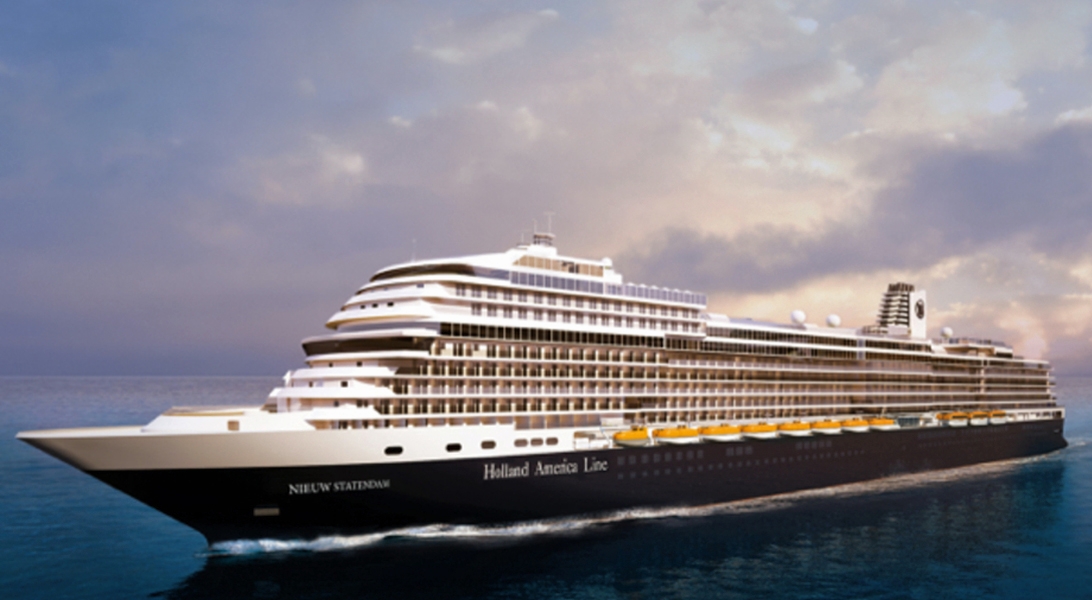


The images shown are for illustration purposes only and may not be an exact representation of what you find on the ship.
| Grade Code | From | To | |
| N | Interior Stateroom | £3,199 | £3,199 |
| L | Interior Stateroom | £3,249 | £3,249 |
| K | Interior Stateroom | £3,279 | £3,279 |
| J | Interior Stateroom | £3,309 | £3,309 |
| I | Large Interior Stateroom | £3,339 | £3,339 |
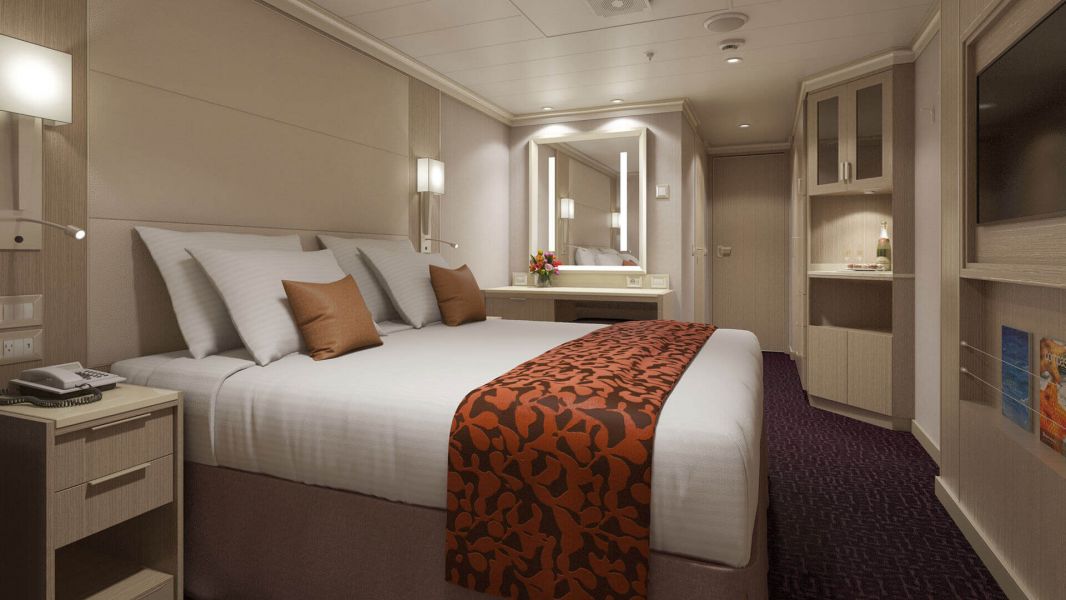
Two lower beds convertible to one queen-size bed—our signature Mariner's Dream™ bed with plush Euro-Top mattresses, premium massage shower heads and a host of amenities are featured in these comfortable staterooms.
The configuration of staterooms may vary from the images shown.
Approximately 143-225 sq. ft.
| Grade Code | From | To | |
| SC | Neptune Suite | £9,189 | £9,189 |
| SB | Neptune Suite | £9,669 | £9,669 |
| SA | Neptune Suite | £10,149 | £10,149 |
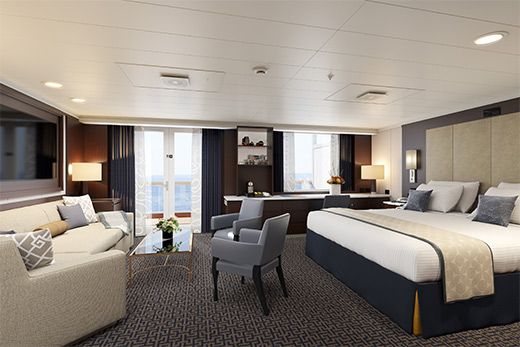
With floor-to-ceiling windows overlooking a private verandah, these spacious suites are flooded with light. They feature a large sitting area and two lower beds convertible to one king-size bed—our signature Mariner's Dream™ bed with plush Euro-Top mattresses. The bathroom comes with a dual-sink vanity, full-size whirlpool bath and shower, plus additional shower stall. Amenities include use of the exclusive Neptune Lounge, a private concierge and an array of complimentary services.
Approximately 465-502 sq. ft. including verandah.
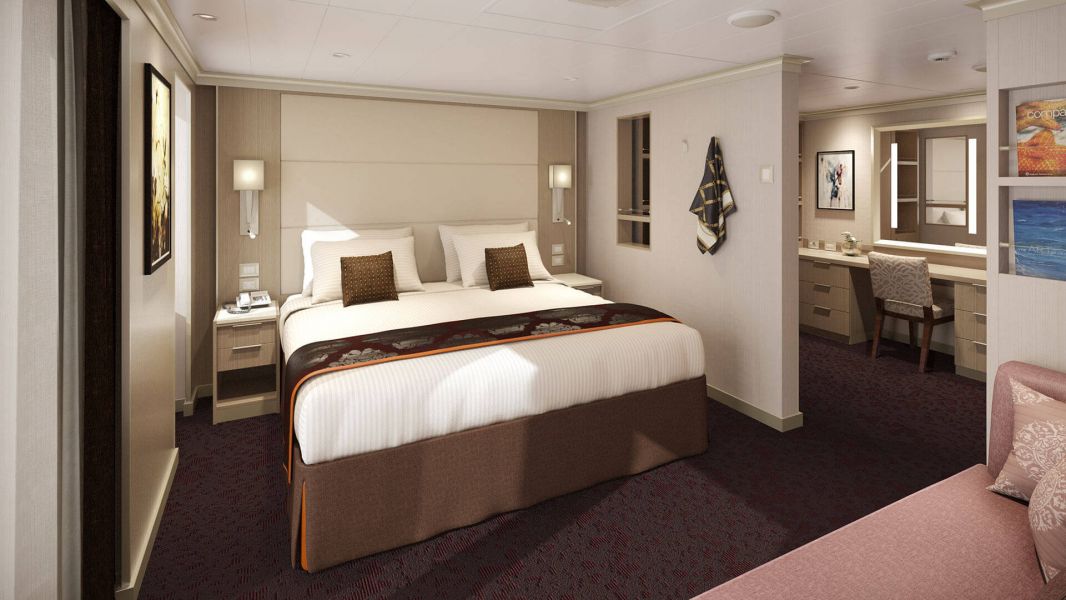
| Grade Code | From | To | |
| SY | Signature Suite | £7,819 | £7,819 |
| SS | Signature Suite | £8,059 | £8,059 |
These large, comfortable suites feature a spacious sitting area with floor-to-ceiling windows overlooking a private verandah, two lower beds convertible to one queen-size bed—our signature Mariner's Dream™ bed with plush Euro-Top mattresses, and one murphy bed for one person. The bathroom includes a dual-sink vanity, full-size whirlpool bath and shower, and an additional shower stall.
Approximately 393-400 sq. ft. including verandah
The images shown are for illustration purposes only and may not be an exact representation of what you find on the ship.
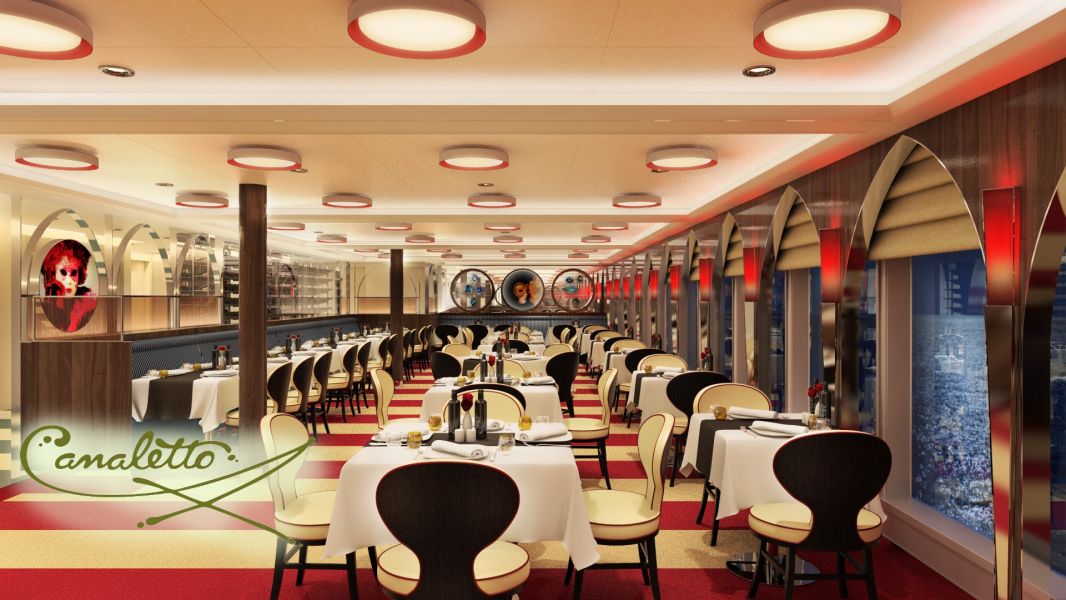
In Italy, there’s nothing more important than coming together to celebrate the joy of great food. This is the inspiration for our onboard Italian restaurant, Canaletto. Enjoy amazing Italian classics like braised chicken cacciatore al forno, branzino ai ferri or garlic shrimp ravioli. And for dessert: tiramisù, cannoli alla Siciliana, gelato, and more. Including pasta made fresh daily. Buon Appetito!
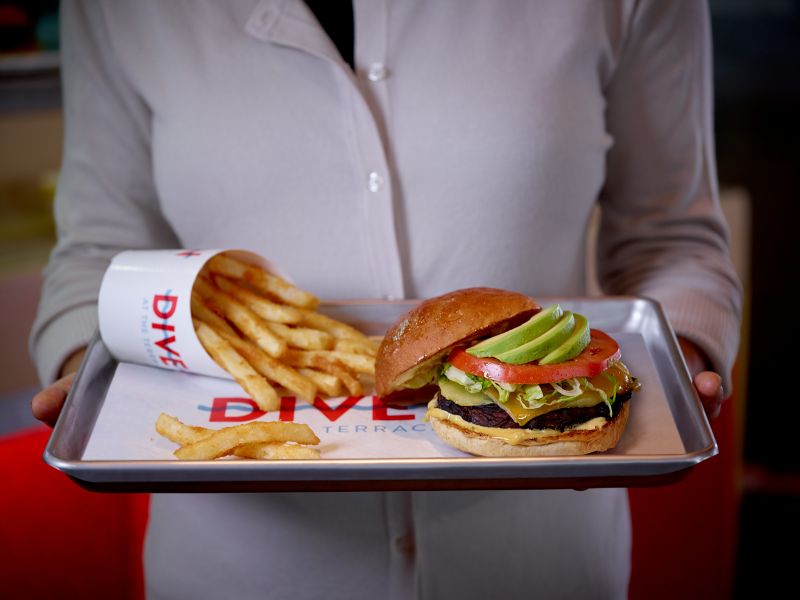
Dive-In offers a variety of casual culinary classics, using the highest quality ingredients. Enjoy a burger, grilled to perfection and served on a toasted brioche with our own trade-marked secret sauce. Savour a succulent Nathan’s Famous gourmet hot dog with golden French fries. Or choose a grilled chicken breast sandwich or juicy portabello mushroom stack. Dive-In is the perfect spot to dine poolside on the best burgers at sea.
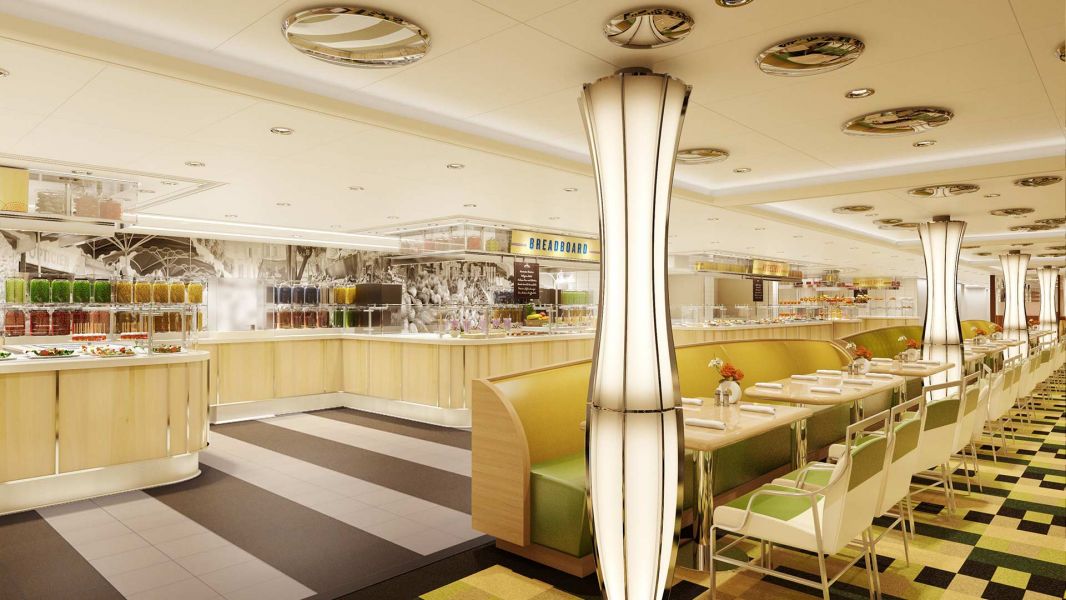
Explore a world of intriguing culinary possibilities in the Lido Market. Steps from the Lido pool, this modern marketplace includes a curated selection of delicious options that you can grab on the go or have made to order: Breadboard, with freshly baked breads and pastries; Wild Harvest, offering a bountiful selection of hearty salads; Homestead, serving up comfort classics; Distant Lands, featuring global cuisine; Sweet Spot, for ice cream creations and desserts; Roasting Pan, hand-carved meats, fish and other hearty entrees; Perk, freshly brewed beverages and chilled juices; Quench, premium coffee, beer, wine, and soda available for purchase; Rise, savoury quiches, croissants and sandwiches, and more.
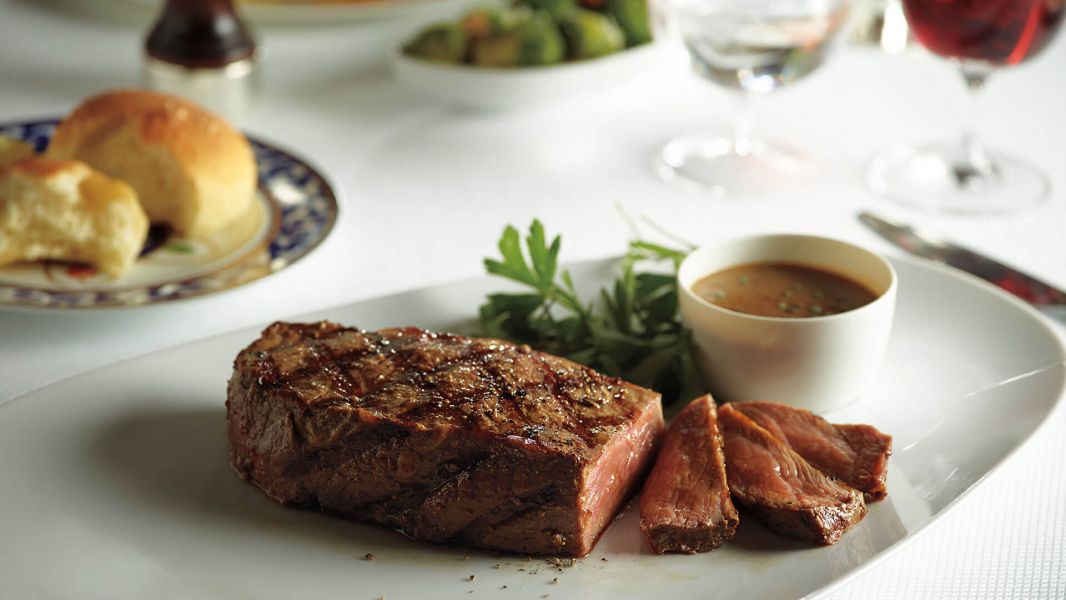
Pinnacle Grill is the ultimate steakhouse at sea, where an exceptional menu and impeccable service make for one of finest meals you’ll ever have. The refined menu features a selection of 28-day wet-aged USDA Prime steaks — meticulously chosen to guarantee the finest quality — as well as classic steakhouse dishes and innovative recipes from James Beard Award-winning chef and Culinary Council® member, David Burke. Every dish is exquisitely prepared, beautifully plated and complemented by a vast collection of award-winning wines. Here, your meal is an event unto itself, a celebration of fine dining and a triumph of flavour.
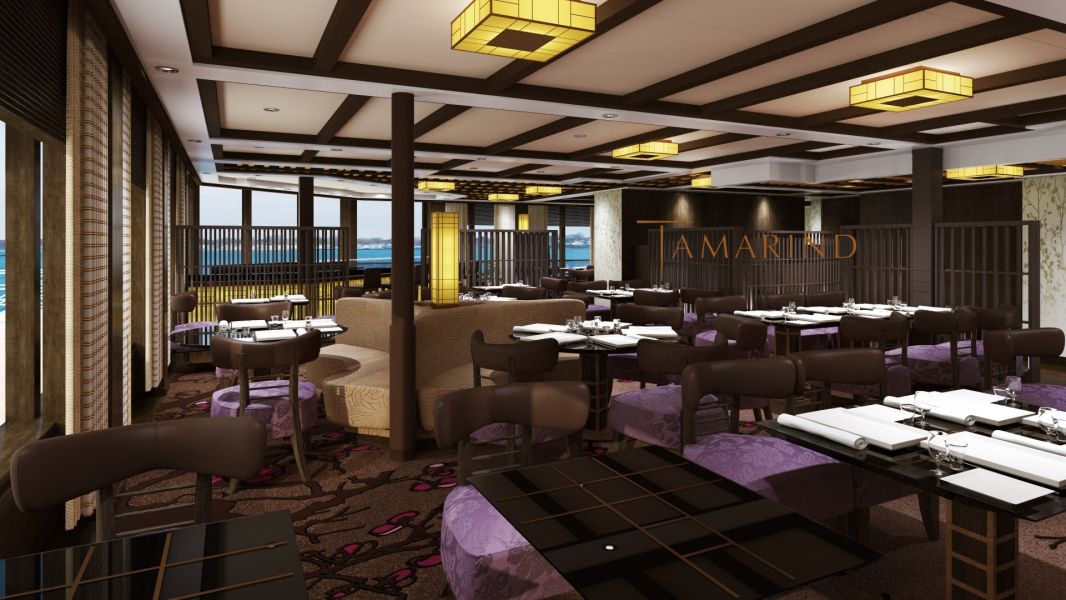
Praised by Condé Nast Traveler for cuisine “that rivals the top restaurants on land,” Tamarind is the perfect place to explore the culinary traditions of Southeast Asia, China and Japan. The menu, which honors the elements of water, wood, fire and earth, features such exotic fare as wok-seared lobster, barramundi (Asian sea bass) in banana leaf and sushi, accompanied by chilled or heated sake. And, try our specialty sushi created in collaboration with Culinary Council member and Master Sushi Chef, Andy Matsuda.
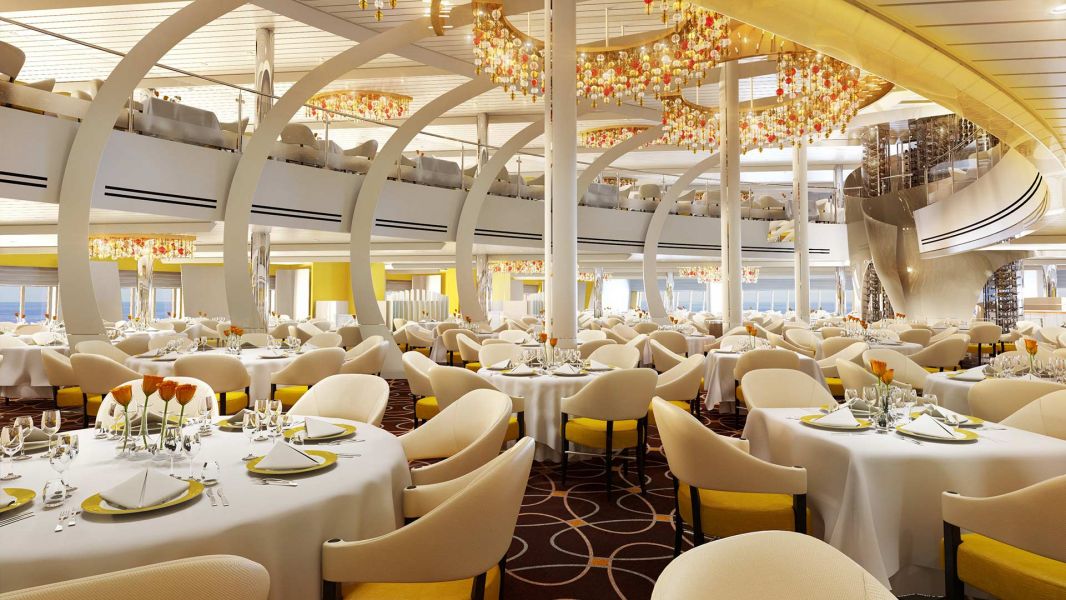
For an elegant breakfast, leisurely lunch or unforgettable multi-course dinner, The Dining Room is your destination. Behind the scenes, our Culinary Council,® an elite team of seven world-renowned chefs, and our talented onboard executive chefs have worked to bring each dish to perfection. For dinner, choose from classics such as Boneless Lamb Loin en Croute, Rosemary Roasted Chicken, as well as regionally inspired cuisine and artfully prepared vegetarian dishes. Enrich your journey with an extensive selection of wines, carefully selected by our Wine Curator, world-renowned wine critic James Suckling.
The images shown are for illustration purposes only and may not be an exact representation of what you find on the ship.
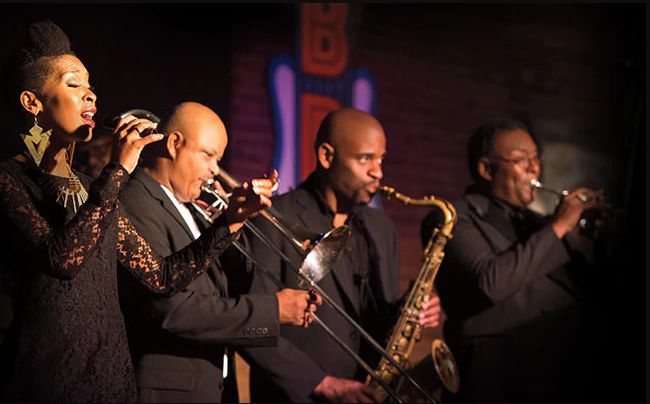
When you’re in the mood to move, it’s time for live music on your cruise. Direct from Beale Street in Memphis, B.B. King’s All-Star Band cooks up a rich southern heritage of classic soul and rock & roll to get you dancing.
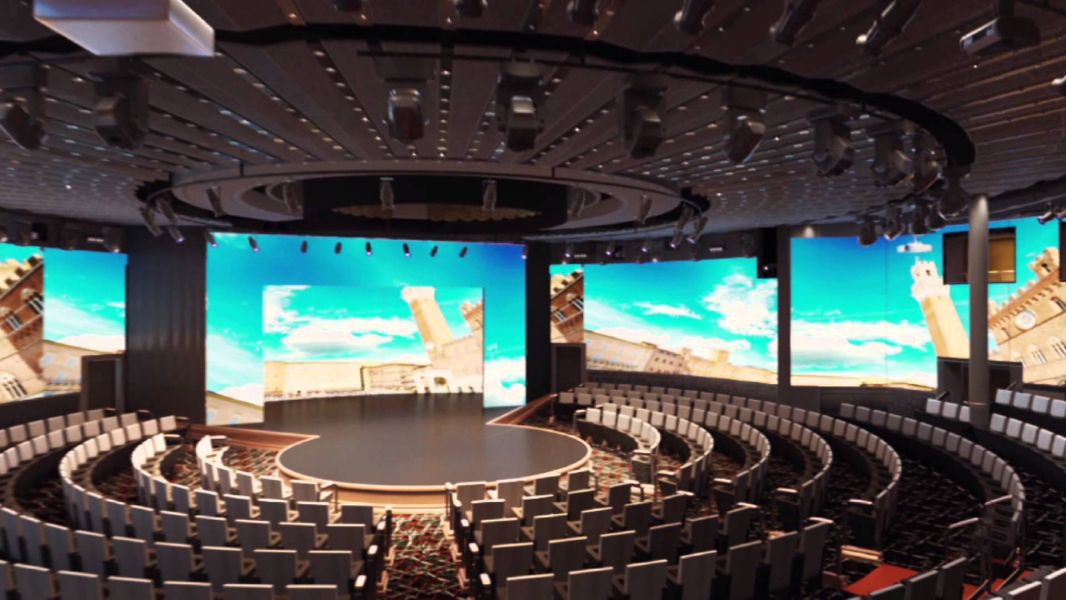
World Stage, the largest theatre on board is home to a variety of performances day and night.
The images shown are for illustration purposes only and may not be an exact representation of what you find on the ship.
The images shown are for illustration purposes only and may not be an exact representation of what you find on the ship.


Our Fusion packages are all ABTA & ATOL protected ensuring that your booking is safe with us
| 20 nights aboard the Nieuw Statendam | |||
| Daily afternoon tea | |||
| Evening entertainment & theatre shows | |||
| Live Music venues inc. BB King's Blues Club | |||
| Live onboard cooking shows & workshops | |||
| Speciality Restaurants (charges may apply) | |||
| Drinks packages available | |||
| 24-hour room service | |||
| Port Taxes and Fees | |||
 | ABTA and ATOL Protection* | ||
Date 16th Jan 2028 |
Nts 20 |
Interior £3,199pp |
Oceanview £3,419pp |
Balcony £3,729pp |
Suite £5,089pp |
Date 16th Jan 2028 |
Nts 20 |
Interior £3,199pp |
Oceanview £3,419pp |
Balcony £3,729pp |
Suite £5,089pp |
| Interior staterooms from | £3,199pp | ||
| I | Large Interior Stateroom | £3,339pp | |
| IQ | Interior Stateroom (Spa) | £3,379pp | |
| J | Interior Stateroom | £3,309pp | |
| K | Interior Stateroom | £3,279pp | |
| L | Interior Stateroom | £3,249pp | |
| N | Interior Stateroom | £3,199pp | |
| Oceanview staterooms from | £3,419pp | ||
| C | Ocean View Stateroom | £3,579pp | |
| CQ | Ocean View Stateroom (Spa) | £3,619pp | |
| D | Ocean View Stateroom | £3,539pp | |
| E | Ocean View Stateroom | £3,499pp | |
| F | Ocean View Stateroom | £3,419pp | |
| Balcony staterooms from | £3,729pp | ||
| V | Verandah Stateroom | £4,459pp | |
| VA | Verandah Stateroom | £4,379pp | |
| VB | Verandah Stateroom | £4,299pp | |
| VC | Verandah Stateroom | £4,219pp | |
| VD | Verandah Stateroom | £4,139pp | |
| VE | Verandah Stateroom | £4,059pp | |
| VF | Verandah Stateroom | £3,959pp | |
| VH | Verandah Stateroom | £3,729pp | |
| VQ | Verandah Stateroom (Spa) | £4,619pp | |
| VS | Verandah Stateroom | £4,539pp | |
| Suite staterooms from | £5,089pp | ||
| A | Vista Suite | £5,409pp | |
| AS | Vista Suite | £5,569pp | |
| B | Vista Suite | £5,249pp | |
| BC | Vista Suite | £5,089pp | |
| SA | Neptune Suite | £10,149pp | |
| SB | Neptune Suite | £9,669pp | |
| SC | Neptune Suite | £9,189pp | |
| SQ | Neptune Suite (Spa) | £10,629pp | |
| SS | Signature Suite | £8,059pp | |
| SY | Signature Suite | £7,819pp | |
Fusion Holidays when selling travel arrangements is a trading name of Co-op Travel Services Limited, registration 08903986. Fusion Cruises is an Accredited Body Member of Co-op Travel Services Limited ATOL 12904.
Book with Confidence. We are a Member of ABTA which means you have the benefit of ABTA’s assistance and Code of Conduct.
Some of the flights and flight-inclusive holidays on this website are financially protected by the ATOL scheme but ATOL protection does not apply to all holiday and travel services offered on this website. This website will provide you with information on the protection that applies in the case of each holiday and travel service offered before you make your booking. If you do not receive an ATOL Certificate then the booking will not be ATOL protected. If you do receive an ATOL Certificate but all parts of your trip are not listed on it, those parts will not be ATOL protected. Please see our booking conditions for information, or for more information about financial protection and the ATOL Certificate go to: www.caa.co.uk