This site uses cookies as defined in our Cookie Policy, by continuing to use this site you agree to their use.
Continue

| Arrive | Depart | ||||||
| 16th16 | AprApr | 202828 | Lisbon, Portugal, embark on the Zuiderdam | ||||
Set on seven hills on the banks of the River Tagus, Lisbon has been the capital of Portugal since the 13th century. It is a city famous for its majestic architecture, old wooden trams, Moorish features and more than twenty centuries of history. Following disastrous earthquakes in the 18th century, Lisbon was rebuilt by the Marques de Pombal who created an elegant city with wide boulevards and a great riverfront and square, Praça do Comércio. Today there are distinct modern and ancient sections, combining great shopping with culture and sightseeing in the Old Town, built on the city's terraced hillsides. The distance between the ship and your tour vehicle may vary. This distance is not included in the excursion grades. | |||||||
| 17th17 | AprApr | 202828 | Lisbon, Portugal | 17:00 | |||
Set on seven hills on the banks of the River Tagus, Lisbon has been the capital of Portugal since the 13th century. It is a city famous for its majestic architecture, old wooden trams, Moorish features and more than twenty centuries of history. Following disastrous earthquakes in the 18th century, Lisbon was rebuilt by the Marques de Pombal who created an elegant city with wide boulevards and a great riverfront and square, Praça do Comércio. Today there are distinct modern and ancient sections, combining great shopping with culture and sightseeing in the Old Town, built on the city's terraced hillsides. The distance between the ship and your tour vehicle may vary. This distance is not included in the excursion grades. | |||||||
| 18th18 | AprApr | 202828 | Porto, Portugal | 08:00 | 17:00 | ||
Lively, commercial Oporto is the second largest city in Portugal after Lisbon. Also called Porto for short, the word easily brings to mind the city's most famous product - port wine. Oporto's strategic location on the north bank of the Douro River has accounted for the town's importance since ancient times. The Romans built a fort here where their trading route crossed the Douro, and the Moors brought their own culture to the area. Oporto profited from provisioning crusaders en route to the Holy Land and enjoyed the riches from Portuguese maritime discoveries during the 15th and 16th centuries. Later, port wine trade with Britain compensated for the loss of the spice trade and the end of gold and gem shipments from Brazil. In the 19th century, the city went through a period of new prosperity with the rise of industries. In its wake followed the building of workers' quarters and opulent residences. Since the declaration of Oporto as a World Heritage Site by UNESCO, the city aims to build up a cultural reference that will provide it with a new image, based on deep historical roots. Among the attractions that make Oporto such an interesting place are its graceful bridges spanning the Douro River, a picturesque riverfront quarter and, most notable, its world-famous port wine lodges. Although Oporto is a bustling centre and home to many different businesses, the source of its greatest fame is the rich, sweet fortified red wine we know as port. | |||||||
| 19th19 | AprApr | 202828 | La Coruña, Spain | 08:00 | 16:00 | ||
La Coruña, the largest city in Spain's Galicia region, is among the country's busiest ports. The remote Galicia area is tucked into the northwest corner of the Iberian Peninsula, surprising visitors with its green and misty countryside that is so much unlike other parts of Spain. The name "Galicia" is Celtic in origin, for it was the Celts who occupied the region around the 6th-century BC and erected fortifications. La Coruña was already considered an important port under the Romans. They were followed by an invasion of Suevians, Visigoths and, much later in 730, the Moors. It was after Galicia was incorporated into the Kingdom of Asturias that the epic saga of the Pilgrimage to Santiago (St. James) began. From the 15th century, overseas trade developed rapidly; in 1720, La Coruña was granted the privilege of trading with America - a right previously only held by Cadiz and Seville. This was the great era when adventurous men voyaged to the colonies and returned with vast riches. Today, the city's significant expansion is evident in three distinct quarters: the town centre located along the isthmus; the business and commercial centre with wide avenues and shopping streets; and the "Ensanche" to the south, occupied by warehouses and factories. Many of the buildings in the old section feature the characteristic glazed façades that have earned La Coruña the name "City of Crystal." Plaza Maria Pita, the beautiful main square, is named after the local heroine who saved the town in 1589 when she seized the English standard from the beacon and gave the alarm, warning her fellow townsmen of the English attack. | |||||||
| 20th20 | AprApr | 202828 | Bilbao, Spain | 09:00 | 18:00 | ||
Time in Bilbao (Bilbo, in Euskera) may be recorded as BG or AG (Before Guggenheim or After Guggenheim). Never has a single monument of art and architecture so radically changed a city. Frank Gehry's stunning museum, Norman Foster's sleek subway system, the Santiago Calatrava glass footbridge and airport, the leafy César Pelli Abandoibarra park and commercial complex next to the Guggenheim, and the Philippe Starck AlhóndigaBilbao cultural center have contributed to an unprecedented cultural revolution in what was once the industry capital of the Basque Country.Greater Bilbao contains almost 1 million inhabitants, nearly half the total population of the Basque Country. Founded in 1300 by Vizcayan noble Diego López de Haro, Bilbao became an industrial center in the mid-19th century, largely because of the abundance of minerals in the surrounding hills. An affluent industrial class grew up here, as did the working class in suburbs that line the Margen Izquierda (Left Bank) of the Nervión estuary.Bilbao's new attractions get more press, but the city's old treasures still quietly line the banks of the rust-color Nervión River. The Casco Viejo (Old Quarter)—also known as Siete Calles (Seven Streets)—is a charming jumble of shops, bars, and restaurants on the river's Right Bank, near the Puente del Arenal bridge. This elegant proto-Bilbao nucleus was carefully restored after devastating floods in 1983. Throughout the Casco Viejo are ancient mansions emblazoned with family coats of arms, wooden doors, and fine ironwork balconies. The most interesting square is the 64-arch Plaza Nueva, where an outdoor market is pitched every Sunday morning.Walking the banks of the Nervión is a satisfying jaunt. After all, this was how—while out on a morning jog—Guggenheim director Thomas Krens first discovered the perfect spot for his project, nearly opposite the right bank's Deusto University. From the Palacio de Euskalduna upstream to the colossal Mercado de la Ribera, parks and green zones line the river. César Pelli's Abandoibarra project fills in the half mile between the Guggenheim and the Euskalduna bridge with a series of parks, the Deusto University library, the Meliá Bilbao Hotel, and a major shopping center.On the left bank, the wide, late-19th-century boulevards of the Ensanche neighborhood, such as Gran Vía (the main shopping artery) and Alameda de Mazarredo, are the city's more formal face. Bilbao's cultural institutions include, along with the Guggenheim, a major museum of fine arts (the Museo de Bellas Artes) and an opera society (Asociación Bilbaína de Amigos de la Ópera, or ABAO) with 7,000 members from Spain and southern France. In addition, epicureans have long ranked Bilbao's culinary offerings among the best in Spain. Don't miss a chance to ride the trolley line, the Euskotram, for a trip along the river from Atxuri Station to Basurto's San Mamés soccer stadium, reverently dubbed "la Catedral del Fútbol" (the Cathedral of Football). | |||||||
| 21st21 | AprApr | 202828 | La Rochelle, France | 08:00 | 18:00 | ||
| 22nd22 | AprApr | 202828 | At Sea | ||||
| 23rd23 | AprApr | 202828 | Dublin, Ireland | 07:00 | 19:00 | ||
Dublin is making a comeback. The decade-long "Celtic Tiger" boom era was quickly followed by the Great Recession, but The Recovery has finally taken a precarious hold. For visitors, this newer and wiser Dublin has become one of western Europe's most popular and delightful urban destinations. Whether or not you're out to enjoy the old or new Dublin, you'll find it a colossally entertaining city, all the more astonishing considering its intimate size.It is ironic and telling that James Joyce chose Dublin as the setting for his famous Ulysses, Dubliners, and A Portrait of the Artist as a Young Man because it was a "center of paralysis" where nothing much ever changed. Which only proves that even the greats get it wrong sometimes. Indeed, if Joyce were to return to his once-genteel hometown today—disappointed with the city's provincial outlook, he left it in 1902 at the age of 20—and take a quasi-Homeric odyssey through the city (as he so famously does in Ulysses), would he even recognize Dublin as his "Dear Dirty Dumpling, foostherfather of fingalls and dotthergills"?For instance, what would he make of Temple Bar—the city's erstwhile down-at-the-heels neighborhood, now crammed with cafés and trendy hotels and suffused with a nonstop, international-party atmosphere? Or the simple sophistication of the open-air restaurants of the tiny Italian Quarter (named Quartier Bloom after his own creation), complete with sultry tango lessons? Or of the hot–cool Irishness, where every aspect of Celtic culture results in sold-out theaters, from Once, the cult indie movie and Broadway hit, to Riverdance, the old Irish mass-jig recast as a Las Vegas extravaganza? Plus, the resurrected Joyce might be stirred by the songs of Hozier, fired up by the sultry acting of Michael Fassbender, and moved by the award-winning novels of Colum McCann. As for Ireland's capital, it's packed with elegant shops and hotels, theaters, galleries, coffeehouses, and a stunning variety of new, creative little restaurants can be found on almost every street in Dublin, transforming the provincial city that suffocated Joyce into a place almost as cosmopolitan as the Paris to which he fled. And the locals are a hell of a lot more fun! Now that the economy has finally turned a corner, Dublin citizens can cast a cool eye over the last 20 crazy years. Some argue that the boomtown transformation of their heretofore-tranquil city has permanently affected its spirit and character. These skeptics (skepticism long being a favorite pastime in the capital city) await the outcome of "Dublin: The Sequel," and their greatest fear is the possibility that the tattered old lady on the Liffey has become a little less unique, a little more like everywhere else.Oh ye of little faith: the rare ole gem that is Dublin is far from buried. The fundamentals—the Georgian elegance of Merrion Square, the Norman drama of Christ Church Cathedral, the foamy pint at an atmospheric pub—are still on hand to gratify. Most of all, there are the locals themselves: the nod and grin when you catch their eye on the street, the eagerness to hear half your life story before they tell you all of theirs, and their paradoxically dark but warm sense of humor. It's expected that 2016 will be an extra-special year in the capital, as centenary celebrations of the fateful 1916 Easter Rising will dominate much of the cultural calendar. | |||||||
| 24th24 | AprApr | 202828 | Cork, Ireland | 08:00 | 17:00 | ||
Cork City received its first charter in 1185 from Prince John of Norman England, and it takes its name from the Irish word corcaigh, meaning "marshy place." The original 6th-century settlement was spread over 13 small islands in the River Lee. Major development occurred during the 17th and 18th centuries with the expansion of the butter trade, and many attractive Georgian-design buildings with wide bowfront windows were constructed during this time. As late as 1770 Cork's present-day main streets—Grand Parade, Patrick Street, and the South Mall—were submerged under the Lee. Around 1800, when the Lee was partially dammed, the river divided into two streams that now flow through the city, leaving the main business and commercial center on an island, not unlike Paris's Île de la Cité. As a result, the city has a number of bridges and quays, which, although initially confusing, add greatly to the port's unique character. Cork can be very "Irish" (hurling, Gaelic football, televised plowing contests, music pubs, and peat smoke). But depending on what part of town you're in, Cork can also be distinctly un-Irish—the sort of place where hippies, gays, and farmers drink at the same pub. | |||||||
| 25th25 | AprApr | 202828 | Plymouth, England | 08:00 | 17:00 | ||
Best known as the port from which Sir Francis Drake and the port which the Pilgrim Fathers set sail from, Plymouth is awash with history. Walk down its cobbled streets, step back in time and discover the historical landmarks and sites. | |||||||
| 26th26 | AprApr | 202828 | Saint Peter Port, Guernsey | 08:00 | 18:00 | ||
Cobblestone streets, blooming floral displays, and tiny churches welcome you to this wonderfully pretty harbour. The town of St Peter Port is as pretty as they come, with glowing flower displays painting practically every street corner and window-ledge with colour. As the capital, and main port of Guernsey, St Peter Port puts all of the island’s gorgeous beaches, wonderful history and inspiring stories at your fingertips. Feel the gut punch of the midday gun firing at Castle Cornet, which stands guard over one of the world's prettiest ports. This 800-year-old, Medieval castle offers staggering views of the harbour from its imposing, craggy island location, and you can look out across to the looming shorelines of the other Channel Islands from its weathered battlements. With four well-tended gardens, and five museums offering a rich overview of Guernsey's history, you’ll want to leave a few hours aside to explore the many treasures that lie within the castle’s walls. | |||||||
| 27th27 | AprApr | 202828 | Le Havre, France | 07:00 | 23:59 | ||
Le Havre, founded by King Francis I of France in 1517, is located inUpper Normandy on the north bank of the mouth of the River Seine, which isconsidered the most frequented waterway in the world. Its port is ranked thesecond largest in France. The city was originally built on marshland andmudflats that were drained in the 1500’s. During WWII most of Le Havre wasdestroyed by Allied bombing raids. Post war rebuilding of the city followed thedevelopment plans of the well-known Belgian architect Auguste Perre. Thereconstruction was so unique that the entire city was listed as a UNESCO WorldHeritage Site in 2005. | |||||||
| 28th28 | AprApr | 202828 | At Sea | ||||
| 29th29 | AprApr | 202828 | Amsterdam, Netherlands, disembark the Zuiderdam | 07:00 | |||
Amsterdam combines the unrivaled beauty of the 17th-century Golden Age city center with plenty of museums and art of the highest order, not to mention a remarkably laid-back atmosphere. It all comes together to make this one of the world's most appealing and offbeat metropolises in the world. Built on a latticework of concentric canals like an aquatic rainbow, Amsterdam is known as the City of Canals—but it's no Venice, content to live on moonlight serenades and former glory. Quite the contrary: on nearly every street here you'll find old and new side by side—quiet corners where time seems to be holding its breath next to streets like neon-lit Kalverstraat, and Red Light ladies strutting by the city's oldest church. Indeed, Amsterdam has as many lovely facets as a 40-carat diamond polished by one of the city's gem cutters. It's certainly a metropolis, but a rather small and very accessible one. Locals tend to refer to it as a big village, albeit one that happens to pack the cultural wallop of a major world destination. There are scores of concerts every day, numerous museums, summertime festivals, and, of course, a legendary year-round party scene. It's pretty much impossible to resist Amsterdam's charms. With 7,000 registered monuments, most of which began as the residences and warehouses of humble merchants, set on 160 man-made canals, and traversed by 1,500 or so bridges, Amsterdam has the largest historical inner city in Europe. Its famous circle of waterways, the grachtengordel, was a 17th-century urban expansion plan for the rich and is a lasting testament to the city’s Golden Age. This town is endearing because of its kinder, gentler nature—but a reputation for championing sex, drugs, and rock ’n’ roll does not alone account for Amsterdam's being one of the most popular destinations in Europe: consider that within a single square mile the city harbors some of the greatest achievements in Western art, from Rembrandt to Van Gogh. Not to mention that this is one of Europe's great walking cities, with so many of its treasures in the untouted details: tiny alleyways barely visible on the map, hidden garden courtyards, shop windows, floating houseboats, hidden hofjes(courtyards with almshouses), sudden vistas of church spires, and gabled roofs that look like so many unframed paintings. And don’t forget that the joy lies in details: elaborate gables and witty gable stones denoting the trade of a previous owner. Keep in mind that those XXX symbols you see all over town are not a mark of the city's triple-X reputation. They're part of Amsterdam's official coat of arms—three St. Andrew's crosses, believed to represent the three dangers that have traditionally plagued the city: flood, fire, and pestilence. The coat's motto ("Valiant, determined, compassionate") was introduced in 1947 by Queen Wilhelmina in remembrance of the 1941 February Strike in Amsterdam—the first time in Europe that non-Jewish people protested against the persecution of Jews by the Nazi regime. | |||||||
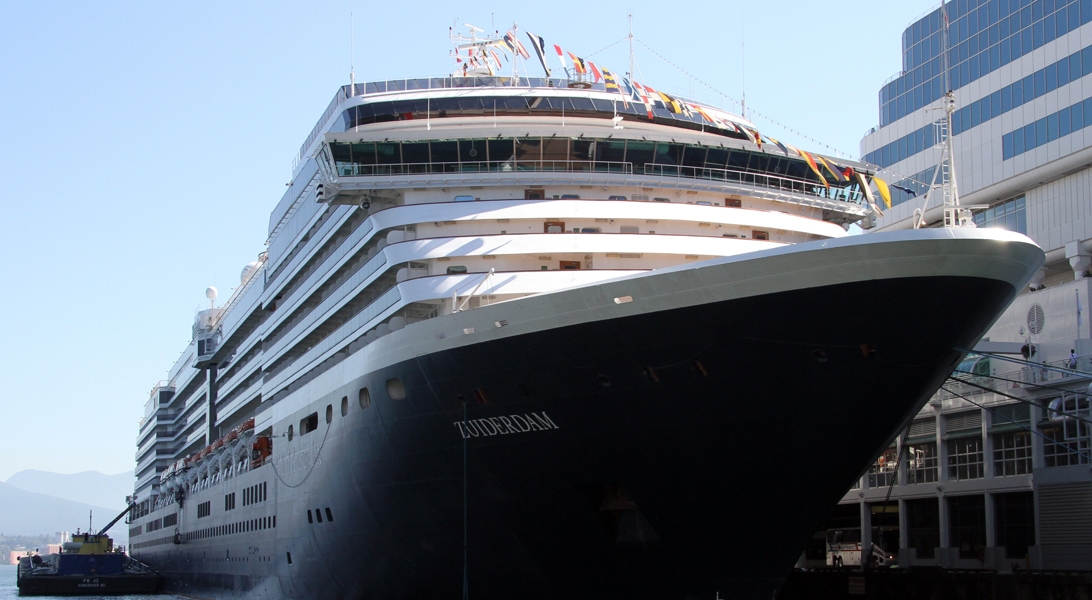
The images shown are for illustration purposes only and may not be an exact representation of what you find on the ship.
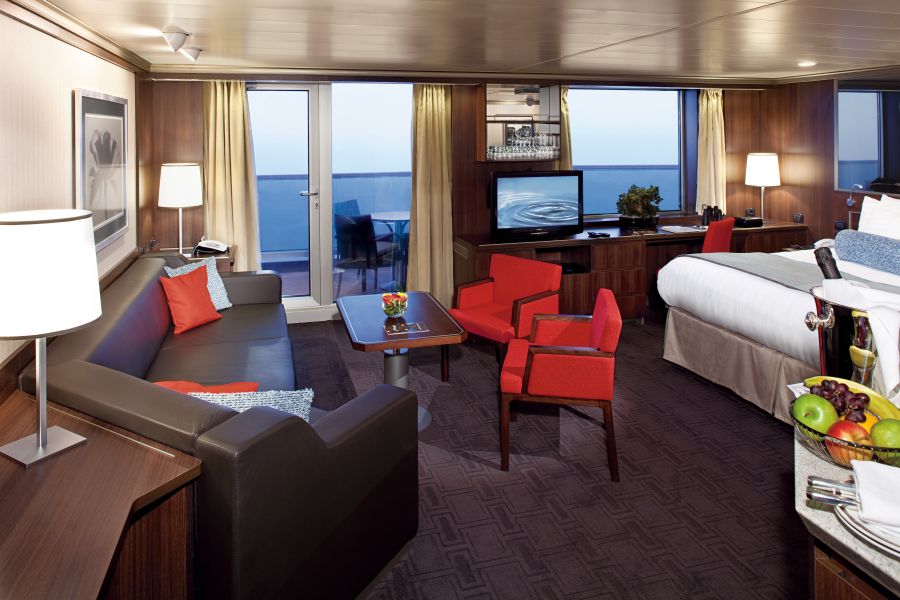
With floor-to-ceiling windows overlooking a private verandah, these spacious suites are flooded with light. They feature a large sitting area and two lower beds convertible to one king-size bed—our signature Mariner's Dream™ bed with plush Euro-Top mattresses plus a separate dressing room. There's also a sofa bed, suitable for two people. The bathroom comes with a dual-sink vanity, full-size whirlpool bath and shower, plus additional shower stall. Amenities include use of the exclusive Neptune Lounge, a private concierge and an array of complimentary services.
The configuration of staterooms may vary from the images shown.
Approximately 500–712 sq. ft. including verandah
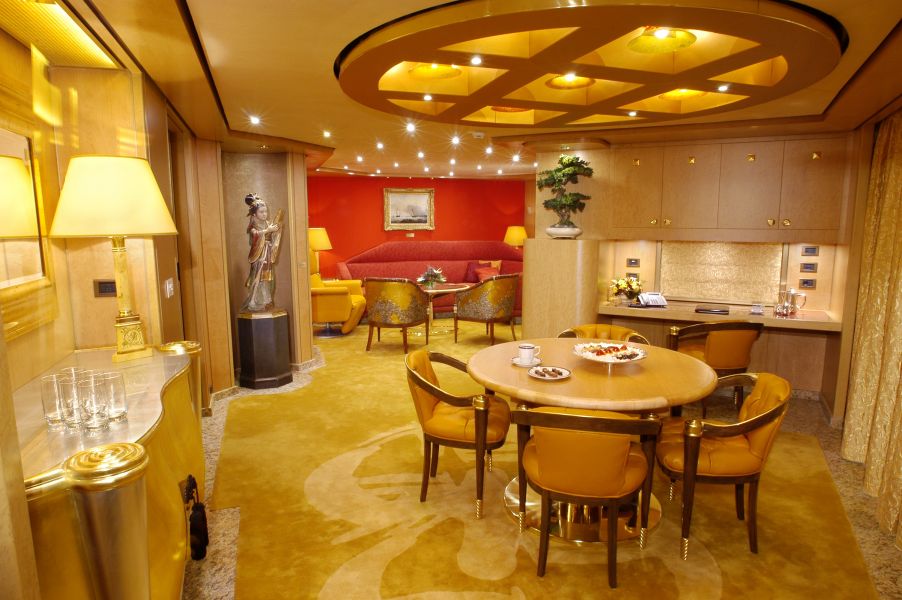
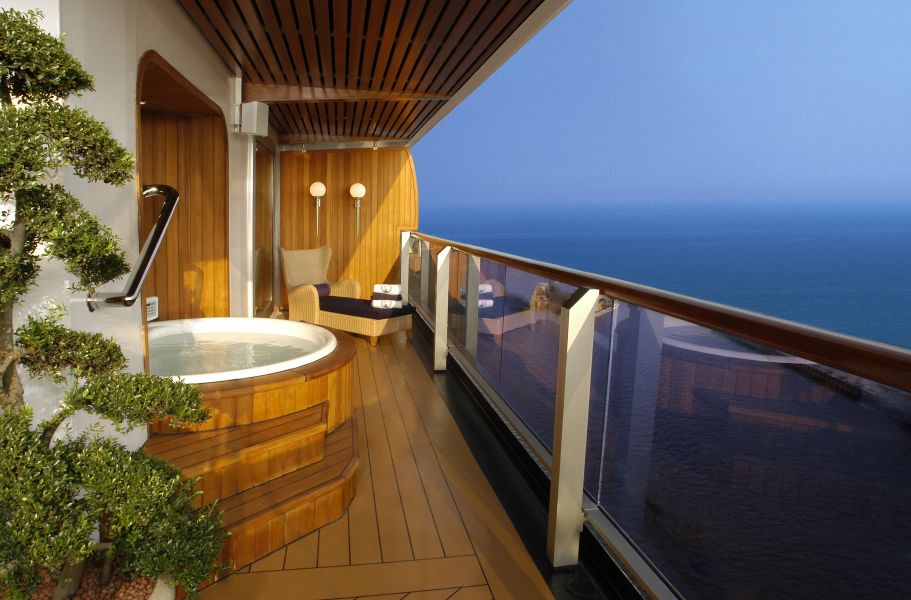
Generously proportioned and filled with light, these elegant suites include a living room, dining room, pantry with microwave and refrigerator, and floor-to-ceiling windows overlooking a private verandah with whirlpool. The bedroom features a king-size bed—our Signature Mariner's Dream™ bed with plush Euro-Top mattresses, plus a separate dressing room and the bath includes an oversize whirlpool bath and shower as well as an additional shower stall. There's also a sofa bed, suitable for two people, and a guest toilet. Amenities include a private stereo system, use of the exclusive Neptune Lounge, private concierge and an array of complimentary services.
The configuration of staterooms may vary from the images shown.
Approximately 1,150 sq. ft. including verandah
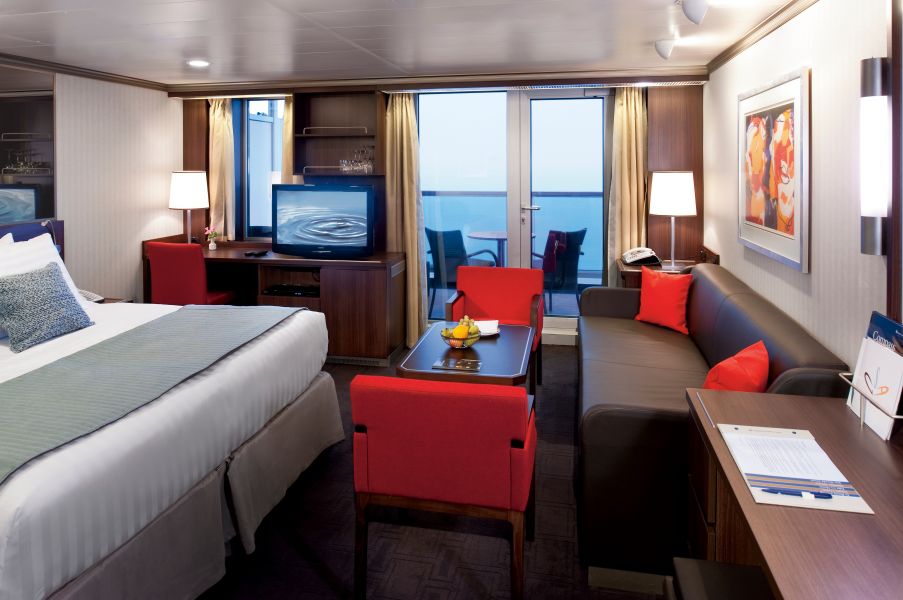
These large, comfortable suites feature a spacious sitting area with floor-to-ceiling windows overlooking a private verandah, two lower beds convertible to one queen-size bed—our signature Mariner's Dream™ bed with plush Euro-Top mattresses, and one sofa bed for one person. The bathroom includes a dual-sink vanity, full-size whirlpool bath and shower, and an additional shower stall.
The configuration of staterooms may vary from the images shown.
Approximately 372–384 sq. ft. including verandah
The images shown are for illustration purposes only and may not be an exact representation of what you find on the ship.
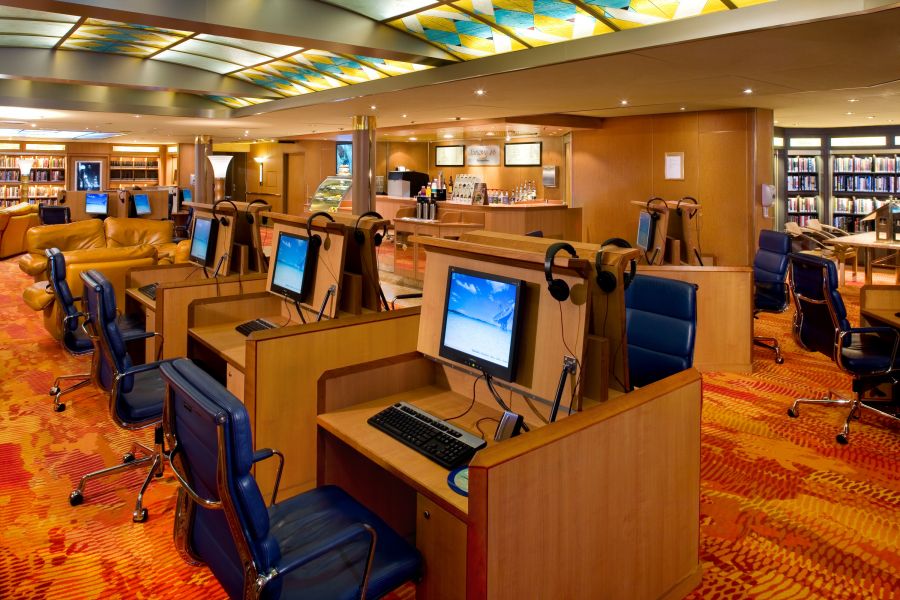
At Explorations Café, sink into plush chairs and sofas in a comfortable environment. Sip elegantly prepared espresso drinks and nosh on fresh pastries from the coffee bar. You can also take in fantastic views, catch up on your favourite book or browse the web.
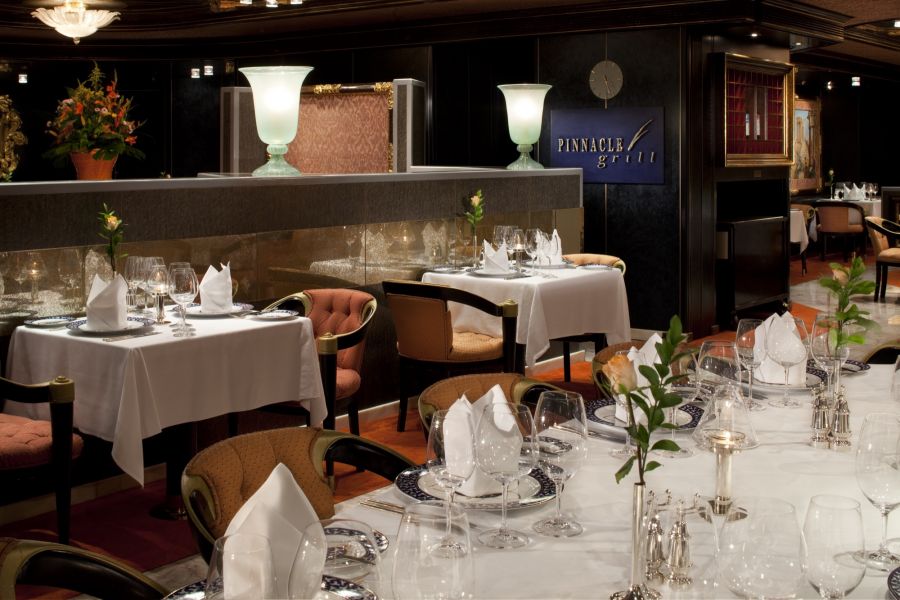
Pinnacle Grill is the ultimate steakhouse at sea, where an exceptional menu and impeccable service make for one of finest meals you’ll ever have. The refined menu features a selection of 28-day wet-aged USDA Prime steaks — meticulously chosen to guarantee the finest quality — as well as classic steakhouse dishes and innovative recipes from James Beard Award-winning chef and Culinary Council® member, David Burke. Every dish is exquisitely prepared, beautifully plated and complemented by a vast collection of award-winning wines. Here, your meal is an event unto itself, a celebration of fine dining and a triumph of flavour.
The images shown are for illustration purposes only and may not be an exact representation of what you find on the ship.
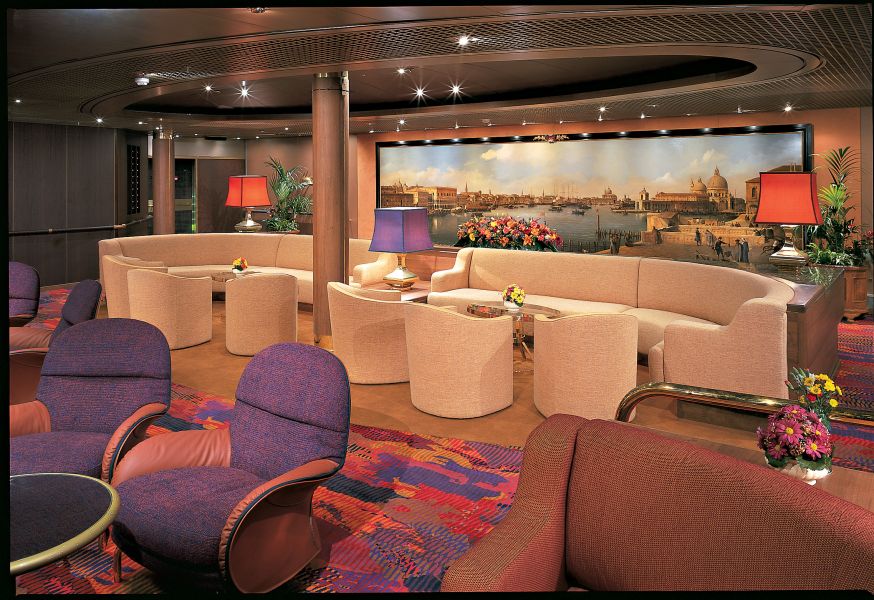
The Explorer’s Lounge is an elegant and refined space to enjoy a glass of wine, a cocktail, or your favorite liqueur.
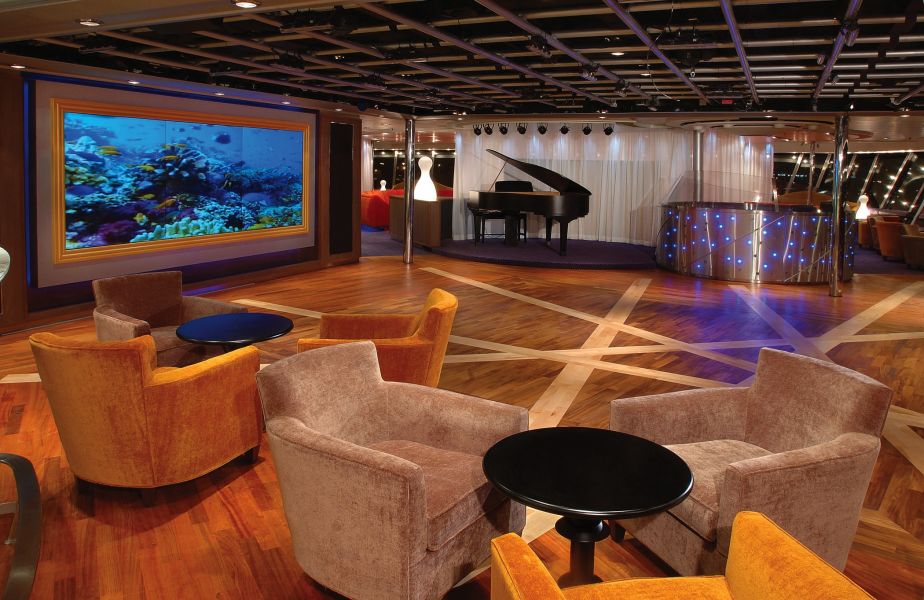
Holland America Line offers you a wide selection of lounges onboard. The panoramic view takes center stage in The Crow's Nest at the top of the ship, where you can relax just about any time of day and enjoy your favorite drink.
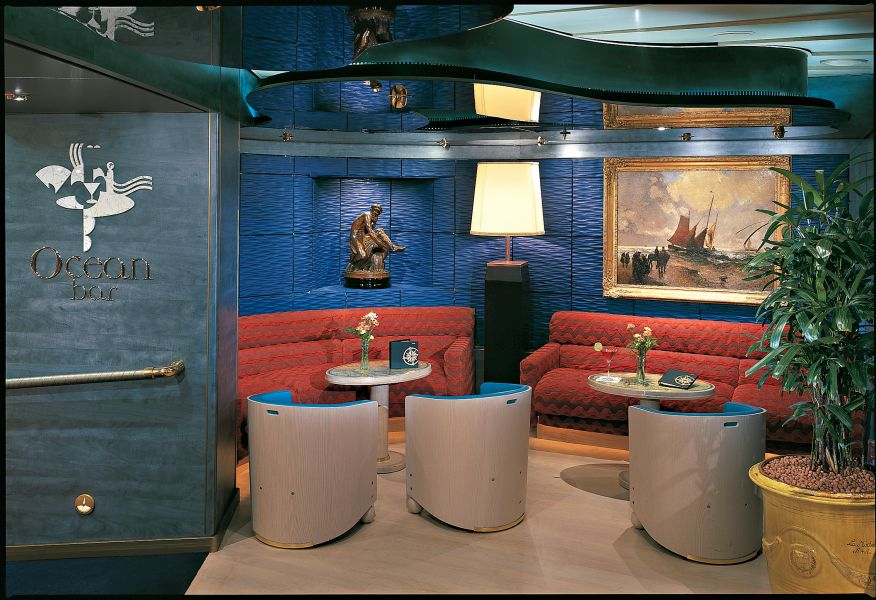
Enjoy live music in this popular bar perfect for pre-dinner cocktails.
The images shown are for illustration purposes only and may not be an exact representation of what you find on the ship.
The images shown are for illustration purposes only and may not be an exact representation of what you find on the ship.


Our Fusion packages are all ABTA & ATOL protected ensuring that your booking is safe with us
| 13 nights aboard the Zuiderdam | |||
| Daily afternoon tea | |||
| Evening entertainment & theatre shows | |||
| Live Music venues inc. BB King's Blues Club | |||
| Live onboard cooking shows & workshops | |||
| Speciality Restaurants (charges may apply) | |||
| Drinks packages available | |||
| 24-hour room service | |||
| Port Taxes and Fees | |||
 | ABTA and ATOL Protection* | ||
Date 16th Apr 2028 |
Nts 13 |
Interior £2,654pp |
Oceanview £2,734pp |
Balcony £3,304pp |
Suite £3,919pp |
Date 16th Apr 2028 |
Nts 13 |
Interior £2,654pp |
Oceanview £2,734pp |
Balcony £3,304pp |
Suite £3,919pp |
| Interior staterooms from | £2,654pp | ||
| IF | Interior Stateroom | £2,654pp | |
| IE | Interior Stateroom | £2,739pp | |
| ID | Interior Stateroom | £2,781pp | |
| IC | Interior Stateroom | £2,823pp | |
| IB | Interior Stateroom | £2,893pp | |
| IA | Large Interior Stateroom | £2,964pp | |
| Oceanview staterooms from | £2,734pp | ||
| OG | Ocean View Stateroom (Partial) | £2,734pp | |
| OD | Ocean View Stateroom | £2,822pp | |
| OB | Ocean View Stateroom | £2,881pp | |
| OA | Ocean View Stateroom | £2,940pp | |
| Balcony staterooms from | £3,304pp | ||
| VA | Verandah Stateroom | £3,897pp | |
| VB | Verandah Stateroom | £3,815pp | |
| VC | Verandah Stateroom | £3,733pp | |
| VD | Verandah Stateroom | £3,651pp | |
| VE | Verandah Stateroom | £3,569pp | |
| VF | Verandah Stateroom | £3,487pp | |
| VH | Verandah Stateroom | £3,405pp | |
| VS | Verandah Stateroom | £3,979pp | |
| VX | Verandah Stateroom | £3,304pp | |
| Suite staterooms from | £3,919pp | ||
| V2 | Veranda Suite (Decks 6/7/8 - Fwd) | £5,867pp | |
| TA | Vista Suite | £3,919pp | |
| TS | Vista Suite | £4,185pp | |
| NS | Neptune Suite | £6,463pp | |
| NC | Neptune Suite | £5,259pp | |
| NB | Neptune Suite | £5,661pp | |
| NA | Neptune Suite | £6,062pp | |
| GC | Signature Suites | £4,309pp | |
| GB | Signature Suites | £4,676pp | |
| GA | Signature Suites | £5,042pp | |
| PH | Penthouse Suite | £7,264pp | |
Fusion Holidays when selling travel arrangements is a trading name of Co-op Travel Services Limited, registration 08903986. Fusion Cruises is an Accredited Body Member of Co-op Travel Services Limited ATOL 12904.
Book with Confidence. We are a Member of ABTA which means you have the benefit of ABTA’s assistance and Code of Conduct.
Some of the flights and flight-inclusive holidays on this website are financially protected by the ATOL scheme but ATOL protection does not apply to all holiday and travel services offered on this website. This website will provide you with information on the protection that applies in the case of each holiday and travel service offered before you make your booking. If you do not receive an ATOL Certificate then the booking will not be ATOL protected. If you do receive an ATOL Certificate but all parts of your trip are not listed on it, those parts will not be ATOL protected. Please see our booking conditions for information, or for more information about financial protection and the ATOL Certificate go to: www.caa.co.uk