This site uses cookies as defined in our Cookie Policy, by continuing to use this site you agree to their use.
Continue

| Arrive | Depart | ||||||
| 29th29 | FebFeb | 202828 | Puerto Williams, Chile, embark on the Silver Cloud | 21:00 | |||
| Puerto Williams is a Chilean city located on Navarino Island on the southern shores of the Beagle Channel. It claims to be the “southernmost city in the world”, however owing to its small size – 2500 residents approximately – the much larger Argentinean city of Ushuaia, which sits on the northern side of the same channel, also claims that title. The surrounding scenery is magnificent. The wild windswept mountains rise above the tree line and are regularly dusted with snow. The city itself has the dramatic backdrop called “Dientes de Navarino” (literally “teeth of Navarino”), which rival the famous Torres del Paine further to the north. The area was originally used by the Yaghan people, hunter-gatherers who despite enduring the harsh regional climate, could not weather the arrival of Europeans. The current city was established as a naval base in 1953 and honours the British-Chilean naval commander John Williams Wilson of the 16th century. Initially it served to protect territorial possessions and fishing rights of the area, as well as offering logistical support to Antarctic bases. More recently it has become a departure point for scientific and tourism trips to the Antarctic region. In contrast to the bustle and traffic of a very commercial Ushuaia, Puerto Williams offers a quieter, more relaxed experience. It charms the visitor with a small village feel, complete with rustic buildings and the homely smell of drifting wood smoke. A haven of peace at the end of the world. | |||||||
| 1st01 | MarMar | 202828 | At Sea | ||||
| Sailing the legendary Drake Passage is an experience that few are ever lucky enough to experience. The southern tip of the Americas already feels like a wild enough environment – but the sensation of watching the distant cliffs of the peninsular known as the ‘End of the World’ fade into the horizon, is one that’s equal parts epic, eerie and magical. Set sail, to slowly drop off the bottom of the map from Cape Horn, and voyage on an expedition down into the icy underworld of Antarctica. Drake Passage is an extraordinary voyage of romantic ocean faring legend, as you aim for Antarctica’s icy realm. On arrival, skyscraper sized icebergs salute you, as you traverse the waters of this continent where snow and ice dwelling creatures like penguins and whales roam undisturbed. Your first sight of this most-unexplored place will most likely be the South Shetland Islands. Walk in the footsteps of some of history’s greatest and bravest explorers as you explore famed, snow-covered landmasses like Elephant and Deception Island. If the journey across Drake Passage sounds daunting, don’t worry – even in rough seas you’re never alone, and will often be accompanied on this spine-tingling adventure by soaring albatrosses and maybe even a protective pod of humpbacks and hourglass dolphins or two. Converging warm and cool ocean currents attract some spectacular animal life to the passage. | |||||||
| 2nd02 | MarMar | 202828 | At Sea | ||||
| Sailing the legendary Drake Passage is an experience that few are ever lucky enough to experience. The southern tip of the Americas already feels like a wild enough environment – but the sensation of watching the distant cliffs of the peninsular known as the ‘End of the World’ fade into the horizon, is one that’s equal parts epic, eerie and magical. Set sail, to slowly drop off the bottom of the map from Cape Horn, and voyage on an expedition down into the icy underworld of Antarctica. Drake Passage is an extraordinary voyage of romantic ocean faring legend, as you aim for Antarctica’s icy realm. On arrival, skyscraper sized icebergs salute you, as you traverse the waters of this continent where snow and ice dwelling creatures like penguins and whales roam undisturbed. Your first sight of this most-unexplored place will most likely be the South Shetland Islands. Walk in the footsteps of some of history’s greatest and bravest explorers as you explore famed, snow-covered landmasses like Elephant and Deception Island. If the journey across Drake Passage sounds daunting, don’t worry – even in rough seas you’re never alone, and will often be accompanied on this spine-tingling adventure by soaring albatrosses and maybe even a protective pod of humpbacks and hourglass dolphins or two. Converging warm and cool ocean currents attract some spectacular animal life to the passage. | |||||||
| 3rd03 | MarMar | 202828 | Antarctic Sound, Antarctica | ||||
The Antarctic Sound is a stretch of water named after the first ship to have passed through this body of water from the Bransfield Strait to the Weddell Sea in 1902. The Antarctic eventually sank and crew and scientists had to spend quite some time in this area before they could be rescued. Sites that have to do with this story - like Hope Bay or Paulet Island - are sometimes visited. At Paulet, Hope Bay and Brown Bluff Adelie and Gentoo Penguins breed, as do Kelp Gulls and Cape Petrels, Snow Petrels and Skuas. The Sound’s main attractions are the spectacular tabular icebergs that come from the Larsen Ice Shelf further south. Few voyages ignite the imagination like a journey down to one of the planet’s most remote extreme and enchanting wilderness Antarctica. An adventure in its purest form only a handful of people will ever be lucky enough to experience the majestic beauty of these monochrome landscapes first-hand. The Antarctic Sound will be one of your first encounters of this whitewash kingdom located at the northerly tip of the Antarctic Peninsula - which sprawls up like a tentacle towards Tierra del Fuego, South America’s most southerly point, otherwise known as the ‘End of the World’. Taking its name from the first ship to brave the passageway between the peninsula and the Joinville Island groups back in 1902, the Sound is a raw sensory assault of imposing iceberg slabs broken away from the disintegrating Larsen Ice Shelf. Come face-to-face with stadium-sized islands of ice and meet the extraordinary birdlife that call this whitewash kingdom home. Watch on as colonies of Gentoo penguins hop around and cape petrels sweep overhead as the continent’s unique wildlife thrives around you. If you’re planning your first venture into Antarctica you’ll want to brush up on your photography skills in advance to capture this unforgiving continent in all of its unrestrained glory. | |||||||
| 4th04 | MarMar | 202828 | Antarctic Peninsula, Antarctica | ||||
Remote and otherworldly, Antarctic is irresistible for its spectacular iceberg sculptures and calving glaciers, and for the possibility of up-close encounters with marine mammals and the iconic penguins. The Antarctic Peninsula – the main peninsula closest to South America – has a human history of almost 200 years, with explorers, sealers, whalers, and scientists who have come to work, and eventually intrepid visitors coming to enjoy this pristine and remote wilderness. It is a region of protected bays, unscaled snow-capped mountains, vast glaciers and a few places where whalers or scientists have worked. Just as irresistible are the many Gentoo and Chinstrap Penguin colonies, the seals basking on ice floes, the whales and orcas. The Antarctic Peninsula unravels upwards towards South America reaching out a beckoning finger to the adventurous who dare to explore this untamed realm. Stretching up from the heart of the world’s southernmost continent the Antarctic Peninsula lies a mere 620 mile from Tierra del Fuego and for many offers a spectacular first taste of the snow-blanketed landscapes and colossal ice sculptures which make up Earth’s least-explored continent. Unseen by humans until 1820 - a blink of an eye ago in relative terms - this is an adventure sure to make your hairs stand on end as you experience the thrill of the truly unknown and extraordinary. The vast peninsula is sprinkled with research bases which are at the frontline of human scientific endeavour pushing to study and understand this unique landscape, its exceptional wildlife and the impact that humans are having on this pristine continent. Witness cathedral-sized icebergs up close and blue-hued glaciers slowly slipping from imposing locations. | |||||||
| 5th05 | MarMar | 202828 | Antarctic Peninsula, Antarctica | ||||
Remote and otherworldly, Antarctic is irresistible for its spectacular iceberg sculptures and calving glaciers, and for the possibility of up-close encounters with marine mammals and the iconic penguins. The Antarctic Peninsula – the main peninsula closest to South America – has a human history of almost 200 years, with explorers, sealers, whalers, and scientists who have come to work, and eventually intrepid visitors coming to enjoy this pristine and remote wilderness. It is a region of protected bays, unscaled snow-capped mountains, vast glaciers and a few places where whalers or scientists have worked. Just as irresistible are the many Gentoo and Chinstrap Penguin colonies, the seals basking on ice floes, the whales and orcas. The Antarctic Peninsula unravels upwards towards South America reaching out a beckoning finger to the adventurous who dare to explore this untamed realm. Stretching up from the heart of the world’s southernmost continent the Antarctic Peninsula lies a mere 620 mile from Tierra del Fuego and for many offers a spectacular first taste of the snow-blanketed landscapes and colossal ice sculptures which make up Earth’s least-explored continent. Unseen by humans until 1820 - a blink of an eye ago in relative terms - this is an adventure sure to make your hairs stand on end as you experience the thrill of the truly unknown and extraordinary. The vast peninsula is sprinkled with research bases which are at the frontline of human scientific endeavour pushing to study and understand this unique landscape, its exceptional wildlife and the impact that humans are having on this pristine continent. Witness cathedral-sized icebergs up close and blue-hued glaciers slowly slipping from imposing locations. | |||||||
| 6th06 | MarMar | 202828 | Antarctic Peninsula, Antarctica | ||||
Remote and otherworldly, Antarctic is irresistible for its spectacular iceberg sculptures and calving glaciers, and for the possibility of up-close encounters with marine mammals and the iconic penguins. The Antarctic Peninsula – the main peninsula closest to South America – has a human history of almost 200 years, with explorers, sealers, whalers, and scientists who have come to work, and eventually intrepid visitors coming to enjoy this pristine and remote wilderness. It is a region of protected bays, unscaled snow-capped mountains, vast glaciers and a few places where whalers or scientists have worked. Just as irresistible are the many Gentoo and Chinstrap Penguin colonies, the seals basking on ice floes, the whales and orcas. The Antarctic Peninsula unravels upwards towards South America reaching out a beckoning finger to the adventurous who dare to explore this untamed realm. Stretching up from the heart of the world’s southernmost continent the Antarctic Peninsula lies a mere 620 mile from Tierra del Fuego and for many offers a spectacular first taste of the snow-blanketed landscapes and colossal ice sculptures which make up Earth’s least-explored continent. Unseen by humans until 1820 - a blink of an eye ago in relative terms - this is an adventure sure to make your hairs stand on end as you experience the thrill of the truly unknown and extraordinary. The vast peninsula is sprinkled with research bases which are at the frontline of human scientific endeavour pushing to study and understand this unique landscape, its exceptional wildlife and the impact that humans are having on this pristine continent. Witness cathedral-sized icebergs up close and blue-hued glaciers slowly slipping from imposing locations. | |||||||
| 7th07 | MarMar | 202828 | South Shetland Islands, Antarctica | 12:00 | |||
Some 770 kilometers (478 miles) south of Cape Horn, the South Shetland Islands are usually the first land seen in Antarctica. Separated from the Antarctic Peninsula by the Bransfield Strait, nine major islands make up the group. The region was the first to be exploited by sealers in the early 19th century, and because of its proximity to South America, it still is the most visited by scientists and tourists. Chinstrap, Adelie, Gentoo and Macaroni Penguins all breed here. In addition, because it is the warmest part of the continent, large moss beds as well as orange, black, grey and green lichens grow –even hair grass and pearlwort manage to survive. Leopard seals, Weddell seals, crabeater seals, Southern elephant seals and Antarctic fur seals can be seen in the water and on the beaches. The ice-coated Antarctic Peninsula forms perhaps the most accessible region of mainland Antarctica lying a mere 480-miles away from South America across the fabled waters of Drakes Passage. Lying close to the northwestern tip of the Antarctic Peninsula separated by the Bransfield Strait, the South Shetland Islands fall under the jurisdiction of the Antarctic Treaty, suspending claims on their sovereignty. Several countries maintain research bases here and with plump elephant seals and crowds of Gentoo, Chinstrap, and Adelie Penguins also calling the islands home it can even feel a little crowded at times. King George Island is the largest and most hospitable island hosting the majority of the research stations - some of which are populated all-year-round by tiny hardy crews. Don’t be fooled though these islands offer extraordinary adventure in one of the most remote locations on earth. The triple peaks of Mount Foster tower above the archipelago. Hike the luna landscapes within and even dip into the improbably warm geothermally-heated waters of Pendulum Cove. Elephant Island meanwhile is written deep into the annals of Antarctic expedition legend as the site where Ernest Shackleton and the stricken crew of the Endurance miraculously survived a harsh Antarctic winter in 1916. | |||||||
| 8th08 | MarMar | 202828 | At Sea | ||||
| Sailing the legendary Drake Passage is an experience that few are ever lucky enough to experience. The southern tip of the Americas already feels like a wild enough environment – but the sensation of watching the distant cliffs of the peninsular known as the ‘End of the World’ fade into the horizon, is one that’s equal parts epic, eerie and magical. Set sail, to slowly drop off the bottom of the map from Cape Horn, and voyage on an expedition down into the icy underworld of Antarctica. Drake Passage is an extraordinary voyage of romantic ocean faring legend, as you aim for Antarctica’s icy realm. On arrival, skyscraper sized icebergs salute you, as you traverse the waters of this continent where snow and ice dwelling creatures like penguins and whales roam undisturbed. Your first sight of this most-unexplored place will most likely be the South Shetland Islands. Walk in the footsteps of some of history’s greatest and bravest explorers as you explore famed, snow-covered landmasses like Elephant and Deception Island. If the journey across Drake Passage sounds daunting, don’t worry – even in rough seas you’re never alone, and will often be accompanied on this spine-tingling adventure by soaring albatrosses and maybe even a protective pod of humpbacks and hourglass dolphins or two. Converging warm and cool ocean currents attract some spectacular animal life to the passage. | |||||||
| 9th09 | MarMar | 202828 | Ushuaia, Argentina | 09:00 | 21:00 | ||
At 55 degrees latitude south, Ushuaia (pronounced oo-swy-ah) is closer to the South Pole than to Argentina's northern border with Bolivia. It is the capital and tourism base for Tierra del Fuego, the island at the southernmost tip of Argentina.Although its stark physical beauty is striking, Tierra del Fuego's historical allure is based more on its mythical past than on rugged reality. The island was inhabited for 6,000 years by Yámana, Haush, Selk'nam, and Alakaluf Indians. But in 1902 Argentina, eager to populate Patagonia to bolster its territorial claims, moved to initiate an Ushuaian penal colony, establishing the permanent settlement of its most southern territories and, by implication, everything in between.When the prison closed in 1947, Ushuaia had a population of about 3,000, made up mainly of former inmates and prison staff. Today the Indians of Darwin's "missing link" theory are long gone—wiped out by diseases brought by settlers and by indifference to their plight—and the 60,000 residents of Ushuaia are hitching their star to tourism.The city rightly (if perhaps too loudly) promotes itself as the southernmost city in the world (Puerto Williams, a few miles south on the Chilean side of the Beagle Channel, is a small town). You can make your way to the tourism office to get your clichéd, but oh-so-necessary, "Southernmost City in the World" passport stamp. Ushuaia feels like a frontier boomtown, at heart still a rugged, weather-beaten fishing village, but exhibiting the frayed edges of a city that quadrupled in size in the '70s and '80s and just keeps growing. Unpaved portions of Ruta 3, the last stretch of the Pan-American Highway, which connects Alaska to Tierra del Fuego, are finally being paved. The summer months (December through March) draw more than 120,000 visitors, and dozens of cruise ships. The city is trying to extend those visits with events like March's Marathon at the End of the World and by increasing the gamut of winter activities buoyed by the excellent snow conditions.A terrific trail winds through the town up to the Martial Glacier, where a ski lift can help cut down a steep kilometer of your journey. The chaotic and contradictory urban landscape includes a handful of luxury hotels amid the concrete of public housing projects. Scores of "sled houses" (wooden shacks) sit precariously on upright piers, ready for speedy displacement to a different site. But there are also many small, picturesque homes with tiny, carefully tended gardens. Many of the newer homes are built in a Swiss-chalet style, reinforcing the idea that this is a town into which tourism has breathed new life. At the same time, the weather-worn pastel colors that dominate the town's landscape remind you that Ushuaia was once just a tiny fishing village, snuggled at the end of the Earth.As you stand on the banks of the Canal Beagle (Beagle Channel) near Ushuaia, the spirit of the farthest corner of the world takes hold. What stands out is the light: at sundown the landscape is cast in a subdued, sensual tone; everything feels closer, softer, and more human in dimension despite the vastness of the setting. The snowcapped mountains reflect the setting sun back onto a stream rolling into the channel, as nearby peaks echo their image—on a windless day—in the still waters.Above the city rise the last mountains of the Andean Cordillera, and just south and west of Ushuaia they finally vanish into the often-stormy sea. Snow whitens the peaks well into summer. Nature is the principal attraction here, with trekking, fishing, horseback riding, wildlife spotting, and sailing among the most rewarding activities, especially in the Parque Nacional Tierra del Fuego (Tierra del Fuego National Park). A southerly frontier - on the cusp of wild nature and extraordinary adventures - the excitement in Ushuaia is palpable. Prepare for memorable exploits amid the extremes of this southerly location - as you adventure into the colossal scenery of the fractured Tierra del Fuego and beyond. Known as the 'End of the World' Ushuaia looks out across the Beagle Channel, and is surrounded by the Martial Mountains to the north. Despite its remote location, Ushuaia is a surprisingly busy and lively resort, with lots to keep its visitors entertained. For many people, Ushuaia is their last glimpse of anything resembling a city, before they jump off the map into the wilderness, to answer the call of immense national parks or Antarctic expeditions. One of the most dramatic landscapes on the planet - Argentina's land of fire, National Park Tierra del Fuego, is a place of titanic natural forces and limitless beauty. Snow-covered mountains poke the sky, while glaciers spill down between peaks, and gaping fjords open up. With incredible wildlife - from penguins to whales - the park offers some of South America's most amazing hiking opportunities and panoramas. When it comes to food in Ushuaia, locals cook up fierce flavours using the freshest ingredients. King crab is one of the most popular dishes, while sea bass - hauled freshly from the waters - and mounds of meaty mussels - known as cholgas - are also on the menu here. | |||||||
| 10th10 | MarMar | 202828 | Puerto Williams, Chile | 00:30 | 01:30 | ||
| Puerto Williams is a Chilean city located on Navarino Island on the southern shores of the Beagle Channel. It claims to be the “southernmost city in the world”, however owing to its small size – 2500 residents approximately – the much larger Argentinean city of Ushuaia, which sits on the northern side of the same channel, also claims that title. The surrounding scenery is magnificent. The wild windswept mountains rise above the tree line and are regularly dusted with snow. The city itself has the dramatic backdrop called “Dientes de Navarino” (literally “teeth of Navarino”), which rival the famous Torres del Paine further to the north. The area was originally used by the Yaghan people, hunter-gatherers who despite enduring the harsh regional climate, could not weather the arrival of Europeans. The current city was established as a naval base in 1953 and honours the British-Chilean naval commander John Williams Wilson of the 16th century. Initially it served to protect territorial possessions and fishing rights of the area, as well as offering logistical support to Antarctic bases. More recently it has become a departure point for scientific and tourism trips to the Antarctic region. In contrast to the bustle and traffic of a very commercial Ushuaia, Puerto Williams offers a quieter, more relaxed experience. It charms the visitor with a small village feel, complete with rustic buildings and the homely smell of drifting wood smoke. A haven of peace at the end of the world. | |||||||
| 11th11 | MarMar | 202828 | Chilean Fjords, Chile | ||||
Strewn through the coast of Chile, these beautiful fjords are world renowned for being one of the most awe-inspiring places on earth. Snow-capped volcanoes nestle majestically alongside rolling valleys of ice and frosty glaciers. Rugged beauty, breathtaking scenery not to mention diverse and profuse wildlife abounds – expect to watch whales from the deck, see playful Magellan Penguins and perhaps even spot the rare Andean Condor. Affectionately named “The End of the World” by the Spaniards who discovered the region in eighteenth century in a quest to Christianise South America, these extraordinary waterways not only encompass a medley of jagged mountains and iceberg strewn bays, but feature a kaleidoscopic spectrum of unexpected colour that offers photographic opportunities like no other destination. Strewn through the coast of Chile, these beautiful fjords are world renowned for being one of the most awe-inspiring places on earth. Snow-capped volcanoes nestle majestically alongside rolling valleys of ice and frosty glaciers. Rugged beauty, breathtaking scenery not to mention diverse and profuse wildlife abounds – expect to watch whales from the deck, see playful Magellan Penguins and perhaps even spot the rare Andean Condor. Affectionately named “The End of the World” by the Spaniards who discovered the region in eighteenth century in a quest to Christianise South America, these extraordinary waterways not only encompass a medley of jagged mountains and iceberg strewn bays, but feature a kaleidoscopic spectrum of unexpected colour that offers photographic opportunities like no other destination. | |||||||
| 12th12 | MarMar | 202828 | Montanas Fjord, Chile | 07:30 | 18:00 | ||
Montanas Fjords & Bernal Glacier are located in the Region of Magallanes and Chilean Antarctica, inside the Alacalufes Chilean National Reserve. Created in 1969, the reserve is filled in every corner by the sea and crowned by snowdrifts - a beautiful place where the impressive scenery of Patagonia can be observed. The five fjords stretch 66 km from north to south and they are flanked by two mountain ranges, the Cordillera Sarmiento – a subrange of the Andes - to the west and the Cordillera Riesco to the east. Until very recently Sarmiento was a forgotten land, it has quickly become renowned because of the incredible features the reserve offers. Bernal Glacier is a glacier that is in its last glaciology phase, which means that its tongue of ice does not reach the sea. Voyage deep into pristine Chilean wilderness and witness scenery that rivals the finest that Norway can offer, yet seen by comparatively few. Montañas Fjord is a highlight of the Chilean Fjords, cutting a narrow alleyway northward between two rugged mountain ranges, the Cordillera Sarmiento on the west, and the Cordillera Riesco on the east. The so-called “fjord of the mountains” runs for 60 kilometres (40 miles), and presents a scene so vast that your ship pales into insignificance. Bands of southern beech, Winter’s bark and Patagonian cypress grow along the shores forming a tangled barrier that blocks entry into the interior. As the slopes rise the vegetation becomes increasingly stunted and sparse until finally it stops altogether, leaving bulging slopes of exposed rock. It seems as if it was only yesterday that these slopes were scoured clean by the mighty glaciers that once carved the main channel. Behind the swollen slopes, rugged peaks tower and disappear into swirling clouds. Amid their mysterious and lofty heights are the sources of those glaciers that still reach down to the fjord’s waters, like cracked and crumbling ice-fingers. They pass like bright white and glowing blue milestones as you venture further into the heart this uninhabited and little-explored stretch of Patagonia. | |||||||
| 13th13 | MarMar | 202828 | Chilean Fjords, Chile | ||||
Strewn through the coast of Chile, these beautiful fjords are world renowned for being one of the most awe-inspiring places on earth. Snow-capped volcanoes nestle majestically alongside rolling valleys of ice and frosty glaciers. Rugged beauty, breathtaking scenery not to mention diverse and profuse wildlife abounds – expect to watch whales from the deck, see playful Magellan Penguins and perhaps even spot the rare Andean Condor. Affectionately named “The End of the World” by the Spaniards who discovered the region in eighteenth century in a quest to Christianise South America, these extraordinary waterways not only encompass a medley of jagged mountains and iceberg strewn bays, but feature a kaleidoscopic spectrum of unexpected colour that offers photographic opportunities like no other destination. Most people know of the fjords of cold northern hemisphere waters. But the fjords of the far south of Chile are some of the most spectacular in the world. In the past, huge glaciers slowly ground down from the mountains to form steep sided valleys. Sea water has flooded the valleys creating the fjords we can sail along and explore. Smaller glaciers of ice are still here, oozing slowly down from the peaks towards the sea, and carving off ice at their ends. Geology is in your face here, in all its dramatic glory. The cold seas are rich in oxygen and nutrients and there is always a chance of spotting wildlife. South American Fur Seals and South American Sea Lions can be spied in the water or on land. Several dolphin species frequent these waters with Peales Dolphin the most likely to be seen. Humpback Whales are often observed near the fjords. Seabirds are readily visible, especially Brown Hooded and Kelp Gulls, and Chilean Skuas. Imperial and Magellanic Cormorants and Magellanic Penguins have heavy bodies to assist underwater swimming, and usually at first only their heads and necks are seen at the sea surface. The extreme climate, ice and bare rock means wildlife on land must be tough and resourceful. The most magnificent animals are Andean Condors, which soar on wings which have the largest surface area of any bird. Winds and up-drafts push upwards on the wings, giving the birds an up-lifting experience. We get our own up-lifting experience if we see them soaring amongst the mountain peaks. | |||||||
| 14th14 | MarMar | 202828 | Chilean Fjords, Chile | 18:00 | |||
Strewn through the coast of Chile, these beautiful fjords are world renowned for being one of the most awe-inspiring places on earth. Snow-capped volcanoes nestle majestically alongside rolling valleys of ice and frosty glaciers. Rugged beauty, breathtaking scenery not to mention diverse and profuse wildlife abounds – expect to watch whales from the deck, see playful Magellan Penguins and perhaps even spot the rare Andean Condor. Affectionately named “The End of the World” by the Spaniards who discovered the region in eighteenth century in a quest to Christianise South America, these extraordinary waterways not only encompass a medley of jagged mountains and iceberg strewn bays, but feature a kaleidoscopic spectrum of unexpected colour that offers photographic opportunities like no other destination. Most people know of the fjords of cold northern hemisphere waters. But the fjords of the far south of Chile are some of the most spectacular in the world. In the past, huge glaciers slowly ground down from the mountains to form steep sided valleys. Sea water has flooded the valleys creating the fjords we can sail along and explore. Smaller glaciers of ice are still here, oozing slowly down from the peaks towards the sea, and carving off ice at their ends. Geology is in your face here, in all its dramatic glory. The cold seas are rich in oxygen and nutrients and there is always a chance of spotting wildlife. South American Fur Seals and South American Sea Lions can be spied in the water or on land. Several dolphin species frequent these waters with Peales Dolphin the most likely to be seen. Humpback Whales are often observed near the fjords. Seabirds are readily visible, especially Brown Hooded and Kelp Gulls, and Chilean Skuas. Imperial and Magellanic Cormorants and Magellanic Penguins have heavy bodies to assist underwater swimming, and usually at first only their heads and necks are seen at the sea surface. The extreme climate, ice and bare rock means wildlife on land must be tough and resourceful. The most magnificent animals are Andean Condors, which soar on wings which have the largest surface area of any bird. Winds and up-drafts push upwards on the wings, giving the birds an up-lifting experience. We get our own up-lifting experience if we see them soaring amongst the mountain peaks. | |||||||
| 14th14 | MarMar | 202828 | Puerto Edén, Chile | ||||
| 15th15 | MarMar | 202828 | Puerto Edén, Chile | 12:00 | |||
| 15th15 | MarMar | 202828 | Chilean Fjords, Chile | 13:30 | 23:00 | ||
Strewn through the coast of Chile, these beautiful fjords are world renowned for being one of the most awe-inspiring places on earth. Snow-capped volcanoes nestle majestically alongside rolling valleys of ice and frosty glaciers. Rugged beauty, breathtaking scenery not to mention diverse and profuse wildlife abounds – expect to watch whales from the deck, see playful Magellan Penguins and perhaps even spot the rare Andean Condor. Affectionately named “The End of the World” by the Spaniards who discovered the region in eighteenth century in a quest to Christianise South America, these extraordinary waterways not only encompass a medley of jagged mountains and iceberg strewn bays, but feature a kaleidoscopic spectrum of unexpected colour that offers photographic opportunities like no other destination. Most people know of the fjords of cold northern hemisphere waters. But the fjords of the far south of Chile are some of the most spectacular in the world. In the past, huge glaciers slowly ground down from the mountains to form steep sided valleys. Sea water has flooded the valleys creating the fjords we can sail along and explore. Smaller glaciers of ice are still here, oozing slowly down from the peaks towards the sea, and carving off ice at their ends. Geology is in your face here, in all its dramatic glory. The cold seas are rich in oxygen and nutrients and there is always a chance of spotting wildlife. South American Fur Seals and South American Sea Lions can be spied in the water or on land. Several dolphin species frequent these waters with Peales Dolphin the most likely to be seen. Humpback Whales are often observed near the fjords. Seabirds are readily visible, especially Brown Hooded and Kelp Gulls, and Chilean Skuas. Imperial and Magellanic Cormorants and Magellanic Penguins have heavy bodies to assist underwater swimming, and usually at first only their heads and necks are seen at the sea surface. The extreme climate, ice and bare rock means wildlife on land must be tough and resourceful. The most magnificent animals are Andean Condors, which soar on wings which have the largest surface area of any bird. Winds and up-drafts push upwards on the wings, giving the birds an up-lifting experience. We get our own up-lifting experience if we see them soaring amongst the mountain peaks. | |||||||
| 16th16 | MarMar | 202828 | Caleta Tortel, Chile | 08:00 | 17:00 | ||
Tortel is a commune located in Southern Patagonia, a spectacular wilderness region of rugged mountains, glaciers, rivers and forests of infinite beauty. The uneven geography of Tortel shapes a unique landscape, characterized by an archipelagic area with numerous islands and channels. Tortel is known as the “footbridge city” for the unique beauty of its wooden walkways that connect the piers and houses of this quaint place through bridges and stairs, built from cypress wood, that run for four and a half miles around the cove and that respect the rich vegetation that grows under them. Even though it is the sixth largest commune in Chile, it has the lowest population of all with roughly 531 people. The history of the town dates back to 1520 when it was inhabited by nomadic Kawesqar, now extinct. Its definitive foundation was in 1955, after numerous attempts to populate the area. In 2001, it was declared by the Chilean government as a Picturesque Zone of National Heritage. Tortel is a commune located in Southern Patagonia a spectacular wilderness region of rugged mountains glaciers rivers and forests of infinite beauty. The uneven geography of Tortel shapes a unique landscape characterized by an archipelagic area with numerous islands and channels. Tortel is known as the “footbridge city” for the unique beauty of its wooden walkways that connect the piers and houses of this quaint place through bridges and stairs built from cypress wood that run for four and a half miles around the cove and that respect the rich vegetation that grows under them. Even though it is the sixth largest commune in Chile it has the lowest population of all with roughly 531 people. The history of the town dates back to 1520 when it was inhabited by nomadic Kawesqar now extinct. Its definitive foundation was in 1955 after numerous attempts to populate the area. In 2001 it was declared by the Chilean government as a Picturesque Zone of National Heritage. | |||||||
| 17th17 | MarMar | 202828 | At Sea | ||||
| 18th18 | MarMar | 202828 | Castro, Chile | 07:30 | 16:15 | ||
Bright, wooden huts teeter on stilts over Castro's estuary waterfront, inviting you into a patchwork of colour that’s sure to brighten any day. These traditional palafitos give the warmest of welcomes, as you prepare to experience Chile at its most vibrant. Castro has faced something of a tumultuous past, having been hit by a by a succession of earthquakes and fires - the most recent a devastating earthquake in 1960. But this city is incredibly resilient, and today the capital of Chiloe Island makes for a fantastic base for exploring the archipelago that surrounds it. The capital of Chile’s Chiloe Island, Castro is big, bright and boisterous. Colourful wooden huts (called palafitos) teeter on stilts over the city’s waterfront, inviting you into a slice of life that’s sure to brighten any day. Warm welcomes abound, music seeps from street corner and life is celebrated with gusto all over the city. If you are looking for a healthy mix of culture and cosmopolitanism, then you have found it in Castro. The island is renowned for its UNESCO World Heritage Site wooden churches. Around 70 churches were built in the 17th and 18th centuries, embodying the intangible richness of the Chiloé Archipelago, and bear witness to a successful fusion of indigenous and European culture. Just 16 of the churches are classified by UNESCO, prime examples of the full integration of the architecture in the landscape and environment, as well as to the spiritual values of the communities. The city is Chile’s third oldest city in existence, founded in 1576. Castro lived peaceably – bar a few attacks from Dutch pirates - until 1837, when it was destroyed by an earthquake, wiping out most of the population. By 1912 the railway had arrived, allowing the town to develop again. Tragically, the city was once again destroyed in 1960 by a series of earthquakes, tsunamis and fires. History lovers will definitely enjoy The Regional Museum of Castro. Not only does the small museum house an interesting array of Huilliche relics, but a series of photographs depicting Castro pre-1960 is on display. | |||||||
| 19th19 | MarMar | 202828 | At Sea | ||||
| 20th20 | MarMar | 202828 | Valparaiso, Chile | ||||
Valparaíso's dramatic topography—45 cerros, or hills, overlooking the ocean—requires the use of winding pathways and wooden ascensores (funiculars) to get up many of the grades. The slopes are covered by candy-color houses—there are almost no apartments in the city—most of which have exteriors of corrugated metal peeled from shipping containers decades ago. Valparaíso has served as Santiago's port for centuries. Before the Panama Canal opened, Valparaíso was the busiest port in South America. Harsh realities—changing trade routes, industrial decline—have diminished its importance, but it remains Chile's principal port. Most shops, banks, restaurants, bars, and other businesses cluster along the handful of streets called El Plan (the flat area) that are closest to the shoreline. Porteños (which means "the residents of the port") live in the surrounding hills in an undulating array of colorful abodes. At the top of any of the dozens of stairways, the paseos (promenades) have spectacular views; many are named after prominent Yugoslavian, Basque, and German immigrants. Neighborhoods are named for the hills they cover. With the jumble of power lines overhead and the hundreds of buses that slow down—but never completely stop—to pick up agile riders, it's hard to forget you're in a city. Still, walking is the best way to experience Valparaíso. Be careful where you step, though—locals aren't very conscientious about curbing their dogs. Since time immemorial Valparaiso has inspired writers, poets, musicians and artists alike. If the city is still a little rough around the edges, this only adds to its bohemian ambience; the architecture, style, street art, nightlife, and live music scenes of Valparaiso are some of the best in the world. Add colourful clifftop homes to the mix and you'll soon see why Valpariaso is many people's favourite Chilean city. The city was founded in 1536 by Spanish conquistador Juan de Saavedra, who named the city after his birthplace. Many of the colonial buildings he implemented are still standing today, despite the rain, wind, fire and several earthquakes (one of which almost levelled the city in 1906). Quirky architecture also abounds; poetry lovers and amateur architects will no doubt want to make the 45 km trip south to Chilean poet laureate (and Nobel Prize winner) Pablo Neruda’s ship-shaped house and museum for a taste of the extraordinary. The city and region are also extremely well known for their love of good food and wine. The vineyards of the nearby Casablanca Valley - first planted in the early 1980s - have earned worldwide recognition in a relatively short space of time. However, Chile’s viticulture history does date back much farther than that. De Saavedra brought grape vines on his voyage to South America in order to make his own wine and this led to a new grape brandy being created, Pisco. Today give any Chilean a Pisco and wherever they are in the world, they will be home. | |||||||
| 21st21 | MarMar | 202828 | Valparaiso, Chile, disembark the Silver Cloud | ||||
Valparaíso's dramatic topography—45 cerros, or hills, overlooking the ocean—requires the use of winding pathways and wooden ascensores (funiculars) to get up many of the grades. The slopes are covered by candy-color houses—there are almost no apartments in the city—most of which have exteriors of corrugated metal peeled from shipping containers decades ago. Valparaíso has served as Santiago's port for centuries. Before the Panama Canal opened, Valparaíso was the busiest port in South America. Harsh realities—changing trade routes, industrial decline—have diminished its importance, but it remains Chile's principal port. Most shops, banks, restaurants, bars, and other businesses cluster along the handful of streets called El Plan (the flat area) that are closest to the shoreline. Porteños (which means "the residents of the port") live in the surrounding hills in an undulating array of colorful abodes. At the top of any of the dozens of stairways, the paseos (promenades) have spectacular views; many are named after prominent Yugoslavian, Basque, and German immigrants. Neighborhoods are named for the hills they cover. With the jumble of power lines overhead and the hundreds of buses that slow down—but never completely stop—to pick up agile riders, it's hard to forget you're in a city. Still, walking is the best way to experience Valparaíso. Be careful where you step, though—locals aren't very conscientious about curbing their dogs. Since time immemorial Valparaiso has inspired writers, poets, musicians and artists alike. If the city is still a little rough around the edges, this only adds to its bohemian ambience; the architecture, style, street art, nightlife, and live music scenes of Valparaiso are some of the best in the world. Add colourful clifftop homes to the mix and you'll soon see why Valpariaso is many people's favourite Chilean city. The city was founded in 1536 by Spanish conquistador Juan de Saavedra, who named the city after his birthplace. Many of the colonial buildings he implemented are still standing today, despite the rain, wind, fire and several earthquakes (one of which almost levelled the city in 1906). Quirky architecture also abounds; poetry lovers and amateur architects will no doubt want to make the 45 km trip south to Chilean poet laureate (and Nobel Prize winner) Pablo Neruda’s ship-shaped house and museum for a taste of the extraordinary. The city and region are also extremely well known for their love of good food and wine. The vineyards of the nearby Casablanca Valley - first planted in the early 1980s - have earned worldwide recognition in a relatively short space of time. However, Chile’s viticulture history does date back much farther than that. De Saavedra brought grape vines on his voyage to South America in order to make his own wine and this led to a new grape brandy being created, Pisco. Today give any Chilean a Pisco and wherever they are in the world, they will be home. | |||||||
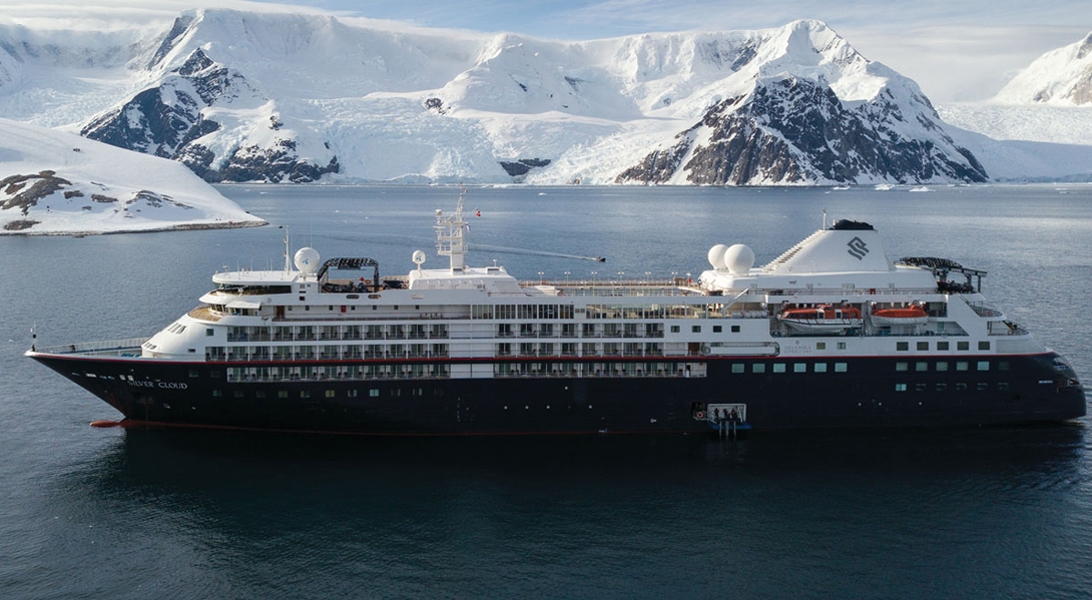
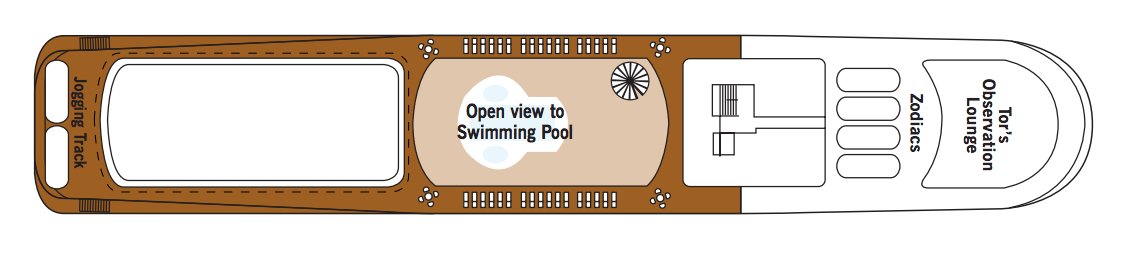

The images shown are for illustration purposes only and may not be an exact representation of what you find on the ship.
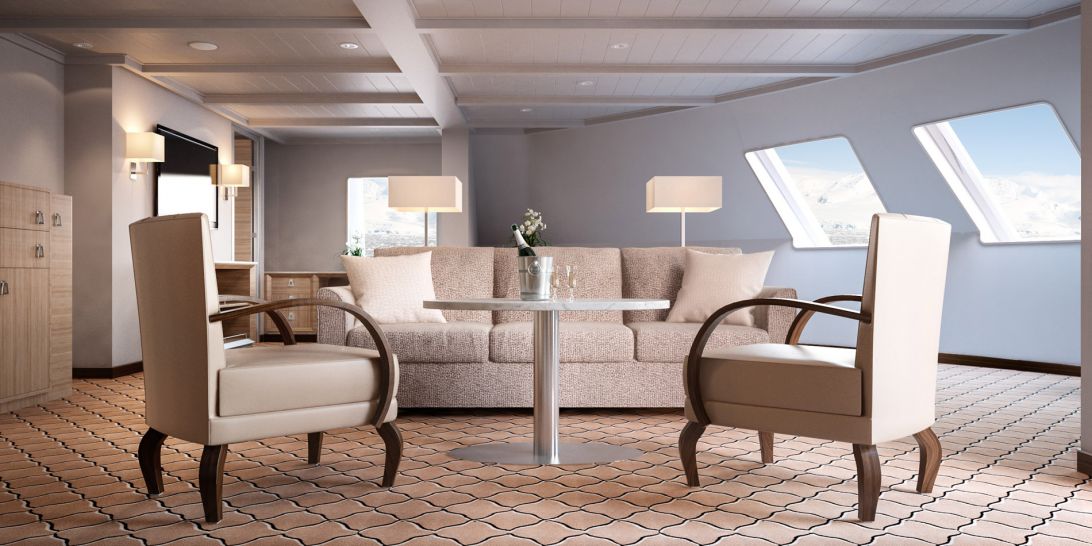
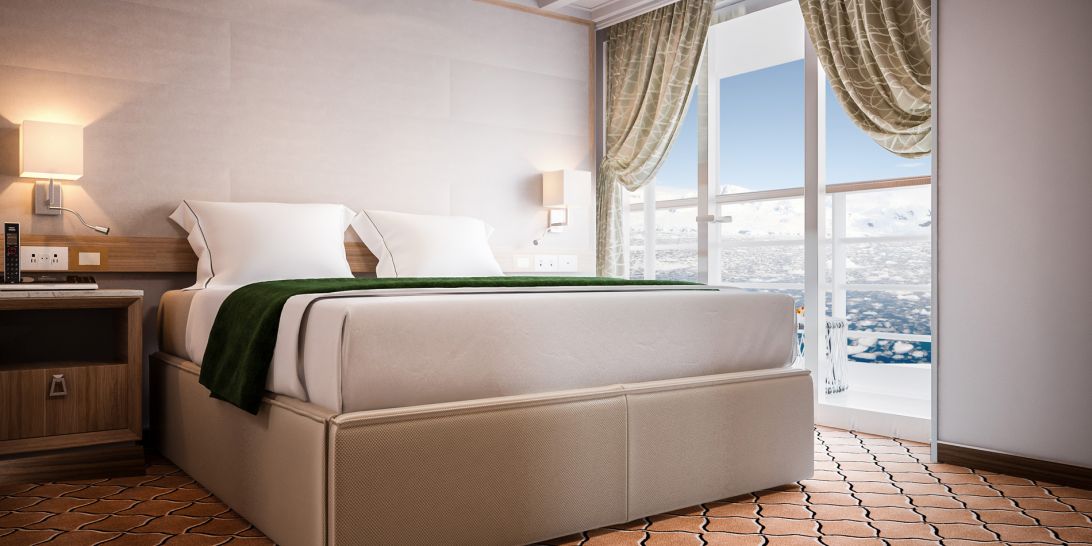
Expertly designed and exquisitely appointed. The ideal space for sharing stories with fellow explorers and new friends. With enough space to roam both inside and outside, this suite is perfect for relaxing and recounting the highlights of your day. Available in a one-bedroom configuration or as two bedrooms by adjoining with a Veranda Suite.
One bedroom: 95 sq m including veranda (14 sq m)
Images are intended as a general reference. Features, materials, finishes and layout may be different than shown.
Please note that the third guest will sleep on a comfortable sofa bed in the reception area of the suite.
Two bedrooms: 122 sq m including veranda (18.5 sq m)
Images are intended as a general reference. Features, materials, finishes and layout may be different than shown.
Please note that the 3rd guest will sleep on a comfortable sofa bed in the reception area of the suite.
Essentials
Characteristics
Veranda
Furniture
Media & Communication
Onboard Services
Butler service
Amenities
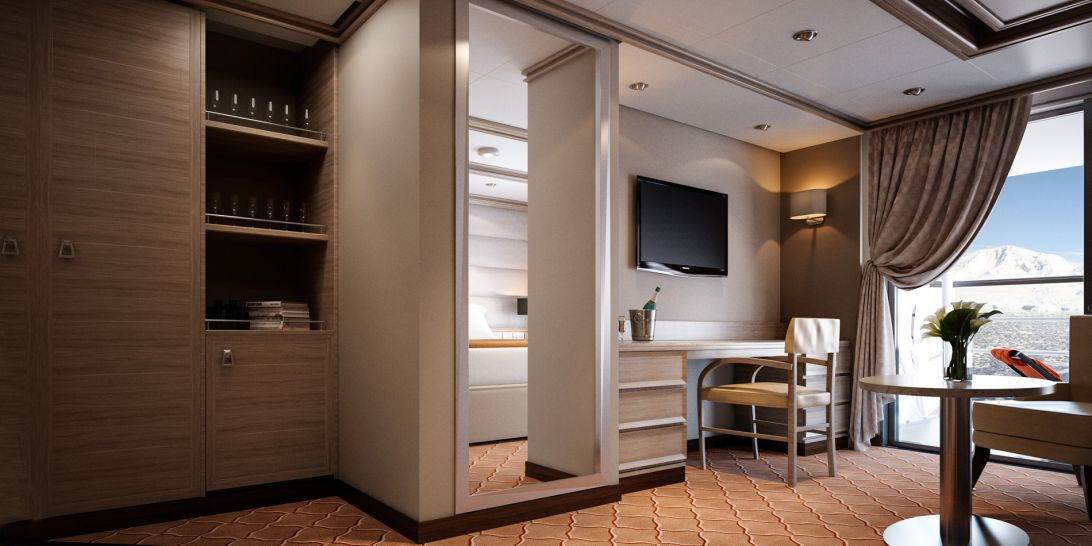
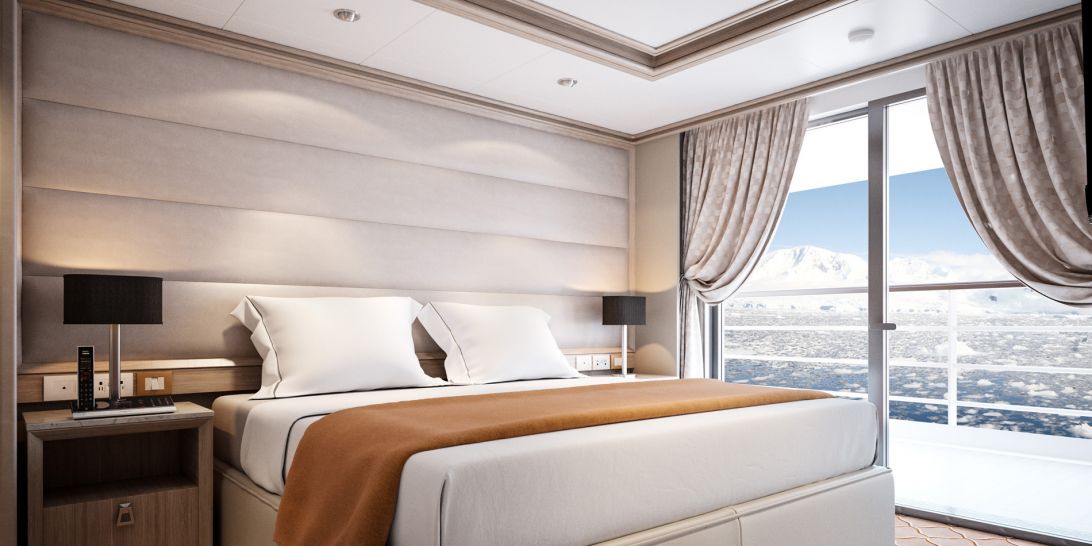
With a room configuration that favors watching the sun rise from the comfort of your bed and losing yourself in the mesmerizing seascapes, this suite is the perfect answer to adventure cruising. A large walk-in wardrobe and an expansive living room make the Medallion Suite your home away from home on the high seas. Medallion Suites accommodate three guests.
One bedroom: 48 sq m including veranda (7.6 sq m )
Images are intended as a general reference. Features, materials, finishes and layout may be different than shown.
Please note that the 3rd guest will sleep on a comfortable sofa bed in the reception area of the suite.
Essentials
Characteristics
Furniture
Media & Communication
Onboard Services
Amenities
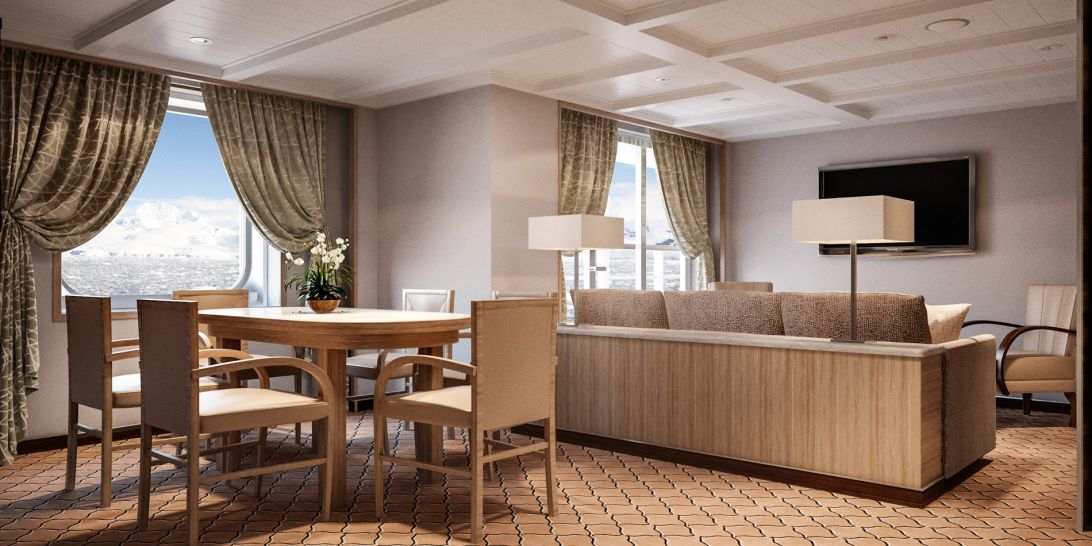
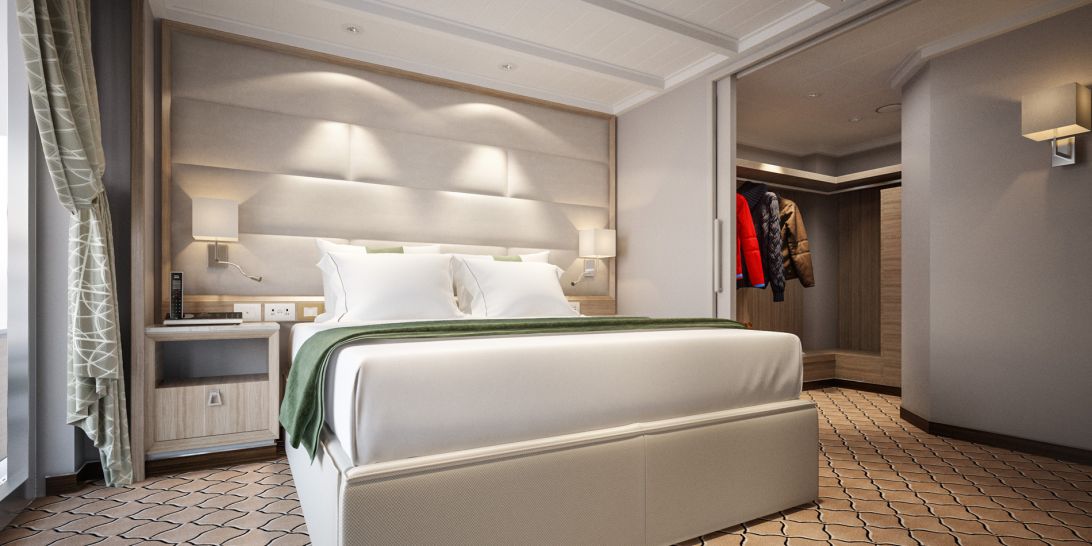
This stylish apartment offers the superlative in levels of space, comfort, and service on board. A perfect mix of expedition experience with luxury lifestyle. Available in a one-bedroom configuration or as two bedrooms by adjoining with a Vista Suite.
One bedroom: 55 sq m including veranda (8 sq m)
Two bedrooms: 77 sq m including veranda (8 sq m)
Images are intended as a general reference. Features, materials, finishes and layout may be different than shown.
Please note that the 3rd guest will sleep on a comfortable sofa bed in the reception area of the suite.
Essentials
Characteristics
Furniture
Media & Communication
Onboard Services
Amenities
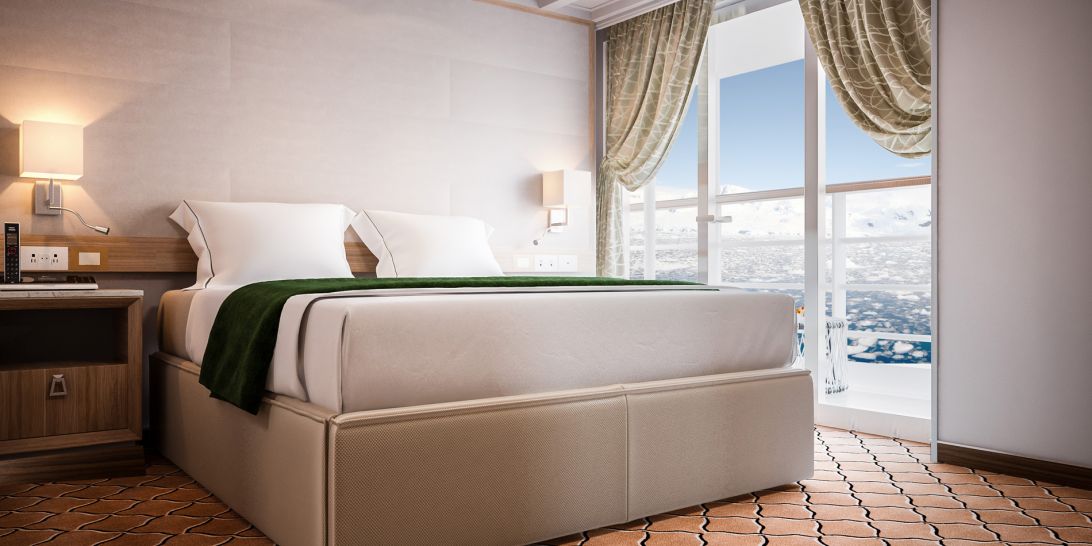
Stately. Commanding and majestic. Perfect for relaxing after a days’ exploring and looking through your photos. With lectures streamed live to your room, this is the pinnacle of good living at sea. Available in a one-bedroom configuration or as two bedrooms by adjoining with a Veranda Suite.
One bedroom: 69 sq m including veranda (12 sq m)
Two bedrooms: 96 sq m including veranda (16.5 sq m)
Images are intended as a general reference. Features, materials, finishes and layout may be different than shown.
Please note that the third guest will sleep on a comfortable sofa bed in the reception area of the suite.
Essentials
Characteristics
Furniture
Media & Communication
Onboard Services
Amenities
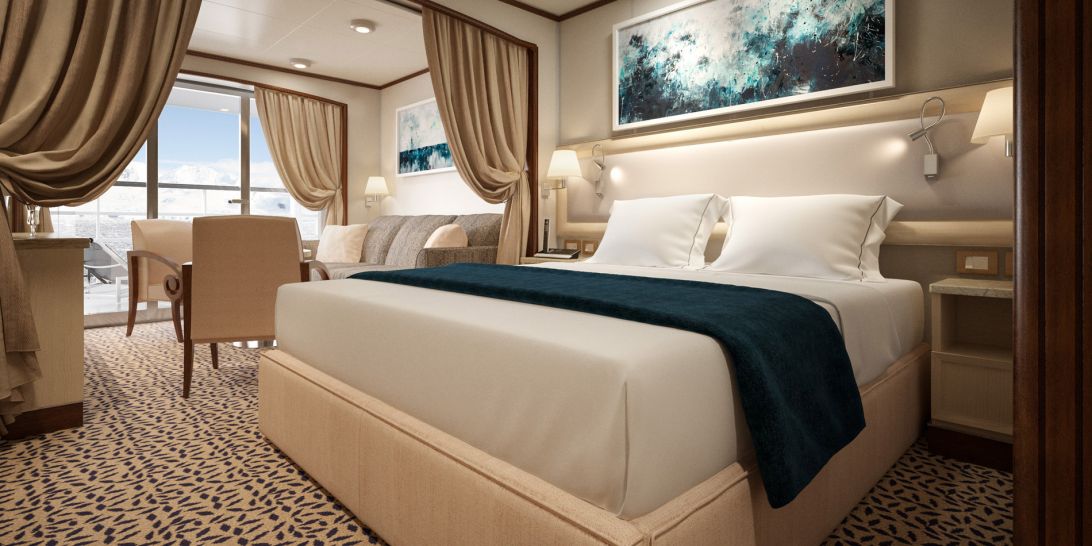
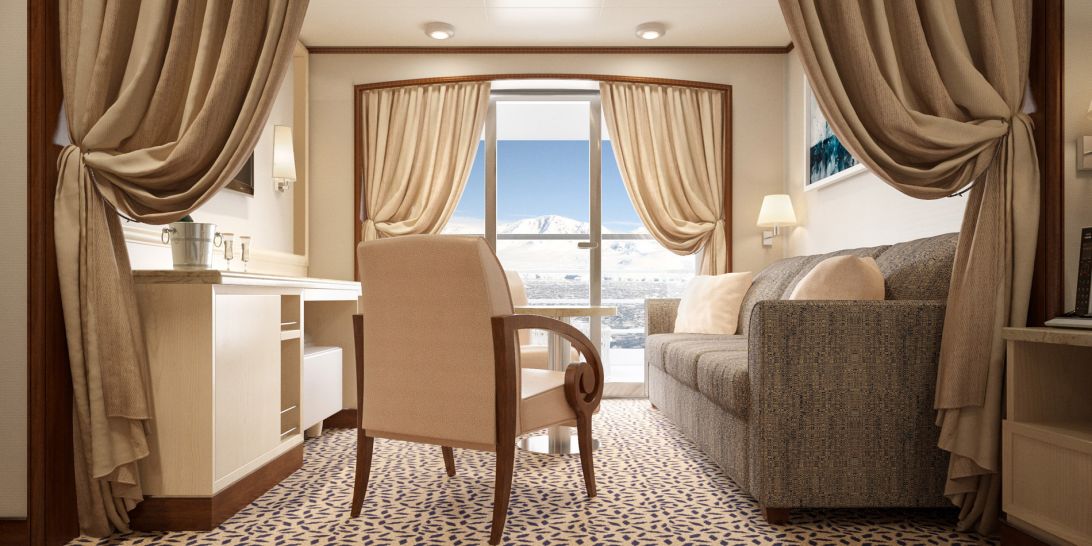
A Silversea signature, with a preferred central location, the Veranda Suite is spacious and welcoming. Floor-to-ceiling glass doors open onto a furnished private teak veranda from where you can contemplate anything from the midnight sun to an Antarctic sunrise. The Deluxe Veranda Suite offers a preferred central location with identical accommodation to a Veranda Suite.
One bedroom: 27 sq m including veranda (4.5 sq m)
Two bedrooms: 27 sq m including veranda (4.5 sq m)
Images are intended as a general reference. Features, materials, finishes and layout may be different than shown.
Essentials
Characteristics
Furniture
Media & Communication
Onboard Services
Amenities
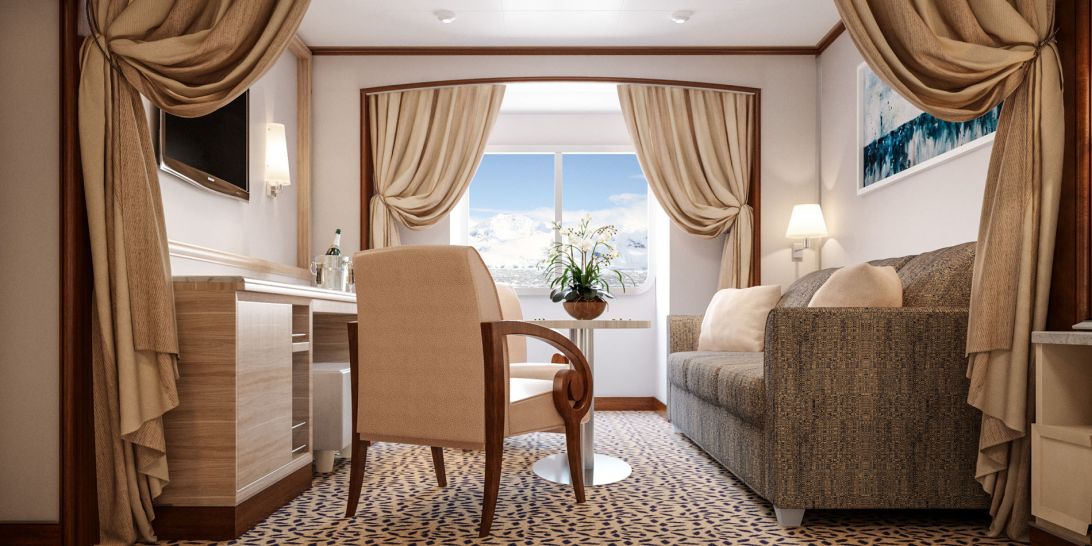
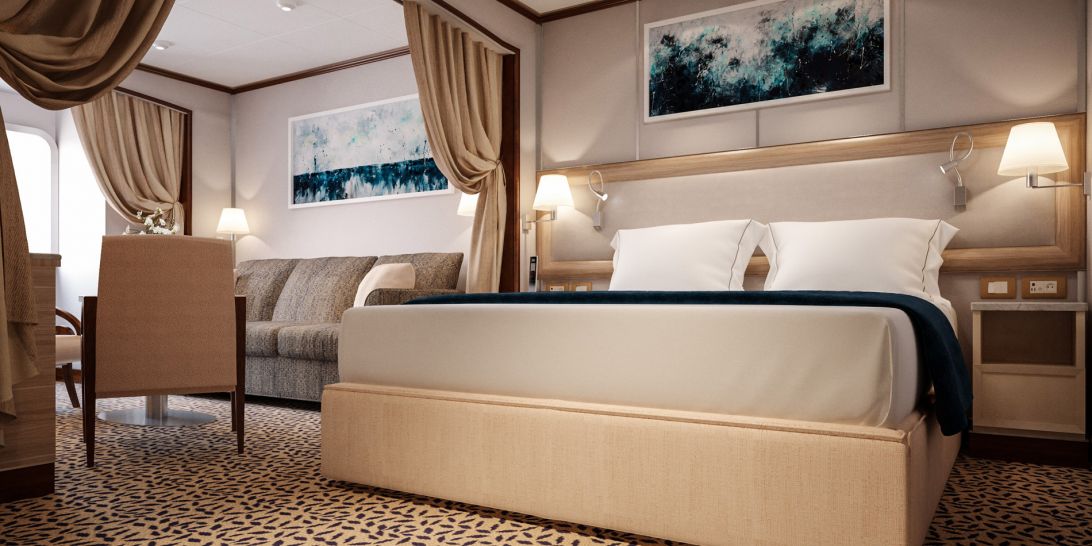
Your home away from home while you embrace the intrepid explorer within. The suite’s seating area has plenty of room to relax while you go over your notes, ready for the next adventure. Large picture windows frame panoramic ocean views, ideal for appraising the local wildlife.
One bedroom: 22 sq m
Wheelchair accessible suites: 449 and 451
Images are intended as a general reference. Features, materials, finishes and layout may be different than shown.
Essentials
Characteristics
Furniture
Media & Communication
Onboard Services
Amenities
The images shown are for illustration purposes only and may not be an exact representation of what you find on the ship.
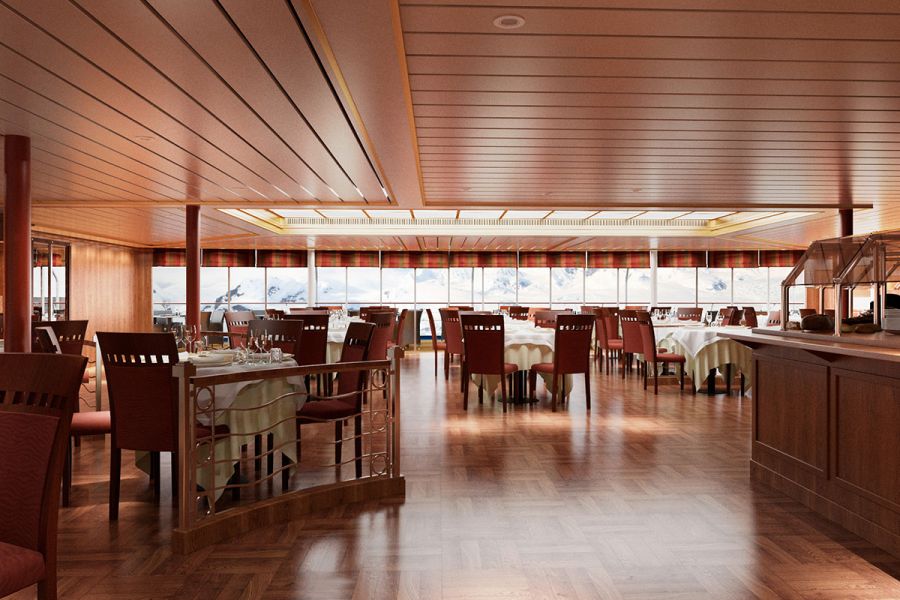
La Terrazza is a celebration of the way Italians eat today, an ode to the delicious evolution of the world’s most beloved cuisine. Evolving one of Silversea’s signature restaurants, La Terrazza serves fresh twists on great classics, and also explores the new heroes of Italian cuisine. The notion of comfort traditionally associated with Italian cuisine is present in every dish, every bite, yet always with a subtle element of surprise. La Terrazza is open for casual, buffet-style breakfast and lunch with indoor or alfresco dining on the outdoor terrace. During the evening, the venue transforms into an à la carte Italian restaurant. Seating is limited for dinner and reservations are recommended.
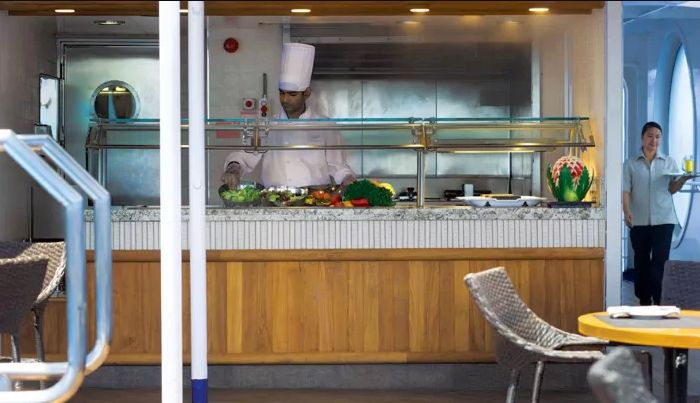
Silversea’s much-loved casual dining restaurant serves a delectable range of burgers and salads by day and turns into our famous Hot Rocks table BBQ concept by night. The Grill is quite simply the best place to eat between sea and sky. If you like flavorsome meals cooked to perfection, a casual, laid-back atmosphere, and OMG views, then The Grill is the answer to your prayers.
Dress code: Casual
Casual wear consists of pants, blouses, or casual dresses for women; open-neck shirts and slacks for men are appropriate.
Images are intended as a general reference. Features, materials, finishes and layout may be different than shown.
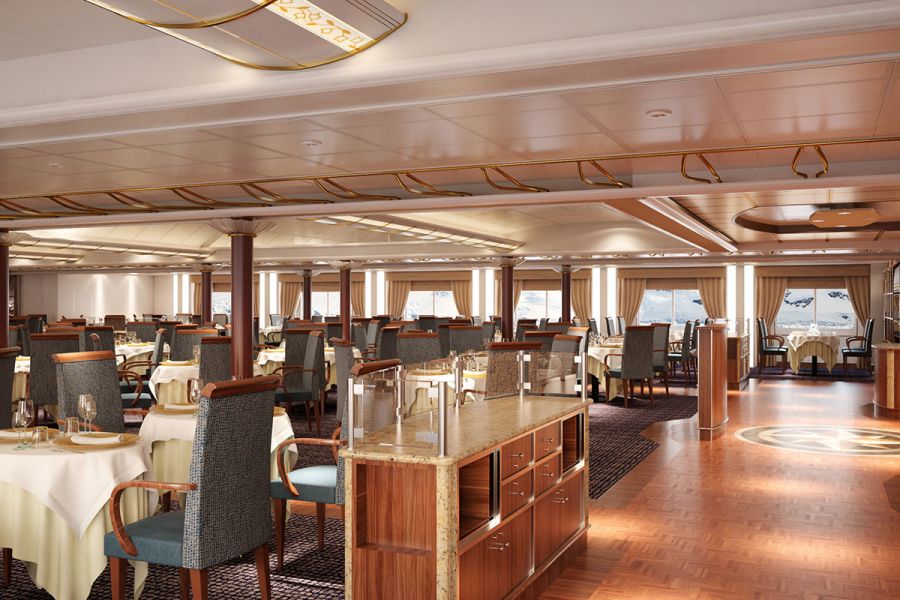
Sparkling with tales of adventure, bonhomie, and like-minded friends, The Restaurant offers contemporary, international cuisine created by our most talented chefs. Menus feature regional specialties unique to the destinations guests visit on their cruise, so don’t be surprised to see a roasted Chilean Sea Bass while cruising the Chilean fjords.
The images shown are for illustration purposes only and may not be an exact representation of what you find on the ship.
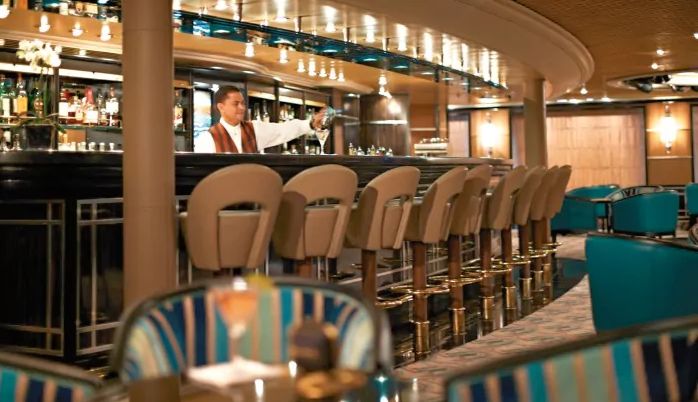
With complimentary cocktails and engaging conversation, live music, and a dance floor, Dolce Vita on board Silver Cloud welcomes guests to mix and mingle. When living such unique experiences as these, there is never a dull moment!
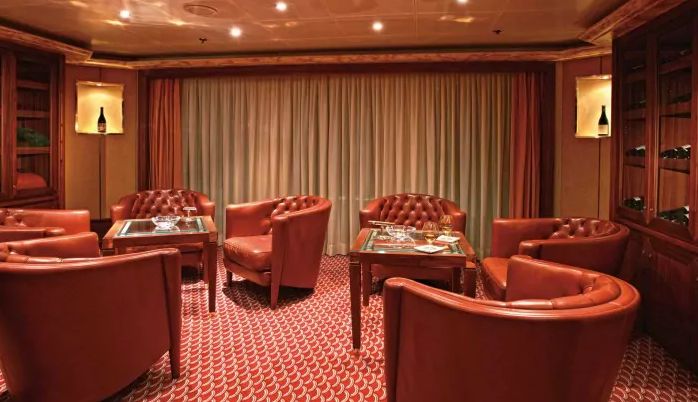
The Connoisseur’s Corner offers exceptional cognacs along with a premium selection of cigars for purchase.
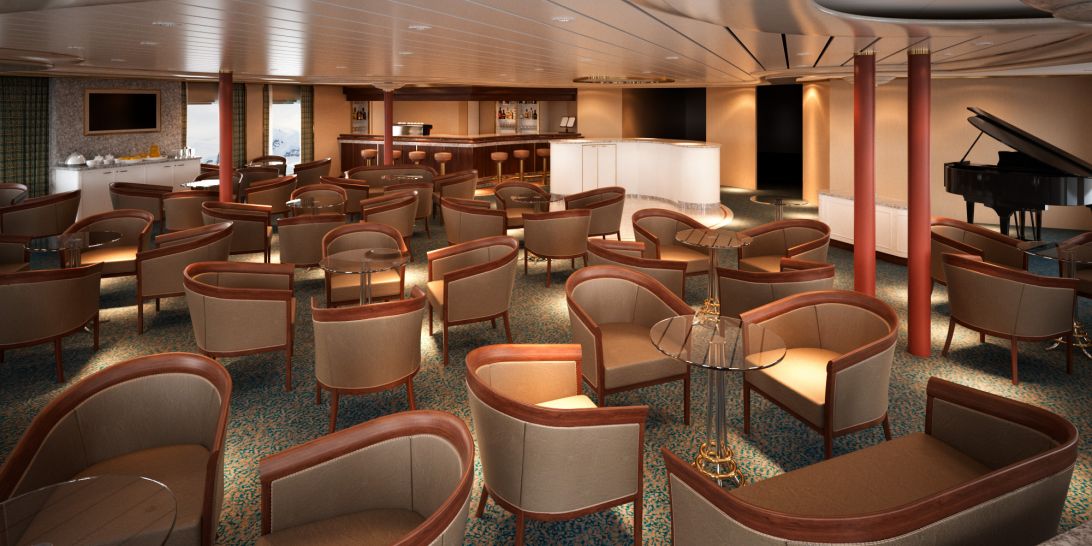
The Panorama Lounge is specially designed to provide an uninterrupted view of the day’s destination from the comfort of the luxury cruise ship’s interior. This is an ideal place to unwind on your cruise, enjoy afternoon tea, listen to the pianist, and watch the setting sun. The drinks are complimentary, and the music is live and inviting. Enjoy dancing to a range of musical styles for every taste, from the classics to the latest club mixes.
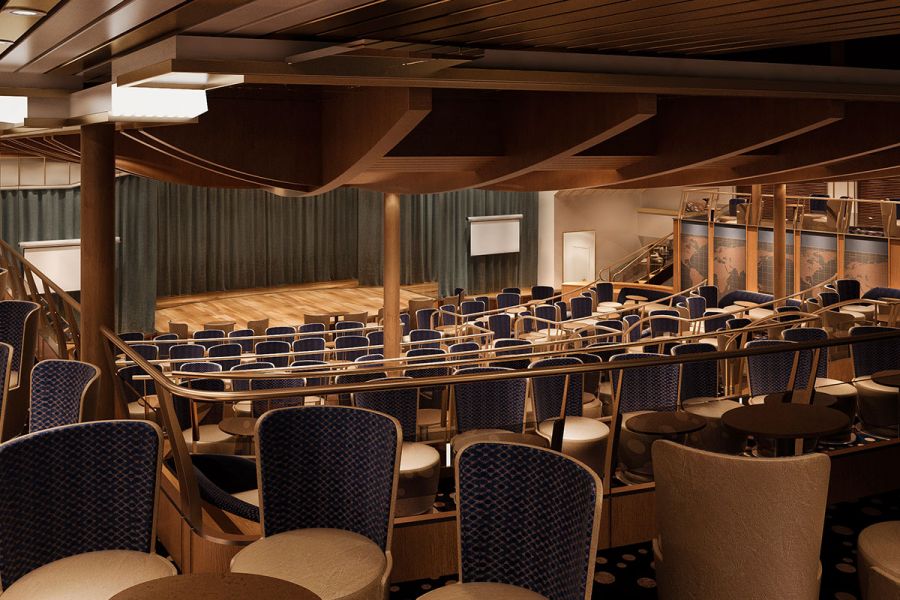
Perfect for presentations, lectures, and video screenings, this is where our team of dedicated experts share their knowledge on their specialized subject, not to mention their infectious passion and energy. The multitiered Explorer Lounge and banquette-style seating ensure that you enjoy every minute of the talk, with lectures streamed live to your suite if desired. This is one of the very few lecture theaters at sea to combine such comfort with such technology.
The images shown are for illustration purposes only and may not be an exact representation of what you find on the ship.
The images shown are for illustration purposes only and may not be an exact representation of what you find on the ship.

Our Fusion packages are all ABTA & ATOL protected ensuring that your booking is safe with us
| 21 nights aboard the Silver Cloud | |||
| Butler Service in Every Suite | |||
| Gratuities Always Included | |||
| Beverages In-Suite and Throughout the Ship | |||
| Gourmet Dining | |||
| In Suite Dining & 24-Hour Room Service | |||
| Intimate small size ships | |||
| Free Wifi Throughout the Ship | |||
| Free Zodiac, Land and Sea Tours & Activities & Complimentary Expedition gear | |||
| Port Taxes and Fees | |||
 | ABTA and ATOL Protection* | ||
Date 29th Feb 2028 |
Nts 21 |
Please Call for Availability |
Date 29th Feb 2028 |
Nts 21 |
Please Call for Availability |
Fusion Holidays when selling travel arrangements is a trading name of Co-op Travel Services Limited, registration 08903986. Fusion Cruises is an Accredited Body Member of Co-op Travel Services Limited ATOL 12904.
Book with Confidence. We are a Member of ABTA which means you have the benefit of ABTA’s assistance and Code of Conduct.
Some of the flights and flight-inclusive holidays on this website are financially protected by the ATOL scheme but ATOL protection does not apply to all holiday and travel services offered on this website. This website will provide you with information on the protection that applies in the case of each holiday and travel service offered before you make your booking. If you do not receive an ATOL Certificate then the booking will not be ATOL protected. If you do receive an ATOL Certificate but all parts of your trip are not listed on it, those parts will not be ATOL protected. Please see our booking conditions for information, or for more information about financial protection and the ATOL Certificate go to: www.caa.co.uk