This site uses cookies as defined in our Cookie Policy, by continuing to use this site you agree to their use.
Continue

| Arrive | Depart | ||||||
| 2nd02 | DecDec | 202626 | Cagliari, Italy, embark on the Silver Dawn | 08:00 | 18:00 | ||
Known in Sardinia as Casteddu, the island's capital has steep streets and impressive Italianate architecture, from modern to medieval. This city of nearly 160,000 people is characterized by a busy commercial center and waterfront with broad avenues and arched arcades, as well as by the typically narrow streets of the old hilltop citadel (called, simply, “Castello”). The Museo Archeologico makes a good starting point to a visit. The imposing Bastione di Saint Remy and Mercato di San Benedetto (one of the best fish markets in Italy) are both musts. The serene sea approach to Cagliari is an exquisitely beautiful way to first lay eyes on the city’s mesmerising interplay of colour, spires and domed churches. Sat on Sardinia’s south coast, Cagliari is the island’s largest city, and a sun-blessed escape of beaches, architecture and Mediterranean food – where stress evaporates on contact. That first sight of Cagliari’s mosaic of architecture reveals much about the island’s history, and is a living document of the civilisations and influences that have passed through. Combining Byzantine churches with crumbling Roman ruins and Pisan towers, it’s an elegant, beguiling place to explore. Usher in the morning with a short, sharp espresso hit, before wandering along to San Benedetto market’s bustle, crammed full of overflowing heaps of local produce. Taste crisp, freshly-baked bread, thin shavings of sheep’s cheese, and ripe red strawberries, as you wander amid the market’s melody of good-natured bartering. The Castello quarter’s tight, flower-draped streets and salmon-hued brick buildings incline up above the Med’s softly lapping waves. Climb Bastione di Saint Remy staircase to Terrazza Umberto’s views of the turquoise Gulf of Angels. Next, Cathedral of Santa Maria awaits, with its marbled interiors, elaborate side chapels and intricately decorated crypt. Once you’ve unravelled Cagliari’s historical tapestry, Poetto Beach invites you to find a spot on almost five miles of uninterrupted sand, met by a dazzling expanse of turquoise water. | |||||||
| 3rd03 | DecDec | 202626 | At Sea | ||||
| 4th04 | DecDec | 202626 | Cartagena, Spain | 08:00 | 18:00 | ||
A Mediterranean city and naval station located in the Region of Murcia, southeastern Spain, Cartagena’s sheltered bay has attracted sailors for centuries. The Carthaginians founded the city in 223BC and named it Cartago Nova; it later became a prosperous Roman colony, and a Byzantine trading centre. The city has been the main Spanish Mediterranean naval base since the reign of King Philip II, and is still surrounded by walls built during this period. Cartagena’s importance grew with the arrival of the Spanish Bourbons in the 18th century, when the Navidad Fortress was constructed to protect the harbour. In recent years, traces of the city’s fascinating past have been brought to light: a well-preserved Roman Theatre was discovered in 1988, and this has now been restored and opened to the public. During your free time, you may like to take a mini-cruise around Cartagena's historic harbour: these operate several times a day, take approximately 40 minutes and do not need to be booked in advance. Full details will be available at the port. On the crossroads of mighty cultures, this Murcian port has endless ancient stories to share. A valuable natural harbour attracted many civilisations to this sun-bathed, southeasterly setting - following its foundation by the Carthaginians in 227 BC. Blending the imprints left by countless cultures on this global junction, the presence of everyone from the Vandals to the Phoenicians and Moors can be felt as you explore, walking between ruins and celebrated modernist architecture along Calle Mayor. Cartagena is crowned by the soaring Castillo de la Concepcion - rise to the stout castle aboard a panoramic lift. Inside, look through reams of archaeological treasures, or admire the rolling views down over the port and across the waters. Watch out for the electric blue peacocks who strut flamboyantly. Cartagena's emergence as a visitor destination coincided with a stunning discovery in 1988 - the bowl of a gloriously preserved Roman Theatre. Enter to sit among the grandiose ancient venue, so evocative, you can't help but imagine the historic performances that have graced its stage. Wander the breezy waterfront, looking across the narrow strait towards Africa's distant haze, and spotting gleaming warships. Cartagena's perfect harbour means it has been one of Spain's oldest strategic navy positions since the 16th century. Settle to enjoy the joys of tapas in lively bars - sampling crisped paella, squid and honeyed-aubergine. Easter's Semana Santa festivities are typically lively here, as hooded processions, lavish floats and sombre fiery displays roll through the streets. | |||||||
| 5th05 | DecDec | 202626 | Málaga, Spain | ||||
As you sail into Malaga you will notice what an idyllic setting the city enjoys on the famous Costa del Sol. To the east of this provincial capital, the coast along the region of La Axarqua is scattered with villages, farmland and sleepy fishing hamlets - the epitome of traditional rural Spain. To the west stretches a continuous city where the razzmatazz and bustle creates a colourful contrast that is easily recognisable as the Costa del Sol. Surrounding the region, the Penibéetica Mountains provide an attractive backdrop overlooking the lower terraced slopes which yield olives and almonds. This spectacular mountain chain shelters the province from cold northerly winds, giving it a reputation as a therapeutic and exotic place in which to escape from cold northern climes. Malaga is also the gateway to many of Andalusia's enchanting historic villages, towns and cities. Bathing in the sunshine coast’s stunning subtropical climate, and laying out endless spectacular beaches, it’s no surprise that Malaga is one of Spain’s most popular cities. The already impressive cultural appeal of this holiday city has skyrocketed over recent years, and with a storied old town and Moorish fortifications, Malaga has a lot to offer. Nearby, you can recline on the renowned beaches of the Costa del Sol, or venture inland to discover the Moorish treasures of Granada and Cordoba. La Malagueta beach is Malaga’s spacious urban beach, perfect for a sunbathe and a dip in the warm water, before enjoying seaside cocktails or seafood tapas in the restaurants nearby. Malaga and the Costa del Sol may be best known for glorious weather and beaches, but Malaga can now stake a genuine claim as an artistic powerhouse too. Visit the renowned Picasso museum – housed in the artist’s birthplace – before exploring the freshly opened outpost of the Pompidou Centre. The art also spills out onto the streets in the colourful Soho district – splashed with vibrant street paintings. Known as La Manquita – or the one-armed woman – the city’s cathedral rises over the historic old town. Its huge bell tower stands tall, but an accompanying second tower was never completed - hence the nickname. The Alcazaba fortress palace looms over the waterfront and forms a spectacularly preserved remnant from the era when the Moors controlled the Andalucía region. Discover more of the Arabic influence by visiting Granada’s Alhambra palace, or Cordoba’s La Mezquita mosque. Together with Seville’s converted cathedral, the cities form Andalucía’s Golden Triangle of Moorish wonders. | |||||||
| 6th06 | DecDec | 202626 | Málaga, Spain | 18:00 | |||
As you sail into Malaga you will notice what an idyllic setting the city enjoys on the famous Costa del Sol. To the east of this provincial capital, the coast along the region of La Axarqua is scattered with villages, farmland and sleepy fishing hamlets - the epitome of traditional rural Spain. To the west stretches a continuous city where the razzmatazz and bustle creates a colourful contrast that is easily recognisable as the Costa del Sol. Surrounding the region, the Penibéetica Mountains provide an attractive backdrop overlooking the lower terraced slopes which yield olives and almonds. This spectacular mountain chain shelters the province from cold northerly winds, giving it a reputation as a therapeutic and exotic place in which to escape from cold northern climes. Malaga is also the gateway to many of Andalusia's enchanting historic villages, towns and cities. Bathing in the sunshine coast’s stunning subtropical climate, and laying out endless spectacular beaches, it’s no surprise that Malaga is one of Spain’s most popular cities. The already impressive cultural appeal of this holiday city has skyrocketed over recent years, and with a storied old town and Moorish fortifications, Malaga has a lot to offer. Nearby, you can recline on the renowned beaches of the Costa del Sol, or venture inland to discover the Moorish treasures of Granada and Cordoba. La Malagueta beach is Malaga’s spacious urban beach, perfect for a sunbathe and a dip in the warm water, before enjoying seaside cocktails or seafood tapas in the restaurants nearby. Malaga and the Costa del Sol may be best known for glorious weather and beaches, but Malaga can now stake a genuine claim as an artistic powerhouse too. Visit the renowned Picasso museum – housed in the artist’s birthplace – before exploring the freshly opened outpost of the Pompidou Centre. The art also spills out onto the streets in the colourful Soho district – splashed with vibrant street paintings. Known as La Manquita – or the one-armed woman – the city’s cathedral rises over the historic old town. Its huge bell tower stands tall, but an accompanying second tower was never completed - hence the nickname. The Alcazaba fortress palace looms over the waterfront and forms a spectacularly preserved remnant from the era when the Moors controlled the Andalucía region. Discover more of the Arabic influence by visiting Granada’s Alhambra palace, or Cordoba’s La Mezquita mosque. Together with Seville’s converted cathedral, the cities form Andalucía’s Golden Triangle of Moorish wonders. | |||||||
| 7th07 | DecDec | 202626 | Cádiz, Spain | 08:00 | 19:00 | ||
Believed to be the oldest town on the Iberian Peninsula, the Andalusian port of Cádiz enjoys a stunning location at the edge of a six-mile promontory. The town itself, with 3,000 years of history, is characterised by pretty white houses with balconies often adorned with colourful flowers. As you wander around be sure to take a stroll through the sizeable Plaza de Espãna, with its large monument dedicated to the first Spanish constitution, which was signed here in 1812. Cádiz has two pleasant seafront promenades which boast fine views of the Atlantic Ocean, and has a lovely park, the Parque Genoves, located close to the sea with an open-air theatre and attractive palm garden. Also notable is the neo-Classical cathedral, capped by a golden dome. More than a hundred watchtowers gaze out across the waves surrounding this ancient Andalusian city. Sprinkled with evocative cobbled side streets, you’ll explore 3,000 years’ worth of history, while stumbling across palm-tree lined plazas of shaded coffee sippers. Cadiz claims the mantle of Western Europe’s oldest city, and every piece of architecture - and every wrong turn - offers a chance to discover fascinating new tales. Founded by the Phoenicians in 1100BC, Christopher Columbus used the city as a base for his exploratory, map-defining voyages of 1493 and 1502. The port grew in importance and wealth as Cadiz’s strategic location close to Africa’s northern tip helped it blossom into a centre for New World trade. Catedral de Cádiz, is a display of the city’s wealth and importance, looming spectacularly over the Atlantic’s waves, with cawing seagulls sweeping between its twin bell towers. Inside, treasures from the city’s trading exploits in the West Indies and beyond - which helped fuel the growth of this historically prosperous city – are on display. Enveloped by ocean on almost every side, Cadiz has something of an island feel, and you can cool off from southern Spain’s unrelenting sunshine on the sweeping golden sand beach of Playa Victoria. The two towers of the new El Puente de la Constitución de 1812 mark a contemporary landmark in this most ancient of cities, in the form of a spectacular new road bridge. Torre Tavira, meanwhile, is the most famous of Cadiz’s army of watchtowers, and the highest point in the city. Reach the top for a view of the ocean fringing the city’s expanse, and to learn about the towers - constructed so trading merchants could survey the harbour from their lavish homes. The Central Market is a chaotic place of bartering, where flashing knives dissect fresh fish. Stop in at the orbiting bars to enjoy tapas, freshly prepared with the market’s produce. | |||||||
| 8th08 | DecDec | 202626 | At Sea | ||||
| 9th09 | DecDec | 202626 | Lisbon, Portugal, disembark the Silver Dawn | ||||
Set on seven hills on the banks of the River Tagus, Lisbon has been the capital of Portugal since the 13th century. It is a city famous for its majestic architecture, old wooden trams, Moorish features and more than twenty centuries of history. Following disastrous earthquakes in the 18th century, Lisbon was rebuilt by the Marques de Pombal who created an elegant city with wide boulevards and a great riverfront and square, Praça do Comércio. Today there are distinct modern and ancient sections, combining great shopping with culture and sightseeing in the Old Town, built on the city's terraced hillsides. The distance between the ship and your tour vehicle may vary. This distance is not included in the excursion grades. A glorious mosaic of beauty, freedom and authenticity, Portugal’s capital is a stirring artwork of a city. Known for the seven hills it spreads across, and its stirring fado music, Lisbon is a pastel-coloured blend of houses and beautiful tile artworks - and this creative city strikes a perfect harmony between natural and manmade beauty. Stroll along Alfama's steep, cobbled streets as you explore one of the city’s oldest neighbourhoods - where each house and door could be its own photograph. Look for the decorative tiles, with the distinctive blues and whites of Azulejo ceramics, and visit the dedicated museum to learn more. Afterwards, wind up to São Jorge Castle, where views out across Lisbon’s red rooftops unravel. Just one of many majestic viewpoints, you can also seek out Miradouro da Graça for perhaps Lisbon's finest panorama, with the copper-coloured suspension bridge stretching over sparkling water beyond the sea of buildings. The elegant Tower of Belém rises in the Tagus estuary and is a historic defender of these shores. The grand, carved cloisters of Jerónimos Monastery spread out close by, and there's another UNESCO recognised location close by at Sintra, where a colourful town is set amid thick gardens and towering mountains - capped by the royal Pena Palace. Later, relax and take a quick break to drink Ginjinha, a cherry liqueur made from chocolate cups instead of coffee. Lisboetas have a sweet tooth, and the famous Pastel de Nata's crumbling pastry and caramelised-custard topping is the essential accompaniment to any coffee stop. | |||||||
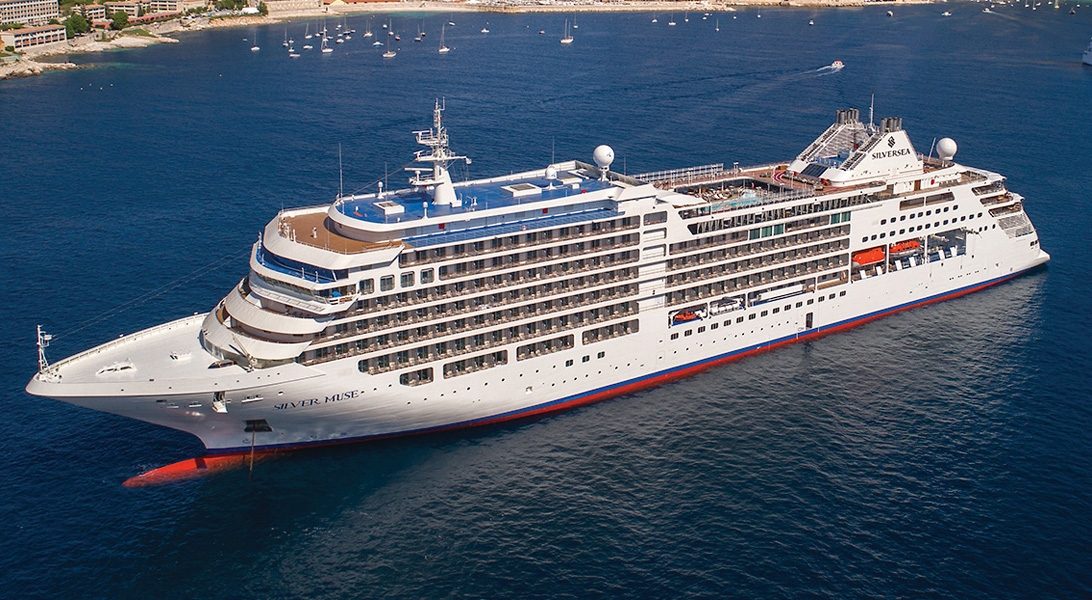
The images shown are for illustration purposes only and may not be an exact representation of what you find on the ship.
The images shown are for illustration purposes only and may not be an exact representation of what you find on the ship.
The images shown are for illustration purposes only and may not be an exact representation of what you find on the ship.
The images shown are for illustration purposes only and may not be an exact representation of what you find on the ship.
The images shown are for illustration purposes only and may not be an exact representation of what you find on the ship.


Our Fusion packages are all ABTA & ATOL protected ensuring that your booking is safe with us
| 7 nights aboard the Silver Dawn | |||
| Butler Service in Every Suite | |||
| Gratuities Always Included | |||
| Beverages In-Suite and Throughout the Ship | |||
| Gourmet Dining | |||
| In Suite Dining & 24-Hour Room Service | |||
| Intimate small size ships | |||
| Free Wifi Throughout the Ship | |||
| Free Zodiac, Land and Sea Tours & Activities & Complimentary Expedition gear | |||
| Port Taxes and Fees | |||
 | ABTA and ATOL Protection* | ||
Date 2nd Dec 2026 |
Nts 7 |
Suite £3,950pp |
Date 2nd Dec 2026 |
Nts 7 |
Suite £3,950pp |
| Suite staterooms from | £3,950pp | ||
| CV | Classic Veranda Suite | £4,750pp | |
| DX | Deluxe Veranda Suite | £5,200pp | |
| G1 | Grand Suite (1 Bedroom) | £9,750pp | |
| G2 | Grand Suite (2 Bedrooms) |  | |
| O1 | Owner's Suite (1 Bedroom) | £12,150pp | |
| O2 | Owner's Suite (2 Bedrooms) | | |
| PA | Panorama Suite | £4,350pp | |
| R1 | Royal Suite (1 Bedroom) | £9,450pp | |
| R2 | Royal Suite (2 Bedrooms) | | |
| S2 | Silver Suite (2 Bedrooms) | | |
| SL | Silver Suite | £7,850pp | |
| VI | Vista Suite | £3,950pp | |
| SV | Superior Veranda Suite | £5,100pp | |
Fusion Holidays when selling travel arrangements is a trading name of Co-op Travel Services Limited, registration 08903986. Fusion Cruises is an Accredited Body Member of Co-op Travel Services Limited ATOL 12904.
Book with Confidence. We are a Member of ABTA which means you have the benefit of ABTA’s assistance and Code of Conduct.
Some of the flights and flight-inclusive holidays on this website are financially protected by the ATOL scheme but ATOL protection does not apply to all holiday and travel services offered on this website. This website will provide you with information on the protection that applies in the case of each holiday and travel service offered before you make your booking. If you do not receive an ATOL Certificate then the booking will not be ATOL protected. If you do receive an ATOL Certificate but all parts of your trip are not listed on it, those parts will not be ATOL protected. Please see our booking conditions for information, or for more information about financial protection and the ATOL Certificate go to: www.caa.co.uk