This site uses cookies as defined in our Cookie Policy, by continuing to use this site you agree to their use.
Continue

| Arrive | Depart | ||||||
| 6th06 | AugAug | 202828 | Civitavecchia, Italy, embark on the Silver Dawn | 19:00 | |||
Italy's vibrant capital lives in the present, but no other city on earth evokes its past so powerfully. For over 2,500 years, emperors, popes, artists, and common citizens have left their mark here. Archaeological remains from ancient Rome, art-stuffed churches, and the treasures of Vatican City vie for your attention, but Rome is also a wonderful place to practice the Italian-perfected il dolce far niente, the sweet art of idleness. Your most memorable experiences may include sitting at a caffè in the Campo de' Fiori or strolling in a beguiling piazza. All roads lead to Rome, and with good reason - this city is one of the world’s most thrilling, offering unmatched history along every street. An evocative, inspiring and utterly artistic capital of unrivalled cultural impact, Rome is a city of back-to-back landmarks, which will take you on an exhilarating journey through the ages. This may be one of the world’s oldest cities, but it’s well and truly lived in. The ruins are punctuated with murmuring cafes, and the outdoor seating of restaurants sprawls out across piazzas, enticing you to sample tangles of creamy pasta and crispy pizzas. Rome’s incredible Roman Forum is littered with the ruins of its ancient administrations, which have stood firm for 2,000 years, since the times when the area was the centre of the Western world. Few sites are more simultaneously beautiful and haunting than that of the storied Colosseum, which looms deep into Rome’s rich blue sky. Take a tour to learn details of the grisly goings-on within. The best way to experience Rome is to wander its streets, gelato in hand. There is a lot to see here - whether it’s the domed spectacle of the Pantheon, or the elaborate flowing waters and artistry of the Trevi Fountain. Vatican City is an astonishing, colossal display of Catholic grandeur, while the Spanish Steps – crowned by the Trinità dei Monti church – offer a beautiful spot to gather and soak up the lively atmosphere of this humming city. With so much on the to-do list, you’ll relish the breaks you take, enjoying simple pleasures like a strong espresso, or fresh pasta with tomato sauce and ripped basil. | |||||||
| 7th07 | AugAug | 202828 | Livorno, Italy | ||||
Livorno is a gritty city with a long and interesting history. In the early Middle Ages it alternately belonged to Pisa and Genoa. In 1421 Florence, seeking access to the sea, bought it. Cosimo I (1519–74) started construction of the harbor in 1571, putting Livorno on the map. After Ferdinando I de' Medici (1549–1609) proclaimed Livorno a free city, it became a haven for people suffering from religious persecution; Roman Catholics from England and Jews and Moors from Spain and Portugal, among others, settled here. The Quattro Mori (Four Moors), also known as the Monument to Ferdinando I, commemorates this. (The statue of Ferdinando I dates from 1595, the bronze Moors by Pietro Tacca from the 1620s.)In the following centuries, and particularly in the 18th, Livorno boomed as a port. In the 19th century the town drew a host of famous Britons passing through on their grand tours. Its prominence continued up to World War II, when it was heavily bombed. Much of the town's architecture, therefore, postdates the war, and it's somewhat difficult to imagine what it might have looked like before. Livorno has recovered from the war, however, as it's become a huge point of departure for container ships, as well as the only spot in Tuscany for cruise ships to dock for the day.Most of Livorno's artistic treasures date from the 17th century and aren't all that interesting unless you dote on obscure baroque artists. Livorno's most famous native artist, Amedeo Modigliani (1884–1920), was of much more recent vintage. Sadly, there's no notable work by him in his hometown.There may not be much in the way of art, but it's still worth strolling around the city. The Mercato Nuovo, which has been around since 1894, sells all sorts of fruits, vegetables, grains, meat, and fish. Outdoor markets nearby are also chock-full of local color. The presence of Camp Darby, an American military base just outside town, accounts for the availability of many American products.If you have time, Livorno is worth a stop for lunch or dinner at the very least. There are few more elegant places to salute the sunset than Terrazza Mascagni, Livorno’s refined chessboard piazza. A historic port, and a beachy gateway to Tuscany, Livorno welcomes you ashore to explore this enchanted Italian region's sun-soaked beauty, rich flavours and world-renowned fine art. Stay in Livorno to explore 'Piccolo Venezia', or ‘Little Venice’ - a quarter of the town that's laced with canals, little marble bridges and plenty of tempting eateries. With its bustling market, fortresses and iconic waterfront, there’s plenty to keep you busy here, but most will be tempted to venture inland to explore more of Tuscany’s many charms and artistic wonders. Test your nose, as you breathe in the subtleties of Tuscany’s vineyard-draped scenery, and visit wineries showcasing the best of the renowned flavours of the Bolgheri wine-growing area. Or head out to Prato, where you’ll find tightly-woven textile history. Pisa’s showpiece tower is within reach, as is Florence’s city of immense and imaginative renaissance beauty. Admire the delicate carving of Michelangelo's masterpiece, the David statue, and note the provocative stance as he casts a dismissive glance towards Rome. Stand before the city’s majestic black and white cathedral - the Cathedral of Santa Maria del Fiore - with its colossal brick dome. The view down over Florence's river and grand dome from Piazzale Michelangelo, meanwhile, is one of Italy's finest. However you choose to spend your time in Tuscany, you’ll discover an artistic region, filled with beauty designed to appeal to every sense. | |||||||
| 8th08 | AugAug | 202828 | Livorno, Italy | 09:00 | |||
Livorno is a gritty city with a long and interesting history. In the early Middle Ages it alternately belonged to Pisa and Genoa. In 1421 Florence, seeking access to the sea, bought it. Cosimo I (1519–74) started construction of the harbor in 1571, putting Livorno on the map. After Ferdinando I de' Medici (1549–1609) proclaimed Livorno a free city, it became a haven for people suffering from religious persecution; Roman Catholics from England and Jews and Moors from Spain and Portugal, among others, settled here. The Quattro Mori (Four Moors), also known as the Monument to Ferdinando I, commemorates this. (The statue of Ferdinando I dates from 1595, the bronze Moors by Pietro Tacca from the 1620s.)In the following centuries, and particularly in the 18th, Livorno boomed as a port. In the 19th century the town drew a host of famous Britons passing through on their grand tours. Its prominence continued up to World War II, when it was heavily bombed. Much of the town's architecture, therefore, postdates the war, and it's somewhat difficult to imagine what it might have looked like before. Livorno has recovered from the war, however, as it's become a huge point of departure for container ships, as well as the only spot in Tuscany for cruise ships to dock for the day.Most of Livorno's artistic treasures date from the 17th century and aren't all that interesting unless you dote on obscure baroque artists. Livorno's most famous native artist, Amedeo Modigliani (1884–1920), was of much more recent vintage. Sadly, there's no notable work by him in his hometown.There may not be much in the way of art, but it's still worth strolling around the city. The Mercato Nuovo, which has been around since 1894, sells all sorts of fruits, vegetables, grains, meat, and fish. Outdoor markets nearby are also chock-full of local color. The presence of Camp Darby, an American military base just outside town, accounts for the availability of many American products.If you have time, Livorno is worth a stop for lunch or dinner at the very least. There are few more elegant places to salute the sunset than Terrazza Mascagni, Livorno’s refined chessboard piazza. A historic port, and a beachy gateway to Tuscany, Livorno welcomes you ashore to explore this enchanted Italian region's sun-soaked beauty, rich flavours and world-renowned fine art. Stay in Livorno to explore 'Piccolo Venezia', or ‘Little Venice’ - a quarter of the town that's laced with canals, little marble bridges and plenty of tempting eateries. With its bustling market, fortresses and iconic waterfront, there’s plenty to keep you busy here, but most will be tempted to venture inland to explore more of Tuscany’s many charms and artistic wonders. Test your nose, as you breathe in the subtleties of Tuscany’s vineyard-draped scenery, and visit wineries showcasing the best of the renowned flavours of the Bolgheri wine-growing area. Or head out to Prato, where you’ll find tightly-woven textile history. Pisa’s showpiece tower is within reach, as is Florence’s city of immense and imaginative renaissance beauty. Admire the delicate carving of Michelangelo's masterpiece, the David statue, and note the provocative stance as he casts a dismissive glance towards Rome. Stand before the city’s majestic black and white cathedral - the Cathedral of Santa Maria del Fiore - with its colossal brick dome. The view down over Florence's river and grand dome from Piazzale Michelangelo, meanwhile, is one of Italy's finest. However you choose to spend your time in Tuscany, you’ll discover an artistic region, filled with beauty designed to appeal to every sense. | |||||||
| 9th09 | AugAug | 202828 | Sorrento, Italy | 08:00 | 18:00 | ||
Sorrento may have become a jumping-off point for visitors to Pompeii, Capri, and Amalfi, but you can find countless reasons to love it for itself. The Sorrentine people are fair-minded and hardworking, bubbling with life and warmth. The tuff cliff on which the town rests is spread over the bay, absorbing sunlight, while orange and lemon trees waft their perfume in spring. Winding along a cliff above a small beach and two harbors, the town is split in two by a narrow ravine formed by a former mountain stream. To the east, dozens of hotels line busy Via Correale along the cliff—many have "grand" included in their names, and some indeed still are. To the west, however, is the historic sector, which still enchants. It's a relatively flat area, with winding, stone-paved lanes bordered by balconied buildings, some joined by medieval stone arches. The central piazza is named after the poet Torquato Tasso, born here in 1544. This part of town is a delightful place to walk through. Craftspeople are often at work in their stalls and shops and are happy to let you watch; in fact, that's the point. Music spots and bars cluster in the side streets near Piazza Tasso. Sorrento's colourful, sun-faded facades cascade down from green hills and cliffs to the Bay of Naples' gently lapping waters. The perfect base for exploring this Italian corner of outstanding natural beauty, venture to the curvaceous roads of the Amalfi coast - or enjoy leisurely jaunts across the shimmering waves to Capri's gem of an island. While it makes for a fantastic jumping-off point, Sorrento itself has oodles of rustic fishing town charm, so don't rush off too quickly. Piazza Tasso is the locals’ main meeting spot and a starting point for a wander through the picturesque streets. Throw back a quick espresso caffeine kick at a standing cafe, before strolling through Corso Italia - Sorrento's spine - which is lined with boutiques, museums, bars and restaurants. The historic Church of San Francesco blossoms with colourful celebrations of weddings, which spill out into its gorgeous ivy-tangled cloisters. Or head down to relax by the small beach and fishing-boat filled harbours. The looming, cloud-wisped cone of Mount Vesuvius is unlikely to escape your attention, and this now docile volcano was responsible for a famous tale of destruction when it wiped out the ancient city of Pompeii in a heartbeat. Known for the haunting, frozen casts of the city’s unfortunate inhabitants - the massive site is a miraculous snapshot of an Ancient Roman city in its pomp. Wander the stone slabs streets, visit the beautiful theatre, and the columns of the sprawling ancient forum – painstakingly recovered and rendered from below the ash. If you’re feeling a little peckish, enjoy quick and delicious flame-cooked pizzas of oil, basil, tomato, and buffalo mozzarella. The volcanic soil imbues the local wines with rich flavour – soak in the waterfront views while savouring Taurasi and Lacryma Christi flavours. Or sample the luminous lemony-hit of ubiquitous limoncellos. | |||||||
| 10th10 | AugAug | 202828 | Taormina, Italy | 08:00 | 18:00 | ||
The medieval cliff-hanging town of Taormina is overrun with tourists, yet its natural beauty is still hard to dispute. The view of the sea and Mt. Etna from its jagged cactus-covered cliffs is as close to perfection as a panorama can get—especially on clear days, when the snowcapped volcano's white puffs of smoke rise against the blue sky. Writers have extolled Taormina's beauty almost since it was founded in the 6th century BC by Greeks from nearby Naxos; Goethe and D. H. Lawrence were among its well-known enthusiasts. The town's boutique-lined main streets get old pretty quickly, but the many hiking paths that wind through the beautiful hills surrounding Taormina promise a timeless alternative. A trip up to stunning Castelmola (whether on foot or by car) should also be on your itinerary. Hugging a long, sweeping bay, Giardini Naxos welcomes you ashore to some of Sicily’s most scenic and historic sites. Naxos was the first Greek settlement on Sicily, and it is surrounded by remarkable remains and swirling mythology. With a long arc of sun-soaked golden sand, you can kick back by the waves - and cool off with a dip into the sea's refreshing embrace. Up above the seaside revelry, the spectacular Taormina hillside town perches - containing rich Roman and Greek history. Visit to encounter one of Sicily’s best views, as you look down over the rejuvenating blue of the sea, and the looming backdrop of Mount Etna rising in the distance. The majestic, honey-coloured Greek theatre is a highlight, standing before the distant loom of the volcano. Head towards the puffs of cloud, and wisps of smoke, that gather around the peak of Sicily’s mighty volcano, which is among the most active in Europe. Arrive through vineyards, thriving in this fertile soil, before taking the 1,737-metre incline to the summit of the legendary mountain of fire, across fields of solidified lava flows. Known to the Greeks as the home of the God of Fire, and the one-eyed Cyclops, the mountain continues to amaze and awe with its restless power. Vineyards carpet the scenery - interrupted by occasional cactai and citrus groves – and produce some of Sicily’s most refined flavours. Enjoy a glass of wine on Giardini Naxos’ seafront, and toast your time on these rich Sicilian shores. | |||||||
| 11th11 | AugAug | 202828 | At Sea | ||||
| 12th12 | AugAug | 202828 | Brindisi, Italy | 07:00 | 17:00 | ||
Life continues in Brindisi as if the 21st century hadn’t arrived. Visually, the landscape is as stunning as one would expect in southern Europe. Villages set on sunlit hilltops rise like islands above a rolling landscape of olive groves and vineyards. The coastline is a striking mixture of ruggedly beautiful cliffs and grottoes interspersed with a scattering of long, sandy beaches. Together with the wealth of historical artefacts and spectacular landscapes, Brindisi is one of Italy’s best kept secrets. Naturally, the cuisine is rich with its pickings from both land and sea and visitors can expect the best pasta, Caprese salad, local lemon loaf and spaghetti al vogole they have ever had! Set right in the heel of Italy’s boot, Brindisi is a pretty little maritime port, fringed with palm trees and most definitely carries its moniker of “Gateway to the East” with pride. An Italian province packed with fascination and the relics of vanished civilization, Brindisi’s cultural inheritance ranges from the relics of ancient Roman highways to Gothic and Baroque churches, cathedrals, frowning battlements of Swabian castles and fortresses which date back to the 13th century, reign of the Holy Roman Emperor, Frederick II. Life continues in Brindisi as if the 21st century hadn’t arrived. Visually, the landscape is as stunning as one would expect in southern Europe. Villages set on sunlit hilltops rise like islands above a rolling landscape of olive groves and vineyards. The coastline is a striking mixture of ruggedly beautiful cliffs and grottoes interspersed with a scattering of long, sandy beaches. Together with the wealth of historical artefacts and spectacular landscapes, Brindisi is one of Italy’s best kept secrets. Naturally, the cuisine is rich with its pickings from both land and sea and visitors can expect the best pasta, Caprese salad, local lemon loaf and spaghetti al vogole they have ever had! | |||||||
| 13th13 | AugAug | 202828 | Split, Croatia | 09:00 | 18:00 | ||
Split's ancient core is so spectacular and unusual that a visit is more than worth your time. The heart of the city lies within the walls of Roman emperor Diocletian's retirement palace, which was built in the 3rd century AD. Diocletian, born in the nearby Roman settlement of Salona in AD 245, achieved a brilliant career as a soldier and became emperor at the age of 40. In 295 he ordered this vast palace to be built in his native Dalmatia, and when it was completed he stepped down from the throne and retired to his beloved homeland. Upon his death, he was laid to rest in an octagonal mausoleum, around which Split's magnificent cathedral was built.In 615, when Salona was sacked by barbarian tribes, those fortunate enough to escape found refuge within the stout palace walls and divided up the vast imperial apartments into more modest living quarters. Thus, the palace developed into an urban center, and by the 11th century the settlement had expanded beyond the ancient walls.Under the rule of Venice (1420–1797), Split—as a gateway to the Balkan interior—became one of the Adriatic's main trading ports, and the city's splendid Renaissance palaces bear witness to the affluence of those times. When the Habsburgs took control during the 19th century, an overland connection to Central Europe was established by the construction of the Split–Zagreb–Vienna railway line.After World War II, the Tito years saw a period of rapid urban expansion: industrialization accelerated and the suburbs extended to accommodate high-rise apartment blocks. Today the historic center of Split is included on UNESCO's list of World Heritage Sites. Bathing in the Dalmatian Coast’s generous sunshine and overlooking sparkling island-studded waters Split is a city of romantic beauty built around an extraordinary - still beating - historical heart. The setting may be spectacular but it’s the Diocletian’s Palace - a Roman remain of incredible scale and detail that is truly bewitching. With a natural backdrop of dramatic limestone mountains and Croatia’s trademark scenic wonders all around Split is a true heavyweight of the Adriatic. To enter Split’s Diocletian’s Palace is to step into a beautiful time warp. Head first to the Cathedral of Saint Domnius where a hollow bell tower rockets up puncturing the sky. The perfume of lavender hangs heavy wherever you walk in the old town where tucked shops offer artisan chocolates dried figs and freshly-ground coffees. The expansive seafront promenade is all palm trees buzzing bars and eateries and further out you’ll find the peace of Marion Hill - where you can climb to some of the best views in town. Or take the far less exerting wander to Sustipan cemetery’s breathtaking panorama of sea city and distant islands. Trips to island paradises like Hvar and Brac are tempting as are longer excursions to sites like Krka National Park’s Waterfalls - where wide terraces of frothing water thunder into cooling swimmable splash pools below. Nearby Trogir is another UNESCO World Heritage Site offering a cosier no less charming old town and historic port. | |||||||
| 14th14 | AugAug | 202828 | Rovinj, Croatia | 08:00 | 18:00 | ||
One of the true jewels of the Mediterranean, Rovinj is a jaw-droppingly beautiful town, which juts out into sparkling Mediterranean. Dominated by the pencil-like bell tower of the Venetian Saint Euphemia Cathedral, pine tree forests flow to the borders of the quaint Old Town - which evokes the romantic, tangled backstreets of the Venice. Rovinj - or Rovino in Italian - is a city of split personalities, with two official languages - having been owned by the Kingdom of Italy between 1919 and 1947. A gorgeous artwork of a port you can revel in seafront promenade strolls waterside drinks and the tangled beauty of an immensely atmospheric old town. Nearby islands sparkle and beaches call out while working fishing boats add authentic everyday charm. With both Croatian and Italian languages spoken there's more than a hint of Venice in the crisscrossing streets and soaring bell towers of this breathlessly romantic place. An alluring highlight of the Istrian Peninsula walk the cobbled streets of Rovinj's old town between sun-parched houses that rear up directly against the sea's lapping water. Tiny streets and squares are lined with little souvenir shops bars gelato stalls and restaurants serving up delicious dishes laced with Istria's elusive white truffles. Take the climb up above via the elegant Church of St Eufemia's Venetian bell tower. The tower's ascent is perhaps best viewed from the glinting waters however as you look back to see the church rising above the town's pretty clutch of colourful buildings. Explore the olive groves and vineyards of the sunny peninsular on your way to villages where truffles are sniffed out by specially trained dogs or head out to rocky coves to swim in refreshing transparent seas. Pula is also close by - a city scattered with Roman ruins including the magnificently preserved in-tact amphitheatre - which continues to be a centre of entertainment hosting atmospheric festivals and concerts to this day. | |||||||
| 15th15 | AugAug | 202828 | Fusina, Italy, disembark the Silver Dawn | ||||
| Losing none of its allure over the years, this floating city of canals, bridges and masks is a place of eternal beauty and enduring elegance. The lagoon of more than 100 islands is a heavenly sight, transporting visitors on a journey through time - from its Roman inception, through centuries of trade to the modern face we see today. Navigate Venice’s sparkling waterways by romantic gondola, or on cruises along wide canal boulevards. Span the Grand Canal over its iconic original crossing, the Rialto Bridge, which - with its parade of tiny shops - gives some of the city’s most endearing views. If the crowds unsettle you at any point, take two turns away from the main thoroughfares to find peace alone, amid the city's labyrinth of tiny streets. Hurry to Piazza San Marco to be immersed in Venice’s elegant glory. Basilica San Marco transports you back to the wealthy days of the Doges, who ruled for over 1,000 years. Initially their private chapel, it’s now decorated with beautiful Byzantine mosaics. Nearby the Campanile di San Marco bell tower offers views over the higgledy-piggledy rooftops of times gone by. Just a hop skip and a jump around the corner is the Doge’s Palace, where the levels of opulence ramp up even further. Justice was meted out in this stunning Palace, with the guilty walking to the cells across the covered Bridge of Sighs. Vaporetto trips to local islands offer even more adventures to float your boat, whether it’s Murano with its world-famous glass, Torcello with its amazing Cathedrals, or Burano with its handmade lace and delightfully colourful painted houses. | |||||||
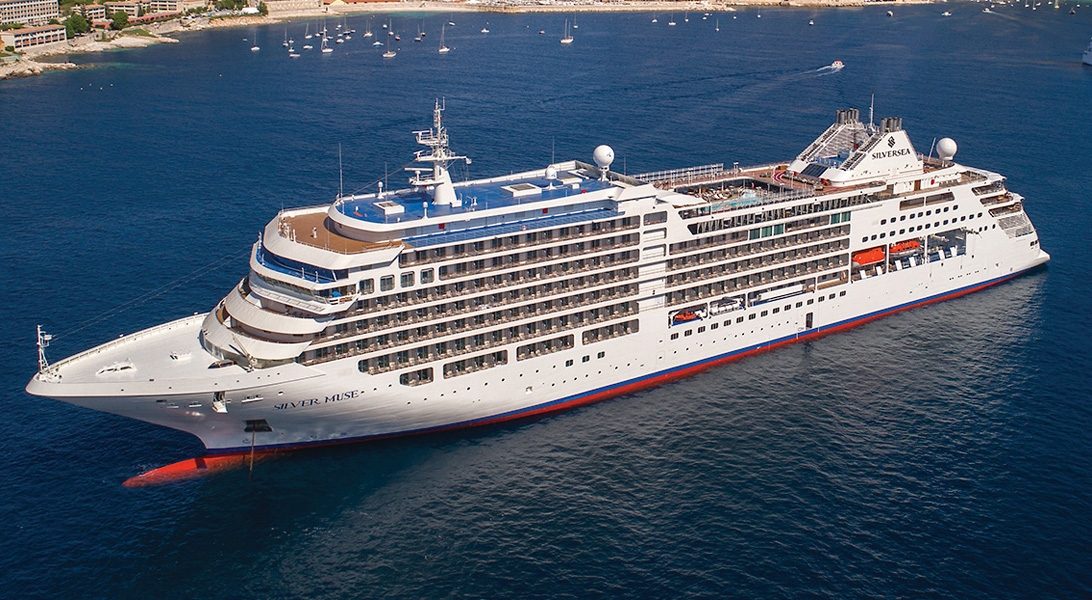
The images shown are for illustration purposes only and may not be an exact representation of what you find on the ship.
The images shown are for illustration purposes only and may not be an exact representation of what you find on the ship.
The images shown are for illustration purposes only and may not be an exact representation of what you find on the ship.
The images shown are for illustration purposes only and may not be an exact representation of what you find on the ship.
The images shown are for illustration purposes only and may not be an exact representation of what you find on the ship.


Our Fusion packages are all ABTA & ATOL protected ensuring that your booking is safe with us
| 9 nights aboard the Silver Dawn | |||
| Butler Service in Every Suite | |||
| Gratuities Always Included | |||
| Beverages In-Suite and Throughout the Ship | |||
| Gourmet Dining | |||
| In Suite Dining & 24-Hour Room Service | |||
| Intimate small size ships | |||
| Free Wifi Throughout the Ship | |||
| Free Zodiac, Land and Sea Tours & Activities & Complimentary Expedition gear | |||
| Port Taxes and Fees | |||
 | ABTA and ATOL Protection* | ||
Date 6th Aug 2028 |
Nts 9 |
Suite £3,750pp |
Date 6th Aug 2028 |
Nts 9 |
Suite £3,750pp |
| Suite staterooms from | £3,750pp | ||
| CV | Classic Veranda Suite | £4,200pp | |
| DX | Deluxe Veranda Suite | £4,750pp | |
| G1 | Grand Suite (1 Bedroom) | £13,400pp | |
| G2 | Grand Suite (2 Bedrooms) |  | |
| O1 | Owner's Suite (1 Bedroom) | £14,950pp | |
| O2 | Owner's Suite (2 Bedrooms) | | |
| PA | Panorama Suite | £3,900pp | |
| R1 | Royal Suite (1 Bedroom) | £12,200pp | |
| R2 | Royal Suite (2 Bedrooms) | | |
| S2 | Silver Suite (2 Bedrooms) | | |
| SL | Silver Suite | £6,950pp | |
| VI | Vista Suite | £3,750pp | |
| SV | Superior Veranda Suite | £4,500pp | |
Fusion Holidays when selling travel arrangements is a trading name of Co-op Travel Services Limited, registration 08903986. Fusion Cruises is an Accredited Body Member of Co-op Travel Services Limited ATOL 12904.
Book with Confidence. We are a Member of ABTA which means you have the benefit of ABTA’s assistance and Code of Conduct.
Some of the flights and flight-inclusive holidays on this website are financially protected by the ATOL scheme but ATOL protection does not apply to all holiday and travel services offered on this website. This website will provide you with information on the protection that applies in the case of each holiday and travel service offered before you make your booking. If you do not receive an ATOL Certificate then the booking will not be ATOL protected. If you do receive an ATOL Certificate but all parts of your trip are not listed on it, those parts will not be ATOL protected. Please see our booking conditions for information, or for more information about financial protection and the ATOL Certificate go to: www.caa.co.uk