This site uses cookies as defined in our Cookie Policy, by continuing to use this site you agree to their use.
Continue

| Arrive | Depart | ||||||
| 10th10 | JunJun | 202828 | Piraeus, Greece, embark on the Silver Dawn | 18:00 | |||
It's no wonder that all roads lead to the fascinating and maddening metropolis of Athens. Lift your eyes 200 feet above the city to the Parthenon, its honey-color marble columns rising from a massive limestone base, and you behold architectural perfection that has not been surpassed in 2,500 years. But, today, this shrine of classical form dominates a 21st-century boomtown. To experience Athens—Athína in Greek—fully is to understand the essence of Greece: ancient monuments surviving in a sea of cement, startling beauty amid the squalor, tradition juxtaposed with modernity. Locals depend on humor and flexibility to deal with the chaos; you should do the same. The rewards are immense. Although Athens covers a huge area, the major landmarks of the ancient Greek, Roman, and Byzantine periods are close to the modern city center. You can easily walk from the Acropolis to many other key sites, taking time to browse in shops and relax in cafés and tavernas along the way. From many quarters of the city you can glimpse "the glory that was Greece" in the form of the Acropolis looming above the horizon, but only by actually climbing that rocky precipice can you feel the impact of the ancient settlement. The Acropolis and Filopappou, two craggy hills sitting side by side; the ancient Agora (marketplace); and Kerameikos, the first cemetery, form the core of ancient and Roman Athens. Along the Unification of Archaeological Sites promenade, you can follow stone-paved, tree-lined walkways from site to site, undisturbed by traffic. Cars have also been banned or reduced in other streets in the historical center. In the National Archaeological Museum, vast numbers of artifacts illustrate the many millennia of Greek civilization; smaller museums such as the Goulandris Museum of Cycladic Art Museum and the Byzantine and Christian Museum illuminate the history of particular regions or periods. Athens may seem like one huge city, but it is really a conglomeration of neighborhoods with distinctive characters. The Eastern influences that prevailed during the 400-year rule of the Ottoman Empire are still evident in Monastiraki, the bazaar area near the foot of the Acropolis. On the northern slope of the Acropolis, stroll through Plaka (if possible by moonlight), an area of tranquil streets lined with renovated mansions, to get the flavor of the 19th-century's gracious lifestyle. The narrow lanes of Anafiotika, a section of Plaka, thread past tiny churches and small, color-washed houses with wooden upper stories, recalling a Cycladic island village. In this maze of winding streets, vestiges of the older city are everywhere: crumbling stairways lined with festive tavernas; dank cellars filled with wine vats; occasionally a court or diminutive garden, enclosed within high walls and filled with magnolia trees and the flaming trumpet-shaped flowers of hibiscus bushes. Formerly run-down old quarters, such as Thission, Gazi and Psirri, popular nightlife areas filled with bars and mezedopoleia (similar to tapas bars), are now in the process of gentrification, although they still retain much of their original charm, as does the colorful produce and meat market on Athinas. The area around Syntagma Square, the tourist hub, and Omonia Square, the commercial heart of the city about 1 km (½ mi) northwest, is distinctly European, having been designed by the court architects of King Otho, a Bavarian, in the 19th century. The chic shops and bistros of ritzy Kolonaki nestle at the foot of Mt. Lycabettus, Athens's highest hill (909 feet). Each of Athens's outlying suburbs has a distinctive character: in the north is wealthy, tree-lined Kifissia, once a summer resort for aristocratic Athenians, and in the south and southeast lie Glyfada, Voula, and Vouliagmeni, with their sandy beaches, seaside bars, and lively summer nightlife. Just beyond the city's southern fringes is Piraeus, a bustling port city of waterside fish tavernas and Saronic Gulf views. A city of legend, civilisation and enduring culture, Athens is a majestic and magical urban sprawl. Extraordinary elegance and grace combine with grit and graft in Greece's capital, where highways encase ruins from antiquity, and gleaming museums and galleries stand beside concrete sprayed with edgy street art. These contrasts enhance and elevate the wonders of this 2,500-year-old city, however, which can count notable contributions to philosophy, drama and democracy, among its global legacy. Piraeus' giant port and naval base welcome you to the edge of the Athens' urban area. From there it's a simple jaunt to the centre. The majestic ancient citadel of the Acropolis dominates an elevated platform and is a constant presence as you explore the city. The wonderful remains of the columned temple of the Parthenon - which date back to the 5th century BC - stand here, representing the pinnacle of classical architecture. The nearby Acropolis Museum adds context to your visit and frames the broad views from its giant glass windows. Or rise up Mount Lycabettus, to be rewarded with perhaps Athens' best panorama of the Acropolis sitting high over the city on its grand stage. See the marble horseshoe of the Old Olympic Stadium, where the first modern Olympics were held in 1896, for more of the city's enduring legacy. Elsewhere, golden beaches and temples stretch out along the coastline, should you wish to explore a little further afield. Coffee is an art form to the Greeks, and it's an unwritten rule that coffee time must never be rushed. So prepare to settle down for a couple of hours and lose yourself in a good chat. Feeling hungry - try traditional souvlaki made with sauces handed from generation to generation. | |||||||
| 11th11 | JunJun | 202828 | Naxos, Greece | 08:00 | 22:00 | ||
| A little bit more rough and ready around the edges than a lot of other Greek islands, Naxos is the thinking-person’s Greece. The largest of all the Cyclades islands, it was once the cultural centre of Classical Greece and Byzantium, so do not be surprised that the world’s oldest culture has left its mark. Museums range from the Archaeological Museum (housed in an elegant Venetian mansion), an impressive geological museum to the lovely Venetian and unusual museum, housed in an 800-year old private house. For those who want to venture further afield, Haki, the old capital of Naxos, has a great distillery museum, run by the same family who first opened it in 1896. Not only are there two lovely monasteries worth visiting, but because of its high mountains Naxos benefits from much more rainfall than most other Greek islands, which makes the land very green and fertile. Local produces includes olives, grapes, figs, citrus fruit, corn and potatoes and if you get a chance, a healthy home-grown meal in a back-country taverna will be undoubtedly be memorable. The golden sands that circle Naxos are particularly nice, catering for all personality types. The active among you will certainly want to head to the eastern side of the island, where the wind is perfect for budding kite and windsurfers, as well as those who like their beaches as natural as can be. The western side of the island, notably Platka beach, is where the sun-lovers will be seen soaking up the rays. | |||||||
| 12th12 | JunJun | 202828 | Páros, Greece | 08:00 | 19:00 | ||
| As one of the lesser known islands in the Aegean Sea, Paros enjoys its reputation as being the underdog of the Cyclades. Often overshadowed by Mykonos to the north, or Santorini to the south, the savvy traveller knows this island paints one of the finest pictures of Greece that you’re ever likely to find. Arrival in Paros is postcard perfect and exactly as you imagine it. Cafes and tavernas line the pretty port, bougainvillea covers narrow streets, brightly painted fishing boats bob gently in the harbour. If you arrive early enough, you’ll find the catches of the day being sold for pennies. All the touch points are there: evocative blue shuttered, white-washed houses, windmills and domed churches on the horizon, arid hillside above an azure bay that homes promise of fresh figs, olives and the seductive lullaby of cicadas. This image might seem clichéd but in Paros, it’s reality. If strolling the cobbled streets that snake into the village does not sustain your love of Greek history, then head for the Archaeological Museum in the centre of town. Paros has been inhabited since 3200 BC and has a past of maritime battles, followed by economic development and cultural flourishing. The island was well known for its fabulous marble, a fine example of which is the lovely Town Hall in Lefkes village (notably Venus de Milo was also crafted from Parian marble). Literary lovers will also know that Paros was the birthplace of Greek lyrical poet Archilochus, statues of whom can be found all over the island. | |||||||
| 13th13 | JunJun | 202828 | Soúda, Crete, Greece | 08:00 | 19:00 | ||
| Enter Souda Bay to land on Greece’s largest island and explore the sun-soaked charms of this fascinating land of legends landscapes and luxuries. Packed with beautiful beaches and rich maritime history Souda Bay’s huge natural harbour is a spectacular entrance opening up the treasures of Crete’s many well-stocked museums rich archaeological sites and charming Venetian fishing towns. The massive natural harbour of Souda Bay also makes the site an interesting spot for military history - with a huge NATO base here as well as the Souda Bay War Cemetery which honours Allied soldiers of World War II. Soak up some Mediterranean sunshine by heading straight to one of the luxurious white sand beaches - where you can recline to a soundtrack of fizzing waves and dine with sparkling sea views stretching out before you. Explore olive groves producing golden oil and savour the deep fruity flavours. The island's renowned wineries also invite you to sample lovingly-crafted Vilana grape wines. Rethymnon’s old town and star-shaped seafront fortress are impressive sites to explore or you can head to Akrotiri to discover the Arkadi Monastery's role in the Cretan resistance - and visit the site where the Greek flag was hoisted high into the sky by rebels in 1897. Crete retains its independent spirit but has gathered countless influences over its history. The island’s most beautiful Venetian port - Chania - is close by and its picturesque old town and collage of historical influences are a highlight of any trip. | |||||||
| 14th14 | JunJun | 202828 | At Sea | ||||
| 15th15 | JunJun | 202828 | Gallipoli, Italy | 07:00 | 17:00 | ||
Kalè polis, meaning beautiful city, is the name ancient Greek mariners bestowed on Gallipoli, with good reason. Situated on a mound, the Old Town with its labyrinth of winding lanes, emerges from the Ionian Sea. It is connected to the mainland and modern Gallipoli via a 17th-century bridge. The area lies on the Salentina Peninsula in the extreme southeast end of Italy, commonly referred to as the heel of the boot. The Salento region was inhabited already in prehistoric times; later centuries were marked by Greek, Norman, Byzantine and Baroque cultures. It is a land of farms, castles, works of art, myths and legends. Many heroic battles were fought; fierce resistance was shown by Gallipoli’s citizens against numerous invaders that included Romans, Vandals, Swabians, Venetians, French and lastly the English in 1809. In addition to its tumultuous history and natural beauty, the city’s claim to fame rests in its art treasures, most notably, the Basilica of Sant’Agata with its majestic 17th-century façade. Inside, the church contains a rich and important art collection with numerous works by its great native son, Giovanni Andrea Coppola. Taking its name from the Greek translation of 'beautiful city’ Gallipoli has a big reputation to live up to. A gorgeous gem of the Ionian this is an elegant city with water running through its veins. Surrounded on three sides by the sea wander between the fish market where tables groan below hauls of fresh seashells and the harbour where little boats come and go all day long. Scooters weave along the old town's tight streets dodge them while enjoying atmospheric strolls below the dangling flowerpot-laced balconies. Enclosed by 14th-century sea walls - and linked to the mainland by a 16th-century bridge - the island is dominated by Castello Angioino di Gallipoli with its thick walls and imposing waterfront setting glaring out to sea. The grand baroque facade of the Basilica Cattedrale di Sant'Agata of 1629 stands in the centre of the old town showcasing intricate carvings and harbouring intense dark paintings and grand columns within. These sun-blessed landscapes produce a rich bounty of flavourful olives and grapes each year. The rich liquid gold of Gallipoli's olive oil is legendary and the city is pocked with underground olive oil factories squeezing out the very best flavours. Puglia has a number of charming coastal towns from the beautiful Baroque architecture of palaces and churches at Lecce to the walled city of Otranto - which waits across the peninsular looking east. This pretty old town has a charming Medieval core and its glowing beaches spread beside the Adriatic’s blue waters. | |||||||
| 16th16 | JunJun | 202828 | Kotor, Montenegro | 09:00 | 19:30 | ||
Backed by imposing mountains, tiny Kotor lies hidden from the open sea, tucked into the deepest channel of the Bokor Kotorska (Kotor Bay), which is Europe's most southerly fjord. To many, this town is more charming than its sister UNESCO World Heritage Site, Dubrovnik, retaining more authenticity, but with fewer tourists and spared the war damage and subsequent rebuilding which has given Dubrovnik something of a Disney feel.Kotor's medieval Stari Grad (Old Town) is enclosed within well-preserved defensive walls built between the 9th and 18th centuries and is presided over by a proud hilltop fortress. Within the walls, a labyrinth of winding cobbled streets leads through a series of splendid paved piazzas, rimmed by centuries-old stone buildings. The squares are now haunted by strains from buskers but although many now house trendy cafés and chic boutiques, directions are still given medieval-style by reference to the town’s landmark churches.In the Middle Ages, as Serbia's chief port, Kotor was an important economic and cultural center with its own highly regarded schools of stonemasonry and iconography. From 1391 to 1420 it was an independent city-republic and later, it spent periods under Venetian, Austrian, and French rule, though it was undoubtedly the Venetians who left the strongest impression on the city's architecture. Since the breakup of Yugoslavia, some 70% of the stone buildings in the romantic Old Town have been snapped up by foreigners, mostly Brits and Russians. Porto Montenegro, a new marina designed to accommodate some of the world’s largest super yachts, opened in nearby Tivat in 2011, and along the bay are other charming seaside villages, all with better views of the bay than the vista from Kotor itself where the waterside is congested with cruise ships and yachts. Try sleepy Muo or the settlement of Prčanj in one direction around the bay, or Perast and the Roman mosaics of Risan in the other direction. Embedded into the slopes of the steep Lovćen mountain and overlooking the deep blue Adriatic the fortified town of Kotor boasts a spectacular imposing staging that few can match. Sq Squeezing in through the tight Bay of Kotor is a daunting and impressive approach in itself as you arrive via one of Europe’s most stunning waterways. A pearl of Montenegro and the Adriatic Kotor's warren-like streets drip with history and authenticity. Under Venetian influence for four centuries the city's UNESCO World Heritage Site old town invites you to wander amid atmospheric stone-clad streets overlooked by a sea of terracotta roofs and the double towers of the cathedral. Many favour Kotor for its compact layout smaller crowds and authenticity however - having been spared from shelling during Yugoslavia's breakup. The tightknit streets here are patrolled by a slinking population of feline residents who were adopted as the town’s mascots after being left behind by transient trader ships. Learn of the city's extensive heritage on the waves in the dedicated maritime museum that is contained within Grgurina Palace. Pick your way through tight alleys of workshops and studios walking below fresh laundry strung from windows before settling into shiny paved piazzas for an afternoon coffee or seafood meal. If you’re up for an aerobic challenge tackle the 1 350 steps up the steep walls to St John's fortress. The views over the gorgeous bay make the arduous slog worth it. | |||||||
| 17th17 | JunJun | 202828 | Sibenik, Croatia | 09:00 | 19:00 | ||
Šibenik's main monument, its Gothic-Renaissance cathedral, built of pale-gray Dalmatian stone and designated a UNESCO World Heritage Site, stands on a raised piazza close to the seafront promenade. From here a network of narrow, cobbled streets leads through the medieval quarter of tightly packed, terra-cotta–roof houses, and up to the ruins of a 16th-century hilltop fortress. The city has never been a real tourist destination. Before the Croatian war for independence, it was a relatively prosperous industrial center, but when the factories closed, Šibenik sank into an economic depression. However, the cathedral more than warrants a look, and it makes a decent base for visiting the waterfalls of Krka National Park. Set on the dazzling Adriatic where the Krka River opens out into the blue island-peppered waters Šibenik is a stone-clad city that oozes Dalmatian medieval charm. Gorgeous Krka National Park gushes with famously picturesque waterfalls close by while the World Heritage Sites of Croatia’s oldest native town have endless stories to tell. Rising from the shadow of popular neighbours Split and Zadar Šibenik is successfully establishing itself as an unmissable Dalmatian city thanks to its timeless grace and 30 hidden churches and monasteries - which ring their bells above a wash of terracotta roofs. Dominating the tight streets of the charming old town - where ice cream vendors spoon out fruity flavours and footsteps rattle along stone streets - is the magnificent Cathedral St. James UNESCO World Heritage site. Taking more than a century to construct it is built from stone in a Gothic-Renaissance style and adorned with 71 sculptured heads - each displaying its own personality. St. Michael’s Fortress stands on a hill above the city providing the perfect viewpoint to see Šibenik rolling towards the stunning archipelago which punctuates the turquoise Adriatic. Part of the fortress is now used as an open-air stage forming an ethereal venue for performances. St. Nicholas Fortress is another UNESCO protected site and was built where the monastery of St. Nicholas once stood. Further afield the beautiful old town of Trogir is close by along with the Roman ruins of Salona. | |||||||
| 18th18 | JunJun | 202828 | Rovinj, Croatia | 08:00 | 18:30 | ||
One of the true jewels of the Mediterranean, Rovinj is a jaw-droppingly beautiful town, which juts out into sparkling Mediterranean. Dominated by the pencil-like bell tower of the Venetian Saint Euphemia Cathedral, pine tree forests flow to the borders of the quaint Old Town - which evokes the romantic, tangled backstreets of the Venice. Rovinj - or Rovino in Italian - is a city of split personalities, with two official languages - having been owned by the Kingdom of Italy between 1919 and 1947. A gorgeous artwork of a port you can revel in seafront promenade strolls waterside drinks and the tangled beauty of an immensely atmospheric old town. Nearby islands sparkle and beaches call out while working fishing boats add authentic everyday charm. With both Croatian and Italian languages spoken there's more than a hint of Venice in the crisscrossing streets and soaring bell towers of this breathlessly romantic place. An alluring highlight of the Istrian Peninsula walk the cobbled streets of Rovinj's old town between sun-parched houses that rear up directly against the sea's lapping water. Tiny streets and squares are lined with little souvenir shops bars gelato stalls and restaurants serving up delicious dishes laced with Istria's elusive white truffles. Take the climb up above via the elegant Church of St Eufemia's Venetian bell tower. The tower's ascent is perhaps best viewed from the glinting waters however as you look back to see the church rising above the town's pretty clutch of colourful buildings. Explore the olive groves and vineyards of the sunny peninsular on your way to villages where truffles are sniffed out by specially trained dogs or head out to rocky coves to swim in refreshing transparent seas. Pula is also close by - a city scattered with Roman ruins including the magnificently preserved in-tact amphitheatre - which continues to be a centre of entertainment hosting atmospheric festivals and concerts to this day. | |||||||
| 19th19 | JunJun | 202828 | Koper, Slovenia | 08:00 | 19:00 | ||
Today a port town surrounded by industrial suburbs, Koper nevertheless warrants a visit. The Republic of Venice made Koper the regional capital during the 15th and 16th centuries, and the magnificent architecture of the Old Town bears witness to the spirit of those times.The most important buildings are clustered around Titov trg, the central town square. Here stands the Cathedral, which can be visited daily from 7 to noon and 3 to 7, with its fine Venetian Gothic facade and bell tower dating back to 1664. Across the square the splendid Praetor's Palace, formerly the seat of the Venetian Grand Council, combines Gothic and Renaissance styles. From the west side of Titov trg, the narrow, cobbled Kidriceva ulica brings you down to the seafront. With a sweeping old town of Venetian architecture sing-song Italian emanating from its cafes and even a fountain that honours the Rialto Bridge - you could be forgiven for thinking that you’d stepped off the boat into the Floating City itself while exploring Koper. Formerly an island Koper was linked artificially to the Slovenian mainland in 1825. It now serves as the only major port of Slovenia and basks in the sun of the Istrian coast which offers an alluring blend of the best of Croatian Slovenian and Italian. The nation’s capital Ljubljana also lies within easy reach. A working city with plenty of charm below its sea of terracotta roofs the picturesque Tito square lies at Koper’s heart. The Cathedral of Assumption rises above the square and towers over the narrow streets nearby. Take a deep breath and climb the 200 steps for a stunning panorama of the city. Or simply soak up the atmosphere with a wander through Čevljarska Ulica – a set of cobbled streets adorned with artisan shops small bars and restaurants. Soak up the sights of Koper the country’s oldest town or make for the Slovenian capital Ljubljana - to discover a lively city of green parks leafy open spaces and pedestrianised boulevards. The pretty Ljubljana River stretches through the city’s heart providing casual strolls and charming bike rides. Nearby encounter a scene from a fairy-tale as you see the breathlessly picturesque Bled Castle emerging from a tiny island in the centre of a cloudy-blue alpine lake. | |||||||
| 20th20 | JunJun | 202828 | Fusina, Italy, disembark the Silver Dawn | ||||
| Losing none of its allure over the years, this floating city of canals, bridges and masks is a place of eternal beauty and enduring elegance. The lagoon of more than 100 islands is a heavenly sight, transporting visitors on a journey through time - from its Roman inception, through centuries of trade to the modern face we see today. Navigate Venice’s sparkling waterways by romantic gondola, or on cruises along wide canal boulevards. Span the Grand Canal over its iconic original crossing, the Rialto Bridge, which - with its parade of tiny shops - gives some of the city’s most endearing views. If the crowds unsettle you at any point, take two turns away from the main thoroughfares to find peace alone, amid the city's labyrinth of tiny streets. Hurry to Piazza San Marco to be immersed in Venice’s elegant glory. Basilica San Marco transports you back to the wealthy days of the Doges, who ruled for over 1,000 years. Initially their private chapel, it’s now decorated with beautiful Byzantine mosaics. Nearby the Campanile di San Marco bell tower offers views over the higgledy-piggledy rooftops of times gone by. Just a hop skip and a jump around the corner is the Doge’s Palace, where the levels of opulence ramp up even further. Justice was meted out in this stunning Palace, with the guilty walking to the cells across the covered Bridge of Sighs. Vaporetto trips to local islands offer even more adventures to float your boat, whether it’s Murano with its world-famous glass, Torcello with its amazing Cathedrals, or Burano with its handmade lace and delightfully colourful painted houses. | |||||||
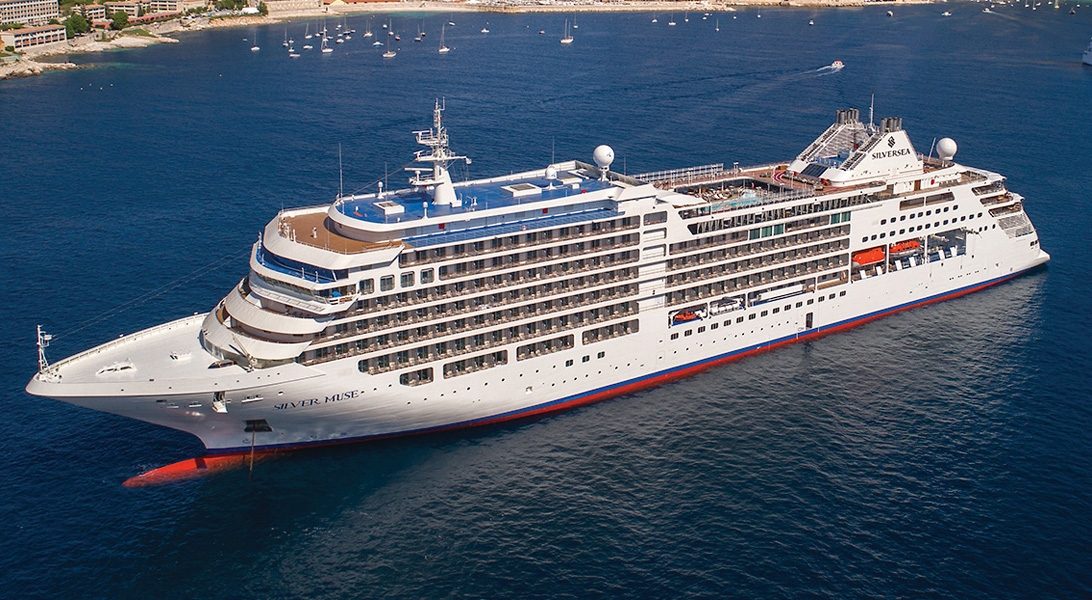
The images shown are for illustration purposes only and may not be an exact representation of what you find on the ship.
The images shown are for illustration purposes only and may not be an exact representation of what you find on the ship.
The images shown are for illustration purposes only and may not be an exact representation of what you find on the ship.
The images shown are for illustration purposes only and may not be an exact representation of what you find on the ship.
The images shown are for illustration purposes only and may not be an exact representation of what you find on the ship.


Our Fusion packages are all ABTA & ATOL protected ensuring that your booking is safe with us
| 10 nights aboard the Silver Dawn | |||
| Butler Service in Every Suite | |||
| Gratuities Always Included | |||
| Beverages In-Suite and Throughout the Ship | |||
| Gourmet Dining | |||
| In Suite Dining & 24-Hour Room Service | |||
| Intimate small size ships | |||
| Free Wifi Throughout the Ship | |||
| Free Zodiac, Land and Sea Tours & Activities & Complimentary Expedition gear | |||
| Port Taxes and Fees | |||
 | ABTA and ATOL Protection* | ||
Date 10th Jun 2028 |
Nts 10 |
Suite £5,600pp |
Date 10th Jun 2028 |
Nts 10 |
Suite £5,600pp |
| Suite staterooms from | £5,600pp | ||
| CV | Classic Veranda Suite | £6,200pp | |
| DX | Deluxe Veranda Suite | £6,800pp | |
| G1 | Grand Suite (1 Bedroom) | £18,600pp | |
| G2 | Grand Suite (2 Bedrooms) |  | |
| O1 | Owner's Suite (1 Bedroom) | £20,650pp | |
| O2 | Owner's Suite (2 Bedrooms) | | |
| PA | Panorama Suite | £5,750pp | |
| R1 | Royal Suite (1 Bedroom) | £16,950pp | |
| R2 | Royal Suite (2 Bedrooms) | | |
| S2 | Silver Suite (2 Bedrooms) | | |
| SL | Silver Suite | £11,200pp | |
| VI | Vista Suite | £5,600pp | |
| SV | Superior Veranda Suite | £6,500pp | |
Fusion Holidays when selling travel arrangements is a trading name of Co-op Travel Services Limited, registration 08903986. Fusion Cruises is an Accredited Body Member of Co-op Travel Services Limited ATOL 12904.
Book with Confidence. We are a Member of ABTA which means you have the benefit of ABTA’s assistance and Code of Conduct.
Some of the flights and flight-inclusive holidays on this website are financially protected by the ATOL scheme but ATOL protection does not apply to all holiday and travel services offered on this website. This website will provide you with information on the protection that applies in the case of each holiday and travel service offered before you make your booking. If you do not receive an ATOL Certificate then the booking will not be ATOL protected. If you do receive an ATOL Certificate but all parts of your trip are not listed on it, those parts will not be ATOL protected. Please see our booking conditions for information, or for more information about financial protection and the ATOL Certificate go to: www.caa.co.uk