This site uses cookies as defined in our Cookie Policy, by continuing to use this site you agree to their use.
Continue

| Arrive | Depart | ||||||
| 14th14 | DecDec | 202828 | Civitavecchia, Italy, embark on the Silver Dawn | 19:00 | |||
Italy's vibrant capital lives in the present, but no other city on earth evokes its past so powerfully. For over 2,500 years, emperors, popes, artists, and common citizens have left their mark here. Archaeological remains from ancient Rome, art-stuffed churches, and the treasures of Vatican City vie for your attention, but Rome is also a wonderful place to practice the Italian-perfected il dolce far niente, the sweet art of idleness. Your most memorable experiences may include sitting at a caffè in the Campo de' Fiori or strolling in a beguiling piazza. All roads lead to Rome, and with good reason - this city is one of the world’s most thrilling, offering unmatched history along every street. An evocative, inspiring and utterly artistic capital of unrivalled cultural impact, Rome is a city of back-to-back landmarks, which will take you on an exhilarating journey through the ages. This may be one of the world’s oldest cities, but it’s well and truly lived in. The ruins are punctuated with murmuring cafes, and the outdoor seating of restaurants sprawls out across piazzas, enticing you to sample tangles of creamy pasta and crispy pizzas. Rome’s incredible Roman Forum is littered with the ruins of its ancient administrations, which have stood firm for 2,000 years, since the times when the area was the centre of the Western world. Few sites are more simultaneously beautiful and haunting than that of the storied Colosseum, which looms deep into Rome’s rich blue sky. Take a tour to learn details of the grisly goings-on within. The best way to experience Rome is to wander its streets, gelato in hand. There is a lot to see here - whether it’s the domed spectacle of the Pantheon, or the elaborate flowing waters and artistry of the Trevi Fountain. Vatican City is an astonishing, colossal display of Catholic grandeur, while the Spanish Steps – crowned by the Trinità dei Monti church – offer a beautiful spot to gather and soak up the lively atmosphere of this humming city. With so much on the to-do list, you’ll relish the breaks you take, enjoying simple pleasures like a strong espresso, or fresh pasta with tomato sauce and ripped basil. | |||||||
| 15th15 | DecDec | 202828 | Livorno, Italy | ||||
Livorno is a gritty city with a long and interesting history. In the early Middle Ages it alternately belonged to Pisa and Genoa. In 1421 Florence, seeking access to the sea, bought it. Cosimo I (1519–74) started construction of the harbor in 1571, putting Livorno on the map. After Ferdinando I de' Medici (1549–1609) proclaimed Livorno a free city, it became a haven for people suffering from religious persecution; Roman Catholics from England and Jews and Moors from Spain and Portugal, among others, settled here. The Quattro Mori (Four Moors), also known as the Monument to Ferdinando I, commemorates this. (The statue of Ferdinando I dates from 1595, the bronze Moors by Pietro Tacca from the 1620s.)In the following centuries, and particularly in the 18th, Livorno boomed as a port. In the 19th century the town drew a host of famous Britons passing through on their grand tours. Its prominence continued up to World War II, when it was heavily bombed. Much of the town's architecture, therefore, postdates the war, and it's somewhat difficult to imagine what it might have looked like before. Livorno has recovered from the war, however, as it's become a huge point of departure for container ships, as well as the only spot in Tuscany for cruise ships to dock for the day.Most of Livorno's artistic treasures date from the 17th century and aren't all that interesting unless you dote on obscure baroque artists. Livorno's most famous native artist, Amedeo Modigliani (1884–1920), was of much more recent vintage. Sadly, there's no notable work by him in his hometown.There may not be much in the way of art, but it's still worth strolling around the city. The Mercato Nuovo, which has been around since 1894, sells all sorts of fruits, vegetables, grains, meat, and fish. Outdoor markets nearby are also chock-full of local color. The presence of Camp Darby, an American military base just outside town, accounts for the availability of many American products.If you have time, Livorno is worth a stop for lunch or dinner at the very least. There are few more elegant places to salute the sunset than Terrazza Mascagni, Livorno’s refined chessboard piazza. A historic port, and a beachy gateway to Tuscany, Livorno welcomes you ashore to explore this enchanted Italian region's sun-soaked beauty, rich flavours and world-renowned fine art. Stay in Livorno to explore 'Piccolo Venezia', or ‘Little Venice’ - a quarter of the town that's laced with canals, little marble bridges and plenty of tempting eateries. With its bustling market, fortresses and iconic waterfront, there’s plenty to keep you busy here, but most will be tempted to venture inland to explore more of Tuscany’s many charms and artistic wonders. Test your nose, as you breathe in the subtleties of Tuscany’s vineyard-draped scenery, and visit wineries showcasing the best of the renowned flavours of the Bolgheri wine-growing area. Or head out to Prato, where you’ll find tightly-woven textile history. Pisa’s showpiece tower is within reach, as is Florence’s city of immense and imaginative renaissance beauty. Admire the delicate carving of Michelangelo's masterpiece, the David statue, and note the provocative stance as he casts a dismissive glance towards Rome. Stand before the city’s majestic black and white cathedral - the Cathedral of Santa Maria del Fiore - with its colossal brick dome. The view down over Florence's river and grand dome from Piazzale Michelangelo, meanwhile, is one of Italy's finest. However you choose to spend your time in Tuscany, you’ll discover an artistic region, filled with beauty designed to appeal to every sense. | |||||||
| 16th16 | DecDec | 202828 | Livorno, Italy | 19:00 | |||
Livorno is a gritty city with a long and interesting history. In the early Middle Ages it alternately belonged to Pisa and Genoa. In 1421 Florence, seeking access to the sea, bought it. Cosimo I (1519–74) started construction of the harbor in 1571, putting Livorno on the map. After Ferdinando I de' Medici (1549–1609) proclaimed Livorno a free city, it became a haven for people suffering from religious persecution; Roman Catholics from England and Jews and Moors from Spain and Portugal, among others, settled here. The Quattro Mori (Four Moors), also known as the Monument to Ferdinando I, commemorates this. (The statue of Ferdinando I dates from 1595, the bronze Moors by Pietro Tacca from the 1620s.)In the following centuries, and particularly in the 18th, Livorno boomed as a port. In the 19th century the town drew a host of famous Britons passing through on their grand tours. Its prominence continued up to World War II, when it was heavily bombed. Much of the town's architecture, therefore, postdates the war, and it's somewhat difficult to imagine what it might have looked like before. Livorno has recovered from the war, however, as it's become a huge point of departure for container ships, as well as the only spot in Tuscany for cruise ships to dock for the day.Most of Livorno's artistic treasures date from the 17th century and aren't all that interesting unless you dote on obscure baroque artists. Livorno's most famous native artist, Amedeo Modigliani (1884–1920), was of much more recent vintage. Sadly, there's no notable work by him in his hometown.There may not be much in the way of art, but it's still worth strolling around the city. The Mercato Nuovo, which has been around since 1894, sells all sorts of fruits, vegetables, grains, meat, and fish. Outdoor markets nearby are also chock-full of local color. The presence of Camp Darby, an American military base just outside town, accounts for the availability of many American products.If you have time, Livorno is worth a stop for lunch or dinner at the very least. There are few more elegant places to salute the sunset than Terrazza Mascagni, Livorno’s refined chessboard piazza. A historic port, and a beachy gateway to Tuscany, Livorno welcomes you ashore to explore this enchanted Italian region's sun-soaked beauty, rich flavours and world-renowned fine art. Stay in Livorno to explore 'Piccolo Venezia', or ‘Little Venice’ - a quarter of the town that's laced with canals, little marble bridges and plenty of tempting eateries. With its bustling market, fortresses and iconic waterfront, there’s plenty to keep you busy here, but most will be tempted to venture inland to explore more of Tuscany’s many charms and artistic wonders. Test your nose, as you breathe in the subtleties of Tuscany’s vineyard-draped scenery, and visit wineries showcasing the best of the renowned flavours of the Bolgheri wine-growing area. Or head out to Prato, where you’ll find tightly-woven textile history. Pisa’s showpiece tower is within reach, as is Florence’s city of immense and imaginative renaissance beauty. Admire the delicate carving of Michelangelo's masterpiece, the David statue, and note the provocative stance as he casts a dismissive glance towards Rome. Stand before the city’s majestic black and white cathedral - the Cathedral of Santa Maria del Fiore - with its colossal brick dome. The view down over Florence's river and grand dome from Piazzale Michelangelo, meanwhile, is one of Italy's finest. However you choose to spend your time in Tuscany, you’ll discover an artistic region, filled with beauty designed to appeal to every sense. | |||||||
| 17th17 | DecDec | 202828 | Genoa, Italy | ||||
Genoa is a port city in the Northwest of Italy. Home to the Genoa Aquarium, famous for having the largest exposition of biodiversity in Europe, the city is also a great place to visit for anyone interested in architecture. Most famous for being the birthplace of Christopher Columbus, Genoa is one of Italy’s true unsung heroes. Stretched out along the Mediterranean coast just over 100 miles from France, the city is the capital of Liguria, or the Italian Riviera, and has the history to prove it. Once the main trading centre for Italy, Genoa has a fine legacy of wealth behind it. The area once had complete control over the Tyrrhenian Sea, and its vast reach stretched as far as Nice to the west, Sardinia in the south and into the Piedmont mountains in the north. Exports were many, but perhaps the most lucrative of these was the rough denim cloth that sailors would wear, today more popularly known under the moniker blue jean. This affluence has left its mark on the city, think ornate gates, large, leafy palazzos, lavishly decorate churches and a Centro Storico – or Old Town – that speaks volumes. Grab your best hiking boots and wander the narrow alleys and steep hills and imbibe in the inherent Italianism of the city. No could talk about Genoa’s history without mentioning its food. Home of both Pesto and Focaccia, Genoa is considered by many to be one of the cornerstones of Italian gastronomy. The city’s cuisine is very much a product of its terrain: The Mediterranean yields freshly caught fish and seafood found on almost every menu, while the mountains supply the meat, cheese and above all herbs that flavour the dishes. It may not be fancy, but if you like good, simple Italian food, you have come to the right place. | |||||||
| 18th18 | DecDec | 202828 | Genoa, Italy | 19:00 | |||
Genoa is a port city in the Northwest of Italy. Home to the Genoa Aquarium, famous for having the largest exposition of biodiversity in Europe, the city is also a great place to visit for anyone interested in architecture. Most famous for being the birthplace of Christopher Columbus, Genoa is one of Italy’s true unsung heroes. Stretched out along the Mediterranean coast just over 100 miles from France, the city is the capital of Liguria, or the Italian Riviera, and has the history to prove it. Once the main trading centre for Italy, Genoa has a fine legacy of wealth behind it. The area once had complete control over the Tyrrhenian Sea, and its vast reach stretched as far as Nice to the west, Sardinia in the south and into the Piedmont mountains in the north. Exports were many, but perhaps the most lucrative of these was the rough denim cloth that sailors would wear, today more popularly known under the moniker blue jean. This affluence has left its mark on the city, think ornate gates, large, leafy palazzos, lavishly decorate churches and a Centro Storico – or Old Town – that speaks volumes. Grab your best hiking boots and wander the narrow alleys and steep hills and imbibe in the inherent Italianism of the city. No could talk about Genoa’s history without mentioning its food. Home of both Pesto and Focaccia, Genoa is considered by many to be one of the cornerstones of Italian gastronomy. The city’s cuisine is very much a product of its terrain: The Mediterranean yields freshly caught fish and seafood found on almost every menu, while the mountains supply the meat, cheese and above all herbs that flavour the dishes. It may not be fancy, but if you like good, simple Italian food, you have come to the right place. | |||||||
| 19th19 | DecDec | 202828 | At Sea | ||||
| 20th20 | DecDec | 202828 | Palma de Mallorca, Spain | 08:00 | 18:00 | ||
If you look north of the cathedral (La Seu, or the seat of the bishopric, to Mallorcans) on a map of the city of Palma, you can see around the Plaça Santa Eulàlia a jumble of tiny streets that made up the earliest settlement. Farther out, a ring of wide boulevards traces the fortifications built by the Moors to defend the larger city that emerged by the 12th century. The zigzags mark the bastions that jutted out at regular intervals. By the end of the 19th century, most of the walls had been demolished; the only place where you can still see the massive defenses is at Ses Voltes, along the seafront west of the cathedral.A torrent (streambed) used to run through the middle of the old city, dry for most of the year but often a raging flood in the rainy season. In the 17th century it was diverted to the east, along the moat that ran outside the city walls. Two of Palma's main arteries, La Rambla and the Passeig d'es Born, now follow the stream's natural course. The traditional evening paseo (promenade) takes place on the Born.If you come to Palma by car, park in the garage beneath the Parc de la Mar (the ramp is just off the highway from the airport, as you reach the cathedral) and stroll along the park. Beside it run the huge bastions guarding the Almudaina Palace; the cathedral, golden and massive, rises beyond. Where you exit the garage, there's a ceramic mural by the late Catalan artist and Mallorca resident Joan Miró, facing the cathedral across the pool that runs the length of the park.If you begin early enough, a walk along the ramparts at Ses Voltes from the mirador beside the cathedral is spectacular. The first rays of the sun turn the upper pinnacles of La Seu bright gold and then begin to work their way down the sandstone walls. From the Parc de la Mar, follow Avinguda Antoni Maura past the steps to the palace. Just below the Plaça de la Reina, where the Passeig d'es Born begins, turn left on Carrer de la Boteria into the Plaça de la Llotja (if the Llotja itself is open, don't miss a chance to visit—it's the Mediterranean's finest Gothic-style civic building). From there stroll through the Plaça Drassana to the Museu d'Es Baluard, at the end of Carrer Sant Pere. Retrace your steps to Avinguda Antoni Maura. Walk up the Passeig d'es Born to Plaça Joan Carles I, then right on Avenida de La Unió. A rugged Mediterranean gem, arising out of the rich blue haze, Mallorca is a Spanish island of cuisine, culture, and sun-gorged beaches. Palma de Mallorca is the island's dominating capital, and a sand-coloured mirage of glorious buildings and living history. Conquered and liberated countless times over the years, since its Bronze Age founding, the city is your gateway to ceaseless Mediterranean beauty, buzzy markets, and intense flavours. Cafes and bars wait close to the sweeping coastline, where you can enjoy strong espressos to kick start the day, or splashes of red Majorcan wines to round it off. Bicycles trundle up and down the promenade, which invites you to wander in the morning sunshine beside the waves. Dominated by the indefatigable form of Santa María cathedral, which looms over the city and coastline, Palma de Mallorca is drenched in history and culture. The labyrinth of the old town is a cobbled haven, which bustles with dripping ice creams and sun-lashed squares. Settle to try the island’s superb cuisine, and savour local ingredients with an exceptional depth of flavour. Something about the sunshine here makes tomatoes extra sharp and delicious, while the seafood is consistently juicy and plump. The creation of the mighty cathedral, Le Seu, began in 1229 and was eventually concluded in 1601. A perfect encapsulation of Palma de Mallorca’s blend of the historic and the contemporary, even Gaudi lent his hand to it, and the interior features a spectacular modernist take on the New Testament from artist Miquel Barcelo, which is painted across the chapel’s walls. The splendid Royal Palace of La Almudaina fortress stands nearby, a left-behind Moorish footprint of square towers and Arabic archways that now serves as an official summer residence for the King of Spain. | |||||||
| 21st21 | DecDec | 202828 | Roses, Spain | 08:00 | 18:00 | ||
| Located at the tip of Northern Spain - close to the French border - Roses is a city known for its magnificent beaches, and extraordinary history. Blessed with beaches painted with a broad brush, the long, wide stretches of golden sand here make it one of the Costa Brava's most desirable locations. Roses sits on the outward curve of the Bay of Roses - facing west - so it’s one of the few places on the coast where you can sit back to watch the sunset lighting up the waves with roaring oranges and pinks, as the night draws in. | |||||||
| 22nd22 | DecDec | 202828 | Barcelona, Spain, disembark the Silver Dawn | ||||
The infinite variety of street life, the nooks and crannies of the medieval Barri Gòtic, the ceramic tile and stained glass of Art Nouveau facades, the art and music, the throb of street life, the food (ah, the food!)—one way or another, Barcelona will find a way to get your full attention. The capital of Catalonia is a banquet for the senses, with its beguiling mix of ancient and modern architecture, tempting cafés and markets, and sun-drenched Mediterranean beaches. A stroll along La Rambla and through waterfront Barceloneta, as well as a tour of Gaudí's majestic Sagrada Famíliaand his other unique creations, are part of a visit to Spain's second-largest city. Modern art museums and chic shops call for attention, too. Barcelona's vibe stays lively well into the night, when you can linger over regional wine and cuisine at buzzing tapas bars. Having attracted over 82 million visitors in 2017, Spain is gaining popularity as a travel destination. The country lures travellers from across the world with its promise of authenticity, charisma, and memorable moments. Spain’s culture is a celebration of the finer things in life, an expression of spirit, heritage and fun: colourful fiestas, delectable cuisine, age-defining art, music, dance, sport and so much more. Each region of the country has evolved a character of its own, meaning the country is unified by a sense of cultural multiplicity. Barcelona, the capital of Catalonia, is a masterpiece that embellishes the Spanish canvas. The fact that the Barcelona’s iconic cathedral, La Sagrada Familia, is still under construction over 141 years after construction commenced pays testament to the city’s artistic perfectionism, which pervades all aspects of life here. Apparent in the city’s architecture, layout, and cultural practices, aestheticism retains its value here. Antoni Gaudí, whose iconic style of modernist architecture is among Barcelona’s leading attractions, could perhaps be credited with designing the face of this magnificent city. Enjoy getting to know the vivacious personality behind Barcelona’s beauty. | |||||||
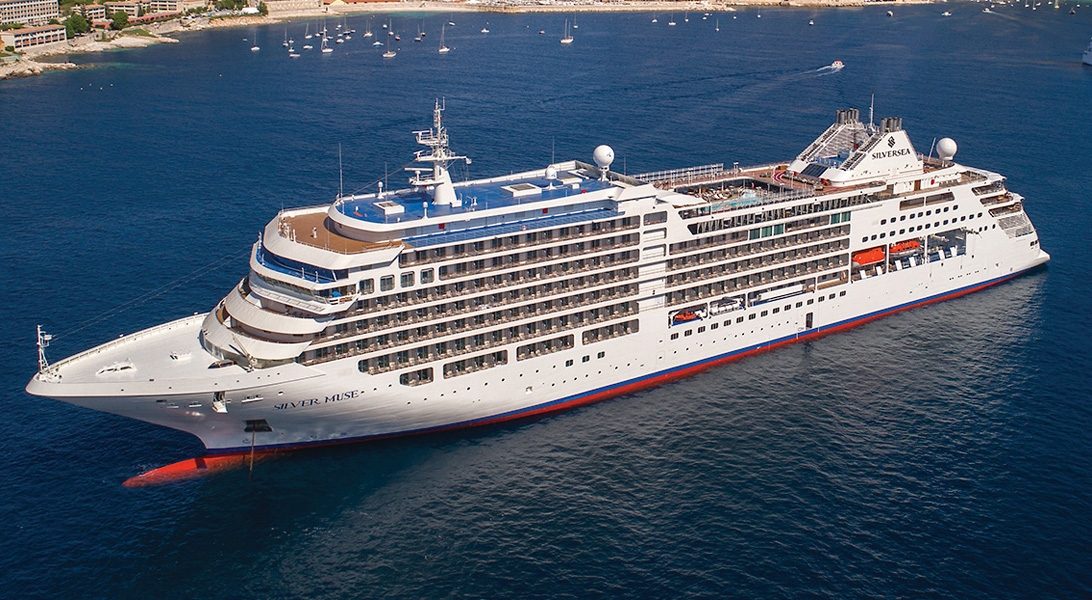
The images shown are for illustration purposes only and may not be an exact representation of what you find on the ship.
The images shown are for illustration purposes only and may not be an exact representation of what you find on the ship.
The images shown are for illustration purposes only and may not be an exact representation of what you find on the ship.
The images shown are for illustration purposes only and may not be an exact representation of what you find on the ship.
The images shown are for illustration purposes only and may not be an exact representation of what you find on the ship.

Our Fusion packages are all ABTA & ATOL protected ensuring that your booking is safe with us
| 8 nights aboard the Silver Dawn | |||
| Butler Service in Every Suite | |||
| Gratuities Always Included | |||
| Beverages In-Suite and Throughout the Ship | |||
| Gourmet Dining | |||
| In Suite Dining & 24-Hour Room Service | |||
| Intimate small size ships | |||
| Free Wifi Throughout the Ship | |||
| Free Zodiac, Land and Sea Tours & Activities & Complimentary Expedition gear | |||
| Port Taxes and Fees | |||
 | ABTA and ATOL Protection* | ||
Date 14th Dec 2028 |
Nts 8 |
Suite £3,400pp |
Date 14th Dec 2028 |
Nts 8 |
Suite £3,400pp |
| Suite staterooms from | £3,400pp | ||
| CV | Classic Veranda Suite | £3,850pp | |
| DX | Deluxe Veranda Suite | £4,250pp | |
| G1 | Grand Suite (1 Bedroom) |  | |
| G2 | Grand Suite (2 Bedrooms) | £12,650pp | |
| O1 | Owner's Suite (1 Bedroom) | | |
| O2 | Owner's Suite (2 Bedrooms) | £13,050pp | |
| PA | Panorama Suite | | |
| R1 | Royal Suite (1 Bedroom) | | |
| R2 | Royal Suite (2 Bedrooms) | £12,550pp | |
| S2 | Silver Suite (2 Bedrooms) | | |
| SL | Silver Suite | £6,450pp | |
| VI | Vista Suite | £3,400pp | |
| SV | Superior Veranda Suite | £4,000pp | |
Fusion Holidays when selling travel arrangements is a trading name of Co-op Travel Services Limited, registration 08903986. Fusion Cruises is an Accredited Body Member of Co-op Travel Services Limited ATOL 12904.
Book with Confidence. We are a Member of ABTA which means you have the benefit of ABTA’s assistance and Code of Conduct.
Some of the flights and flight-inclusive holidays on this website are financially protected by the ATOL scheme but ATOL protection does not apply to all holiday and travel services offered on this website. This website will provide you with information on the protection that applies in the case of each holiday and travel service offered before you make your booking. If you do not receive an ATOL Certificate then the booking will not be ATOL protected. If you do receive an ATOL Certificate but all parts of your trip are not listed on it, those parts will not be ATOL protected. Please see our booking conditions for information, or for more information about financial protection and the ATOL Certificate go to: www.caa.co.uk