This site uses cookies as defined in our Cookie Policy, by continuing to use this site you agree to their use.
Continue

| Arrive | Depart | ||||||
| 18th18 | AprApr | 202828 | Civitavecchia, Italy, embark on the Silver Dawn | 19:00 | |||
Italy's vibrant capital lives in the present, but no other city on earth evokes its past so powerfully. For over 2,500 years, emperors, popes, artists, and common citizens have left their mark here. Archaeological remains from ancient Rome, art-stuffed churches, and the treasures of Vatican City vie for your attention, but Rome is also a wonderful place to practice the Italian-perfected il dolce far niente, the sweet art of idleness. Your most memorable experiences may include sitting at a caffè in the Campo de' Fiori or strolling in a beguiling piazza. All roads lead to Rome, and with good reason - this city is one of the world’s most thrilling, offering unmatched history along every street. An evocative, inspiring and utterly artistic capital of unrivalled cultural impact, Rome is a city of back-to-back landmarks, which will take you on an exhilarating journey through the ages. This may be one of the world’s oldest cities, but it’s well and truly lived in. The ruins are punctuated with murmuring cafes, and the outdoor seating of restaurants sprawls out across piazzas, enticing you to sample tangles of creamy pasta and crispy pizzas. Rome’s incredible Roman Forum is littered with the ruins of its ancient administrations, which have stood firm for 2,000 years, since the times when the area was the centre of the Western world. Few sites are more simultaneously beautiful and haunting than that of the storied Colosseum, which looms deep into Rome’s rich blue sky. Take a tour to learn details of the grisly goings-on within. The best way to experience Rome is to wander its streets, gelato in hand. There is a lot to see here - whether it’s the domed spectacle of the Pantheon, or the elaborate flowing waters and artistry of the Trevi Fountain. Vatican City is an astonishing, colossal display of Catholic grandeur, while the Spanish Steps – crowned by the Trinità dei Monti church – offer a beautiful spot to gather and soak up the lively atmosphere of this humming city. With so much on the to-do list, you’ll relish the breaks you take, enjoying simple pleasures like a strong espresso, or fresh pasta with tomato sauce and ripped basil. | |||||||
| 19th19 | AprApr | 202828 | Naples, Italy | 08:00 | 17:00 | ||
Naples, in the Campania region, is Italy's third largest city. Its claim to fame is the spectacular location along one of the world's most splendid bays, backed by the perfect cone of Mount Vesuvius. In addition to its beautiful setting, Naples' surprises with other outstanding attractions such as the Royal Palace, San Carlos Opera House, the impressive National Archaeological Museum and the Castel Nuovo, dating from the 13th-century. The city's central area is best explored on foot. Chaotic traffic conditions make driving around the city a very frustrating experience. Naples provides a convenient starting point for trips to such favored destinations as Pompeii, Herculaneum and Mount Vesuvius. The Isle of Capri can be reached via a 45-minute hydrofoil service. The region of Campania was home to Greeks settlers some 300 years before Rome was founded. Pompeii, too, was a Greek town before being conquered by the Romans during the 5th century BC. It was under the Romans that Pompeii flourished and grew prosperous. When Mount Vesuvius erupted in 79 AD, the population of 20,000 was wiped out, but dozens of buildings were preserved under layers of cinder more than 20 feet deep. The most important finds from Pompeii are displayed in Naples' National Archaeological Museum. A visit here will no doubt enhance a visit to ancient Pompeii. Raw, unvarnished and refreshingly authentic, Naples is Italy’s third-largest city and a place like nowhere else. They say ‘see Naples and die,’ and you’ll soon discover the unique energy and exuberance of this sprawling city, which balances urban grit and timeless wonder like no other. Set on the breathtaking Bay of Naples, with the looming cone of Mount Vesuvius puncturing the blue sky close by, it can take a little time for Naples to work its way under your skin - but once you attune to its rhythms, you’ll be hopelessly under its spell. Naples’ densely packed, towering streets lend a claustrophobic, canyon-like feel to the UNESCO World Heritage Site city centre. Here, overflowing market stalls sell handcrafted goods along tight alleyways, and hidden courtyards serve up glasses of glowing Aperol Spritz. The smell of freshly-baked focaccias and drying washing hang over the thoroughly lived-in streets, while stunning baroque churches rise out of nowhere. Wherever you wander, this is a city sprinkled with immense cultural treasures and artistry - from palaces to fortresses and ruins from antiquity. Unpretentious food, made from simple, flavourful ingredients is a feature of Naples' revered cuisine, and the birthplace of pizza is the perfect city to taste fire-baked, shockingly under-priced, margherita. Wash it down with a bottle of wine perfected by the fertile slopes of Vesuvius. A sharp espresso is always welcome to punctuate your time exploring. Mount Vesuvius’s destructive impulses destroyed and conserved the ancient city of Pompeii in the blink of an eye, and the town is one of the best-preserved Roman ruins in the world. Naples' National Archaeological Museum displays many magnificent finds should you wish to stay in the city. The Amalfi coast’s immeasurable beauty also stretches out close by, while Capri’s glorious island glamorously luxuriates just offshore. | |||||||
| 20th20 | AprApr | 202828 | At Sea | ||||
| 21st21 | AprApr | 202828 | Katakolon, Greece | 08:00 | 17:00 | ||
Katakolon could not seem less of a cruise port if it tried. A tiny enclave clinging to the western Peloponnese coast, it's a sleepy place except when ships dock. But it's a popular cruise destination because of its proximity to Olympia. Ancient Olympia was one of the most important cities in classical Greece. The Sanctuary of Zeus was the city's raison d'être, and attracted pilgrims from around the eastern Mediterranean, and later the city played host to Olympic Games, the original athletic games that were the inspiration for today's modern sporting pan-planetary meet. At the foot of the tree-covered Kronion hill, in a valley near two rivers, Katakolon is today one of the most popular ancient sites in Greece. If you don't want to make the trip to Olympia, then Katakolon is an ideal place for a leisurely Greek lunch while you watch the fishermen mend their nets, but there's just not much else to do there. Holding the torch as the spiritual home of the Olympic Games Olympia has an enduring legacy and its values echo around the world during humanity’s greatest sporting contest. Come ashore at Katakolon - a small port village on the Peloponnese peninsula facing the Ionian Sea and relax on beautiful Kourouta Beach. Or head inland through this legendary destination to the historic home of the Olympic Games. Located in the valley of the River Alfeios Olympia is a staggering archaeological site of immense ruins and enduring legacy. Visit the museum and Olympia Stadium - where the ancient games were held in honour of the Greek god Zeus. As many as 45 000 spectators fit into the mud seats to witness the ultimate contest of athleticism. See the stand where judges would sit and the white blocks where runners would line up to compete. The tradition continues stronger than ever and the Olympic flame of the modern games is ignited by the sun here in the ruins of the Temple of Hera. It is then taken to spread the Olympic values across the globe. The Temple of Zeus and the Statue of Zeus - one of the Seven Wonders of the Ancient World - also rose here in all of their glory. Hewn from limestone the temple contained the 13-metre tall statue of Zeus which was sculpted by Phidias - one of Ancient Greece's finest artists. Although the statue has been destroyed you can walk the temple's ruins and see the guesthouse where the majestic wonder was painstakingly crafted. | |||||||
| 22nd22 | AprApr | 202828 | At Sea | ||||
| 23rd23 | AprApr | 202828 | Istanbul, Turkey | ||||
The only city in the world that can lay claim to straddling two continents, Istanbul—once known as Constantinople, capital of the Byzantine and then the Ottoman Empire—has for centuries been a bustling metropolis with one foot in Europe and the other in Asia. Istanbul embraces this enviable position with both a certain chaos and inventiveness, ever evolving as one of the world’s most cosmopolitan crossroads. It’s often said that Istanbul is the meeting point of East and West, but visitors to this city built over the former capital of two great empires are likely to be just as impressed by the juxtaposition of old and new. Office towers creep up behind historic palaces, women in chic designer outfits pass others wearing long skirts and head coverings, peddlers’ pushcarts vie with battered old Fiats and shiny BMWs for dominance of the noisy, narrow streets, and the Grand Bazaar competes with modern shopping malls. At dawn, when the muezzin's call to prayer resounds from ancient minarets, there are inevitably a few hearty revelers still making their way home from nightclubs and bars. Most visitors to this sprawling city of more than 14 million will first set foot in the relatively compact Old City, where the legacy of the Byzantine and Ottoman empires can be seen in monumental works of architecture like the brilliant Aya Sofya and the beautifully proportioned mosques built by the great architect Sinan. Though it would be easy to spend days, if not weeks, exploring the wealth of attractions in the historical peninsula, visitors should make sure also to venture elsewhere in order to experience the vibrancy of contemporary Istanbul. With a lively nightlife propelled by its young population and an exciting arts scene that’s increasingly on the international radar—thanks in part to its stint as the European Capital of Culture in 2010—Istanbul is truly a city that never sleeps. It’s also a place where visitors will feel welcome: Istanbul may be on the Bosphorus, but at heart it’s a Mediterranean city, whose friendly inhabitants are effusively social and eager to share what they love most about it. A chaotic, colossal collision of east and west – start your day in Europe and end it in Asia, all without breaking a sweat. Sprawling across two continents, the city has been toed, froed and yanked between countless civilisations over its history, leaving a multi-layered, majestic tapestry of culture to untangle. An army of narrow minarets puncture the skyline, while the soaring towers of palaces and labyrinths of bazaars - where bargains are the reward for brave hagglers - fill up this dynamic city of 15 million people. With a rich portfolio of Byzantine and Ottoman architecture, Istanbul enjoys one of the world's most dynamic skylines and has an intense, infectious energy. The vast Aya Sofya is the starting point for exploring this huge city's deep wealth of cultural treasures. Built in the 6th century as a Greek Orthodox church, it was later transformed into an Ottoman imperial mosque – and latterly a museum. Cast your eyes up to take in the full scale of the colossal dome, one of the world's largest, which floats on a magnificent bed of light. See the Blue Mosque, with its glorious blue İznik tiles, or head to the Galata Tower which was once the tallest structure in Istanbul, and is ideal for a panoramic view of the city. Grab handfuls of dates and spices, shop for jewellery and patterned fabrics as you're swallowed whole by the Grand Bazaar - one of the world's biggest and busiest covered indoor markets. To understand Istanbul is to visit its kahvehans. Few rituals are taken as seriously as Turkish coffee - prepared to be incredibly strong. Sweeten the aftertaste with Turkish delight, or baklava – try the smooth pistachio version called kuru baklava. | |||||||
| 24th24 | AprApr | 202828 | Istanbul, Turkey | 21:00 | |||
The only city in the world that can lay claim to straddling two continents, Istanbul—once known as Constantinople, capital of the Byzantine and then the Ottoman Empire—has for centuries been a bustling metropolis with one foot in Europe and the other in Asia. Istanbul embraces this enviable position with both a certain chaos and inventiveness, ever evolving as one of the world’s most cosmopolitan crossroads. It’s often said that Istanbul is the meeting point of East and West, but visitors to this city built over the former capital of two great empires are likely to be just as impressed by the juxtaposition of old and new. Office towers creep up behind historic palaces, women in chic designer outfits pass others wearing long skirts and head coverings, peddlers’ pushcarts vie with battered old Fiats and shiny BMWs for dominance of the noisy, narrow streets, and the Grand Bazaar competes with modern shopping malls. At dawn, when the muezzin's call to prayer resounds from ancient minarets, there are inevitably a few hearty revelers still making their way home from nightclubs and bars. Most visitors to this sprawling city of more than 14 million will first set foot in the relatively compact Old City, where the legacy of the Byzantine and Ottoman empires can be seen in monumental works of architecture like the brilliant Aya Sofya and the beautifully proportioned mosques built by the great architect Sinan. Though it would be easy to spend days, if not weeks, exploring the wealth of attractions in the historical peninsula, visitors should make sure also to venture elsewhere in order to experience the vibrancy of contemporary Istanbul. With a lively nightlife propelled by its young population and an exciting arts scene that’s increasingly on the international radar—thanks in part to its stint as the European Capital of Culture in 2010—Istanbul is truly a city that never sleeps. It’s also a place where visitors will feel welcome: Istanbul may be on the Bosphorus, but at heart it’s a Mediterranean city, whose friendly inhabitants are effusively social and eager to share what they love most about it. A chaotic, colossal collision of east and west – start your day in Europe and end it in Asia, all without breaking a sweat. Sprawling across two continents, the city has been toed, froed and yanked between countless civilisations over its history, leaving a multi-layered, majestic tapestry of culture to untangle. An army of narrow minarets puncture the skyline, while the soaring towers of palaces and labyrinths of bazaars - where bargains are the reward for brave hagglers - fill up this dynamic city of 15 million people. With a rich portfolio of Byzantine and Ottoman architecture, Istanbul enjoys one of the world's most dynamic skylines and has an intense, infectious energy. The vast Aya Sofya is the starting point for exploring this huge city's deep wealth of cultural treasures. Built in the 6th century as a Greek Orthodox church, it was later transformed into an Ottoman imperial mosque – and latterly a museum. Cast your eyes up to take in the full scale of the colossal dome, one of the world's largest, which floats on a magnificent bed of light. See the Blue Mosque, with its glorious blue İznik tiles, or head to the Galata Tower which was once the tallest structure in Istanbul, and is ideal for a panoramic view of the city. Grab handfuls of dates and spices, shop for jewellery and patterned fabrics as you're swallowed whole by the Grand Bazaar - one of the world's biggest and busiest covered indoor markets. To understand Istanbul is to visit its kahvehans. Few rituals are taken as seriously as Turkish coffee - prepared to be incredibly strong. Sweeten the aftertaste with Turkish delight, or baklava – try the smooth pistachio version called kuru baklava. | |||||||
| 25th25 | AprApr | 202828 | Çanakkale, Turkey | 08:00 | 17:00 | ||
| West of Bursa, on the southern shore of the Dardanelles, Çanakkale is the largest city on the North Aegean coast and makes a very pleasant base for visiting the memorials and battlefields of Gallipoli, a half-hour ferry journey across the straits. The heart of Çanakkale is in the docks area, and you really don't need to go inland. An Ottoman clock tower is between the two halves of the dock. Head toward the sea from this tower and find the ferry that departs for the historic Gallipoli Peninsula. Hotels and restaurants are spread on either side of the docks, along the seafront; some of the most appealing lodging and dining options, as well as bars and nightlife, are located in the narrow streets behind the seafront to the left of the tower if you're facing the sea. A short ways on the waterfront past the clock tower in the other direction is the Trojan Horse that appeared in the 2004 movie Troy, later donated to the city of Çanakkale; there's also a nicely done model of the ancient city. | |||||||
| 26th26 | AprApr | 202828 | Kusadasi, Turkey | 08:00 | 23:00 | ||
Whilst the busy resort town of Kusadasi offers much in the way of shopping and dining – not to mention a flourishing beach life scene, the real jewel here is Ephesus and the stunning ruined city that really take centre stage. With only 20% of the classical ruins having been excavated, this archaeological wonder has already gained the status as Europe’s most complete classical metropolis. And a metropolis it really is; built in the 10th century BC this UNESCO World Heritage site is nothing short of spectacular. Although regrettably very little remains of the Temple of Artemis (one of the seven wonders of the ancient world), the superb Library of Celsus’ façade is practically intact and it is one of life’s great joys to attend an evening performance in the illuminated ruins once all the tourists have left. The history of the city is fascinating and multi-layered and it is well worth reading up on this beforehand if a visit is planned. Another point of interest for historians would be the house of the Virgin Mary, located on the romantically named Mount Nightingale and just nine kilometres away from Ephesus proper. Legend has it that Mary (along with St. John) spent her final years here, secluded from the rest of the population, spreading Christianity. An edifying experience, even for non-believers. For the less historical minded amongst you, Kusadasi offers plenty in the way of activities. After a stroll through the town, jump in a taxi to Ladies’ Beach (men are allowed), sample a Turkish kebap on one of the many beachfront restaurants and enjoy the clement weather. If you do want to venture further afield, then the crystal clear beaches of Guzelcamli (or the Millipark), the cave of Zeus and the white scalloped natural pools at Pamukkale, known as Cleopatra’s pools, are definitely worth a visit. Explore the towering columns and storied remains of Ephesus - one of the most spectacular cities left by the Ancient Greeks. Kusadasi welcomes you to the Turkish coastline and is your base for exploring these majestic remains which sit just 10 miles inland from the port. The Ephesus UNESCO World Heritage Site is a true archaeological gold mine and an amazingly well-preserved site - once home to 150 000 people. The grand Temple of Artemis rose up majestically here and was recognised as one of the Seven Wonders of the Ancient World before its untimely destruction. The grand city was a fitting location for such a wonder and with a mere 20% estimated to have been uncovered the scale and majesty of Ephesus is hard to fully comprehend as you walk its ancient streets. Visit the precious Library of Celsus - a gorgeous double-layered façade of columns and artistry - and enjoy the city's gently illuminated atmospheric venues - which still host stirring evening concerts. Ephesus's museum adds context to the 25 000 treasures that are exhibited within. After a long hot day exploring recharge with a perfectly-charred and seasoned kebab or vegetable and rice stuffed grape leaves like dolma. In Kusadasi itself you can discover a lively seaside city with a buzzing Aegean beach scene and a glut of restaurants and cafes to kick back in. | |||||||
| 27th27 | AprApr | 202828 | Mykonos, Greece | 08:00 | 18:30 | ||
Although the fishing boats still go out in good weather, Mykonos largely makes its living from tourism these days. The summer crowds have turned one of the poorest islands in Greece into one of the richest. Old Mykonians complain that their young, who have inherited stores where their grandfathers once sold eggs or wine, get so much rent that they have lost ambition, and in summer sit around pool bars at night with their friends, and hang out in Athens in winter when island life is less scintillating. Put firmly on the map by Jackie O in the 1960s, Mykonos town—called Hora by the locals—remains the Saint-Tropez of the Greek islands. The scenery is memorable, with its whitewashed streets, Little Venice, the Kato Myli ridge of windmills, and Kastro, the town's medieval quarter. Its cubical two- or three-story houses and churches, with their red or blue doors and domes and wooden balconies, have been long celebrated as some of the best examples of classic Cycladic architecture. Luckily, the Greek Archaeological Service decided to preserve the town, even when the Mykonians would have preferred to rebuild, and so the Old Town has been impressively preserved. Pink oleander, scarlet hibiscus, and trailing green pepper trees form a contrast amid the dazzling whiteness, whose frequent renewal with whitewash is required by law. Any visitor who has the pleasure of getting lost in its narrow streets (made all the narrower by the many outdoor stone staircases, which maximize housing space in the crowded village) will appreciate how its confusing layout was designed to foil pirates—if it was designed at all. After Mykonos fell under Turkish rule in 1537, the Ottomans allowed the islanders to arm their vessels against pirates, which had a contradictory effect: many of them found that raiding other islands was more profitable than tilling arid land. At the height of Aegean piracy, Mykonos was the principal headquarters of the corsair fleets—the place where pirates met their fellows, found willing women, and filled out their crews. Eventually the illicit activity evolved into a legitimate and thriving trade network. Morning on Mykonos town's main quay is busy with deliveries, visitors for the Delos boats, lazy breakfasters, and street cleaners dealing with the previous night's mess. In late morning the cruise-boat people arrive, and the shops are all open. In early afternoon, shaded outdoor tavernas are full of diners eating salads (Mykonos's produce is mostly imported); music is absent or kept low. In mid- and late afternoon, the town feels sleepy, since so many people are at the beach, on excursions, or sleeping in their air-conditioned rooms; even some tourist shops close for siesta. By sunset, people have come back from the beach, having taken their showers and rested. At night, the atmosphere in Mykonos ramps up. The cruise-boat people are mostly gone, coughing three-wheelers make no deliveries in the narrow streets, and everyone is dressed sexy for summer and starting to shimmy with the scene. Many shops stay open past midnight, the restaurants fill up, and the bars and discos make ice cubes as fast as they can. Ready to dive in? Begin your tour of Mykonos town (Hora) by starting out at its heart: Mando Mavrogenous Square. Indulge in idyllic island life as you take your fill of superb foods and wines and soak in endless views of sweeping turquoise seascapes and pretty whitewash buildings. Known for its lively nightlife and rejuvenating care-free outlook Mykonos is a dazzlingly beautiful island escape. The secret is well and truly out but nonetheless Mykonos has managed to retain the enduring exclusive allure that first drew celebrities like Brigitte Bardot to its star-studded shores. True to its roots Mykonos is a rich land of culture tradition and swirling legend and the island is said to be built on the frozen bodies of giants slain by Hercules and to have been the legendary battleground between Zeus and the Titans. Head out onto the crystalline waters to seek out serene islands hit perfect beaches or venture into the labyrinth of Mykonos Town. White facades red roofs and cobalt blue shutters add to this lively town’s appeal. Explore narrow streets housing studios – where artisans piece together mosaics - and plenty of restaurants and bars offer sanctuary. Head to Little Venice for a waterfront view of one of the island’s famed sunsets and to enjoy an aperitif of the favourite aniseed liqueur ouzo. Boasting numerous attractive sandy coves a wealth of top-notch restaurants and rich cultural appeal it’s little wonder that Mykonos is one of the most popular Greek Islands. Discover this jaw-droppingly scenic island paradise watched over by its iconic huddles of picturesque windmills. | |||||||
| 28th28 | AprApr | 202828 | Náfplion, Greece | 08:00 | 18:00 | ||
Oraia (beautiful) is the word Greeks use to describe Nafplion. The town's old section, on a peninsula jutting into the gulf of Argos, mixes Greek, Venetian, and Turkish architecture; narrow streets, often just broad flights of stone stairs, climb the slopes beneath the walls of Acronafplia. Tree-shaded plazas surround neoclassic buildings. The Palamidi fortress—an elegant display of Venetian might from the early 1700s—guards the town. Nafplion deserves at least a leisurely day of your undivided attention, and you may want to spend several days or a week here and use the city as the base from which to explore the many surrounding ancient sights. Greece’s first capital remains the escape of choice for Athenians, who weekend here to indulge in the town's gorgeous seaside setting. One of the country's most romantic towns, the warm colour palette and tempting, island-sprinkled waters, pull on plenty of heartstrings. With perfect beaches, crystal clear waters for swimming, and evocative fortress-capped mountains, Nafplion is a sun-soaked Greek beauty. A gorgeous blend of Greek, Byzantine, Venetian and Ottoman influences, stroll the seafront promenade and soak up the ambience in tavernas and bars. Head into the warren of an old town, which is full of narrow streets, neoclassical architecture and pink-flowered trees drooping over walls. Located on the hill that towers over Nafplion, Palamidi Fortress is a Venetian castle built in 1714, and its steep walls flow dramatically down the slope. If you're feeling brave, a slog of 857 steps will take you to the top to see beautiful views across Nafplion and the Argolic Gulf. Acronafplia fortress is Nafplion's oldest castle, and its walls enclosed the entire town until the 13th century. Just offshore, the Venetian Bourtzi fortress rises on a tiny islet, a short boat ride away across the glistening waters. Venetians built this harbour fortress to protect the town before it later housed the official executioner. Today its hardy walls shake to music, during its summer festival, and the castle enjoys a gorgeous view back over the waves to the town's humming waterfront. Ancient cities like Corinth lie close by, recovered and unearthed after being wiped from history by immense earthquakes. | |||||||
| 29th29 | AprApr | 202828 | Piraeus, Greece, disembark the Silver Dawn | ||||
It's no wonder that all roads lead to the fascinating and maddening metropolis of Athens. Lift your eyes 200 feet above the city to the Parthenon, its honey-color marble columns rising from a massive limestone base, and you behold architectural perfection that has not been surpassed in 2,500 years. But, today, this shrine of classical form dominates a 21st-century boomtown. To experience Athens—Athína in Greek—fully is to understand the essence of Greece: ancient monuments surviving in a sea of cement, startling beauty amid the squalor, tradition juxtaposed with modernity. Locals depend on humor and flexibility to deal with the chaos; you should do the same. The rewards are immense. Although Athens covers a huge area, the major landmarks of the ancient Greek, Roman, and Byzantine periods are close to the modern city center. You can easily walk from the Acropolis to many other key sites, taking time to browse in shops and relax in cafés and tavernas along the way. From many quarters of the city you can glimpse "the glory that was Greece" in the form of the Acropolis looming above the horizon, but only by actually climbing that rocky precipice can you feel the impact of the ancient settlement. The Acropolis and Filopappou, two craggy hills sitting side by side; the ancient Agora (marketplace); and Kerameikos, the first cemetery, form the core of ancient and Roman Athens. Along the Unification of Archaeological Sites promenade, you can follow stone-paved, tree-lined walkways from site to site, undisturbed by traffic. Cars have also been banned or reduced in other streets in the historical center. In the National Archaeological Museum, vast numbers of artifacts illustrate the many millennia of Greek civilization; smaller museums such as the Goulandris Museum of Cycladic Art Museum and the Byzantine and Christian Museum illuminate the history of particular regions or periods. Athens may seem like one huge city, but it is really a conglomeration of neighborhoods with distinctive characters. The Eastern influences that prevailed during the 400-year rule of the Ottoman Empire are still evident in Monastiraki, the bazaar area near the foot of the Acropolis. On the northern slope of the Acropolis, stroll through Plaka (if possible by moonlight), an area of tranquil streets lined with renovated mansions, to get the flavor of the 19th-century's gracious lifestyle. The narrow lanes of Anafiotika, a section of Plaka, thread past tiny churches and small, color-washed houses with wooden upper stories, recalling a Cycladic island village. In this maze of winding streets, vestiges of the older city are everywhere: crumbling stairways lined with festive tavernas; dank cellars filled with wine vats; occasionally a court or diminutive garden, enclosed within high walls and filled with magnolia trees and the flaming trumpet-shaped flowers of hibiscus bushes. Formerly run-down old quarters, such as Thission, Gazi and Psirri, popular nightlife areas filled with bars and mezedopoleia (similar to tapas bars), are now in the process of gentrification, although they still retain much of their original charm, as does the colorful produce and meat market on Athinas. The area around Syntagma Square, the tourist hub, and Omonia Square, the commercial heart of the city about 1 km (½ mi) northwest, is distinctly European, having been designed by the court architects of King Otho, a Bavarian, in the 19th century. The chic shops and bistros of ritzy Kolonaki nestle at the foot of Mt. Lycabettus, Athens's highest hill (909 feet). Each of Athens's outlying suburbs has a distinctive character: in the north is wealthy, tree-lined Kifissia, once a summer resort for aristocratic Athenians, and in the south and southeast lie Glyfada, Voula, and Vouliagmeni, with their sandy beaches, seaside bars, and lively summer nightlife. Just beyond the city's southern fringes is Piraeus, a bustling port city of waterside fish tavernas and Saronic Gulf views. A city of legend, civilisation and enduring culture, Athens is a majestic and magical urban sprawl. Extraordinary elegance and grace combine with grit and graft in Greece's capital, where highways encase ruins from antiquity, and gleaming museums and galleries stand beside concrete sprayed with edgy street art. These contrasts enhance and elevate the wonders of this 2,500-year-old city, however, which can count notable contributions to philosophy, drama and democracy, among its global legacy. Piraeus' giant port and naval base welcome you to the edge of the Athens' urban area. From there it's a simple jaunt to the centre. The majestic ancient citadel of the Acropolis dominates an elevated platform and is a constant presence as you explore the city. The wonderful remains of the columned temple of the Parthenon - which date back to the 5th century BC - stand here, representing the pinnacle of classical architecture. The nearby Acropolis Museum adds context to your visit and frames the broad views from its giant glass windows. Or rise up Mount Lycabettus, to be rewarded with perhaps Athens' best panorama of the Acropolis sitting high over the city on its grand stage. See the marble horseshoe of the Old Olympic Stadium, where the first modern Olympics were held in 1896, for more of the city's enduring legacy. Elsewhere, golden beaches and temples stretch out along the coastline, should you wish to explore a little further afield. Coffee is an art form to the Greeks, and it's an unwritten rule that coffee time must never be rushed. So prepare to settle down for a couple of hours and lose yourself in a good chat. Feeling hungry - try traditional souvlaki made with sauces handed from generation to generation. | |||||||
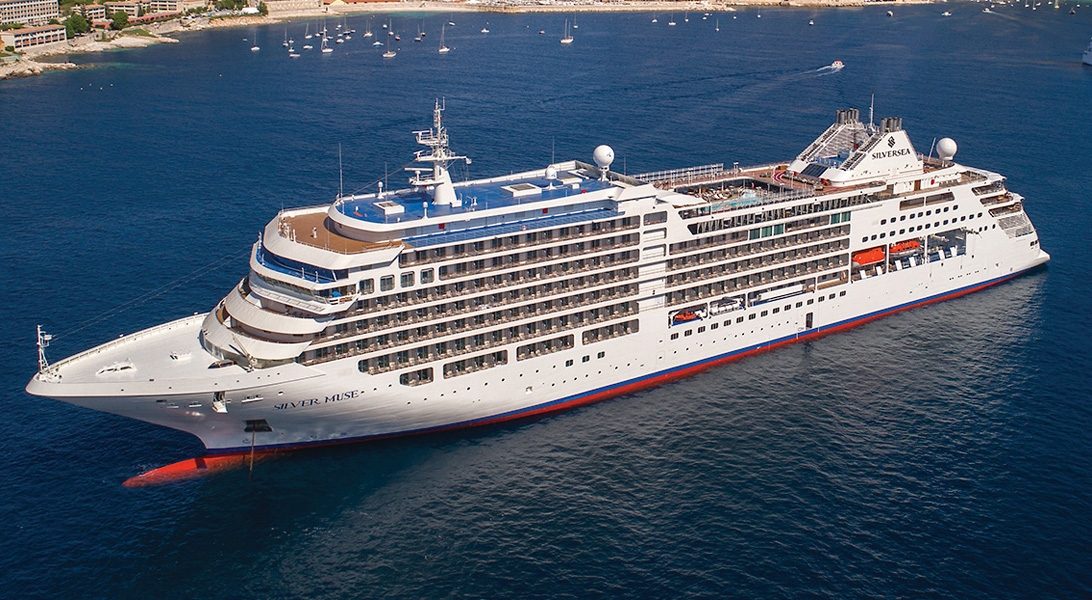
The images shown are for illustration purposes only and may not be an exact representation of what you find on the ship.
The images shown are for illustration purposes only and may not be an exact representation of what you find on the ship.
The images shown are for illustration purposes only and may not be an exact representation of what you find on the ship.
The images shown are for illustration purposes only and may not be an exact representation of what you find on the ship.
The images shown are for illustration purposes only and may not be an exact representation of what you find on the ship.


Our Fusion packages are all ABTA & ATOL protected ensuring that your booking is safe with us
| 11 nights aboard the Silver Dawn | |||
| Butler Service in Every Suite | |||
| Gratuities Always Included | |||
| Beverages In-Suite and Throughout the Ship | |||
| Gourmet Dining | |||
| In Suite Dining & 24-Hour Room Service | |||
| Intimate small size ships | |||
| Free Wifi Throughout the Ship | |||
| Free Zodiac, Land and Sea Tours & Activities & Complimentary Expedition gear | |||
| Port Taxes and Fees | |||
 | ABTA and ATOL Protection* | ||
Date 18th Apr 2028 |
Nts 11 |
Suite £5,550pp |
Date 18th Apr 2028 |
Nts 11 |
Suite £5,550pp |
| Suite staterooms from | £5,550pp | ||
| CV | Classic Veranda Suite | £6,250pp | |
| DX | Deluxe Veranda Suite | £6,750pp | |
| G1 | Grand Suite (1 Bedroom) | £18,400pp | |
| G2 | Grand Suite (2 Bedrooms) |  | |
| O1 | Owner's Suite (1 Bedroom) | £20,400pp | |
| O2 | Owner's Suite (2 Bedrooms) | | |
| PA | Panorama Suite | £5,750pp | |
| R1 | Royal Suite (1 Bedroom) | £16,750pp | |
| R2 | Royal Suite (2 Bedrooms) | | |
| S2 | Silver Suite (2 Bedrooms) | | |
| SL | Silver Suite | £11,150pp | |
| VI | Vista Suite | £5,550pp | |
| SV | Superior Veranda Suite | £6,450pp | |
Fusion Holidays when selling travel arrangements is a trading name of Co-op Travel Services Limited, registration 08903986. Fusion Cruises is an Accredited Body Member of Co-op Travel Services Limited ATOL 12904.
Book with Confidence. We are a Member of ABTA which means you have the benefit of ABTA’s assistance and Code of Conduct.
Some of the flights and flight-inclusive holidays on this website are financially protected by the ATOL scheme but ATOL protection does not apply to all holiday and travel services offered on this website. This website will provide you with information on the protection that applies in the case of each holiday and travel service offered before you make your booking. If you do not receive an ATOL Certificate then the booking will not be ATOL protected. If you do receive an ATOL Certificate but all parts of your trip are not listed on it, those parts will not be ATOL protected. Please see our booking conditions for information, or for more information about financial protection and the ATOL Certificate go to: www.caa.co.uk