This site uses cookies as defined in our Cookie Policy, by continuing to use this site you agree to their use.
Continue

| Arrive | Depart | ||||||
| 20th20 | JunJun | 202828 | Fusina, Italy, embark on the Silver Dawn | 19:00 | |||
| Losing none of its allure over the years, this floating city of canals, bridges and masks is a place of eternal beauty and enduring elegance. The lagoon of more than 100 islands is a heavenly sight, transporting visitors on a journey through time - from its Roman inception, through centuries of trade to the modern face we see today. Navigate Venice’s sparkling waterways by romantic gondola, or on cruises along wide canal boulevards. Span the Grand Canal over its iconic original crossing, the Rialto Bridge, which - with its parade of tiny shops - gives some of the city’s most endearing views. If the crowds unsettle you at any point, take two turns away from the main thoroughfares to find peace alone, amid the city's labyrinth of tiny streets. Hurry to Piazza San Marco to be immersed in Venice’s elegant glory. Basilica San Marco transports you back to the wealthy days of the Doges, who ruled for over 1,000 years. Initially their private chapel, it’s now decorated with beautiful Byzantine mosaics. Nearby the Campanile di San Marco bell tower offers views over the higgledy-piggledy rooftops of times gone by. Just a hop skip and a jump around the corner is the Doge’s Palace, where the levels of opulence ramp up even further. Justice was meted out in this stunning Palace, with the guilty walking to the cells across the covered Bridge of Sighs. Vaporetto trips to local islands offer even more adventures to float your boat, whether it’s Murano with its world-famous glass, Torcello with its amazing Cathedrals, or Burano with its handmade lace and delightfully colourful painted houses. | |||||||
| 21st21 | JunJun | 202828 | Trieste, Italy | 08:00 | 17:00 | ||
Up until the end of World War I, Trieste was the only port of the vast Austro-Hungarian Empire and therefore a major industrial and financial center. In the early years of the 20th century, Trieste and its surroundings also became famous by their association with some of the most important names of Italian literature, such as Italo Svevo, and English and German letters. James Joyce drew inspiration from the city's multiethnic population, and Rainer Maria Rilke was inspired by the seacoast west of the city. Although it has lost its importance as a port and a center of finance, it has never fully lost its roll as an intellectual center. The streets hold a mix of monumental, neoclassical, and art-nouveau architecture built by the Austrians during Trieste's days of glory, granting an air of melancholy stateliness to a city that lives as much in the past as the present. A city happy to keep one foot resolutely in its beautiful illustrious past Trieste is a treasure which sits on a historical frontier of civilisations and cultures. Wealth as a trading hub helped to shape Trieste's grand piazzas and soaring artistic architectural achievements. The legendary Bora wind is greeted like an old friend and it buffs the city in winter. Just like Trieste itself it will take your breath away. Piazza Unità d'Italia is the grand central square and it opens up to the lap of blue waves at one end. Settle in for a quick caffeine hit in this coffee capital - a word of warning however most Trieste baristas don't serve cappuccinos - so plump for a caffè latte instead. The God of the Sea Neptune is honoured in a fountain at Piazza del Borsa nearby. Canale Grande is a centrepiece and was built in the 18th century to allow boats to unload their wares and trade. Lined by grandiose neoclassical buildings you can enjoy a picturesque stroll by the water. Three pretty bridges span it while little boats bob and jostle below. Glorious castles crown the area towering from esteemed vineyards. Don't miss the fairytale castle of Miramare which watches over the azure Gulf of Trieste and looms above glorious gardens. Trieste Cathedral is a constant and reassuring presence for the city standing on a hilltop overlooking the old town - it features an enchanting chandelier and remarkable painted ceiling. | |||||||
| 22nd22 | JunJun | 202828 | Ravenna, Italy | 08:00 | 18:00 | ||
A small, quiet, well-heeled city, Ravenna has brick palaces, cobblestone streets, magnificent monuments, and spectacular Byzantine mosaics. The high point in its civic history occurred in the 5th century, when Pope Honorious moved his court here from Rome. Gothic kings Odoacer and Theodoric ruled the city until it was conquered by the Byzantines in AD 540. Ravenna later fell under the sway of Venice, and then, inevitably, the Papal States.Because Ravenna spent much of its past looking east, its greatest art treasures show that Byzantine influence. Churches and tombs with the most unassuming exteriors contain within them walls covered with sumptuous mosaics. These beautifully preserved Byzantine mosaics put great emphasis on nature, which you can see in the delicate rendering of sky, earth, and animals. Outside Ravenna, the town of Classe hides even more mosaic gems. Wander the historic streets of Ravenna and you may not immediately realise the wealth of artistry contained here. Leave the sun’s glow and let your eyes adjust to the interior of the city’s churches however and you'll discover some of the world’s finest Byzantine mosaics waiting for you. Decorated with spectacular explosions of colour even the humblest church facade can conceal momentous and magnificent artistic displays in this city which harbours 1 500 years of extraordinary history. Ravenna is home to a plethora of UNESCO World Heritage Site designated buildings and no fewer than eight have received protection. Basilica di San Vitale of 525 AD stands as the town’s pièce de résistance - itself a precious mosaic of influence where Byzantine meets Baroque. Glorious light spills in vibrantly illuminating and highlighting the craftwork of its knaves and archways. The Mausoleum of Galla Placido is another noble achievement described by UNESCO as ‘the earliest and best-preserved of all mosaic monuments'. Look up at the glittering stars of the night sky from within and you may be inspired just as Cole Porter was when he penned Night and Day. Ravenna’s beauty has always been stimulating and Dante finished his masterpiece Paradiso here during exile from Florence. Sangiovese wines and prosciutto-filled piadina flatbreads will keep you fed and watered during your stay. Don't miss a taste of the local olive oil either which bursts with intense fruity flavours. | |||||||
| 23rd23 | JunJun | 202828 | Sibenik, Croatia | 08:00 | 22:00 | ||
Šibenik's main monument, its Gothic-Renaissance cathedral, built of pale-gray Dalmatian stone and designated a UNESCO World Heritage Site, stands on a raised piazza close to the seafront promenade. From here a network of narrow, cobbled streets leads through the medieval quarter of tightly packed, terra-cotta–roof houses, and up to the ruins of a 16th-century hilltop fortress. The city has never been a real tourist destination. Before the Croatian war for independence, it was a relatively prosperous industrial center, but when the factories closed, Šibenik sank into an economic depression. However, the cathedral more than warrants a look, and it makes a decent base for visiting the waterfalls of Krka National Park. Set on the dazzling Adriatic where the Krka River opens out into the blue island-peppered waters Šibenik is a stone-clad city that oozes Dalmatian medieval charm. Gorgeous Krka National Park gushes with famously picturesque waterfalls close by while the World Heritage Sites of Croatia’s oldest native town have endless stories to tell. Rising from the shadow of popular neighbours Split and Zadar Šibenik is successfully establishing itself as an unmissable Dalmatian city thanks to its timeless grace and 30 hidden churches and monasteries - which ring their bells above a wash of terracotta roofs. Dominating the tight streets of the charming old town - where ice cream vendors spoon out fruity flavours and footsteps rattle along stone streets - is the magnificent Cathedral St. James UNESCO World Heritage site. Taking more than a century to construct it is built from stone in a Gothic-Renaissance style and adorned with 71 sculptured heads - each displaying its own personality. St. Michael’s Fortress stands on a hill above the city providing the perfect viewpoint to see Šibenik rolling towards the stunning archipelago which punctuates the turquoise Adriatic. Part of the fortress is now used as an open-air stage forming an ethereal venue for performances. St. Nicholas Fortress is another UNESCO protected site and was built where the monastery of St. Nicholas once stood. Further afield the beautiful old town of Trogir is close by along with the Roman ruins of Salona. | |||||||
| 24th24 | JunJun | 202828 | Hvar Island, Croatia | 07:00 | 18:00 | ||
The Croatian island of Hvar bills itself as the "sunniest island in the Adriatic." Not only does it have the figures to back up this claim—an annual average of 2,724 hours of sunshine—but it also makes visitors a sporting proposition, offering them a money-back guarantee if there are seven consecutive days of snow (snow has been known to fall here; the last time being February 2012). One of the most popular of the island escapes sprinkled across the turquoise Adriatic Hvar is a glorious idyll of hidden coves electric blue waters and quietly contented port towns. In recent years it’s gathered something of a reputation as a party island - mainly earned from Hvar Town’s nocturnal exuberances and the transient day-tripping yachts that drop by. Soak up the energy exuberance and fine dining or sidestep the hedonism to explore a richly refined rural and historic island – utterly spoiled with sunshine and hidden beaches which dazzle with colourful intensity. Bike rides along long sweeping coastal paths boat journeys from pretty harbours walks through fields of purple lavender. Relish the sunshine and explore deserted idyllic inlets before sharing strong espressos in quiet harbour towns surrounded by welcoming sun-wrinkled locals. There’s also rich Medieval history – the sleepy town of Stari Grad is said to be Croatia’s oldest dating back to 384 BC. Elsewhere Jelsa is a postcard perfect place – settle in for a bite to eat with nothing but the sound of harbour waters lapping and sandpaper scraping boats hulls for company. You can walk to look out over glorious views across to Brac sometimes watching on as thunderstorms rage and flash an eternity away over the mainland’s crumpled mountains. You’re also just a short ferry ride from the incredible Golden Horn - an evocative spike of brilliant sand which juts out evocatively into the cobalt-blue sea. | |||||||
| 25th25 | JunJun | 202828 | Brindisi, Italy | 08:00 | 19:00 | ||
Life continues in Brindisi as if the 21st century hadn’t arrived. Visually, the landscape is as stunning as one would expect in southern Europe. Villages set on sunlit hilltops rise like islands above a rolling landscape of olive groves and vineyards. The coastline is a striking mixture of ruggedly beautiful cliffs and grottoes interspersed with a scattering of long, sandy beaches. Together with the wealth of historical artefacts and spectacular landscapes, Brindisi is one of Italy’s best kept secrets. Naturally, the cuisine is rich with its pickings from both land and sea and visitors can expect the best pasta, Caprese salad, local lemon loaf and spaghetti al vogole they have ever had! Set right in the heel of Italy’s boot, Brindisi is a pretty little maritime port, fringed with palm trees and most definitely carries its moniker of “Gateway to the East” with pride. An Italian province packed with fascination and the relics of vanished civilization, Brindisi’s cultural inheritance ranges from the relics of ancient Roman highways to Gothic and Baroque churches, cathedrals, frowning battlements of Swabian castles and fortresses which date back to the 13th century, reign of the Holy Roman Emperor, Frederick II. Life continues in Brindisi as if the 21st century hadn’t arrived. Visually, the landscape is as stunning as one would expect in southern Europe. Villages set on sunlit hilltops rise like islands above a rolling landscape of olive groves and vineyards. The coastline is a striking mixture of ruggedly beautiful cliffs and grottoes interspersed with a scattering of long, sandy beaches. Together with the wealth of historical artefacts and spectacular landscapes, Brindisi is one of Italy’s best kept secrets. Naturally, the cuisine is rich with its pickings from both land and sea and visitors can expect the best pasta, Caprese salad, local lemon loaf and spaghetti al vogole they have ever had! | |||||||
| 26th26 | JunJun | 202828 | At Sea | ||||
| 27th27 | JunJun | 202828 | Palermo, Italy | 08:00 | 18:00 | ||
Once the intellectual capital of southern Europe, Palermo has always been at the crossroads of civilization. Favorably situated on a crescent-shaped bay at the foot of Monte Pellegrino, it has attracted almost every culture touching the Mediterranean world. To Palermo's credit, it has absorbed these diverse cultures into a unique personality that is at once Arab and Christian, Byzantine and Roman, Norman and Italian. The city's heritage encompasses all of Sicily's varied ages, but its distinctive aspect is its Arab-Norman identity, an improbable marriage that, mixed in with Byzantine and Jewish elements, created some resplendent works of art. No less noteworthy than the architecture is Palermo's chaotic vitality, on display at some of Italy's most vibrant outdoor markets, public squares, street bazaars, and food vendors, and above all in its grand climax of Italy's most spectacular passeggiata (the leisurely social stroll along the principal thoroughfare). The capital of Sicily, Palermo is a fiery, authentic city and a cultural powerhouse on the periphery of Europe. Juicy lemons weigh down the branches of its tree-lined streets, while treats like cannoli tubes, filled with ricotta-blended cream, provide a sweet taste of the local cuisine. Oozing layered character, explore this incredible city at leisure, or head out to nearby villages, which offer preserved medieval charm. Stacked markets spill out onto Palermo’s souk-like streets, while grand piazzas host elaborate fountains and sculptures, below the watch of baroque church domes. Many cultures have clashed and combined on this island’s shores, - since the days of antiquity - giving the city the dubious honour of being the world’s most conquered city. A genuine patchwork of influences, Palermo’s triumph lies in somehow combining it all into one fascinating whole. Palermo is a delightfully dishevelled city. Wander bomb-damaged streets of neglect, which suddenly open out to the grandest of cathedrals and most majestic of stunning palaces. The 12th-century Palermo Cathedral is a glorious domed structure – rise to the top, to look across the city’s restaurant-filled alleyways from above. Next, encounter the Norman, Arabic, and Byzantine fusion of the Norman Palace and the incredible golden mosaics and sweeping archways of the adjacent Royal Chapel. Visit Europe’s third-largest opera house, or Mondello’s beach, which offers relaxation on a beautiful arc of white sand. Stop in at the selection of restaurants, which serve up fresh fish, and refreshing granita al limone. | |||||||
| 28th28 | JunJun | 202828 | Amalfi, Italy | 08:00 | 17:30 | ||
At first glance, it's hard to imagine that this resort destination was one of the world's great naval powers, and a sturdy rival of Genoa and Pisa for control of the Mediterranean in the 11th and 12th centuries. Once the seat of the Amalfi Maritime Republic, the town is set in a verdant valley of the Lattari Mountains, with cream-colored and pastel-hued buildings tightly packing a gorge on the Bay of Salerno. The harbor, which once launched the greatest fleet in Italy, now bobs with ferries and blue-and-white fishing boats. The main street, lined with shops and pasticcerie, has replaced a raging mountain torrent, and terraced hills flaunt the green and gold of lemon groves. Bearing testimony to its great trade with Tunis, Tripoli, and Algiers, Amalfi remains honeycombed with Arab-Sicilian cloisters and covered passages. In a way Amalfi has become great again, showing off its medieval glory days with sea pageants, convents-turned-hotels, ancient paper mills, covered streets, and its glimmering cathedral. The Amalfi Coast is rightly celebrated as a treasure of Italy and you can enjoy the true scale of it and the feel of the salty sea breeze in your hair as you hike the Path of the Gods - where some of the best heavenly views of the beautiful beaches and improbably teetering villages open up below you. The call of beachside bliss is never far away and descending down to Duoglio Beach is a mesmerising introduction to the coastline’s jagged rock setting and crystalline waters. A dramatic ramp of steps rears up to Amalfi's distinctive black and white striped Moorish-influenced cathedral which stands at the heart of the town. Inside tranquillity awaits amid the arches and columns of the Cloister of Paradise. Chattering piazzas where ice cubes clink in glowing spritz cocktails and strong espressos are savoured hum with life nearby. Enjoy plates of shellfish tangled spaghetti or spicy pezzente salami in your choice of the Amalfi Coast’s celebrated restaurants before tasting locally-squeezed limoncello - the perfect denouement to any meal here. Grand villas spectacular restaurants and well-heeled visitors have long given Amalfi a reputation for refined luxury but things haven’t always been so peaceful here. In the 10th and 11th centuries Amalfi was an independent maritime republic and the Municipal Museum of Amalfi is the place to learn of the region’s rise to global trading prominence and the devastating tsunami that washed it all away in 1343. | |||||||
| 29th29 | JunJun | 202828 | Gaeta, Italy | 08:00 | 17:30 | ||
| 30th30 | JunJun | 202828 | Civitavecchia, Italy, disembark the Silver Dawn | ||||
Italy's vibrant capital lives in the present, but no other city on earth evokes its past so powerfully. For over 2,500 years, emperors, popes, artists, and common citizens have left their mark here. Archaeological remains from ancient Rome, art-stuffed churches, and the treasures of Vatican City vie for your attention, but Rome is also a wonderful place to practice the Italian-perfected il dolce far niente, the sweet art of idleness. Your most memorable experiences may include sitting at a caffè in the Campo de' Fiori or strolling in a beguiling piazza. All roads lead to Rome, and with good reason - this city is one of the world’s most thrilling, offering unmatched history along every street. An evocative, inspiring and utterly artistic capital of unrivalled cultural impact, Rome is a city of back-to-back landmarks, which will take you on an exhilarating journey through the ages. This may be one of the world’s oldest cities, but it’s well and truly lived in. The ruins are punctuated with murmuring cafes, and the outdoor seating of restaurants sprawls out across piazzas, enticing you to sample tangles of creamy pasta and crispy pizzas. Rome’s incredible Roman Forum is littered with the ruins of its ancient administrations, which have stood firm for 2,000 years, since the times when the area was the centre of the Western world. Few sites are more simultaneously beautiful and haunting than that of the storied Colosseum, which looms deep into Rome’s rich blue sky. Take a tour to learn details of the grisly goings-on within. The best way to experience Rome is to wander its streets, gelato in hand. There is a lot to see here - whether it’s the domed spectacle of the Pantheon, or the elaborate flowing waters and artistry of the Trevi Fountain. Vatican City is an astonishing, colossal display of Catholic grandeur, while the Spanish Steps – crowned by the Trinità dei Monti church – offer a beautiful spot to gather and soak up the lively atmosphere of this humming city. With so much on the to-do list, you’ll relish the breaks you take, enjoying simple pleasures like a strong espresso, or fresh pasta with tomato sauce and ripped basil. | |||||||
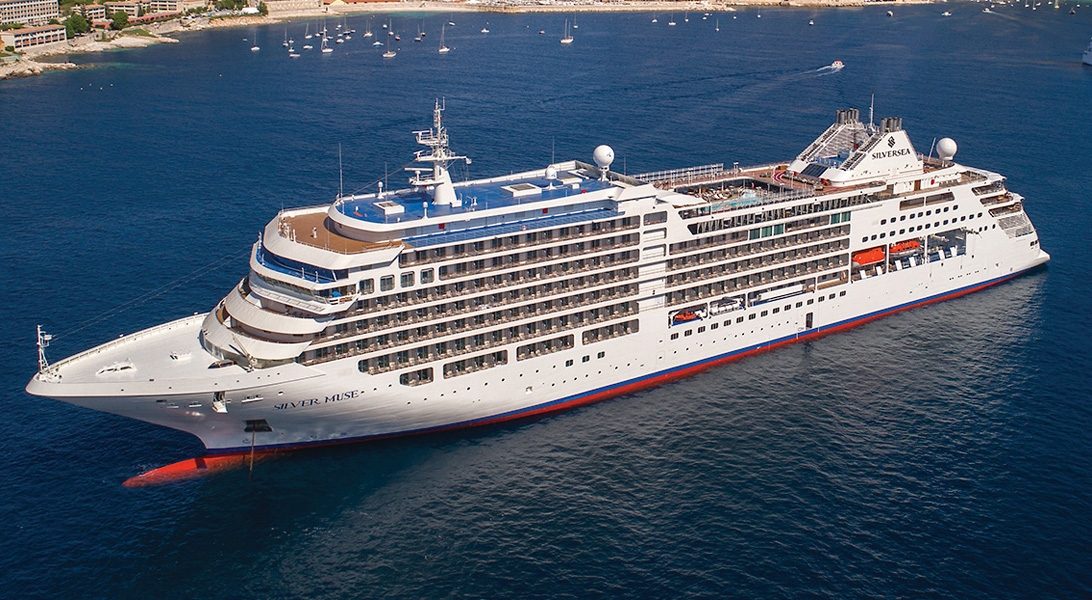
The images shown are for illustration purposes only and may not be an exact representation of what you find on the ship.
The images shown are for illustration purposes only and may not be an exact representation of what you find on the ship.
The images shown are for illustration purposes only and may not be an exact representation of what you find on the ship.
The images shown are for illustration purposes only and may not be an exact representation of what you find on the ship.
The images shown are for illustration purposes only and may not be an exact representation of what you find on the ship.


Our Fusion packages are all ABTA & ATOL protected ensuring that your booking is safe with us
| 10 nights aboard the Silver Dawn | |||
| Butler Service in Every Suite | |||
| Gratuities Always Included | |||
| Beverages In-Suite and Throughout the Ship | |||
| Gourmet Dining | |||
| In Suite Dining & 24-Hour Room Service | |||
| Intimate small size ships | |||
| Free Wifi Throughout the Ship | |||
| Free Zodiac, Land and Sea Tours & Activities & Complimentary Expedition gear | |||
| Port Taxes and Fees | |||
 | ABTA and ATOL Protection* | ||
Date 20th Jun 2028 |
Nts 10 |
Suite £5,500pp |
Date 20th Jun 2028 |
Nts 10 |
Suite £5,500pp |
| Suite staterooms from | £5,500pp | ||
| CV | Classic Veranda Suite | £6,200pp | |
| DX | Deluxe Veranda Suite | £6,750pp | |
| G1 | Grand Suite (1 Bedroom) | £17,500pp | |
| G2 | Grand Suite (2 Bedrooms) |  | |
| O1 | Owner's Suite (1 Bedroom) | £19,350pp | |
| O2 | Owner's Suite (2 Bedrooms) | | |
| PA | Panorama Suite | £5,650pp | |
| R1 | Royal Suite (1 Bedroom) | £15,950pp | |
| R2 | Royal Suite (2 Bedrooms) | | |
| S2 | Silver Suite (2 Bedrooms) | | |
| SL | Silver Suite | £10,200pp | |
| VI | Vista Suite | £5,500pp | |
| SV | Superior Veranda Suite | £6,400pp | |
Fusion Holidays when selling travel arrangements is a trading name of Co-op Travel Services Limited, registration 08903986. Fusion Cruises is an Accredited Body Member of Co-op Travel Services Limited ATOL 12904.
Book with Confidence. We are a Member of ABTA which means you have the benefit of ABTA’s assistance and Code of Conduct.
Some of the flights and flight-inclusive holidays on this website are financially protected by the ATOL scheme but ATOL protection does not apply to all holiday and travel services offered on this website. This website will provide you with information on the protection that applies in the case of each holiday and travel service offered before you make your booking. If you do not receive an ATOL Certificate then the booking will not be ATOL protected. If you do receive an ATOL Certificate but all parts of your trip are not listed on it, those parts will not be ATOL protected. Please see our booking conditions for information, or for more information about financial protection and the ATOL Certificate go to: www.caa.co.uk