This site uses cookies as defined in our Cookie Policy, by continuing to use this site you agree to their use.
Continue

| Arrive | Depart | ||||||
| 21st21 | NovNov | 202828 | Lisbon, Portugal, embark on the Silver Dawn | 18:00 | |||
Set on seven hills on the banks of the River Tagus, Lisbon has been the capital of Portugal since the 13th century. It is a city famous for its majestic architecture, old wooden trams, Moorish features and more than twenty centuries of history. Following disastrous earthquakes in the 18th century, Lisbon was rebuilt by the Marques de Pombal who created an elegant city with wide boulevards and a great riverfront and square, Praça do Comércio. Today there are distinct modern and ancient sections, combining great shopping with culture and sightseeing in the Old Town, built on the city's terraced hillsides. The distance between the ship and your tour vehicle may vary. This distance is not included in the excursion grades. A glorious mosaic of beauty, freedom and authenticity, Portugal’s capital is a stirring artwork of a city. Known for the seven hills it spreads across, and its stirring fado music, Lisbon is a pastel-coloured blend of houses and beautiful tile artworks - and this creative city strikes a perfect harmony between natural and manmade beauty. Stroll along Alfama's steep, cobbled streets as you explore one of the city’s oldest neighbourhoods - where each house and door could be its own photograph. Look for the decorative tiles, with the distinctive blues and whites of Azulejo ceramics, and visit the dedicated museum to learn more. Afterwards, wind up to São Jorge Castle, where views out across Lisbon’s red rooftops unravel. Just one of many majestic viewpoints, you can also seek out Miradouro da Graça for perhaps Lisbon's finest panorama, with the copper-coloured suspension bridge stretching over sparkling water beyond the sea of buildings. The elegant Tower of Belém rises in the Tagus estuary and is a historic defender of these shores. The grand, carved cloisters of Jerónimos Monastery spread out close by, and there's another UNESCO recognised location close by at Sintra, where a colourful town is set amid thick gardens and towering mountains - capped by the royal Pena Palace. Later, relax and take a quick break to drink Ginjinha, a cherry liqueur made from chocolate cups instead of coffee. Lisboetas have a sweet tooth, and the famous Pastel de Nata's crumbling pastry and caramelised-custard topping is the essential accompaniment to any coffee stop. | |||||||
| 22nd22 | NovNov | 202828 | At Sea | ||||
| 23rd23 | NovNov | 202828 | Arrecife, Lanzarote, Spain | 11:30 | 20:30 | ||
A volcanic island designated a UNESCO Biosphere Reserve, Lanzarote’s dramatic landscapes were shaped by an explosive past. Today, its pretty beaches and virtual absence of rain together with duty-free shopping make the island an extremely desirable destination. The main port and capital, Arrecife, is a pleasant town with a modern seafront and colourful gardens. Outside the capital there is plenty to explore, from the dazzling white salt flats of Janubio and the rugged terrain of Fire Mountain to the eerie caves of Los Verdes and an array of unspoilt fishing villages scattered around the coast. The island is home to a great selection of restaurants and local specialities including garbanzos compuestos – a chickpea stew; papas arrugadas – potatoes with carrots, peas, ham and green pepper; and of course, plenty of fresh seafood. Please note that those planning to participate in one of the shore excursions from this port may need to take an early lunch on board ship to suit the excursion schedules. Nestled on the east coast of Lanzarote Arrecife takes its name from the rocky reefs and outcrops that dominate its coastline. With castles caves sleepy beaches and a glittering saltwater lagoon Arrecife is the perfect place to get acquainted with the sun-kissed appeal of the Canary Islands. Lanzarote’s charcoal desert vistas radiate a remarkable luna-like quality but dotted cacti waving palms and bursts of vibrant wildflowers add an accent of colour to the canvas. Arrecife itself boasts apricot-coloured beaches and labyrinthine lanes of white-wash buildings within its Old Quarter where you can smell fresh fish grilling and see locals dipping delicious local salty potatoes - papas arrugadas - into colourful sauces. An evening stroll along El Charco de san Gines is a must for watching fishing boats bobbing gently on the lagoon and watching spectacular sunsets burning across the sky. Standing tall for more than four centuries Castillo De San Gabriel is located on the tiny island of Islote de los Ingleses and was once a target for pirates who would appear menacingly on the Atlantic’s horison. The stalwart 16th-century fortress now serves as the History Museum of Arrecife and exhibitions inside explore the evolution of the city and the ancient culture of Lanzarote. The International Museum of Contemporary Art meanwhile displays modern and abstract works within the 18th-century San José Castle’s refined setting. | |||||||
| 24th24 | NovNov | 202828 | Las Palmas de Gran Canaria, Spain | 08:00 | 19:00 | ||
Perhaps the prettiest of the Canary Islands, Gran Canaria is an almost circular isle with the peak of Pozo de Las Nieves, its highest point, at the centre. With a wealth of natural beauty and all the exciting attractions of city life in the capital, the island offers the best of both worlds. You will no doubt wish to see the sights of the capital’s old quarter, which dates back to the 15th century and encompassses the Vegueta and Triana districts, and wherever you go you can enjoy the glorious subtropical climate, perfect for growing exotic palms and fruits. Watch the stars glittering at night, climb jungled volcano calderas, and explore the historical allure of this entry point to the sun-gorged island of Gran Canaria. The sprawling capital of the Canaries is Spain's ninth biggest city, stretched out along the sparkling coastline. Visitors and locals alike blow off steam on the city's urban beaches, before filling out bustling, authentic tapas bars. An offshore barrier of lava strips waves of their power, making Las Canteras's urban beach expanse one of the best and calmest in the Canaries. Strap on your snorkel to explore the seabed, which blooms with colourful fish and tropical reefs. Or, settle back to soak in the warm glow of one of the best climates in the world, while reclining on the soft sand, which arcs along the capital's fringe. At the other end of town, La Vegueta old town is a charming stroll along cobbled streets, wandering past decorative doorways and balconies that beg to be photographed. The narrow 15th-century streets take on an extra romantic air in the evenings, as lanterns cast a soft glow over them. Calle Colon offers a hint of the street's history - and it's here where the handsome colonial house - turned museum - of Christopher Columbus stands. Columbus stayed here to recuperate, between his boundary-redefining voyages. Out of Las Palmas, diverse and exciting volcanic landscapes await, including the spectacular Caldera de Bandama, which plunges 200 metres into the earth. From the summit, views stretch out to the looming island of Fuerteventura unravel. You can also discover pretty white-wash fishing villages, dazzling gardens, and the sun-bathed vineyards that produce Gran Canaria's crispest wines. | |||||||
| 25th25 | NovNov | 202828 | Santa Cruz de Tenerife, Spain | 08:00 | 23:00 | ||
The largest of the Canary Islands, Tenerife is a beautiful and scenic island which enjoys year-round sunshine and is dominated by Mount Teide. The mountain range runs through the centre of the island, with fertile valleys on the northern side. In the central part of the range is the gigantic natural crater of the Cañadas del Teide, about 14 miles in diameter. Santa Cruz, the island’s pretty capital, was originally a small fishing village but has now grown into a modern city, and also contains 16th-century civic buildings and ornate private mansions. Near the pier is the Santa Cruz Palmetum, a Botanical Garden covering an area of 29 acres, specialising in palms. Although this busy port city is smaller, quieter and less attractive than Las Palmas in Gran Canaria, Santa Cruz has its own share of elegant monuments. Until 1837, the island's capital was La Laguna, not Santa Cruz, so there are only a few of the buildings in the city center that are any older than that. At the busy Plaza de España, there are several pedestrian streets leading north and to the area west of the port, where you'll find the city's stunning auditorium and maritime park. A real highlight of the city are its ramblas, long tree-lined boulevards that fall steeply from the north end of the city to the sea. | |||||||
| 26th26 | NovNov | 202828 | Santa Cruz de La Palma, Spain | 08:00 | 20:30 | ||
Also known as ‘La Isla Bonita’ (the beautiful island), La Palma is typified by lush forests of pine, laurel and fern which contrast with the rugged splendour of the gigantic Taburiente crater. The island is dotted with attractive villages, which are a delight to discover, and the capital Santa Cruz also makes for an interesting day of exploration. Perched on the edge of the volcanic crater of La Caldereta, Santa Cruz comfortably blends modern architecture with old colonial buildings. Perhaps visit the fascinating Natural History Museum, stroll around the historic quarters and the Plaza de Espana or travel a few miles outside the city to the exquisite Church of Our Lady. If you enjoy shopping, you can find reasonably priced silver jewellery, leather goods and beautifully embroidered clothes, tablecloths and napkins, a speciality of the Canary Islands. Volcanoes dominate the island of La Palma. The island sits over a hot spot in the Earth’s crust. Beginning on the seabed 4,000 metres below sea level, the volcanoes grew to emerge above the waves and through the clouds to form a mountainous island. The highest point is 2,423 metres (7,950 feet) above sea level. The peak flanks La Caldera de Taburiente, a giant collapsed volcanic crater with a canyon exiting it. The ridge extending south of the Caldera erupted as recently as 1971, when Teneguía volcano sent slow lava flows to the sea. Roads reach lookouts where further exploration on foot begins. The Spanish port town of Santa Cruz de la Palma began in 1493 and supported the sea route from Europe to the New World. In the 16th century Santa Cruz was the third most important port in Europe, after Antwerp and Seville. But it attracted trouble. The pirate Françoise Le Clerc or ‘Peg Leg’, ransacked the town in 1553, leading to the construction of the forts Castillo de Santa Catalina and Castillo de la Virgen. History buffs should walk the cobbled town streets amongst colourful colonial buildings. Several vegetation zones are traversed if you travel up the mountains. Dry coastal scrub gives way to a woodland with large Canary Palms, a plant now grown worldwide. Higher slopes catch moisture from clouds, creating the lush laurel zone of semi-tropical forest. Next is a Canary Pine forest and finally an alpine zone of shrubs. The highlight here is the tall pink flowering spikes of the La Palma Bugloss. | |||||||
| 27th27 | NovNov | 202828 | At Sea | ||||
| 28th28 | NovNov | 202828 | Funchal, Madeira, Portugal | ||||
Formed by a volcanic eruption, Madeira lies in the Gulf Stream, about 500 miles due west of Casablanca. Discovered by Portuguese explorer João Gonçalves Zarco in 1419, this beautiful island became part of Portugal’s vast empire and was named for the dense forest which cloaked it - 'Madeira' means 'wood' in Portuguese. Sugar plantations first brought wealth here, and when King Charles II of England granted an exclusive franchise to sell wine to England and its colonies, many British emigrants were drawn to the capital, Funchal. Today’s travellers come to Madeira for the varied and luxuriant scenery, from mountain slopes covered with vines to picturesque villages and a profusion of wild flowers. The natural beauty of the island has earned it many pseudonyms such as ‘The Floating Garden of the Atlantic’, 'The Island of Eternal Springtime' and ‘God’s Botanical Gardens’ and our selection of excursions aim to show you why. Bedecked with dramatic cliffs, fertile mountains and sun-gorged beaches, Madeira is a lush, colourful island of plants, paradise and Portuguese-flavoured pleasures. Bathing in year-round sunshine, Funchal - the lowkey capital of Madeira - is perfect for slowing the pace, and toasting the thrilling scenery with a bottle of the island's famous wine. Narrow, cobblestone streets line the old town, where whitewash buildings, iron-wrought balconies, and tiled patterns carry echoes of Lisbon. Rua de Santa Maria is the city's oldest street, and the doors have been vividly painted by local artists. Sit for a drink, to sample your choice of Madeira's renowned wines - Boal is the ideal option for those with a sweeter tooth. You'll also find Corpo Santo Chapel here, one of the few remaining buildings to have survived from the 15th century. Blossoming parks and gardens splash colour around, and the sweet smell of pollen lingers in Parque de Santa Catarina. Look out over Funchal harbour between the fountains and blooming flower beds, as ducks and swans enjoy leisurely days on the lake. Madeira Botanical Garden waits in the hills over the city, along with Palhero Garden – a sophisticated and elegantly landscaped English garden, 500 meters above sea level. For an even more dramatic view of this gorgeous setting, head up to Cap Girao – a rusty-red cliff with a cable car strung up to its sheer drop. The cliff falls away vertically to the vivid blue waters below. Or head down to the sea, to enjoy Funchal's gorgeous pebble beaches rustling, framed by colossal, craggy cliffs. | |||||||
| 29th29 | NovNov | 202828 | Funchal, Madeira, Portugal | 18:00 | |||
Formed by a volcanic eruption, Madeira lies in the Gulf Stream, about 500 miles due west of Casablanca. Discovered by Portuguese explorer João Gonçalves Zarco in 1419, this beautiful island became part of Portugal’s vast empire and was named for the dense forest which cloaked it - 'Madeira' means 'wood' in Portuguese. Sugar plantations first brought wealth here, and when King Charles II of England granted an exclusive franchise to sell wine to England and its colonies, many British emigrants were drawn to the capital, Funchal. Today’s travellers come to Madeira for the varied and luxuriant scenery, from mountain slopes covered with vines to picturesque villages and a profusion of wild flowers. The natural beauty of the island has earned it many pseudonyms such as ‘The Floating Garden of the Atlantic’, 'The Island of Eternal Springtime' and ‘God’s Botanical Gardens’ and our selection of excursions aim to show you why. Bedecked with dramatic cliffs, fertile mountains and sun-gorged beaches, Madeira is a lush, colourful island of plants, paradise and Portuguese-flavoured pleasures. Bathing in year-round sunshine, Funchal - the lowkey capital of Madeira - is perfect for slowing the pace, and toasting the thrilling scenery with a bottle of the island's famous wine. Narrow, cobblestone streets line the old town, where whitewash buildings, iron-wrought balconies, and tiled patterns carry echoes of Lisbon. Rua de Santa Maria is the city's oldest street, and the doors have been vividly painted by local artists. Sit for a drink, to sample your choice of Madeira's renowned wines - Boal is the ideal option for those with a sweeter tooth. You'll also find Corpo Santo Chapel here, one of the few remaining buildings to have survived from the 15th century. Blossoming parks and gardens splash colour around, and the sweet smell of pollen lingers in Parque de Santa Catarina. Look out over Funchal harbour between the fountains and blooming flower beds, as ducks and swans enjoy leisurely days on the lake. Madeira Botanical Garden waits in the hills over the city, along with Palhero Garden – a sophisticated and elegantly landscaped English garden, 500 meters above sea level. For an even more dramatic view of this gorgeous setting, head up to Cap Girao – a rusty-red cliff with a cable car strung up to its sheer drop. The cliff falls away vertically to the vivid blue waters below. Or head down to the sea, to enjoy Funchal's gorgeous pebble beaches rustling, framed by colossal, craggy cliffs. | |||||||
| 30th30 | NovNov | 202828 | At Sea | ||||
| 1st01 | DecDec | 202828 | Casablanca, Morocco | 07:00 | 19:00 | ||
The original settlement formed on the site of Casablanca by the Berbers became the kingdom of Anfa, and during the 15th century harboured pirates who raided the Portuguese coast. In retaliation for the attacks, the Portuguese destroyed Anfa and founded the town they called Casa Branca (white house). They remained here until an earthquake in 1755 and the town was subsequently rebuilt by Mohammed ben Abdallah, whose legacy of mosques and houses can still be seen in the old Medina. Casablanca acquired its present-day name when the Spanish obtained special port privileges in 1781. The French landed here in 1907, later establishing a protectorate and modelling the town on the port of Marseilles. Today Casablanca is Morocco’s largest city, its most significant port and the centre of commerce and industry. The city is a vibrant fusion of European, African and Arabian influences and its French colonial architecture and art deco buildings seamlessly blend in with the busy, colourful markets. Please note that vendors in the souks can be very persistent and eager to make a sale. Immortal lines from the silver screen may have imprinted a warm, fuzzy visage of old Casablanca into our minds, but this thriving city is a curious example of what Morocco’s modernity looks like. Glistening white art deco buildings line the wide pathways that sweep through Casablanca, as the sea sparkles like a thin mirage on the horizon. There’s an aura of creativity amid Casablanca’s culture and chaos, helping to make the city one of Morocco’s most curious and compelling. The Hassan II Mosque took a staggering seven years and 10,000 artists to craft its legacy as the country's largest mosque, and to bring the world's tallest minaret to sky-high reality. A vision of cool to the touch marble, cavernous prayer rooms and intricate inlays, the mosque is extraordinary in scale and ambition. Retractable roofs let the sun flood in, while dizzying glass floors dazzle, and the blue Atlantic waves surge below your feet. After that humbling visit, stroll along La Corniche - where surfers glide across rough and tumble waves, and chic cafes offer front-row seats for sweet peppermint teas with a side of people-watching. Casablanca is a diner's city - boulevards laced with French-fusion restaurants, buzzy beachfront joints, and raw seafood bars provide gem-like offerings fresh from the boat. Those seeking a slice of that golden-age Hollywood romance can wander through the medina, with its unabashed ramshackle feel, and maze of alleyways punctuated with busy barber shops and butchers. | |||||||
| 2nd02 | DecDec | 202828 | Tangier, Morocco | 08:30 | 18:00 | ||
Tangier can trace its origins back to the Phoenicians and ancient Greeks. It was named after Tinge, the mother of Hercules’ son, and its beginnings are embedded in mythology. It was subsequently a Roman province, and after Vandal and Byzantine influences, was occupied by the Arabs with Spain, Portugal, France and England also playing a part in the city’s history. With such a diverse past it is perhaps not surprising that Tangier is such an individual city. Overlooking the Straits of Gibraltar, the city lies on a bay between two promontories. With its old Kasbah, panoramic views, elegant buildings, squares and places of interest, there is much to discover in both the new and old parts of the city. Set on the Maghreb coast, Tangier is Africa’s outstretched hand to Europe. With its bustling markets and lively waterfront, this city on Morroco's north is an energetic and invigorating place and an exciting immersion into an incredible continent. The location, on the highly strategic narrowing of the Strait of Gibraltar, made Tangier a vital Phoenician trading town - and the resulting city is an invigorating mesh of cultures and curiosities. Part of the fun of Tangier is the well-rehearsed dance, as you dodge good-natured hawkers, and this is certainly a place to stroll with confidence and purpose. Delve into the mayhem of the walled Medina of Tangier for a rush of stimulation, as bartering and bantering echoes along the tight alleys. Crowded, noisy and busy, you’ll be sold to with a smile as you wander between stands of colourful spices, dried fruits and fabrics in this authentic Moroccan marketplace. Refresh and escape the sun with a fresh orange juice - or a sip of mint tea. Close to the city, you can find the Caves of Hercules, a coastal hollow that opens at both ends. The Phoenicians cut a window in the shape of the African continent, which reveals views of the Atlantic's waves, and legend says Hercules rested within its confines. From Tangier, you can also venture inland to the Rif Mountains, where gorgeous Chefchaouen - a village of bright blue alleyways - waits. Punctuated by blooming flowers, the entire town is a beautiful, moulded artwork of colour, spilling down the mountain like a waterfall. | |||||||
| 3rd03 | DecDec | 202828 | Málaga, Spain | 08:00 | 18:00 | ||
As you sail into Malaga you will notice what an idyllic setting the city enjoys on the famous Costa del Sol. To the east of this provincial capital, the coast along the region of La Axarqua is scattered with villages, farmland and sleepy fishing hamlets - the epitome of traditional rural Spain. To the west stretches a continuous city where the razzmatazz and bustle creates a colourful contrast that is easily recognisable as the Costa del Sol. Surrounding the region, the Penibéetica Mountains provide an attractive backdrop overlooking the lower terraced slopes which yield olives and almonds. This spectacular mountain chain shelters the province from cold northerly winds, giving it a reputation as a therapeutic and exotic place in which to escape from cold northern climes. Malaga is also the gateway to many of Andalusia's enchanting historic villages, towns and cities. Bathing in the sunshine coast’s stunning subtropical climate, and laying out endless spectacular beaches, it’s no surprise that Malaga is one of Spain’s most popular cities. The already impressive cultural appeal of this holiday city has skyrocketed over recent years, and with a storied old town and Moorish fortifications, Malaga has a lot to offer. Nearby, you can recline on the renowned beaches of the Costa del Sol, or venture inland to discover the Moorish treasures of Granada and Cordoba. La Malagueta beach is Malaga’s spacious urban beach, perfect for a sunbathe and a dip in the warm water, before enjoying seaside cocktails or seafood tapas in the restaurants nearby. Malaga and the Costa del Sol may be best known for glorious weather and beaches, but Malaga can now stake a genuine claim as an artistic powerhouse too. Visit the renowned Picasso museum – housed in the artist’s birthplace – before exploring the freshly opened outpost of the Pompidou Centre. The art also spills out onto the streets in the colourful Soho district – splashed with vibrant street paintings. Known as La Manquita – or the one-armed woman – the city’s cathedral rises over the historic old town. Its huge bell tower stands tall, but an accompanying second tower was never completed - hence the nickname. The Alcazaba fortress palace looms over the waterfront and forms a spectacularly preserved remnant from the era when the Moors controlled the Andalucía region. Discover more of the Arabic influence by visiting Granada’s Alhambra palace, or Cordoba’s La Mezquita mosque. Together with Seville’s converted cathedral, the cities form Andalucía’s Golden Triangle of Moorish wonders. | |||||||
| 4th04 | DecDec | 202828 | At Sea | ||||
| 5th05 | DecDec | 202828 | Barcelona, Spain, disembark the Silver Dawn | ||||
The infinite variety of street life, the nooks and crannies of the medieval Barri Gòtic, the ceramic tile and stained glass of Art Nouveau facades, the art and music, the throb of street life, the food (ah, the food!)—one way or another, Barcelona will find a way to get your full attention. The capital of Catalonia is a banquet for the senses, with its beguiling mix of ancient and modern architecture, tempting cafés and markets, and sun-drenched Mediterranean beaches. A stroll along La Rambla and through waterfront Barceloneta, as well as a tour of Gaudí's majestic Sagrada Famíliaand his other unique creations, are part of a visit to Spain's second-largest city. Modern art museums and chic shops call for attention, too. Barcelona's vibe stays lively well into the night, when you can linger over regional wine and cuisine at buzzing tapas bars. Having attracted over 82 million visitors in 2017, Spain is gaining popularity as a travel destination. The country lures travellers from across the world with its promise of authenticity, charisma, and memorable moments. Spain’s culture is a celebration of the finer things in life, an expression of spirit, heritage and fun: colourful fiestas, delectable cuisine, age-defining art, music, dance, sport and so much more. Each region of the country has evolved a character of its own, meaning the country is unified by a sense of cultural multiplicity. Barcelona, the capital of Catalonia, is a masterpiece that embellishes the Spanish canvas. The fact that the Barcelona’s iconic cathedral, La Sagrada Familia, is still under construction over 141 years after construction commenced pays testament to the city’s artistic perfectionism, which pervades all aspects of life here. Apparent in the city’s architecture, layout, and cultural practices, aestheticism retains its value here. Antoni Gaudí, whose iconic style of modernist architecture is among Barcelona’s leading attractions, could perhaps be credited with designing the face of this magnificent city. Enjoy getting to know the vivacious personality behind Barcelona’s beauty. | |||||||
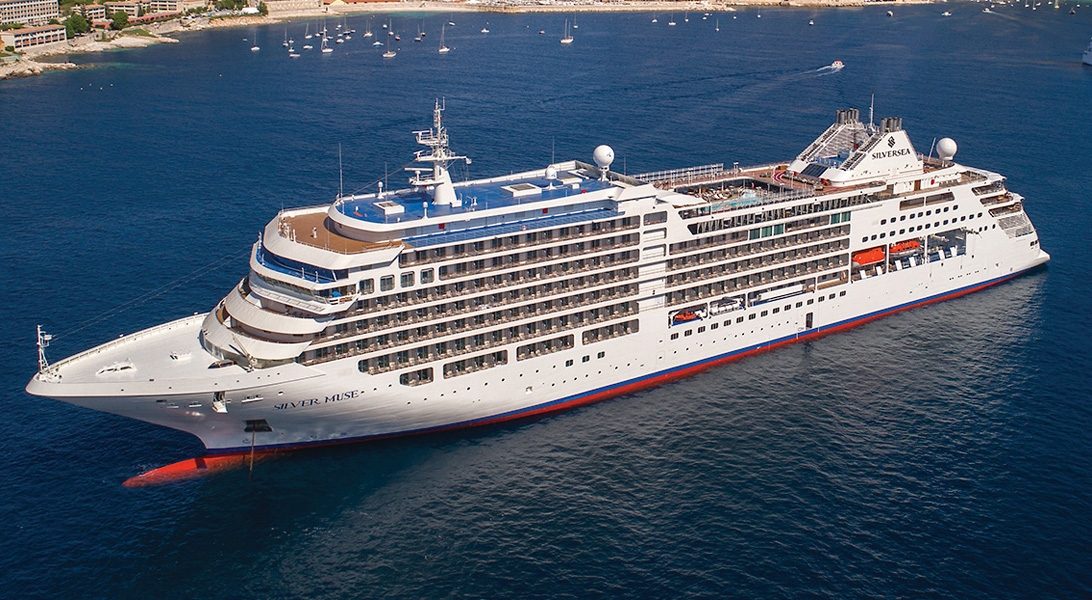
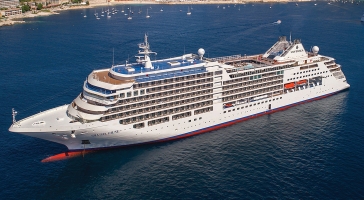
The images shown are for illustration purposes only and may not be an exact representation of what you find on the ship.
The images shown are for illustration purposes only and may not be an exact representation of what you find on the ship.
The images shown are for illustration purposes only and may not be an exact representation of what you find on the ship.
The images shown are for illustration purposes only and may not be an exact representation of what you find on the ship.
The images shown are for illustration purposes only and may not be an exact representation of what you find on the ship.

Our Fusion packages are all ABTA & ATOL protected ensuring that your booking is safe with us
| 14 nights aboard the Silver Dawn | |||
| Butler Service in Every Suite | |||
| Gratuities Always Included | |||
| Beverages In-Suite and Throughout the Ship | |||
| Gourmet Dining | |||
| In Suite Dining & 24-Hour Room Service | |||
| Intimate small size ships | |||
| Free Wifi Throughout the Ship | |||
| Free Zodiac, Land and Sea Tours & Activities & Complimentary Expedition gear | |||
| Port Taxes and Fees | |||
 | ABTA and ATOL Protection* | ||
Date 21st Nov 2028 |
Nts 14 |
Suite £5,300pp |
Date 21st Nov 2028 |
Nts 14 |
Suite £5,300pp |
| Suite staterooms from | £5,300pp | ||
| CV | Classic Veranda Suite | £6,000pp | |
| DX | Deluxe Veranda Suite | £6,600pp | |
| G1 | Grand Suite (1 Bedroom) |  | |
| G2 | Grand Suite (2 Bedrooms) | £18,700pp | |
| O1 | Owner's Suite (1 Bedroom) | | |
| O2 | Owner's Suite (2 Bedrooms) | £19,400pp | |
| PA | Panorama Suite | | |
| R1 | Royal Suite (1 Bedroom) | | |
| R2 | Royal Suite (2 Bedrooms) | £18,550pp | |
| S2 | Silver Suite (2 Bedrooms) | | |
| SL | Silver Suite | £10,000pp | |
| VI | Vista Suite | £5,300pp | |
| SV | Superior Veranda Suite | £6,250pp | |
Fusion Holidays when selling travel arrangements is a trading name of Co-op Travel Services Limited, registration 08903986. Fusion Cruises is an Accredited Body Member of Co-op Travel Services Limited ATOL 12904.
Book with Confidence. We are a Member of ABTA which means you have the benefit of ABTA’s assistance and Code of Conduct.
Some of the flights and flight-inclusive holidays on this website are financially protected by the ATOL scheme but ATOL protection does not apply to all holiday and travel services offered on this website. This website will provide you with information on the protection that applies in the case of each holiday and travel service offered before you make your booking. If you do not receive an ATOL Certificate then the booking will not be ATOL protected. If you do receive an ATOL Certificate but all parts of your trip are not listed on it, those parts will not be ATOL protected. Please see our booking conditions for information, or for more information about financial protection and the ATOL Certificate go to: www.caa.co.uk