This site uses cookies as defined in our Cookie Policy, by continuing to use this site you agree to their use.
Continue

| Arrive | Depart | ||||||
| 6th06 | OctOct | 202828 | Lisbon, Portugal, embark on the Silver Nova | 18:00 | |||
Set on seven hills on the banks of the River Tagus, Lisbon has been the capital of Portugal since the 13th century. It is a city famous for its majestic architecture, old wooden trams, Moorish features and more than twenty centuries of history. Following disastrous earthquakes in the 18th century, Lisbon was rebuilt by the Marques de Pombal who created an elegant city with wide boulevards and a great riverfront and square, Praça do Comércio. Today there are distinct modern and ancient sections, combining great shopping with culture and sightseeing in the Old Town, built on the city's terraced hillsides. The distance between the ship and your tour vehicle may vary. This distance is not included in the excursion grades. A glorious mosaic of beauty, freedom and authenticity, Portugal’s capital is a stirring artwork of a city. Known for the seven hills it spreads across, and its stirring fado music, Lisbon is a pastel-coloured blend of houses and beautiful tile artworks - and this creative city strikes a perfect harmony between natural and manmade beauty. Stroll along Alfama's steep, cobbled streets as you explore one of the city’s oldest neighbourhoods - where each house and door could be its own photograph. Look for the decorative tiles, with the distinctive blues and whites of Azulejo ceramics, and visit the dedicated museum to learn more. Afterwards, wind up to São Jorge Castle, where views out across Lisbon’s red rooftops unravel. Just one of many majestic viewpoints, you can also seek out Miradouro da Graça for perhaps Lisbon's finest panorama, with the copper-coloured suspension bridge stretching over sparkling water beyond the sea of buildings. The elegant Tower of Belém rises in the Tagus estuary and is a historic defender of these shores. The grand, carved cloisters of Jerónimos Monastery spread out close by, and there's another UNESCO recognised location close by at Sintra, where a colourful town is set amid thick gardens and towering mountains - capped by the royal Pena Palace. Later, relax and take a quick break to drink Ginjinha, a cherry liqueur made from chocolate cups instead of coffee. Lisboetas have a sweet tooth, and the famous Pastel de Nata's crumbling pastry and caramelised-custard topping is the essential accompaniment to any coffee stop. | |||||||
| 7th07 | OctOct | 202828 | At Sea | ||||
| 8th08 | OctOct | 202828 | Málaga, Spain | 07:00 | 19:00 | ||
As you sail into Malaga you will notice what an idyllic setting the city enjoys on the famous Costa del Sol. To the east of this provincial capital, the coast along the region of La Axarqua is scattered with villages, farmland and sleepy fishing hamlets - the epitome of traditional rural Spain. To the west stretches a continuous city where the razzmatazz and bustle creates a colourful contrast that is easily recognisable as the Costa del Sol. Surrounding the region, the Penibéetica Mountains provide an attractive backdrop overlooking the lower terraced slopes which yield olives and almonds. This spectacular mountain chain shelters the province from cold northerly winds, giving it a reputation as a therapeutic and exotic place in which to escape from cold northern climes. Malaga is also the gateway to many of Andalusia's enchanting historic villages, towns and cities. Bathing in the sunshine coast’s stunning subtropical climate, and laying out endless spectacular beaches, it’s no surprise that Malaga is one of Spain’s most popular cities. The already impressive cultural appeal of this holiday city has skyrocketed over recent years, and with a storied old town and Moorish fortifications, Malaga has a lot to offer. Nearby, you can recline on the renowned beaches of the Costa del Sol, or venture inland to discover the Moorish treasures of Granada and Cordoba. La Malagueta beach is Malaga’s spacious urban beach, perfect for a sunbathe and a dip in the warm water, before enjoying seaside cocktails or seafood tapas in the restaurants nearby. Malaga and the Costa del Sol may be best known for glorious weather and beaches, but Malaga can now stake a genuine claim as an artistic powerhouse too. Visit the renowned Picasso museum – housed in the artist’s birthplace – before exploring the freshly opened outpost of the Pompidou Centre. The art also spills out onto the streets in the colourful Soho district – splashed with vibrant street paintings. Known as La Manquita – or the one-armed woman – the city’s cathedral rises over the historic old town. Its huge bell tower stands tall, but an accompanying second tower was never completed - hence the nickname. The Alcazaba fortress palace looms over the waterfront and forms a spectacularly preserved remnant from the era when the Moors controlled the Andalucía region. Discover more of the Arabic influence by visiting Granada’s Alhambra palace, or Cordoba’s La Mezquita mosque. Together with Seville’s converted cathedral, the cities form Andalucía’s Golden Triangle of Moorish wonders. | |||||||
| 9th09 | OctOct | 202828 | At Sea | ||||
| 10th10 | OctOct | 202828 | Palma de Mallorca, Spain | 08:00 | 19:00 | ||
If you look north of the cathedral (La Seu, or the seat of the bishopric, to Mallorcans) on a map of the city of Palma, you can see around the Plaça Santa Eulàlia a jumble of tiny streets that made up the earliest settlement. Farther out, a ring of wide boulevards traces the fortifications built by the Moors to defend the larger city that emerged by the 12th century. The zigzags mark the bastions that jutted out at regular intervals. By the end of the 19th century, most of the walls had been demolished; the only place where you can still see the massive defenses is at Ses Voltes, along the seafront west of the cathedral.A torrent (streambed) used to run through the middle of the old city, dry for most of the year but often a raging flood in the rainy season. In the 17th century it was diverted to the east, along the moat that ran outside the city walls. Two of Palma's main arteries, La Rambla and the Passeig d'es Born, now follow the stream's natural course. The traditional evening paseo (promenade) takes place on the Born.If you come to Palma by car, park in the garage beneath the Parc de la Mar (the ramp is just off the highway from the airport, as you reach the cathedral) and stroll along the park. Beside it run the huge bastions guarding the Almudaina Palace; the cathedral, golden and massive, rises beyond. Where you exit the garage, there's a ceramic mural by the late Catalan artist and Mallorca resident Joan Miró, facing the cathedral across the pool that runs the length of the park.If you begin early enough, a walk along the ramparts at Ses Voltes from the mirador beside the cathedral is spectacular. The first rays of the sun turn the upper pinnacles of La Seu bright gold and then begin to work their way down the sandstone walls. From the Parc de la Mar, follow Avinguda Antoni Maura past the steps to the palace. Just below the Plaça de la Reina, where the Passeig d'es Born begins, turn left on Carrer de la Boteria into the Plaça de la Llotja (if the Llotja itself is open, don't miss a chance to visit—it's the Mediterranean's finest Gothic-style civic building). From there stroll through the Plaça Drassana to the Museu d'Es Baluard, at the end of Carrer Sant Pere. Retrace your steps to Avinguda Antoni Maura. Walk up the Passeig d'es Born to Plaça Joan Carles I, then right on Avenida de La Unió. A rugged Mediterranean gem, arising out of the rich blue haze, Mallorca is a Spanish island of cuisine, culture, and sun-gorged beaches. Palma de Mallorca is the island's dominating capital, and a sand-coloured mirage of glorious buildings and living history. Conquered and liberated countless times over the years, since its Bronze Age founding, the city is your gateway to ceaseless Mediterranean beauty, buzzy markets, and intense flavours. Cafes and bars wait close to the sweeping coastline, where you can enjoy strong espressos to kick start the day, or splashes of red Majorcan wines to round it off. Bicycles trundle up and down the promenade, which invites you to wander in the morning sunshine beside the waves. Dominated by the indefatigable form of Santa María cathedral, which looms over the city and coastline, Palma de Mallorca is drenched in history and culture. The labyrinth of the old town is a cobbled haven, which bustles with dripping ice creams and sun-lashed squares. Settle to try the island’s superb cuisine, and savour local ingredients with an exceptional depth of flavour. Something about the sunshine here makes tomatoes extra sharp and delicious, while the seafood is consistently juicy and plump. The creation of the mighty cathedral, Le Seu, began in 1229 and was eventually concluded in 1601. A perfect encapsulation of Palma de Mallorca’s blend of the historic and the contemporary, even Gaudi lent his hand to it, and the interior features a spectacular modernist take on the New Testament from artist Miquel Barcelo, which is painted across the chapel’s walls. The splendid Royal Palace of La Almudaina fortress stands nearby, a left-behind Moorish footprint of square towers and Arabic archways that now serves as an official summer residence for the King of Spain. | |||||||
| 11th11 | OctOct | 202828 | Mahón, Menorca, Spain | 08:00 | 17:00 | ||
The capital of Menorca since 1721, Mahon has a impressive natural deep water harbour, which is one of the largest in the world. This, coupled with its strategic location, has made it a stronghold for many nations throughout history. Mahon has an abundance of historical buildings, the oldest being the Arch of Saint Roc which is all that remains of the wall that once encircled the whole town. The island was occupied by the British during the 18th century and Lord Nelson is thought to have stayed there. Indeed, San Antoni Mansion, located on the north side of the harbour, houses a collection of Nelson memorabilia. The legacy of colonial rule can be seen in the muted Georgian style of some of the buildings, but Mahon still boasts attractive examples of neo-Classical, Baroque and Romanesque architecture. With narrow streets to explore, pleasant shaded squares and welcoming pavement cafés, there is something for everyone to enjoy. Please be aware that most shops in town close for a siesta between 1330 and 1730. The capital of Menorca is a bashful member of Balearic Islands which wait off of the sunny Spanish coast. With atmospheric old towns tiny fishing villages and unspoiled beach coves this is one of the group’s lesser-known and explored gems – and all the richer for it. A UNESCO Biosphere Reserve there are wetlands and rolling sand dunes with diverse wildlife to explore - and 220 different birds soar and wade within. The designation helped to halt the threat of overdevelopment and with gloriously clear waters and leisurely boating trips to enjoy Porto Mahon welcomes you to a wonderfully preserved and characterful island. The island’s capital spills around the Med’s largest natural harbour which sprawls out for three miles.The majestic organ that fills the interior of Santa Maria church with over 3 000 pipes is a sight to see and can produce a wonderful gut-vibrating noise. Filled with pottery and cake shops there’s an artsy laid back and creative atmosphere to Porto Mahon’s streets. Swing a golf club and crack drives through the salty sea air of Porto Mahon or rumble along the paved bike paths that ring the island exploring between wildflower sprinkled fields and stone walls. Or head straight for the many beaches and turquoise seas which are blotched with dark blue patches. When it’s time for a sit down in the shade order up a refreshing pomada - gin and lemonade – before settling on your sandy nook of choice to watch the setting sun sinking into the warm of the waves of the Mediterranean. | |||||||
| 12th12 | OctOct | 202828 | Toulon, France | 08:30 | 18:00 | ||
| Built around a sheltered bay, with 1,700-foot Mount Faron as an impressive backdrop, Toulon is an important naval port and a city of industry and manufacturing. Its large harbor serves as the base for the French navy's Mediterranean fleet and as the home to a sizeable marina, with yachts and pleasure boats adding bright splashes of color. Toulon was the site where Napoleon Bonaparte first made a name for himself in 1793 during a siege in which the English, who had taken over Toulon, were expelled. During World War II, the bulk of the French fleet anchored off Toulon was scuttled by French crews to prevent its acquisition by occupying German forces. The city was liberated in 1944 by French troops. A maze of pedestrian streets constitutes the heart of old Toulon. Shops and colorful stalls make it an attractive area to explore. Avenue de la République runs parallel to the waterfront. At the western edge of the quay is the Naval Museum featuring an excellent collection of old and new ship models, figureheads, paintings and other items related to Toulon’s maritime history. The town’s attractions can be seen in a fairly short time. Most visitors come here to explore the hinterland and other parts of the Riviera. | |||||||
| 13th13 | OctOct | 202828 | Monte-Carlo, Monaco, disembark the Silver Nova | ||||
On one of the best stretches of the Mediterranean, this classic luxury destination is one of the most sought-after addresses in the world. With all the high-rise towers you have to look hard to find the Belle Époque grace of yesteryear. But if you head to the town's great 1864 landmark Hôtel de Paris—still a veritable crossroads of the buffed and befurred Euro-gentry—or enjoy a grand bouffe at its famous Louis XV restaurant, or attend the opera, or visit the ballrooms of the casino, you may still be able to conjure up Monaco's elegant past. Prince Albert II, a political science graduate from Amherst College, traces his ancestry to Otto Canella, who was born in 1070. The Grimaldi dynasty began with Otto's great-great-great-grandson, Francesco Grimaldi, also known as Frank the Rogue. Expelled from Genoa, Frank and his cronies disguised themselves as monks and in 1297 seized the fortified medieval town known today as Le Rocher (the Rock). Except for a short break under Napoléon, the Grimaldis have been here ever since, which makes them the oldest reigning family in Europe. In the 1850s a Grimaldi named Charles III made a decision that turned the Rock into a giant blue chip. Needing revenue but not wanting to impose additional taxes on his subjects, he contracted with a company to open a gambling facility. The first spin of the roulette wheel was on December 14, 1856. There was no easy way to reach Monaco then—no carriage roads or railroads—so no one came. Between March 15 and March 20, 1857, one person entered the casino—and won two francs. In 1868, however, the railroad reached Monaco, and it was filled with Englishmen who came to escape the London fog. The effects were immediate. Profits were so great that Charles eventually abolished all direct taxes. Almost overnight, a threadbare principality became an elegant watering hole for European society. Dukes (and their mistresses) and duchesses (and their gigolos) danced and dined their way through a world of spinning roulette wheels and bubbling champagne—preening themselves for nights at the opera, where such artists as Vaslav Nijinsky, Sarah Bernhardt, and Enrico Caruso came to perform. Along with the tax system, its sensational position on a broad, steep peninsula that bulges into the Mediterranean—its harbor sparkling with luxury cruisers, its posh mansions angling awnings toward the nearly perpetual sun—continues to draw the rich and famous. One of the latest French celebrities to declare himself "Monégasque," thus giving up his French passport, is superchef Alain Ducasse, who said that he made the choice out of affection for Monaco rather than tax reasons. Pleasure boats vie with luxury cruisers in their brash beauty and Titanic scale, and teams of handsome young men—themselves dyed blond and tanned to match—scour and polish every gleaming surface. As you might expect, all this glitz doesn't come cheap. Eating is expensive, and even the most modest hotels cost more here than in nearby Nice or Menton. As for taxis, they don't even have meters so you are completely at the driver's mercy (with prices skyrocketing during events such as the Grand Prix). For the frugal, Monaco is the ultimate day-trip, although parking is as coveted as a room with a view. At the very least you can afford a coffee at Starbucks. The harbor district, known as La Condamine, connects the new quarter, officially known as Monte Carlo with Monaco-Ville (or Le Rocher), a medieval town on the Rock, topped by the palace, the cathedral, and the Oceanography Museum. Have no fear that you'll need to climb countless steps to get to Monaco-Ville, as there are plenty of elevators and escalators climbing the steep cliffs. But shuttling between the lovely casino grounds of Monte Carlo and Old Monaco, separated by a vast port, is a daunting proposition for ordinary mortals without wings, so hop on the No. 1 bus from Saint Roman, or No. 2 from the Jardin Exotique - Both stop at Place du Casino and come up to Monaco Ville. Glitzy glamorous and unashamedly luxurious – live the high life in Monte Carlo. From the super-yachts jostling for position in the harbour to the lavish bars splashing out iced champagne tiny Monaco’s only city is a high rolling decadent affair - and a gloriously indulgent sun-soaked taste of the good life. Famed for its low tax status - and the Formula One race that roars through its hairpin bends and tight streets each year - Monaco is the ultimate playground of the rich and famous. Monaco may be the world’s second-smallest country - only the Vatican has a smaller footprint - but Monte Carlo has a confidence impact and appeal that few can match. The gilded Royal Palace adds an air of regal glory and whether you want to soak up the culture at the opera or raise the stakes at a casino - doing your finest 007 impressions - you’ll feel very much at home here. Soar above the high-rise hotels and glorious casinos in a helicopter to see the city from above and admire landmarks like the cathedral where Grace Kelly married the Prince of Monaco in 1956. High-end fashion fragrances and fancy adornments await in the gold-label shops of Monte Carlo's lavish shopping streets while the old town’s pink and lemon floral facades offer an authentic balance of historic character to counterpoint the well-heeled excesses. A wonderful escape revel in old-world glitz and glam as you admire twinkling chandeliers and wander between palatial architecture while enjoying your time in Monte Carlo's abundant wonderland. | |||||||
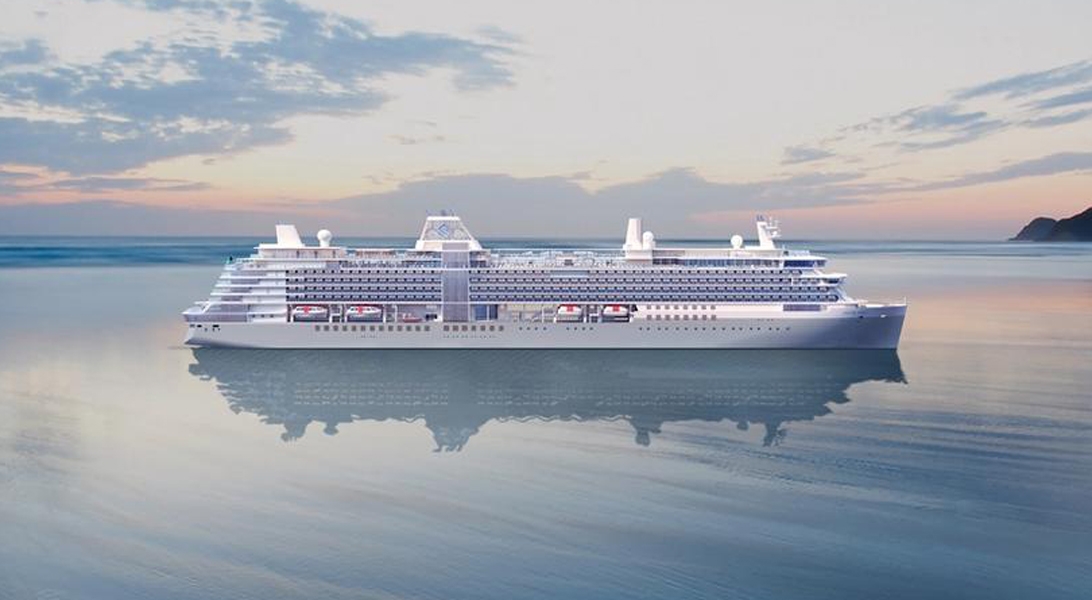
The images shown are for illustration purposes only and may not be an exact representation of what you find on the ship.
The images shown are for illustration purposes only and may not be an exact representation of what you find on the ship.
The images shown are for illustration purposes only and may not be an exact representation of what you find on the ship.
The images shown are for illustration purposes only and may not be an exact representation of what you find on the ship.
The images shown are for illustration purposes only and may not be an exact representation of what you find on the ship.


Our Fusion packages are all ABTA & ATOL protected ensuring that your booking is safe with us
| 7 nights aboard the Silver Nova | |||
| Butler Service in Every Suite | |||
| Gratuities Always Included | |||
| Beverages In-Suite and Throughout the Ship | |||
| Gourmet Dining | |||
| In Suite Dining & 24-Hour Room Service | |||
| Intimate small size ships | |||
| Free Wifi Throughout the Ship | |||
| Free Zodiac, Land and Sea Tours & Activities & Complimentary Expedition gear | |||
| Port Taxes and Fees | |||
 | ABTA and ATOL Protection* | ||
Date 6th Oct 2028 |
Nts 7 |
Suite £4,750pp |
Date 6th Oct 2028 |
Nts 7 |
Suite £4,750pp |
| Suite staterooms from | £4,750pp | ||
| CV | Classic Veranda Suite | £4,750pp | |
| DX | Deluxe Veranda Suite | £5,100pp | |
| SV | Superior Veranda Suite | £4,900pp | |
| PV | Premium Veranda Suite | £5,250pp | |
| J2 | Junior Grand Suite (2 Bedrooms) | £13,350pp | |
| JG | Junior Grand Suite (1 Bedroom) | £7,250pp | |
| G1 | Grand Suite (1 Bedroom) | £9,250pp | |
| SL | Silver Suite | £7,850pp | |
| PM | Premium Medallion Suite | £6,850pp | |
| ME | Medallion Suite | £6,550pp | |
| MS | Master Suite | £8,750pp | |
| O1 | Owner's Suite (1 Bedroom) |  | |
| O2 | Owner's Suite (2 Bedrooms) | £16,700pp | |
| OT | Otium Suite | £11,250pp | |
| SS | Signature Suite | £8,300pp | |
Fusion Holidays when selling travel arrangements is a trading name of Co-op Travel Services Limited, registration 08903986. Fusion Cruises is an Accredited Body Member of Co-op Travel Services Limited ATOL 12904.
Book with Confidence. We are a Member of ABTA which means you have the benefit of ABTA’s assistance and Code of Conduct.
Some of the flights and flight-inclusive holidays on this website are financially protected by the ATOL scheme but ATOL protection does not apply to all holiday and travel services offered on this website. This website will provide you with information on the protection that applies in the case of each holiday and travel service offered before you make your booking. If you do not receive an ATOL Certificate then the booking will not be ATOL protected. If you do receive an ATOL Certificate but all parts of your trip are not listed on it, those parts will not be ATOL protected. Please see our booking conditions for information, or for more information about financial protection and the ATOL Certificate go to: www.caa.co.uk