This site uses cookies as defined in our Cookie Policy, by continuing to use this site you agree to their use.
Continue

| Arrive | Depart | ||||||
| 11th11 | AprApr | 202828 | Fusina, Italy, embark on the Silver Shadow | 19:00 | |||
| Losing none of its allure over the years, this floating city of canals, bridges and masks is a place of eternal beauty and enduring elegance. The lagoon of more than 100 islands is a heavenly sight, transporting visitors on a journey through time - from its Roman inception, through centuries of trade to the modern face we see today. Navigate Venice’s sparkling waterways by romantic gondola, or on cruises along wide canal boulevards. Span the Grand Canal over its iconic original crossing, the Rialto Bridge, which - with its parade of tiny shops - gives some of the city’s most endearing views. If the crowds unsettle you at any point, take two turns away from the main thoroughfares to find peace alone, amid the city's labyrinth of tiny streets. Hurry to Piazza San Marco to be immersed in Venice’s elegant glory. Basilica San Marco transports you back to the wealthy days of the Doges, who ruled for over 1,000 years. Initially their private chapel, it’s now decorated with beautiful Byzantine mosaics. Nearby the Campanile di San Marco bell tower offers views over the higgledy-piggledy rooftops of times gone by. Just a hop skip and a jump around the corner is the Doge’s Palace, where the levels of opulence ramp up even further. Justice was meted out in this stunning Palace, with the guilty walking to the cells across the covered Bridge of Sighs. Vaporetto trips to local islands offer even more adventures to float your boat, whether it’s Murano with its world-famous glass, Torcello with its amazing Cathedrals, or Burano with its handmade lace and delightfully colourful painted houses. | |||||||
| 12th12 | AprApr | 202828 | Trieste, Italy | 08:00 | 17:00 | ||
Up until the end of World War I, Trieste was the only port of the vast Austro-Hungarian Empire and therefore a major industrial and financial center. In the early years of the 20th century, Trieste and its surroundings also became famous by their association with some of the most important names of Italian literature, such as Italo Svevo, and English and German letters. James Joyce drew inspiration from the city's multiethnic population, and Rainer Maria Rilke was inspired by the seacoast west of the city. Although it has lost its importance as a port and a center of finance, it has never fully lost its roll as an intellectual center. The streets hold a mix of monumental, neoclassical, and art-nouveau architecture built by the Austrians during Trieste's days of glory, granting an air of melancholy stateliness to a city that lives as much in the past as the present. A city happy to keep one foot resolutely in its beautiful illustrious past Trieste is a treasure which sits on a historical frontier of civilisations and cultures. Wealth as a trading hub helped to shape Trieste's grand piazzas and soaring artistic architectural achievements. The legendary Bora wind is greeted like an old friend and it buffs the city in winter. Just like Trieste itself it will take your breath away. Piazza Unità d'Italia is the grand central square and it opens up to the lap of blue waves at one end. Settle in for a quick caffeine hit in this coffee capital - a word of warning however most Trieste baristas don't serve cappuccinos - so plump for a caffè latte instead. The God of the Sea Neptune is honoured in a fountain at Piazza del Borsa nearby. Canale Grande is a centrepiece and was built in the 18th century to allow boats to unload their wares and trade. Lined by grandiose neoclassical buildings you can enjoy a picturesque stroll by the water. Three pretty bridges span it while little boats bob and jostle below. Glorious castles crown the area towering from esteemed vineyards. Don't miss the fairytale castle of Miramare which watches over the azure Gulf of Trieste and looms above glorious gardens. Trieste Cathedral is a constant and reassuring presence for the city standing on a hilltop overlooking the old town - it features an enchanting chandelier and remarkable painted ceiling. | |||||||
| 13th13 | AprApr | 202828 | Ravenna, Italy | 08:00 | 23:59 | ||
A small, quiet, well-heeled city, Ravenna has brick palaces, cobblestone streets, magnificent monuments, and spectacular Byzantine mosaics. The high point in its civic history occurred in the 5th century, when Pope Honorious moved his court here from Rome. Gothic kings Odoacer and Theodoric ruled the city until it was conquered by the Byzantines in AD 540. Ravenna later fell under the sway of Venice, and then, inevitably, the Papal States.Because Ravenna spent much of its past looking east, its greatest art treasures show that Byzantine influence. Churches and tombs with the most unassuming exteriors contain within them walls covered with sumptuous mosaics. These beautifully preserved Byzantine mosaics put great emphasis on nature, which you can see in the delicate rendering of sky, earth, and animals. Outside Ravenna, the town of Classe hides even more mosaic gems. Wander the historic streets of Ravenna and you may not immediately realise the wealth of artistry contained here. Leave the sun’s glow and let your eyes adjust to the interior of the city’s churches however and you'll discover some of the world’s finest Byzantine mosaics waiting for you. Decorated with spectacular explosions of colour even the humblest church facade can conceal momentous and magnificent artistic displays in this city which harbours 1 500 years of extraordinary history. Ravenna is home to a plethora of UNESCO World Heritage Site designated buildings and no fewer than eight have received protection. Basilica di San Vitale of 525 AD stands as the town’s pièce de résistance - itself a precious mosaic of influence where Byzantine meets Baroque. Glorious light spills in vibrantly illuminating and highlighting the craftwork of its knaves and archways. The Mausoleum of Galla Placido is another noble achievement described by UNESCO as ‘the earliest and best-preserved of all mosaic monuments'. Look up at the glittering stars of the night sky from within and you may be inspired just as Cole Porter was when he penned Night and Day. Ravenna’s beauty has always been stimulating and Dante finished his masterpiece Paradiso here during exile from Florence. Sangiovese wines and prosciutto-filled piadina flatbreads will keep you fed and watered during your stay. Don't miss a taste of the local olive oil either which bursts with intense fruity flavours. | |||||||
| 14th14 | AprApr | 202828 | At Sea | ||||
| 15th15 | AprApr | 202828 | Brindisi, Italy | 08:00 | 19:00 | ||
Life continues in Brindisi as if the 21st century hadn’t arrived. Visually, the landscape is as stunning as one would expect in southern Europe. Villages set on sunlit hilltops rise like islands above a rolling landscape of olive groves and vineyards. The coastline is a striking mixture of ruggedly beautiful cliffs and grottoes interspersed with a scattering of long, sandy beaches. Together with the wealth of historical artefacts and spectacular landscapes, Brindisi is one of Italy’s best kept secrets. Naturally, the cuisine is rich with its pickings from both land and sea and visitors can expect the best pasta, Caprese salad, local lemon loaf and spaghetti al vogole they have ever had! Set right in the heel of Italy’s boot, Brindisi is a pretty little maritime port, fringed with palm trees and most definitely carries its moniker of “Gateway to the East” with pride. An Italian province packed with fascination and the relics of vanished civilization, Brindisi’s cultural inheritance ranges from the relics of ancient Roman highways to Gothic and Baroque churches, cathedrals, frowning battlements of Swabian castles and fortresses which date back to the 13th century, reign of the Holy Roman Emperor, Frederick II. Life continues in Brindisi as if the 21st century hadn’t arrived. Visually, the landscape is as stunning as one would expect in southern Europe. Villages set on sunlit hilltops rise like islands above a rolling landscape of olive groves and vineyards. The coastline is a striking mixture of ruggedly beautiful cliffs and grottoes interspersed with a scattering of long, sandy beaches. Together with the wealth of historical artefacts and spectacular landscapes, Brindisi is one of Italy’s best kept secrets. Naturally, the cuisine is rich with its pickings from both land and sea and visitors can expect the best pasta, Caprese salad, local lemon loaf and spaghetti al vogole they have ever had! | |||||||
| 16th16 | AprApr | 202828 | At Sea | ||||
| 17th17 | AprApr | 202828 | Heraklion (Iraklion), Crete, Greece | 08:00 | 19:00 | ||
Having been controlled by Arabic, Venetian and Ottoman empires over the years - it's no surprise that Heraklion is a diverse patchwork of exotic cultures and historical treasures. Celebrated as the birthplace of the Spanish Renaissance artist, El Greco, you can visit to explore the storied ruins of the Minoan empire's capital, and unearth the rich cultural treasures that Crete’s bustling modern capital has to offer. It may not be the prettiest place in Crete but Heraklion's patchwork of history bustling activity and cultural intrigue makes it the perfect change of pace. This is certainly no sleepy island fishing village and Greece's fifth-largest city is adorned with a rich collection of quality museums ancient ruins from antiquity and a lively culture of its own. A refreshing shift-up from the many quaint beach towns and fishing villages you'll encounter in the Greek islands Heraklion – also known as Iraklio - has great shopping extraordinary history and is the ideal base for ventures to the archaeological treasures of Crete. Traded by the Arabic Venetian and Ottoman empires over the years Heraklion is a multi-layered place with fascinating tales to tell. The city's impressive Venetian fortress which waits over the gently rolling waves of the gleaming Mediterranean welcomes you ashore. The sun-roasted earth outside the city hides treasures from the realms of history including the Bronze Age remnants of Europe's oldest city Knossos. A visit to the fantastic Archaeological Museum of Heraklion ties all of this history together and exhibits relics from the civilisations and eras of Crete's past. Elsewhere Daidalou's pedestrianised paving is a charming stroll through Heraklion's shops with streets branching off to café-lined plazas and twinkling fountains. Stop to try local food - like fresh feta and olive sprinkled dakos mezze – all washed down with a sample of local raki brandy. | |||||||
| 18th18 | AprApr | 202828 | Pátmos, Greece | 08:00 | 19:00 | ||
For better or worse, it can be difficult to reach Patmos—for many travelers, this lack of access is definitely for the better, since the island retains the air of an unspoiled retreat. Rocky and barren, the small, 34-square-km (21-square-mi) island lies beyond the islands of Kalymnos and Leros, northwest of Kos. Here on a hillside is the Monastery of the Apocalypse, which enshrines the cave where St. John received the Revelation in AD 95. Scattered evidence of Mycenaean presence remains on Patmos, and walls of the classical period indicate the existence of a town near Skala. Most of the island's approximately 2,800 people live in three villages: Skala, medieval Chora, and the small rural settlement of Kambos. The island is popular among the faithful making pilgrimages to the monastery as well as with vacationing Athenians and a newly growing community of international trendsetters—designers, artists, poets, and “taste gurus” (to quote Vogue’s July 2011 write-up of the island)—who have bought homes in Chora. These stylemeisters followed in the footsteps of Alexandrian John Stefanidis and the English artist Teddy Millington-Drake who, in the early ’60s, set about creating what eventually became hailed as one of the most gorgeous island homes in the world. The word soon spread thanks to their many guests (who included Jacqueline Kennedy Onassis) but, happily, administrators have carefully contained development, and as a result, Patmos retains its charm and natural beauty—even in the busy month of August. The seahorse-shaped Patmos is a Greek island of stunning seascapes and immense cultural significance. Whether you’re religious or not there is something of the divine in this gorgeous island - a place of sanctuary fringed by crystal-clear waters and blissful beaches. Sleepy whitewash towns gleam in the strong sunshine while cats slink between the crumbling walls of this ruggedly beautiful island. High on the hillside above the cobalt-blue bay you’ll find the sacred chapel where an exiled John of Patmos is said to have entered the Cave of the Apocalypse and prophesied of the end of the world’s fire and brimstone – a striking juxtaposition with the peaceful serenity of the calm location. Higher up you’ll find the 11th-century Monastery of St. John which offers spectacular views of the island’s mounds curving around like a scorpion’s tail. It stands watching over the island like a fortified crown. Sun-wrinkled black-robed monks climb the streets up to this World Heritage site where bells peel out melodically. Inside vaulted chambers and stunning frescoes tell stories amid the striking religious iconography. Chora’s incredible narrow streets - moulded white - are an enchanting place to lose your bearings spreading below the monastery. Elsewhere blissful beaches stretch out across the coastline or this remote Greek island’s curves can be admired while bobbing offshore in a sailboat. | |||||||
| 19th19 | AprApr | 202828 | Mykonos, Greece | 08:00 | 18:30 | ||
Although the fishing boats still go out in good weather, Mykonos largely makes its living from tourism these days. The summer crowds have turned one of the poorest islands in Greece into one of the richest. Old Mykonians complain that their young, who have inherited stores where their grandfathers once sold eggs or wine, get so much rent that they have lost ambition, and in summer sit around pool bars at night with their friends, and hang out in Athens in winter when island life is less scintillating. Put firmly on the map by Jackie O in the 1960s, Mykonos town—called Hora by the locals—remains the Saint-Tropez of the Greek islands. The scenery is memorable, with its whitewashed streets, Little Venice, the Kato Myli ridge of windmills, and Kastro, the town's medieval quarter. Its cubical two- or three-story houses and churches, with their red or blue doors and domes and wooden balconies, have been long celebrated as some of the best examples of classic Cycladic architecture. Luckily, the Greek Archaeological Service decided to preserve the town, even when the Mykonians would have preferred to rebuild, and so the Old Town has been impressively preserved. Pink oleander, scarlet hibiscus, and trailing green pepper trees form a contrast amid the dazzling whiteness, whose frequent renewal with whitewash is required by law. Any visitor who has the pleasure of getting lost in its narrow streets (made all the narrower by the many outdoor stone staircases, which maximize housing space in the crowded village) will appreciate how its confusing layout was designed to foil pirates—if it was designed at all. After Mykonos fell under Turkish rule in 1537, the Ottomans allowed the islanders to arm their vessels against pirates, which had a contradictory effect: many of them found that raiding other islands was more profitable than tilling arid land. At the height of Aegean piracy, Mykonos was the principal headquarters of the corsair fleets—the place where pirates met their fellows, found willing women, and filled out their crews. Eventually the illicit activity evolved into a legitimate and thriving trade network. Morning on Mykonos town's main quay is busy with deliveries, visitors for the Delos boats, lazy breakfasters, and street cleaners dealing with the previous night's mess. In late morning the cruise-boat people arrive, and the shops are all open. In early afternoon, shaded outdoor tavernas are full of diners eating salads (Mykonos's produce is mostly imported); music is absent or kept low. In mid- and late afternoon, the town feels sleepy, since so many people are at the beach, on excursions, or sleeping in their air-conditioned rooms; even some tourist shops close for siesta. By sunset, people have come back from the beach, having taken their showers and rested. At night, the atmosphere in Mykonos ramps up. The cruise-boat people are mostly gone, coughing three-wheelers make no deliveries in the narrow streets, and everyone is dressed sexy for summer and starting to shimmy with the scene. Many shops stay open past midnight, the restaurants fill up, and the bars and discos make ice cubes as fast as they can. Ready to dive in? Begin your tour of Mykonos town (Hora) by starting out at its heart: Mando Mavrogenous Square. Indulge in idyllic island life as you take your fill of superb foods and wines and soak in endless views of sweeping turquoise seascapes and pretty whitewash buildings. Known for its lively nightlife and rejuvenating care-free outlook Mykonos is a dazzlingly beautiful island escape. The secret is well and truly out but nonetheless Mykonos has managed to retain the enduring exclusive allure that first drew celebrities like Brigitte Bardot to its star-studded shores. True to its roots Mykonos is a rich land of culture tradition and swirling legend and the island is said to be built on the frozen bodies of giants slain by Hercules and to have been the legendary battleground between Zeus and the Titans. Head out onto the crystalline waters to seek out serene islands hit perfect beaches or venture into the labyrinth of Mykonos Town. White facades red roofs and cobalt blue shutters add to this lively town’s appeal. Explore narrow streets housing studios – where artisans piece together mosaics - and plenty of restaurants and bars offer sanctuary. Head to Little Venice for a waterfront view of one of the island’s famed sunsets and to enjoy an aperitif of the favourite aniseed liqueur ouzo. Boasting numerous attractive sandy coves a wealth of top-notch restaurants and rich cultural appeal it’s little wonder that Mykonos is one of the most popular Greek Islands. Discover this jaw-droppingly scenic island paradise watched over by its iconic huddles of picturesque windmills. | |||||||
| 20th20 | AprApr | 202828 | Vólos, Greece | 08:00 | 19:00 | ||
| Nestled ideally between the gentle lapping waves of the Pagasetic Gulf and Mount Pelion, Volos is a Greek seaside town worth visiting. The town enjoys a near mythic status as being home of Jason and his Argonauts, and that, along with its reputation for being ‘Land of the Centaurs’ should go some way to illustrating the degree of ancient history to be found in Volos. The city was severely damaged in an earthquake in 1955 which regrettably means that much of the 19th-century architecture has been lost or damaged. A few traces do remain however, fine examples of neo-classical architecture that are hidden away around the town. If you want your history a little older than that, the superb archaeology museum will both surprise and delight you. Not only will you find objects from the Ancient Greek era but recent excavations have unearthed artefacts from the first Neolithic settlements of Dimini and Sesklo. The city itself is flat and easy to negotiate on foot. Or better still, make like the locals and hire a bike to cycle the city. For those feeling a little more adventurous, the 8-mile cycle up Mont Pelion rewards the sporty cycler with traditional stone tavernas and breathtaking views of the region. If relaxing closer to home is more your glass of ouzo, make for Palia, the old part of Volos, famous for having some of the finest cuisine on the mainland. Head into the narrow alleys, order a tsipouradika (a combination of traditional spirit served with local mezze) and enjoy. | |||||||
| 21st21 | AprApr | 202828 | At Sea | ||||
| 22nd22 | AprApr | 202828 | Istanbul, Turkey | ||||
The only city in the world that can lay claim to straddling two continents, Istanbul—once known as Constantinople, capital of the Byzantine and then the Ottoman Empire—has for centuries been a bustling metropolis with one foot in Europe and the other in Asia. Istanbul embraces this enviable position with both a certain chaos and inventiveness, ever evolving as one of the world’s most cosmopolitan crossroads. It’s often said that Istanbul is the meeting point of East and West, but visitors to this city built over the former capital of two great empires are likely to be just as impressed by the juxtaposition of old and new. Office towers creep up behind historic palaces, women in chic designer outfits pass others wearing long skirts and head coverings, peddlers’ pushcarts vie with battered old Fiats and shiny BMWs for dominance of the noisy, narrow streets, and the Grand Bazaar competes with modern shopping malls. At dawn, when the muezzin's call to prayer resounds from ancient minarets, there are inevitably a few hearty revelers still making their way home from nightclubs and bars. Most visitors to this sprawling city of more than 14 million will first set foot in the relatively compact Old City, where the legacy of the Byzantine and Ottoman empires can be seen in monumental works of architecture like the brilliant Aya Sofya and the beautifully proportioned mosques built by the great architect Sinan. Though it would be easy to spend days, if not weeks, exploring the wealth of attractions in the historical peninsula, visitors should make sure also to venture elsewhere in order to experience the vibrancy of contemporary Istanbul. With a lively nightlife propelled by its young population and an exciting arts scene that’s increasingly on the international radar—thanks in part to its stint as the European Capital of Culture in 2010—Istanbul is truly a city that never sleeps. It’s also a place where visitors will feel welcome: Istanbul may be on the Bosphorus, but at heart it’s a Mediterranean city, whose friendly inhabitants are effusively social and eager to share what they love most about it. A chaotic, colossal collision of east and west – start your day in Europe and end it in Asia, all without breaking a sweat. Sprawling across two continents, the city has been toed, froed and yanked between countless civilisations over its history, leaving a multi-layered, majestic tapestry of culture to untangle. An army of narrow minarets puncture the skyline, while the soaring towers of palaces and labyrinths of bazaars - where bargains are the reward for brave hagglers - fill up this dynamic city of 15 million people. With a rich portfolio of Byzantine and Ottoman architecture, Istanbul enjoys one of the world's most dynamic skylines and has an intense, infectious energy. The vast Aya Sofya is the starting point for exploring this huge city's deep wealth of cultural treasures. Built in the 6th century as a Greek Orthodox church, it was later transformed into an Ottoman imperial mosque – and latterly a museum. Cast your eyes up to take in the full scale of the colossal dome, one of the world's largest, which floats on a magnificent bed of light. See the Blue Mosque, with its glorious blue İznik tiles, or head to the Galata Tower which was once the tallest structure in Istanbul, and is ideal for a panoramic view of the city. Grab handfuls of dates and spices, shop for jewellery and patterned fabrics as you're swallowed whole by the Grand Bazaar - one of the world's biggest and busiest covered indoor markets. To understand Istanbul is to visit its kahvehans. Few rituals are taken as seriously as Turkish coffee - prepared to be incredibly strong. Sweeten the aftertaste with Turkish delight, or baklava – try the smooth pistachio version called kuru baklava. | |||||||
| 23rd23 | AprApr | 202828 | Istanbul, Turkey, disembark the Silver Shadow | ||||
The only city in the world that can lay claim to straddling two continents, Istanbul—once known as Constantinople, capital of the Byzantine and then the Ottoman Empire—has for centuries been a bustling metropolis with one foot in Europe and the other in Asia. Istanbul embraces this enviable position with both a certain chaos and inventiveness, ever evolving as one of the world’s most cosmopolitan crossroads. It’s often said that Istanbul is the meeting point of East and West, but visitors to this city built over the former capital of two great empires are likely to be just as impressed by the juxtaposition of old and new. Office towers creep up behind historic palaces, women in chic designer outfits pass others wearing long skirts and head coverings, peddlers’ pushcarts vie with battered old Fiats and shiny BMWs for dominance of the noisy, narrow streets, and the Grand Bazaar competes with modern shopping malls. At dawn, when the muezzin's call to prayer resounds from ancient minarets, there are inevitably a few hearty revelers still making their way home from nightclubs and bars. Most visitors to this sprawling city of more than 14 million will first set foot in the relatively compact Old City, where the legacy of the Byzantine and Ottoman empires can be seen in monumental works of architecture like the brilliant Aya Sofya and the beautifully proportioned mosques built by the great architect Sinan. Though it would be easy to spend days, if not weeks, exploring the wealth of attractions in the historical peninsula, visitors should make sure also to venture elsewhere in order to experience the vibrancy of contemporary Istanbul. With a lively nightlife propelled by its young population and an exciting arts scene that’s increasingly on the international radar—thanks in part to its stint as the European Capital of Culture in 2010—Istanbul is truly a city that never sleeps. It’s also a place where visitors will feel welcome: Istanbul may be on the Bosphorus, but at heart it’s a Mediterranean city, whose friendly inhabitants are effusively social and eager to share what they love most about it. A chaotic, colossal collision of east and west – start your day in Europe and end it in Asia, all without breaking a sweat. Sprawling across two continents, the city has been toed, froed and yanked between countless civilisations over its history, leaving a multi-layered, majestic tapestry of culture to untangle. An army of narrow minarets puncture the skyline, while the soaring towers of palaces and labyrinths of bazaars - where bargains are the reward for brave hagglers - fill up this dynamic city of 15 million people. With a rich portfolio of Byzantine and Ottoman architecture, Istanbul enjoys one of the world's most dynamic skylines and has an intense, infectious energy. The vast Aya Sofya is the starting point for exploring this huge city's deep wealth of cultural treasures. Built in the 6th century as a Greek Orthodox church, it was later transformed into an Ottoman imperial mosque – and latterly a museum. Cast your eyes up to take in the full scale of the colossal dome, one of the world's largest, which floats on a magnificent bed of light. See the Blue Mosque, with its glorious blue İznik tiles, or head to the Galata Tower which was once the tallest structure in Istanbul, and is ideal for a panoramic view of the city. Grab handfuls of dates and spices, shop for jewellery and patterned fabrics as you're swallowed whole by the Grand Bazaar - one of the world's biggest and busiest covered indoor markets. To understand Istanbul is to visit its kahvehans. Few rituals are taken as seriously as Turkish coffee - prepared to be incredibly strong. Sweeten the aftertaste with Turkish delight, or baklava – try the smooth pistachio version called kuru baklava. | |||||||
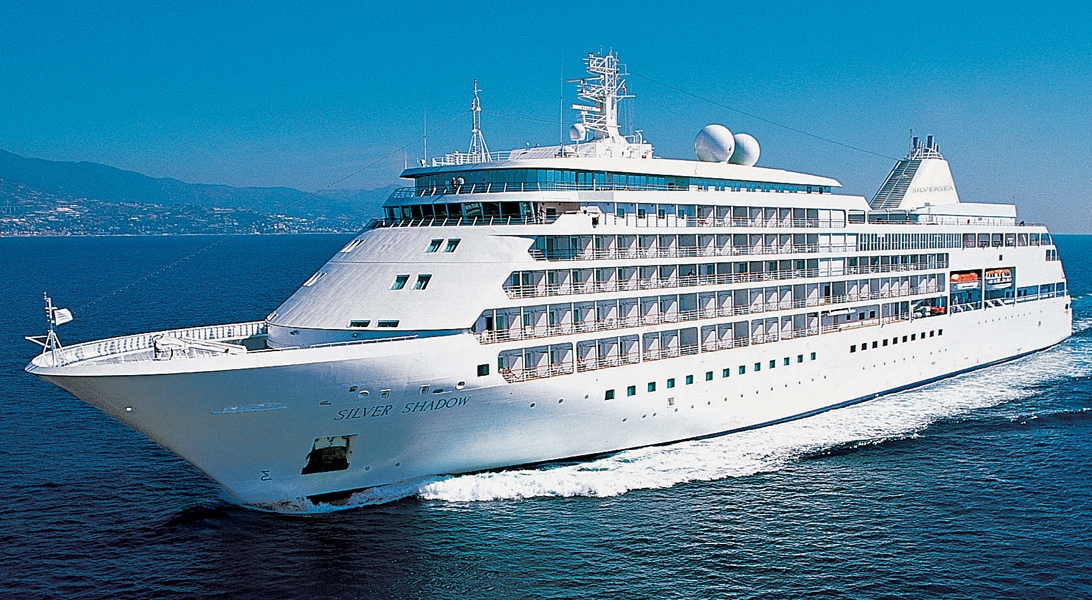
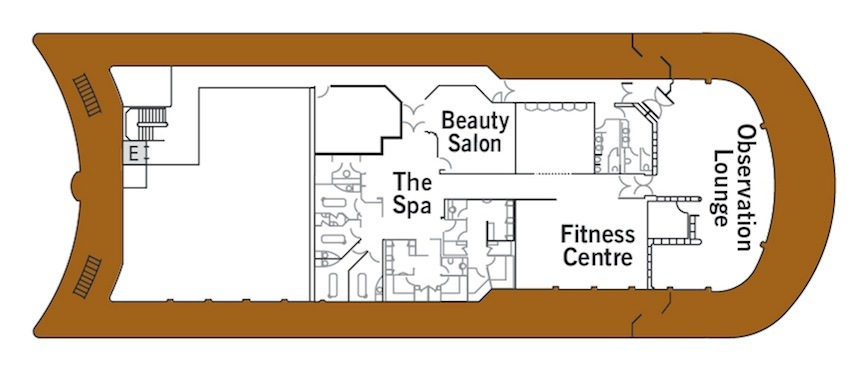

The images shown are for illustration purposes only and may not be an exact representation of what you find on the ship.
| Grade Code | From | To | |
| G1 | Grand Suite (1 Bedroom) | £20,750 | £21,450 |
| G2 | Grand Suite (2 Bedrooms) | £27,550 | £28,900 |
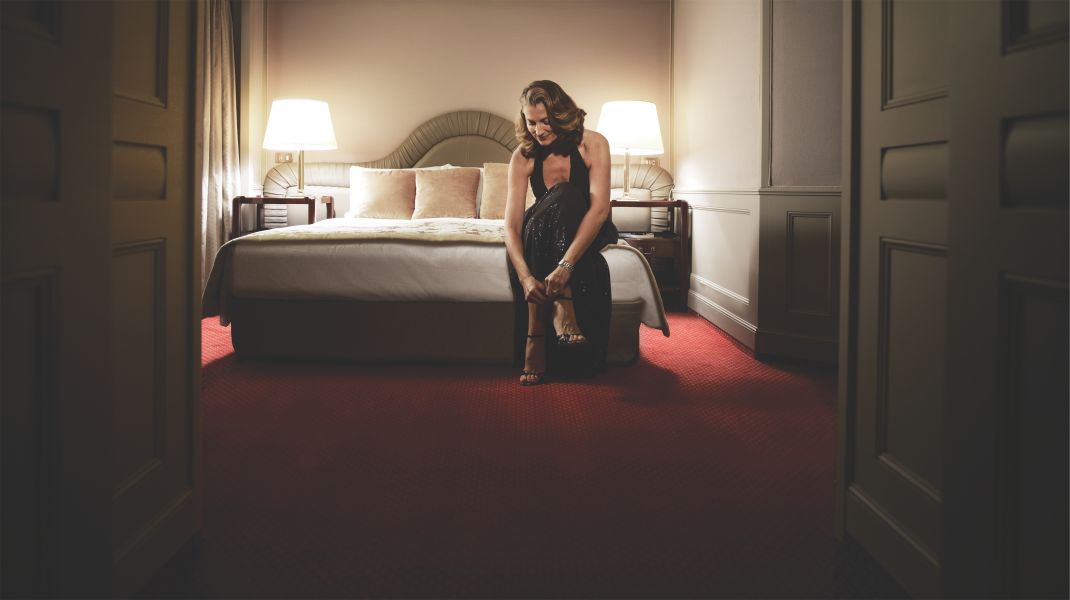
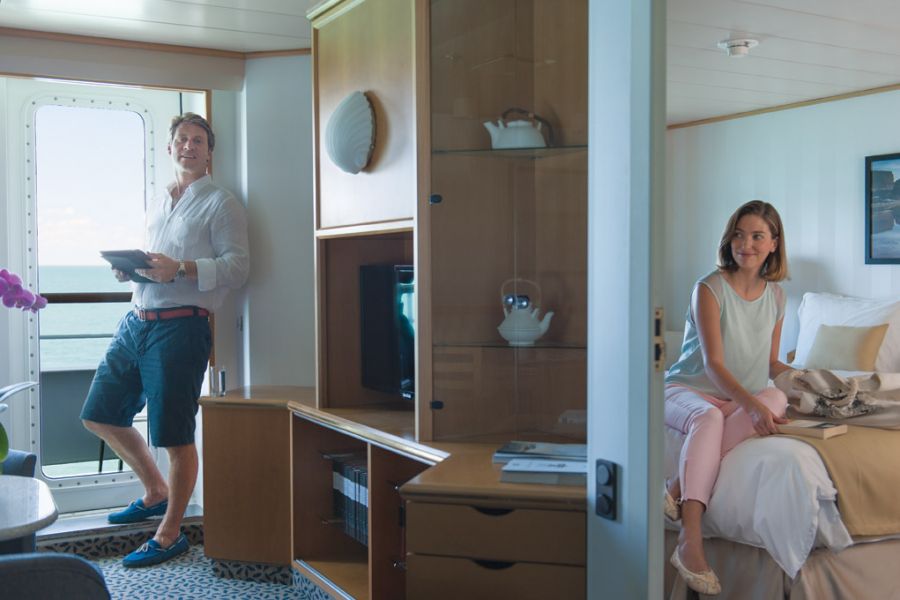
One of Silversea's finest suites, the Grand Suite's spacious amenities allows vou to cruise in comfort and class.
Expertly designed and exquisitely appointed. Ideal for entertaining friends while you cruise or enjoying a quiet dinner “at home”. Available as a one-bedroom configuration or as two-bedrooms (as illustrated) by adjoining with a Silversea Veranda Suite.
One bedroom: 87-101 sq.m. including veranda
Two bedroom: 133 sq.m. including veranda
Please note that the 3rd guest will sleep on a comfortable sofa bed in the reception area of the suite.
Essentials
Characteristics
Furniture
King size bed
Media & Communication
Onboard Services
Amenities
| Grade Code | From | To | |
| ME | Medallion Suite | £12,300 | £13,000 |
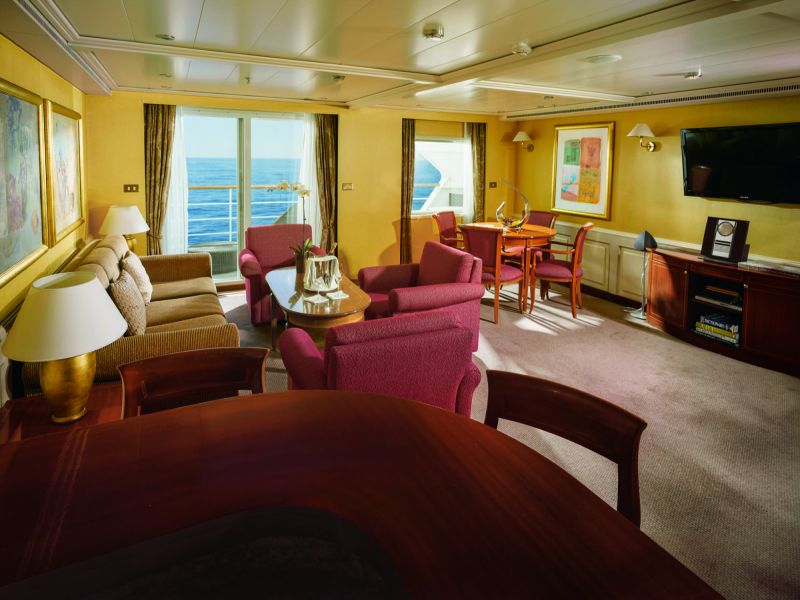
A mark of distinction. Sumptuous. Spacious. Rich textures and panoramic views surround you with distinguished luxury. An extravagant suite for an extravagant cruise.
One bedroom: 49 sq m including veranda (8 sq ft)
Please note that the 3rd guest will sleep on a comfortable sofa bed in the reception area of the suite.
Essentials
Characteristics
Furniture
Media & Communication
Onboard Services
Amenities
| Grade Code | From | To | |
| R1 | Royal Suite (1 Bedroom) | £18,850 | £19,550 |
| R2 | Royal Suite (2 Bedrooms) | £25,650 | £27,000 |
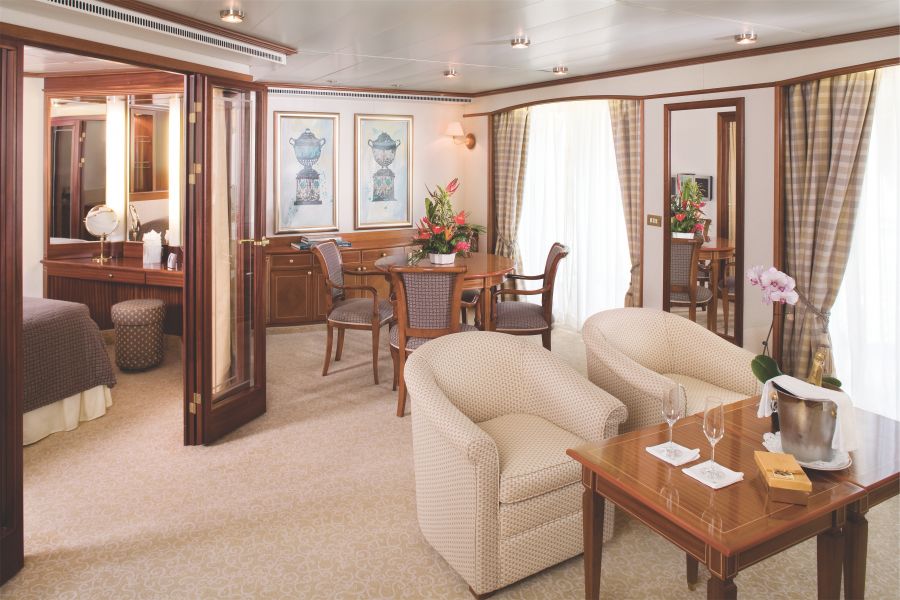
Stately describes the Royal Suite. Commanding and majestic. Perfect for entertaining. Enough living space to roam. The pinnacle of good living. Available in a one- or two-bedroom configuration (as illustrated) by adjoining with a Veranda Suite.
One bedroom: 90–94 sq m including veranda (10–11 sq m)
Two bedrooms: 126 sq m including veranda (16–17 sq m)
Please note that the 3rd guest will sleep on a comfortable sofa bed in the reception area of the suite.
Essentials
Characteristics
Furniture
Media & Communication
Onboard Services
Amenities
| Grade Code | From | To | |
| SL | Silver Suite | £14,650 | £15,300 |
Stylish and sophisticated. Separate dining and living rooms. Larger verandas. Situated midship. Perfection in design for comfortable living. Silver Suites accommodate three guests.
One bedroom: 61–65 sq m including veranda (10–11 sq m)
Please note that the 3rd guest will sleep on a comfortable sofa bed in the reception area of the suite.
Essentials
Characteristics
Furniture
Media & Communication
Onboard Services
Amenities
The images shown are for illustration purposes only and may not be an exact representation of what you find on the ship.
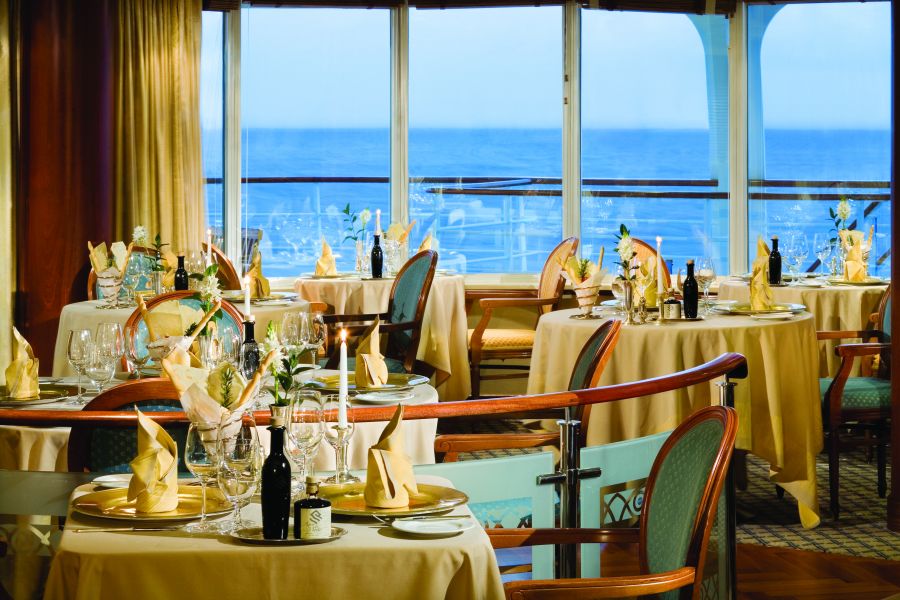
La Terrazza elevates casual dining by day and delivers an authentic Italian experience by night. During the breakfast and lunch buffets, our master chefs prepare global favorites at live stations. As evening falls, handmade pastas and classic seafood dishes are the centerpiece — every impeccable bite paired with fine wines from around the world.
Open seating for breakfast and lunch.
Reservations required for dinner.
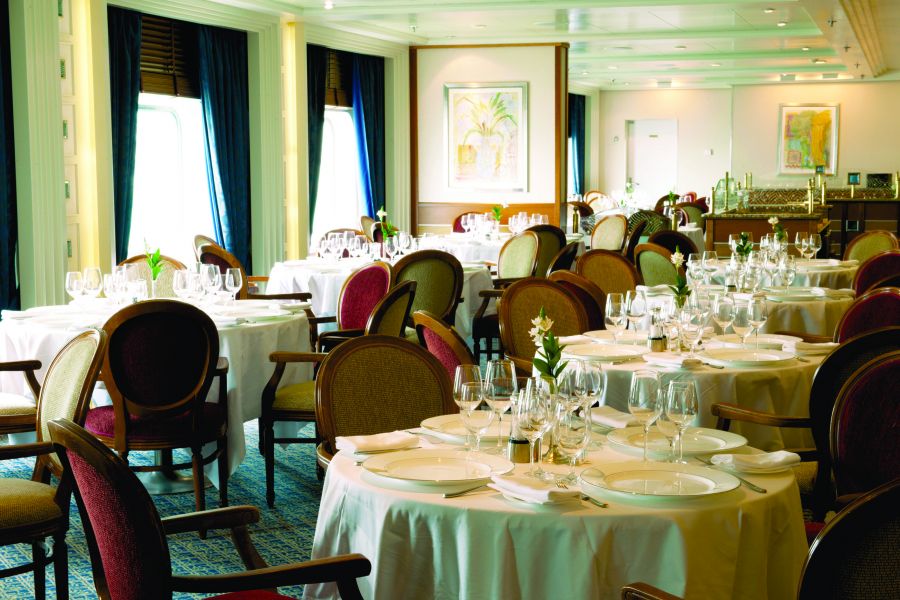
The Restaurant transforms dining into an extraordinary journey of taste. Indulge in international delicacies, refined classics, and destination-driven creations that reflect the flavours of the region you’re exploring. From breakfast favourites to imaginative evening courses, every meal draws inspiration from your voyage.
The images shown are for illustration purposes only and may not be an exact representation of what you find on the ship.
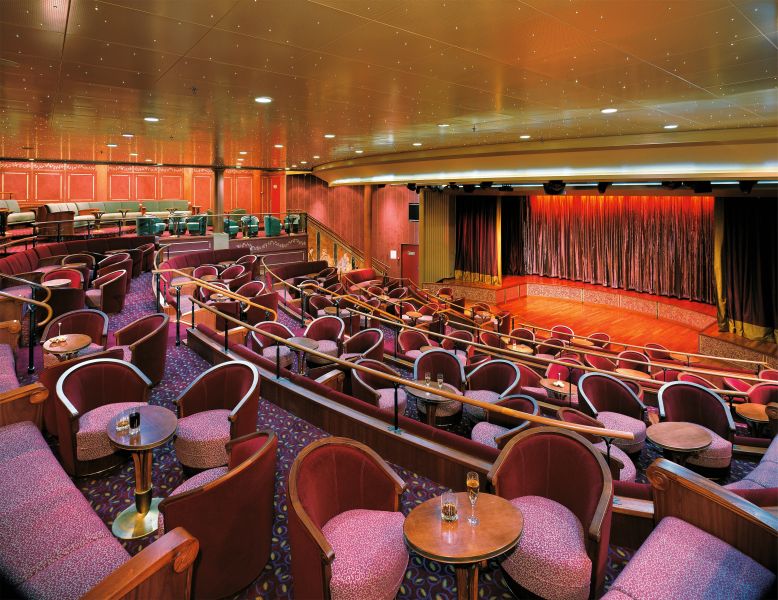
At The Show Lounge, theatrical immersion takes centre stage. From captivating performances and screenings to cultural programs, this elegant venue was designed to dazzle. Tiered seating ensures impeccable views while attentive beverage service makes indulging effortless. Raise a glass as the curtain rises on an unforgettable night of entertainment.
The images shown are for illustration purposes only and may not be an exact representation of what you find on the ship.
The images shown are for illustration purposes only and may not be an exact representation of what you find on the ship.


Our Fusion packages are all ABTA & ATOL protected ensuring that your booking is safe with us
| 12 nights aboard the Silver Shadow | |||
| Butler Service in Every Suite | |||
| Gratuities Always Included | |||
| Beverages In-Suite and Throughout the Ship | |||
| Gourmet Dining | |||
| In Suite Dining & 24-Hour Room Service | |||
| Intimate small size ships | |||
| Free Wifi Throughout the Ship | |||
| Free Zodiac, Land and Sea Tours & Activities & Complimentary Expedition gear | |||
| Port Taxes and Fees | |||
 | ABTA and ATOL Protection* | ||
Date 11th Apr 2028 |
Nts 12 |
Suite £5,600pp |
Date 11th Apr 2028 |
Nts 12 |
Suite £5,600pp |
| Suite staterooms from | £5,600pp | ||
| G1 | Grand Suite (1 Bedroom) |  | |
| G2 | Grand Suite (2 Bedrooms) | | |
| ME | Medallion Suite | | |
| O1 | Owner's Suite (1 Bedroom) | | |
| O2 | Owner's Suite (2 Bedrooms) | | |
| R1 | Royal Suite (1 Bedroom) | | |
| R2 | Royal Suite (2 Bedrooms) | | |
| SL | Silver Suite | | |
| VI | Vista Suite | £5,600pp | |
| CV | Classic Veranda Suite | £6,950pp | |
| DX | Deluxe Veranda Suite | £7,900pp | |
| SV | Superior Veranda Suite | £7,550pp | |
Fusion Holidays when selling travel arrangements is a trading name of Co-op Travel Services Limited, registration 08903986. Fusion Cruises is an Accredited Body Member of Co-op Travel Services Limited ATOL 12904.
Book with Confidence. We are a Member of ABTA which means you have the benefit of ABTA’s assistance and Code of Conduct.
Some of the flights and flight-inclusive holidays on this website are financially protected by the ATOL scheme but ATOL protection does not apply to all holiday and travel services offered on this website. This website will provide you with information on the protection that applies in the case of each holiday and travel service offered before you make your booking. If you do not receive an ATOL Certificate then the booking will not be ATOL protected. If you do receive an ATOL Certificate but all parts of your trip are not listed on it, those parts will not be ATOL protected. Please see our booking conditions for information, or for more information about financial protection and the ATOL Certificate go to: www.caa.co.uk