This site uses cookies as defined in our Cookie Policy, by continuing to use this site you agree to their use.
Continue

| Arrive | Depart | ||||||
| 12th12 | JunJun | 202727 | Nice, France, embark on the Silver Shadow | 19:00 | |||
United with France only since 1860, Nice has its own history and atmosphere, which dates back 230,000 years. It was on Colline du Château (now château-less) and at the Plage des Ponchettes, in front of the Old Town, that the Greeks established a market-port in 350 BC and named it Nikaia, which would become Marseilles' chief coastal rival. The Romans established themselves a little later on the hills of Cimiez (Cemenelum), already previously occupied by Ligurians and Celts, and quickly overshadowed the waterfront port. After falling to the Saracen invasions, Nice regained power as an independent state, becoming an important port in the early Middle Ages.So cocksure did it become that in 1388, Nice, along with the hill towns behind, effectively seceded from the county of Provence, under Louis d'Anjou, and allied itself with Savoie. Thus began its liaison with the House of Savoy, and through it with Piedmont and Sardinia, it was the Comté de Nice (Nice County). This relationship lasted some 500 years, tinting the culture, architecture, and dialect in rich Italian hues.By the 19th century Nice was flourishing commercially, locked in rivalry with the neighboring shipping port of Genoa. Another source of income: the dawning of tourism, as first the English, then the Russian nobility, discovered its extraordinary climate and superb waterfront position. A parade of fine stone mansions and hotels closed into a nearly solid wall of masonry, separated from the smooth-round rocks of the beach by what was originally named Camin deis Anglés (the English Way), which of course is now the famous Promenade des Anglais. This magnificent crescent, which is seeking UNESCO recognition, is one of the noblest in France. Many of Nice's most delightful attractions—the Cours Saleya market, the Old Town streets, the Hotel Negresco, and the Palais Masséna—are on or close to this 10-km (6-mile) waterfront, making it the first stop for most visitors, while the redevelopment of Nice's port, around the other side of the Colline du Château, makes it easier for amblers who want to take in the Genoese architecture or peruse the antiques at the Puces de Nice, now part of the Promenade des 100 Antiquaires, along Quai Papacino. Nice also has the distinction of the "Family Plus" label, with free strollers, play areas, and restaurants with child-friendly activities. Nice's sweeping bend of brilliant-blue seawater - which once tempted the aristocracies of Europe - continues to entice and entrance visitors to these sun-soaked shores. A refined city of airy ocean boulevards grandiose buildings and open spaces fountain-sprinkled parks and colourful floral displays add to the city's timeless appeal. Nice has lost none of its old-world lustre and there remains something of the divine in the Bay of Angels' endless sparkling waterfront. The vast open Promenade des Anglais remains Nice's magnificent crowning glory inviting the city out to jog wander and glide along the Mediterranean's most spectacular curve of seafront promenade. The crisp clear golden light also continues to make Nice a destination of creative pilgrimage and Matisse Picasso and Renoir are among the many artists to lavish in the city's eternal beauty. Drag yourself away from the waterfront to discover the old town punctuated with Baroque churches rising and the wafting scents of baking pastries and lavender bundles. Follow the floral odours to Nice's famous flower market which spills gorgeous colourful displays along Cours Saleya. There's a strong hint of Italy explained by the fact that Nice only aligned with France in 1860 - following 500 years under the House of Savoy. Walk in Nietzsche's footsteps and climb up to Colline du Château's charming green park and cascading waterfalls to relish the views down over the city and sparkling sea expanse. | |||||||
| 13th13 | JunJun | 202727 | Portoferraio, Italy | 08:00 | 19:00 | ||
Elba is the Tuscan archipelago's largest island, but it resembles nearby verdant Corsica more than it does its rocky Italian sisters, thanks to a network of underground springs that keep it lush and green. It's this combination of semitropical vegetation and dramatic mountain scenery—unusual in the Mediterranean—that has made Elba so prized for so long, and the island's uniqueness continues to draw boatloads of visitors throughout the warm months. A car is very useful for getting around the island, but public buses stop at most towns several times a day; the tourist office has timetables. Offshore in the Tyrrhenian Sea Elba is a mountainous mirage of glowing beaches turquoise waters and craggy coastline. The island capital’s sun-faded pink and yellow buildings stack up over the waterfront offering sweeping views back to the mainland. The harbour's tiny wooden fishing boats are now dwarfed by the gleaming yachts that visit and Elba invites you to join them dropping in to relish a secluded sun-soaked taste of the island's good life. Elba is the third biggest Italian island and the protected Tuscan archipelago’s largest with no fewer than 90 miles of gorgeous coastline rolling out for you to explore. Grown from the ruins of the Roman settlement of Fabricia steep fortifications and a scenic natural harbour all add to Portoferraio's appeals. Bonaparte hung around for just ten months - but the sea panorama from his former residence Villa dei Mulini - which is now a museum - keeps visitors coming back for more. An island of steep inclines which reward with spectacular vistas Elba’s villages cling to precipitous drops while beautiful beaches unravel along its shores and enchanting scenery of chestnut tree woods olive groves and vineyards coat its lands. Take the cable car up to Monte Capanne - which offers more of the island's trademark views without the need to break a sweat. Settle down to taste the island’s succulent seafood and tuck into juicy grilled sardines and plump octopus - rounded off with a glass of the famous local sweet wine. | |||||||
| 14th14 | JunJun | 202727 | Porto Santo Stefano, Italy | 07:00 | 17:00 | ||
| A summer escape for Rome’s historic elite the stacked waterfront of Porto Santo Stefano is a secluded taste of idyllic southern Tuscany. Physically closer to Rome than Florence the city is strung to Italy’s western coast by two sandy harnesses and sits on the unqiue peninsula of Monte Argentario - which was once an island. Flamboyant pink flamingos and herons stroll through the encased lagoon while Porto Santo Stefano’s waterfront hums with clinking cafes and strolling visitors. The luxury yachts in the harbour show that Porto Santo Stefano has lost none of its luxury appeals and with beaches wild hikes and waterfront beauty it continues to lure visitors to this secluded escape. Known for its fishing and cuisine - which is based around heavy use of the Tyrrhenian Sea’s juicy bounty. Stroll to Piazza dei Rioni for a dripping lemon gelato or wander the streets noticing the lingering World War II damage – the city was heavily bombed during the conflict. Fortunately the historic star-shaped Spanish fort was spared and it still watches out resolutely over the waters. Rugged coastline falls to secluded beaches with a wilder unkempt charm. Sail the coves - seeing cascading olive groves - or island-hop to Giglio and Giannuti which lie 12 miles from shore and can be seen from the monastery topped Argentario mountain. On the other side of the promontory you’ll find Porto Ercole - where the lifeless body of the Old Master Caravaggio was discovered. | |||||||
| 15th15 | JunJun | 202727 | Sorrento, Italy | 09:00 | 21:00 | ||
Sorrento may have become a jumping-off point for visitors to Pompeii, Capri, and Amalfi, but you can find countless reasons to love it for itself. The Sorrentine people are fair-minded and hardworking, bubbling with life and warmth. The tuff cliff on which the town rests is spread over the bay, absorbing sunlight, while orange and lemon trees waft their perfume in spring. Winding along a cliff above a small beach and two harbors, the town is split in two by a narrow ravine formed by a former mountain stream. To the east, dozens of hotels line busy Via Correale along the cliff—many have "grand" included in their names, and some indeed still are. To the west, however, is the historic sector, which still enchants. It's a relatively flat area, with winding, stone-paved lanes bordered by balconied buildings, some joined by medieval stone arches. The central piazza is named after the poet Torquato Tasso, born here in 1544. This part of town is a delightful place to walk through. Craftspeople are often at work in their stalls and shops and are happy to let you watch; in fact, that's the point. Music spots and bars cluster in the side streets near Piazza Tasso. Sorrento's colourful, sun-faded facades cascade down from green hills and cliffs to the Bay of Naples' gently lapping waters. The perfect base for exploring this Italian corner of outstanding natural beauty, venture to the curvaceous roads of the Amalfi coast - or enjoy leisurely jaunts across the shimmering waves to Capri's gem of an island. While it makes for a fantastic jumping-off point, Sorrento itself has oodles of rustic fishing town charm, so don't rush off too quickly. Piazza Tasso is the locals’ main meeting spot and a starting point for a wander through the picturesque streets. Throw back a quick espresso caffeine kick at a standing cafe, before strolling through Corso Italia - Sorrento's spine - which is lined with boutiques, museums, bars and restaurants. The historic Church of San Francesco blossoms with colourful celebrations of weddings, which spill out into its gorgeous ivy-tangled cloisters. Or head down to relax by the small beach and fishing-boat filled harbours. The looming, cloud-wisped cone of Mount Vesuvius is unlikely to escape your attention, and this now docile volcano was responsible for a famous tale of destruction when it wiped out the ancient city of Pompeii in a heartbeat. Known for the haunting, frozen casts of the city’s unfortunate inhabitants - the massive site is a miraculous snapshot of an Ancient Roman city in its pomp. Wander the stone slabs streets, visit the beautiful theatre, and the columns of the sprawling ancient forum – painstakingly recovered and rendered from below the ash. If you’re feeling a little peckish, enjoy quick and delicious flame-cooked pizzas of oil, basil, tomato, and buffalo mozzarella. The volcanic soil imbues the local wines with rich flavour – soak in the waterfront views while savouring Taurasi and Lacryma Christi flavours. Or sample the luminous lemony-hit of ubiquitous limoncellos. | |||||||
| 16th16 | JunJun | 202727 | At Sea | ||||
| 17th17 | JunJun | 202727 | Sarandë, Albania | 07:00 | 18:00 | ||
Sarandë is a city in southern Albania on the coast of the Ionian Sea. Sarandë can be reached easily from the Greek island of Corfu by ferry. An early Christian monastery dedicated to 40 saints (Santi Quaranta) gave Sarandë its name. The city center of Sarandë has been scarred by communist architecture but since the fall of communism many small shops and bars have sprung up which give it a Mediterranean feel. This southernmost harbour of Albania was once the ancient port of Onchesmos. Today, Sarandë’s main attractions are its sunny climate and the nearby ruins of Butrint. Please Note: For your convenience, shore excursions offered for this port of call are available to reserve in advance at www.silversea.com, unless otherwise noted in the description. The deadline to reserve these tours is August 19, after which they will be available for purchase on board, unless otherwise noted in the description. Pier Information The ship is scheduled to anchor at Main Pier. The town center is 875 yards from the pier. Taxis are generally available at the pier. Shopping Typical souvenirs include t-shirts, postcards, wood carvings and dolls in national costume. Cuisine Albanian cuisine has been strongly influenced by Turkey. Grilled meats like shisqubap (shish kebab), romstek (minced meat patties) and gofte (meat balls) are served all across the Balkans. Some local dishes include comlek (meat and onion stew), fërges (a rich beef stew), rosto me salcë kosi (roast beef with sour cream) and tavë kosi (mutton with yoghurt. Lake Shkodra carp and Lake Ohrid trout are the most common fish dishes. Try the ice cream (akullore), which is popular everywhere. Other Sites Blue Eye Spring The iridescent blue water gushes from the depths of the earth and feeds the Bistrica River. Catacombs Recently discovered catacombs of the church of the Forty Saints can also be explored. Private arrangements for independent sightseeing may be requested through the Tour Office on board. Overlooking the turquoise blue Ionian Sea Albania’s most southerly harbour is a short 20-minute boat ride from Corfu and bathes in the glow of more than 300 sunny days each year. Revel in Albania’s best beach life or explore historic ancient cities and fortresses embedded with immense archaeological interest. Clear turquoise waters lap the city's beaches and there's always something to see along the lively Boulevard Hasan Tahsini - which traces the seafront and is stacked with bars restaurants and shops. The hardy 16th-century Lekuresi Castle has been battered by weather and war over the years but it offers a fantastic lookout point to survey Sarande's expanse Corfu's island and the turquoise sea beyond. From here you can head to the Blue Eye Spring a rejuvenating natural landmark where a groundswell of the purest water gushes up 50 metres to surface amid the forest. Bathe in the immaculate waters which are intensely refreshing on sunny days. The majestic ruins of Butrint's ancient city stand nearby unearthed from the leafy site after the city was abandoned in medieval times. Albania's first UNESCO World Heritage Site Butrint was an ancient Greek and Roman stronghold - and you can walk back in time along stone-paved streets to discover the immense history here. Roam between the compact Roman theatre and the impressive arched-windows of the basilica before admiring the stunning floor mosaics that have been left behind. | |||||||
| 18th18 | JunJun | 202727 | Kotor, Montenegro | 09:00 | 19:00 | ||
Backed by imposing mountains, tiny Kotor lies hidden from the open sea, tucked into the deepest channel of the Bokor Kotorska (Kotor Bay), which is Europe's most southerly fjord. To many, this town is more charming than its sister UNESCO World Heritage Site, Dubrovnik, retaining more authenticity, but with fewer tourists and spared the war damage and subsequent rebuilding which has given Dubrovnik something of a Disney feel.Kotor's medieval Stari Grad (Old Town) is enclosed within well-preserved defensive walls built between the 9th and 18th centuries and is presided over by a proud hilltop fortress. Within the walls, a labyrinth of winding cobbled streets leads through a series of splendid paved piazzas, rimmed by centuries-old stone buildings. The squares are now haunted by strains from buskers but although many now house trendy cafés and chic boutiques, directions are still given medieval-style by reference to the town’s landmark churches.In the Middle Ages, as Serbia's chief port, Kotor was an important economic and cultural center with its own highly regarded schools of stonemasonry and iconography. From 1391 to 1420 it was an independent city-republic and later, it spent periods under Venetian, Austrian, and French rule, though it was undoubtedly the Venetians who left the strongest impression on the city's architecture. Since the breakup of Yugoslavia, some 70% of the stone buildings in the romantic Old Town have been snapped up by foreigners, mostly Brits and Russians. Porto Montenegro, a new marina designed to accommodate some of the world’s largest super yachts, opened in nearby Tivat in 2011, and along the bay are other charming seaside villages, all with better views of the bay than the vista from Kotor itself where the waterside is congested with cruise ships and yachts. Try sleepy Muo or the settlement of Prčanj in one direction around the bay, or Perast and the Roman mosaics of Risan in the other direction. Embedded into the slopes of the steep Lovćen mountain and overlooking the deep blue Adriatic the fortified town of Kotor boasts a spectacular imposing staging that few can match. Sq Squeezing in through the tight Bay of Kotor is a daunting and impressive approach in itself as you arrive via one of Europe’s most stunning waterways. A pearl of Montenegro and the Adriatic Kotor's warren-like streets drip with history and authenticity. Under Venetian influence for four centuries the city's UNESCO World Heritage Site old town invites you to wander amid atmospheric stone-clad streets overlooked by a sea of terracotta roofs and the double towers of the cathedral. Many favour Kotor for its compact layout smaller crowds and authenticity however - having been spared from shelling during Yugoslavia's breakup. The tightknit streets here are patrolled by a slinking population of feline residents who were adopted as the town’s mascots after being left behind by transient trader ships. Learn of the city's extensive heritage on the waves in the dedicated maritime museum that is contained within Grgurina Palace. Pick your way through tight alleys of workshops and studios walking below fresh laundry strung from windows before settling into shiny paved piazzas for an afternoon coffee or seafood meal. If you’re up for an aerobic challenge tackle the 1 350 steps up the steep walls to St John's fortress. The views over the gorgeous bay make the arduous slog worth it. | |||||||
| 19th19 | JunJun | 202727 | Monopoli, Italy | 08:00 | 19:00 | ||
| Located in the heel of Italy’s boot, Monopoli is a Puglia port town that knows how to make a splash. In fact, the words Monos and Polis mean singularly unique – and Monopoli’s special blend of part historical, part functional is most definitely that. The city might lack some of the more aesthetic elements of its neighbours, but that only means good things for those who do discover it: far from the tourist route you’ll be greeted with medieval churches and castles, white stone buildings (contrasting perfectly with the azure of the sea and sky) and authenticity in buckets. Founded by the Greeks in 500 BC, then taken over by the Romans (and beset by various invaders), Monopoli was – and still is – a thriving port town. It’s position in Puglia between the seas made it strategic, while its placement on the Via Traiana (which led all the way to Rome) made it prosperous. The city came under Venetian control in 1484 and much of Monopoli’s architecture can be attributed to this period. The charming Old Town is dominated by Castello Carlo V, built in 1552, while the still solid Baroque-Romanesque cathedral, built in 1693, is considered as positively modern. Like most of Italy, the food here is as important as religion. As a port town, fish and seafood are deliciously fresh. Do not miss tasting “scapece” (small fish covered in flour, deep-fried, put in layers with breadcrumbs and saffron, then soaked with vinegar) for a tasty treat that you will find nowhere else in the country. | |||||||
| 20th20 | JunJun | 202727 | Dubrovnik, Croatia | 08:00 | 19:00 | ||
Nothing can prepare you for your first sight of Dubrovnik. Lying 216 km (135 miles) southeast of Split and commanding a jaw-dropping coastal location, it is one of the world's most beautiful fortified cities. Its massive stone ramparts and fortress towers curve around a tiny harbor, enclosing graduated ridges of sun-bleached orange-tiled roofs, copper domes, and elegant bell towers. Your imagination will run wild picturing what it looked like seven centuries ago when the walls were built, without any suburbs or highways around it, just this magnificent stone city rising out of the sea.In the 7th century AD, residents of the Roman city Epidaurum (now Cavtat) fled the Avars and Slavs of the north and founded a new settlement on a small rocky island, which they named Laus, and later Ragusa. On the mainland hillside opposite the island, the Slav settlement called Dubrovnik grew up. In the 12th century the narrow channel separating the two settlements was filled in (now the main street through the Old Town, called Stradun), and Ragusa and Dubrovnik became one. The city was surrounded by defensive walls during the 13th century, and these were reinforced with towers and bastions in the late 15th century.From 1358 to 1808 the city thrived as a powerful and remarkably sophisticated independent republic, reaching its golden age during the 16th century. In 1667 many of its splendid Gothic and Renaissance buildings were destroyed by an earthquake. The defensive walls survived the disaster, and the city was rebuilt in baroque style.Dubrovnik lost its independence to Napoléon in 1808, and in 1815 passed to Austria-Hungary. During the 20th century, as part of Yugoslavia, the city became a popular tourist destination, and in 1979 it was listed as a UNESCO World Heritage Site. During the war for independence, it came under heavy siege. Thanks to careful restoration, few traces of damage remain; however, there are maps inside the Pile and Ploče Gates illustrating the points around the city where damage was done. It’s only when you experience Dubrovnik yourself that you can understand what a treasure the world nearly lost Croatia’s crowning glory rears up vertically from the tranquil waters of the Adriatic and Dubrovnik’s daunting fortresses town is a truly imposing sight to behold. Encircled by chunky stone walls so thick and dramatic they could have been purpose-built as a film set this city’s unmatched old town is the setting for countless films and shows - from Star Wars to Robin Hood Game of Thrones and every production in-between seeking a truly authentic medieval flavour. Fully restored now the stone streets of the city take you through a beautiful mosaic of architectural splendour baroque churches and splashing fountains. Tapering alleys rocket up from the central boulevard of Stradun offering spectacular views down but you’ll need to walk the city walls to appreciate the fortress city’s full scale. Visit the neighbouring fort of Lovrijenac for another perspective or swing up to Srd fortress’s glorious panorama on a cable car. Dubrovnik’s streets are crammed with eateries and candlelit tables where couples splash wine into glasses and enjoy gnocchi mixed with creamy truffle sauces. Nearby beaches like Banje are also close by and hidden bays reward the intrepid who venture out beyond the old town. Take sunset drinks to sit back and watch as flotillas of sea kayaks roll by or sail on the pristine waters to explore island gems like Lokrum - where peacocks are the only permanent residents. | |||||||
| 21st21 | JunJun | 202727 | Hvar Island, Croatia | 08:00 | 19:00 | ||
The Croatian island of Hvar bills itself as the "sunniest island in the Adriatic." Not only does it have the figures to back up this claim—an annual average of 2,724 hours of sunshine—but it also makes visitors a sporting proposition, offering them a money-back guarantee if there are seven consecutive days of snow (snow has been known to fall here; the last time being February 2012). One of the most popular of the island escapes sprinkled across the turquoise Adriatic Hvar is a glorious idyll of hidden coves electric blue waters and quietly contented port towns. In recent years it’s gathered something of a reputation as a party island - mainly earned from Hvar Town’s nocturnal exuberances and the transient day-tripping yachts that drop by. Soak up the energy exuberance and fine dining or sidestep the hedonism to explore a richly refined rural and historic island – utterly spoiled with sunshine and hidden beaches which dazzle with colourful intensity. Bike rides along long sweeping coastal paths boat journeys from pretty harbours walks through fields of purple lavender. Relish the sunshine and explore deserted idyllic inlets before sharing strong espressos in quiet harbour towns surrounded by welcoming sun-wrinkled locals. There’s also rich Medieval history – the sleepy town of Stari Grad is said to be Croatia’s oldest dating back to 384 BC. Elsewhere Jelsa is a postcard perfect place – settle in for a bite to eat with nothing but the sound of harbour waters lapping and sandpaper scraping boats hulls for company. You can walk to look out over glorious views across to Brac sometimes watching on as thunderstorms rage and flash an eternity away over the mainland’s crumpled mountains. You’re also just a short ferry ride from the incredible Golden Horn - an evocative spike of brilliant sand which juts out evocatively into the cobalt-blue sea. | |||||||
| 22nd22 | JunJun | 202727 | Sibenik, Croatia | 08:00 | 18:00 | ||
Šibenik's main monument, its Gothic-Renaissance cathedral, built of pale-gray Dalmatian stone and designated a UNESCO World Heritage Site, stands on a raised piazza close to the seafront promenade. From here a network of narrow, cobbled streets leads through the medieval quarter of tightly packed, terra-cotta–roof houses, and up to the ruins of a 16th-century hilltop fortress. The city has never been a real tourist destination. Before the Croatian war for independence, it was a relatively prosperous industrial center, but when the factories closed, Šibenik sank into an economic depression. However, the cathedral more than warrants a look, and it makes a decent base for visiting the waterfalls of Krka National Park. Set on the dazzling Adriatic where the Krka River opens out into the blue island-peppered waters Šibenik is a stone-clad city that oozes Dalmatian medieval charm. Gorgeous Krka National Park gushes with famously picturesque waterfalls close by while the World Heritage Sites of Croatia’s oldest native town have endless stories to tell. Rising from the shadow of popular neighbours Split and Zadar Šibenik is successfully establishing itself as an unmissable Dalmatian city thanks to its timeless grace and 30 hidden churches and monasteries - which ring their bells above a wash of terracotta roofs. Dominating the tight streets of the charming old town - where ice cream vendors spoon out fruity flavours and footsteps rattle along stone streets - is the magnificent Cathedral St. James UNESCO World Heritage site. Taking more than a century to construct it is built from stone in a Gothic-Renaissance style and adorned with 71 sculptured heads - each displaying its own personality. St. Michael’s Fortress stands on a hill above the city providing the perfect viewpoint to see Šibenik rolling towards the stunning archipelago which punctuates the turquoise Adriatic. Part of the fortress is now used as an open-air stage forming an ethereal venue for performances. St. Nicholas Fortress is another UNESCO protected site and was built where the monastery of St. Nicholas once stood. Further afield the beautiful old town of Trogir is close by along with the Roman ruins of Salona. | |||||||
| 23rd23 | JunJun | 202727 | Piran, Slovenia | 09:00 | 21:00 | ||
| Perched on a rocky peninsula and surrounded by pristine waters, Piran, Slovenia, has one of the most scenic looks of the Mediterranean and a truly unique cultural heritage. At the crossroads of Eastern and Western Mediterranean cultures, the town is one of the medieval jewels that can be found on the Adriatic Sea. In many ways similar to the small and beautiful harbours of the Istrian coast, Piran relishes a rich Venetian heritage that still lives on today in the city’s architecture and main square, named after the famous Italian composer Giuseppe Tartini. | |||||||
| 24th24 | JunJun | 202727 | Fusina, Italy, disembark the Silver Shadow | ||||
| Losing none of its allure over the years, this floating city of canals, bridges and masks is a place of eternal beauty and enduring elegance. The lagoon of more than 100 islands is a heavenly sight, transporting visitors on a journey through time - from its Roman inception, through centuries of trade to the modern face we see today. Navigate Venice’s sparkling waterways by romantic gondola, or on cruises along wide canal boulevards. Span the Grand Canal over its iconic original crossing, the Rialto Bridge, which - with its parade of tiny shops - gives some of the city’s most endearing views. If the crowds unsettle you at any point, take two turns away from the main thoroughfares to find peace alone, amid the city's labyrinth of tiny streets. Hurry to Piazza San Marco to be immersed in Venice’s elegant glory. Basilica San Marco transports you back to the wealthy days of the Doges, who ruled for over 1,000 years. Initially their private chapel, it’s now decorated with beautiful Byzantine mosaics. Nearby the Campanile di San Marco bell tower offers views over the higgledy-piggledy rooftops of times gone by. Just a hop skip and a jump around the corner is the Doge’s Palace, where the levels of opulence ramp up even further. Justice was meted out in this stunning Palace, with the guilty walking to the cells across the covered Bridge of Sighs. Vaporetto trips to local islands offer even more adventures to float your boat, whether it’s Murano with its world-famous glass, Torcello with its amazing Cathedrals, or Burano with its handmade lace and delightfully colourful painted houses. | |||||||
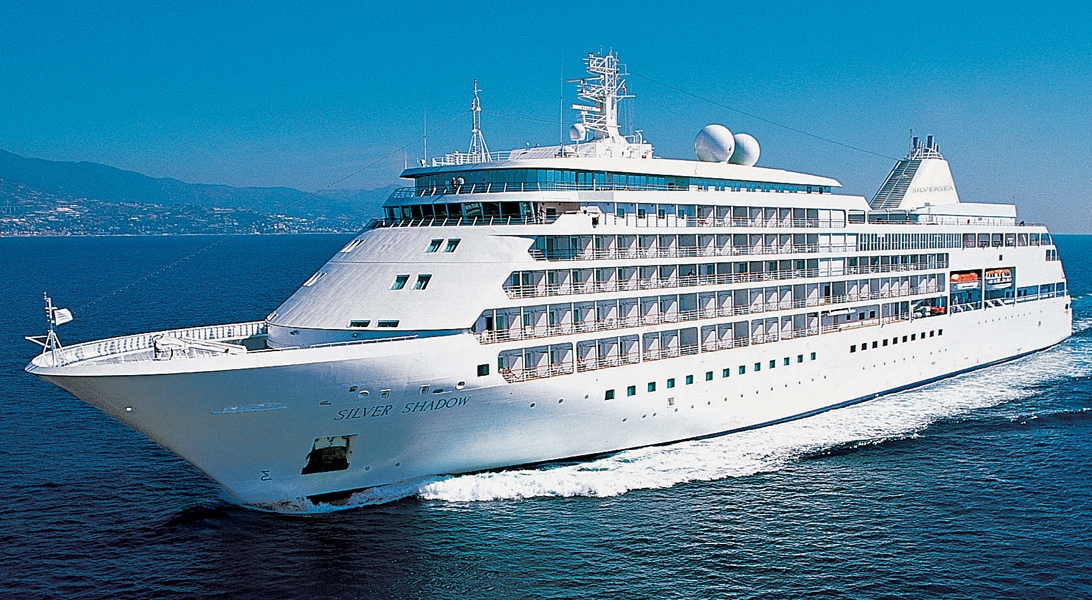
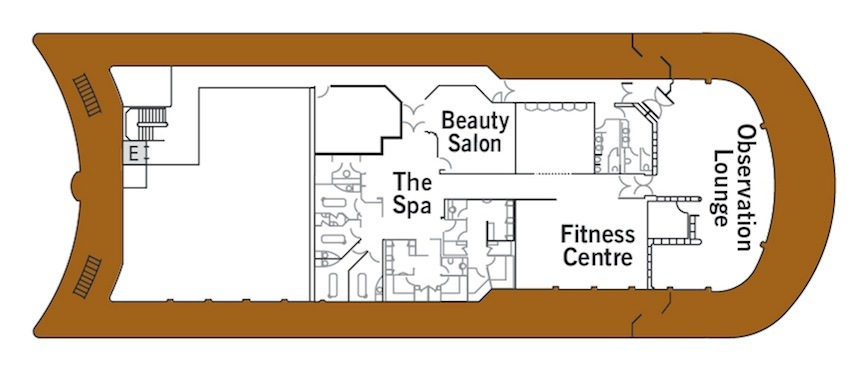

The images shown are for illustration purposes only and may not be an exact representation of what you find on the ship.
| Grade Code | From | To | |
| G1 | Grand Suite (1 Bedroom) | £16,750 | £17,250 |
| G2 | Grand Suite (2 Bedrooms) | £25,200 | £26,150 |
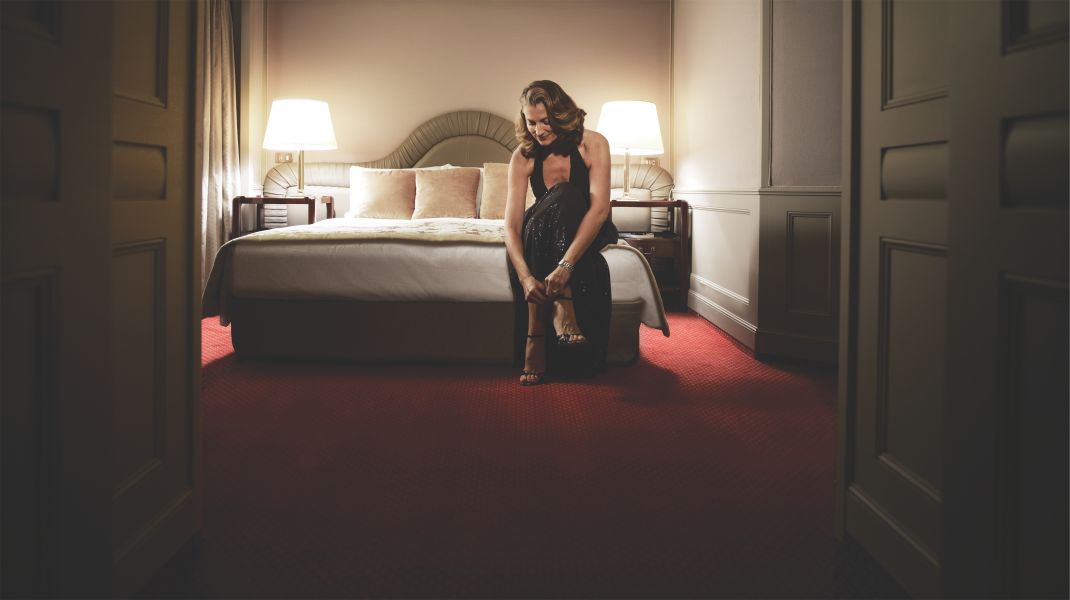
One of Silversea's finest suites, the Grand Suite's spacious amenities allows vou to cruise in comfort and class.
Expertly designed and exquisitely appointed. Ideal for entertaining friends while you cruise or enjoying a quiet dinner “at home”. Available as a one-bedroom configuration or as two-bedrooms (as illustrated) by adjoining with a Silversea Veranda Suite.
One bedroom: 87-101 sq.m. including veranda
Two bedroom: 133 sq.m. including veranda
Please note that the 3rd guest will sleep on a comfortable sofa bed in the reception area of the suite.
Essentials
Characteristics
Furniture
Media & Communication
Onboard Services
Amenities
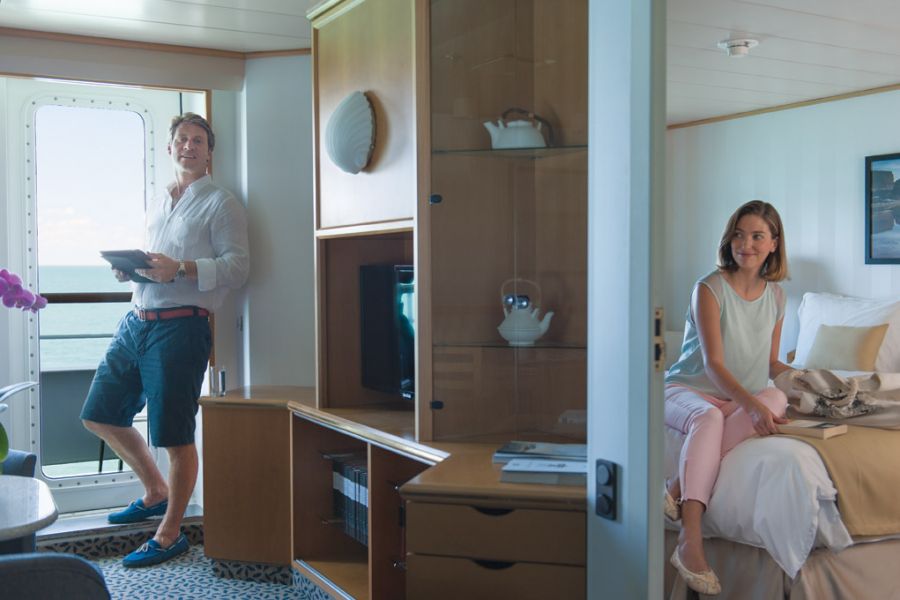
| Grade Code | From | To | |
| ME | Medallion Suite | £12,100 | £12,550 |
Teak-style balcony with floor- to-ceiling glass doors. Relaxing living room space with seating area.
A mark of distinction. Sumptuous. Spacious. Rich textures and panoramic views surround you with distinguished luxury. An extravagant suite for an extravagant cruise.
One bedroom: 49 sq m including veranda (8 sq ft)
Please note that the 3rd guest will sleep on a comfortable sofa bed in the reception area of the suite.
Essentials
Characteristics
Furniture
Media & Communication
Onboard Services
Amenities
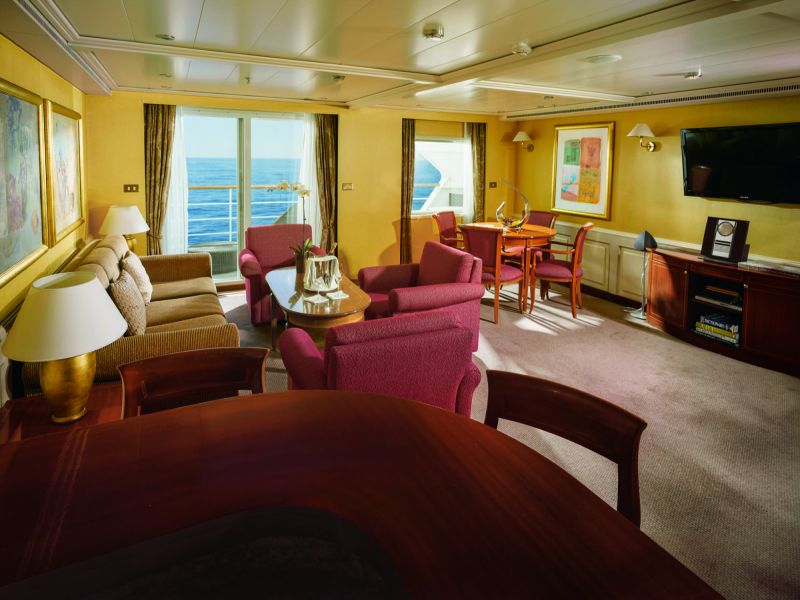
| Grade Code | From | To | |
| R1 | Royal Suite (1 Bedroom) | £15,250 | £15,700 |
| R2 | Royal Suite (2 Bedrooms) | £23,700 | £24,600 |
Stately describes the Royal Suite. Commanding and majestic. Perfect for entertaining. Enough living space to roam. The pinnacle of good living. Available in a one- or two-bedroom configuration (as illustrated) by adjoining with a Veranda Suite.
One bedroom: 90–94 sq m including veranda (10–11 sq m)
Two bedrooms: 126 sq m including veranda (16–17 sq m)
Please note that the 3rd guest will sleep on a comfortable sofa bed in the reception area of the suite.
Essentials
Characteristics
Furniture
Media & Communication
Onboard Services
Amenities
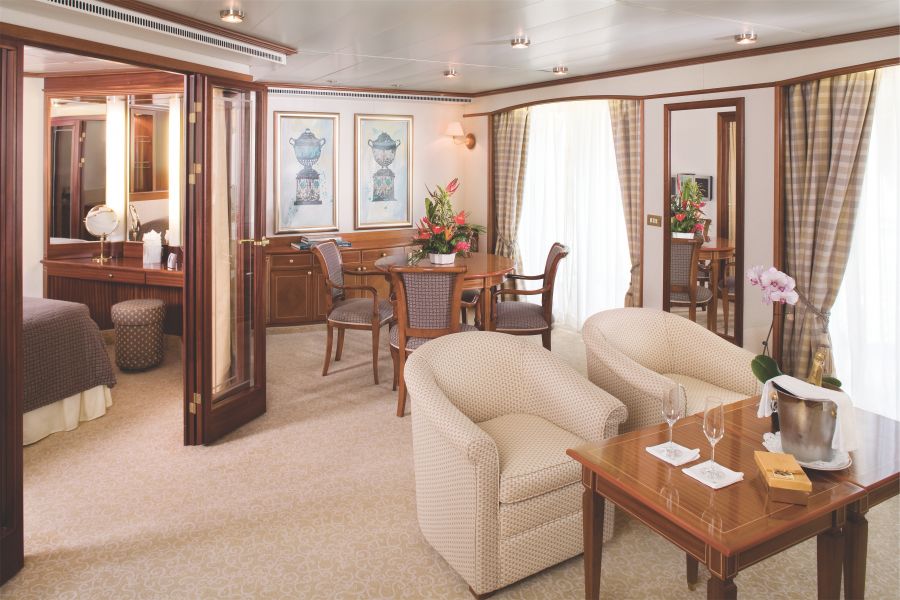
| Grade Code | From | To | |
| SL | Silver Suite | £12,850 | £13,300 |
Stylish and sophisticated. Separate dining and living rooms. Larger verandas. Situated midship. Perfection in design for comfortable living. Silver Suites accommodate three guests.
One bedroom: 61–65 sq m including veranda (10–11 sq m)
Please note that the 3rd guest will sleep on a comfortable sofa bed in the reception area of the suite.
Essentials
Characteristics
Furniture
Media & Communication
Onboard Services
Amenities
The images shown are for illustration purposes only and may not be an exact representation of what you find on the ship.
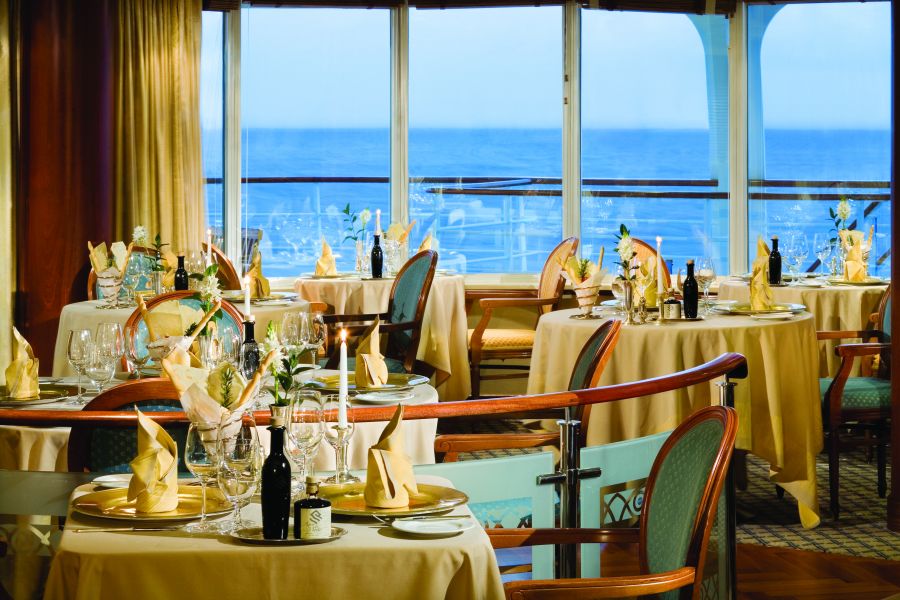
Authentic Italian recipes and the freshest, sustainable ingredients come together in this restaurant at sea.
On board this luxury cruise ship, a divine selection of Italy’s best cuisine is served à la carte in La Terrazza. Authentic recipes and the freshest ingredients come together with flair and passion aboard this luxury cruise—a flavorful expression of Silversea’s distinctive Italian heritage. La Terrazza uses buffalo mozzarella from Naples, organic balsamic vinegar and olive oil from Umbria, and air-dried ham out of Parma. The Emilia-Romagna region also produces Silversea’s 24-month aged Parmigiano Reggiano, and the pasta is made daily right on board.
Open seating for breakfast and lunch.
Reservations required for dinner.
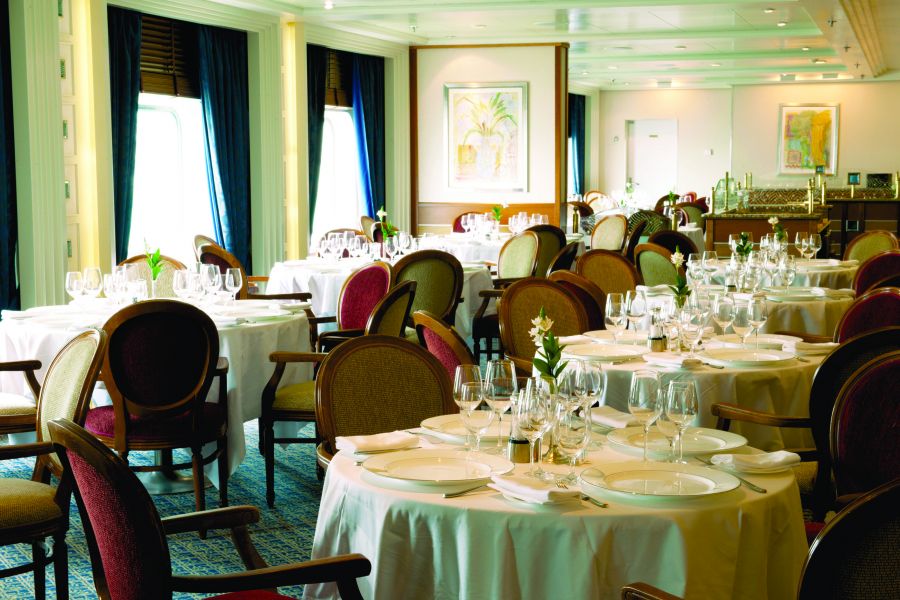
Enjoy Continental and regional specialities, as well as sweeping ocean views in our main dining room.
Sparkling with silver, crystal, and candlelight, Silversea’s main dining room serves contemporary, international cuisine with sophisticated elegance and impeccable service. Menus feature regional specialties unique to the voyage destination, for example, Roasted Chilean Sea Bass while cruising the Chilean fjords and Indian Chicken Korma en route to Mumbai. The Restaurant aboard this luxury cruise ship offers open-seating dining, which means there are no assigned times, no assigned tables. You are free to dine when, where, and with whom you please.
The images shown are for illustration purposes only and may not be an exact representation of what you find on the ship.
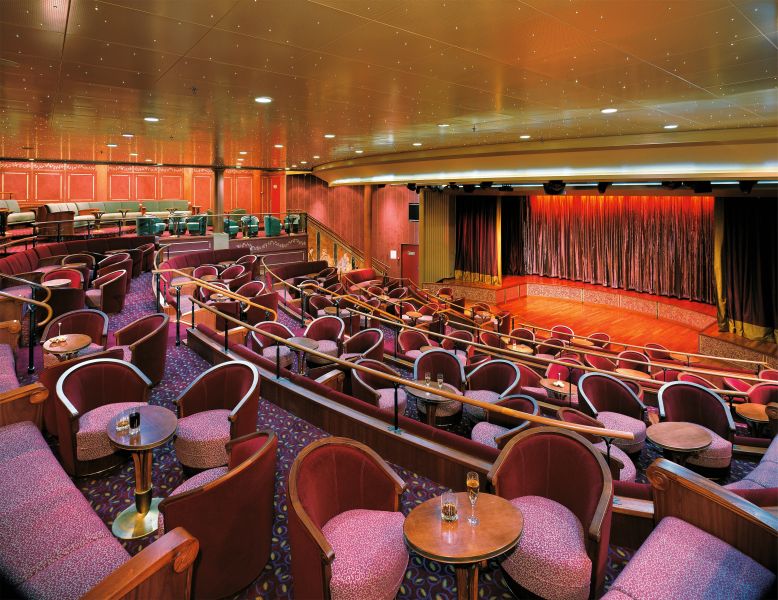
Enjoy a broad spectrum of entertainment from full-scale production shows and classical soloists, to cultural entertainment and feature films.
Every seat in this multi-tiered venue enjoys a clear view to the stage. Applaud a broad spectrum of entertainment presented during the cruise — from full-scale production shows and classical soloists, to cultural entertainment and feature films. Throughout your voyage, the luxury cruise ship’s The Show Lounge also presents port talks, enrichment lectures and a variety of special events.
The images shown are for illustration purposes only and may not be an exact representation of what you find on the ship.
The images shown are for illustration purposes only and may not be an exact representation of what you find on the ship.


Our Fusion packages are all ABTA & ATOL protected ensuring that your booking is safe with us
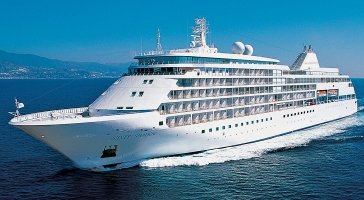
| 12 nights aboard the Silver Shadow | |||
| Butler Service in Every Suite | |||
| Gratuities Always Included | |||
| Beverages In-Suite and Throughout the Ship | |||
| Gourmet Dining | |||
| In Suite Dining & 24-Hour Room Service | |||
| Intimate small size ships | |||
| Free Wifi Throughout the Ship | |||
| Free Zodiac, Land and Sea Tours & Activities & Complimentary Expedition gear | |||
| Port Taxes and Fees | |||
 | ABTA and ATOL Protection* | ||
Date 12th Jun 2027 |
Nts 12 |
Suite £5,700pp |
Date 12th Jun 2027 |
Nts 12 |
Suite £5,700pp |
| Suite staterooms from | £5,700pp | ||
| G1 | Grand Suite (1 Bedroom) |  | |
| G2 | Grand Suite (2 Bedrooms) | | |
| ME | Medallion Suite | | |
| O1 | Owner's Suite (1 Bedroom) | | |
| O2 | Owner's Suite (2 Bedrooms) | | |
| R1 | Royal Suite (1 Bedroom) | | |
| R2 | Royal Suite (2 Bedrooms) | | |
| SL | Silver Suite | | |
| VI | Vista Suite | £5,700pp | |
| CV | Classic Veranda Suite | | |
| DX | Deluxe Veranda Suite | £7,600pp | |
| SV | Superior Veranda Suite | £7,400pp | |
Fusion Holidays when selling travel arrangements is a trading name of Co-op Travel Services Limited, registration 08903986. Fusion Cruises is an Accredited Body Member of Co-op Travel Services Limited ATOL 12904.
Book with Confidence. We are a Member of ABTA which means you have the benefit of ABTA’s assistance and Code of Conduct.
Some of the flights and flight-inclusive holidays on this website are financially protected by the ATOL scheme but ATOL protection does not apply to all holiday and travel services offered on this website. This website will provide you with information on the protection that applies in the case of each holiday and travel service offered before you make your booking. If you do not receive an ATOL Certificate then the booking will not be ATOL protected. If you do receive an ATOL Certificate but all parts of your trip are not listed on it, those parts will not be ATOL protected. Please see our booking conditions for information, or for more information about financial protection and the ATOL Certificate go to: www.caa.co.uk