This site uses cookies as defined in our Cookie Policy, by continuing to use this site you agree to their use.
Continue

| Arrive | Depart | ||||||
| 12th12 | NovNov | 202828 | Civitavecchia, Italy, embark on the Silver Shadow | 19:00 | |||
Italy's vibrant capital lives in the present, but no other city on earth evokes its past so powerfully. For over 2,500 years, emperors, popes, artists, and common citizens have left their mark here. Archaeological remains from ancient Rome, art-stuffed churches, and the treasures of Vatican City vie for your attention, but Rome is also a wonderful place to practice the Italian-perfected il dolce far niente, the sweet art of idleness. Your most memorable experiences may include sitting at a caffè in the Campo de' Fiori or strolling in a beguiling piazza. All roads lead to Rome, and with good reason - this city is one of the world’s most thrilling, offering unmatched history along every street. An evocative, inspiring and utterly artistic capital of unrivalled cultural impact, Rome is a city of back-to-back landmarks, which will take you on an exhilarating journey through the ages. This may be one of the world’s oldest cities, but it’s well and truly lived in. The ruins are punctuated with murmuring cafes, and the outdoor seating of restaurants sprawls out across piazzas, enticing you to sample tangles of creamy pasta and crispy pizzas. Rome’s incredible Roman Forum is littered with the ruins of its ancient administrations, which have stood firm for 2,000 years, since the times when the area was the centre of the Western world. Few sites are more simultaneously beautiful and haunting than that of the storied Colosseum, which looms deep into Rome’s rich blue sky. Take a tour to learn details of the grisly goings-on within. The best way to experience Rome is to wander its streets, gelato in hand. There is a lot to see here - whether it’s the domed spectacle of the Pantheon, or the elaborate flowing waters and artistry of the Trevi Fountain. Vatican City is an astonishing, colossal display of Catholic grandeur, while the Spanish Steps – crowned by the Trinità dei Monti church – offer a beautiful spot to gather and soak up the lively atmosphere of this humming city. With so much on the to-do list, you’ll relish the breaks you take, enjoying simple pleasures like a strong espresso, or fresh pasta with tomato sauce and ripped basil. | |||||||
| 13th13 | NovNov | 202828 | Porto Santo Stefano, Italy | 09:00 | 18:00 | ||
| A summer escape for Rome’s historic elite the stacked waterfront of Porto Santo Stefano is a secluded taste of idyllic southern Tuscany. Physically closer to Rome than Florence the city is strung to Italy’s western coast by two sandy harnesses and sits on the unqiue peninsula of Monte Argentario - which was once an island. Flamboyant pink flamingos and herons stroll through the encased lagoon while Porto Santo Stefano’s waterfront hums with clinking cafes and strolling visitors. The luxury yachts in the harbour show that Porto Santo Stefano has lost none of its luxury appeals and with beaches wild hikes and waterfront beauty it continues to lure visitors to this secluded escape. Known for its fishing and cuisine - which is based around heavy use of the Tyrrhenian Sea’s juicy bounty. Stroll to Piazza dei Rioni for a dripping lemon gelato or wander the streets noticing the lingering World War II damage – the city was heavily bombed during the conflict. Fortunately the historic star-shaped Spanish fort was spared and it still watches out resolutely over the waters. Rugged coastline falls to secluded beaches with a wilder unkempt charm. Sail the coves - seeing cascading olive groves - or island-hop to Giglio and Giannuti which lie 12 miles from shore and can be seen from the monastery topped Argentario mountain. On the other side of the promontory you’ll find Porto Ercole - where the lifeless body of the Old Master Caravaggio was discovered. | |||||||
| 14th14 | NovNov | 202828 | Livorno, Italy | 08:00 | 19:00 | ||
Livorno is a gritty city with a long and interesting history. In the early Middle Ages it alternately belonged to Pisa and Genoa. In 1421 Florence, seeking access to the sea, bought it. Cosimo I (1519–74) started construction of the harbor in 1571, putting Livorno on the map. After Ferdinando I de' Medici (1549–1609) proclaimed Livorno a free city, it became a haven for people suffering from religious persecution; Roman Catholics from England and Jews and Moors from Spain and Portugal, among others, settled here. The Quattro Mori (Four Moors), also known as the Monument to Ferdinando I, commemorates this. (The statue of Ferdinando I dates from 1595, the bronze Moors by Pietro Tacca from the 1620s.)In the following centuries, and particularly in the 18th, Livorno boomed as a port. In the 19th century the town drew a host of famous Britons passing through on their grand tours. Its prominence continued up to World War II, when it was heavily bombed. Much of the town's architecture, therefore, postdates the war, and it's somewhat difficult to imagine what it might have looked like before. Livorno has recovered from the war, however, as it's become a huge point of departure for container ships, as well as the only spot in Tuscany for cruise ships to dock for the day.Most of Livorno's artistic treasures date from the 17th century and aren't all that interesting unless you dote on obscure baroque artists. Livorno's most famous native artist, Amedeo Modigliani (1884–1920), was of much more recent vintage. Sadly, there's no notable work by him in his hometown.There may not be much in the way of art, but it's still worth strolling around the city. The Mercato Nuovo, which has been around since 1894, sells all sorts of fruits, vegetables, grains, meat, and fish. Outdoor markets nearby are also chock-full of local color. The presence of Camp Darby, an American military base just outside town, accounts for the availability of many American products.If you have time, Livorno is worth a stop for lunch or dinner at the very least. There are few more elegant places to salute the sunset than Terrazza Mascagni, Livorno’s refined chessboard piazza. A historic port, and a beachy gateway to Tuscany, Livorno welcomes you ashore to explore this enchanted Italian region's sun-soaked beauty, rich flavours and world-renowned fine art. Stay in Livorno to explore 'Piccolo Venezia', or ‘Little Venice’ - a quarter of the town that's laced with canals, little marble bridges and plenty of tempting eateries. With its bustling market, fortresses and iconic waterfront, there’s plenty to keep you busy here, but most will be tempted to venture inland to explore more of Tuscany’s many charms and artistic wonders. Test your nose, as you breathe in the subtleties of Tuscany’s vineyard-draped scenery, and visit wineries showcasing the best of the renowned flavours of the Bolgheri wine-growing area. Or head out to Prato, where you’ll find tightly-woven textile history. Pisa’s showpiece tower is within reach, as is Florence’s city of immense and imaginative renaissance beauty. Admire the delicate carving of Michelangelo's masterpiece, the David statue, and note the provocative stance as he casts a dismissive glance towards Rome. Stand before the city’s majestic black and white cathedral - the Cathedral of Santa Maria del Fiore - with its colossal brick dome. The view down over Florence's river and grand dome from Piazzale Michelangelo, meanwhile, is one of Italy's finest. However you choose to spend your time in Tuscany, you’ll discover an artistic region, filled with beauty designed to appeal to every sense. | |||||||
| 15th15 | NovNov | 202828 | Nice, France | 08:00 | 18:00 | ||
United with France only since 1860, Nice has its own history and atmosphere, which dates back 230,000 years. It was on Colline du Château (now château-less) and at the Plage des Ponchettes, in front of the Old Town, that the Greeks established a market-port in 350 BC and named it Nikaia, which would become Marseilles' chief coastal rival. The Romans established themselves a little later on the hills of Cimiez (Cemenelum), already previously occupied by Ligurians and Celts, and quickly overshadowed the waterfront port. After falling to the Saracen invasions, Nice regained power as an independent state, becoming an important port in the early Middle Ages.So cocksure did it become that in 1388, Nice, along with the hill towns behind, effectively seceded from the county of Provence, under Louis d'Anjou, and allied itself with Savoie. Thus began its liaison with the House of Savoy, and through it with Piedmont and Sardinia, it was the Comté de Nice (Nice County). This relationship lasted some 500 years, tinting the culture, architecture, and dialect in rich Italian hues.By the 19th century Nice was flourishing commercially, locked in rivalry with the neighboring shipping port of Genoa. Another source of income: the dawning of tourism, as first the English, then the Russian nobility, discovered its extraordinary climate and superb waterfront position. A parade of fine stone mansions and hotels closed into a nearly solid wall of masonry, separated from the smooth-round rocks of the beach by what was originally named Camin deis Anglés (the English Way), which of course is now the famous Promenade des Anglais. This magnificent crescent, which is seeking UNESCO recognition, is one of the noblest in France. Many of Nice's most delightful attractions—the Cours Saleya market, the Old Town streets, the Hotel Negresco, and the Palais Masséna—are on or close to this 10-km (6-mile) waterfront, making it the first stop for most visitors, while the redevelopment of Nice's port, around the other side of the Colline du Château, makes it easier for amblers who want to take in the Genoese architecture or peruse the antiques at the Puces de Nice, now part of the Promenade des 100 Antiquaires, along Quai Papacino. Nice also has the distinction of the "Family Plus" label, with free strollers, play areas, and restaurants with child-friendly activities. Nice's sweeping bend of brilliant-blue seawater - which once tempted the aristocracies of Europe - continues to entice and entrance visitors to these sun-soaked shores. A refined city of airy ocean boulevards grandiose buildings and open spaces fountain-sprinkled parks and colourful floral displays add to the city's timeless appeal. Nice has lost none of its old-world lustre and there remains something of the divine in the Bay of Angels' endless sparkling waterfront. The vast open Promenade des Anglais remains Nice's magnificent crowning glory inviting the city out to jog wander and glide along the Mediterranean's most spectacular curve of seafront promenade. The crisp clear golden light also continues to make Nice a destination of creative pilgrimage and Matisse Picasso and Renoir are among the many artists to lavish in the city's eternal beauty. Drag yourself away from the waterfront to discover the old town punctuated with Baroque churches rising and the wafting scents of baking pastries and lavender bundles. Follow the floral odours to Nice's famous flower market which spills gorgeous colourful displays along Cours Saleya. There's a strong hint of Italy explained by the fact that Nice only aligned with France in 1860 - following 500 years under the House of Savoy. Walk in Nietzsche's footsteps and climb up to Colline du Château's charming green park and cascading waterfalls to relish the views down over the city and sparkling sea expanse. | |||||||
| 16th16 | NovNov | 202828 | Sète, France | 08:00 | 18:00 | ||
The fishing village of Sète serves as gateway to Montpellier, in the North. Other noteworthy destinations in this area include Carcassone, Aigues Mortes, the Abbaye de Fontfroide, and Pezenas. For a look at the real fisherman's life, however, stay right where you are. Sète is the Mediterranean's biggest fishing port. Canals winding through town make it fun to stroll around, and there are a number of good walking paths leading to the beach (about 30 minutes to the west). Although it's small and unspectacular, Plage de la Corniche has calm, pristine waters that are perfect for swimming. For a panoramic view of the area, climb Mont St-Clair or Les Pierres Blanches and pick a beach to settle down on. Set on a lagoon beside the Mediterranean's waves Sete's streets are interspersed with canals and the historic Canal du Midi terminates here. Canal boats joust on the river during August’s festival in this working city of breezy nautical charm. Known as the Venice of Languedoc house facades front up against canal banks while leisurely cruises offer romantic trips through this colourful maritime city. The ascent of Mount St-Clair is perhaps the best spot to appreciate this wonderful watery setting and you can also take in the bright frescoes of Chapel of Notre Dame de la Salette while you're there. Or absorb the town’s deep fishing heritage with a harbour walk among the bobbing little boats or within the preserved La Pointe Courte fisherman’s village. Sit down to sample the incredible sea life at fine restaurants which plate up mounds of juicy oysters and shellfish hauled ashore from the waters. Swing golf clubs on rollercoaster coastal courses or relax on mile after mile of golden beach which stretch out along the spit nearby. Inland discover rich medieval history beautifully preserved at the walled city of Aigues-Mortes. Mighty Carcassonne UNESCO World Heritage Site also stands within reach inviting you to enter a majestic fairy-tale citadel of fantasy turrets and imposing battlements. Step across the drawbridge and brush shoulders with armed soldiers and artisans inside this living timewarp's immense ramparts. | |||||||
| 17th17 | NovNov | 202828 | Palamós, Spain | 08:00 | 18:00 | ||
One of the best ways to arrive in Catalonia is by sea, especially via the Costa Brava. This coastline, also known as the Rugged or Wild Coast, stretches from Blanes to the French border. Its name aptly refers to the steep cliff of ancient twisted rocks, which runs its entire length and is bounded inland by the Catalan mountain ranges. The intensity of the coast’s colour, the ruggedness of the rocks and the scent of the plants all combine to add to its attraction. The history of this region is long and varied. Traces can be found of the advanced culture of the Iberians, Greeks, Romans, Visigoths and Arabs. With Wilfred I and the independence of Catalan countries, the Catalan dynasty was born. Later, in 1479, Catalonia became a part of unified Spain following the marriage of Isabel, Queen of Castile, and Fernando, King of Aragon. The port of Palamos, some 36 miles northeast of Barcelona, has been in existence for nearly 700 years thanks to its location on one of the deepest natural bays in the western Mediterranean. The town itself is the southernmost of a series of resorts popular with sun worshippers. For the most part, Palamos has managed to retain some of the charm of a fishing village. The port also serves as a gateway to such inland locations as Girona, the capital of the province. Art lovers may want to visit Figueras, famous for its bizarre Teatre-Museu Dali, the foremost of a series of sites associated with the eccentric surrealist artist, Salvador Dali. If you choose to stay in Palamos, you can enjoy the pleasant atmosphere of the town or spend some time at a nearby beach. The town has a long seagoing tradition and busy harbour. The fish auction, prompted by the arrival of the fishing boats, is a spectacle worth seeing. The Fishing Museum illustrates the history and the life of the families who live off the sea. A place of monasteries tucked into mountains, surreal art, and gorgeous beaches, Palamos is your gateway to the Costa Brava’s scenic beauty, and the cultural wonders of Catalonia. Inspect Palamos’ rugged coastline, and you can almost see the Catalan flag’s blood and gold colours reflected in the craggy red cliffs and golden sands. Soak in the unfiltered glory of Spain’s Wild Coast, which is fringed with attractive beaches and rock-dappled outcrops lunging into the blue Mediterranean waves. Known for its rich, meaty prawns, Palamos is a flavourful stop of culture, coastline and historic charm. Just 20 miles inland from Palamos’ tempting beaches, you’ll find Girona’s Medieval city looming. Four rivers converge here, in this delightfully walkable city. Soak up the atmosphere of the cobbled old town, which is protected by historic ramparts. A steep ramp of 90 steps leads up to the Baroque façade of the Cathedral of Girona, which towers over the city and impresses with the world’s widest Gothic nave – a full 22 metres across. Figueres is also close by, where you can enter the ‘theatrical dream’ conceived by the master of surrealism, Salvador Dalí. Born in Figueres, his hometown honours his memory and global influence at the irresistible Dalí Theatre-Museum - a gloriously bizarre and immersive experience, and a fitting summation of his creative outlook. Opened in 1974, Dalí himself had an input into the design of the giant egg topped building, having worked on its creation during the final decade of his life. | |||||||
| 18th18 | NovNov | 202828 | Valencia, Spain | 09:30 | 18:30 | ||
Valencia, Spain's third-largest municipality, is a proud city with a thriving nightlife and restaurant scene, quality museums, and spectacular contemporary architecture, juxtaposed with a thoroughly charming historic quarter, making it a popular destination year in year out. During the Civil War, it was the last seat of the Republican Loyalist government (1935–36), holding out against Franco’s National forces until the country fell to 40 years of dictatorship. Today it represents the essence of contemporary Spain—daring design and architecture along with experimental cuisine—but remains deeply conservative and proud of its traditions. Though it faces the Mediterranean, Valencia's history and geography have been defined most significantly by the River Turia and the fertile huerta that surrounds it.The city has been fiercely contested ever since it was founded by the Greeks. El Cid captured Valencia from the Moors in 1094 and won his strangest victory here in 1099: he died in the battle, but his corpse was strapped into his saddle and so frightened the besieging Moors that it caused their complete defeat. In 1102 his widow, Jimena, was forced to return the city to Moorish rule; Jaume I finally drove them out in 1238. Modern Valencia was best known for its frequent disastrous floods until the River Turia was diverted to the south in the late 1950s. Since then the city has been on a steady course of urban beautification. The lovely bridges that once spanned the Turia look equally graceful spanning a wandering municipal park, and the spectacularly futuristic Ciutat de les Arts i les Ciències (City of Arts and Sciences), most of it designed by Valencia-born architect Santiago Calatrava, has at last created an exciting architectural link between this river town and the Mediterranean. If you're in Valencia, an excursion to Albufera Nature Park is a worthwhile day trip. Valencia is a proud city. During the Civil War, it was the last seat of the Republican Loyalist government (1935–36), holding out against Franco’s National forces until the country fell to 40 years of dictatorship. Today it represents the essence of contemporary Spain—daring design and architecture along with experimental cuisine—but remains deeply conservative and proud of its traditions. Though it faces the Mediterranean, Valencia's history and geography have been defined most significantly by the River Turia and the fertile floodplain (huerta) that surrounds it. The city has been fiercely contested ever since it was founded by the Greeks. El Cid captured Valencia from the Moors in 1094 and won his strangest victory here in 1099: he died in the battle, but his corpse was strapped into his saddle and so frightened the besieging Moors that it caused their complete defeat. In 1102 his widow, Jimena, was forced to return the city to Moorish rule; Jaume I finally drove them out in 1238. Modern Valencia was best known for its frequent disastrous floods until the River Turia was diverted to the south in the late 1950s. Since then the city has been on a steady course of urban beautification. The lovely bridges that once spanned the Turia look equally graceful spanning a wandering municipal park, and the spectacularly futuristic Ciutat de les Arts i les Ciències (City of Arts and Sciences), most of it designed by Valencia-born architect Santiago Calatrava, has at last created an exciting architectural link between this river town and the Mediterranean. If you're in Valencia, an excursion to Albufera Nature Park is a worthwhile day trip. | |||||||
| 19th19 | NovNov | 202828 | Alicante, Spain | 08:00 | 18:00 | ||
The provincial capital of the Valencian Community serves as a gateway to the huge influx of tourists that flock to the Costa Blanca resorts every year. Alicante is popular with holidaymakers who arrive for the warm, Mediterranean climate and seemingly endless golden beaches. However, there is much more to this city than sand and sun. With a picturesque waterfront, a hugely impressive castle, buzzing nightlife and a rich, complex history, Alicante is a fascinating destination all year round. The bustling resort of Alicante serves not only as the port for Madrid, but is also one of the loveliest vacation spots along Spain’s sunny Costa Blanca. The latter is primarily due to the pleasant climate. Various civilizations have flourished along these shores. Early records indicate that the city dates back to a Carthaginian settlement established in 325 BC. These settlers were followed by the Romans, who equally found the area inviting. Then the Moors ruled this region for five centuries and named the city Al-Akant. Today’s name probably stems from this origin. The city’s occupation by Roman and Moorish forces accounts for a notable and varied heritage. In fact, much of this cultural impact is still apparent today in numerous buildings, names and the cuisine. Much of the city’s economy is based on tourism and agriculture. Wine, raisins, and other products from the surrounding areas find their way into the cargo holds of ships bound for worldwide destinations. | |||||||
| 20th20 | NovNov | 202828 | At Sea | ||||
| 21st21 | NovNov | 202828 | Málaga, Spain | 08:00 | 20:00 | ||
As you sail into Malaga you will notice what an idyllic setting the city enjoys on the famous Costa del Sol. To the east of this provincial capital, the coast along the region of La Axarqua is scattered with villages, farmland and sleepy fishing hamlets - the epitome of traditional rural Spain. To the west stretches a continuous city where the razzmatazz and bustle creates a colourful contrast that is easily recognisable as the Costa del Sol. Surrounding the region, the Penibéetica Mountains provide an attractive backdrop overlooking the lower terraced slopes which yield olives and almonds. This spectacular mountain chain shelters the province from cold northerly winds, giving it a reputation as a therapeutic and exotic place in which to escape from cold northern climes. Malaga is also the gateway to many of Andalusia's enchanting historic villages, towns and cities. Bathing in the sunshine coast’s stunning subtropical climate, and laying out endless spectacular beaches, it’s no surprise that Malaga is one of Spain’s most popular cities. The already impressive cultural appeal of this holiday city has skyrocketed over recent years, and with a storied old town and Moorish fortifications, Malaga has a lot to offer. Nearby, you can recline on the renowned beaches of the Costa del Sol, or venture inland to discover the Moorish treasures of Granada and Cordoba. La Malagueta beach is Malaga’s spacious urban beach, perfect for a sunbathe and a dip in the warm water, before enjoying seaside cocktails or seafood tapas in the restaurants nearby. Malaga and the Costa del Sol may be best known for glorious weather and beaches, but Malaga can now stake a genuine claim as an artistic powerhouse too. Visit the renowned Picasso museum – housed in the artist’s birthplace – before exploring the freshly opened outpost of the Pompidou Centre. The art also spills out onto the streets in the colourful Soho district – splashed with vibrant street paintings. Known as La Manquita – or the one-armed woman – the city’s cathedral rises over the historic old town. Its huge bell tower stands tall, but an accompanying second tower was never completed - hence the nickname. The Alcazaba fortress palace looms over the waterfront and forms a spectacularly preserved remnant from the era when the Moors controlled the Andalucía region. Discover more of the Arabic influence by visiting Granada’s Alhambra palace, or Cordoba’s La Mezquita mosque. Together with Seville’s converted cathedral, the cities form Andalucía’s Golden Triangle of Moorish wonders. | |||||||
| 22nd22 | NovNov | 202828 | Cádiz, Spain | 08:00 | 20:00 | ||
Believed to be the oldest town on the Iberian Peninsula, the Andalusian port of Cádiz enjoys a stunning location at the edge of a six-mile promontory. The town itself, with 3,000 years of history, is characterised by pretty white houses with balconies often adorned with colourful flowers. As you wander around be sure to take a stroll through the sizeable Plaza de Espãna, with its large monument dedicated to the first Spanish constitution, which was signed here in 1812. Cádiz has two pleasant seafront promenades which boast fine views of the Atlantic Ocean, and has a lovely park, the Parque Genoves, located close to the sea with an open-air theatre and attractive palm garden. Also notable is the neo-Classical cathedral, capped by a golden dome. More than a hundred watchtowers gaze out across the waves surrounding this ancient Andalusian city. Sprinkled with evocative cobbled side streets, you’ll explore 3,000 years’ worth of history, while stumbling across palm-tree lined plazas of shaded coffee sippers. Cadiz claims the mantle of Western Europe’s oldest city, and every piece of architecture - and every wrong turn - offers a chance to discover fascinating new tales. Founded by the Phoenicians in 1100BC, Christopher Columbus used the city as a base for his exploratory, map-defining voyages of 1493 and 1502. The port grew in importance and wealth as Cadiz’s strategic location close to Africa’s northern tip helped it blossom into a centre for New World trade. Catedral de Cádiz, is a display of the city’s wealth and importance, looming spectacularly over the Atlantic’s waves, with cawing seagulls sweeping between its twin bell towers. Inside, treasures from the city’s trading exploits in the West Indies and beyond - which helped fuel the growth of this historically prosperous city – are on display. Enveloped by ocean on almost every side, Cadiz has something of an island feel, and you can cool off from southern Spain’s unrelenting sunshine on the sweeping golden sand beach of Playa Victoria. The two towers of the new El Puente de la Constitución de 1812 mark a contemporary landmark in this most ancient of cities, in the form of a spectacular new road bridge. Torre Tavira, meanwhile, is the most famous of Cadiz’s army of watchtowers, and the highest point in the city. Reach the top for a view of the ocean fringing the city’s expanse, and to learn about the towers - constructed so trading merchants could survey the harbour from their lavish homes. The Central Market is a chaotic place of bartering, where flashing knives dissect fresh fish. Stop in at the orbiting bars to enjoy tapas, freshly prepared with the market’s produce. | |||||||
| 23rd23 | NovNov | 202828 | At Sea | ||||
| 24th24 | NovNov | 202828 | Lisbon, Portugal, disembark the Silver Shadow | ||||
Set on seven hills on the banks of the River Tagus, Lisbon has been the capital of Portugal since the 13th century. It is a city famous for its majestic architecture, old wooden trams, Moorish features and more than twenty centuries of history. Following disastrous earthquakes in the 18th century, Lisbon was rebuilt by the Marques de Pombal who created an elegant city with wide boulevards and a great riverfront and square, Praça do Comércio. Today there are distinct modern and ancient sections, combining great shopping with culture and sightseeing in the Old Town, built on the city's terraced hillsides. The distance between the ship and your tour vehicle may vary. This distance is not included in the excursion grades. A glorious mosaic of beauty, freedom and authenticity, Portugal’s capital is a stirring artwork of a city. Known for the seven hills it spreads across, and its stirring fado music, Lisbon is a pastel-coloured blend of houses and beautiful tile artworks - and this creative city strikes a perfect harmony between natural and manmade beauty. Stroll along Alfama's steep, cobbled streets as you explore one of the city’s oldest neighbourhoods - where each house and door could be its own photograph. Look for the decorative tiles, with the distinctive blues and whites of Azulejo ceramics, and visit the dedicated museum to learn more. Afterwards, wind up to São Jorge Castle, where views out across Lisbon’s red rooftops unravel. Just one of many majestic viewpoints, you can also seek out Miradouro da Graça for perhaps Lisbon's finest panorama, with the copper-coloured suspension bridge stretching over sparkling water beyond the sea of buildings. The elegant Tower of Belém rises in the Tagus estuary and is a historic defender of these shores. The grand, carved cloisters of Jerónimos Monastery spread out close by, and there's another UNESCO recognised location close by at Sintra, where a colourful town is set amid thick gardens and towering mountains - capped by the royal Pena Palace. Later, relax and take a quick break to drink Ginjinha, a cherry liqueur made from chocolate cups instead of coffee. Lisboetas have a sweet tooth, and the famous Pastel de Nata's crumbling pastry and caramelised-custard topping is the essential accompaniment to any coffee stop. | |||||||
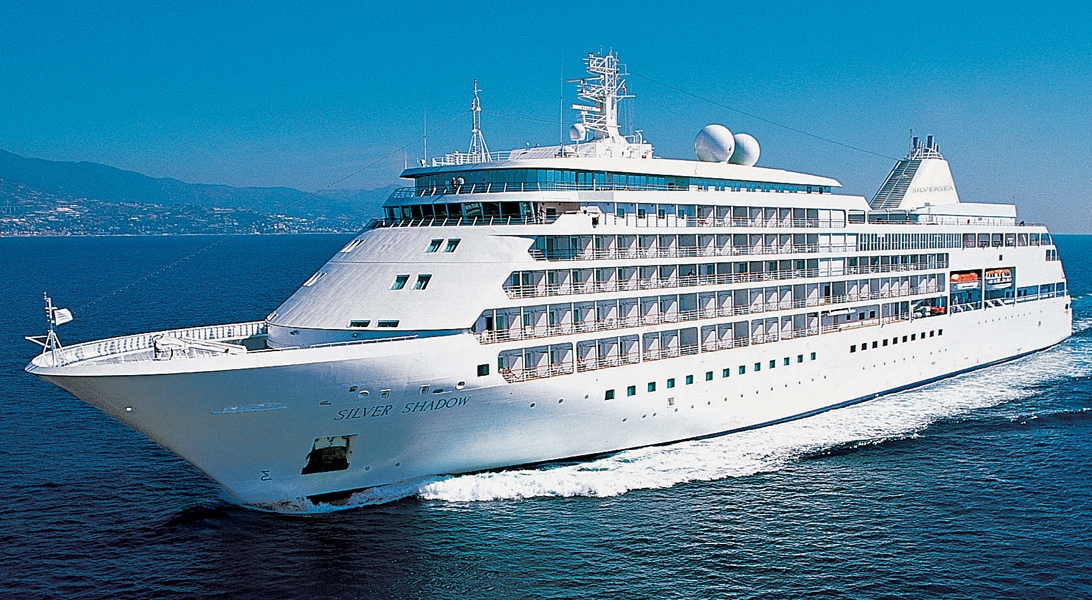
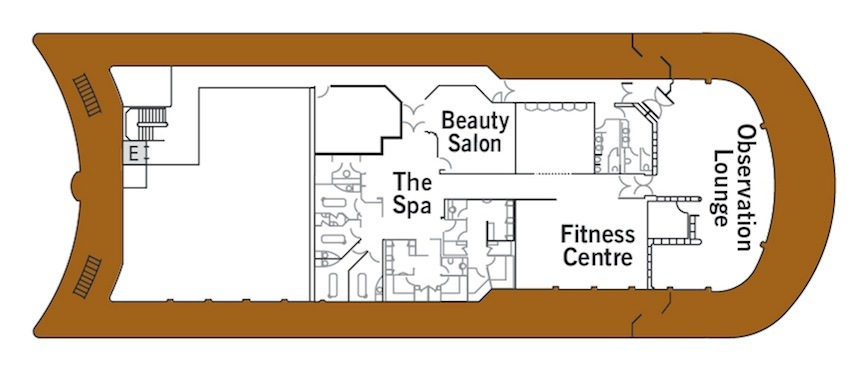

The images shown are for illustration purposes only and may not be an exact representation of what you find on the ship.
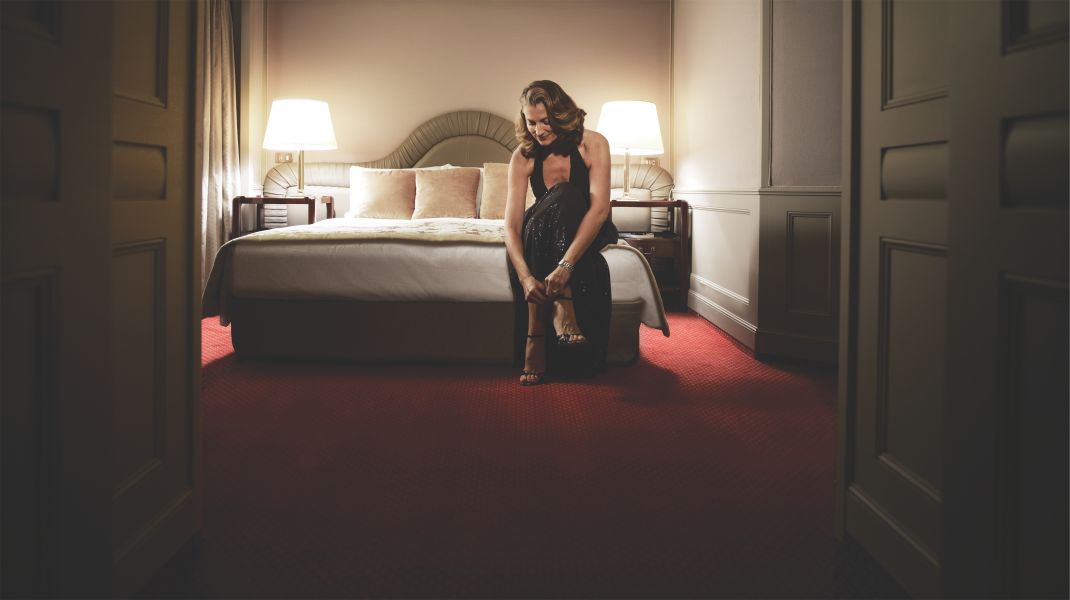
| Grade Code | From | To | |
| G1 | Grand Suite (1 Bedroom) | £13,000 | £13,450 |
| G2 | Grand Suite (2 Bedrooms) | £20,100 | £21,000 |
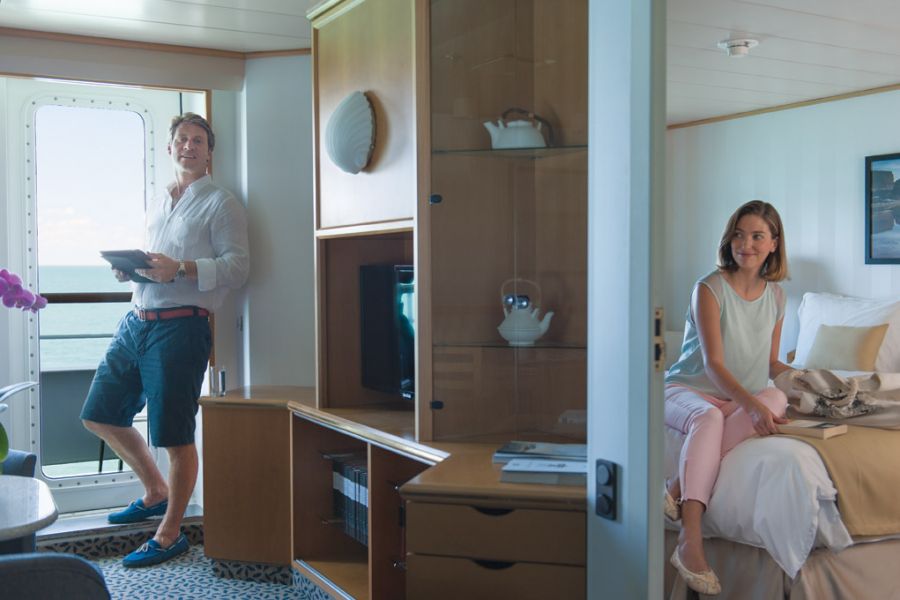
One of Silversea's finest suites, the Grand Suite's spacious amenities allows vou to cruise in comfort and class.
Expertly designed and exquisitely appointed. Ideal for entertaining friends while you cruise or enjoying a quiet dinner “at home”. Available as a one-bedroom configuration or as two-bedrooms (as illustrated) by adjoining with a Silversea Veranda Suite.
One bedroom: 87-101 sq.m. including veranda
Two bedroom: 133 sq.m. including veranda
Please note that the 3rd guest will sleep on a comfortable sofa bed in the reception area of the suite.
Essentials
Characteristics
Furniture
King size bed
Media & Communication
Onboard Services
Amenities
| Grade Code | From | To | |
| ME | Medallion Suite | £7,700 | £8,150 |
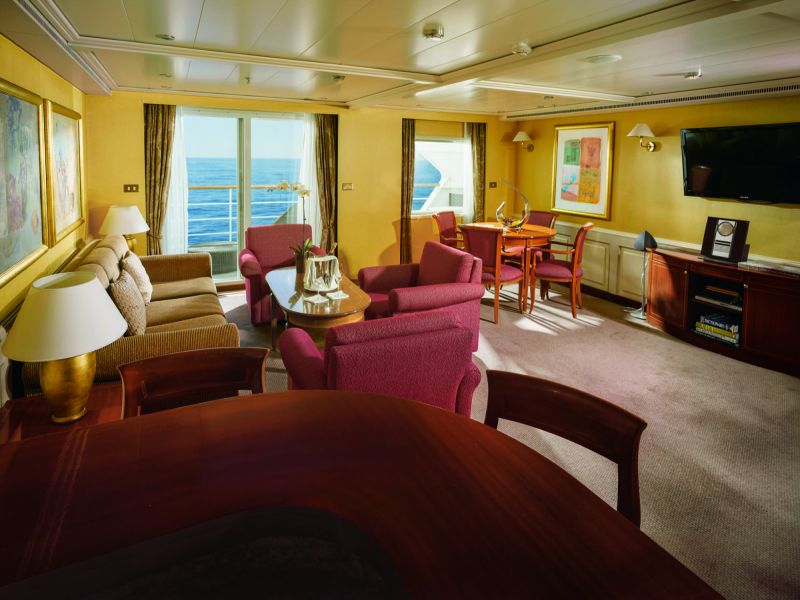
A mark of distinction. Sumptuous. Spacious. Rich textures and panoramic views surround you with distinguished luxury. An extravagant suite for an extravagant cruise.
One bedroom: 49 sq m including veranda (8 sq ft)
Please note that the 3rd guest will sleep on a comfortable sofa bed in the reception area of the suite.
Essentials
Characteristics
Furniture
Media & Communication
Onboard Services
Amenities
| Grade Code | From | To | |
| R1 | Royal Suite (1 Bedroom) | £12,400 | £12,850 |
| R2 | Royal Suite (2 Bedrooms) | £19,500 | £20,400 |
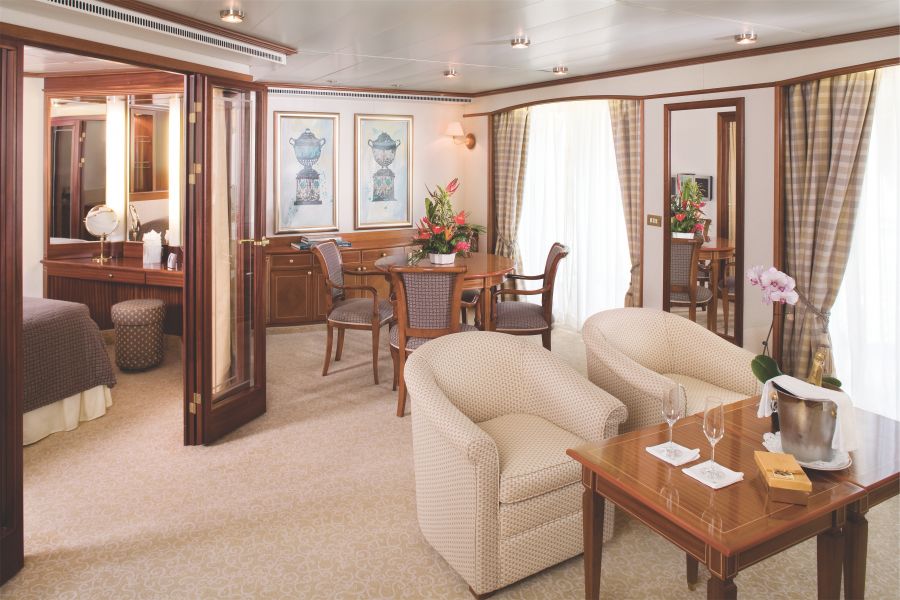
Stately describes the Royal Suite. Commanding and majestic. Perfect for entertaining. Enough living space to roam. The pinnacle of good living. Available in a one- or two-bedroom configuration (as illustrated) by adjoining with a Veranda Suite.
One bedroom: 90–94 sq m including veranda (10–11 sq m)
Two bedrooms: 126 sq m including veranda (16–17 sq m)
Please note that the 3rd guest will sleep on a comfortable sofa bed in the reception area of the suite.
Essentials
Characteristics
Furniture
Media & Communication
Onboard Services
Amenities
| Grade Code | From | To | |
| SL | Silver Suite | £8,600 | £9,100 |
Stylish and sophisticated. Separate dining and living rooms. Larger verandas. Situated midship. Perfection in design for comfortable living. Silver Suites accommodate three guests.
One bedroom: 61–65 sq m including veranda (10–11 sq m)
Please note that the 3rd guest will sleep on a comfortable sofa bed in the reception area of the suite.
Essentials
Characteristics
Furniture
Media & Communication
Onboard Services
Amenities
The images shown are for illustration purposes only and may not be an exact representation of what you find on the ship.
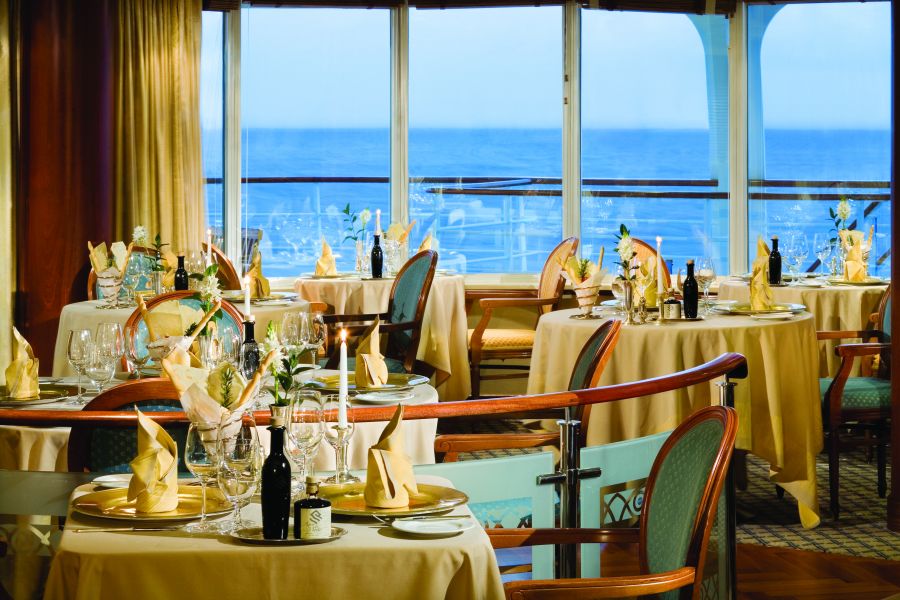
La Terrazza elevates casual dining by day and delivers an authentic Italian experience by night. During the breakfast and lunch buffets, our master chefs prepare global favorites at live stations. As evening falls, handmade pastas and classic seafood dishes are the centerpiece — every impeccable bite paired with fine wines from around the world.
Open seating for breakfast and lunch.
Reservations required for dinner.
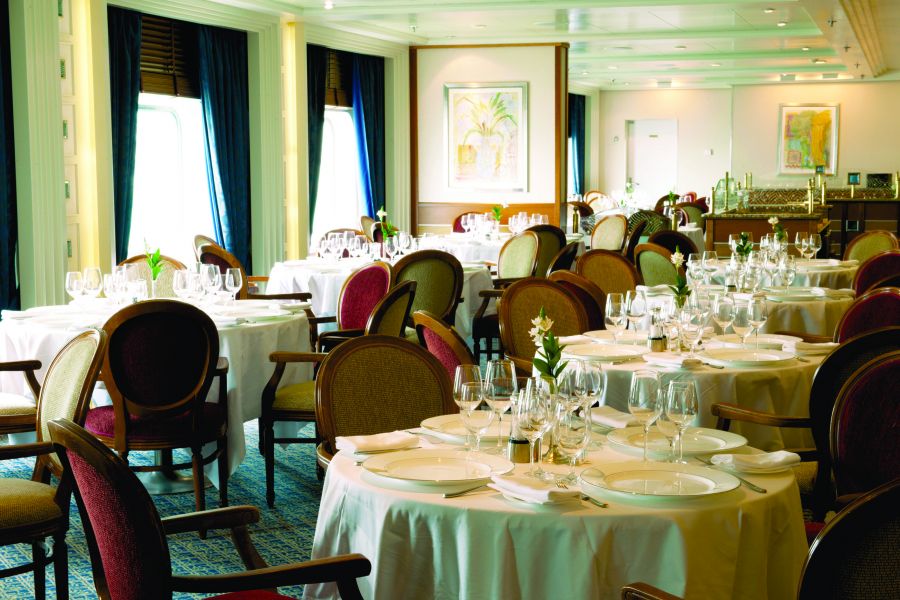
The Restaurant transforms dining into an extraordinary journey of taste. Indulge in international delicacies, refined classics, and destination-driven creations that reflect the flavours of the region you’re exploring. From breakfast favourites to imaginative evening courses, every meal draws inspiration from your voyage.
The images shown are for illustration purposes only and may not be an exact representation of what you find on the ship.
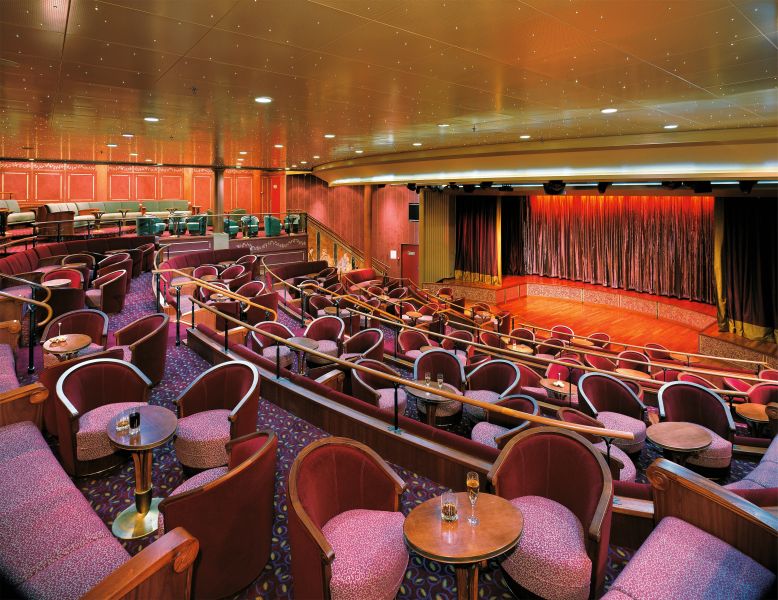
At The Show Lounge, theatrical immersion takes centre stage. From captivating performances and screenings to cultural programs, this elegant venue was designed to dazzle. Tiered seating ensures impeccable views while attentive beverage service makes indulging effortless. Raise a glass as the curtain rises on an unforgettable night of entertainment.
The images shown are for illustration purposes only and may not be an exact representation of what you find on the ship.
The images shown are for illustration purposes only and may not be an exact representation of what you find on the ship.


Our Fusion packages are all ABTA & ATOL protected ensuring that your booking is safe with us
| 12 nights aboard the Silver Shadow | |||
| Butler Service in Every Suite | |||
| Gratuities Always Included | |||
| Beverages In-Suite and Throughout the Ship | |||
| Gourmet Dining | |||
| In Suite Dining & 24-Hour Room Service | |||
| Intimate small size ships | |||
| Free Wifi Throughout the Ship | |||
| Free Zodiac, Land and Sea Tours & Activities & Complimentary Expedition gear | |||
| Port Taxes and Fees | |||
 | ABTA and ATOL Protection* | ||
Date 12th Nov 2028 |
Nts 12 |
Suite £4,600pp |
Date 12th Nov 2028 |
Nts 12 |
Suite £4,600pp |
| Suite staterooms from | £4,600pp | ||
| G1 | Grand Suite (1 Bedroom) | £13,000pp | |
| G2 | Grand Suite (2 Bedrooms) |  | |
| ME | Medallion Suite | £7,700pp | |
| O1 | Owner's Suite (1 Bedroom) | £15,250pp | |
| O2 | Owner's Suite (2 Bedrooms) | | |
| R1 | Royal Suite (1 Bedroom) | £12,400pp | |
| R2 | Royal Suite (2 Bedrooms) | | |
| SL | Silver Suite | £8,600pp | |
| VI | Vista Suite | £4,600pp | |
| CV | Classic Veranda Suite | £5,800pp | |
| DX | Deluxe Veranda Suite | £6,350pp | |
| SV | Superior Veranda Suite | £5,900pp | |
Fusion Holidays when selling travel arrangements is a trading name of Co-op Travel Services Limited, registration 08903986. Fusion Cruises is an Accredited Body Member of Co-op Travel Services Limited ATOL 12904.
Book with Confidence. We are a Member of ABTA which means you have the benefit of ABTA’s assistance and Code of Conduct.
Some of the flights and flight-inclusive holidays on this website are financially protected by the ATOL scheme but ATOL protection does not apply to all holiday and travel services offered on this website. This website will provide you with information on the protection that applies in the case of each holiday and travel service offered before you make your booking. If you do not receive an ATOL Certificate then the booking will not be ATOL protected. If you do receive an ATOL Certificate but all parts of your trip are not listed on it, those parts will not be ATOL protected. Please see our booking conditions for information, or for more information about financial protection and the ATOL Certificate go to: www.caa.co.uk