This site uses cookies as defined in our Cookie Policy, by continuing to use this site you agree to their use.
Continue

| Arrive | Depart | ||||||
| 18th18 | JulJul | 202727 | Nice, France, embark on the Silver Shadow | 19:00 | |||
United with France only since 1860, Nice has its own history and atmosphere, which dates back 230,000 years. It was on Colline du Château (now château-less) and at the Plage des Ponchettes, in front of the Old Town, that the Greeks established a market-port in 350 BC and named it Nikaia, which would become Marseilles' chief coastal rival. The Romans established themselves a little later on the hills of Cimiez (Cemenelum), already previously occupied by Ligurians and Celts, and quickly overshadowed the waterfront port. After falling to the Saracen invasions, Nice regained power as an independent state, becoming an important port in the early Middle Ages.So cocksure did it become that in 1388, Nice, along with the hill towns behind, effectively seceded from the county of Provence, under Louis d'Anjou, and allied itself with Savoie. Thus began its liaison with the House of Savoy, and through it with Piedmont and Sardinia, it was the Comté de Nice (Nice County). This relationship lasted some 500 years, tinting the culture, architecture, and dialect in rich Italian hues.By the 19th century Nice was flourishing commercially, locked in rivalry with the neighboring shipping port of Genoa. Another source of income: the dawning of tourism, as first the English, then the Russian nobility, discovered its extraordinary climate and superb waterfront position. A parade of fine stone mansions and hotels closed into a nearly solid wall of masonry, separated from the smooth-round rocks of the beach by what was originally named Camin deis Anglés (the English Way), which of course is now the famous Promenade des Anglais. This magnificent crescent, which is seeking UNESCO recognition, is one of the noblest in France. Many of Nice's most delightful attractions—the Cours Saleya market, the Old Town streets, the Hotel Negresco, and the Palais Masséna—are on or close to this 10-km (6-mile) waterfront, making it the first stop for most visitors, while the redevelopment of Nice's port, around the other side of the Colline du Château, makes it easier for amblers who want to take in the Genoese architecture or peruse the antiques at the Puces de Nice, now part of the Promenade des 100 Antiquaires, along Quai Papacino. Nice also has the distinction of the "Family Plus" label, with free strollers, play areas, and restaurants with child-friendly activities. Nice's sweeping bend of brilliant-blue seawater - which once tempted the aristocracies of Europe - continues to entice and entrance visitors to these sun-soaked shores. A refined city of airy ocean boulevards grandiose buildings and open spaces fountain-sprinkled parks and colourful floral displays add to the city's timeless appeal. Nice has lost none of its old-world lustre and there remains something of the divine in the Bay of Angels' endless sparkling waterfront. The vast open Promenade des Anglais remains Nice's magnificent crowning glory inviting the city out to jog wander and glide along the Mediterranean's most spectacular curve of seafront promenade. The crisp clear golden light also continues to make Nice a destination of creative pilgrimage and Matisse Picasso and Renoir are among the many artists to lavish in the city's eternal beauty. Drag yourself away from the waterfront to discover the old town punctuated with Baroque churches rising and the wafting scents of baking pastries and lavender bundles. Follow the floral odours to Nice's famous flower market which spills gorgeous colourful displays along Cours Saleya. There's a strong hint of Italy explained by the fact that Nice only aligned with France in 1860 - following 500 years under the House of Savoy. Walk in Nietzsche's footsteps and climb up to Colline du Château's charming green park and cascading waterfalls to relish the views down over the city and sparkling sea expanse. | |||||||
| 19th19 | JulJul | 202727 | Ajaccio, Corsica, France | 08:00 | 17:00 | ||
Considered Corsica’s primary commercial and cultural hub, the largest city and regional capital of Ajaccio is situated on the west coast of the island, approximately 644 km (400 miles) southeast of Marseille, France. Founded in 1492, vestiges of ancient Corsica in this ville impériale revolve around the city’s most famous son, Napoléon Bonaparte, whose family home—now the national museum Maison Bonaparte—pays tribute to the emperor’s historical influence.Remnants from what was originally a 12th-century Genoese colony are still visible around the Old Town near the imposing citadel and watchtower. Perfect for exploring, the luminous seaside city surrounded by snowcapped mountains and pretty beaches offers numerous sites, eateries, side streets, and a popular harbor, where sailboats and fishing vessels moor in the picturesque Tino Rossi port lined with well-established restaurants and cafés serving fresh local fare. Famed as the island birthplace of French Emperor, Napoléon Bonaparte, Ajaccio has made a towering contribution to European history. Bonaparte may be omnipresent in Ajaccio – with statues watching out over palm-tree lined boulevards bearing his name - but there is a lot more to this charming city, where an unhurried Mediterranean attitude mixes with the trendy buzz of a French Riviera resort. The stunning setting pairs glowing blue water with a dramatic backdrop of towering, snow-capped peaks. Bonaparte may have been famously short in stature, but he stands as a true giant of history. The National Bonaparte Museum is the ideal place to learn more of his life, in the very house where he was born in 1769. Just inside the modest Cathedral Notre-Dame-de-l'Assomption – surrounded by frescoed walls – you’ll also see the stone font where he was baptised. Elsewhere, the perched watchtower of Îles Sanguinaires is a short boat ride away, or Plage de Capo di Feno’s stunning, isolated band of white sand and transparent waters may tempt you outside of the historic city. Settle at a restaurant near the harbour to taste succulent wild boar, stewed in rich red wine casserole, or to crack into soft lobster meat. You also have to enjoy the famous fiadone cheesecake made from local brocciu cheese while you’re here, and to let the magic of unique Corsican Polyphony music carry you away. Three singers expertly blend harmonies to create a spine-tingling combination of melody – you’ll notice the distinctive style, as they each cover an ear to focus more clearly on their individual contribution. | |||||||
| 20th20 | JulJul | 202727 | Alghero, Italy | 08:00 | 23:00 | ||
A tourist-friendly town of about 45,000 inhabitants with a distinctly Spanish flavor, Alghero is also known as "Barcelonetta" (little Barcelona). Rich wrought-iron scrollwork decorates balconies and screened windows; a Spanish motif appears in stone portals and bell towers. The town was built and inhabited in the 14th century by the Aragonese and Catalans, who constructed seaside ramparts and sturdy towers encompassing an inviting nucleus of narrow, winding streets with whitewashed palazzi. The native language spoken here is a version of Catalan, not Italian, although you probably have to attend one of the Masses conducted in Algherese (or listen in on stories swapped by older fishermen) to hear it. Besides its historic architectural gems such as the Alghero Cathedral and Palazzo d'Albis, the fortified city is well worth a visit to simply stroll and discover local culture on narrow cobblestone streets. The city also has a reputation to serve great food at reasonable prices. Encircled by dramatic medieval walls, which rise abruptly from deep-blue waters, Alghero’s defences shelter one of Sardinia’s largest and most spectacular old towns. Uneven cobbled streets, rich history and a fiery Catalan flare provide a real depth of character, and the Coral Riviera’s pristine beaches, which stretch out nearby, help to make Alghero a real highlight of Sardinia. Alghero has changed hands numerous times over its tempestuous history, but it’s the Catalan influence that you’ll feel most acutely, as you explore. It was the Catalans who upgraded the defensive ramparts of the ‘Sardinian Barcelonetta’ into the spectacular, imposing fortress we see today, enclosing the old town’s evocative knot of narrow streets and rose-gold-coloured masonry. Wander the streets at your leisure, enjoying the cooling shade of the tight, cobblestone streets with lemon-gelato in hand, or enjoying fresh tuna steak at the bustling La Boqueria market. Alghero Cathedral is hidden amid the labyrinth of narrow streets, but it’s the distinctive Baroque-dome of Chiesa di San Michele that you’ll immediately notice peeking ostentatiously over the terracotta roofs of the old town, flaunting its rainbow-coloured patterning. Plush restaurants revel in Alghero’s historical collision of cultures and produce delicious fare like plump clams tangled in tagliatelle, and succulent porcetto pork – slowly roasted to perfection in smoky wood ovens. Wash it down with mirto, a crushed berry liqueur, or sample the fruits of local vineyards, with a platter of Sardinia’s renowned pecorino sheep’s cheese. The city dominates Sardinia’s Coral Riviera – so named because of the red coral found here that’s been used for jewellery since Roman times. Lie back and listen to the waves washing ashore at Spiaggia di Maria Pia beach, breathing in the smell of pine-needles on the breeze. | |||||||
| 21st21 | JulJul | 202727 | At Sea | ||||
| 22nd22 | JulJul | 202727 | Ibiza, Spain | 11:30 | 21:00 | ||
Hedonistic and historic, Eivissa (Ibiza, in Castilian) is a city jam-packed with cafés, nightspots, and trendy shops; looming over it are the massive stone walls of Dalt Vila —the medieval city declared a UNESCO World Heritage site in 1999—and its Gothic cathedral. Squeezed between the north walls of the old city and the harbor is Sa Penya, a long labyrinth of stone-paved streets that offer some of the city's best offbeat shopping, snacking, and exploring. The tourist information office on Vara de Rey has a useful map of walks through the old city. Ibiza has always called out to those seeking escape and sanctuary and you'll soon feel the island's magic as you dive with dolphins dine on calamari and octopus platters and revel in Ibiza's rejuvenating artistic ambience. Ibiza Town's 16th-century old town is a maze of wide cobbled streets lined with a crowd of outdoor bars and energetic restaurants serving up heavy platters of fresh seafood. The steep walls of the rustic citadel Dalt Vila fortress tower over the town and the area is peppered with museums and historical quirks as well as the crowning Catedral de Eivissa. Wind up along pathways of uneven cobbles for unrivalled views out over the city and waves below. Play golf on peaceful courses which unspool along the coastline lounge on a beach or sail with the yachting crowd on the calm waves as you rejuvenate in Ibiza's heavenly glow. Beaches are long and sandy - choose between humming options where water sports and casual beach volleyball matches take place or seek out quieter scenic coves to enjoy the shade of pine trees and swim in shallow waters. You may find that you're mysteriously drawn to the 400-metre-high protrusion of Es Vedra - a rocky uninhabited island which rears from the waves opposite Cala d'Hort beach. Island whispers proclaim it to be the earth's third magnetic point and home to the sirens of Ancient Greece. | |||||||
| 23rd23 | JulJul | 202727 | Alcudia, Spain | 09:00 | 19:00 | ||
Nothing if not strategic, Alcúdia is the ideal base for exploring Mallorca's north coast, with the 13-km-long (8-mile-long) beach from Port d'Alcúdia to C'an Picafort and the adjacent Playa de Muro, the bird-watchers' paradise in the S'Albufera wetlands, and the spectacular drive along the corniche to Cap de Formentor. The charming little walled town itself is a capsule version of Mallorcan history: the first city here was a Roman settlement, in 123 BC. The Moors reestablished a town here, and after the Reconquest it became a feudal possession of the Knights Templar; the first ring of city walls dates to the early 14th century. Begin your visit at the Church of Sant Jaume and walk through the maze of narrow streets inside to the Porta de Xara, with its twin crenellated towers. | |||||||
| 24th24 | JulJul | 202727 | Mahón, Menorca, Spain | 08:00 | 19:00 | ||
The capital of Menorca since 1721, Mahon has a impressive natural deep water harbour, which is one of the largest in the world. This, coupled with its strategic location, has made it a stronghold for many nations throughout history. Mahon has an abundance of historical buildings, the oldest being the Arch of Saint Roc which is all that remains of the wall that once encircled the whole town. The island was occupied by the British during the 18th century and Lord Nelson is thought to have stayed there. Indeed, San Antoni Mansion, located on the north side of the harbour, houses a collection of Nelson memorabilia. The legacy of colonial rule can be seen in the muted Georgian style of some of the buildings, but Mahon still boasts attractive examples of neo-Classical, Baroque and Romanesque architecture. With narrow streets to explore, pleasant shaded squares and welcoming pavement cafés, there is something for everyone to enjoy. Please be aware that most shops in town close for a siesta between 1330 and 1730. The capital of Menorca is a bashful member of Balearic Islands which wait off of the sunny Spanish coast. With atmospheric old towns tiny fishing villages and unspoiled beach coves this is one of the group’s lesser-known and explored gems – and all the richer for it. A UNESCO Biosphere Reserve there are wetlands and rolling sand dunes with diverse wildlife to explore - and 220 different birds soar and wade within. The designation helped to halt the threat of overdevelopment and with gloriously clear waters and leisurely boating trips to enjoy Porto Mahon welcomes you to a wonderfully preserved and characterful island. The island’s capital spills around the Med’s largest natural harbour which sprawls out for three miles.The majestic organ that fills the interior of Santa Maria church with over 3 000 pipes is a sight to see and can produce a wonderful gut-vibrating noise. Filled with pottery and cake shops there’s an artsy laid back and creative atmosphere to Porto Mahon’s streets. Swing a golf club and crack drives through the salty sea air of Porto Mahon or rumble along the paved bike paths that ring the island exploring between wildflower sprinkled fields and stone walls. Or head straight for the many beaches and turquoise seas which are blotched with dark blue patches. When it’s time for a sit down in the shade order up a refreshing pomada - gin and lemonade – before settling on your sandy nook of choice to watch the setting sun sinking into the warm of the waves of the Mediterranean. | |||||||
| 25th25 | JulJul | 202727 | Palamós, Spain | 08:00 | 19:00 | ||
One of the best ways to arrive in Catalonia is by sea, especially via the Costa Brava. This coastline, also known as the Rugged or Wild Coast, stretches from Blanes to the French border. Its name aptly refers to the steep cliff of ancient twisted rocks, which runs its entire length and is bounded inland by the Catalan mountain ranges. The intensity of the coast’s colour, the ruggedness of the rocks and the scent of the plants all combine to add to its attraction. The history of this region is long and varied. Traces can be found of the advanced culture of the Iberians, Greeks, Romans, Visigoths and Arabs. With Wilfred I and the independence of Catalan countries, the Catalan dynasty was born. Later, in 1479, Catalonia became a part of unified Spain following the marriage of Isabel, Queen of Castile, and Fernando, King of Aragon. The port of Palamos, some 36 miles northeast of Barcelona, has been in existence for nearly 700 years thanks to its location on one of the deepest natural bays in the western Mediterranean. The town itself is the southernmost of a series of resorts popular with sun worshippers. For the most part, Palamos has managed to retain some of the charm of a fishing village. The port also serves as a gateway to such inland locations as Girona, the capital of the province. Art lovers may want to visit Figueras, famous for its bizarre Teatre-Museu Dali, the foremost of a series of sites associated with the eccentric surrealist artist, Salvador Dali. If you choose to stay in Palamos, you can enjoy the pleasant atmosphere of the town or spend some time at a nearby beach. The town has a long seagoing tradition and busy harbour. The fish auction, prompted by the arrival of the fishing boats, is a spectacle worth seeing. The Fishing Museum illustrates the history and the life of the families who live off the sea. A place of monasteries tucked into mountains, surreal art, and gorgeous beaches, Palamos is your gateway to the Costa Brava’s scenic beauty, and the cultural wonders of Catalonia. Inspect Palamos’ rugged coastline, and you can almost see the Catalan flag’s blood and gold colours reflected in the craggy red cliffs and golden sands. Soak in the unfiltered glory of Spain’s Wild Coast, which is fringed with attractive beaches and rock-dappled outcrops lunging into the blue Mediterranean waves. Known for its rich, meaty prawns, Palamos is a flavourful stop of culture, coastline and historic charm. Just 20 miles inland from Palamos’ tempting beaches, you’ll find Girona’s Medieval city looming. Four rivers converge here, in this delightfully walkable city. Soak up the atmosphere of the cobbled old town, which is protected by historic ramparts. A steep ramp of 90 steps leads up to the Baroque façade of the Cathedral of Girona, which towers over the city and impresses with the world’s widest Gothic nave – a full 22 metres across. Figueres is also close by, where you can enter the ‘theatrical dream’ conceived by the master of surrealism, Salvador Dalí. Born in Figueres, his hometown honours his memory and global influence at the irresistible Dalí Theatre-Museum - a gloriously bizarre and immersive experience, and a fitting summation of his creative outlook. Opened in 1974, Dalí himself had an input into the design of the giant egg topped building, having worked on its creation during the final decade of his life. | |||||||
| 26th26 | JulJul | 202727 | Barcelona, Spain | 08:00 | 23:00 | ||
The infinite variety of street life, the nooks and crannies of the medieval Barri Gòtic, the ceramic tile and stained glass of Art Nouveau facades, the art and music, the throb of street life, the food (ah, the food!)—one way or another, Barcelona will find a way to get your full attention. The capital of Catalonia is a banquet for the senses, with its beguiling mix of ancient and modern architecture, tempting cafés and markets, and sun-drenched Mediterranean beaches. A stroll along La Rambla and through waterfront Barceloneta, as well as a tour of Gaudí's majestic Sagrada Famíliaand his other unique creations, are part of a visit to Spain's second-largest city. Modern art museums and chic shops call for attention, too. Barcelona's vibe stays lively well into the night, when you can linger over regional wine and cuisine at buzzing tapas bars. Having attracted over 82 million visitors in 2017, Spain is gaining popularity as a travel destination. The country lures travellers from across the world with its promise of authenticity, charisma, and memorable moments. Spain’s culture is a celebration of the finer things in life, an expression of spirit, heritage and fun: colourful fiestas, delectable cuisine, age-defining art, music, dance, sport and so much more. Each region of the country has evolved a character of its own, meaning the country is unified by a sense of cultural multiplicity. Barcelona, the capital of Catalonia, is a masterpiece that embellishes the Spanish canvas. The fact that the Barcelona’s iconic cathedral, La Sagrada Familia, is still under construction over 141 years after construction commenced pays testament to the city’s artistic perfectionism, which pervades all aspects of life here. Apparent in the city’s architecture, layout, and cultural practices, aestheticism retains its value here. Antoni Gaudí, whose iconic style of modernist architecture is among Barcelona’s leading attractions, could perhaps be credited with designing the face of this magnificent city. Enjoy getting to know the vivacious personality behind Barcelona’s beauty. | |||||||
| 27th27 | JulJul | 202727 | Port-Vendres, France | 08:00 | 18:30 | ||
| Midi-Pyrenées is France's largest region, spreading from the Dordogne River in the north to the Spanish border in the south. Port Vendres, only 10 miles (16 km) from the Spanish border, is located on the coast that is known as the Côte Vermeille. The port had its heyday in the 19th century with colonial trade and ferries plying the route to and from North Africa. For cruise vessels, Port Vendres provides the opportunity to visit some of the prettiest areas of France. It serves as a convenient starting point for trips to the medieval town of Carcassonne. Other towns that may be worthwhile exploring include Collioure and Banyuls. The latter is famous for its sweet wine and as the birthplace of sculptor Aristide Maillol. | |||||||
| 28th28 | JulJul | 202727 | Sète, France | 08:00 | 19:00 | ||
The fishing village of Sète serves as gateway to Montpellier, in the North. Other noteworthy destinations in this area include Carcassone, Aigues Mortes, the Abbaye de Fontfroide, and Pezenas. For a look at the real fisherman's life, however, stay right where you are. Sète is the Mediterranean's biggest fishing port. Canals winding through town make it fun to stroll around, and there are a number of good walking paths leading to the beach (about 30 minutes to the west). Although it's small and unspectacular, Plage de la Corniche has calm, pristine waters that are perfect for swimming. For a panoramic view of the area, climb Mont St-Clair or Les Pierres Blanches and pick a beach to settle down on. Set on a lagoon beside the Mediterranean's waves Sete's streets are interspersed with canals and the historic Canal du Midi terminates here. Canal boats joust on the river during August’s festival in this working city of breezy nautical charm. Known as the Venice of Languedoc house facades front up against canal banks while leisurely cruises offer romantic trips through this colourful maritime city. The ascent of Mount St-Clair is perhaps the best spot to appreciate this wonderful watery setting and you can also take in the bright frescoes of Chapel of Notre Dame de la Salette while you're there. Or absorb the town’s deep fishing heritage with a harbour walk among the bobbing little boats or within the preserved La Pointe Courte fisherman’s village. Sit down to sample the incredible sea life at fine restaurants which plate up mounds of juicy oysters and shellfish hauled ashore from the waters. Swing golf clubs on rollercoaster coastal courses or relax on mile after mile of golden beach which stretch out along the spit nearby. Inland discover rich medieval history beautifully preserved at the walled city of Aigues-Mortes. Mighty Carcassonne UNESCO World Heritage Site also stands within reach inviting you to enter a majestic fairy-tale citadel of fantasy turrets and imposing battlements. Step across the drawbridge and brush shoulders with armed soldiers and artisans inside this living timewarp's immense ramparts. | |||||||
| 29th29 | JulJul | 202727 | Saint-Tropez, France | 08:00 | 19:00 | ||
At first glance, it really doesn't look all that impressive. There's a pretty port with cafés charging €5 for a coffee and a picturesque old town in sugared-almond hues, but there are many prettier in the hills nearby. There are sandy beaches, rare enough on the Riviera, and old-fashioned squares with plane trees and pétanque players, but these are a dime a dozen throughout Provence. So what made St-Tropez an internationally known locale? Two words: Brigitte Bardot. When this pulpeuse (voluptuous) teenager showed up in St-Tropez on the arm of Roger Vadim in 1956 to film And God Created Woman, the heads of the world snapped around. Neither the gentle descriptions of writer Guy de Maupassant (1850–93), nor the watercolor tones of Impressionist Paul Signac (1863–1935), nor the stream of painters who followed (including Matisse and Bonnard) could focus the world's attention on this seaside hamlet as did this one sensual woman in a scarf, Ray-Bans, and capris. Vanity Fair ran a big article, "Saint Tropez Babylon," detailing the over-the-top petrodollar parties, megayachts, and Beyoncé–d paparazzi. But don't be turned off: the next year, Stewart, Tabori & Chang released an elegant coffee-table book, Houses of St-Tropez, packed with photos of supremely tasteful and pretty residences, many occupied by fashion designers, artists, and writers. Once a hangout for Colette, Anaïs Nin, and Françoise Sagan, the town still earns its old moniker, the "Montparnasse of the Mediterranean." Yet you might be surprised to find that this byword for billionaires is so small and insulated. The lack of train service, casinos, and chain hotels keeps it that way. Yet fame, in a sense, came too fast for St-Trop. Unlike the chic resorts farther east, it didn't have the decades-old reputation of the sort that would attract visitors all year around. For a good reason: its location on the south side of the gulf puts it at the mercy of the terrible mistral winter winds. So, in summer the crowds descend and the prices rise into the stratosphere. In July and August, you must be carefree about the sordid matter of cash. After all, at the most Dionysian nightclub in town, a glass of tap water goes for $37 and when the mojo really gets going, billionaires think nothing of "champagne-spraying" the partying crowds—think World Series celebrations but with $1,000 bottles of Roederer Cristal instead of Gatorade. Complaining about summer crowds, overpricing, and lack of customer service has become a tourist sport and yet this is what makes St-Tropez—described by the French daily newspaper Le Figaro as the place you can see "the greatest number of faces per square meter"—as intriguing as it is seductive. A glitzy, glamorous coastal resort that needs no introduction, Saint Tropez is the French Riviera hotspot of choice for A-listers and flotillas of gleaming yachts. The sparkle of its beaches, and clarity of its light, continues to attract artists - but it was the famous presence of Brigitte Bardot that leant Saint Tropez its enduring glamour and steamy appeal. Nowadays, speedboats skim offshore, while fine vintages from the vineyards nearby are uncorked in top-notch restaurants, in this well-heeled highlight of the Cote d'Azur. Famous bars offer views of the port along Quai Jean Jaurès, with its iconic cherry-red directors' chairs. Here you can admire the monstrous wealth of yachts that sparkle on the waters. On the same corner, big-name brand labels glimmer in the shops of rue François Sibilli - which cuts inland from the charming waterfront. The earthier appeal of boules clinking and thumping into the ground can be enjoyed at Place des Lices, where sun-wrinkled locals compete. Saint Tropez has a few beaches of its own, but famous stretches like Pampelonne Beach draw the biggest crowds to relax on star-studded golden sands. La Ponche, the authentic fishing quarter, retains its cobbled, historic elegance, and a 17th-century, hexagon-shaped citadel watches over the city and coastline from above. Coastal walks in the sea air snake away from the city’s bustle, and a series of headlands shape the stunning riviera landscape surrounding Saint Tropez. The historic monochrome Cap Camarat lighthouse adds a pleasing accent to hikes above the sparkling Mediterranean’s waves. | |||||||
| 30th30 | JulJul | 202727 | Nice, France, disembark the Silver Shadow | ||||
United with France only since 1860, Nice has its own history and atmosphere, which dates back 230,000 years. It was on Colline du Château (now château-less) and at the Plage des Ponchettes, in front of the Old Town, that the Greeks established a market-port in 350 BC and named it Nikaia, which would become Marseilles' chief coastal rival. The Romans established themselves a little later on the hills of Cimiez (Cemenelum), already previously occupied by Ligurians and Celts, and quickly overshadowed the waterfront port. After falling to the Saracen invasions, Nice regained power as an independent state, becoming an important port in the early Middle Ages.So cocksure did it become that in 1388, Nice, along with the hill towns behind, effectively seceded from the county of Provence, under Louis d'Anjou, and allied itself with Savoie. Thus began its liaison with the House of Savoy, and through it with Piedmont and Sardinia, it was the Comté de Nice (Nice County). This relationship lasted some 500 years, tinting the culture, architecture, and dialect in rich Italian hues.By the 19th century Nice was flourishing commercially, locked in rivalry with the neighboring shipping port of Genoa. Another source of income: the dawning of tourism, as first the English, then the Russian nobility, discovered its extraordinary climate and superb waterfront position. A parade of fine stone mansions and hotels closed into a nearly solid wall of masonry, separated from the smooth-round rocks of the beach by what was originally named Camin deis Anglés (the English Way), which of course is now the famous Promenade des Anglais. This magnificent crescent, which is seeking UNESCO recognition, is one of the noblest in France. Many of Nice's most delightful attractions—the Cours Saleya market, the Old Town streets, the Hotel Negresco, and the Palais Masséna—are on or close to this 10-km (6-mile) waterfront, making it the first stop for most visitors, while the redevelopment of Nice's port, around the other side of the Colline du Château, makes it easier for amblers who want to take in the Genoese architecture or peruse the antiques at the Puces de Nice, now part of the Promenade des 100 Antiquaires, along Quai Papacino. Nice also has the distinction of the "Family Plus" label, with free strollers, play areas, and restaurants with child-friendly activities. Nice's sweeping bend of brilliant-blue seawater - which once tempted the aristocracies of Europe - continues to entice and entrance visitors to these sun-soaked shores. A refined city of airy ocean boulevards grandiose buildings and open spaces fountain-sprinkled parks and colourful floral displays add to the city's timeless appeal. Nice has lost none of its old-world lustre and there remains something of the divine in the Bay of Angels' endless sparkling waterfront. The vast open Promenade des Anglais remains Nice's magnificent crowning glory inviting the city out to jog wander and glide along the Mediterranean's most spectacular curve of seafront promenade. The crisp clear golden light also continues to make Nice a destination of creative pilgrimage and Matisse Picasso and Renoir are among the many artists to lavish in the city's eternal beauty. Drag yourself away from the waterfront to discover the old town punctuated with Baroque churches rising and the wafting scents of baking pastries and lavender bundles. Follow the floral odours to Nice's famous flower market which spills gorgeous colourful displays along Cours Saleya. There's a strong hint of Italy explained by the fact that Nice only aligned with France in 1860 - following 500 years under the House of Savoy. Walk in Nietzsche's footsteps and climb up to Colline du Château's charming green park and cascading waterfalls to relish the views down over the city and sparkling sea expanse. | |||||||
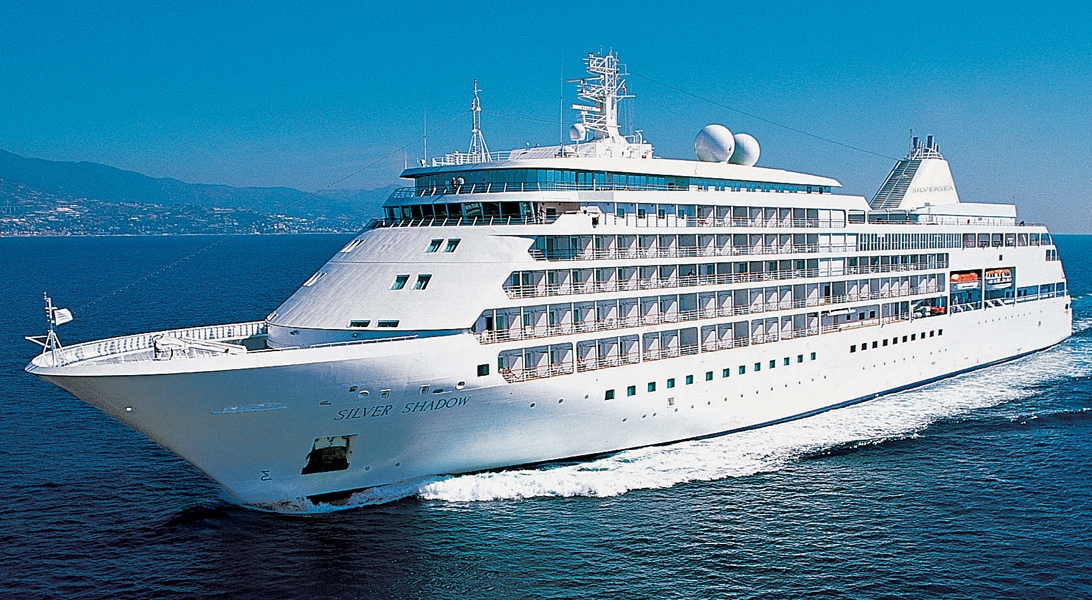
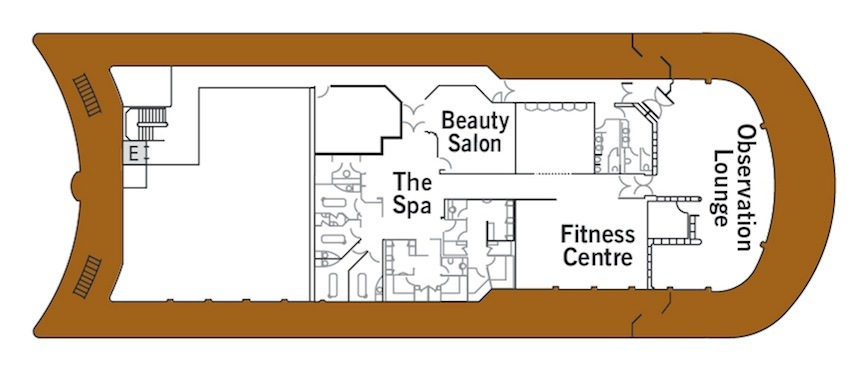

The images shown are for illustration purposes only and may not be an exact representation of what you find on the ship.
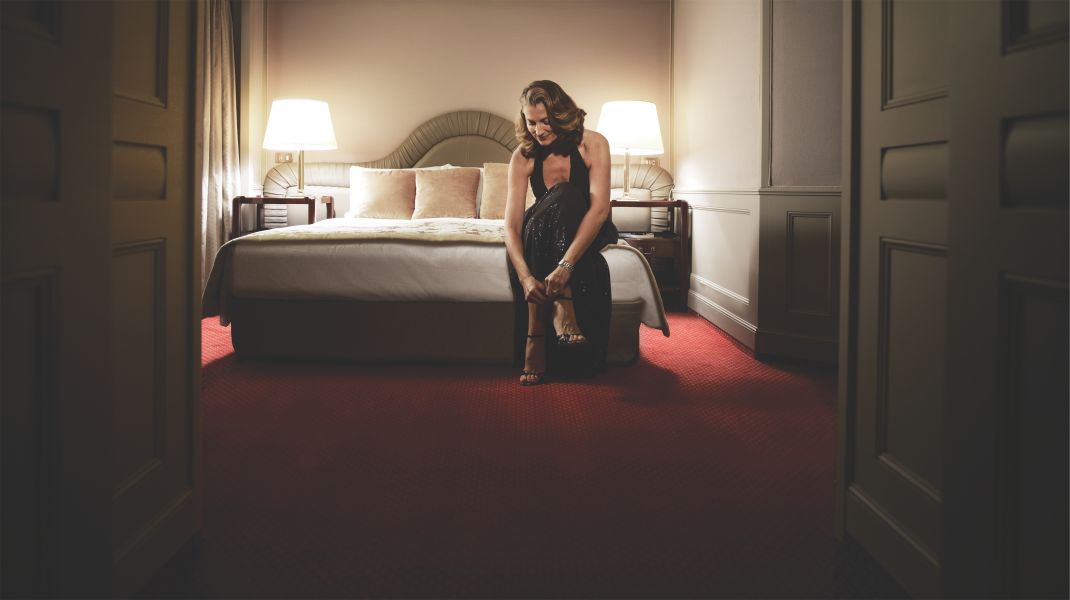
One of Silversea's finest suites, the Grand Suite's spacious amenities allows vou to cruise in comfort and class.
Expertly designed and exquisitely appointed. Ideal for entertaining friends while you cruise or enjoying a quiet dinner “at home”. Available as a one-bedroom configuration or as two-bedrooms (as illustrated) by adjoining with a Silversea Veranda Suite.
One bedroom: 87-101 sq.m. including veranda
Two bedroom: 133 sq.m. including veranda
Please note that the 3rd guest will sleep on a comfortable sofa bed in the reception area of the suite.
Essentials
Characteristics
Furniture
Media & Communication
Onboard Services
Amenities
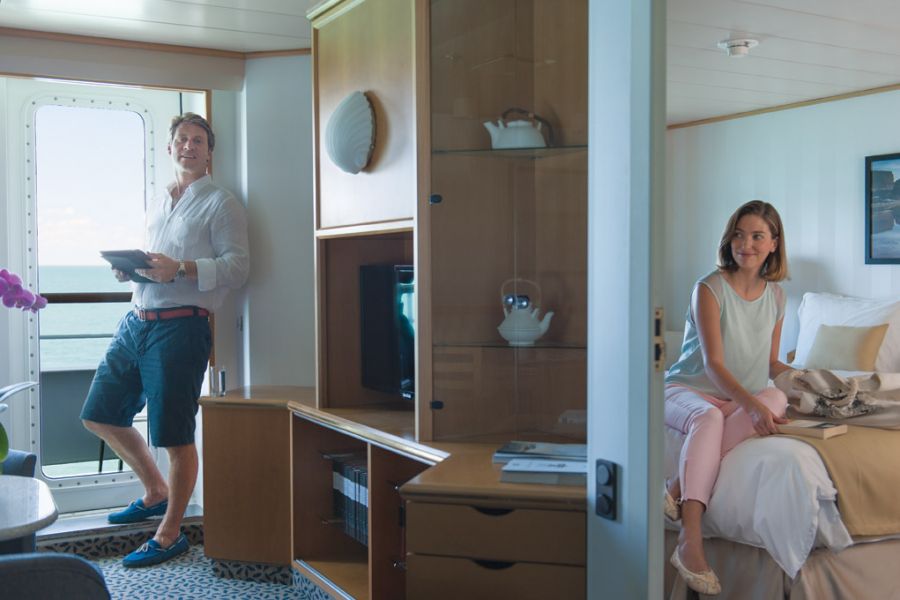
Teak-style balcony with floor- to-ceiling glass doors. Relaxing living room space with seating area.
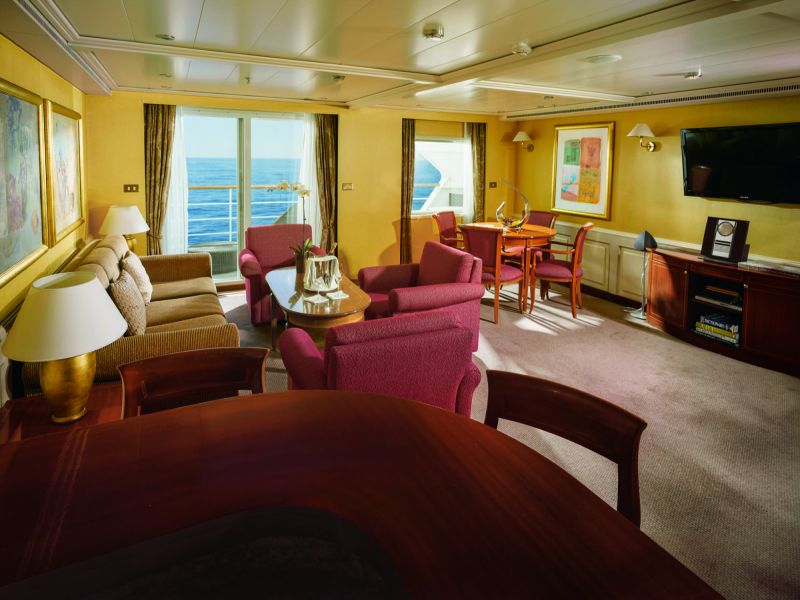
A mark of distinction. Sumptuous. Spacious. Rich textures and panoramic views surround you with distinguished luxury. An extravagant suite for an extravagant cruise.
One bedroom: 49 sq m including veranda (8 sq ft)
Please note that the 3rd guest will sleep on a comfortable sofa bed in the reception area of the suite.
Essentials
Characteristics
Furniture
Media & Communication
Onboard Services
Amenities
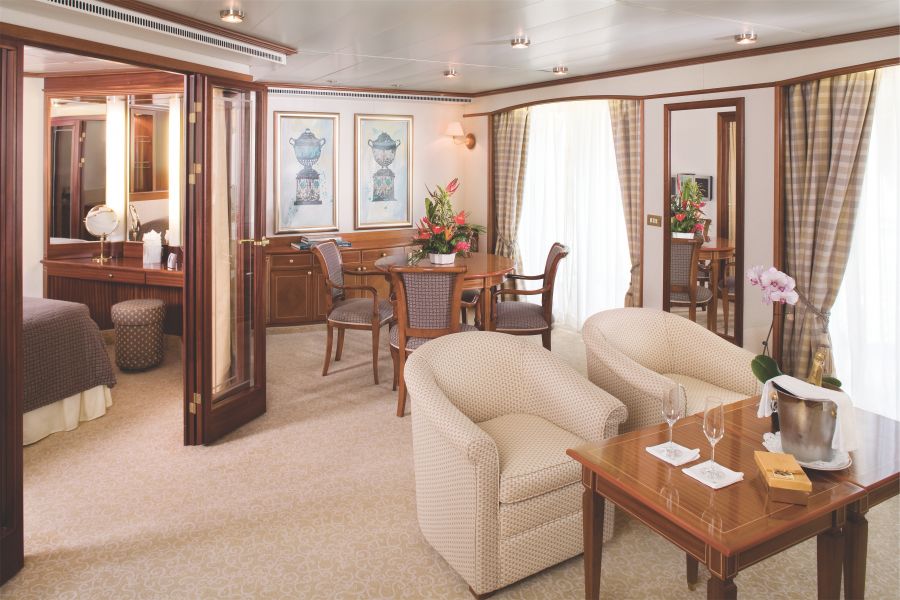
Stately describes the Royal Suite. Commanding and majestic. Perfect for entertaining. Enough living space to roam. The pinnacle of good living. Available in a one- or two-bedroom configuration (as illustrated) by adjoining with a Veranda Suite.
One bedroom: 90–94 sq m including veranda (10–11 sq m)
Two bedrooms: 126 sq m including veranda (16–17 sq m)
Please note that the 3rd guest will sleep on a comfortable sofa bed in the reception area of the suite.
Essentials
Characteristics
Furniture
Media & Communication
Onboard Services
Amenities
Stylish and sophisticated. Separate dining and living rooms. Larger verandas. Situated midship. Perfection in design for comfortable living. Silver Suites accommodate three guests.
One bedroom: 61–65 sq m including veranda (10–11 sq m)
Please note that the 3rd guest will sleep on a comfortable sofa bed in the reception area of the suite.
Essentials
Characteristics
Furniture
Media & Communication
Onboard Services
Amenities
The images shown are for illustration purposes only and may not be an exact representation of what you find on the ship.
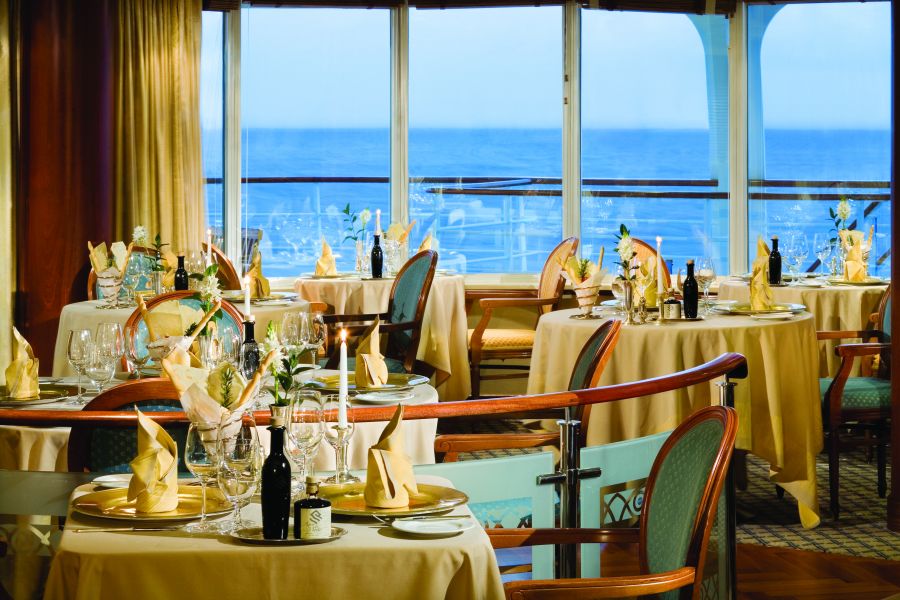
Authentic Italian recipes and the freshest, sustainable ingredients come together in this restaurant at sea.
On board this luxury cruise ship, a divine selection of Italy’s best cuisine is served à la carte in La Terrazza. Authentic recipes and the freshest ingredients come together with flair and passion aboard this luxury cruise—a flavorful expression of Silversea’s distinctive Italian heritage. La Terrazza uses buffalo mozzarella from Naples, organic balsamic vinegar and olive oil from Umbria, and air-dried ham out of Parma. The Emilia-Romagna region also produces Silversea’s 24-month aged Parmigiano Reggiano, and the pasta is made daily right on board.
Open seating for breakfast and lunch.
Reservations required for dinner.
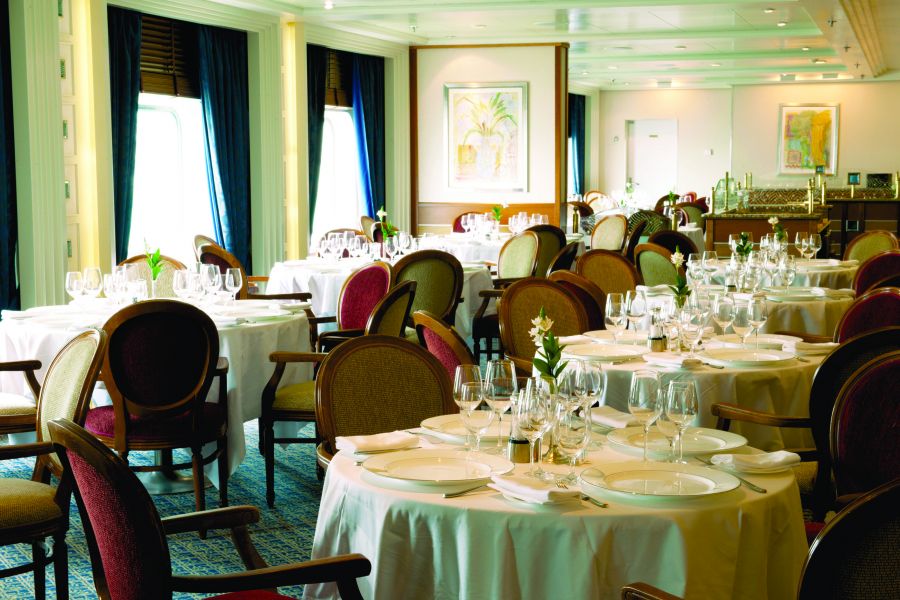
Enjoy Continental and regional specialities, as well as sweeping ocean views in our main dining room.
Sparkling with silver, crystal, and candlelight, Silversea’s main dining room serves contemporary, international cuisine with sophisticated elegance and impeccable service. Menus feature regional specialties unique to the voyage destination, for example, Roasted Chilean Sea Bass while cruising the Chilean fjords and Indian Chicken Korma en route to Mumbai. The Restaurant aboard this luxury cruise ship offers open-seating dining, which means there are no assigned times, no assigned tables. You are free to dine when, where, and with whom you please.
The images shown are for illustration purposes only and may not be an exact representation of what you find on the ship.
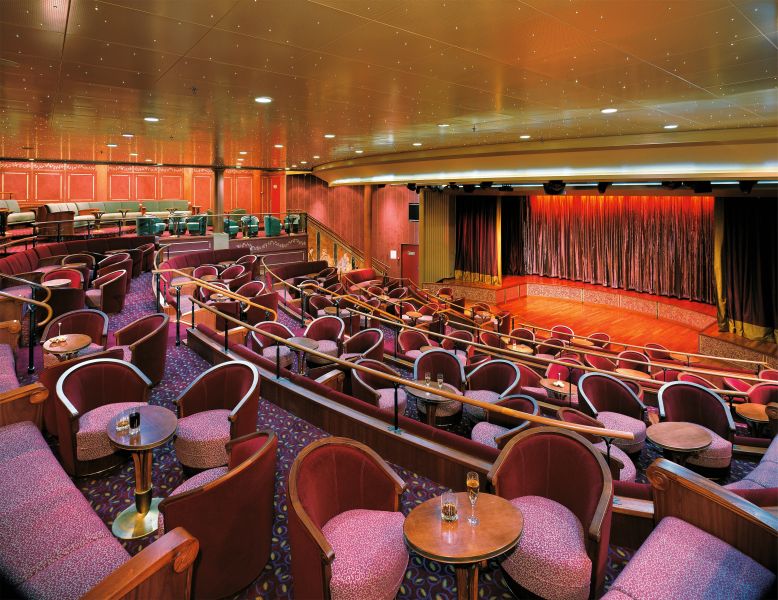
Enjoy a broad spectrum of entertainment from full-scale production shows and classical soloists, to cultural entertainment and feature films.
Every seat in this multi-tiered venue enjoys a clear view to the stage. Applaud a broad spectrum of entertainment presented during the cruise — from full-scale production shows and classical soloists, to cultural entertainment and feature films. Throughout your voyage, the luxury cruise ship’s The Show Lounge also presents port talks, enrichment lectures and a variety of special events.
The images shown are for illustration purposes only and may not be an exact representation of what you find on the ship.
The images shown are for illustration purposes only and may not be an exact representation of what you find on the ship.


Our Fusion packages are all ABTA & ATOL protected ensuring that your booking is safe with us
| 12 nights aboard the Silver Shadow | |||
| Butler Service in Every Suite | |||
| Gratuities Always Included | |||
| Beverages In-Suite and Throughout the Ship | |||
| Gourmet Dining | |||
| In Suite Dining & 24-Hour Room Service | |||
| Intimate small size ships | |||
| Free Wifi Throughout the Ship | |||
| Free Zodiac, Land and Sea Tours & Activities & Complimentary Expedition gear | |||
| Port Taxes and Fees | |||
 | ABTA and ATOL Protection* | ||
Date 18th Jul 2027 |
Nts 12 |
Please Call for Availability |
Date 18th Jul 2027 |
Nts 12 |
Please Call for Availability |
Fusion Holidays when selling travel arrangements is a trading name of Co-op Travel Services Limited, registration 08903986. Fusion Cruises is an Accredited Body Member of Co-op Travel Services Limited ATOL 12904.
Book with Confidence. We are a Member of ABTA which means you have the benefit of ABTA’s assistance and Code of Conduct.
Some of the flights and flight-inclusive holidays on this website are financially protected by the ATOL scheme but ATOL protection does not apply to all holiday and travel services offered on this website. This website will provide you with information on the protection that applies in the case of each holiday and travel service offered before you make your booking. If you do not receive an ATOL Certificate then the booking will not be ATOL protected. If you do receive an ATOL Certificate but all parts of your trip are not listed on it, those parts will not be ATOL protected. Please see our booking conditions for information, or for more information about financial protection and the ATOL Certificate go to: www.caa.co.uk