This site uses cookies as defined in our Cookie Policy, by continuing to use this site you agree to their use.
Continue

| Arrive | Depart | ||||||
| 17th17 | MayMay | 202828 | Split, Croatia, embark on the Silver Wind | 19:00 | |||
Split's ancient core is so spectacular and unusual that a visit is more than worth your time. The heart of the city lies within the walls of Roman emperor Diocletian's retirement palace, which was built in the 3rd century AD. Diocletian, born in the nearby Roman settlement of Salona in AD 245, achieved a brilliant career as a soldier and became emperor at the age of 40. In 295 he ordered this vast palace to be built in his native Dalmatia, and when it was completed he stepped down from the throne and retired to his beloved homeland. Upon his death, he was laid to rest in an octagonal mausoleum, around which Split's magnificent cathedral was built.In 615, when Salona was sacked by barbarian tribes, those fortunate enough to escape found refuge within the stout palace walls and divided up the vast imperial apartments into more modest living quarters. Thus, the palace developed into an urban center, and by the 11th century the settlement had expanded beyond the ancient walls.Under the rule of Venice (1420–1797), Split—as a gateway to the Balkan interior—became one of the Adriatic's main trading ports, and the city's splendid Renaissance palaces bear witness to the affluence of those times. When the Habsburgs took control during the 19th century, an overland connection to Central Europe was established by the construction of the Split–Zagreb–Vienna railway line.After World War II, the Tito years saw a period of rapid urban expansion: industrialization accelerated and the suburbs extended to accommodate high-rise apartment blocks. Today the historic center of Split is included on UNESCO's list of World Heritage Sites. Bathing in the Dalmatian Coast’s generous sunshine and overlooking sparkling island-studded waters Split is a city of romantic beauty built around an extraordinary - still beating - historical heart. The setting may be spectacular but it’s the Diocletian’s Palace - a Roman remain of incredible scale and detail that is truly bewitching. With a natural backdrop of dramatic limestone mountains and Croatia’s trademark scenic wonders all around Split is a true heavyweight of the Adriatic. To enter Split’s Diocletian’s Palace is to step into a beautiful time warp. Head first to the Cathedral of Saint Domnius where a hollow bell tower rockets up puncturing the sky. The perfume of lavender hangs heavy wherever you walk in the old town where tucked shops offer artisan chocolates dried figs and freshly-ground coffees. The expansive seafront promenade is all palm trees buzzing bars and eateries and further out you’ll find the peace of Marion Hill - where you can climb to some of the best views in town. Or take the far less exerting wander to Sustipan cemetery’s breathtaking panorama of sea city and distant islands. Trips to island paradises like Hvar and Brac are tempting as are longer excursions to sites like Krka National Park’s Waterfalls - where wide terraces of frothing water thunder into cooling swimmable splash pools below. Nearby Trogir is another UNESCO World Heritage Site offering a cosier no less charming old town and historic port. | |||||||
| 18th18 | MayMay | 202828 | Zadar, Croatia | 07:30 | 17:30 | ||
Dalmatia's capital for more than 1,000 years, Zadar is all too often passed over by travelers on their way to Split or Dubrovnik. What they miss out on is a city of more than 73,000 that is remarkably lovely and lively despite—and, in some measure, because of—its tumultuous history. The Old Town, separated from the rest of the city on a peninsula some 4 km (2½ miles) long and just 1,640 feet wide, is bustling and beautiful: the marble pedestrian streets are replete with Roman ruins, medieval churches, palaces, museums, archives, and libraries. Parts of the new town are comparatively dreary, a testament to what a world war followed by decades of communism, not to mention a civil war, can do to the architecture of a city that is 3,000 years old. A settlement had already existed on the site of the present-day city for some 2,000 years when Rome finally conquered Zadar in the 1st century BC; the foundations of the forum can be seen today. Before the Romans came the Liburnians had made it a key center for trade with the Greeks and Romans for 800 years. In the 3rd century BC the Romans began to seriously pester the Liburnians, but required two centuries to bring the area under their control. During the Byzantine era, Zadar became the capital of Dalmatia, and this period saw the construction of its most famous church, the 9th-century St. Donat's Basilica. It remained the region's foremost city through the ensuing centuries. The city then experienced successive onslaughts and occupations—both long and short—by the Osogoths, the Croatian-Hungarian kings, the Venetians, the Turks, the Habsburgs, the French, the Habsburgs again, and finally the Italians before becoming part of Yugoslavia and, in 1991, the independent republic of Croatia. Zadar was for centuries an Italian-speaking city, and Italian is still spoken widely, especially by older people. Indeed, it was ceded to Italy in 1921 under the Treaty of Rapallo (and reverted to its Italian name of Zara). Its occupation by the Germans from 1943 led to intense bombing by the Allies during World War II, which left most of the city in ruins. Zadar became part of Tito's Yugoslavia in 1947, prompting many Italian residents to leave. Zadar's most recent ravages occurred during a three-month siege by Serb forces and months more of bombardment during the Croatian-Serbian war between 1991 and 1995. But you'd be hard-pressed to find outward signs of this today in what is a city to behold. There are helpful interpretive signs in English all around the Old Town, so you certainly won't feel lost when trying to make sense of the wide variety of architectural sites you might otherwise pass by with only a cursory look. Croatia’s Capital of Cool Zadar is a dazzling mesh of influences and creativity. Glorious turquoise-water beaches and heavenly waterfalls also lie within easy reach of this energetic city of festivals and outdoor fun. See the old town with its robust city walls boasting decorative stone gateways and marble streets. The church of St Donatus was built from stones pillaged from the Roman forum while Zadar Cathedral - Dalmatia's biggest - stands among the many architectural treats of this city which was once an impenetrable stronghold of Venice’s republic. Head for the ‘pillar of shame’ with its chains to humiliate the criminals of a bygone time - or succumb to the tempting treats of shopping in the market. The sparkling Adriatic’s waters calls you and Kolovare Beach is a mere ten-minute stroll from the old town. A day trip to Kornat National Park - which incorporates the Zadar Archipelago's immaculate scattering of beach-fringed islands - or to the divine waterfalls of Plitvice Lakes National Park will introduce you to more of Croatia’s thrilling natural beauty. The sea truly does sing here in Zadar thanks to a unique waterfront artwork which encapsulates the city’s playful spirit. Designed to make music when the waves wash over it the ebb and flow of the Adriatic plays the Sea Organ instrument like a maestro. Not far away the Monument to the Sun is a 22-metre-wide disc which gathers the sun’s rays during the sunny days and releases the solar energy in the form of a magical light show after dark. | |||||||
| 19th19 | MayMay | 202828 | Korčula, Croatia | 10:00 | 17:00 | ||
Off the coast of Croatia in the southern Adriatic Sea lie some thousand islands and the largest of them, Korçula, is considered the most beautiful. With an average of 3,000 hours of sunshine per annum, which guarantees a wide assortment of Mediterranean vegetation, it is not difficult to understand why seasoned travelers compare Korçula to a latter-day Eden. Separated from the mainland by a channel of only one mile, Korçula's main town, named the same as the island, ranks among the best preserved medieval towns in the Mediterranean. It is the island's main tourist, economic and cultural center. Thanks to its strategic location along the sea trade routes, Korçula has always attracted travelers and settlers. Korcula was founded by Greek colonists, who were followed by Illyrians, Romans and finally the Croats. The Korçula Statute of 1214 is one of the oldest legal documents to have been adopted in this part of Europe. The same century saw the birth of the famous world traveler, Marco Polo. The house said to be his birthplace can be seen in town. Korçulans have always been known as keen seafarers, excellent shipbuilders, stonemasons and artists. From their many voyages, sailors brought back new ideas, which eventually mixed with local customs. To this day, Korçula has maintained the tradition of performing knightly games such as the chivalrous Moreska dance, which has been in existence for more than 400 years. Visitors to Korçula enjoy its stunning location, natural beauty and medieval ambiance. And if that's not enough, the town offers numerous attractions that are within walking distance from the pier, including the City Museum and the Bishop's Treasury. Croatia's fractured Adriatic coast is scattered with hundreds of islands - but few can match the elegant beauty of lovely Korčula. Tucked away behind bustling Hvar Croatia’s sixth-largest island is a little harder to reach making for a more peaceful affair. Decorated with beautiful medieval fortifications time stands still as you stroll narrow paths cutting between the stone facades of Gothic and Renaissance architecture. Hear the stomps of feet and clacks of swords rattling off of the walls during traditional Moreška performances - an enchanting authentic sword dance. Revelin Tower looms over the grand entrance to the walled old town - nicknamed Little Dubrovnik - which was built and fortified in 1485 to protect Korčula. The island is also said to be the birthplace of Marco Polo and his former house contains a narrow staircase leading to Marco Polo Tower which peeks above the tight streets. The majestic Cathedral of St. Mark also rises high and you'll spot the gorgeous vaulted bell tower framed between narrow alleyways. Climb to the top for views of the red roof cluster and sparkling Adriatic below. A beautiful island to explore its dark blanket of pine tree forest led to the Greek's naming the island Korkyra Melaina - or Black Corfu. Explore the gorgeous ring of coastline which is lined with pebble beaches sandy bays and hidden coves. Or indulge in the island's tastes - like luxurious olive oils and white wines grown from grapes including posip and grk - cultivated only on this island. | |||||||
| 20th20 | MayMay | 202828 | Sarandë, Albania | 12:30 | 18:00 | ||
Sarandë is a city in southern Albania on the coast of the Ionian Sea. Sarandë can be reached easily from the Greek island of Corfu by ferry. An early Christian monastery dedicated to 40 saints (Santi Quaranta) gave Sarandë its name. The city center of Sarandë has been scarred by communist architecture but since the fall of communism many small shops and bars have sprung up which give it a Mediterranean feel. This southernmost harbour of Albania was once the ancient port of Onchesmos. Today, Sarandë’s main attractions are its sunny climate and the nearby ruins of Butrint. Please Note: For your convenience, shore excursions offered for this port of call are available to reserve in advance at www.silversea.com, unless otherwise noted in the description. The deadline to reserve these tours is August 19, after which they will be available for purchase on board, unless otherwise noted in the description. Pier Information The ship is scheduled to anchor at Main Pier. The town center is 875 yards from the pier. Taxis are generally available at the pier. Shopping Typical souvenirs include t-shirts, postcards, wood carvings and dolls in national costume. Cuisine Albanian cuisine has been strongly influenced by Turkey. Grilled meats like shisqubap (shish kebab), romstek (minced meat patties) and gofte (meat balls) are served all across the Balkans. Some local dishes include comlek (meat and onion stew), fërges (a rich beef stew), rosto me salcë kosi (roast beef with sour cream) and tavë kosi (mutton with yoghurt. Lake Shkodra carp and Lake Ohrid trout are the most common fish dishes. Try the ice cream (akullore), which is popular everywhere. Other Sites Blue Eye Spring The iridescent blue water gushes from the depths of the earth and feeds the Bistrica River. Catacombs Recently discovered catacombs of the church of the Forty Saints can also be explored. Private arrangements for independent sightseeing may be requested through the Tour Office on board. Overlooking the turquoise blue Ionian Sea Albania’s most southerly harbour is a short 20-minute boat ride from Corfu and bathes in the glow of more than 300 sunny days each year. Revel in Albania’s best beach life or explore historic ancient cities and fortresses embedded with immense archaeological interest. Clear turquoise waters lap the city's beaches and there's always something to see along the lively Boulevard Hasan Tahsini - which traces the seafront and is stacked with bars restaurants and shops. The hardy 16th-century Lekuresi Castle has been battered by weather and war over the years but it offers a fantastic lookout point to survey Sarande's expanse Corfu's island and the turquoise sea beyond. From here you can head to the Blue Eye Spring a rejuvenating natural landmark where a groundswell of the purest water gushes up 50 metres to surface amid the forest. Bathe in the immaculate waters which are intensely refreshing on sunny days. The majestic ruins of Butrint's ancient city stand nearby unearthed from the leafy site after the city was abandoned in medieval times. Albania's first UNESCO World Heritage Site Butrint was an ancient Greek and Roman stronghold - and you can walk back in time along stone-paved streets to discover the immense history here. Roam between the compact Roman theatre and the impressive arched-windows of the basilica before admiring the stunning floor mosaics that have been left behind. | |||||||
| 21st21 | MayMay | 202828 | Taormina, Italy | 14:00 | 20:00 | ||
The medieval cliff-hanging town of Taormina is overrun with tourists, yet its natural beauty is still hard to dispute. The view of the sea and Mt. Etna from its jagged cactus-covered cliffs is as close to perfection as a panorama can get—especially on clear days, when the snowcapped volcano's white puffs of smoke rise against the blue sky. Writers have extolled Taormina's beauty almost since it was founded in the 6th century BC by Greeks from nearby Naxos; Goethe and D. H. Lawrence were among its well-known enthusiasts. The town's boutique-lined main streets get old pretty quickly, but the many hiking paths that wind through the beautiful hills surrounding Taormina promise a timeless alternative. A trip up to stunning Castelmola (whether on foot or by car) should also be on your itinerary. Hugging a long, sweeping bay, Giardini Naxos welcomes you ashore to some of Sicily’s most scenic and historic sites. Naxos was the first Greek settlement on Sicily, and it is surrounded by remarkable remains and swirling mythology. With a long arc of sun-soaked golden sand, you can kick back by the waves - and cool off with a dip into the sea's refreshing embrace. Up above the seaside revelry, the spectacular Taormina hillside town perches - containing rich Roman and Greek history. Visit to encounter one of Sicily’s best views, as you look down over the rejuvenating blue of the sea, and the looming backdrop of Mount Etna rising in the distance. The majestic, honey-coloured Greek theatre is a highlight, standing before the distant loom of the volcano. Head towards the puffs of cloud, and wisps of smoke, that gather around the peak of Sicily’s mighty volcano, which is among the most active in Europe. Arrive through vineyards, thriving in this fertile soil, before taking the 1,737-metre incline to the summit of the legendary mountain of fire, across fields of solidified lava flows. Known to the Greeks as the home of the God of Fire, and the one-eyed Cyclops, the mountain continues to amaze and awe with its restless power. Vineyards carpet the scenery - interrupted by occasional cactai and citrus groves – and produce some of Sicily’s most refined flavours. Enjoy a glass of wine on Giardini Naxos’ seafront, and toast your time on these rich Sicilian shores. | |||||||
| 22nd22 | MayMay | 202828 | At Sea | ||||
| 23rd23 | MayMay | 202828 | At Sea | ||||
| 24th24 | MayMay | 202828 | Bejaia (ex Bougie), Algeria | 08:00 | 20:00 | ||
| About 250 km east of Algiers lies Bejaia. Far from the beaten track of Algeria's tourist hotspots, this pretty seaside port is also one Algeria's best. Overlooked by Yemma Gouraya – the mountain that take its name from its shape of a sleeping woman, and bordered by the Mediterranean Sea, this largish city has a deep and interesting history. As is the often the case with ancient cities, Bejaia is built on legend. The story is that Hercules, before travelling to Gibraltar to build Tangiers (and lay the foundations to which he left his name) lived in the large cave above the village. The townspeople of Bejaia, wanting him gone, prepared him a dish of spicy beans, so spicy that he had to descend the mountain to quench his thirst and disapeer into the sea. Whether or not you choose to believe that Bejaia featured in Hercules' 12 labours is up to you, but what is certain is that Bejaia's (recorded) history can be traced to the founding by the Carthaginians in the 1st century BC. The city was known as Saldae under Roman rule (200-500), and later became the capital of the Berber Hammadid dynasty. French colonial rule came in 1833 until independence in 1962. Bejaia's old town is one of Algeria's finest. A walking tour will reveal both Byzantine history and French colonial rule. A 16th-century mosque bears testament to the city's Muslim past, as well as a Spanish fortress, also from the 16th century, and an old Kasbah. The Pic des Singes (Monkey Mountain) is another great day out. | |||||||
| 25th25 | MayMay | 202828 | Alger (Algiers), Algeria | ||||
The capital and largest city of Algeria is also known as ‘Algiers the White’ for its gleaming white buildings, but its name is derived from the Arabic word meaning ‘the islands’, taken from the four islands which became part of the mainland in 1525. Founded in 944 AD, the city was annexed by the Ottoman Empire in the 16th century, and became the chief seat of the Barbary pirates who made their mark on a Mediterranean that was increasingly controlled by Europeans. Algeria became a French colony in 1830 and remained so until 1962 after a bitter struggle for independence. Please note that passengers may only disembark the ship on an organised excursion, and must remain with their guide at all times during the tour. ALL ALGIERS EXCURSIONS MUST BE PRE-BOOKED AT LEAST THREE WEEKS BEFORE SAILING: THEY CANNOT BE BOOKED ON BOARD. All tours are accompanied by a police escort to aid smooth passage through traffic. Due to immigration restrictions, customers must be assigned to a particular coach before sailing and this rule must be adhered to. Binoculars may not be brought ashore in Algeria. Passengers holding an Israeli passport or a passport containing an Israeli visa may be refused entry. Algiers, with a total population of 2.9 million inhabitants, is Algeria’s largest city and the capital of the country. It is nicknamed "Alger la Blanch" or "Algiers the White" for the glistening white buildings seen sloping up from the sea. It is located on the southern coast of Mediterranean Sea, in the north part of the country. A cluster of picturesque islets once situated just off-shore have now been annexed into part of the city.Seaside Algiers still manages to have some of the charm of the Cote d'Azur but with the feeling of a more modern, bustling city. Algeria is often claimed to be the crossroads of three cultures - Mediterranean, Muslim, and African. In Roman times a small town called Icosium existed on what is now the marine quarter of the city. The present city was founded in 944 by Buluggin ibn Ziri, the founder of the Zirid-Senhaja dynasty. The islet in front of the harbor, subsequently known as the Penon, had been occupied by the Spaniards as early as 1302. Thereafter a considerable trade grew up between Algiers and Spain. From the 17th century, Algiers, free of Ottoman control and sited on the periphery of both the Ottoman and European economic spheres, turned to piracy. The history of Algiers from 1830 to 1962 is bound to the larger history of Algeria and its struggles with France. In 1962, after a bloody struggle for independence in which hundreds of thousands of died (a million according to official Algerian history) the country finally gained its independence from France with Algiers as its capital. Since then, despite losing almost its entire European population, the city has expanded massively - it now has almost 3 million inhabitants, or 10% of Algeria's population - and its suburbs now cover most of the surrounding Metidja plain. Pier Information The ship is scheduled to dock at the port of Algiers. Guests are only permitted ashore with Silversea shore excursions. Shopping Pottery, traditional dress, carpets, jewelry and local handicrafts make for genuine Algerian souvenirs. Carpet patterns are distinct according to regions. Price and quality vary accordingly. A unique item to Algeria is the “rose des sables” or sand rose. This crystalline structure grows below the desert sands, often to impressive dimensions. State run shops, offering, a wide range of handicrafts and souvenirs, are a good place for comparative pricing. Store hours are normally from 8:30 a.m. to 6:00 p.m. The local currency is the dinar. Cuisine Fresh seafood, lamb dishes and couscous are found on most menus. Other Sites Attractions in and around Algiers are covered in the organized shore excursions. | |||||||
| 26th26 | MayMay | 202828 | Alger (Algiers), Algeria | 20:00 | |||
The capital and largest city of Algeria is also known as ‘Algiers the White’ for its gleaming white buildings, but its name is derived from the Arabic word meaning ‘the islands’, taken from the four islands which became part of the mainland in 1525. Founded in 944 AD, the city was annexed by the Ottoman Empire in the 16th century, and became the chief seat of the Barbary pirates who made their mark on a Mediterranean that was increasingly controlled by Europeans. Algeria became a French colony in 1830 and remained so until 1962 after a bitter struggle for independence. Please note that passengers may only disembark the ship on an organised excursion, and must remain with their guide at all times during the tour. ALL ALGIERS EXCURSIONS MUST BE PRE-BOOKED AT LEAST THREE WEEKS BEFORE SAILING: THEY CANNOT BE BOOKED ON BOARD. All tours are accompanied by a police escort to aid smooth passage through traffic. Due to immigration restrictions, customers must be assigned to a particular coach before sailing and this rule must be adhered to. Binoculars may not be brought ashore in Algeria. Passengers holding an Israeli passport or a passport containing an Israeli visa may be refused entry. Algiers, with a total population of 2.9 million inhabitants, is Algeria’s largest city and the capital of the country. It is nicknamed "Alger la Blanch" or "Algiers the White" for the glistening white buildings seen sloping up from the sea. It is located on the southern coast of Mediterranean Sea, in the north part of the country. A cluster of picturesque islets once situated just off-shore have now been annexed into part of the city.Seaside Algiers still manages to have some of the charm of the Cote d'Azur but with the feeling of a more modern, bustling city. Algeria is often claimed to be the crossroads of three cultures - Mediterranean, Muslim, and African. In Roman times a small town called Icosium existed on what is now the marine quarter of the city. The present city was founded in 944 by Buluggin ibn Ziri, the founder of the Zirid-Senhaja dynasty. The islet in front of the harbor, subsequently known as the Penon, had been occupied by the Spaniards as early as 1302. Thereafter a considerable trade grew up between Algiers and Spain. From the 17th century, Algiers, free of Ottoman control and sited on the periphery of both the Ottoman and European economic spheres, turned to piracy. The history of Algiers from 1830 to 1962 is bound to the larger history of Algeria and its struggles with France. In 1962, after a bloody struggle for independence in which hundreds of thousands of died (a million according to official Algerian history) the country finally gained its independence from France with Algiers as its capital. Since then, despite losing almost its entire European population, the city has expanded massively - it now has almost 3 million inhabitants, or 10% of Algeria's population - and its suburbs now cover most of the surrounding Metidja plain. Pier Information The ship is scheduled to dock at the port of Algiers. Guests are only permitted ashore with Silversea shore excursions. Shopping Pottery, traditional dress, carpets, jewelry and local handicrafts make for genuine Algerian souvenirs. Carpet patterns are distinct according to regions. Price and quality vary accordingly. A unique item to Algeria is the “rose des sables” or sand rose. This crystalline structure grows below the desert sands, often to impressive dimensions. State run shops, offering, a wide range of handicrafts and souvenirs, are a good place for comparative pricing. Store hours are normally from 8:30 a.m. to 6:00 p.m. The local currency is the dinar. Cuisine Fresh seafood, lamb dishes and couscous are found on most menus. Other Sites Attractions in and around Algiers are covered in the organized shore excursions. | |||||||
| 27th27 | MayMay | 202828 | At Sea | ||||
| 28th28 | MayMay | 202828 | At Sea | 09:30 | 16:30 | ||
| 28th28 | MayMay | 202828 | Seville, Spain | ||||
Whether you pronounce it Seville or Sevilla, this gorgeous Spanish town is most certainly the stuff of dreams. Over 2,200 years old, Seville has a mutli-layered personality; home to Flamenco, high temperatures and three UNESCO-World Heritage Sites, there is a noble ancestry to the southern Spanish town. Not forgetting that it is the birthplace of painter Diego Velazquez, the resting place of Christopher Columbus, the inspiration for Bizet’s Carmen and a location for Game of Thrones filming, Seville is truly more than just a sum of its parts. This city is a full on experience, a beguiling labyrinth of centuries old streets, tiny tapas restaurants serving possibly the best dishes you’ll taste south of Madrid and a paradise of Mudejar architecture and tranquil palm trees and fountain-filled gardens. Whether you pronounce it Seville or Sevilla this gorgeous Spanish town is most certainly the stuff of dreams. Over 2 200 years old Seville has a mutli-layered personality home to Flamenco high temperatures and three UNESCO-World Heritage Sites there is a noble ancestry to the southern Spanish town. Not forgetting that it is the birthplace of painter Diego Velazquez the resting place of Christopher Columbus the inspiration for Bizet’s Carmen and a location for Game of Thrones filming Seville is truly more than just a sum of its parts. This city is a full on experience a beguiling labyrinth of centuries old streets tiny tapas restaurants serving possibly the best dishes you’ll taste south of Madrid and a paradise of Mudejar architecture and tranquil palm trees and fountain-filled gardens. | |||||||
| 29th29 | MayMay | 202828 | Seville, Spain | 18:00 | |||
Whether you pronounce it Seville or Sevilla, this gorgeous Spanish town is most certainly the stuff of dreams. Over 2,200 years old, Seville has a mutli-layered personality; home to Flamenco, high temperatures and three UNESCO-World Heritage Sites, there is a noble ancestry to the southern Spanish town. Not forgetting that it is the birthplace of painter Diego Velazquez, the resting place of Christopher Columbus, the inspiration for Bizet’s Carmen and a location for Game of Thrones filming, Seville is truly more than just a sum of its parts. This city is a full on experience, a beguiling labyrinth of centuries old streets, tiny tapas restaurants serving possibly the best dishes you’ll taste south of Madrid and a paradise of Mudejar architecture and tranquil palm trees and fountain-filled gardens. Whether you pronounce it Seville or Sevilla this gorgeous Spanish town is most certainly the stuff of dreams. Over 2 200 years old Seville has a mutli-layered personality home to Flamenco high temperatures and three UNESCO-World Heritage Sites there is a noble ancestry to the southern Spanish town. Not forgetting that it is the birthplace of painter Diego Velazquez the resting place of Christopher Columbus the inspiration for Bizet’s Carmen and a location for Game of Thrones filming Seville is truly more than just a sum of its parts. This city is a full on experience a beguiling labyrinth of centuries old streets tiny tapas restaurants serving possibly the best dishes you’ll taste south of Madrid and a paradise of Mudejar architecture and tranquil palm trees and fountain-filled gardens. | |||||||
| 30th30 | MayMay | 202828 | At Sea | ||||
| 31st31 | MayMay | 202828 | Lisbon, Portugal, disembark the Silver Wind | ||||
Set on seven hills on the banks of the River Tagus, Lisbon has been the capital of Portugal since the 13th century. It is a city famous for its majestic architecture, old wooden trams, Moorish features and more than twenty centuries of history. Following disastrous earthquakes in the 18th century, Lisbon was rebuilt by the Marques de Pombal who created an elegant city with wide boulevards and a great riverfront and square, Praça do Comércio. Today there are distinct modern and ancient sections, combining great shopping with culture and sightseeing in the Old Town, built on the city's terraced hillsides. The distance between the ship and your tour vehicle may vary. This distance is not included in the excursion grades. A glorious mosaic of beauty, freedom and authenticity, Portugal’s capital is a stirring artwork of a city. Known for the seven hills it spreads across, and its stirring fado music, Lisbon is a pastel-coloured blend of houses and beautiful tile artworks - and this creative city strikes a perfect harmony between natural and manmade beauty. Stroll along Alfama's steep, cobbled streets as you explore one of the city’s oldest neighbourhoods - where each house and door could be its own photograph. Look for the decorative tiles, with the distinctive blues and whites of Azulejo ceramics, and visit the dedicated museum to learn more. Afterwards, wind up to São Jorge Castle, where views out across Lisbon’s red rooftops unravel. Just one of many majestic viewpoints, you can also seek out Miradouro da Graça for perhaps Lisbon's finest panorama, with the copper-coloured suspension bridge stretching over sparkling water beyond the sea of buildings. The elegant Tower of Belém rises in the Tagus estuary and is a historic defender of these shores. The grand, carved cloisters of Jerónimos Monastery spread out close by, and there's another UNESCO recognised location close by at Sintra, where a colourful town is set amid thick gardens and towering mountains - capped by the royal Pena Palace. Later, relax and take a quick break to drink Ginjinha, a cherry liqueur made from chocolate cups instead of coffee. Lisboetas have a sweet tooth, and the famous Pastel de Nata's crumbling pastry and caramelised-custard topping is the essential accompaniment to any coffee stop. | |||||||
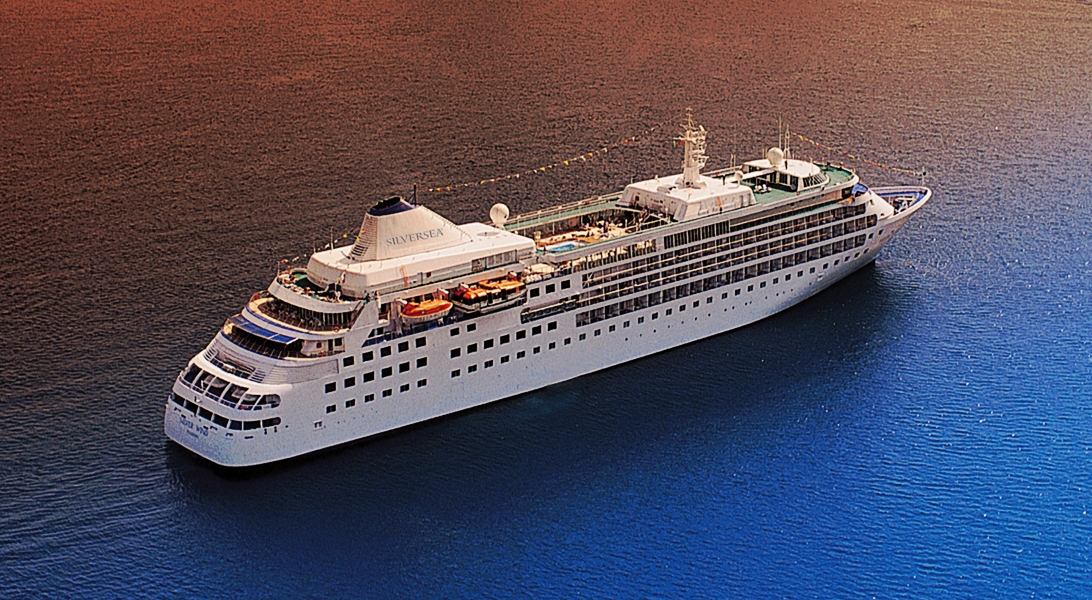
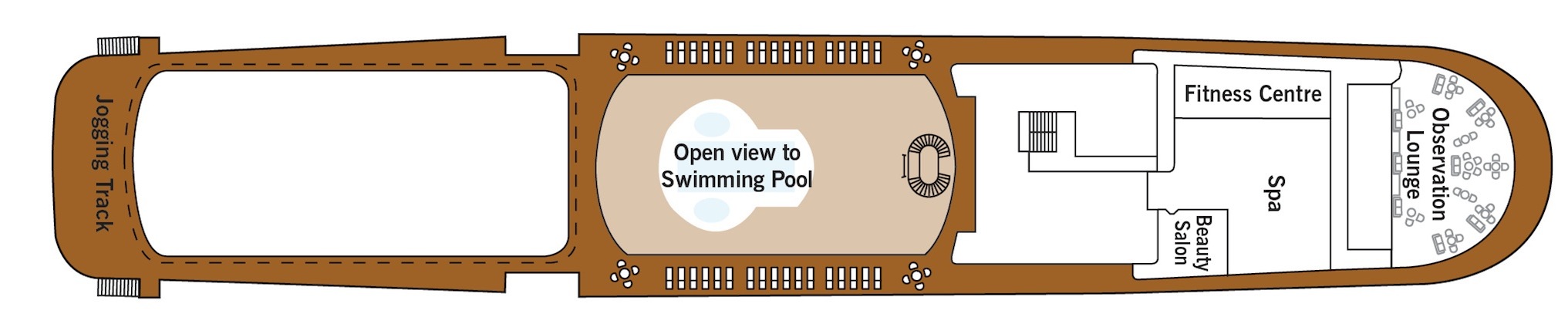

The images shown are for illustration purposes only and may not be an exact representation of what you find on the ship.
| Grade Code | From | To | |
| G1 | Grand Suite (1 Bedroom) | £21,400 | £21,400 |
| G2 | Grand Suite (2 Bedrooms) | £32,900 | £32,900 |
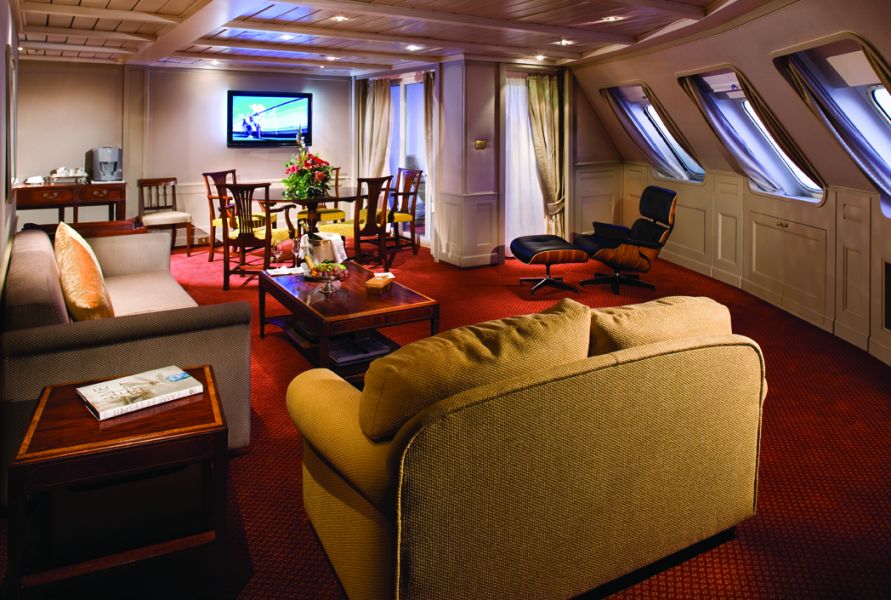
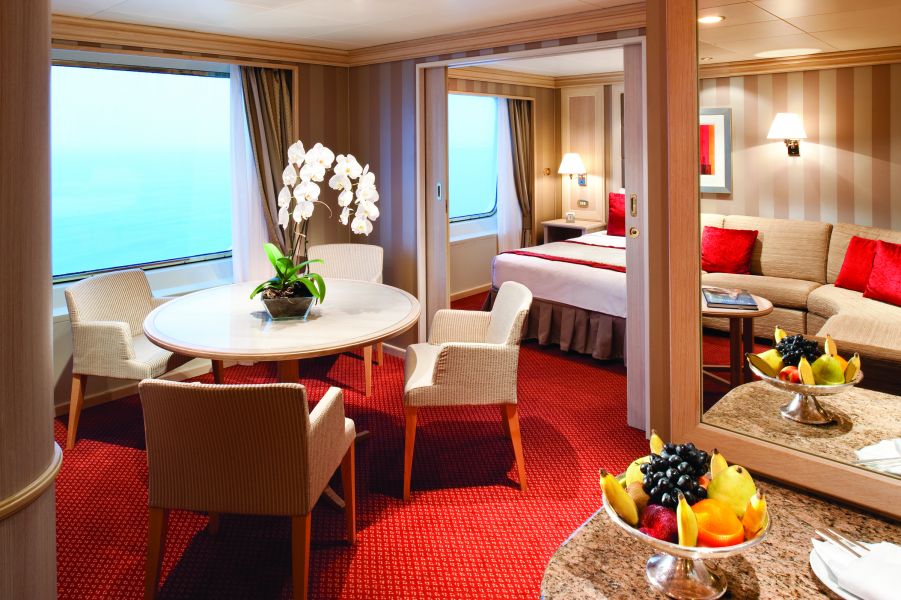
Expertly designed and exquisitely appointed. The Grand Suite on the Silver Wind is ideal for entertaining friends or enjoying a quiet dinner “at home.” Available as a one-bedroom configuration or as two bedrooms by adjoining with a Veranda Suite.
One bedroom: 95 sq m (14 sq. m.)
Two bedrooms: 122 sq m (18.5 sq. m.)
Images and suite plans are intended as a general reference. Features, materials, finishes and layout maybe different than shown.
Please note that the 3rd guest will sleep on a comfortable sofa bed in the reception area of the suite.
Essentials
Characteristics
Furniture
Media & Communication
Onboard Services
Amenities
| Grade Code | From | To | |
| ME | Medallion Suite | £17,250 | £17,250 |
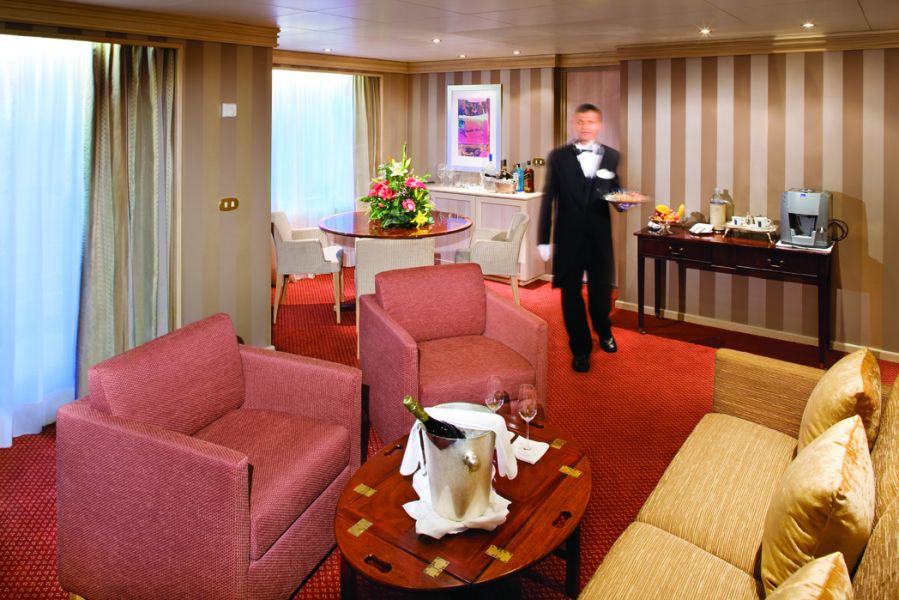
A mark of distinction. Sumptuous. Spacious. Rich textures and panoramic views surround you with distinguished luxury. The perfect summary of The Medallion Suite offered by the world’s best cruise line.
One bedroom: 41 sq m (12 sq. m.)
Suite 741: 667 sq. ft/62 sq. m. with French balcony, separate dining area and full-size bath.
Suites 801–804 only: with Veranda
Images and suite plans are intended as a general reference. Features, materials, finishes and layout maybe different than shown.
Please note that the 3rd guest will sleep on a comfortable sofa bed in the reception area of the suite.
Essentials
Characteristics
Furniture
Media & Communication
Onboard Services
Amenities
| Grade Code | From | To | |
| O1 | Owner's Suite (1 Bedroom) | £22,950 | £22,950 |
| O2 | Owner's Suite (2 Bedrooms) | £33,100 | £33,100 |
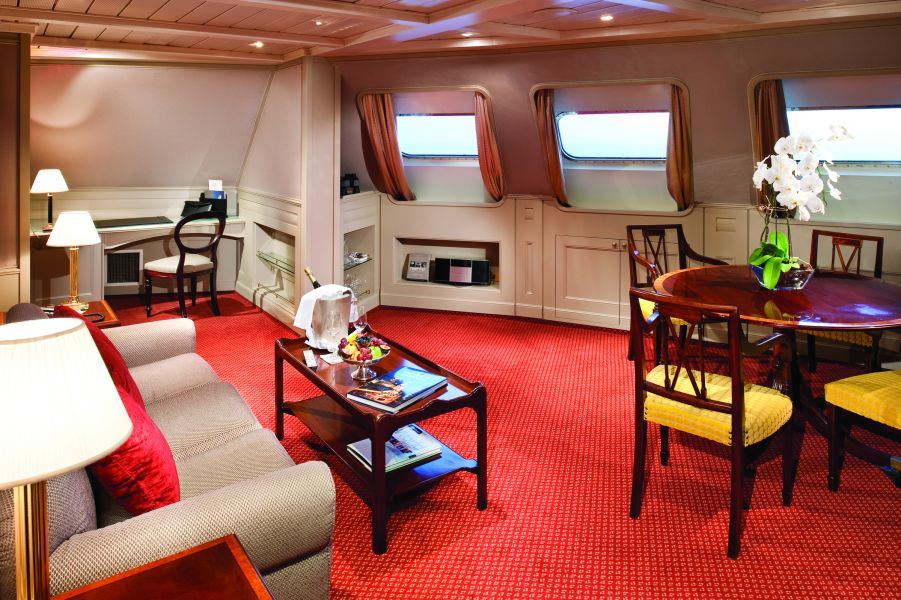
The name says it all. A stylish apartment. Prestigious and classic. For those who seek spaciousness, comfort and service on board. The Owner’s Suite is available as a one-bedroom configuration or as two bedrooms (as illustrated) by adjoining with a Vista Suite so you can enjoy your luxury cruise in style.
One bedroom: 55 sq m (8 sq. m.)
Two bedrooms: 77 sq m (8 sq. m.)
Images and suite plans are intended as a general reference. Features, materials, finishes and layout may be different than shown.
Please note that the 3rd guest will sleep on a comfortable sofa bed in the reception area of the suite.
Essentials
Characteristics
Furniture
Media & Communication
Onboard Services
Amenities
| Grade Code | From | To | |
| R1 | Royal Suite (1 Bedroom) | £19,900 | £19,900 |
| R2 | Royal Suite (2 Bedrooms) | £31,400 | £31,400 |
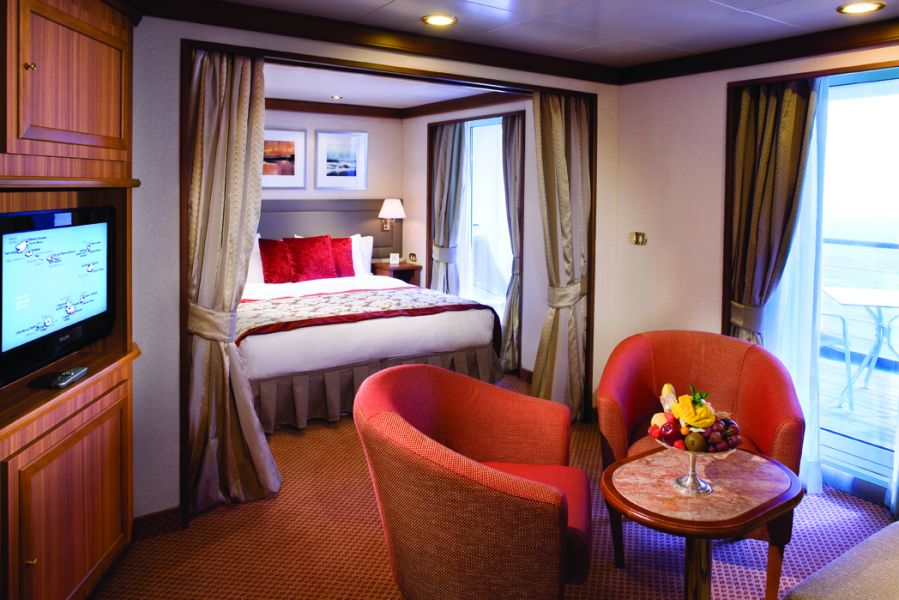
Stately. Commanding and majestic. Perfect for entertaining. The Royal suite lives up to its name. Enough living space to roam. The pinnacle of good living. Available as a one-bedroom configuration or as two bedrooms by adjoining with a Veranda Suite.
One bedroom: 69 sq m (12 sq. m.)
Two bedrooms: 96 sq. m. (16.5 sq. m.)
Images and suite plans are intended as a general reference. Features, materials, finishes and layout maybe different than shown.
Please note that the 3rd guest will sleep on a comfortable sofa bed in the reception area of the suite.
Essentials
Characteristics
Furniture
Media & Communication
Onboard Services
Amenities
| Grade Code | From | To | |
| SL | Silver Suite | £18,800 | £18,800 |
For those wanting more space, Silver Suites are ideal. Stylish and sophisticated. Separate dining and living rooms. Larger verandas. Situated midship on the Silver Wind. Perfection in design for comfortable living. Silver Suites accommodate three guests.
One bedroom: 48 sq m (8 sq. m.)
Images and suite plans are intended as a general reference. Features, materials, finishes and layout maybe different than shown.
Please note that the 3rd guest will sleep on a comfortable sofa bed in the reception area of the suite.
Essentials
Characteristics
Furniture
Media & Communication
Onboard Services
Amenities
| Grade Code | From | To | |
| VI | Vista Suite | £10,300 | £10,300 |
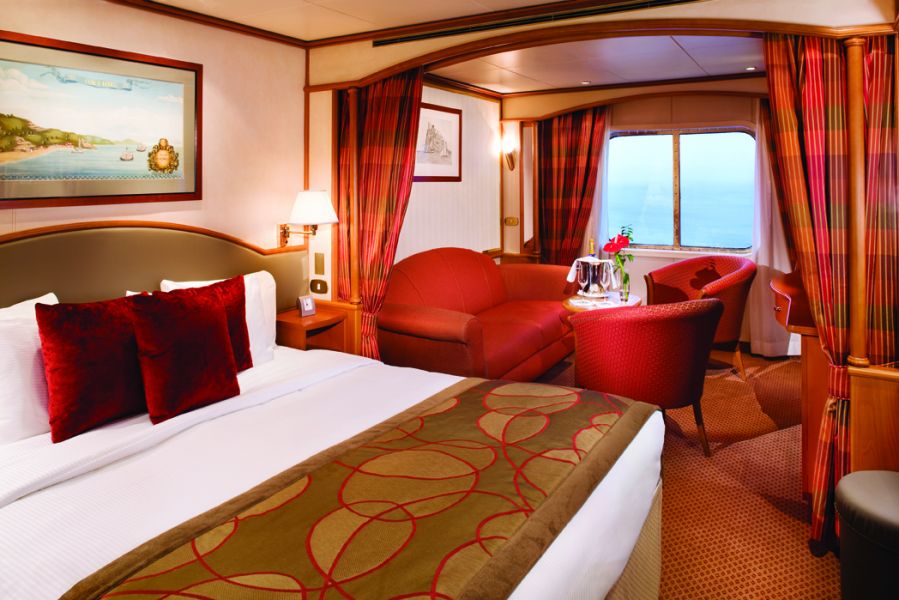
A quiet sanctuary to escape to on your cruise. The seating area has plenty of room to relax. Large picture windows frame panoramic ocean views. The perfect backdrop for breakfast in bed.
One bedroom: 22 sq. m.
Suite 738: 325 sq. ft./30 sq. m.
Wheelchair accessible suites: 445 and 447
Images and suite plans are intended as a general reference. Features, materials, finishes and layout maybe different than shown.
Please note that the 3rd guest will sleep on a comfortable sofa bed in the reception area of the suite.
Essentials
Characteristics
Furniture
Media & Communication
Onboard Services
Amenities
The images shown are for illustration purposes only and may not be an exact representation of what you find on the ship.
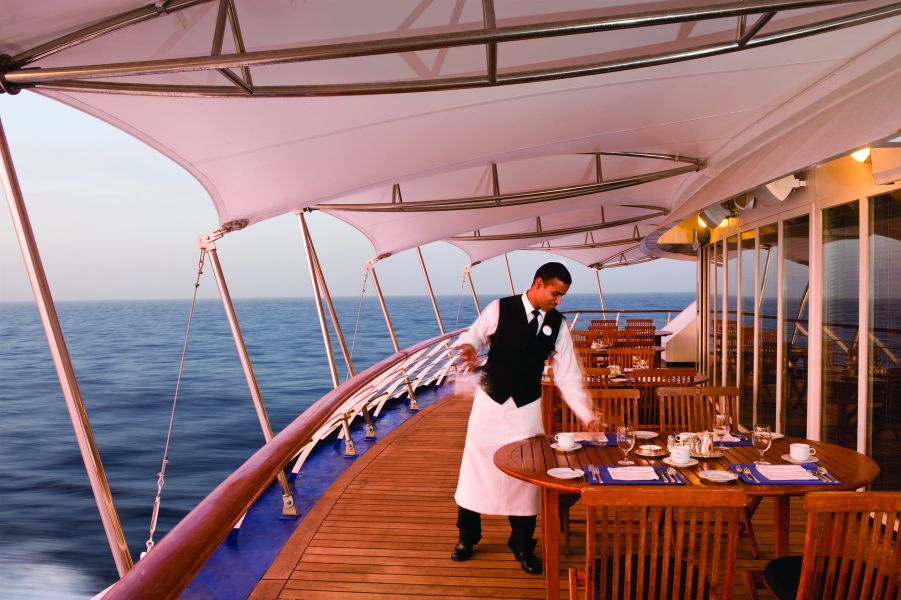
La Terrazza elevates casual dining by day and delivers an authentic Italian experience by night. During the breakfast and lunch buffets, our master chefs prepare global favorites at live stations. As evening falls, handmade pastas and classic seafood dishes are the centerpiece — every impeccable bite paired with fine wines from around the world.
Open-seating for breakfast and lunch.
Reservations recommended for dinner.
Images and suite plans are intended as a general reference. Features, materials, finishes and layout may be different than shown.
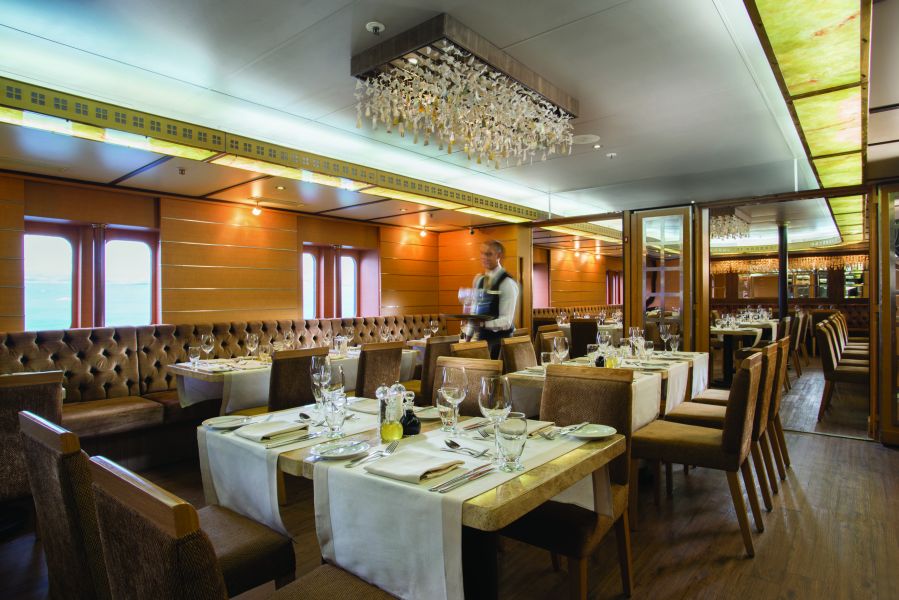
The Restaurant transforms dining into an extraordinary journey of taste. Indulge in international delicacies, refined classics, and destination-driven creations that reflect the flavors of the region you’re exploring. From breakfast favorites to imaginative evening courses, every meal draws inspiration from your voyage.
Images and suite plans are intended as a general reference. Features, materials, finishes and layout may be different than shown.
The images shown are for illustration purposes only and may not be an exact representation of what you find on the ship.
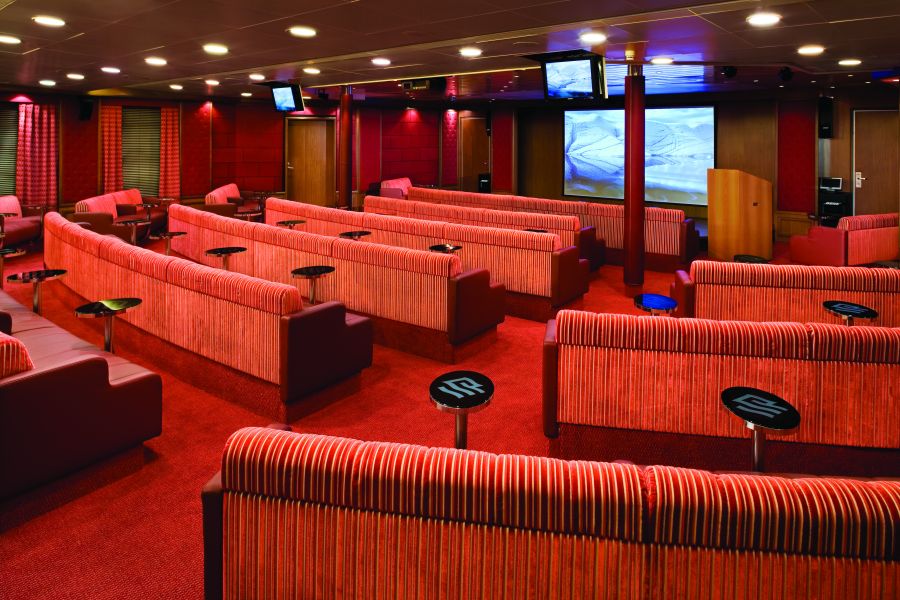
At The Show Lounge, theatrical immersion takes center stage. From captivating performances and screenings to cultural programs, this elegant venue was designed to dazzle. Tiered seating ensures impeccable views while attentive beverage service makes indulging effortless. Raise a glass as the curtain rises on an unforgettable night of entertainment.
Images and suite plans are intended as a general reference. Features, materials, finishes and layout may be different than shown.
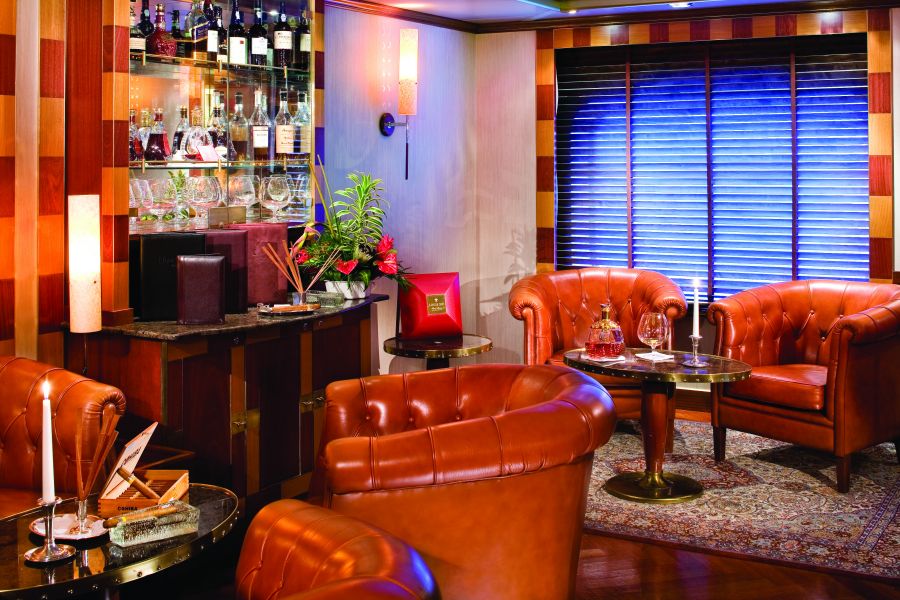
As evening stretches into night, Connoisseur’s Corner offers a stylish refuge for those who appreciate the time-honored rituals of smoke and spirit. Sink into tufted leather chairs with a hand-rolled cigar and a glass of one of our finest cognacs or whiskeys. Indoors or under the stars, every moment is marked by pure indulgence.
Images and suite plans are intended as a general reference. Features, materials, finishes and layout maybe different than shown.
The images shown are for illustration purposes only and may not be an exact representation of what you find on the ship.
The images shown are for illustration purposes only and may not be an exact representation of what you find on the ship.

Our Fusion packages are all ABTA & ATOL protected ensuring that your booking is safe with us
| 14 nights aboard the Silver Wind | |||
| Butler Service in Every Suite | |||
| Gratuities Always Included | |||
| Beverages In-Suite and Throughout the Ship | |||
| Gourmet Dining | |||
| In Suite Dining & 24-Hour Room Service | |||
| Intimate small size ships | |||
| Free Wifi Throughout the Ship | |||
| Free Zodiac, Land and Sea Tours & Activities & Complimentary Expedition gear | |||
| Port Taxes and Fees | |||
 | ABTA and ATOL Protection* | ||
Date 17th May 2028 |
Nts 14 |
Suite £10,300pp |
Date 17th May 2028 |
Nts 14 |
Suite £10,300pp |
| Suite staterooms from | £10,300pp | ||
| CV | Classic Veranda Suite | £11,750pp | |
| DX | Deluxe Veranda Suite | £12,250pp | |
| G1 | Grand Suite (1 Bedroom) | £21,400pp | |
| G2 | Grand Suite (2 Bedrooms) |  | |
| ME | Medallion Suite | £17,250pp | |
| O1 | Owner's Suite (1 Bedroom) | £22,950pp | |
| O2 | Owner's Suite (2 Bedrooms) | | |
| R1 | Royal Suite (1 Bedroom) | £19,900pp | |
| R2 | Royal Suite (2 Bedrooms) | | |
| SL | Silver Suite | | |
| VI | Vista Suite | £10,300pp | |
Fusion Holidays when selling travel arrangements is a trading name of Co-op Travel Services Limited, registration 08903986. Fusion Cruises is an Accredited Body Member of Co-op Travel Services Limited ATOL 12904.
Book with Confidence. We are a Member of ABTA which means you have the benefit of ABTA’s assistance and Code of Conduct.
Some of the flights and flight-inclusive holidays on this website are financially protected by the ATOL scheme but ATOL protection does not apply to all holiday and travel services offered on this website. This website will provide you with information on the protection that applies in the case of each holiday and travel service offered before you make your booking. If you do not receive an ATOL Certificate then the booking will not be ATOL protected. If you do receive an ATOL Certificate but all parts of your trip are not listed on it, those parts will not be ATOL protected. Please see our booking conditions for information, or for more information about financial protection and the ATOL Certificate go to: www.caa.co.uk