This site uses cookies as defined in our Cookie Policy, by continuing to use this site you agree to their use.
Continue

| Arrive | Depart | ||||||
| 27th27 | AprApr | 202828 | Valletta, Malta, embark on the Silver Wind | 18:00 | |||
Malta's capital, the minicity of Valletta, has ornate palaces and museums protected by massive fortifications of honey-color limestone. Houses along the narrow streets have overhanging wooden balconies for people-watching from indoors. Generations ago they gave housebound women a window on the world of the street. The main entrance to town is through the City Gate (where all bus routes end), which leads onto Triq Repubblika (Republic Street), the spine of the grid-pattern city and the main shopping street. Triq Mercante (Merchant Street) parallels Repubblika to the east and is also good for strolling. From these two streets, cross streets descend toward the water; some are stepped. Valletta's compactness makes it ideal to explore on foot. City Gate and the upper part of Valletta are experiencing vast redevelopment that includes a new Parliament Building and open-air performance venue. The complex, completed mid-2013, has numerous pedestrian detours in place along with building noise and dust. Before setting out along Republic Street, stop at the tourist information office on Merchant Street for maps and brochures. Perched high on the imposing Sciberras Peninsula, Valletta immediately presents its massive, protective walls and vertical bastions to visitors arriving by sea. Rising to 47 metres in places, the fortifications protect lavish palaces, grand domes and illustrious gardens. Built by the Knights of St John on the narrow peninsular, Valletta is a compact, richly historical treasure trove of Baroque wonders. Ascend to reach the restful, flower-filled Upper Barrakka Gardens, where cannons fire and boom in salute at noon each day, sending echoing cracks of noise out across the waves below. Recognised as 2018’s European Capital of Culture, Valletta is a fascinating and dense haven of history and intrigue. A busy, bustling capital, the breathtaking St John’s Cathedral - commissioned in 1572 - is almost concealed among its narrow streets. The relatively modest exterior is counterpointed by a staggeringly opulent, gold-leaf bathed interior, containing a Caravaggio masterpiece - the shadowy vision of the Beheading of St John. Cinematic and magnificent, Valletta has served as a filming location for Game of Thrones - but real epic history abounds on this rocky isle too. From the prehistoric and megalithic sites of the Hypogeum of Paola and Tarxien, to the fascinating War Museum at Fort St Elmo. Mdina also waits nearby, and the former medieval capital is a striking contrast to the island’s main city. Cars are barred from its streets, and it offers endlessly atmospheric old-time wanders. With a strategic positioning in the Mediterranean, Malta is a jewel that many have wrestled for over the centuries. Independence from Britain was finally achieved in 1964, but the close allegiance remains evident, with English recognised as an official language, cars driving on the left, and red post boxes and telephone gleaming in Malta’s sunshine. | |||||||
| 28th28 | AprApr | 202828 | At Sea | ||||
| 29th29 | AprApr | 202828 | Monopoli, Italy | 07:30 | 17:30 | ||
| Located in the heel of Italy’s boot, Monopoli is a Puglia port town that knows how to make a splash. In fact, the words Monos and Polis mean singularly unique – and Monopoli’s special blend of part historical, part functional is most definitely that. The city might lack some of the more aesthetic elements of its neighbours, but that only means good things for those who do discover it: far from the tourist route you’ll be greeted with medieval churches and castles, white stone buildings (contrasting perfectly with the azure of the sea and sky) and authenticity in buckets. Founded by the Greeks in 500 BC, then taken over by the Romans (and beset by various invaders), Monopoli was – and still is – a thriving port town. It’s position in Puglia between the seas made it strategic, while its placement on the Via Traiana (which led all the way to Rome) made it prosperous. The city came under Venetian control in 1484 and much of Monopoli’s architecture can be attributed to this period. The charming Old Town is dominated by Castello Carlo V, built in 1552, while the still solid Baroque-Romanesque cathedral, built in 1693, is considered as positively modern. Like most of Italy, the food here is as important as religion. As a port town, fish and seafood are deliciously fresh. Do not miss tasting “scapece” (small fish covered in flour, deep-fried, put in layers with breadcrumbs and saffron, then soaked with vinegar) for a tasty treat that you will find nowhere else in the country. | |||||||
| 30th30 | AprApr | 202828 | Sarandë, Albania | 07:00 | 19:00 | ||
Sarandë is a city in southern Albania on the coast of the Ionian Sea. Sarandë can be reached easily from the Greek island of Corfu by ferry. An early Christian monastery dedicated to 40 saints (Santi Quaranta) gave Sarandë its name. The city center of Sarandë has been scarred by communist architecture but since the fall of communism many small shops and bars have sprung up which give it a Mediterranean feel. This southernmost harbour of Albania was once the ancient port of Onchesmos. Today, Sarandë’s main attractions are its sunny climate and the nearby ruins of Butrint. Please Note: For your convenience, shore excursions offered for this port of call are available to reserve in advance at www.silversea.com, unless otherwise noted in the description. The deadline to reserve these tours is August 19, after which they will be available for purchase on board, unless otherwise noted in the description. Pier Information The ship is scheduled to anchor at Main Pier. The town center is 875 yards from the pier. Taxis are generally available at the pier. Shopping Typical souvenirs include t-shirts, postcards, wood carvings and dolls in national costume. Cuisine Albanian cuisine has been strongly influenced by Turkey. Grilled meats like shisqubap (shish kebab), romstek (minced meat patties) and gofte (meat balls) are served all across the Balkans. Some local dishes include comlek (meat and onion stew), fërges (a rich beef stew), rosto me salcë kosi (roast beef with sour cream) and tavë kosi (mutton with yoghurt. Lake Shkodra carp and Lake Ohrid trout are the most common fish dishes. Try the ice cream (akullore), which is popular everywhere. Other Sites Blue Eye Spring The iridescent blue water gushes from the depths of the earth and feeds the Bistrica River. Catacombs Recently discovered catacombs of the church of the Forty Saints can also be explored. Private arrangements for independent sightseeing may be requested through the Tour Office on board. Overlooking the turquoise blue Ionian Sea Albania’s most southerly harbour is a short 20-minute boat ride from Corfu and bathes in the glow of more than 300 sunny days each year. Revel in Albania’s best beach life or explore historic ancient cities and fortresses embedded with immense archaeological interest. Clear turquoise waters lap the city's beaches and there's always something to see along the lively Boulevard Hasan Tahsini - which traces the seafront and is stacked with bars restaurants and shops. The hardy 16th-century Lekuresi Castle has been battered by weather and war over the years but it offers a fantastic lookout point to survey Sarande's expanse Corfu's island and the turquoise sea beyond. From here you can head to the Blue Eye Spring a rejuvenating natural landmark where a groundswell of the purest water gushes up 50 metres to surface amid the forest. Bathe in the immaculate waters which are intensely refreshing on sunny days. The majestic ruins of Butrint's ancient city stand nearby unearthed from the leafy site after the city was abandoned in medieval times. Albania's first UNESCO World Heritage Site Butrint was an ancient Greek and Roman stronghold - and you can walk back in time along stone-paved streets to discover the immense history here. Roam between the compact Roman theatre and the impressive arched-windows of the basilica before admiring the stunning floor mosaics that have been left behind. | |||||||
| 1st01 | MayMay | 202828 | Fiskárdo, Greece | 07:00 | 16:30 | ||
| 2nd02 | MayMay | 202828 | Monemvasía, Greece | 08:30 | 18:30 | ||
Monemvasia boasts a varied and colorful history that can be traced to the 8th-century when Greeks fleeing the Slav invasion of Lakonia found refuge here. In its heyday it controlled sea travel between the Levant and European shores. The wall-encircled Lower Town extends along the slopes of a 985-foot-high crag that projects into the sea on the east side of the Peloponnese. For centuries an impressive stronghold, population dwindled as the inhabitants moved to the mainland. But with the beginning of a restoration program aimed to preserve Monemvasia's heritage, the Lower Town experienced a new lease on life, and people have begun to return. The Upper Town is situated on top of the Rock of Monemvasia. It is reached via a zigzagging, paved lane. An almost impregnable bastion in earlier days, it has been uninhabited for centuries, but still manages to preserve its magnificent appearance. Visitors today can explore the remains of the ancient citadel-castle and visit the church of Hagia Sofia. From the summit there is also a fantastic view of the surrounding area. A town of rustic, lyrically romantic beauty, Monemvasia boasts a glorious natural setting - perched on a colossal rock island, which rears spectacularly from the waves. A truly unique castle city, the island is linked to the mainland by just a single solitary causeway. It is hard to imagine a better – and more impenetrable - setting for a fortress town than this, and the rock is laced with tight cobbled streets, exposed stone masonry and pretty Byzantine churches. Known as the Gibraltar of Greece, you would be forgiven for assuming that the limestone monolith was unoccupied as you approach from the seas. Look a little closer, however, and you’ll begin to pick out the ancient walls and terracotta roofs of the quaint town clinging to its steep, dramatic slopes - and the walls of the fortress crowning it. A natural stronghold of overwhelming romantic beauty – the rock is said to lend couples wedded here extra strong foundations to build from. Arrive on the island to wander the historic knot of streets of a true Adriatic wonder. Encounter gorgeous, tree-shaded terraces, which look out across the rippling blue waves. Visit the picturesque Church of Christ Elkomenos, where you can shelter in the cool interior, and see storied religious iconography. A historic paved pathway twists back on itself, rising sharply up the slope on a daunting ascent to the now uninhabited upper fortress. The views from here are even more incredible, as you look down across the rustic domes of the lower village’s churches and stone-paved streets below. | |||||||
| 3rd03 | MayMay | 202828 | Milos, Greece | 07:00 | 18:30 | ||
Milos or Melos is a volcanic Greek island in the Aegean Sea, just north of the Sea of Crete. Milos is the southwesternmost island in the Cyclades group. The Venus de Milo and the Asclepius of Milos were both found on the island, as were a Poseidon and an archaic Apollo now in Athens. Milos, one of the thousands of Greek islands, is to be found in the SW Cyclades, a large island group in the Aegean Sea. It is 86 nautical miles from Piraeus and approximately half way between Piraeus and Crete. Its surface area is 151 square kilometres and its varied coastline is 125 kilometres long. Adamas is the main port of Milos and also a seaside village of white houses shimmering on the blue waters of the Aegean. This village was founded in 1835 by refugees from Sfakia who came from Crete after the failure of their rebellion against the Turks From these times and on, Adamas became increasingly important historically because of its large, safe, naturally made harbour, and its strategic position in the eastern Mediterranean Adamas is surrounded by many beaches and offers various touristy facilities such as banks, post-office, doctors, tourist agencies, port police. Many old churches as well as mining and ecclesiastical museums are worth visiting. | |||||||
| 4th04 | MayMay | 202828 | Naxos, Greece | 07:00 | 23:00 | ||
| A little bit more rough and ready around the edges than a lot of other Greek islands, Naxos is the thinking-person’s Greece. The largest of all the Cyclades islands, it was once the cultural centre of Classical Greece and Byzantium, so do not be surprised that the world’s oldest culture has left its mark. Museums range from the Archaeological Museum (housed in an elegant Venetian mansion), an impressive geological museum to the lovely Venetian and unusual museum, housed in an 800-year old private house. For those who want to venture further afield, Haki, the old capital of Naxos, has a great distillery museum, run by the same family who first opened it in 1896. Not only are there two lovely monasteries worth visiting, but because of its high mountains Naxos benefits from much more rainfall than most other Greek islands, which makes the land very green and fertile. Local produces includes olives, grapes, figs, citrus fruit, corn and potatoes and if you get a chance, a healthy home-grown meal in a back-country taverna will be undoubtedly be memorable. The golden sands that circle Naxos are particularly nice, catering for all personality types. The active among you will certainly want to head to the eastern side of the island, where the wind is perfect for budding kite and windsurfers, as well as those who like their beaches as natural as can be. The western side of the island, notably Platka beach, is where the sun-lovers will be seen soaking up the rays. | |||||||
| 5th05 | MayMay | 202828 | Mykonos, Greece | 14:30 | 22:00 | ||
Although the fishing boats still go out in good weather, Mykonos largely makes its living from tourism these days. The summer crowds have turned one of the poorest islands in Greece into one of the richest. Old Mykonians complain that their young, who have inherited stores where their grandfathers once sold eggs or wine, get so much rent that they have lost ambition, and in summer sit around pool bars at night with their friends, and hang out in Athens in winter when island life is less scintillating. Put firmly on the map by Jackie O in the 1960s, Mykonos town—called Hora by the locals—remains the Saint-Tropez of the Greek islands. The scenery is memorable, with its whitewashed streets, Little Venice, the Kato Myli ridge of windmills, and Kastro, the town's medieval quarter. Its cubical two- or three-story houses and churches, with their red or blue doors and domes and wooden balconies, have been long celebrated as some of the best examples of classic Cycladic architecture. Luckily, the Greek Archaeological Service decided to preserve the town, even when the Mykonians would have preferred to rebuild, and so the Old Town has been impressively preserved. Pink oleander, scarlet hibiscus, and trailing green pepper trees form a contrast amid the dazzling whiteness, whose frequent renewal with whitewash is required by law. Any visitor who has the pleasure of getting lost in its narrow streets (made all the narrower by the many outdoor stone staircases, which maximize housing space in the crowded village) will appreciate how its confusing layout was designed to foil pirates—if it was designed at all. After Mykonos fell under Turkish rule in 1537, the Ottomans allowed the islanders to arm their vessels against pirates, which had a contradictory effect: many of them found that raiding other islands was more profitable than tilling arid land. At the height of Aegean piracy, Mykonos was the principal headquarters of the corsair fleets—the place where pirates met their fellows, found willing women, and filled out their crews. Eventually the illicit activity evolved into a legitimate and thriving trade network. Morning on Mykonos town's main quay is busy with deliveries, visitors for the Delos boats, lazy breakfasters, and street cleaners dealing with the previous night's mess. In late morning the cruise-boat people arrive, and the shops are all open. In early afternoon, shaded outdoor tavernas are full of diners eating salads (Mykonos's produce is mostly imported); music is absent or kept low. In mid- and late afternoon, the town feels sleepy, since so many people are at the beach, on excursions, or sleeping in their air-conditioned rooms; even some tourist shops close for siesta. By sunset, people have come back from the beach, having taken their showers and rested. At night, the atmosphere in Mykonos ramps up. The cruise-boat people are mostly gone, coughing three-wheelers make no deliveries in the narrow streets, and everyone is dressed sexy for summer and starting to shimmy with the scene. Many shops stay open past midnight, the restaurants fill up, and the bars and discos make ice cubes as fast as they can. Ready to dive in? Begin your tour of Mykonos town (Hora) by starting out at its heart: Mando Mavrogenous Square. Indulge in idyllic island life as you take your fill of superb foods and wines and soak in endless views of sweeping turquoise seascapes and pretty whitewash buildings. Known for its lively nightlife and rejuvenating care-free outlook Mykonos is a dazzlingly beautiful island escape. The secret is well and truly out but nonetheless Mykonos has managed to retain the enduring exclusive allure that first drew celebrities like Brigitte Bardot to its star-studded shores. True to its roots Mykonos is a rich land of culture tradition and swirling legend and the island is said to be built on the frozen bodies of giants slain by Hercules and to have been the legendary battleground between Zeus and the Titans. Head out onto the crystalline waters to seek out serene islands hit perfect beaches or venture into the labyrinth of Mykonos Town. White facades red roofs and cobalt blue shutters add to this lively town’s appeal. Explore narrow streets housing studios – where artisans piece together mosaics - and plenty of restaurants and bars offer sanctuary. Head to Little Venice for a waterfront view of one of the island’s famed sunsets and to enjoy an aperitif of the favourite aniseed liqueur ouzo. Boasting numerous attractive sandy coves a wealth of top-notch restaurants and rich cultural appeal it’s little wonder that Mykonos is one of the most popular Greek Islands. Discover this jaw-droppingly scenic island paradise watched over by its iconic huddles of picturesque windmills. | |||||||
| 5th05 | MayMay | 202828 | Delos, Greece | 06:30 | 13:00 | ||
| 6th06 | MayMay | 202828 | Amorgós, Greece | 07:00 | 19:00 | ||
| If you feel a sense of déjà vu when you arrive in Amorgos don’t be surprised. The little island in the Cyclades found fame in the late 1980s thanks to Luc Besson’s cult film “The Big Blue”. But movie stars aside (and for anyone who has seen the film you know we are talking about the dolphins who are the real stars of the show) Amorgos is what everything a Greek island should be. Think pink bougainvillea climbing up every whitewashed wall and scarlet geraniums spilling out of every blue framed window. Small friendly cafes line the (labyrinthine cobbled) streets beach bars serve tall glasses of ouzo over ice and traditional tavernas serve everything from souvlaki to tzatziki. Amorgos might be most famous however for its lack of mass tourism. You won’t find any wild nightclubs nor luxury boutiques here. Instead you’ll feel the pull of the past with the vestiges of a Minoan city the beautiful 13-th century Venetian Kastro and its windmills and the 11th century Pangaea Hozoviotissa Monastery. Nature lovers will no doubt be in their element here too: seven main trails connect the villages to each other. Most hikes take around an hour and are considered easy but there are one or two exceptions so beware! Divers will also be happy the southern end of the island is home to the famous shipwreck features in The Big Blue. Now rife with algae it is a prime feeding spot for the local marine life. | |||||||
| 7th07 | MayMay | 202828 | Piraeus, Greece, disembark the Silver Wind | ||||
It's no wonder that all roads lead to the fascinating and maddening metropolis of Athens. Lift your eyes 200 feet above the city to the Parthenon, its honey-color marble columns rising from a massive limestone base, and you behold architectural perfection that has not been surpassed in 2,500 years. But, today, this shrine of classical form dominates a 21st-century boomtown. To experience Athens—Athína in Greek—fully is to understand the essence of Greece: ancient monuments surviving in a sea of cement, startling beauty amid the squalor, tradition juxtaposed with modernity. Locals depend on humor and flexibility to deal with the chaos; you should do the same. The rewards are immense. Although Athens covers a huge area, the major landmarks of the ancient Greek, Roman, and Byzantine periods are close to the modern city center. You can easily walk from the Acropolis to many other key sites, taking time to browse in shops and relax in cafés and tavernas along the way. From many quarters of the city you can glimpse "the glory that was Greece" in the form of the Acropolis looming above the horizon, but only by actually climbing that rocky precipice can you feel the impact of the ancient settlement. The Acropolis and Filopappou, two craggy hills sitting side by side; the ancient Agora (marketplace); and Kerameikos, the first cemetery, form the core of ancient and Roman Athens. Along the Unification of Archaeological Sites promenade, you can follow stone-paved, tree-lined walkways from site to site, undisturbed by traffic. Cars have also been banned or reduced in other streets in the historical center. In the National Archaeological Museum, vast numbers of artifacts illustrate the many millennia of Greek civilization; smaller museums such as the Goulandris Museum of Cycladic Art Museum and the Byzantine and Christian Museum illuminate the history of particular regions or periods. Athens may seem like one huge city, but it is really a conglomeration of neighborhoods with distinctive characters. The Eastern influences that prevailed during the 400-year rule of the Ottoman Empire are still evident in Monastiraki, the bazaar area near the foot of the Acropolis. On the northern slope of the Acropolis, stroll through Plaka (if possible by moonlight), an area of tranquil streets lined with renovated mansions, to get the flavor of the 19th-century's gracious lifestyle. The narrow lanes of Anafiotika, a section of Plaka, thread past tiny churches and small, color-washed houses with wooden upper stories, recalling a Cycladic island village. In this maze of winding streets, vestiges of the older city are everywhere: crumbling stairways lined with festive tavernas; dank cellars filled with wine vats; occasionally a court or diminutive garden, enclosed within high walls and filled with magnolia trees and the flaming trumpet-shaped flowers of hibiscus bushes. Formerly run-down old quarters, such as Thission, Gazi and Psirri, popular nightlife areas filled with bars and mezedopoleia (similar to tapas bars), are now in the process of gentrification, although they still retain much of their original charm, as does the colorful produce and meat market on Athinas. The area around Syntagma Square, the tourist hub, and Omonia Square, the commercial heart of the city about 1 km (½ mi) northwest, is distinctly European, having been designed by the court architects of King Otho, a Bavarian, in the 19th century. The chic shops and bistros of ritzy Kolonaki nestle at the foot of Mt. Lycabettus, Athens's highest hill (909 feet). Each of Athens's outlying suburbs has a distinctive character: in the north is wealthy, tree-lined Kifissia, once a summer resort for aristocratic Athenians, and in the south and southeast lie Glyfada, Voula, and Vouliagmeni, with their sandy beaches, seaside bars, and lively summer nightlife. Just beyond the city's southern fringes is Piraeus, a bustling port city of waterside fish tavernas and Saronic Gulf views. A city of legend, civilisation and enduring culture, Athens is a majestic and magical urban sprawl. Extraordinary elegance and grace combine with grit and graft in Greece's capital, where highways encase ruins from antiquity, and gleaming museums and galleries stand beside concrete sprayed with edgy street art. These contrasts enhance and elevate the wonders of this 2,500-year-old city, however, which can count notable contributions to philosophy, drama and democracy, among its global legacy. Piraeus' giant port and naval base welcome you to the edge of the Athens' urban area. From there it's a simple jaunt to the centre. The majestic ancient citadel of the Acropolis dominates an elevated platform and is a constant presence as you explore the city. The wonderful remains of the columned temple of the Parthenon - which date back to the 5th century BC - stand here, representing the pinnacle of classical architecture. The nearby Acropolis Museum adds context to your visit and frames the broad views from its giant glass windows. Or rise up Mount Lycabettus, to be rewarded with perhaps Athens' best panorama of the Acropolis sitting high over the city on its grand stage. See the marble horseshoe of the Old Olympic Stadium, where the first modern Olympics were held in 1896, for more of the city's enduring legacy. Elsewhere, golden beaches and temples stretch out along the coastline, should you wish to explore a little further afield. Coffee is an art form to the Greeks, and it's an unwritten rule that coffee time must never be rushed. So prepare to settle down for a couple of hours and lose yourself in a good chat. Feeling hungry - try traditional souvlaki made with sauces handed from generation to generation. | |||||||
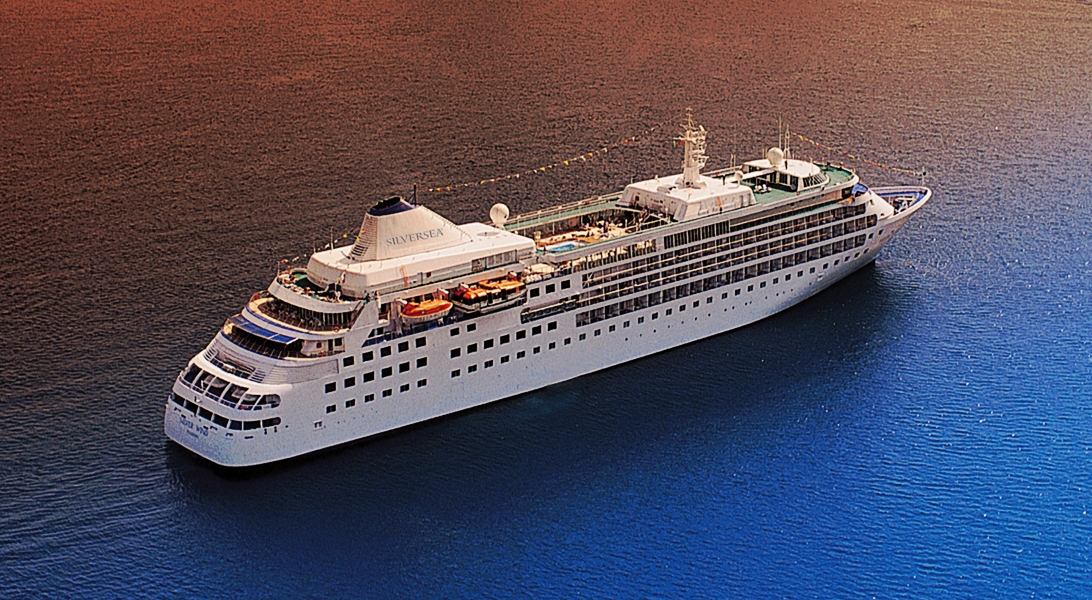
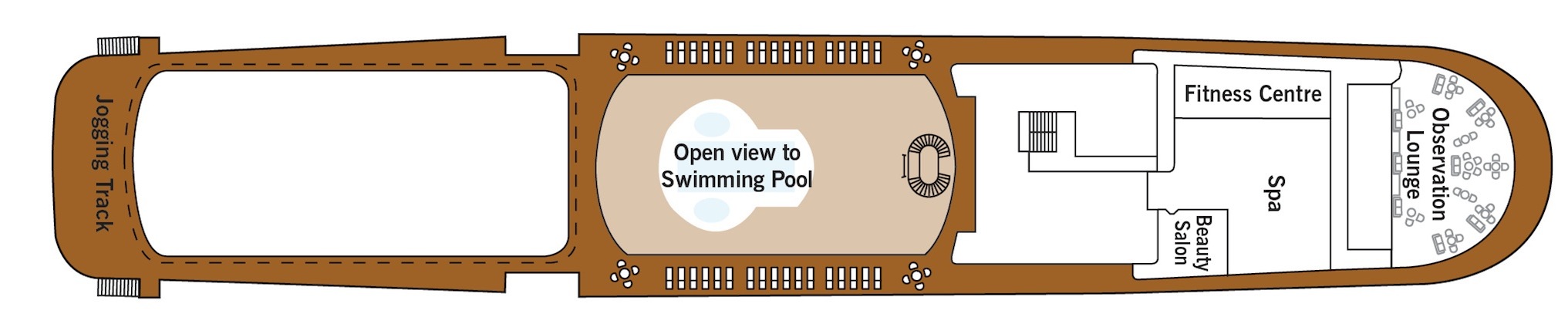

The images shown are for illustration purposes only and may not be an exact representation of what you find on the ship.
| Grade Code | From | To | |
| G1 | Grand Suite (1 Bedroom) | £15,500 | £15,500 |
| G2 | Grand Suite (2 Bedrooms) | £23,900 | £23,900 |
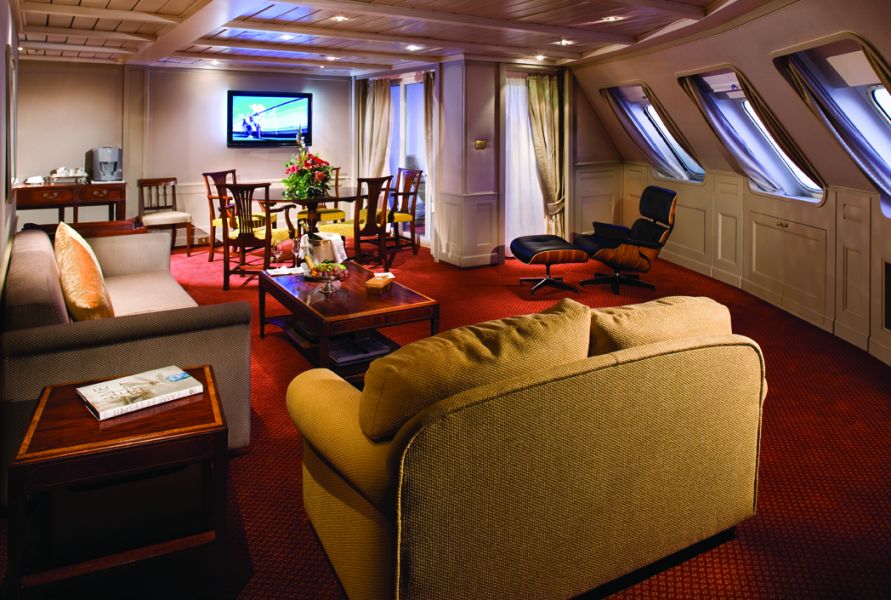
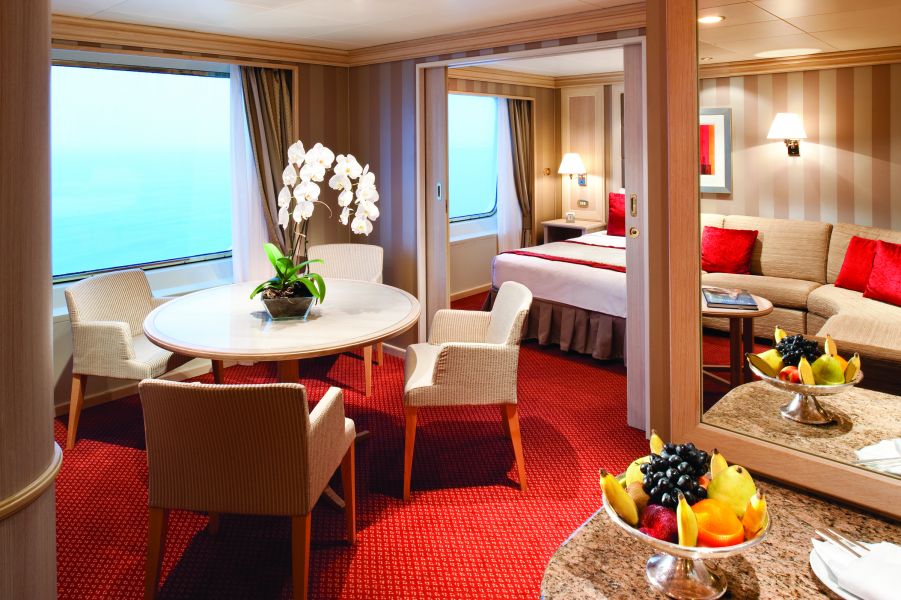
Expertly designed and exquisitely appointed. The Grand Suite on the Silver Wind is ideal for entertaining friends or enjoying a quiet dinner “at home.” Available as a one-bedroom configuration or as two bedrooms by adjoining with a Veranda Suite.
One bedroom: 95 sq m (14 sq. m.)
Two bedrooms: 122 sq m (18.5 sq. m.)
Images and suite plans are intended as a general reference. Features, materials, finishes and layout maybe different than shown.
Please note that the 3rd guest will sleep on a comfortable sofa bed in the reception area of the suite.
Essentials
Characteristics
Furniture
Media & Communication
Onboard Services
Amenities
| Grade Code | From | To | |
| ME | Medallion Suite | £12,200 | £12,200 |
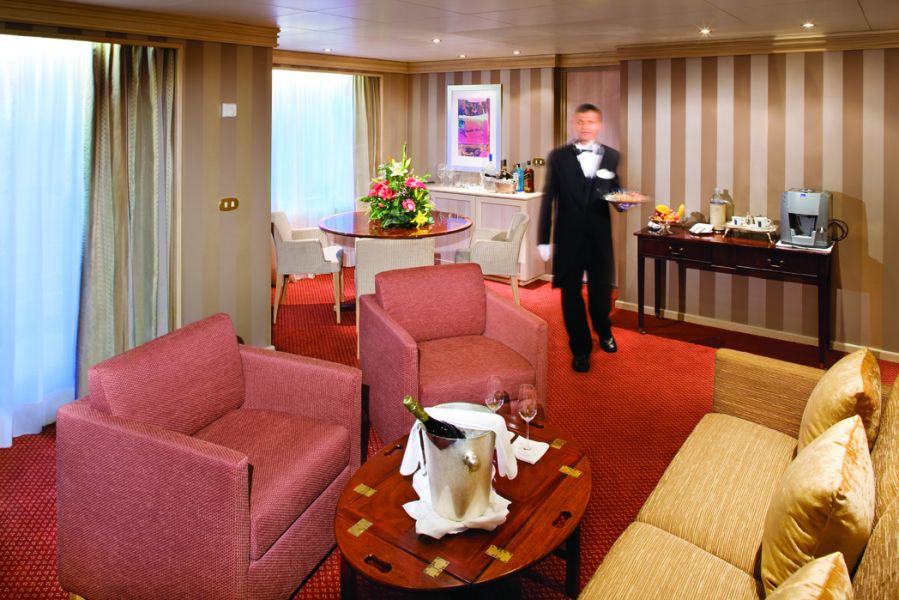
A mark of distinction. Sumptuous. Spacious. Rich textures and panoramic views surround you with distinguished luxury. The perfect summary of The Medallion Suite offered by the world’s best cruise line.
One bedroom: 41 sq m (12 sq. m.)
Suite 741: 667 sq. ft/62 sq. m. with French balcony, separate dining area and full-size bath.
Suites 801–804 only: with Veranda
Images and suite plans are intended as a general reference. Features, materials, finishes and layout maybe different than shown.
Please note that the 3rd guest will sleep on a comfortable sofa bed in the reception area of the suite.
Essentials
Characteristics
Furniture
Media & Communication
Onboard Services
Amenities
| Grade Code | From | To | |
| O1 | Owner's Suite (1 Bedroom) | £17,150 | £17,150 |
| O2 | Owner's Suite (2 Bedrooms) | £24,200 | £24,200 |
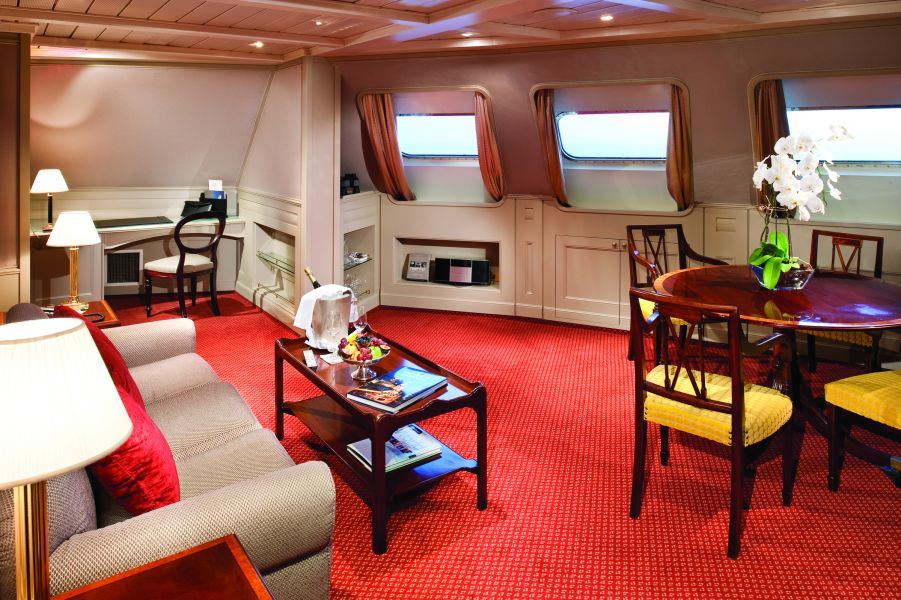
The name says it all. A stylish apartment. Prestigious and classic. For those who seek spaciousness, comfort and service on board. The Owner’s Suite is available as a one-bedroom configuration or as two bedrooms (as illustrated) by adjoining with a Vista Suite so you can enjoy your luxury cruise in style.
One bedroom: 55 sq m (8 sq. m.)
Two bedrooms: 77 sq m (8 sq. m.)
Images and suite plans are intended as a general reference. Features, materials, finishes and layout may be different than shown.
Please note that the 3rd guest will sleep on a comfortable sofa bed in the reception area of the suite.
Essentials
Characteristics
Furniture
Media & Communication
Onboard Services
Amenities
| Grade Code | From | To | |
| R1 | Royal Suite (1 Bedroom) | £13,850 | £13,850 |
| R2 | Royal Suite (2 Bedrooms) | £22,250 | £22,250 |
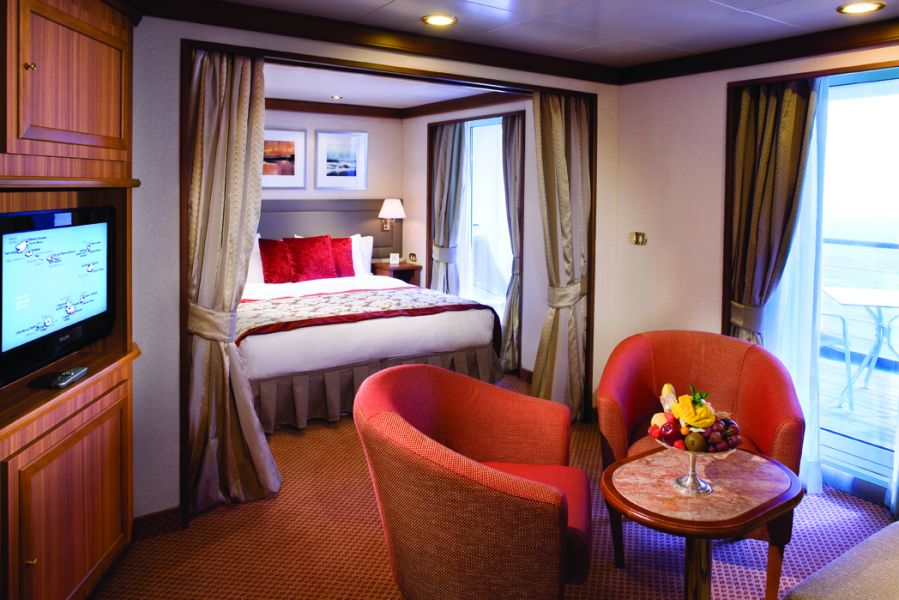
Stately. Commanding and majestic. Perfect for entertaining. The Royal suite lives up to its name. Enough living space to roam. The pinnacle of good living. Available as a one-bedroom configuration or as two bedrooms by adjoining with a Veranda Suite.
One bedroom: 69 sq m (12 sq. m.)
Two bedrooms: 96 sq. m. (16.5 sq. m.)
Images and suite plans are intended as a general reference. Features, materials, finishes and layout maybe different than shown.
Please note that the 3rd guest will sleep on a comfortable sofa bed in the reception area of the suite.
Essentials
Characteristics
Furniture
Media & Communication
Onboard Services
Amenities
| Grade Code | From | To | |
| SL | Silver Suite | £12,600 | £12,600 |
For those wanting more space, Silver Suites are ideal. Stylish and sophisticated. Separate dining and living rooms. Larger verandas. Situated midship on the Silver Wind. Perfection in design for comfortable living. Silver Suites accommodate three guests.
One bedroom: 48 sq m (8 sq. m.)
Images and suite plans are intended as a general reference. Features, materials, finishes and layout maybe different than shown.
Please note that the 3rd guest will sleep on a comfortable sofa bed in the reception area of the suite.
Essentials
Characteristics
Furniture
Media & Communication
Onboard Services
Amenities
| Grade Code | From | To | |
| VI | Vista Suite | £6,450 | £6,450 |
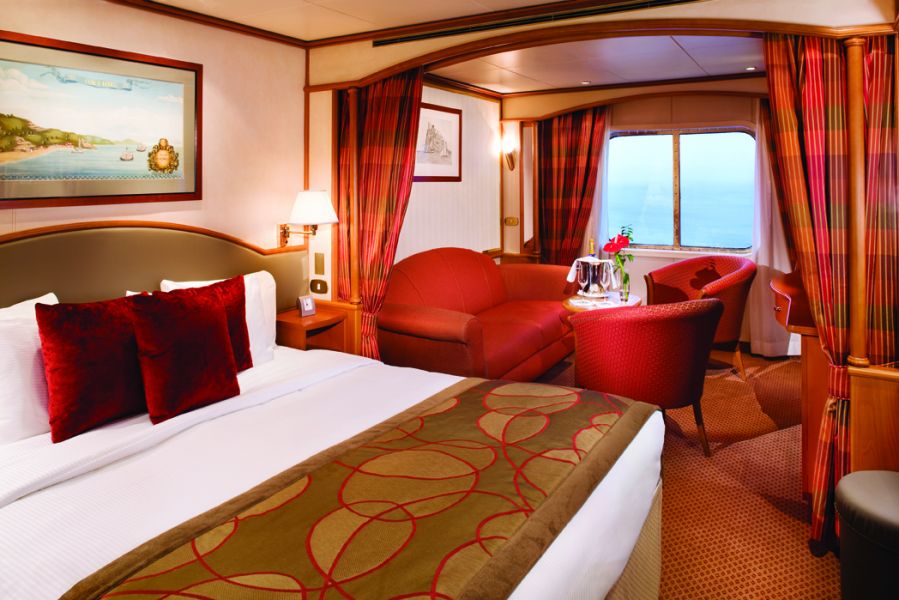
A quiet sanctuary to escape to on your cruise. The seating area has plenty of room to relax. Large picture windows frame panoramic ocean views. The perfect backdrop for breakfast in bed.
One bedroom: 22 sq. m.
Suite 738: 325 sq. ft./30 sq. m.
Wheelchair accessible suites: 445 and 447
Images and suite plans are intended as a general reference. Features, materials, finishes and layout maybe different than shown.
Please note that the 3rd guest will sleep on a comfortable sofa bed in the reception area of the suite.
Essentials
Characteristics
Furniture
Media & Communication
Onboard Services
Amenities
The images shown are for illustration purposes only and may not be an exact representation of what you find on the ship.
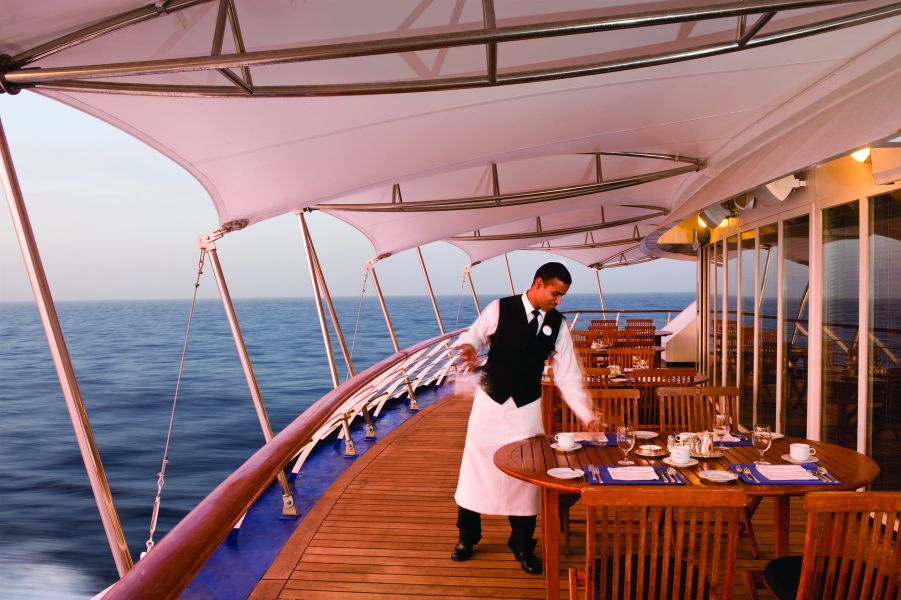
La Terrazza elevates casual dining by day and delivers an authentic Italian experience by night. During the breakfast and lunch buffets, our master chefs prepare global favorites at live stations. As evening falls, handmade pastas and classic seafood dishes are the centerpiece — every impeccable bite paired with fine wines from around the world.
Open-seating for breakfast and lunch.
Reservations recommended for dinner.
Images and suite plans are intended as a general reference. Features, materials, finishes and layout may be different than shown.
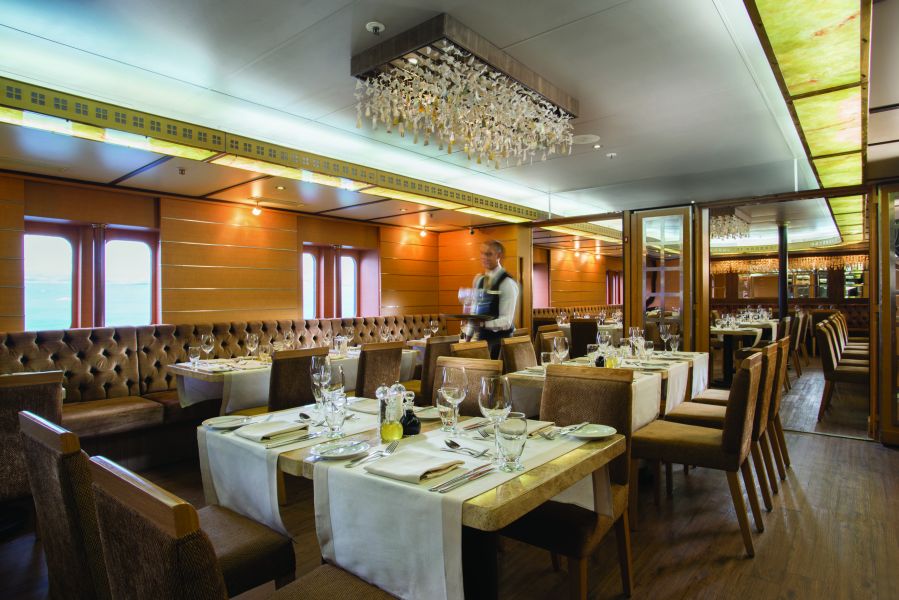
The Restaurant transforms dining into an extraordinary journey of taste. Indulge in international delicacies, refined classics, and destination-driven creations that reflect the flavors of the region you’re exploring. From breakfast favorites to imaginative evening courses, every meal draws inspiration from your voyage.
Images and suite plans are intended as a general reference. Features, materials, finishes and layout may be different than shown.
The images shown are for illustration purposes only and may not be an exact representation of what you find on the ship.
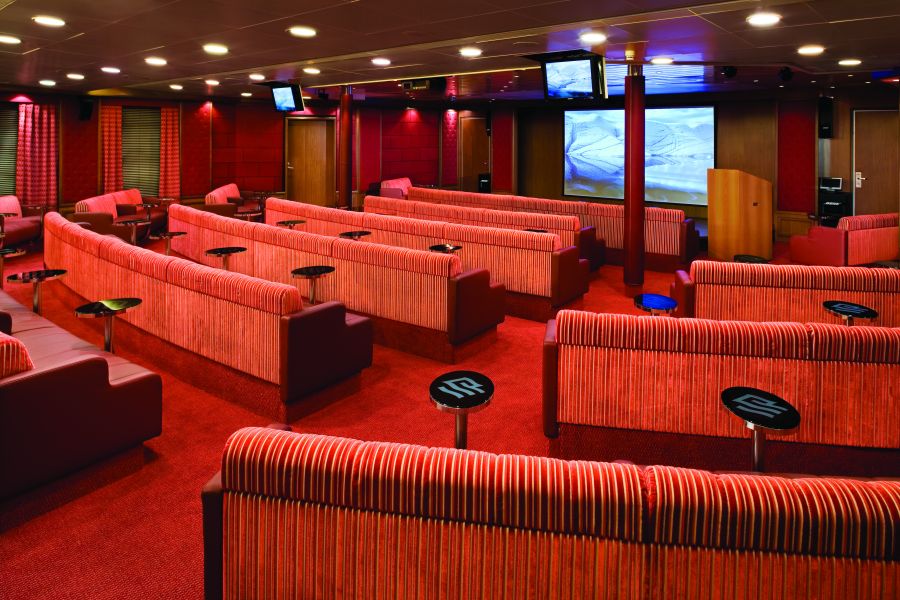
At The Show Lounge, theatrical immersion takes center stage. From captivating performances and screenings to cultural programs, this elegant venue was designed to dazzle. Tiered seating ensures impeccable views while attentive beverage service makes indulging effortless. Raise a glass as the curtain rises on an unforgettable night of entertainment.
Images and suite plans are intended as a general reference. Features, materials, finishes and layout may be different than shown.
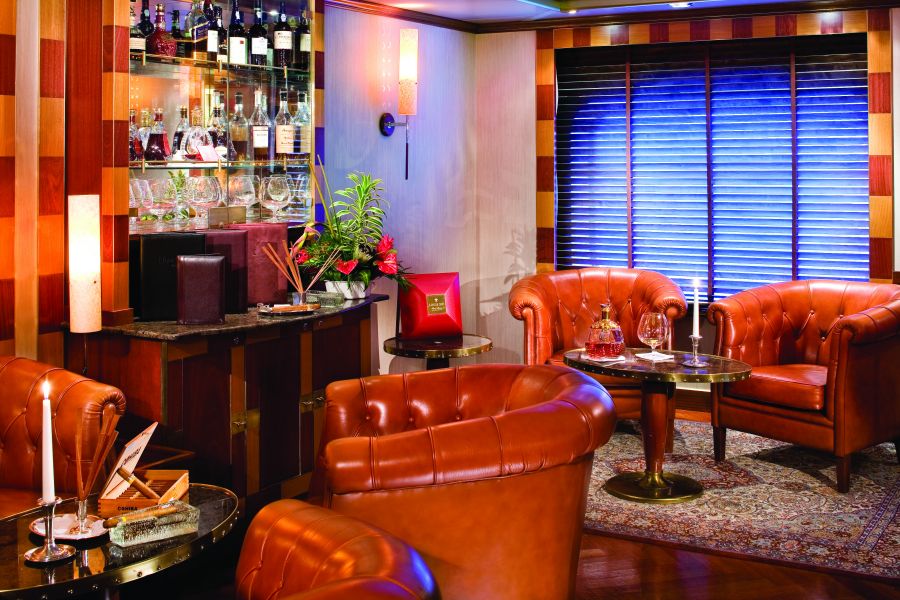
As evening stretches into night, Connoisseur’s Corner offers a stylish refuge for those who appreciate the time-honored rituals of smoke and spirit. Sink into tufted leather chairs with a hand-rolled cigar and a glass of one of our finest cognacs or whiskeys. Indoors or under the stars, every moment is marked by pure indulgence.
Images and suite plans are intended as a general reference. Features, materials, finishes and layout maybe different than shown.
The images shown are for illustration purposes only and may not be an exact representation of what you find on the ship.
The images shown are for illustration purposes only and may not be an exact representation of what you find on the ship.


Our Fusion packages are all ABTA & ATOL protected ensuring that your booking is safe with us
| 10 nights aboard the Silver Wind | |||
| Butler Service in Every Suite | |||
| Gratuities Always Included | |||
| Beverages In-Suite and Throughout the Ship | |||
| Gourmet Dining | |||
| In Suite Dining & 24-Hour Room Service | |||
| Intimate small size ships | |||
| Free Wifi Throughout the Ship | |||
| Free Zodiac, Land and Sea Tours & Activities & Complimentary Expedition gear | |||
| Port Taxes and Fees | |||
 | ABTA and ATOL Protection* | ||
Date 27th Apr 2028 |
Nts 10 |
Suite £6,450pp |
Date 27th Apr 2028 |
Nts 10 |
Suite £6,450pp |
| Suite staterooms from | £6,450pp | ||
| CV | Classic Veranda Suite | £7,950pp | |
| DX | Deluxe Veranda Suite | £8,550pp | |
| G1 | Grand Suite (1 Bedroom) | £15,500pp | |
| G2 | Grand Suite (2 Bedrooms) |  | |
| ME | Medallion Suite | £12,200pp | |
| O1 | Owner's Suite (1 Bedroom) | £17,150pp | |
| O2 | Owner's Suite (2 Bedrooms) | | |
| R1 | Royal Suite (1 Bedroom) | £13,850pp | |
| R2 | Royal Suite (2 Bedrooms) | | |
| SL | Silver Suite | £12,600pp | |
| VI | Vista Suite | £6,450pp | |
Fusion Holidays when selling travel arrangements is a trading name of Co-op Travel Services Limited, registration 08903986. Fusion Cruises is an Accredited Body Member of Co-op Travel Services Limited ATOL 12904.
Book with Confidence. We are a Member of ABTA which means you have the benefit of ABTA’s assistance and Code of Conduct.
Some of the flights and flight-inclusive holidays on this website are financially protected by the ATOL scheme but ATOL protection does not apply to all holiday and travel services offered on this website. This website will provide you with information on the protection that applies in the case of each holiday and travel service offered before you make your booking. If you do not receive an ATOL Certificate then the booking will not be ATOL protected. If you do receive an ATOL Certificate but all parts of your trip are not listed on it, those parts will not be ATOL protected. Please see our booking conditions for information, or for more information about financial protection and the ATOL Certificate go to: www.caa.co.uk